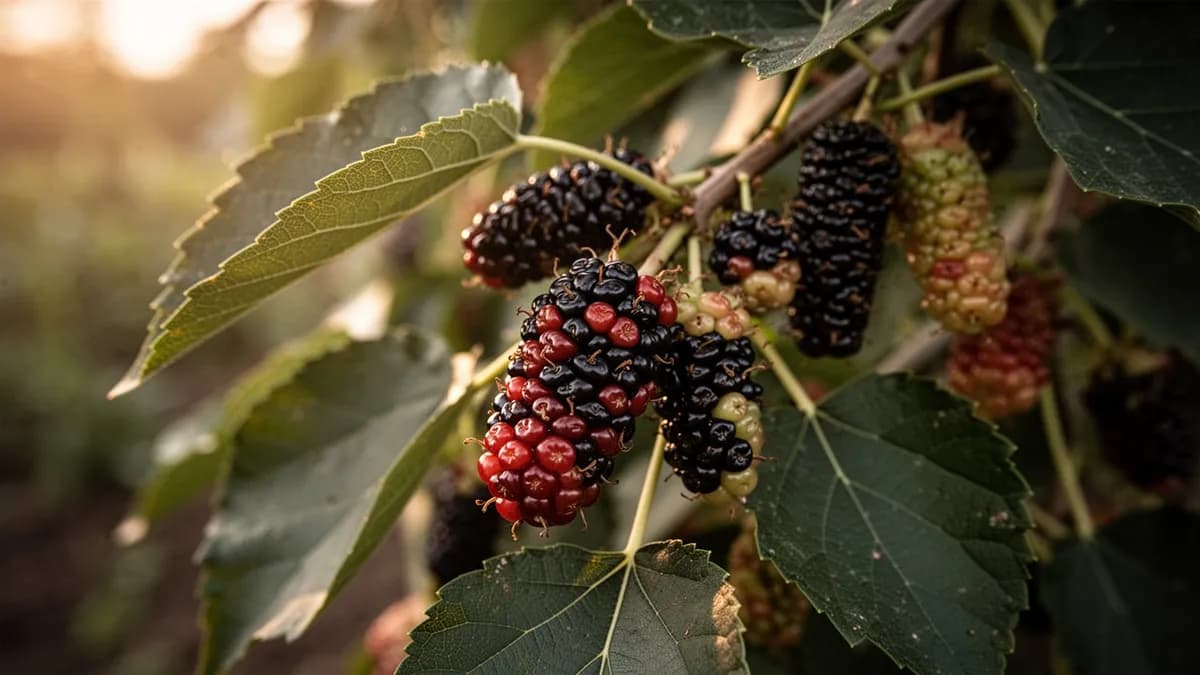
Mulberry
Morus nigra
At a Glance
A prolific fruiting tree producing elongated berries that resemble blackberries, ripening over several weeks in early summer. Mulberries stain heavily so avoid planting near walkways, driveways, or laundry lines. Dwarf varieties are available for smaller spaces and container growing, making the abundant harvest more manageable.
Planting & Harvest Calendar
Growth Stages
From Seed to Harvest
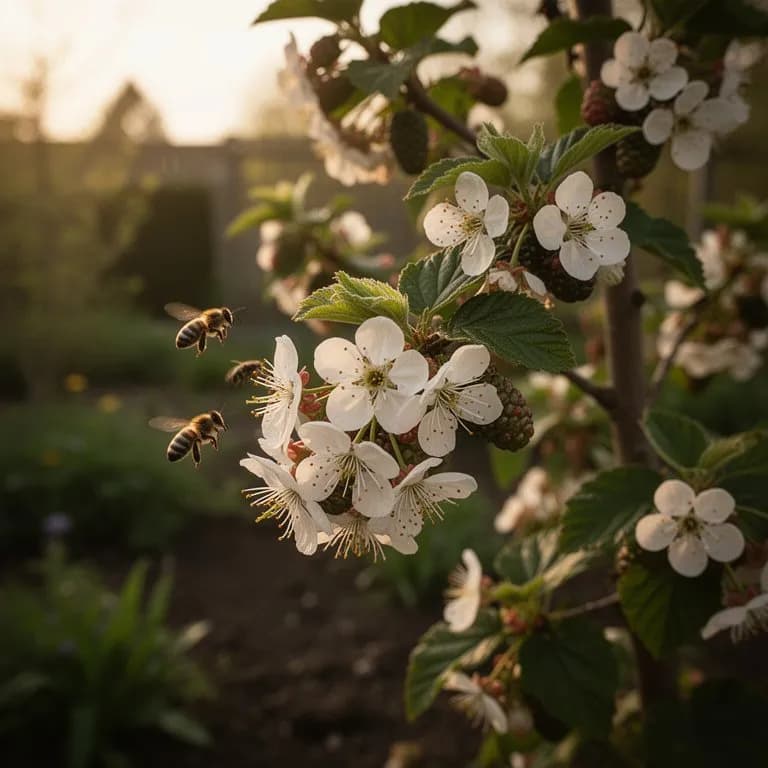
Dormancy and Bud Break
Days 0–21
Mulberry is one of the last trees to break dormancy in spring, a clever adaptation that protects its tender buds from late frosts. As temperatures reliably warm, swelling buds become visible along the bare branches. This cautious awakening is one of the tree's most reliable traits and a good indicator that frost danger has truly passed in your region.
💡 Care Tip
Apply a balanced slow-release fertilizer around the drip line of the tree before buds break. Avoid heavy pruning at this stage. Mulch around the base to retain soil moisture as spring rains may become irregular.
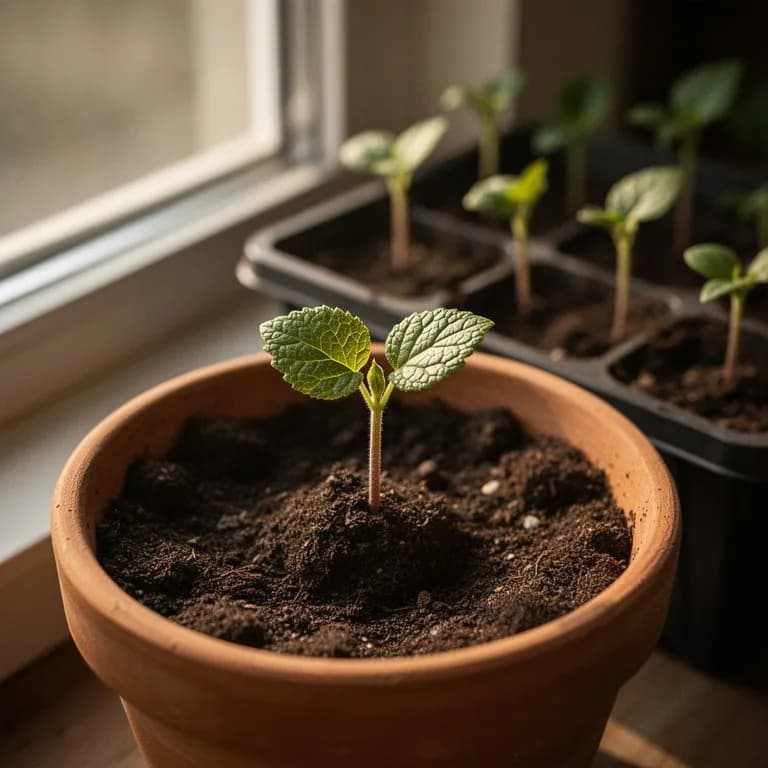
A newly planted mulberry sapling establishing itself in its first growing season
Monthly Care Calendar
What to do each month for your Mulberry
May
You are hereFruitlets are developing and beginning to color. Begin deep watering every 7-10 days if rainfall is insufficient, applying water slowly at the drip line rather than at the trunk. Lay the harvest tarp or old sheeting beneath the canopy to catch any early-ripening fruits that fall.
Did You Know?
Fascinating facts about Mulberry
Mulberry leaves are the sole food source for the silkworm (Bombyx mori), and the cultivation of mulberry trees for silk production — sericulture — is one of humanity's oldest agricultural industries, practiced in China for at least 5,000 years.
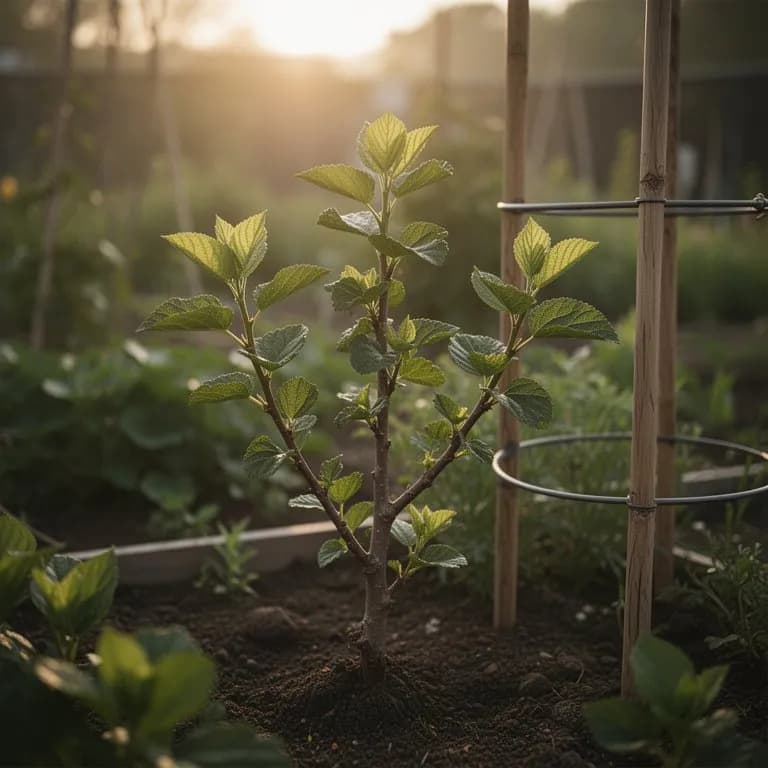
Mulberry leaves are notable for their variability — even on the same tree, leaf shapes range from unlobed to deeply multi-lobed
Mulberry trees are exceptionally easy to grow and tolerate a wide range of soils, though they prefer well-drained, fertile loam in full sun. Plant bare-root or container-grown trees in late winter or early spring, digging a hole twice the width of the root ball. Position the tree away from driveways, patios, and structures, as fallen fruit stains surfaces and attracts wildlife.
Young trees grow rapidly and benefit from formative pruning during the first three to four years to develop a strong central leader or open vase shape. Once established, mulberries require minimal pruning beyond removing dead, damaged, or crossing branches in late winter while the tree is dormant.
Water young trees regularly during their first two growing seasons to establish deep roots. Mature mulberry trees are remarkably drought-tolerant and rarely need supplemental irrigation. Mulch around the base with wood chips to suppress weeds and retain moisture, keeping mulch several inches from the trunk. Be prepared for the massive fruit production of mature trees, which can produce hundreds of pounds of berries annually.
The genus Morus encompasses approximately 10-16 species native to temperate and subtropical regions of Asia, Africa, and the Americas, though the taxonomy remains complex due to extensive natural hybridization. The most commercially significant species are white mulberry (Morus alba), originating in China; red mulberry (Morus rubra), native to eastern North America; and black mulberry (Morus nigra), whose origins lie in southwestern Asia, likely in the region of modern Iran and Afghanistan.
The cultivation of Morus alba in China is one of the oldest documented agricultural enterprises in human history, with evidence of sericulture — the raising of silkworms on mulberry leaves — dating back at least 5,000 years. Chinese legend attributes the discovery of silk to Empress Leizu around 2700 BCE, who reportedly watched a silkworm cocoon unravel in her tea. Whether the story is apocryphal or not, mulberry cultivation became so central to Chinese civilization that the trees were protected by imperial decree, and the export of silkworm eggs and mulberry seeds was punishable by death for centuries.
Along the ancient Silk Road trade routes, both silkworm cultivation and mulberry growing gradually spread westward. The Byzantines smuggled silkworm eggs out of China in the 6th century CE, establishing sericulture in the Mediterranean, where mulberry cultivation became widespread from the Levant to Italy and Spain. Morus nigra, already established in western Asia, became the fruit mulberry of choice throughout the Mediterranean world, prized by the Romans who spread it across their empire.
In the Americas, red mulberry (Morus rubra) was used by Indigenous peoples long before European contact — the fruit was eaten fresh and dried, the bark was used to make fiber and cloth, and the wood was prized for its durability. European colonizers later introduced white and black mulberry to North America, and today all three species grow across the continent, with white mulberry having naturalized so successfully that it is considered invasive in some regions.
Throughout the 17th to 19th centuries, repeated attempts were made in England, France, and the American colonies to establish domestic silk industries by planting large numbers of mulberry trees, with mixed success. While these industries ultimately failed to compete with Asian silk production, the trees planted during these eras remain standing in many historic gardens and estates. Today, mulberries are cultivated primarily for their fruit across Asia, the Middle East, and increasingly in the West, where home gardeners value them for their extraordinary productivity, minimal maintenance requirements, and the quality of fresh fruit that is simply unavailable in commercial retail channels.
Mulberry seeds require cold stratification for sixty to ninety days before sowing. Extract seeds from ripe fruit by soaking in water and separating the pulp. After stratification, sow seeds one-quarter inch deep in moist seed-starting mix at sixty-five to seventy-five degrees Fahrenheit. Germination takes two to four weeks. However, most preferred mulberry varieties are propagated by grafting or cuttings to maintain desired characteristics. Softwood cuttings taken in early summer root with moderate success under mist with rooting hormone.
Mulberries are highly adaptable and grow in most soil types, from sandy to clay, with a preferred pH of 6.0 to 6.5. They perform best in fertile, well-drained loam but tolerate poor conditions remarkably well once established. Apply a balanced fertilizer or generous compost around the drip line in early spring. Young trees benefit from additional nitrogen to support rapid growth, but mature trees rarely need fertilization unless foliage shows signs of nutrient deficiency.
Check Your Zone
See if Mulberry is suitable for your location.
-10°C – 38°C
14°F – 100°F
Mulberry trees are adaptable to a wide temperature range, with significant variation between species. Morus alba (white mulberry) is the hardiest, tolerating winter temperatures as low as -30°C (-22°F) in full dormancy. Morus nigra (black mulberry) is less cold-hardy and performs best in USDA zones 6-10, tolerating down to approximately -10°C (14°F). All species fruit best with warm summers (25-35°C / 77-95°F). The trees' natural late-season bud break protects flowers from late spring frosts, making them reliably productive in most temperate climates.
Common issues affecting Mulberry and how to prevent and treat them organically.
The biggest challenge with mulberries is managing the prolific fruit production and resulting mess from fallen berries that stain surfaces and attract insects. Siting the tree carefully is essential. Some municipalities restrict mulberry planting due to pollen allergenicity. Aggressive surface roots can heave sidewalks and invade garden beds. Fruitless male varieties solve the fruit drop problem but still produce allergenic pollen. Bird competition for ripe fruit is intense.
Mulberry trees create significant shade once mature, making them suitable companions for shade-tolerant plants like hostas, ferns, and woodland flowers beneath their canopy. Garlic and marigolds planted around the base may help deter certain pests. Avoid planting sun-loving vegetables or berries in the mulberry tree shade zone. The extensive root system can compete with nearby plants for water and nutrients, so maintain adequate spacing from garden beds.
- 1Choose your planting site carefully, as mulberry trees are very long-lived and their fallen fruit can stain paving, decking, and parked vehicles an almost-permanent deep purple. Plant at least 6-8 metres from hard surfaces or vehicles, over grass or a mulched area where staining is not a concern.
- 2Plant in full sun for maximum fruit production. While mulberries will tolerate partial shade, fruit yield and sweetness decline noticeably with less than 6 hours of direct sunlight per day. A south or west-facing position against a warm wall is ideal in cooler climates.
- 3Mulberry trees establish slowly in their first 2-3 years and may produce little fruit during this period — patience is essential. Do not over-fertilize young trees in an attempt to accelerate growth, as high-nitrogen feeds promote leafy growth at the expense of fruiting and can make young wood prone to frost damage.
- 4Water deeply but infrequently once established. A weekly deep soaking during the fruit development period (spring through early summer) significantly improves fruit size, juiciness, and sweetness. In subsequent seasons, mature trees require irrigation only during extended drought.
- 5Netting the tree during the harvest period is highly recommended if birds are present, as starlings, blackbirds, and other species can strip a tree of ripe fruit within hours. A loose net draped over the canopy — or a more permanent fruit cage frame for smaller trained trees — is the most effective protection.
- 6For small gardens, train a mulberry as a fan or espalier against a warm south-facing wall. This keeps the tree within a manageable footprint, brings forward the harvest by several weeks due to the warmth reflected from the wall, and makes harvesting and netting considerably easier.
- 7The simplest and most effective harvest method for full-sized trees is to spread an old sheet or tarpaulin beneath the canopy and give branches a gentle shake. Ripe fruits fall freely; unripe ones remain attached. Collect and process harvested fruit within 24-48 hours as the berries deteriorate rapidly at room temperature.
- 8Propagate mulberry easily from hardwood cuttings taken in late autumn or winter. Cut pencil-thick sections of the current year's growth to 20-25 cm lengths, insert them two-thirds of their length into free-draining compost, and keep frost-free over winter. Rooting rates are high, and rooted cuttings can be potted on and grown for a season before planting out.
- 9Morus nigra (black mulberry) is generally considered to produce the finest-flavored fruit of the three main species — deeply sweet with a pleasant winey acidity — but it is the slowest-growing and least cold-hardy. Morus alba varieties such as 'Illinois Everbearing' or 'Shangri-La' offer faster fruiting and greater cold hardiness, making them better choices for colder climates or impatient gardeners.
- 10Avoid planting mulberry near drains, foundations, or water pipes. While not as aggressively invasive as willows or poplars, the roots of established trees can exploit cracks in older pipes in search of water, particularly in dry conditions. A clearance of at least 5-8 metres from any underground infrastructure is advisable.
Mulberries ripen over a period of several weeks in early to midsummer. The easiest harvest method is to spread a clean tarp or sheet beneath the tree and shake branches gently; ripe berries will fall while unripe ones remain attached. Alternatively, hand-pick berries that are fully colored and detach easily. Harvest daily during peak season, as berries soften rapidly once ripe. Wear dark clothing, as mulberry juice stains persistently. Process or refrigerate berries within hours of picking.
Fresh mulberries are extremely perishable and should be used within one to two days of harvest. Refrigerate unwashed berries in a single layer immediately after picking. For freezing, spread berries on a tray to flash-freeze, then transfer to bags for up to twelve months. Mulberries make excellent jam, syrup, pie filling, and wine. They can also be dried in a dehydrator and used similarly to raisins in baking, cereals, and trail mixes.
Plan your garden with ease
Love growing Mulberry? Use our free garden planner to design your beds, track planting dates, and get personalized care reminders.
Nutritional Info
Per 100g serving
43
Calories
Health Benefits
- Exceptional source of vitamin C (36.4mg per 100g), supporting immune function, collagen synthesis, and iron absorption
- Rich in resveratrol, the same powerful antioxidant polyphenol found in red wine, which has been studied for its cardiovascular and anti-aging properties
- Good source of iron (1.85mg per 100g), unusually high for a fruit, making mulberries particularly valuable in plant-based diets for supporting red blood cell production
- Contains anthocyanins — the dark pigments that give ripe mulberries their color — which have potent antioxidant and anti-inflammatory activity in human studies
- Provides riboflavin (vitamin B2) at 0.101mg per 100g, contributing to energy metabolism and the maintenance of healthy skin and eyes
- Contains 1-deoxynojirimycin (DNJ), a naturally occurring alkaloid that has been studied for its ability to slow post-meal blood sugar spikes by inhibiting carbohydrate-digesting enzymes
💰 Why Grow Your Own?
A single established mulberry tree costing $20-50 as a young container plant can produce 5-20 kg (11-44 lbs) of fruit annually once mature. At specialty market prices of $8-15 per 125g punnet, this represents a potential retail value of $320-2,400 per tree per year. Fresh mulberries are rarely available commercially because the fruits are highly perishable — typically lasting only 2-3 days after harvest — making a home-grown tree virtually the only reliable way to access them at peak ripeness. The tree also requires minimal ongoing expenditure, needing only annual fertilization and occasional pruning once established.
Quick Recipes
Simple recipes using fresh Mulberry
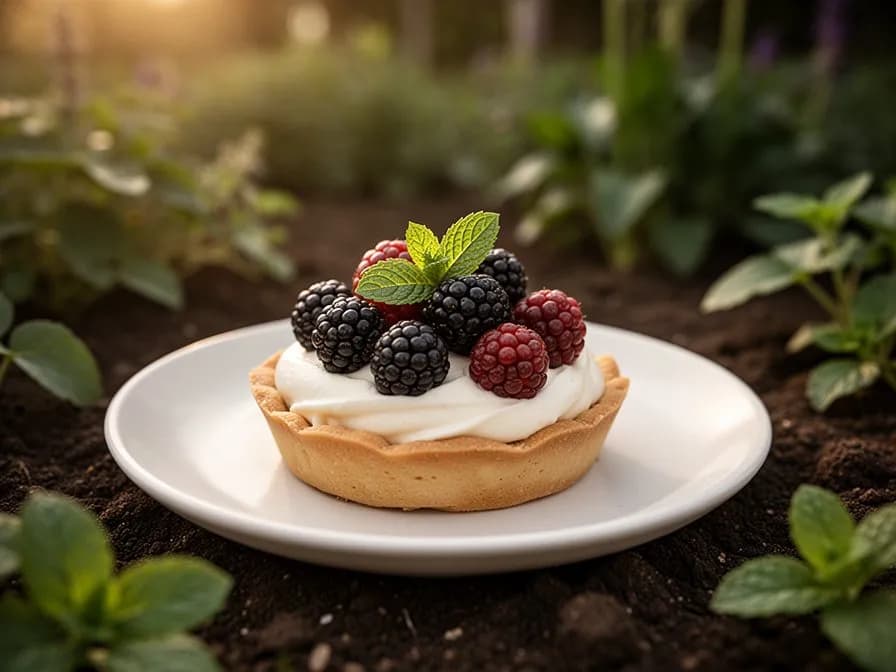
Mulberry Jam
45 minutesA richly colored, deeply flavored jam that captures the complex, wine-like sweetness of ripe mulberries. Because mulberries are low in pectin, a small amount of lemon juice and either jam sugar or added pectin ensures a good set. This jam is outstanding on buttered toast, swirled into yogurt, or used as a filling for cakes and pastries.
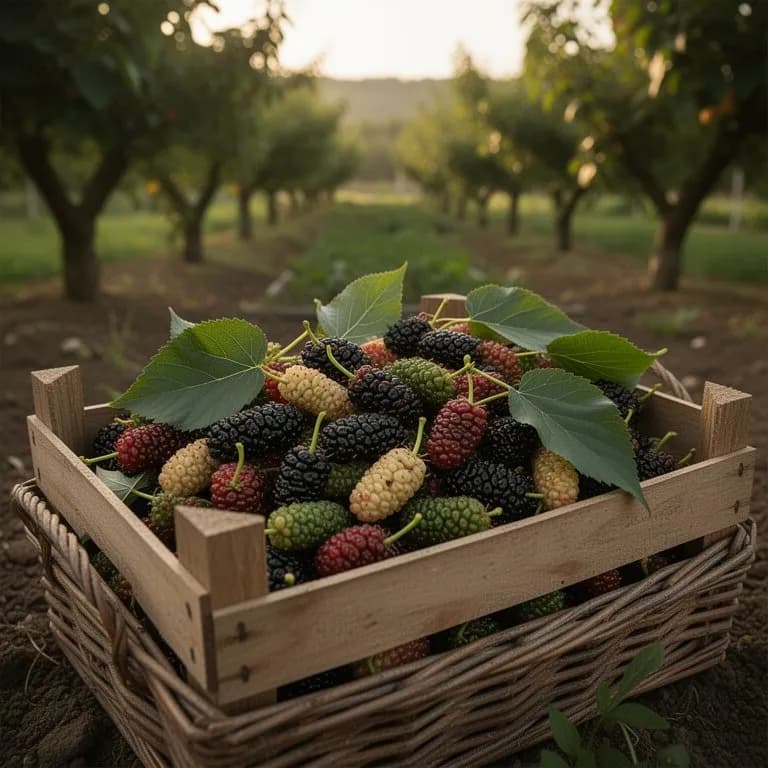
Mulberry Galette
25 minutes prep, 35 minutes bakingA rustic free-form tart that requires no tart tin and minimal skill, allowing the dramatic color and flavor of fresh mulberries to take center stage. The buttery, slightly crunchy pastry provides perfect contrast to the jammy fruit center. Serve warm with vanilla ice cream or crème fraîche for an impressive summer dessert.
Mulberry Shrub (Drinking Vinegar)
10 minutes active, 48 hours restingA mulberry shrub is a fruit-vinegar syrup that can be mixed with still or sparkling water for a sophisticated non-alcoholic drink, or used as a base for cocktails. The sweet-sour combination perfectly complements the complex berry flavor of mulberries, and the vinegar acts as a natural preservative, giving the shrub a shelf life of several months in the refrigerator.
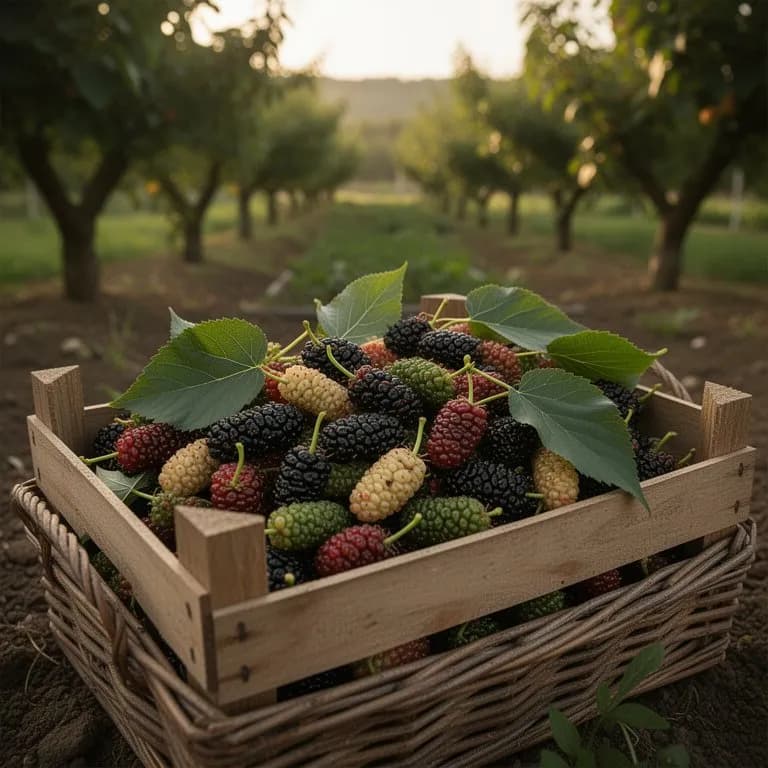
Ripe mulberries are harvested by spreading a tarp beneath the tree and gently shaking branches
Yield & Spacing Calculator
See how many Mulberry plants fit in your garden bed based on the recommended 300cm spacing.
0
Mulberry plants in a 4×4 ft bed
0 columns × 0 rows at 300cm spacing
Popular Varieties
Some of the most popular mulberry varieties for home gardeners, each with unique characteristics.
Illinois Everbearing
A hybrid producing sweet, elongated berries over an extended season, combining the best traits of red and white mulberry species.
Pakistan
A black mulberry variety producing exceptionally large, sweet fruits up to three inches long, best suited for warm climates.
Dwarf Everbearing
A compact tree reaching only ten to fifteen feet, ideal for smaller gardens and containers while producing abundant sweet fruit.
Shangri-La
A black mulberry cultivar with exceptionally sweet, complex-flavored berries on a vigorous tree suited to southern climates.
Oscar
A cold-hardy red mulberry selection producing sweet, juicy fruit and tolerating temperatures well below zero.
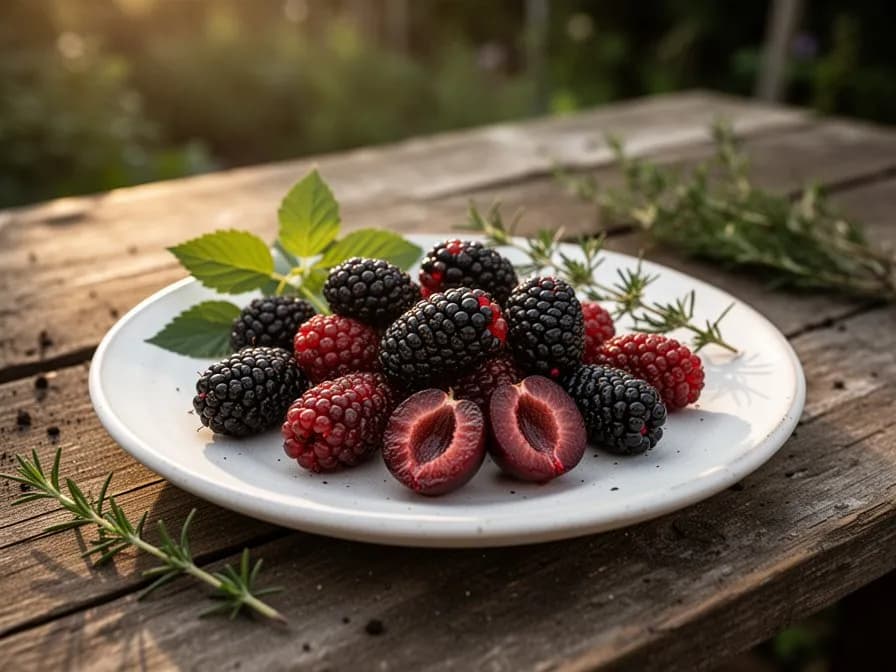
The three principal species: white mulberry (Morus alba), red mulberry (Morus rubra), and black mulberry (Morus nigra)
Mulberries have a sweet, mildly tart flavor and work beautifully in pies, cobblers, jams, and smoothies. They substitute well for blackberries in most recipes. Dried mulberries make a naturally sweet snack and baking ingredient. Mulberry syrup is delightful on pancakes and ice cream. Fresh mulberries are rich in vitamin C, iron, and resveratrol, making them a nutritious addition to the diet.
When should I plant Mulberry?
Plant Mulberry in March, April. It takes approximately 730 days to reach maturity, with harvest typically in June, July.
What are good companion plants for Mulberry?
Mulberry grows well alongside Garlic, Marigold. Companion planting can improve growth, flavor, and natural pest control.
What hardiness zones can Mulberry grow in?
Mulberry thrives in USDA hardiness zones 4 through 9. With greenhouse protection, it may be grown in zones 2 through 10.
How much sun does Mulberry need?
Mulberry requires Full Sun (6-8h+). This means at least 6-8 hours of direct sunlight daily.
How far apart should I space Mulberry?
Space Mulberry plants 300cm (118 inches) apart for optimal growth and air circulation.
What pests and diseases affect Mulberry?
Common issues include Bacterial Blight, Whiteflies, Popcorn Disease, Scale Insects. Prevention through good garden practices like crop rotation, proper spacing, and companion planting is the best approach. See the detailed pests and diseases section above for symptoms, prevention, and treatment for each.
How do I store Mulberry after harvest?
Fresh mulberries are extremely perishable and should be used within one to two days of harvest. Refrigerate unwashed berries in a single layer immediately after picking. For freezing, spread berries on a tray to flash-freeze, then transfer to bags for up to twelve months. Mulberries make excellent j...
What are the best Mulberry varieties to grow?
Popular varieties include Illinois Everbearing, Pakistan, Dwarf Everbearing, Shangri-La, Oscar. Each has unique characteristics suited to different growing conditions and culinary preferences. See the varieties section above for detailed descriptions.
What soil does Mulberry need?
Mulberries are highly adaptable and grow in most soil types, from sandy to clay, with a preferred pH of 6.0 to 6.5. They perform best in fertile, well-drained loam but tolerate poor conditions remarkably well once established. Apply a balanced fertilizer or generous compost around the drip line in e...
How long does a mulberry tree take to produce fruit?
This depends significantly on the species, variety, and how the tree was propagated. Trees grown from seed are the slowest, potentially taking 5-10 years to fruit. Container-grown named varieties purchased from a nursery are usually grafted or grown from cuttings and will typically produce their first modest harvest within 2-3 years of planting. Some compact varieties such as 'Issai' (a dwarf white mulberry) are known to fruit in their first or second year. Patience during the establishment phase is rewarded with decades of increasingly productive harvests — mulberry trees are generational plants.
Can I grow mulberry in a container or small garden?
Yes, several mulberry varieties are well-suited to container growing and small spaces. The dwarf variety 'Issai' (Morus alba) reaches only 2-3 metres in height and fruits precociously, often in its first year. Weeping forms such as 'Pendula' can be kept to a manageable size with annual pruning and make attractive ornamental specimens as well as productive fruiting trees. Container-grown mulberries need a large pot (minimum 50 litres), regular feeding with a high-potassium liquid fertilizer during the growing season, and attentive watering, as containers dry out far faster than open ground.
What is the difference between white, red, and black mulberry?
The three species differ in cold hardiness, fruit flavor, leaf texture, and native range. Morus nigra (black mulberry) originates in western Asia and produces the richest, most complex-flavored fruit — intensely sweet with a pronounced winey acidity — but it is the least cold-hardy (suitable for zones 6-10) and slowest growing. Morus rubra (red mulberry) is native to eastern North America, moderately cold-hardy (zones 5-9), and produces flavorful fruit though considered less intense than black mulberry. Morus alba (white mulberry), native to China, is the hardiest species (zones 4-9 or even colder), the fastest growing, and the traditional host plant for silkworms, but its fruit is generally considered milder and sweeter with less acidity than the other species. Color of the ripe fruit is not a reliable identifier — all three species can produce dark-colored fruit.
Why is my mulberry tree producing lots of leaves but no fruit?
Several factors can cause a mulberry tree to produce abundant foliage but little or no fruit. Young trees are the most common reason — most mulberries need at least 2-5 years of establishment before producing meaningful crops. Excessive nitrogen fertilization encourages vigorous vegetative growth at the expense of flowering and fruiting; switch to a low-nitrogen, high-potassium feed. Insufficient sunlight (less than 6 hours daily) can also suppress fruiting. Some white mulberry trees are male clones and will never produce fruit; if purchasing, confirm the tree is a fruiting female or self-fertile variety. Finally, heavy late spring frosts can destroy developing flowers before they set fruit, resulting in a foliage-only season.
Are all parts of the mulberry plant safe to eat?
Ripe mulberry fruit is entirely safe and nutritious for humans. However, several cautions apply to other parts of the plant. Unripe (green or white/pink) fruit and raw mulberry leaves contain a white latex sap that acts as a mild hallucinogen and can cause stomach upset, including nausea and vomiting, if consumed in quantity — always ensure fruit is fully ripe before eating. Mulberry leaf tea and dried leaf extracts are widely consumed in East Asia for potential blood sugar and cholesterol benefits, but should be used with caution by individuals taking diabetes medications as the blood sugar-lowering effects can be additive. The sap of the tree can also cause contact dermatitis in sensitive individuals.
How do I deal with the mess of fallen mulberries?
Fallen mulberries are an inevitable reality of growing this fruit tree, and the staining potential of the juice is considerable. The most practical management strategies include: choosing a planting site over grass, bare soil, or a mulched area rather than near paving or parked cars; harvesting the tree by tarp-shaking every 2-3 days during the 4-6 week fruiting window to collect fruit before it falls naturally; and laying a tarpaulin beneath the canopy during the height of the season. If staining does occur on paving or clothing, acting quickly with cold water (never hot) and a dedicated stain remover is the best approach. Some gardeners plant shallow-rooted ground covers beneath the canopy that can be mown through with fallen fruit, containing the mess tidily.
Ready to Grow Mulberry?
Add Mulberry to your garden plan and start designing your perfect layout.

Vladimir Kusnezow
Gardener and Software Developer
Zone 6b gardener. Growing vegetables and fruits in soil and hydroponics for 6 years. I built PlotMyGarden to plan my own gardens.
Jump to Section