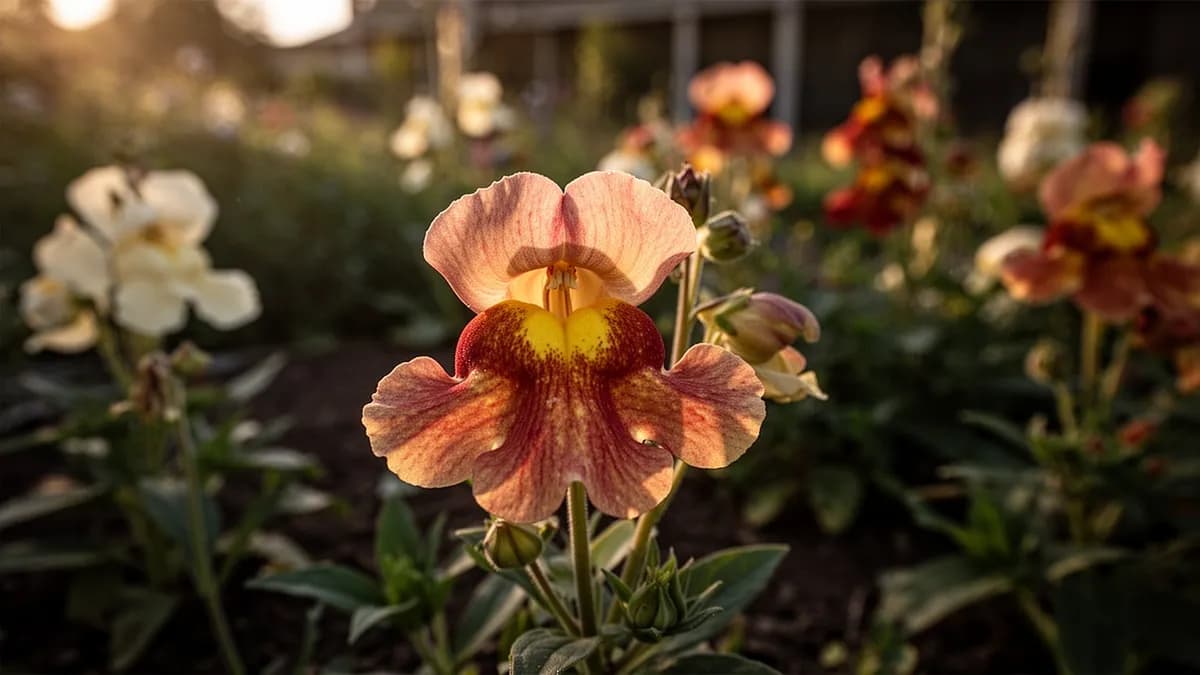
Monkey Flower
Mimulus × hybridus
At a Glance
A cheerful shade-loving annual with speckled, trumpet-shaped flowers that resemble grinning monkey faces in shades of yellow, orange, and red. Monkey flowers thrive in cool, moist conditions and make excellent choices for shady borders, boggy areas, and container gardens. They bloom best in spring and early summer before heat sets in.
Planting & Harvest Calendar
Growth Stages
From Seed to Harvest
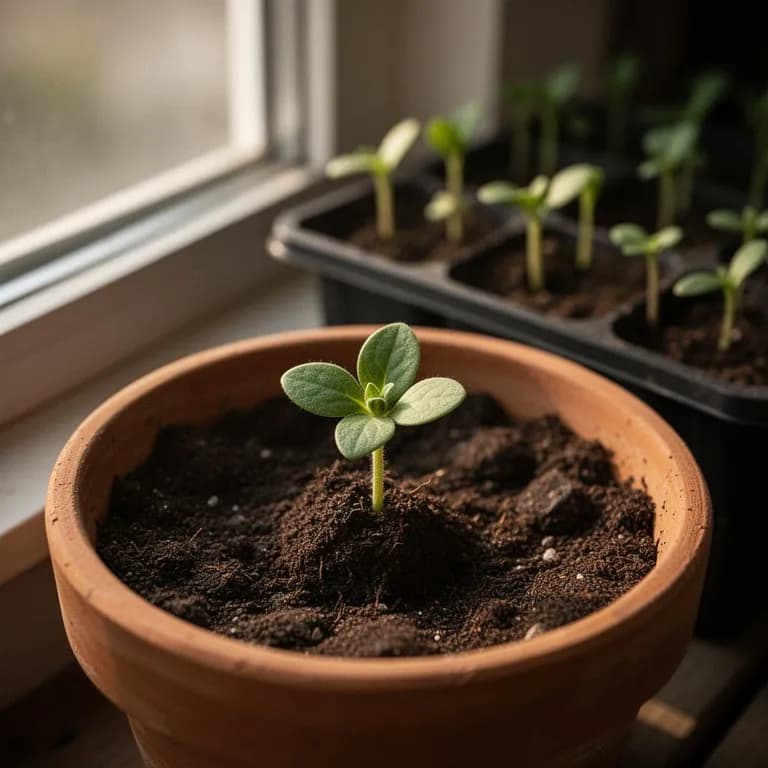
Seed Sowing
Days 0–14
Monkey flower seeds are extremely fine, almost dust-like, and require light to germinate. Scatter them on the surface of moist, finely textured seed-starting mix and press very gently without covering. Maintain consistent moisture using bottom watering or a fine mist to avoid displacing the tiny seeds.
💡 Care Tip
Do not cover the seeds with soil. They need full light exposure to germinate. Use a clear humidity dome or plastic wrap over the seed tray to maintain moisture until sprouts appear. Keep at 15-20°C for optimal germination.
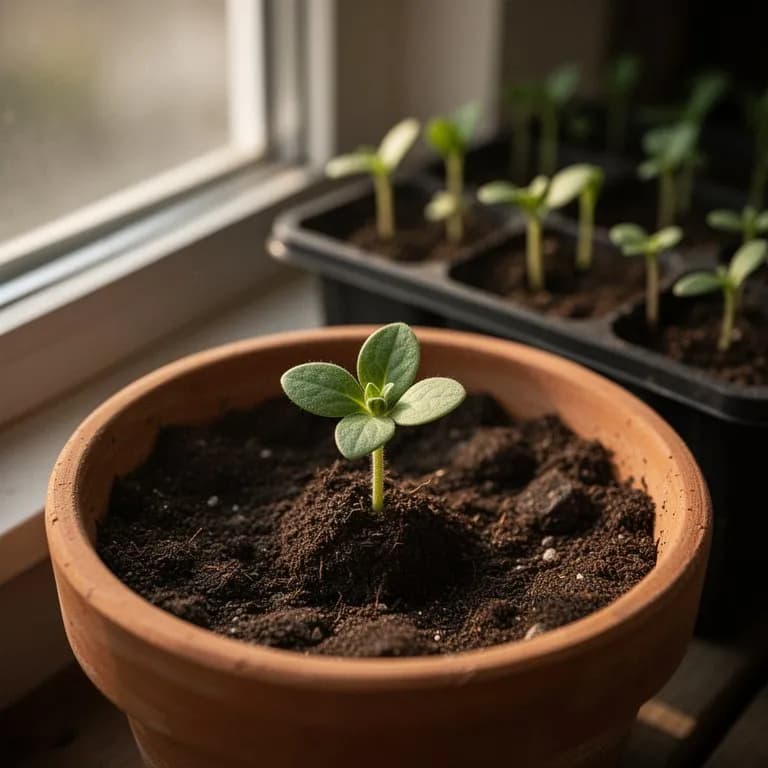
Monkey flower seedlings are extremely small and delicate, requiring consistent moisture and gentle handling during early growth
Monthly Care Calendar
What to do each month for your Monkey Flower
June
You are hereNo specific care tasks for this month.
Did You Know?
Fascinating facts about Monkey Flower
Monkey flowers get their common name from the shape of their two-lipped corolla, which was thought to resemble a grinning monkey face or, in some interpretations, the face-like markings that mimic a primate's visage.
Monkey flower is a colorful, shade-tolerant annual that thrives in conditions too cool and wet for most other flowering plants. Start seeds indoors 8-10 weeks before the last frost, pressing the tiny seeds onto the surface of moist seed-starting mix—they need light to germinate. Germination takes 7-14 days at 65-70°F (18-21°C).
Transplant seedlings outdoors after the last frost, spacing 8-10 inches apart in partial to full shade. Monkey flowers demand consistently moist soil and will wilt dramatically if allowed to dry out. They are perfect for shady borders, stream banks, bog gardens, and containers in north-facing positions.
Monkey flowers bloom most prolifically in cool weather and may slow down or stop in the heat of midsummer. In hot climates, treat them as spring and fall flowers. In cool-summer areas, they bloom continuously from late spring through autumn. Pinch back young plants to encourage bushy growth and more flowers.
Monkey flowers belong to a group of plants historically classified under the genus Mimulus, with the majority of North American species now reclassified into the genus Erythranthe following extensive molecular phylogenetic research. The group is native primarily to western North America, where the greatest diversity of species is found, ranging from coastal California to the mountain streams of the Rocky Mountains and Cascades. Some species also occur in eastern North America, South America, Australia, and southern Africa. These plants have been closely associated with moist habitats throughout their evolutionary history, thriving along stream banks, seeps, wet meadows, and mountain springs where consistent moisture is available. Indigenous peoples of North America had practical knowledge of monkey flowers for generations, using the leaves and stems as traditional poultice materials for skin ailments and occasionally consuming the mildly flavored young greens. European explorers and plant collectors first brought monkey flowers to the attention of Western botanists in the late 1700s and early 1800s. The Scottish botanist and plant hunter David Douglas collected several species during his expeditions through the Pacific Northwest in the 1820s, and the plants quickly became popular in Victorian-era gardens in Britain for their colorful, exotic-looking blooms. Yellow monkey flower was among the first species cultivated in Europe and subsequently escaped from gardens, naturalizing across the British Isles and parts of continental Europe. In the twentieth and twenty-first centuries, monkey flowers gained extraordinary scientific importance as a model system for studying evolutionary biology, speciation, and pollinator-driven adaptation. Research on the genetics of flower color in sympatric species pairs such as Erythranthe cardinalis and E. lewisii has provided landmark insights into how single genetic changes can shift pollinator preference and drive reproductive isolation, contributing fundamental knowledge to our understanding of how new species arise in nature.
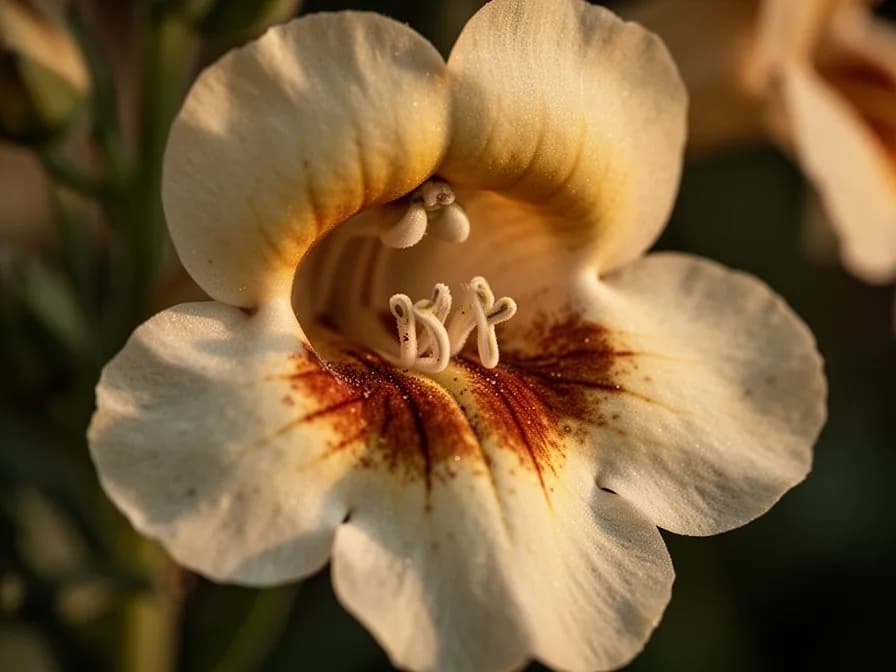
In the wild, monkey flowers thrive along stream banks, seeps, and moist meadows throughout western North America
Sow tiny seeds on the surface of moist seed-starting mix 8-10 weeks before the last frost—do not cover, as seeds need light to germinate. Keep at 65-70°F (18-21°C) with consistent moisture. Germination takes 7-14 days. Transplant seedlings carefully when large enough to handle, spacing 8-10 inches apart. Monkey flowers can also be direct-sown in shady, moist garden spots in early spring, though this is slower.
Monkey flowers require rich, consistently moist soil with a pH of 5.5-6.5. Amend with plenty of compost to improve moisture retention. In containers, use a quality potting mix with added peat or coir for moisture holding capacity. Feed every two weeks with a balanced liquid fertilizer. Never allow soil to dry out—even brief wilting can set plants back significantly.
Check Your Zone
See if Monkey Flower is suitable for your location.
4°C – 27°C
39°F – 81°F
Monkey flowers prefer cool to moderate temperatures between 4°C and 27°C. They perform best with daytime temperatures in the range of 15-24°C and cooler nights. Most species are native to mountain stream environments and struggle in prolonged heat above 30°C, which causes wilting, flower drop, and reduced vigor. They tolerate light frosts once established, and perennial species can survive winter temperatures down to -15°C or lower when mulched, depending on the species. In warm climates, provide consistent moisture and afternoon shade to simulate their natural cool, moist habitat.
Common issues affecting Monkey Flower and how to prevent and treat them organically.
Drying out is the number one killer of monkey flowers—these are moisture-loving plants that simply cannot tolerate drought. Heat stress causes plants to stop blooming and become leggy. In hot climates, grow in the coolest, shadiest spot available and keep soil consistently moist. Slugs love the tender foliage in shady, moist conditions—use iron phosphate bait or beer traps.
Monkey flowers thrive with other shade and moisture lovers: impatiens, begonias, ferns, and astilbes. They are excellent companions for hostas, providing colorful flowers around the base of hosta mounds. In bog gardens, plant alongside forget-me-nots, lobelia cardinalis, and Japanese primroses. In containers, pair with trailing ivy and shade-tolerant fuchsias.
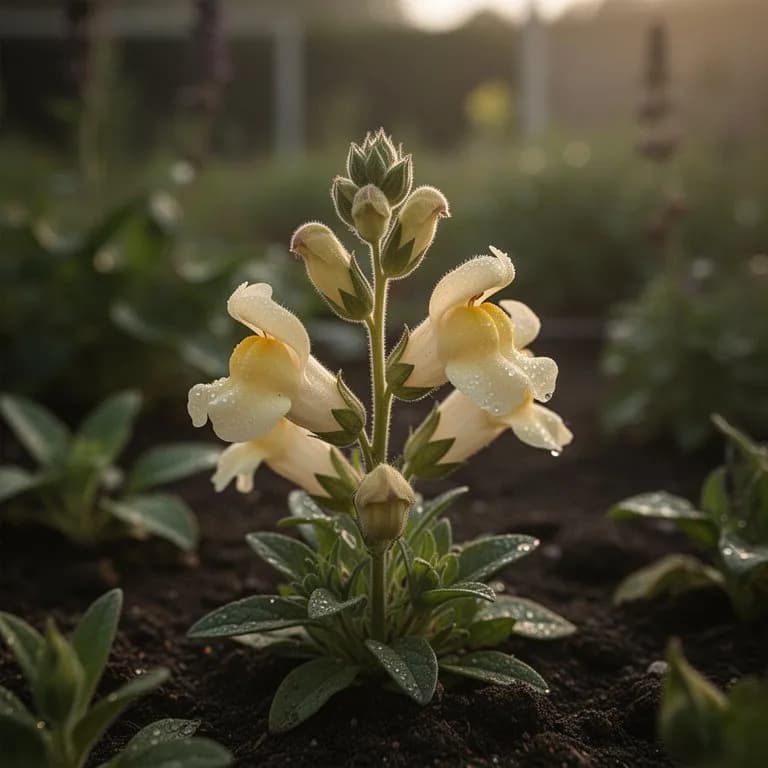
Red and orange monkey flower varieties are magnets for hummingbirds, while yellow types attract bees and butterflies
- 1Surface-sow the dust-like seeds on finely textured moist seed-starting mix and do not cover them, as monkey flower seeds require light to germinate. Use bottom watering to avoid washing the tiny seeds away.
- 2Maintain consistently moist soil at all times. Monkey flowers are native to stream banks and wet meadows and will not tolerate drying out. Consider planting near a water feature, rain garden, or in a naturally damp area of the garden.
- 3Provide morning sun with afternoon shade in most climates. In cool coastal or mountain regions, monkey flowers can handle full sun, but in warm inland areas they need protection from intense afternoon heat to prevent wilting and flower drop.
- 4Pinch the growing tips of young plants when they reach 10-15 cm tall to promote bushier, more compact growth with more flowering stems. This single step dramatically improves the overall display quality.
- 5Feed with a balanced liquid fertilizer at half strength every two to three weeks during the growing season. Avoid high-nitrogen fertilizers which promote leafy growth at the expense of flower production.
- 6Deadhead spent flowers regularly by pinching or snipping them off just above the nearest set of leaves. Consistent deadheading can extend the bloom period by several weeks and keeps plants looking tidy.
- 7Watch for slugs, snails, and aphids, which are the most common pests. Set beer traps or use iron phosphate bait for slugs, and dislodge aphids with a strong spray of water from the hose.
- 8Take stem cuttings in late summer to overwinter tender varieties indoors on a bright windowsill. Cuttings root easily in moist perlite or a glass of water within two to three weeks.
- 9Mulch around plants with compost or shredded bark to help retain soil moisture, suppress weeds, and keep root temperatures cool during warm spells. Avoid piling mulch directly against the stems to prevent rot.
- 10In regions with harsh winters, protect perennial monkey flower crowns with a 5-10 cm layer of straw or leaf mulch after the first hard frost. Remove the mulch gradually in spring as new growth emerges from the base.
Monkey flowers are primarily used as bedding and container plants rather than cut flowers. The cheerful spotted blooms can be picked for small posies and bud vases, where they last 3-5 days in water. Cut when flowers are fully open for immediate enjoyment. They are charming in small, informal arrangements mixed with ferns and foliage.
Monkey flowers are typically grown as annuals and do not store as bulbs. Some species are perennial in mild climates (zones 7-11) and may overwinter with mulch protection. To save seed, allow some flowers to mature and develop seed capsules. Collect when capsules turn brown and begin to split. Store tiny seeds in labeled envelopes in a cool, dry place.
Plan your garden with ease
Love growing Monkey Flower? Use our free garden planner to design your beds, track planting dates, and get personalized care reminders.
Nutritional Info
Per 100g serving
15
Calories
Health Benefits
- Young monkey flower leaves and stems are mildly flavored and were historically consumed as a wild green by Indigenous peoples of western North America
- The leaves contain modest levels of vitamin C and vitamin A precursors, contributing antioxidant benefits when eaten fresh
- Monkey flower greens provide dietary fiber and trace minerals including potassium, calcium, and iron
- The plant is primarily grown as an ornamental and for ecological purposes rather than as a food crop
- Contains bioactive compounds including iridoid glycosides that have been studied for anti-inflammatory properties
- Flowers are edible and can be used as a colorful garnish in salads and cold dishes
💰 Why Grow Your Own?
Monkey flower seeds are extremely fine and a single packet typically contains 500-1,000 seeds for just $3-5, making them one of the most economical ornamental plants to grow from seed. Because many species self-seed readily in favorable moist conditions, a single planting can establish a self-sustaining colony that returns year after year without additional cost. Perennial varieties also spread by runners and stem rooting, further multiplying your investment. Compared to purchasing nursery-grown monkey flower plants at $5-8 each, growing from seed can save $50-100 or more when establishing a large display. Their value as pollinator plants and their ability to thrive in difficult moist or shady spots where other ornamentals struggle makes them an exceptionally cost-effective choice for gardeners seeking low-maintenance seasonal color.
Quick Recipes
Simple recipes using fresh Monkey Flower
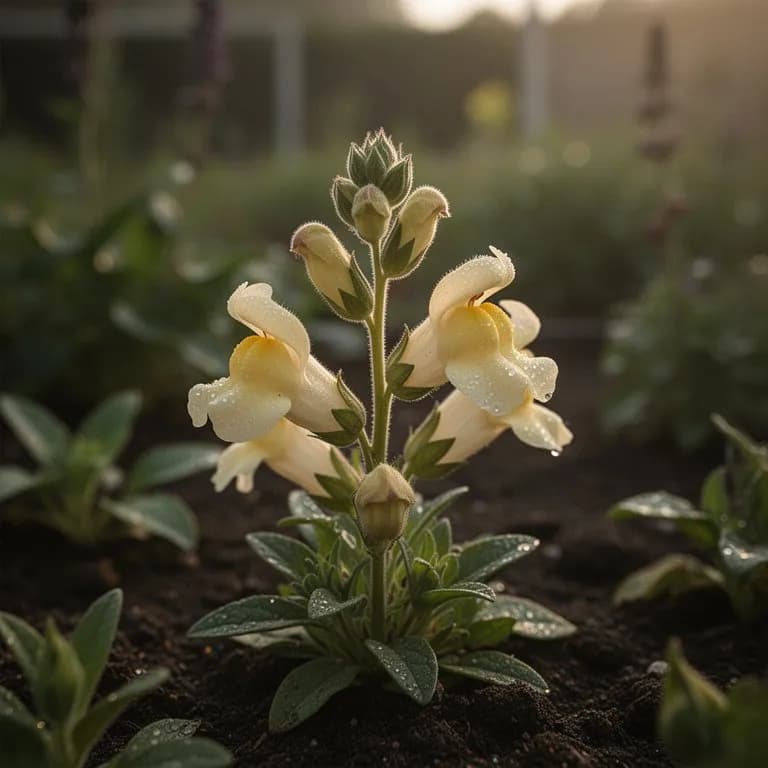
Monkey Flower Petal Salad Garnish
10 minutesA vibrant edible flower garnish using fresh monkey flower blooms to add color and a mild, slightly sweet-green flavor to summer salads. The spotted petals create a visually striking presentation that turns an ordinary salad into something special.
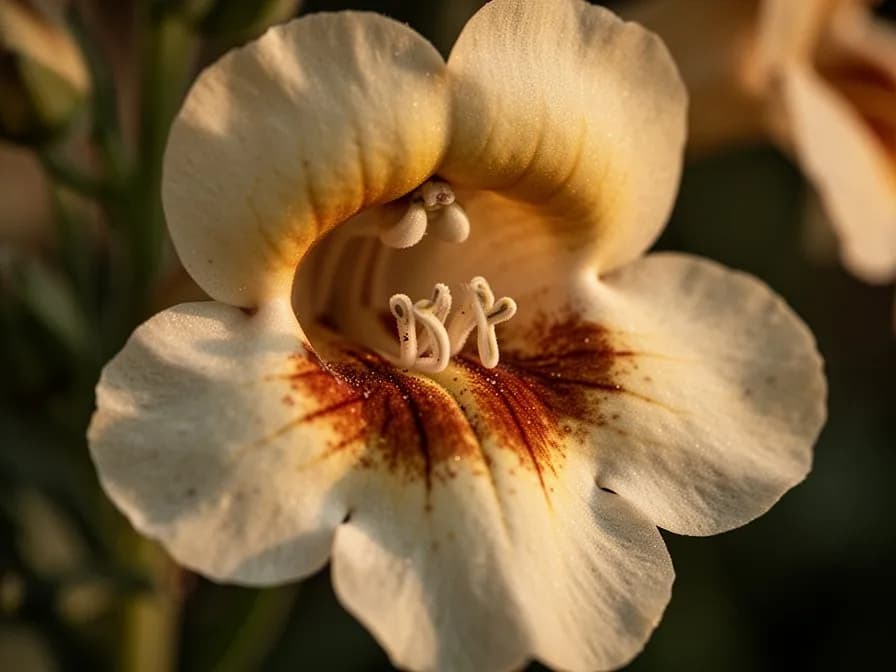
Monkey Flower Infused Herbal Vinegar
15 minutes active, 2 weeks infusingA decorative and mildly floral infused vinegar made by steeping colorful monkey flower petals in white wine vinegar. The result is a beautifully tinted vinegar with a subtle botanical note, perfect for dressing salads or as a unique homemade gift.
Wild Greens Saute with Monkey Flower Leaves
15 minutesA simple saute of foraged wild greens incorporating tender young monkey flower leaves alongside other mild-flavored greens. The monkey flower leaves add a fresh, slightly tangy note and were traditionally gathered by Indigenous peoples as a seasonal potherb.
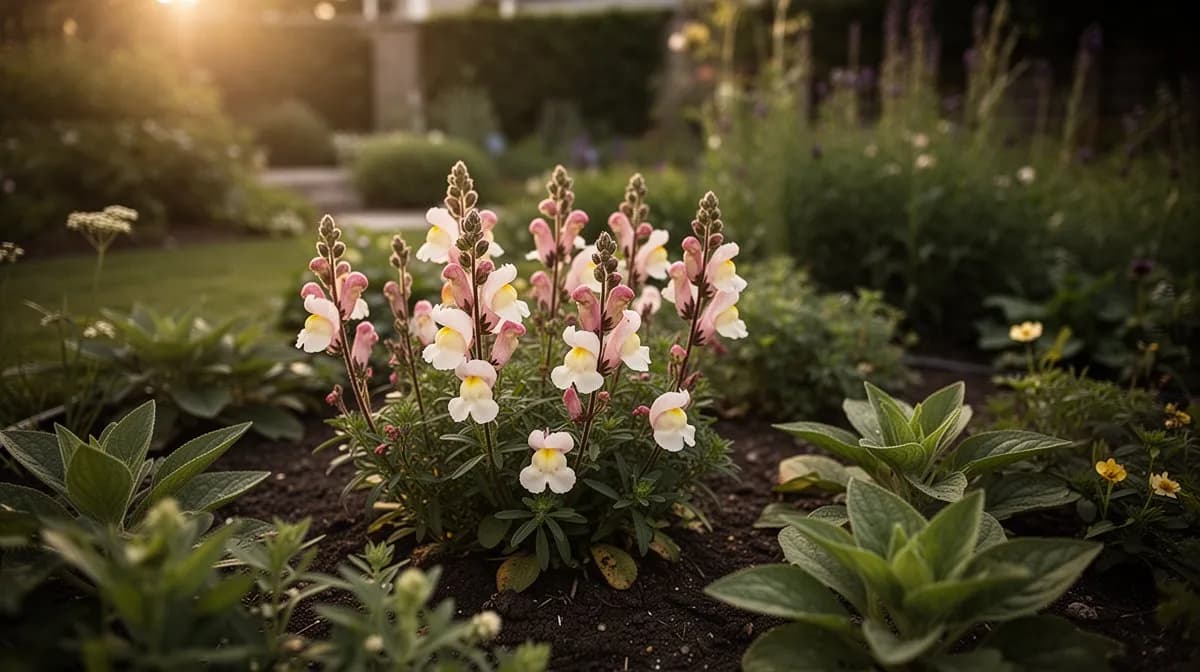
Container-grown monkey flowers make excellent patio and balcony plants when given consistent moisture and partial shade
Yield & Spacing Calculator
See how many Monkey Flower plants fit in your garden bed based on the recommended 20cm spacing.
36
Monkey Flower plants in a 4×4 ft bed
6 columns × 6 rows at 20cm spacing
Popular Varieties
Some of the most popular monkey flower varieties for home gardeners, each with unique characteristics.
Mimulus 'Magic' series
Compact 6-8 inch plants smothered in large flowers with dramatic spotted throats in yellow, red, orange, and white.
Mimulus 'Mystic' series
Bicolor flowers with bold contrasting markings in combinations of orange-red, yellow-red, and cream-pink.
Mimulus 'Twinkle' Mix
Smaller flowers but exceptionally floriferous, creating a blanket of color in shade gardens and containers.
Monkey flowers come in a stunning range of colors including yellow, orange, red, pink, and bicolor combinations with spotted throats
When should I plant Monkey Flower?
Plant Monkey Flower in March, April, May. It takes approximately 55 days to reach maturity, with harvest typically in May, June, July, August.
What are good companion plants for Monkey Flower?
Monkey Flower grows well alongside Lobelia, Impatiens, Begonia. Companion planting can improve growth, flavor, and natural pest control.
What hardiness zones can Monkey Flower grow in?
Monkey Flower thrives in USDA hardiness zones 7 through 11. With greenhouse protection, it may be grown in zones 5 through 12.
How much sun does Monkey Flower need?
Monkey Flower requires Partial Sun (3-6h). This means 3-6 hours of sunlight, ideally morning sun with afternoon shade.
How far apart should I space Monkey Flower?
Space Monkey Flower plants 20cm (8 inches) apart for optimal growth and air circulation.
What pests and diseases affect Monkey Flower?
Common issues include Aphids, Powdery Mildew, Slugs and Snails. Prevention through good garden practices like crop rotation, proper spacing, and companion planting is the best approach. See the detailed pests and diseases section above for symptoms, prevention, and treatment for each.
How do I store Monkey Flower after harvest?
Monkey flowers are typically grown as annuals and do not store as bulbs. Some species are perennial in mild climates (zones 7-11) and may overwinter with mulch protection. To save seed, allow some flowers to mature and develop seed capsules. Collect when capsules turn brown and begin to split. Store...
What are the best Monkey Flower varieties to grow?
Popular varieties include Mimulus 'Magic' series, Mimulus 'Mystic' series, Mimulus 'Twinkle' Mix. Each has unique characteristics suited to different growing conditions and culinary preferences. See the varieties section above for detailed descriptions.
What soil does Monkey Flower need?
Monkey flowers require rich, consistently moist soil with a pH of 5.5-6.5. Amend with plenty of compost to improve moisture retention. In containers, use a quality potting mix with added peat or coir for moisture holding capacity. Feed every two weeks with a balanced liquid fertilizer. Never allow s...
Are monkey flowers annuals or perennials?
It depends on the species. Some monkey flowers such as Mimulus x hybridus (common garden monkey flower) are grown as tender annuals or short-lived perennials, while others like Erythranthe cardinalis (scarlet monkey flower) and E. lewisii (Lewis's monkey flower) are true herbaceous perennials that return reliably each year from their rootstock in USDA zones 5-9. In colder regions, perennial species benefit from winter mulching. Many species also self-seed freely, so even annual types can reappear year after year if conditions are suitably moist.
Why are my monkey flowers wilting even though I water them?
Monkey flowers are extremely moisture-sensitive and can wilt for several reasons beyond simple underwatering. The most common cause is excessive heat combined with dry air, which causes the plants to lose water through their leaves faster than the roots can absorb it. Move container plants to a shadier, cooler location during heat waves. Check that the soil is genuinely moist several centimeters below the surface, not just at the top. Root rot from poorly drained soil can also cause wilting despite wet conditions, so ensure your planting site or container has adequate drainage.
Do monkey flowers attract pollinators to the garden?
Yes, monkey flowers are excellent pollinator plants. Red and orange-flowered species like Erythranthe cardinalis are particularly attractive to hummingbirds, while yellow and pink varieties draw bumblebees, honeybees, and various native bee species. The spotted throat markings on the flowers serve as nectar guides that direct pollinators to the reward. Planting a variety of monkey flower colors can attract a wide range of pollinator species to your garden, supporting local biodiversity and benefiting nearby vegetable and fruit crops through improved pollination.
Can I grow monkey flowers in containers or hanging baskets?
Monkey flowers are well suited to container growing and can look spectacular in pots, window boxes, and hanging baskets. Choose a container with drainage holes and use a moisture-retentive potting mix amended with perlite. The key to success is never letting the soil dry out completely, so consider self-watering pots or placing a saucer under the container to catch and hold excess water. Position containers where they receive morning sun and afternoon shade. Trailing and compact hybrid varieties are particularly well adapted to container culture and basket displays.
What is the difference between Mimulus and Erythranthe?
Mimulus and Erythranthe are both genus names applied to monkey flowers, and the distinction reflects recent advances in plant taxonomy. Historically, nearly all monkey flowers were classified under Mimulus in the family Phrymaceae. However, molecular DNA studies revealed that the traditional Mimulus grouping was polyphyletic, meaning it contained species that were not closely related. As a result, most North American monkey flower species were transferred to the genus Erythranthe around 2012. A smaller group of species, mostly from Australia and southern Africa, remains in Mimulus. In garden centers and seed catalogs, you will still commonly see the name Mimulus used for horticultural convenience.
How do I collect and save monkey flower seeds?
Allow a few flowers to remain on the plant after blooming until the seed capsules turn brown and begin to split open. The capsules contain hundreds of extremely tiny, dust-like seeds. To collect them, carefully cut the mature capsule over a sheet of white paper or into a small paper bag and tap gently to release the seeds. Store the seeds in a labeled paper envelope in a cool, dry, dark location. Monkey flower seeds remain viable for two to three years under good storage conditions. When sowing, remember that these seeds need light to germinate and should never be buried.
Ready to Grow Monkey Flower?
Add Monkey Flower to your garden plan and start designing your perfect layout.

Vladimir Kusnezow
Gardener and Software Developer
Zone 6b gardener. Growing vegetables and fruits in soil and hydroponics for 6 years. I built PlotMyGarden to plan my own gardens.
Jump to Section