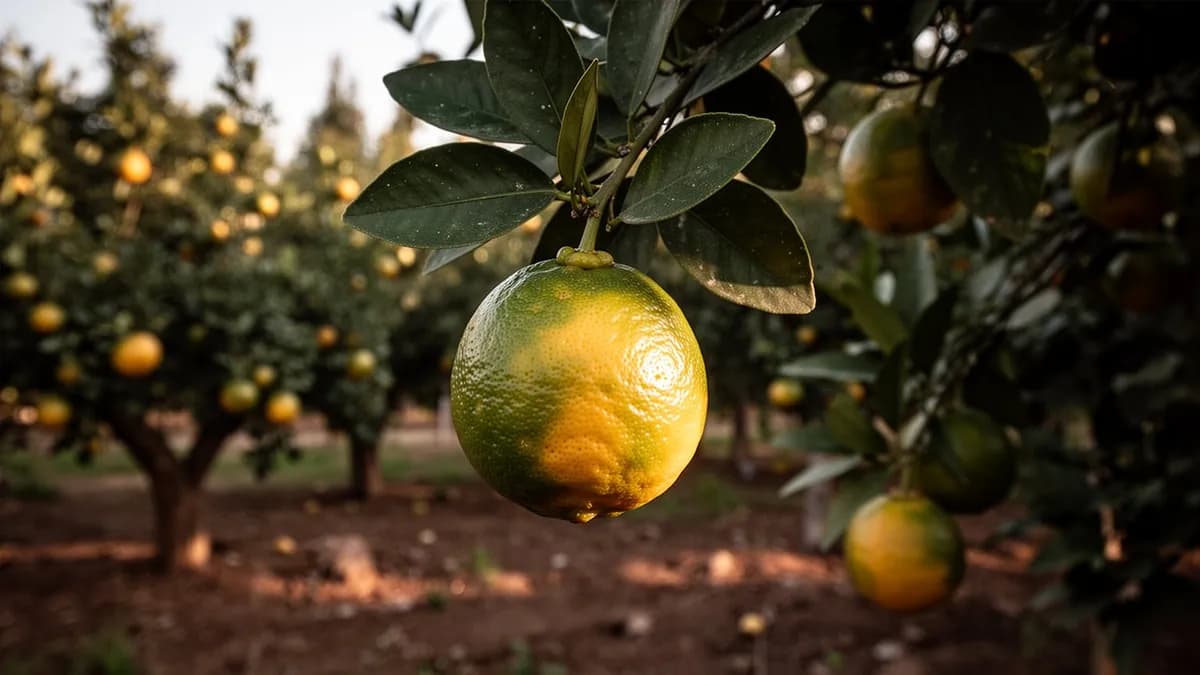
Limequat
Citrus x floridana
At a Glance
It's planting season for Limequat! Start planning your garden now.
A key lime and kumquat hybrid producing small, oval, yellowish-green fruits that can be eaten whole or juiced as a lime substitute. Limequats are more cold-hardy than true limes, making them practical for borderline citrus climates. The compact, productive trees are well-suited to container growing and dooryard gardens.
Planting & Harvest Calendar
Growth Stages
From Seed to Harvest
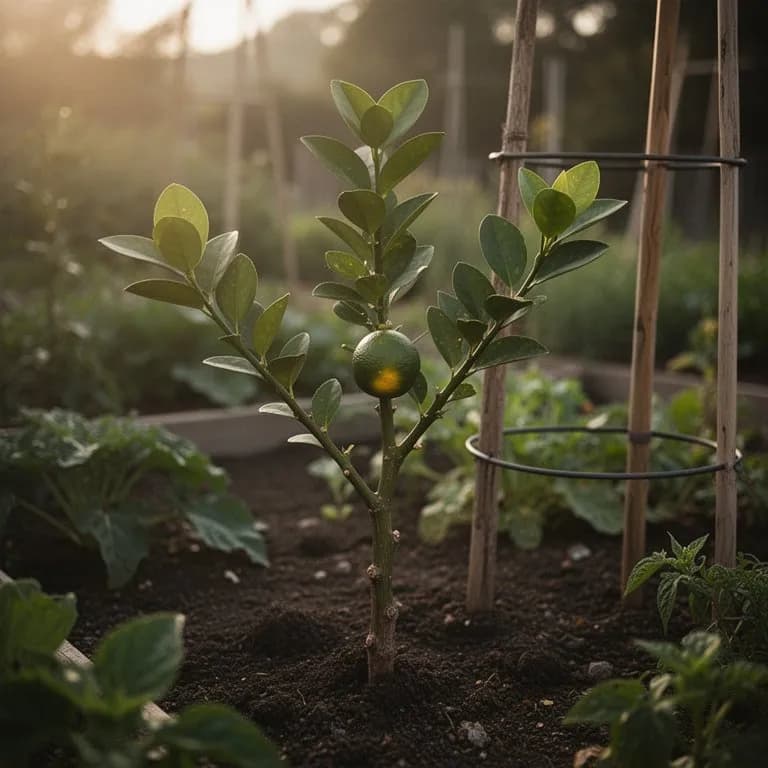
Establishment and Root Development
Days 0–90
Newly planted limequats focus their energy on establishing a strong root network rather than producing above-ground growth. During this phase the plant may appear static, with minimal leaf flush, while actively extending feeder roots into the surrounding soil. Keeping the root zone consistently moist but never waterlogged is critical, and any flower buds that form should be removed to redirect the plant's limited resources toward root establishment rather than fruiting.
💡 Care Tip
Plant in free-draining, slightly acidic soil in a position that receives at least six hours of direct sun. Backfill with a mixture of native soil and compost. Water deeply every two to three days during the first month, then weekly thereafter. Remove any flowers or small fruit that form during the first twelve months to encourage root development and a stronger, more productive framework.
Ripe limequats display a characteristic oval form with thin, aromatic skin that mellows from bright green to pale yellow-green at full maturity
Monthly Care Calendar
What to do each month for your Limequat
May
You are hereMonitor for aphid colonies on tender new growth flushes and treat with a strong jet of water or insecticidal soap. Apply a potassium-rich fertilizer to support fruit set and development after petal fall. Ensure container plants receive consistent moisture as warm weather increases evaporation. Begin regular deep watering of ground-planted trees if rainfall is insufficient.
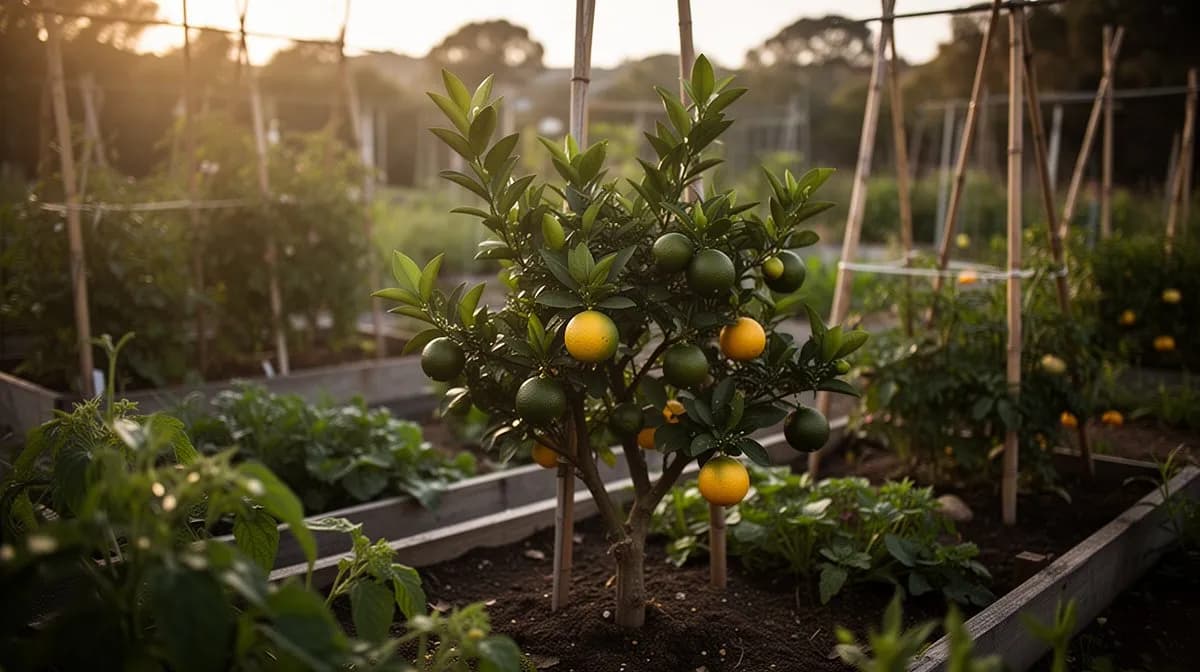
Limequats are superb container plants, staying compact enough for patios and balconies while producing prolific fruit crops
Did You Know?
Fascinating facts about Limequat
The limequat is a deliberate hybrid first created in the early twentieth century by the USDA citrus breeder Walter Tennyson Swingle, who crossed the West Indian key lime (Citrus aurantifolia) with the kumquat (Fortunella japonica or Fortunella margarita) to produce a cold-hardier citrus with lime flavor.
Limequat is a cross between key lime and Nagami kumquat, combining the zesty lime flavor with kumquat cold hardiness. The tree grows compactly to two to three meters and is one of the most practical citrus for gardeners in borderline climates where true limes would fail. Plant in full sun in well-draining soil, spacing about two meters apart if planting multiples.
Limequat tolerates temperatures down to about minus 5 degrees Celsius, significantly hardier than key lime. In cooler zones, grow in containers using a quality citrus potting mix and bring indoors before hard freezes. The tree adapts well to container life and produces fruit prolifically even in relatively small pots. Provide at least six hours of direct sunlight and consistent moisture during the growing season.
Fertilize every four to six weeks from spring through fall with a balanced citrus fertilizer. The tree is a heavy bearer, often producing more fruit than the branches can easily support, so thinning may be needed. Prune after harvest to maintain compact shape and remove dead or crossing branches. Limequat blooms several times per year in warm climates, providing nearly continuous fruit production. The small size and attractive form make it an excellent choice for edible container gardens on patios and balconies.
The limequat occupies a fascinating niche in the history of citrus breeding, emerging not from centuries of agricultural tradition but from deliberate scientific hybridization in the early twentieth century United States. Its creator, Walter Tennyson Swingle, was a prolific USDA botanist who dedicated much of his career to expanding the range and utility of citrus in American horticulture. Working at the USDA's subtropical research station in Eustis, Florida, Swingle crossed the key lime (Citrus aurantifolia) with the round kumquat (Fortunella japonica) around 1909, aiming to combine the beloved lime flavor with the cold hardiness and whole-fruit eatability of the kumquat. The resulting hybrids were given the names of their Florida birthplaces: Eustis and Lakeland limequats. A third variety, Tavares, was later developed from a cross of the oval kumquat with the Persian lime, producing a slightly milder and larger fruit. These cultivars represent a distinctly American contribution to the global citrus palette, bred for practical gardening advantages rather than simply flavor novelty.
Although limequats never achieved the mainstream commercial success of lemons, limes, or oranges, they found an enthusiastic audience among home gardeners, particularly in subtropical regions of the American South, California, Australia, and the Mediterranean basin. Their compact size, prolific production, and remarkable cold hardiness compared to true limes made them an attractive choice for small gardens and container growing in climates where standard limes would perish in winter. In culinary terms, limequats remained a specialty item appreciated by adventurous cooks for their unique combination of tart lime juice and sweet, aromatic peel that could be used without zesting or peeling.
In recent decades, growing interest in uncommon and heritage citrus varieties, combined with the popularity of craft cocktails and artisanal preserving, has introduced limequats to a broader audience. Bartenders prize the fruit for its ability to be sliced and dropped whole into drinks, contributing both juice and fragrant skin oils simultaneously. Chefs value the whole-fruit versatility in marinades, dressings, pickles, and preserves. This culinary renaissance, along with the increasing appeal of productive ornamental plants for small urban gardens, has driven renewed nursery interest in all three limequat varieties, ensuring that Swingle's century-old hybrid continues to find new admirers around the world.
Limequat can be grown from seed, though offspring may vary in characteristics due to the hybrid nature of the plant. Plant fresh seeds one centimeter deep in warm, moist seed-starting mix at 25 to 28 degrees Celsius. Germination typically occurs within two to four weeks. Seedlings are moderately vigorous and may begin bearing fruit in three to five years. For true-to-type plants, propagate by grafting onto trifoliate orange or other compatible rootstock. Semi-hardwood cuttings taken in late summer root well with rooting hormone and bottom heat.
Limequat grows well in most well-draining soils with a pH of 5.5 to 6.5. Sandy loam is ideal, but the tree adapts to clay soils if drainage is improved with organic amendments. For containers, use a quality citrus potting mix with perlite. Feed every four to six weeks during the growing season with a balanced citrus fertilizer. Apply chelated iron if interveinal yellowing appears, which is common in alkaline soils. Mulch around the base with organic matter, keeping it away from the trunk. Reduce fertilization in winter.
Check Your Zone
See if Limequat is suitable for your location.
-5°C – 38°C
23°F – 100°F
Limequats are among the most cold-tolerant of all lime-flavored citrus, tolerating brief frosts to around minus five degrees Celsius when the tree is mature and fully hardened. Active growth and flowering occurs between eighteen and thirty-two degrees Celsius, with optimal productivity in the twenty-two to twenty-eight degree range. Prolonged temperatures above thirty-eight degrees Celsius cause fruit drop and stress without adequate irrigation. In temperate climates, container growing allows the tree to be moved to a sheltered position during cold winters while enjoying outdoor summers.
Common issues affecting Limequat and how to prevent and treat them organically.
Limequat tends to overbear, producing so many fruits that branch breakage can occur without thinning. The small fruit size means harvesting can be time-consuming for a large crop. In cold climates, the tree may survive winter but lose most of its leaves, recovering slowly in spring. Container plants can become rootbound, leading to reduced fruit quality and size. The fruit has more seeds than kumquats, which some gardeners find inconvenient for eating fresh. Inconsistent watering can cause fruit splitting.
Limequat pairs well with other compact citrus like kumquats and calamondin in container groupings. In garden settings, plant with Mediterranean herbs such as basil, oregano, and mint that enjoy similar warm, sunny conditions. Nasturtiums and marigolds help repel common citrus pests. The compact size makes limequat suitable for mixed edible borders and hedgerow plantings. Avoid planting near large trees or in shaded areas where fruit production will be reduced.
- 1Choose a grafted limequat rather than a seedling wherever possible. Grafted plants fruit in two to three years whereas seed-grown trees may take seven or more years to produce their first crop, and seedlings may not come true to the parent variety's characteristics.
- 2Position limequats in the warmest, most sheltered microclimate available in your garden, ideally against a south-facing or west-facing wall that reflects and retains heat. Even a two to three degree warmer microclimate can mean the difference between a thriving tree and one that struggles through winter in temperate zones.
- 3Feed with a dedicated citrus fertilizer that contains both macro-nutrients and trace elements including iron, zinc, manganese, and magnesium. Citrus are heavy feeders and common deficiencies like iron chlorosis, which causes yellowing between leaf veins, are easily prevented with regular complete feeding.
- 4Water container limequats until water drains freely from the base of the pot at every irrigation. Shallow watering encourages roots to stay near the surface and makes trees far more vulnerable to drought stress and heat waves during summer.
- 5Never allow a container limequat to sit in a saucer of water. Root rot caused by waterlogging is one of the most common causes of container citrus failure. Empty saucers within thirty minutes of watering and elevate pots on feet to ensure drainage.
- 6Pinch out the growing tips of young limequat plants to encourage a bushy, multi-branched structure rather than a single upright stem. A wider canopy means more flowering wood and ultimately a heavier annual crop once the tree reaches maturity.
- 7In temperate climates, bring container limequats inside before the first frost but place them in the coolest, brightest room available rather than a warm living area. Excessive warmth indoors during winter pushes soft new growth that is vulnerable to pests and is wasted energy the tree should be conserving.
- 8Hand-pollinate flowers when growing indoors or in a greenhouse by moving pollen between open flowers with a small dry paintbrush. Although limequats are self-fertile, in the absence of visiting insects, mechanical pollination significantly improves fruit set and reduces the number of flowers that drop without setting.
- 9Scout the undersides of leaves regularly for soft brown scale insects, which are the most serious pest of limequats and can dramatically weaken a tree if left unchecked. A light infestation can be physically removed with a cotton swab dipped in rubbing alcohol; heavier infestations respond well to horticultural oil applied on a cloudy day.
- 10Apply a thin layer of worm castings or well-composted manure to the root zone in early spring before new growth begins. This slow-release organic matter improves soil biology, adds trace minerals, and complements the main chemical citrus fertilizer program without risk of over-fertilizing.
Limequats can be harvested at different stages depending on intended use. For lime-like acidity and juice, pick when the fruit is still greenish-yellow and firm. For eating whole like a kumquat, wait until the fruit turns fully yellow and the rind sweetens. The fruit hangs well on the tree, allowing for extended harvest from late fall through winter. Clip or twist gently to remove from the branch. Taste-test to find your preferred ripeness level, as the sweet-tart balance shifts significantly during the ripening period.
Fresh limequats keep for one to two weeks at room temperature and up to a month refrigerated. The juice can be squeezed and frozen in ice cube trays as a lime substitute. Limequats make excellent marmalade, blending the tartness of lime with the sweetness of kumquat rind. They can be candied whole, pickled in brine, or preserved in salt. Limequat syrup is a versatile ingredient for cocktails and desserts. Dried limequat slices make an attractive and flavorful addition to tea and warm beverages.
Plan your garden with ease
Love growing Limequat? Use our free garden planner to design your beds, track planting dates, and get personalized care reminders.
Nutritional Info
Per 100g serving
43
Calories
Health Benefits
- Provides a significant dose of vitamin C at approximately thirty-two percent of the daily value per one hundred grams, supporting immune function, collagen synthesis, and iron absorption from plant-based foods
- The edible peel is rich in flavonoid compounds including hesperidin and naringenin inherited from the kumquat parent, which have been studied for their anti-inflammatory and cardiovascular-protective properties
- Contains limonene and other monoterpene compounds concentrated in the aromatic essential oils of the skin, which have been investigated in preliminary research for antioxidant and potential chemopreventive activity
- Low in calories at approximately forty-three per one hundred grams while providing a satisfying tartness that curbs appetite and adds intense flavor complexity to dishes without added sugar or fat
- Supplies a modest amount of dietary calcium and magnesium in the peel and flesh, contributing to bone health and muscular function when consumed regularly as a whole fruit
- The combination of organic acids, primarily citric acid, and antioxidant polyphenols in limequat juice supports skin health by stimulating collagen production and protecting dermal cells from oxidative damage
💰 Why Grow Your Own?
A mature limequat tree produces hundreds to over a thousand fruits annually, which translates to a substantial saving over purchased limes and specialty citrus. Specialty limequats, when available in farmers markets, sell for roughly three to six dollars per one hundred grams due to their rarity. A single productive tree can yield one to three kilograms of fruit per year once established, representing fifteen to ninety dollars worth of specialty fruit per season at market rates. The tree itself costs twenty to forty dollars from a specialist nursery, making full payback achievable within one to two productive seasons.
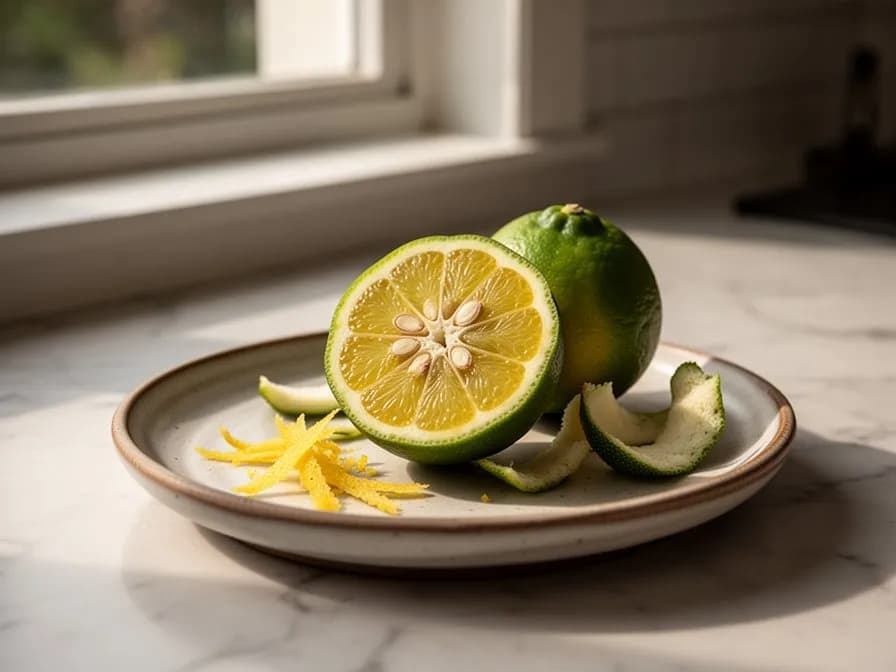
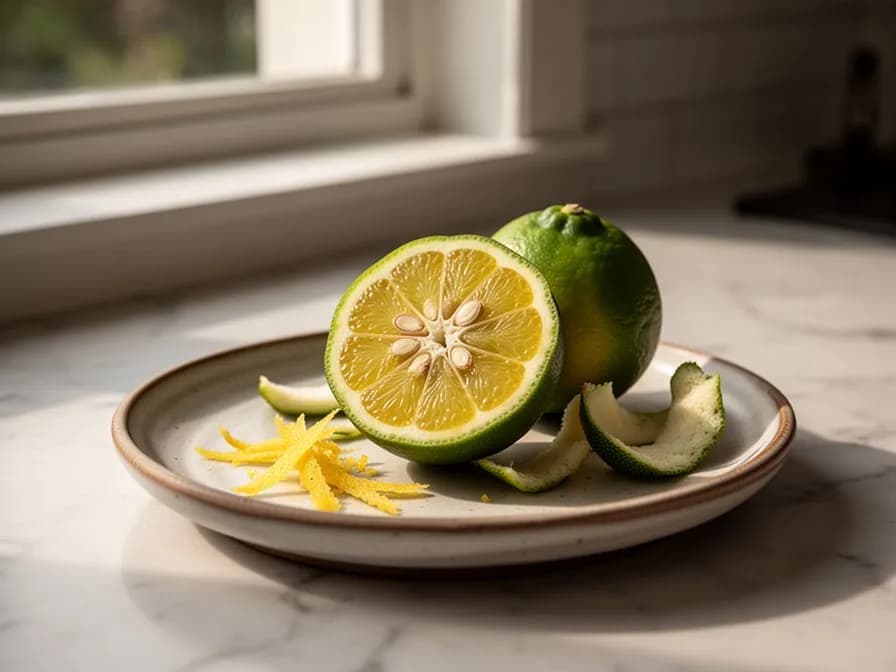
The cut flesh of a limequat reveals abundant juice sacs, bright acidity, and a seed count far lower than its lime parent
Quick Recipes
Simple recipes using fresh Limequat
Limequat Marmalade
20 minutes active, plus overnight macerationA vibrant, intensely flavored marmalade that showcases the limequat's most distinctive feature: the fact that the entire fruit, peel and all, goes into the preserve. The sweet kumquat-like peel tempers the sharp citrus bitterness typical of lime marmalade, producing a condiment with remarkable depth that pairs beautifully with cheese, roast meats, and morning toast. The overnight maceration softens the peel and extracts pectin for a reliable set without commercial pectin.
Limequat Agua Fresca
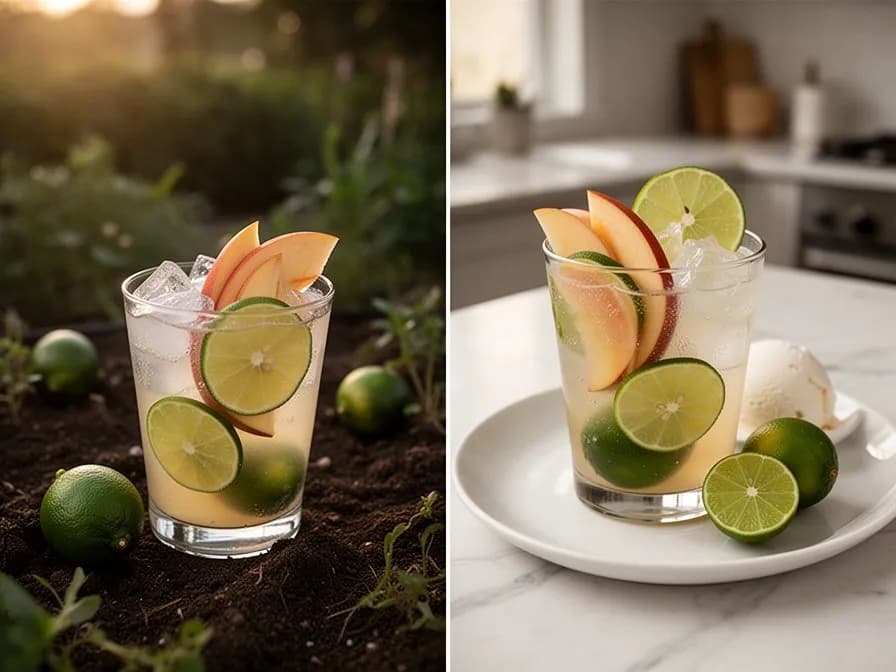
10 minutesA refreshing Mexican-inspired cooler that leverages the limequat's whole-fruit usability to extract maximum flavor with minimal effort. Unlike lime juice drinks that use only the strained juice, this preparation blends whole limequats including the peel before straining, resulting in a more complex, aromatic beverage with a faintly floral quality from the kumquat heritage. It is lightly sweetened to let the natural citrus character dominate.
Whole Limequat and Chili Dipping Sauce
15 minutesA punchy, aromatic dipping sauce inspired by Southeast Asian calamansi dipping condiments, where the limequat steps in as an equally compelling substitute. Blending the whole fruit with fish sauce, palm sugar, and fresh chili produces a sauce with layered complexity: the tart flesh provides acidity, the sweet peel adds fragrant depth, and the heat cuts through rich grilled meats, seafood, and spring rolls. It keeps refrigerated for up to a week.
Because the entire limequat can be eaten without peeling, it makes an effortlessly elegant garnish for drinks and desserts
Yield & Spacing Calculator
See how many Limequat plants fit in your garden bed based on the recommended 180cm spacing.
0
Limequat plants in a 4×4 ft bed
0 columns × 0 rows at 180cm spacing
Popular Varieties
Some of the most popular limequat varieties for home gardeners, each with unique characteristics.
Eustis
The original and most widely grown limequat variety, producing oval yellow-green fruits with excellent lime-like flavor and good cold hardiness.
Lakeland
A slightly rounder limequat variety with thinner rind and more abundant juice. Good producer in container culture.
Tavares
A slightly larger-fruited selection with a more pronounced lime flavor and moderate cold tolerance. Less commonly available than Eustis.
Limequat juice serves as an excellent substitute for lime juice in cocktails, ceviche, and dressings, with a slightly more complex, kumquat-like sweetness. The whole fruit can be eaten fresh or sliced into salads and garnishes. Limequats make superb marmalade with a unique lime-kumquat character. They are excellent muddled in mojitos and caipirinha-style drinks. The zest adds bright citrus notes to baked goods, and sliced limequats complement fish and seafood dishes beautifully.
When should I plant Limequat?
Plant Limequat in March, April, May. It takes approximately 730 days to reach maturity, with harvest typically in November, December, January, February.
What are good companion plants for Limequat?
Limequat grows well alongside Lime, Kumquat. Companion planting can improve growth, flavor, and natural pest control.
What hardiness zones can Limequat grow in?
Limequat thrives in USDA hardiness zones 8 through 11. With greenhouse protection, it may be grown in zones 6 through 12.
How much sun does Limequat need?
Limequat requires Full Sun (6-8h+). This means at least 6-8 hours of direct sunlight daily.
How far apart should I space Limequat?
Space Limequat plants 180cm (71 inches) apart for optimal growth and air circulation.
What pests and diseases affect Limequat?
Common issues include Whiteflies, Citrus Leaf Miner, Citrus Canker, Sooty Mold. Prevention through good garden practices like crop rotation, proper spacing, and companion planting is the best approach. See the detailed pests and diseases section above for symptoms, prevention, and treatment for each.
How do I store Limequat after harvest?
Fresh limequats keep for one to two weeks at room temperature and up to a month refrigerated. The juice can be squeezed and frozen in ice cube trays as a lime substitute. Limequats make excellent marmalade, blending the tartness of lime with the sweetness of kumquat rind. They can be candied whole, ...
What are the best Limequat varieties to grow?
Popular varieties include Eustis, Lakeland, Tavares. Each has unique characteristics suited to different growing conditions and culinary preferences. See the varieties section above for detailed descriptions.
What soil does Limequat need?
Limequat grows well in most well-draining soils with a pH of 5.5 to 6.5. Sandy loam is ideal, but the tree adapts to clay soils if drainage is improved with organic amendments. For containers, use a quality citrus potting mix with perlite. Feed every four to six weeks during the growing season with ...
Can you eat a limequat whole, skin and all?
Yes, the entire limequat including the skin is edible, which is its most celebrated characteristic inherited from the kumquat parent. The skin is thin, aromatic, and naturally sweet, while the juice-filled flesh is tart in the manner of a key lime. Eating the fruit whole produces a balanced combination of sweet peel and sour flesh in a single bite. The skin contains fragrant essential oils that add complexity to the flavor. Most people eat them as a fresh snack, slice them into drinks, or use them whole in preserves and marinades without any preparation beyond washing and removing seeds.
How cold-hardy is a limequat compared to a standard lime?
Limequats are significantly more cold-tolerant than key limes or Persian limes, which sustain damage at temperatures approaching zero degrees Celsius. A mature, hardened limequat can briefly tolerate temperatures down to around minus five degrees Celsius without fatal damage, though foliage will suffer and young growth will die back. This places them in USDA hardiness zone nine with reasonable confidence, and marginal zone eight with reliable frost protection. They remain more frost-sensitive than kumquats, lemons, or satsuma mandarins, so protection during severe cold events is still advisable, particularly for container-grown specimens that cannot buffer root temperatures as effectively as ground-planted trees.
How long does it take a limequat to produce fruit?
A grafted limequat purchased from a nursery typically produces its first modest crop in the second or third year after planting, provided it is grown in adequate sun with good nutrition and consistent moisture. Seedling-grown trees, which are less commonly sold but sometimes encountered, may take five to eight years before they reach flowering maturity. Once established, limequats tend to flower and fruit in multiple cycles throughout the year in warm climates, meaning the transition from no fruit to a nearly continuous supply happens relatively quickly compared to many tree fruits. Be patient and allow a young tree at least one full growing season to settle its roots before expecting significant fruit production.
What is the difference between Eustis, Lakeland, and Tavares limequats?
All three are limequat varieties but differ in their parentage, fruit character, and cold hardiness. Eustis is the original and most widely available limequat, bred from a cross of the round kumquat and the key lime, producing small oval fruit about three centimeters long with classic lime tartness and edible sweet skin. Lakeland is also a kumquat-key lime cross but produces slightly larger fruit with a rounder shape and marginally sweeter flavor. Tavares was developed from a cross of the oval kumquat and the Persian lime, producing the largest of the three, with milder acidity and a less intensely lime-forward flavor. Eustis is the best choice for most home gardeners seeking the most characteristic limequat experience, while Tavares suits those who prefer a less acidic fruit or want the largest individual fruit size.
Why are the leaves on my limequat turning yellow?
Yellowing leaves on a limequat are most commonly caused by one of four issues: overwatering and root suffocation, nutrient deficiency, pest infestation, or natural seasonal leaf drop. If yellowing is uniform across older leaves while new growth remains green, the tree is likely experiencing nitrogen deficiency and needs a citrus fertilizer application. If yellowing appears as green veins against a yellow background on younger leaves, the problem is likely iron or manganese deficiency caused by high soil pH or waterlogged roots reducing nutrient uptake. Inspect the undersides of leaves for scale insects or spider mites, which cause speckling or yellowing through sap extraction. If the root ball has been consistently wet, investigate for root rot by checking whether roots are brown and mushy rather than white and firm. In most cases, adjusting watering, applying a complete citrus fertilizer, and treating for pests if present resolves the yellowing within a few weeks.
Can limequats be grown in pots long-term?
Limequats are genuinely well-suited to container growing over many years and are among the best citrus for this purpose. Their naturally compact size means they do not outgrow containers as rapidly as many other citrus, and they can remain productive in a large forty-five to sixty-litre pot for five or more years before requiring upsizing. The key requirements for long-term container success are using a high-quality, free-draining citrus potting mix, fertilizing regularly every six to eight weeks during the growing season as nutrients leach quickly with frequent watering, and repotting every two to three years either into a slightly larger container or root-pruning back into the same container with fresh mix. Container trees should never be allowed to dry out completely, but equally must never sit in standing water. Given these conditions, a pot-grown limequat can remain productive and attractive for a decade or longer.
Ready to Grow Limequat?
Add Limequat to your garden plan and start designing your perfect layout.

Vladimir Kusnezow
Gardener and Software Developer
Zone 6b gardener. Growing vegetables and fruits in soil and hydroponics for 6 years. I built PlotMyGarden to plan my own gardens.
Jump to Section