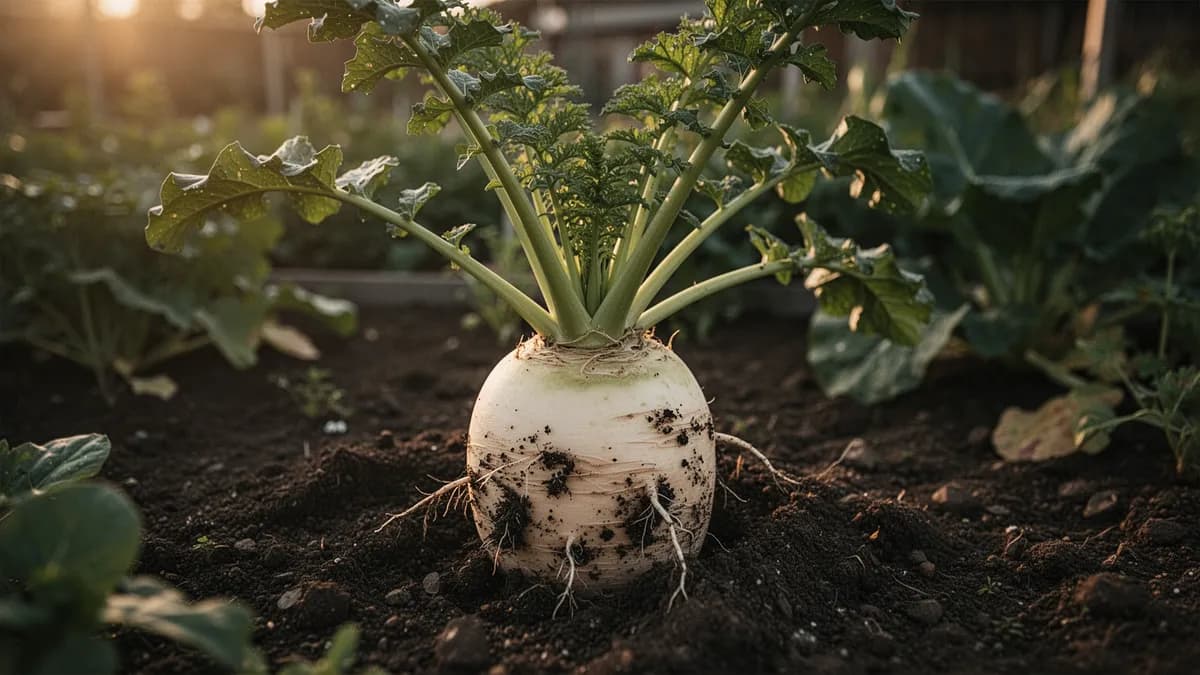
Jicama
Pachyrhizus erosus
At a Glance
It's planting season for Jicama! Start planning your garden now.
A crisp, sweet, starchy root vegetable with a flavor reminiscent of water chestnuts, popular in Mexican and Asian cuisines. Jicama needs a very long warm growing season of at least five months to form usable roots, making it challenging in short-season climates. Only the root is edible; the leaves, stems, and seeds contain rotenone and are toxic. Peel the papery brown skin to reveal the juicy white flesh, which is excellent raw in salads, slaws, and with chili-lime seasoning.
Planting & Harvest Calendar
Growth Stages
From Seed to Harvest
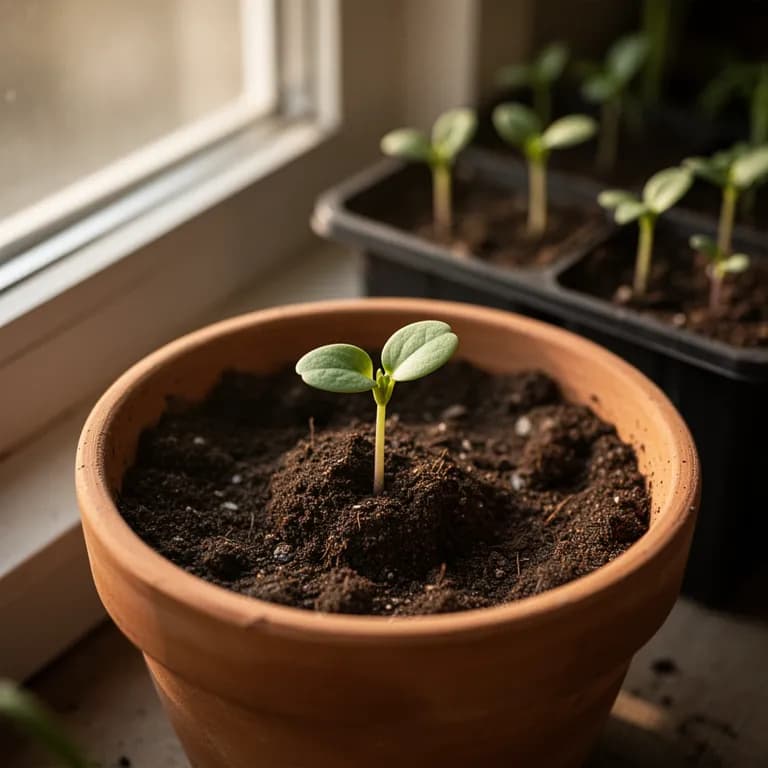
Seed Starting
Days 0–20
Seeds are soaked overnight to soften the hard legume seed coat, then planted 2.5 cm deep in warm soil. Germination is slow and irregular, taking 10-20 days at soil temperatures of 21-29°C (70-85°F). The first leaves are simple and rounded, followed by the characteristic trifoliate leaves of the legume family.
💡 Care Tip
Use a heat mat set to 27°C (80°F) to ensure consistent warmth. Start seeds in deep biodegradable pots to minimize root disturbance during transplanting, as jicama develops a sensitive taproot early.
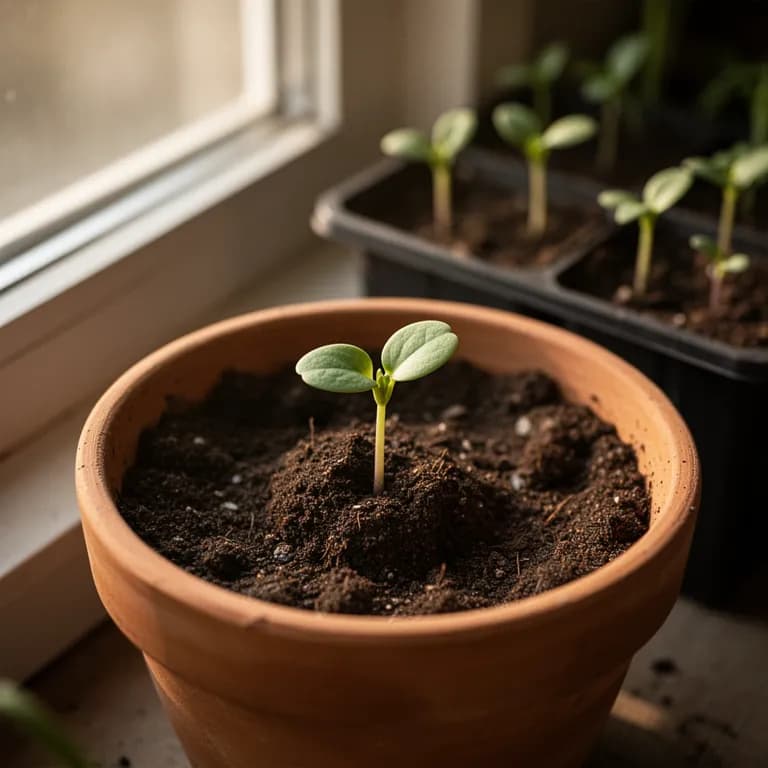
Jicama seedling showing its first trifoliate leaves typical of the legume family
Monthly Care Calendar
What to do each month for your Jicama
May
You are hereTransplant hardened-off seedlings outdoors after all frost danger has passed and soil reaches 18°C (65°F). Space 30-45 cm apart. Install trellises immediately. In zones 9-12, direct sowing is possible once soil is consistently warm.
Did You Know?
Fascinating facts about Jicama
Jicama is a legume — it belongs to the bean family (Fabaceae) and fixes nitrogen in the soil through root nodules, enriching the garden bed for future crops despite being grown entirely for its starchy root rather than its seeds or pods.
Start jicama seeds indoors 8-10 weeks before last frost, soaking seeds overnight before planting 1 inch deep. Seeds germinate in 10-20 days at 70-85°F. Transplant outdoors after all frost danger when soil is warm (65°F+). Space 12-18 inches apart. Jicama is a tropical vine that needs a very long, warm growing season of 150+ days.
Provide a trellis or support for the vigorous vines, which can reach 15-20 feet. Full sun and consistent warmth are essential. Water regularly during the growing season. Pinch flowers as they appear to redirect energy to root development. Remove any seed pods, as they are toxic.
In most temperate climates, jicama will not fully mature due to the short growing season. Use season extension techniques like black plastic mulch, row covers, and greenhouse growing. Harvest before frost kills the vines. Even undersized tubers are edible. The starchy root becomes sweeter and juicier as it matures.
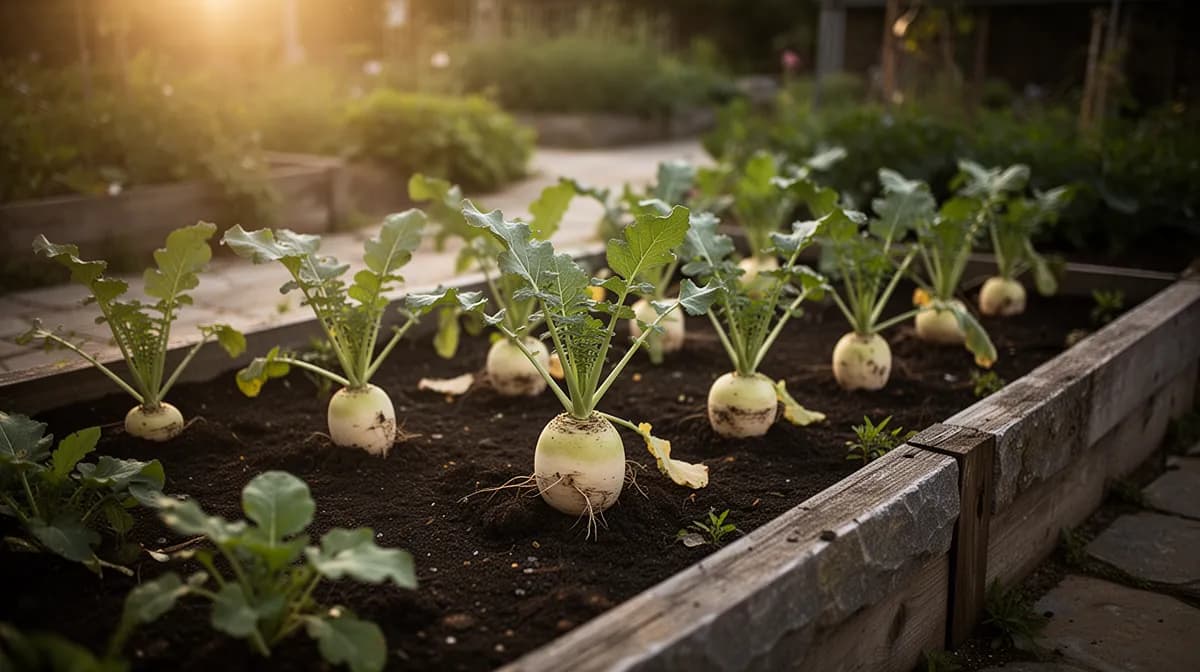
Jicama growing on trellises with black plastic mulch to maintain warm soil temperatures
Jicama (Pachyrhizus erosus) is native to Mexico and Central America, where it has been cultivated for over a thousand years. Archaeological evidence suggests pre-Columbian civilizations including the Aztecs and Maya grew jicama as a staple root crop in the warm lowlands of southern Mexico and Guatemala. The Nahuatl word 'xicamatl' gave rise to the modern name, and the plant was prized for its ability to produce a crisp, hydrating root in the hot, dry conditions of the Mexican tropics.
Following the Spanish conquest of Mexico in the 16th century, jicama was carried across the Pacific to the Philippines by the Manila Galleon trade route. From the Philippines, it spread rapidly throughout Southeast Asia, where the tropical climate was ideal for its cultivation. It became an important crop in Indonesia (bengkuang), Vietnam (cu san), China (sha ge), Thailand, and Malaysia, integrating into local cuisines in ways that often bear little resemblance to its Mexican origins. In many parts of Southeast Asia, jicama is used in spring rolls, popiah, and various stir-fried dishes.
Today, Mexico remains the largest producer and consumer of jicama, where it is sold fresh by street vendors with lime and chili as a beloved snack. China, Southeast Asian nations, and parts of South America also produce significant quantities. In the United States, jicama is grown commercially in small quantities in southern California, Florida, and Hawaii, with most of the supply imported from Mexico. The crop remains challenging for home gardeners outside tropical zones due to its requirement for 150+ frost-free days, but season extension techniques have made it possible to grow small but rewarding harvests in warm temperate climates.
Soak seeds overnight before planting 1 inch deep indoors 8-10 weeks before last frost. Seeds germinate in 10-20 days at 70-85°F. Use a heat mat for best results. Transplant after all frost danger when soil is warm. Jicama does not transplant easily, so use large pots and handle root balls carefully. Direct sowing is only possible in long-season tropical and subtropical areas.
Jicama needs loose, sandy, well-drained soil with a pH of 6.0-6.8. Heavy or clay soils restrict tuber development. Amend with compost and sand for drainage. Apply balanced fertilizer at planting and monthly during growth. Potassium promotes tuber development. Avoid excessive nitrogen, which favors vine growth. Warm soil is critical; use black plastic mulch in cooler climates.
Check Your Zone
See if Jicama is suitable for your location.
25°C – 35°C
77°F – 95°F
Jicama is a true tropical plant that requires sustained warmth throughout its long growing season. Growth slows dramatically below 20°C (68°F) and ceases entirely below 15°C (60°F). Frost is fatal to the vines. The optimal temperature range for tuber development is 25-35°C (77-95°F), with warm nights above 18°C (65°F) being particularly important for continuous growth. In tropical regions with year-round warmth, tubers can reach enormous sizes given enough time.
Common issues affecting Jicama and how to prevent and treat them organically.
The extremely long growing season (150+ days) makes jicama impossible to fully mature in most northern climates. Use every season extension technique available. Toxic vines, leaves, and seeds must be kept away from children and pets. Remove all flowers and seed pods. The thick skin must always be peeled before eating. Cold soil temperatures slow growth dramatically; plant only when soil is truly warm.
Jicama is a legume that fixes nitrogen in the soil, benefiting neighboring and subsequent crops. Train vines on trellises where they provide shade for heat-sensitive crops below. The tropical growth requirements mean jicama pairs best with other warm-season crops like peppers, tomatoes, and squash. Keep adequate distance from other root crops competing for soil space.
- 1Start seeds early and indoors without exception in temperate climates. Jicama needs every possible day of warm growing weather. Starting 8-10 weeks before last frost indoors gives plants a critical head start that directly translates to larger tubers at harvest.
- 2Black plastic mulch is essential outside the tropics. It raises soil temperature by 3-5°C (5-10°F), mimicking the warm tropical soil that jicama demands. Lay it 2-3 weeks before transplanting and cut slits for each plant.
- 3Pinch every flower without fail. This is the single most impactful practice for home jicama growers. Flowering signals the plant to produce seeds rather than enlarge its tuber. Check vines every 2-3 days during the flowering period and remove all blossoms immediately.
- 4Provide a tall, sturdy trellis. Jicama vines are vigorous climbers that reach 4-6 meters. Trellising keeps vines off the ground, improves air circulation, reduces disease pressure, and makes flower removal much easier.
- 5Never let the soil dry out during tuber bulking (roughly days 100-150). Even brief drought stress during this critical period permanently stunts tuber development. Consistent moisture of 2.5-5 cm per week is essential.
- 6Use a potassium-rich fertilizer once tuber formation begins. Excessive nitrogen produces lush vines but small tubers. Switch from balanced fertilizer to a potassium-heavy formulation (like 5-10-15 or sulfate of potash) at the 8-week mark.
- 7Treat all plant parts except the peeled tuber as toxic. The vines, leaves, flowers, and seeds contain rotenone. Wear gloves when handling vines, keep children and pets away, and dispose of plant debris in municipal waste rather than home compost.
- 8In short-season areas, consider growing jicama in large containers inside a greenhouse or high tunnel. Even a modest temperature advantage of a few degrees can add 30-45 days to the effective growing season and dramatically increase tuber size.
Harvest jicama before the first frost, typically 150+ days after planting. Tubers can range from 1 to 5+ pounds depending on growing season length. Dig carefully with a fork to avoid damaging the round tuber. Brush off soil gently. All parts of the plant except the tuber flesh are toxic (vines, leaves, seeds, skin). Peel the thick brown skin before eating. Even small, immature tubers are sweet and edible.
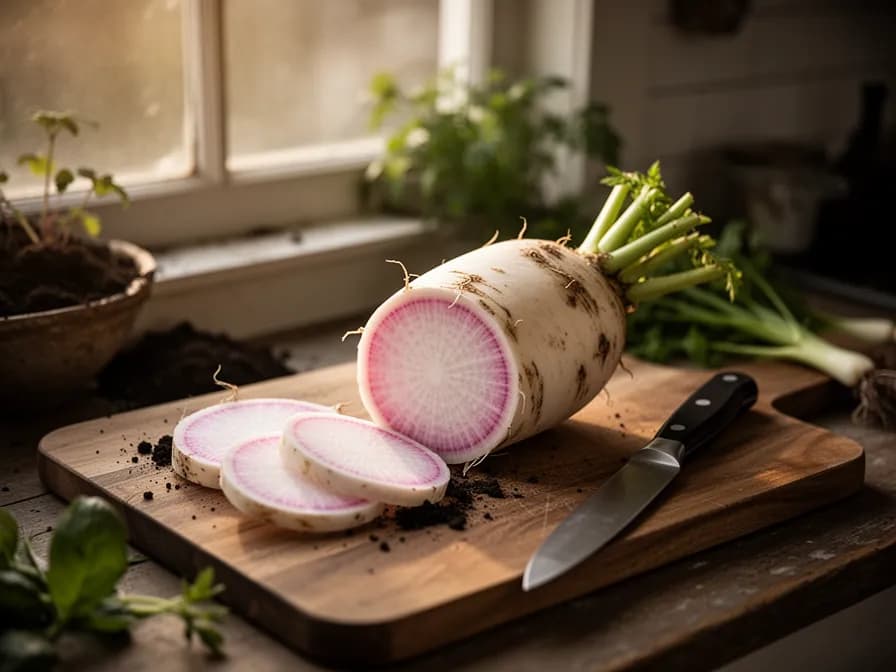
A mature jicama tuber can weigh 1-2 kg after a full growing season of 150+ days
Store whole, unpeeled jicama at room temperature for 1-2 weeks or in the refrigerator for 2-3 weeks. Once cut, wrap tightly and refrigerate for up to 1 week. The flesh does not brown like other cut root vegetables. Jicama can be cut into sticks and frozen, though texture softens. It does not can well. Best enjoyed fresh for its signature crisp, juicy crunch.
Plan your garden with ease
Love growing Jicama? Use our free garden planner to design your beds, track planting dates, and get personalized care reminders.
Nutritional Info
Per 100g serving
38
Calories
Health Benefits
- Excellent source of dietary fiber, providing 20% of the daily value per 100g — much of it as inulin, a prebiotic fiber that feeds beneficial gut bacteria
- Good source of vitamin C at 22% of the daily value per 100g, supporting immune function and skin health while acting as an antioxidant
- Very low calorie density at only 38 calories per 100g despite its satisfying crunch, making it an ideal snack for weight management
- Contains significant amounts of inulin, a type of oligofructose that does not spike blood sugar and may improve insulin sensitivity
- Provides potassium, magnesium, and iron essential for muscle function, nerve signaling, and oxygen transport
- High water content of approximately 85-90% makes jicama exceptionally hydrating, especially in hot weather
💰 Why Grow Your Own?
Jicama typically sells for $2-4 per pound at grocery stores and $4-6 per pound at farmers markets, with organic jicama fetching even higher prices. A single well-grown plant producing a 1-2 kg tuber represents $4-16 in retail value from a seed that costs less than $1. Growing 4-6 plants can yield $20-80 worth of jicama per season. The true savings are even greater if you live in an area where fresh jicama is hard to find or must be shipped long distances, as home-grown tubers are harvested at peak freshness with superior crunch and sweetness.
Peeled jicama reveals its signature crisp, juicy white flesh with a mild sweet flavor
Quick Recipes
Simple recipes using fresh Jicama
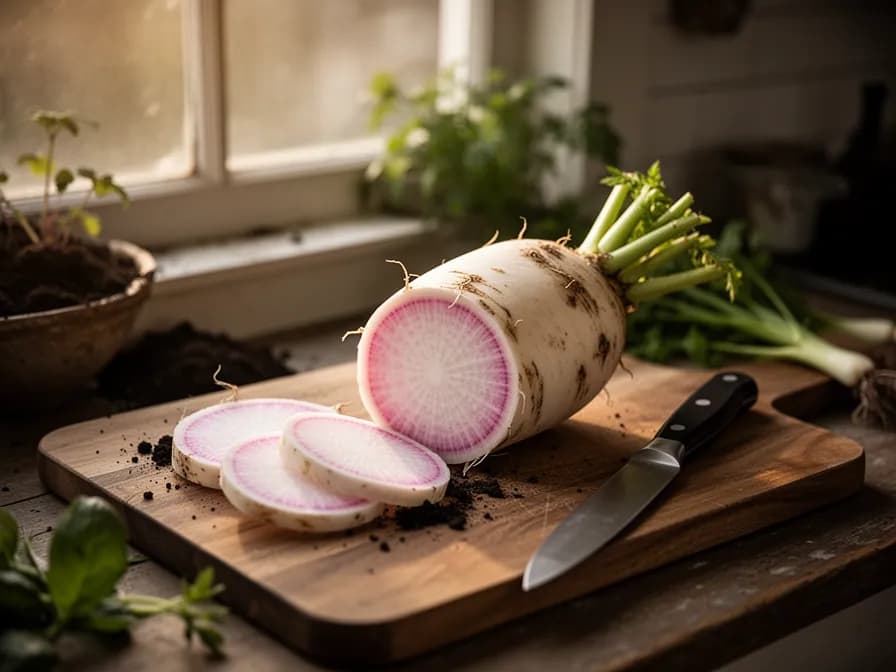
Classic Jicama Sticks with Chili-Lime
10 minThe quintessential Mexican street snack — crisp jicama batons dressed with fresh lime juice, chili powder, and a pinch of salt. No cooking required, and the refreshing crunch is perfect on a hot day. This is the simplest and most popular way to enjoy jicama worldwide.
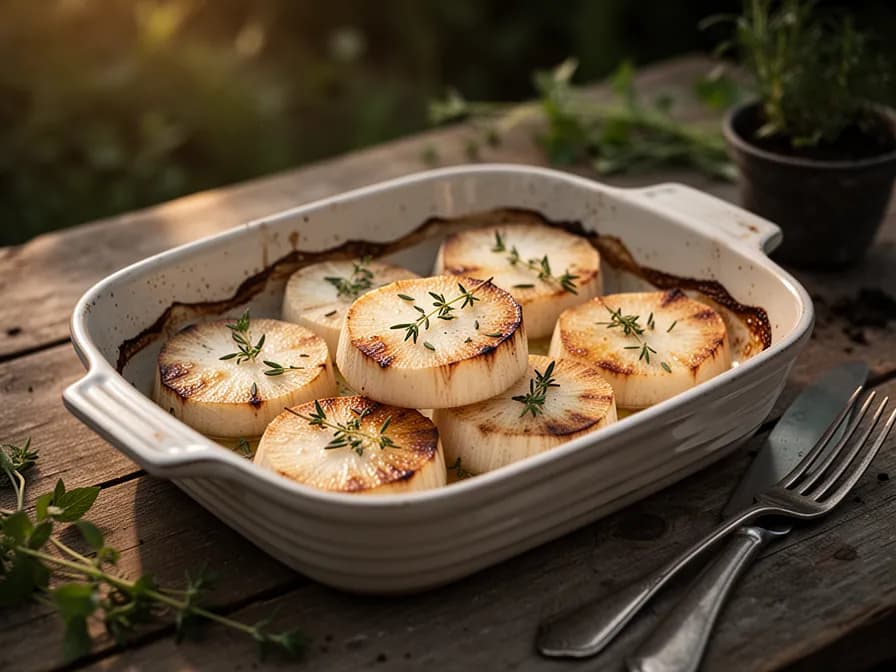
Jicama Mango Salad with Cilantro
15 minA vibrant, refreshing salad combining the crisp crunch of jicama with sweet mango, red onion, and fresh cilantro in a zesty lime dressing. The contrasting textures and flavors make this a stunning side dish for grilled meats or fish tacos.
Jicama Stir-Fry with Sesame and Ginger
20 minJicama sliced thin and briefly stir-fried retains its signature crunch while absorbing the savory flavors of soy, ginger, and sesame. This Asian-inspired preparation showcases jicama as a superb low-carb substitute for water chestnuts in any stir-fry.
Classic Mexican street snack — jicama sticks with lime juice, chili powder, and salt
Yield & Spacing Calculator
See how many Jicama plants fit in your garden bed based on the recommended 45cm spacing.
4
Jicama plants in a 4×4 ft bed
2 columns × 2 rows at 45cm spacing
Popular Varieties
Some of the most popular jicama varieties for home gardeners, each with unique characteristics.
Jicama de Agua
The common variety with round, turnip-shaped roots and sweet, juicy flesh. Most widely available.
Jicama de Leche
Less common type with elongated roots and milkier juice. Slightly starchier texture.
Jicama is prized for its crisp, juicy, slightly sweet flesh that stays crunchy even after cutting. Eat raw in sticks with lime juice and chili powder (a classic Mexican street snack). Add to fruit salads and slaws for refreshing crunch. Dice into salsas. Stir-fry briefly for Asian-inspired dishes. Use in spring rolls. Julienne for Vietnamese-style salads. The neutral, slightly sweet flavor pairs with both savory and sweet preparations.
When should I plant Jicama?
Plant Jicama in April, May. It takes approximately 150 days to reach maturity, with harvest typically in October, November.
What are good companion plants for Jicama?
Jicama grows well alongside Corn, Basil. Companion planting can improve growth, flavor, and natural pest control.
What hardiness zones can Jicama grow in?
Jicama thrives in USDA hardiness zones 9 through 12. With greenhouse protection, it may be grown in zones 7 through 13.
How much sun does Jicama need?
Jicama requires Full Sun (6-8h+). This means at least 6-8 hours of direct sunlight daily.
How far apart should I space Jicama?
Space Jicama plants 45cm (18 inches) apart for optimal growth and air circulation.
What pests and diseases affect Jicama?
Common issues include Root Rot, Aphids, Spider Mites. Prevention through good garden practices like crop rotation, proper spacing, and companion planting is the best approach. See the detailed pests and diseases section above for symptoms, prevention, and treatment for each.
How do I store Jicama after harvest?
Store whole, unpeeled jicama at room temperature for 1-2 weeks or in the refrigerator for 2-3 weeks. Once cut, wrap tightly and refrigerate for up to 1 week. The flesh does not brown like other cut root vegetables. Jicama can be cut into sticks and frozen, though texture softens. It does not can wel...
What are the best Jicama varieties to grow?
Popular varieties include Jicama de Agua, Jicama de Leche. Each has unique characteristics suited to different growing conditions and culinary preferences. See the varieties section above for detailed descriptions.
What soil does Jicama need?
Jicama needs loose, sandy, well-drained soil with a pH of 6.0-6.8. Heavy or clay soils restrict tuber development. Amend with compost and sand for drainage. Apply balanced fertilizer at planting and monthly during growth. Potassium promotes tuber development. Avoid excessive nitrogen, which favors v...
Can I grow jicama in a northern climate with short summers?
It is challenging but possible with aggressive season extension. Start seeds indoors 8-10 weeks early, use black plastic mulch to warm the soil, and consider growing in a greenhouse or high tunnel. Row covers can extend the season on both ends. You likely will not get the large 2+ kg tubers that tropical growers achieve, but even fist-sized tubers are sweet, crisp, and delicious. Every extra warm day translates directly to more tuber growth.
Why must I remove the flowers from my jicama plant?
Flower removal is the most critical practice for jicama cultivation. When the plant flowers and sets seed, it redirects energy from tuber enlargement to seed production. Additionally, jicama seeds are toxic — they contain rotenone, a natural insecticide. By pinching off all flowers as they appear, you force the plant to channel all its energy into growing a larger, sweeter tuber. Neglecting flower removal can reduce tuber size by 50% or more.
Is it true that jicama vines and seeds are poisonous?
Yes — this is critically important to understand. Only the peeled tuber flesh is safe to eat. The vines, leaves, flowers, seed pods, and seeds all contain rotenone and related rotenoids, which are toxic to humans, mammals, fish, and insects. The thick brown skin of the tuber should also be completely removed before eating. Always keep children and pets away from the growing vines, and dispose of all plant debris safely. Despite this toxicity, the peeled root is perfectly safe and nutritious.
How do I know when jicama is ready to harvest?
Jicama tubers are edible at any size once they begin to swell, so there is no single 'ready' date. In temperate climates, harvest before the first frost — typically 150+ days after planting. Gently dig around the base of the plant to check tuber size. Larger tubers develop with longer, warmer growing seasons. In tropical regions, tubers can be left in the ground for months to reach 5+ kg. The key indicator is your local frost date: harvest before any frost reaches the roots.
Can I grow jicama in a container?
Yes, and containers can actually be advantageous because they warm up faster than garden soil. Use a large container of at least 40-75 liters (10-20 gallons) with drainage holes. Fill with a loose, well-draining potting mix amended with perlite or sand. Provide a trellis for the vines. Container growing works especially well inside a greenhouse or on a south-facing patio where reflected heat boosts temperatures. Water frequently as containers dry out faster than garden beds.
What does jicama taste like and how do I eat it?
Jicama has a mild, slightly sweet flavor often compared to a cross between an apple and a water chestnut, with an exceptionally crisp, juicy texture. The most popular preparation is raw — peeled and cut into sticks with lime juice and chili powder. It is also excellent julienned in salads, diced in fresh salsas, sliced into spring rolls, or briefly stir-fried where it retains its signature crunch. Unlike most root vegetables, jicama is primarily enjoyed raw, which also preserves its full vitamin C content.
Ready to Grow Jicama?
Add Jicama to your garden plan and start designing your perfect layout.

Vladimir Kusnezow
Gardener and Software Developer
Zone 6b gardener. Growing vegetables and fruits in soil and hydroponics for 6 years. I built PlotMyGarden to plan my own gardens.
Jump to Section