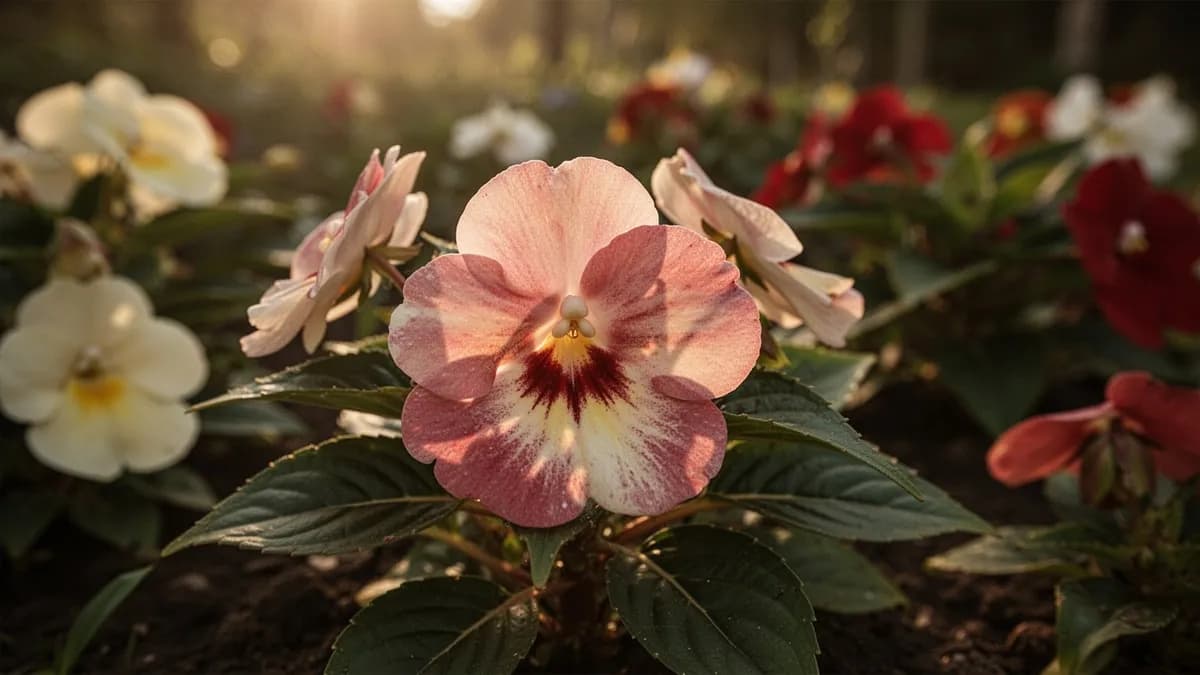
Impatiens
Impatiens walleriana
At a Glance
It's planting season for Impatiens! Start planning your garden now.
The quintessential shade annual producing non-stop blooms in bright colors all summer without deadheading. Impatiens require consistent moisture and will wilt dramatically when dry, though they recover quickly with watering. Avoid planting in areas with downy mildew history and choose resistant New Guinea types for sunnier spots.
Planting & Harvest Calendar
Growth Stages
From Seed to Harvest
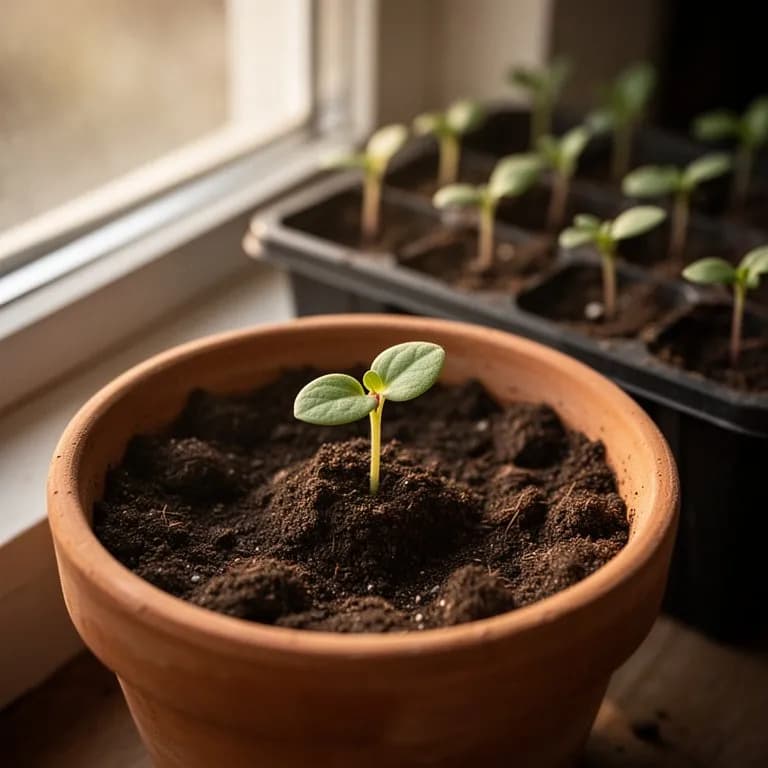
Seed Starting
Days 0–14
Impatiens seeds are extremely small and require light to germinate. Press them gently onto the surface of moist, fine-textured seed-starting mix without covering. Seeds need consistent warmth of 22-25°C and humidity to sprout. Germination is slow and can take 10-21 days.
💡 Care Tip
Cover seed trays with clear plastic wrap or a humidity dome to maintain moisture. Provide bright indirect light or fluorescent grow lights for 12-16 hours daily. Mist the surface rather than watering heavily to avoid displacing the tiny seeds.
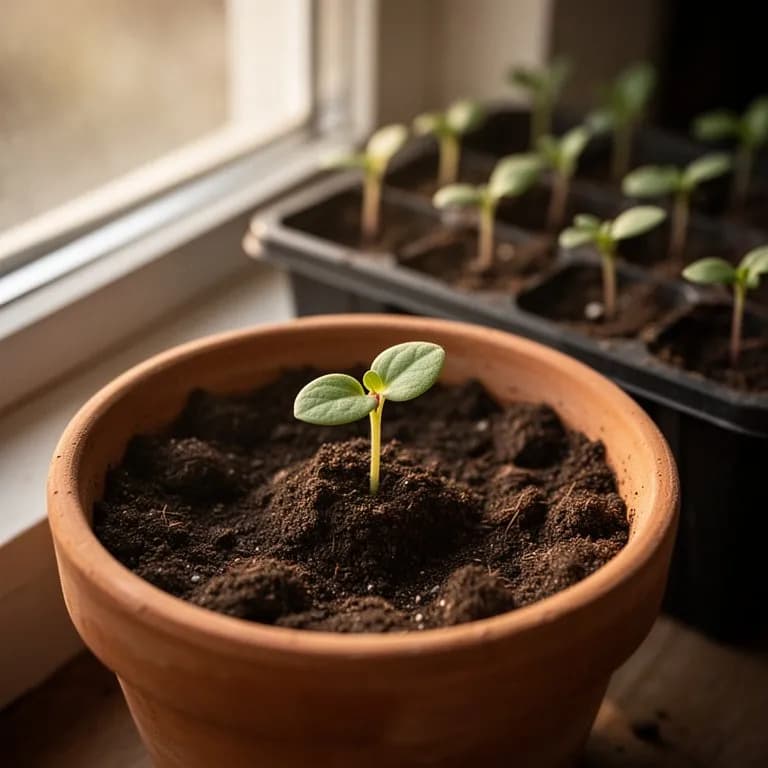
Impatiens seedlings are delicate and slow to establish, requiring consistent warmth and moisture during their early weeks
Monthly Care Calendar
What to do each month for your Impatiens
May
You are hereAfter all danger of frost has passed and nighttime temperatures are consistently above 13°C, transplant impatiens into their final positions in shaded garden beds, containers, or hanging baskets. Space plants 25-30 cm apart. Water thoroughly after planting and apply a thin layer of mulch.
Did You Know?
Fascinating facts about Impatiens
The name Impatiens comes from the Latin word for impatient, referring to the way the ripe seed capsules burst open explosively at the slightest touch, catapulting seeds up to a meter away from the parent plant.
Plant impatiens transplants outdoors after all danger of frost has passed and nighttime temperatures remain above 50 degrees Fahrenheit. Choose a location with partial to full shade, as traditional Impatiens walleriana cannot tolerate direct sun for more than a few morning hours. Space plants ten to twelve inches apart in rich, moist, well-drained soil amended with generous amounts of compost.
Impatiens are moisture-loving plants that wilt dramatically when dry but recover quickly after watering. Keep soil consistently moist throughout the growing season, watering whenever the top inch of soil feels dry. Apply a two to three inch layer of mulch to retain moisture and keep roots cool. In containers, check moisture levels daily during hot weather, as impatiens in pots dry out faster than those in the ground.
Feed every two to three weeks with a balanced liquid fertilizer to sustain continuous blooming. Impatiens are self-cleaning and never need deadheading, making them the ultimate low-maintenance shade flower. Pinch young plants once to encourage branching if they arrive from the nursery with a single stem. Watch for downy mildew, a devastating disease that has become widespread in many areas, and consider switching to resistant SunPatiens or New Guinea impatiens if your area is affected.
Impatiens walleriana, commonly known as busy Lizzie, is a tender perennial native to the mountainous tropical forests of eastern Africa, where it grows wild along stream banks and on the damp, shaded forest floor in countries including Tanzania, Mozambique, Kenya, and Malawi. The species was first described scientifically by the British botanist Joseph Dalton Hooker in 1868 and was named in honor of Horace Waller, a British missionary and antislavery activist who collected plant specimens during his years in East Africa. The plant was introduced to European horticulture in the late nineteenth century, initially grown as a greenhouse curiosity and conservatory specimen. Its ability to flower profusely in low light conditions quickly made it popular among Victorian gardeners who struggled to find colorful plants for their shaded parlor gardens and north-facing window boxes. By the early twentieth century, plant breeders in Europe and the United States began developing compact cultivars in a broader range of colors, transforming impatiens from a botanical oddity into a mainstream bedding plant. The mid-twentieth century saw an explosion in impatiens popularity as garden centers and nurseries recognized the enormous demand for shade-tolerant annuals. By the 1980s and 1990s, impatiens had become the best-selling bedding plant in North America, with hundreds of millions of plants sold annually. This dominance was challenged beginning around 2004 when a devastating strain of downy mildew caused by Plasmopara obducens began spreading through impatiens plantings worldwide, wiping out entire landscape installations almost overnight. The crisis spurred intensive breeding efforts that led to the development of resistant species and interspecific hybrids, including the increasingly popular Impatiens hawkeri (New Guinea impatiens) and SunPatiens series. Today impatiens remain a beloved choice for shade gardens, containers, and hanging baskets around the world, valued for their unmatched flower power in low light and their forgiving, easy-care nature.
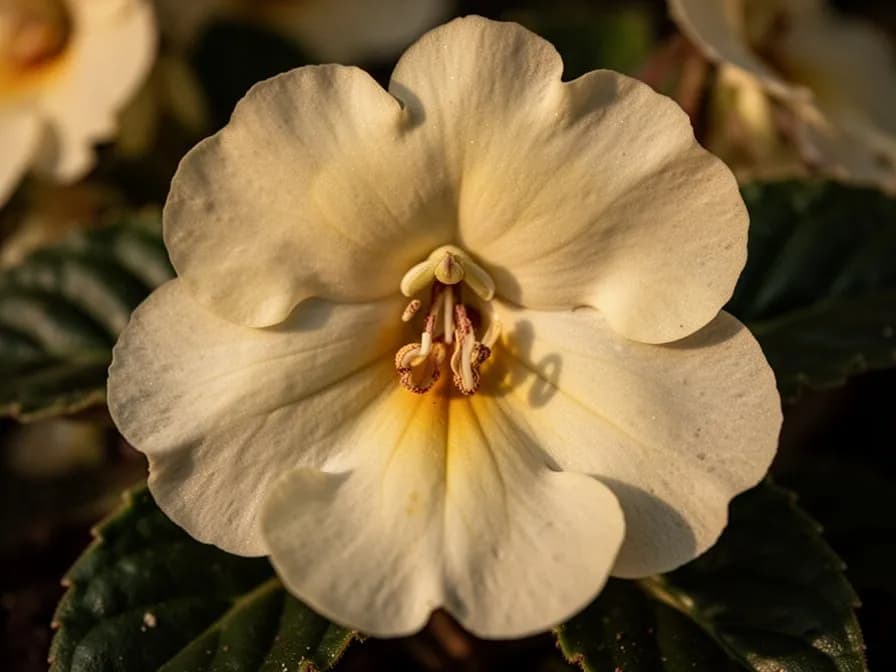
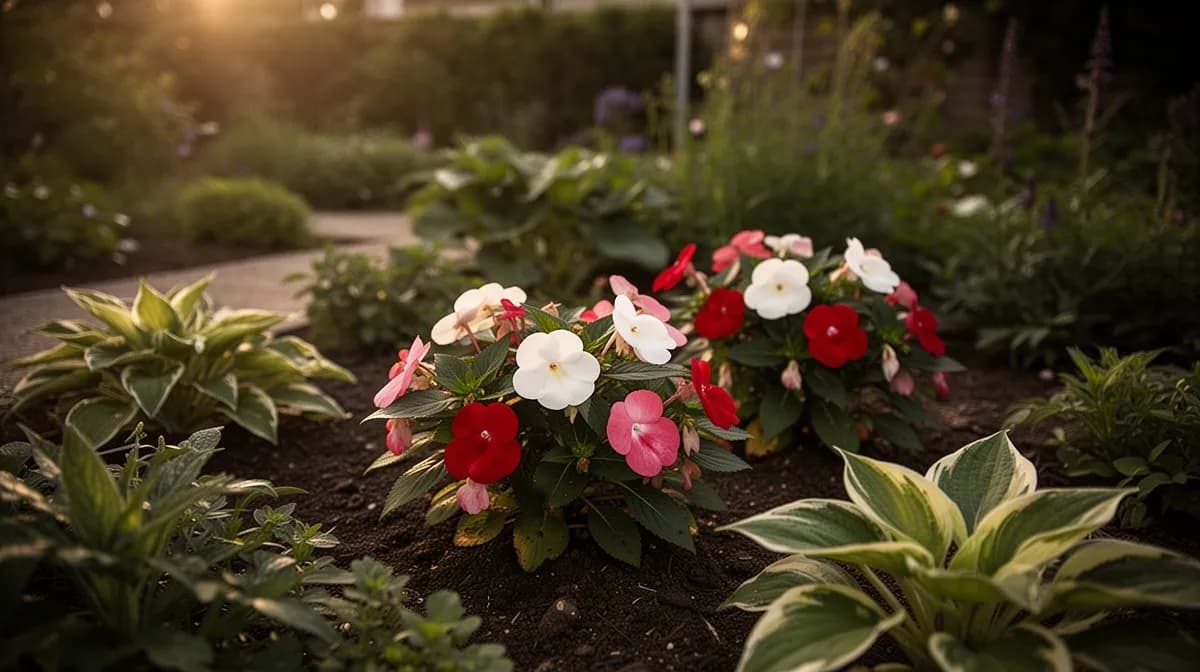
Impatiens are available in an extraordinary range of colors including pink, red, white, coral, salmon, lavender, and bicolor combinations
Impatiens seeds are very fine and need light to germinate. Start seeds indoors ten to twelve weeks before the last frost, sowing on the surface of moist seed-starting mix without covering. Keep at 70 to 75 degrees Fahrenheit under fluorescent lights and maintain consistent surface moisture. Germination takes ten to twenty days. Seedlings grow very slowly at first and need patience. Most gardeners find it more convenient to purchase established transplants, as growing impatiens from seed requires considerable time and attention.
Impatiens thrive in rich, humus-laden, consistently moist soil with a pH of 6.0 to 6.5. Amend planting areas with generous compost to improve moisture retention and soil structure. Apply a balanced slow-release fertilizer at planting time and supplement with liquid fertilizer every two to three weeks during the growing season. In containers, use a moisture-retentive potting mix and feed weekly with diluted liquid fertilizer. Avoid letting soil dry out completely, which stresses plants and reduces flowering.
Check Your Zone
See if Impatiens is suitable for your location.
13°C – 29°C
55°F – 84°F
Impatiens perform best in moderate temperatures between 13°C and 29°C. They are true warm-season plants that suffer immediate damage from frost and begin to decline when nighttime temperatures drop below 10°C. Ideal daytime growing temperatures range from 21-27°C with nighttime lows above 15°C. Sustained heat above 32°C, especially in direct sun, causes leaf scorch, wilting, and reduced flowering. In hot climates, impatiens should always be planted in shade or dappled light to keep root zone temperatures cool and manageable.
Common issues affecting Impatiens and how to prevent and treat them organically.
Impatiens downy mildew has devastated traditional Impatiens walleriana in many areas of the eastern United States and Europe, causing complete defoliation and plant death with no effective treatment. This has led to widespread adoption of resistant alternatives. Other common problems include wilting from inconsistent moisture, legginess in deep shade, and slug damage on young transplants. Impatiens are frost-tender and blacken immediately at the first freeze.
Impatiens are classic companions for shade gardens alongside hostas, ferns, begonias, and coleus. They provide season-long color beneath trees where few other flowering annuals will thrive. Plant alongside caladiums for a tropical-looking shade display. In containers, combine with trailing ivy, asparagus fern, and creeping Jenny for layered shade combinations. The bright flower colors of impatiens light up dark garden corners and north-facing foundation plantings.
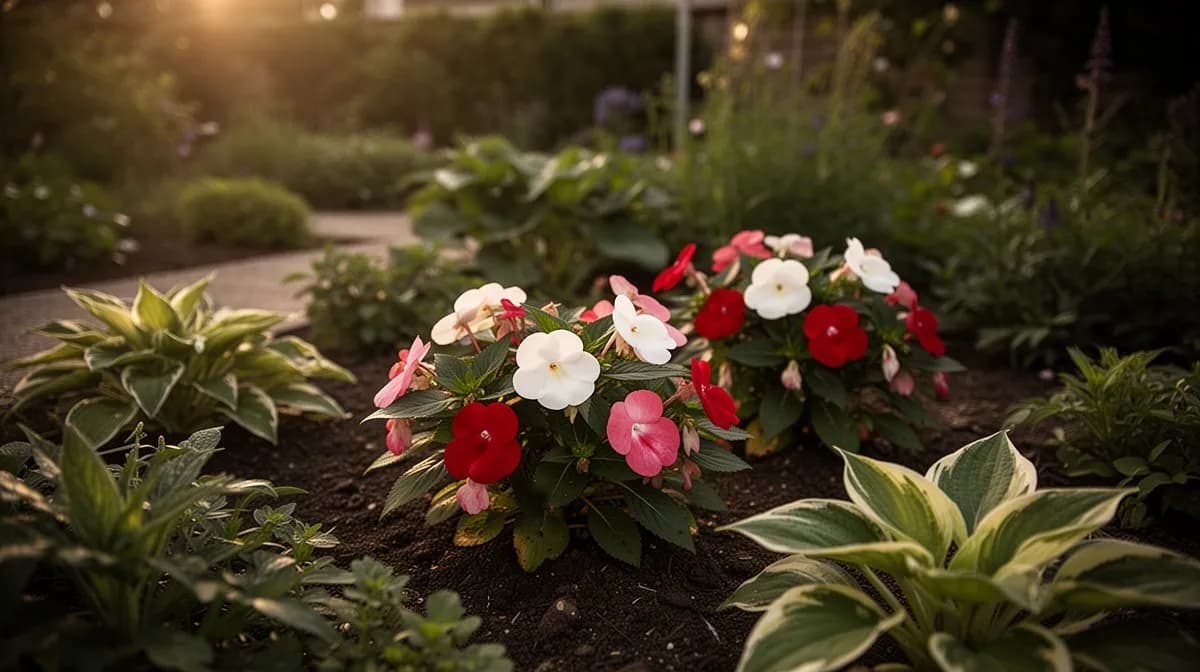
Shade-loving impatiens brighten areas beneath trees and along north-facing walls where direct sunlight is limited
- 1Plant impatiens in partial to full shade for the best performance. While they tolerate some morning sun in cooler climates, direct afternoon sunlight causes leaf scorch, wilting, and faded flower colors in most regions.
- 2Provide consistently moist, well-drained soil rich in organic matter. Amend heavy clay or sandy soils with compost before planting to improve moisture retention and drainage simultaneously.
- 3Space plants 25-30 cm apart to allow good air circulation, which helps prevent fungal diseases like downy mildew. Avoid overcrowding, even though the gaps between young plants may look sparse at first.
- 4Water impatiens at the base of the plants rather than overhead to keep foliage dry and reduce the risk of downy mildew and other foliar diseases. Morning watering is preferable to evening watering.
- 5Feed every two weeks during the growing season with a balanced water-soluble fertilizer diluted to half strength. Over-fertilizing with high-nitrogen formulas produces leggy growth with fewer flowers.
- 6Pinch back the growing tips of young plants when they have three to four sets of leaves to encourage branching and a denser, more compact habit that fills in more quickly and produces more blooms.
- 7Mulch around impatiens with 5-7 cm of shredded bark or compost to conserve soil moisture, keep root temperatures cool, and suppress weed competition in the garden bed.
- 8Monitor closely for signs of downy mildew, which appears as yellowing leaves, white fuzzy growth on leaf undersides, and sudden defoliation. Remove and destroy affected plants immediately to prevent spread.
- 9Take 8-10 cm stem cuttings in late summer and root them in water or moist perlite to create new plants for overwintering indoors on a bright windowsill. Cuttings root readily within two to three weeks.
- 10In frost-free regions or when grown indoors as houseplants, impatiens can become leggy over time. Cut plants back by half in late winter to rejuvenate them and promote fresh bushy growth and abundant flowering.
Impatiens are not grown as cut flowers and their succulent stems do not hold up well in arrangements. No deadheading is needed, as spent flowers drop cleanly on their own. Impatiens produce seed pods that snap open explosively when touched, hence the common name touch-me-not. To collect seeds, wrap a nearly ripe pod gently in tissue and squeeze to trigger it. Store the tiny seeds in a paper envelope in a cool, dry place. Impatiens self-sow freely in mild climates.
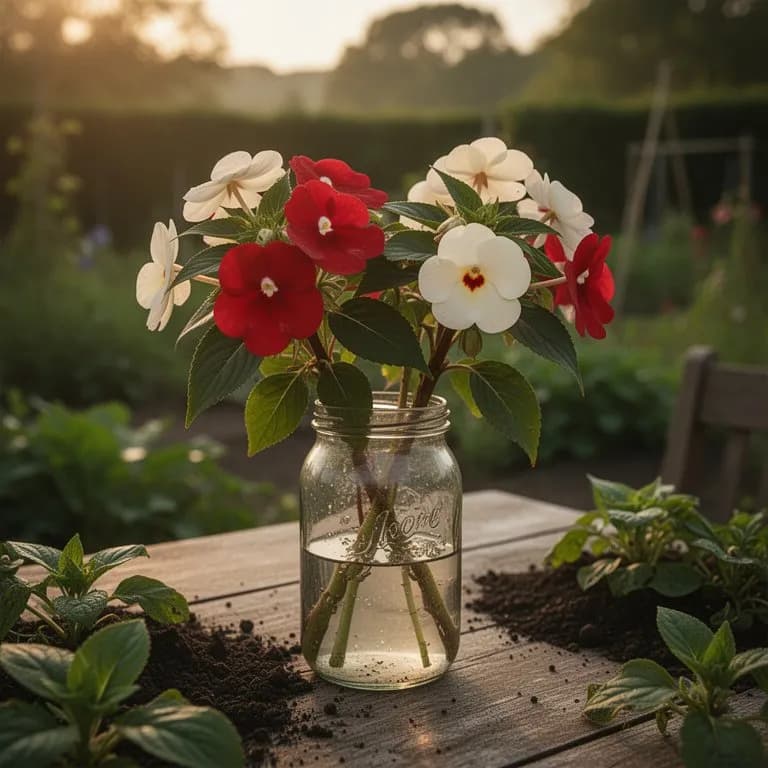
The explosive seed pods of impatiens earned the plant the common name touch-me-not, as they spring open when ripe
Impatiens are not suitable for cutting or drying. Their value lies entirely in their live performance as shade-garden and container plants. To preserve favorite varieties over winter, take three to four inch stem cuttings before the first frost. Impatiens root extremely easily in water within seven to ten days. Pot rooted cuttings and grow indoors on a bright windowsill through winter, then move outdoors again after the last spring frost.
Plan your garden with ease
Love growing Impatiens? Use our free garden planner to design your beds, track planting dates, and get personalized care reminders.
Nutritional Info
Per 100g serving
0
Calories
Health Benefits
- Impatiens are grown exclusively as ornamental plants and are not cultivated for culinary or nutritional purposes
- The flowers are technically edible and occasionally used as a garnish, though they have minimal nutritional value and a bland taste
- In traditional African folk medicine, the leaves and stems were valued for their mucilaginous sap rather than any dietary nutrition
- The plant's primary value lies in its horticultural and aesthetic contributions to shade gardens rather than in any food or nutritional role
- Some Impatiens species such as Impatiens balsamina have been used in traditional Asian medicine, but walleriana is not commonly consumed
- The high water content of impatiens stems means the plant tissue has negligible caloric or nutrient density
💰 Why Grow Your Own?
A pack of impatiens seeds containing 50-100 seeds costs approximately $3-5, while nursery transplants sell for $3-6 per individual plant or $15-25 per flat of 18-36 plants. Starting from seed saves 70-80% compared to buying transplants, and a single seed packet can fill an entire shade garden bed. Rooting stem cuttings from existing plants in late summer provides free new plants for the following year. Given that professional landscapers charge $4-8 per plant installed, a gardener who grows their own impatiens from seed can save $100-300 or more per season on shade garden color alone.
Quick Recipes
Simple recipes using fresh Impatiens
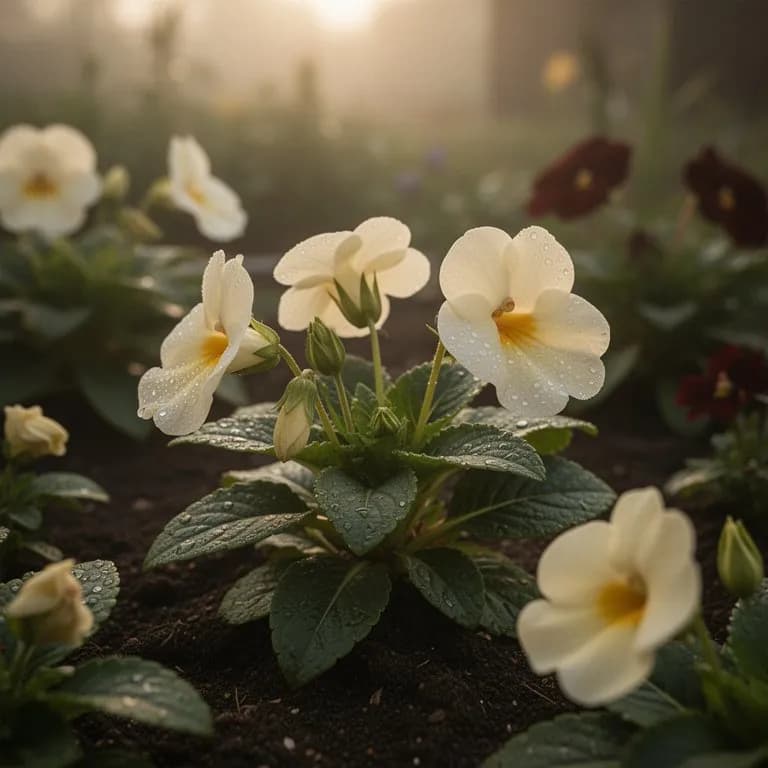
Edible Flower Ice Cubes with Impatiens
15 minutes plus freezing timeCreate stunning decorative ice cubes by suspending individual impatiens blooms in water and freezing them. These colorful cubes add a whimsical garden touch to lemonade, sparkling water, or cocktails at summer gatherings. Use only organically grown flowers that have never been treated with pesticides.
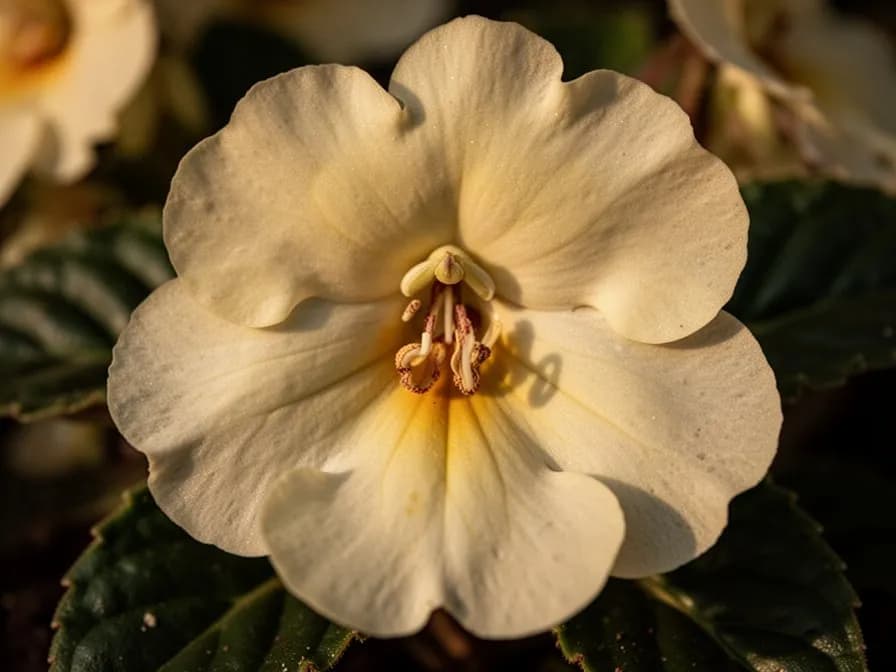
Impatiens Flower Garnish Salad
10 minutesScatter fresh impatiens petals over a simple green salad for a burst of garden color. The flowers have a very mild, slightly sweet flavor that does not overpower the other ingredients. This is a lovely way to use a handful of blooms from your shade garden at a special dinner.
Candied Impatiens Flowers
30 minutes plus drying overnightPreserve the beauty of impatiens blooms by coating them in egg white and superfine sugar to create delicate candied flowers. These crystallized decorations keep for weeks in an airtight container and make gorgeous toppings for cakes, cupcakes, and dessert plates.
Hanging baskets and window boxes are ideal for displaying the mounding, cascading habit of impatiens
Yield & Spacing Calculator
See how many Impatiens plants fit in your garden bed based on the recommended 25cm spacing.
16
Impatiens plants in a 4×4 ft bed
4 columns × 4 rows at 25cm spacing
Popular Varieties
Some of the most popular impatiens varieties for home gardeners, each with unique characteristics.
Super Elfin Series
The industry standard bedding impatiens with compact ten-inch plants in over twenty-five colors, exceptional uniformity for mass plantings.
SunPatiens Series
Downy mildew resistant interspecific hybrids that tolerate full sun, vigorous growers reaching eighteen to thirty-six inches.
Beacon Series
Bred specifically for resistance to impatiens downy mildew while maintaining the classic walleriana habit and shade tolerance.
Imara XDR Series
Extra disease resistant impatiens with strong tolerance to downy mildew on compact, well-branched plants in a wide color range.
New Guinea Impatiens
A separate species with larger flowers, colorful foliage, and tolerance for more sun. Naturally resistant to downy mildew.
When should I plant Impatiens?
Plant Impatiens in May, June. It takes approximately 50 days to reach maturity, with harvest typically in June, July, August, September, October.
What are good companion plants for Impatiens?
Impatiens grows well alongside Begonia, Pansy, Coleus. Companion planting can improve growth, flavor, and natural pest control.
What hardiness zones can Impatiens grow in?
Impatiens thrives in USDA hardiness zones 10 through 12. With greenhouse protection, it may be grown in zones 8 through 13.
How much sun does Impatiens need?
Impatiens requires Shade (<3h). This means less than 3 hours of direct sunlight.
How far apart should I space Impatiens?
Space Impatiens plants 25cm (10 inches) apart for optimal growth and air circulation.
What pests and diseases affect Impatiens?
Common issues include Impatiens Downy Mildew, Spider Mites, Slugs and Snails. Prevention through good garden practices like crop rotation, proper spacing, and companion planting is the best approach. See the detailed pests and diseases section above for symptoms, prevention, and treatment for each.
How do I store Impatiens after harvest?
Impatiens are not suitable for cutting or drying. Their value lies entirely in their live performance as shade-garden and container plants. To preserve favorite varieties over winter, take three to four inch stem cuttings before the first frost. Impatiens root extremely easily in water within seven ...
What are the best Impatiens varieties to grow?
Popular varieties include Super Elfin Series, SunPatiens Series, Beacon Series, Imara XDR Series, New Guinea Impatiens. Each has unique characteristics suited to different growing conditions and culinary preferences. See the varieties section above for detailed descriptions.
What soil does Impatiens need?
Impatiens thrive in rich, humus-laden, consistently moist soil with a pH of 6.0 to 6.5. Amend planting areas with generous compost to improve moisture retention and soil structure. Apply a balanced slow-release fertilizer at planting time and supplement with liquid fertilizer every two to three week...
Why do my impatiens wilt so easily even when the soil seems moist?
Impatiens have succulent, water-filled stems that lose moisture rapidly through transpiration, especially in warm or windy conditions. If the soil surface seems moist but the plants still wilt, the root zone deeper down may actually be dry. Water thoroughly and deeply rather than lightly sprinkling the surface. Wilting can also indicate root rot from waterlogged soil, so check drainage. In most cases, properly watered impatiens recover from wilting within an hour once their roots can access moisture again.
What is impatiens downy mildew and how can I prevent it?
Impatiens downy mildew is a devastating disease caused by the water mold Plasmopara obducens. It causes yellowing and curling of leaves, a white cottony growth on the undersides of foliage, and can completely defoliate and kill plants within days. Prevention involves buying disease-free plants from reputable nurseries, ensuring good air circulation by spacing plants properly, watering at the base of plants to keep leaves dry, and avoiding overhead irrigation. If downy mildew appears, remove and destroy affected plants immediately. Consider planting resistant alternatives like New Guinea impatiens or the SunPatiens series in affected areas.
Can impatiens grow in full sun or do they strictly need shade?
Standard Impatiens walleriana performs best in partial to full shade and typically struggles in full sun, especially in hot climates where direct afternoon sun causes wilting, leaf burn, and faded flowers. However, in cooler northern regions or coastal areas with mild summers, impatiens can tolerate morning sun if given consistent moisture. For sunny locations, consider New Guinea impatiens (Impatiens hawkeri) or the SunPatiens hybrid series, which are specifically bred to thrive in full sun to part shade conditions.
How do I overwinter impatiens indoors?
Before the first autumn frost, take 8-10 cm stem cuttings from healthy plants and root them in a glass of water or in moist perlite. Cuttings typically root within two to three weeks. Alternatively, dig up entire container plants, cut them back by half, and bring them indoors. Place overwintering impatiens in bright indirect light near a south or east-facing window. Water sparingly when the top centimeter of soil dries out and do not fertilize during winter. Resume regular watering and feeding in early spring as daylight hours increase.
Why are my impatiens getting leggy and producing fewer flowers?
Leggy growth in impatiens is most commonly caused by too much shade, overcrowding, or excessive nitrogen fertilizer. While impatiens love shade, extremely deep shade with less than two hours of indirect bright light causes them to stretch toward any available light source. Overcrowded plants compete for light and grow tall and thin. To fix leggy impatiens, cut them back by one-third to one-half and they will regrow with a bushier habit within a few weeks. Switch to a balanced fertilizer rather than a high-nitrogen formula, and ensure plants receive at least bright indirect light for several hours daily.
Are impatiens toxic to pets or children?
Impatiens walleriana is considered non-toxic to dogs, cats, horses, and humans according to the ASPCA and most poison control references. The plants are not known to cause any significant adverse reactions if accidentally ingested by children or pets. While the flowers are technically edible and sometimes used as a decorative garnish, they have minimal flavor and no significant nutritional value. As with any ornamental plant, it is still wise to discourage children and pets from eating large quantities of any garden plant, especially if it has been treated with pesticides or chemical fertilizers.
Ready to Grow Impatiens?
Add Impatiens to your garden plan and start designing your perfect layout.

Vladimir Kusnezow
Gardener and Software Developer
Zone 6b gardener. Growing vegetables and fruits in soil and hydroponics for 6 years. I built PlotMyGarden to plan my own gardens.
Jump to Section