Goji Berry
Lycium barbarum
At a Glance
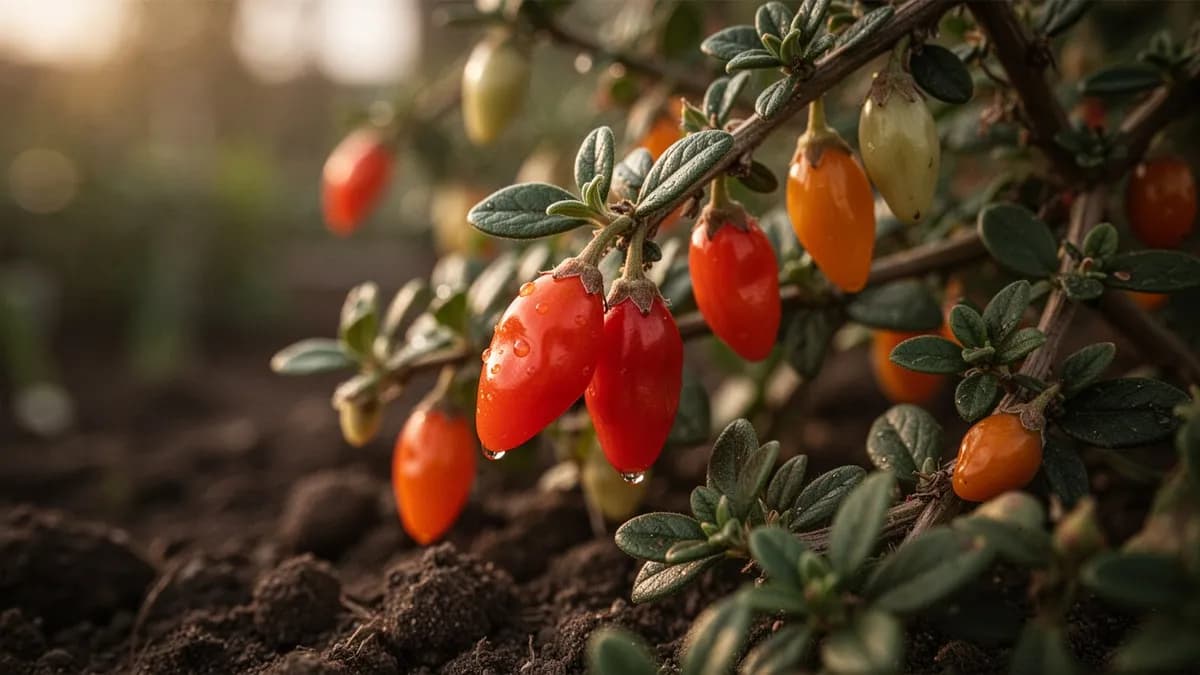
A deciduous shrub producing small, bright red-orange berries celebrated as a superfood, rich in antioxidants and vitamins. Goji plants are remarkably drought-tolerant and adaptable, thriving in poor, alkaline soils where many other fruits fail. Harvest the delicate berries by shaking branches over a tarp, as they bruise easily when picked by hand.
Planting & Harvest Calendar
Growth Stages
From Seed to Harvest
Dormancy and Bud Break
Days 0–30
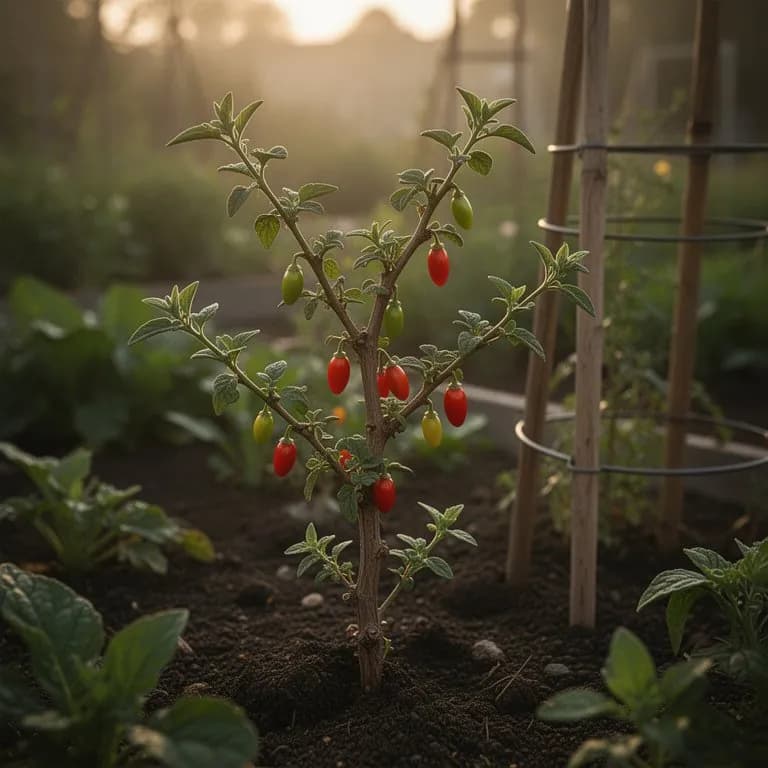
Goji berry emerges from winter dormancy in early spring as soil temperatures rise above 7°C. Swelling leaf buds appear along the canes, and the first bright green leaves unfurl. Roots begin to actively grow before visible top growth is substantial. This stage is critical for establishing the season's framework.
💡 Care Tip
Apply a balanced slow-release fertilizer around the root zone as buds swell. Clear away any winter mulch gradually to allow soil to warm. Check canes for winter dieback and prune dead wood back to healthy tissue.
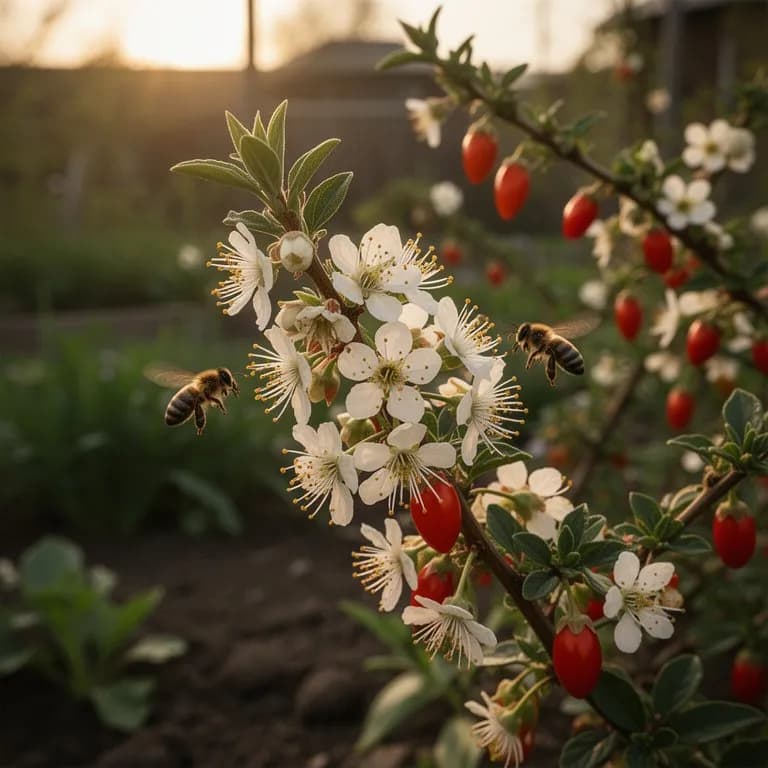
Delicate lavender-purple trumpet flowers appear in late spring and summer, each eventually developing into a berry
Monthly Care Calendar
What to do each month for your Goji Berry
June
You are hereNo specific care tasks for this month.
Did You Know?
Fascinating facts about Goji Berry
Goji berries have been used in traditional Chinese medicine for over 2,000 years, where they are known as 'gou qi zi' and prescribed to nourish the liver and kidneys, improve vision, and promote longevity.
Goji berries are vigorous, deciduous shrubs native to China that adapt remarkably well to Western gardens. They thrive in full sun and tolerate a wide range of soil conditions, including poor, alkaline, and sandy soils where other fruit plants fail. Plant in well-drained soil with a pH of 6.5 to 8.0, spacing plants five feet apart. They can also be grown successfully in large containers.
Goji plants grow rapidly and can reach eight to ten feet if left unpruned. For manageable garden plants, establish a framework of three to five main stems and prune laterals to six inches in late winter. This produces a tidy, productive bush about five feet tall. Alternatively, train as a single-stem standard or along a trellis for easier harvesting.
Water sparingly once established, as goji plants are drought-tolerant and susceptible to root rot in waterlogged soil. Young plants benefit from consistent moisture during their first growing season. Avoid heavy fertilization, which promotes excessive vegetative growth and reduces fruit production. A light application of balanced fertilizer in spring is sufficient. Goji berries typically begin fruiting in their second year and reach full production by year three.
Goji berry (Lycium barbarum), also commonly known as wolfberry, is native to the temperate regions of northwestern China, particularly the Ningxia Hui Autonomous Region, Inner Mongolia, and Xinjiang, as well as parts of Tibet, Mongolia, and into Central Asia. The plant thrives naturally on the arid, mineral-rich river floodplains and loess hillsides of these regions, where it has been cultivated for an estimated 2,000 to 3,000 years. Its earliest recorded medicinal use appears in the Shennong Ben Cao Jing, a foundational text of Chinese herbal medicine attributed to the mythological Emperor Shennong and compiled around the first century CE, where it is praised for tonifying the liver and kidneys, brightening the eyes, and fortifying the body against aging. Over the centuries, goji berry became deeply woven into Chinese culture and health philosophy. Tang dynasty poets referenced it in verse, and physicians of the Song and Ming dynasties elaborated extensively on its therapeutic applications in works such as the Bencao Gangmu, the great pharmacopoeia compiled by Li Shizhen in 1578. In the Ningxia region, goji cultivation became economically central: the flat, loamy soil of the Yellow River basin proved ideal for the crop, and the dried berries became a major trade commodity along the ancient Silk Road routes that connected China to Central Asia, Persia, and eventually Europe. Western awareness of goji berries remained limited until the late 20th century, when a growing interest in superfoods and traditional medicine brought them to global markets. A 2003 study published in the journal Optometry sparked significant scientific interest by reporting remarkable zeaxanthin content, and by the mid-2000s dried goji berries had become a staple in health food stores worldwide. Today Lycium barbarum is cultivated commercially in China, parts of Europe, North America, and Australia, and is grown by home gardeners across USDA zones 5 through 9 as both a productive fruit shrub and an ornamental plant valued for its graceful arching habit, attractive purple flowers, and brilliantly colored harvest.
Goji berries are easily grown from seed, germinating in one to two weeks at seventy to seventy-five degrees Fahrenheit without any pretreatment. Extract seeds from fresh or dried berries by soaking in water and separating the seeds from the pulp. Sow seeds one-eighth inch deep in moist seed-starting mix under bright light. Seedlings grow quickly and can be transplanted outdoors after the last frost. Seed-grown plants fruit in two to three years. Named cultivars should be propagated by softwood cuttings in summer.
Goji berries are uniquely tolerant of alkaline soils with a pH up to 8.0, thriving in conditions that most fruit plants cannot handle. They prefer sandy to loamy, well-drained soil and struggle in heavy, waterlogged clay. No soil amendments are typically necessary unless the soil is extremely acidic. Fertilize lightly in spring with a balanced formula; excessive fertility reduces fruiting and promotes rangy growth. These plants are adapted to nutrient-poor conditions and over-feeding is counterproductive.
Check Your Zone
See if Goji Berry is suitable for your location.
-26°C – 38°C
-15°F – 100°F
Goji berry is exceptionally cold-hardy once established, tolerating winter lows down to -26°C (USDA Zone 5) without damage. It is equally tolerant of summer heat and thrives in continental climates with cold winters and warm to hot summers. The plant actually benefits from a period of winter chilling, which promotes vigorous spring growth and abundant flowering. It can cope with temperatures up to 38°C provided it receives adequate water, though sustained extreme heat above 40°C may cause leaf scorch and berry drop.
Common issues affecting Goji Berry and how to prevent and treat them organically.
The most common complaint is the aggressive, weedy growth habit. Goji plants sucker freely and can spread beyond intended boundaries if not managed. Mow or pull suckers regularly. Without consistent pruning, plants become a tangled thicket of arching branches. Root rot occurs in poorly drained soil, so never plant in wet locations. Birds enjoy the berries, though less intensely than with blueberries or serviceberries. In some regions, goji is considered potentially invasive.
Lavender and rosemary planted near goji berries create a drought-tolerant, Mediterranean-style planting that shares similar water and soil requirements. Their aromatic foliage may help deter some insect pests. Avoid planting near other nightshade family members like tomatoes and peppers, as goji belongs to Solanaceae and may share pests and diseases. Plant in dedicated areas where their suckering habit will not overwhelm neighboring plants.
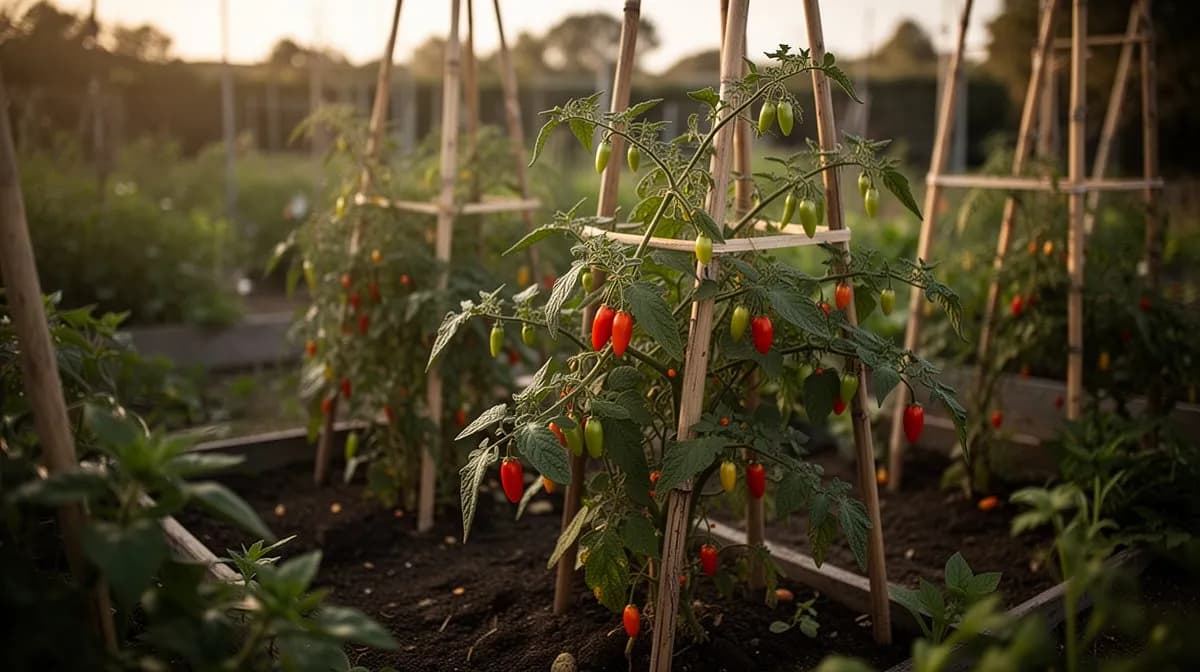
With its arching, thorny canes, goji berry makes an attractive and productive informal hedge or espalier
- 1Plant goji berry in full sun for maximum yield. Plants tolerate partial shade but produce significantly fewer flowers and berries in less than six hours of direct sunlight per day.
- 2Goji berry is highly adaptable to soil types but demands excellent drainage. It will rot in waterlogged conditions. On heavy clay soils, plant on a raised mound or add coarse grit to the planting hole to elevate drainage.
- 3Train young plants to a central leader or espalier against a sunny fence or wall in the first two years to build a strong framework. This makes harvesting significantly easier and improves airflow, reducing fungal disease risk.
- 4Fertilize with a balanced feed in early spring as buds swell, then switch to a high-potassium feed during flowering and fruiting to promote berry size, color, and sugar content. Avoid high-nitrogen feeds in summer, which promote leafy growth at the expense of fruit.
- 5Harvest berries by gently shaking individual branches over a cloth or tray laid on the ground — ripe berries fall cleanly while unripe ones hold on. This method is far faster than picking individual berries and is used commercially in Ningxia.
- 6Do not handle freshly picked berries with bare hands if you plan to dry them. The natural oils from your skin can cause brown spots on dried berries. Use clean rubber gloves or shake berries directly onto drying trays.
- 7Pruning is the single most important practice for long-term productivity. Each winter, remove the oldest, thickest canes entirely at ground level and tip-prune laterals to two to three buds. This keeps the shrub vigorous and ensures fruiting wood is constantly renewed.
- 8Goji berry grows vigorously and can sucker from the roots, spreading into surrounding areas over time. Install a root barrier or check annually and remove suckers at their point of origin to keep the plant in bounds.
- 9In coastal or humid climates, improve air circulation by avoiding dense planting, training canes openly on a trellis, and removing any leaves showing signs of powdery mildew promptly. A preventive spray of diluted baking soda solution (5g per liter) can help manage mild outbreaks.
- 10Container-grown goji berry can thrive in a large pot (minimum 50 liters) and is a practical option for gardeners with limited space or alkaline soil challenges. Use a loam-based compost, water regularly during the growing season, and feed monthly with a balanced liquid fertilizer.
Goji berries ripen over an extended period from midsummer through fall. Berries are ready when they turn fully bright orange-red and feel slightly soft. The most efficient harvest method is to spread a clean tarp or sheet beneath the bush and gently shake the branches; ripe berries fall while unripe ones remain attached. Avoid picking by hand when possible, as the delicate berries bruise and stain fingers easily. Harvest every week during the fruiting season for best quality.
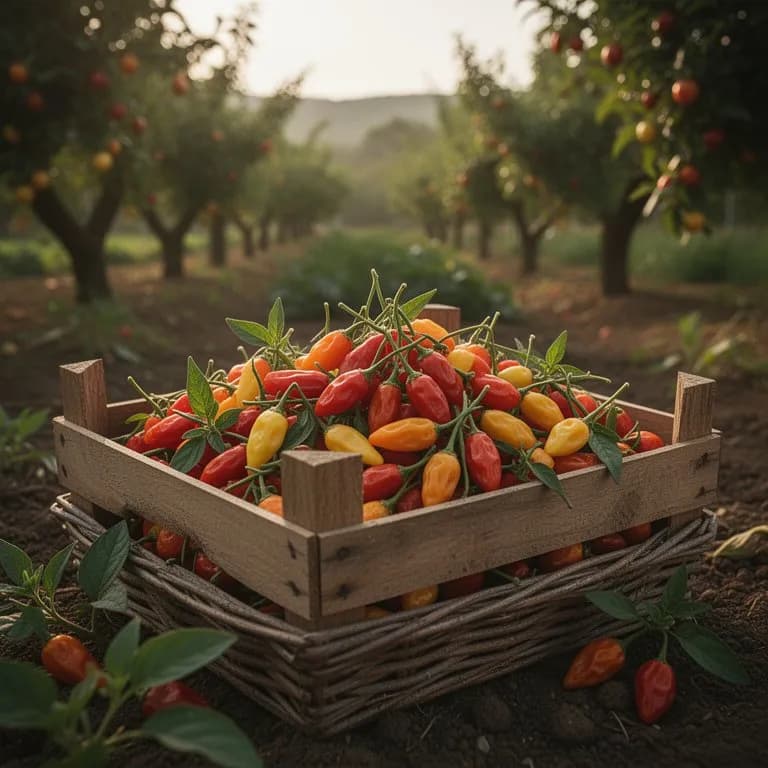
Ripe goji berries turn a deep orange-red and detach easily from the stem when ready for harvest
Fresh goji berries are delicate and keep in the refrigerator for only a few days. The traditional and most practical preservation method is drying, which concentrates the sweet flavor and extends shelf life to over a year. Spread berries on dehydrator trays and dry at 135 degrees Fahrenheit until leathery. Dried goji berries are the familiar form found in health food stores. They can also be frozen fresh, made into juice, or cooked into syrups and jams.
Plan your garden with ease
Love growing Goji Berry? Use our free garden planner to design your beds, track planting dates, and get personalized care reminders.
Nutritional Info
Per 100g serving
98
Calories
Health Benefits
- Among the richest known food sources of zeaxanthin, a carotenoid strongly linked to protection against age-related macular degeneration and cataracts
- Contains all eight essential amino acids, making it one of very few fruits with a complete protein profile
- Rich in polysaccharides (LBP — Lycium barbarum polysaccharides) studied extensively for their immunomodulatory and antioxidant properties
- High in betaine, a compound that supports liver health, reduces homocysteine levels, and may protect against fatty liver disease
- Provides significant iron (6.8mg per 100g, approximately 38% DV) — unusually high for a fruit — supporting energy levels and preventing iron-deficiency anemia
- Contains unique carotenoids including physalein and cryptoxanthin alongside beta-carotene, offering a broad spectrum of antioxidant protection
💰 Why Grow Your Own?
A bare-root goji berry plant costs $8-15 and begins producing a light crop in its second year, with full production from year three onward. Organic dried goji berries retail for $15-30 per pound, and a single mature shrub can yield 3-7 pounds of fresh berries per season — equivalent to 0.5-1.5 pounds dried. Over a ten-year period, one well-managed plant can save you $100-300 in store-bought dried goji berries, while also providing fresh berries unavailable for purchase in most regions. Plants are also easy to propagate from cuttings, allowing you to expand your planting at zero cost.
Quick Recipes
Simple recipes using fresh Goji Berry
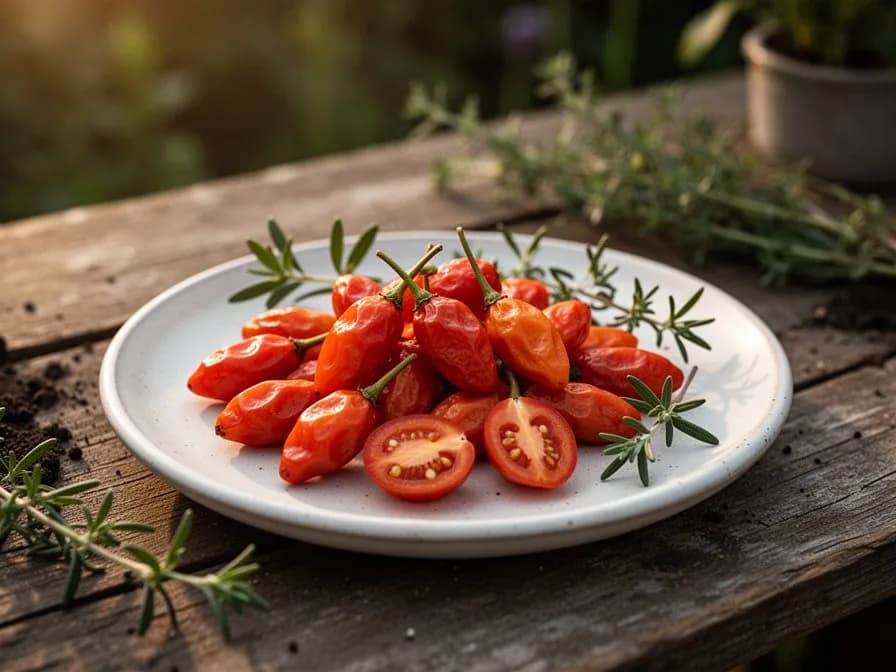
Goji Berry and Ginger Breakfast Porridge
10 minutesA warming, nourishing bowl of oats loaded with the sweet-tart pop of rehydrated goji berries and the warming spice of fresh ginger. Soaking the dried goji berries overnight plumps them beautifully and draws out their vivid color. This is a deeply satisfying breakfast that has been eaten in some form across China for centuries.
Goji Berry Longevity Tea
5 minutesThis simple infusion is modeled on the daily tonic teas consumed across the Ningxia region for generations. The goji berries soften in the hot water, releasing their sweetness and deep orange color, creating a naturally sweet, lightly herbal brew that can be drunk throughout the day. Red dates and chrysanthemum are traditional additions that complement the goji beautifully.
Goji Berry and Walnut Energy Balls
20 minutes + 30 minutes chillingNo-bake energy balls that pack an impressive nutritional punch. The goji berries provide a bright, slightly tart fruitiness that cuts through the richness of the walnuts and dates. These keep well in the fridge for up to two weeks and make a quick, sustaining snack. Roll them in shredded coconut or sesame seeds for an elegant finish.
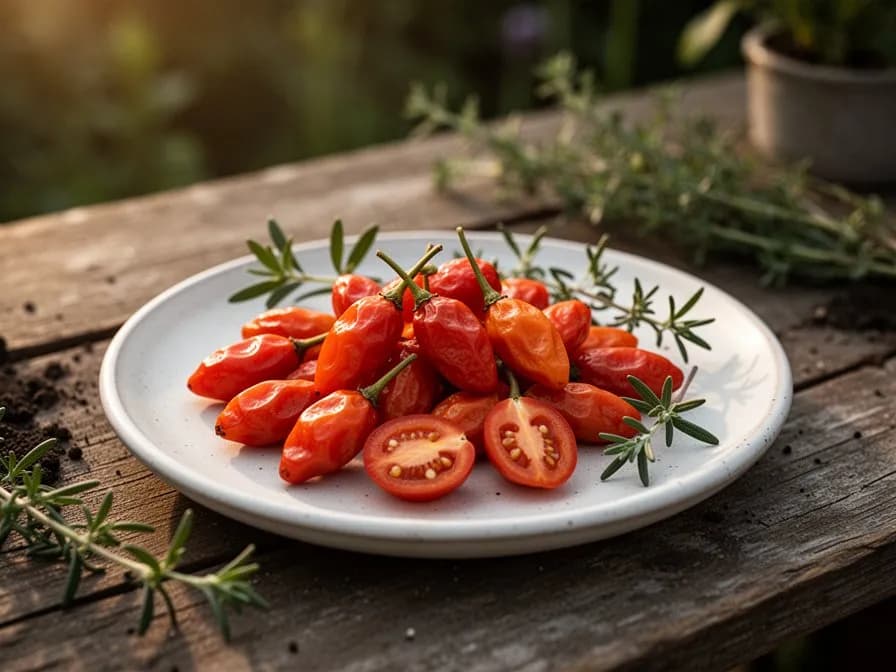
Dried goji berries are chewy, sweet-tart, and packed with nutrients for use in teas, trail mixes, and cooking
Yield & Spacing Calculator
See how many Goji Berry plants fit in your garden bed based on the recommended 150cm spacing.
0
Goji Berry plants in a 4×4 ft bed
0 columns × 0 rows at 150cm spacing
Popular Varieties
Some of the most popular goji berry varieties for home gardeners, each with unique characteristics.
Crimson Star
A heavy-producing cultivar with large, sweet berries and a compact growth habit well-suited to garden cultivation.
Phoenix Tears
Produces large berries with high sweetness on vigorous, upright plants with good cold hardiness.
Sweet Lifeberry
A branded variety marketed for home gardens, producing sweet berries on manageable-sized bushes.
Big Lifeberry
Selected for extra-large fruit size, making harvest easier and fresh eating more enjoyable.
Dried goji berries are used in trail mixes, cereals, smoothies, and baked goods. They have a mild, slightly sweet flavor with tangy undertones. In traditional Chinese cuisine, they are added to soups, rice dishes, and herbal teas. Fresh goji berries can be eaten raw, though they are milder than the concentrated dried form. They are rich in vitamin C, vitamin A, iron, and zeaxanthin, supporting the superfood reputation.
When should I plant Goji Berry?
Plant Goji Berry in March, April, May. It takes approximately 730 days to reach maturity, with harvest typically in July, August, September, October.
What are good companion plants for Goji Berry?
Goji Berry grows well alongside Lavender, Rosemary. Companion planting can improve growth, flavor, and natural pest control.
What hardiness zones can Goji Berry grow in?
Goji Berry thrives in USDA hardiness zones 3 through 10. With greenhouse protection, it may be grown in zones 1 through 11.
How much sun does Goji Berry need?
Goji Berry requires Full Sun (6-8h+). This means at least 6-8 hours of direct sunlight daily.
How far apart should I space Goji Berry?
Space Goji Berry plants 150cm (59 inches) apart for optimal growth and air circulation.
What pests and diseases affect Goji Berry?
Common issues include Goji Gall Mite, Aphids, Powdery Mildew. Prevention through good garden practices like crop rotation, proper spacing, and companion planting is the best approach. See the detailed pests and diseases section above for symptoms, prevention, and treatment for each.
How do I store Goji Berry after harvest?
Fresh goji berries are delicate and keep in the refrigerator for only a few days. The traditional and most practical preservation method is drying, which concentrates the sweet flavor and extends shelf life to over a year. Spread berries on dehydrator trays and dry at 135 degrees Fahrenheit until le...
What are the best Goji Berry varieties to grow?
Popular varieties include Crimson Star, Phoenix Tears, Sweet Lifeberry, Big Lifeberry. Each has unique characteristics suited to different growing conditions and culinary preferences. See the varieties section above for detailed descriptions.
What soil does Goji Berry need?
Goji berries are uniquely tolerant of alkaline soils with a pH up to 8.0, thriving in conditions that most fruit plants cannot handle. They prefer sandy to loamy, well-drained soil and struggle in heavy, waterlogged clay. No soil amendments are typically necessary unless the soil is extremely acidic...
How long does it take for a goji berry plant to produce fruit?
Container-grown plants purchased from a nursery may produce a small number of berries in their first season if they are already established. Plants grown from cuttings or bare-root stock typically produce a light crop in their second year and reach full productivity by their third or fourth year. Starting from seed adds an extra year or two to this timeline. Once established, goji berry plants are extremely long-lived and productive for decades, so the initial wait is well worth it.
Are fresh goji berries toxic and why do people only eat them dried?
Fresh goji berries are not toxic and are perfectly safe to eat directly from the plant. The reason most people only encounter them dried is purely commercial: fresh goji berries are extremely fragile and bruise almost instantly after harvest, making them unsuitable for long-distance transport. They have a shelf life of only one to two days at room temperature. Dried berries, by contrast, keep for a year or more. Growing your own is actually the primary way to experience the unique flavor of fresh goji berries, which is notably sweeter and less tart than the dried version.
Can goji berry be grown in a container or small garden?
Yes, goji berry grows very well in a large container (minimum 50 liters) and is well suited to small gardens. In a container, the plant naturally stays smaller and more manageable than it would in open ground, typically reaching 1.2 to 1.5 meters. Use a rich, loam-based compost mixed with perlite for drainage, water consistently during the growing season, and feed monthly. Container plants will need annual pruning and repotting every two to three years to stay productive.
Is goji berry invasive and will it take over my garden?
Goji berry can spread aggressively via root suckers in favorable conditions and is considered invasive in some parts of North America and Europe, particularly in disturbed soils and riparian areas. In a managed garden bed, the risk is controlled with annual monitoring and prompt removal of root suckers at their point of origin. Installing a root barrier around the planting area is a practical precaution if you are concerned. Avoid planting near natural areas, water features, or meadows where escaped seedlings or suckers could establish themselves in the wild.
What pests and diseases should I watch for on goji berry?
Goji berry is relatively pest-resistant, but a few issues are worth monitoring. Aphids commonly colonize soft new shoot tips in spring and can be managed by squashing colonies by hand, encouraging ladybirds, or applying insecticidal soap if populations are severe. Spider mites can be a problem during hot, dry summers; regular misting of foliage and ensuring adequate soil moisture helps prevent outbreaks. Powdery mildew can affect plants in humid climates or where air circulation is poor; prune for openness and treat with a diluted bicarbonate solution. Birds are the most significant competition at harvest time and may require temporary netting over the plant as berries ripen.
Are there any drug interactions or precautions with eating goji berries?
Goji berries can interact with the blood-thinning medication warfarin (Coumadin), potentially increasing its effects and raising the risk of bleeding. If you are taking warfarin, speak with your doctor before regularly consuming goji berries in significant quantities. There is also some preliminary evidence of interactions with diabetes medications and blood pressure drugs due to goji berry's own blood sugar and blood pressure lowering effects. Healthy adults without these medication concerns can enjoy goji berries freely in typical food quantities without any known risk.
Ready to Grow Goji Berry?
Add Goji Berry to your garden plan and start designing your perfect layout.

Vladimir Kusnezow
Gardener and Software Developer
Zone 6b gardener. Growing vegetables and fruits in soil and hydroponics for 6 years. I built PlotMyGarden to plan my own gardens.
Jump to Section