Ginger
Zingiber officinale
At a Glance
It's planting season for Ginger! Start planning your garden now.
A tropical rhizome with pungent, spicy flavor that is essential in cuisines worldwide, from Asian stir-fries to baked goods. Plant fresh rhizome pieces with visible growth buds in rich, well-drained soil after all danger of frost has passed. Ginger prefers warm, humid conditions with filtered light and consistent moisture but not waterlogged soil. Harvest baby ginger after four months for a milder flavor, or wait eight months for more pungent mature ginger with a fibrous texture.
Planting & Harvest Calendar
Growth Stages
From Seed to Harvest
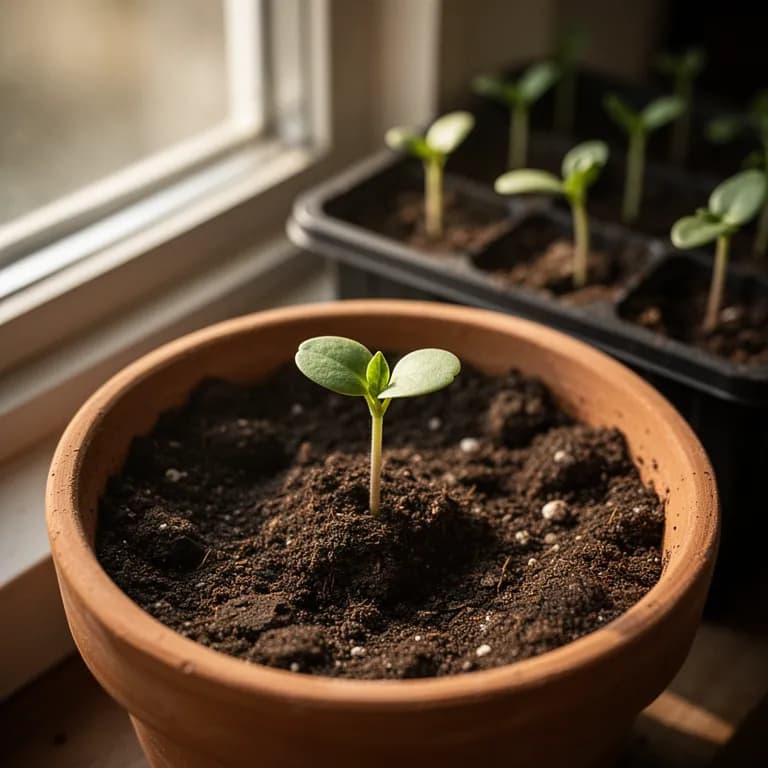
Rhizome Sprouting
Days 0–21
Plump growth buds on the rhizome swell and send up pale green or pinkish shoots. Roots begin extending downward into the warm, moist planting medium. Sprouting is slow and requires consistent warmth of at least 22°C (72°F) — cooler temperatures delay emergence significantly.
💡 Care Tip
Keep the planting medium consistently moist but not waterlogged. Use a heat mat set to 25-27°C (77-80°F) if starting indoors. Do not disturb the rhizome during this critical rooting phase.
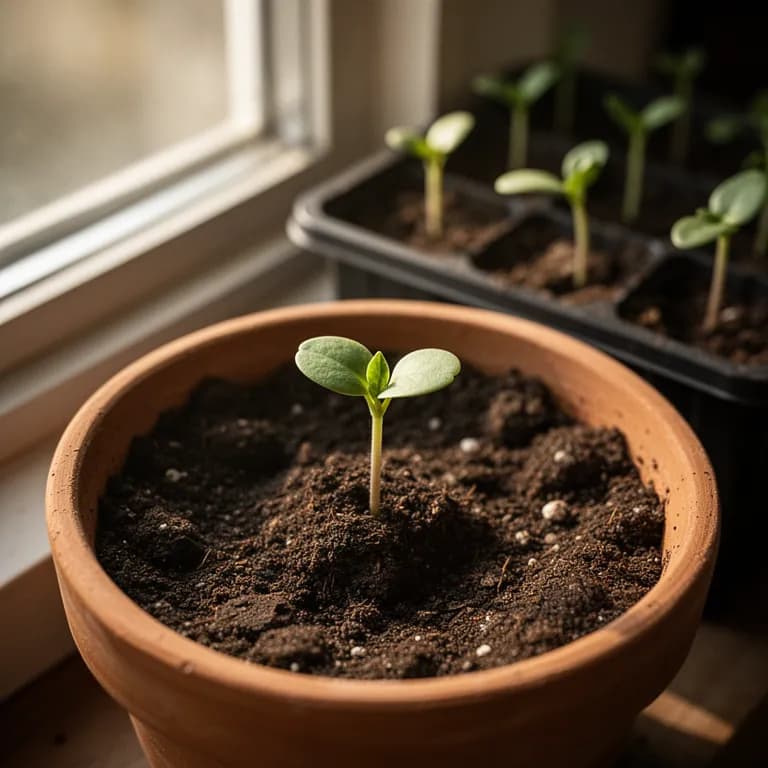
Fresh ginger rhizome sprouting vigorous green shoots ready for planting
Monthly Care Calendar
What to do each month for your Ginger
May
You are herePrimary outdoor planting month for most zones. Set out pre-sprouted rhizomes 5 cm deep and 20-25 cm apart in rich, well-drained soil with afternoon shade. Mulch heavily with straw or shredded leaves. Begin a regular watering schedule to keep soil evenly moist.
Did You Know?
Fascinating facts about Ginger
Ginger (Zingiber officinale) has been cultivated for so long — over 5,000 years — that it no longer exists in a true wild form. Every ginger plant alive today is descended from cultivated stock, making it one of the earliest plants domesticated by humans.
Select plump, firm ginger rhizomes from an organic source or garden center, avoiding grocery store ginger that may be treated with growth inhibitors. Look for pieces with visible growth buds and cut into 2-inch sections, each with at least one bud. Allow cut surfaces to callus for 24-48 hours before planting.
Plant rhizome pieces 2 inches deep with growth buds pointing upward in rich, well-drained soil amended with plenty of compost. Space pieces 8-12 inches apart. Ginger prefers dappled sunlight or morning sun with afternoon shade. Keep soil consistently moist but never waterlogged, and maintain temperatures above 60°F at all times.
In zones below 9, grow ginger in containers that can be brought indoors. Use a wide, shallow pot at least 12 inches deep with excellent drainage. Feed every 2-3 weeks with dilute liquid fertilizer or fish emulsion once shoots emerge. Mulch heavily with straw or shredded leaves to retain moisture and suppress weeds. Ginger grows slowly at first, then vigorously once summer heat arrives. Reduce watering in late fall as foliage begins to yellow and die back naturally.
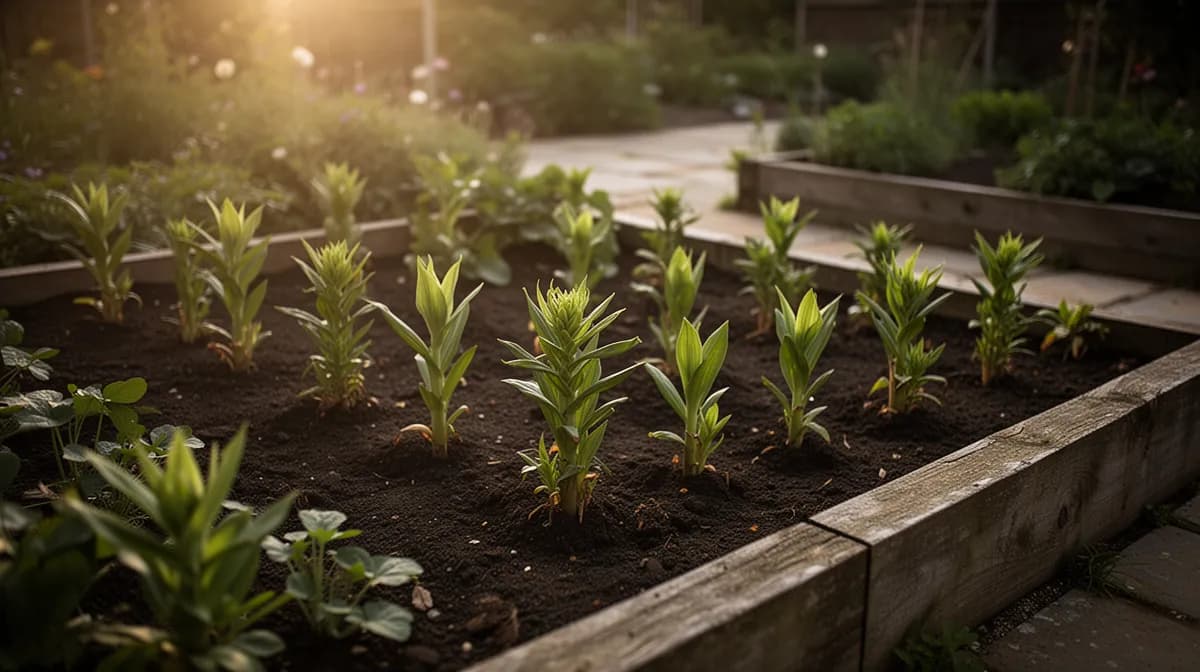
Ginger thrives in wide, shallow containers — ideal for gardeners in cooler climates
Ginger (Zingiber officinale) originated in the tropical rainforests of Southeast Asia, most likely in the region spanning modern-day southern China, northeastern India, and the Malay Archipelago. Archaeological and linguistic evidence suggests ginger was among the first spices cultivated by humans, with domestication dating back at least 5,000 years in southern China and the Indian subcontinent. The plant has been so thoroughly domesticated that no true wild population exists today — all ginger descends from cultivated stock.
Ginger was one of the earliest spices to travel the ancient trade routes. By 500 BCE it was well established in Indian Ayurvedic and Chinese traditional medicine, prescribed for digestive ailments, respiratory conditions, and inflammation. Arab traders brought ginger westward, and by the 1st century CE it was a prized commodity in the Roman Empire, taxed at the port of Alexandria. When Rome fell, ginger largely disappeared from European kitchens until the medieval spice trade revived demand. By the 13th century, a pound of ginger cost roughly the same as a live sheep in England.
Spanish conquistadors introduced ginger to the Caribbean and Central America in the 16th century, where the tropical climate proved ideal. Jamaica became one of the world's premier ginger producers, and Jamaican ginger was long considered the finest quality available. Portuguese traders simultaneously carried ginger to West Africa and Brazil. Today, ginger is cultivated commercially in tropical and subtropical regions across every inhabited continent. India leads global production with over 2 million tonnes annually, followed by Nigeria, China, Indonesia, and Nepal. The global ginger market exceeds $4 billion annually, driven by growing demand for both culinary and health applications.
Ginger is propagated from rhizome pieces rather than true seeds. Purchase organic seed ginger or use fresh organic ginger from a trusted source. Soak rhizomes overnight in warm water to hydrate and encourage bud activation. Cut into 2-inch sections with at least one visible eye per piece and let cut surfaces dry for 1-2 days. For an early start in cooler climates, place rhizome pieces on a tray of moist coconut coir at 75-80°F until green shoots emerge in about 2-4 weeks. Then plant sprouted pieces in individual pots, keeping them warm and moist. Transplant to the garden after nighttime temperatures exceed 60°F consistently.
Ginger requires rich, loose, well-drained soil with high organic matter and a pH of 6.0-6.5. Mix equal parts garden soil, compost, and aged bark or perlite for container growing. The soil must retain moisture without becoming waterlogged, as ginger is highly susceptible to root rot. Apply balanced slow-release fertilizer at planting, then feed every 2-3 weeks with liquid fish emulsion or seaweed extract during active growth. Reduce fertilizing as plants yellow in fall. Add bone meal to the planting hole for phosphorus to support root development.
Check Your Zone
See if Ginger is suitable for your location.
22°C – 32°C
72°F – 90°F
Ginger is a true tropical plant that requires sustained warmth throughout its long growing season. Growth virtually stops below 15°C (60°F), and rhizomes may rot in cold, wet soil. The optimal range for vigorous growth is 22-32°C (72-90°F) with high humidity. Temperatures above 35°C (95°F) are tolerated if soil moisture is adequate, but prolonged extreme heat can slow growth. Frost is instantly fatal to foliage, and even brief exposure to temperatures below 10°C (50°F) can damage rhizomes. In temperate climates, container growing allows gardeners to provide the consistent warmth ginger demands.
Common issues affecting Ginger and how to prevent and treat them organically.
The most frequent issue is rhizome rot from overwatering or poorly drained soil, causing mushy, foul-smelling rhizomes. Insufficient warmth leads to very slow growth and small harvests. Dry air causes brown leaf tips, so mist regularly or use a humidity tray for container plants. Grocery store ginger may be treated with growth retardants preventing sprouting; always use organic seed ginger. Pale or yellow leaves during the growing season often indicate nutrient deficiency. Ginger grown in full sun may develop scorched or bleached leaves in hot climates.
Ginger pairs naturally with turmeric and galangal, which share identical growing requirements for warmth, humidity, and partial shade. Plant alongside lemongrass, which provides light shade and has compatible water needs. Cilantro and basil grown nearby benefit from the dappled shade ginger provides. Avoid planting near walnut trees which produce growth-inhibiting juglone. Legumes in adjacent beds fix nitrogen that supports ginger's moderate feeding requirements. Marigolds interplanted around ginger beds help deter soil nematodes.
- 1Always use organic seed ginger from a reputable source. Conventional grocery store ginger is often treated with growth inhibitors (chlorpropham or maleic hydrazide) that prevent sprouting. Organic ginger from health food stores or specialty suppliers sprouts much more reliably.
- 2Pre-sprout rhizomes indoors 4-6 weeks before planting — this is critical in temperate climates where the growing season is shorter. Place rhizome pieces on moist coconut coir on a heat mat at 25°C (77°F) until green shoots appear, then pot up individually.
- 3Choose wide, shallow containers rather than deep, narrow pots. Ginger rhizomes grow horizontally, spreading outward just below the soil surface. A container at least 35 cm wide and 25 cm deep is ideal for a single rhizome piece.
- 4Provide filtered light or morning sun with afternoon shade. Despite its tropical origins, ginger naturally grows as an understory plant in dappled forest light. Full midday sun, especially in hot climates, scorches leaves and stresses the plant.
- 5Maintain consistently moist but never waterlogged soil throughout the growing season. Ginger's worst enemy is standing water around the rhizomes, which causes rapid rot. Water when the top 2 cm of soil feels dry, and ensure pots have excellent drainage.
- 6Mulch heavily with 8-10 cm of straw, shredded leaves, or cocoa hulls. This retains soil moisture, keeps roots at a consistent temperature, suppresses weeds, and adds organic matter as it decomposes — all critical for healthy ginger production.
- 7Harvest baby ginger from the edges of the clump starting at 4-5 months for the most tender, juiciest product with edible skin. For mature, pungent ginger suitable for drying and long storage, wait the full 8-10 months until foliage dies back naturally.
- 8Save your best rhizome pieces for replanting next year. Select firm, plump sections with at least two healthy growth buds and store in slightly damp peat moss or sand at 12-15°C (55-60°F) over winter. This becomes your free seed stock for expanding production year after year.
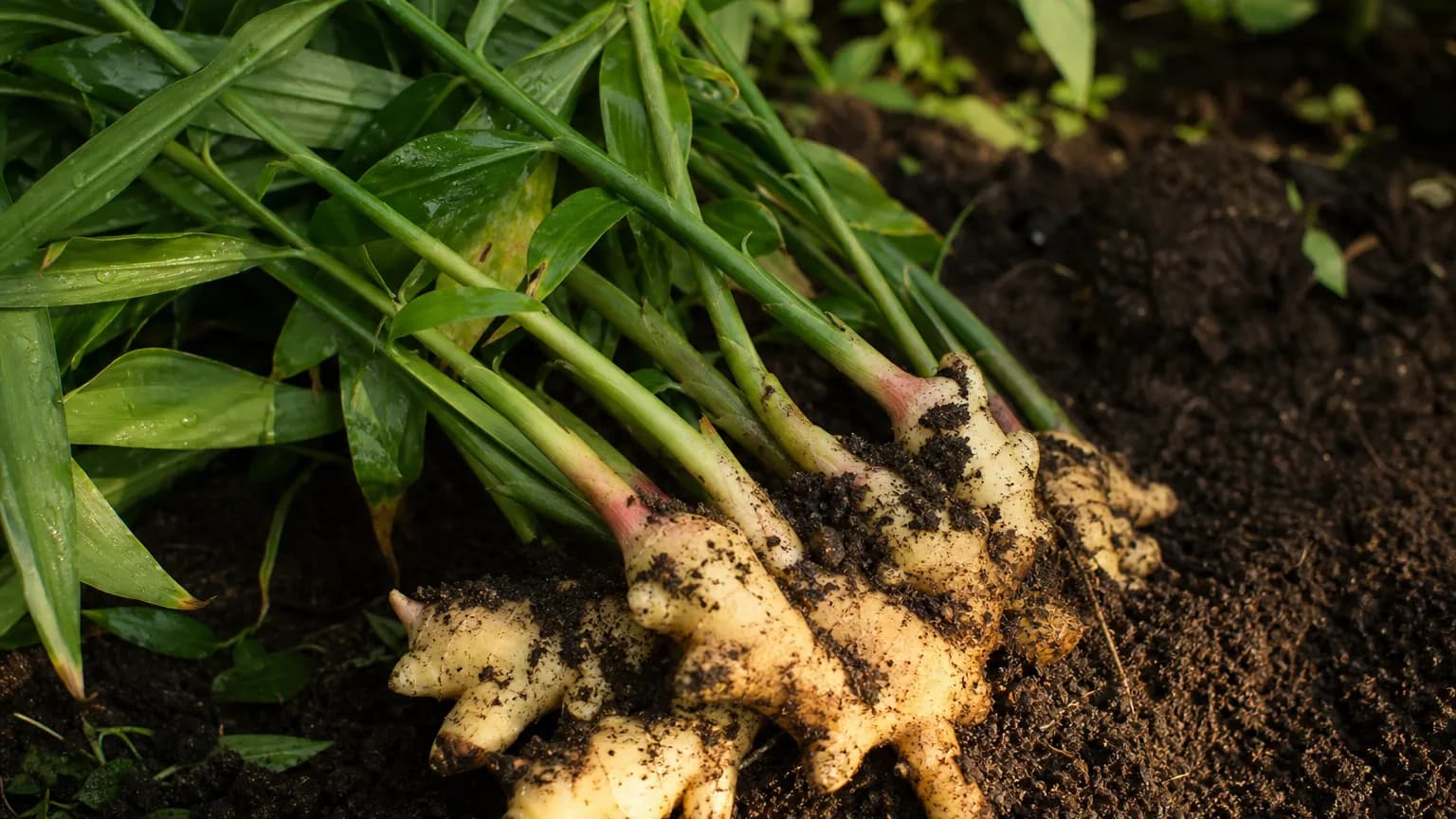
Baby ginger can be harvested 4-5 months after planting when rhizomes are pale, thin-skinned, and less fibrous with a mild juicy flavor. For mature ginger, wait 8-10 months until leaves yellow and die back. Carefully dig around the plant with a garden fork, working from the outside to avoid slicing rhizomes. Lift the entire clump and remove soil by hand. Break off what you need and replant the rest, or save choice pieces with good buds for next season's planting stock.
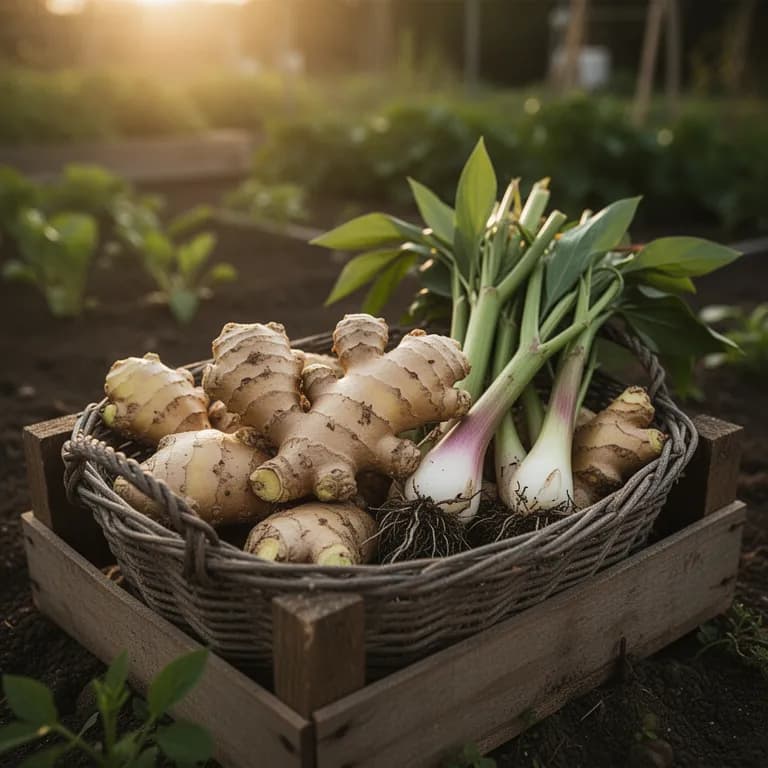
Harvesting ginger rhizomes by carefully lifting the entire root mass with a garden fork
Fresh unpeeled ginger stores for 2-3 weeks in the refrigerator crisper drawer wrapped in a paper towel inside a zip-lock bag. For longer storage, peel and freeze whole rhizomes for up to 6 months; frozen ginger grates easily without thawing. Ginger can be sliced thin and dehydrated until brittle, then ground into powder. Pickled ginger is made by slicing young ginger thinly and marinating in rice vinegar and sugar. Ginger can also be candied, preserved in syrup, or made into paste for convenient cooking.
Plan your garden with ease
Love growing Ginger? Use our free garden planner to design your beds, track planting dates, and get personalized care reminders.
Nutritional Info
Per 100g serving
80
Calories
Health Benefits
- Contains gingerol, the primary bioactive compound responsible for ginger's anti-inflammatory and antioxidant properties — extensively studied for its medicinal potential
- Good source of potassium (415mg per 100g, 12% DV), supporting healthy blood pressure and proper muscle function
- Provides manganese (0.23mg per 100g), an essential trace mineral for bone formation, blood clotting, and metabolism
- Contains magnesium (43mg per 100g) which supports muscle relaxation, nerve function, and energy production
- Rich in shogaols (formed when ginger is dried or cooked), which have been shown to have even stronger anti-inflammatory effects than gingerol
- Low in calories relative to its intense flavor — a tablespoon of fresh ginger adds just 5 calories while providing significant aromatic impact to dishes
💰 Why Grow Your Own?
Organic fresh ginger costs $6-12 per pound at grocery stores, and organic seed ginger runs $15-25 per pound. A single $3-5 seed rhizome piece can produce 500-700 grams of fresh ginger worth $8-15 at retail organic prices. Growing 4-6 plants in containers or a garden bed can yield 2-4 kg of fresh ginger worth $30-60 — and the flavor of freshly harvested ginger is dramatically more aromatic and pungent than store-bought rhizomes that may have spent weeks in transit and cold storage. The savings multiply further when you factor in homemade ginger tea, pickled ginger, and dried ground ginger that would cost $5-15 per jar commercially.
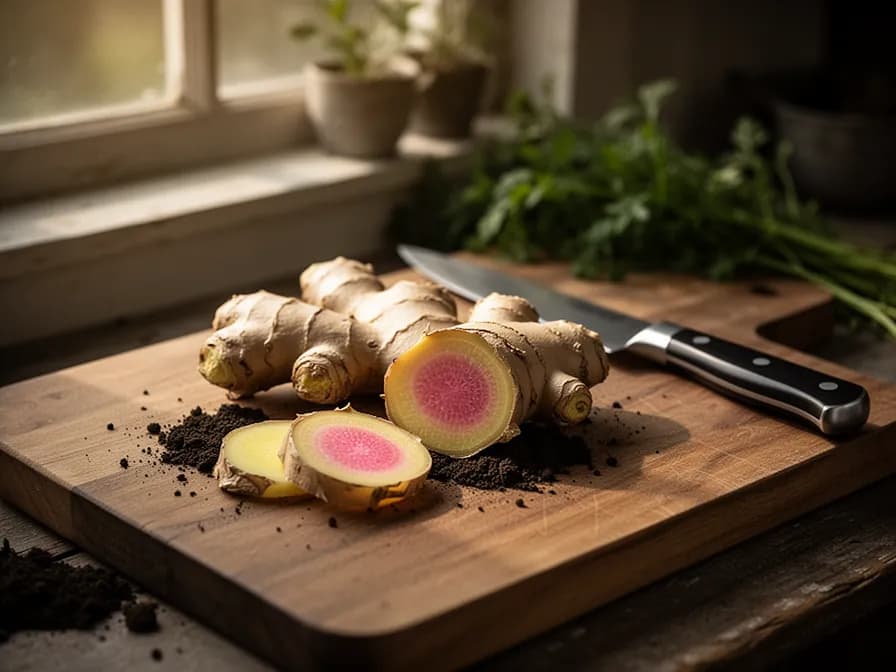
Freshly harvested ginger showing the characteristic knobby fingers and aromatic pale yellow flesh
Quick Recipes
Simple recipes using fresh Ginger
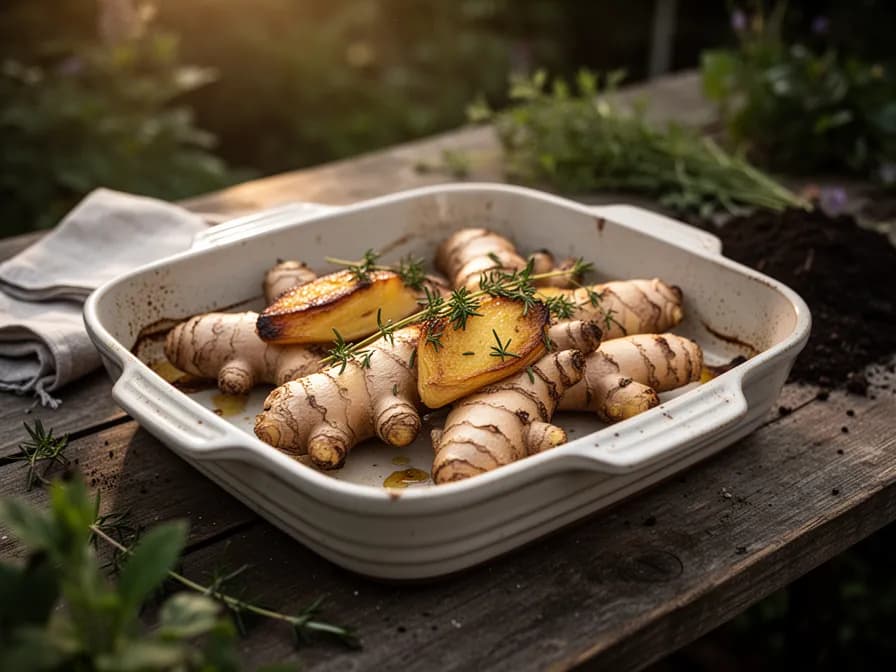
Fresh Ginger Lemon Honey Tea
10 minA warming, soothing beverage that showcases fresh ginger at its simplest and best. The combination of spicy ginger, bright lemon, and sweet honey is a time-honored remedy for cold symptoms and an invigorating daily tonic.
Quick Pickled Ginger (Gari)
15 min + 1 hour restingHomemade sushi ginger that is far superior to store-bought — delicate, tangy, and naturally pink when made with young ginger. Serve alongside sushi, rice bowls, or grilled fish as a palate cleanser.
Ginger Garlic Stir-Fry Sauce
10 minA versatile all-purpose sauce that transforms any combination of vegetables, tofu, or protein into a restaurant-quality stir-fry. Make a batch ahead and keep it in the fridge for fast weeknight meals.
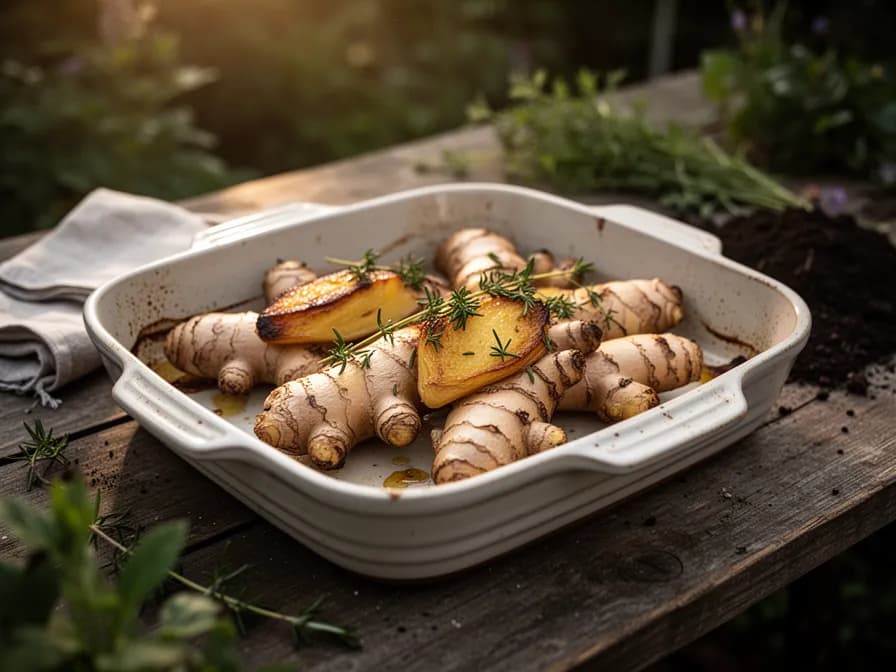
Fresh ginger tea — one of the simplest and most rewarding uses for homegrown ginger
Yield & Spacing Calculator
See how many Ginger plants fit in your garden bed based on the recommended 30cm spacing.
16
Ginger plants in a 4×4 ft bed
4 columns × 4 rows at 30cm spacing
Popular Varieties
Some of the most popular ginger varieties for home gardeners, each with unique characteristics.
Common Culinary Ginger
The standard variety with pungent, spicy flavor. Reliable and productive in home gardens with proper warmth.
Baby Ginger
Harvested early for tender, thin-skinned rhizomes with mild flavor and no fibrous strings. Perfect for pickling.
Blue Ring
Features a distinctive blue-gray ring when sliced, offering a slightly more floral flavor profile.
Yellow Ginger
Produces bright yellow flesh with an especially aromatic quality prized in Southeast Asian cooking.
Chinese Ginger
A robust variety with large rhizomes and strong flavor, commonly grown commercially and suited to containers.
Fresh ginger is indispensable in Asian stir-fries, curries, soups, and marinades. Grate it into dressings, sauces, and smoothies for a spicy kick. Sliced ginger is steeped for warming tea or added to poaching liquids. Dried and ground ginger flavors baked goods like gingerbread, cookies, and cakes. Young ginger is pickled for sushi accompaniment. Ginger also stars in beverages from ginger ale and ginger beer to golden milk lattes.
When should I plant Ginger?
Plant Ginger in March, April, May. It takes approximately 240 days to reach maturity, with harvest typically in October, November.
What are good companion plants for Ginger?
Ginger grows well alongside Turmeric, Basil. Companion planting can improve growth, flavor, and natural pest control.
What hardiness zones can Ginger grow in?
Ginger thrives in USDA hardiness zones 9 through 12. With greenhouse protection, it may be grown in zones 7 through 13.
How much sun does Ginger need?
Ginger requires Partial Sun (3-6h). This means 3-6 hours of sunlight, ideally morning sun with afternoon shade.
How far apart should I space Ginger?
Space Ginger plants 30cm (12 inches) apart for optimal growth and air circulation.
What pests and diseases affect Ginger?
Common issues include Rhizome Rot, Bacterial Wilt, Root-Knot Nematodes, Shoot Borers. Prevention through good garden practices like crop rotation, proper spacing, and companion planting is the best approach. See the detailed pests and diseases section above for symptoms, prevention, and treatment for each.
How do I store Ginger after harvest?
Fresh unpeeled ginger stores for 2-3 weeks in the refrigerator crisper drawer wrapped in a paper towel inside a zip-lock bag. For longer storage, peel and freeze whole rhizomes for up to 6 months; frozen ginger grates easily without thawing. Ginger can be sliced thin and dehydrated until brittle, th...
What are the best Ginger varieties to grow?
Popular varieties include Common Culinary Ginger, Baby Ginger, Blue Ring, Yellow Ginger, Chinese Ginger. Each has unique characteristics suited to different growing conditions and culinary preferences. See the varieties section above for detailed descriptions.
What soil does Ginger need?
Ginger requires rich, loose, well-drained soil with high organic matter and a pH of 6.0-6.5. Mix equal parts garden soil, compost, and aged bark or perlite for container growing. The soil must retain moisture without becoming waterlogged, as ginger is highly susceptible to root rot. Apply balanced s...
Can I grow ginger from grocery store ginger?
Yes, but only if you use organic ginger. Conventional grocery store ginger is commonly treated with growth inhibitors like chlorpropham or maleic hydrazide that prevent sprouting. Look for organic ginger with visible buds (small pointed nubs on the surface). Soak the rhizome in warm water overnight, then place on moist coconut coir in a warm spot. If sprouts don't appear within 3-4 weeks, the ginger was likely treated and you should source organic seed ginger from a garden supplier.
How long does ginger take to grow, and can I speed it up?
Ginger needs 8-10 months from planting to full maturity, making it one of the slowest crops in the home garden. You can speed things up by pre-sprouting rhizomes indoors on a heat mat 4-6 weeks before the outdoor season begins, choosing the warmest microclimate in your garden, and using black plastic mulch to warm the soil. Baby ginger can be harvested as early as 4-5 months for a milder, juicier product. There is no shortcut for mature, pungent ginger — it simply needs a long, warm growing season.
Can ginger survive winter outdoors?
Only in USDA zones 9-12 where winters are mild and frost-free. In zones 9-10, mulch heavily (15-20 cm) over dormant rhizomes for winter insulation. In zones 8 and below, ginger must be grown in containers and brought indoors before temperatures drop below 10°C (50°F). Alternatively, harvest all rhizomes in autumn, save the best pieces for replanting in spring, and store them in damp sand or peat at 12-15°C (55-60°F) over winter.
Why are the tips of my ginger plant's leaves turning brown?
Brown leaf tips on ginger almost always indicate low humidity or inconsistent watering. Ginger is a tropical plant that thrives in 60-80% humidity. In dry indoor environments or during hot, dry weather, leaf tips desiccate. Mist the foliage daily, use a pebble tray filled with water beneath the container, or group plants together to create a humid microclimate. Also ensure the soil stays evenly moist — alternating between too dry and too wet causes the same browning symptom.
What is the difference between baby ginger and mature ginger?
Baby ginger is harvested 4-5 months after planting. It has thin, edible pink-tinged skin, pale creamy flesh, a mild juicy flavor, and almost no fiber. It is ideal for pickling (gari), eating raw, or using in delicate preparations. Mature ginger is harvested at 8-10 months after the foliage dies back. It has thick tan skin that must be peeled, intensely pungent yellow flesh, and noticeable fiber. Mature ginger is best for cooking, drying, and long-term storage. Both come from the same plant — the only difference is harvest timing.
Ready to Grow Ginger?
Add Ginger to your garden plan and start designing your perfect layout.

Vladimir Kusnezow
Gardener and Software Developer
Zone 6b gardener. Growing vegetables and fruits in soil and hydroponics for 6 years. I built PlotMyGarden to plan my own gardens.
Jump to Section