Turmeric
A tropical rhizome related to ginger that produces bright orange-yellow flesh prized as both a spice and a natural dye.





On this pageOverview
Meet Turmeric
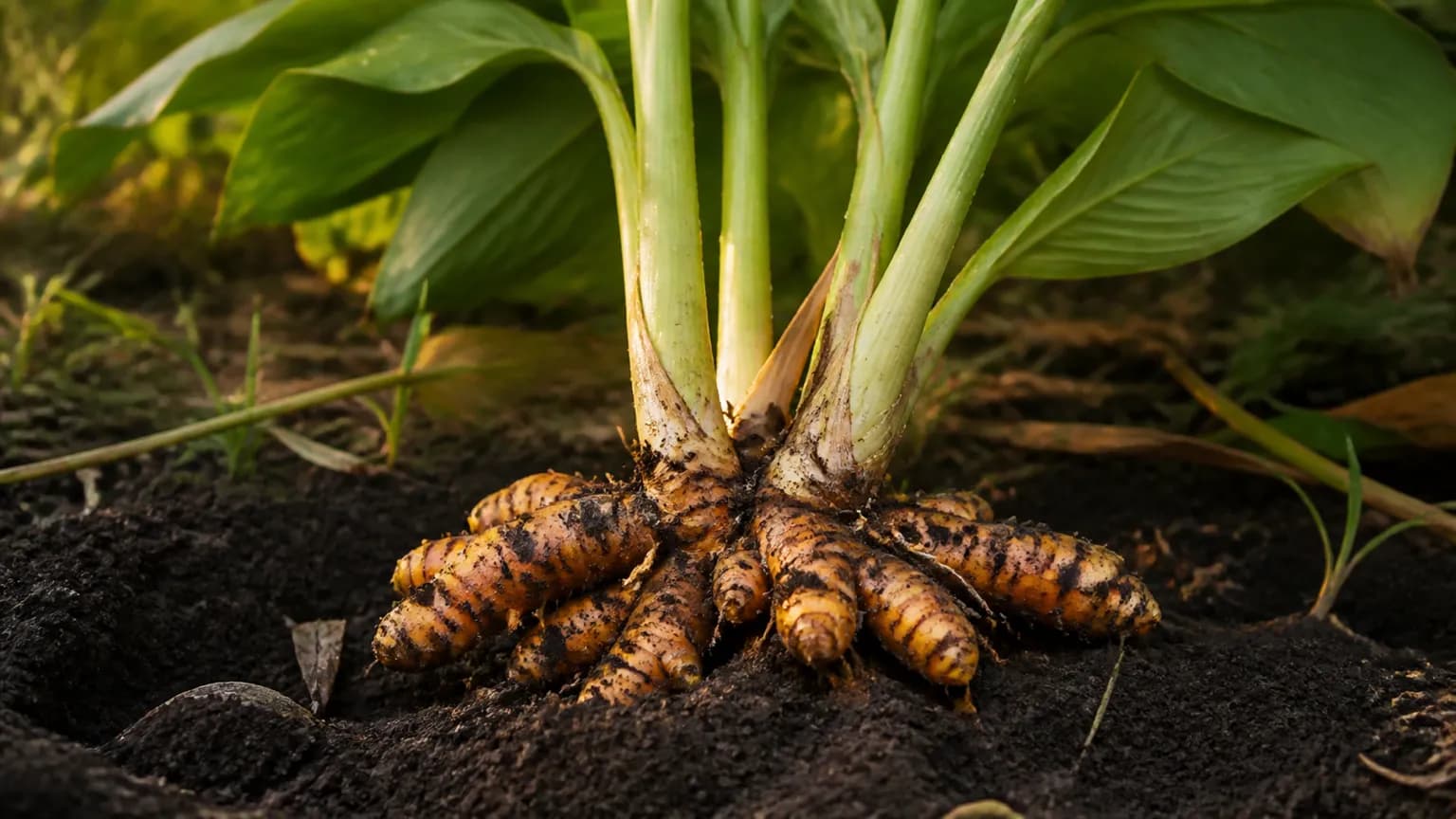
A tropical rhizome related to ginger that produces bright orange-yellow flesh prized as both a spice and a natural dye. Turmeric needs a long warm growing season and thrives in rich, moist soil with partial shade and warm temperatures. The attractive tropical foliage makes it a beautiful container plant that can be brought indoors in cool climates. Harvest when leaves yellow and die back, then cure rhizomes before drying and grinding, or use fresh for the most vibrant flavor.
When to plant Turmeric
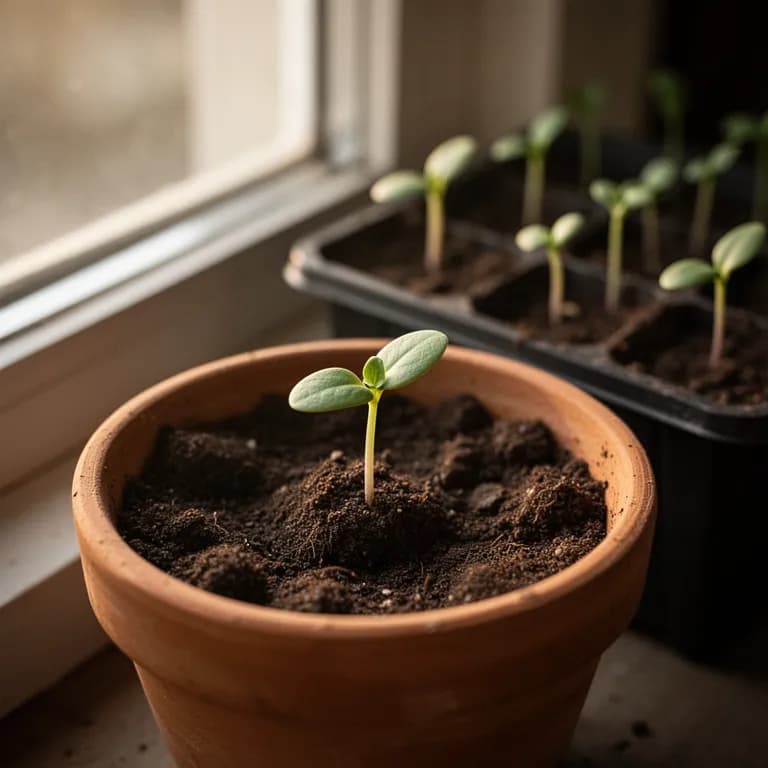
Turmeric is propagated from rhizome pieces, not seeds. Select plump, healthy rhizomes with at least two visible growth buds per piece. Cut larger rhizomes into 2-3 inch sections and allow cut surfaces to dry for 1-2 days. In warm climates (zones 9-12), plant directly in the garden 2 inches deep after the last frost. In cooler zones, start indoors 8-10 weeks before the last frost in pots of rich, moist potting mix at 75-85°F. Sprouting takes 3-6 weeks. Once shoots are 4-6 inches tall and nights exceed 60°F, harden off for a week before transplanting outdoors.
Your Turmeric Year
Composed for Zone 7 · typical seasons · frost passes Apr 2, returns Nov 1
Plant Turmeric Mar – May, pick Oct – Nov. Check the planting methods below and set your climate to personalize these windows.
How to grow Turmeric
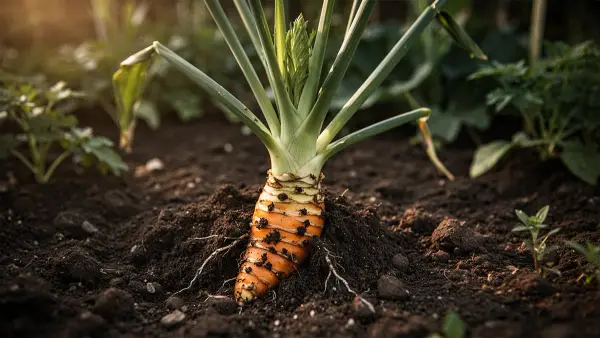
Turmeric requires 8-10 months of warm, frost-free conditions to produce sizeable rhizomes. Start with fresh organic turmeric rhizomes that have visible growth buds. Cut larger pieces into 2-3 inch sections with at least two buds each, and allow cut surfaces to heal for a day before planting.
Plant rhizome pieces 2 inches deep in rich, well-drained soil with buds facing upward, spacing 12-18 inches apart. Turmeric prefers partial shade and warm, humid conditions with daytime temperatures of 68-95°F. Keep soil consistently moist but avoid waterlogged conditions that promote rot.
Feed every 3-4 weeks with balanced liquid fertilizer or side-dress with compost. Mulch heavily to retain moisture and regulate soil temperature. In cooler climates, grow in large containers at least 12 inches deep, starting indoors 8 weeks before the last frost. Move containers outdoors after temperatures stabilize above 60°F and bring back inside before the first fall frost. The canna-lily-like foliage makes turmeric an attractive ornamental even before harvest.
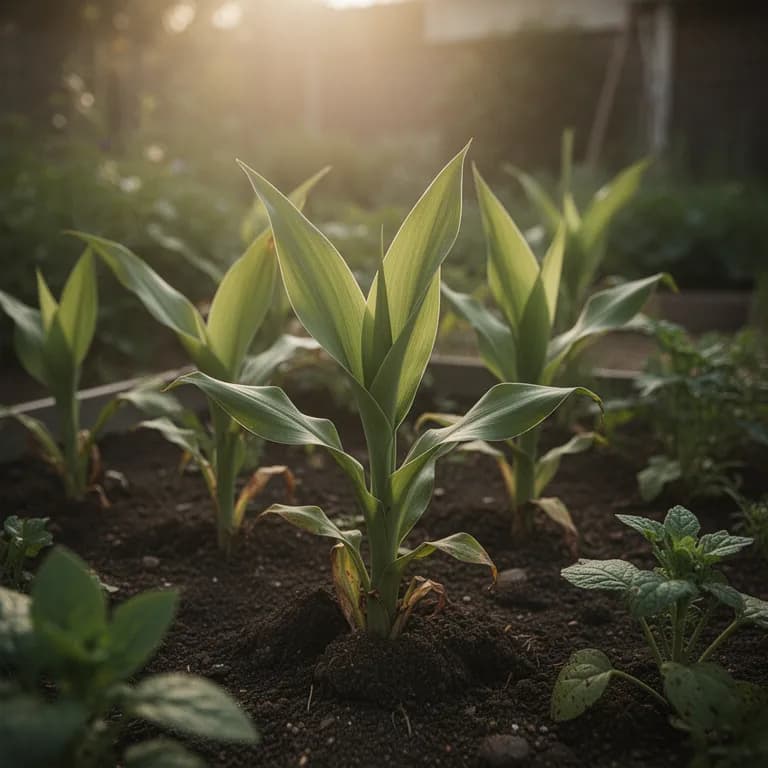
32 plants fit a 4 × 8 ft bed
Each Turmeric wants 30 cm of elbow room. The planner keeps that spacing for you — every plant, every bed.
Turmeric's best neighbours
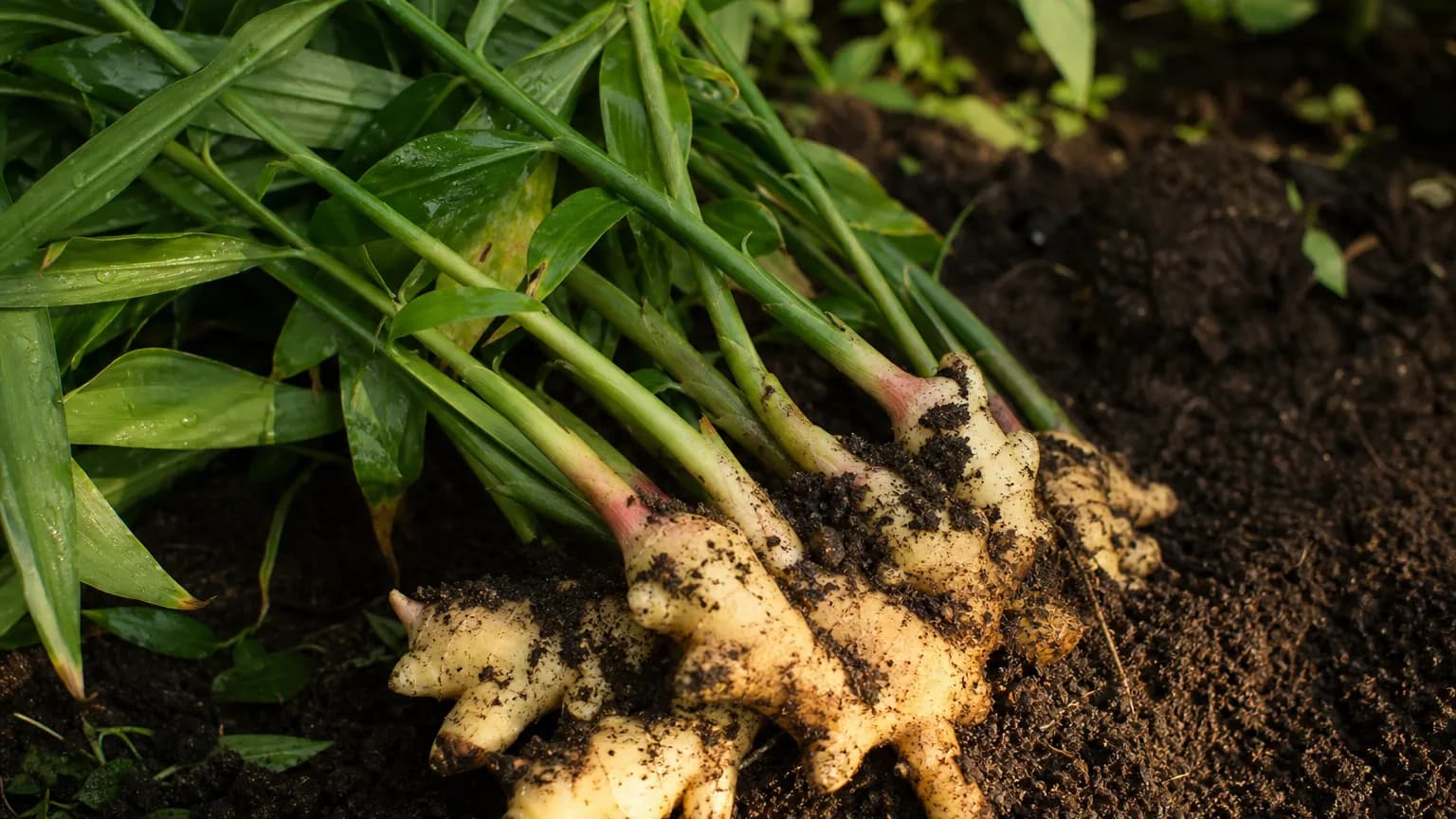
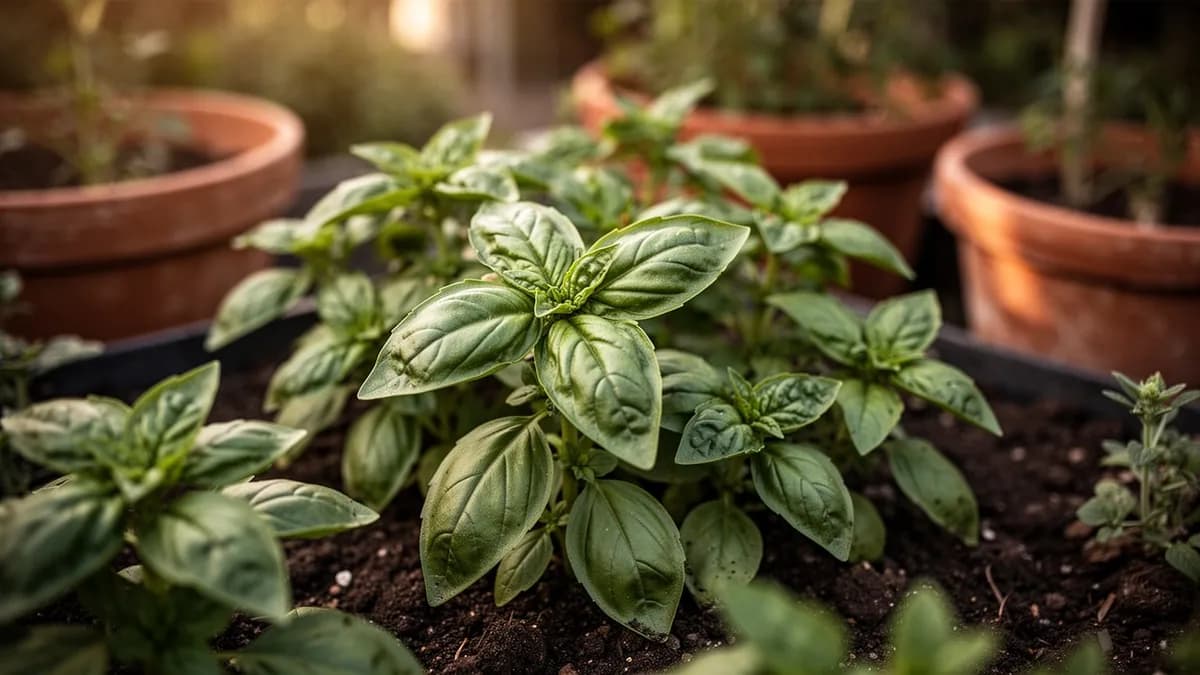
Turmeric grows well alongside ginger, galangal, and cardamom, which share similar requirements for warmth, moisture, and partial shade. Lemongrass provides light wind protection as a neighbor. Plant near legumes that fix nitrogen to support moderate feeding needs. Basil and cilantro appreciate the partial shade turmeric provides. Avoid planting near heavy-feeding crops like corn that compete for nutrients. Marigolds planted nearby help suppress soil nematodes that can damage rhizomes.
Ginger belongs beside it.
Old growers' knowledge, checked against Turmeric's real companion table below — test any plant you're growing.
Try Turmeric in a bed — right here
A real planner bed with Turmeric already in it. Tap a companion to place it and watch the pairing checks answer — green for good neighbours, red for a clash.


Related growing guides
Feed it well
Turmeric thrives in rich, well-drained loamy soil with a pH of 6.0-7.5 and high organic matter. Amend planting areas generously with compost, aged manure, and leaf mold. Good drainage is essential to prevent rhizome rot, so add perlite or coarse sand to heavy clay soils. Apply balanced fertilizer at planting, then feed every 3-4 weeks with potassium-rich fertilizer during the growing season. Side-dress with compost mid-season and apply liquid seaweed extract monthly. Avoid excessive nitrogen, which promotes foliage at the expense of rhizome development.
Ideal Temperature
Hardiness Zone Compatibility
From seed to harvest, stage by stage
Rhizome Sprouting
Planted rhizome pieces slowly develop roots and push green shoots upward through the soil surface. Sprouting is slow and requires consistent warmth and moisture — patience is essential during this phase, as emergence can take 3-6 weeks depending on soil temperature.
Leaf Development
Rolled, lance-shaped leaves unfurl from the central shoot, expanding into broad, canna-lily-like foliage. Multiple shoots may emerge from a single rhizome piece. The plant builds its photosynthetic canopy during this phase, reaching 30-60 cm in height.
Active Vegetative Growth
The plant reaches its full height of 90-120 cm with a lush canopy of broad, aromatic leaves. Underground, the rhizome system is expanding rapidly, forming branching fingers from the mother rhizome. This is the main growth phase when both foliage and rhizomes are at peak metabolic activity.
Rhizome Maturation
As autumn approaches, the plant shifts energy from leaf production to rhizome bulking and curcumin accumulation. The fingers of the rhizome thicken and develop their characteristic deep orange-yellow color. Leaf growth slows and some lower leaves begin to yellow naturally.
Dormancy and Harvest
Leaves progressively yellow, brown, and die back as the plant enters dormancy. This dieback signals that rhizomes have reached full maturity and maximum curcumin content. The drying foliage is a natural process, not a sign of disease.
Maintain soil temperature at 24-30°C (75-85°F) using a heat mat if starting indoors. Keep soil consistently moist but never waterlogged. Do not dig up rhizomes to check progress — this damages developing roots.
Caring for Turmeric month by month
What to do each month for your Turmeric
October
You are hereLeaves begin to yellow and die back naturally — this signals rhizome maturity, not a problem. Reduce watering as foliage declines. In zones 9 and below, prepare for harvest once most foliage has dried back.
Know exactly what to do in your garden — every month
One email at the start of each month: what to sow, plant, and tackle right now — for your Turmeric and everything growing around it. Plus a short starter course that helps you dodge the classic mistakes.
- What to do, right now
- Matched to your season
- Starter course included
Harvesting Turmeric
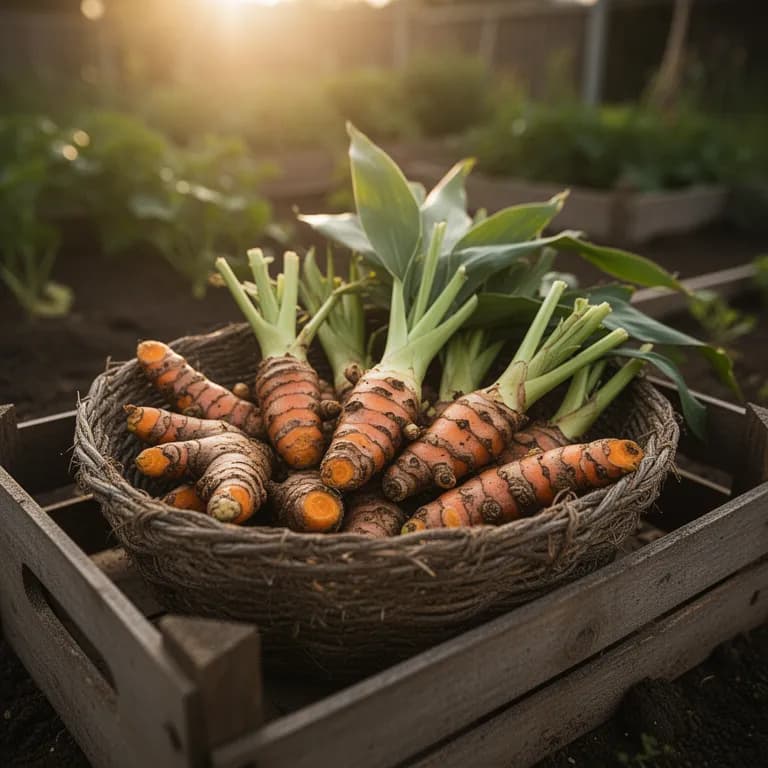
Turmeric is ready to harvest 8-10 months after planting when leaves begin to yellow and dry down naturally in fall. Carefully dig around the plant with a garden fork, working from the edges inward to avoid cutting rhizomes. Lift the entire root mass and shake off excess soil. Separate finger-like rhizomes from the mother rhizome and brush clean. Save plump pieces with good buds for replanting next season. Fresh turmeric can be used immediately, or cure and dry for long-term storage and grinding into powder.
assuming you plant when the window opens — set your real date
From bulbs, tubers or cloves
Pick Turmeric promptly and the plant keeps producing.
Storage & Preservation
Fresh turmeric keeps for 2-3 weeks in the refrigerator wrapped in a damp paper towel inside a sealed bag. For longer storage, freeze whole unpeeled rhizomes for up to 6 months; they grate easily from frozen. To make powder, boil or steam rhizomes for 45 minutes, dry in a dehydrator until brittle, then grind fine. Store powder in airtight containers away from light for up to a year. Fresh turmeric can also be pickled or preserved in vinegar. Wear gloves when handling as turmeric stains everything a vivid yellow.
What goes wrong — and the fix
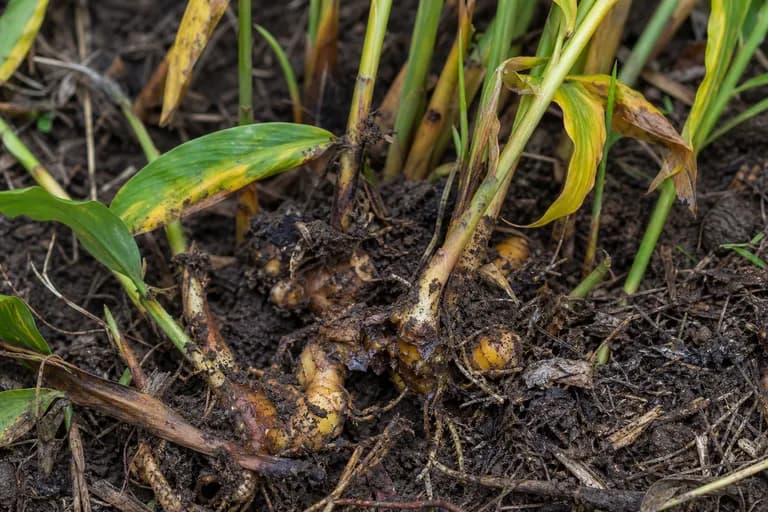
Rhizome Rot
DiseaseSoft, water-soaked areas on rhizomes that turn brown and mushy, accompanied by foul odor and wilting foliage.
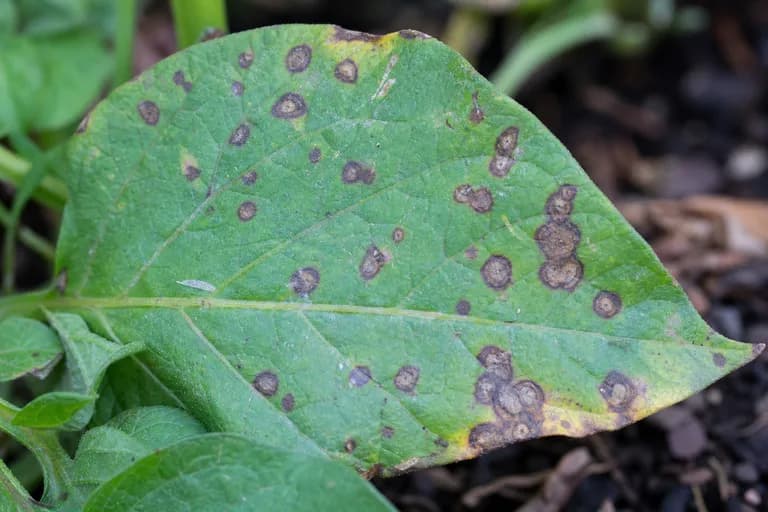
Leaf Spot
DiseaseTan, brown, or yellow spots on leaves that may merge into larger patches, eventually causing leaf drop in severe cases.
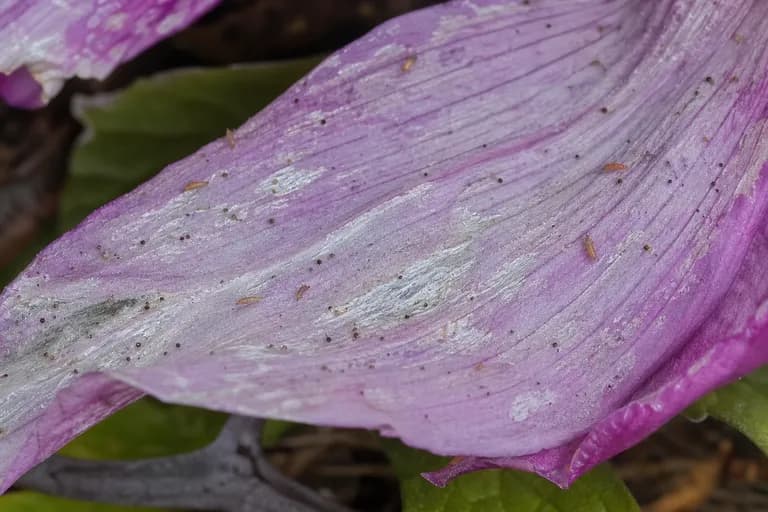
Thrips
PestSilvery streaks or stippling on leaf surfaces, distorted new growth, and tiny dark insects visible on leaf undersides.
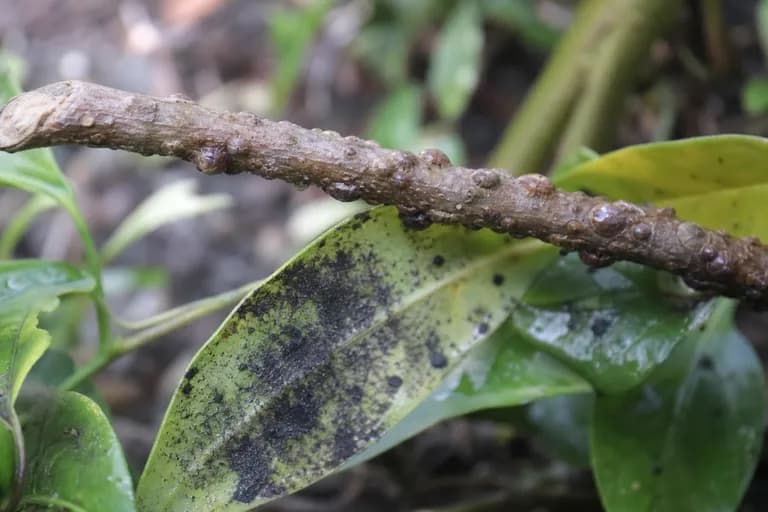
Scale Insects
PestSmall brown or white bumps on stems and leaf bases, sticky honeydew on leaves, and overall plant decline.
Troubleshooting Common Problems
The biggest challenge is the long growing season of 8-10 warm months. In short-season areas, starting indoors and using containers is essential. Overwatering causes rhizome rot, the most common disease. Underwatering leads to small, shriveled rhizomes with poor flavor. Leaves yellowing during active growth usually indicates nutrient deficiency or root problems. Turmeric grown in full sun may suffer leaf scorch; partial shade is preferred. Cold temperatures below 50°F halt growth and prolonged cold damages rhizomes irreversibly.
Growing Tips
- Start with fresh, organic turmeric from a grocery store or farmer's market if you cannot find planting stock — supermarket rhizomes sprout readily as long as they have visible growth buds and have not been irradiated.
- Pre-sprout rhizomes indoors 8-10 weeks before planting outdoors. Place pieces on damp vermiculite or peat moss in a warm spot at 24-30°C (75-85°F). Sprouting before planting gives you a 6-8 week head start on the growing season.
- Container growing is strongly recommended in zones 8 and cooler. Use a pot at least 30 cm deep and 45 cm wide, with rich potting mix amended with compost. This allows you to move plants indoors when temperatures drop.
- Partial shade is genuinely preferred — unlike most vegetables, turmeric performs better with 4-6 hours of filtered sunlight or morning sun with afternoon shade. Full blazing sun can scorch the broad leaves, especially in low-humidity climates.
- Maintain consistent soil moisture throughout the growing season. Turmeric's tropical origins mean it expects regular rainfall — aim for 2.5-4 cm of water per week and never let the soil dry out completely during active growth.
- Hill soil or mulch around the base of the plant as it grows, similar to hilling potatoes. This covers developing rhizomes, prevents greening from light exposure, and encourages more branching of the underground rhizome system.
- Black pepper and turmeric are a synergistic pairing in the garden as well as the kitchen. Grow both in containers side by side if space allows — the piperine in black pepper increases curcumin bioavailability by up to 2000% when consumed together.
- Do not harvest too early. Turmeric needs a full 8-10 months to develop maximum rhizome size and curcumin content. Premature harvesting yields small, pale rhizomes with weak flavor. Wait for natural leaf dieback as the signal to dig.
Grow your best Turmeric yet — and everything around it.
Start a free plan today. Lay out your beds, drop in your Turmeric, and let PlotMyGarden handle the timing, spacing, companions and reminders from seed to harvest basket.
Pick your Turmeric
Alleppey
The most common culinary variety with deep orange flesh and high curcumin content, widely grown in India for spice production.
Madras
A lighter-colored variety with milder flavor, preferred for prepared mustards and lighter-colored dishes.
Hawaiian Red
Produces vibrant reddish-orange rhizomes with intense color and warm, slightly bitter flavor ideal for fresh use.
White Turmeric
A different species (Curcuma zedoaria) with white flesh and a more bitter, camphor-like flavor used in traditional medicine.
Indira Yellow
A high-yielding variety with bright yellow flesh and excellent curcumin content for both culinary and dye use.
Fresh organic turmeric root sells for $8-15 per pound at specialty grocery stores and health food markets, while high-quality organic turmeric powder costs $15-30 per pound. A single planted rhizome piece costing $2-4 can produce 250-500g of fresh turmeric worth $5-15 at retail prices. Growing 6-10 plants yields enough fresh turmeric for a year's supply of golden milk, cooking spice, and homemade powder — a savings of $50-120 compared to purchasing equivalent organic products. The flavor and potency of freshly harvested turmeric far exceeds commercially dried powder that may be months or years old.
Quick recipes
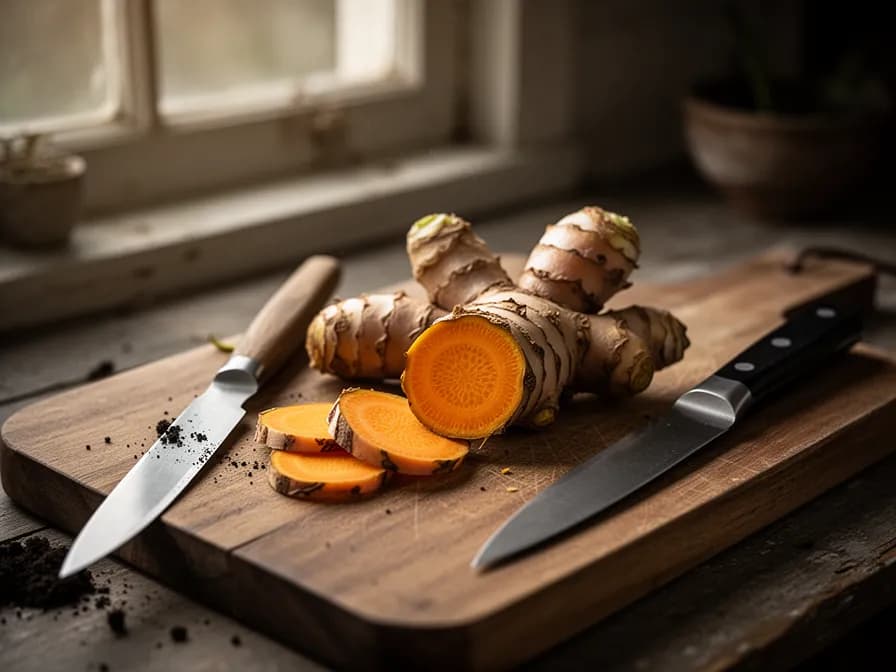
Classic Golden Milk (Haldi Doodh)
10 minA warming Ayurvedic beverage combining fresh turmeric with aromatic spices and creamy milk — traditionally consumed before bed to support immunity and reduce inflammation. The addition of black pepper dramatically increases curcumin absorption.
7 ingredientsFresh Turmeric Pickle (Haldi ka Achar)
15 min + 3 days curingA tangy, spicy Indian condiment made from fresh turmeric rhizomes that develops complex flavor over several days of curing. This traditional pickle pairs perfectly with rice, dal, and flatbreads and keeps for months in the refrigerator.
8 ingredientsTurmeric Ginger Immunity Shot
5 minA potent, concentrated wellness shot combining fresh turmeric with ginger, lemon, and black pepper for maximum anti-inflammatory benefit. The sharp, warming flavor wakes up the senses and delivers a concentrated dose of curcumin.
6 ingredientsCulinary Uses
Fresh turmeric has an earthy, peppery flavor more complex than dried powder. Grate it into curries, rice dishes, soups, and stir-fries. Blend fresh turmeric into smoothies, juices, and golden milk. Dried powder is essential in curry blends, mustard preparations, and spice rubs. It adds vibrant yellow color to pickles, relishes, and rice. Turmeric is also used in traditional warming beverages and teas.
What's inside
Health Benefits
- Curcumin, the primary bioactive compound in turmeric, is one of the most potent natural anti-inflammatory agents known — studies show it can match the effectiveness of some anti-inflammatory drugs by inhibiting NF-kB, a molecule that activates inflammatory genes in cells.
- Strong antioxidant activity from curcumin neutralizes free radicals directly while also stimulating the body's own antioxidant enzymes, providing a dual mechanism of protection against oxidative cellular damage.
- Research suggests curcumin may support brain health by increasing levels of Brain-Derived Neurotrophic Factor (BDNF), a growth hormone that promotes neuron formation and may help delay age-related cognitive decline.
- Anti-inflammatory and antioxidant properties of curcumin may support cardiovascular health by improving endothelial function — the lining of blood vessels that regulates blood pressure, clotting, and other heart-protective factors.
- Curcumin has demonstrated potential to support joint health and mobility, with clinical studies showing improvement in symptoms of osteoarthritis comparable to standard anti-inflammatory medications in some patients.
- The combination of curcumin with piperine (from black pepper) increases bioavailability by up to 2000% — always consume turmeric with black pepper and a source of fat for maximum absorption of its beneficial compounds.
Where Turmeric comes from
Turmeric (Curcuma longa) originated in the Indian subcontinent, most likely in the tropical forests of southern India and Southeast Asia. Archaeological and linguistic evidence suggests it has been cultivated for at least 4,000-5,000 years, with early use as a culinary spice, medicinal herb, and vibrant natural dye. Ancient Sanskrit texts including the Atharva Veda (circa 1500 BCE) reference turmeric as a remedy for a wide range of ailments, and it held a central place in Ayurvedic medicine as a blood purifier and anti-inflammatory agent.
Turmeric spread along ancient trade routes from India to Southeast Asia, China, and the Middle East. Arab traders introduced it to East Africa by the 8th century, and it reached West Africa and eventually the Caribbean through trade networks. Marco Polo described turmeric in his 13th-century writings, marveling at a spice that bore qualities similar to saffron. European traders brought turmeric to the West, where it became known as 'Indian saffron' due to its vivid coloring properties, though it never achieved the culinary prominence in European cooking that it holds in Asian cuisines.
Today, India dominates global turmeric production, growing over 1 million tonnes annually across states like Andhra Pradesh, Tamil Nadu, Odisha, and Karnataka. Other significant producers include Bangladesh, Pakistan, Sri Lanka, Myanmar, and Indonesia. Modern scientific interest in curcumin has driven a surge in global demand beyond traditional culinary use, with turmeric supplements, extracts, and functional foods becoming a multi-billion dollar industry. Despite millennia of cultivation, turmeric remains essentially unchanged from its ancestral form — still propagated vegetatively by rhizome division, still requiring the same tropical warmth and moisture, and still producing the same brilliant golden-orange pigment that made it one of humanity's earliest and most valued spice crops.
Turmeric: did you know?
Fascinating facts about Turmeric
Turmeric has been used continuously for over 4,000 years in South Asian cuisine and traditional Ayurvedic medicine — archaeological evidence of turmeric residue has been found on cooking pots from ancient Indian sites dating to 2500 BCE.
Turmeric questions, answered
When should I plant Turmeric?
What are good companion plants for Turmeric?
What hardiness zones can Turmeric grow in?
How much sun does Turmeric need?
How far apart should I space Turmeric?
What pests and diseases affect Turmeric?
How do I store Turmeric after harvest?
What are the best Turmeric varieties to grow?
What soil does Turmeric need?
Can I grow turmeric from grocery store rhizomes?
How do I grow turmeric in a cold climate (zones 4-8)?
Why is my turmeric not sprouting after several weeks?
How do I make turmeric powder from my harvest?
Is it true that turmeric needs black pepper to be effective?
You just read the theory. Now grow it on autopilot.
Everything that makes Turmeric fiddly — the timing, the spacing, the companions, the harvest window — is exactly what PlotMyGarden handles for you, for every plant in your garden.
A plan that knows your weather
Set your location once. Get sow, feed and harvest dates built around your real last-frost date and live forecast — no more guessing from a generic seed packet.
From the “When to plant” sectionDrag-and-drop bed planner
Design beds on a grid. Every plant snaps to its proper spacing, and you can see your whole season laid out before you spend a cent on seed.
From the “Growing guide” sectionCompanion conflicts, caught early
200+ good-and-bad pairings checked live as you plant — so a season-wrecking mistake never makes it into the ground.
From the “Companions” sectionReminders you'll actually act on
“Water the beans.” “Pick today before it turns.” Timely, specific, and tied to the plants you're really growing.
From the “Harvest” sectionSuccession, scheduled
Want a harvest for six weeks, not six days? It spaces your sowings automatically and reminds you when each new block is due.
From the “When to plant” sectionA record that gets smarter
Every harvest you log teaches it your garden. Next year's plan starts from what actually worked in your soil, not a textbook's.
From the “Overview” sectionPlant these alongside Turmeric
More Root Vegetables
Garden plans featuring Turmeric
Grow your best Turmeric yet — and everything around it.
Start a free plan today. Lay out your beds, drop in your Turmeric, and let PlotMyGarden handle the timing, spacing, companions and reminders from seed to harvest basket.