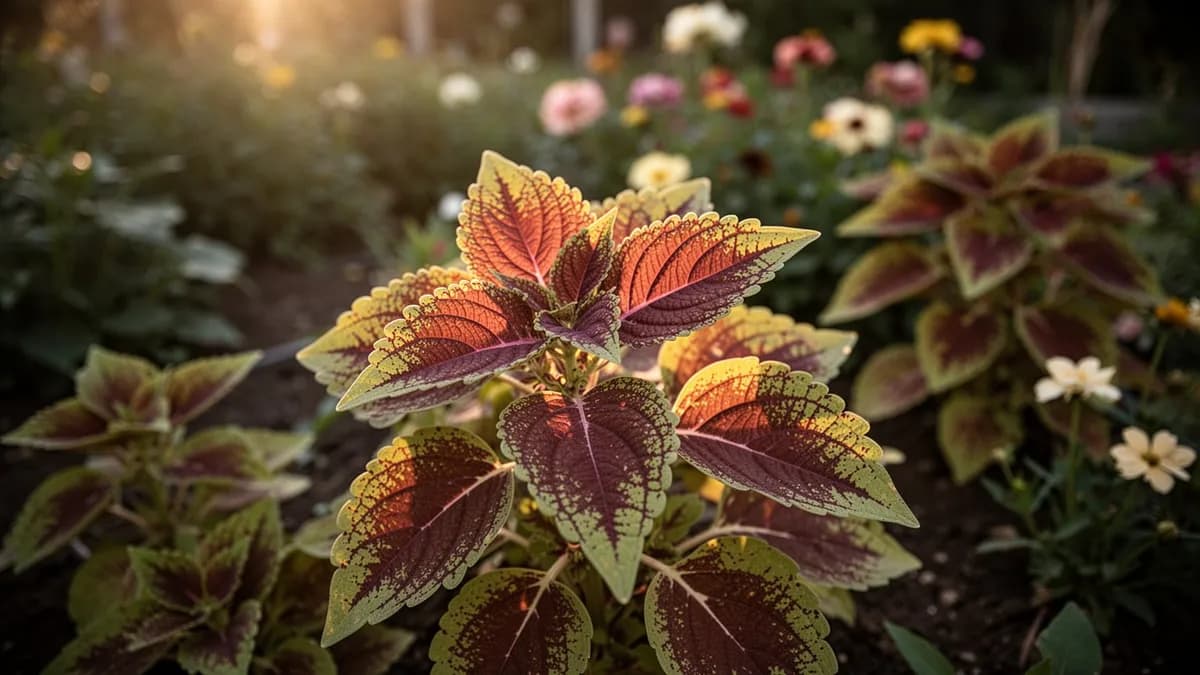
Coleus
Plectranthus scutellarioides
At a Glance
It's planting season for Coleus! Start planning your garden now.
A foliage plant with brilliantly colored leaves in endless combinations of red, green, yellow, orange, and purple patterns. Modern sun-tolerant coleus varieties thrive in both sun and shade, making them incredibly versatile for any garden situation. Pinch flower spikes to keep plants bushy and take cuttings easily in water for propagation.
Planting & Harvest Calendar
Growth Stages
From Seed to Harvest
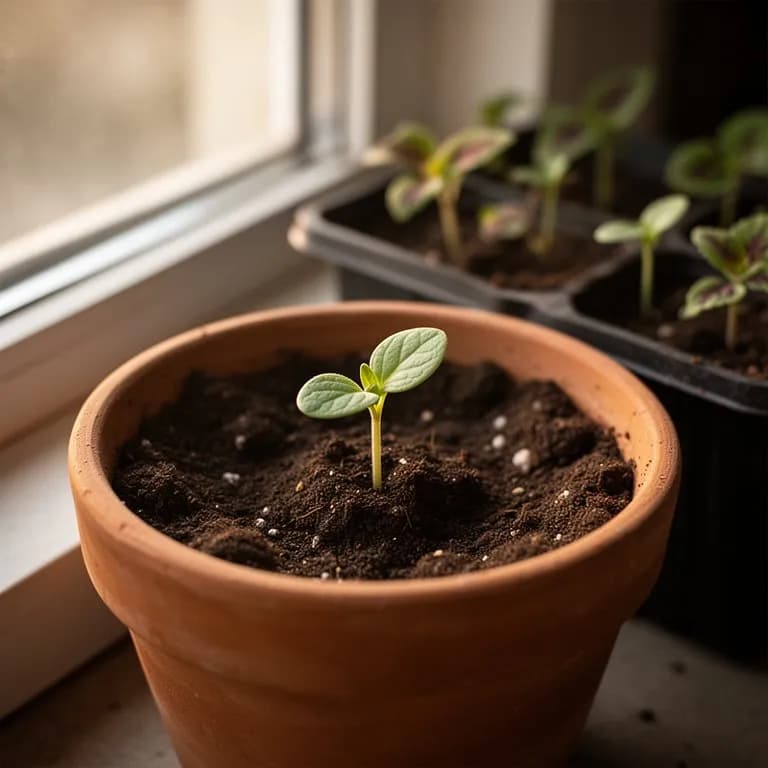
Seed Germination
Days 0–14
Coleus seeds are extremely fine, almost dust-like, and require light to germinate. They should be surface-sown on moist seed-starting mix without any covering. At optimal temperatures of 22-25°C (72-77°F), germination occurs in 10-14 days. Seeds are slow and somewhat erratic, so patience is important during this stage.
💡 Care Tip
Press seeds gently onto the surface of pre-moistened sterile seed-starting mix. Do not cover them, as they are light-dependent germinators. Maintain consistent moisture by misting or bottom-watering and cover trays with clear plastic or a humidity dome to prevent drying out.
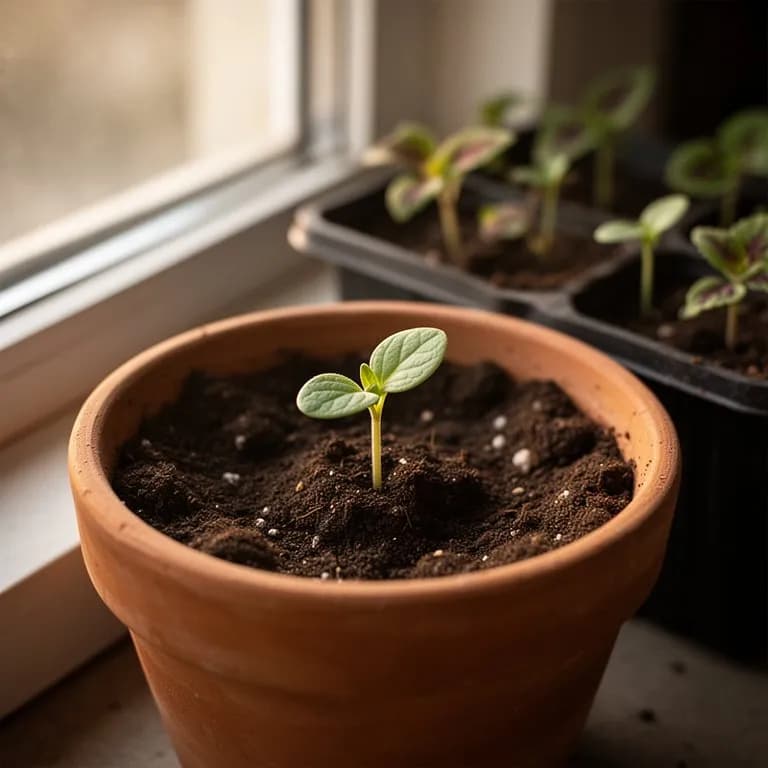
Young coleus seedlings beginning to reveal their characteristic leaf colors within the first few weeks of growth
Monthly Care Calendar
What to do each month for your Coleus
May
You are hereTransplant hardened-off coleus into garden beds and containers after all frost danger has passed. Space plants 20-30 cm apart depending on cultivar size. Apply a slow-release balanced fertilizer at planting time. Mulch around plants to retain moisture.
Did You Know?
Fascinating facts about Coleus
Coleus belongs to the mint family (Lamiaceae) and is closely related to herbs like basil, oregano, and rosemary. Its square stems and opposite leaf arrangement are telltale signs of its mint family heritage.
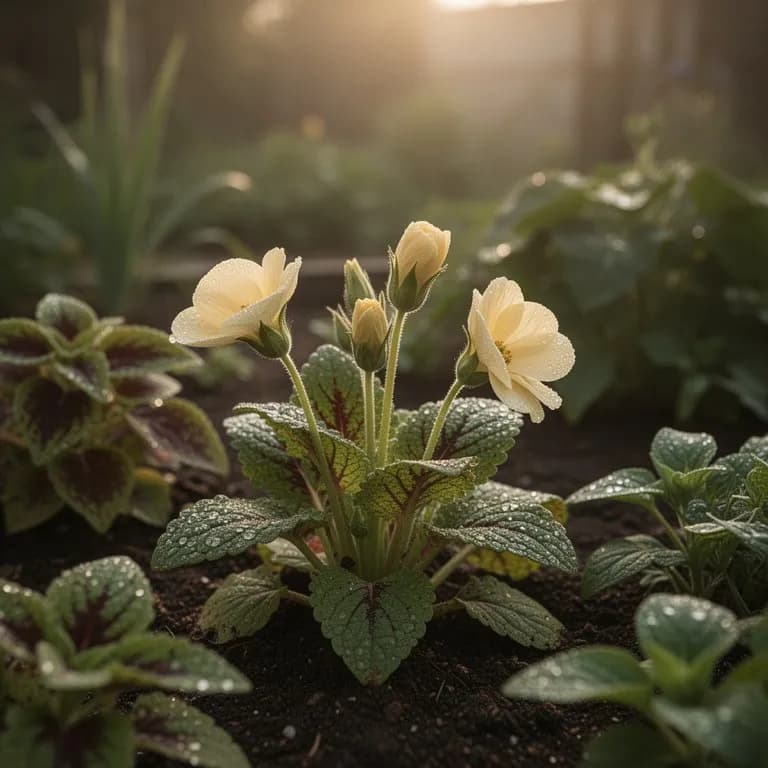
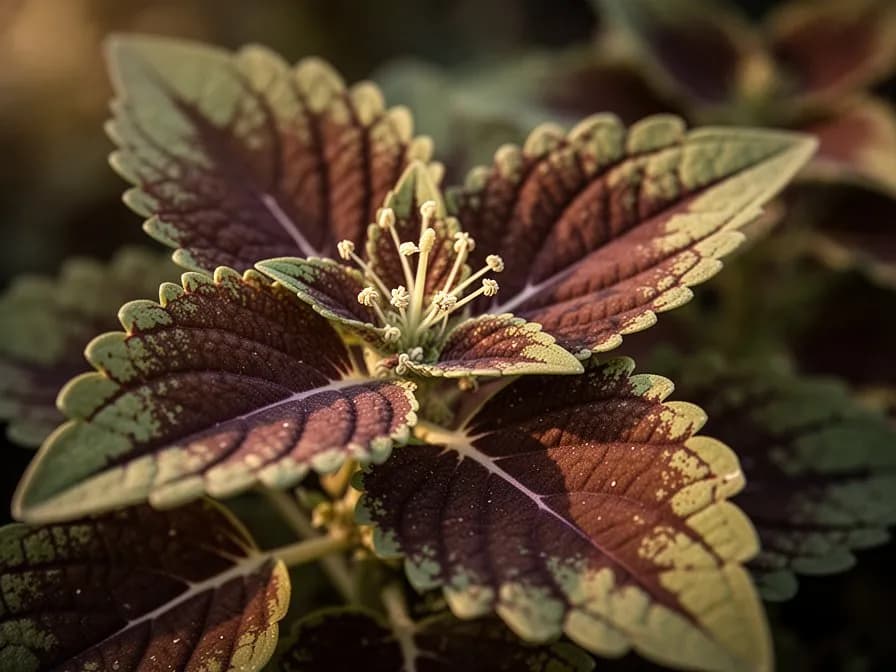
Coleus flower spikes should be pinched off promptly to redirect energy toward foliage production and maintain compact growth
Start coleus seeds indoors eight to ten weeks before the last frost date. Sow seeds on the surface of moist seed-starting mix without covering, as they require light for germination. Maintain temperatures of 70 to 75 degrees Fahrenheit and expect germination in ten to fourteen days. Seedlings are slow-growing initially but accelerate once they develop several true leaves.
Transplant outdoors after all frost danger has passed and nighttime temperatures stay above 55 degrees Fahrenheit. Space plants twelve to eighteen inches apart depending on variety size. Modern sun-tolerant varieties handle full sun, but traditional types perform best in partial to full shade. Water regularly to keep soil consistently moist but not waterlogged.
Pinch the growing tips when plants reach six inches tall to promote bushy, well-branched growth. Continue pinching throughout the season to maintain compact form. Remove flower spikes as they appear, since flowering signals the plant to slow leaf production and can cause leggy growth. Take stem cuttings in late summer to root in water for overwintering indoors.
Coleus (Plectranthus scutellarioides, syn. Coleus scutellarioides) is native to the tropical and subtropical regions of Southeast Asia, with its center of diversity stretching from Indonesia and Malaysia through the Philippines and into northern Australia. In its native habitat, coleus grows as an evergreen perennial in the dappled shade of tropical forest understories and along riverbanks, where warm temperatures and consistent moisture support year-round growth. The plant has been cultivated for centuries by indigenous peoples of Southeast Asia, who valued it for both ornamental and traditional medicinal purposes. Dutch botanists first brought coleus specimens from Java to European botanical gardens in the 1850s, and the plant's spectacular foliage immediately captivated Victorian-era horticulturists. By the 1860s and 1870s, coleus had become one of the most fashionable bedding plants in Europe and North America, featured prominently in the elaborate carpet bedding schemes that defined Victorian garden design. Plant breeders of this period developed dozens of named cultivars through careful selection, establishing many of the color patterns still recognizable in modern varieties. Interest in coleus waned somewhat during the early twentieth century as gardening tastes shifted away from formal bedding displays toward more naturalistic plantings. However, a dramatic renaissance began in the 1990s and 2000s when breeders introduced revolutionary sun-tolerant cultivars that vastly expanded the plant's versatility. Modern breeding programs, particularly those utilizing vegetative propagation rather than seed production, have produced hundreds of named cultivars with an astonishing array of leaf shapes, sizes, colors, and patterns. Today coleus ranks among the top-selling ornamental foliage plants worldwide, prized equally for container gardening, landscape bedding, and indoor houseplant culture.
Sow coleus seeds indoors eight to twelve weeks before the last frost date. Press tiny seeds onto the surface of moist seed-starting mix without covering, as they need light to germinate. Maintain soil temperature of 70 to 75 degrees Fahrenheit. Seeds germinate in ten to fourteen days. Grow seedlings under bright light to develop the best color. Transplant to individual pots when seedlings have two sets of true leaves and harden off before planting outdoors after frost danger passes.
Coleus thrives in rich, well-drained soil amended with compost or aged manure. A slightly acidic to neutral pH of 6.0 to 7.0 is ideal. Feed every two to three weeks with a balanced liquid fertilizer diluted to half strength during the growing season. Avoid heavy nitrogen feeding which can wash out leaf colors. Container-grown coleus benefits from a premium potting mix with added perlite for drainage.
Check Your Zone
See if Coleus is suitable for your location.
15°C – 32°C
59°F – 90°F
Coleus thrives in warm conditions between 15-32°C (60-90°F) and is extremely frost-sensitive, suffering damage at temperatures below 10°C (50°F) and dying at the first touch of frost. Optimal growth and the most vivid foliage colors occur between 21-27°C (70-80°F). Night temperatures should remain above 15°C for healthy growth. In very hot climates exceeding 35°C (95°F), even sun-tolerant varieties benefit from afternoon shade and extra moisture.
Common issues affecting Coleus and how to prevent and treat them organically.
The most common issue is leggy, sparse growth caused by insufficient pinching or too much shade for sun-loving varieties. Flower spikes left unpinched cause plants to become tall and sparse. Coleus downy mildew has become a serious problem in recent years, causing sudden wilting and death. Overwatering leads to root rot, while underwatering causes wilting and leaf drop. Cold temperatures below 50 degrees Fahrenheit cause leaf discoloration and plant decline.
Coleus pairs beautifully with shade-loving companions like begonias, impatiens, caladiums, and ferns. Use contrasting coleus colors to create dynamic foliage combinations without relying on flowers. In sun, combine with petunias, lantana, and ornamental grasses. Coleus makes an excellent filler in container combinations and provides season-long color when flowers fade between bloom cycles.
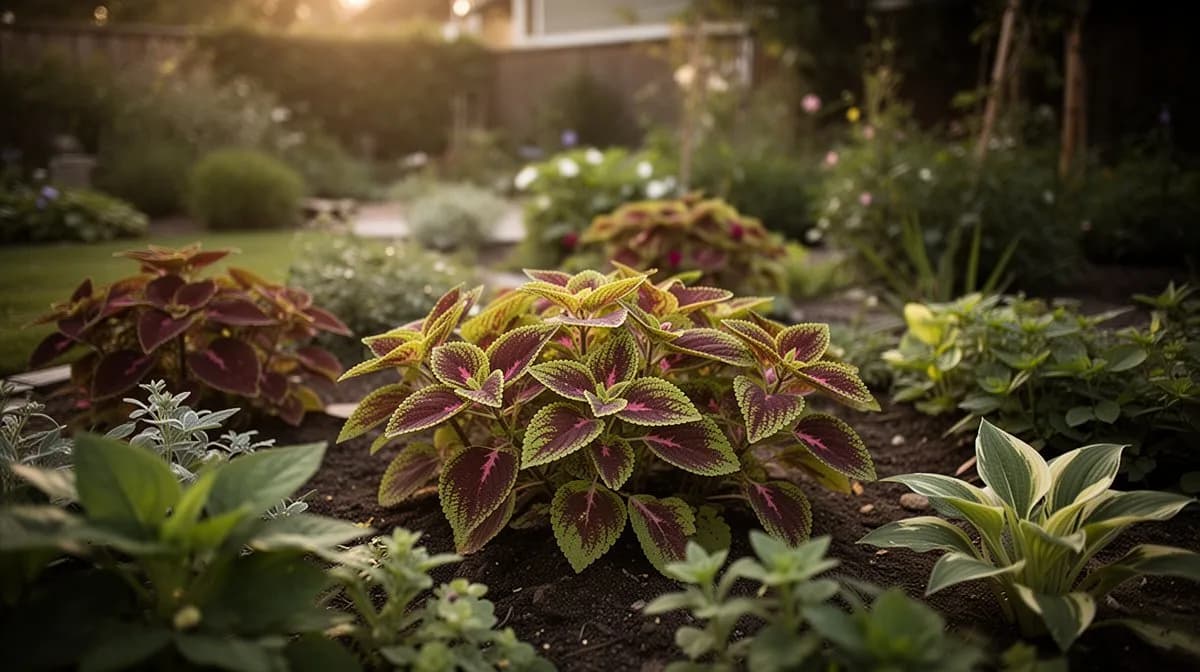
A striking container display combining several coleus varieties for a tapestry of color and texture
- 1Start coleus seeds indoors 10-12 weeks before the last frost date. The seeds are extremely fine and need light to germinate, so press them gently onto the surface of moist seed-starting mix without covering. Maintain a soil temperature of 22-25°C (72-77°F) for best germination rates.
- 2Propagate coleus effortlessly from stem cuttings by snipping 10-15 cm sections just below a leaf node, removing the lower leaves, and placing the stems in a jar of clean water. Change the water every few days and pot up the cuttings once roots are 3-5 cm long.
- 3Pinch the growing tips regularly, starting when plants have 4-6 sets of leaves, to create full, bushy specimens. Each pinch point will produce two new branches, so consistent pinching transforms a single-stemmed plant into a dense, multi-branched mound of foliage.
- 4Remove flower spikes as soon as they appear by pinching them off at the base. Flowering redirects the plant's energy away from foliage production and can cause the overall growth habit to become leggy and open, diminishing the ornamental display.
- 5Water coleus consistently, keeping the soil evenly moist but never waterlogged. Coleus wilts dramatically when drought-stressed, though it typically recovers quickly after watering. Mulching around plants helps maintain consistent soil moisture levels throughout the summer.
- 6Choose sun-tolerant cultivar series such as ColorBlaze, Under the Sea, or Mainstreet for full-sun locations. Traditional coleus varieties still perform best in partial shade with 3-4 hours of morning sun and afternoon protection from intense heat.
- 7Feed coleus every two weeks with a balanced liquid fertilizer during the active growing season. Avoid high-nitrogen fertilizers which can promote rapid but weak growth with washed-out leaf colors. A balanced 10-10-10 or 20-20-20 formula works well for most cultivars.
- 8Bring coleus indoors before the first fall frost by potting up garden plants or rooting fresh cuttings. Place them in a bright location with temperatures above 15°C (60°F) and moderate humidity. Reduce watering and stop fertilizing during winter to allow a natural rest period.
- 9Experiment with coleus in mixed containers by combining upright varieties as thrillers, mounding types as fillers, and trailing cultivars as spillers. The vast range of leaf colors and patterns available makes coleus ideal for creating cohesive container designs without relying on flowers.
- 10Monitor for common pests including mealybugs, aphids, whiteflies, and spider mites, especially on indoor plants and during periods of environmental stress. Treat infestations early with insecticidal soap, neem oil, or a strong spray of water to dislodge the pests before populations build.
Harvest coleus stems for indoor arrangements by cutting just above a leaf node, which encourages bushier regrowth. Cut in the morning when stems are most turgid. Remove lower leaves that would sit below the waterline. Coleus cuttings root easily in water, so harvested stems can serve double duty as both decoration and propagation material. Regular harvesting actually benefits the plant by promoting denser, more compact growth.
Coleus is best enjoyed fresh rather than dried, as the vibrant leaf colors fade significantly when preserved. For overwintering, take four to six inch stem cuttings in late summer, root them in water or moist perlite, and grow them indoors on a bright windowsill. Press individual colorful leaves between parchment paper in heavy books for craft projects, though colors will mute over time. Rooted cuttings can be maintained all winter and transplanted outdoors the following spring.
Plan your garden with ease
Love growing Coleus? Use our free garden planner to design your beds, track planting dates, and get personalized care reminders.
Nutritional Info
Per 100g serving
35
Calories
Health Benefits
- Coleus is grown primarily as an ornamental plant and is not commonly consumed as food, though leaves are technically edible in small quantities
- In some traditional Southeast Asian cuisines, young coleus leaves are occasionally used as a flavoring or wrapped around rice, though this practice is uncommon
- The related species Coleus forskohlii (Plectranthus barbatus) is valued for its tuberous roots, which contain the bioactive compound forskolin used in herbal supplements
- Coleus leaves contain rosmarinic acid and various flavonoids with documented antioxidant properties in laboratory studies
- Some traditional medicine systems use coleus leaf preparations as digestive aids and for treating minor skin irritations
- The plant's primary value lies in its ornamental rather than nutritional properties, and it should not be considered a dietary staple
💰 Why Grow Your Own?
Coleus is one of the most economical ornamental plants to grow due to its extraordinarily easy propagation from cuttings. A single $4-6 nursery plant can provide unlimited cuttings throughout the growing season, with each cutting rooting in water within 7-10 days. A gardener starting with just two or three plants can produce 50-100 new plants in a single season at no additional cost. Compared to purchasing bedding plants at $3-5 each, propagating your own coleus from a few mother plants can save $150-500 or more when filling garden beds and containers. Overwintering cuttings indoors eliminates the need to repurchase plants each spring, making coleus one of the most budget-friendly choices for adding season-long color to the garden.
Quick Recipes
Simple recipes using fresh Coleus
Coleus Leaf Wraps (Traditional Southeast Asian)
15 minutesIn parts of Indonesia and Malaysia, large coleus leaves are sometimes used as edible wraps for sticky rice and savory fillings, similar to how banana leaves are used. The mild, slightly minty flavor of the leaves adds a subtle herbal note. Use only organically grown, unsprayed coleus leaves and consume in moderation.
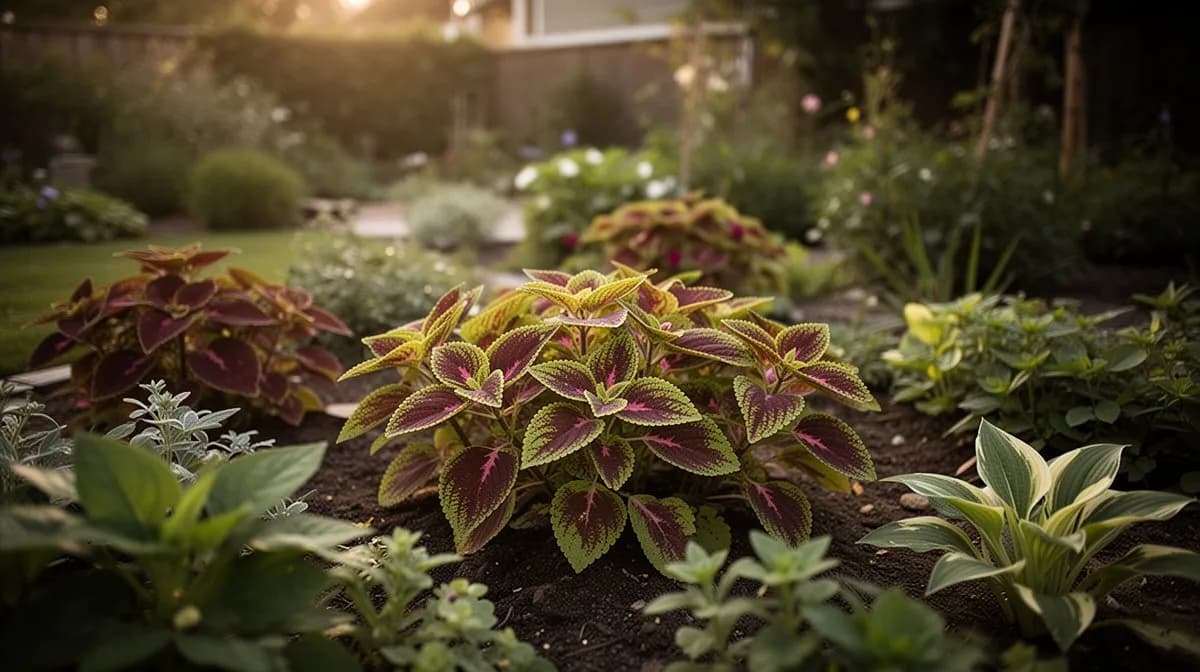
Coleus and Herb Infused Garden Tea
10 minutesA gentle herbal tea blending mild coleus leaves with more robust garden herbs for a soothing warm drink. The coleus contributes a subtle earthy, slightly minty undertone. This recipe uses a small amount of coleus as a complement to traditional tea herbs rather than as the primary ingredient.
Coleus Leaf Tempura Garnish
20 minutesColorful coleus leaves dipped in a light tempura batter and quickly fried make a visually stunning edible garnish for salads and appetizer plates. The frying process mellows the leaf flavor while preserving some of the vibrant color patterns. Choose leaves with the most dramatic markings for the best visual impact.
Coleus thrives as a shade-tolerant ground cover, bringing vivid color to areas where flowering plants often struggle
Yield & Spacing Calculator
See how many Coleus plants fit in your garden bed based on the recommended 30cm spacing.
16
Coleus plants in a 4×4 ft bed
4 columns × 4 rows at 30cm spacing
Popular Varieties
Some of the most popular coleus varieties for home gardeners, each with unique characteristics.
Wizard Mix
A compact seed-grown series reaching twelve to fourteen inches with large, heart-shaped leaves in a wide range of bold color patterns, ideal for bedding.
Kong Series
Extra-large leaves up to six inches across on vigorous eighteen to twenty-four inch plants in dramatic color combinations, best in shade to part sun.
ColorBlaze Royale Cherry Brandy
A sun-tolerant vegetatively propagated variety with deep burgundy-red leaves edged in bright pink, excellent heat and sun tolerance.
Under the Sea Series
Unique varieties with ruffled, lobed, or serrated leaves resembling sea creatures, offering unusual textures in vibrant color combinations.
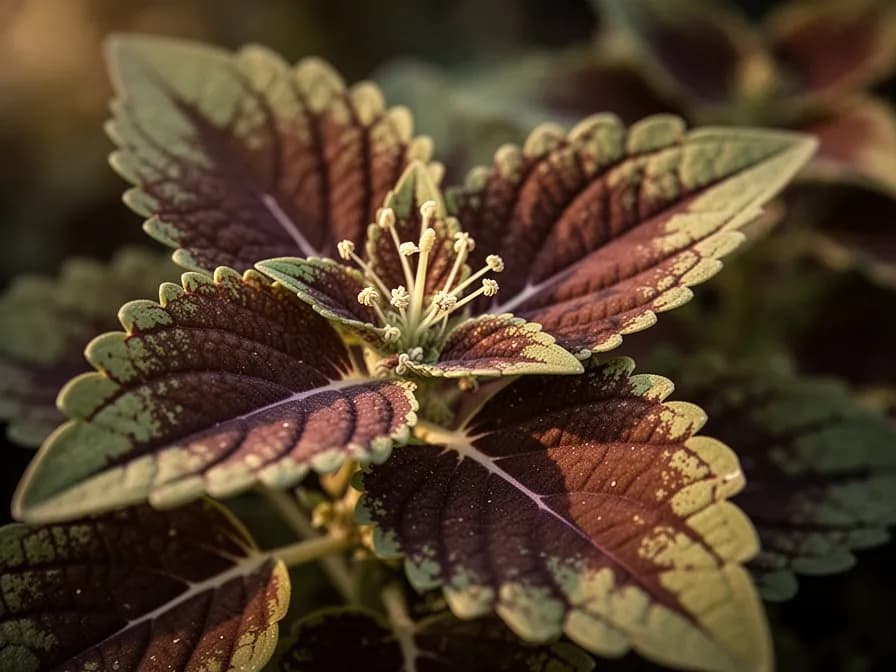
The remarkable diversity of coleus cultivars includes solid, bicolor, tricolor, and elaborately patterned leaf forms
When should I plant Coleus?
Plant Coleus in May, June. It takes approximately 50 days to reach maturity, with harvest typically in June, July, August, September, October.
What are good companion plants for Coleus?
Coleus grows well alongside Begonia, Impatiens, Torenia. Companion planting can improve growth, flavor, and natural pest control.
What hardiness zones can Coleus grow in?
Coleus thrives in USDA hardiness zones 10 through 12. With greenhouse protection, it may be grown in zones 8 through 13.
How much sun does Coleus need?
Coleus requires Shade (<3h). This means less than 3 hours of direct sunlight.
How far apart should I space Coleus?
Space Coleus plants 30cm (12 inches) apart for optimal growth and air circulation.
What pests and diseases affect Coleus?
Common issues include Downy Mildew, Mealybugs, Slugs and Snails. Prevention through good garden practices like crop rotation, proper spacing, and companion planting is the best approach. See the detailed pests and diseases section above for symptoms, prevention, and treatment for each.
How do I store Coleus after harvest?
Coleus is best enjoyed fresh rather than dried, as the vibrant leaf colors fade significantly when preserved. For overwintering, take four to six inch stem cuttings in late summer, root them in water or moist perlite, and grow them indoors on a bright windowsill. Press individual colorful leaves bet...
What are the best Coleus varieties to grow?
Popular varieties include Wizard Mix, Kong Series, ColorBlaze Royale Cherry Brandy, Under the Sea Series. Each has unique characteristics suited to different growing conditions and culinary preferences. See the varieties section above for detailed descriptions.
What soil does Coleus need?
Coleus thrives in rich, well-drained soil amended with compost or aged manure. A slightly acidic to neutral pH of 6.0 to 7.0 is ideal. Feed every two to three weeks with a balanced liquid fertilizer diluted to half strength during the growing season. Avoid heavy nitrogen feeding which can wash out l...
Can coleus grow in full sun or does it need shade?
Modern coleus cultivars have been bred for a range of light conditions. Traditional varieties perform best in partial shade with 3-4 hours of morning sun, but newer sun-tolerant series like ColorBlaze, Under the Sea, and Mainstreet thrive in 6-8 hours of direct sunlight. In full sun, ensure consistent moisture as sun-grown plants dry out faster. In very hot climates (above 35°C/95°F), even sun-tolerant varieties benefit from afternoon shade to prevent leaf scorch and excessive wilting.
Why is my coleus losing its vibrant leaf color?
Fading leaf color in coleus is most commonly caused by insufficient light. Coleus needs bright light (whether direct or indirect depending on cultivar) to produce the pigments that create its vivid leaf patterns. Too much shade results in leaves reverting toward green. Over-fertilizing with high-nitrogen feeds can also dilute color intensity. Other causes include natural aging of lower leaves, root-bound conditions in containers, or temperature stress. Move plants to brighter conditions and ensure balanced nutrition to restore vibrant coloring.
How do I overwinter coleus plants indoors?
The easiest overwintering method is taking 10-15 cm stem cuttings from your best plants in early autumn, rooting them in water, and potting them up as compact new plants. Alternatively, you can dig up and pot entire plants, though they often become leggy indoors. Place overwintered plants in the brightest available location, ideally with supplemental grow lighting. Keep temperatures above 15°C (60°F), water moderately, and stop fertilizing until spring. Pinch back any leggy growth to keep plants compact through winter.
Is coleus toxic to cats, dogs, or other pets?
Coleus is considered mildly toxic to cats and dogs by the ASPCA. Ingestion of leaves can cause vomiting, diarrhea, and mild gastrointestinal upset. While rarely life-threatening, it is best to keep coleus plants out of reach of curious pets, particularly cats who may be attracted to chewing on the foliage. If you suspect your pet has ingested coleus leaves and is showing symptoms, contact your veterinarian. Consider placing coleus in hanging baskets or elevated planters if pets are a concern.
Why is my coleus wilting even though the soil is moist?
Wilting in moist soil typically indicates root rot caused by overwatering or poorly draining soil. Coleus needs consistently moist but well-drained conditions. Check that container drainage holes are not blocked and that garden soil is not compacted or waterlogged. Root rot can also be caused by fungal pathogens in overly wet conditions. Other causes of wilting in moist soil include stem rot at the soil line, extreme heat stress, or transplant shock. Improve drainage, reduce watering frequency, and ensure good air circulation around the base of the plant.
Can I grow coleus from seed, or is it better to buy plants?
Both methods work well but produce different results. Seed-grown coleus offers variety and is very economical, with a packet of mixed seeds costing a few dollars and producing dozens of unique plants. However, seed-grown plants take 10-14 weeks to reach transplant size and the resulting colors are unpredictable with mixed seed. Named cultivars from nurseries are vegetatively propagated from cuttings, guaranteeing exact color and pattern replication, and they reach display size much faster. For specific color schemes, buying named cultivars is recommended. For adventurous gardeners who enjoy surprises, growing from seed is rewarding and budget-friendly.
Ready to Grow Coleus?
Add Coleus to your garden plan and start designing your perfect layout.

Vladimir Kusnezow
Gardener and Software Developer
Zone 6b gardener. Growing vegetables and fruits in soil and hydroponics for 6 years. I built PlotMyGarden to plan my own gardens.
Jump to Section