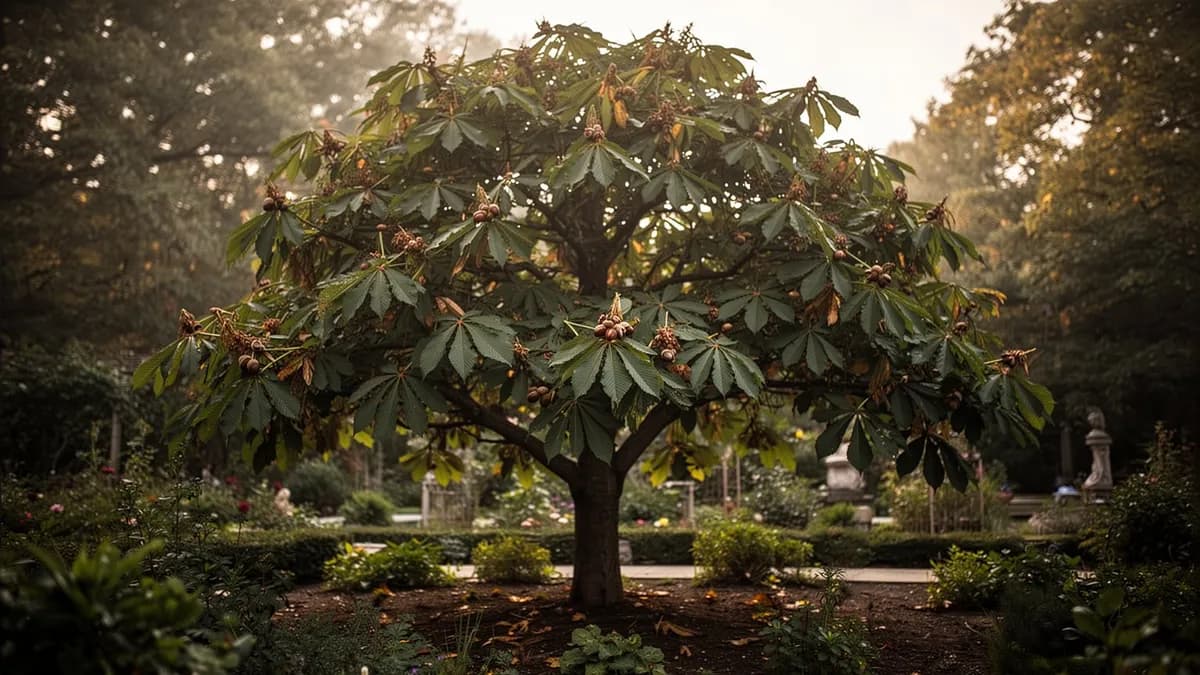
Chestnut Tree
Castanea sativa
At a Glance
A large, handsome deciduous tree that produces sweet, starchy nuts prized for roasting, purees, and flour. Chestnuts need acidic, well-drained soil and cannot tolerate alkaline or waterlogged conditions. Plant at least two different varieties for cross-pollination, as chestnuts are self-sterile. Chinese-American hybrid cultivars offer the best combination of blight resistance and nut quality for home growers.
Planting & Harvest Calendar
Growth Stages
From Seed to Harvest
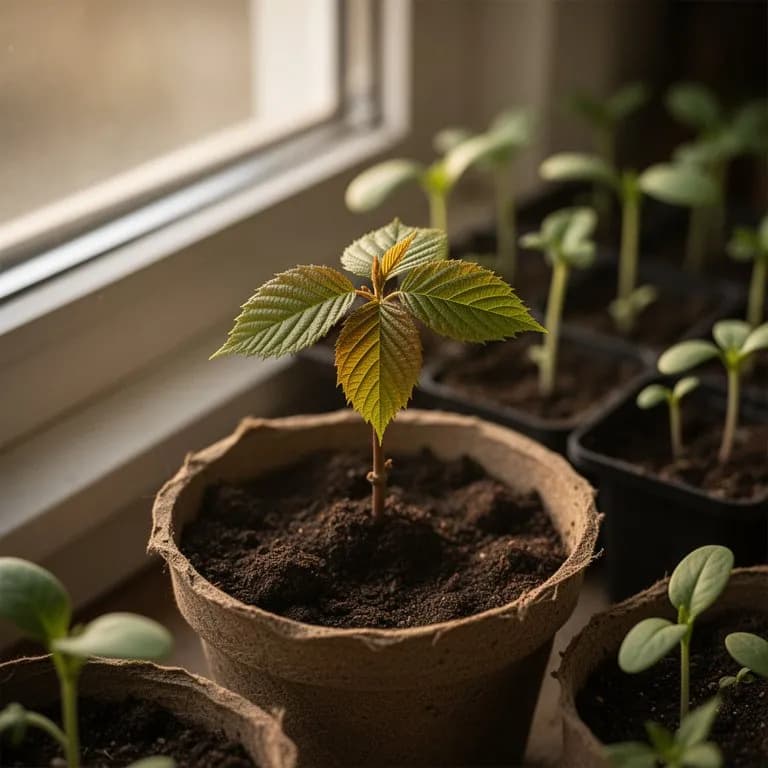
Seed Germination
Days 0–60
Stratified chestnuts germinate after 60 to 90 days of cold treatment. The taproot emerges first, followed by the shoot, which pushes through the soil surface within a few weeks of warming temperatures.
💡 Care Tip
Keep the soil consistently moist but not waterlogged. Protect emerging seedlings from rodents with wire mesh cages.
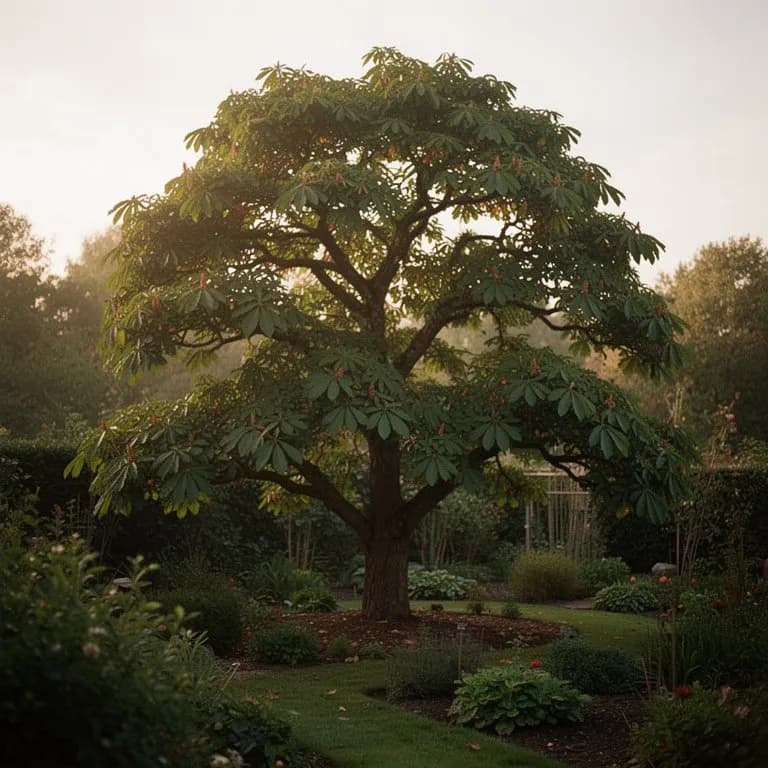
Mature chestnut trees can reach 20-30 metres in height with a canopy spread of up to 15 metres.
Monthly Care Calendar
What to do each month for your Chestnut Tree
May
You are hereScout for chestnut blight cankers on branches and trunk. Begin a regular watering schedule during dry spells providing 25 mm per week. Install trunk guards on young trees to protect against deer rubbing
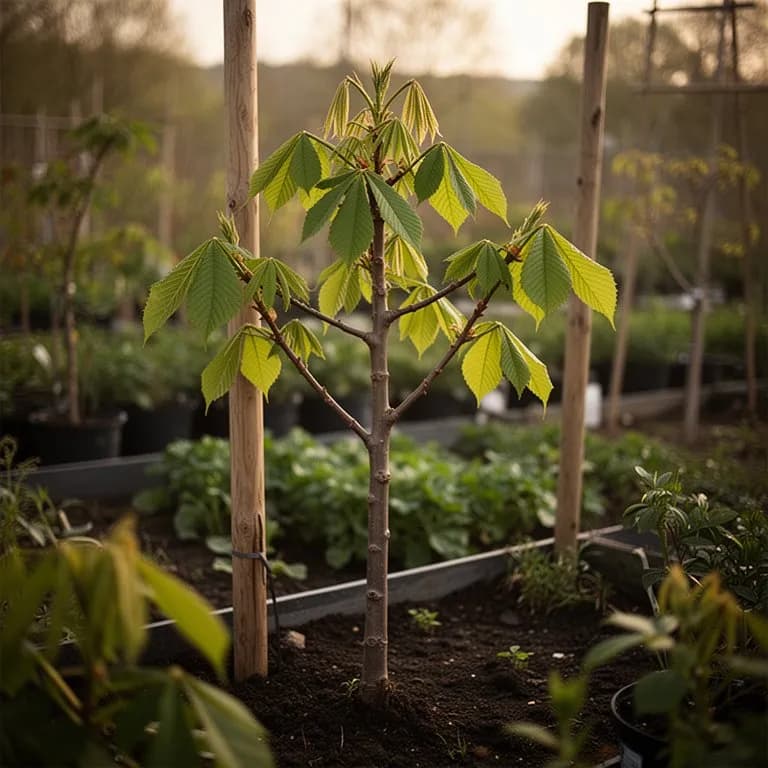
In autumn, chestnut foliage turns rich shades of gold and bronze before leaf drop.
Did You Know?
Fascinating facts about Chestnut Tree
The oldest known living chestnut tree, the Hundred Horse Chestnut on Mount Etna in Sicily, is estimated to be between 2,000 and 4,000 years old with a trunk circumference of over 57 metres.
Chestnut trees are magnificent deciduous trees that can reach 40 to 60 feet tall with broad, spreading canopies. They require full sun and acidic, well-drained, sandy loam soil with a pH of 4.5 to 6.5. Chestnuts absolutely cannot tolerate alkaline soil or waterlogged conditions, which cause rapid decline and death. Space trees 30 to 40 feet apart. Select a site with good air drainage to reduce the risk of chestnut blight, as stagnant humid air promotes fungal infection.
Chestnuts are self-sterile and require cross-pollination from a different variety within 200 feet for nut production. They are wind-pollinated, so closer spacing improves pollination success. Plant at least two genetically distinct trees, choosing varieties that bloom at the same time. Water regularly during the first 3 years, providing 1 to 2 inches per week during the growing season. Mature trees are moderately drought-tolerant but produce larger nuts with consistent summer moisture.
Fertilize established chestnut trees with ammonium sulfate in spring, which provides nitrogen while maintaining the acidic soil pH chestnuts require. Avoid lime, wood ash, or alkaline fertilizers that raise soil pH. Prune trees in late winter to develop a strong central leader with well-spaced scaffold branches. Chestnuts grow rapidly and begin bearing at 3 to 5 years of age for Chinese and hybrid types, or 5 to 7 years for European varieties.
The sweet chestnut (Castanea sativa) is native to the forests of Asia Minor, the Caucasus, and southeastern Europe, where it has been cultivated for at least 3,000 years. Ancient Greeks and Romans spread the tree across the Mediterranean basin, recognising its value as both a timber species and a reliable food source. The Roman army is credited with establishing chestnut orchards throughout their empire, from the hills of Gaul to the valleys of Britannia, where the trees provided nutritious, storable food for soldiers and civilians alike. In many mountainous regions of southern Europe, chestnuts became the primary carbohydrate source for rural communities, earning the tree the nickname 'the bread tree.' Entire economies in Corsica, the Cévennes, and the Italian Apennines revolved around chestnut cultivation, with the nuts dried, ground into flour, and used in countless traditional recipes. The American chestnut (Castanea dentata) once dominated the eastern forests of North America, with an estimated four billion trees providing food for wildlife and timber for construction. The introduction of chestnut blight (Cryphonectria parasitica) from Asia around 1904 devastated the American species within a few decades, and restoration efforts using blight-resistant hybrids continue to this day. Chinese (C. mollissima) and Japanese (C. crenata) chestnuts, which carry natural blight resistance, have become increasingly popular in modern orchards worldwide. Today, global chestnut production exceeds two million tonnes annually, with China, Turkey, South Korea, and Italy among the leading producers.
Chestnut trees can be grown from seed, which is the simplest propagation method. Collect fresh, sound nuts in autumn and stratify in moist peat moss at 33 to 40 degrees Fahrenheit for 60 to 90 days. Plant stratified seeds in spring in deep pots or directly in the ground. Seedlings grow rapidly and may bear within 3 to 5 years. Named varieties are propagated by whip-and-tongue or cleft grafting onto seedling rootstock in spring. Grafted trees ensure specific variety characteristics and may bear a year or two earlier than seedlings.
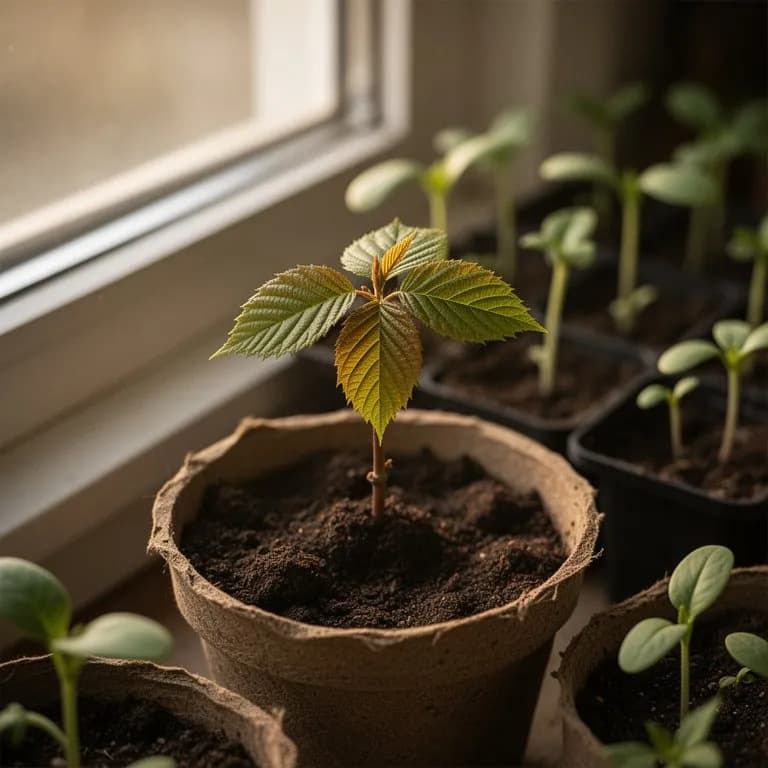
Chestnut seedlings grow vigorously in their first year, often reaching 30-60 cm in height.
Chestnuts require acidic, well-drained sandy loam with a pH of 4.5 to 6.5. They are among the most pH-sensitive nut trees and will decline rapidly in alkaline soil. Apply ammonium sulfate or sulfur-coated urea as nitrogen sources to maintain soil acidity. Avoid lime, wood ash, and alkaline composts. Test soil pH annually and apply elemental sulfur if pH rises above 6.5. Potassium and phosphorus applications should be based on soil test results. Excessive nitrogen promotes vegetative growth at the expense of nut production.
Check Your Zone
See if Chestnut Tree is suitable for your location.
-25°C – 35°C
-13°F – 95°F
Chestnut trees are hardy deciduous species that require a distinct winter chill period of 300 to 500 hours below 7°C to break dormancy and set fruit reliably. They thrive in temperate climates with warm summers for nut development and tolerate winter lows down to approximately -25°C once fully dormant. Late spring frosts below -2°C can damage emerging flowers and reduce yields. Optimal summer growing temperatures range from 20°C to 30°C.
Common issues affecting Chestnut Tree and how to prevent and treat them organically.
Chestnut blight devastated the American chestnut population in the early 20th century and remains the greatest threat. Plant only blight-resistant hybrids in areas where blight is present. Alkaline soil causes severe chlorosis and death in chestnuts, so soil testing before planting is essential. The spiny burrs create a significant litter problem beneath the tree and can puncture shoes. Squirrels, deer, and turkeys compete voraciously for the crop. Nut weevil larvae can infest a large percentage of the harvest if not controlled.
Chestnuts grow well alongside other acid-loving trees and shrubs including blueberries, azaleas, and conifers. Interplant with crimson clover or other nitrogen-fixing cover crops between trees to improve soil fertility. Native wildflowers adapted to acidic soil, such as lupines and wild blueberries, make attractive and functional companions. Avoid planting chestnuts near walnut trees, as juglone toxicity can affect growth. Oak trees in the same family grow in similar conditions and make compatible landscape companions.
- 1Plant at least two different chestnut cultivars within 60 metres of each other, as most varieties require cross-pollination from a genetically distinct tree to set a full crop.
- 2Choose a planting site with deep, well-drained, slightly acidic soil with a pH between 5.5 and 6.5. Chestnuts are highly intolerant of waterlogged or alkaline soils.
- 3Avoid planting in frost pockets or low-lying areas where cold air settles, as late spring frosts can destroy emerging flowers and eliminate an entire season's crop.
- 4Apply 5 to 10 cm of organic mulch in a wide ring around the tree each spring, keeping it at least 15 cm away from the trunk to prevent bark rot.
- 5Water young trees deeply once per week during dry periods, providing approximately 25 mm of water each time to encourage deep root development.
- 6Prune during full dormancy in late winter to establish a strong central leader with well-spaced lateral scaffold branches at 60 to 90 cm intervals.
- 7Monitor for chestnut blight by inspecting the bark regularly for orange-brown sunken cankers and report any findings to your local agricultural extension office immediately.
- 8Harvest nuts daily as they fall to minimise exposure to moisture and soil-borne moulds. Nuts left on damp ground for more than 48 hours deteriorate rapidly.
- 9Hot-water treat freshly harvested nuts at 49°C for 30 minutes to eliminate chestnut weevil larvae and extend storage life without affecting flavour or germination.
- 10Store cured chestnuts in perforated plastic bags at 0 to 2°C with 85 to 90 percent relative humidity, where they will keep for two to three months.
Chestnuts ripen and fall from the tree inside their spiny burrs in September and October. Collect nuts daily as they fall, wearing thick gloves to handle the sharp burrs. Open burrs and remove the glossy brown nuts inside. Nuts that feel light or rattle when shaken are wormy or empty and should be discarded. Fresh chestnuts have a high moisture content and are perishable, unlike other tree nuts. They must be stored promptly in cool conditions or processed soon after harvest.
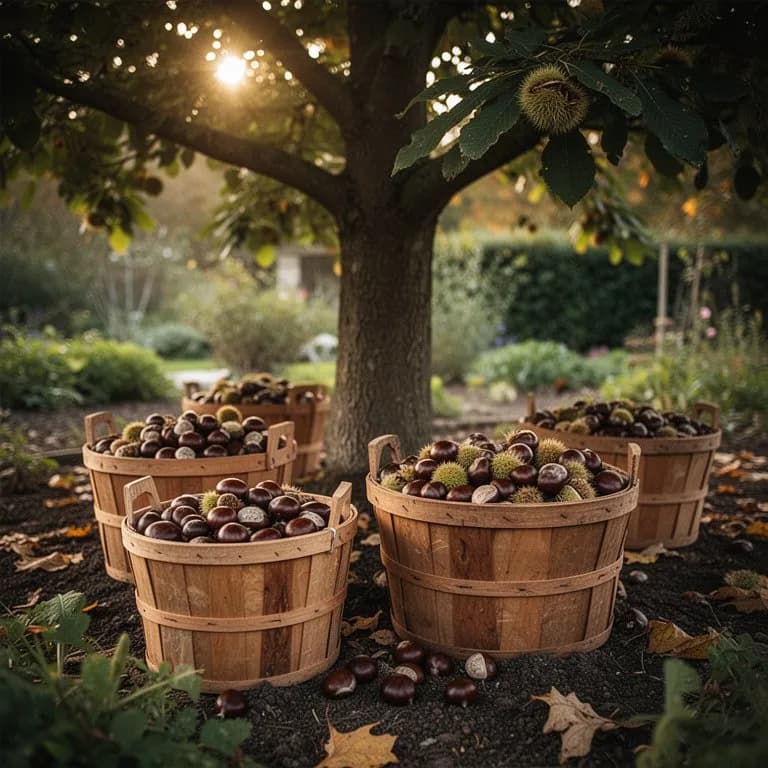
Nuts are ready to harvest when the burrs split open and fall naturally to the ground.
Fresh chestnuts are highly perishable due to their high starch and moisture content, unlike oil-rich nuts such as walnuts and pecans. Refrigerate fresh chestnuts in a perforated plastic bag for 2 to 3 weeks, or freeze them unshelled for up to 6 months. For longer storage, dry chestnuts slowly at low temperatures. Roasting is the classic preparation, with a cross cut in the shell to prevent exploding. Chestnuts can be peeled and vacuum-packed, ground into flour, or preserved in syrup as marrons glaces.
Plan your garden with ease
Love growing Chestnut Tree? Use our free garden planner to design your beds, track planting dates, and get personalized care reminders.
Nutritional Info
Per 100g serving
213
Calories
Health Benefits
- One of the lowest-fat tree nuts at only 2.2 g per 100 g
- Rich source of complex carbohydrates providing sustained energy
- Contains significant manganese at 1.2 mg per 100 g (52% DV)
- Provides B-vitamins including folate at 62 mcg per 100 g (16% DV)
- Naturally gluten-free, making chestnut flour suitable for coeliac diets
- Good source of copper at 0.5 mg per 100 g (25% DV)
💰 Why Grow Your Own?
A single mature chestnut tree can produce 15 to 35 kg of nuts annually for decades, with premium fresh chestnuts retailing at $8 to $15 per kilogram. Over a 50-year productive life span, one tree can yield a harvest worth $6,000 to $25,000 at retail prices, making it one of the most cost-effective nut trees for home growers. Chestnut flour, which sells for $15 to $25 per kilogram, can be produced at home from your own harvest, further multiplying savings.
Quick Recipes
Simple recipes using fresh Chestnut Tree
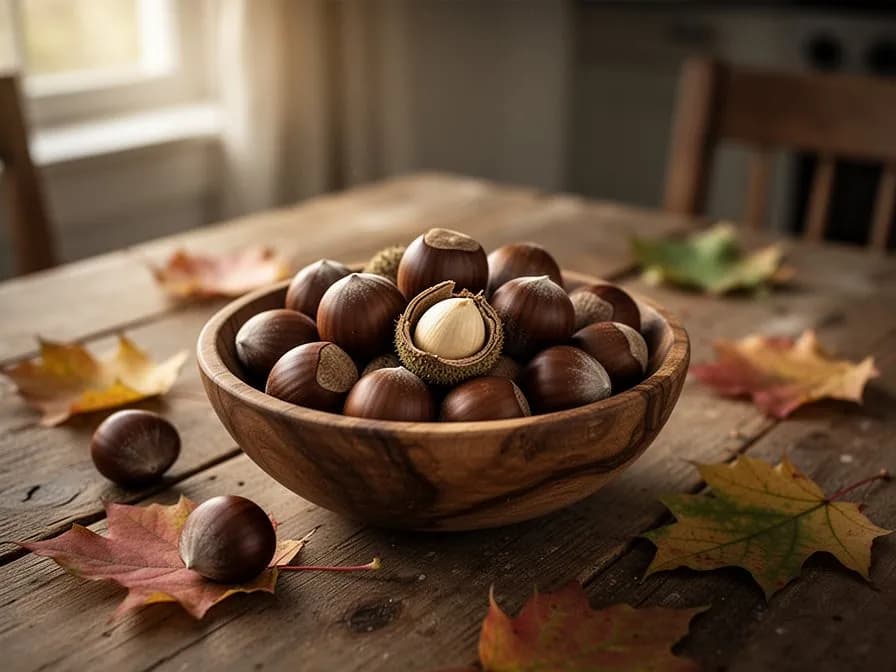
Classic Roasted Chestnuts
30 minutesScore each chestnut with an X on the flat side and roast at 220°C for 20 to 25 minutes until the shells curl back. Peel while still warm and enjoy with a pinch of sea salt. The roasting process caramelises the natural sugars and creates a tender, creamy interior.
Chestnut and Mushroom Soup
45 minutesSauté diced onion and garlic in butter, add sliced mushrooms and cook until golden, then add peeled roasted chestnuts and vegetable stock. Simmer for 20 minutes and blend until velvety smooth. Finish with a drizzle of cream and fresh thyme leaves.
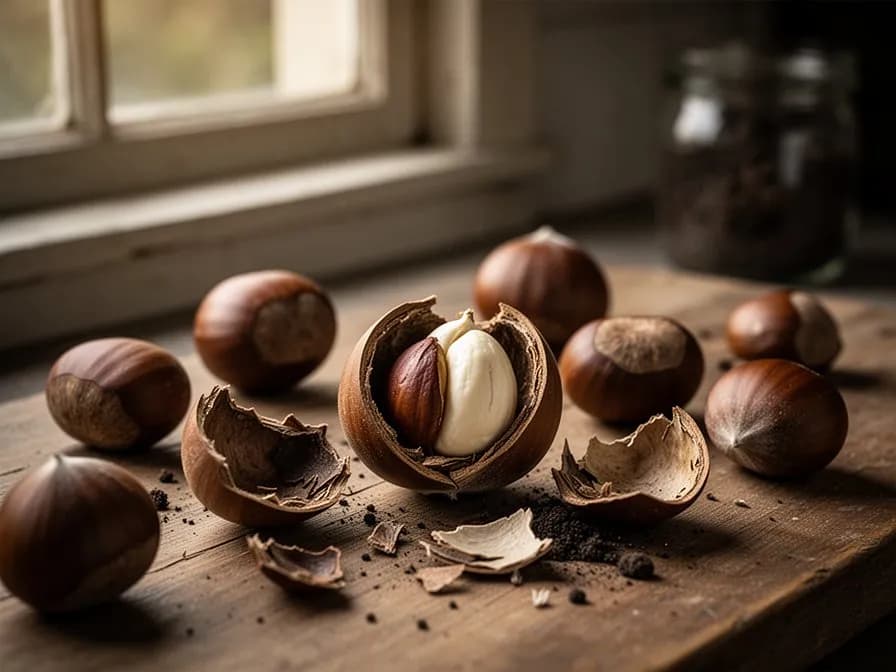
Chestnut Flour Pancakes
20 minutesWhisk together chestnut flour, eggs, milk, and a touch of honey to form a smooth batter. Cook on a lightly buttered griddle until golden on each side. The chestnut flour gives these pancakes a naturally sweet, nutty flavour and a tender texture.
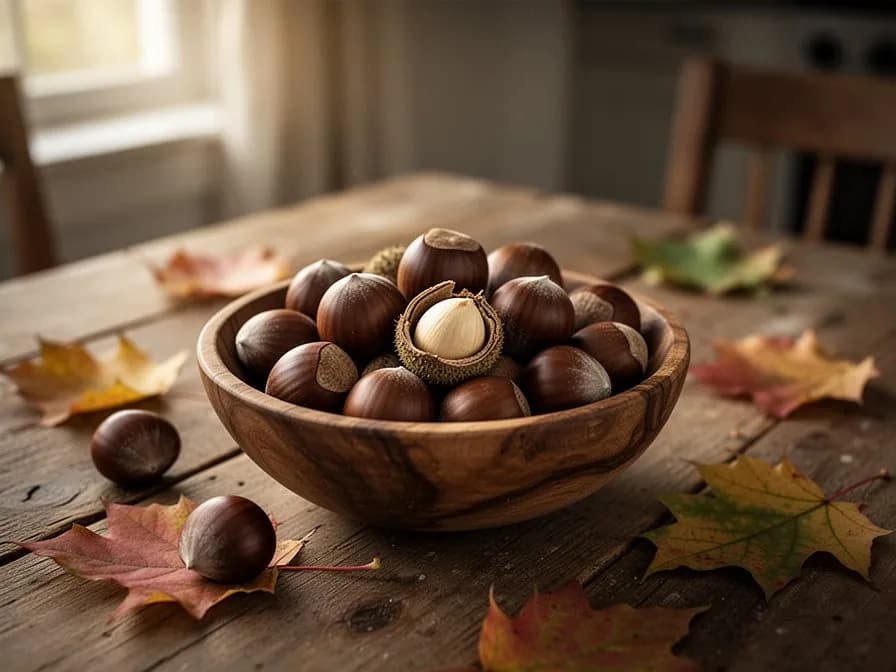
Roasting chestnuts brings out their natural sweetness and creates a creamy, starchy interior.
Yield & Spacing Calculator
See how many Chestnut Tree plants fit in your garden bed based on the recommended 900cm spacing.
0
Chestnut Tree plants in a 4×4 ft bed
0 columns × 0 rows at 900cm spacing
Popular Varieties
Some of the most popular chestnut tree varieties for home gardeners, each with unique characteristics.
Colossal
A European-Japanese hybrid producing very large nuts with excellent flavor. The standard variety for commercial production in the western United States.
Dunstan
A Chinese-American hybrid with outstanding blight resistance and good nut quality. Excellent choice for home orchards east of the Rockies where blight is prevalent.
Bouche de Betizac
A European-Japanese hybrid from France with very large, sweet nuts. Well-adapted to warmer climates and valued for marron-type nut quality.
Qing
A Chinese chestnut with excellent blight resistance and sweet, well-flavored nuts. Very cold-hardy and productive, good for northern growers.
Chestnuts are unique among nuts, being starchy and low in fat rather than oil-rich. Roasted chestnuts are an iconic winter treat with a sweet, earthy flavor and creamy texture. Peeled chestnuts are used in stuffings, soups, and purees. Chestnut flour produces distinctive breads and cakes in Italian and Corsican traditions. Marrons glaces, whole chestnuts preserved in sugar syrup, are a prized French confection. Chestnuts pair beautifully with brussels sprouts, mushrooms, and game meats.
When should I plant Chestnut Tree?
Plant Chestnut Tree in March, April, November. It takes approximately 1825 days to reach maturity, with harvest typically in September, October, November.
What hardiness zones can Chestnut Tree grow in?
Chestnut Tree thrives in USDA hardiness zones 4 through 9. With greenhouse protection, it may be grown in zones 2 through 10.
How much sun does Chestnut Tree need?
Chestnut Tree requires Full Sun (6-8h+). This means at least 6-8 hours of direct sunlight daily.
How far apart should I space Chestnut Tree?
Space Chestnut Tree plants 900cm (354 inches) apart for optimal growth and air circulation.
What pests and diseases affect Chestnut Tree?
Common issues include Chestnut Blight, Chestnut Weevil, Phytophthora Root Rot. Prevention through good garden practices like crop rotation, proper spacing, and companion planting is the best approach. See the detailed pests and diseases section above for symptoms, prevention, and treatment for each.
How do I store Chestnut Tree after harvest?
Fresh chestnuts are highly perishable due to their high starch and moisture content, unlike oil-rich nuts such as walnuts and pecans. Refrigerate fresh chestnuts in a perforated plastic bag for 2 to 3 weeks, or freeze them unshelled for up to 6 months. For longer storage, dry chestnuts slowly at low...
What are the best Chestnut Tree varieties to grow?
Popular varieties include Colossal, Dunstan, Bouche de Betizac, Qing. Each has unique characteristics suited to different growing conditions and culinary preferences. See the varieties section above for detailed descriptions.
What soil does Chestnut Tree need?
Chestnuts require acidic, well-drained sandy loam with a pH of 4.5 to 6.5. They are among the most pH-sensitive nut trees and will decline rapidly in alkaline soil. Apply ammonium sulfate or sulfur-coated urea as nitrogen sources to maintain soil acidity. Avoid lime, wood ash, and alkaline composts....
How long does it take for a chestnut tree to produce nuts?
Grafted cultivars typically begin producing a light crop in 3 to 5 years after planting. Seed-grown trees are slower, often taking 7 to 10 years before their first harvest. Full production of 15 to 35 kg per tree is generally reached by year 8 to 10.
Do I need more than one chestnut tree to get nuts?
Yes. Most chestnut varieties are self-sterile or only partially self-fertile, meaning you need at least two genetically different cultivars planted within about 60 metres of each other for effective cross-pollination and a reliable nut set.
Are chestnuts the same as horse chestnuts or conkers?
No. Edible sweet chestnuts belong to the genus Castanea, while horse chestnuts (Aesculus hippocastanum) are an entirely different species. Horse chestnuts are mildly toxic and should never be eaten. Sweet chestnut burrs have dense, fine spines, whereas horse chestnut cases have fewer, thicker spikes.
What is the best way to store fresh chestnuts?
Fresh chestnuts should be cured at room temperature for two to three days to convert some starches to sugars, then stored in perforated plastic bags in a refrigerator at 0 to 2°C. Under these conditions they keep for two to three months. For longer storage, peeled chestnuts can be frozen for up to twelve months.
Can chestnut trees grow in containers?
Chestnut trees develop extensive taproots and grow very large, making them poorly suited to long-term container culture. You can start a seedling in a large pot for the first one to two years, but it should be transplanted to open ground as soon as possible for healthy development and eventual nut production.
How do I protect my chestnut tree from blight?
Choose blight-resistant cultivars, particularly Chinese chestnut (C. mollissima) or Chinese-American hybrids. Inspect bark regularly for orange-brown cankers and prune out any infected wood well below the canker margin using sterilised tools. In Europe, biological control using hypovirulent strains of the blight fungus has shown success in reducing disease severity.
Ready to Grow Chestnut Tree?
Add Chestnut Tree to your garden plan and start designing your perfect layout.

Vladimir Kusnezow
Gardener and Software Developer
Zone 6b gardener. Growing vegetables and fruits in soil and hydroponics for 6 years. I built PlotMyGarden to plan my own gardens.
Jump to Section