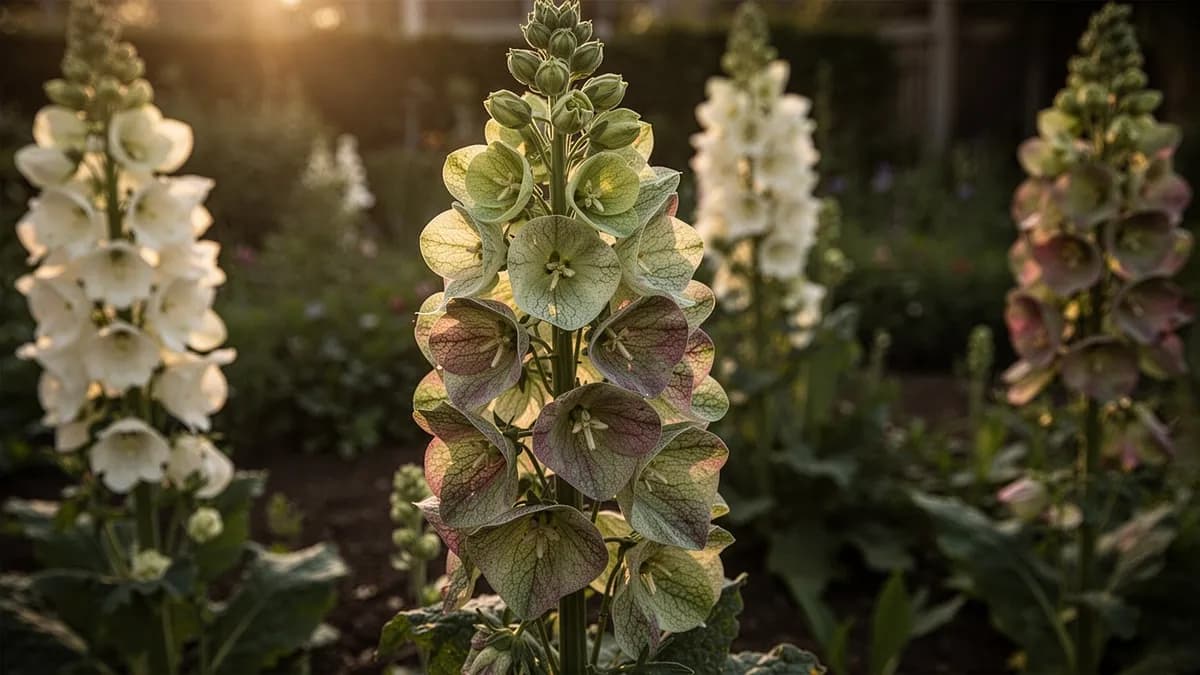
Bells of Ireland
Moluccella laevis
At a Glance
A striking annual with tall spikes of shell-shaped green calyces that surround tiny white flowers, prized by floral designers. Seeds require cold stratification and can be slow to germinate, so start early indoors or direct sow after last frost. The dramatic vertical stems dry beautifully and add architectural interest to arrangements.
Planting & Harvest Calendar
Growth Stages
From Seed to Harvest
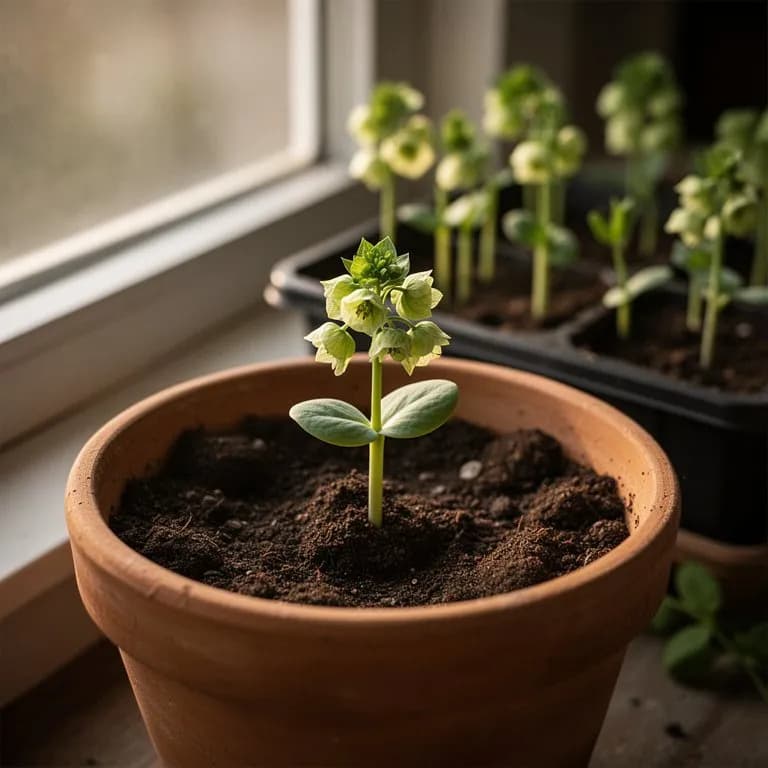
Seed Stratification & Germination
Days 0–21
Bells of Ireland seeds require cold stratification to break dormancy. Seeds are slow and erratic germinators, often taking 14 to 21 days. Refrigerate seeds for 1 to 2 weeks before sowing, or direct sow in early spring when nighttime temperatures still dip near freezing. Surface sow or barely cover seeds, as light aids germination.
💡 Care Tip
Chill seeds in the refrigerator for 10 to 14 days before planting. Keep soil consistently moist but not waterlogged during the germination period. Temperature fluctuations between 50 and 65 degrees Fahrenheit improve germination rates.
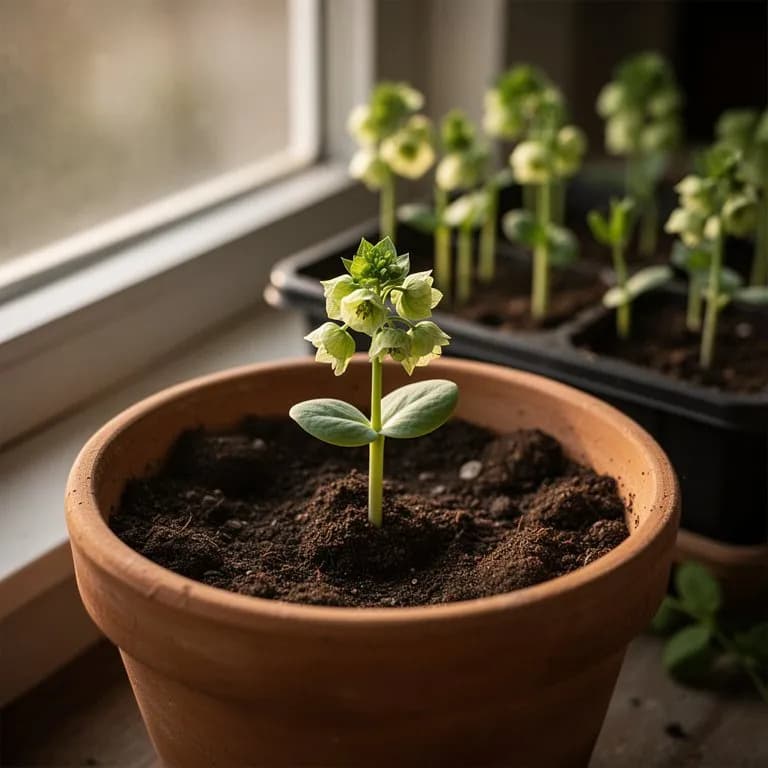
Bells of Ireland seedlings several weeks after sowing, showing their first true leaves
Monthly Care Calendar
What to do each month for your Bells of Ireland
May
You are hereMonitor young plants for slug and snail damage. Begin staking taller plants. Water deeply once per week if rainfall is insufficient. Apply a balanced granular fertilizer around the base of each plant.
Did You Know?
Fascinating facts about Bells of Ireland
Despite their common name suggesting Irish origins, Bells of Ireland are actually native to Turkey, Syria, and the Caucasus region of western Asia. They were likely given the name because of their vivid green color, which is associated with Ireland.
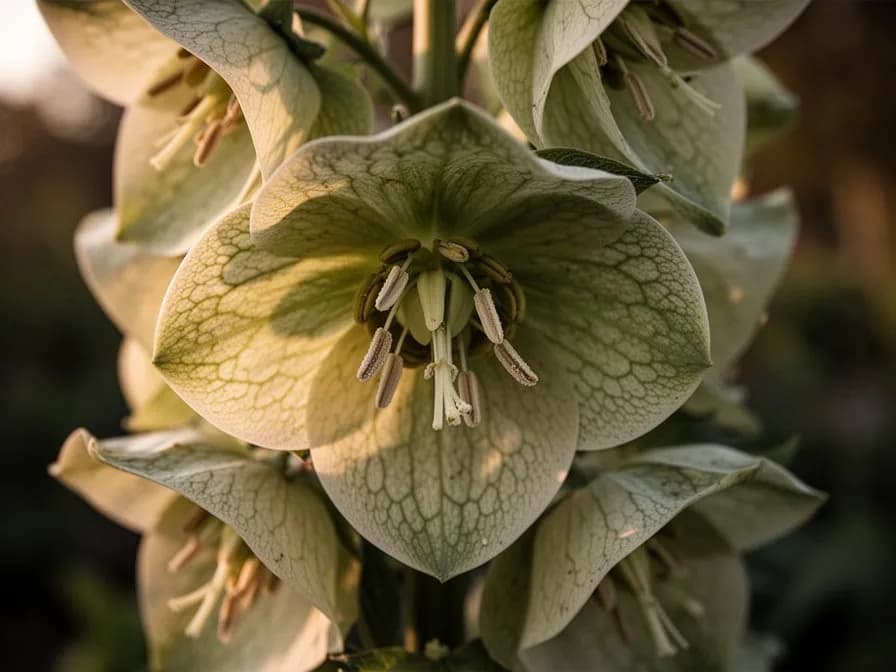
Bells of Ireland dry beautifully and retain their shape for long-lasting dried flower displays
Bells of Ireland requires patience, as the seeds have specific germination requirements. Refrigerate seeds for two weeks before sowing to provide cold stratification. Sow indoors 8-10 weeks before the last frost, pressing seeds onto the surface of moist compost—they need light to germinate. Germination is slow and erratic, taking 2-4 weeks at 55-65°F (13-18°C).
Transplant seedlings outdoors after the last frost, spacing 12 inches apart in full sun. These tall plants (24-36 inches) benefit from staking or the support of neighboring plants in a cottage-garden border. Pinch out the growing tip when plants are 6 inches tall to encourage branching and more flower spikes.
Bells of Ireland thrives in moderately fertile, well-drained soil and tolerates light shade. Water consistently during active growth but avoid waterlogging. The green bell-shaped calyces develop along the stem from the bottom upward, with tiny white fragrant flowers nestled inside each bell. The display lasts for weeks, and the calyces remain attractive even after the true flowers have dropped.
Bells of Ireland (Moluccella laevis) is an annual flowering plant native to the eastern Mediterranean region, particularly Turkey, Syria, Iraq, and the Caucasus mountains. Despite the misleading common name, the species has no botanical connection to Ireland. The association with the Emerald Isle arose purely from the plant's striking green coloration, which evoked the lush green landscapes for which Ireland is known. The genus name Moluccella itself is another geographical misnomer, coined by Linnaeus based on an earlier erroneous report that placed the plant's origin in the Molucca Islands of Southeast Asia. The plant has been cultivated in European gardens since at least the 16th century, when it was grown as a curiosity in physic gardens and botanical collections. By the 18th century, it had become a popular ornamental in English cottage gardens, valued for its unusual vertical form and bright green color that provided contrast among traditional flower borders. In the Victorian era, Bells of Ireland gained symbolic importance in the language of flowers, representing good luck and fortune. This symbolism cemented the plant's role in celebratory arrangements, particularly for Irish-themed events and weddings. The species was introduced to North American gardens in the early 19th century and quickly gained popularity among florists for its architectural quality and exceptional vase life, both fresh and dried. Today, Bells of Ireland is commercially cultivated worldwide as a specialty cut flower crop, with major production in the Netherlands, Colombia, and California. The plant remains a staple of the floral industry, prized for adding height, texture, and a distinctive green element to mixed bouquets and formal arrangements.
Cold-stratify seeds in the refrigerator for 2 weeks before sowing—this dramatically improves germination. Sow seeds on the surface of moist compost indoors 8-10 weeks before the last frost. Do not cover seeds, as light aids germination. Keep at 55-65°F (13-18°C). Germination is notoriously slow and uneven, taking 14-28 days. Be patient and keep the soil consistently moist. Alternatively, direct-sow outdoors in early spring while the soil is still cool, which provides natural stratification.
Bells of Ireland performs best in moderately fertile, well-drained soil with a pH of 6.5-7.5. The plants prefer slightly alkaline conditions. Work compost into the planting area and apply a balanced slow-release fertilizer at transplanting time. Avoid heavy feeding, which produces lush growth prone to flopping. A single mid-season application of liquid fertilizer is sufficient for most situations.
Check Your Zone
See if Bells of Ireland is suitable for your location.
12°C – 24°C
54°F – 75°F
Bells of Ireland prefer cool to moderate growing conditions and perform best when daytime temperatures range between 15 and 24 degrees Celsius (60 to 75 degrees Fahrenheit). They tolerate light frost as seedlings but are sensitive to sustained heat above 30 degrees Celsius, which can cause premature bolting and reduced calyx quality. Seed germination is most successful with cool soil temperatures between 10 and 18 degrees Celsius, and cold stratification significantly improves germination rates. In hot summer regions, spring planting should be timed so that the main flowering period occurs before the onset of extreme heat.
Common issues affecting Bells of Ireland and how to prevent and treat them organically.
Erratic germination is the biggest frustration—be patient and sow more seed than you think you need. Seeds that are not cold-stratified may fail entirely. Tall stems frequently need staking, especially in exposed or windy positions. The leaves along the stem are unremarkable and often removed for display, but leaving them on the plant is essential for photosynthesis and strong growth.
Bells of Ireland provides unique vertical green accents in mixed borders and cutting gardens. Plant alongside bold-colored flowers like zinnias, snapdragons, and dahlias, where the green bells provide a cooling contrast. They combine beautifully with purple larkspur and blue delphinium for sophisticated arrangements. In the cutting garden, pair with sunflowers, lilies, and roses for diverse, interesting bouquets.
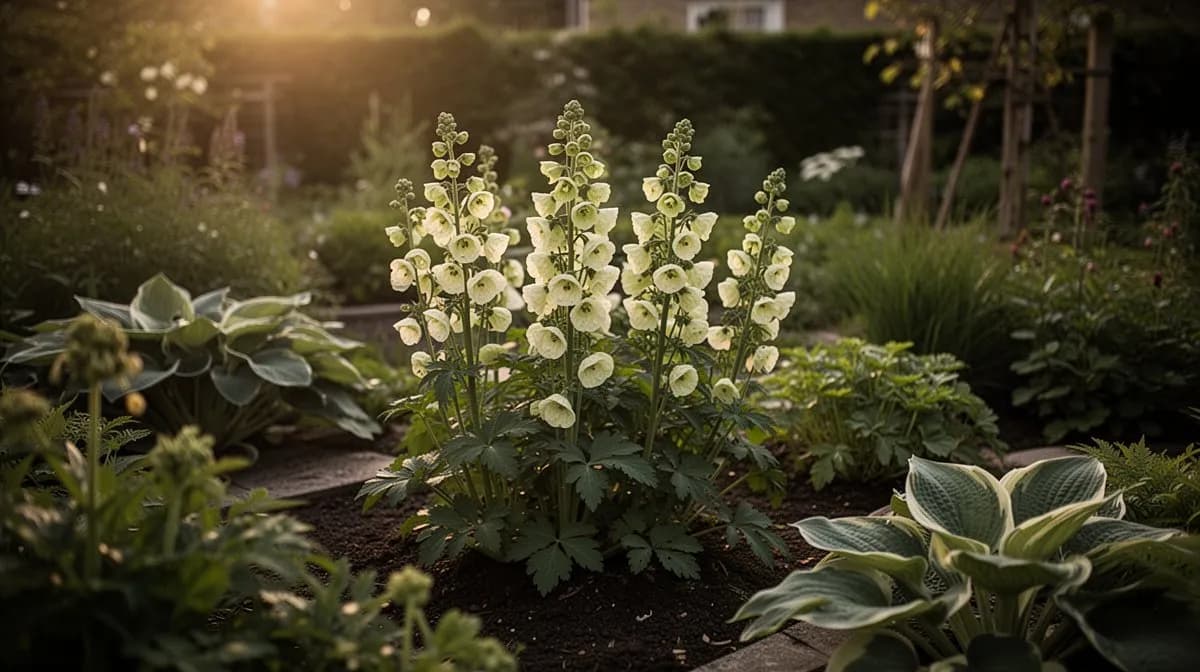
Bells of Ireland complement warm-toned flowers like zinnias in a dedicated cutting garden bed
- 1Refrigerate seeds in a damp paper towel for 10 to 14 days before sowing to break dormancy and dramatically improve germination rates from roughly 30 percent to over 70 percent.
- 2Surface sow seeds or cover them with only the thinnest dusting of vermiculite, as Bells of Ireland seeds require light exposure to trigger germination.
- 3Direct sow outdoors in early spring as soon as the ground can be worked, since the seeds benefit from natural temperature fluctuations between cool nights and mild days.
- 4Space plants 12 inches apart in rows 18 to 24 inches wide to allow adequate air circulation, which reduces susceptibility to powdery mildew and other fungal issues.
- 5Install support stakes or a grow-through grid when plants reach 12 to 18 inches tall, as the heavy flower spikes can cause mature plants to topple in wind or rain.
- 6Water at the base of the plants rather than overhead to keep the foliage dry and prevent leaf spot diseases common in the Lamiaceae family.
- 7Pinch out the growing tip of young plants when they reach 8 to 10 inches tall to encourage branching and more flower spike production per plant.
- 8Sow successive plantings every 3 to 4 weeks from early spring through late spring to ensure a continuous supply of fresh stems throughout the summer months.
- 9Harvest stems for arrangements early in the morning when the plants are fully hydrated, cutting when at least half of the calyces on a spike are fully open.
- 10Allow a few plants to go to seed at the end of the season, as Bells of Ireland self-sow reliably and volunteer seedlings will often appear the following spring with minimal effort.
Cut Bells of Ireland when the bells along the stem are fully developed and a rich green color. Cut in the morning with long stems. Remove the leaves along the stem (they wilt quickly and detract from the display) and condition in deep, warm water for several hours before arranging. The stems last 7-10 days in fresh water and are a staple of floral design for their unique vertical line and green color.
Bells of Ireland dries superbly and is one of the most popular dried flowers. Hang stems upside down in a dark, warm, well-ventilated area for 2-3 weeks. The bells dry to a lovely pale green or straw color and maintain their shape indefinitely. For preserved green color, use silica gel drying. The dried stems are stunning in autumn and winter arrangements. Save seed by allowing some stems to dry on the plant.
Plan your garden with ease
Love growing Bells of Ireland? Use our free garden planner to design your beds, track planting dates, and get personalized care reminders.
Nutritional Info
Per 100g serving
0
Calories
Health Benefits
- Bells of Ireland is grown exclusively as an ornamental and cut flower, not as a food crop
- The plant is not considered edible and has no established nutritional profile for human consumption
- While not toxic in the way that some ornamental plants are, ingestion is not recommended
- The plant's value lies in its aesthetic and symbolic contributions to gardens and floral design rather than any dietary use
- Some members of the Lamiaceae family are culinary herbs, but Moluccella laevis is not among them
💰 Why Grow Your Own?
A single packet of Bells of Ireland seeds costs between 2 and 4 dollars and yields 30 to 50 plants. Each plant can produce 6 to 10 marketable stems. Specialty florists typically charge 8 to 15 dollars per bunch of 5 stems, meaning a home gardener can produce the equivalent of 60 to 100 dollars or more in cut flowers from a single inexpensive seed packet. Dried Bells of Ireland stems sell for even more in craft and floral supply shops, often 12 to 20 dollars per bundle. Growing your own also ensures the freshest possible stems with the longest vase life, far exceeding what is available at retail florists.
Quick Recipes
Simple recipes using fresh Bells of Ireland
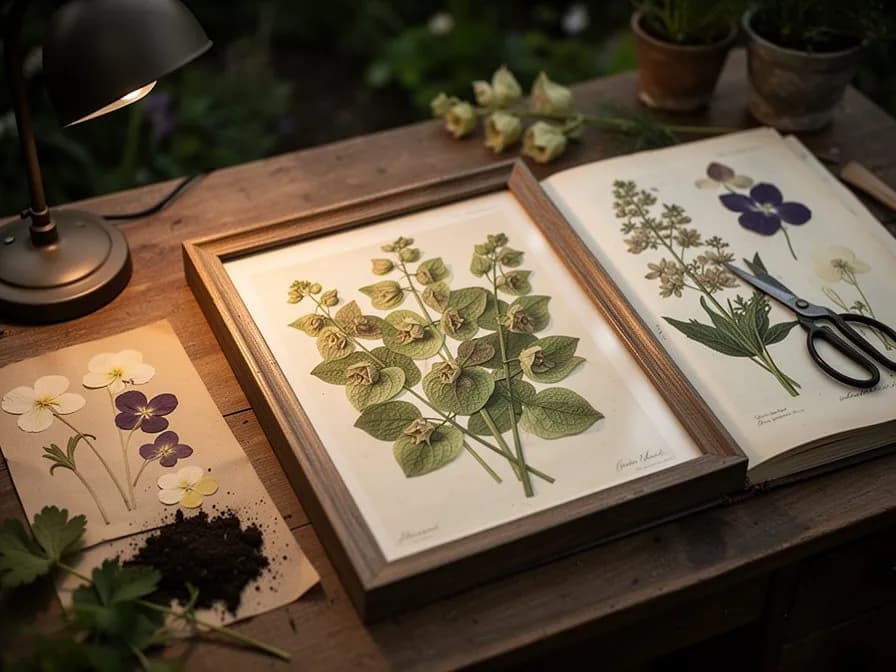
Classic Green and White Fresh Arrangement
20 minutesCreate a stunning monochromatic floral arrangement by pairing freshly cut Bells of Ireland with white roses, white lisianthus, and lush greenery. The vertical spikes of the bells provide architectural height while the rounded white blooms offer contrast in form and texture. This arrangement suits weddings, dinner parties, and elegant home displays.
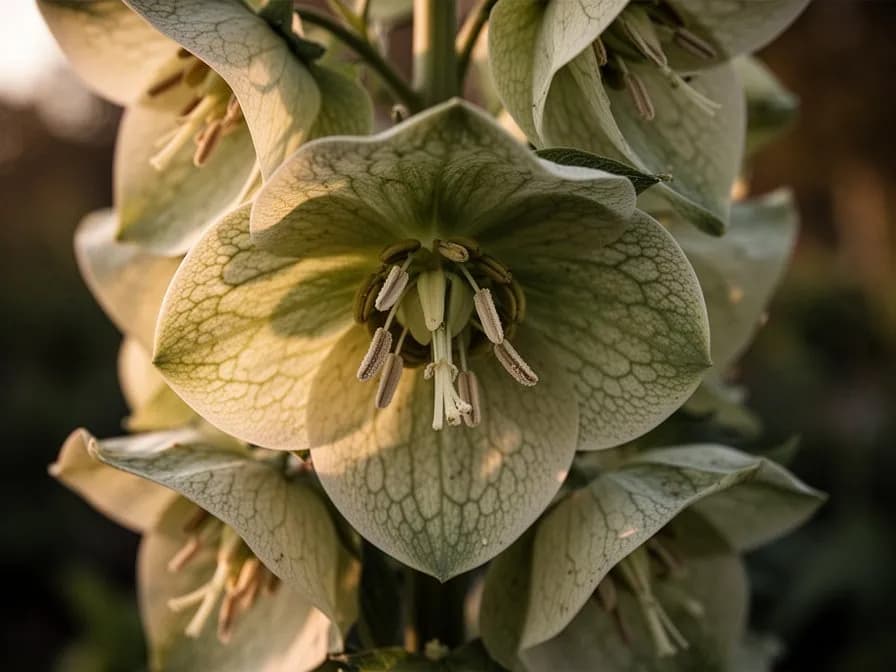
Dried Bells of Ireland Wreath
45 minutes plus 2 to 3 weeks drying timeCraft a long-lasting decorative wreath using dried Bells of Ireland combined with other dried botanicals. The preserved green-to-tan calyces add wonderful texture and a natural woodland aesthetic. This wreath can last for a year or more when kept out of direct sunlight and humidity.
St. Patrick's Day Centerpiece
25 minutesDesign a festive green-themed centerpiece perfect for St. Patrick's Day celebrations or any Irish-inspired gathering. Bells of Ireland serve as the focal point, surrounded by complementary green and white flowers and accented with seasonal touches. This arrangement celebrates the plant's traditional association with Irish good luck.
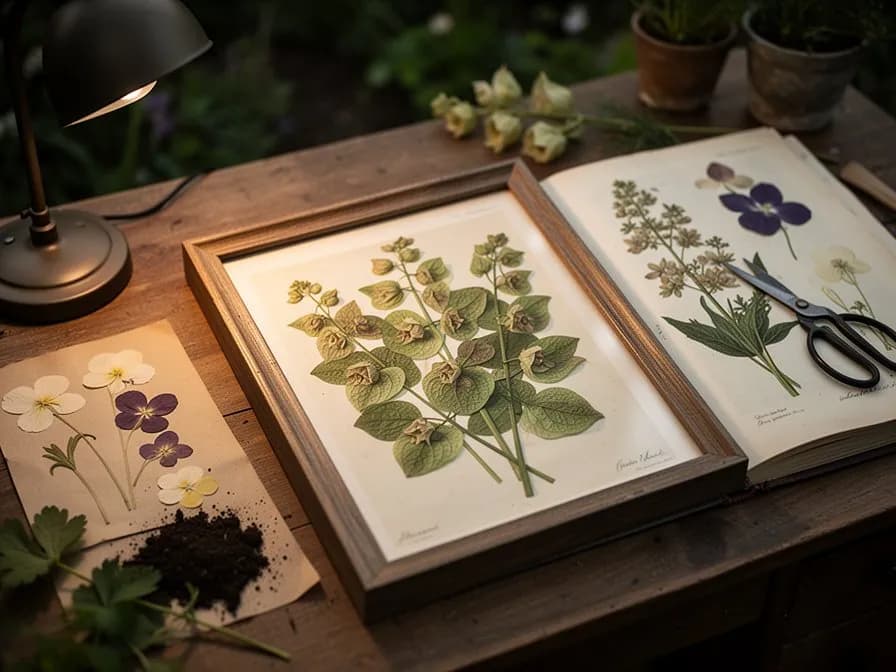
Freshly harvested Bells of Ireland stems make stunning additions to floral arrangements
Yield & Spacing Calculator
See how many Bells of Ireland plants fit in your garden bed based on the recommended 30cm spacing.
16
Bells of Ireland plants in a 4×4 ft bed
4 columns × 4 rows at 30cm spacing
Popular Varieties
Some of the most popular bells of ireland varieties for home gardeners, each with unique characteristics.
Moluccella laevis (standard)
The only commonly grown species, producing 24-36 inch spikes of apple-green bell-shaped calyces. No named cultivars are widely available.
Moluccella laevis 'Pixie Bells'
A slightly more compact form at 18-24 inches. Better suited to containers and small gardens while retaining the classic bell shape.
When should I plant Bells of Ireland?
Plant Bells of Ireland in March, April. It takes approximately 90 days to reach maturity, with harvest typically in July, August, September.
What are good companion plants for Bells of Ireland?
Bells of Ireland grows well alongside Zinnia, Snapdragon, Larkspur. Companion planting can improve growth, flavor, and natural pest control.
What hardiness zones can Bells of Ireland grow in?
Bells of Ireland thrives in USDA hardiness zones 2 through 11. With greenhouse protection, it may be grown in zones 1 through 12.
How much sun does Bells of Ireland need?
Bells of Ireland requires Full Sun (6-8h+). This means at least 6-8 hours of direct sunlight daily.
How far apart should I space Bells of Ireland?
Space Bells of Ireland plants 30cm (12 inches) apart for optimal growth and air circulation.
What pests and diseases affect Bells of Ireland?
Common issues include Aphids, Crown Rot, Cercospora Leaf Spot. Prevention through good garden practices like crop rotation, proper spacing, and companion planting is the best approach. See the detailed pests and diseases section above for symptoms, prevention, and treatment for each.
How do I store Bells of Ireland after harvest?
Bells of Ireland dries superbly and is one of the most popular dried flowers. Hang stems upside down in a dark, warm, well-ventilated area for 2-3 weeks. The bells dry to a lovely pale green or straw color and maintain their shape indefinitely. For preserved green color, use silica gel drying. The d...
What are the best Bells of Ireland varieties to grow?
Popular varieties include Moluccella laevis (standard), Moluccella laevis 'Pixie Bells'. Each has unique characteristics suited to different growing conditions and culinary preferences. See the varieties section above for detailed descriptions.
What soil does Bells of Ireland need?
Bells of Ireland performs best in moderately fertile, well-drained soil with a pH of 6.5-7.5. The plants prefer slightly alkaline conditions. Work compost into the planting area and apply a balanced slow-release fertilizer at transplanting time. Avoid heavy feeding, which produces lush growth prone ...
Why are my Bells of Ireland seeds not germinating?
Bells of Ireland seeds are notoriously slow and erratic germinators. The most common reason for failure is skipping cold stratification. Place seeds in a damp paper towel inside a sealed plastic bag and refrigerate for 10 to 14 days before planting. Also ensure you are not burying the seeds too deeply, as they need light to germinate. Soil temperature should be between 50 and 65 degrees Fahrenheit. Even with ideal conditions, germination can take 14 to 28 days, so patience is essential.
Are Bells of Ireland actually from Ireland?
No, despite their common name, Bells of Ireland are native to western Asia, specifically Turkey, Syria, and the Caucasus region. The name comes from the plant's vivid green color, which evokes the green landscapes of Ireland. The scientific genus name Moluccella is also a geographic misnomer, based on an early incorrect report linking the plant to the Molucca Islands of Indonesia.
How do I dry Bells of Ireland for lasting arrangements?
Cut stems when about two-thirds of the calyces are fully open. Strip the leaves from the lower portion of the stems. Hang them upside down in small bundles of 3 to 5 stems in a warm, dark, well-ventilated area such as a closet, attic, or covered porch. Drying takes 2 to 3 weeks. The calyces will transition from bright green to a pale green or tan color but will retain their distinctive bell shape indefinitely. Avoid drying in direct sunlight, which causes rapid color fading.
Can I grow Bells of Ireland in containers?
Yes, but choose a deep container at least 12 inches in diameter and 14 inches deep, as the plants develop a substantial taproot. Use a well-draining potting mix and ensure the container has adequate drainage holes. Staking is especially important in containers since the tall spikes catch wind easily. Container-grown plants may produce slightly fewer stems than those planted in the ground but will still provide an attractive display and useful cut flowers.
Do Bells of Ireland attract pollinators?
Yes, the tiny white flowers inside each green calyx produce nectar and a mild sweet fragrance that attracts a variety of small pollinators, including sweat bees, honeybees, and beneficial parasitic wasps. While the flowers are small and not as showy as many pollinator plants, they provide a useful nectar source, particularly in a garden that may lack other blooms during the mid-summer period.
Will Bells of Ireland come back every year?
Bells of Ireland is an annual plant that completes its life cycle in a single growing season and does not regrow from the roots. However, the species is a prolific self-sower. If you allow some flower spikes to mature and drop seed in the garden, volunteer seedlings will often appear the following spring. In mild climates with cool winters, fall-sown seeds may germinate in autumn and overwinter as small rosettes before flowering the next spring or summer.
Ready to Grow Bells of Ireland?
Add Bells of Ireland to your garden plan and start designing your perfect layout.

Vladimir Kusnezow
Gardener and Software Developer
Zone 6b gardener. Growing vegetables and fruits in soil and hydroponics for 6 years. I built PlotMyGarden to plan my own gardens.
Jump to Section