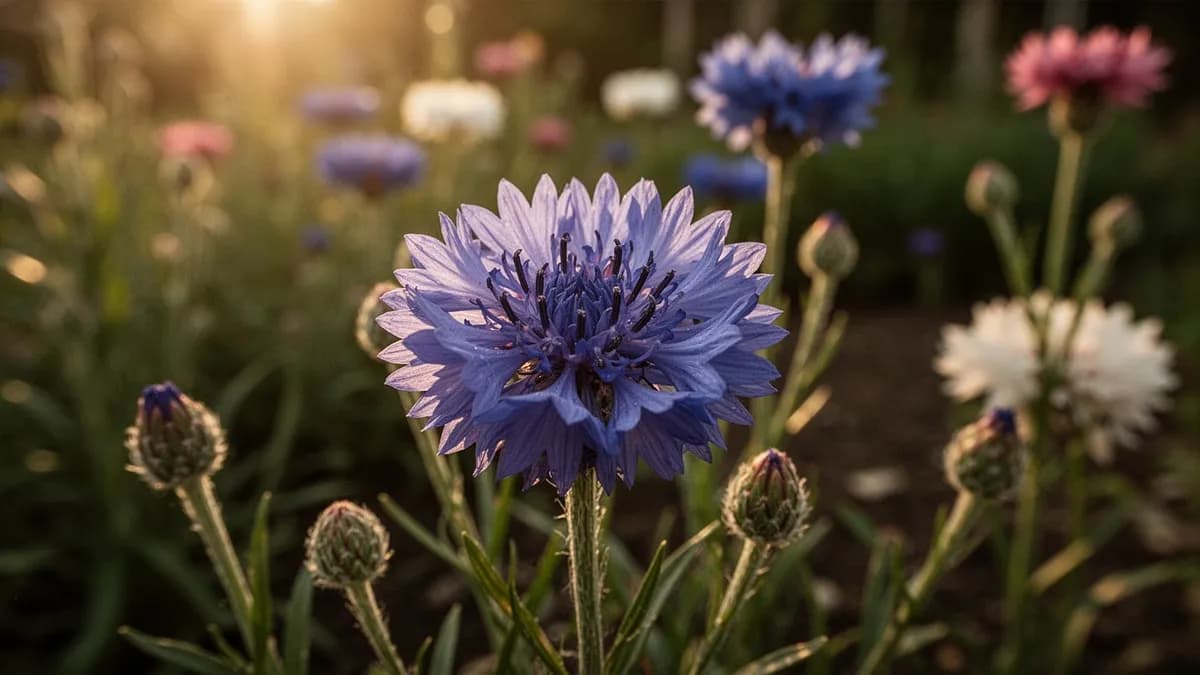
Bachelor's Button
Centaurea cyanus
At a Glance
A charming cottage-garden annual with fringed button-like flowers in intense blue, pink, white, and purple. Bachelor's buttons are easy to grow from direct-sown seed and self-sow freely in the garden. They make lovely cut flowers and attract pollinators while tolerating poor soil and drought.
Planting & Harvest Calendar
Growth Stages
From Seed to Harvest
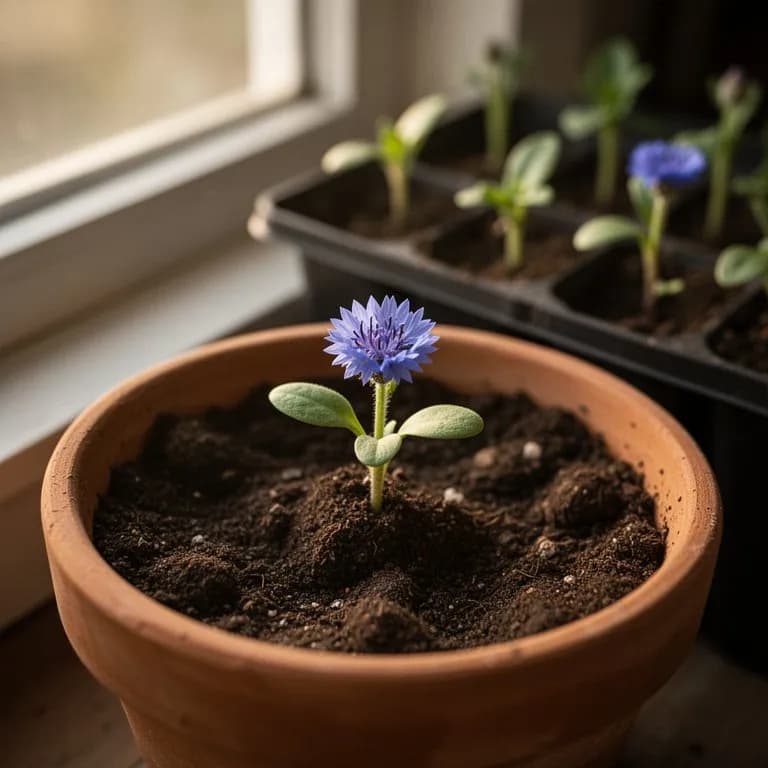
Germination
Days 0–10
Seeds germinate best in cool soil between 15-20°C (60-65°F). Sow directly outdoors in early spring or late autumn for overwintering. Seeds need darkness to germinate, so cover lightly with 3-6 mm of soil.
💡 Care Tip
Keep the soil consistently moist but not waterlogged during germination. Avoid disturbing the seed bed once sown.
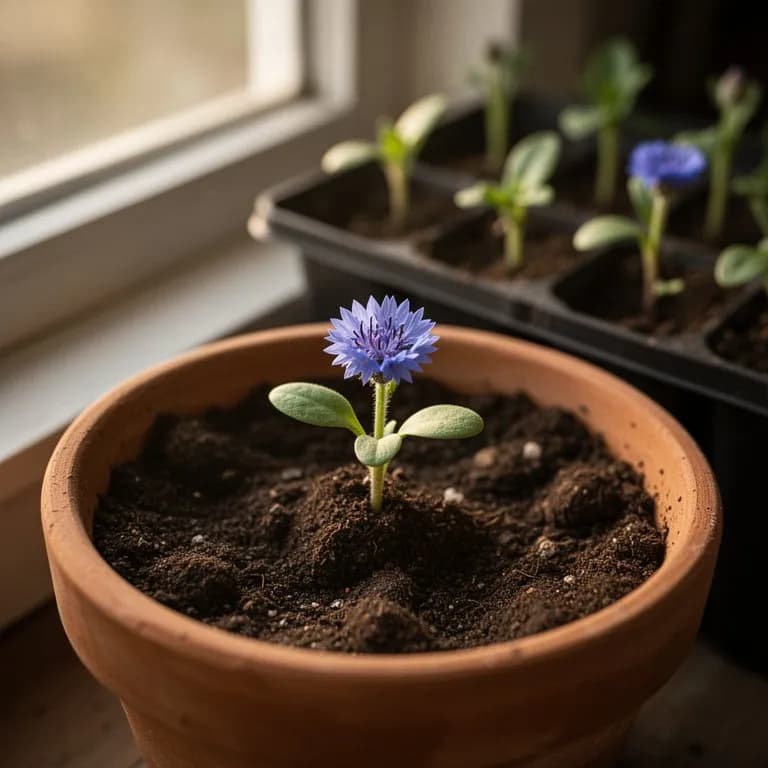
Young cornflower seedlings developing their first true leaves
Monthly Care Calendar
What to do each month for your Bachelor's Button
May
You are hereYoung plants should be growing vigorously. Stake taller varieties if needed. Monitor for aphids on growing tips and treat promptly. Apply a light mulch around plants to retain moisture.
Did You Know?
Fascinating facts about Bachelor's Button
Cornflowers were once so common in European grain fields that they were considered agricultural weeds, but modern herbicide use has made wild populations rare enough to earn conservation status in several countries.
Bachelor's buttons are among the easiest annuals to grow and are best direct-sown in the garden. Scatter seeds in early spring or autumn on prepared soil and rake lightly to cover. Seeds germinate in seven to fourteen days when soil temperatures are between 55 and 65 degrees Fahrenheit. Thin seedlings to six to twelve inches apart once they have several true leaves.
These hardy annuals thrive in full sun and prefer lean, well-drained soil. Rich soil and heavy fertilization produce lush foliage but fewer flowers. Water sparingly once established, as bachelor's buttons are remarkably drought-tolerant. Their deep taproots access moisture that most annuals cannot reach.
Deadhead regularly to prolong the bloom period from late spring through midsummer. Without deadheading, plants will self-sow prolifically and may become weedy. Provide light support with twiggy branches for tall varieties that may flop after rain. Bachelor's buttons are excellent as cut flowers and last a week or more in a vase. Allow some plants to set seed at the end of the season for natural reseeding.
Centaurea cyanus, commonly known as bachelor's button or cornflower, is native to the Mediterranean region and Near East, where it evolved as a companion plant of grain crops. Archaeological evidence places it alongside cultivated cereals as far back as the Neolithic period, and its seeds have been found in Bronze Age grain storage sites across Europe. As agriculture spread, the cornflower traveled with it, becoming naturalized throughout Europe, western Asia, and eventually North America.
For millennia, cornflowers were an inseparable part of the European agricultural landscape, turning harvested grain fields into seas of blue each summer. Their close association with wheat and rye fields earned them the common name 'cornflower,' with 'corn' referring to grain in the traditional British sense. However, the widespread adoption of herbicides in the twentieth century decimated wild cornflower populations, and in countries such as the United Kingdom, the species declined dramatically. Conservation efforts have since helped stabilize some populations, and cornflowers are now frequently included in wildflower seed mixes designed to restore biodiversity in agricultural margins.
Beyond agriculture, cornflowers have deep cultural roots. They feature prominently in European folklore, heraldry, and art. The German emperor Wilhelm I adopted the cornflower as a personal symbol after a story about his mother weaving cornflower wreaths during wartime, and the flower became associated with Prussian identity. In French culture, the bleuet de France (cornflower) is a symbol of remembrance for veterans, equivalent to the poppy in the Anglophone world. Traditional herbalists used cornflower water as a soothing eye wash and anti-inflammatory compress, a practice documented since at least the sixteenth century. Today, cornflower extract remains an ingredient in many European skincare and eye care products, continuing a tradition of use that spans hundreds of years.
Direct sow bachelor's button seeds in early spring as soon as soil can be worked, or in autumn in mild climates for earlier spring blooms. Scatter seeds on prepared soil and rake lightly to cover with a quarter inch of soil. Seeds germinate in seven to fourteen days at 55 to 65 degrees Fahrenheit. Thin seedlings to six to twelve inches apart. Indoor starting is possible but not recommended due to the taproot. If starting indoors, sow in biodegradable pots four to six weeks before the last frost and transplant without disturbing roots.
Bachelor's buttons grow best in lean, well-drained soil with a pH of 6.0 to 7.5. They actually perform better in poor soil than rich soil, as excess nutrients lead to floppy growth and fewer flowers. Avoid amending the soil heavily before planting. A single light feeding with balanced granular fertilizer at planting time is sufficient for the season. Container plants may benefit from monthly diluted liquid feeding. Excellent drainage is essential, as wet feet cause root rot.
Check Your Zone
See if Bachelor's Button is suitable for your location.
4°C – 29°C
39°F – 84°F
Bachelor's buttons are cool-season annuals that thrive in moderate temperatures between 15-24°C (60-75°F). Established seedlings tolerate light frost down to about -5°C (23°F), making them excellent for early spring and autumn gardens. Plants perform best in regions with cool nights and warm (but not hot) days. In areas with hot summers above 30°C (86°F), flowering diminishes and plants may go to seed prematurely. In USDA zones 7-10, autumn sowing allows plants to overwinter and bloom from late winter into spring, avoiding summer heat entirely.
Common issues affecting Bachelor's Button and how to prevent and treat them organically.
The most frequent issue is floppy stems, especially in rich soil or partial shade. Provide support with twiggy branches or plant in lean soil in full sun. Powdery mildew often appears in humid weather, particularly on crowded plants. Excessive self-sowing can make bachelor's buttons weedy if spent flowers are not removed. The bloom period is concentrated in late spring and early summer, with plants declining in high heat. Succession sowing extends the display.
Bachelor's buttons combine beautifully with other cottage-garden annuals like larkspur, cosmos, poppies, and Queen Anne's lace for a wildflower meadow effect. Their deep blue color contrasts strikingly with yellow flowers like coreopsis and rudbeckia. They attract pollinators including bees and butterflies, benefiting nearby vegetable gardens. Bachelor's buttons are also used in wildflower mixes for cover crop plantings and pollinator habitat restoration.
- 1Sow seeds directly outdoors in early spring as soon as the ground can be worked — bachelor's buttons resent transplanting due to their delicate taproot and perform best when direct-sown.
- 2For the earliest blooms in mild climates (zones 7+), sow seeds in autumn and allow plants to overwinter as small rosettes that will flower weeks ahead of spring-sown plants.
- 3Avoid rich, heavily fertilized soil — bachelor's buttons produce more flowers and sturdier stems in lean to average soil, while excess nitrogen causes floppy growth and fewer blooms.
- 4Succession sow every two to three weeks from early spring through late spring to extend the flowering season well into late summer and early autumn.
- 5Deadhead spent blooms at least twice per week to prevent energy going to seed production and to encourage continuous flowering over the longest possible period.
- 6Provide full sun for the best flower production — at least 6-8 hours of direct sunlight daily. Plants will tolerate partial shade but produce significantly fewer and smaller flowers.
- 7Space plants 20-30 cm (8-12 inches) apart to allow adequate air circulation, which helps prevent powdery mildew, the most common disease affecting cornflowers in humid conditions.
- 8Stake taller varieties (over 60 cm) with bamboo canes or grow them through horizontal netting to prevent stems from flopping, especially in windy or exposed garden sites.
- 9Water at the base of plants rather than overhead to reduce the risk of fungal diseases — established cornflowers are moderately drought-tolerant and prefer slightly dry conditions over wet feet.
- 10Allow a few late-season flower heads to go to seed and scatter naturally for a self-sustaining patch that returns each year without any effort or cost on your part.
Cut bachelor's button stems for fresh bouquets when flowers are just fully open, before the center florets begin to fade. Harvest in the cool morning and place in water immediately. The flowers last seven to ten days in a vase. For drying, cut stems when flowers are fully open and hang upside down in a dark, dry location for one to two weeks. For edible use, pick flowers at peak bloom. For seed saving, let flower heads dry on the plant until they turn brown and papery.
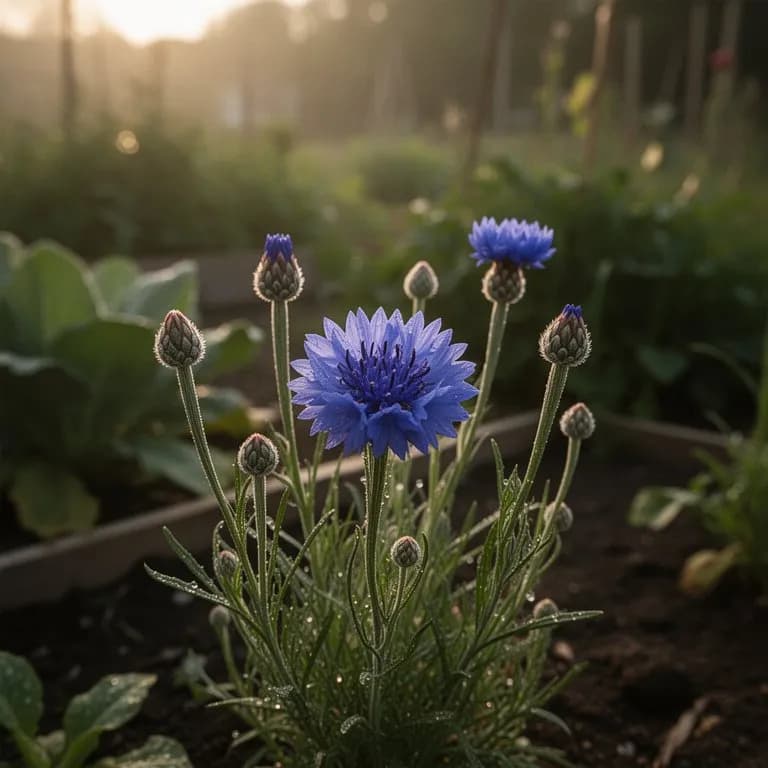
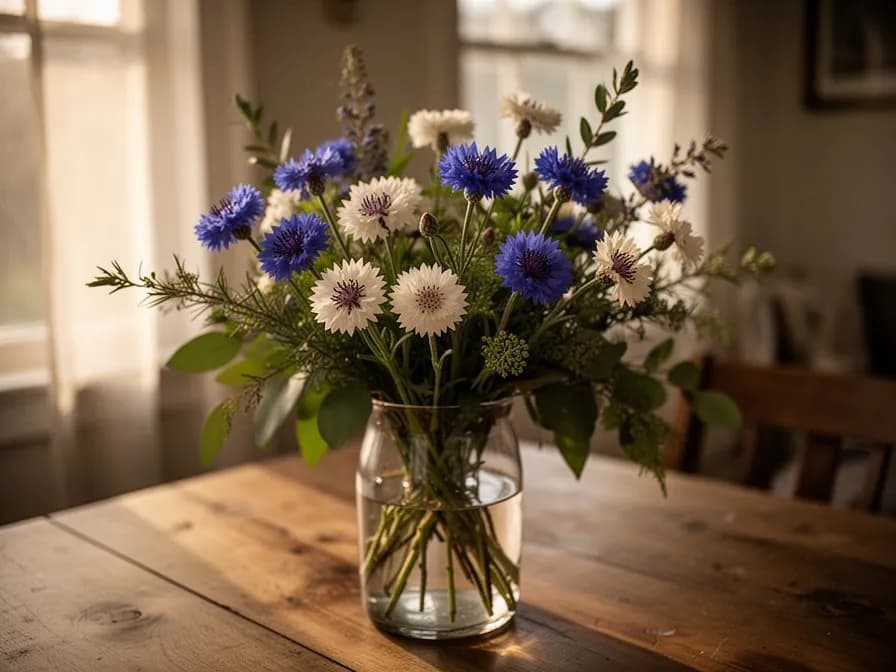
Cornflowers dry exceptionally well and retain much of their vivid blue pigment
Fresh bachelor's buttons last up to ten days in a clean vase with floral preservative. Change water every two days and recut stems at an angle. Dried flowers retain their vivid blue color remarkably well and last months in arrangements. Press individual blooms between weighted pages for use in crafts. Dried petals store well in airtight containers for culinary use. Seeds remain viable for two to three years when kept in cool, dry storage.
Plan your garden with ease
Love growing Bachelor's Button? Use our free garden planner to design your beds, track planting dates, and get personalized care reminders.
Nutritional Info
Per 100g serving
3
Calories
Health Benefits
- Edible petals contain anthocyanins, particularly protocyanin, which are potent antioxidant compounds
- Traditional European herbalism valued cornflower tea for its mild anti-inflammatory and diuretic properties
- Cornflower water (hydrosol) has been used for centuries as a soothing eye compress and gentle skin toner
- The blue pigment protocyanin is being studied for potential anti-inflammatory and neuroprotective effects
- Petals are calorie-free for practical purposes, making them an ideal way to add color and mild flavor to dishes without added calories
- Cornflower tea is caffeine-free and has traditionally been consumed as a calming evening beverage
💰 Why Grow Your Own?
Bachelor's buttons are among the most cost-effective flowers to grow from seed. A single packet of seeds (typically containing 200-500 seeds at a cost of $2-4) can fill a large garden bed and produce hundreds of blooms for cutting, garnishing, and drying. Once established, cornflowers self-sow prolifically, providing free plants year after year with no additional seed purchases. Edible cornflower petals sell for $15-30 per ounce in specialty grocery stores, so a home-grown patch can save considerable money for anyone who uses them in culinary applications, tea blends, or as cake decorations.
Quick Recipes
Simple recipes using fresh Bachelor's Button
Cornflower Petal Garden Salad
10 minutesA vibrant spring salad featuring fresh cornflower petals scattered over mixed greens with a light lemon vinaigrette. The petals add a subtle sweetness and stunning visual contrast against the greens.
Cornflower and Honey Herbal Tea
5 minutesA soothing, caffeine-free herbal infusion made from dried cornflower petals. This traditional European tisane has a mild, slightly sweet floral flavor and a beautiful azure color.
Cornflower Sugar Cookies with Petal Garnish
45 minutesElegant butter cookies topped with a simple icing and pressed fresh or candied cornflower petals. These make beautiful gifts and are perfect for garden parties and afternoon tea.
The vibrant petals are edible and add a mild, slightly sweet flavor and striking color to dishes
Yield & Spacing Calculator
See how many Bachelor's Button plants fit in your garden bed based on the recommended 20cm spacing.
36
Bachelor's Button plants in a 4×4 ft bed
6 columns × 6 rows at 20cm spacing
Popular Varieties
Some of the most popular bachelor's button varieties for home gardeners, each with unique characteristics.
Blue Boy
The classic intense cornflower-blue variety reaching two to three feet, the standard by which all bachelor's buttons are measured.
Black Ball
A striking dark maroon-purple variety that adds sophisticated depth to bouquets and garden borders.
Classic Fantastic
A unique frilly double variety in vivid blue with a fuller, more ruffly petal form than traditional types.
Polka Dot Mix
A dwarf selection growing twelve to eighteen inches tall in blue, pink, white, maroon, and lavender, ideal for containers.
Florence Mix
Pastel shades of blue, pink, and white on two-foot stems, perfect for cottage-garden style plantings.
Bachelor's button petals are edible and have a mildly sweet, slightly spicy, clove-like flavor. The vivid blue petals are stunning as a garnish on salads, cakes, desserts, and cocktails. They can be frozen in ice cubes for decorative drinks or used to make a natural blue food dye. Crystallize petals with egg white and sugar for elegant cake decorations. Dried petals are commonly used in herbal tea blends, where they add beautiful color. Use only organically grown, unsprayed flowers.
When should I plant Bachelor's Button?
Plant Bachelor's Button in March, April, September, October. It takes approximately 55 days to reach maturity, with harvest typically in May, June, July, August.
What are good companion plants for Bachelor's Button?
Bachelor's Button grows well alongside Cosmos, Larkspur, Sunflower. Companion planting can improve growth, flavor, and natural pest control.
What hardiness zones can Bachelor's Button grow in?
Bachelor's Button thrives in USDA hardiness zones 2 through 11. With greenhouse protection, it may be grown in zones 1 through 12.
How much sun does Bachelor's Button need?
Bachelor's Button requires Full Sun (6-8h+). This means at least 6-8 hours of direct sunlight daily.
How far apart should I space Bachelor's Button?
Space Bachelor's Button plants 20cm (8 inches) apart for optimal growth and air circulation.
What pests and diseases affect Bachelor's Button?
Common issues include Powdery Mildew, Rust, Aphids. Prevention through good garden practices like crop rotation, proper spacing, and companion planting is the best approach. See the detailed pests and diseases section above for symptoms, prevention, and treatment for each.
How do I store Bachelor's Button after harvest?
Fresh bachelor's buttons last up to ten days in a clean vase with floral preservative. Change water every two days and recut stems at an angle. Dried flowers retain their vivid blue color remarkably well and last months in arrangements. Press individual blooms between weighted pages for use in craft...
What are the best Bachelor's Button varieties to grow?
Popular varieties include Blue Boy, Black Ball, Classic Fantastic, Polka Dot Mix, Florence Mix. Each has unique characteristics suited to different growing conditions and culinary preferences. See the varieties section above for detailed descriptions.
What soil does Bachelor's Button need?
Bachelor's buttons grow best in lean, well-drained soil with a pH of 6.0 to 7.5. They actually perform better in poor soil than rich soil, as excess nutrients lead to floppy growth and fewer flowers. Avoid amending the soil heavily before planting. A single light feeding with balanced granular ferti...
Are bachelor's button flowers really edible?
Yes, bachelor's button (Centaurea cyanus) petals are fully edible and have been used in European cuisine for centuries. They have a mild, slightly sweet, clove-like flavor. The petals are commonly used as garnishes on salads, desserts, and cocktails, added to herbal tea blends, and used to decorate cakes. Only consume flowers grown without pesticides, and remove the bitter base of the flower head, using only the colorful ray petals.
Why are my bachelor's buttons falling over and looking leggy?
Leggy, floppy growth is most commonly caused by overly rich soil, too much nitrogen fertilizer, or insufficient sunlight. Bachelor's buttons naturally produce sturdier stems in lean to moderately fertile soil. Ensure plants receive at least 6-8 hours of full sun. For taller cultivars, provide support with stakes or grow-through rings. Pinching seedlings once when they are about 15 cm tall can also encourage bushier, more self-supporting growth.
Can I grow bachelor's buttons in containers?
Yes, bachelor's buttons grow well in containers, especially the more compact dwarf varieties such as 'Florence' or 'Dwarf Blue Midget' that reach only 30-40 cm tall. Use a container at least 20 cm deep with excellent drainage. Fill with a well-draining potting mix (avoid moisture-retentive mixes). Water when the top 2-3 cm of soil feels dry, and place the container in the sunniest location available.
How do I dry bachelor's button flowers to preserve their blue color?
Harvest flowers for drying when they are freshly opened and at peak color, ideally in the morning after any dew has evaporated. Bundle 5-8 stems together with a rubber band and hang them upside down in a warm, dark, well-ventilated space for 2-3 weeks. Darkness is important because light fades the pigments during the drying process. Properly dried cornflowers retain their vivid blue color exceptionally well compared to most other dried flowers.
Do bachelor's buttons come back every year?
Bachelor's buttons are true annuals that complete their life cycle in one growing season and then die. However, they are prolific self-sowers. If you allow some flower heads to mature and drop seed, you will likely see volunteer seedlings appear the following spring without any effort. In mild climates (zones 7+), autumn-sown seeds produce overwintering rosettes that bloom earlier the following year, giving the appearance of a perennial return.
What companion plants grow well with bachelor's buttons?
Bachelor's buttons pair beautifully with other cottage garden annuals such as California poppies, cosmos, nigella (love-in-a-mist), and larkspur. In vegetable gardens, they are excellent companion plants because they attract beneficial insects like hoverflies and lacewings that prey on aphids. They grow well alongside herbs such as dill, fennel, and chamomile, and their relatively shallow root system means they do not compete aggressively with neighboring plants.
Ready to Grow Bachelor's Button?
Add Bachelor's Button to your garden plan and start designing your perfect layout.

Vladimir Kusnezow
Gardener and Software Developer
Zone 6b gardener. Growing vegetables and fruits in soil and hydroponics for 6 years. I built PlotMyGarden to plan my own gardens.
Jump to Section