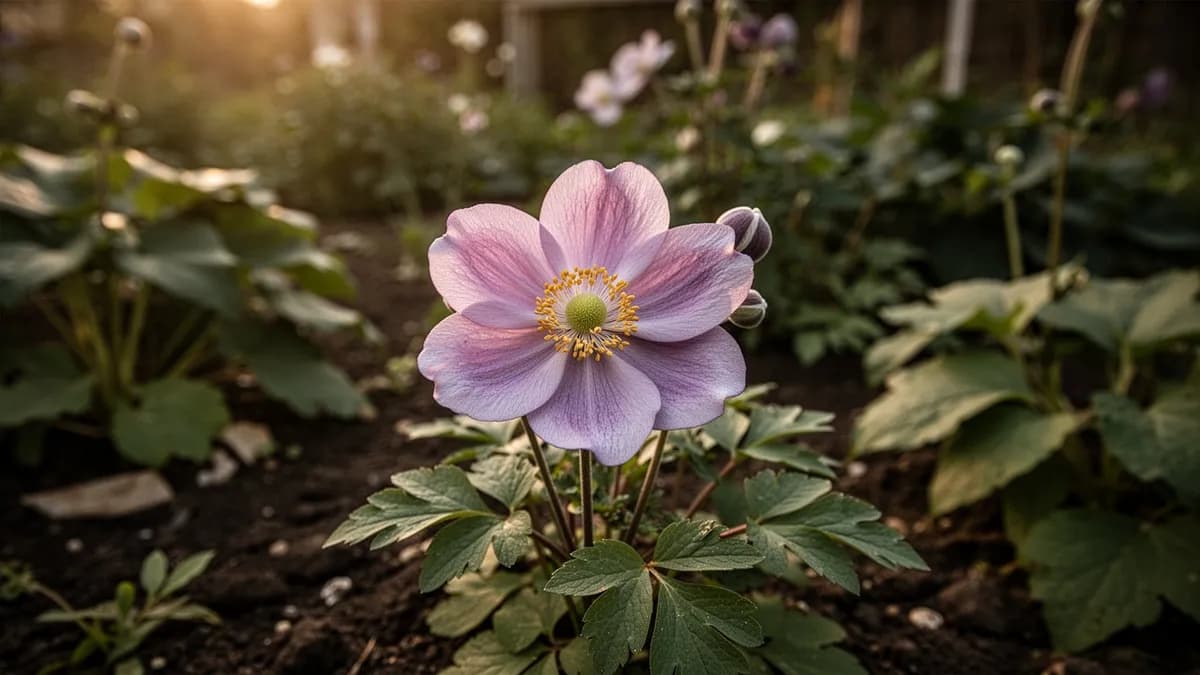
Japanese Anemone
Anemone x hybrida
At a Glance
A graceful fall-blooming perennial with elegant cup-shaped flowers in pink or white on wiry stems above a mound of dark green foliage. Japanese anemones take a year or two to establish but then spread steadily by underground runners. They are invaluable for late-season color in partially shaded borders and woodland edges.
Planting & Harvest Calendar
Growth Stages
From Seed to Harvest
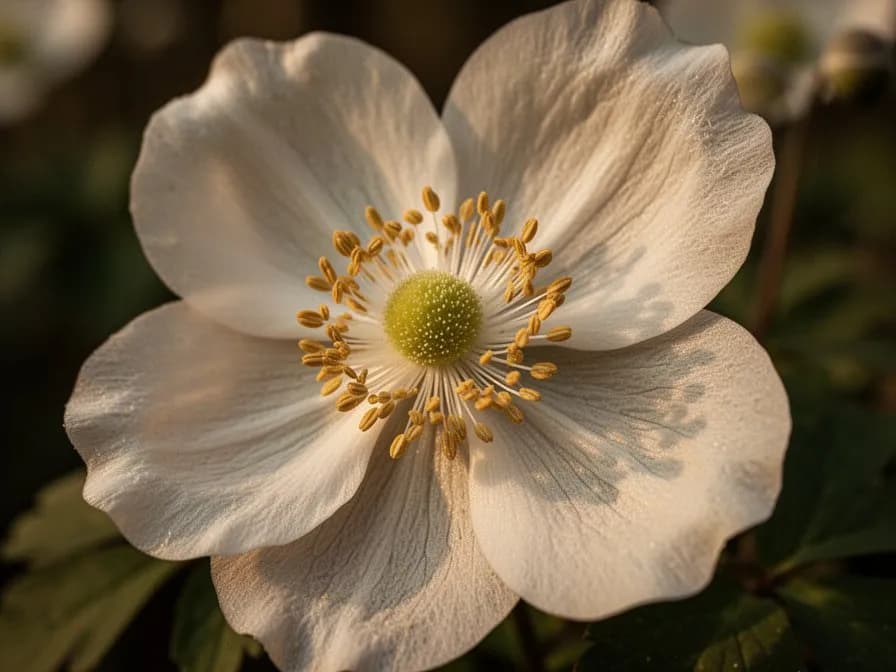
Corm Soaking and Planting
Days 0–1
Anemone corms are small, irregularly shaped, and hard when dry. Before planting they should be pre-soaked in room-temperature water for four to six hours to rehydrate. Once plump, plant corms 3-5 cm deep with the pointed end facing downward, spacing them roughly 10-15 cm apart in well-draining soil.
💡 Care Tip
Do not soak corms for longer than eight hours as they may begin to rot. If you cannot determine which end is up, plant them sideways and the shoots will orient themselves. Water lightly after planting and avoid saturating the soil.
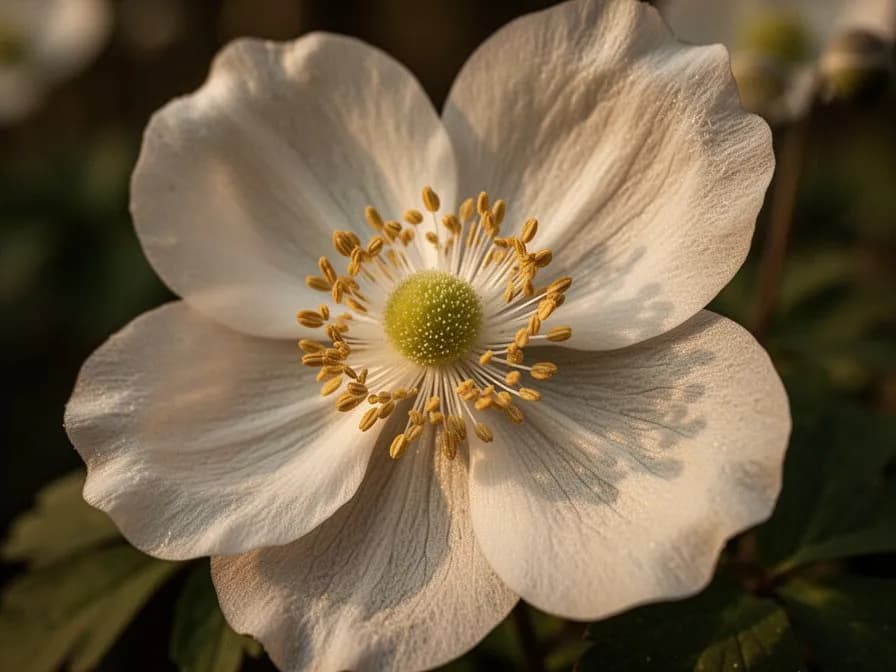
Soaking anemone corms in lukewarm water for several hours before planting helps jumpstart growth
Monthly Care Calendar
What to do each month for your Japanese Anemone
May
You are herePeak bloom season for spring-planted anemones. Deadhead spent flowers every few days and harvest cut stems for indoor arrangements. Water deeply during dry spells aiming for 2-3 cm per week.
Did You Know?
Fascinating facts about Japanese Anemone
The name anemone derives from the Greek word 'anemos' meaning wind, earning the common name windflower because the delicate petals tremble and flutter in even the slightest breeze.
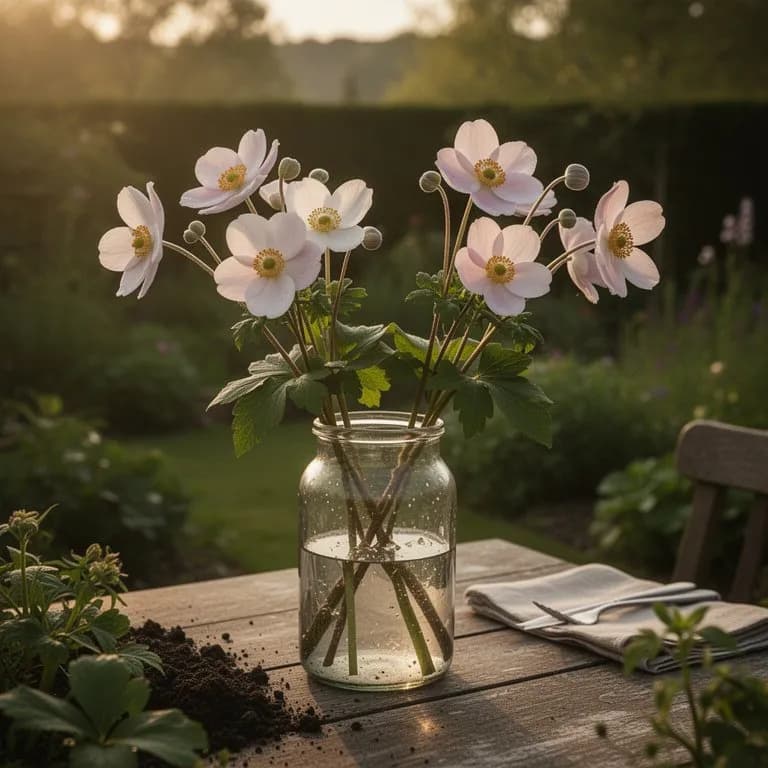
Harvest anemone blooms when petals begin to open and the dark center is just visible for longest vase life
Japanese anemones are among the most elegant and essential autumn-blooming perennials, producing a profusion of simple, cup-shaped flowers in shades of pink and white on tall, branching stems above mounds of vine-shaped dark green foliage. Flowering from late August through October, they fill a critical gap in the garden when many summer perennials have faded and before chrysanthemums reach their peak.
Plant in spring in partial shade to full sun with moist, humus-rich soil. A spot receiving morning sun and afternoon shade is ideal in warmer climates. Dig in generous amounts of compost or leaf mold before planting, as Japanese anemones prefer fertile, moisture-retentive conditions. Water regularly during the first two growing seasons—these plants are notoriously slow to establish and may look unimpressive in their first year, but patience is well rewarded.
Once established (usually by the third year), Japanese anemones become vigorous and long-lived, spreading by fleshy underground stolons to form impressive colonies. In favorable conditions, they can become assertively spreading, though this is easily managed by removing unwanted runners. The plants require virtually no ongoing care beyond removing spent flower stems in late autumn. They resent disturbance and transplanting, so choose their position carefully.
Anemones belong to the buttercup family Ranunculaceae and encompass roughly 200 species distributed across temperate and subarctic regions of every continent. The garden anemone most commonly cultivated today, Anemone coronaria, is native to the rocky hillsides and meadows of the Mediterranean basin, stretching from southern France through Greece, Turkey, and into the Levant. Archaeological evidence suggests these flowers were gathered and admired in the ancient world; they appear in Roman mosaics and are referenced in the writings of Pliny the Elder and Theophrastus. During the Ottoman Empire, anemones were prized garden subjects and traded alongside tulips and ranunculus among collectors. The flowers reached western European gardens by the late sixteenth century, with Flemish and Dutch botanists documenting numerous color forms. The celebrated De Caen series originated in the Caen region of Normandy, France, where growers selected vigorous single-flowered strains during the eighteenth century. The semi-double St. Brigid series was later developed in Ireland around the late nineteenth century. By the twentieth century, Israel and the Netherlands had become the leading commercial producers of anemone corms, supplying the global cut-flower industry. Modern breeding programs have expanded the palette to include bicolors and pastel shades while improving stem length and vase life. Today anemones are grown commercially on every inhabited continent and remain a staple of spring flower markets, wedding floristry, and cottage-style gardens. Wild populations of Anemone coronaria continue to carpet Mediterranean hillsides each spring, celebrated in regional festivals and protected in several nature reserves.
Japanese anemones can be propagated from seed, root cuttings, or division. Seed should be sown fresh in autumn and left outdoors for natural stratification, as germination requires cold treatment. Seedlings are slow and variable, taking 2-3 years to flower. Root cuttings are more reliable—in late autumn, take 5-8cm sections of thick root, cut the top straight and the bottom at an angle, and insert upright in pots of gritty compost. Keep frost-free over winter; shoots emerge in spring. Division is possible but the plants resent disturbance—dig carefully in spring, keeping large root sections intact.
Japanese anemones prefer fertile, moisture-retentive but well-drained soil with a pH of 6.0-7.5. Incorporate generous amounts of organic matter—compost, leaf mold, or well-rotted manure—before planting. Mulch annually in spring with compost to maintain soil moisture and fertility. Feed in spring with a balanced slow-release fertilizer. Once established, Japanese anemones are relatively undemanding about feeding, but consistent soil moisture is essential for good performance, especially during the flowering period.
Check Your Zone
See if Japanese Anemone is suitable for your location.
7°C – 20°C
45°F – 68°F
Anemones thrive in cool growing conditions between 7 and 20 degrees Celsius. They perform best when nights remain cool, ideally around 7-10 degrees Celsius, and daytime highs stay below 22 degrees Celsius. Prolonged heat above 25 degrees Celsius causes premature dormancy, reduces flower size, and shortens stem length. In regions with mild winters (USDA zones 8-10) corms are planted in autumn for winter and early spring blooms when temperatures naturally fall within this ideal range. In colder climates (zones 3-7) spring planting after the last hard frost takes advantage of the cool shoulder season before summer heat arrives.
Common issues affecting Japanese Anemone and how to prevent and treat them organically.
Slow establishment is the most common frustration—Japanese anemones often look disappointing in their first year or two but then increase dramatically in their third season. Do not give up on them too early. Spreading can become aggressive in ideal conditions; remove unwanted stolons in spring. Flopping flower stems are common in deep shade or very rich soil; provide some morning sun and stake if necessary. Plants resent disturbance and may sulk for a season after division or transplanting. In cold winter areas, apply a winter mulch over the root zone in the first few years.
Japanese anemones are invaluable autumn companions for asters, chrysanthemums, and ornamental grasses. White varieties glow beneath deciduous trees alongside toad lilies and autumn ferns. Pink varieties pair beautifully with blue asters and purple sedums. In the shade garden, combine with hostas, ferns, and cyclamen for a succession of interest from spring through autumn. The tall, airy flower stems make an excellent backdrop for lower-growing autumn bloomers like colchicums and autumn crocuses.
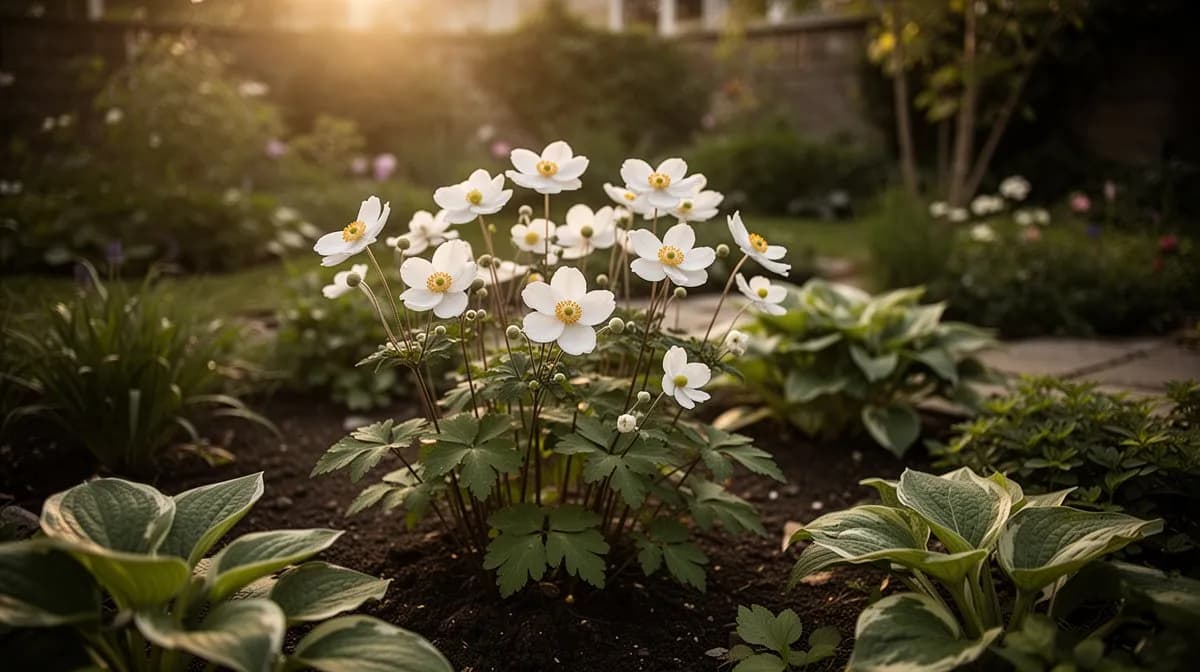
Anemones pair beautifully with ranunculus, tulips, and daffodils in layered spring planting schemes
- 1Pre-soak corms in room-temperature water for four to six hours before planting to rehydrate them and significantly speed up the initial root development phase.
- 2Plant corms with the pointed end facing down at a depth of 3 to 5 cm in well-draining soil amended with compost; if you cannot tell which end is up, plant them on their side.
- 3Choose a planting site that receives full sun to partial shade with protection from strong afternoon wind, which can snap the slender flower stems.
- 4Maintain consistent soil moisture throughout the growing season, providing roughly 2 to 3 cm of water per week, but avoid waterlogged conditions that promote corm rot.
- 5Apply a 3 to 5 cm layer of organic mulch such as straw or shredded leaves to conserve moisture, suppress weeds, and keep root zone temperatures cool.
- 6Feed every two weeks with a balanced liquid fertilizer at half strength once foliage is established, switching to a high-potassium formula when buds begin to form.
- 7Harvest cut flowers when the bud is showing color but petals have not yet fully opened, cutting stems long and placing them immediately in cool water for maximum vase life.
- 8Deadhead spent blooms promptly by cutting the entire stem back to the base to encourage the corm to produce additional flower stems rather than setting seed.
- 9In USDA zones 7 and colder, lift corms after foliage has died back completely, cure them in a warm dry area for two weeks, and store in mesh bags at 15 to 18 degrees Celsius.
- 10Succession-plant corms every two to three weeks in early spring to extend the total harvest window and ensure a continuous supply of fresh blooms over several months.
Japanese anemone flowers make exquisite cut flowers with an ethereal, floating quality in arrangements. Cut stems when the first flowers are fully open and side buds are showing color. The branching stems each carry multiple flowers that open in succession, giving excellent vase life of 7-10 days. Cut in the morning, sear stem ends with hot water for 30 seconds, then condition in deep cool water before arranging. The fluffy seed heads can also be cut for dried arrangements.
Japanese anemone flowers are primarily enjoyed fresh in the garden or as cut flowers. The cotton-like seed heads can be harvested for dried arrangements—cut when seeds are fluffy and fully formed, and hang upside down for 1-2 weeks. Seeds can be collected and sown fresh in autumn for new plants. For garden preservation, take root cuttings in late autumn—cut 5-8cm sections of thick root, lay horizontally in compost, and keep cool but frost-free over winter. New shoots emerge in spring.
Plan your garden with ease
Love growing Japanese Anemone? Use our free garden planner to design your beds, track planting dates, and get personalized care reminders.
Nutritional Info
Per 100g serving
0
Calories
Health Benefits
- Anemones are strictly ornamental plants and are not edible; all parts contain protoanemonin, a toxic irritant compound
- Protoanemonin can cause skin irritation on contact and gastrointestinal distress if ingested by humans or pets
- Wear gloves when handling anemone corms and cut stems to avoid skin sensitization from plant sap
- Keep anemone plants and corms away from children, cats, dogs, and livestock as all parts are considered poisonous
- Despite their toxicity, anemone extracts have been studied in traditional herbal medicine for anti-inflammatory properties but should never be self-administered
💰 Why Grow Your Own?
A single pack of 50 anemone corms costs roughly 10 to 15 USD and can yield 400 to 600 cut stems per season. Equivalent store-bought anemone bunches sell for 8 to 14 USD for just ten stems, meaning a home grower can produce several hundred dollars worth of premium cut flowers from a modest initial investment. Corms can also be lifted, divided, and replanted each year, further reducing long-term costs.
Quick Recipes
Simple recipes using fresh Japanese Anemone
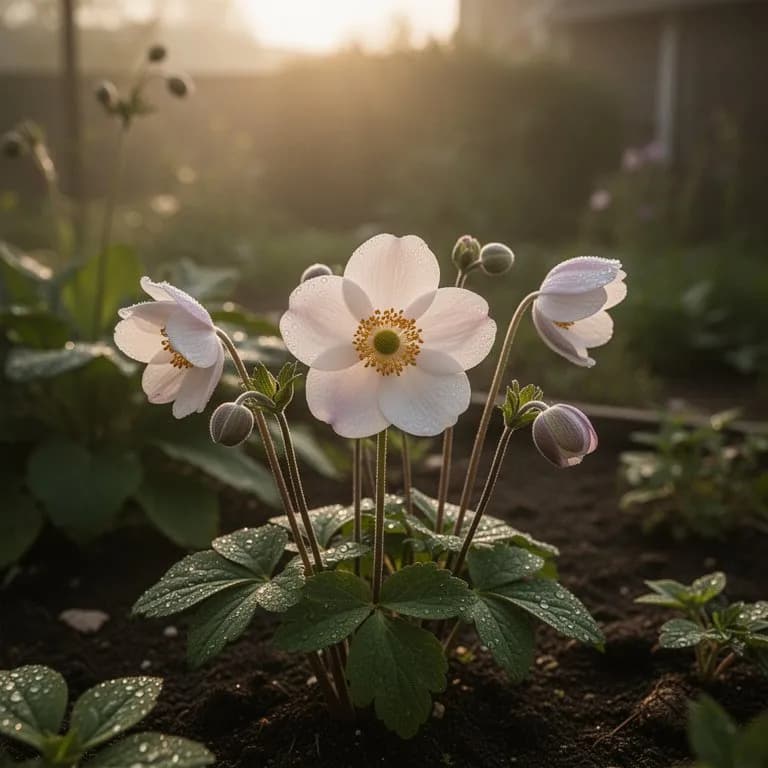
Classic Spring Anemone Bouquet
15 minutesA striking hand-tied bouquet showcasing anemone blooms in mixed jewel tones. Harvest stems early in the morning when buds are just beginning to open and the dark center is barely visible. Strip lower leaves, cut stems at a sharp angle under water, and arrange in a clean vase with fresh cool water and a drop of bleach to inhibit bacterial growth.
Anemone and Ranunculus Wedding Centerpiece
25 minutesAn elegant low-profile centerpiece combining anemones with ranunculus, garden roses, and seasonal greenery. Start by creating a base grid of floral tape across the top of a compote vessel, then insert foliage to build structure. Add anemones and ranunculus at varying heights, letting some blooms rest at the rim for a lush romantic look.
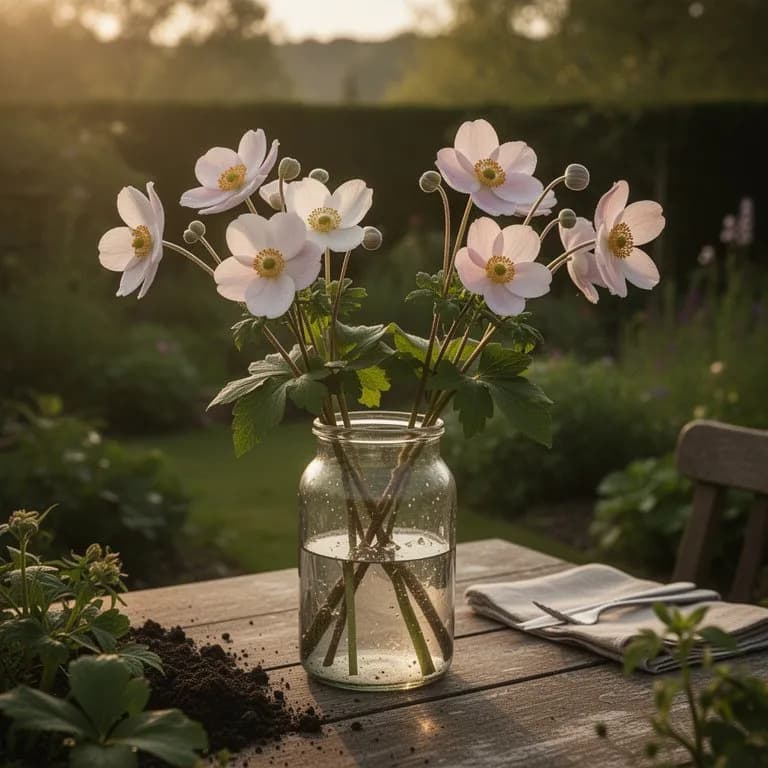
Pressed Anemone Botanical Art
10 minutes active plus 2-3 weeks pressing timePreserve the striking beauty of anemone blooms by pressing them for framed botanical art or handmade greeting cards. Select freshly opened flowers with vibrant color and place them face-down between sheets of absorbent paper inside a heavy book or flower press. After two to three weeks the pressed blooms can be arranged and mounted.
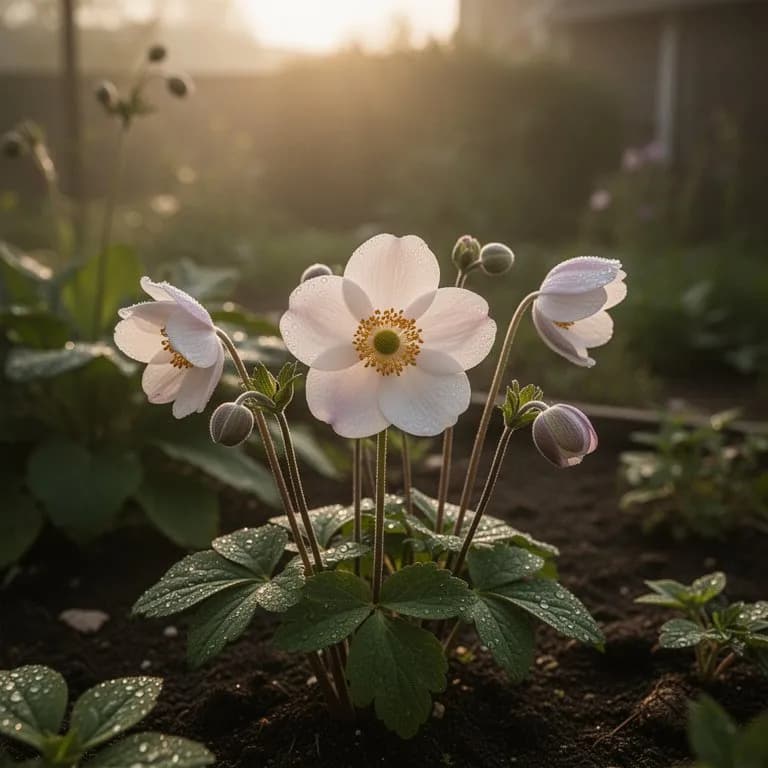
Anemones make exceptional cut flowers with a vase life of seven to twelve days when harvested at the bud stage
Yield & Spacing Calculator
See how many Japanese Anemone plants fit in your garden bed based on the recommended 45cm spacing.
4
Japanese Anemone plants in a 4×4 ft bed
2 columns × 2 rows at 45cm spacing
Popular Varieties
Some of the most popular japanese anemone varieties for home gardeners, each with unique characteristics.
Anemone x hybrida 'Honorine Jobert'
The classic single white Japanese anemone, first discovered in 1858 and still unsurpassed for elegant purity. Golden stamens glow against pure white petals.
Anemone x hybrida 'Königin Charlotte' (Queen Charlotte)
Large semi-double soft pink flowers with a ruffled appearance. One of the showiest and most floriferous cultivars.
Anemone x hybrida 'September Charm'
Single silvery-pink flowers that darken on the reverse. A reliable, long-flowering cultivar that lives up to its charming name.
Anemone hupehensis 'Praecox'
An earlier-flowering species with deep pink flowers starting in August, extending the Japanese anemone season by several weeks.
Popular anemone cultivars span a wide color range including De Caen singles and St. Brigid doubles
When should I plant Japanese Anemone?
Plant Japanese Anemone in March, April, September. It takes approximately 365 days to reach maturity, with harvest typically in August, September, October.
What are good companion plants for Japanese Anemone?
Japanese Anemone grows well alongside Aster, Chrysanthemum, Hosta. Companion planting can improve growth, flavor, and natural pest control.
What hardiness zones can Japanese Anemone grow in?
Japanese Anemone thrives in USDA hardiness zones 4 through 8. With greenhouse protection, it may be grown in zones 2 through 9.
How much sun does Japanese Anemone need?
Japanese Anemone requires Partial Sun (3-6h). This means 3-6 hours of sunlight, ideally morning sun with afternoon shade.
How far apart should I space Japanese Anemone?
Space Japanese Anemone plants 45cm (18 inches) apart for optimal growth and air circulation.
What pests and diseases affect Japanese Anemone?
Common issues include Leaf Blotch (Ramularia), Vine Weevil, Slugs. Prevention through good garden practices like crop rotation, proper spacing, and companion planting is the best approach. See the detailed pests and diseases section above for symptoms, prevention, and treatment for each.
How do I store Japanese Anemone after harvest?
Japanese anemone flowers are primarily enjoyed fresh in the garden or as cut flowers. The cotton-like seed heads can be harvested for dried arrangements—cut when seeds are fluffy and fully formed, and hang upside down for 1-2 weeks. Seeds can be collected and sown fresh in autumn for new plants. For...
What are the best Japanese Anemone varieties to grow?
Popular varieties include Anemone x hybrida 'Honorine Jobert', Anemone x hybrida 'Königin Charlotte' (Queen Charlotte), Anemone x hybrida 'September Charm', Anemone hupehensis 'Praecox'. Each has unique characteristics suited to different growing conditions and culinary preferences. See the varieties section above for detailed descriptions.
What soil does Japanese Anemone need?
Japanese anemones prefer fertile, moisture-retentive but well-drained soil with a pH of 6.0-7.5. Incorporate generous amounts of organic matter—compost, leaf mold, or well-rotted manure—before planting. Mulch annually in spring with compost to maintain soil moisture and fertility. Feed in spring wit...
When is the best time to plant anemone corms?
In mild climates (USDA zones 8-10), plant corms in September through November for winter and early spring blooms. In colder climates (zones 3-7), plant in early spring as soon as the soil is workable and nighttime temperatures remain above minus 5 degrees Celsius. The key is providing a long stretch of cool weather between 7 and 20 degrees Celsius for the best flower production.
Do I need to soak anemone corms before planting?
Yes, soaking is strongly recommended. Place dried corms in a bowl of room-temperature water for four to six hours until they swell noticeably in size. This rehydration jumpstarts root development and can shorten the time to emergence by one to two weeks compared to planting dry corms directly into the soil.
How long do anemones bloom and how many flowers will I get?
Each anemone corm produces blooms over a period of roughly six to eight weeks once flowering begins. A healthy corm yields between 8 and 25 flower stems depending on variety, climate, and care. Regular deadheading and consistent watering are the most important factors for maximizing stem count and extending the bloom window.
Are anemones toxic to pets or children?
Yes, all parts of anemone plants contain protoanemonin, a compound that can cause skin irritation on contact and gastrointestinal upset if ingested. Keep corms, foliage, and cut stems out of reach of children, cats, dogs, and other household pets. Wearing gloves when handling corms and stems is advisable for people with sensitive skin.
Can anemones grow in pots and containers?
Anemones grow very well in containers. Use a pot at least 20 cm deep with drainage holes and fill with a mix of equal parts quality potting soil and perlite. Plant corms 3 to 5 cm deep and 8 to 10 cm apart. Containers offer the advantage of being movable, so you can position them in morning sun and afternoon shade as temperatures warm.
Should I lift and store anemone corms over winter?
In USDA zones 7 and colder where the ground freezes, lifting corms after foliage dies back is recommended to prevent rot and freeze damage. Cure them for two weeks in a warm dry area, then store in paper or mesh bags at 15 to 18 degrees Celsius. In zones 8 and warmer, corms can remain in the ground year-round with a protective layer of mulch.
Ready to Grow Japanese Anemone?
Add Japanese Anemone to your garden plan and start designing your perfect layout.

Vladimir Kusnezow
Gardener and Software Developer
Zone 6b gardener. Growing vegetables and fruits in soil and hydroponics for 6 years. I built PlotMyGarden to plan my own gardens.
Jump to Section