Witch Hazel
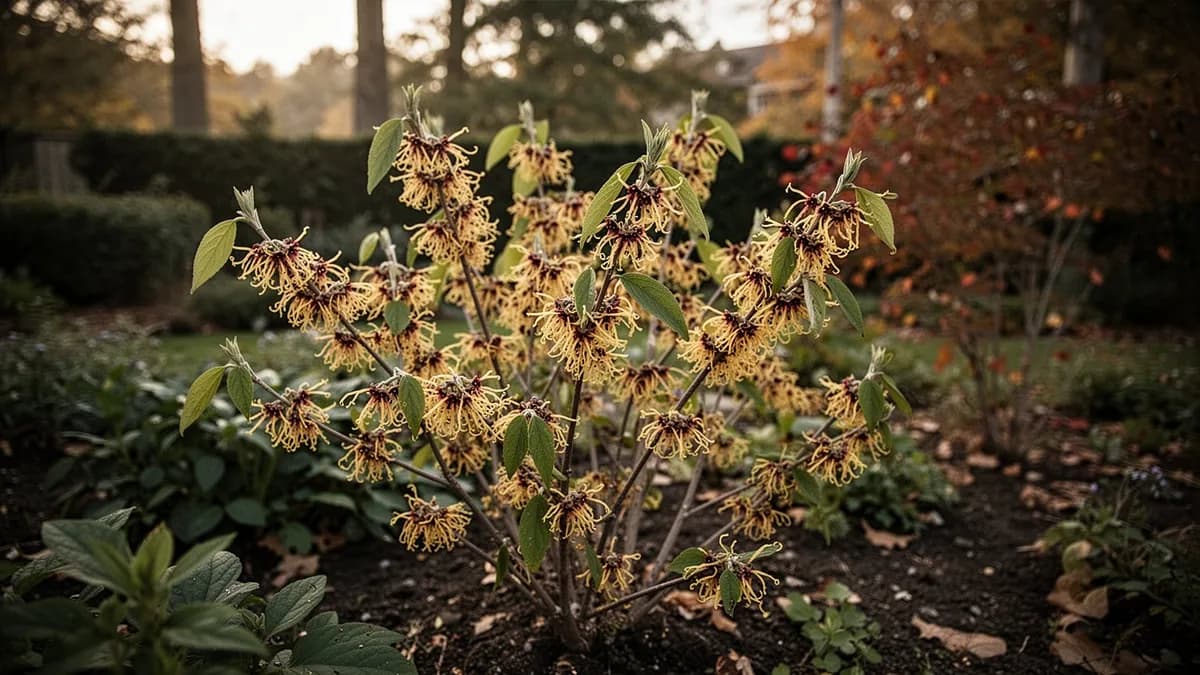
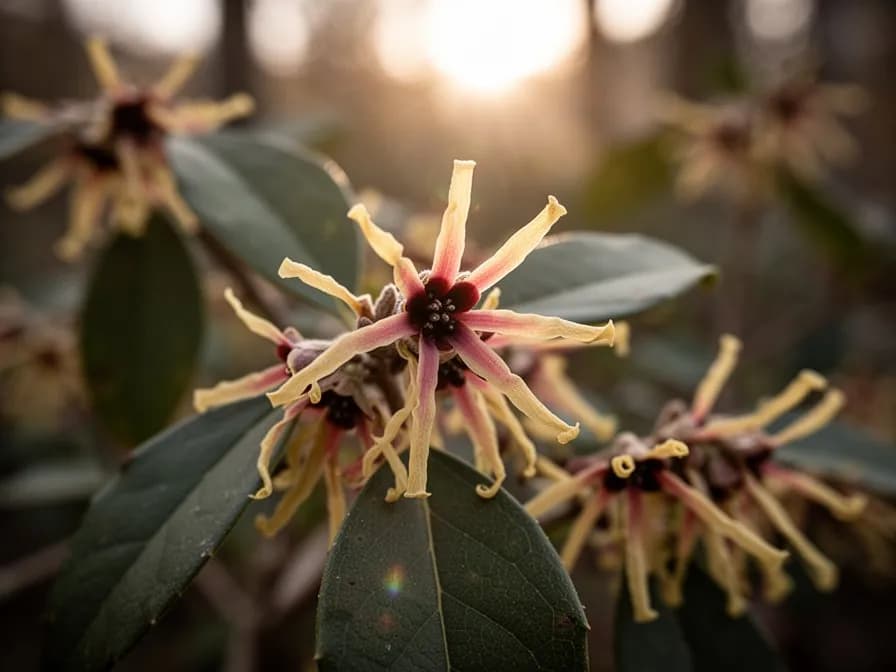
One of the last plants to bloom in autumn and among the first in late winter, witch hazel produces spidery, fragrant yellow, orange, or red flowers on bare branches when the garden is otherwise dormant.





On this pageOverview
Meet Witch Hazel
One of the last plants to bloom in autumn and among the first in late winter, witch hazel produces spidery, fragrant yellow, orange, or red flowers on bare branches when the garden is otherwise dormant. The bark and leaves have been used for centuries in traditional medicine and commercial astringent products. Witch hazels are graceful, vase-shaped understory trees that prefer woodland conditions with dappled shade and acidic, organic-rich soil. They require virtually no pruning and are resistant to most pests and diseases.
When to plant Witch Hazel
Witch hazel seeds are explosively ejected from capsules in fall, shooting up to 30 feet from the parent tree. Collect capsules just before they ripen and split. Seeds have a double dormancy requiring warm stratification at 70 degrees for 60 days followed by cold stratification at 35 to 40 degrees for 90 to 120 days. This double requirement means seeds typically germinate in the second spring after sowing. Plant seeds half an inch deep in moist, acidic seedling mix. Seedlings grow slowly, reaching 6 to 12 inches in the first year. Named cultivars must be propagated by grafting onto H. virginiana seedling rootstock.
Your Witch Hazel Year
Composed for Zone 7 · typical seasons · frost passes Apr 2, returns Nov 1
Plant Witch Hazel Mar – Apr, Oct – Nov, pick —. Check the planting methods below and set your climate to personalize these windows.
How to grow Witch Hazel
Witch hazel is a uniquely valuable garden tree that blooms when virtually nothing else is flowering, providing fragrant color during the bleakest months of the year. Native Hamamelis virginiana blooms in late autumn, while the popular Asian hybrids (H. x intermedia) bloom in late winter to early spring. Choose a site with partial shade to full sun in cooler climates, with moist, well-drained, acidic soil with a pH of 5.5 to 6.5.
Plant container-grown or balled-and-burlapped specimens in spring or fall. Many witch hazels are grafted onto H. virginiana rootstock, so watch for and remove any suckers from below the graft union. Set at grade level and water deeply. Apply 3 to 4 inches of organic mulch such as shredded leaves or bark.
Witch hazel develops a naturally graceful vase-shaped or spreading form and rarely needs pruning. If shaping is desired, prune immediately after flowering, as flower buds form on old wood during summer and fall. The spidery flowers have narrow, ribbon-like petals that curl up in extreme cold and unfurl again when temperatures moderate, allowing them to survive freezing without damage. Many varieties are intensely fragrant, making them invaluable near entryways and pathways where the winter scent can be appreciated.
Witch Hazel needs more room than a 4 × 8 ft bed gives
Each Witch Hazel wants 500 cm of elbow room. The planner keeps that spacing for you — every plant, every bed.
Witch Hazel's best neighbours
Witch hazel's winter bloom period makes it a perfect companion for other winter-interest plants. Snowdrops, winter aconite, and early crocuses bloom simultaneously, creating a winter garden display. Hellebores provide complementary winter flowers at ground level. Underplant with shade-loving groundcovers like European ginger, epimedium, or vinca. Japanese maples share similar soil and light requirements and provide complementary fall color. Rhododendrons and azaleas complete a year-round woodland garden scheme beneath witch hazel's light canopy.
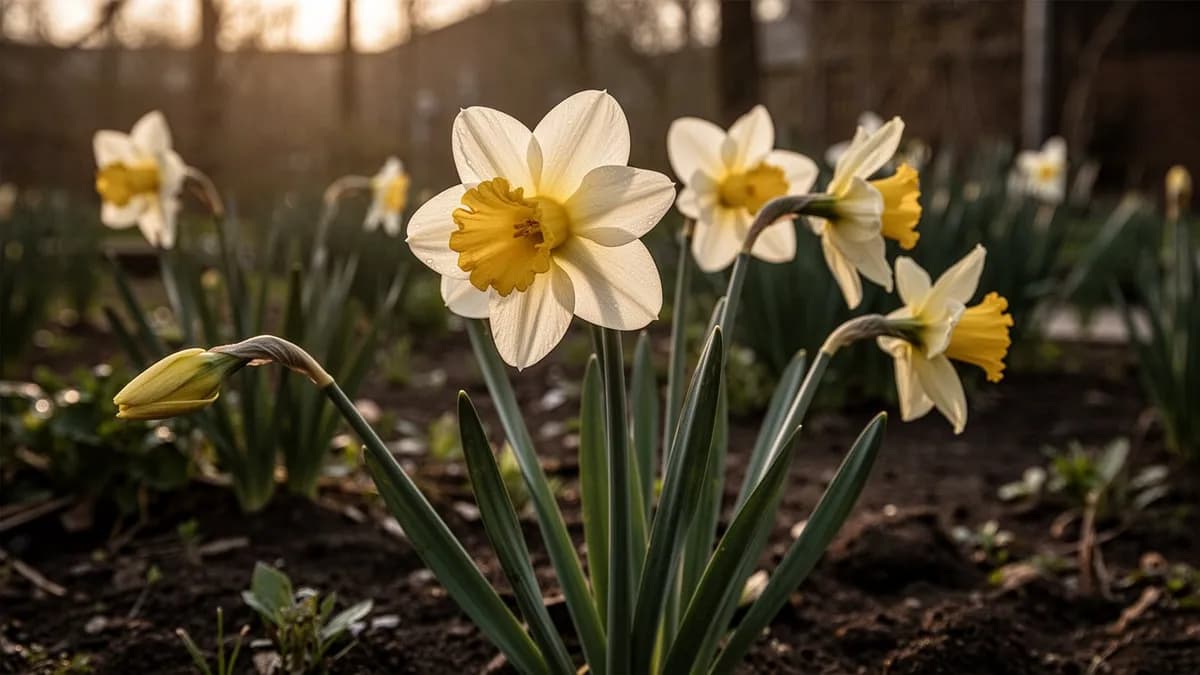
Daffodil belongs beside it.
Old growers' knowledge, checked against Witch Hazel's real companion table below — test any plant you're growing.
Try Witch Hazel in a bed — right here
A real planner bed with Witch Hazel already in it. Tap a companion to place it and watch the pairing checks answer — green for good neighbours, red for a clash.


Related growing guides
Feed it well
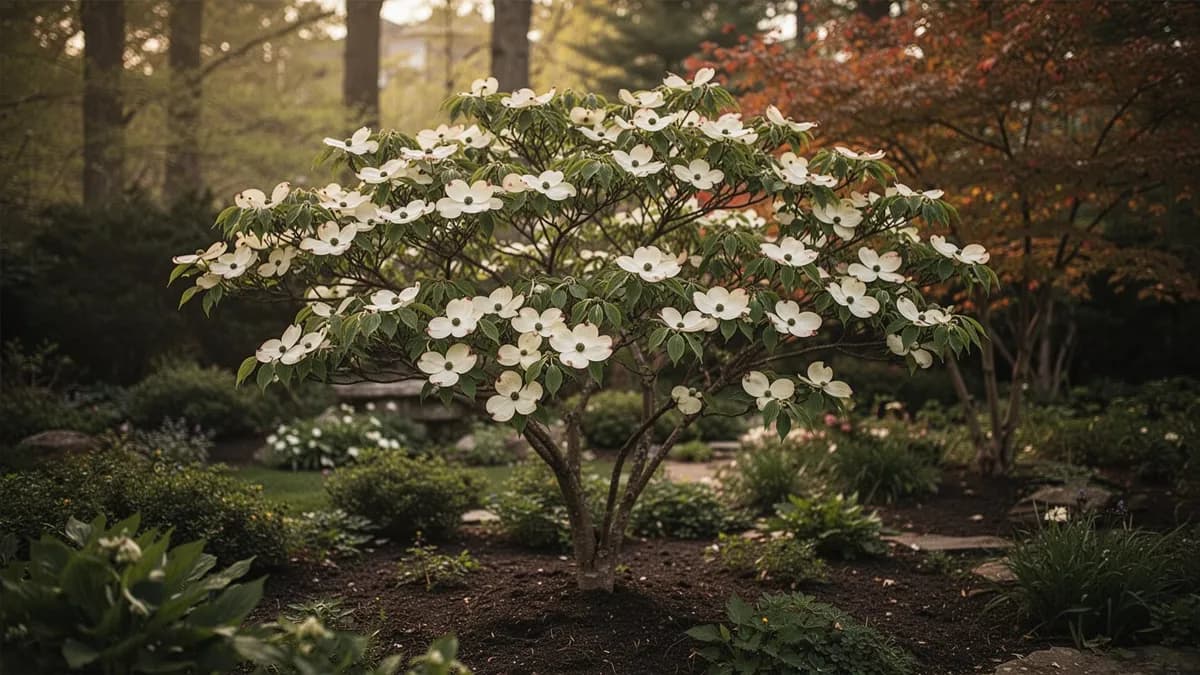
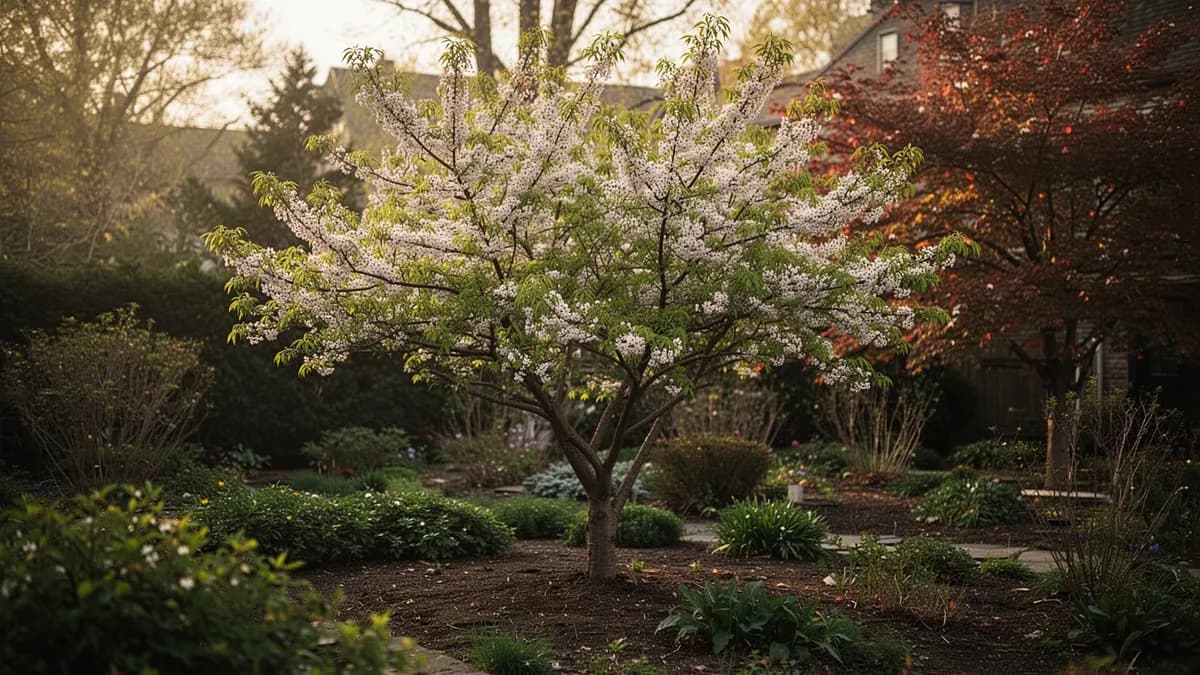
Witch hazel prefers moist, well-drained, acidic soil with a pH of 5.5 to 6.5 and high organic matter content. It tolerates clay soil if drainage is adequate but struggles in dry, alkaline conditions. Amend planting sites with generous quantities of compost and leaf mold. Mulch with 3 to 4 inches of acidic organic matter such as shredded leaves, pine bark, or pine needles. Fertilize lightly in early spring with an acidifying fertilizer or a top-dressing of well-aged compost. Avoid heavy nitrogen applications. Established trees in organically rich soil rarely need supplemental feeding.
Ideal Temperature
Hardiness Zone Compatibility
From seed to harvest, stage by stage
Seed Germination
Witch hazel seeds require a double dormancy period, needing both warm and cold stratification before germinating. Seeds planted in autumn may take up to two years to sprout in the wild, though controlled stratification can shorten this to several months.
Seedling Establishment
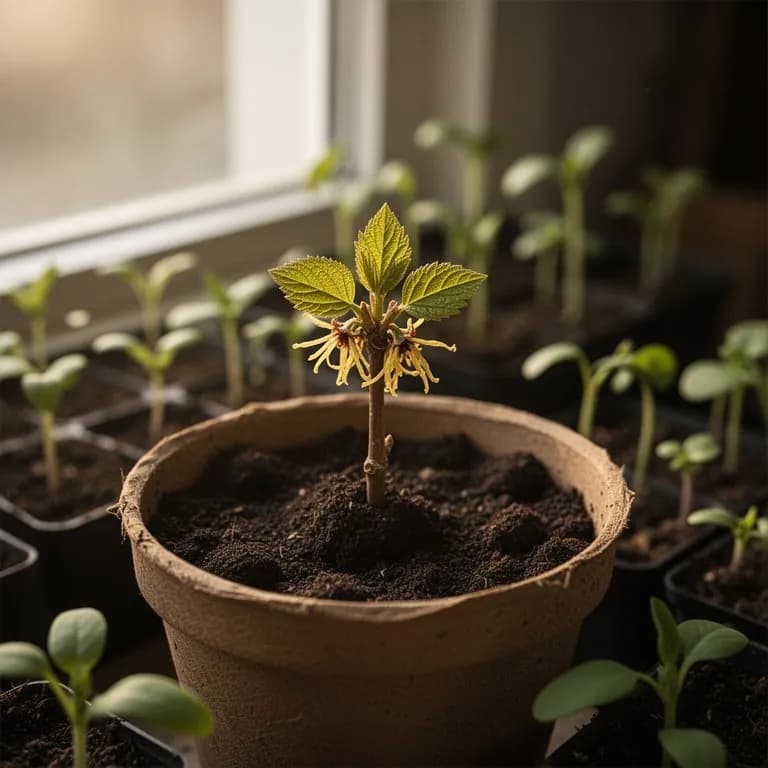
Young seedlings develop their first true leaves and begin establishing a root system. Growth is slow during this stage, and seedlings are sensitive to direct sun and drought. A sheltered position with dappled light is ideal.
Juvenile Growth
Over the next few years the young shrub develops its characteristic vase-shaped branching structure. Annual growth of 30-45 cm is typical. The plant builds a strong root network and increases in canopy density each season.
First Flowering
Witch hazel typically produces its first blooms between years four and six. The fragrant, spidery flowers appear in late autumn or winter depending on the species. This marks the transition to reproductive maturity.
Mature Specimen
A fully mature witch hazel reaches 3-6 meters in height and spread, producing abundant blooms each year. The plant is now well-suited for bark and twig harvesting for medicinal preparations. Mature specimens offer spectacular autumn colour followed by winter flowers.
Legacy Tree
Witch hazel is a long-lived shrub that can thrive for decades. Specimens over 20 years old develop an impressive architectural form and become reliable annual sources of medicinal material, ornamental beauty, and wildlife habitat.
Soak seeds for 24 hours, then provide 60 days of warm stratification followed by 90 days of cold stratification in moist sand at 1-4 degrees Celsius.
Caring for Witch Hazel month by month
What to do each month for your Witch Hazel
October
You are hereHarvest branches and bark for witch hazel extract production before heavy frosts. Plant new bare-root specimens while the soil is still workable. Begin cold stratification of collected seeds for spring germination
Know exactly what to do in your garden — every month
One email at the start of each month: what to sow, plant, and tackle right now — for your Witch Hazel and everything growing around it. Plus a short starter course that helps you dodge the classic mistakes.
- What to do, right now
- Matched to your season
- Starter course included
Harvesting Witch Hazel
Witch hazel bark and leaves have been used medicinally for centuries by Native Americans and continue to be harvested commercially for producing witch hazel extract, a widely used astringent. In the home garden, harvest leaves in summer when they are fully mature, and twigs with bark in fall or winter. The flowers can be cut for indoor arrangements in winter, bringing fragrant blooms indoors during the dreariest months. Cut branches when buds are just beginning to open for the longest indoor display.
assuming you plant when the window opens — set your real date
Pick Witch Hazel promptly and the plant keeps producing.
Storage & Preservation
Cut witch hazel flower branches last 7 to 10 days in water and are among the longest-lasting winter cut flowers. Recut stems and use warm water. To make witch hazel extract at home, simmer bark and twigs in water for 30 minutes, strain, and mix with an equal amount of rubbing alcohol. Store in sealed glass bottles in a cool, dark place where it keeps indefinitely. Commercial witch hazel extract is produced by steam distillation of bark and leaves. Dried witch hazel bark stores for up to 2 years in airtight containers.
What goes wrong — and the fix
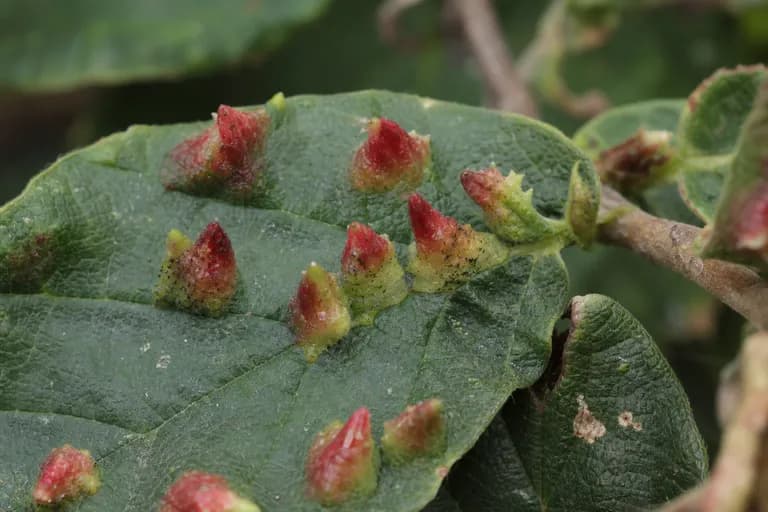
Witch Hazel Cone Gall Aphid
PestCone-shaped green to red galls form on leaf surfaces in spring, each containing a colony of tiny aphids. Galls are cosmetically unappealing but rarely affect tree health.

Leaf Spot
DiseaseSmall brown spots on leaves, occasionally enlarging and merging in wet weather. Minimal impact on tree health. Most common in humid conditions with poor air circulation.
Powdery Mildew
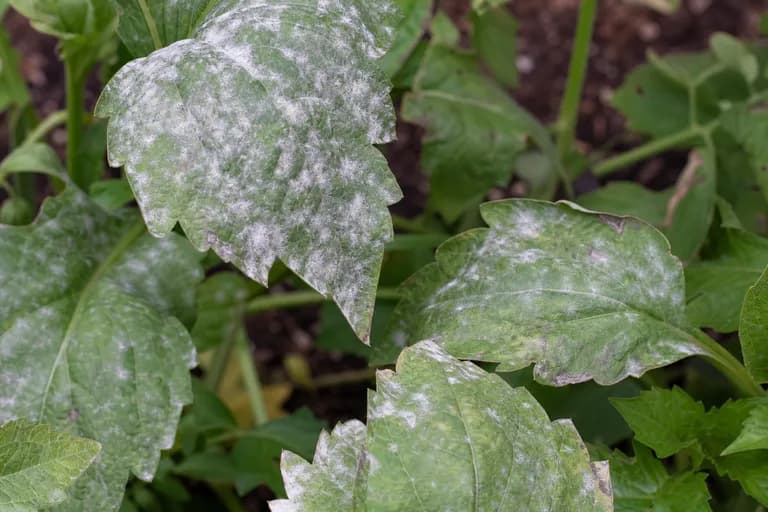
DiseaseWhite powdery coating on leaves in late summer to fall, especially in humid conditions with poor air circulation. Leaves may distort slightly.
Troubleshooting Common Problems
Rootstock suckers are the most persistent problem with grafted witch hazels. Vigorous shoots from the H. virginiana rootstock will quickly outcompete and overwhelm the grafted cultivar if not removed promptly. Check for suckers regularly, especially in spring and summer, and remove them by tearing or cutting flush with the trunk. Witch hazel cone galls are cosmetically unappealing but harmless. Leaf scorch can occur in full sun during hot, dry summers, so afternoon shade is beneficial in warmer climates. Fall color may be disappointing in mild climates where temperatures do not drop enough to trigger vivid coloration.
Growing Tips
- Plant witch hazel in acidic to neutral soil with a pH between 4.5 and 6.5 for optimal growth and nutrient uptake. Alkaline soils can cause chlorosis and stunted development.
- Choose a location with morning sun and afternoon shade, especially in warmer climates. Witch hazel naturally grows as an understory tree and appreciates protection from intense midday heat.
- Water deeply and consistently during the first two growing seasons to establish a strong root system. Once established, witch hazel is moderately drought-tolerant but performs best with regular moisture.
- Apply a generous layer of acidic organic mulch such as pine bark, oak leaves, or composted pine needles to maintain soil moisture, suppress weeds, and gradually acidify the soil.
- Avoid heavy pruning, which can destroy the natural vase-shaped habit. Limit pruning to removing dead, damaged, or crossing branches immediately after the flowering period ends.
- Propagate by layering low-hanging branches in spring, which is far more reliable than seed germination. Pin a flexible branch to the ground, wound the underside lightly, and cover with moist soil.
- Watch for witch hazel leaf gall aphids, which cause distinctive cone-shaped galls on leaves. While unsightly, these galls rarely harm the plant and can be managed by removing affected leaves.
- Provide good air circulation around the canopy by spacing plants at least 3 to 4 metres apart. Crowded plantings are more susceptible to powdery mildew and leaf spot fungi.
- Amend heavy clay soils with generous quantities of organic matter before planting to improve drainage. Witch hazel tolerates many soil types but will not thrive in waterlogged conditions.
- Fertilize sparingly with a slow-release acid-forming fertilizer in early spring. Excessive nitrogen promotes leafy growth at the expense of flower bud formation.
Grow your best Witch Hazel yet — and everything around it.
Start a free plan today. Lay out your beds, drop in your Witch Hazel, and let PlotMyGarden handle the timing, spacing, companions and reminders from seed to harvest basket.
Pick your Witch Hazel
Arnold Promise
The most popular yellow-flowering hybrid. Bright yellow flowers appear in late February to March with a sweet fragrance. Vigorous grower to 15 to 20 feet. Outstanding orange-red fall color.
Jelena (Copper Beauty)
Striking copper-orange flowers with a spicy fragrance bloom in late winter. Large flowers up to 1 inch across. Brilliant orange, scarlet, and red fall foliage. Grows to 12 to 15 feet.
Diane
Deep red flowers, the darkest color available in witch hazels. Blooms in late winter with a light, sweet fragrance. Yellow-orange-red fall color. Compact grower to 10 to 12 feet.
Pallida
Soft sulfur-yellow flowers with an intensely sweet fragrance considered the most potent of all witch hazels. Blooms profusely in late winter. Buttery yellow fall color.
Growing your own witch hazel tree provides a virtually unlimited supply of bark and twigs for homemade extracts and toners. A single mature specimen can yield enough material for a full year of skincare preparations, replacing commercial witch hazel products that typically cost 8 to 15 dollars per bottle. Over a decade, one established plant can save several hundred dollars in purchased toners, astringents, and topical treatments while also serving as a striking ornamental specimen with exceptional autumn colour and unique winter blooms.
Quick recipes
Homemade Witch Hazel Toner
20 minutes plus 2 weeks steepingA gentle facial toner made by infusing witch hazel bark and twigs in alcohol and water. This traditional preparation harnesses the natural astringent tannins to tighten pores, reduce redness, and refresh the skin without harsh synthetic chemicals.
5 ingredients
Soothing Witch Hazel Compress
15 minutesA warm herbal compress using fresh or dried witch hazel leaves and bark to relieve muscle soreness, reduce bruising, and calm inflamed skin. The tannins and flavonoids work together as a natural anti-inflammatory when applied topically.
5 ingredientsWitch Hazel and Aloe Aftershave Balm
10 minutesA calming post-shave balm that combines the astringent and anti-inflammatory properties of witch hazel extract with the moisturising and healing qualities of aloe vera gel. This preparation reduces razor burn, closes micro-cuts, and leaves skin feeling refreshed.
5 ingredientsWhat's inside
Health Benefits
- Witch hazel extract acts as a powerful natural astringent, tightening skin tissue, shrinking pores, and reducing excess oil production without stripping the skin of its natural moisture barrier.
- The high concentration of tannins and flavonoids provides significant anti-inflammatory action, making witch hazel effective for soothing sunburn, insect bites, eczema flare-ups, and contact dermatitis.
- Topical application of witch hazel has been clinically shown to reduce the severity and duration of haemorrhoid symptoms by decreasing swelling, itching, and discomfort in the affected tissue.
- The antimicrobial compounds in witch hazel bark extract help prevent infection in minor cuts, scrapes, and abrasions while promoting faster wound closure through its astringent tightening effect.
- Witch hazel preparations can reduce under-eye puffiness and dark circles by constricting blood vessels and reducing fluid retention in the delicate periorbital skin area.
- Regular use of witch hazel toner has been associated with reduced acne breakouts, as its antibacterial and oil-regulating properties help keep pores clear and reduce the proliferation of acne-causing bacteria.
Where Witch Hazel comes from
Witch hazel (Hamamelis) is a genus of flowering shrubs and small trees native to North America and eastern Asia, with the most widely known species being Hamamelis virginiana, indigenous to the eastern woodlands of the United States and Canada. Archaeological and ethnobotanical evidence suggests that indigenous peoples of North America, including the Mohegan, Potawatomi, Iroquois, and Osage nations, recognized the medicinal value of witch hazel long before European contact. They prepared decoctions from the bark, leaves, and twigs to treat skin ailments, sore muscles, insect bites, and minor wounds, passing this knowledge through generations of traditional healers. When European settlers arrived, they quickly adopted these practices and also noticed the flexible forked branches being used as dowsing rods to locate underground water, a folk practice that may have contributed to the common name. By the mid-19th century, Theron T. Pond commercialized witch hazel extract, founding what would become a household-name brand and establishing witch hazel distillate as a pharmacy staple across North America and Europe. The steam distillation process, which extracts beneficial tannins and volatile oils from the bark and twigs, remains largely unchanged today. In Asia, the closely related species Hamamelis mollis and Hamamelis japonica have been cultivated for centuries as prized ornamental garden plants, valued for their fragrant winter flowers and brilliant autumn foliage. Modern horticulturists have crossed these Asian species with the North American Hamamelis virginiana to produce popular hybrid cultivars such as Hamamelis x intermedia, which combines vigorous growth with exceptionally showy blooms. Today witch hazel occupies a unique position at the intersection of herbal medicine, skincare science, and ornamental horticulture, remaining as relevant in contemporary gardens and medicine cabinets as it was in the forests of pre-colonial America.
Witch Hazel: did you know?
Fascinating facts about Witch Hazel
Witch hazel seed capsules build up hydraulic pressure as they dry, eventually ejecting seeds at speeds exceeding 8 meters per second and launching them up to 10 meters from the parent plant.
Witch Hazel questions, answered
When should I plant Witch Hazel?
What are good companion plants for Witch Hazel?
What hardiness zones can Witch Hazel grow in?
How much sun does Witch Hazel need?
How far apart should I space Witch Hazel?
What pests and diseases affect Witch Hazel?
How do I store Witch Hazel after harvest?
What are the best Witch Hazel varieties to grow?
What soil does Witch Hazel need?
When does witch hazel bloom and how long do the flowers last?
Is it safe to use homemade witch hazel extract on the skin?
How long does it take for a witch hazel tree to reach maturity?
Can witch hazel grow in full shade?
What pests and diseases commonly affect witch hazel?
Can I harvest witch hazel bark without harming the tree?
You just read the theory. Now grow it on autopilot.
Everything that makes Witch Hazel fiddly — the timing, the spacing, the companions, the harvest window — is exactly what PlotMyGarden handles for you, for every plant in your garden.
A plan that knows your weather
Set your location once. Get sow, feed and harvest dates built around your real last-frost date and live forecast — no more guessing from a generic seed packet.
From the “When to plant” sectionDrag-and-drop bed planner
Design beds on a grid. Every plant snaps to its proper spacing, and you can see your whole season laid out before you spend a cent on seed.
From the “Growing guide” sectionCompanion conflicts, caught early
200+ good-and-bad pairings checked live as you plant — so a season-wrecking mistake never makes it into the ground.
From the “Companions” sectionReminders you'll actually act on
“Water the beans.” “Pick today before it turns.” Timely, specific, and tied to the plants you're really growing.
From the “Harvest” sectionSuccession, scheduled
Want a harvest for six weeks, not six days? It spaces your sowings automatically and reminds you when each new block is due.
From the “When to plant” sectionA record that gets smarter
Every harvest you log teaches it your garden. Next year's plan starts from what actually worked in your soil, not a textbook's.
From the “Overview” sectionPlant these alongside Witch Hazel
More Ornamental Trees
Grow your best Witch Hazel yet — and everything around it.
Start a free plan today. Lay out your beds, drop in your Witch Hazel, and let PlotMyGarden handle the timing, spacing, companions and reminders from seed to harvest basket.