Tree Onion
A unique perennial onion that grows small bulbils in aerial clusters at the top of hollow green stalks.





On this pageOverview
Meet Tree Onion
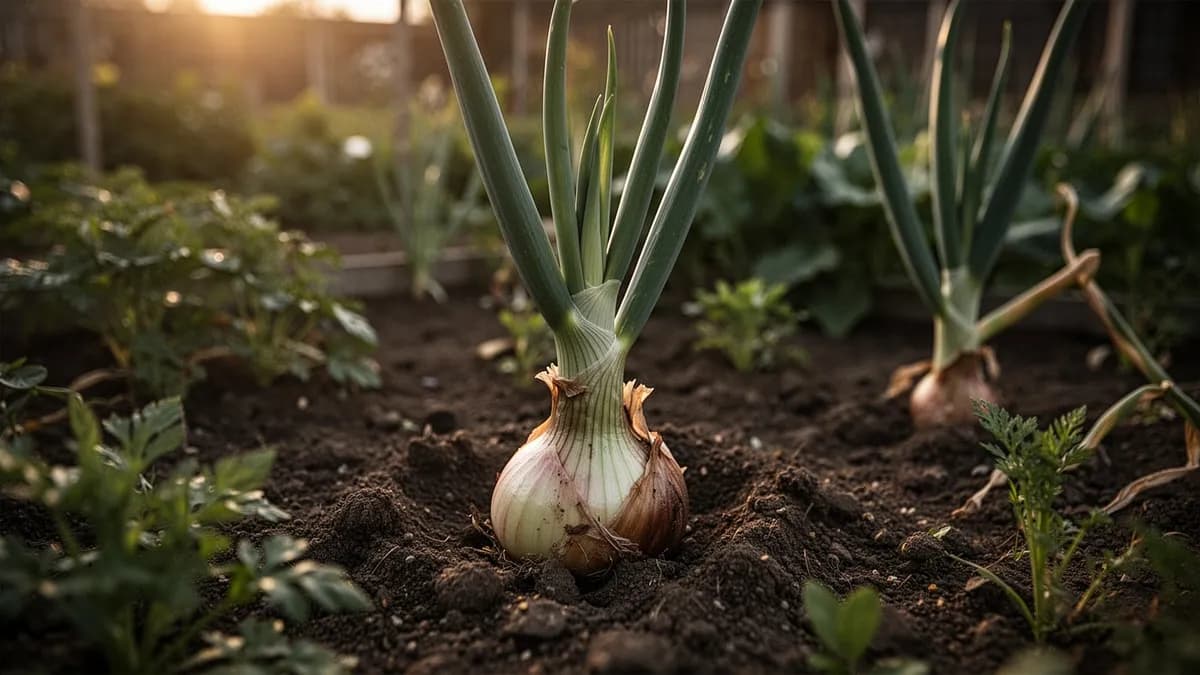
A unique perennial onion that grows small bulbils in aerial clusters at the top of hollow green stalks. The topset bulbs can develop secondary stalks that produce another tier of bulbils, creating a multi-story effect. All parts are edible including the green stalks, underground bulb, and aerial bulbils, each with a strong onion flavor. Extremely low-maintenance and can provide onion harvests for decades from a single planting.
When to plant Tree Onion
Tree onions are propagated by planting aerial bulbils or dividing underground bulb clusters, never from true seed. Plant bulbils in fall or early spring, pressing them 2-3 cm into prepared soil with the pointed end up. Space 20-25 cm apart in a permanent location. Fall planting allows root establishment before winter and produces the earliest spring growth. Bulbils planted in fall will produce harvestable greens by the following spring and topset bulbils by their second summer. For faster establishment, plant small underground bulb divisions from an existing colony. Source initial planting stock from specialty nurseries, seed exchanges, or fellow gardeners with established colonies.
Your Tree Onion Year
Composed for Zone 7 · typical seasons · frost passes Apr 2, returns Nov 1
Plant Tree Onion Mar – Apr, Sep – Oct, pick May – Sep. Check the planting methods below and set your climate to personalize these windows.
How to grow Tree Onion
Tree onions, also known as Egyptian walking onions or top-setting onions, are remarkably easy perennials that require almost no attention once established. Plant bulbils or small underground bulbs in fall or early spring, setting them 2-5 cm deep and 20-25 cm apart. Choose a permanent location, as these onions will remain productive for many years and naturally spread by walking, dropping their topset bulbils to root nearby.
In their first year, tree onions establish a root system and produce green shoots similar to scallions. By the second year, plants send up tall hollow stalks topped with clusters of small bulbils. As the weight of the bulbils increases, stalks bend over and the bulbils root where they contact soil, effectively walking across the garden. This natural propagation means a small planting quickly becomes a productive colony.
Maintenance is minimal. Remove any dead foliage in late fall or early spring. Divide overcrowded clumps every three to four years by digging and replanting in fresh soil. A light top-dressing of compost in spring supports vigorous growth. Tree onions tolerate a wide range of soils and conditions, thriving in locations where fussier alliums would fail. They are among the hardiest of all onion types, surviving severe winters without protection.
72 plants fit a 4 × 8 ft bed
Each Tree Onion wants 20 cm of elbow room. The planner keeps that spacing for you — every plant, every bed.
Tree Onion's best neighbours
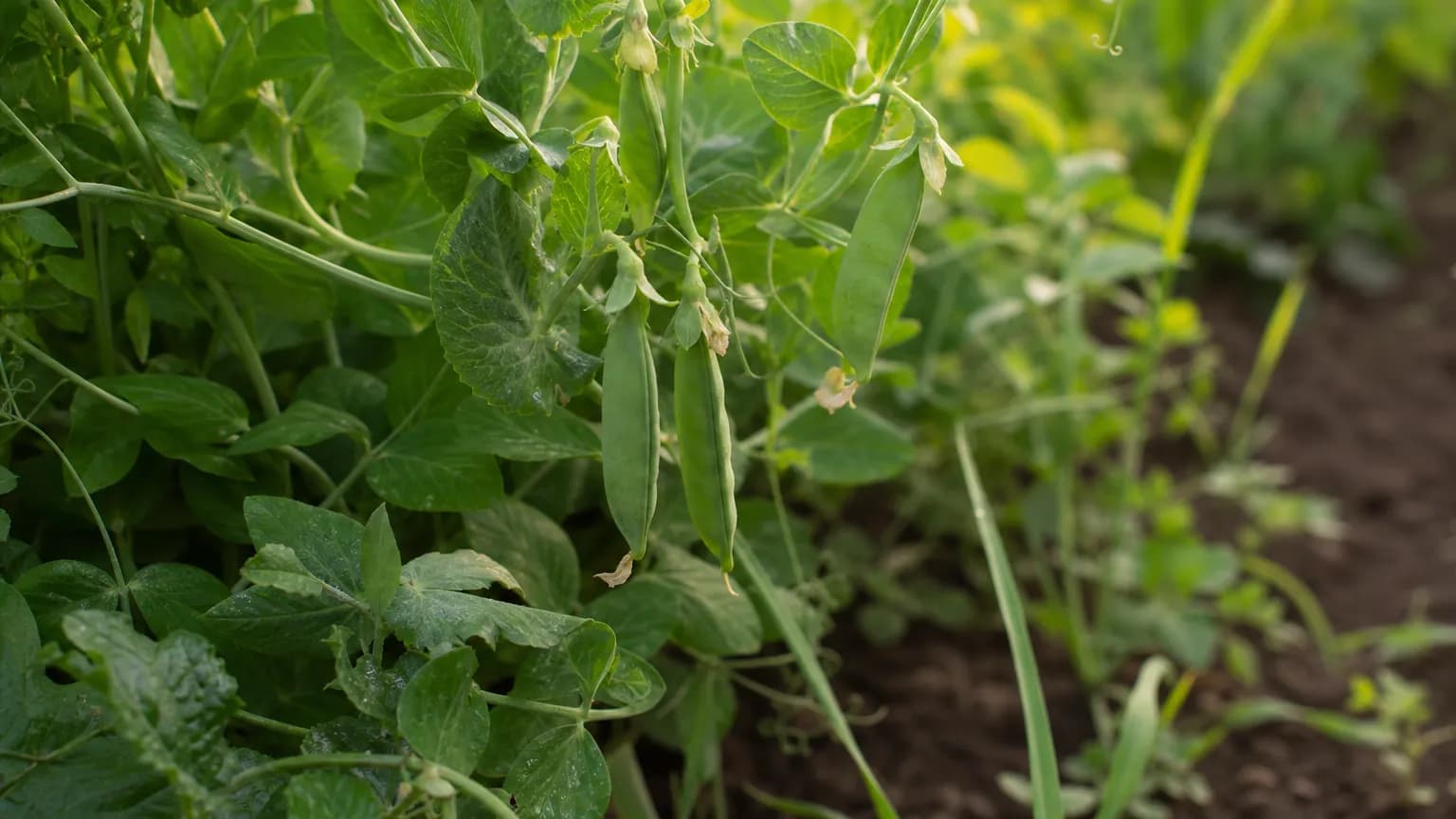
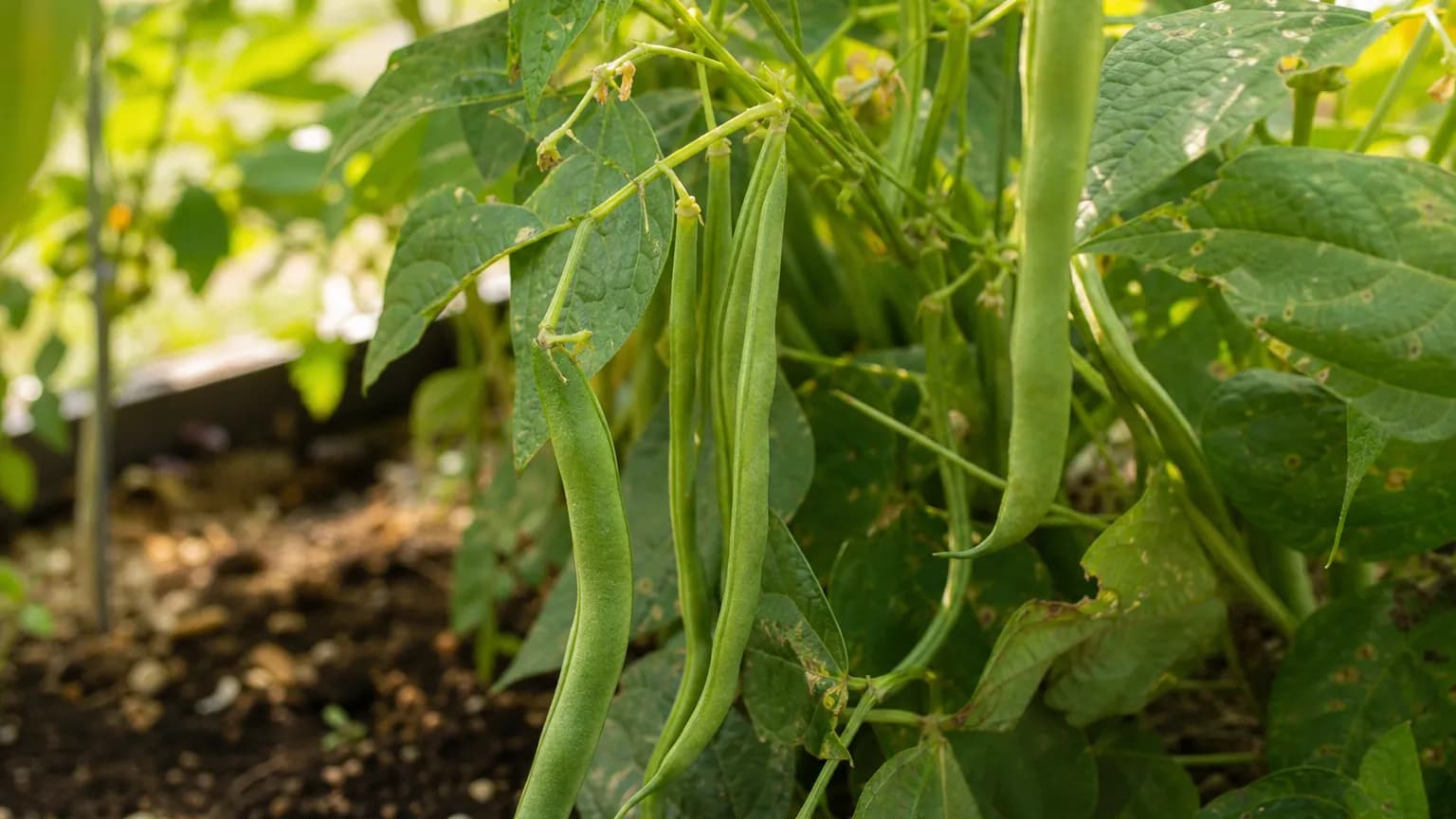
Tree onions make outstanding permanent companion plants in perennial gardens and food forests. Their strong allium scent helps deter pests from nearby fruit trees, berry bushes, and roses. Plant along borders of vegetable beds where they provide year-round pest deterrence without competing with annual crops. Good companions include fruit trees, strawberries, and most perennial herbs. Avoid planting near peas and beans. Tree onions work well in guild plantings under apple and pear trees, where they help suppress grass and deter pest insects. Their walking habit should be considered when choosing planting locations.
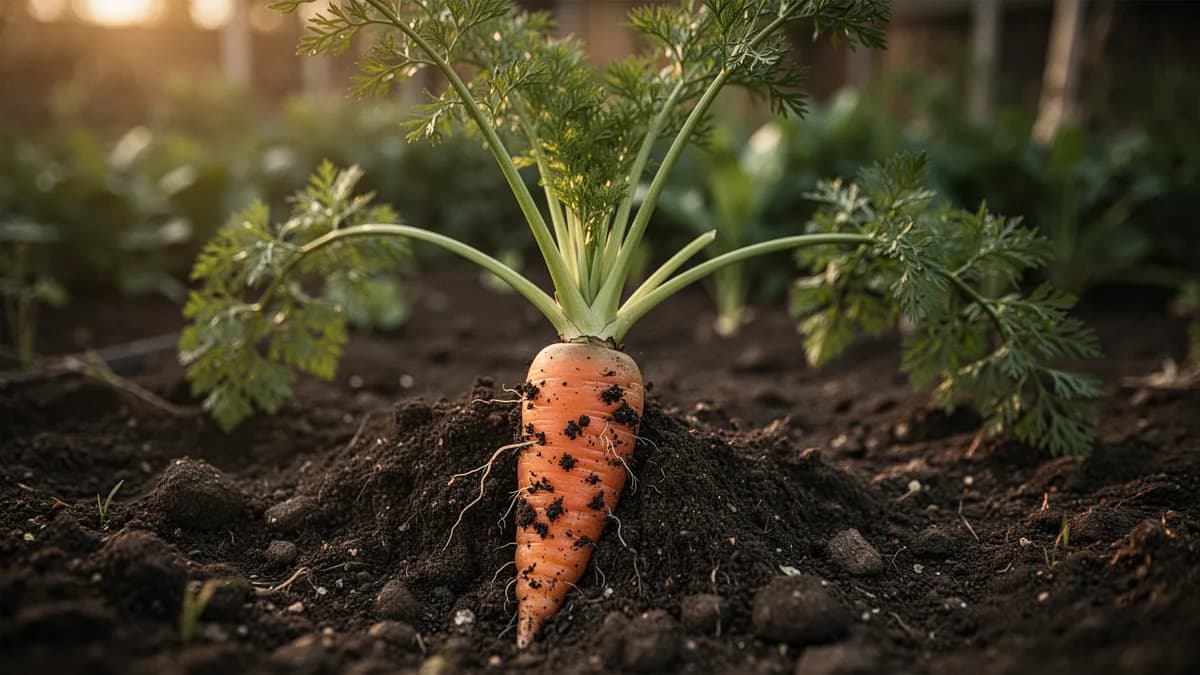
Carrot belongs beside it. Peas doesn't.
Old growers' knowledge, checked against Tree Onion's real companion table below — test any plant you're growing.
Try Tree Onion in a bed — right here
A real planner bed with Tree Onion already in it. Tap a companion to place it and watch the pairing checks answer — green for good neighbours, red for a clash.


Related growing guides
Feed it well
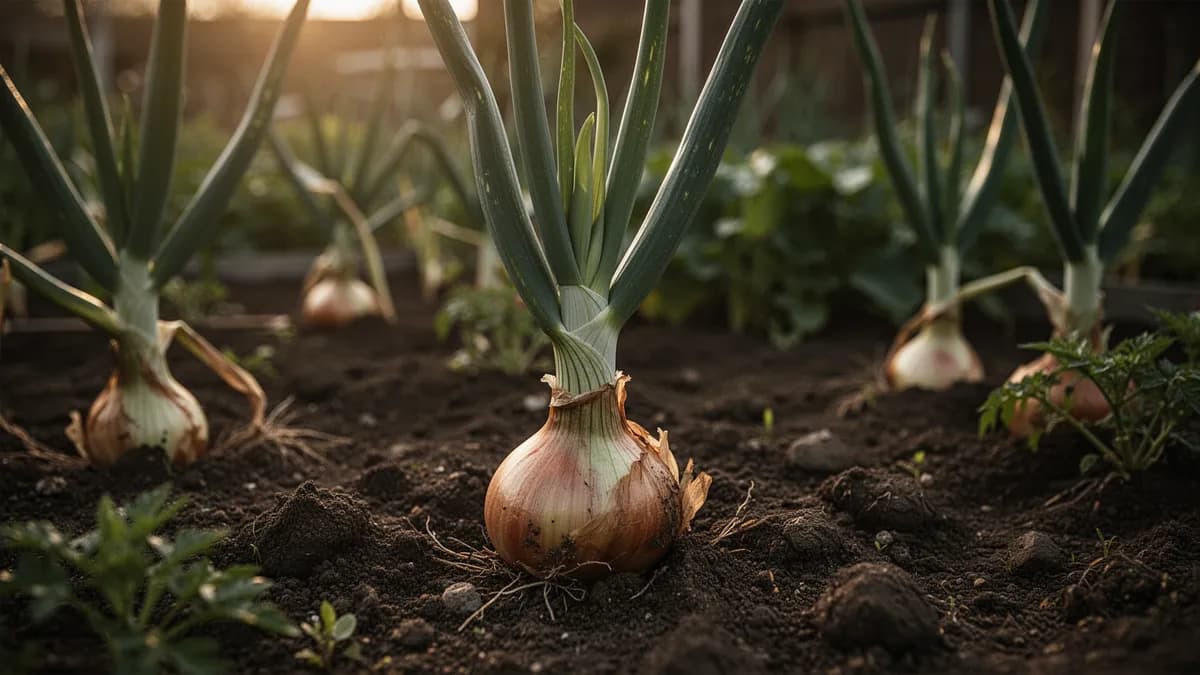
Tree onions are exceptionally adaptable and grow in almost any well-drained soil. They perform best in fertile, loose soil with a pH of 6.0 to 7.0 but tolerate clay, sand, and less-than-ideal conditions. Work in compost before initial planting to give the colony a strong start. An annual top-dressing of compost or aged manure in early spring provides sufficient nutrition. These tough perennials rarely need supplemental fertilizer once established. Avoid excessive nitrogen, which produces lush but weak growth prone to toppling over. Good drainage is the most important soil factor, as standing water leads to bulb rot.
Ideal Temperature
Hardiness Zone Compatibility
From seed to harvest, stage by stage
Planting and Establishment
Tree onions are propagated by planting either top-set bulbils or divisions of the underground base bulb. Bulbils are planted 2-3 cm deep with the pointed end up, while base bulb divisions are planted at the same depth they grew previously. Roots develop within 7-10 days and green shoots emerge shortly after. Fall planting (September-October) is ideal, allowing roots to establish before winter dormancy.
Vegetative Growth
Hollow, tubular green leaves grow vigorously in spring, reaching 30-50 cm tall. The underground bulb expands and may begin to divide into multiple offsets. The plant closely resembles a robust green onion or Welsh onion during this phase, producing 4-8 sturdy leaves per division.
Stalk Elongation
A thick, hollow flower stalk emerges from the center of the plant in late spring to early summer, growing 60-120 cm tall. Instead of producing a typical allium flower head, the tip of the stalk begins forming a cluster of small bulbils — miniature onion bulbs that develop in the air. Some stalks may produce a small flower cluster alongside the bulbils.
Bulbil Development
The aerial bulbils swell and mature at the top of the stalk, forming tight clusters of 3-20 small reddish-brown to purple-skinned bulbs ranging from marble-sized to golf-ball-sized. Each bulbil develops its own papery skin and may even sprout small green shoots while still attached to the parent plant. The cluster grows heavy, causing the stalk to arch and eventually bend toward the ground.
Walking and Rooting
Left unharvested, the weight of mature bulbils causes stalks to bend until the bulbil cluster touches the ground. The bulbils quickly root where they land, establishing new plants 30-90 cm from the parent — this is the 'walking' behavior that gives tree onions their alternative name, 'walking onions.' Over several seasons, a colony can migrate across a garden bed.
Dormancy and Overwintering
In late autumn, the above-ground foliage dies back and the underground bulb enters dormancy. The root system remains alive and healthy through winter, even in severely cold climates down to -40°C (-40°F). New green growth resumes in very early spring — tree onions are among the first edible plants to emerge, often pushing through lingering snow.
Plant bulbils 15-20 cm apart in well-drained soil enriched with compost. Water in thoroughly at planting and keep soil moist but not waterlogged during establishment. Fall-planted sets develop stronger root systems than spring-planted ones.
Caring for Tree Onion month by month
What to do each month for your Tree Onion
October
You are hereComplete all planting and dividing. Apply a 5-8 cm layer of mulch after the first hard frost to insulate root zones. Continue harvesting late greens until foliage begins to yellow and die back naturally.
Know exactly what to do in your garden — every month
One email at the start of each month: what to sow, plant, and tackle right now — for your Tree Onion and everything growing around it. Plus a short starter course that helps you dodge the classic mistakes.
- What to do, right now
- Matched to your season
- Starter course included
Harvesting Tree Onion
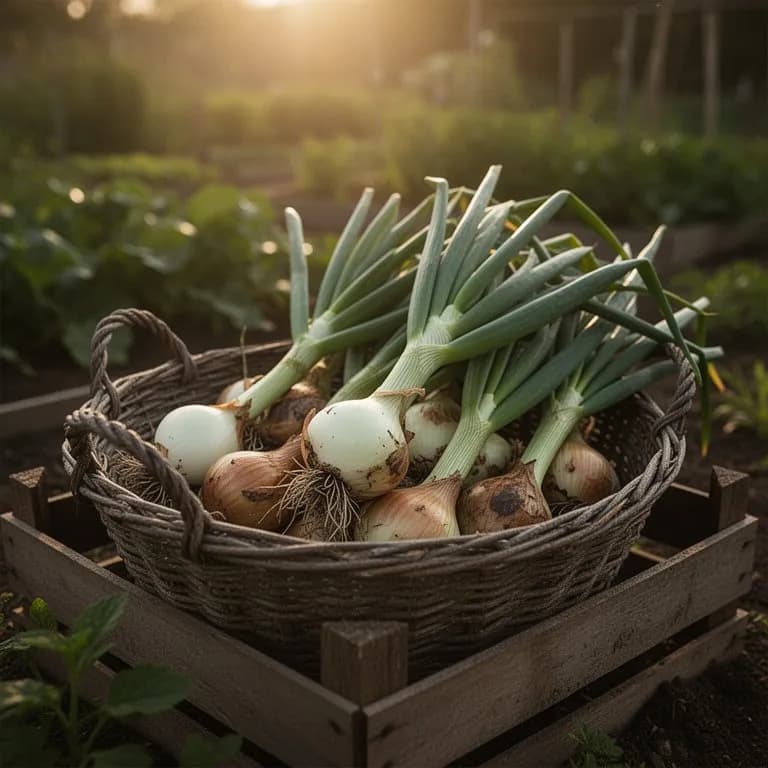
Tree onions offer three distinct harvests throughout the growing season. In spring, cut green stalks like scallions when they reach 20-30 cm tall. In summer, harvest the aerial bulbils when they have formed firm, marble-sized clusters at the stalk tops, usually in July or August. Underground bulbs can be dug at any time but are best harvested in fall after foliage has died back. Always leave enough plants and bulbils to maintain the colony. Bulbils are strongest flavored, while green stalks are mildest. Use scissors to harvest greens, leaving 5 cm of stalk for regrowth.
assuming you plant when the window opens — set your real date
From bulbs, tubers or cloves
Pick Tree Onion promptly and the plant keeps producing.
Storage & Preservation
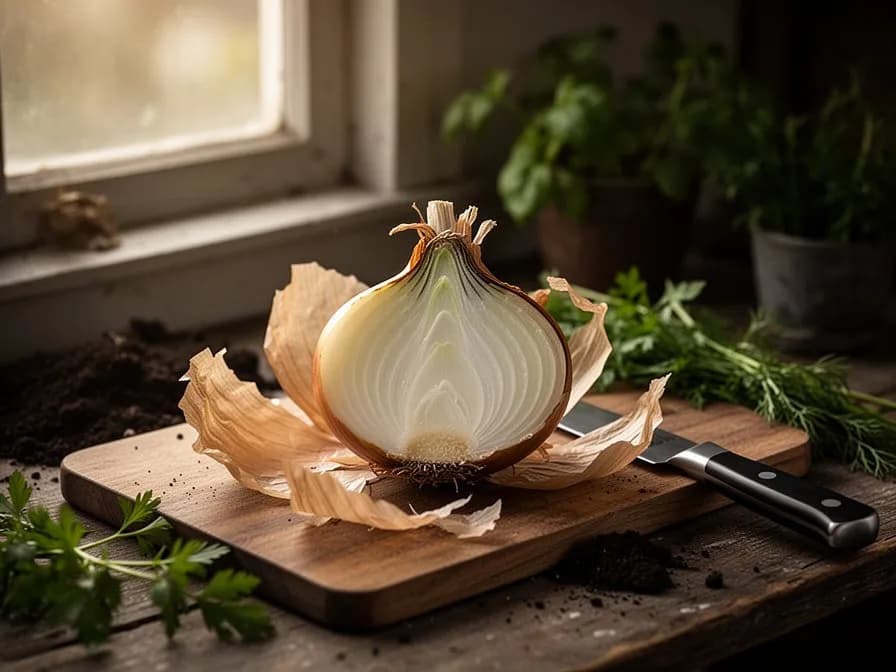
Aerial bulbils store for several months in a cool, dry location with good air circulation. Spread in a single layer and allow to dry for a few days before storing in mesh bags. The green stalks are best used fresh but can be chopped and frozen. Underground bulbs store like regular onions for two to three months after proper curing. Pickle the small bulbils whole in spiced vinegar for an excellent condiment. Dehydrate sliced bulbils for a pungent seasoning. The entire aerial cluster can be preserved in vinegar and oil as a unique garnish for charcuterie and cheese boards.
What goes wrong — and the fix
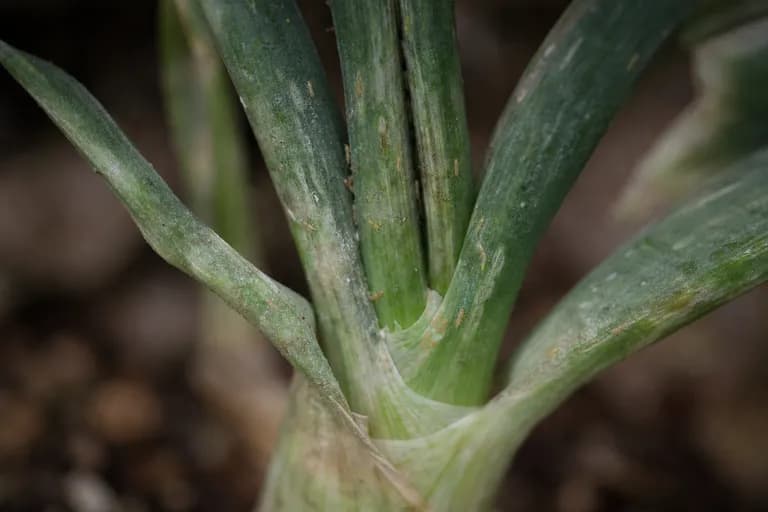
Onion Thrips
PestSilvery streaks on leaves and distorted growth, though established tree onion colonies are typically vigorous enough to outgrow moderate thrip damage.
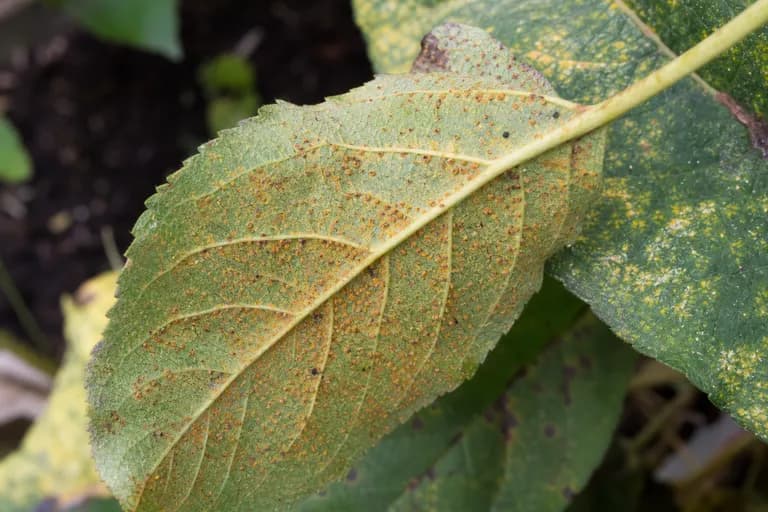
Rust
DiseaseOrange-brown pustules on leaves, primarily appearing in warm, humid conditions. Leaves may yellow and die back prematurely in severe cases.
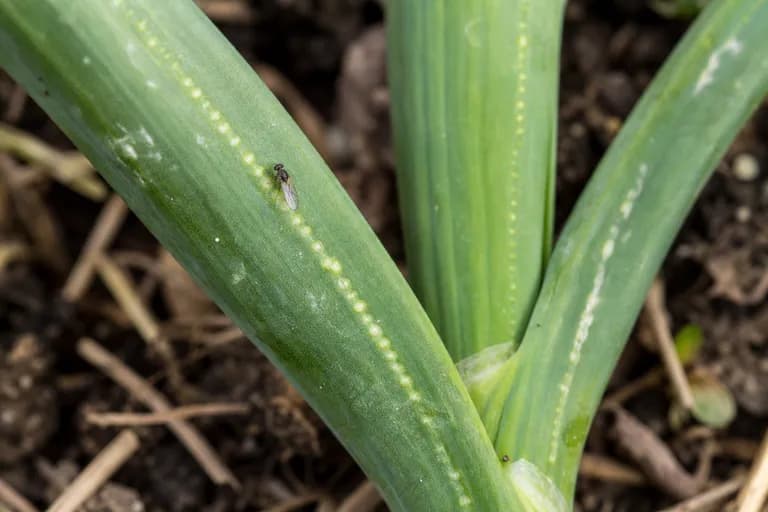
Allium Leaf Miner
PestLines of white puncture marks on leaves where adult flies have fed. Larvae mine through leaves and into stalks, causing distortion and secondary rot.
Troubleshooting Common Problems
The most common issue with tree onions is their tendency to spread aggressively through walking bulbils that root wherever they fall. Contain the colony by harvesting bulbils before they drop or by planting in a bordered bed. Tall stalks may topple before bulbils are ready, especially in windy locations. Support with stakes or grow near a fence. Overcrowded colonies produce smaller bulbils and thinner stalks. Divide every three to four years for best production. First-year plants produce only greens, which sometimes disappoints impatient gardeners. Strong flavor of bulbils can be overpowering for some palates.
Growing Tips
- Plant in autumn rather than spring for the strongest results. Fall-planted bulbils develop extensive root systems during the cool months and emerge in spring with far more vigor than spring-planted ones, often producing harvestable greens and top-sets in their very first full season.
- Give tree onions a permanent home in the garden. As perennials, they do not belong in annual vegetable rotations. Plant them in a dedicated perennial bed, along a fence line, or at the edge of an herb garden where they can remain undisturbed for years.
- Control the walking habit to prevent garden takeover. Tree onions spread aggressively by toppling and rooting. Harvest bulbils before stalks bend to the ground, or place a physical barrier (edging, raised bed walls) around the patch to contain the colony.
- Divide clumps every 3-4 years to maintain vigor. Overcrowded clumps produce smaller greens, smaller bulbils, and less overall yield. Lift the entire clump in early autumn, separate the divisions, replant the best ones at proper spacing, and eat or share the rest.
- Harvest greens throughout the season but never take more than one-third of any plant's foliage at once. The leaves are the plant's energy factory — over-harvesting weakens the underground bulb and reduces bulbil production.
- Well-drained soil is essential. Tree onions tolerate poor soil, drought, and extreme cold, but they will not tolerate waterlogged ground. In heavy clay soils, plant in raised beds or amend heavily with compost and coarse sand to improve drainage.
- Mulch in winter and pull mulch back in spring. A 5-8 cm layer of straw or shredded leaves protects roots during freeze-thaw cycles, but must be drawn back in late winter so emerging shoots are not smothered.
- Save your largest, healthiest bulbils for replanting and eat the smaller ones. This simple selection pressure over several years gradually improves the size and vigor of your colony — a form of low-effort plant breeding that homesteaders have practiced for centuries.
Grow your best Tree Onion yet — and everything around it.
Start a free plan today. Lay out your beds, drop in your Tree Onion, and let PlotMyGarden handle the timing, spacing, companions and reminders from seed to harvest basket.
Pick your Tree Onion
Egyptian Walking Onion
The most common tree onion variety, producing vigorous top-set clusters that reliably walk across the garden. Extremely cold-hardy.
Catawissa
A multi-tiered variety that can produce two or three levels of bulbils on a single stalk, creating the classic tree-like appearance that gives the group its name.
McCullar
A particularly productive tree onion selection with large, flavorful bulbils and vigorous underground bulb formation. Hardy to zone 3.
Moritz
A German heirloom tree onion known for producing uniform, well-sized topset bulbils with strong flavor and good keeping quality.
Tree onions are the ultimate value crop because they never need replanting. A one-time investment of $5-10 for a starter batch of bulbils creates a self-perpetuating colony that produces fresh onion greens, shallot-like base bulbs, and pearl-onion-sized bulbils indefinitely. Pearl onions sell for $3-5 per pound, fresh chives and scallions cost $2-3 per bunch, and shallots run $4-8 per pound — a single established tree onion patch replaces all three. Over a 10-year lifespan (and they will last far longer than that), the return on a $5 investment easily exceeds $200 in equivalent purchased alliums.
Quick recipes
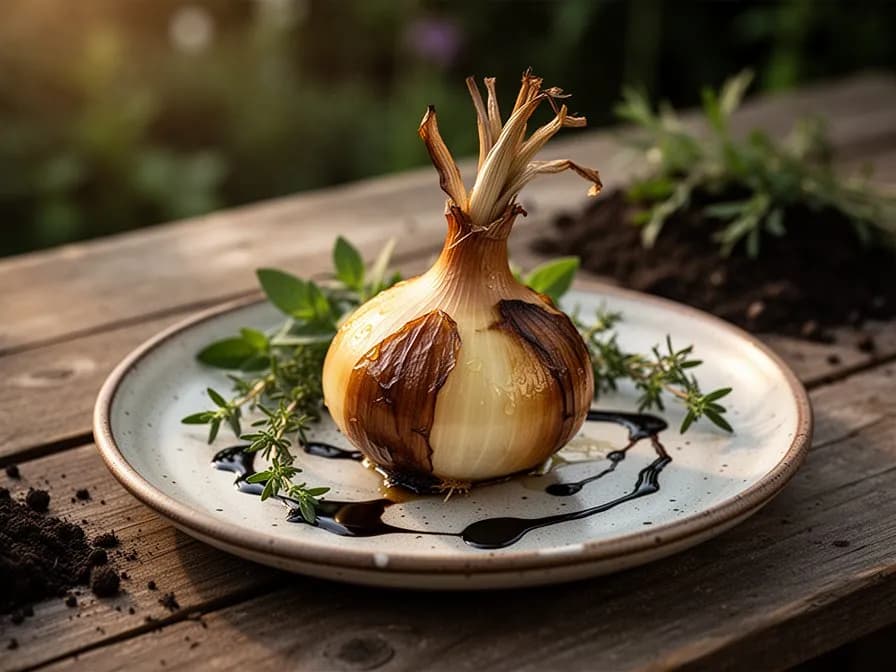
Pickled Tree Onion Bulbils
20 minTiny tree onion bulbils pickled in a tangy white wine vinegar brine with peppercorns, bay leaves, and thyme. These pearl-onion-sized pickles deliver an intense, sweet-sharp onion bite that is perfect on charcuterie boards, in salads, or alongside grilled meats.
9 ingredientsTree Onion and Potato Soup
35 minA comforting, creamy soup using both the base bulbs and green tops of tree onions. The bulbs are sweated until soft and sweet, simmered with potatoes until tender, then blended smooth and finished with a scatter of chopped green tops for fresh onion flavor.
7 ingredientsStir-Fried Tree Onion Greens and Bulbils with Ginger
15 minA quick, intensely flavored side dish where halved bulbils are seared until golden then tossed with sliced green tops, fresh ginger, and a splash of soy sauce. The combination of caramelized and fresh onion flavors is outstanding over steamed rice.
8 ingredientsCulinary Uses
Tree onions offer three distinct culinary ingredients from one plant. Use the green stalks as you would scallions, sliced into soups, salads, and stir-fries. The aerial bulbils pack the most intense flavor and are excellent pickled, roasted whole, or minced as a pungent seasoning. Underground bulbs substitute for regular onions in cooked dishes. The small bulbils are perfect for threading onto skewers for grilling. Mince bulbils into compound butter for a powerful onion-flavored spread. The hollow green stalks can be stuffed with soft cheese for an unusual appetizer.
What's inside
Health Benefits
- Rich in quercetin, one of the most potent dietary flavonoid antioxidants, which research has linked to reduced inflammation, lower blood pressure, and antihistamine effects that may help manage seasonal allergies.
- Contains organosulfur compounds, particularly allicin and its derivatives, that form when onion tissue is cut or crushed — these compounds have been studied for cardiovascular benefits including improved cholesterol ratios and reduced platelet aggregation.
- The green tops provide significantly more vitamin A, vitamin C, and vitamin K than the bulbs alone, making the whole-plant harvest nutritionally superior to using bulbs only.
- Provides prebiotic fructo-oligosaccharides (FOS) and inulin-type fibers that selectively feed beneficial Bifidobacterium and Lactobacillus species in the gut, supporting digestive health and immune function.
- Allium vegetables including tree onions have been associated in epidemiological studies with reduced risk of several cancers, particularly gastric and colorectal cancers, likely due to the combined effects of organosulfur compounds and flavonoid antioxidants.
- Low in calories yet intensely flavored, tree onions allow cooks to add rich savory depth to dishes while contributing minimal calories — supporting healthy eating patterns and weight management.
Where Tree Onion comes from
The tree onion (Allium x proliferum) is a naturally occurring hybrid believed to have arisen from a cross between the common onion (Allium cepa) and the Welsh onion or Japanese bunching onion (Allium fistulosum). The exact time and place of this hybridization are lost to history, but the plant has been cultivated in Europe for centuries, with written records of top-setting onions appearing in European herbals and garden manuals dating back to at least the 17th century. The hybrid nature of the tree onion gives it a unique combination of traits: the ability to form a proper underground bulb from its A. cepa parentage, and the extreme cold hardiness, perennial habit, and vigorous green growth from its A. fistulosum parentage.
Tree onions were widely grown in European cottage gardens and were brought to North America by early colonists, where they became a staple of homestead gardens across the northern United States and Canada. Their ability to survive brutal winters without replanting, combined with the ease of propagation through top-set bulbils, made them invaluable on isolated farms where purchasing new seed each year was impractical or impossible. They spread along pioneer migration routes and became especially common in Appalachian communities, the upper Midwest, and rural Canada, often passed between neighbors and across generations as living heirlooms.
Today, tree onions remain a beloved perennial vegetable among permaculture practitioners, homesteaders, and gardeners interested in self-sustaining food systems. They are rarely found in commercial agriculture or grocery stores because the bulbs are small and irregular compared to standard onions. Instead, they persist primarily in home gardens, seed exchanges, and specialty nurseries. Interest in tree onions has surged in recent decades as the permaculture movement embraces perennial food plants that produce year after year without replanting, and as gardeners in cold climates seek the earliest possible spring harvests.
Tree Onion: did you know?
Fascinating facts about Tree Onion
Tree onions are also called 'walking onions' because they literally walk across the garden — the top-set bulbils weigh down the stalk until it touches the ground, rooting a new plant 30-90 cm from the parent. Over several years, a colony can traverse an entire garden bed.
Tree Onion questions, answered
When should I plant Tree Onion?
What are good companion plants for Tree Onion?
What hardiness zones can Tree Onion grow in?
How much sun does Tree Onion need?
How far apart should I space Tree Onion?
What pests and diseases affect Tree Onion?
How do I store Tree Onion after harvest?
What are the best Tree Onion varieties to grow?
What soil does Tree Onion need?
What is the difference between a tree onion and a walking onion?
Can I eat tree onion bulbils raw or do they need to be cooked?
How do I peel the tiny tree onion bulbils without losing my mind?
Will tree onions survive in very cold climates?
How long does it take for a tree onion colony to become fully productive?
Do tree onions attract pollinators or beneficial insects?
You just read the theory. Now grow it on autopilot.
Everything that makes Tree Onion fiddly — the timing, the spacing, the companions, the harvest window — is exactly what PlotMyGarden handles for you, for every plant in your garden.
A plan that knows your weather
Set your location once. Get sow, feed and harvest dates built around your real last-frost date and live forecast — no more guessing from a generic seed packet.
From the “When to plant” sectionDrag-and-drop bed planner
Design beds on a grid. Every plant snaps to its proper spacing, and you can see your whole season laid out before you spend a cent on seed.
From the “Growing guide” sectionCompanion conflicts, caught early
200+ good-and-bad pairings checked live as you plant — so a season-wrecking mistake never makes it into the ground.
From the “Companions” sectionReminders you'll actually act on
“Water the beans.” “Pick today before it turns.” Timely, specific, and tied to the plants you're really growing.
From the “Harvest” sectionSuccession, scheduled
Want a harvest for six weeks, not six days? It spaces your sowings automatically and reminds you when each new block is due.
From the “When to plant” sectionA record that gets smarter
Every harvest you log teaches it your garden. Next year's plan starts from what actually worked in your soil, not a textbook's.
From the “Overview” sectionPlant these alongside Tree Onion
More Alliums
Keep Tree Onion away from these
Grow your best Tree Onion yet — and everything around it.
Start a free plan today. Lay out your beds, drop in your Tree Onion, and let PlotMyGarden handle the timing, spacing, companions and reminders from seed to harvest basket.