Batata Japonesa
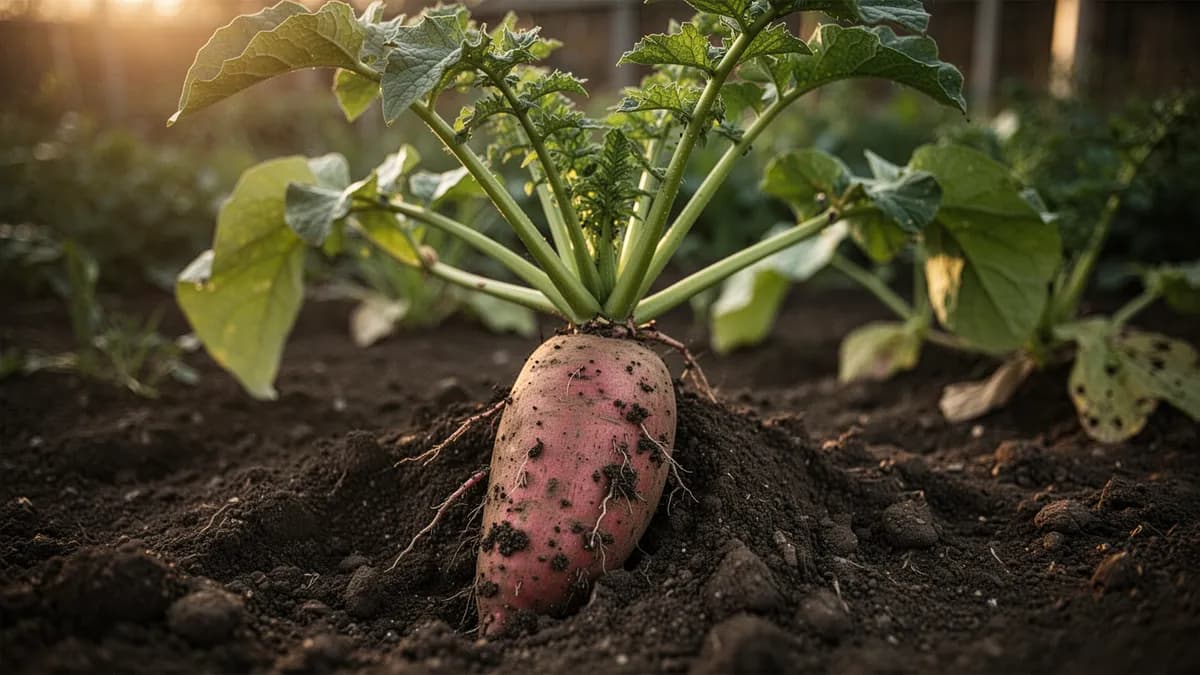
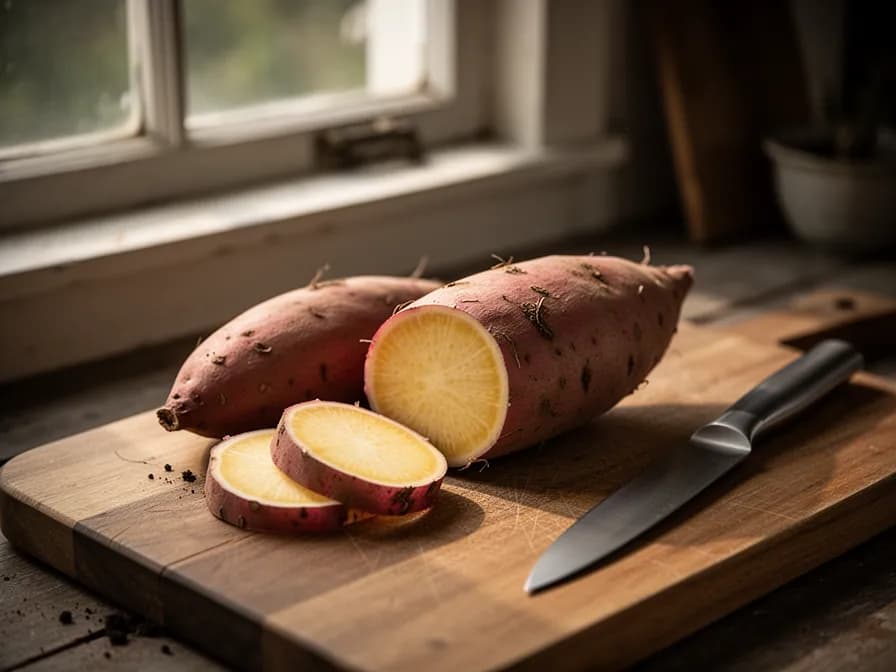
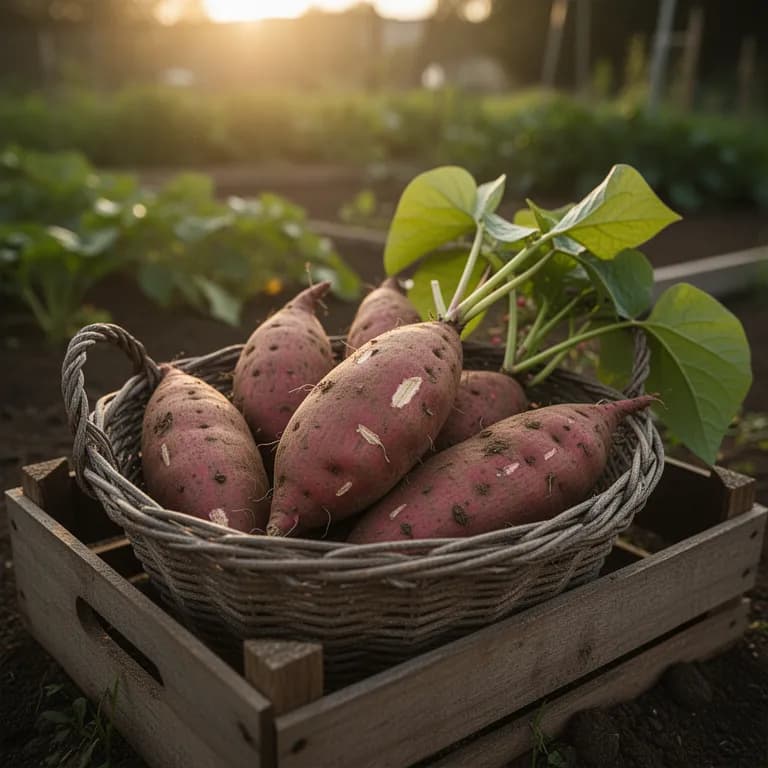
La batata japonesa (Ipomoea batatas) se distingue por su piel de color púrpura-rojizo y su pulpa blanca cremosa con una textura más seca y harinosa que las variedades anaranjadas.





En esta páginaResumen
Conoce Batata Japonesa
La batata japonesa (Ipomoea batatas) se distingue por su piel de color púrpura-rojizo y su pulpa blanca cremosa con una textura más seca y harinosa que las variedades anaranjadas. Muy popular en la cocina asiática, ofrece un sabor dulce concentrado, especialmente cuando se asa lentamente, y es rica en fibra y potasio.
Cuándo plantar Batata Japonesa
Las batatas no se cultivan a partir de semilla sino de esquejes vegetativos (slips). Para producir slips, coloque una batata sana parcialmente sumergida en agua o en sustrato húmedo a 25-30 °C. En 4-6 semanas brotarán tallos que se separan cuando alcanzan 15-20 cm con raíces propias. Endurezca los esquejes durante una semana antes del trasplante definitivo.
Tu año de Batata Japonesa
Ajustado a Zona 7 · temporada típica · la helada se va hacia el 2 abr y vuelve hacia el 1 nov
Planta Batata Japonesa May – Jun y cosecha Sep – Nov. Consulta los métodos de plantación y elige tu clima para adaptar los periodos.
Cómo cultivar Batata Japonesa
Inicie los esquejes (slips) a partir de batatas sanas colocadas parcialmente en agua o sustrato húmedo en un lugar cálido (25-30 °C) unas 6-8 semanas antes de la fecha de trasplante. Cuando los brotes alcancen 15-20 cm y desarrollen raíces, sepárelos cuidadosamente y plántelos en el huerto una vez que el suelo esté bien caliente y no haya riesgo de heladas.
Plante los esquejes en caballones o montículos elevados de 20-25 cm de altura, espaciados 30-40 cm entre plantas y 90-100 cm entre hileras. Los montículos mejoran el drenaje y calientan el suelo más rápidamente. Cubra con acolchado plástico negro para mantener el calor del suelo, especialmente en climas templados.
Las batatas japonesas necesitan una temporada larga de crecimiento de 100-120 días con calor constante. Riegue regularmente durante el establecimiento, luego reduzca gradualmente ya que un exceso de agua produce raíces acuosas. No fertilice con nitrógeno en exceso pues favorece el follaje a costa de los tubérculos.
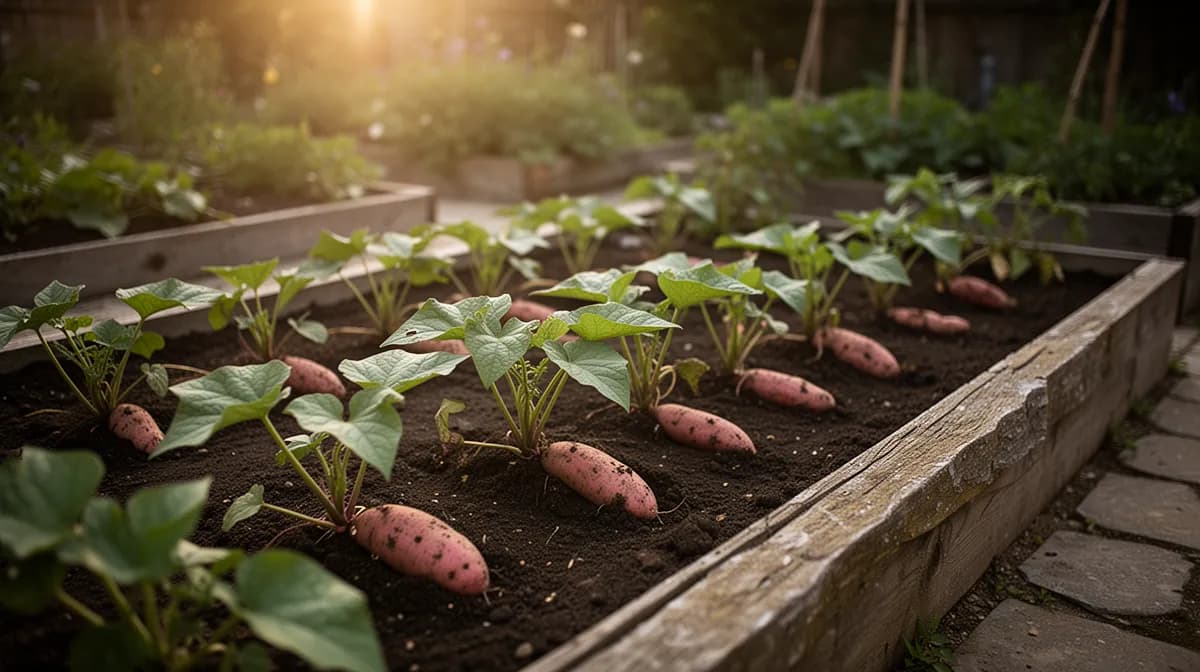
18 plantas caben en un bancal de 120 × 240 cm
Cada Batata Japonesa pide 40 cm de margen. El planificador guarda ese marco por ti — cada planta, cada bancal.
Los mejores vecinos de Batata Japonesa
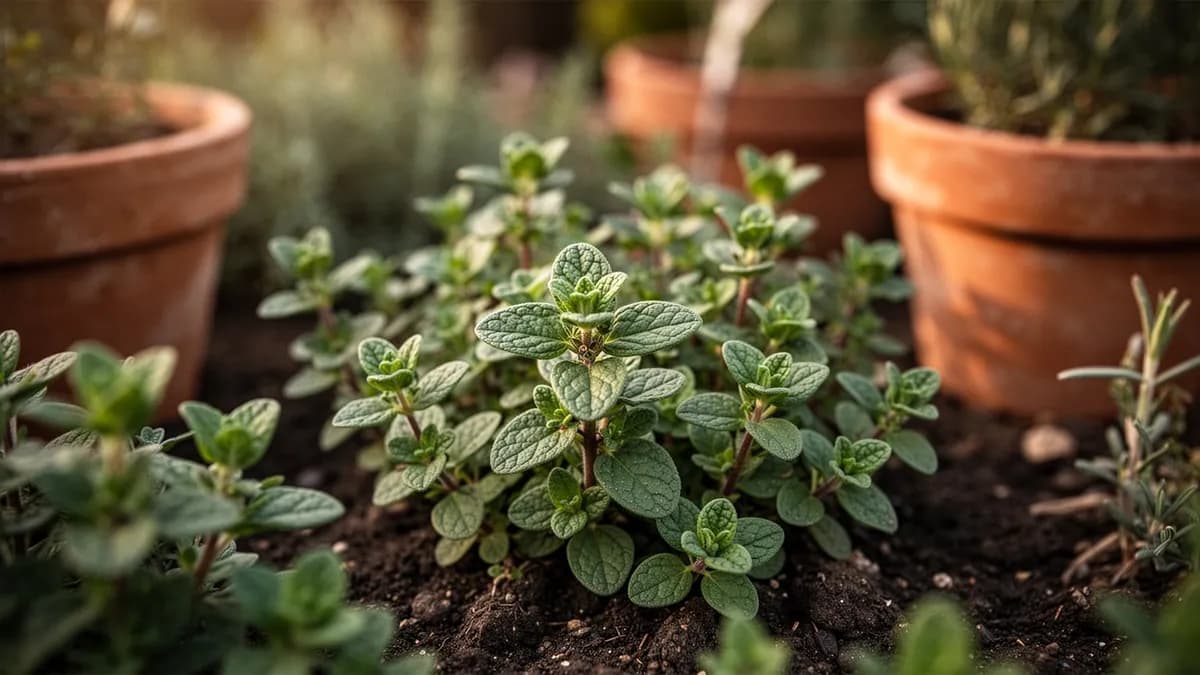
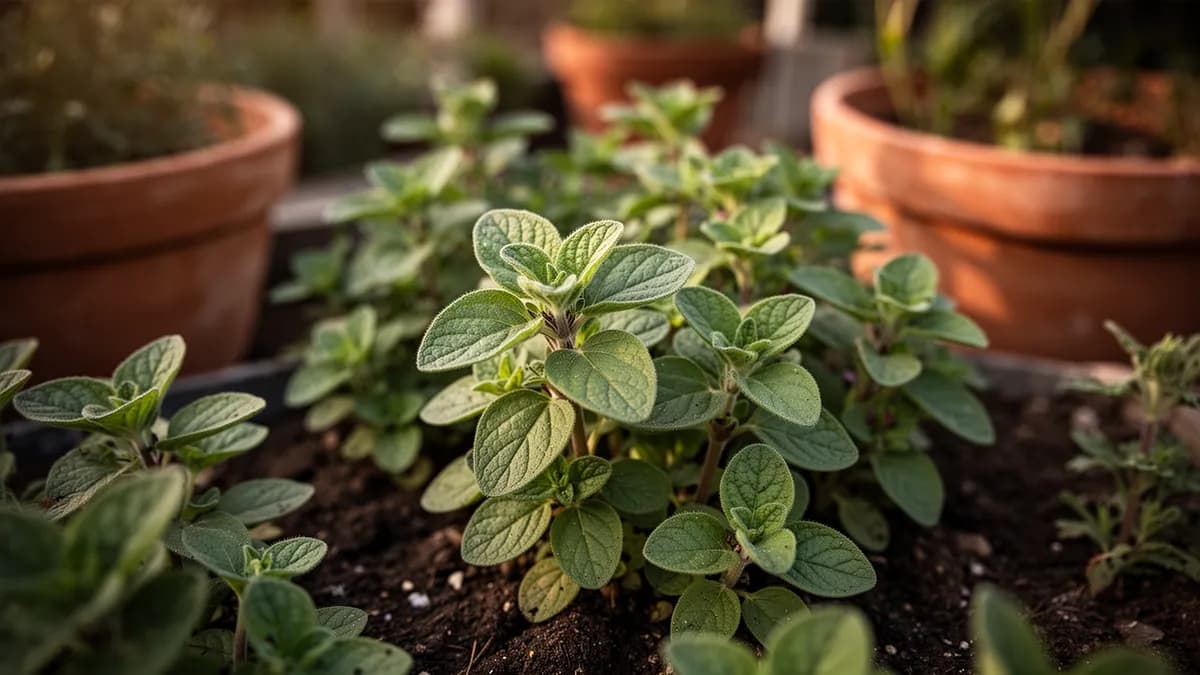
Se beneficia de la compañía de frijoles que fijan nitrógeno, y de hierbas aromáticas como orégano y tomillo que repelen plagas. Los tagetes plantados entre las hileras ayudan a controlar nematodos del suelo. Evite cultivar junto a calabazas que compiten agresivamente por espacio.
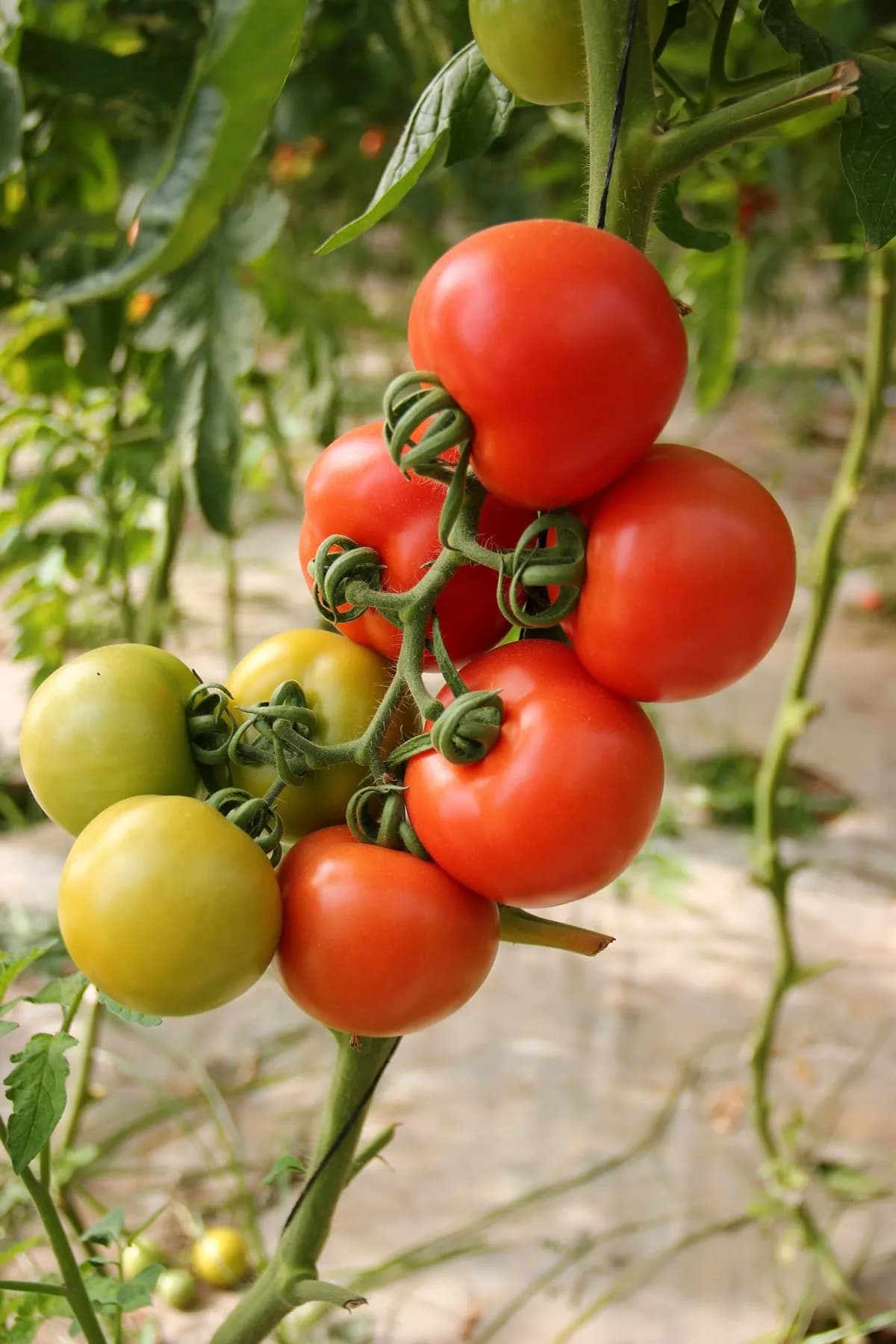
Tomillo va a su lado. Tomate no.
Saber de huerto de siempre, cotejado con la tabla real de Batata Japonesa — prueba cualquier planta que cultives.
Prueba Batata Japonesa en un bancal, aquí mismo
Un bancal real del planificador con Batata Japonesa ya plantado. Toca una planta compañera para colocarla y mira cómo responde la comprobación de vecinos: verde para buenos vecinos, rojo si hay conflicto.


Guías de cultivo relacionadas
Abónalo bien
Prefiere suelos arenosos o franco-arenosos, sueltos y bien drenados con pH entre 5,5 y 6,5. Los suelos pesados producen tubérculos deformes y dificultan la cosecha. Incorpore compost moderadamente antes de plantar y evite el exceso de nitrógeno. Un aporte de potasio (ceniza de madera o sulfato de potasio) mejora el tamaño y sabor de los tubérculos.
Temperatura ideal
Compatibilidad de zonas de rusticidad
De la semilla a la cosecha, etapa por etapa
Producción de brotes
Los brotes se producen suspendiendo una batata japonesa entera en agua o enterrándola hasta la mitad en sustrato de propagación cálido y húmedo a 75-80°F. Los brotes emergen de los ojos en 2-4 semanas y forman tallos frondosos con matices morados y pequeños nudos de raíz en la base. Cada tubérculo puede producir 8-12 brotes.
Trasplante y establecimiento
Los brotes separados se plantan en montículos preparados de suelo cálido (mínimo 65°F), enterrándolos de modo que solo queden por encima de la superficie las 2-3 hojas superiores. Las raíces se establecen rápidamente en un suelo cálido, suelto y arenoso. Las plantas pueden marchitarse durante uno o dos días después del trasplante, pero se recuperan a medida que las raíces se afianzan en el montículo.
Crecimiento de las guías
Las guías rastreras vigorosas se extienden rápidamente y forman una densa alfombra cubresuelos de hojas en forma de corazón. El crecimiento aéreo impulsa el desarrollo de las raíces bajo la superficie del suelo. Las guías pueden extenderse 6-10 pies desde el centro de la planta durante este periodo de crecimiento explosivo en clima caluroso.
Cosecha y curado
Los tubérculos se desentierran con cuidado antes de la primera helada usando una horca de jardín, trabajando desde el exterior del montículo hacia el interior. Las batatas japonesas recién cosechadas son almidonadas y aún no están completamente dulces. Un periodo de curado de 10-14 días a 80-85°F con 85-90% de humedad convierte los almidones en azúcares, cicatriza las heridas de la piel y mejora de forma notable tanto el sabor como la vida de almacenamiento.
Después de la cosecha
Después de la cosecha y el curado, la planta termina su ciclo para la temporada. Las batatas japonesas son cultivos de estación cálida y no pasan el invierno en el jardín.
Mantén el tubérculo en brotación en un lugar cálido con luz brillante e indirecta. Cambia el agua cada 2-3 días si usas el método en agua para evitar el crecimiento bacteriano. Los brotes están listos para separarse cuando tienen 4-6 hojas y raíces visibles de al menos 2 cm de largo.
Cuidar Batata Japonesa mes a mes
Qué hacer cada mes para tu Batata Japonesa
Octubre
Mes actualPrimary harvest month for most zones. Dig before the first frost, as cold soil below 55°F damages tubers. Use a garden fork, working carefully from the outside of mounds inward. Begin curing immediately at 80-85°F with 85-90% humidity.
Ten claro qué hacer en tu huerto, cada mes
Un correo al empezar cada mes: qué sembrar, plantar y hacer ahora mismo — para tu Batata Japonesa y todo lo que crece alrededor. Más un breve curso inicial para esquivar los errores clásicos.
- Qué hacer ahora mismo
- Ajustado a tu temporada
- Curso inicial incluido
Cosechar Batata Japonesa
Coseche las batatas japonesas antes de la primera helada, cuando las hojas empiecen a amarillear, generalmente a los 100-120 días de la plantación. Cave con cuidado usando una horquilla a 30 cm del tallo para no dañar los tubérculos. Evite golpes y cortes que reducen la capacidad de conservación.
se supone que plantas al comenzar el periodo — indica tu fecha real
Cosecha 90-120 días después de plantar, antes de la primera helada.
Almacenamiento y conservación
Cure los tubérculos inmediatamente después de la cosecha en un lugar cálido (28-32 °C) y húmedo (85-90 % de humedad) durante 5-7 días para cicatrizar heridas y mejorar el sabor. Después del curado, almacene en un lugar fresco (13-15 °C), seco y bien ventilado donde se conservarán 4-6 meses. Nunca refrigere por debajo de 10 °C.
Qué falla — y cómo solucionarlo
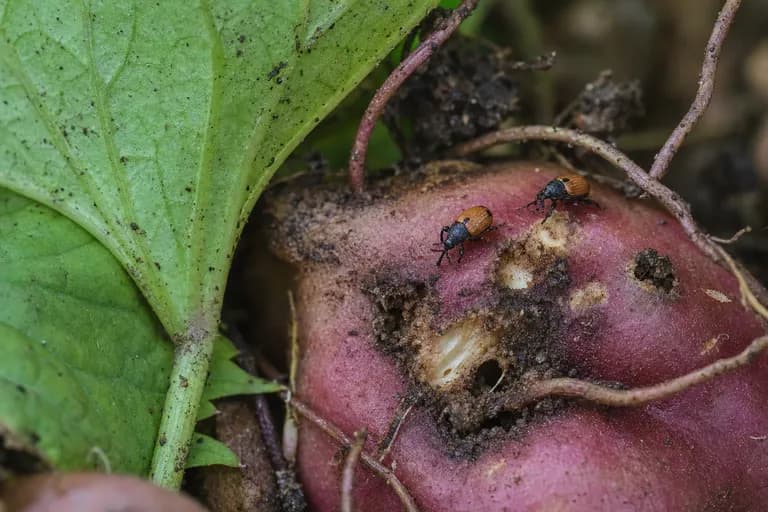
Gorgojo de la batata (Cylas formicarius)
PlagaLas larvas excavan galerías dentro de los tubérculos produciendo un olor y sabor desagradable. Los adultos son pequeños escarabajos alargados azul-rojizos que se alimentan de tallos y hojas.
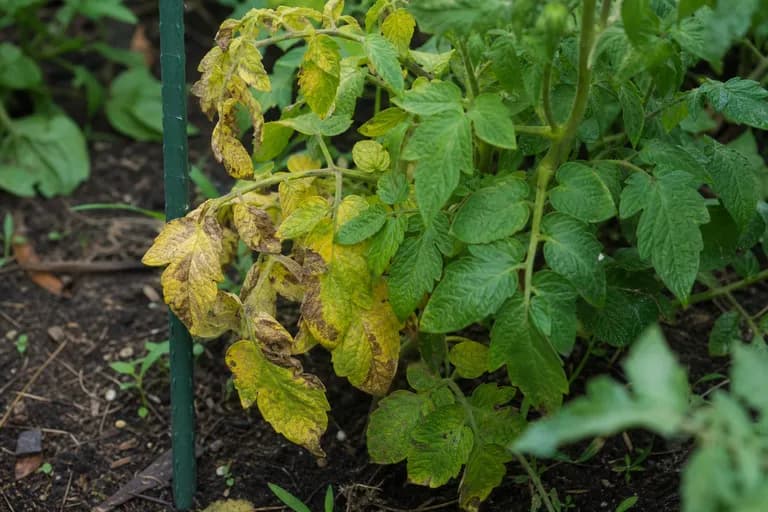
Pudrición negra (Ceratocystis fimbriata)
EnfermedadLesiones oscuras y hundidas en los tubérculos que se extienden internamente formando áreas negras y endurecidas. Los tubérculos afectados tienen un sabor amargo e incomible.
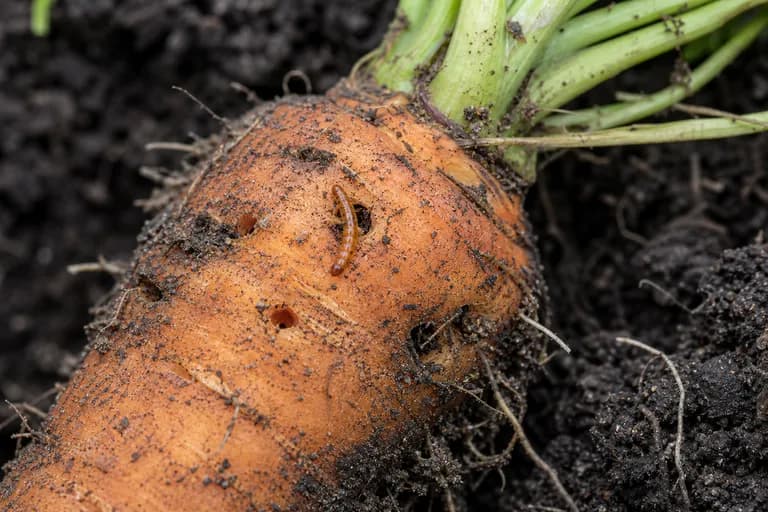
Nematodo del nudo (Meloidogyne spp.)
PlagaAgallas o nudos en las raíces y tubérculos que deforman la superficie. Las plantas muestran crecimiento reducido y marchitamiento en días calurosos.
Solución de problemas comunes
El principal desafío es la necesidad de una temporada cálida prolongada de al menos 100 días, lo que limita su cultivo en climas fríos o de verano corto. Los tubérculos expuestos al sol se verdean y desarrollan sabor amargo. Un exceso de riego o suelo pesado produce batatas acuosas y propensas a la pudrición.
Consejos de cultivo
- Start with certified disease-free slips from a reputable nursery for your first year. Sweet potato weevil and Fusarium wilt can be introduced through infected planting material, and once established in your soil, they are extremely difficult to eliminate.
- Build raised mounds or ridges at least 20 cm high for planting. Mounds warm faster in spring, provide the excellent drainage sweet potatoes demand, and make harvest much easier — you can simply pull the mound apart rather than digging blindly.
- Black plastic mulch is transformative in cooler climates. Lay it over mounds 2-3 weeks before planting to raise soil temperature by 5-10°F. This effectively extends your growing season and can make the difference between a good crop and a failed one in shorter-season areas.
- Do not over-water or over-fertilize. Japanese sweet potatoes are adapted to lean conditions. Excessive nitrogen produces enormous vines but small, skinny tubers. Use a low-nitrogen fertilizer like 5-10-10 at planting and resist the urge to feed again during the season.
- Never lift or reposition trailing vines during the growing season. Vines root at nodes where they touch soil, and these secondary roots can develop additional tubers. Disturbing the vines breaks these connections and reduces your overall harvest.
- Harvest before the first frost without exception. Soil temperatures below 13°C (55°F) cause chilling injury that leads to internal browning, off-flavors, and poor storage life. Monitor weather forecasts closely in autumn and dig promptly if frost threatens.
- Curing is not optional — it is essential. Place freshly harvested tubers in a warm (80-85°F), humid (85-90%) location for 10-14 days. This converts starches to sugars, heals skin wounds, and extends storage life from weeks to months. An enclosed porch, bathroom, or greenhouse works well.
- Save your best tubers for next year's slips. Select 2-3 smooth, disease-free, medium-sized tubers and store them separately at 55-60°F. In late winter, use these to start your own slips, making your sweet potato planting essentially free from the second year onward.
Cultiva tu mejor Batata Japonesa — y todo lo que la rodea.
Empieza un plan gratis hoy. Diseña tus bancales, coloca tu Batata Japonesa y deja que PlotMyGarden gestione el momento, el espaciado, las asociaciones y los recordatorios de la semilla a la cesta.
Elige tu Batata Japonesa
Murasaki (Japanese Sweet)
Variedad clásica japonesa con piel rojo-púrpura oscuro y pulpa blanca cremosa. Sabor dulce y textura seca ideal para asar. 100-110 días.
Satsuma-Imo
Cultivar tradicional japonés con piel rojiza y pulpa amarillo claro muy dulce. Textura harinosa y seca cuando se asa. 100-120 días hasta cosecha.
Hannah
Variedad de piel bronceada y pulpa blanca cremosa con buen rendimiento en climas templados. Sabor dulce y suave. 90-100 días.
O'Henry
Mutación de la Beauregard con piel crema y pulpa blanca. Muy dulce y versátil en la cocina. Buena adaptación a diversos climas. 90-100 días.
A bundle of 12 Japanese sweet potato slips costs $10-15, or you can sprout your own from a single grocery-store tuber for free. Each plant produces 1.5-3 kg of tubers, and Japanese sweet potatoes sell for $3-6 per pound at specialty grocery stores and Asian markets. A modest planting of 10-12 plants can yield $60-150 worth of sweet potatoes at retail prices. The savings are especially significant because Japanese varieties command a premium over standard orange types and can be difficult to find fresh outside of specialty markets.
Recetas rápidas
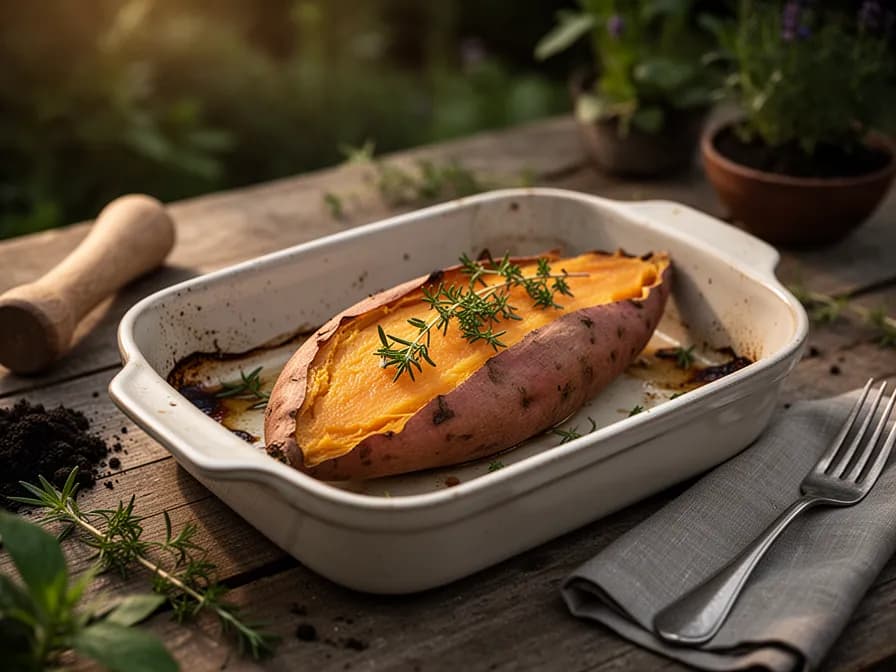
Traditional Yaki-Imo (Roasted Japanese Sweet Potato)
60 minThe beloved Japanese street food — whole sweet potatoes slow-roasted until the flesh caramelizes into an intensely sweet, golden interior. No seasoning needed; the natural sugars do all the work. The aroma alone is irresistible.
3 ingredientesJapanese Sweet Potato Tempura
30 minThinly sliced Japanese sweet potato dipped in a light, crispy tempura batter and fried until golden. The dry, starchy flesh holds up perfectly to frying, creating a delicate contrast of crunchy exterior and creamy interior.
6 ingredientesDaigaku Imo (Candied Sweet Potato)
25 minA classic Japanese confection — cubes of Japanese sweet potato deep-fried until golden, then coated in a glossy caramel glaze and sprinkled with black sesame seeds. Sweet, crunchy, and utterly addictive as a snack or dessert.
7 ingredientesUsos culinarios
La batata japonesa es excepcional asada lentamente a baja temperatura, donde su pulpa se carameliza naturalmente volviéndose dulce y cremosa. En Japón se consume como yakiimo (batata asada callejera) y se utiliza para preparar tempura, daigaku-imo (batata confitada) y wagashi (dulces tradicionales). También excelente al vapor, en puré o en sopas.
Qué contiene
Beneficios para la salud
- Lower glycemic index than orange sweet potatoes, causing a slower and more gradual rise in blood sugar — making Japanese sweet potatoes a better carbohydrate choice for people managing diabetes or insulin sensitivity.
- The purple skin contains anthocyanins, potent antioxidants linked to reduced inflammation, improved cardiovascular health, and enhanced cognitive function in research studies.
- Excellent source of dietary fiber (3.8g per serving), supporting digestive regularity, feeding beneficial gut bacteria, and promoting satiety to help with healthy weight management.
- Rich in potassium (435mg per 150g serving), an essential mineral that helps regulate blood pressure, supports proper muscle contraction, and maintains healthy fluid balance in the body.
- Good source of vitamin B6, which plays a critical role in neurotransmitter synthesis (including serotonin and dopamine), immune function, and red blood cell production.
- Contains resistant starch that increases during cooling after cooking — this prebiotic fiber feeds beneficial gut bacteria and may improve insulin sensitivity when sweet potatoes are eaten cooled or reheated.
De dónde viene Batata Japonesa
The sweet potato (Ipomoea batatas) originated in Central or South America, with archaeological evidence of cultivation in Peru dating back at least 8,000 years. Spanish and Portuguese explorers carried sweet potatoes across the Pacific in the 16th century, and they arrived in Japan around 1605 via the Ryukyu Islands (modern Okinawa), having been introduced to China earlier by Portuguese traders. The tubers thrived in Japan's warm southern regions, particularly in Satsuma province (now Kagoshima Prefecture), which gave the Japanese sweet potato its Japanese name — satsumaimo.
Sweet potatoes became critically important in Japan during periods of famine, particularly the Kyoho famine of the 1730s, when the scholar Aoki Konyo advocated for widespread cultivation as a famine-prevention crop. The tubers grew reliably in poor soils, produced high yields, and stored well — qualities that made them a lifeline for rural populations. By the Edo period (1603-1868), sweet potatoes were a staple food across southern and central Japan, and yaki-imo vendors became a beloved part of urban street culture.
The specific Japanese sweet potato varieties grown today — with their characteristic dark purple skin and dry, chestnut-like white or pale yellow flesh — were selected over centuries of Japanese breeding for flavor qualities very different from the soft, moist orange varieties favored in the West. Japanese breeders prioritized dry texture, nuttiness, and intense caramelization when roasted. Today, Japanese sweet potatoes are cultivated worldwide by gardeners who appreciate their distinctive flavor profile, and they remain a cornerstone of Japanese cuisine — from humble roasted yaki-imo to elegant wagashi confections.
Batata Japonesa: ¿sabías que?
Datos fascinantes sobre Batata Japonesa
Japanese sweet potatoes (satsumaimo) are named after the Satsuma province of southern Japan (modern-day Kagoshima Prefecture), where they were first cultivated after being introduced from China via the Ryukyu Islands in the early 1600s.
Batata Japonesa: preguntas frecuentes
¿Cuándo debo plantar Batata Japonesa?
¿Cuáles son buenas plantas acompañantes para Batata Japonesa?
¿En qué zonas de rusticidad puede crecer Batata Japonesa?
¿Cuánto sol necesita Batata Japonesa?
¿A qué distancia debo espaciar Batata Japonesa?
¿Qué plagas y enfermedades afectan a Batata Japonesa?
¿Cómo almaceno Batata Japonesa después de la cosecha?
¿Cuáles son las mejores variedades de Batata Japonesa para cultivar?
¿Qué suelo necesita Batata Japonesa?
How do I grow my own Japanese sweet potato slips?
Why are my Japanese sweet potatoes bland and starchy instead of sweet?
Can I grow Japanese sweet potatoes in a short-season northern climate?
What is the difference between Japanese sweet potatoes and regular orange sweet potatoes?
How should I store Japanese sweet potatoes after curing?
Acabas de leer la teoría. Ahora cultívala en piloto automático.
Todo lo que hace que Batata Japonesa sea delicado — el momento, el espaciado, las asociaciones, la ventana de cosecha — es justo lo que PlotMyGarden resuelve por ti, para cada planta de tu huerto.
Un plan que conoce tu clima
Indica tu ubicación una vez. Recibe fechas de siembra, abonado y cosecha basadas en tu última helada real y el pronóstico en vivo — sin adivinar con un sobre genérico.
De la sección “Cuándo plantar”Planificador de bancales de arrastrar y soltar
Diseña bancales sobre una cuadrícula. Cada planta encaja con su espaciado correcto y ves toda la temporada antes de gastar un céntimo en semillas.
De la sección “Cultivo”Conflictos de asociación, detectados a tiempo
Más de 200 buenas y malas combinaciones comprobadas en vivo mientras plantas — para que un error que arruine la temporada nunca llegue a la tierra.
De la sección “Asociaciones”Recordatorios que sí vas a seguir
“Riega las judías.” “Recoge hoy antes de que se pase.” Oportunos, concretos y ligados a las plantas que de verdad cultivas.
De la sección “Cosecha”Escalonado, programado
¿Quieres cosechar seis semanas en vez de seis días? Reparte tus siembras automáticamente y te avisa cuando toca el siguiente lote.
De la sección “Cuándo plantar”Un registro que se vuelve más listo
Cada cosecha que registras le enseña tu huerto. El plan del año que viene parte de lo que de verdad funcionó en tu suelo, no en un manual.
De la sección “Resumen”Planta estos junto a Batata Japonesa
Más Hortalizas de raíz
Mantén Batata Japonesa lejos de estos
Cultiva tu mejor Batata Japonesa — y todo lo que la rodea.
Empieza un plan gratis hoy. Diseña tus bancales, coloca tu Batata Japonesa y deja que PlotMyGarden gestione el momento, el espaciado, las asociaciones y los recordatorios de la semilla a la cesta.