Mamey sapote
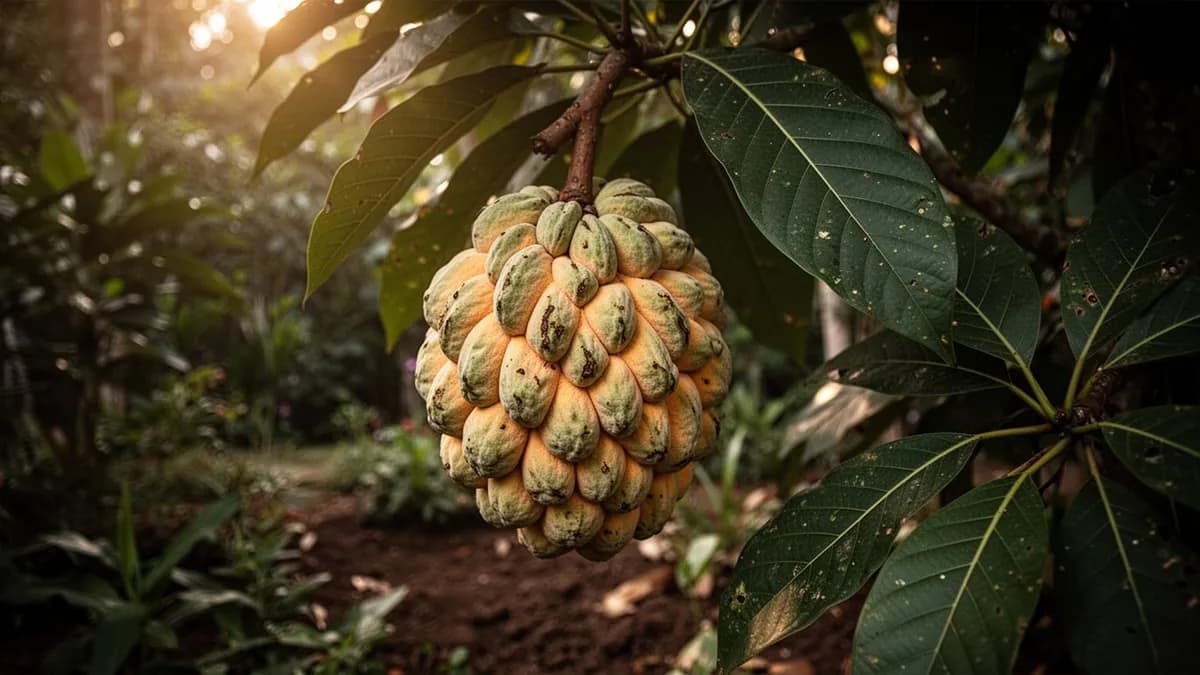
Un gran árbol tropical que produce frutos con forma de balón de fútbol, de piel marrón y rugosa, y pulpa de un vibrante color salmón anaranjado que sabe a batata, pastel de calabaza y almendra combinados.





En esta páginaResumen
Conoce Mamey sapote
Un gran árbol tropical que produce frutos con forma de balón de fútbol, de piel marrón y rugosa, y pulpa de un vibrante color salmón anaranjado que sabe a batata, pastel de calabaza y almendra combinados. El mamey sapote es muy apreciado en la cocina cubana y mexicana para batidos y helado. Los árboles tardan en empezar a producir, pero una vez maduros son increíblemente productivos.
Cuándo plantar Mamey sapote
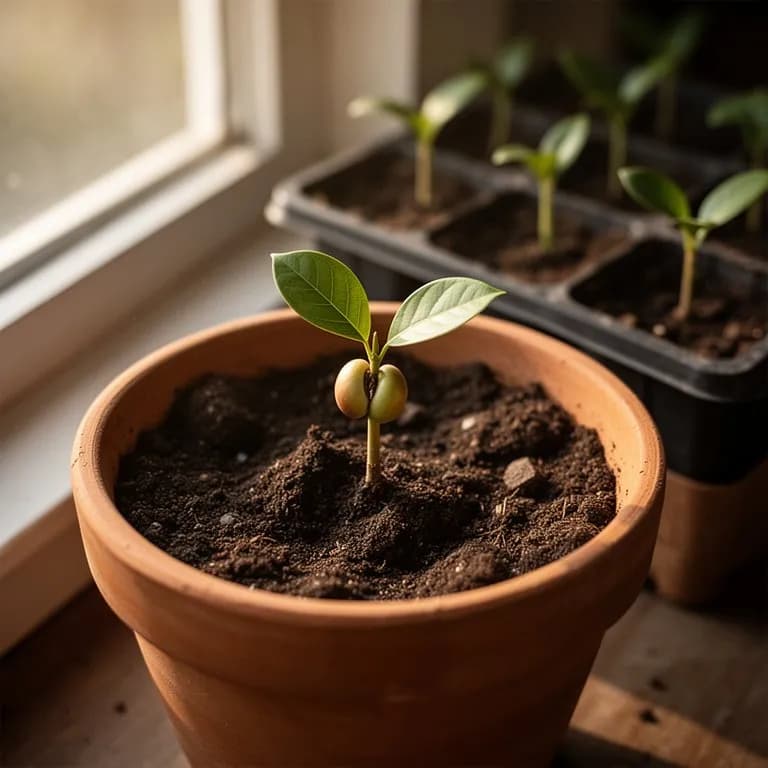
Las semillas de mamey sapote pierden viabilidad con rapidez y deben plantarse en los pocos días posteriores a extraerlas de un fruto maduro. Plante la semilla verticalmente, con el extremo puntiagudo hacia arriba y la cicatriz del hilio hacia abajo, medio enterrada en un recipiente profundo con sustrato húmedo. La germinación tarda de dos a cuatro semanas en condiciones cálidas por encima de 24 grados Celsius. Las plántulas crecen despacio y deben mantenerse en maceta durante el primer año. Para jardines domésticos se prefieren claramente los árboles injertados, ya que los ejemplares de semilla pueden tardar de siete a diez años en fructificar y la calidad es impredecible.
Tu año de Mamey sapote
Ajustado a Zona 7 · temporada típica · la helada se va hacia el 2 abr y vuelve hacia el 1 nov
Planta Mamey sapote Abr – Jun y cosecha Feb – May. Consulta los métodos de plantación y elige tu clima para adaptar los periodos.
Cómo cultivar Mamey sapote
Elija un lugar de plantación con pleno sol, protección contra el viento y suelo profundo y bien drenado. El mamey sapote desarrolla una larga raíz principal y no tolera bien el trasplante una vez establecido, así que elija con cuidado la ubicación definitiva. Abra un hoyo tres veces más ancho que el cepellón y plante a la misma profundidad a la que el árbol crecía en el vivero. En zonas de la zona 10 propensas a heladas, plántelo en el lado sur de un edificio para aprovechar la protección del calor radiante.
Riegue los árboles recién plantados dos o tres veces por semana durante el primer año y luego reduzca a riegos profundos semanales una vez establecidos. El mamey sapote es moderadamente tolerante a la sequía cuando madura, pero produce mejor con humedad constante durante la floración y el desarrollo del fruto. Cubra generosamente con material orgánico, manteniéndolo a varios centímetros del tronco para evitar la podredumbre.
Abone los árboles jóvenes cada dos meses con un fertilizante equilibrado para frutales tropicales que contenga micronutrientes, especialmente hierro, manganeso y zinc. Los árboles maduros se benefician de tres o cuatro aplicaciones al año. Pode solo lo mínimo, retirando únicamente madera muerta o cruzada, ya que la poda intensa retrasa la fructificación. Los árboles injertados suelen empezar a producir en tres a cinco años, mientras que los ejemplares nacidos de semilla pueden tardar de siete a diez años.
Para Mamey sapote un bancal de 120 × 240 cm se queda corto
Cada Mamey sapote pide 600 cm de margen. El planificador guarda ese marco por ti — cada planta, cada bancal.
Guías de cultivo relacionadas
Abónalo bien
El mamey sapote requiere suelo profundo y bien drenado, y no tolera el encharcamiento. Crece en una gama de suelos que va desde arenosos hasta de base calcárea, siempre que el drenaje sea adecuado. Mantenga un pH del suelo entre 5.5 y 7.0. Aplique un fertilizante completo formulado para frutales tropicales de tres a cuatro veces al año, asegurando un aporte adecuado de hierro, zinc y manganeso. Extienda el fertilizante desde el tronco hasta más allá de la línea de goteo y riegue a fondo. Añada pulverizaciones foliares de micronutrientes si el amarilleo entre nervios indica carencia.
Temperatura ideal
Compatibilidad de zonas de rusticidad
De la semilla a la cosecha, etapa por etapa
Germinación de la semilla
Las semillas de mamey sapote son grandes y pierden viabilidad rápidamente, por lo que deben sembrarse frescas de inmediato. Plántalas en vertical en un sustrato húmedo y bien drenado, con la cicatriz del hilio hacia abajo.
Desarrollo de plántula
El árbol joven crece lentamente durante su primer año y desarrolla una raíz pivotante fuerte. Las plántulas son sensibles al frío y al viento y al principio se benefician de luz filtrada o sombra parcial.
Crecimiento vegetativo juvenil
Durante esta larga fase juvenil, el árbol desarrolla un tronco fuerte y una copa, pero aún no florece. Se beneficia de una formación cuidadosa, acolchado y nutrición constante.
Fructificación temprana
Los árboles injertados pueden empezar a producir en esta fase, mientras que las plántulas suelen tardar aún varios años en dar fruto. Las flores aparecen en la madera más vieja y el cuajado inicial suele ser escaso.
Producción madura
Un árbol plenamente establecido puede producir mucho, a menudo durante una larga temporada de fructificación en climas tropicales. Los frutos se desarrollan lentamente y pueden coincidir en el árbol con otras cosechas.
Árbol legado
Los árboles de mamey sapote muy viejos pueden seguir produciendo durante mucho tiempo y suelen responder bien a una poda de rejuvenecimiento. Se conservan mejor protegiendo con cuidado la zona de las raíces y propagando cultivares superiores.
Siembra las semillas inmediatamente después de extraerlas del fruto. Mantén condiciones cálidas y húmedas, y conserva el sustrato uniformemente húmedo sin encharcarlo.
Cuidar Mamey sapote mes a mes
Qué hacer cada mes para tu Mamey sapote
Octubre
Mes actualCompruebe si hay frutos maduros y retire los que ya cedan al tacto. Si aparecen síntomas de carencias, haga correcciones foliares.
Ten claro qué hacer en tu huerto, cada mes
Un correo al empezar cada mes: qué sembrar, plantar y hacer ahora mismo — para tu Mamey sapote y todo lo que crece alrededor. Más un breve curso inicial para esquivar los errores clásicos.
- Qué hacer ahora mismo
- Ajustado a tu temporada
- Curso inicial incluido
Cosechar Mamey sapote
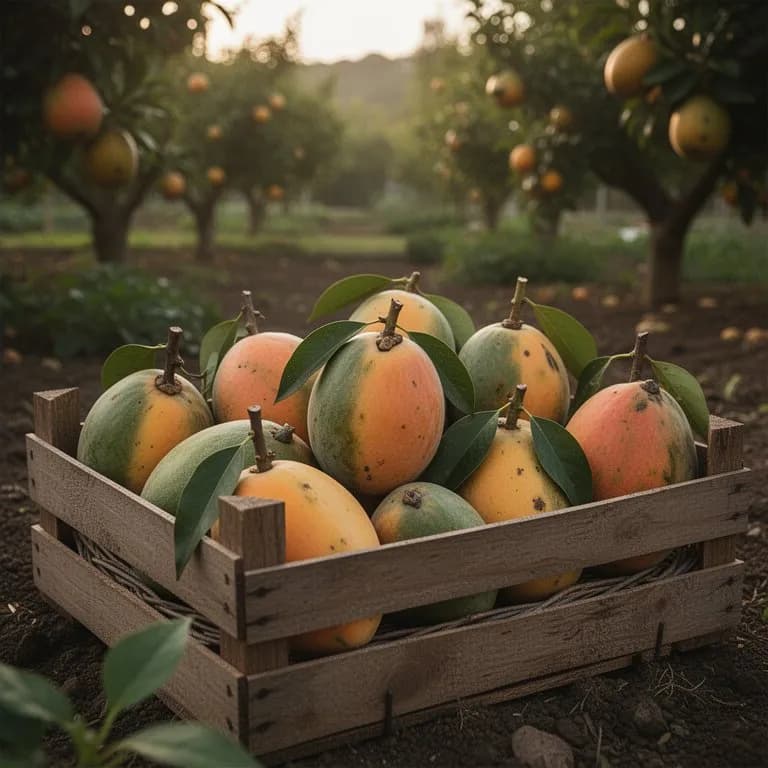
Los frutos de mamey sapote están listos para cosechar cuando al rascar la piel aparece pulpa de color salmón anaranjado por debajo en lugar de verde. La fruta no madura en el árbol y debe recogerse cuando está madura para dejarla ablandar a temperatura ambiente durante cuatro a siete días. Gírela o córtela con cuidado de la rama, dejando un pequeño trozo de tallo unido. La fruta madura cede a una presión suave, como un aguacate. La pulpa que rodea la única semilla grande debe ser uniformemente blanda y de color intenso.
se supone que plantas al comenzar el periodo — indica tu fecha real
Cosecha cuando al raspar la piel aparezca pulpa color salmón anaranjado debajo y no verde
Almacenamiento y conservación
Guarde el mamey sapote inmaduro a temperatura ambiente hasta que se ablande y después refrigérelo hasta una semana. La pulpa congela de forma excelente y es el método tradicional para hacer batidos y helado durante todo el año. Saque la pulpa madura con una cuchara, añada un chorrito de zumo de lima para evitar que se oxide y congélela en recipientes herméticos hasta seis meses. El mamey también puede triturarse y usarse en repostería, o deshidratarse en cuero de fruta con muy buenos resultados.
Qué falla — y cómo solucionarlo
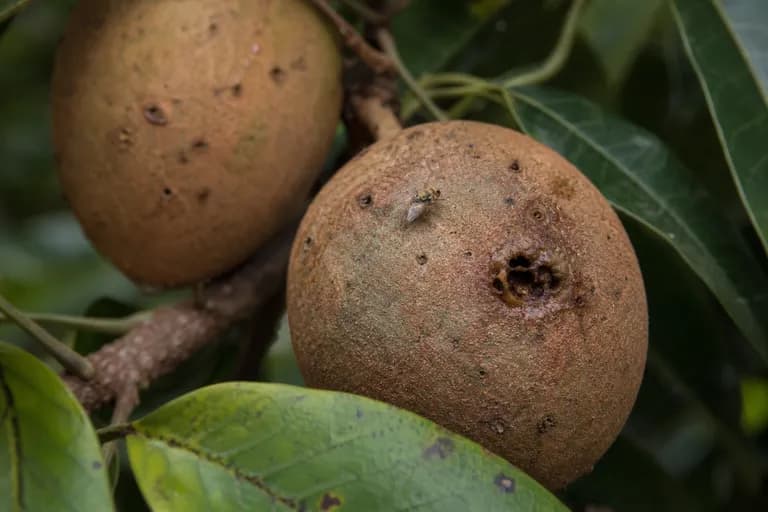
Mosca de la fruta del sapote
PlagaPequeñas marcas de picadura en la piel del fruto; las larvas perforan la pulpa y provocan pudrición interna y caída prematura del fruto.
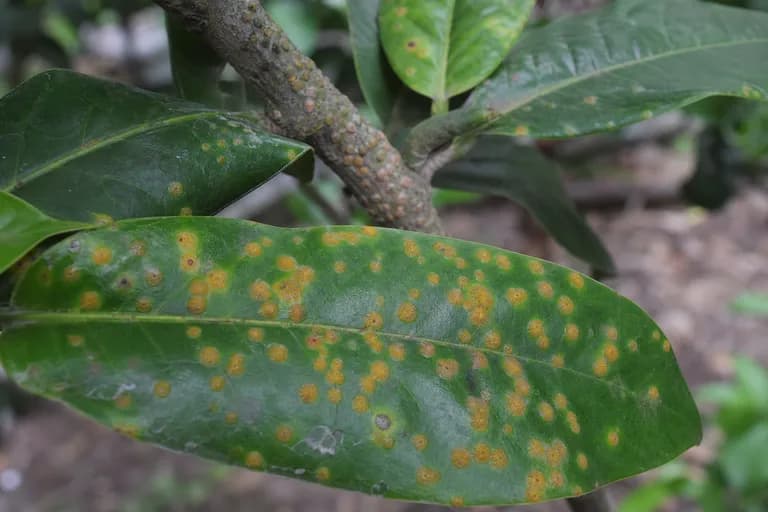
Mancha foliar algal (Cephaleuros)
EnfermedadManchas elevadas, circulares y aterciopeladas de color naranja verdoso en hojas y, a veces, en la corteza; reduce la fotosíntesis en casos graves.
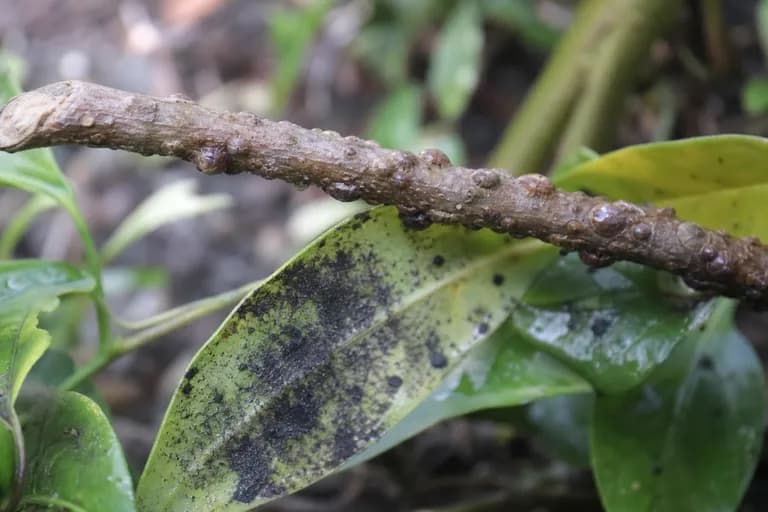
Cochinillas
PlagaPequeños bultos redondos marrones o blancos en tallos y envés de las hojas; hojas amarillentas y residuos pegajosos de melaza que favorecen la fumagina.
Solución de problemas comunes
El crecimiento lento y la entrada tardía en producción frustran a muchos cultivadores, pero la paciencia se recompensa con décadas de cosechas abundantes. La caída de frutos antes de madurar suele deberse a estrés hídrico o mala polinización. Los daños por viento pueden partir ramas cargadas de fruta pesada, así que las cortinas rompevientos son esenciales en lugares expuestos. Las carencias de nutrientes, especialmente de hierro y zinc, causan clorosis internervial en el crecimiento nuevo de los suelos alcalinos. Los daños por frío aparecen como hojas marrones y muerte regresiva de ramas cuando las temperaturas bajan de 0 grados Celsius.
Consejos de cultivo
- Plante siempre árboles injertados para el jardín doméstico. Fructifican varios años antes que los de semilla y ofrecen calidad y tamaño más previsibles.
- Elija un lugar con pleno sol, excelente drenaje y protección frente a vientos fuertes. Los árboles jóvenes se benefician mucho de un tutorado durante los primeros años.
- El mamey sapote desarrolla una raíz principal fuerte y no se trasplanta bien una vez establecido, así que elija la ubicación definitiva con mucho cuidado.
- Riegue con regularidad durante el primer año y reduzca después a riegos profundos semanales. La humedad uniforme mejora mucho el cuajado y el tamaño del fruto.
- Aplique fertilizante tropical completo cada 6 a 8 semanas durante la temporada de crecimiento y complemente con micronutrientes si aparece clorosis.
- Mantenga un acolchado grueso de materia orgánica hasta la línea de goteo, pero alejado del tronco para evitar pudriciones.
- Determine la madurez raspando suavemente una pequeña zona de la piel marrón. Si la pulpa visible es salmón anaranjada, ya está lista para cosechar.
- Deje madurar la fruta cosechada a temperatura ambiente durante varios días antes de refrigerarla o congelarla.
- Pode lo mínimo posible y limite el corte a madera muerta o cruzada, porque una poda fuerte retrasa la producción.
- En zonas subtropicales marginales, busque microclimas cálidos y protegidos, como el lado sur de una pared o edificio, para ayudar al árbol a superar fríos ocasionales.
Cultiva tu mejor Mamey sapote — y todo lo que la rodea.
Empieza un plan gratis hoy. Diseña tus bancales, coloca tu Mamey sapote y deja que PlotMyGarden gestione el momento, el espaciado, las asociaciones y los recordatorios de la semilla a la cesta.
Elige tu Mamey sapote
Pantin (Key West)
El cultivar comercial más plantado en Florida, que produce frutos grandes con pulpa de color rojo anaranjado vivo y cosechas abundantes y fiables.
Magana
Una variedad muy popular con pulpa excepcionalmente dulce y un tiempo relativamente corto desde la flor hasta el fruto maduro, muy apreciada en jardines domésticos.
Pace
Produce frutos muy grandes, de 0.9 a 1.8 kilos de media, con excelente sabor y textura suave, aunque los árboles tardan en empezar a producir.
Tazumal
Una selección centroamericana conocida por su pulpa densa y cremosa y su dulzura intensa, considerada a menudo entre los cultivares de mejor sabor.
El mamey sapote alcanza precios premium en mercados especializados, y una sola fruta suele venderse cara por su tamaño y disponibilidad limitada. Un árbol injertado adulto puede producir cosechas abundantes durante décadas, de modo que el valor acumulado de fruta de calidad obtenida en casa puede ser muy elevado. Aunque requiere paciencia al principio, la longevidad y productividad del árbol hacen que sea una inversión muy rentable para quien tenga el clima adecuado.
Recetas rápidas
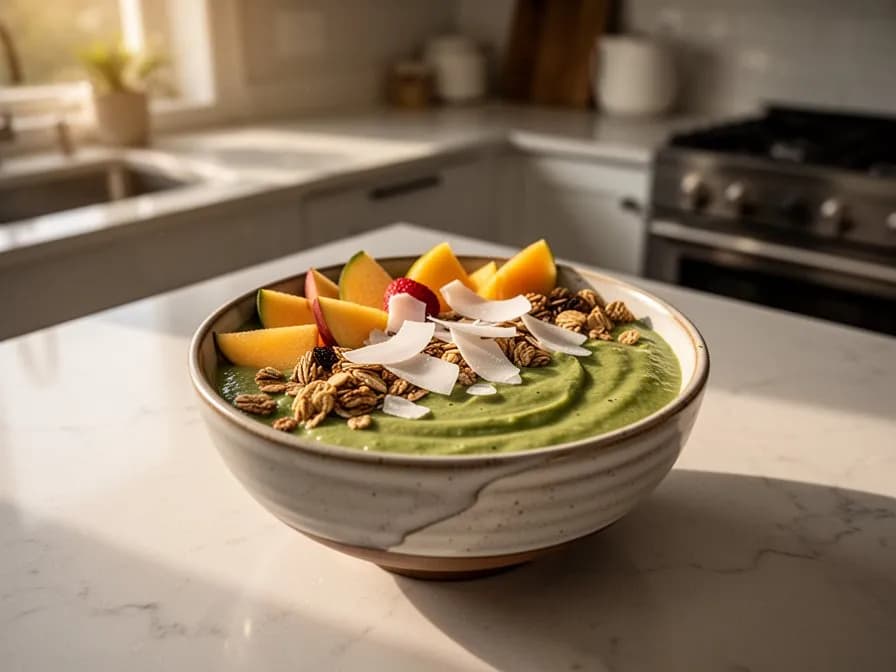
Batido cubano de mamey sapote
10 minutosLa preparación clásica que convirtió al mamey sapote en una fruta icónica en Cuba y en Florida. Cremoso, fragante y profundamente tropical, es uno de los mejores usos de su pulpa madura.
5 ingredientesFlan de mamey sapote
25 minutos de preparación, más el tiempo de horneadoUn flan sedoso y aromático en el que la pulpa de mamey aporta un color precioso y un sabor cálido que recuerda a la batata y la almendra.
6 ingredientesMamey sapote frío con lima
5 minutosLa forma más simple de disfrutar la fruta, con un toque cítrico que realza su dulzor y su textura cremosa.
4 ingredientesUsos culinarios
El mamey sapote es el ingrediente estrella de los batidos cubanos, donde se mezcla con leche y azúcar para obtener un rico batido tropical. La pulpa da lugar a un helado, una mousse y un flan excelentes. Puede comerse fresco con un chorrito de lima o incorporarse a batidos, tartas y panes. Su sabor combina de maravilla con canela, vainilla y leche condensada.
Qué contiene
Beneficios para la salud
- La pulpa de mamey sapote es rica en beta-caroteno, que el cuerpo convierte en vitamina A y que favorece la salud ocular, la piel y la función inmunitaria.
- Aporta una cantidad significativa de fibra, útil para la salud digestiva y para mantener una sensación de saciedad más duradera.
- Contiene vitamina C y diversos antioxidantes que ayudan a proteger las células frente al estrés oxidativo.
- Su contenido de potasio favorece el equilibrio de líquidos y contribuye a una función muscular y nerviosa normal.
- Aporta manganeso, cobre y otros minerales que participan en el metabolismo y en la formación de tejidos.
- Su textura cremosa y su dulzor natural la hacen ideal para postres que no necesitan demasiada azúcar añadida.
De dónde viene Mamey sapote
El mamey sapote es un árbol tropical originario de América Central y partes de México y el Caribe, donde ha sido cultivado y apreciado desde hace generaciones. Su fruto, grande y de pulpa salmón anaranjada, se convirtió en una pieza importante de la cocina regional, especialmente en batidos, helados y postres cremosos. Con el tiempo, su cultivo se extendió a otras zonas tropicales, incluida Florida, donde algunos cultivares encontraron un clima adecuado para producir de forma fiable.
A diferencia de otras frutas más comerciales, el mamey sapote sigue siendo en gran medida una fruta de especialidad, muy querida por quienes conocen su sabor único. La selección de cultivares como Pantin, Magana o Pace ayudó a consolidar su presencia en huertos y pequeñas plantaciones. Hoy se le valora por su gran longevidad, su productividad cuando madura y su sabor muy particular, difícil de confundir con el de cualquier otra fruta común.
Mamey sapote: ¿sabías que?
Datos fascinantes sobre Mamey sapote
El mamey sapote es una fruta muy querida en Cuba y México, especialmente en batidos y helados.
Mamey sapote: preguntas frecuentes
¿Cuándo debo plantar Mamey sapote?
¿En qué zonas de rusticidad puede crecer Mamey sapote?
¿Cuánto sol necesita Mamey sapote?
¿A qué distancia debo espaciar Mamey sapote?
¿Qué plagas y enfermedades afectan a Mamey sapote?
¿Cómo almaceno Mamey sapote después de la cosecha?
¿Cuáles son las mejores variedades de Mamey sapote para cultivar?
¿Qué suelo necesita Mamey sapote?
¿Cuánto tarda un mamey sapote en dar fruto?
¿Cómo sé cuándo está listo para cosechar un mamey sapote?
¿Puede cultivarse en macetas?
¿A qué sabe el mamey sapote?
¿Qué variedades son mejores para el jardín doméstico?
¿Qué plagas y enfermedades afectan al mamey sapote?
Acabas de leer la teoría. Ahora cultívala en piloto automático.
Todo lo que hace que Mamey sapote sea delicado — el momento, el espaciado, las asociaciones, la ventana de cosecha — es justo lo que PlotMyGarden resuelve por ti, para cada planta de tu huerto.
Un plan que conoce tu clima
Indica tu ubicación una vez. Recibe fechas de siembra, abonado y cosecha basadas en tu última helada real y el pronóstico en vivo — sin adivinar con un sobre genérico.
De la sección “Cuándo plantar”Planificador de bancales de arrastrar y soltar
Diseña bancales sobre una cuadrícula. Cada planta encaja con su espaciado correcto y ves toda la temporada antes de gastar un céntimo en semillas.
De la sección “Cultivo”Conflictos de asociación, detectados a tiempo
Más de 200 buenas y malas combinaciones comprobadas en vivo mientras plantas — para que un error que arruine la temporada nunca llegue a la tierra.
De la sección “Asociaciones”Recordatorios que sí vas a seguir
“Riega las judías.” “Recoge hoy antes de que se pase.” Oportunos, concretos y ligados a las plantas que de verdad cultivas.
De la sección “Cosecha”Escalonado, programado
¿Quieres cosechar seis semanas en vez de seis días? Reparte tus siembras automáticamente y te avisa cuando toca el siguiente lote.
De la sección “Cuándo plantar”Un registro que se vuelve más listo
Cada cosecha que registras le enseña tu huerto. El plan del año que viene parte de lo que de verdad funcionó en tu suelo, no en un manual.
De la sección “Resumen”Más Frutas tropicales
Cultiva tu mejor Mamey sapote — y todo lo que la rodea.
Empieza un plan gratis hoy. Diseña tus bancales, coloca tu Mamey sapote y deja que PlotMyGarden gestione el momento, el espaciado, las asociaciones y los recordatorios de la semilla a la cesta.