Frambuesa negra
Una zarza vigorosa que produce frutos negros y grandes en cañas arqueadas que pueden volverse invasivas si no se controlan.





En esta páginaResumen
Conoce Frambuesa negra
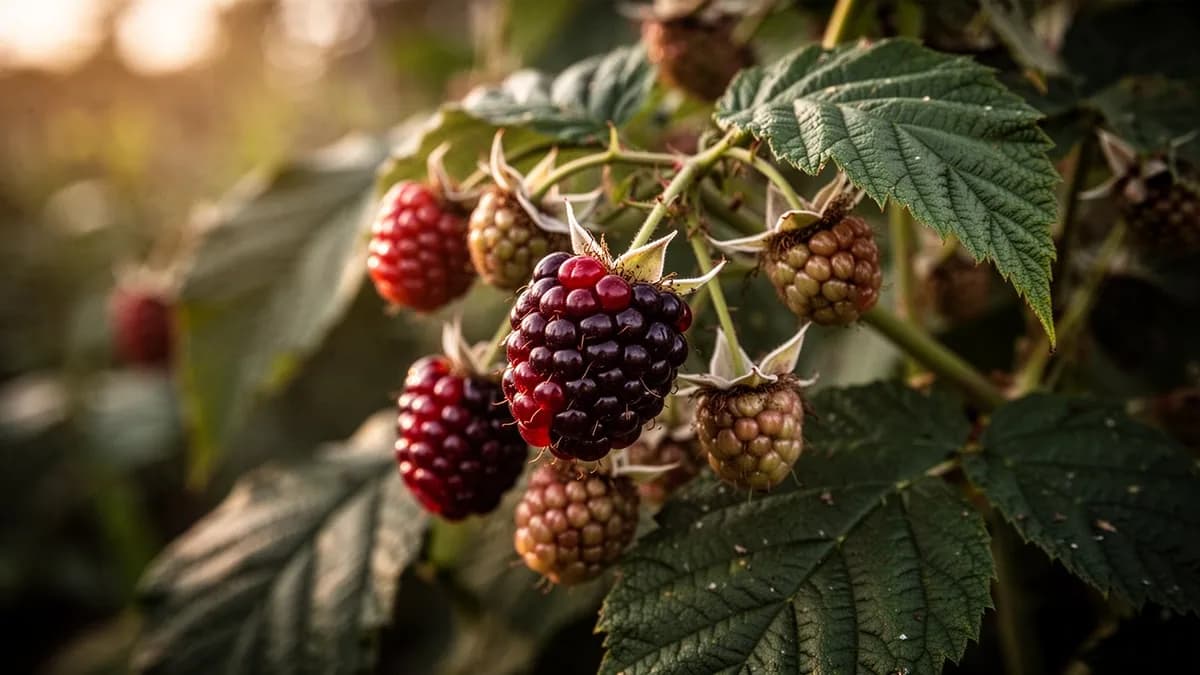
Una zarza vigorosa que produce frutos negros y grandes en cañas arqueadas que pueden volverse invasivas si no se controlan. Proporcione un emparrado resistente para sostener las pesadas cañas arqueadas y pode cada año la madera que ya ha fructificado hasta el suelo después de la cosecha. Existen cultivares sin espinas, mucho más fáciles de manejar al podar y recolectar, sin sacrificar la calidad del fruto. Las bayas están maduras cuando se vuelven completamente negras y se desprenden con facilidad de la planta, ofreciendo su máxima dulzura para comer frescas, hacer mermeladas y hornear.
Cuándo plantar Frambuesa negra
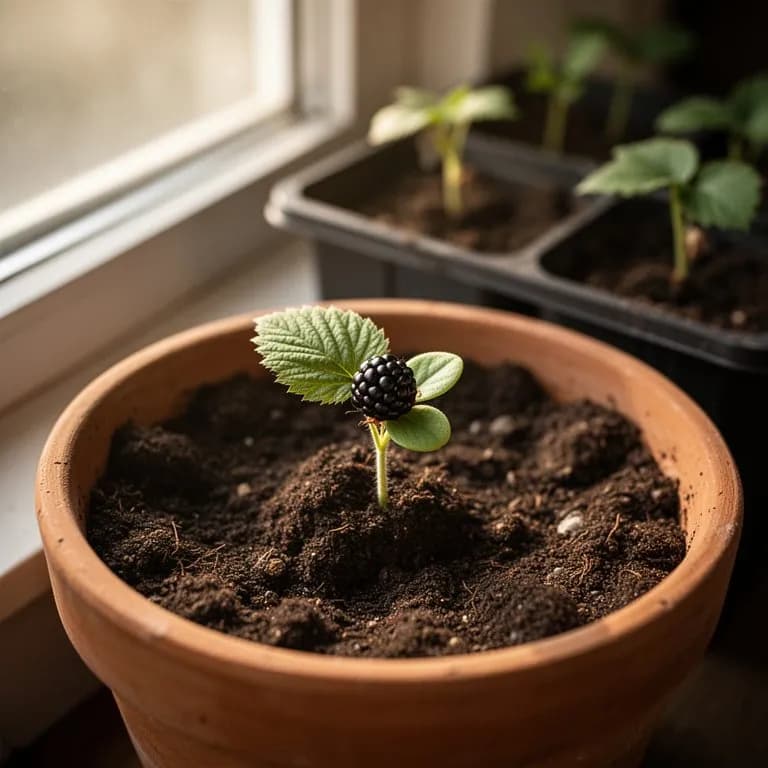
Las frambuesas negras se propagan mejor de forma vegetativa. Las variedades erguidas producen abundantes retoños de raíz, que pueden desenterrarse y trasplantarse a comienzos de primavera. Los tipos rastreros se propagan por acodo terminal: entierre la punta de una primocaña de 5 a 7 cm de profundidad a finales del verano y la planta enraizada estará lista para separarse y trasplantarse la primavera siguiente. Los esquejes de raíz tomados a finales de otoño, cortados en secciones de 7 a 10 cm y plantados horizontalmente en un semillero, brotarán para la primavera. Los esquejes de tallo con hormona de enraizamiento también son eficaces para las variedades sin espinas.
Tu año de Frambuesa negra
Ajustado a Zona 7 · temporada típica · la helada se va hacia el 2 abr y vuelve hacia el 1 nov
Planta Frambuesa negra Mar – Abr y cosecha Jun – Jul. Consulta los métodos de plantación y elige tu clima para adaptar los periodos.
Cómo cultivar Frambuesa negra
Elija un lugar soleado con suelo fértil y bien drenado, y un pH entre 5.5 y 7.0. Las frambuesas negras toleran una gama más amplia de condiciones de suelo que las frambuesas rojas, pero aun así rinden mejor en un terreno franco y rico, enmendado con compost. Instale antes de plantar un sistema de emparrado resistente con postes y dos o tres alambres horizontales, ya que las cañas maduras pueden volverse extremadamente pesadas con el fruto.
Plante frambuesas negras a raíz desnuda o en contenedor a principios de primavera, dejando entre 90 y 120 cm para las variedades erguidas y entre 150 y 240 cm para los tipos rastreros. Coloque las plantas una pulgada más profundas que su nivel de vivero y riegue abundantemente después de plantar. Aplique una capa gruesa de mantillo de paja o virutas de madera para conservar la humedad y suprimir las malas hierbas alrededor de la zona radicular superficial.
En las variedades erguidas, despunte las primocañas a 75–90 cm a mediados del verano para fomentar la ramificación lateral, lo que aumenta la producción del año siguiente. En los tipos rastreros, entrene las nuevas primocañas a lo largo del emparrado a medida que crecen. Después de la cosecha, elimine todas las floricanas agotadas al nivel del suelo y ate las nuevas cañas en su lugar. Fertilice a comienzos de primavera con un abono equilibrado y riegue de forma constante durante el desarrollo del fruto para obtener las bayas más grandes y jugosas.
3 plantas caben en un bancal de 120 × 240 cm
Cada Frambuesa negra pide 75 cm de margen. El planificador guarda ese marco por ti — cada planta, cada bancal.
Los mejores vecinos de Frambuesa negra
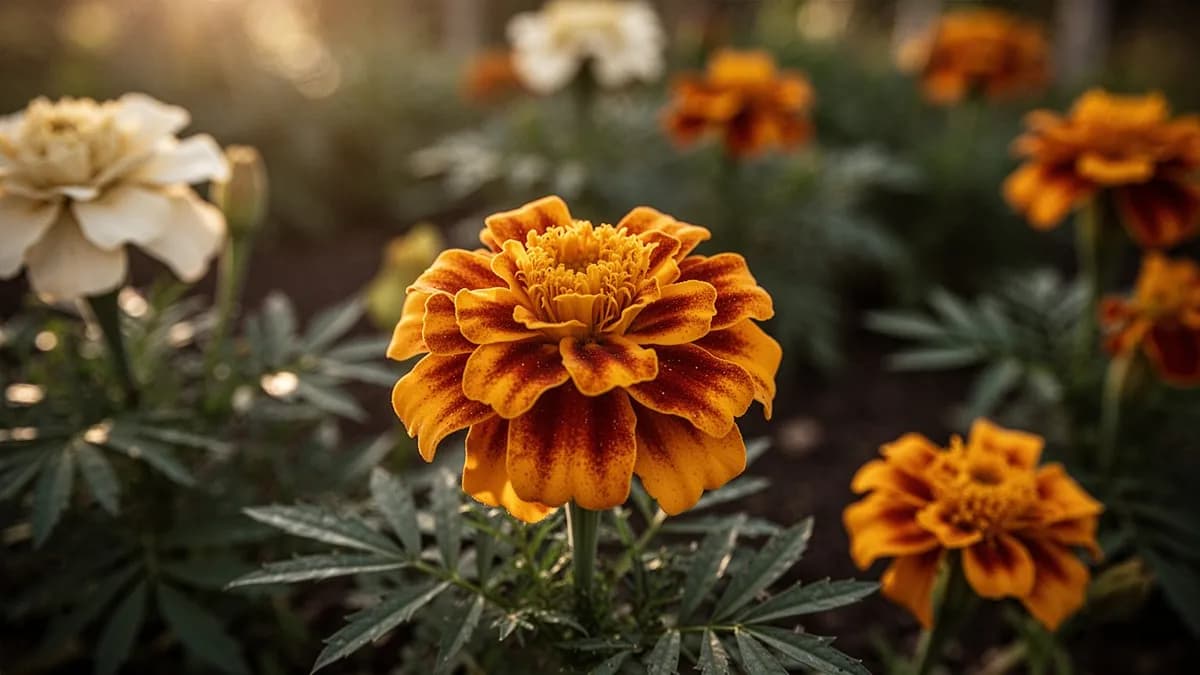
El tomillo y otras hierbas bajas plantadas en la base de las cañas de frambuesa negra actúan como mantillo vivo, suprimen las malas hierbas y atraen insectos depredadores beneficiosos. La borraja atrae polinizadores con sus flores azules y puede mejorar la fructificación. La menta puede ayudar a disuadir a algunos insectos plaga, pero debe mantenerse contenida para evitar que se vuelva invasiva por sí misma. Evite plantar cerca de frambuesas rojas para prevenir la transmisión cruzada de enfermedades víricas y del tizón de las cañas que afectan a ambas especies de zarzas.
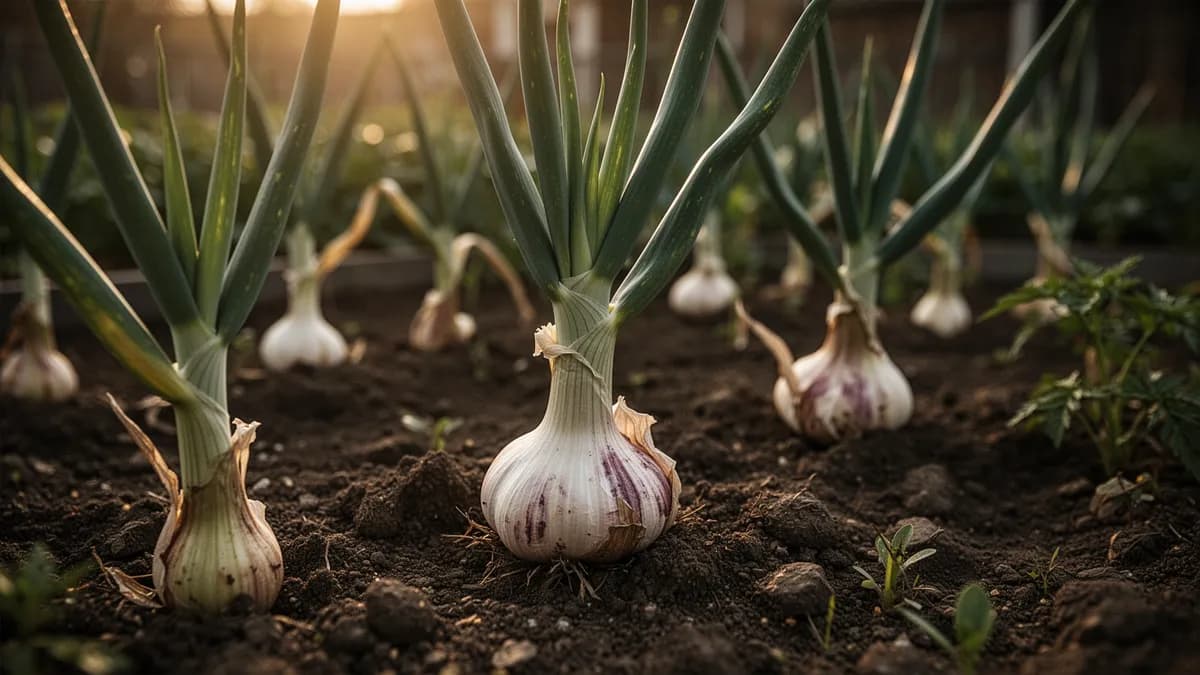
Ajo va a su lado. Zarzamora no.
Saber de huerto de siempre, cotejado con la tabla real de Frambuesa negra — prueba cualquier planta que cultives.
Prueba Frambuesa negra en un bancal, aquí mismo
Un bancal real del planificador con Frambuesa negra ya plantado. Toca una planta compañera para colocarla y mira cómo responde la comprobación de vecinos: verde para buenos vecinos, rojo si hay conflicto.


Guías de cultivo relacionadas
Abónalo bien
Las frambuesas negras crecen bien en una amplia gama de suelos con un pH entre 5.5 y 7.0, pero rinden mejor en un franco fértil y bien drenado, enriquecido con materia orgánica. Aplique a comienzos de primavera un fertilizante equilibrado 10-10-10 cuando empiece el nuevo crecimiento, distribuyéndolo en una franja a lo largo de la hilera. Añada compost o estiércol bien descompuesto a finales de primavera. Evite aportes fuertes de nitrógeno, que promueven un crecimiento vegetativo excesivo y aumentan la susceptibilidad a daños invernales y enfermedades.
Temperatura ideal
Compatibilidad de zonas de rusticidad
De la semilla a la cosecha, etapa por etapa
Plantación en dormancia
Las plantas de frambuesa negra a raíz desnuda se colocan a finales del invierno o comienzos de la primavera, mientras aún están en dormancia. El sistema radicular comienza a establecerse en un suelo fresco y húmedo antes de que aparezca el crecimiento aéreo. La profundidad correcta de plantación es crítica, con la corona a nivel del suelo.
Crecimiento de primocañas
Las cañas del primer año, llamadas primocañas, crecen con vigor desde la corona de la raíz durante la primavera y el verano. Estas cañas son vegetativas y, en la mayoría de las variedades, no producirán fruta hasta el año siguiente. Las primocañas pueden alcanzar entre 1.5 y 3 metros de longitud según el cultivar.
Floración
En su segundo año, las cañas ya maduras, llamadas floricanas, producen racimos de flores blancas a rosa pálido de cinco pétalos a lo largo de las ramas laterales. Cada flor contiene numerosos pistilos, y una polinización adecuada de cada pistilo es necesaria para formar una baya completa y bien conformada. La floración suele durar entre dos y cuatro semanas.
Desarrollo del fruto
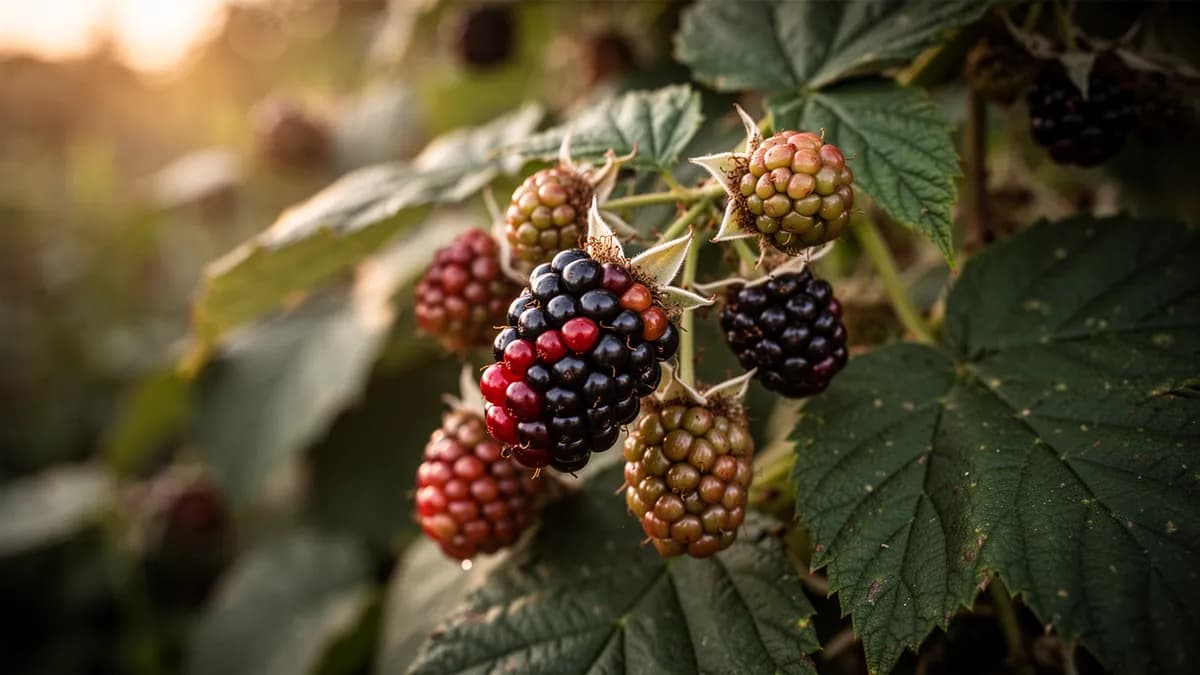
Tras la polinización, los pequeños drupéolos verdes comienzan a engrosar y se forma el fruto agregado. Las bayas pasan por fases verde, roja y negra brillante durante varias semanas. El fruto no está maduro cuando se vuelve negro por primera vez; necesita unos días más para desarrollar toda su dulzura y ablandarse ligeramente.
Periodo de cosecha
Las bayas maduras se cosechan cada dos o tres días durante un periodo de cuatro a seis semanas. El fruto madura de forma desigual dentro de cada racimo, por lo que son necesarias varias pasadas de recolección. Las bayas tienen su mejor sabor cuando se desprenden del receptáculo con el mínimo esfuerzo y presentan un aspecto ligeramente opaco y mate.
Poscosecha y poda
Una vez terminada la fructificación, las floricanas agotadas mueren y deben retirarse. Al mismo tiempo, las nuevas primocañas que crecieron durante la temporada en curso se guían al emparrado para que se conviertan en la madera fructífera del año siguiente. Este ciclo anual de crecimiento, fructificación y eliminación es la base del manejo de la frambuesa negra.
Remoje las raíces desnudas en agua durante una hora antes de plantar. Cave un hoyo lo bastante ancho para extender las raíces de forma natural sin doblarlas. Riegue profundamente después de plantar y aplique 7–10 cm de mantillo alrededor de la base, manteniéndolo a unos centímetros de la corona para evitar pudriciones.
Cuidar Frambuesa negra mes a mes
Qué hacer cada mes para tu Frambuesa negra
Octubre
Mes actualLimpie las hojas caídas y los restos de fruta alrededor de las plantas para reducir enfermedades y plagas invernantes. Compruebe el pH del suelo y enmiéndelo con azufre si es necesario para mantener un rango de 5.5 a 6.5. Aplique una capa gruesa de mantillo para la protección invernal.
Ten claro qué hacer en tu huerto, cada mes
Un correo al empezar cada mes: qué sembrar, plantar y hacer ahora mismo — para tu Frambuesa negra y todo lo que crece alrededor. Más un breve curso inicial para esquivar los errores clásicos.
- Qué hacer ahora mismo
- Ajustado a tu temporada
- Curso inicial incluido
Cosechar Frambuesa negra
Las frambuesas negras están maduras cuando se vuelven completamente negras y pierden su brillo, adquiriendo un aspecto ligeramente mate. A diferencia de las frambuesas rojas, se recogen con el corazón intacto dentro del fruto. Una baya madura debe desprenderse con el mínimo esfuerzo y sentirse algo blanda. Coseche cada dos o tres días durante la temporada alta, preferiblemente por la mañana, una vez que el rocío se haya secado. El sabor es el mejor indicador de madurez, ya que el cambio de color precede en uno o dos días al desarrollo pleno de la dulzura.
se supone que plantas al comenzar el periodo — indica tu fecha real
Cosecha Frambuesa negra a tiempo y la planta sigue produciendo.
Almacenamiento y conservación
Guarde las frambuesas negras sin lavar en una sola capa en el refrigerador durante tres a cinco días. Congelan excepcionalmente bien: extiéndalas sobre una bandeja para congelarlas primero y luego páselas a bolsas herméticas, donde se conservarán hasta diez meses. Las frambuesas negras son excelentes para mermeladas, jaleas, cobblers y vinos. Su alto contenido de pectina ayuda a que las mermeladas cuajen de forma natural. Las frambuesas negras deshidratadas son deliciosas en granola y mezclas de frutos secos, y su zumo aporta un colorante natural muy vivo.
Qué falla — y cómo solucionarlo
Mosca de alas manchadas
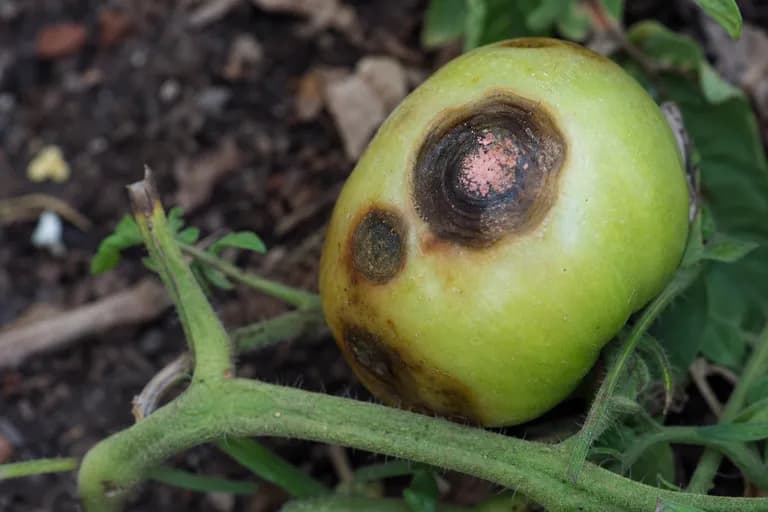
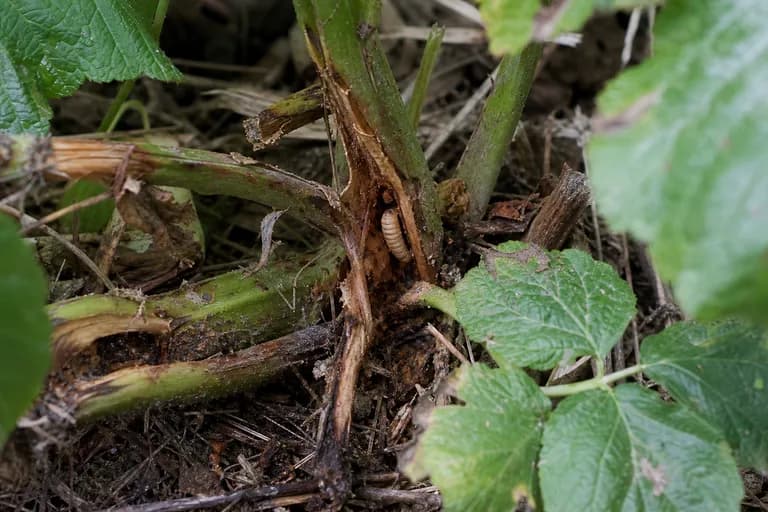
PlagaBayas blandas y con fugas, con diminutas marcas de perforación; pequeñas larvas blancas visibles en el interior del fruto al abrirlo.
Antracnosis
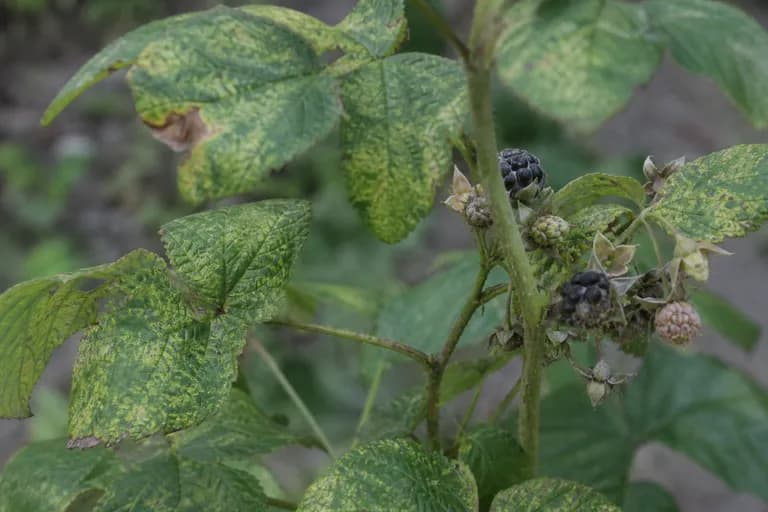
EnfermedadManchas grises con borde púrpura en las cañas, manchas foliares y bayas secas o quebradizas que no maduran de forma uniforme.
Ácaro rojo de la baya
PlagaLos drupéolos individuales de las bayas permanecen rojos y duros mientras el resto de la baya se vuelve negro, creando un aspecto desigual.
Roya anaranjada
EnfermedadMasas de esporas polvorientas de color naranja brillante en el envés de las hojas en primavera; crecimiento nuevo raquítico y delgado que nunca se recupera.
Solución de problemas comunes
La queja más común es la expansión invasiva mediante retoños de raíz, lo que exige retirar con regularidad los brotes no deseados. La doble flor o enfermedad de la roseta provoca racimos florales deformes que no dan fruto y deben podarse. La muerte de cañas en invierno suele deberse a una enduración insuficiente causada por abonados nitrogenados tardíos. La maduración desigual, con drupéolos rojos que permanecen duros, indica infestación por ácaro rojo de la baya. Las variedades rastreras sin soporte de emparrado se convierten en enredos inmanejables.
Consejos de cultivo
- Instale antes de plantar un sistema de emparrado en T de dos alambres, con alambres a 0.9 m y 1.5 m de altura. Guiar las cañas al emparrado mejora la circulación del aire, facilita mucho la cosecha y puede aumentar el rendimiento hasta en un 50 % frente a plantas sin soporte.
- Plante frambuesas negras a pleno sol en un suelo bien drenado y ligeramente ácido, con un pH de 5.5 a 6.5. Evite lugares donde hayan crecido tomates, pimientos, patatas u otras zarzas en los últimos tres años para reducir el riesgo de marchitez por Verticillium.
- Separe las variedades erguidas 0.9–1.2 m en las hileras y las variedades rastreras 1.5–2.4 m. Deje 2.4–3 m entre hileras para una ventilación adecuada, exposición solar y espacio para moverse durante la cosecha y la poda.
- Aplique entre 2.5 y 5 cm de agua por semana durante la temporada de crecimiento, aumentando a 5 cm por semana durante el desarrollo y la maduración del fruto. El riego por goteo es ideal, ya que mantiene el follaje seco y reduce la presión de las enfermedades fúngicas.
- Acolche abundantemente con 7–10 cm de virutas de madera, paja o agujas de pino para suprimir las malas hierbas, conservar la humedad del suelo y mantener frescas las raíces. Renueve el mantillo cada año a comienzos de primavera antes de que empiece el nuevo crecimiento.
- Pode las floricanas agotadas hasta el suelo inmediatamente después de la cosecha y retírelas del jardín para reducir la presencia de enfermedades. A finales de invierno, aclare las primocañas dejando solo de cuatro a seis de las más fuertes por planta y acorte las ramas laterales a 30–45 cm.
- Fertilice las plantas establecidas a comienzos de primavera con un abono equilibrado 10-10-10 a razón de 110–170 g por planta, esparcido en una banda alrededor de la base. Evite abonar después de mediados del verano, ya que el crecimiento tardío es más susceptible a daños invernales.
- Proteja el fruto en maduración de las aves cubriendo el emparrado con malla antipájaros y fijándola al nivel del suelo. Revise la malla a diario para asegurarse de que no queden atrapadas aves o insectos beneficiosos en su interior.
- Vigile la presencia de la mosca de alas manchadas, una pequeña mosca que pone huevos en el fruto en maduración, colgando trampas de vinagre de sidra de manzana cerca de la plantación. Coseche todos los frutos maduros con prontitud y retire cualquier baya pasada o caída para romper el ciclo de la plaga.
- En climas fríos por debajo de la zona USDA 5, proteja las variedades rastreras y semierguidas soltando las cañas del emparrado después de la caída de las hojas, colocándolas sobre el suelo y cubriéndolas hasta la primavera con una capa de 15 cm de paja o manta de cultivo.
Cultiva tu mejor Frambuesa negra — y todo lo que la rodea.
Empieza un plan gratis hoy. Diseña tus bancales, coloca tu Frambuesa negra y deja que PlotMyGarden gestione el momento, el espaciado, las asociaciones y los recordatorios de la semilla a la cesta.
Elige tu Frambuesa negra
Munger
Una variedad clásica y fiable con bayas negras brillantes y de gran sabor, ideal para jardines domésticos y conservas.
Jewel
Produce bayas grandes, firmes y muy aromáticas con un equilibrio excelente entre dulzura y acidez. Muy apreciada para consumo fresco.
Bristol
Una variedad temprana con frutos abundantes, firmes y dulces. Muy productiva y muy popular en huertos pequeños.
Cumberland
Una frambuesa negra vigorosa y de sabor profundo, conocida por su productividad y por su excelente comportamiento en jaleas y mermeladas.
Una sola planta de frambuesa negra sin espinas cuesta entre 8 y 15 dólares y empieza a producir cosechas importantes en su segundo año. Una planta madura produce entre 4.5 y 9 kg de fruta al año durante 15 a 20 años, mientras que las frambuesas negras orgánicas frescas se venden por 4 a 7 dólares por envase de 170 g. A lo largo de su vida productiva, una sola planta puede equivaler a entre 500 y 1.500 dólares en bayas compradas en tienda. Cultivarlas usted mismo también elimina el sobreprecio de la certificación orgánica y garantiza que las bayas se recojan en su punto óptimo de madurez, en lugar de verdes para resistir el transporte.
Recetas rápidas
Cobler clásico de frambuesa negra
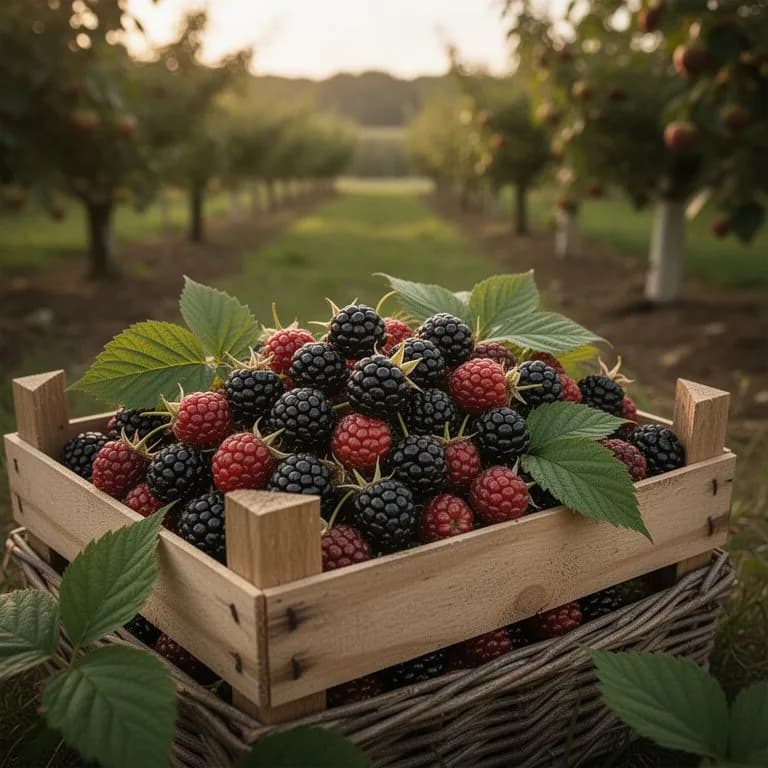
15 minutosUn cobler cálido y reconfortante al estilo sureño, con jugosas frambuesas negras bajo una cobertura dorada y mantecosa de masa tipo biscuit. La fruta burbujea por los bordes al hornearse, creando una salsa caramelizada que combina perfectamente con una bola de helado de vainilla. Lo mejor es hacerlo con bayas recién recogidas en plena temporada.
9 ingredientesMermelada congelada de frambuesa negra
20 minutosUna mermelada sin cocción para congelar que conserva el sabor brillante y fresco de las frambuesas negras del jardín sin el trabajo del enlatado tradicional. Esta receta sencilla utiliza pectina y azúcar para lograr una consistencia perfectamente untuosa. Se conserva hasta un año en el congelador y hasta tres semanas en el refrigerador una vez descongelada.
5 ingredientesEnsalada con vinagreta de frambuesa negra
10 minutosUn aderezo vibrante que transforma frambuesas negras frescas en una vinagreta ácida y de color joya. Las bayas se trituran y se cuelan para obtener una textura suave, y luego se baten con vinagre balsámico, mostaza de Dijon y aceite de oliva. Sírvalo sobre hojas verdes variadas con queso de cabra y nueces tostadas para una elegante ensalada de verano.
6 ingredientesUsos culinarios
Las frambuesas negras tienen un sabor rico y complejo que funciona de maravilla en tartas, cobblers, crumbles y tartaletas. Combinan muy bien con manzana, limón, vainilla y chocolate negro. Las frambuesas negras frescas realzan ensaladas y yogures tipo parfait. Son ricas en vitamina C, vitamina K, manganeso y fibra. El vino y los licores de frambuesa negra son usos tradicionales, y su zumo da un jarabe excelente para cócteles y tortitas.
Qué contiene
Beneficios para la salud
- Excepcionalmente rica en antocianinas y ácido elágico, antioxidantes potentes que ayudan a proteger las células del daño oxidativo y pueden reducir el riesgo de enfermedades crónicas, incluidos ciertos cánceres
- El alto contenido de fibra de 5.3 g por 100 g favorece una digestión saludable, promueve la regularidad intestinal y alimenta bacterias intestinales beneficiosas que participan en la función inmunitaria
- Rica en vitamina C, que apoya el sistema inmunitario, ayuda en la cicatrización de heridas y mejora la absorción del hierro procedente de alimentos vegetales
- Contiene cantidades significativas de vitamina K, esencial para una coagulación sanguínea adecuada y la regulación del calcio óseo, lo que puede ayudar a reducir el riesgo de osteoporosis
- El bajo índice glucémico y el alto contenido de fibra ayudan a regular el azúcar en sangre, lo que convierte a las frambuesas negras en una fruta útil para el control de la diabetes y la salud metabólica
- Aporta compuestos antiinflamatorios, incluido el ácido salicílico, un pariente natural de la aspirina, que puede ayudar a reducir la inflamación y el dolor asociado en todo el cuerpo
De dónde viene Frambuesa negra
La frambuesa negra (Rubus occidentalis) pertenece a uno de los grupos de géneros más complejos del reino vegetal, con cientos de microspecies e híbridos naturales distribuidos por Europa, Asia y Norteamérica. La evidencia arqueológica de la Mujer de Haraldskær, un cuerpo conservado de la Edad del Hierro hallado en Dinamarca, reveló semillas de frambuesa negra en el contenido estomacal, confirmando que los seres humanos han consumido frambuesas negras silvestres durante al menos 2.500 años. Los antiguos griegos conocían bien el fruto; Hipócrates recomendaba la frambuesa negra para tratar la gota, mientras que Plinio el Viejo documentó su uso en la medicina romana para dolencias de la boca y la garganta. A lo largo de la Europa medieval, las zarzas de frambuesa negra servían tanto como setos defensivos naturales alrededor de los asentamientos como una fuente fiable de alimento silvestre para las comunidades rurales. El vigoroso crecimiento espinoso de la planta la convirtió en una valla viva eficaz mucho antes de que se inventara el alambre de espino. Los colonos europeos que llegaron a Norteamérica encontraron especies nativas de frambuesa negra creciendo ya en abundancia, y los pueblos indígenas habían incorporado durante mucho tiempo tanto el fruto como los brotes jóvenes a su dieta. El cultivo sistemático de la frambuesa negra no comenzó hasta principios del siglo XIX, cuando el juez Logan, de California, desarrolló en 1881 la famosa loganberry, un híbrido entre frambuesa negra y frambuesa roja. El siglo XX trajo avances espectaculares con el desarrollo de cultivares sin espinas por parte del programa de mejora del USDA en cooperación con la Universidad Estatal de Oregón. El lanzamiento de variedades sin espinas como Chester, Triple Crown y Ouachita transformó el cultivo de la frambuesa negra de una experiencia espinosa a un placer accesible en el jardín. Más recientemente, el programa de mejora de la Universidad de Arkansas, dirigido por el Dr. John R. Clark, introdujo frambuesas negras fructíferas en primocañas, un avance que permite la producción de fruta en cañas de primer año y ha ampliado el cultivo comercial y doméstico de la frambuesa negra hacia regiones norteñas más frías donde las variedades tradicionales tienen dificultades para sobrevivir al invierno.
Frambuesa negra: ¿sabías que?
Datos fascinantes sobre Frambuesa negra
Un fruto de frambuesa negra no es en realidad una baya, sino un fruto agregado compuesto por 80 a 100 drupéolos individuales, cada uno con su propia semilla diminuta y desarrollado a partir de un pistilo distinto dentro de la flor.
Frambuesa negra: preguntas frecuentes
¿Cuándo debo plantar Frambuesa negra?
¿Cuáles son buenas plantas acompañantes para Frambuesa negra?
¿En qué zonas de rusticidad puede crecer Frambuesa negra?
¿Cuánto sol necesita Frambuesa negra?
¿A qué distancia debo espaciar Frambuesa negra?
¿Qué plagas y enfermedades afectan a Frambuesa negra?
¿Cómo almaceno Frambuesa negra después de la cosecha?
¿Cuáles son las mejores variedades de Frambuesa negra para cultivar?
¿Qué suelo necesita Frambuesa negra?
¿Cuál es la mejor época para plantar frambuesas negras?
¿Por qué mis frambuesas negras son pequeñas y con muchas semillas en lugar de gordas y jugosas?
¿Cómo distingo entre primocañas y floricanas?
¿Necesito más de una planta de frambuesa negra para la polinización?
¿Cómo controlo los retoños espinosos de frambuesa negra que se extienden por el césped y los arriates?
¿Puedo cultivar frambuesas negras en contenedores en un patio o balcón?
Acabas de leer la teoría. Ahora cultívala en piloto automático.
Todo lo que hace que Frambuesa negra sea delicado — el momento, el espaciado, las asociaciones, la ventana de cosecha — es justo lo que PlotMyGarden resuelve por ti, para cada planta de tu huerto.
Un plan que conoce tu clima
Indica tu ubicación una vez. Recibe fechas de siembra, abonado y cosecha basadas en tu última helada real y el pronóstico en vivo — sin adivinar con un sobre genérico.
De la sección “Cuándo plantar”Planificador de bancales de arrastrar y soltar
Diseña bancales sobre una cuadrícula. Cada planta encaja con su espaciado correcto y ves toda la temporada antes de gastar un céntimo en semillas.
De la sección “Cultivo”Conflictos de asociación, detectados a tiempo
Más de 200 buenas y malas combinaciones comprobadas en vivo mientras plantas — para que un error que arruine la temporada nunca llegue a la tierra.
De la sección “Asociaciones”Recordatorios que sí vas a seguir
“Riega las judías.” “Recoge hoy antes de que se pase.” Oportunos, concretos y ligados a las plantas que de verdad cultivas.
De la sección “Cosecha”Escalonado, programado
¿Quieres cosechar seis semanas en vez de seis días? Reparte tus siembras automáticamente y te avisa cuando toca el siguiente lote.
De la sección “Cuándo plantar”Un registro que se vuelve más listo
Cada cosecha que registras le enseña tu huerto. El plan del año que viene parte de lo que de verdad funcionó en tu suelo, no en un manual.
De la sección “Resumen”Planta estos junto a Frambuesa negra
Más Bayas
Mantén Frambuesa negra lejos de estos
Cultiva tu mejor Frambuesa negra — y todo lo que la rodea.
Empieza un plan gratis hoy. Diseña tus bancales, coloca tu Frambuesa negra y deja que PlotMyGarden gestione el momento, el espaciado, las asociaciones y los recordatorios de la semilla a la cesta.