Kartoffelzwiebel
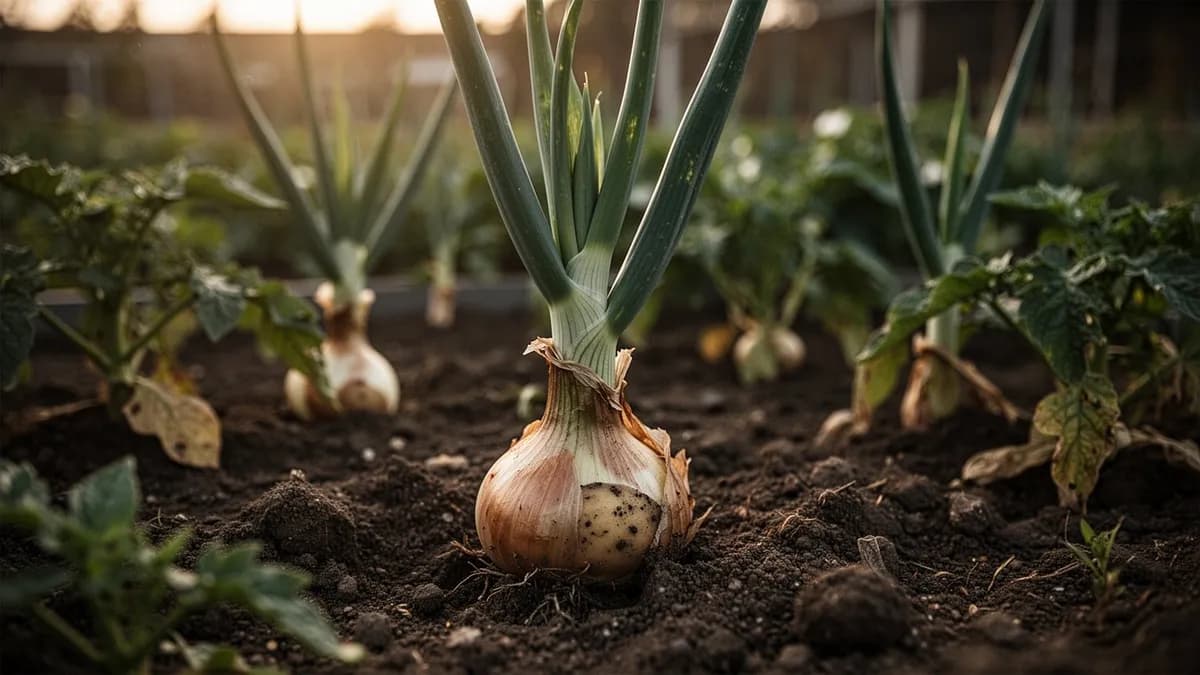
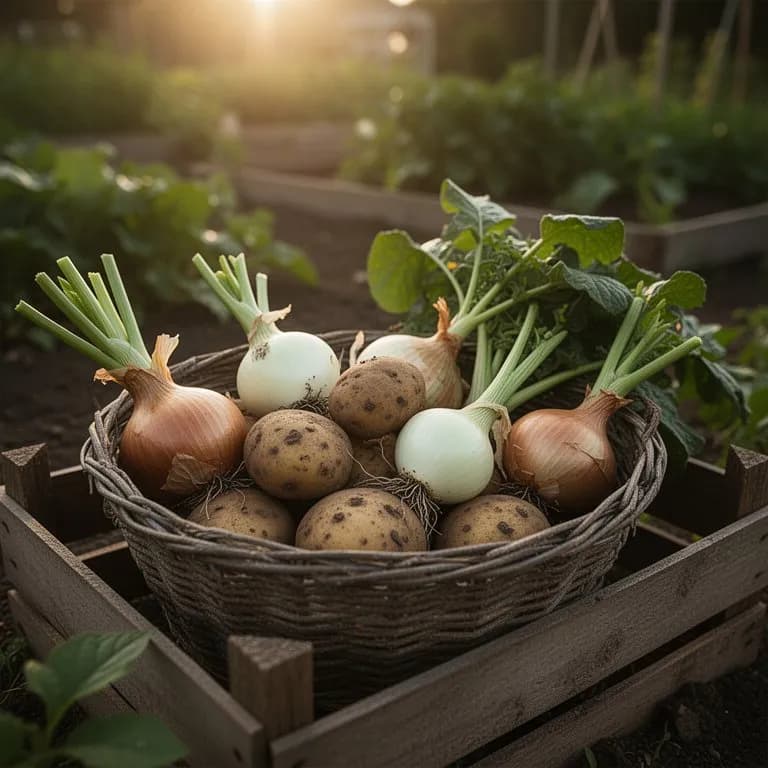
Eine Brutzwiebel, die sich unterirdisch wie eine Kartoffel durch Teilung vermehrt und aus jeder gepflanzten Steckzwiebel ein Bündel von Zwiebeln bildet.





Auf dieser SeiteÜberblick
Kartoffelzwiebel im Überblick
Eine Brutzwiebel, die sich unterirdisch wie eine Kartoffel durch Teilung vermehrt und aus jeder gepflanzten Steckzwiebel ein Bündel von Zwiebeln bildet. Die Pflanzen sind extrem winterhart und praktisch krankheitsfrei und wurden seit Jahrhunderten in Hausgärten angebaut, lange bevor es moderne Sorten gab. Jede gepflanzte Zwiebel bringt fünf bis acht Tochterzwiebeln unterschiedlicher Größe hervor. Bewahren Sie die größten Zwiebeln zum Essen auf und pflanzen Sie die kleinsten für die Ernte des nächsten Jahres wieder ein – ein sich selbst erhaltender Kreislauf.
Wann Kartoffelzwiebel pflanzen
Kartoffelzwiebeln werden ausschließlich durch das Pflanzen ganzer Zwiebeln vermehrt, nicht durch Samen. Wählen Sie feste, gesunde Zwiebeln aus der vorherigen Ernte, wobei Sie kleine bis mittelgroße Zwiebeln als Pflanzgut bevorzugen. Pflanzen Sie im Herbst, vier bis sechs Wochen bevor der Boden gefriert, für die größten Erträge. Frühjahrspflanzung funktioniert ebenfalls, setzen Sie die Zwiebeln, sobald der Boden bearbeitbar ist. Drücken Sie die Zwiebeln in vorbereiteten Boden, sodass die Spitze gerade an oder leicht unter der Oberfläche liegt, mit 20–25 cm Abstand. Mulchen Sie Herbstpflanzungen mit Stroh, um Frosthebung zu verhindern. Keine besondere Behandlung ist erforderlich. Für Erstanbauer beziehen Sie Zwiebeln von spezialisierten Saatgutfirmen oder Tauschbörsen für Erbsorten.
Dein Kartoffelzwiebel-Jahr
Abgestimmt auf Zone 7 · typische Saison · Frost geht um den 2. Apr. und kehrt um den 1. Nov. zurück
Kartoffelzwiebel Mär – Apr, Sep – Okt pflanzen, Jun – Aug ernten. Beachte die Pflanzmethoden unten und wähle dein Klima für passende Zeiträume.
So baust du Kartoffelzwiebel an
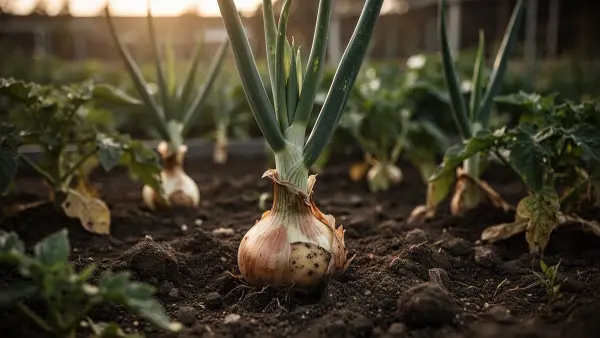
Kartoffelzwiebeln gehören zu den am einfachsten anzubauenden Lauchgewächsen und werden durch das Pflanzen ganzer Zwiebeln statt Samen vermehrt. Wählen Sie kleine bis mittelgroße Zwiebeln aus der vorherigen Ernte zum Wiedereinpflanzen aus. Pflanzen Sie im Herbst oder im zeitigen Frühjahr, setzen Sie die Zwiebeln 2–5 cm tief und 20–25 cm auseinander in Reihen mit 30 cm Abstand. Die Herbstpflanzung bringt in der Regel größere Bündel hervor, da die verlängerte Vegetationsperiode mehr Zeit für die Zwiebelvermehrung bietet.
Einmal etabliert, benötigen Kartoffelzwiebeln nur minimale Pflege. Halten Sie die Beete während des frühen Wachstums unkrautfrei, da Konkurrenz die Erträge reduzieren kann. Gießen Sie während des aktiven Wachstums mäßig, reduzieren Sie aber die Bewässerung, wenn das Laub zu vergilben beginnt. Diese Zwiebeln sind im Vergleich zu aus Samen gezogenen Sorten bemerkenswert krankheitsresistent, dank jahrhundertelanger Selektion auf Vitalität. In einigermaßen fruchtbarem Boden ist keine spezielle Düngung erforderlich, obwohl eine leichte Kompostabdeckung im Frühjahr gesundes Wachstum unterstützt.
Das Schöne an Kartoffelzwiebeln ist ihre sich selbst erhaltende Natur. Jede gepflanzte Zwiebel teilt sich und bildet ein Bündel von fünf bis zwölf neuen Zwiebeln unterschiedlicher Größe. Große gepflanzte Zwiebeln neigen dazu, viele kleine Tochterzwiebeln hervorzubringen, während kleine gepflanzte Zwiebeln weniger, aber größere Zwiebeln produzieren. Diese umgekehrte Beziehung ermöglicht einen ewigen Kreislauf: Essen Sie die großen Zwiebeln und pflanzen Sie die kleinen wieder ein oder umgekehrt, um eine endlose Versorgung ohne Neukauf zu gewährleisten.
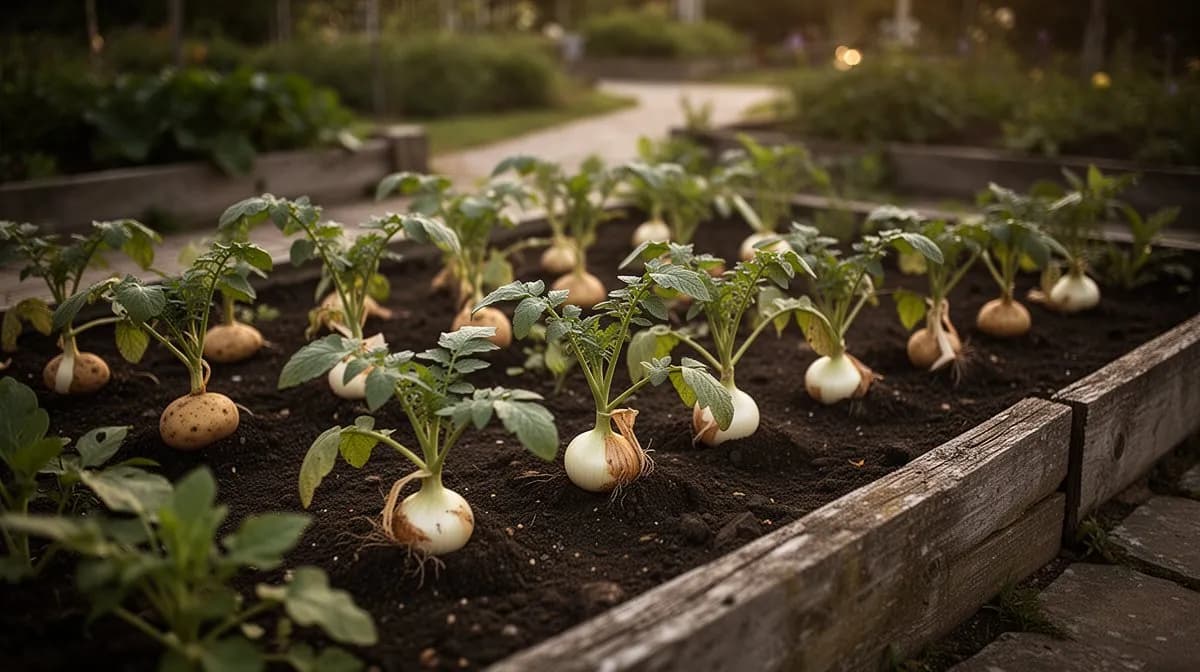
72 Pflanzen passen in ein Beet von 120 × 240 cm
Kartoffelzwiebel braucht 20 cm Platz pro Pflanze. Der Planer hält diesen Abstand für dich ein — jede Pflanze, jedes Beet.
Die besten Nachbarn für Kartoffelzwiebel
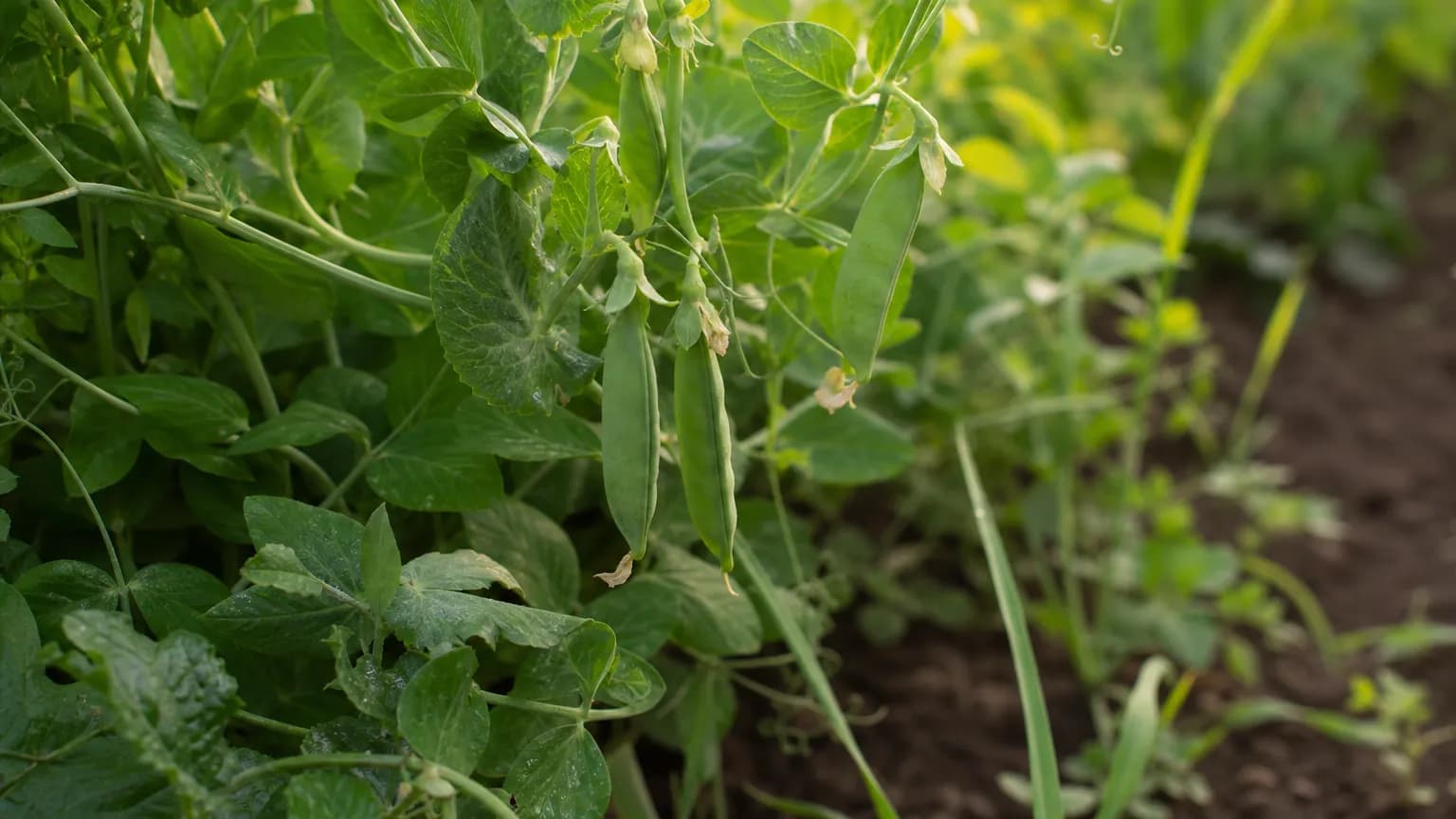
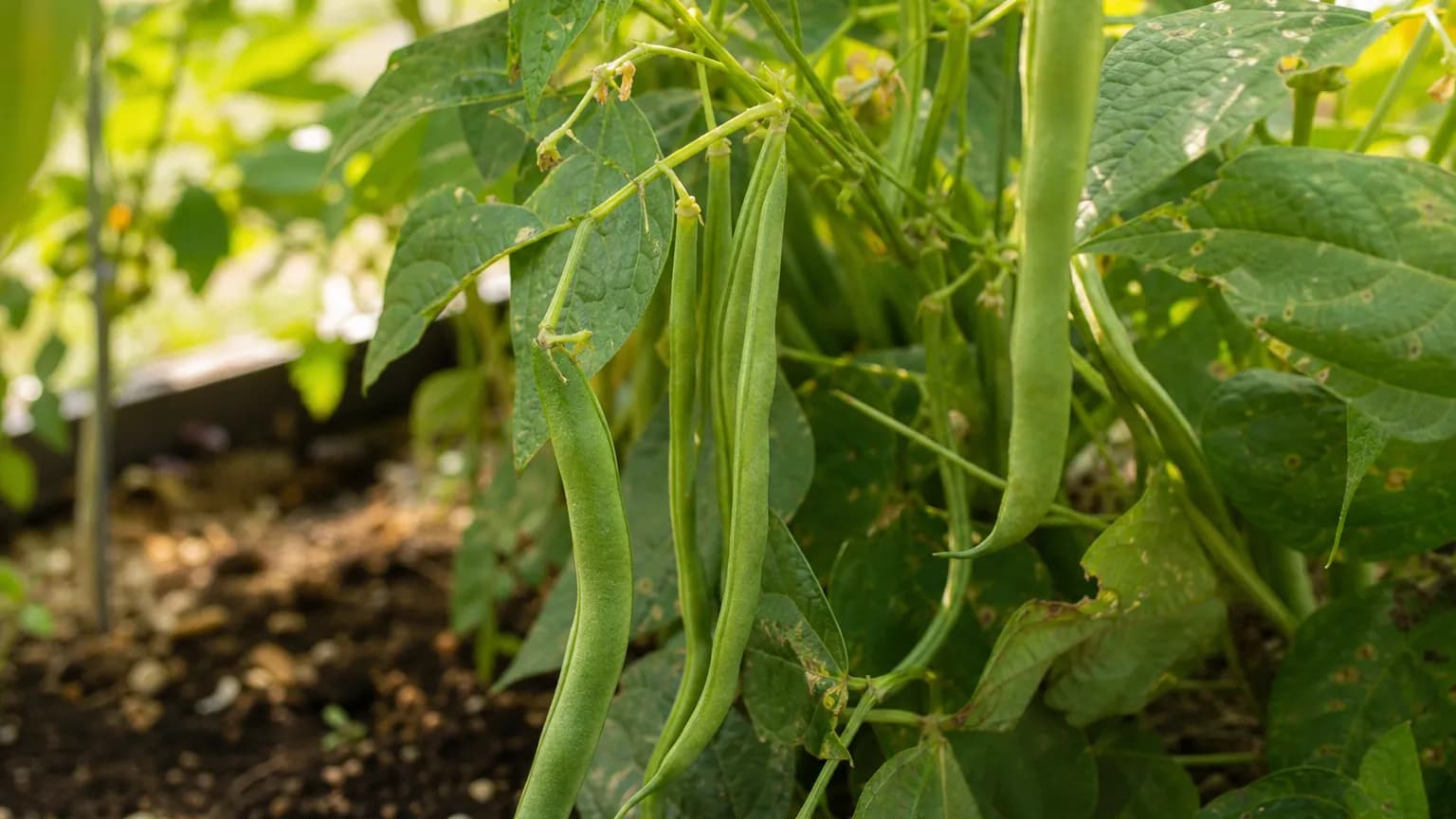
Kartoffelzwiebeln sind ausgezeichnete Begleiter im mehrjährigen Garten, wenn ihnen ein festes Beet zugewiesen wird. Ihr starker Duft hilft, Schädlinge von benachbarten Pflanzungen von Karotten, Rüben und Salat abzuschrecken. Pflanzen Sie sie neben Erdbeeren, die von den Schwefelverbindungen profitieren, die von den Lauchwurzeln freigesetzt werden. In der Nähe gepflanzte Kamille kann den Geschmack verbessern und Nützlinge anlocken. Wie bei allen Lauchgewächsen halten Sie Kartoffelzwiebeln von Erbsen, Bohnen und anderen Hülsenfrüchten fern, um die Stickstofffixierung nicht zu beeinträchtigen. Sie lassen sich gut in mehrjährige Rabatten und essbare Landschaftsgestaltungen integrieren.
Karotte gehört daneben. Erbsen nicht.
Altes Gärtnerwissen, geprüft an der echten Nachbartabelle von Kartoffelzwiebel — teste jede Pflanze, die du anbaust.
Probiere Kartoffelzwiebel direkt hier im Beet
Ein echtes Planer-Beet, Kartoffelzwiebel steht schon drin. Tippe einen Begleiter an, platziere ihn und sieh, wie die Nachbarschaftsprüfung antwortet — grün für gute Nachbarn, rot bei Streit.


Passende Anbau-Ratgeber
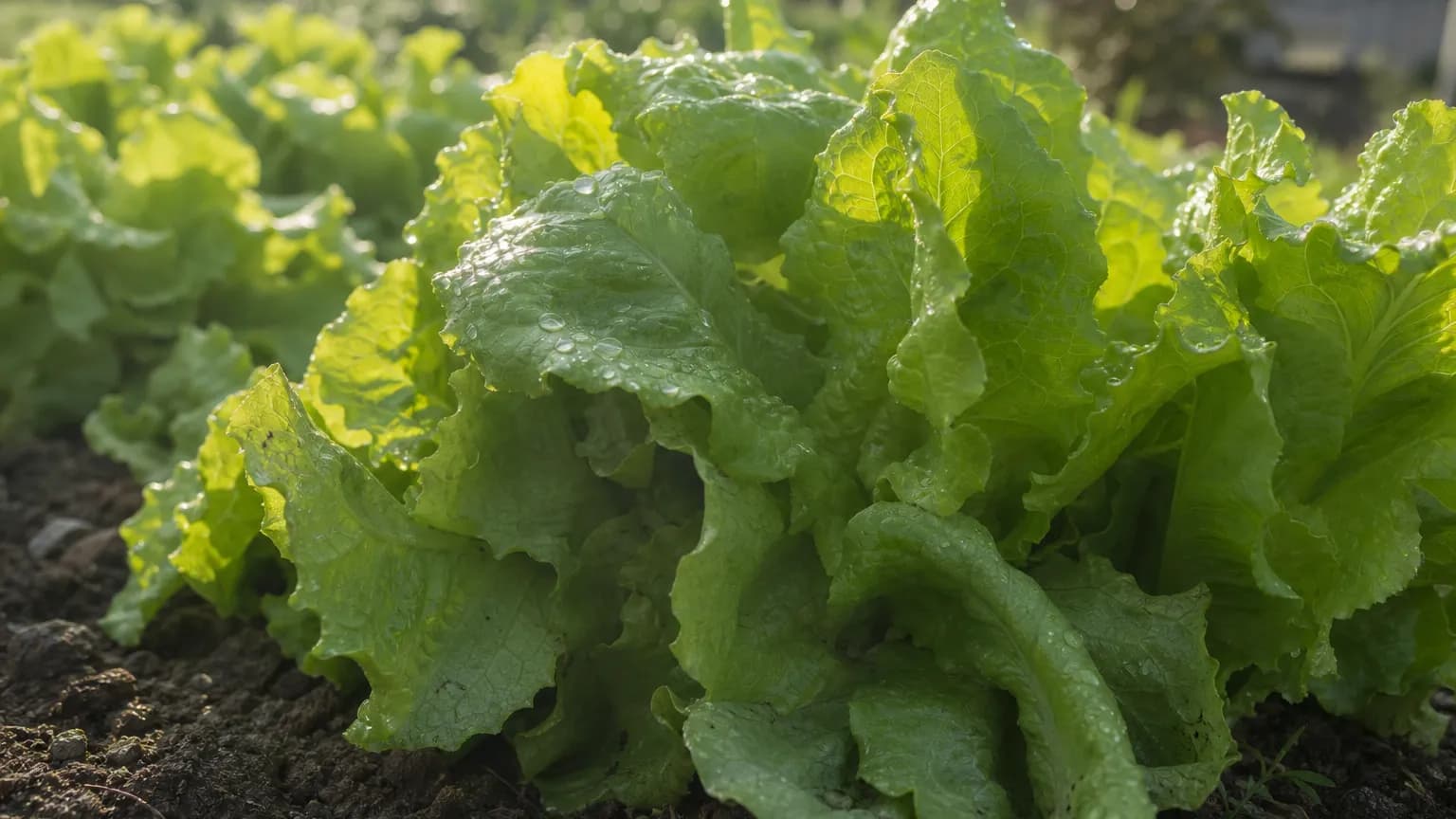
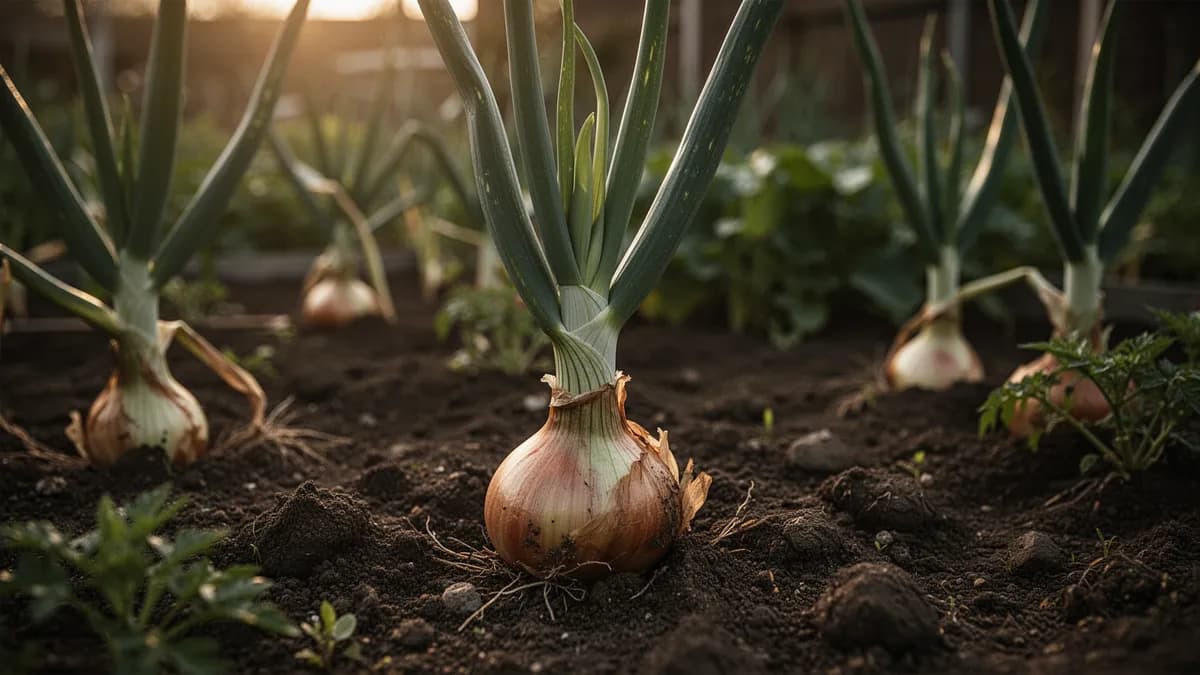
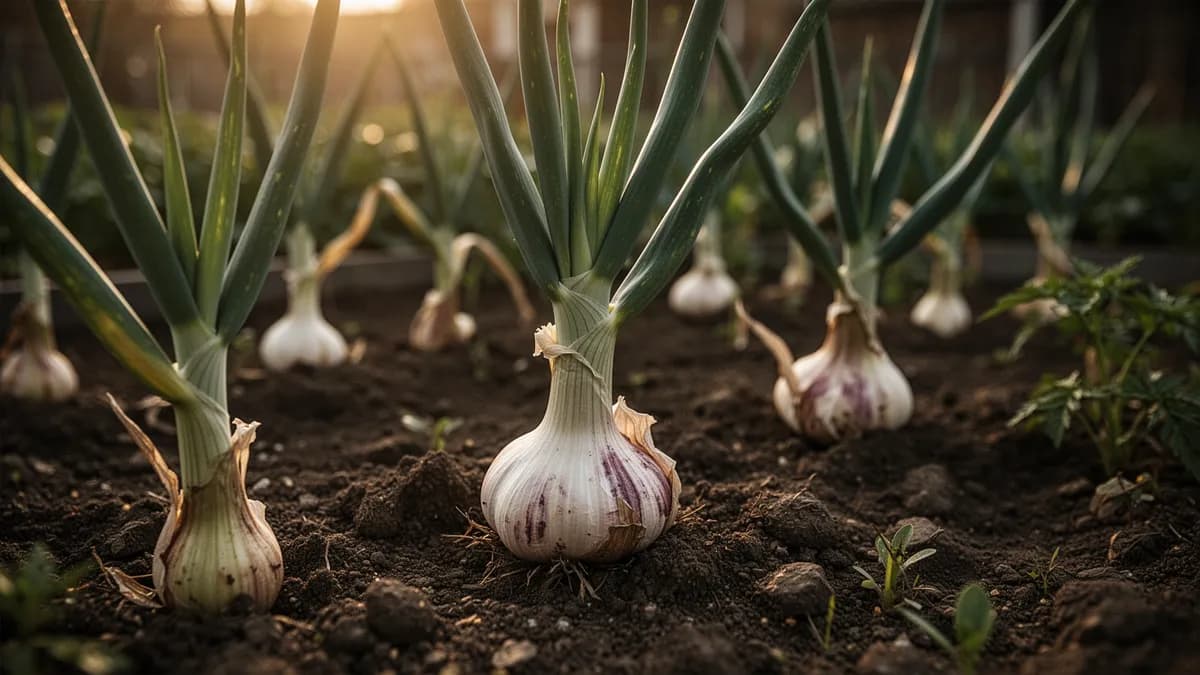
Richtig düngen
Kartoffelzwiebeln sind anspruchslos in Bezug auf Bodenverhältnisse, gedeihen aber am besten in gut durchlässigem, mäßig fruchtbarem Boden mit einem pH-Wert von 6,0 bis 7,0. Sie vertragen schwere Tonböden besser als die meisten Lauchgewächse dank ihres robusten Wurzelsystems. Arbeiten Sie vor dem Pflanzen reifen Kompost ein, um Bodenstruktur und Fruchtbarkeit zu verbessern. Übermäßige Düngung neigt dazu, weiche, schlecht lagerfähige Zwiebeln hervorzubringen, vermeiden Sie also starke Stickstoffgaben. Eine leichte Kompostabdeckung oder ausgewogener organischer Dünger im zeitigen Frühjahr bei Wachstumsbeginn ist ausreichend. Holzasche liefert Kalium, das die Zwiebelqualität und Lagerfähigkeit unterstützt.
Ideale Temperatur
Winterhärtezone-Kompatibilität
Von der Saat zur Ernte, Schritt für Schritt
Pflanzung
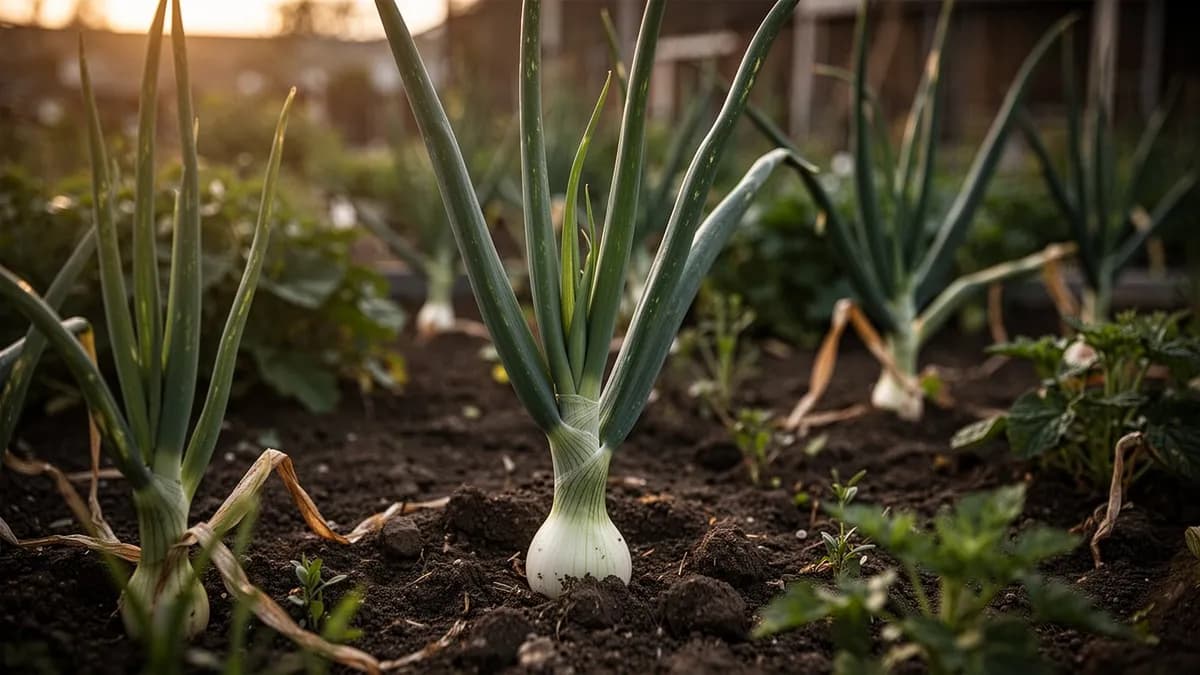
Kartoffelzwiebeln werden als Zwiebeln und nicht als Samen gepflanzt. Kleine Zwiebeln (2–3 cm Durchmesser) werden 5 cm tief und 10–15 cm auseinander im zeitigen Frühjahr gesetzt, 4–6 Wochen vor dem letzten Frost, oder im Herbst zur Überwinterung in den Zonen 5–9. Jede Zwiebel bildet schnell einen Kranz weißer Wurzeln und ein grüner Trieb erscheint innerhalb von 7–14 Tagen, je nach Bodentemperatur. Im Herbst gepflanzte Zwiebeln entwickeln Wurzeln vor der Winterruhe und liefern frühere, größere Ernten im folgenden Sommer.
Grünes Wachstum
Aus jeder gepflanzten Zwiebel treiben mehrere grüne Triebe aus und wachsen im Frühjahr kräftig. Die hohlen, röhrenförmigen Blätter können 30–45 cm hoch werden und bilden dichte Büschel. In dieser Phase baut die Pflanze das Blattwerk auf, das die Zwiebelentwicklung antreiben wird. Jedes Blatt entspricht einem Ring in der zukünftigen Zwiebel – mehr Blätter bedeuten größere Zwiebeln bei der Ernte.
Zwiebelteilung und Anschwellen
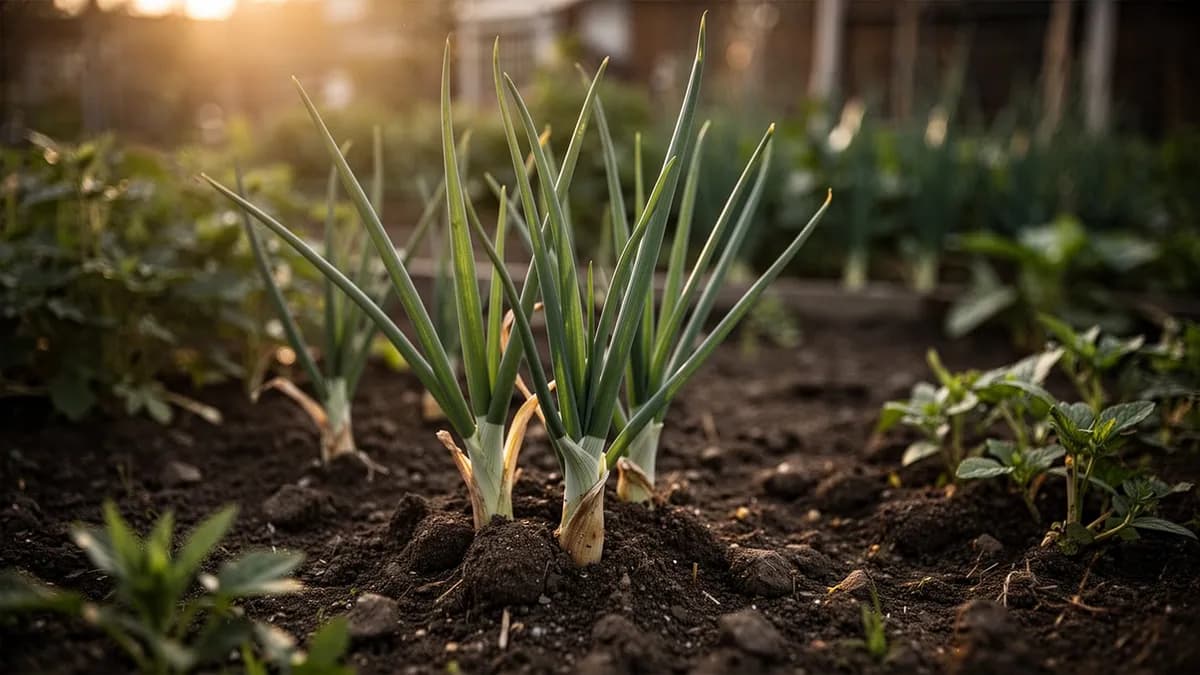
Wenn die Tageslänge 12–14 Stunden überschreitet, beginnt die gepflanzte Mutterzwiebel sich unterirdisch in mehrere Tochterzwiebeln zu teilen. Kleine gepflanzte Zwiebeln produzieren typischerweise 5–12 kleinere Tochterzwiebeln, während große gepflanzte Zwiebeln möglicherweise nur 2–4 größere hervorbringen. Die Zwiebeln schwellen im späten Frühjahr und Frühsommer stetig an, während die Pflanze Energie von der Blattproduktion auf die Entwicklung der Speicherorgane umleitet.
Reifung und Laubabsterben
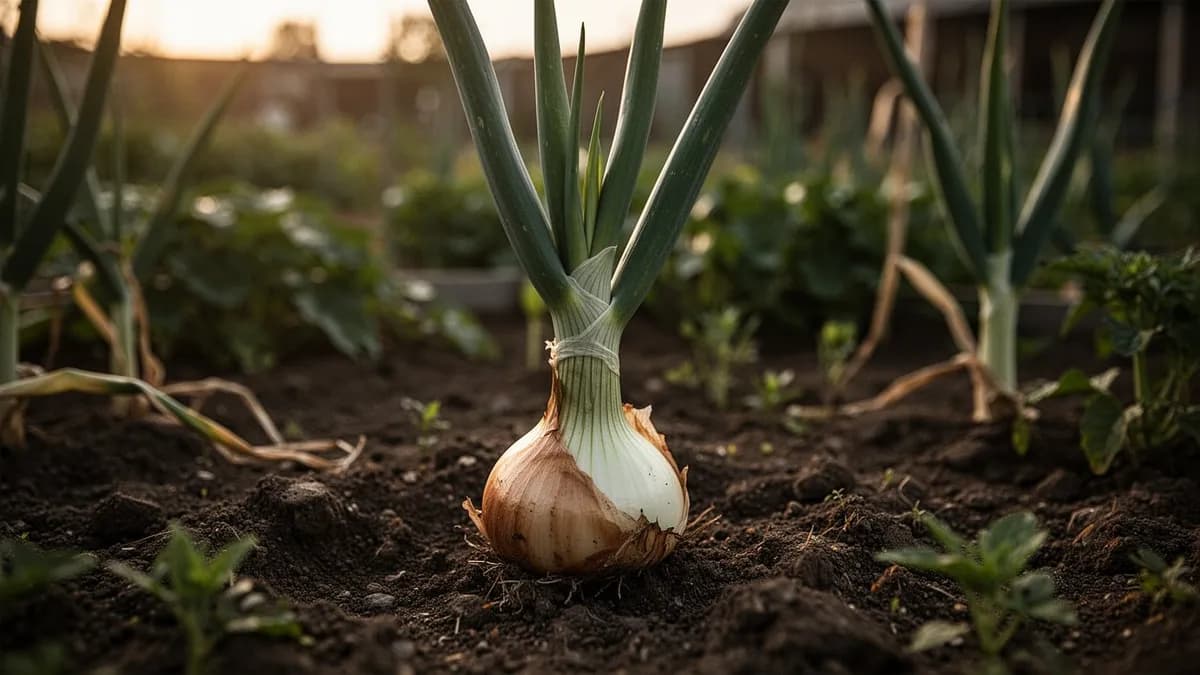
Die grünen Blätter beginnen zu vergilben, werden weich und legen sich natürlich um, wenn die Zwiebeln die Reife erreichen. Dieses Laubabsterben signalisiert, dass die Zwiebeln aufgehört haben zu wachsen und die äußeren Schalen beginnen zu trocknen und ihre schützenden papierartigen Schichten zu bilden. Die Hälse der Zwiebeln werden dünn und schließen sich, wodurch die Feuchtigkeit im Inneren für eine lange Lagerzeit eingeschlossen wird.
Ernte und Trocknung
Sobald die Blätter vollständig braun und trocken sind, heben Sie das gesamte Bündel vorsichtig mit einer Grabegabel heraus. Jede ursprüngliche Zwiebel hat ein Bündel von Tochterzwiebeln hervorgebracht, die an der Basalplatte verbunden sind. Trennen Sie das Bündel und trocknen Sie die Zwiebeln an einem warmen, trockenen, gut belüfteten Ort 2–3 Wochen lang, bis die Außenschalen vollständig papierartig und die Hälse vollständig trocken sind.
Wählen Sie feste, krankheitsfreie Zwiebeln zum Pflanzen. Kleine Zwiebeln (walnussgroß) produzieren die größten Bündel von Tochterzwiebeln, während große Zwiebeln weniger, aber größere Einzelzwiebeln hervorbringen. Pflanzen Sie mit der Spitze nach oben in gut durchlässigen, mit Kompost angereicherten Boden.
Kartoffelzwiebel Monat für Monat pflegen
Was du jeden Monat für deine Kartoffelzwiebel tun solltest
Oktober
Aktueller MonatHerbstpflanzfenster in den Zonen 5–9. Pflanzen Sie kleine Zwiebeln 5 cm tief und mulchen Sie reichlich mit 10–15 cm Stroh, nachdem der Boden gefroren ist. Überprüfen Sie gelagerte Zwiebeln monatlich und entfernen Sie alle, die Anzeichen von Weichheit oder Austrieb zeigen.
Immer wissen, was jetzt im Garten zu tun ist
Eine E-Mail zum Monatsanfang: was du jetzt säen, pflanzen und anpacken solltest — für deine Kartoffelzwiebel und alles, was drumherum wächst. Dazu ein kurzer Startkurs, der dich vor den klassischen Fehlern bewahrt.
- Was jetzt zu tun ist
- Passend zu deiner Saison
- Startkurs inklusive
Kartoffelzwiebel ernten
Ernten Sie Kartoffelzwiebeln, wenn die Blätter vergilbt sind und sich umgelegt haben, typischerweise im Hochsommer bei im Herbst gepflanzten Zwiebeln oder im Spätsommer bei im Frühjahr gepflanzten. Lockern Sie den Boden vorsichtig mit einer Grabegabel und heben Sie das gesamte Bündel heraus. Schütteln Sie lose Erde ab und trennen Sie die einzelnen Zwiebeln vom Bündel. Trocknen Sie sie in einem warmen, trockenen, gut belüfteten Bereich ohne direkte Sonneneinstrahlung zwei bis drei Wochen lang, bis die äußeren Schalen papierartig und trocken sind. Sortieren Sie die Zwiebeln nach dem Trocknen nach Größe: große Zwiebeln zum Essen und kleine zum Wiedereinpflanzen. Schneiden Sie Wurzeln und Blätter für die Lagerung ab.
angenommen, du pflanzt zu Beginn des Zeitraums — trage dein tatsächliches Datum ein
Aus Zwiebeln, Knollen oder Zehen
Ernte Kartoffelzwiebel zügig, dann trägt die Pflanze weiter.
Lagerung & Konservierung
Richtig getrocknete Kartoffelzwiebeln sind ausgezeichnete Lagerzwiebeln und halten sich sechs bis acht Monate oder länger an einem kühlen, trockenen Ort bei 5–10 Grad Celsius mit guter Luftzirkulation. Ihre vermehrende Natur bedeutet, dass Sie immer Pflanzgut zur Hand haben. Flechten Sie Zöpfe oder hängen Sie sie in Netzbreuteln zur Lagerung auf. Für längere Haltbarkeit schneiden und einfrieren oder in Scheiben trocknen für die ganzjährige Verwendung. Legen Sie kleine ganze Kartoffelzwiebeln in gewürztem Essig ein – ein traditioneller Vorrat für die Speisekammer. Der kräftige, reichhaltige Geschmack macht sie ideal zum Karamellisieren in großen Mengen und portionsweisem Einfrieren.
Was schiefgeht — und die Lösung
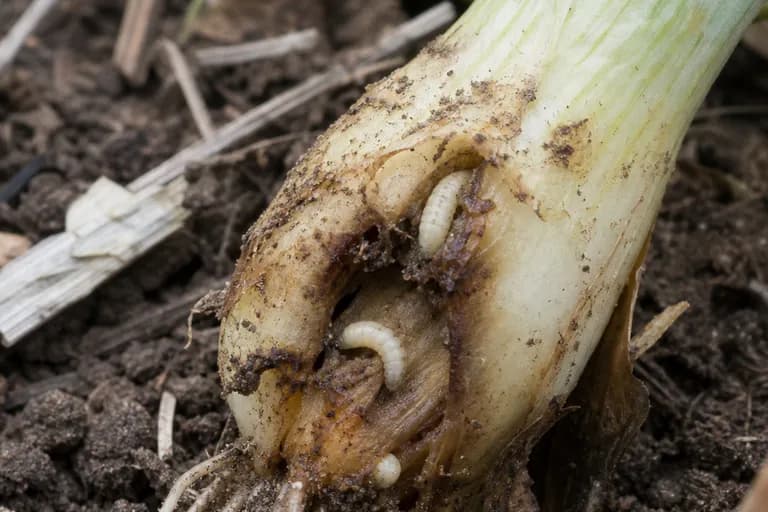
Zwiebelfliege
SchädlingWelken und Vergilben der Blätter, weiche Fäulnis am Zwiebelgrund. Larven bohren sich in den unteren Stängel und die sich entwickelnden Zwiebeln.
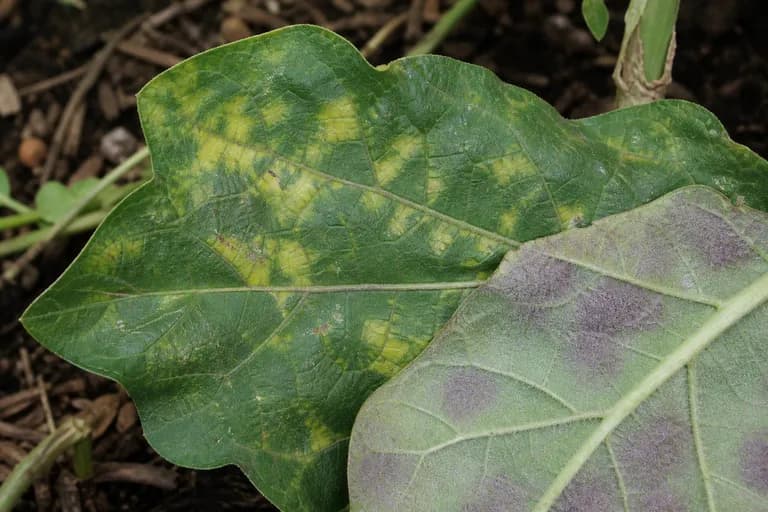
Falscher Mehltau
KrankheitHellgrüne bis gelbe Flecken auf den Blättern mit grau-violettem, flaumigem Belag auf der Unterseite. Die Blätter kollabieren schließlich und sterben vorzeitig ab.
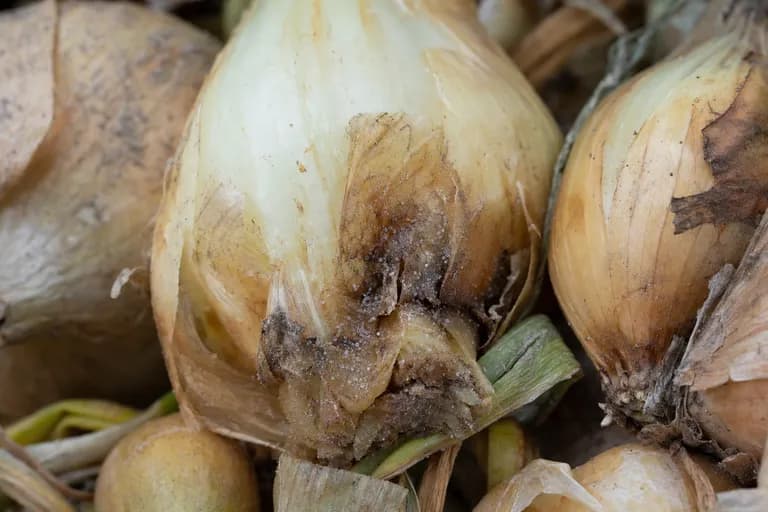
Zwiebelmilben
SchädlingLangsamer Verfall und Weichfäule gelagerter Zwiebeln. Winzige weiße Milben sind auf der Basalplatte und zwischen den Schalen befallener Zwiebeln sichtbar.
Fehlerbehebung bei häufigen Problemen
Das häufigste Problem bei Kartoffelzwiebeln ist die Beschaffung des ersten Pflanzguts, da sie kommerziell nicht weit verbreitet sind. Einmal etabliert, sind sie bemerkenswert problemfrei. Geringe Erträge resultieren oft aus zu kleinen Pflanzzwiebeln oder schlechtem Boden. Fehlende Vermehrung kann darauf hindeuten, dass die Zwiebeln eine Vernalisation durch eine Kälteperiode benötigen. Fäulnis bei der Lagerung bedeutet typischerweise unzureichende Trocknung oder zu feuchte Lagerbedingungen. Schossen ist selten, kann aber nach ungewöhnlich kalten Frühlingsperioden auftreten. Einige Gärtner stellen fest, dass die Erträge nach vielen Jahren im selben Boden nachlassen, was gelegentlichen Fruchtwechsel nahelegt.
Anbautipps
- Pflanzen Sie kleine Zwiebeln, um viele Zwiebeln zu erhalten, pflanzen Sie große Zwiebeln, um große Zwiebeln zu erhalten. Dies ist die Grundregel der Kartoffelzwiebeln. Kleines Pflanzgut (2–3 cm) teilt sich in Bündel von 5–12 kleineren Zwiebeln, während großes Pflanzgut (5–7 cm) weniger, aber deutlich größere Einzelzwiebeln hervorbringt. Nutzen Sie dies zu Ihrem Vorteil, je nachdem ob Sie Menge oder Größe wünschen.
- Die Herbstpflanzung liefert in den meisten Klimazonen überlegene Ergebnisse. Zwiebeln, die im September–Oktober gepflanzt werden, bilden vor dem Winter Wurzeln, brechen die Ruhe im Frühjahr früher und liefern Ernten 3–4 Wochen vor den im Frühjahr gepflanzten Zwiebeln mit merklich größeren Erträgen. Mulchen Sie reichlich, nachdem der Boden gefroren ist, um Frosthebung zu verhindern.
- Drainage ist der wichtigste einzelne Bodenfaktor. Kartoffelzwiebeln vertragen eine breite Palette von Bodentypen und Fruchtbarkeitsstufen, aber sie überleben keine Staunässe. Hochbeete sind ideal bei schweren Tonböden. Wenn Ihr Boden nach Regen Wasser hält, pflanzen Sie auf Hügeln oder in Behältern.
- Nicht überdüngen. Kartoffelzwiebeln sind mäßige Zehrer, die in durchschnittlichem Gartenboden mit Kompostbeimischung gut gedeihen. Übermäßiger Stickstoff produziert üppiges Laub, verzögert aber die Zwiebelbildung und verkürzt die Lagerfähigkeit. Eine Gabe ausgewogenen Düngers beim Pflanzen und eine Nachdüngung Mitte Frühjahr sind ausreichend.
- Bewahren Sie Ihr eigenes Pflanzgut gewissenhaft auf. Legen Sie nach jeder Ernte sofort die besten kleinen Zwiebeln zum Wiedereinpflanzen beiseite. Lagern Sie sie an einem kühlen, trockenen Ort getrennt von Ihren Speisezwiebeln. Diese Praxis, jährlich wiederholt, selektiert allmählich einen Stamm, der perfekt an Ihre spezifischen Gartenbedingungen angepasst ist.
- Jäten Sie früh und oft. Zwiebeln haben flache, spärliche Wurzelsysteme und können nicht mit Unkräutern konkurrieren. Eine dicke Mulchschicht aus Stroh oder gehäckselten Blättern nach dem Pflanzen reduziert den Jätaufwand dramatisch und bewahrt die gleichmäßige Feuchtigkeit, die Kartoffelzwiebeln während ihrer Blattwachstumsphase benötigen.
- Widerstehen Sie dem Drang, während der letzten Reifungsphase zu gießen. Sobald die Blätter beginnen zu vergilben und umzufallen, härten die Zwiebeln im Boden aus. Zusätzliches Wasser in diesem Stadium fördert Halsfäule und verkürzt die Lagerfähigkeit drastisch. Wenn während der Trocknung Regen droht, erwägen Sie, die Zwiebeln vorzeitig zu ernten.
- Trocknen Sie gründlich vor der Einlagerung. Unzureichende Trocknung ist die häufigste Ursache für Lagerausfälle. Die Zwiebeln brauchen 2–3 Wochen an einem warmen (24–30 °C), trockenen, gut belüfteten Ort, bis die Außenschalen vollständig papierartig, die Hälse vollständig verschlossen und die Wurzeln trocken und brüchig sind.
Bau deine beste Kartoffelzwiebel an — und alles drumherum.
Starte heute kostenlos. Lege deine Beete an, setze deine Kartoffelzwiebel ein und lass PlotMyGarden Timing, Abstände, Begleiter und Erinnerungen von der Saat bis zum Erntekorb übernehmen.
Finde deine Kartoffelzwiebel
Gelbe Kartoffelzwiebel
Die häufigste Sorte mit goldbrauner Schale und scharfem, gelbem Fleisch. Ein ausgezeichneter Lagerapfel, der Jahr für Jahr zuverlässige Bündel hervorbringt.
Rote Kartoffelzwiebel
Eine wunderschöne rotschalige Sorte mit rosa getöntem Fleisch und etwas milderem Geschmack als die gelbe Variante. Verleiht Gerichten Farbe.
I'itoi
Eine indigene amerikanische Brutzwiebel aus der Sonora-Wüste, extrem hitzetolerant mit einem schalottenähnlichen Geschmack und üppiger Vermehrung.
Catawissa
Manchmal als Kartoffelzwiebel klassifiziert, produziert diese Sorte sowohl unterirdische Bündel als auch oberirdische Brutzwiebeln für zwei Vermehrungsmethoden.
Kartoffelzwiebeln sind die ultimative selbsterhaltende Gemüseinvestition. Ein anfänglicher Kauf von 10–15 Zwiebeln (8–18 € bei einer Saatgutfirma für alte Sorten) wird zu einem dauerhaften, sich selbst erneuernden Zwiebelvorrat, der nie wieder den Kauf von Saatgut oder Steckzwiebeln erfordert. Die Ernte jedes Jahres liefert sowohl Speisezwiebeln als auch Pflanzgut für das folgende Jahr. Mit 20–30 Pflanzen, die jährlich 4–8 kg Zwiebeln produzieren, und Spezial-Schalottenzwiebeln, die auf Wochenmärkten für 8–16 € pro Pfund verkauft werden, spart Ihr ewiges Beet auf unbestimmte Zeit 35–90 € pro Jahr. Berücksichtigt man die außergewöhnliche Lagerfähigkeit von 8–12 Monaten, die Abfall eliminiert, sind Kartoffelzwiebeln möglicherweise das kostengünstigste Gemüse, das ein Gärtner über ein ganzes Leben hinweg anbauen kann.
Schnelle Rezepte
Langsam karamellisierte Kartoffelzwiebelkonfitüre
45 Min.Dünn geschnittene Kartoffelzwiebeln, langsam und sanft in Butter und einem Schuss Balsamico-Essig gegart, bis sie zu einem tiefüßen, marmeladenartigen Aufstrich zusammenfallen. Der natürliche Zucker in Kartoffelzwiebeln macht sie ideal zum Karamellisieren – das Ergebnis ist ein vielseitiges Würzmittel, perfekt auf Burgern, Crostini oder als Beilage zu Braten und gereiftem Käse.
7 ZutatenIm Ofen geröstete ganze Kartoffelzwiebeln mit Kräutern
35 Min.Kleine ganze Kartoffelzwiebeln bei hoher Hitze geröstet, bis die äußeren Schichten karamellisieren und knusprig werden, während das Innere schmelzend weich und süß wird. Eine Streuung frischer Kräuter und ein Schuss gutes Olivenöl verwandeln diese bescheidenen Lauchgewächse in eine elegante Beilage.
7 ZutatenFranzösische Kartoffelzwiebelsuppe
50 Min.Eine Variante der klassischen französischen Zwiebelsuppe mit Kartoffelzwiebeln, die eine tiefere, komplexere Süße als gewöhnliche Zwiebeln einbringen. Langsam gegart bis tief goldbraun, dann in reichhaltiger Rinderbrühe geköchelt und mit einem knusprigen Crouton und geschmolzenem Gruyère überbacken.
8 ZutatenKulinarische Verwendung
Kartoffelzwiebeln haben einen reichhaltigen, komplexen Geschmack, der stärker als bei Schalotten, aber nuancierter als bei gewöhnlichen Zwiebeln ist. Verwenden Sie sie als direkten Ersatz für Schalotten oder Zwiebeln in jedem Rezept. Die unterschiedlichen Zwiebelgrößen sind praktisch: kleine ersetzen Schalotten und große Kochzwiebeln. Langsam karamellisieren für tiefe, süße Aromen in Zwiebelsuppe nach französischer Art. Ganz mit Fleisch rösten. Fein hacken für Vinaigrettes und Pfannensaucen. Der kräftige Geschmack hält sich gut in lang gekochten Gerichten wie Eintöpfen und Schmorgerichten.
Was drinsteckt
Gesundheitsvorteile
- Reich an Quercetin, einem starken Flavonoid-Antioxidans, das in den äußeren Schichten konzentriert ist und umfassend auf seine entzündungshemmenden, antihistaminischen und kardiovaskulär schützenden Eigenschaften untersucht wurde – Quercetin kann helfen, den Blutdruck und die LDL-Cholesterinoxidation zu senken.
- Enthält Organoschwefelverbindungen (Allicin-Vorstufen, Thiosulfinate und Cepaene), die freigesetzt werden, wenn die Zwiebel geschnitten oder zerdrückt wird, und die in Laborstudien antimikrobielle Aktivität gegen eine Reihe von Bakterien und Pilzen zeigen.
- Liefert präbiotische Fructooligosaccharide (FOS) und Inulin, die selektiv nützliche Darmbakterien nähren und die Verdauungsgesundheit, Immunfunktion und verbesserte Mineralstoffaufnahme unterstützen – insbesondere von Kalzium und Magnesium.
- Gute Quelle für Chrom, ein Spurenelement, das die Insulinrezeptorempfindlichkeit erhöht und zur Verbesserung der Blutzuckerregulierung bei Menschen mit metabolischem Syndrom oder Typ-2-Diabetes beitragen kann.
- Enthält thrombozytenaggregationshemmende Verbindungen, die übermäßige Blutgerinnung verhindern und die kardiovaskuläre Gesundheit unterstützen können – traditionelle Medizinsysteme in Asien und Europa schätzen Zwiebeln seit Langem für ihre kreislauffördernden Eigenschaften.
- Die Schwefelverbindungen in Kartoffelzwiebeln unterstützen die körpereigene Produktion von Glutathion, dem wichtigsten Antioxidans, das an Entgiftung, Immunabwehr und Schutz vor oxidativem Stress auf zellulärer Ebene beteiligt ist.
Woher Kartoffelzwiebel stammt
Die Kartoffelzwiebel (Allium cepa var. aggregatum) ist eine alte Brutzwiebel, deren genaue Herkunft unter Historikern umstritten ist, aber die meisten Belege deuten auf Zentral- oder Westasien als ihre Urheimat hin, in derselben breiten Region, in der die gewöhnliche Zwiebel (Allium cepa) vor Tausenden von Jahren erstmals domestiziert wurde. Anders als samenvermehrte Zwiebeln wurden Kartoffelzwiebeln so viele Jahrhunderte lang als Zwiebeln von Gärtner zu Gärtner weitergegeben, dass ihr genauer wilder Vorfahre nicht mehr identifizierbar ist.
Kartoffelzwiebeln wurden im Mittelalter in ganz Europa weit verbreitet angebaut, mit dokumentierter Nutzung in Frankreich, Großbritannien und Skandinavien ab dem 17. Jahrhundert. Sie wurden zur dominierenden Gartenzwiebel in Nordeuropa und im kolonialen Amerika aus einem einfachen Grund: Sie waren viel einfacher und zuverlässiger anzubauen als Samenzwiebeln. In einer Zeit vor moderner Saatgutproduktion und Hybridkraft war der Anbau von Zwiebeln aus Samen langsam, unzuverlässig und erforderte erhebliches Geschick. Kartoffelzwiebeln hingegen konnten als Zwiebeln von jedem Gärtner gepflanzt werden, wuchsen kräftig, lieferten eine zuverlässige Ernte und lagerten den ganzen Winter über – was sie für die Ernährungssicherheit der Haushalte unverzichtbar machte.
Bis zum 19. Jahrhundert waren Kartoffelzwiebeln in amerikanischen und europäischen Küchengärten Standard. Sie erscheinen in den Gartenaufzeichnungen von Thomas Jefferson in Monticello und wurden von zahlreichen Saatguthäusern katalogisiert. Der Aufstieg der kommerziellen Zwiebelsaatgutproduktion, moderner Hybridsorten und der industriellen Landwirtschaft im frühen 20. Jahrhundert verdrängte Kartoffelzwiebeln jedoch allmählich aus dem Mainstream-Anbau. Kommerzielle Anbauer bevorzugten samengewachsene Zwiebeln wegen ihrer Einheitlichkeit und des wirtschaftlichen Modells jährlicher Saatgutverkäufe.
Heute erleben Kartoffelzwiebeln eine bedeutende Wiederbelebung unter Liebhabern alter Gemüsesorten, Permakultur-Praktizierenden und Selbstversorgungsgärtnern weltweit. Ihre außergewöhnliche Lagerfähigkeit, selbsterhaltende Natur, Winterhärte und ihr reichhaltiger Geschmack haben ihnen erneute Wertschätzung eingebracht. Kleine Saatgutfirmen und Saatguttauschbörsen in Nordamerika, Europa und Skandinavien bieten mittlerweile mehrere Sorten an, darunter gelbe, rote und weiße Varianten, die das Überleben dieses alten und bemerkenswert praktischen Lauchgewächses für zukünftige Generationen sichern.
Kartoffelzwiebel: Schon gewusst?
Faszinierende Fakten über Kartoffelzwiebel
Kartoffelzwiebeln haben ihren Namen nicht von einer Verwandtschaft mit Kartoffeln, sondern von der Art, wie sie sich unterirdisch vermehren – eine einzelne gepflanzte Zwiebel teilt sich in ein Bündel neuer Zwiebeln, ähnlich wie eine Kartoffel mehrere Knollen aus einer einzigen Pflanzkartoffel hervorbringt.
Kartoffelzwiebel: Fragen & Antworten
Wann sollte ich Kartoffelzwiebel pflanzen?
Was sind gute Begleitpflanzen für Kartoffelzwiebel?
In welchen Winterhärtezonen kann Kartoffelzwiebel wachsen?
Wie viel Sonne braucht Kartoffelzwiebel?
Welchen Abstand sollte ich zwischen Kartoffelzwiebel lassen?
Welche Schädlinge und Krankheiten befallen Kartoffelzwiebel?
Wie lagere ich Kartoffelzwiebel nach der Ernte?
Was sind die besten Kartoffelzwiebel-Sorten zum Anbauen?
Welchen Boden braucht Kartoffelzwiebel?
Was ist der Unterschied zwischen Kartoffelzwiebeln und Schalotten?
Kann ich Kartoffelzwiebeln aus Samen ziehen?
Wie lange lassen sich Kartoffelzwiebeln lagern?
Warum sind meine Kartoffelzwiebeln geschosst, statt Zwiebeln zu bilden?
Wie viele Kartoffelzwiebeln sollte ich pflanzen, um eine Familie zu ernähren?
Kann ich im Supermarkt gekaufte Kartoffelzwiebeln pflanzen?
Du hast die Theorie gelesen. Jetzt baue sie auf Autopilot an.
Alles, was Kartoffelzwiebel knifflig macht — das Timing, die Abstände, die Begleiter, das Erntefenster — genau das übernimmt PlotMyGarden für dich, für jede Pflanze im Garten.
Ein Plan, der dein Wetter kennt
Standort einmal festlegen. Aussaat-, Dünge- und Erntedaten rund um deinen echten letzten Frosttermin und die Live-Vorhersage — kein Raten mehr nach Saattüte.
Aus dem Abschnitt „Pflanzzeit“Beetplaner per Drag & Drop
Beete auf einem Raster gestalten. Jede Pflanze rastet im richtigen Abstand ein, und du siehst die ganze Saison, bevor du einen Cent für Saatgut ausgibst.
Aus dem Abschnitt „Anbau“Begleiter-Konflikte früh erkannt
Über 200 gute und schlechte Kombinationen werden beim Pflanzen live geprüft — so landet ein saisonruinierender Fehler nie in der Erde.
Aus dem Abschnitt „Begleiter“Erinnerungen, nach denen du wirklich handelst
„Gieß die Bohnen.“ „Heute ernten, bevor's umschlägt.“ Pünktlich, konkret und auf deine echten Pflanzen bezogen.
Aus dem Abschnitt „Ernte“Staffel-Aussaat, geplant
Sechs Wochen ernten statt sechs Tage? Die App verteilt deine Aussaaten automatisch und erinnert dich, wenn der nächste Satz fällig ist.
Aus dem Abschnitt „Pflanzzeit“Ein Verlauf, der schlauer wird
Jede protokollierte Ernte bringt der App deinen Garten bei. Der Plan fürs nächste Jahr startet bei dem, was in deinem Boden wirklich funktioniert hat.
Aus dem Abschnitt „Überblick“Pflanze diese neben Kartoffelzwiebel
Weitere Lauchgewächse
Halte Kartoffelzwiebel von diesen fern
Bau deine beste Kartoffelzwiebel an — und alles drumherum.
Starte heute kostenlos. Lege deine Beete an, setze deine Kartoffelzwiebel ein und lass PlotMyGarden Timing, Abstände, Begleiter und Erinnerungen von der Saat bis zum Erntekorb übernehmen.