Plantain
A starchy cooking banana that must be cooked before eating, serving as a staple carbohydrate throughout tropical regions.





On this pageOverview
Meet Plantain
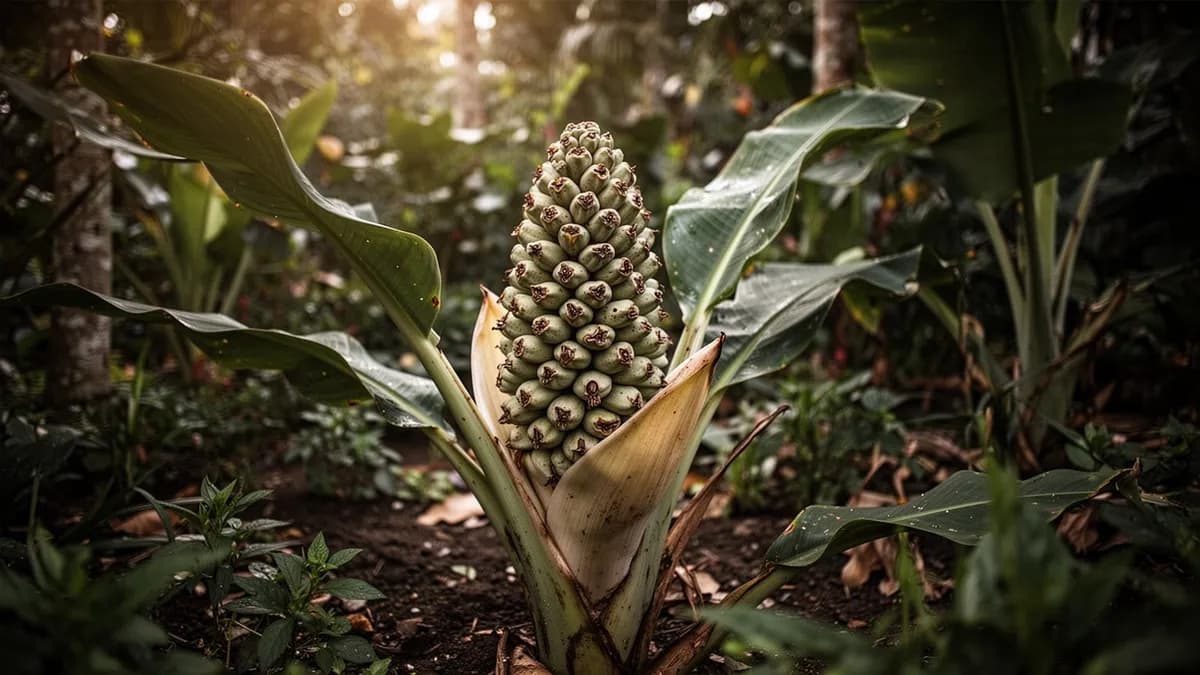
A starchy cooking banana that must be cooked before eating, serving as a staple carbohydrate throughout tropical regions. Plantains are larger and thicker-skinned than dessert bananas and are fried, boiled, or roasted at various stages of ripeness. They require the same growing conditions as bananas but tend to be slightly more vigorous.
When to plant Plantain
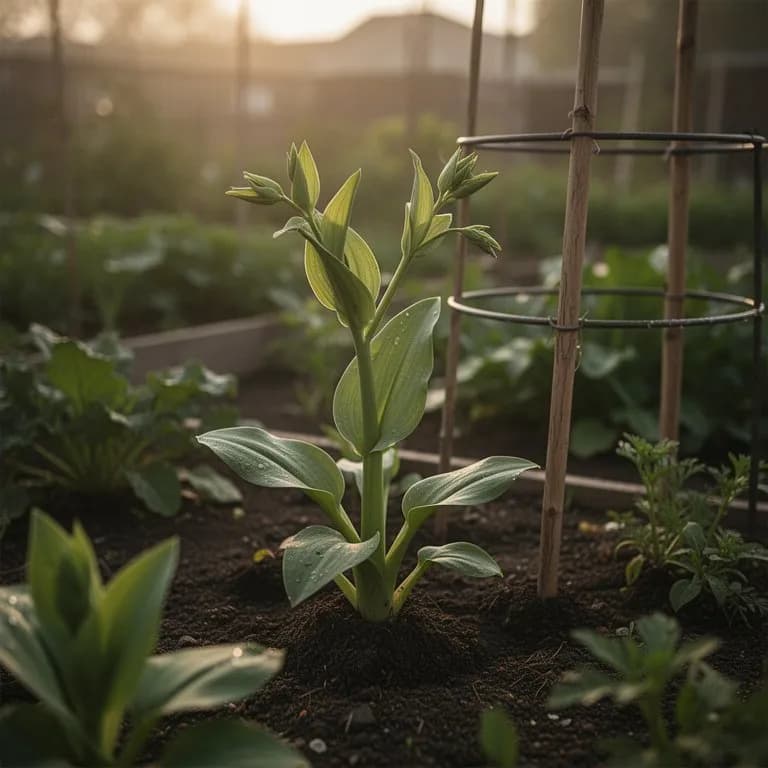
Plantains are propagated vegetatively, not from seed. The primary methods are sword suckers, which are young shoots with narrow, spear-shaped leaves that emerge from the mother plant's corm. Select suckers that are two to four feet tall with a healthy corm base. Separate from the mother plant with a sharp spade, cutting through the connecting tissue. Plant immediately in a prepared hole with the corm base three to four inches below soil level. Water deeply and maintain consistent moisture until new growth appears.
Your Plantain Year
Composed for Zone 7 · typical seasons · frost passes Apr 2, returns Nov 1
Plant Plantain Mar – May, pick Jan – Dec. Check the planting methods below and set your climate to personalize these windows.
How to grow Plantain
Plantains are large herbaceous plants, not true trees, growing from an underground corm to heights of ten to fifteen feet. Plant corms or suckers in a sunny, wind-protected location with rich, well-draining soil. Space plants eight to ten feet apart in rows or clusters. Water deeply after planting and maintain consistently moist soil throughout the growing season, as plantains are heavy water users.
Plantains thrive in hot, humid conditions with temperatures between 75 and 95 degrees Fahrenheit. Fertilize heavily every month with a balanced fertilizer high in potassium, as plantains are extremely heavy feeders. Apply thick organic mulch around the base to retain moisture, suppress weeds, and feed the soil. The large leaves are susceptible to wind shredding, so provide windbreaks in exposed locations.
Allow three to four suckers to develop from each mother plant to maintain continuous production. Remove excess suckers with a sharp spade. After the mother plant fruits, it dies back and should be cut to ground level, allowing the largest sucker to take over as the new primary stem. Each pseudostem takes nine to fifteen months from emergence to fruiting. Protect plants from cold below 50 degrees Fahrenheit.
Plantain needs more room than a 4 × 8 ft bed gives
Each Plantain wants 300 cm of elbow room. The planner keeps that spacing for you — every plant, every bed.
Plantain's best neighbours
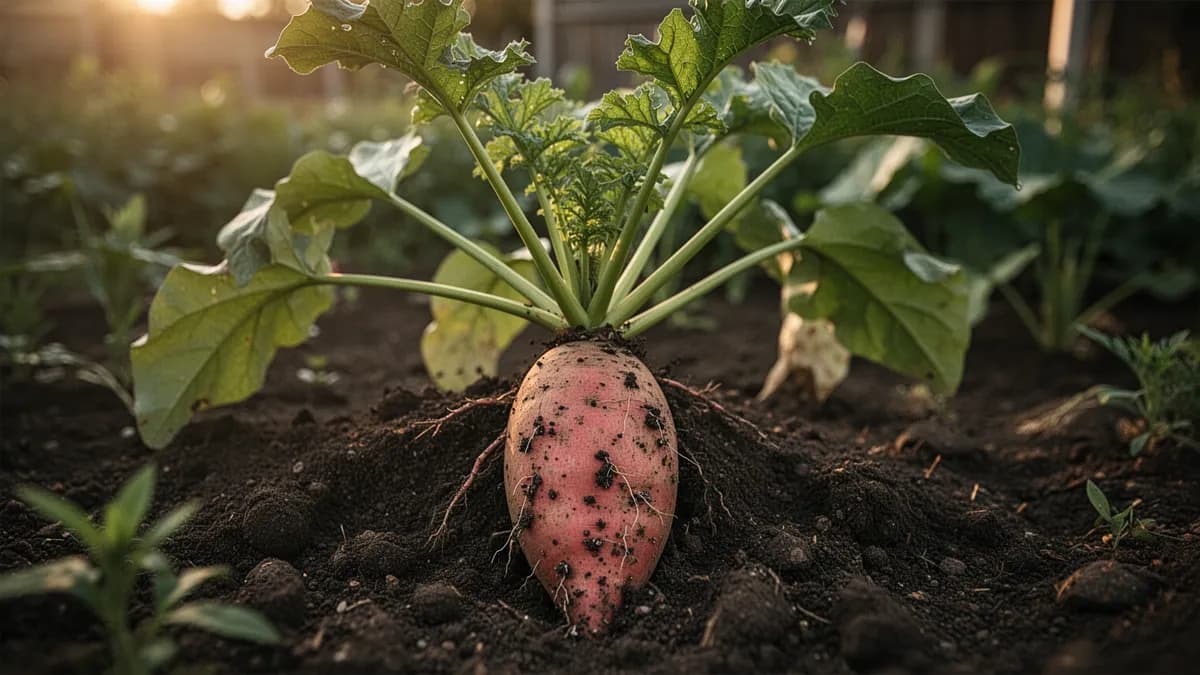
Plantains work well in tropical polyculture systems alongside sweet potato, taro, and yams. They provide shade for young cacao, coffee, and vanilla plantings. Nitrogen-fixing cover crops like cowpea and pigeon pea improve soil fertility between plantain rows. Lemongrass and citronella planted nearby may help repel some insect pests. Avoid planting where Panama disease has previously occurred.
Sweet Potato belongs beside it.
Old growers' knowledge, checked against Plantain's real companion table below — test any plant you're growing.
Try Plantain in a bed — right here
A real planner bed with Plantain already in it. Tap a companion to place it and watch the pairing checks answer — green for good neighbours, red for a clash.


Related growing guides
Feed it well
Plantains require rich, deep, well-draining soil with high organic matter content and a pH of 5.5 to 7.0. They are extremely heavy feeders and deplete soil nutrients rapidly. Apply a balanced fertilizer high in potassium monthly during the growing season. Supplement with magnesium and calcium to prevent deficiencies. Top-dress with three to four inches of compost or aged manure several times per year. Potassium deficiency causes yellow leaf margins and poor bunch development.
Ideal Temperature
Hardiness Zone Compatibility
From seed to harvest, stage by stage
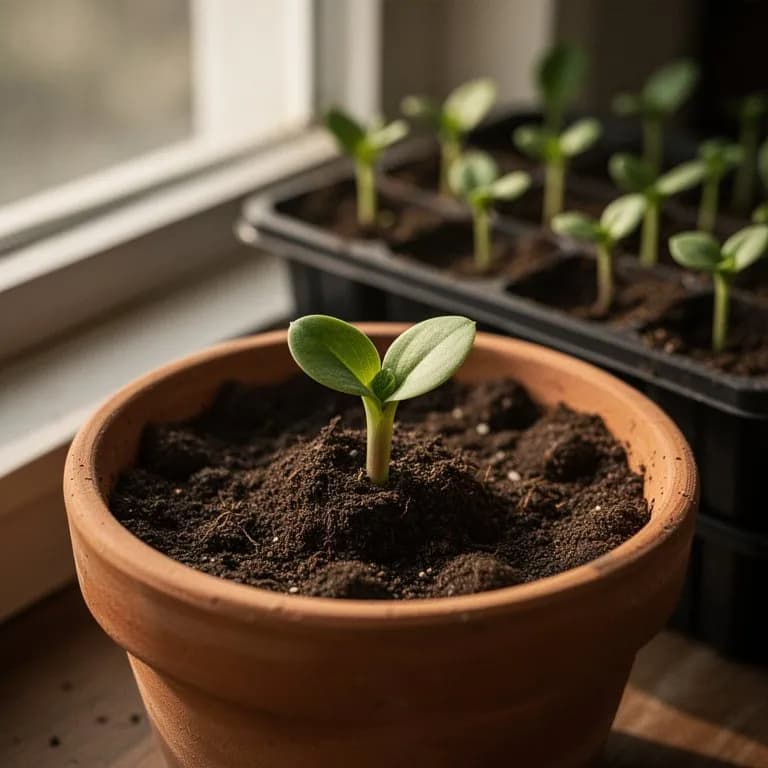
Germination
Tiny seeds germinate in warm, moist soil. A cold stratification period of 4-6 weeks improves germination rates. First cotyledons appear as slender, pale green shoots.
Seedling
True leaves emerge with the recognizable oval shape and prominent veining. The plant begins forming its low rosette habit, staying close to the ground.
Rosette Formation
The plant establishes a compact basal rosette of broad, ribbed leaves. Roots deepen significantly, making the plant drought-tolerant. Leaves become suitable for first harvest.
Vigorous Leaf Production
The plant enters peak leaf production, continuously pushing out fresh foliage from the center. This is the most productive period for culinary and medicinal harvest.
Flowering
Tall, slender flower spikes emerge from the center of the rosette, reaching 15–40 cm. Small, inconspicuous flowers open along the spike, attracting pollinators. Seeds begin to form.
Seed Set and Dispersal
Seed capsules ripen along the spike, each containing multiple small seeds. Seeds disperse readily by wind, water, and animal contact. The plant may die back in hard frost or continue as a perennial.
Keep the soil consistently moist but not waterlogged. Surface sow seeds and press lightly — they need light to germinate.
Caring for Plantain month by month
What to do each month for your Plantain
October
You are hereIn cold climates, plants go dormant after frost. Mulch established crowns with straw or leaves to protect them through winter. Collect any remaining seeds.
Know exactly what to do in your garden — every month
One email at the start of each month: what to sow, plant, and tackle right now — for your Plantain and everything growing around it. Plus a short starter course that helps you dodge the classic mistakes.
- What to do, right now
- Matched to your season
- Starter course included
Harvesting Plantain
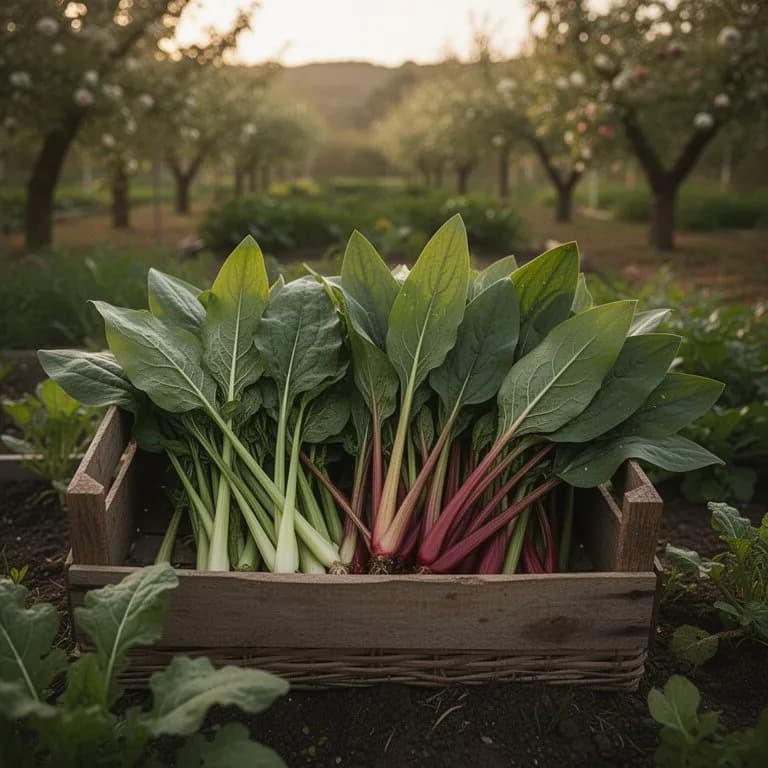
Plantains can be harvested at any stage from green to fully black-ripe, depending on intended use. For frying as tostones or chips, harvest when the skin is still green and firm. For maduros or sweet preparations, allow the skin to turn yellow to black. Cut the entire bunch from the pseudostem with a machete when the individual fingers are well-rounded and the ridges begin to fill out. Each bunch typically contains thirty to fifty individual plantains.
assuming you plant when the window opens — set your real date
Pick Plantain promptly and the plant keeps producing.
Storage & Preservation
Green plantains store at room temperature for one to two weeks, ripening gradually. Refrigeration slows ripening but causes the skin to blacken; the flesh inside remains usable. Ripe plantains can be peeled, sliced, and frozen for up to three months. Plantain flour is made by drying and grinding green plantains and stores for months. Fried plantain chips are a popular shelf-stable snack. Green plantains can also be vacuum-sealed and frozen whole.
What goes wrong — and the fix
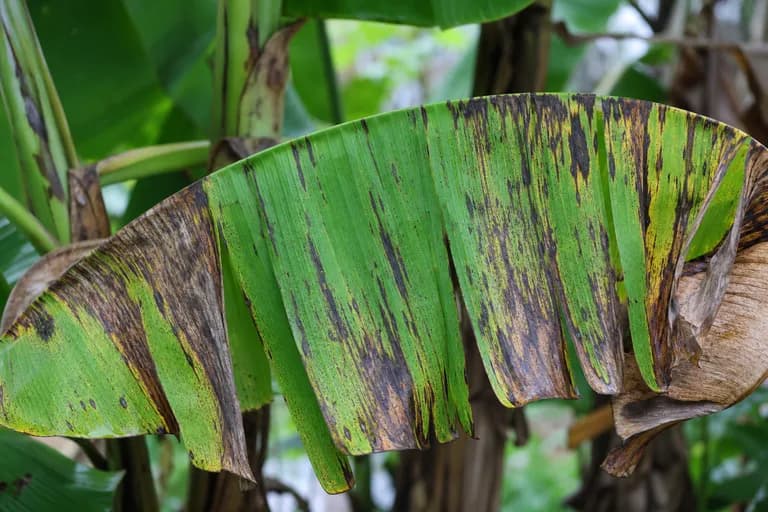
Black Sigatoka
DiseaseDark streaks on leaves that expand into large necrotic areas, premature leaf death, reduced bunch size and quality.
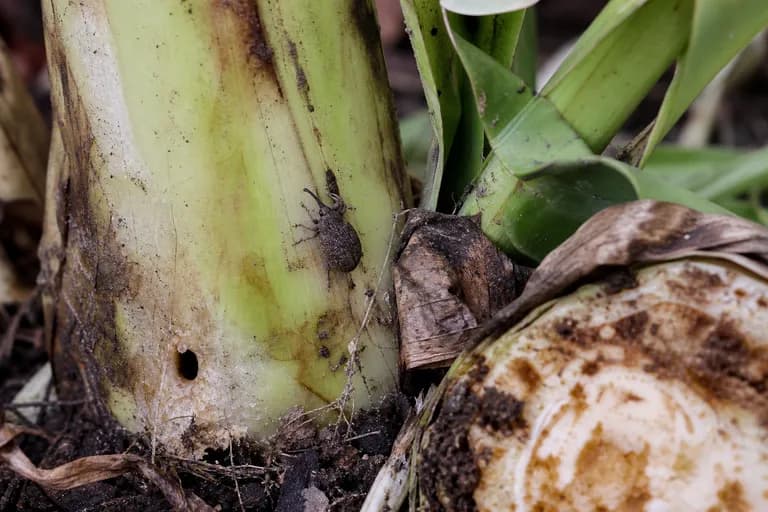
Banana Weevil
PestBore holes at the base of the pseudostem, tunneling damage in the corm, weakened plants that topple easily, reduced sucker production.
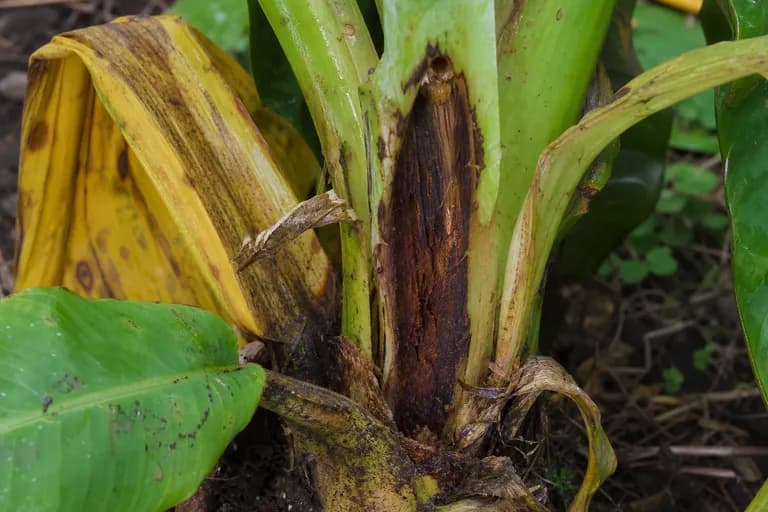
Panama Disease
DiseaseYellowing and wilting of older leaves, splitting of the pseudostem base, reddish-brown discoloration of the vascular tissue.
Troubleshooting Common Problems
Wind damage is the most common issue, shredding the large leaves and potentially toppling fruit-laden plants. Panama disease is devastating and has no cure, making resistant variety selection critical. Nematodes damage the root system and reduce plant vigor. The heavy bunches may require propping with wooden supports to prevent the pseudostem from snapping. Cold damage below 50 degrees Fahrenheit causes significant leaf injury.
Growing Tips
- Surface sow plantain seeds and press them lightly into moist soil — they require light for germination and should not be buried more than 1-2 mm deep.
- Cold stratify seeds in a damp paper towel inside the refrigerator for 4-6 weeks before sowing to dramatically improve germination rates, especially for freshly harvested seeds.
- Plantain thrives in compacted, neglected, or disturbed soil — it is one of the few herbs that actively benefits from and improves poor soil conditions, making it ideal for challenging garden spots.
- Harvest leaves in the morning after the dew has dried, when the plant's beneficial compounds are most concentrated and leaves are at their most crisp and flavorful.
- To dry plantain for winter use, cut whole leaves at the base, bundle loosely, and hang upside down in a warm, well-ventilated room away from direct sunlight for 1-2 weeks.
- Remove flower spikes as soon as they appear if you want to maximize leaf production — once a plant flowers, leaf growth slows significantly as the plant diverts energy to reproduction.
- Allow a few plants to go to full seed each year to ensure robust self-seeding for the following season; plantain naturalizes easily and will reliably return without any intervention.
- In containers, choose a pot at least 20 cm deep to accommodate the plant's taproot, which is critical for both nutrient uptake and drought tolerance.
- Plantain is an excellent companion plant in the herb garden — its dynamic accumulator roots bring up calcium and silica from deep in the soil, benefiting neighboring shallow-rooted herbs when plantain leaves are left to decompose on the surface.
- Young leaves up to about 10 cm long are the most tender and palatable for eating fresh or lightly cooked; older leaves become fibrous and are better suited to making infusions, tinctures, or poultices.
Grow your best Plantain yet — and everything around it.
Start a free plan today. Lay out your beds, drop in your Plantain, and let PlotMyGarden handle the timing, spacing, companions and reminders from seed to harvest basket.
Pick your Plantain
Horn Plantain
The most common cooking plantain, producing large, angular fruit with thick flesh. Each bunch has fewer but larger fingers than other types.
French Plantain
Produces bunches with many smaller fingers. Versatile for cooking at all stages of ripeness. More productive per plant than horn types.
FHIA-21
A disease-resistant hybrid plantain with good cooking quality and resistance to Black Sigatoka. Recommended for areas with high disease pressure.
Plantain is essentially free to grow — it self-seeds prolifically and requires no purchased inputs once established. A single packet of seeds costing around $2-4 can supply a household with medicinal-quality leaves indefinitely. Compared to commercial plantain tinctures ($15-25 per bottle) or dried plantain leaf ($8-15 per 100g), growing your own provides savings of $50-150 per year for a household that uses plantain medicinally. As a foraged edible green, it replaces specialty salad greens and cooking greens that might otherwise cost $3-5 per bunch.
Quick recipes
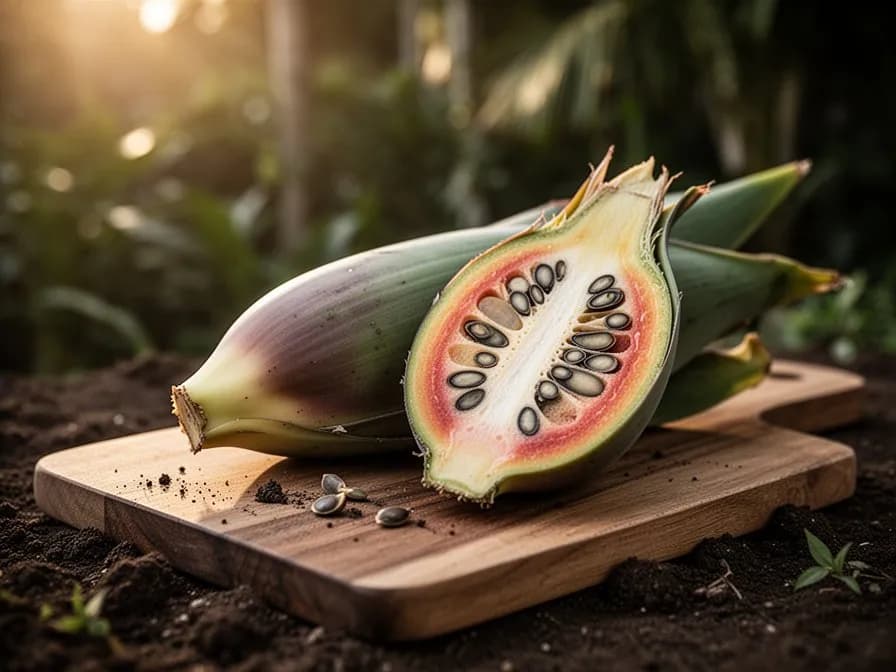
Plantain Leaf Infusion (Herbal Tea)
10 minutesA classic, soothing herbal tea made from fresh or dried plantain leaves. Excellent for sore throats, dry coughs, and digestive discomfort.
4 ingredientsSautéed Young Plantain Greens
15 minutesYoung plantain leaves sautéed with garlic and olive oil make a nutritious side dish similar to sautéed spinach — mildly bitter with earthy depth.
5 ingredients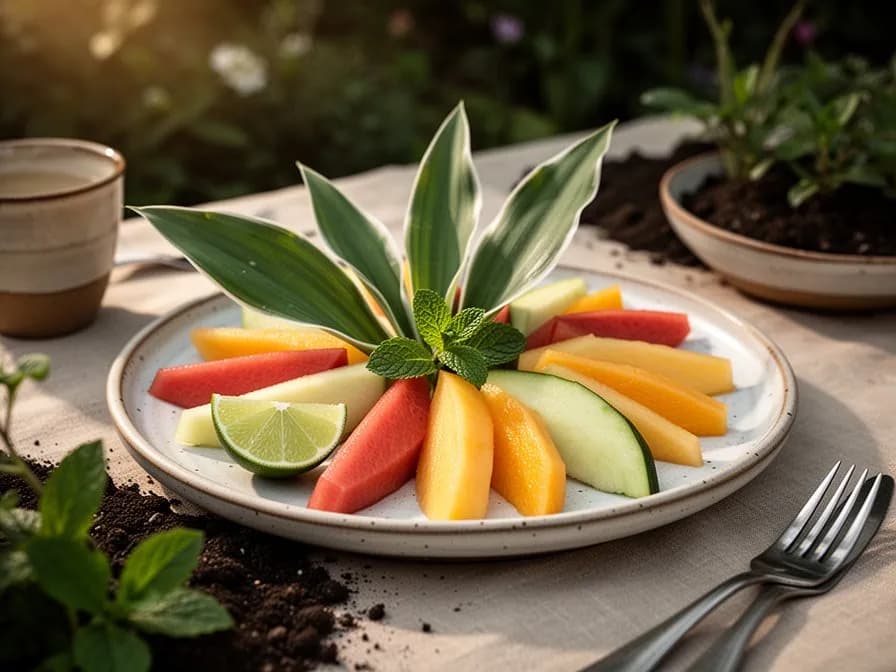
Plantain Leaf Poultice
5 minutesA traditional first-aid remedy for insect stings, minor cuts, and skin irritation. Chewing or crushing a fresh leaf activates the plant's soothing compounds and applying it directly to the skin provides quick relief.
2 ingredientsCulinary Uses
Green plantains are fried twice to make tostones, sliced thin for chips, or boiled and mashed into mofongo. As they ripen to yellow, they become sweeter and are sliced and fried as maduros. Fully ripe black plantains are the sweetest and are used in desserts. Plantains are a dietary staple in West Africa, the Caribbean, and Central America. They are also boiled, roasted, baked, and added to soups and stews.
What's inside
Health Benefits
- Plantain leaves contain aucubin and acteoside, compounds with clinically demonstrated anti-inflammatory effects that help reduce redness, swelling, and irritation when applied topically or consumed as tea.
- The plant's high mucilage content forms a protective coating along the respiratory and digestive tracts, making it a traditional remedy for dry coughs, sore throats, and gastritis.
- Allantoin in plantain leaves promotes cell proliferation and wound healing, accelerating the repair of minor cuts, abrasions, burns, and insect stings when used as a fresh poultice.
- Rich in vitamin K (approximately 400 mcg per 100g), plantain supports healthy blood clotting and contributes to bone mineralization and long-term skeletal health.
- Traditional use as a diuretic has been partially validated by research — plantain tea may support kidney and urinary tract health by promoting healthy urine flow and reducing mild urinary inflammation.
- The plant's antimicrobial properties, attributed to compounds including baicalein and aucubin, have shown activity against common pathogens including Staphylococcus aureus in laboratory studies, supporting its historical use as a wound dressing.
Where Plantain comes from
Plantain (Plantago major), known as broadleaf plantain or common plantain, is one of the most ancient and widely distributed medicinal herbs in the world. Native to Europe and Central Asia, its history with humanity stretches back thousands of years, with evidence of its use found in Neolithic archaeological sites across the continent. It was a foundational plant in the herbal traditions of ancient Greece and Rome — Pliny the Elder and Dioscorides both praised its wound-healing and anti-inflammatory properties extensively in their writings.
The plant's relationship with human civilization is so intertwined that it earned the evocative name 'white man's footprint' from Indigenous peoples of North America, who observed that the herb appeared wherever European colonists settled and traveled. Indeed, plantain was one of the first European plants to naturalize across North America following colonization in the 16th and 17th centuries, spreading along roads, trails, and disturbed ground with remarkable speed.
In Anglo-Saxon England, plantain held a near-sacred status. It was listed as one of the nine holy herbs in the 'Lacnunga', a 10th-century medical manuscript, where it was called 'waybread' and credited with powers to heal wounds, counteract venom, and protect travelers on long journeys. Medieval European herbalists prescribed plantain poultices for everything from insect stings and snake bites to ulcers and eye inflammation.
Across Asia, particularly in traditional Chinese medicine (TCM), Plantago asiatica — a close relative — has been used for at least 2,000 years as a remedy for urinary disorders, coughs, and diarrhea. It appears prominently in the Shennong Ben Cao Jing, the foundational classical text of Chinese herbal medicine.
Modern phytochemical research has validated much of this traditional knowledge. Compounds like aucubin, acteoside, and allantoin found in plantain leaves exhibit documented anti-inflammatory, antimicrobial, and wound-healing activity. Today, plantain remains one of the most accessible and useful plants for any forager, herbalist, or home gardener seeking a low-maintenance, high-value perennial herb.
Plantain: did you know?
Fascinating facts about Plantain
Plantain (Plantago major) is often called 'white man's footprint' by Indigenous peoples because its seeds spread easily along trails and wherever European settlers walked.
Plantain questions, answered
When should I plant Plantain?
What are good companion plants for Plantain?
What hardiness zones can Plantain grow in?
How much sun does Plantain need?
How far apart should I space Plantain?
What pests and diseases affect Plantain?
How do I store Plantain after harvest?
What are the best Plantain varieties to grow?
What soil does Plantain need?
Is the plantain in my garden the same as the plantain banana sold in stores?
Can I eat plantain leaves raw, or do they need to be cooked?
How do I use plantain as a first-aid treatment for insect stings?
Is plantain invasive? Will it take over my garden?
Does plantain have any drug interactions or contraindications I should be aware of?
What is the difference between broadleaf plantain (Plantago major) and ribwort plantain (Plantago lanceolata)?
You just read the theory. Now grow it on autopilot.
Everything that makes Plantain fiddly — the timing, the spacing, the companions, the harvest window — is exactly what PlotMyGarden handles for you, for every plant in your garden.
A plan that knows your weather
Set your location once. Get sow, feed and harvest dates built around your real last-frost date and live forecast — no more guessing from a generic seed packet.
From the “When to plant” sectionDrag-and-drop bed planner
Design beds on a grid. Every plant snaps to its proper spacing, and you can see your whole season laid out before you spend a cent on seed.
From the “Growing guide” sectionCompanion conflicts, caught early
200+ good-and-bad pairings checked live as you plant — so a season-wrecking mistake never makes it into the ground.
From the “Companions” sectionReminders you'll actually act on
“Water the beans.” “Pick today before it turns.” Timely, specific, and tied to the plants you're really growing.
From the “Harvest” sectionSuccession, scheduled
Want a harvest for six weeks, not six days? It spaces your sowings automatically and reminds you when each new block is due.
From the “When to plant” sectionA record that gets smarter
Every harvest you log teaches it your garden. Next year's plan starts from what actually worked in your soil, not a textbook's.
From the “Overview” sectionPlant these alongside Plantain
More Tropical Fruits
Grow your best Plantain yet — and everything around it.
Start a free plan today. Lay out your beds, drop in your Plantain, and let PlotMyGarden handle the timing, spacing, companions and reminders from seed to harvest basket.