Rote Drachenfrucht
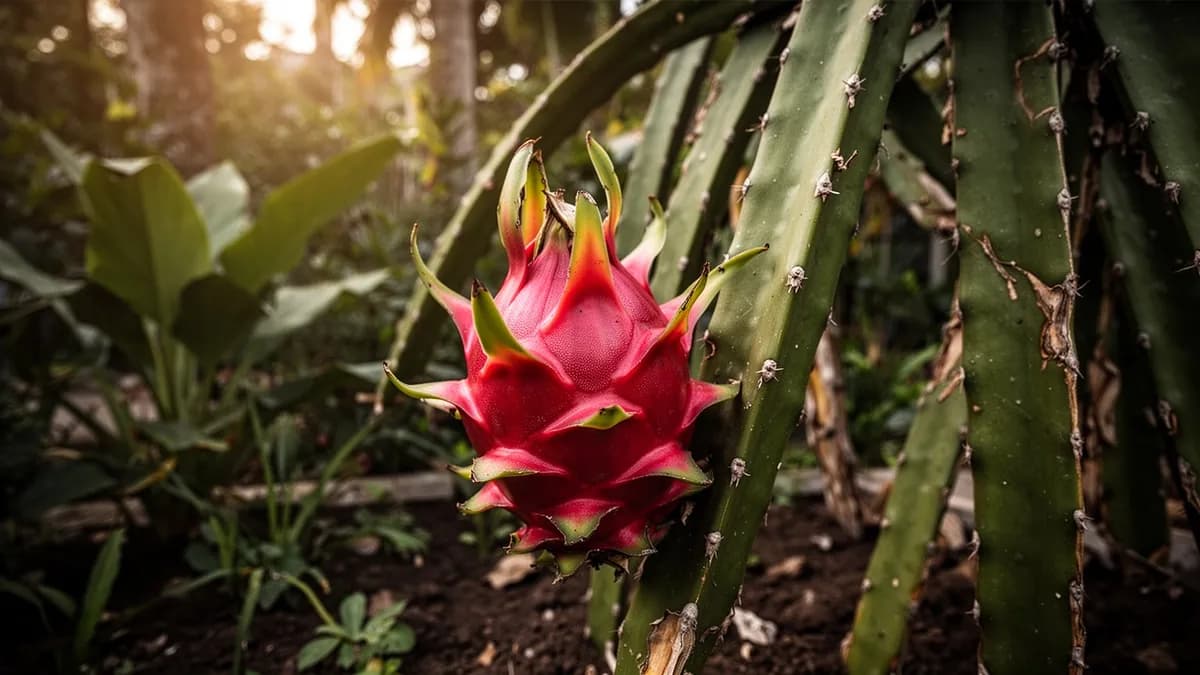
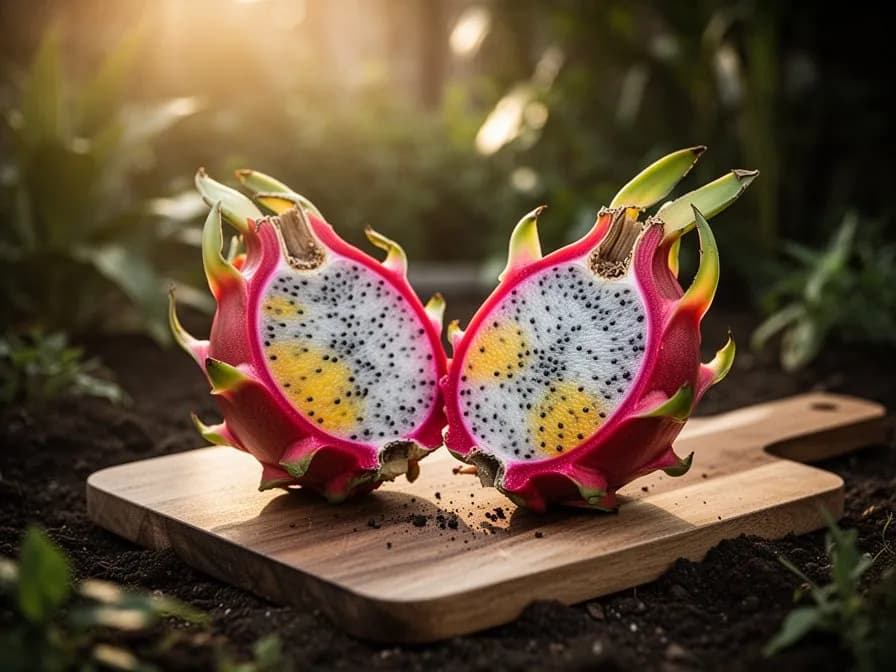
Ein kletternder Kaktus, der leuchtend magentafarbene Früchte mit tiefem rot-violettem Fruchtfleisch hervorbringt, das dramatisch abfärbt und einen süßeren, intensiveren Geschmack als weißfleischige Sorten hat.





Auf dieser SeiteÜberblick
Rote Drachenfrucht im Überblick
Ein kletternder Kaktus, der leuchtend magentafarbene Früchte mit tiefem rot-violettem Fruchtfleisch hervorbringt, das dramatisch abfärbt und einen süßeren, intensiveren Geschmack als weißfleischige Sorten hat. Die Rote Drachenfrucht ist selbststeril und benötigt Fremdbestäubung mit einer anderen Art oder Sorte für den Fruchtansatz. Die großen nachtblühenden Blüten öffnen sich für eine einzige Nacht und müssen möglicherweise von Hand bestäubt werden.
Wann Rote Drachenfrucht pflanzen
Drachenfruchtsamen aus dem Fruchtfleisch keimen leicht. Lösen Sie die Samen heraus, spülen Sie sie sauber und verteilen Sie sie auf feuchtem Küchenpapier zum Keimen in drei bis fünf Tagen bei 24 bis 29 Grad Celsius. Setzen Sie gekeimte Samen in eine gut durchlässige Kakteenerde um. Sämlinge wachsen langsam und können drei bis fünf Jahre bis zur Fruchtbildung benötigen, mit unvorhersehbarer Fruchtqualität. Stammstecklinge sind die bevorzugte Vermehrungsmethode, bewurzeln sich in zwei bis drei Wochen und tragen in ein bis zwei Jahren Früchte. Schneiden Sie 30 cm lange Stammabschnitte, lassen Sie sie eine Woche trocknen und pflanzen Sie sie dann in gut durchlässigen Boden.
Dein Rote Drachenfrucht-Jahr
Abgestimmt auf Zone 7 · typische Saison · Frost geht um den 2. Apr. und kehrt um den 1. Nov. zurück
Rote Drachenfrucht Apr – Jun pflanzen, Jul – Okt ernten. Beachte die Pflanzmethoden unten und wähle dein Klima für passende Zeiträume.
So baust du Rote Drachenfrucht an
Die Rote Drachenfrucht ist ein kletternder Kaktus, der eine stabile Stützstruktur wie einen Beton- oder Holzpfahl, ein Spalier oder eine Laube benötigt. Pflanzen Sie Stecklinge oder Baumschulpflanzen am Fuß der Stütze in gut durchlässigen Boden, der mit Sand und Kompost angereichert ist. Platzieren Sie die Stützen 3 bis 4,5 Meter auseinander mit ein bis drei Pflanzen pro Pfahl. Der Kaktus klettert, indem er Luftwurzeln aussendet, die sich an der Stützfläche festhalten.
Gießen Sie sparsam und lassen Sie den Boden zwischen den Bewässerungen abtrocknen. Die Drachenfrucht ist trockenheitstolerant, liefert aber mit regelmäßiger Bewässerung während der Blüte- und Fruchtzeit die besten Ergebnisse. Zu viel Wasser verursacht Wurzelfäule, besonders in schweren Böden. In regenreichen Klimazonen pflanzen Sie auf erhöhten Hügeln für eine verbesserte Drainage. Reduzieren Sie die Bewässerung im Winter, wenn das Wachstum nachlässt.
Düngen Sie während der Vegetationsperiode monatlich mit einem stickstoffarmen Dünger, der mehr Phosphor und Kalium enthält, um Blüte und Fruchtbildung zu fördern. Die Rote Drachenfrucht ist selbststeril und benötigt Fremdbestäubung von einer anderen Pitaya-Art oder -Sorte. Die großen, duftenden weißen Blüten öffnen sich für eine einzige Nacht, daher bestäuben Sie abends oder am frühen Morgen von Hand mit einem Pinsel, um Pollen zwischen verschiedenen Sorten zu übertragen. Leiten Sie die Triebe entlang der Stütze und schneiden Sie überschüssiges Wachstum zurück, um die Produktivität zu erhalten.
Für Rote Drachenfrucht ist ein Beet von 120 × 240 cm zu klein
Rote Drachenfrucht braucht 250 cm Platz pro Pflanze. Der Planer hält diesen Abstand für dich ein — jede Pflanze, jedes Beet.
Die besten Nachbarn für Rote Drachenfrucht
An vertikalen Stützen gezogene Drachenfrüchte ermöglichen Mischkultur auf Bodenniveau. Kräuter wie Basilikum, Rosmarin und Oregano gedeihen unter den gleichen gut durchlässigen Bodenbedingungen. Niedrig wachsende Sukkulenten sind attraktive Bodendecker. Leguminose Bodendecker wie Klee binden Stickstoff, ohne um vertikalen Raum zu konkurrieren. Vermeiden Sie das Pflanzen in der Nähe von Bäumen, die die Kaktusstämme beschatten würden, da diese für die Blüte volle Sonne benötigen.
Drachenfrucht gehört daneben.
Altes Gärtnerwissen, geprüft an der echten Nachbartabelle von Rote Drachenfrucht — teste jede Pflanze, die du anbaust.
Probiere Rote Drachenfrucht direkt hier im Beet
Ein echtes Planer-Beet, Rote Drachenfrucht steht schon drin. Tippe einen Begleiter an, platziere ihn und sieh, wie die Nachbarschaftsprüfung antwortet — grün für gute Nachbarn, rot bei Streit.


Passende Anbau-Ratgeber
Richtig düngen
Drachenfrucht gedeiht in gut durchlässigem, sandigem oder lehmigem Boden mit einem pH-Wert von 6,0 bis 7,0. Fügen Sie Sand und Perlit hinzu, um die Drainage in schwereren Böden zu verbessern. Als Kaktus verträgt sie keine Staunässe. Tragen Sie während der Vegetationsperiode monatlich einen stickstoffarmen, phosphor- und kaliumreichen Dünger auf. Zu viel Stickstoff erzeugt übermäßiges Stammwachstum auf Kosten der Blüten. Ergänzen Sie während der Fruchtzeit Kalzium und Magnesium, um Fruchtaufplatzen zu verhindern.
Ideale Temperatur
Winterhärtezone-Kompatibilität
Von der Saat zur Ernte, Schritt für Schritt
Steckling & Bewurzelung
Stammstecklinge von 30-40 cm Länge werden 5-7 Tage zum Abtrocknen gelagert und dann in gut durchlässige Erde gepflanzt. Luftwurzeln erscheinen innerhalb von zwei bis vier Wochen, während sich der Steckling im Substrat etabliert.
Vegetatives Wachstum
Die dreirippigen, sukkulenten Stämme verlängern sich während warmer Monate schnell und bilden Luftwurzeln, die sich an Stützen festhalten. Ein einzelner Steckling kann im ersten Jahr unter idealen Bedingungen mehrere Meter neues Wachstum hervorbringen.
Reifung & Verzweigung
Die Pflanzen entwickeln eine Krone aus herabhängenden Seitentrieben an der Spitze der Stütze. An diesen hängenden Stämmen bilden sich die Blütenknospen. Der Kaktus verdickt sich und stärkt sein Wurzelsystem in dieser Phase.
Blüte
Große Knospen erscheinen an reifen hängenden Stämmen, typischerweise ausgelöst durch länger werdende Sommertage. Jede spektakuläre weiße Blüte öffnet sich für eine einzige Nacht und verströmt einen süßen Duft, um Fledermaus- und Mottenbestäuber anzulocken.
Fruchtentwicklung
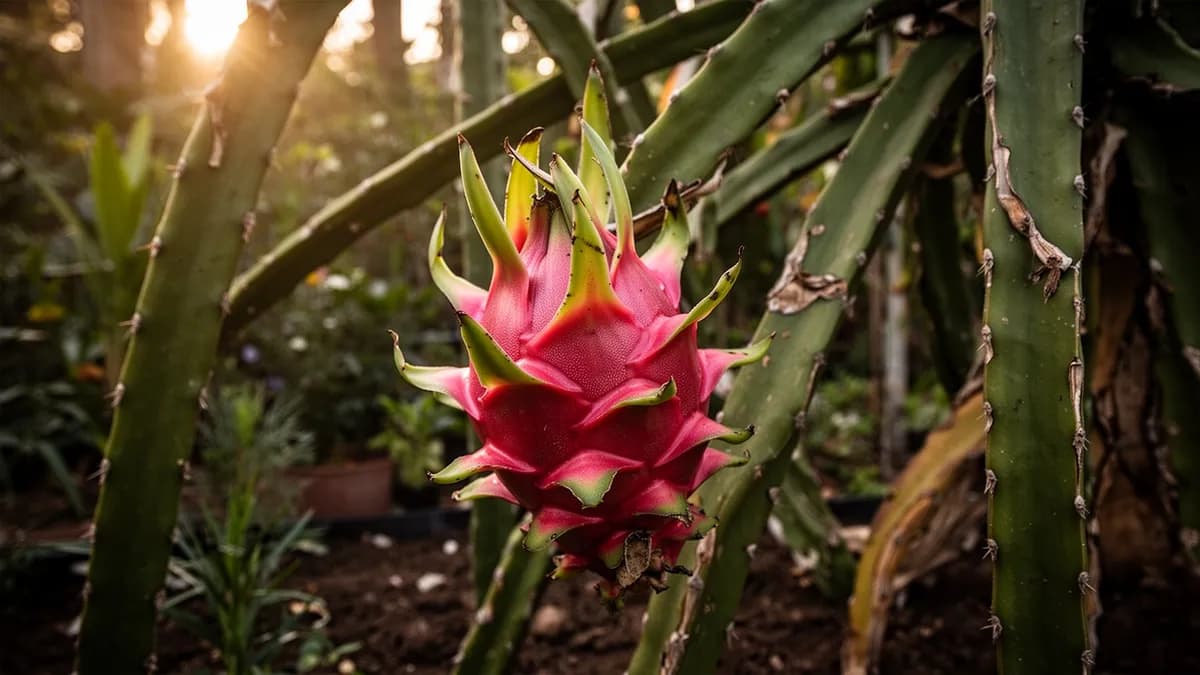
Nach erfolgreicher Bestäubung schwillt der Fruchtknoten über 30-35 Tage schnell an und verwandelt sich von grün zu leuchtend magenta. Die Frucht entwickelt ihre charakteristischen schuppenartigen Brakteen und erreicht bei Reife 300-600 Gramm.
Ruhephase & Erholung
Nach dem Ende der Fruchtsaison tritt die Pflanze in eine kühle Ruhephase mit minimalem Neuwachstum ein. Diese Dormanz ist wichtig, um die nächste Saison mit reichlicher Blüte auszulösen.
Halten Sie die Erde kaum feucht und vermeiden Sie direkte Nachmittagssonne, bis die Wurzeln etabliert sind. Überwässerung in dieser Phase begünstigt Stammfäule.
Rote Drachenfrucht Monat für Monat pflegen
Was du jeden Monat für deine Rote Drachenfrucht tun solltest
Oktober
Aktueller MonatLetzte Ernte der Saison abschließen. Eine leichte Kompostgabe rund um die Basis ausbringen. Gesamte Pflanze auf Schädlingsschäden untersuchen und betroffene Bereiche zurückschneiden
Immer wissen, was jetzt im Garten zu tun ist
Eine E-Mail zum Monatsanfang: was du jetzt säen, pflanzen und anpacken solltest — für deine Rote Drachenfrucht und alles, was drumherum wächst. Dazu ein kurzer Startkurs, der dich vor den klassischen Fehlern bewahrt.
- Was jetzt zu tun ist
- Passend zu deiner Saison
- Startkurs inklusive
Rote Drachenfrucht ernten
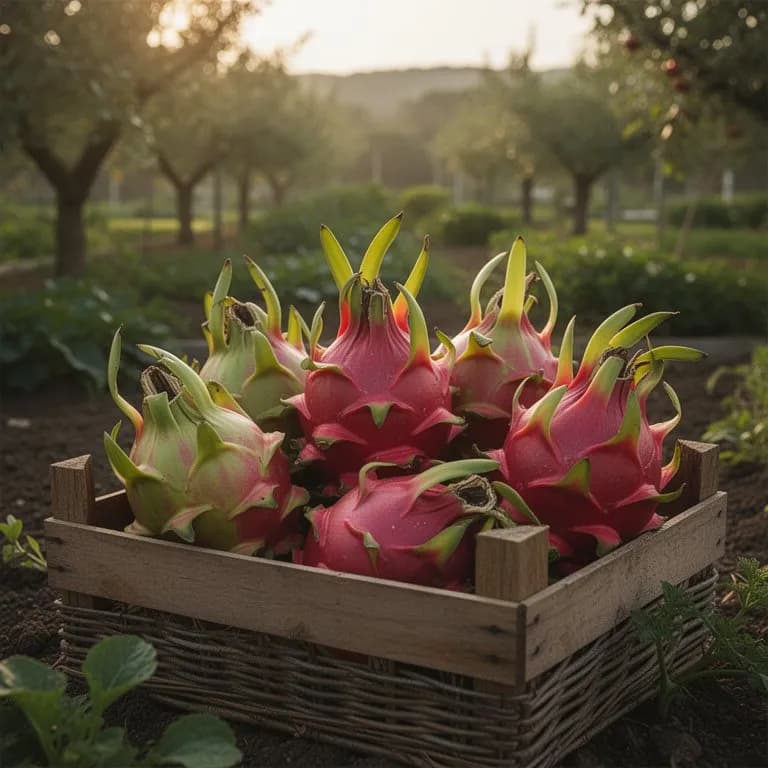
Die Rote Drachenfrucht ist 30 bis 50 Tage nach der Blüte erntereif, wenn die Schale gleichmäßig leuchtend magenta ist, kein Grün mehr vorhanden ist und die flügelartigen Brakteen zu welken und trocknen beginnen. Die Frucht sollte bei sanftem Druck leicht nachgeben. Drehen oder schneiden Sie die Frucht mit einer Gartenschere vom Stamm ab. Das tiefe rot-violette Fruchtfleisch im Inneren sollte durchgehend kräftig gefärbt sein. Ernten Sie am frühen Morgen für beste Frische. Überreife Früchte werden matschig und beginnen zu gären.
angenommen, du pflanzt zu Beginn des Zeitraums — trage dein tatsächliches Datum ein
Ernte Rote Drachenfrucht zügig, dann trägt die Pflanze weiter.
Lagerung & Konservierung
Lagern Sie reife Drachenfrüchte bei Zimmertemperatur zwei bis drei Tage oder im Kühlschrank bis zu zwei Wochen. Das leuchtende Fruchtfleisch lässt sich gut einfrieren, wenn es gewürfelt oder zu Kugeln geformt und auf einem Backblech vorgefroren wird, bevor es in Gefrierbeutel umgefüllt wird. Drachenfrucht kann entsaftet, zu Smoothies verarbeitet oder zu Sorbets püriert werden. Der Saft eignet sich hervorragend als natürliche Lebensmittelfarbe. Getrocknete Drachenfruchtchips sind farbenfrohe, gesunde Snacks.
Was schiefgeht — und die Lösung
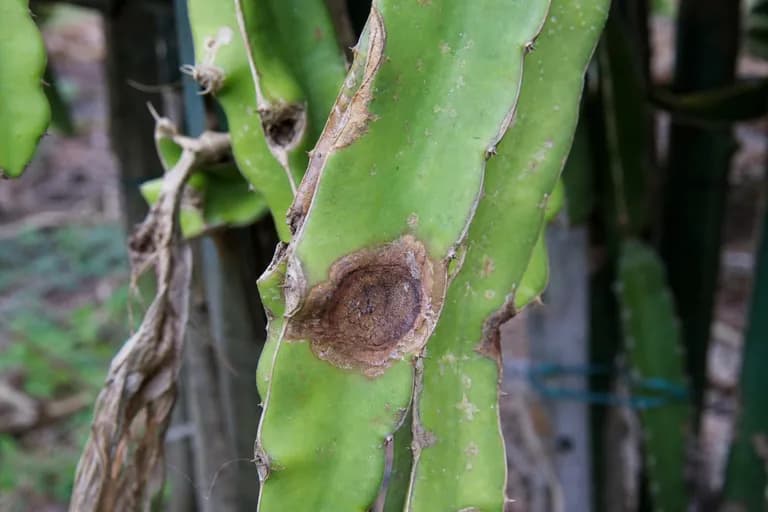
Stammfäule (Dothiorella)
KrankheitBraune, wässrig durchtränkte Flecken an den Stämmen, die sich ausbreiten und ein eingesunkenes, trockenes Zentrum entwickeln; die Stämme werden weich und fallen zusammen.
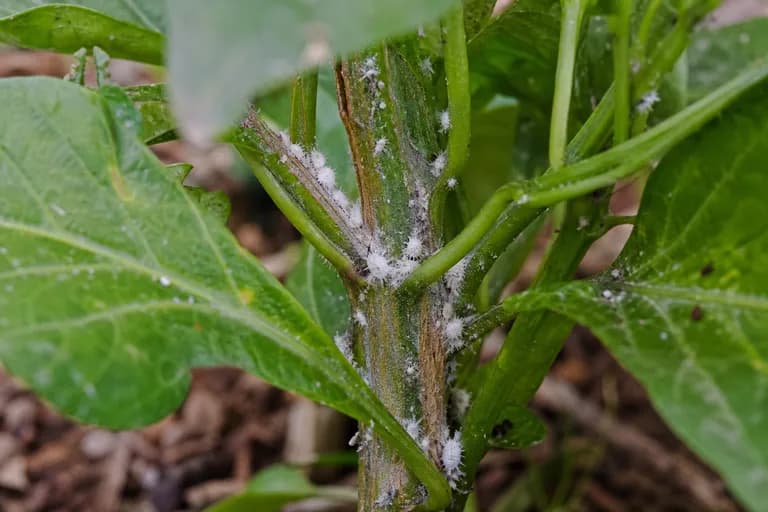
Schmierläuse
SchädlingWeiße, watteähnliche Massen an Stämmen und Früchten; Honigtauausscheidung fördert Rußtau und schwächt die Pflanze.
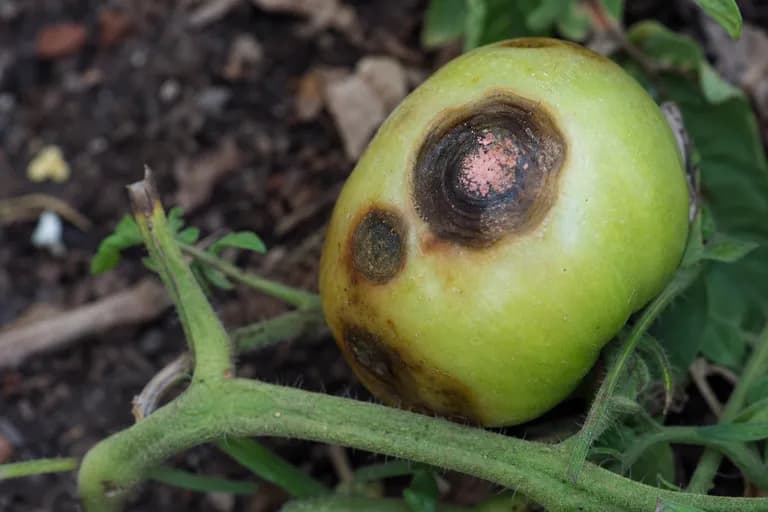
Anthraknose
KrankheitKreisförmige, eingesunkene, dunkelbraune Läsionen an Früchten und Stämmen, besonders bei feuchtem, regnerischem Wetter.
Fehlerbehebung bei häufigen Problemen
Schlechter Fruchtansatz ist das häufigste Problem und wird durch die Selbststerilität roter Sorten verursacht, die Fremdbestäubung von einer anderen Art erfordern. Das nächtliche Blühfenster ist kurz, was die Handbestäubung erschwert. Stammfäule durch überschüssige Feuchtigkeit ist die schwerwiegendste Krankheitsbedrohung. Sonnenbrand kann Stämme bei extrem heißen, trockenen Bedingungen schädigen. Schnecken und Nacktschnecken fressen an jungen Stämmen und sich entwickelnden Früchten in Bodennähe. Überschüssiger Stickstoff verursacht üppiges Wachstum mit wenigen Blüten.
Anbautipps
- Verwenden Sie einen stabilen Beton- oder Hartholzpfahl von mindestens 1,5 m Höhe und 10-15 cm Durchmesser als Hauptstütze, da eine ausgewachsene Pflanze über 50 kg wiegen kann.
- Lassen Sie Stammstecklinge 5-7 Tage an einem trockenen, schattigen Ort abtrocknen, bevor Sie sie pflanzen, um Fäulnis an der Schnittfläche zu verhindern.
- Pflanzen Sie in ein Hochbeet oder einen Hügel mit extrem gut durchlässigem Boden, der etwa 60 % sandigen Lehm und 40 % Perlit oder Bims enthält.
- Gießen Sie tief, aber selten, und lassen Sie die oberen 5 cm des Bodens zwischen den Bewässerungen abtrocknen, um den natürlichen epiphytischen Lebensraum der Pflanze nachzuahmen.
- Bestäuben Sie die Blüten am späten Abend von Hand, indem Sie Pollen mit einem weichen Pinsel von den Staubbeuteln auf die Narbe übertragen, für zuverlässigen Fruchtansatz.
- Tragen Sie alle 6-8 Wochen während der Vegetationsperiode einen kaliumreichen Dünger (z. B. 5-10-15) auf, um reichliche Blüte und Fruchtbildung zu fördern.
- Installieren Sie 30-40 % Schattiernetz in Regionen, in denen die Sommertemperaturen regelmäßig 38 °C überschreiten, um Stammsonnenbrand und Fruchtsonnenbrand zu verhindern.
- Schneiden Sie die Krone jährlich nach der Ernte zurück, indem Sie nach innen wachsende oder abgestorbene Äste entfernen, um die Luftzirkulation zu verbessern und das Pilzkrankheitsrisiko zu senken.
- Schützen Sie die Pflanzen vor Frost, indem Sie sie mit Decken oder Jute abdecken, wenn Temperaturen unter 4 °C prognostiziert werden, da selbst kurzer Frost die Stämme beschädigen kann.
- Fremdbestäuben Sie mit einer anderen Hylocereus-Sorte oder einem anderen Klon für deutlich größere und reichlichere Früchte im Vergleich zur Selbstbestäubung.
Bau deine beste Rote Drachenfrucht an — und alles drumherum.
Starte heute kostenlos. Lege deine Beete an, setze deine Rote Drachenfrucht ein und lass PlotMyGarden Timing, Abstände, Begleiter und Erinnerungen von der Saat bis zum Erntekorb übernehmen.
Finde deine Rote Drachenfrucht
American Beauty
Eine beliebte rotfleischige Sorte mit großen Früchten, süßem Geschmack und kräftigem Wuchs, die Fremdbestäubung für den Fruchtansatz benötigt.
Physical Graffiti
Eine selbststerile Sorte, die sehr große Früchte mit intensiv gefärbtem magentafarbenem Fruchtfleisch und ausgezeichneter Süße hervorbringt.
Zamorano
Eine ertragreiche rotfleischige Sorte aus Mittelamerika mit gutem Geschmack und mittlerer Fruchtgröße.
Dark Star
Eine Hybride, die tiefes purpur-rotes Fruchtfleisch mit außergewöhnlicher Süße und kleineren Samen als die meisten roten Sorten produziert.
Eine einzelne Rote Drachenfrucht kostet im Handel 4 bis 8 €, und eine ausgewachsene selbst angebaute Pflanze kann 20-60 Früchte pro Saison produzieren. Bei durchschnittlich 5 € pro Frucht könnte eine produktive Pflanze jährlich Früchte im Wert von 100-300 € liefern. Da Drachenfruchtpflanzen mehrjährig sind und bei grundlegender Pflege 20 oder mehr Jahre produktiv bleiben können, bietet ein einzelner Steckling für 5-15 € eine außergewöhnliche langfristige Rendite für Gärtner in geeigneten Klimazonen.
Schnelle Rezepte

Rote Drachenfrucht-Smoothie-Bowl
10 Min.Eine leuchtend magentafarbene Smoothie-Bowl, garniert mit tropischen Früchten und knusprigem Granola. Die gefrorene Pitaya ergibt eine natürlich dicke, eiscremeähnliche Basis ohne Milchprodukte.
5 ZutatenPitaya-Limetten-Sorbet
15 Min. plus 4 Stunden EinfrierenEin erfrischendes Zwei-Zutaten-Sorbet, das die natürliche Süße und Farbe der Roten Drachenfrucht zur Geltung bringt. Keine Eismaschine erforderlich.
5 ZutatenDrachenfrucht-Tropische-Salsa
15 Min.Eine farbenfrohe frische Salsa, die wunderbar zu gegrilltem Fisch oder Tortillachips passt. Die milde Süße der Pitaya gleicht die Schärfe der Jalapeño aus.
6 ZutatenKulinarische Verwendung
Die Rote Drachenfrucht wird für ihre dramatische Farbe geschätzt, die Smoothie-Bowls, Säfte und Desserts in leuchtende Magenta-Kreationen verwandelt. Frisch verzehren, indem man sie halbiert und das Fruchtfleisch herauslöffelt. Der Geschmack ist mild-süß mit Beerennoten. Verwenden Sie sie in Obstsalaten, Sorbets und Cocktails. Der Saft ist eine beliebte natürliche Lebensmittelfarbe für Glasuren, Nudeln und Reisgerichte.
Was drinsteckt
Gesundheitsvorteile
- Hohe Betacyanin-Antioxidantien-Spiegel können helfen, freie Radikale zu neutralisieren und oxidativen Stress zu reduzieren, der mit chronischen Krankheiten in Verbindung steht.
- Präbiotische Ballaststoffe und Oligosaccharide fördern das Wachstum nützlicher Lactobacillus- und Bifidobacterium-Darmbakterien und unterstützen die Verdauungsgesundheit.
- Der niedrige glykämische Index und der moderate Ballaststoffgehalt können helfen, den Blutzuckerspiegel nach Mahlzeiten zu stabilisieren.
- Der Eisengehalt von etwa 1,9 mg pro 100 g unterstützt die Produktion roter Blutkörperchen und kann Eisenmangelanämie vorbeugen.
- Magnesium und Kalzium in der Drachenfrucht tragen zur Knochengesundheit sowie zur ordnungsgemäßen Muskel- und Nervenfunktion bei.
- Der Vitamin-C-Gehalt unterstützt die Immunfunktion, die Kollagensynthese und verbessert die Aufnahme des pflanzlichen Eisens in der Frucht.
Woher Rote Drachenfrucht stammt
Die Rote Drachenfrucht (Hylocereus costaricensis) stammt aus den tropischen Wäldern Mittelamerikas, mit einem natürlichen Verbreitungsgebiet von Südmexiko über Guatemala, Honduras, Nicaragua bis Costa Rica. Jahrhundertelang sammelten die indigenen Völker Mesoamerikas ihre Früchte von Wildpflanzen, die als Epiphyten auf Dschungelbäumen wuchsen. Spanische und portugiesische Kolonisatoren entdeckten die Frucht im 16. Jahrhundert und brachten sie über ihre Handelsrouten nach Südostasien, wo sie ein außergewöhnlich aufnahmebereites Klima und eine aufnahmebereite Kultur vorfand. Insbesondere Vietnam wurde zum Zentrum des modernen Drachenfruchtanbaus, nachdem französische Missionare die Pflanze im frühen 19. Jahrhundert eingeführt hatten. Die Vietnamesen nannten sie 'Thanh Long', was grüner Drache bedeutet, weil ihre schuppigen grünen Brakteen an Drachenschuppen erinnerten. Bis zum Ende des 20. Jahrhunderts breiteten sich kommerzielle Plantagen rasch in Vietnam, Thailand, Malaysia, den Philippinen und Indonesien aus und verwandelten die Rote Pitaya von einer exotischen Kuriosität in eine gängige tropische Nutzpflanze. Heute ist Vietnam der weltweit größte Produzent und Exporteur von Drachenfrüchten und bewirtschaftet Hunderttausende Hektar. Die rotfleischige Art Hylocereus costaricensis hat aufgrund ihres süßeren Geschmacksprofils und ihres auffälligen magentafarbenen Inneren im Vergleich zur häufiger angebauten weißfleischigen Hylocereus undatus besondere Beliebtheit erlangt. Im 21. Jahrhundert hat sich der Drachenfruchtanbau auf subtropische Regionen der Vereinigten Staaten, Australiens, Israels und Südeuropas ausgedehnt, angetrieben durch die wachsende globale Nachfrage nach antioxidantienreichen Superfoods. Zuchtprogramme konzentrieren sich nun auf selbstfruchtbare Sorten und verbesserte Haltbarkeit, um den Anforderungen internationaler Märkte gerecht zu werden.
Rote Drachenfrucht: Schon gewusst?
Faszinierende Fakten über Rote Drachenfrucht
Blüten der Roten Drachenfrucht blühen nur eine einzige Nacht, was der Pflanze in einigen mittelamerikanischen Regionen den Spitznamen 'Mondblumenkaktus' eingebracht hat.
Rote Drachenfrucht: Fragen & Antworten
Wann sollte ich Rote Drachenfrucht pflanzen?
Was sind gute Begleitpflanzen für Rote Drachenfrucht?
In welchen Winterhärtezonen kann Rote Drachenfrucht wachsen?
Wie viel Sonne braucht Rote Drachenfrucht?
Welchen Abstand sollte ich zwischen Rote Drachenfrucht lassen?
Welche Schädlinge und Krankheiten befallen Rote Drachenfrucht?
Wie lagere ich Rote Drachenfrucht nach der Ernte?
Was sind die besten Rote Drachenfrucht-Sorten zum Anbauen?
Welchen Boden braucht Rote Drachenfrucht?
Wie lange dauert es, bis ein Steckling der Roten Drachenfrucht die ersten Früchte trägt?
Müssen Rote Drachenfruchtpflanzen von Hand bestäubt werden?
Was ist der Unterschied zwischen rotfleischiger und weißfleischiger Drachenfrucht?
Kann Rote Drachenfrucht in Kübeln angebaut werden?
Warum fallen meine Drachenfruchtblüten ab, ohne Früchte anzusetzen?
Woran erkenne ich, dass eine Rote Drachenfrucht reif und erntefertig ist?
Du hast die Theorie gelesen. Jetzt baue sie auf Autopilot an.
Alles, was Rote Drachenfrucht knifflig macht — das Timing, die Abstände, die Begleiter, das Erntefenster — genau das übernimmt PlotMyGarden für dich, für jede Pflanze im Garten.
Ein Plan, der dein Wetter kennt
Standort einmal festlegen. Aussaat-, Dünge- und Erntedaten rund um deinen echten letzten Frosttermin und die Live-Vorhersage — kein Raten mehr nach Saattüte.
Aus dem Abschnitt „Pflanzzeit“Beetplaner per Drag & Drop
Beete auf einem Raster gestalten. Jede Pflanze rastet im richtigen Abstand ein, und du siehst die ganze Saison, bevor du einen Cent für Saatgut ausgibst.
Aus dem Abschnitt „Anbau“Begleiter-Konflikte früh erkannt
Über 200 gute und schlechte Kombinationen werden beim Pflanzen live geprüft — so landet ein saisonruinierender Fehler nie in der Erde.
Aus dem Abschnitt „Begleiter“Erinnerungen, nach denen du wirklich handelst
„Gieß die Bohnen.“ „Heute ernten, bevor's umschlägt.“ Pünktlich, konkret und auf deine echten Pflanzen bezogen.
Aus dem Abschnitt „Ernte“Staffel-Aussaat, geplant
Sechs Wochen ernten statt sechs Tage? Die App verteilt deine Aussaaten automatisch und erinnert dich, wenn der nächste Satz fällig ist.
Aus dem Abschnitt „Pflanzzeit“Ein Verlauf, der schlauer wird
Jede protokollierte Ernte bringt der App deinen Garten bei. Der Plan fürs nächste Jahr startet bei dem, was in deinem Boden wirklich funktioniert hat.
Aus dem Abschnitt „Überblick“Pflanze diese neben Rote Drachenfrucht
Weitere Tropische Früchte
Bau deine beste Rote Drachenfrucht an — und alles drumherum.
Starte heute kostenlos. Lege deine Beete an, setze deine Rote Drachenfrucht ein und lass PlotMyGarden Timing, Abstände, Begleiter und Erinnerungen von der Saat bis zum Erntekorb übernehmen.