Kakibaum
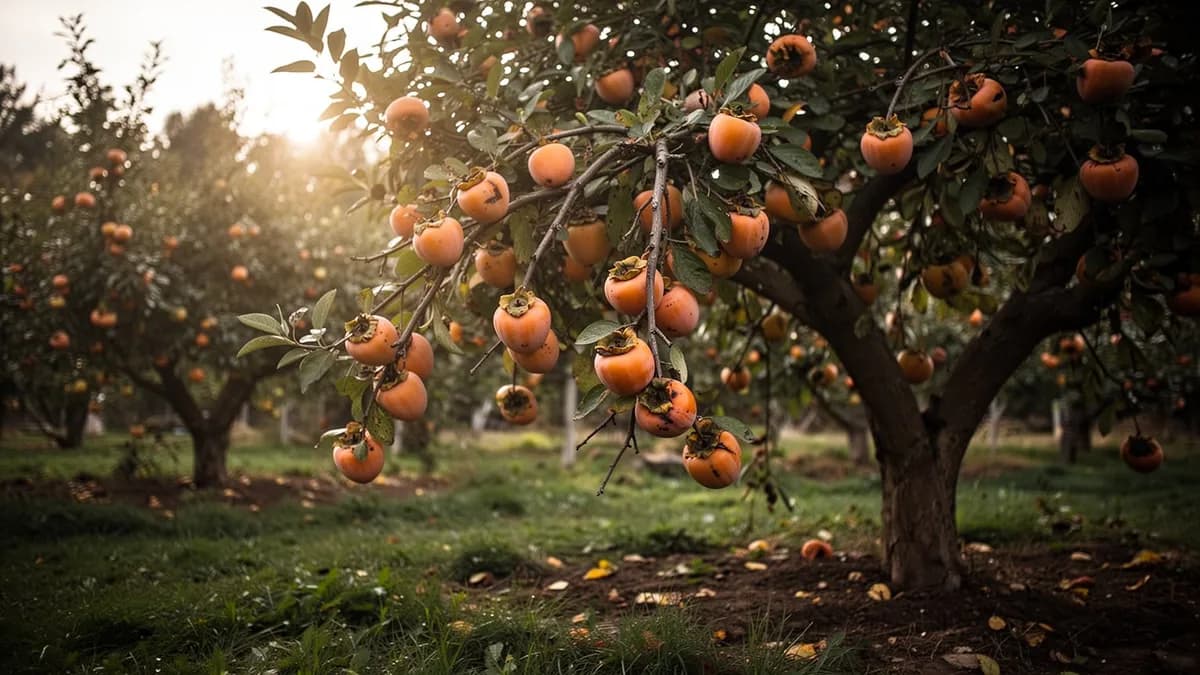
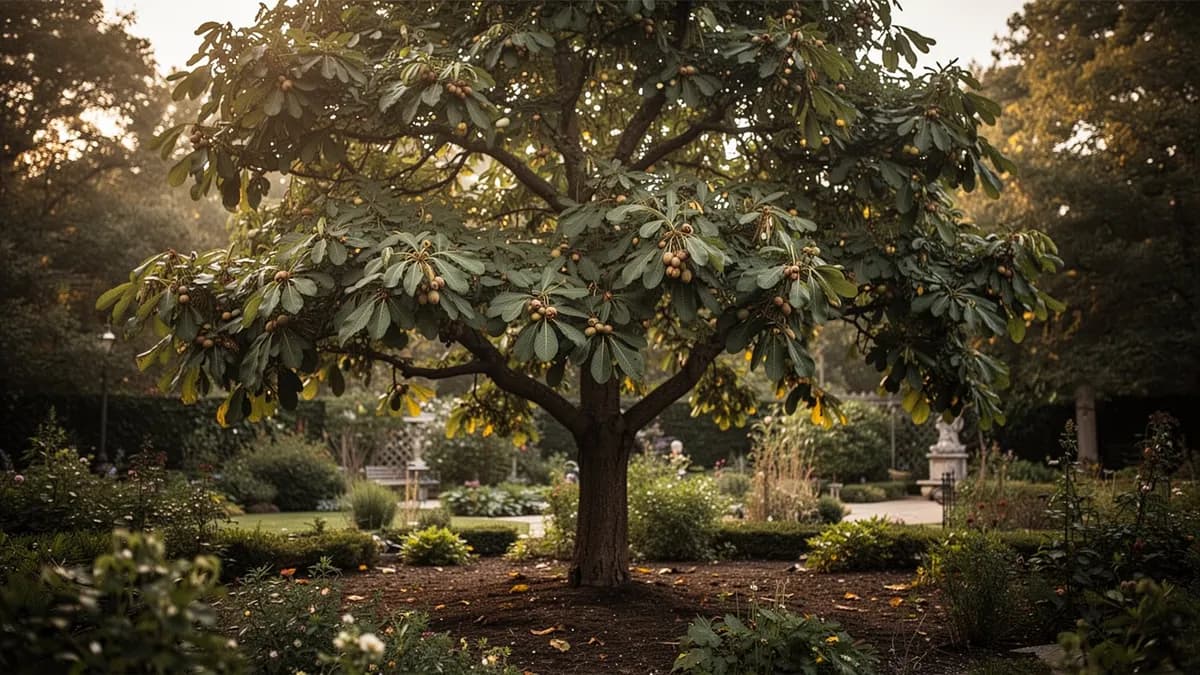
Ein wunderschöner Zier- und Obstbaum, der leuchtend orangefarbene Herbstfrüchte mit einer reichen, honigartigen Süße bei voller Reife hervorbringt.





Auf dieser SeiteÜberblick
Kakibaum im Überblick
Ein wunderschöner Zier- und Obstbaum, der leuchtend orangefarbene Herbstfrüchte mit einer reichen, honigartigen Süße bei voller Reife hervorbringt. Wählen Sie zwischen adstringierenden Sorten, die vor dem Verzehr vollständig weich werden müssen, und nicht-adstringierenden Sorten, die fest wie ein Apfel gegessen werden können. Kakibäume benötigen nur minimalen Schnitt und sind relativ schädlingsresistent, was sie zu einer ausgezeichneten pflegeleichten Obstbaumwahl macht. Sie entwickeln eine tiefe Pfahlwurzel und vertragen kein Umpflanzen, daher sollten Sie den Pflanzstandort sorgfältig wählen.
Wann Kakibaum pflanzen
Asiatische Kakis werden typischerweise auf amerikanische Kaki (Diospyros virginiana) als Unterlage veredelt, die Winterhärte und Bodenanpassungsfähigkeit bietet. Kaufen Sie veredelte Bäume aus Baumschulen für zuverlässige Fruchtqualität. Kakisamen können 90 Tage kalt stratifiziert und ausgesät werden, aber Sämlinge tragen spät (5 bis 7 Jahre) und können minderwertige Früchte produzieren. Behandeln Sie Baumschulbäume vorsichtig, da die Pfahlwurzel spröde ist und beim Umpflanzen leicht beschädigt werden kann.
Dein Kakibaum-Jahr
Abgestimmt auf Zone 7 · typische Saison · Frost geht um den 2. Apr. und kehrt um den 1. Nov. zurück
Kakibaum Mär – Apr pflanzen, Okt – Nov ernten. Beachte die Pflanzmethoden unten und wähle dein Klima für passende Zeiträume.
So baust du Kakibaum an
Wählen Sie den endgültigen Pflanzstandort sorgfältig aus, da Kakibäume eine tiefe Pfahlwurzel entwickeln und sich nach der Etablierung stark gegen Umpflanzen sträuben. Ein Standort mit voller Sonne und gut durchlässigem Boden ist ideal, obwohl Kakis eine breitere Palette von Bedingungen tolerieren als die meisten Obstbäume. Sie können sowohl in sauren als auch in leicht alkalischen Böden wachsen. Pflanzen Sie die Bäume in einem Abstand von 6 bis 7,5 Metern für eine ausreichende Kronenentwicklung.
Pflanzen Sie Container- oder ballierte Kakibäume im Frühling nach dem letzten Frost. Behandeln Sie den Wurzelballen vorsichtig, da die Pfahlwurzel zerbrechlich ist und leicht beschädigt werden kann. Wässern Sie beim Pflanzen gründlich und bringen Sie eine großzügige Mulchschicht auf. Halten Sie neu gepflanzte Bäume während der ersten zwei Vegetationsperioden gleichmäßig feucht, während sich das Wurzelsystem etabliert. Kakis sind nach der Reife trockenheitsresistent, produzieren aber bessere Früchte bei regelmäßiger Feuchtigkeit.
Kakibäume erfordern im Vergleich zu anderen Obstbäumen nur minimalen Schnitt. Schneiden Sie nur abgestorbenes Holz, sich kreuzende Äste und formen Sie den Baum in den ersten Jahren. Etablierte Bäume benötigen wenig Pflege außer gelegentlichem Auslichten dichter Äste. Wenn Sie adstringierende Sorten anbauen, lassen Sie die Früchte am Baum oder nach der Ernte vollständig weich werden, bevor Sie sie essen, um das intensiv adstringierende, zusammenziehende Mundgefühl unreifer Früchte zu vermeiden.
Für Kakibaum ist ein Beet von 120 × 240 cm zu klein
Kakibaum braucht 600 cm Platz pro Pflanze. Der Planer hält diesen Abstand für dich ein — jede Pflanze, jedes Beet.
Die besten Nachbarn für Kakibaum
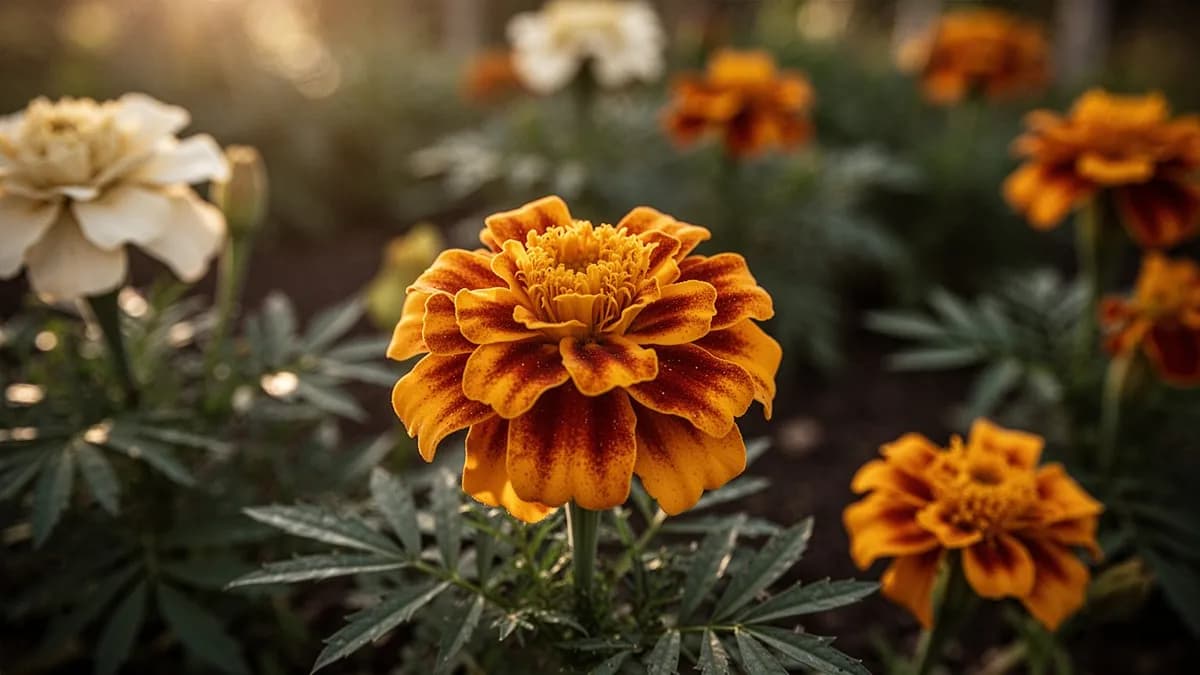
Kakibäume spenden mäßigen Schatten, der Unterpflanzungen von Beinwell, Funkien und schattentoleranten Kräutern unterstützt. In der Nähe gepflanzte Tagetes und Borretsch locken Bestäuber an. Klee oder andere stickstofffixierende Gründüngungspflanzen verbessern den Boden rund um Kakibäume, ohne sie zu überdüngen. Vermeiden Sie aggressive Bodendecker, die mit dem sich etablierenden Wurzelsystem konkurrieren könnten. Narzissen verwildern gut unter ausgewachsenen Kakibäumen.
Studentenblume gehört daneben. Walnussbaum nicht.
Altes Gärtnerwissen, geprüft an der echten Nachbartabelle von Kakibaum — teste jede Pflanze, die du anbaust.
Probiere Kakibaum direkt hier im Beet
Ein echtes Planer-Beet, Kakibaum steht schon drin. Tippe einen Begleiter an, platziere ihn und sieh, wie die Nachbarschaftsprüfung antwortet — grün für gute Nachbarn, rot bei Streit.


Passende Anbau-Ratgeber
Richtig düngen
Kakibäume sind bemerkenswert anpassungsfähig an Bodenbedingungen und wachsen in Lehm-, Misch- oder Sandböden mit einem pH-Bereich von 5,5 bis 7,5. Sie vertragen arme Böden besser als die meisten Obstbäume. Bringen Sie im zeitigen Frühjahr sparsam einen ausgewogenen Dünger aus; Überdüngung verursacht Fruchtfall und übermäßiges vegetatives Wachstum. Kakis haben einen geringen Stickstoffbedarf. Eine leichte jährliche Kompostgabe im Bereich der Kronentraufe reicht für etablierte Bäume oft aus.
Winterhärtezone-Kompatibilität
Von der Saat zur Ernte, Schritt für Schritt
Winterruhe & Knospenschwellen
Der Baum befindet sich im Winter in der Ruhephase. Die Knospen beginnen zu schwellen, wenn die Temperaturen im Spätwinter bis zum zeitigen Frühjahr ansteigen. Dies ist die ideale Zeit für den Schnitt und das Ausbringen von Winterspritzungen.
Blattaustrieb & Blüte
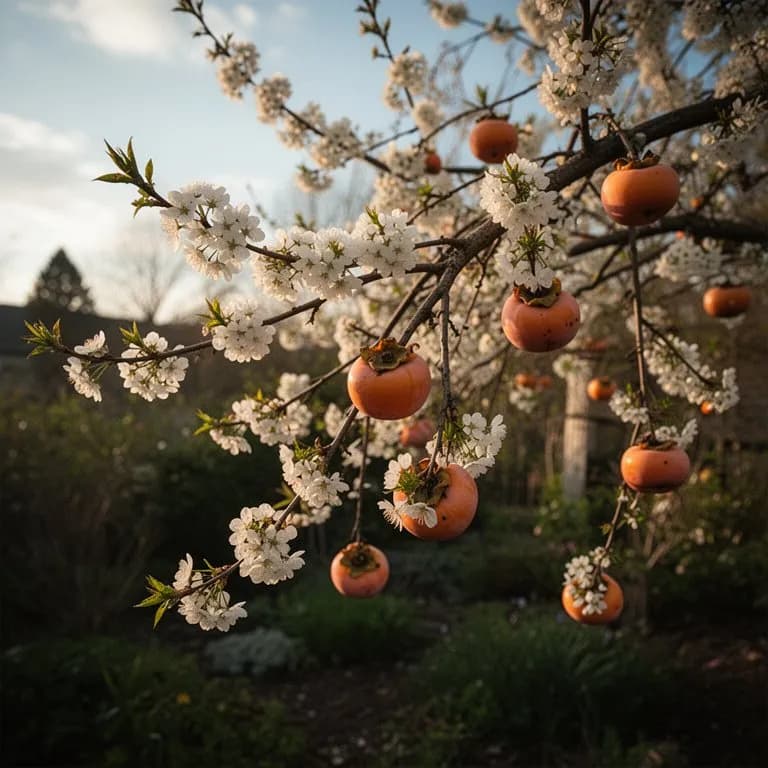
Neue Blätter erscheinen im mittleren Frühjahr, gefolgt von kleinen, cremig-gelben, glockenförmigen Blüten. Asiatische Kakis sind in der Regel selbstbestäubend, obwohl Fremdbestäubung den Fruchtansatz verbessern und den Fruchtfall reduzieren kann.
Fruchtentwicklung
Nach der Bestäubung beginnen sich kleine grüne Früchte zu entwickeln und wachsen den ganzen Sommer über. Der Baum kann im Juni auf natürliche Weise einige Früchte abwerfen (sogenannter Junifall), um seine Erntelast zu regulieren.
Fruchtreife
Die Früchte wechseln von Grün zu leuchtendem Orange und beginnen weich zu werden. Nicht-adstringierende Sorten wie Fuyu können noch fest gegessen werden. Adstringierende Sorten wie Hachiya müssen vor dem Verzehr vollständig weich sein.
Ernte & Blattfall
Die Früchte werden je nach Sorte und Klima von Ende September bis November geerntet. Die Blätter verfärben sich in spektakuläre Rot-, Orange- und Violetttöne, bevor sie abfallen. Der Baum geht nach dem Blattfall in die Winterruhe.
Winterruhe
Der Baum ist vollständig in der Ruhephase mit kahlen Ästen. Kakibäume benötigen je nach Sorte etwa 100 bis 500 Kältestunden unter 7 Grad Celsius, um die Winterruhe zu durchbrechen und in der folgenden Saison richtig zu fruchten.
Schneiden Sie während der Ruhephase, um den Baum zu formen und abgestorbene, beschädigte oder sich kreuzende Äste zu entfernen, bevor der Neuaustrieb beginnt.
Kakibaum Monat für Monat pflegen
Was du jeden Monat für deine Kakibaum tun solltest
Oktober
Aktueller MonatVerbleibende nicht-adstringierende Früchte bei voller Ausfärbung ernten. Adstringierende Sorten wie Hachiya ernten, wenn sie sehr weich sind, oder einfrieren, um die Adstringenz zu entfernen. Die spektakuläre Herbstlaubfärbung genießen
Immer wissen, was jetzt im Garten zu tun ist
Eine E-Mail zum Monatsanfang: was du jetzt säen, pflanzen und anpacken solltest — für deine Kakibaum und alles, was drumherum wächst. Dazu ein kurzer Startkurs, der dich vor den klassischen Fehlern bewahrt.
- Was jetzt zu tun ist
- Passend zu deiner Saison
- Startkurs inklusive
Kakibaum ernten
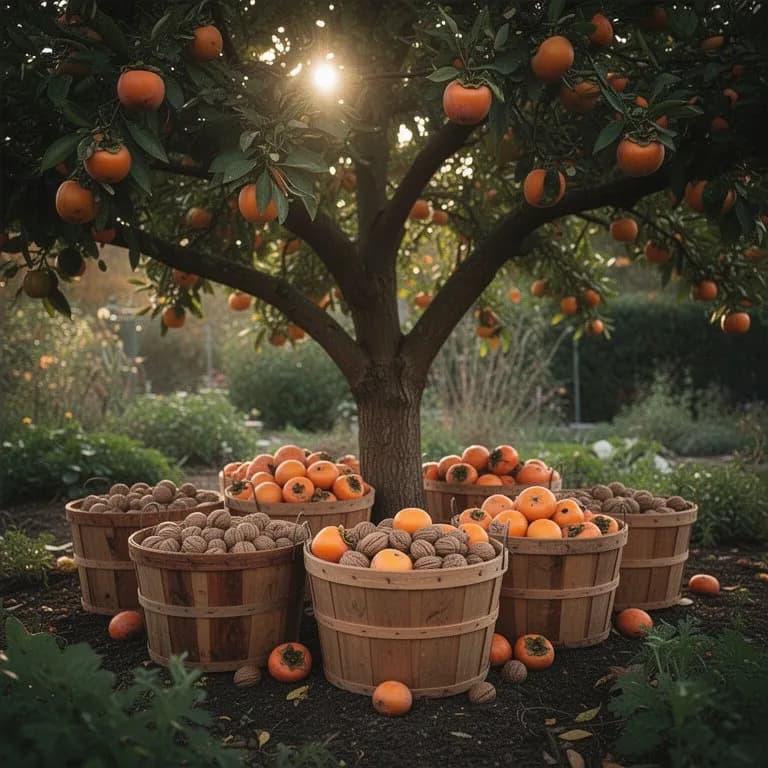
Nicht-adstringierende Kakis wie Fuyu können geerntet werden, wenn sie voll ausgefärbt sind, und fest wie ein Apfel gegessen werden. Adstringierende Sorten wie Hachiya müssen am Baum verbleiben, bis sie vollständig weich und durchscheinend sind, oder fest geerntet und drinnen nachgereift werden, bis das Fruchtfleisch geleeartig wird. Schneiden Sie die Früchte mit einer Gartenschere vom Baum und lassen Sie den Kelch dran. Einige Züchter warten bis nach dem ersten Frost, der die Süße bei adstringierenden Sorten verstärkt.
angenommen, du pflanzt zu Beginn des Zeitraums — trage dein tatsächliches Datum ein
Ernte Kakibaum zügig, dann trägt die Pflanze weiter.
Lagerung & Konservierung
Feste nicht-adstringierende Kakis halten sich 2 bis 3 Wochen im Kühlschrank. Weiche adstringierende Kakis werden am besten sofort verwendet oder als Püree zum Backen eingefroren. Getrocknete Kakischeiben, in der japanischen Tradition Hoshigaki genannt, sind eine Delikatesse, die durch Aufhängen geschälter Früchte an einem kühlen, luftigen Ort über mehrere Wochen hergestellt wird. Kakipüree lässt sich gut einfrieren und das ganze Jahr über für Puddings, Brote und Kekse verwenden. Die Früchte können auch zu Marmelade und Fruchtleder verarbeitet werden.
Was schiefgeht — und die Lösung
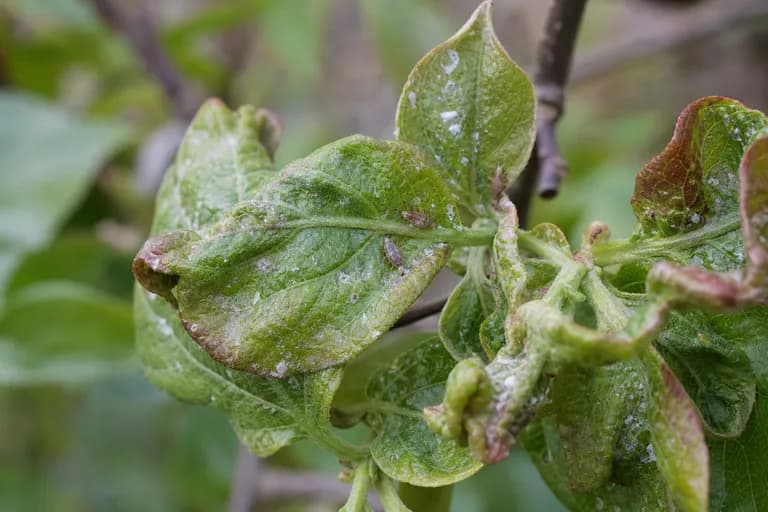
Kaki-Blattfloh
SchädlingKleine springende Insekten auf Neutrieben, die Blattkräuselung und -verformung verursachen. Honigtauausscheidungen führen zu Rußtau auf den Blättern.
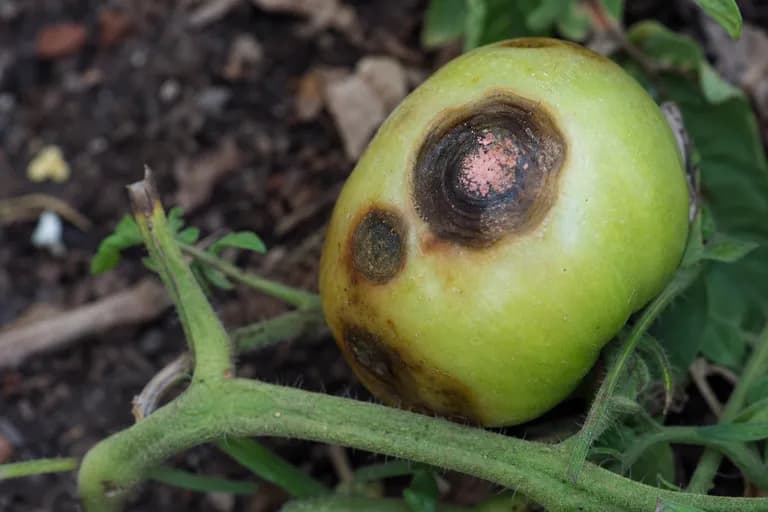
Anthraknose
KrankheitDunkle, eingesunkene Flecken auf Blättern und Früchten. Blattflecken können zusammenfließen und frühen Blattfall verursachen. Früchte können dunkle Läsionen entwickeln.
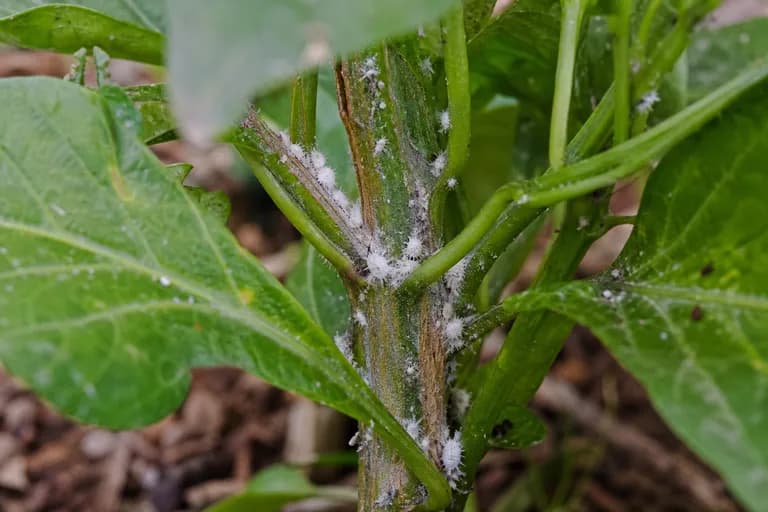
Schmierläuse
SchädlingWeiße, watteartige Ansammlungen an Stämmen, Blattachseln und Früchten. Starker Befall schwächt den Baum und überzieht Oberflächen mit Honigtau.
Fehlerbehebung bei häufigen Problemen
Vorzeitiger Fruchtfall ist die häufigste Beschwerde, meist verursacht durch ungleichmäßige Bewässerung, Überdüngung oder unzureichende Bestäubung. Etwas Fruchtfall im Frühsommer ist normal. Der Verzehr adstringierender Sorten, bevor sie vollständig weich sind, verursacht ein äußerst unangenehmes, zusammenziehendes Mundgefühl durch Tannine. Sonnenbrand an Ästen kann an exponierten Standorten auftreten. Die tiefe Pfahlwurzel macht das Umpflanzen etablierter Bäume nahezu unmöglich.
Anbautipps
- Pflanzen Sie Kakibäume an einem Standort mit voller Sonneneinstrahlung von mindestens 6 bis 8 Stunden täglich und Schutz vor starken Winden, die spröde Äste beschädigen und sich entwickelnde Früchte abschlagen können.
- Kakibäume entwickeln eine tiefe Pfahlwurzel und vertragen kein Umpflanzen nach der Etablierung, daher sollten Sie von Anfang an einen dauerhaften Pflanzstandort sorgfältig wählen.
- Verwenden Sie gut durchlässigen Lehmboden mit einem pH-Wert zwischen 6,0 und 7,5 für beste Ergebnisse. Kakis sind toleranter gegenüber schweren Lehmböden als die meisten Obstbäume, überleben jedoch keine Staunässe.
- Wässern Sie junge Bäume während der Vegetationsperiode ein- bis zweimal pro Woche gründlich. Etablierte Bäume sind mäßig trockenheitsresistent, produzieren aber die besten Früchte bei gleichmäßiger Feuchtigkeit im Sommer.
- Bringen Sie im zeitigen Frühjahr beim Knospenschwellen einen ausgewogenen Dünger wie 10-10-10 aus. Vermeiden Sie übermäßigen Stickstoff, der vegetatives Wachstum auf Kosten der Fruchtproduktion fördert.
- Schneiden Sie den Baum während der Winterruhe in eine offene Mitte oder modifizierte Mitteltriebform. Entfernen Sie sich kreuzende Äste, Wassertriebe und abgestorbenes Holz, um die Lichtdurchlässigkeit und Luftzirkulation zu verbessern.
- Dünnen Sie im Frühsommer Fruchtbüschel auf ein bis zwei Früchte pro Büschel aus. Dies verhindert Astbruch durch übermäßiges Gewicht und führt zu größeren, qualitativ hochwertigeren Kakis.
- Schützen Sie reifende Früchte vor Vögeln und Eichhörnchen mit Netzen oder Papiertüten, die ab dem Frühherbst über einzelne Fruchtbüschel gestülpt werden.
- Wenn Sie adstringierende Sorten wie Hachiya anbauen, lassen Sie die Früchte am Baum vollständig reifen, bis sie sehr weich sind, oder ernten Sie sie bei voller Farbe und frieren Sie sie über Nacht ein, um die adstringierenden Tannine zu entfernen.
- Mulchen Sie großzügig rund um den Baum mit 8 bis 10 Zentimetern organischem Mulch wie Holzhackschnitzel oder Stroh und halten Sie dabei 15 Zentimeter Abstand zum Stamm, um Stammfäule zu verhindern.
Bau deine beste Kakibaum an — und alles drumherum.
Starte heute kostenlos. Lege deine Beete an, setze deine Kakibaum ein und lass PlotMyGarden Timing, Abstände, Begleiter und Erinnerungen von der Saat bis zum Erntekorb übernehmen.
Finde deine Kakibaum
Fuyu
Die beliebteste nicht-adstringierende Sorte, die flache, tomatenförmige Früchte produziert, die fest gegessen werden können. Süßer, milder Geschmack mit knackiger Textur im festen Zustand.
Hachiya
Klassische adstringierende Kaki mit eichelförmigen Früchten. Muss vor dem Verzehr vollständig weich sein, wobei das Fruchtfleisch dann reich und honigsüß wird. Hervorragend zum Backen.
Jiro
Nicht-adstringierende Sorte ähnlich wie Fuyu, aber größer. Süßes, knackiges Fruchtfleisch mit ausgezeichnetem Geschmack. Gute Kältetoleranz für eine japanische Kaki.
Saijo
Japanische adstringierende Sorte, die als eine der süßesten Kakis gilt. Längliche Früchte mit tieforangefarbenem Fruchtfleisch. Ausgezeichnet zum Trocknen als Hoshigaki.
Nikita's Gift
Hybride zwischen amerikanischer und asiatischer Kaki mit verbesserter Winterhärte bis Zone 5. Mittelgroße, süße Früchte, die früh reifen.
Ein einzelner ausgewachsener Kakibaum kann nach 3 bis 5 Jahren Etablierungszeit jährlich 100 bis 250 Kilogramm Früchte liefern. Bei Einzelhandelspreisen von 4 bis 8 € pro Kilogramm für Bio-Kakis kann ein produktiver Baum pro Saison Früchte im Wert von 400 bis 2.000 € liefern. Die Bäume benötigen außer Wasser und gelegentlicher Düngung nur minimale Aufwendungen, was sie zu einem der kosteneffizientesten Obstbäume für Hobbygärtner macht. Überschüssige Früchte können zu Hoshigaki getrocknet, als Püree zum ganzjährigen Backen eingefroren oder mit Nachbarn geteilt werden. Kakibäume leben außerdem 75 Jahre oder länger und bieten jahrzehntelange Erträge bei einer bescheidenen Anfangsinvestition von 25 bis 60 € für einen veredelten Baumschulbaum.
Schnelle Rezepte
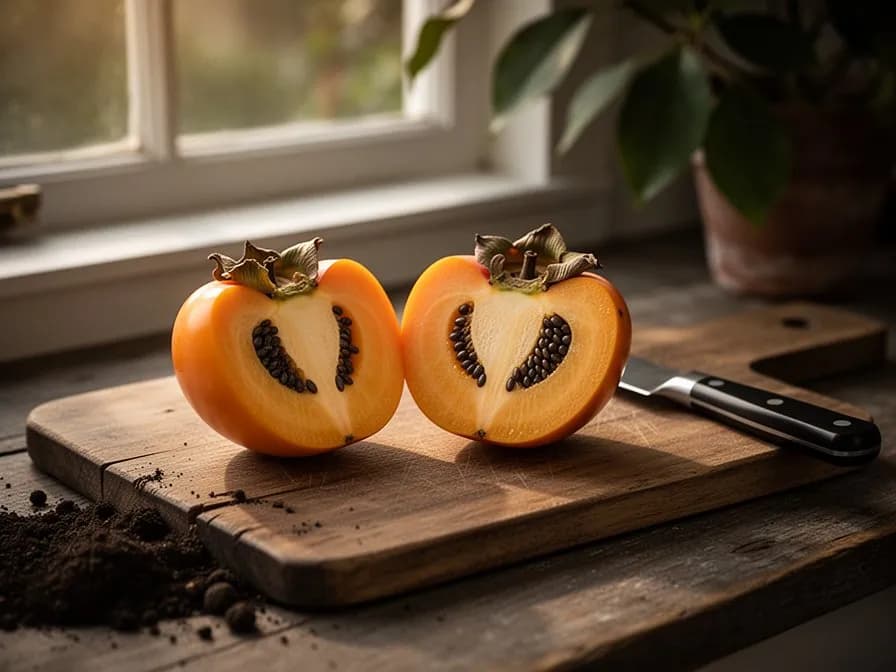
Kakibrot mit Walnüssen
75 MinutenEin saftiges, warm gewürztes Schnellbrot aus püriertem Hachiya-Kakimark, gerösteten Walnüssen und einer Mischung aus Zimt und Muskatnuss. Dieses klassische Herbstrezept hebt die natürliche karamellartige Süße der Kaki hervor.
10 Zutaten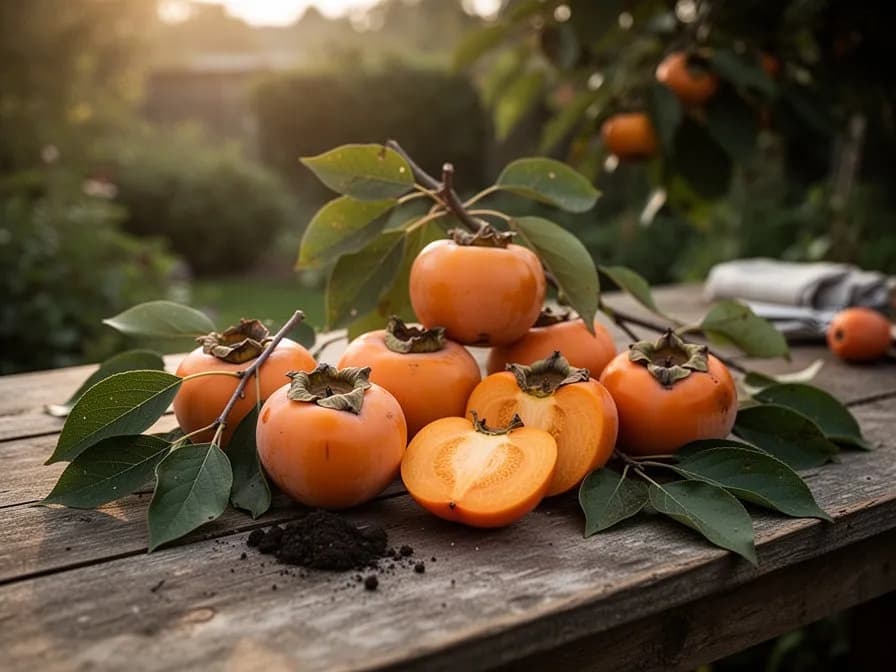
Frischer Fuyu-Kakisalat
15 MinutenEin lebhafter Herbstsalat, der knackige Fuyu-Kakischeiben mit pfeffrigem Rucola, cremigem Ziegenkäse, gerösteten Pekannüssen und einem würzigen Granatapfel-Dressing kombiniert. Am besten zu genießen, wenn Fuyu-Kakis Hochsaison haben.
9 ZutatenSelbstgemachte Hoshigaki (Getrocknete Kaki)
30 Minuten aktiv plus 4 bis 6 Wochen TrocknungszeitDie traditionelle japanische Kunst des Handtrocknens von Kakis zur Herstellung intensiv süßer, dattelähnlicher Konfekte mit einem natürlichen Zuckerbelag auf der Oberfläche. Diese jahrhundertealte Technik verwandelt adstringierende Hachiya-Kakis in eine geschätzte Delikatesse.
4 ZutatenKulinarische Verwendung
Reife Kakis besitzen eine reiche, honigartige Süße, die sich perfekt für Puddings, Schnellbrote und Kekse eignet. Der klassische amerikanische Kakipudding ist eine beliebte Herbsttradition. Nicht-adstringierende Sorten eignen sich hervorragend in Scheiben geschnitten für Salate mit Rucola und Ziegenkäse. Kakis harmonieren gut mit Zimt, Ingwer, Walnüssen und Vanille. Die Frucht ist reich an Ballaststoffen, Vitamin A, Vitamin C und Mangan. Getrocknete Kaki ist eine traditionelle Delikatesse in ganz Ostasien.
Was drinsteckt
Gesundheitsvorteile
- Reich an Beta-Carotin und Zeaxanthin, zwei Carotinoiden, die stark mit der Verringerung des Risikos einer altersbedingten Makuladegeneration und der Unterstützung der allgemeinen Augengesundheit assoziiert werden.
- Der hohe Ballaststoffgehalt (6 Gramm pro Frucht) fördert eine gesunde Verdauung, unterstützt einen regelmäßigen Stuhlgang und kann helfen, den LDL-Cholesterinspiegel zu senken.
- Enthält starke antioxidative Verbindungen wie Betulinsäure und Catechine, die freie Radikale neutralisieren und oxidativen Stress im gesamten Körper reduzieren helfen.
- Der bedeutende Vitamin-A-Gehalt (55 % TW pro Frucht) unterstützt die Immunfunktion, die gesunde Erneuerung der Hautzellen und die ordnungsgemäße Schleimhautpflege.
- Kakitannine haben in Forschungsstudien entzündungshemmende und antimikrobielle Eigenschaften gezeigt und können möglicherweise die Herz-Kreislauf-Gesundheit unterstützen und chronische Entzündungen reduzieren.
- Bietet eine gute Quelle für Mangan und Kupfer, Spurenelemente, die für die Erhaltung der Knochendichte, die Kollagenbildung und die ordnungsgemäße enzymatische Funktion im Körper unerlässlich sind.
Woher Kakibaum stammt
Die asiatische Kaki (Diospyros kaki) ist einer der ältesten kultivierten Obstbäume der Welt, mit einer Kultivierungsgeschichte in China, die über 2.000 Jahre zurückreicht. Archäologische Funde deuten darauf hin, dass wilde Kakis bereits um 4.000 v. Chr. in den Flusstälern Zentral- und Ostchinas als Nahrung gesammelt wurden, wo das warme, feuchte Klima ideale Wachstumsbedingungen bot. Von China aus verbreitete sich der Kakianbau im 7. und 8. Jahrhundert nach Korea und Japan, wo er tief in der Kulturlandschaft verankert wurde. In Japan haben Kakis als Symbol des Herbstes eine besondere Bedeutung und erscheinen häufig in Gedichten, Gemälden und jahreszeitlichen Feiern. Der berühmte Haiku-Dichter Masaoka Shiki schrieb eines seiner berühmtesten Gedichte über das Essen einer Kaki, während er Tempelglocken in Nara hörte. Europäische Entdecker begegneten asiatischen Kakis erstmals im 17. Jahrhundert, und die Frucht wurde Ende des 18. Jahrhunderts offiziell in Europa eingeführt, blieb dort jedoch eher eine botanische Kuriosität als eine Handelskultur. Commodore Matthew Perry brachte 1856 Kakibäume aus Japan in die Vereinigten Staaten, und bis Ende des 19. Jahrhunderts importierte und testete das USDA aktiv Sorten für Kalifornien und die Südstaaten. Heute ist Kalifornien nach wie vor das wichtigste kommerzielle Anbaugebiet in Nordamerika, wobei die Sorten Fuyu und Hachiya die Produktion dominieren. Die Fuyu, eine nicht-adstringierende Sorte, die noch fest wie ein Apfel gegessen werden kann, ist aufgrund ihrer einfachen Handhabung und Transportfähigkeit zur weltweit am häufigsten angebauten Kaki geworden. Die adstringierende Hachiya wird dagegen weiterhin für Backwaren, Trocknung und traditionelle Zubereitungen geschätzt.
Kakibaum: Schon gewusst?
Faszinierende Fakten über Kakibaum
Der Gattungsname der Kaki, Diospyros, übersetzt sich aus dem Griechischen als "Frucht der Götter" – ein Zeugnis ihrer außergewöhnlichen Süße bei voller Reife.
Kakibaum: Fragen & Antworten
Wann sollte ich Kakibaum pflanzen?
Was sind gute Begleitpflanzen für Kakibaum?
In welchen Winterhärtezonen kann Kakibaum wachsen?
Wie viel Sonne braucht Kakibaum?
Welchen Abstand sollte ich zwischen Kakibaum lassen?
Welche Schädlinge und Krankheiten befallen Kakibaum?
Wie lagere ich Kakibaum nach der Ernte?
Was sind die besten Kakibaum-Sorten zum Anbauen?
Welchen Boden braucht Kakibaum?
Was ist der Unterschied zwischen adstringierenden und nicht-adstringierenden Kakis?
Brauchen Kakibäume einen Bestäuber, um Früchte zu tragen?
Warum fallen meine Kakifrüchte ab, bevor sie reifen?
Wie lange dauert es, bis ein Kakibaum Früchte trägt?
Kann ich einen Kakibaum im Kübel anbauen?
Wie entferne ich die Adstringenz bei unreifen Kakis?
Du hast die Theorie gelesen. Jetzt baue sie auf Autopilot an.
Alles, was Kakibaum knifflig macht — das Timing, die Abstände, die Begleiter, das Erntefenster — genau das übernimmt PlotMyGarden für dich, für jede Pflanze im Garten.
Ein Plan, der dein Wetter kennt
Standort einmal festlegen. Aussaat-, Dünge- und Erntedaten rund um deinen echten letzten Frosttermin und die Live-Vorhersage — kein Raten mehr nach Saattüte.
Aus dem Abschnitt „Pflanzzeit“Beetplaner per Drag & Drop
Beete auf einem Raster gestalten. Jede Pflanze rastet im richtigen Abstand ein, und du siehst die ganze Saison, bevor du einen Cent für Saatgut ausgibst.
Aus dem Abschnitt „Anbau“Begleiter-Konflikte früh erkannt
Über 200 gute und schlechte Kombinationen werden beim Pflanzen live geprüft — so landet ein saisonruinierender Fehler nie in der Erde.
Aus dem Abschnitt „Begleiter“Erinnerungen, nach denen du wirklich handelst
„Gieß die Bohnen.“ „Heute ernten, bevor's umschlägt.“ Pünktlich, konkret und auf deine echten Pflanzen bezogen.
Aus dem Abschnitt „Ernte“Staffel-Aussaat, geplant
Sechs Wochen ernten statt sechs Tage? Die App verteilt deine Aussaaten automatisch und erinnert dich, wenn der nächste Satz fällig ist.
Aus dem Abschnitt „Pflanzzeit“Ein Verlauf, der schlauer wird
Jede protokollierte Ernte bringt der App deinen Garten bei. Der Plan fürs nächste Jahr startet bei dem, was in deinem Boden wirklich funktioniert hat.
Aus dem Abschnitt „Überblick“Pflanze diese neben Kakibaum
Weitere Obstbäume
Halte Kakibaum von diesen fern
Bau deine beste Kakibaum an — und alles drumherum.
Starte heute kostenlos. Lege deine Beete an, setze deine Kakibaum ein und lass PlotMyGarden Timing, Abstände, Begleiter und Erinnerungen von der Saat bis zum Erntekorb übernehmen.