Starkrimson Pear
A striking crimson-skinned sport of Clapp's Favorite, producing medium to large fruits with smooth, juicy white flesh and a sweet, aromatic flavor.





On this pageOverview
Meet Starkrimson Pear
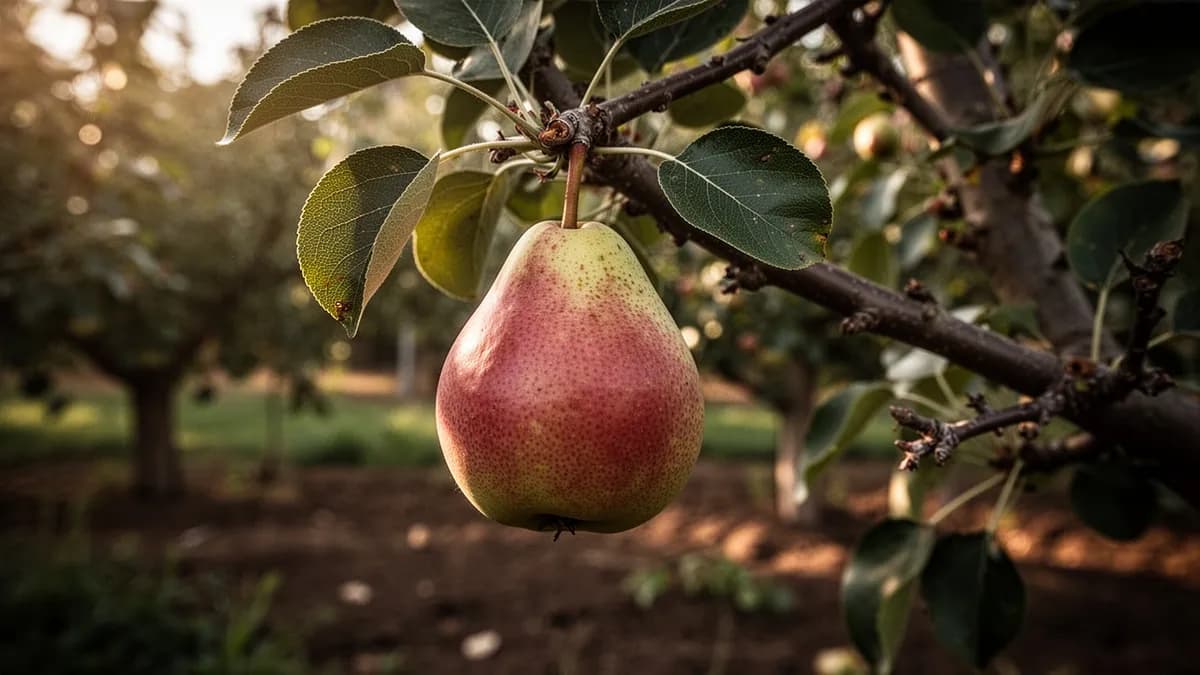
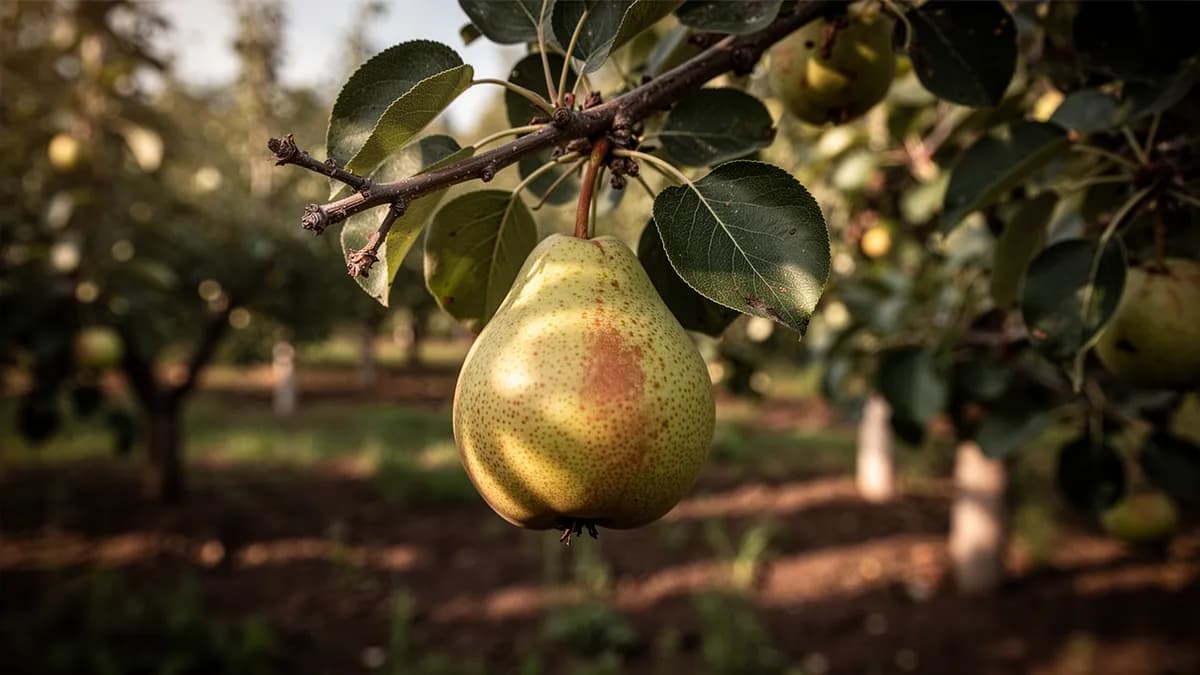
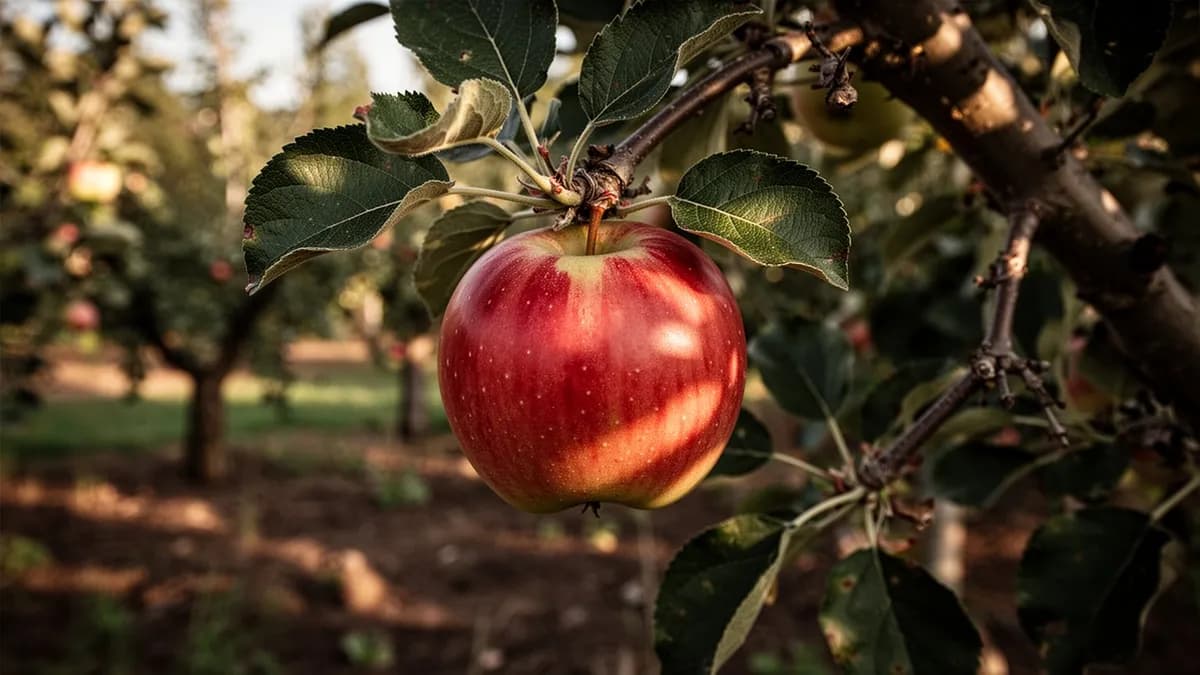
A striking crimson-skinned sport of Clapp's Favorite, producing medium to large fruits with smooth, juicy white flesh and a sweet, aromatic flavor. Starkrimson is one of the earliest-ripening pear varieties and must be picked while still firm, as the flesh quickly becomes mealy if left on the tree too long. The vivid red color develops best in full sun.
When to plant Starkrimson Pear
Pear seeds from Starkrimson require 60 to 90 days of cold stratification and will not produce true-to-type trees. Purchase grafted nursery trees for the distinctive red color and early ripening characteristics. For experimental purposes, stratify cleaned seeds in moist peat at 33 to 40 degrees Fahrenheit. Plant stratified seeds one inch deep in spring. Seedling pears take eight to twelve years to fruit with unpredictable quality.
Your Starkrimson Pear Year
Composed for Zone 7 · typical seasons · frost passes Apr 2, returns Nov 1
Plant Starkrimson Pear Feb – Mar, pick Aug – Sep. Check the planting methods below and set your climate to personalize these windows.
How to grow Starkrimson Pear
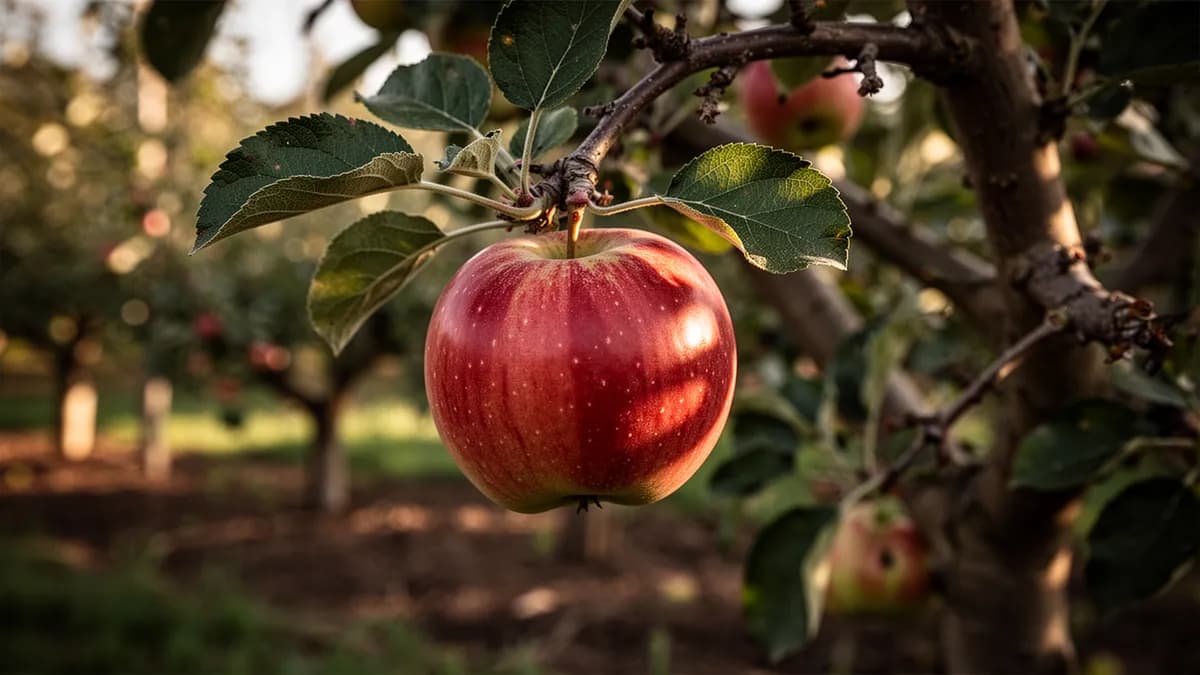
Plant Starkrimson pear trees in late winter or early spring while dormant, selecting a full sun location with well-drained soil for the most vivid red fruit color. The tree requires cross-pollination from another pear variety such as Bartlett, Moonglow, or Anjou. Space standard trees 18 to 20 feet apart, semi-dwarf 10 to 12 feet.
Water regularly during the first two growing seasons, then provide supplemental irrigation during dry periods and fruit development. Starkrimson is one of the earliest-ripening pear varieties, with fruit ready in August to September. The tree is moderately vigorous with an upright, compact growth habit.
Prune in late winter to maintain an open, vase-shaped canopy that allows maximum sunlight penetration for red color development. Thin fruit clusters in June to one or two pears per cluster. Harvest timing is critical for Starkrimson, as the flesh turns mealy quickly if left on the tree past the optimal window. Monitor for fire blight, as the Clapp's Favorite parentage passes along moderate susceptibility.
Starkrimson Pear needs more room than a 4 × 8 ft bed gives
Each Starkrimson Pear wants 350 cm of elbow room. The planner keeps that spacing for you — every plant, every bed.
Starkrimson Pear's best neighbours
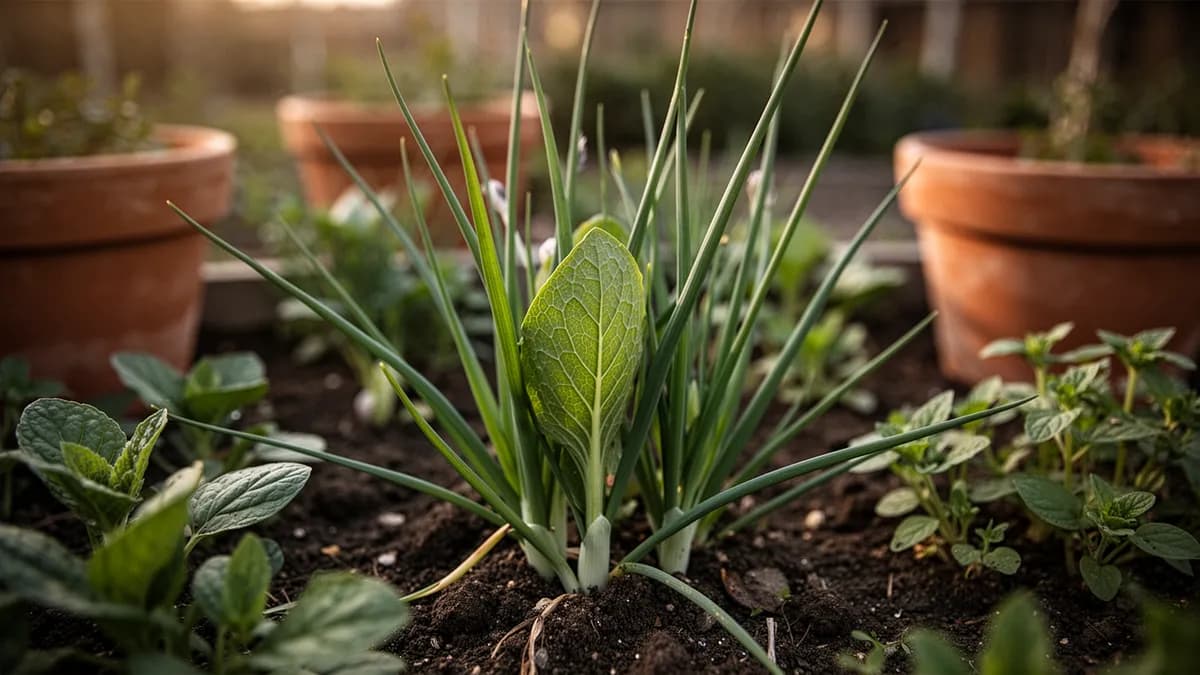
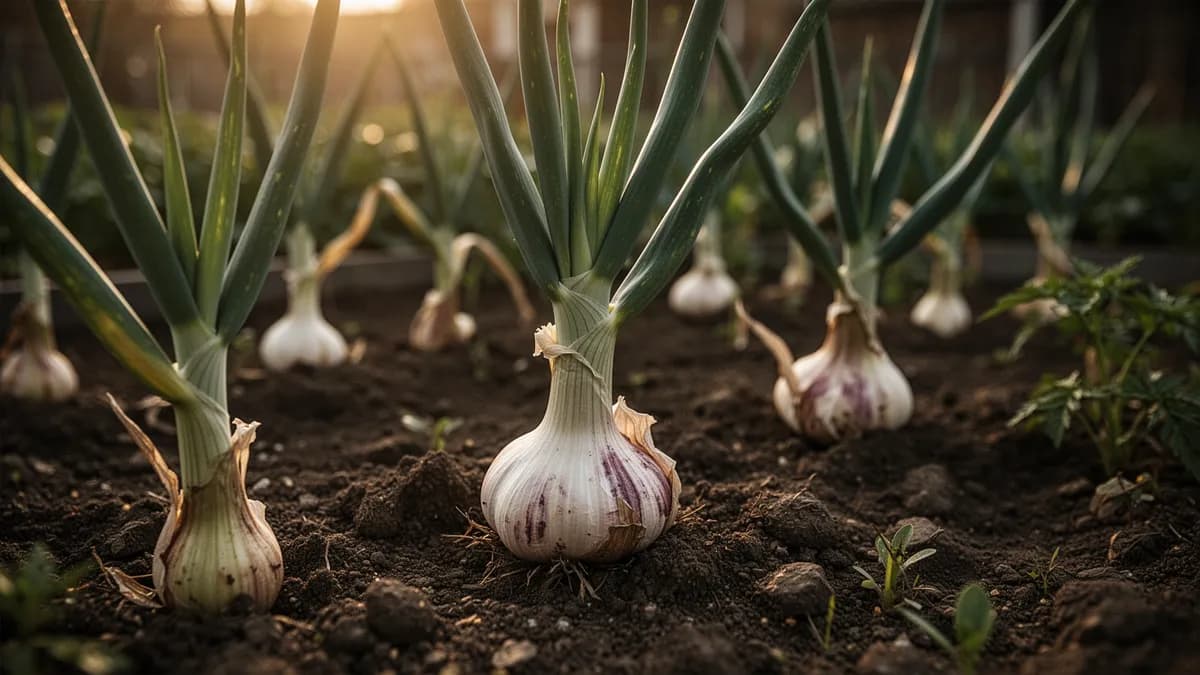
Plant compatible pollinizer varieties within 50 feet, such as Bartlett, Moonglow, or Anjou. Chives and garlic planted beneath pear trees may suppress fire blight bacteria. Clover ground cover attracts pollinators and fixes nitrogen. Tansy and yarrow attract beneficial predatory insects. Avoid proximity to Eastern red cedar, which hosts cedar-pear rust, and walnut trees whose roots exude toxic juglone.
Chives belongs beside it. Walnut Tree doesn't.
Old growers' knowledge, checked against Starkrimson Pear's real companion table below — test any plant you're growing.
Try Starkrimson Pear in a bed — right here
A real planner bed with Starkrimson Pear already in it. Tap a companion to place it and watch the pairing checks answer — green for good neighbours, red for a clash.


Related growing guides
Feed it well
Starkrimson grows well in deep, well-drained, loamy soil with a pH of 6.0 to 7.0. Avoid waterlogged conditions that promote root diseases. Apply a balanced fertilizer in early spring, keeping nitrogen moderate to limit fire blight risk and maintain fruit quality. The tree benefits from calcium supplementation for fruit firmness. Annual compost applications around the drip line provide steady nutrition and improve soil health.
Ideal Temperature
Hardiness Zone Compatibility
From seed to harvest, stage by stage
Dormancy & Chilling
The Starkrimson pear tree is leafless and dormant throughout winter. During this period the tree accumulates chilling hours — temperatures between 0 and 7 degrees Celsius — needed to break bud dormancy. Starkrimson requires approximately 600 to 800 chilling hours, similar to other Bartlett-type pears. Roots remain active during milder periods, absorbing moisture and storing carbohydrates for the coming growing season.
Bud Break & Bloom
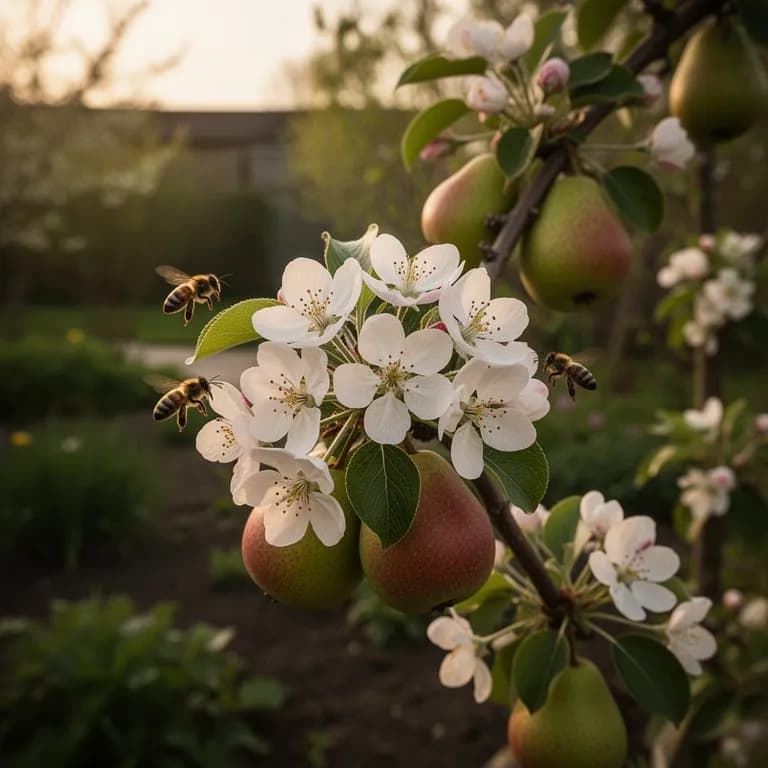
As temperatures consistently rise above 10 degrees Celsius in spring, buds swell and burst into clusters of fragrant white five-petalled flowers. Bloom typically lasts 7 to 14 days. Starkrimson is a red sport of the Clapp Favorite pear and is not self-fertile, requiring a compatible pollinator such as Bartlett, Moonglow, or Anjou blooming at the same time for successful fruit set.
Fruit Set & June Drop
Successfully pollinated flowers develop into tiny green fruitlets. The tree naturally abscises a portion of the developing fruitlets during early summer in a process called June drop, balancing its crop load against available energy reserves. Heavy unthinned crops result in undersized fruit, reduced color development, and can trigger biennial bearing patterns.
Fruit Development & Sizing
Fruitlets grow rapidly through summer, developing the characteristic Bartlett shape. The skin begins transitioning from green to yellow-green and gradually flushes with the distinctive crimson-red color that gives the variety its name. Cell division and expansion drive fruit sizing, while sugars and aromatic compounds accumulate within the flesh.
Harvest & Ripening
Starkrimson pears are typically ready for harvest in mid to late August in most temperate climates, roughly 115 days after full bloom. Unlike many fruits, European pears including Starkrimson must be picked when mature but still firm and then ripened off the tree. Leaving them on the tree results in a gritty, mealy texture as stone cells develop internally.
Post-Harvest & Preparation for Dormancy
After harvest, the tree redirects energy into forming next year's fruit buds and building root reserves. Leaves change color and fall through autumn. The tree gradually enters dormancy as temperatures drop, hardening off new wood and preparing to survive winter freezing temperatures down to approximately minus 25 degrees Celsius.
Prune during late dormancy before bud swell to remove dead, diseased, or crossing branches. Open the canopy center to improve air circulation and light penetration. Apply a dormant oil spray to control overwintering scale insects and pear psylla eggs. Inspect the bark for cankers or signs of fire blight and remove any infected wood, sterilizing tools between cuts.
Caring for Starkrimson Pear month by month
What to do each month for your Starkrimson Pear
October
You are hereAllow leaves to fall naturally. Do not fertilize. Rake and remove fallen leaves to reduce disease inoculum. Apply a trunk guard or white latex paint to the lower trunk to prevent sunscald and rodent damage over winter.
Know exactly what to do in your garden — every month
One email at the start of each month: what to sow, plant, and tackle right now — for your Starkrimson Pear and everything growing around it. Plus a short starter course that helps you dodge the classic mistakes.
- What to do, right now
- Matched to your season
- Starter course included
Harvesting Starkrimson Pear
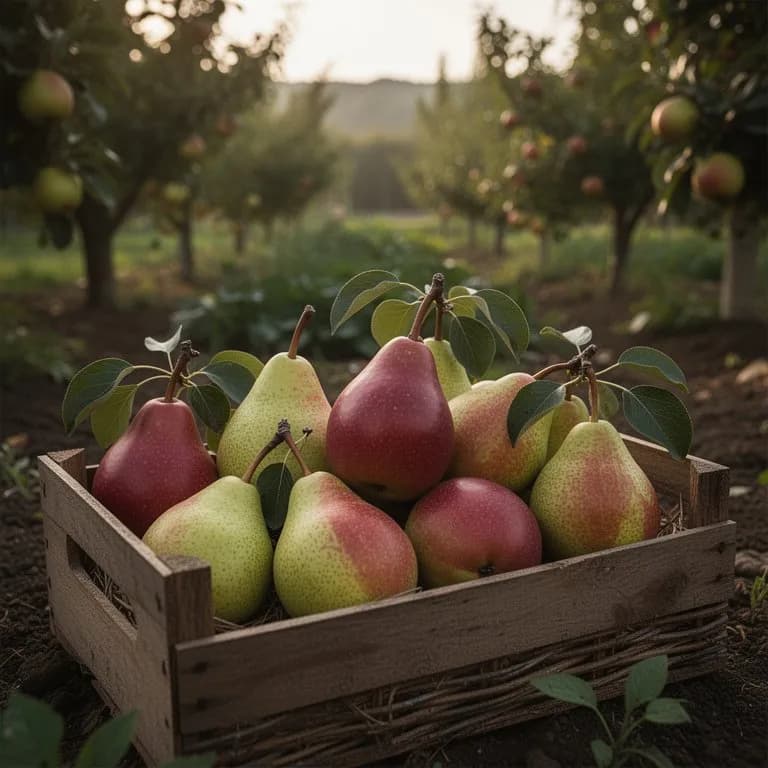
Starkrimson pears ripen in mid to late August, among the earliest pear varieties. Harvest timing is critical because the flesh becomes mealy and soft very quickly if fruit is left on the tree too long. Pick when the fruit lifts easily from the spur and the skin has developed full crimson color. The flesh should still be firm at harvest. Ripen at room temperature for three to five days until the neck area yields to gentle thumb pressure. Refrigerate ripe fruit immediately.
assuming you plant when the window opens — set your real date
Pick Starkrimson Pear promptly and the plant keeps producing.
Storage & Preservation
Starkrimson has a short storage life compared to later pear varieties, keeping only four to six weeks in cold storage at 30 to 32 degrees Fahrenheit. The early season and beautiful color make it best for immediate fresh eating and early-season preserving. The vivid red skin makes gorgeous canned pears and preserves. The fruit can be frozen when sliced for later cooking use. Early harvest timing provides pears when few other varieties are available.
What goes wrong — and the fix
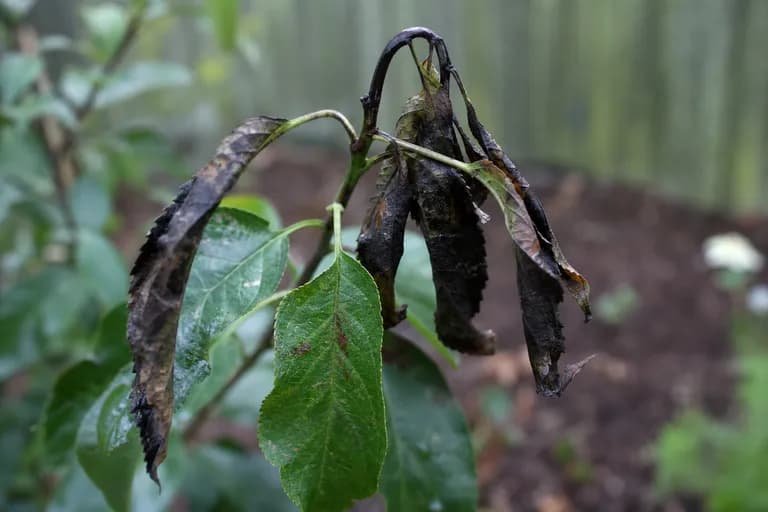
Fire Blight
DiseaseBlackened, wilted shoot tips with characteristic shepherd's crook; oozing bacterial cankers on branches and trunk.
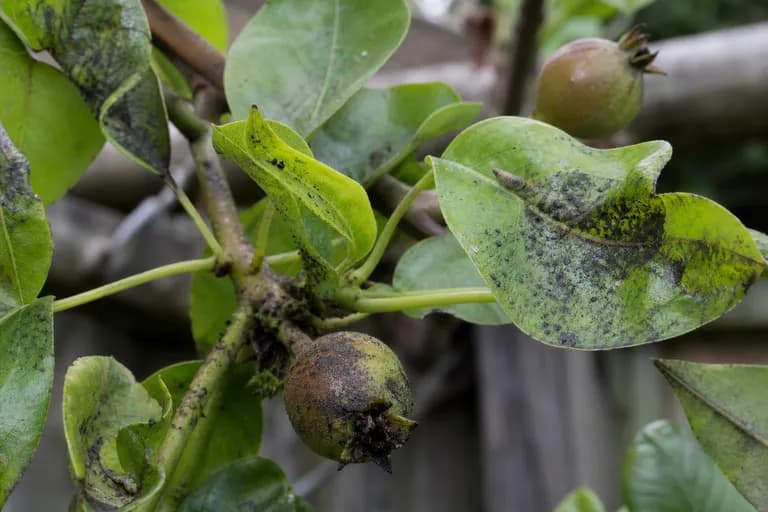
Pear Psylla
PestTiny sucking insects on new growth producing sticky honeydew; sooty mold develops on honeydew; leaf curling and stunting.
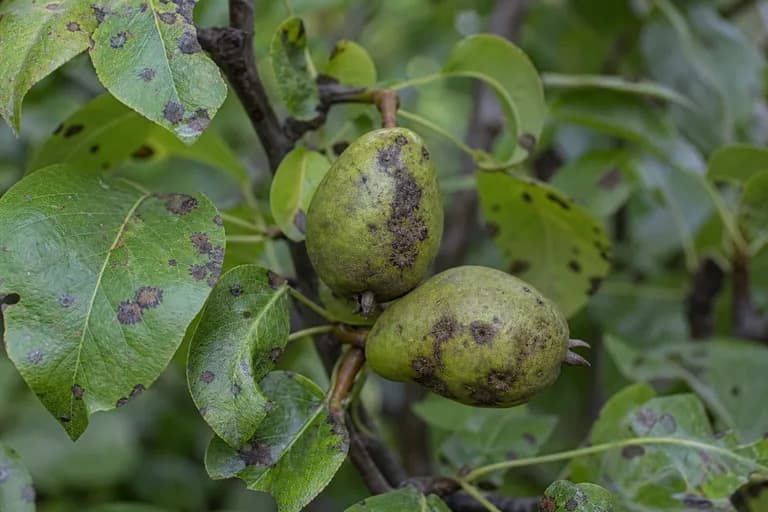
Pear Scab
DiseaseDark, velvety spots on fruit and leaves; fruit cracking and russeting; premature leaf drop in severe cases.
Troubleshooting Common Problems
The extremely short harvest window is the biggest challenge, as fruit quality declines rapidly if picked too late. The flesh becomes mealy and gritty within days of overripening. Fire blight susceptibility from its Clapp's Favorite parentage requires vigilant monitoring. Short storage life means fruit must be consumed or processed quickly. The tree may develop weak branch crotches that split under heavy fruit loads without proper training.
Growing Tips
- Plant Starkrimson in full sun with at least 6 to 8 hours of direct sunlight daily — sun exposure is critical not only for fruit production but also for developing the deep red skin color that defines this variety.
- Always plant a compatible pollinator variety such as Bartlett, Moonglow, or Anjou within 15 to 30 meters, as Starkrimson is not self-fertile and requires cross-pollination for reliable fruit set.
- Choose a planting site with well-drained loamy soil and a pH between 6.0 and 7.0. Starkrimson is sensitive to waterlogged conditions, which promote root rot and reduce vigor.
- Select semi-dwarf trees grafted onto quince rootstock such as Quince A or Quince C for smaller gardens — these reach 3 to 4.5 meters tall and begin fruiting earlier than standard-size trees on pear seedling rootstock.
- Apply a balanced organic fertilizer in early spring just before bud break, and avoid excessive nitrogen which promotes vegetative growth at the expense of fruit production and increases fire blight susceptibility.
- Thin fruitlets aggressively in early summer to one fruit per cluster spaced 15 centimeters apart — this is especially important for Starkrimson because crowded fruit develops poor color and smaller size.
- Protect against fire blight, the most serious disease of pears, by pruning out infected wood immediately during the growing season, cutting at least 30 centimeters below any visible canker or wilting, and sterilizing pruning tools with a 10 percent bleach solution between each cut.
- Harvest when the fruit is mature but still firm — typically mid to late August — by tilting the pear horizontally and checking if the stem separates cleanly. Never wait for Starkrimson pears to soften on the tree.
- For the best eating quality, cold-store harvested pears at 0 to 1 degree Celsius for 2 to 3 weeks, then bring them to room temperature and allow 4 to 7 days for final ripening. The neck near the stem will yield slightly to gentle pressure when the pear is perfectly ripe.
- Mulch around the base of the tree with 8 to 10 centimeters of organic matter such as wood chips or straw, keeping mulch at least 15 centimeters away from the trunk to prevent bark rot and rodent habitat.
Grow your best Starkrimson Pear yet — and everything around it.
Start a free plan today. Lay out your beds, drop in your Starkrimson Pear, and let PlotMyGarden handle the timing, spacing, companions and reminders from seed to harvest basket.
Pick your Starkrimson Pear
Starkrimson (standard)
The classic crimson sport of Clapp's Favorite, discovered in Missouri in 1956, producing stunning red fruit.
Starkrimson on OHxF 87
Grafted on fire-blight-resistant rootstock for better disease performance in susceptible regions.
Starkrimson on Quince A
A semi-dwarf form for smaller gardens with earlier bearing, typically fruiting in the third year.
A mature Starkrimson pear tree can produce 45 to 90 kilograms of fruit per year. With specialty red pears retailing at $4 to $6 per kilogram in many markets, a single productive tree can provide $180 to $540 worth of premium fruit annually. The fruit stores well for 2 to 3 months in cold storage, extending the window of home consumption. Additional savings come from making preserves, dried pear slices, and pear butter, reducing purchases of commercial snacks and spreads throughout the year.
Quick recipes
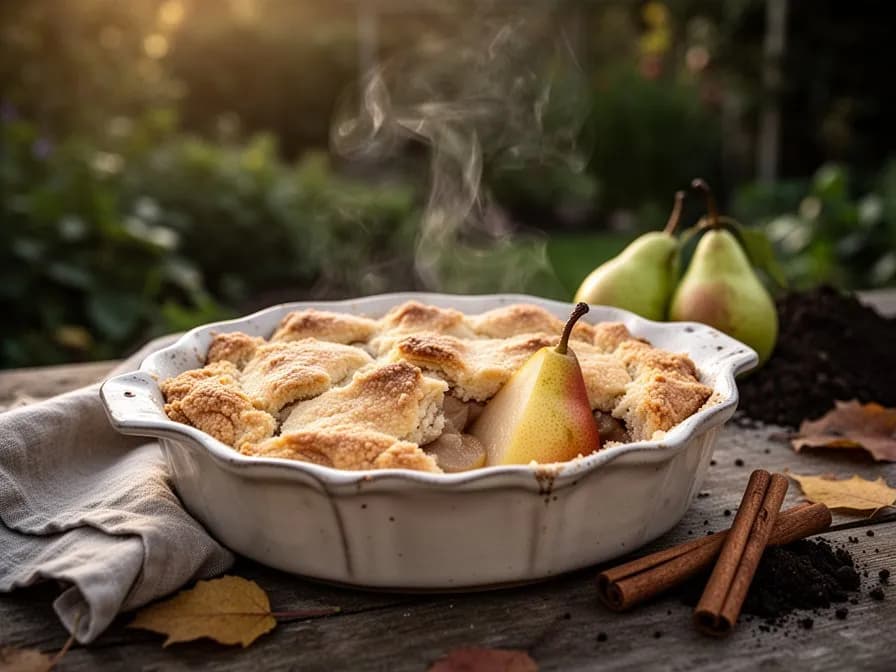
Red Pear and Gorgonzola Salad
10 minutesA simple elegant salad that showcases the beautiful red skin of Starkrimson pears paired with creamy blue cheese, toasted walnuts, and a honey balsamic dressing over mixed greens.
8 ingredients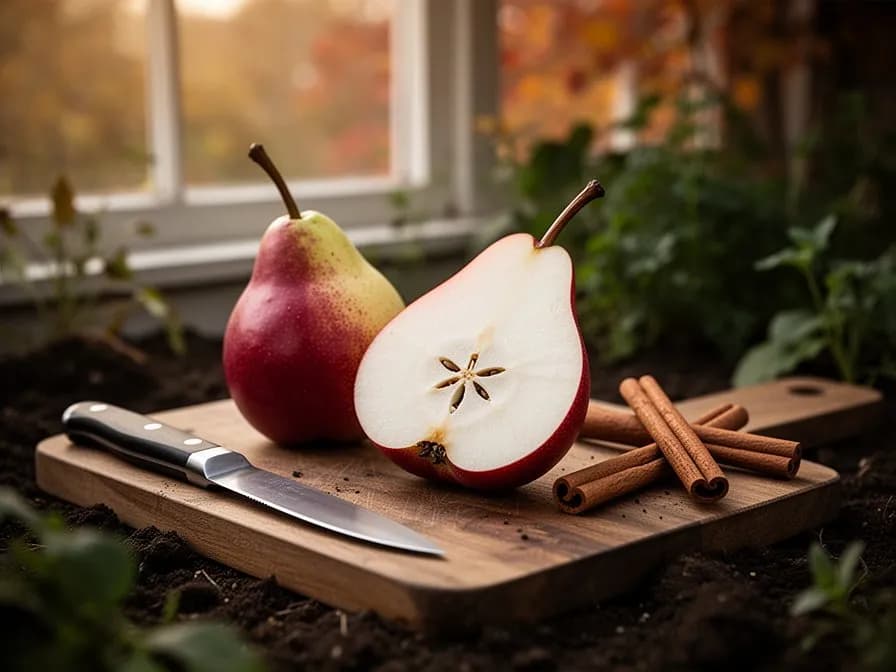
Wine-Poached Starkrimson Pears
45 minutesWhole peeled Starkrimson pears gently simmered in spiced red wine until tender and infused with deep ruby color. A classic French dessert that highlights the elegant shape and sweet flavor of this variety.
8 ingredientsStarkrimson Pear Butter
20 minutes active, 2 hours totalA smooth, spiced pear butter made by slow-cooking ripe Starkrimson pears with warming spices until thick and spreadable. The natural sweetness of the pears means less added sugar is needed compared to many fruit butters.
7 ingredientsCulinary Uses
Starkrimson is a beautiful fresh eating pear with smooth, sweet, aromatic flesh when properly ripened. The vivid red skin makes striking presentations on cheese plates and in salads. It pairs well with Brie, Gorgonzola, and walnuts. The early season availability fills a gap when no other fresh pears are available. Makes lovely poached pears and early-season preserves.
What's inside
Health Benefits
- Rich in soluble fiber including pectin, which helps lower LDL cholesterol levels and supports cardiovascular health when consumed as part of a balanced diet.
- The anthocyanin pigments in the red skin provide antioxidant and anti-inflammatory properties that may help reduce the risk of chronic diseases including type 2 diabetes and certain cancers.
- High water content of approximately 84 percent combined with substantial fiber makes Starkrimson pears a satisfying, hydrating, and low-calorie snack that supports healthy weight management.
- Contains sorbitol, a natural sugar alcohol that acts as a mild osmotic laxative and promotes healthy bowel function, making pears a traditional home remedy for constipation.
- Good source of vitamin C, an essential antioxidant that supports immune system function, promotes collagen synthesis for skin health, and enhances non-heme iron absorption from plant foods.
- Provides boron, a trace mineral important for calcium metabolism and bone health, with research suggesting regular pear consumption may help support bone mineral density.
Where Starkrimson Pear comes from
The Starkrimson pear traces its origins to a chance color mutation discovered in 1956 by Dr. Harold Hartman at the Mid-Columbia Agricultural Research and Extension Center in Hood River, Oregon. While evaluating a block of Clapp Favorite pear trees, Hartman noticed a single limb producing fruit with dramatically deeper red coloring than the rest of the tree. This natural bud sport was propagated vegetatively and evaluated over several years for color stability, fruit quality, and horticultural performance. Stark Brothers Nurseries and Orchards of Louisiana, Missouri — one of the oldest and most influential nursery companies in North America — recognized the commercial potential of this strikingly colored pear and secured the rights to introduce it. The variety was officially patented and released to the market in the early 1970s under the trade name Starkrimson. Its parentage as a sport of Clapp Favorite means it shares that variety's Bartlett-type flavor profile, buttery texture, and mid-season harvest timing, but with the added visual appeal of deep crimson skin. The variety quickly gained popularity among home orchardists and specialty growers, particularly in the Pacific Northwest of the United States, where the combination of warm sunny days and cool nights produces the most intense red coloring. Starkrimson also found a niche in European markets, particularly in France and Italy, where red-skinned pear varieties command premium prices at fresh markets. Today Starkrimson remains one of the most widely planted red pear varieties worldwide and is frequently recommended for home gardens due to its manageable tree size, reliable cropping, excellent fresh-eating quality, and the ornamental value of its brightly colored fruit.
Starkrimson Pear: did you know?
Fascinating facts about Starkrimson Pear
Starkrimson is a natural color sport of the Clapp Favorite pear, discovered in 1956 by Harold Hartman at the Mid-Columbia Experiment Station in Hood River, Oregon, and introduced commercially by Stark Brothers Nurseries in the 1970s.
Starkrimson Pear questions, answered
When should I plant Starkrimson Pear?
What are good companion plants for Starkrimson Pear?
What hardiness zones can Starkrimson Pear grow in?
How much sun does Starkrimson Pear need?
How far apart should I space Starkrimson Pear?
What pests and diseases affect Starkrimson Pear?
How do I store Starkrimson Pear after harvest?
What are the best Starkrimson Pear varieties to grow?
What soil does Starkrimson Pear need?
Is Starkrimson pear self-pollinating?
When are Starkrimson pears ready to pick?
Why are my Starkrimson pears not turning red?
How do I prevent fire blight on my Starkrimson pear tree?
How long does it take for a Starkrimson pear tree to bear fruit?
Can I grow Starkrimson pears in containers?
You just read the theory. Now grow it on autopilot.
Everything that makes Starkrimson Pear fiddly — the timing, the spacing, the companions, the harvest window — is exactly what PlotMyGarden handles for you, for every plant in your garden.
A plan that knows your weather
Set your location once. Get sow, feed and harvest dates built around your real last-frost date and live forecast — no more guessing from a generic seed packet.
From the “When to plant” sectionDrag-and-drop bed planner
Design beds on a grid. Every plant snaps to its proper spacing, and you can see your whole season laid out before you spend a cent on seed.
From the “Growing guide” sectionCompanion conflicts, caught early
200+ good-and-bad pairings checked live as you plant — so a season-wrecking mistake never makes it into the ground.
From the “Companions” sectionReminders you'll actually act on
“Water the beans.” “Pick today before it turns.” Timely, specific, and tied to the plants you're really growing.
From the “Harvest” sectionSuccession, scheduled
Want a harvest for six weeks, not six days? It spaces your sowings automatically and reminds you when each new block is due.
From the “When to plant” sectionA record that gets smarter
Every harvest you log teaches it your garden. Next year's plan starts from what actually worked in your soil, not a textbook's.
From the “Overview” sectionPlant these alongside Starkrimson Pear
More Pome Fruits
Keep Starkrimson Pear away from these
Grow your best Starkrimson Pear yet — and everything around it.
Start a free plan today. Lay out your beds, drop in your Starkrimson Pear, and let PlotMyGarden handle the timing, spacing, companions and reminders from seed to harvest basket.