Papayabaum
Eine schnell wachsende tropische baumartige Pflanze, die bereits neun bis zwölf Monate nach der Aussaat Früchte tragen kann und damit zu den schnellsten Fruchtproduzenten gehört.





Auf dieser SeiteÜberblick
Papayabaum im Überblick
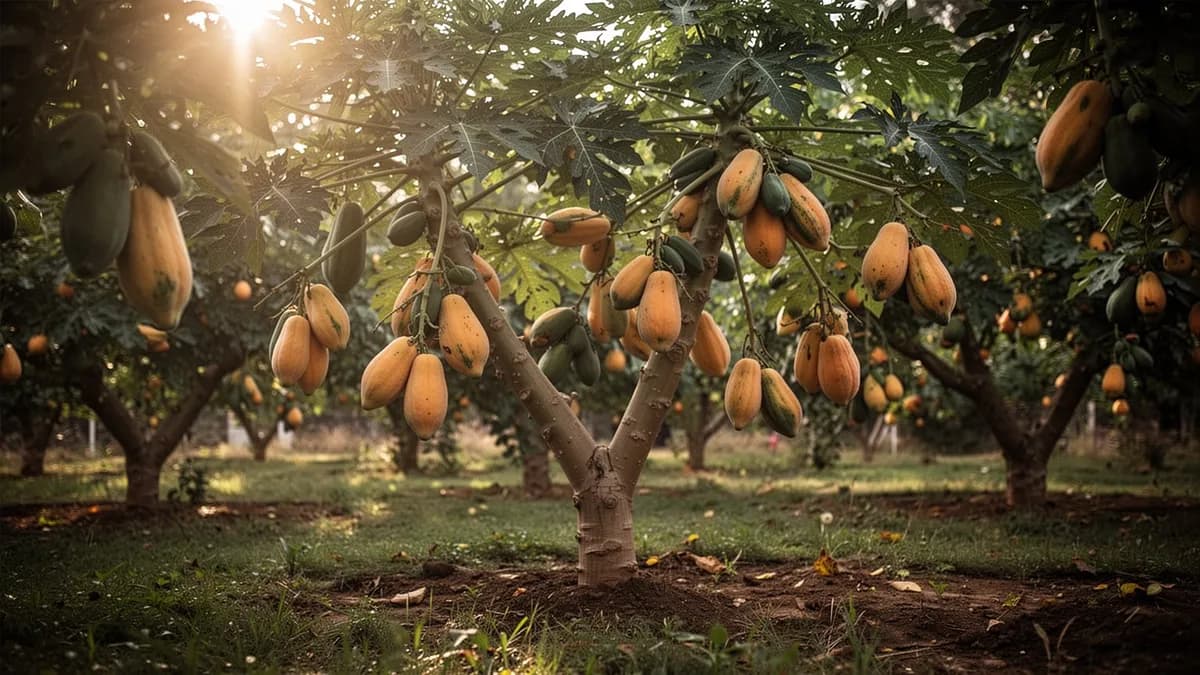
Eine schnell wachsende tropische baumartige Pflanze, die bereits neun bis zwölf Monate nach der Aussaat Früchte tragen kann und damit zu den schnellsten Fruchtproduzenten gehört. Papayas sind technisch gesehen Riesenkräuter und keine echten Bäume und haben einen einzelnen Stamm mit großen handförmigen Blättern an der Spitze. Sie benötigen nährstoffreichen, gut durchlässigen Boden und konstante Wärme, da selbst kurze Kälteeinbrüche unter 0 Grad die Pflanze abtöten. Pflanzen Sie drei Setzlinge zusammen und vereinzeln Sie auf die beste weibliche oder zwittrige Pflanze, sobald Blüten erscheinen, um eine garantierte Fruchtproduktion zu gewährleisten.
Wann Papayabaum pflanzen
Papayas werden am häufigsten aus Samen gezogen, die bei warmen Temperaturen von 24 bis 29 Grad Celsius in 2 bis 3 Wochen keimen. Pflanzen Sie frische Samen aus einer reifen Frucht für die besten Keimraten. Starten Sie die Aussaat 6 bis 8 Wochen vor dem Umpflanzen ins Freie nach Ende der Frostgefahr drinnen. Säen Sie drei bis fünf Samen pro Topf und vereinzeln Sie auf den stärksten Setzling. Verpflanzen Sie vorsichtig, da Papayawurzeln empfindlich gegenüber Störungen sind. Gewebekulturpflanzen und veredelte Bäume benannter Sorten sind bei Spezialgärtnereien erhältlich, um Geschlecht und Fruchtqualität zu garantieren.
Dein Papayabaum-Jahr
Abgestimmt auf Zone 7 · typische Saison · Frost geht um den 2. Apr. und kehrt um den 1. Nov. zurück
Papayabaum Apr – Jun pflanzen, Jan – Dez ernten. Beachte die Pflanzmethoden unten und wähle dein Klima für passende Zeiträume.
So baust du Papayabaum an
Papayas sind tropische krautige Pflanzen, die konstant warme Temperaturen über 15 Grad Celsius benötigen und durch jeden Frost abgetötet werden. Pflanzen Sie in voller Sonne in nährstoffreichem, gut durchlässigem Boden mit einem pH-Wert von 5,5 bis 7,0. Wählen Sie das wärmste Mikroklima in Ihrem Garten, idealerweise in der Nähe einer nach Süden ausgerichteten Wand oder eines Gebäudes, das Wärme abstrahlt. Papayawurzeln sind extrem empfindlich gegenüber Staunässe, daher sind Hochbeete oder aufgehäufte Pflanzungen in Gebieten mit schwerem Boden oder hohem Grundwasserspiegel unerlässlich.
Pflanzen Sie drei Setzlinge in einem Dreiecksmuster mit 90 cm Abstand und vereinzeln Sie auf die beste weibliche oder zwittrige Pflanze, sobald die Blüten das Geschlecht offenbaren. Rein männliche Pflanzen tragen keine Früchte und sollten entfernt werden, wobei nur ein Männchen pro zehn Weibchen zur Bestäubung beibehalten wird, wenn getrenntgeschlechtliche Sorten angebaut werden. Gießen Sie tief und regelmäßig, da Papayas starke Trinker mit flachen Wurzelsystemen sind. Tragen Sie alle 2 Wochen während der Wachstumsperiode einen ausgewogenen Dünger auf, da Papayas extrem starke Zehrer sind, die schnell wachsen.
Papayas tragen Früchte am Hauptstamm in einem Spiralmuster unterhalb des Blätterdachs. Eine gesunde Pflanze kann ihre ersten Früchte innerhalb von 6 bis 9 Monaten nach der Verpflanzung ansetzen und 2 bis 3 Jahre lang weiter produzieren, bevor die Vitalität nachlässt. In subtropischen Gebieten mit gelegentlich leichtem Frost können Papayas als einjährige Pflanzen angebaut werden, die im Spätwinter drinnen gestartet und nach Ende aller Frostgefahr verpflanzt werden. Schützen Sie vor starkem Wind, der den hohlen Stamm brechen oder die großen Blätter zerfetzen kann.
Für Papayabaum ist ein Beet von 120 × 240 cm zu klein
Papayabaum braucht 400 cm Platz pro Pflanze. Der Planer hält diesen Abstand für dich ein — jede Pflanze, jedes Beet.
Die besten Nachbarn für Papayabaum
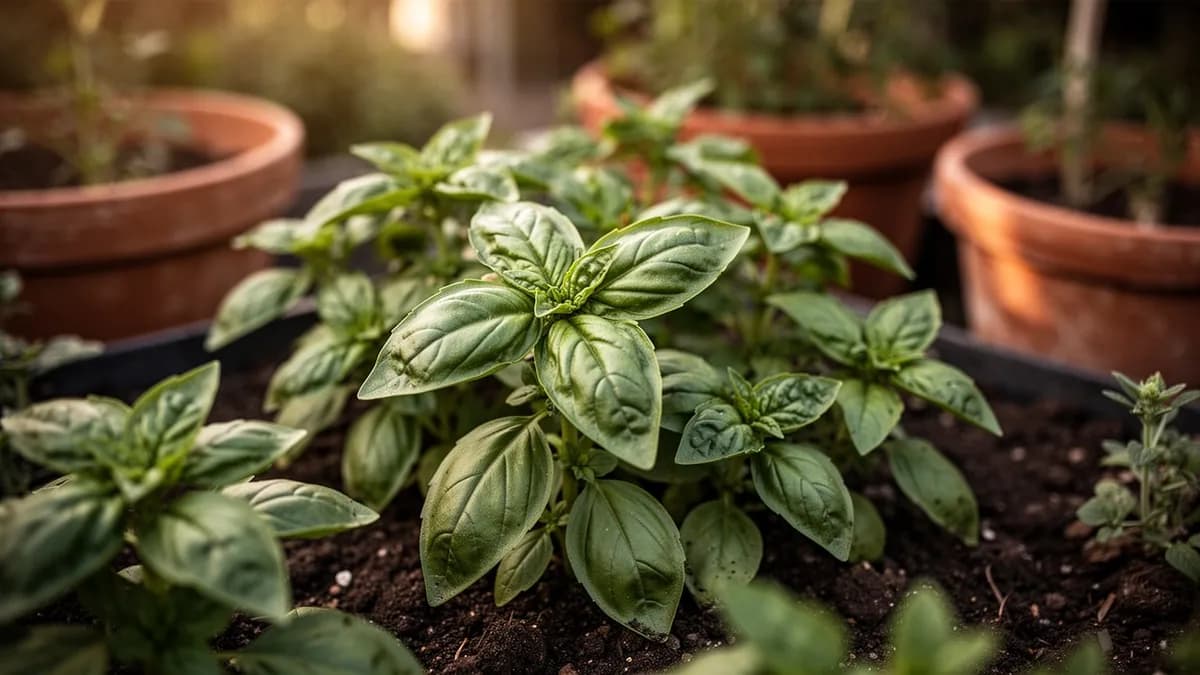
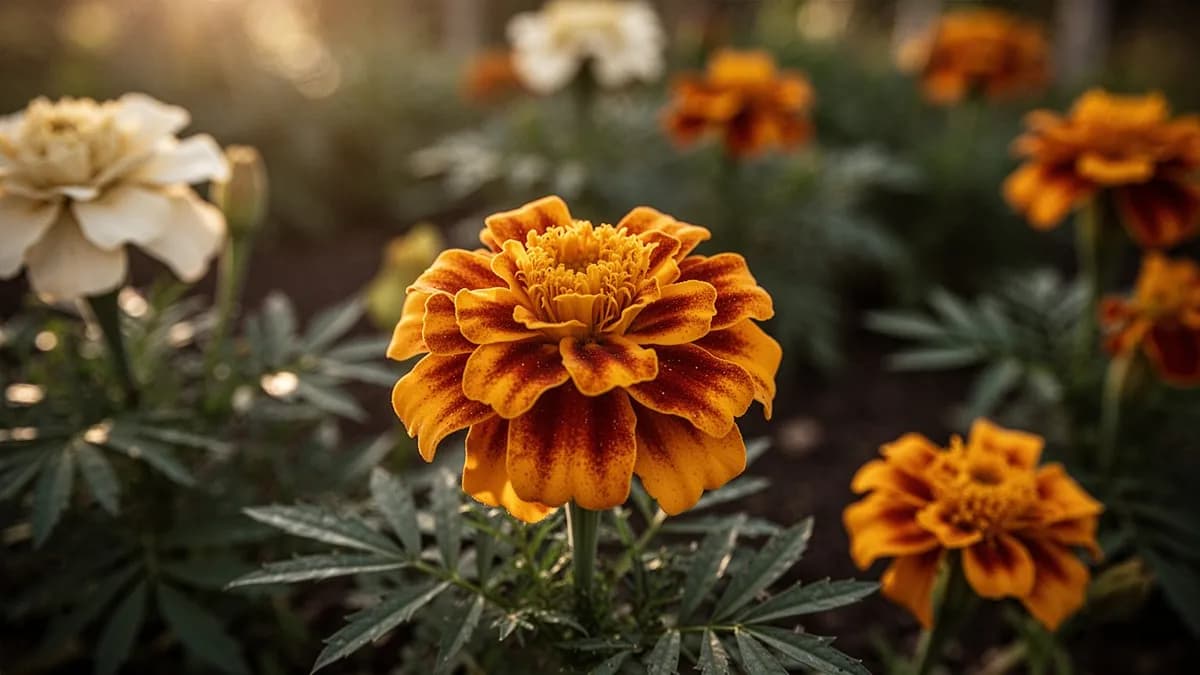
Papayas wachsen gut neben Bananen, die mit ihren großen Blättern Windschutz bieten. Süßkartoffeln eignen sich hervorragend als Bodendecker unter Papayapflanzen, unterdrücken Unkraut und liefern gleichzeitig eine zusätzliche Ernte. Stickstofffixierende Hülsenfrüchte wie Straucherbse und Augenbohne verbessern die Bodenfruchtbarkeit rund um Papayas. Tagetes und Basilikum helfen, Fruchtfliegen und andere Schädlinge abzuwehren. Vermeiden Sie es, Papayas neben anderen Pflanzen der Carica-Familie zu setzen, die Krankheiten teilen können, und halten Sie sie von Walnussbäumen fern.
Basilikum gehört daneben. Walnussbaum nicht.
Altes Gärtnerwissen, geprüft an der echten Nachbartabelle von Papayabaum — teste jede Pflanze, die du anbaust.
Probiere Papayabaum direkt hier im Beet
Ein echtes Planer-Beet, Papayabaum steht schon drin. Tippe einen Begleiter an, platziere ihn und sieh, wie die Nachbarschaftsprüfung antwortet — grün für gute Nachbarn, rot bei Streit.


Passende Anbau-Ratgeber
Richtig düngen
Papayas benötigen nährstoffreichen, gut durchlässigen Boden mit einem pH-Wert von 5,5 bis 7,0 und vertragen keine Staunässe. Verbessern Sie die Pflanzflächen großzügig mit Kompost und abgelagertem Mist. Tragen Sie alle 2 Wochen während des aktiven Wachstums einen Volldünger mit einem NPK-Verhältnis von etwa 10-10-10 auf, oder verwenden Sie monatlich Langzeitdünger in Granulatform. Ergänzen Sie mit Mikronährstoffen einschließlich Bor und Zink. Bio-Gärtner können Fischemulsion, Komposttee und Knochenmehl verwenden, um den hohen Nährstoffbedarf dieser schnell wachsenden Kultur zu decken.
Ideale Temperatur
Winterhärtezone-Kompatibilität
Von der Saat zur Ernte, Schritt für Schritt
Keimung
Papayasamen keimen innerhalb von 2 bis 3 Wochen, wenn sie warm und feucht gehalten werden. Frische Samen, die direkt aus reifen Früchten entnommen werden, haben die höchsten Keimraten, typischerweise zwischen 70 und 90 Prozent. Die Bodentemperatur sollte für eine zuverlässige Keimung über 24 °C bleiben.
Setzlingsentwicklung
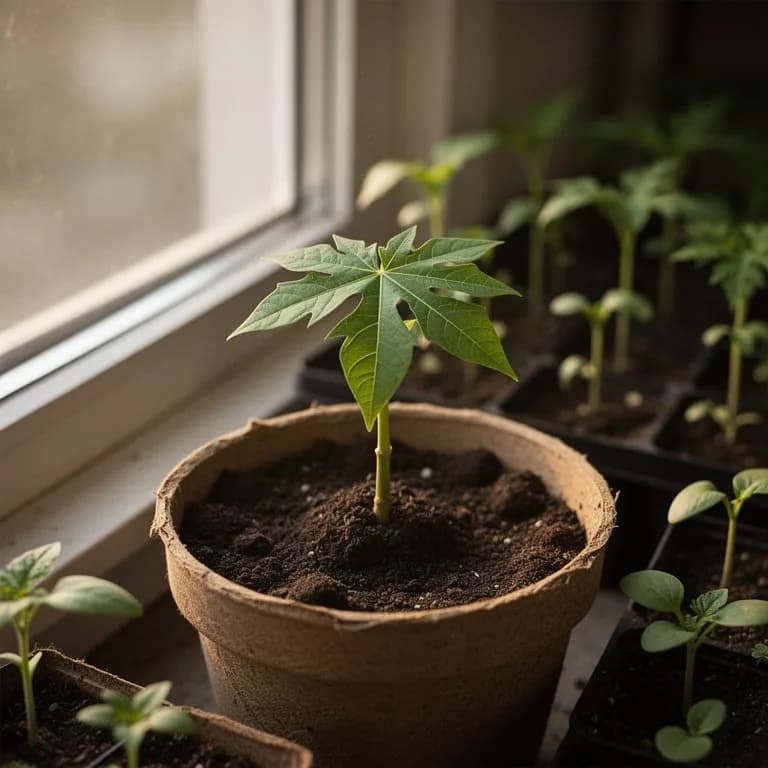
Setzlinge wachsen schnell und bilden innerhalb von Wochen ihre ersten echten handförmigen Blätter. Während dieser Phase streckt sich der einzelne Stängel schnell und das Wurzelsystem etabliert sich. Setzlinge sind in dieser empfindlichen Phase sehr anfällig für Kälte, Wind und Überwässerung.
Vegetatives Wachstum
Der Papayastamm verdickt sich und die Pflanze kann während dieser Phase eine Höhe von 1,8 bis 3 Metern erreichen. Eine Krone aus großen, tief gelappten Blättern entwickelt sich an der Spitze des hohlen Stammes. Die Pflanze baut durch kräftige Photosynthese die Energiereserven auf, die für Blüte und Fruchtbildung benötigt werden.
Blüte
Papayapflanzen beginnen 6 bis 9 Monate nach der Pflanzung zu blühen. Blüten erscheinen direkt am Stamm, knapp unterhalb des Blätterdachs. Es gibt drei Blütentypen: männlich, weiblich und zwittrig. Zwittrige Blüten werden kommerziell bevorzugt, da sie sich selbst bestäuben und die gleichmäßigsten Früchte produzieren.
Fruchtentwicklung
Nach erfolgreicher Bestäubung entwickeln sich die Früchte je nach Sorte und Temperatur über 5 bis 9 Monate. Grüne Früchte schwellen entlang des Stammes an und werden bis zu 25 bis 50 cm lang und wiegen 0,5 bis 4,5 Kilogramm. Das Fruchtfleisch verfärbt sich allmählich von weiß zu orange, während sich Zucker und Carotinoide anreichern.
Ernte und fortlaufende Produktion
Früchte sind erntereif, wenn die Schale von grün nach gelb-orange wechselt, beginnend am Blütenende. Ein ausgewachsener Papayabaum produziert 2 bis 4 Jahre lang kontinuierlich Früchte. Nachdem die Spitzenproduktion nachlässt, ersetzen die meisten Züchter den Baum durch einen neuen Setzling, um hohe Erträge aufrechtzuerhalten.
Weichen Sie die Samen 24 bis 48 Stunden vor dem Pflanzen in Wasser ein und entfernen Sie dann die gelatinöse Samenhülle, um die Keimung zu beschleunigen. Verwenden Sie eine gut durchlässige Aussaaterde und halten Sie sie gleichmäßig feucht, aber niemals staunass.
Papayabaum Monat für Monat pflegen
Was du jeden Monat für deine Papayabaum tun solltest
Oktober
Aktueller MonatSetzen Sie die regelmäßige Ernte reifer Früchte fort. Reduzieren Sie die Düngergaben, wenn das Wachstum nachlässt. Beginnen Sie mit der Vorbereitung von Kälteschutzstrategien für die kühleren Monate.
Immer wissen, was jetzt im Garten zu tun ist
Eine E-Mail zum Monatsanfang: was du jetzt säen, pflanzen und anpacken solltest — für deine Papayabaum und alles, was drumherum wächst. Dazu ein kurzer Startkurs, der dich vor den klassischen Fehlern bewahrt.
- Was jetzt zu tun ist
- Passend zu deiner Saison
- Startkurs inklusive
Papayabaum ernten
Ernten Sie Papayas, wenn die Schale mindestens ein Drittel gelbe Farbe zeigt, für den besten Geschmack, oder pflücken Sie sie überwiegend grün für den Versand und lassen Sie sie bei Zimmertemperatur nachreifen. Reife Papayas geben bei sanftem Daumendruck nach und haben einen süßen Duft am Stielende. Verwenden Sie ein Messer, um die Frucht vom Stamm zu schneiden, wobei ein kurzer Stiel dranbleibt. Papayas reifen von unten nach oben in der Traube, also prüfen Sie zuerst die unteren Früchte. Eine einzelne produktive Pflanze kann 22 bis 45 Kilogramm Früchte pro Jahr liefern.
angenommen, du pflanzt zu Beginn des Zeitraums — trage dein tatsächliches Datum ein
Ernte Papayabaum zügig, dann trägt die Pflanze weiter.
Lagerung & Konservierung
Reife Papayas halten bei Zimmertemperatur 2 bis 3 Tage und im Kühlschrank bis zu einer Woche. Grüne Papayas reifen am besten bei Zimmertemperatur und sollten erst nach der Reife gekühlt werden. Papayafruchtfleisch lässt sich gut in Stücken für Smoothies und Desserts einfrieren. Grüne Papaya kann geraspelt und getrocknet oder eingelegt für die Verwendung in Thai-Salaten werden. Papaya kann auch zu Marmelade, getrocknetem Fruchtleder oder Kandiertem verarbeitet werden. Das Enzym Papain aus grüner Papaya wird kommerziell als Fleischzartmacher verwendet.
Was schiefgeht — und die Lösung
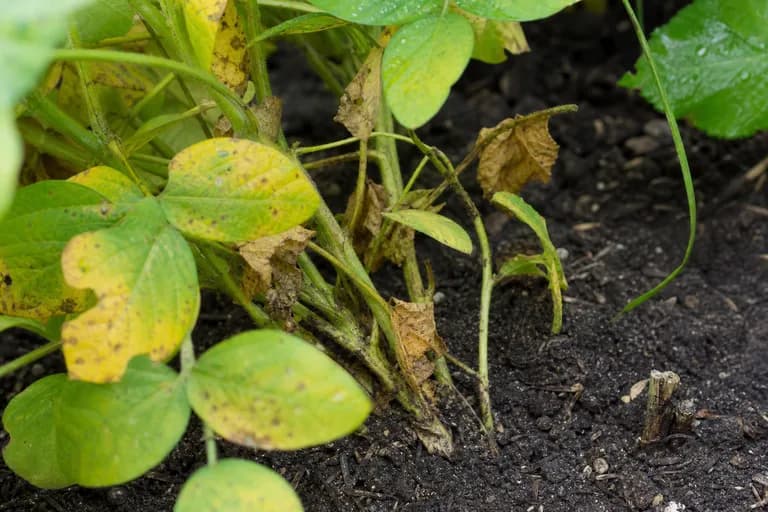
Papaya-Ringfleckenvirus
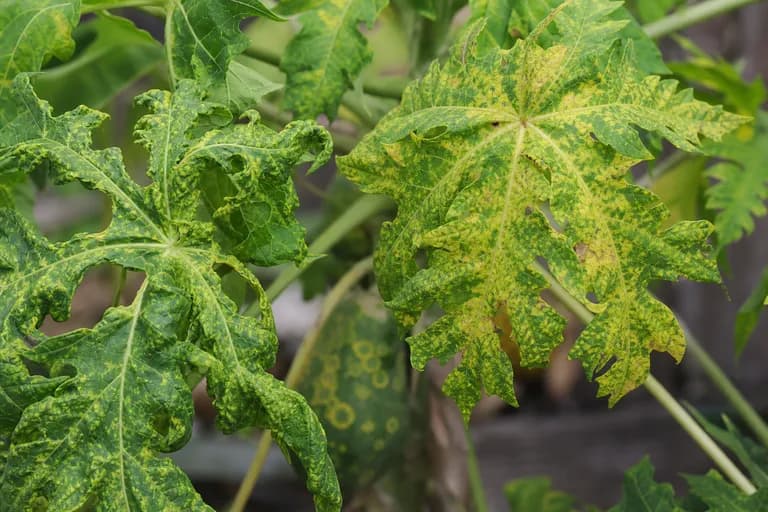
KrankheitGelbe Mosaikmuster auf Blättern, ringförmige Flecken auf Früchten und verzerrtes Blattwachstum. Bäume werden gestaucht und produzieren kleine, nicht vermarktbare Früchte.
Phytophthora-Wurzelfäule
KrankheitWelken trotz ausreichender Bodenfeuchtigkeit. Die Stammbasis wird wässrig und weich. Wurzeln verfärben sich dunkelbraun und werden matschig. Bäume kollabieren schnell.
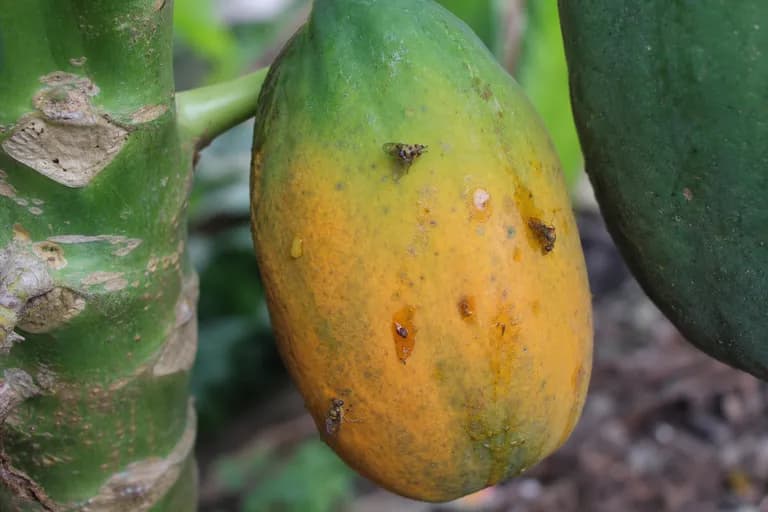
Fruchtfliegen
SchädlingKleine Einstichstellen an reifenden Früchten, an denen Eier abgelegt werden. Larven entwickeln sich im Inneren der Frucht und lassen sie weich und faul werden.
Fehlerbehebung bei häufigen Problemen
Kälteempfindlichkeit ist die größte Einschränkung, da jede Temperatur unter 0 Grad Papayapflanzen sofort abtötet und das Wachstum unter 15 Grad deutlich verlangsamt. Wurzelfäule durch schlechte Drainage ist die häufigste Ursache für plötzlichen Pflanzentod. Rein männliche Pflanzen tragen keine Früchte und müssen identifiziert und entfernt werden, sobald sie blühen. Das Papaya-Ringfleckenvirus verwüstet Pflanzungen in vielen tropischen Regionen und ist unheilbar. Windschäden an den großen Blättern und dem hohlen Stamm sind bei Stürmen häufig.
Anbautipps
- Pflanzen Sie Papayas an der wärmsten und geschütztesten Stelle Ihres Gartens, idealerweise an einer nach Süden ausgerichteten Wand, die Wärme abstrahlt und kalte Winde abhält.
- Verwenden Sie Hochbeete oder aufgehäuften Boden, um eine ausgezeichnete Drainage zu gewährleisten, da Papayawurzeln extrem anfällig für Wurzelfäule in staunassen oder schweren Tonböden sind.
- Pflanzen Sie drei bis vier Samen pro Pflanzloch und vereinzeln Sie auf den stärksten Setzling, sobald das Geschlecht bei der Blüte bestimmt werden kann, und behalten Sie zwittrige oder weibliche Pflanzen für die Fruchtproduktion.
- Tragen Sie eine dicke Schicht organischen Mulch rund um die Baumbasis auf, halten Sie ihn jedoch einige Zentimeter vom Stamm entfernt, um Stammfäule zu verhindern, während Bodenfeuchtigkeit und Wärme erhalten bleiben.
- Düngen Sie Papayabäume alle zwei Wochen während der aktiven Wachstumsperiode mit einem ausgewogenen Dünger und wechseln Sie zu einer kaliumreichen Formel, sobald die Fruchtbildung beginnt, um die Süße zu verbessern.
- Gießen Sie tief, aber seltener, und lassen Sie den oberen Zentimeter des Bodens zwischen den Bewässerungen abtrocknen. Papayas benötigen gleichmäßige Feuchtigkeit, entwickeln aber schnell Wurzelfäule, wenn der Boden dauerhaft gesättigt bleibt.
- In Regionen mit kühlen Wintern sollten Sie Papaya in großen Kübeln (mindestens 55 bis 75 Liter) anbauen, damit die Pflanzen nach drinnen oder in ein beheiztes Gewächshaus gebracht werden können, wenn die Temperaturen unter 10 °C fallen.
- Überwachen Sie Pflanzen regelmäßig auf häufige Schädlinge wie Blattläuse, Weiße Fliegen, Spinnmilben und Fruchtfliegen. Wenden Sie bei ersten Befallsanzeichen organisches Neemöl oder Schmierseifenlösung an.
- Schneiden Sie untere Blätter ab, wenn sie natürlich vergilben, um die Luftzirkulation rund um den Stamm zu verbessern und das Risiko von Pilzkrankheiten wie Mehltau und Anthraknose zu verringern.
- Ernten Sie Früchte, wenn etwa ein Drittel bis die Hälfte der Schale gelb geworden ist, und lassen Sie sie dann bei Zimmertemperatur für den besten Geschmack und die beste Textur nachreifen. Kühlen Sie erst nach vollständiger Reife.
Bau deine beste Papayabaum an — und alles drumherum.
Starte heute kostenlos. Lege deine Beete an, setze deine Papayabaum ein und lass PlotMyGarden Timing, Abstände, Begleiter und Erinnerungen von der Saat bis zum Erntekorb übernehmen.
Finde deine Papayabaum
Red Lady
Eine beliebte zwittrige Zwergsorte, die ab einer Höhe von 90 cm Früchte trägt. Süßes rot-oranges Fruchtfleisch mit guter Krankheitstoleranz und zuverlässiger Produktion.
Maradol
Großfruchtige mexikanische Sorte mit süßem, lachsfarbenem Fruchtfleisch. Ein kräftiger Wachser, der in warmen Klimazonen schwere Ernten produziert.
Tainung Nr. 2
Ein taiwanesischer Hybrid mit ausgezeichnetem Geschmack und Krankheitsresistenz, insbesondere gegen das Ringfleckenvirus. Süßes oranges Fruchtfleisch und konstant hohe Erträge.
Solo (Hawaiianisch)
Kompakte Bäume, die kleine, birnenförmige Früchte mit süßem goldorangem Fruchtfleisch produzieren. Die Standardsorte für Hausgärten und Kleinproduktion.
Ein einzelner Papayabaum kann bereits 9 bis 12 Monate nach der Pflanzung 30 bis 150 Früchte pro Jahr produzieren. Bei Supermarktpreisen für Papayas von typischerweise 2 € bis 5 € pro Stück könnte ein produktiver Baum einem Haushalt jährlich 100 € bis 500 € oder mehr an Frischobstkosten einsparen. Die Bäume benötigen nur minimale Ressourcen neben Wasser, Dünger und warmen Temperaturen, was sie zu einer der kosteneffizientesten tropischen Obstkulturen für Hobbygärtner in geeigneten Klimazonen macht.
Schnelle Rezepte
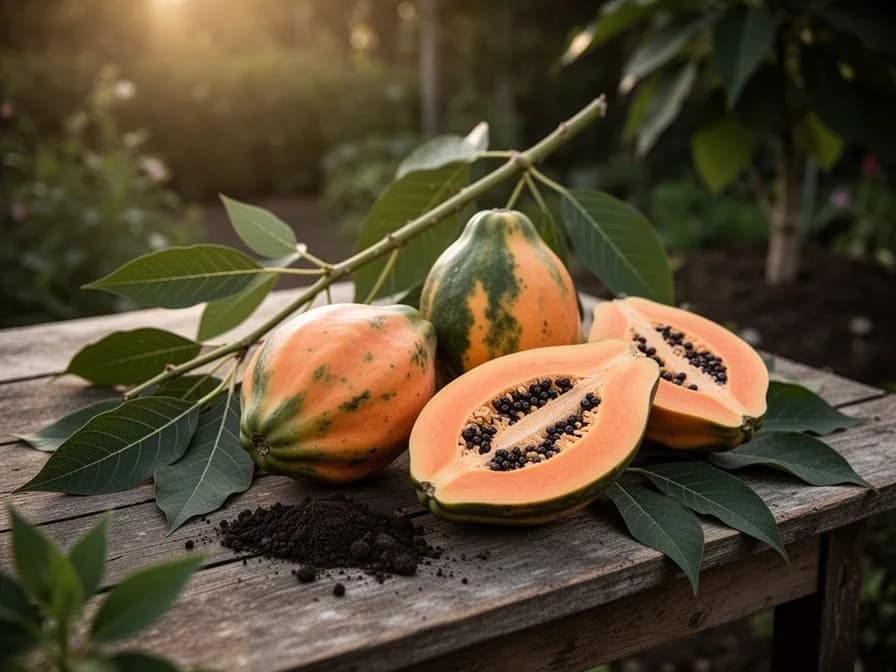
Tropische Papaya-Smoothie-Bowl
10 Min.Eine leuchtende und erfrischende Smoothie-Bowl mit reifer Papaya, püriert mit gefrorener Banane und Kokosmilch, garniert mit Granola, frischem Obst und Kokosraspeln für ein nahrhaftes tropisches Frühstück.
8 Zutaten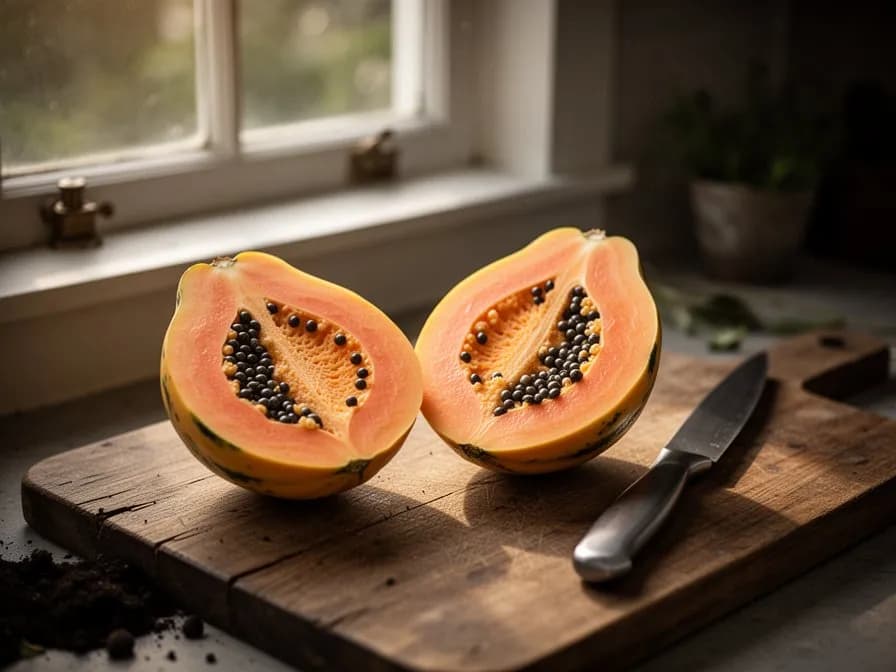
Thailändischer Grüner Papayasalat (Som Tam)
20 Min.Ein klassischer thailändischer Salat aus geraspelter unreifer grüner Papaya in einem kräftigen Dressing aus Limettensaft, Fischsauce, Knoblauch und Chili. Knackig, säuerlich und voller authentischem südostasiatischem Geschmack.
9 ZutatenPapaya-Limetten-Salsa
15 Min.Eine frische und farbenfrohe Frucht-Salsa aus gewürfelter reifer Papaya mit roten Zwiebeln, Koriander, Jalapeño und einem Spritzer Limette. Perfekt als Topping für gegrillten Fisch, Hühnchen-Tacos oder serviert mit Tortilla-Chips.
7 ZutatenKulinarische Verwendung
Reife Papaya wird frisch mit einem Spritzer Limette gegessen oder zu Smoothies und tropischen Obstsalaten gemixt. Das Fruchtfleisch wird für Eiscreme, Sorbets und Desserts in ganz Lateinamerika und Südostasien verwendet. Grüne Papaya wird für den klassischen thailändischen Salat Som Tam geraspelt und in Currys und Pfannengerichten verwendet. Die Kerne haben einen pfeffrigen Geschmack und können getrocknet und als Gewürz gemahlen werden. Papaya ist reich an Vitamin C, Vitamin A und dem Verdauungsenzym Papain.
Was drinsteckt
Gesundheitsvorteile
- Der hohe Vitamin-C-Gehalt stärkt das Immunsystem und wirkt als starkes Antioxidans, das Zellen vor Schäden durch freie Radikale schützt.
- Das Enzym Papain unterstützt eine gesunde Verdauung, indem es Proteine im Magen abbaut, und wird häufig als natürliches Mittel gegen Blähungen und Verdauungsbeschwerden eingesetzt.
- Reich an Beta-Carotin und Vitamin A, die gesundes Sehvermögen fördern, das Risiko altersbedingter Makuladegeneration verringern und die Regeneration der Hautzellen unterstützen.
- Entzündungshemmende Verbindungen wie Papain und Chymopapain können chronische Entzündungen reduzieren, die mit Erkrankungen wie Arthritis und Asthma verbunden sind.
- Der Ballaststoffgehalt unterstützt die Herz-Kreislauf-Gesundheit, indem er hilft, den Cholesterinspiegel zu senken und einen gesunden Blutdruck aufrechtzuerhalten.
- Enthält bedeutende Mengen an Folsäure, die für die DNA-Synthese und Zellteilung essentiell ist, was Papaya besonders während der Schwangerschaft vorteilhaft macht.
Woher Papayabaum stammt
Die Papaya (Carica papaya) stammt aus den tropischen Tiefländern Südmexikos und Mittelamerikas, wo archäologische Funde darauf hindeuten, dass sie von indigenen Völkern Jahrtausende vor dem europäischen Kontakt kultiviert wurde. Die Maya- und Azteken-Zivilisationen schätzten die Frucht sowohl für ihren Nährwert als auch für ihre medizinischen Eigenschaften und verwendeten den Milchsaft unreifer Früchte als Verdauungshilfe und Fleischzartmacher. Spanische und portugiesische Entdecker begegneten der Papaya im 16. Jahrhundert und erkannten schnell ihre außergewöhnlichen Qualitäten. Sie brachten Samen auf die Philippinen, nach Indien und in andere tropische Regionen Asiens und Afrikas, wo sich die Pflanze leicht an die örtlichen Anbaubedingungen anpasste. Bis zum 17. Jahrhundert hatte sich der Papaya-Anbau über den gesamten tropischen Gürtel ausgebreitet und war in Dutzenden von Ländern zum Nahrungsgrundpfeiler geworden. Auf Hawaii begann die kommerzielle Papaya-Produktion in den 1910er-Jahren und wuchs zu einer der wichtigsten landwirtschaftlichen Industrien des Bundesstaates heran. Die hawaiianische Solo-Sorte, die in den 1920er-Jahren entwickelt wurde, wurde zum Goldstandard für kleine, süße Papayas in westlichen Märkten. In den 1990er-Jahren verwüstete das Papaya-Ringfleckenvirus hawaiianische Plantagen, was zur Entwicklung der Rainbow-Papaya führte, einer der ersten genetisch veränderten Kulturpflanzen, die für den kommerziellen Verkauf zugelassen wurden. Heute ist Indien der weltweit größte Papayaproduzent, gefolgt von Brasilien, Mexiko, Indonesien und Nigeria. Die Frucht bleibt tief in den kulinarischen Traditionen tropischer Kulturen weltweit verankert, von südostasiatischen Salaten über lateinamerikanische Smoothies bis hin zu karibischen Desserts.
Papayabaum: Schon gewusst?
Faszinierende Fakten über Papayabaum
Die Papaya wird manchmal als ‚Baum der guten Gesundheit' bezeichnet, weil nahezu jeder Teil der Pflanze traditionelle medizinische oder kulinarische Verwendungen hat, einschließlich der Frucht, der Blätter, der Kerne und des Milchsafts.
Papayabaum: Fragen & Antworten
Wann sollte ich Papayabaum pflanzen?
Was sind gute Begleitpflanzen für Papayabaum?
In welchen Winterhärtezonen kann Papayabaum wachsen?
Wie viel Sonne braucht Papayabaum?
Welchen Abstand sollte ich zwischen Papayabaum lassen?
Welche Schädlinge und Krankheiten befallen Papayabaum?
Wie lagere ich Papayabaum nach der Ernte?
Was sind die besten Papayabaum-Sorten zum Anbauen?
Welchen Boden braucht Papayabaum?
Wie lange dauert es, bis ein Papayabaum Früchte trägt?
Kann ich einen Papayabaum drinnen oder in einem kalten Klima anbauen?
Warum trägt mein Papayabaum keine Früchte?
Sind Papayakerne essbar und wie schmecken sie?
Welche Schädlinge und Krankheiten befallen Papayabäume häufig?
Woran erkenne ich, wann eine Papaya reif und pflückreif ist?
Du hast die Theorie gelesen. Jetzt baue sie auf Autopilot an.
Alles, was Papayabaum knifflig macht — das Timing, die Abstände, die Begleiter, das Erntefenster — genau das übernimmt PlotMyGarden für dich, für jede Pflanze im Garten.
Ein Plan, der dein Wetter kennt
Standort einmal festlegen. Aussaat-, Dünge- und Erntedaten rund um deinen echten letzten Frosttermin und die Live-Vorhersage — kein Raten mehr nach Saattüte.
Aus dem Abschnitt „Pflanzzeit“Beetplaner per Drag & Drop
Beete auf einem Raster gestalten. Jede Pflanze rastet im richtigen Abstand ein, und du siehst die ganze Saison, bevor du einen Cent für Saatgut ausgibst.
Aus dem Abschnitt „Anbau“Begleiter-Konflikte früh erkannt
Über 200 gute und schlechte Kombinationen werden beim Pflanzen live geprüft — so landet ein saisonruinierender Fehler nie in der Erde.
Aus dem Abschnitt „Begleiter“Erinnerungen, nach denen du wirklich handelst
„Gieß die Bohnen.“ „Heute ernten, bevor's umschlägt.“ Pünktlich, konkret und auf deine echten Pflanzen bezogen.
Aus dem Abschnitt „Ernte“Staffel-Aussaat, geplant
Sechs Wochen ernten statt sechs Tage? Die App verteilt deine Aussaaten automatisch und erinnert dich, wenn der nächste Satz fällig ist.
Aus dem Abschnitt „Pflanzzeit“Ein Verlauf, der schlauer wird
Jede protokollierte Ernte bringt der App deinen Garten bei. Der Plan fürs nächste Jahr startet bei dem, was in deinem Boden wirklich funktioniert hat.
Aus dem Abschnitt „Überblick“Pflanze diese neben Papayabaum
Weitere Obstbäume
Halte Papayabaum von diesen fern
Bau deine beste Papayabaum an — und alles drumherum.
Starte heute kostenlos. Lege deine Beete an, setze deine Papayabaum ein und lass PlotMyGarden Timing, Abstände, Begleiter und Erinnerungen von der Saat bis zum Erntekorb übernehmen.