Heart of Palm
The tender inner core of certain palm species, harvested as a delicacy with a flavor resembling artichoke hearts and white asparagus.





On this pageOverview
Meet Heart of Palm
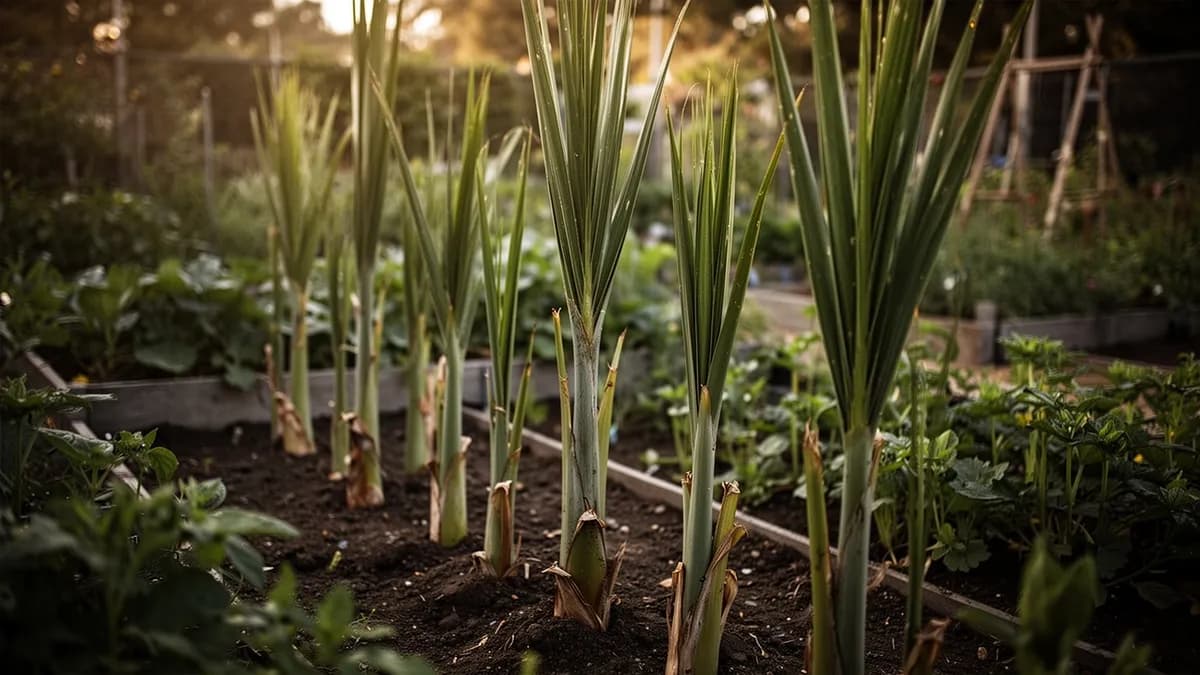
The tender inner core of certain palm species, harvested as a delicacy with a flavor resembling artichoke hearts and white asparagus. The peach palm is preferred for commercial production because it produces multiple trunks, allowing sustainable harvest without killing the plant. Only viable in tropical climates where palms can grow year-round. Fresh hearts of palm have a superior texture and flavor compared to the canned product commonly found in stores.
When to plant Heart of Palm
Peach palm seeds are best sown fresh, as they lose viability quickly. Soak seeds in warm water for 24 hours before planting one inch deep in a warm, moist seed-starting mix. Germination is slow and irregular, taking one to three months at temperatures of 80 to 90 degrees Fahrenheit. Keep the growing medium consistently moist but not waterlogged. Transplant seedlings into larger containers once they have two to three true leaves. Plant outdoors in permanent locations when seedlings are one to two feet tall, after all risk of cold weather has passed.
Your Heart of Palm Year
Composed for Zone 7 · typical seasons · frost passes Apr 2, returns Nov 1
Plant Heart of Palm Apr – Jun, pick Jan – Dec. Check the planting methods below and set your climate to personalize these windows.
How to grow Heart of Palm
Heart of palm comes from the inner growing core of certain palm species, with the peach palm being the preferred choice for home cultivation because it produces multiple stems allowing sustainable harvest. Plant in a tropical or subtropical location with full sun to partial shade and consistently warm temperatures above 60 degrees Fahrenheit year-round. Space palms 10 to 15 feet apart in rich, well-drained soil amended with organic matter.
Peach palms require consistent moisture and high humidity to thrive. Water deeply and regularly, especially during dry periods, and apply a thick mulch layer around the base to retain moisture and moderate soil temperature. Feed monthly with a balanced palm fertilizer that includes micronutrients like manganese and magnesium.
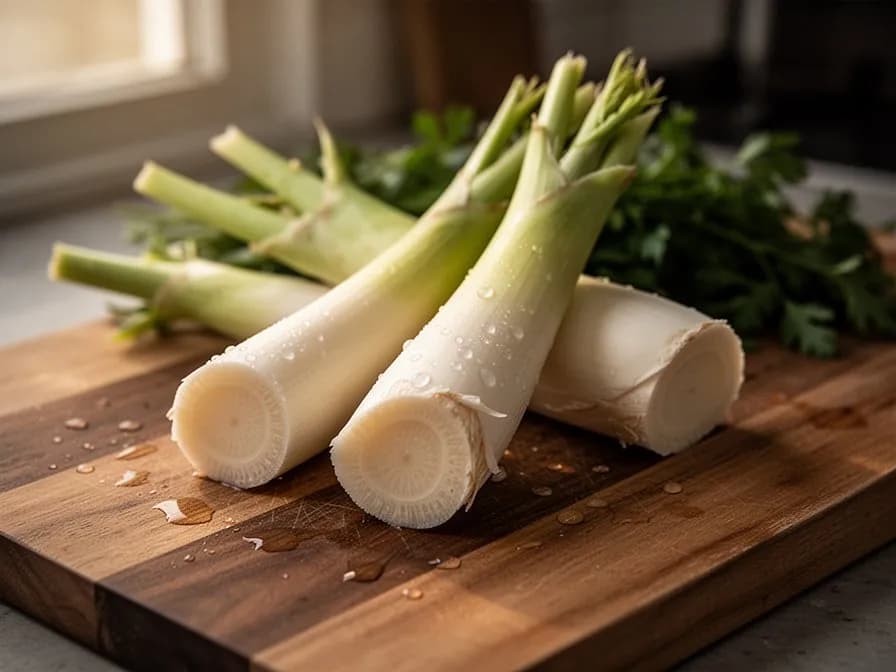
Harvest hearts of palm from secondary trunks that are at least two to three inches in diameter, leaving the main trunk and several secondary stems to continue growing. Cut the trunk at the base and peel away the outer layers to reveal the tender white heart inside. In ideal conditions, peach palms can produce harvestable offshoots within two to three years of planting. This is strictly a tropical crop and cannot be grown outdoors in areas with frost.
Heart of Palm needs more room than a 4 × 8 ft bed gives
Each Heart of Palm wants 300 cm of elbow room. The planner keeps that spacing for you — every plant, every bed.
Related growing guides
Feed it well
Heart of palm palms prefer rich, loamy soil with a pH between 5.5 and 6.5 that retains moisture while draining well. Amend planting areas with generous amounts of compost and well-rotted organic matter. Feed monthly with a specialized palm fertilizer containing nitrogen, potassium, magnesium, and manganese. Deficiencies in micronutrients are common in palms and manifest as yellowing or frizzling of fronds. Apply a thick layer of organic mulch around the base to maintain soil moisture and add nutrients as it decomposes.
Ideal Temperature
Hardiness Zone Compatibility
From seed to harvest, stage by stage
Seed Germination
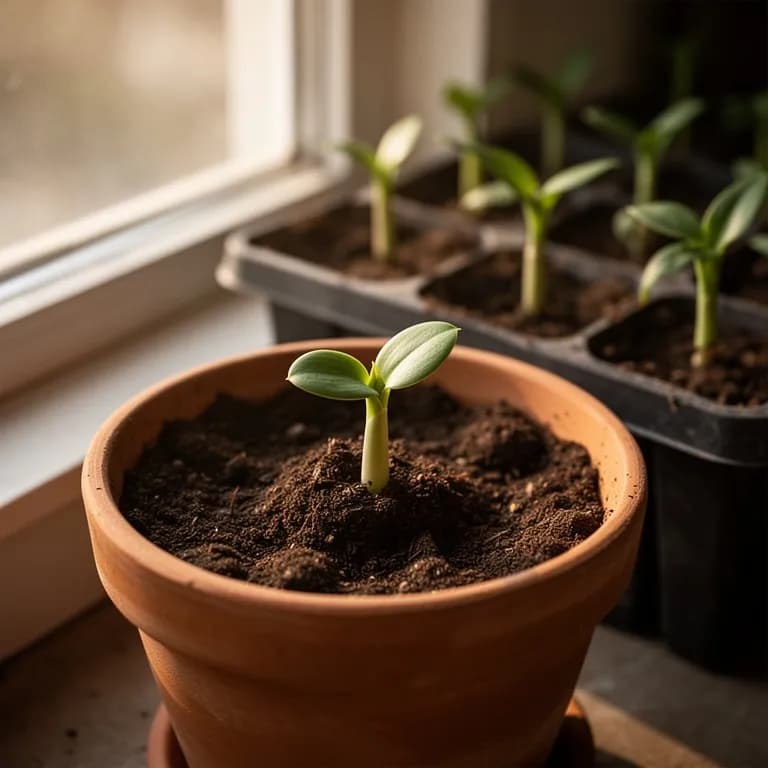
Peach palm seeds are notoriously slow and irregular germinators, taking 30-90 days to sprout in warm, moist conditions. The seed must be fresh — viability drops rapidly after a few weeks. A single shoot emerges from the large, hard-shelled seed, followed by the first narrow, grass-like leaf.
Nursery Stage
Young palms develop their first true pinnate fronds and begin establishing a root system. Growth is slow during the first year, with the seedling reaching 30-60 cm in height. The trunk has not yet formed — the plant is essentially a rosette of expanding leaves. Spiny varieties begin showing thorns on leaf petioles at this stage.
Field Establishment
Transplanted to the field at 9-12 months, the palm begins forming a visible trunk and produces larger compound fronds. The root system expands rapidly into surrounding soil. Multi-stemmed clumping begins in earnest, with secondary shoots (offsets) emerging from the base of the main stem.
Vegetative Growth
The palm enters vigorous growth, adding height and producing offsets from the base. Trunks reach 5-8 cm in diameter and 2-3 meters in height. The clumping habit is now clearly established with 3-6 stems per plant. The canopy thickens as fronds grow longer and more numerous.
First Harvest Maturity
Stems reach harvestable size at 18-24 months after field planting (3-4 years from seed). The trunk diameter of 8-12 cm indicates a well-developed inner heart. The first harvest is taken by cutting the primary stem, which stimulates vigorous regrowth of secondary stems from the clump base.
Sustained Production
The established clump enters a cycle of continuous production. New offsets grow to harvestable size every 12-18 months, allowing 1-2 harvests per clump per year without killing the plant. A well-managed peach palm clump can remain productive for 15-20 years or more, making it one of the most sustainable sources of heart of palm.
Use only fresh seeds no more than 2-3 weeks old for best results. Plant 2-3 cm deep in a warm, moist seed-starting mix and maintain constant temperatures of 27-32°C (80-90°F). Cover with plastic to retain humidity. Be patient — germination is slow and uneven.
Caring for Heart of Palm month by month
What to do each month for your Heart of Palm
October
You are herePrepare for the dry season by deep-watering all plants. Continue harvest of any remaining mature stems. Clean and maintain processing equipment for the off-season. In the nursery, pot up seedlings that are ready for larger containers.
Know exactly what to do in your garden — every month
One email at the start of each month: what to sow, plant, and tackle right now — for your Heart of Palm and everything growing around it. Plus a short starter course that helps you dodge the classic mistakes.
- What to do, right now
- Matched to your season
- Starter course included
Harvesting Heart of Palm
Harvest hearts of palm from secondary trunks of multi-stemmed palms like the peach palm when the trunk is two to three inches in diameter. Cut the trunk at ground level using a sharp machete or saw. Peel away the tough outer layers of the trunk until you reach the tender, white inner core, which is the edible heart. Each trunk yields about 12 to 18 inches of edible heart. Harvest only from secondary stems, preserving the main trunk and at least two other stems for continued growth. Fresh hearts should be used within a few days of harvest.
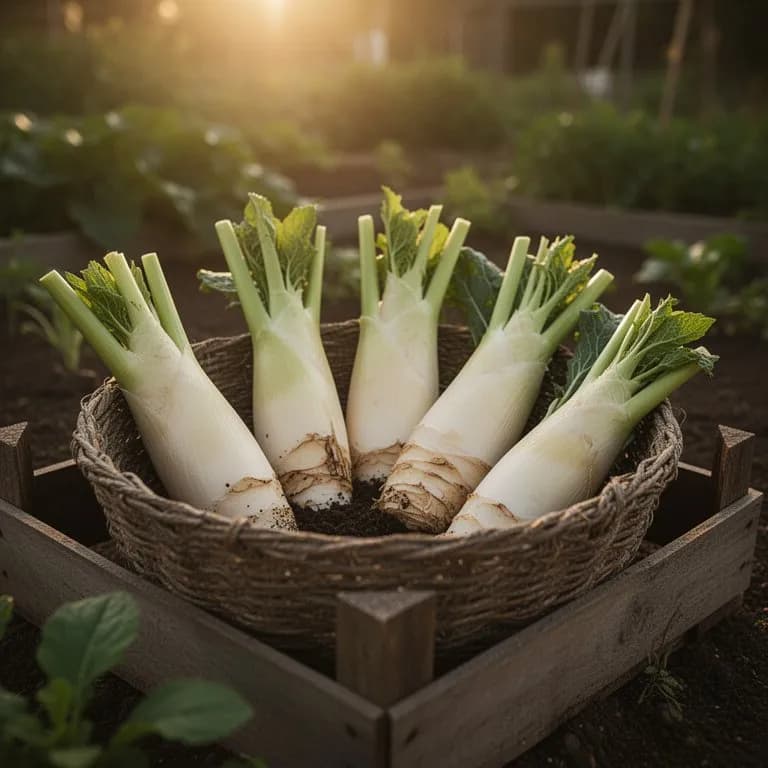
assuming you plant when the window opens — set your real date
Pick Heart of Palm promptly and the plant keeps producing.
Storage & Preservation
Fresh hearts of palm are highly perishable and should be used within two to three days of harvest. Store unwrapped hearts in the refrigerator in a container of water, changing the water daily. For longer preservation, slice hearts and blanch in acidulated water with lemon juice for three minutes, then cool and freeze in airtight containers for up to six months. Hearts of palm can also be pickled in a vinegar brine with herbs and spices for shelf-stable storage. Commercially, hearts are most commonly canned in brine.
What goes wrong — and the fix
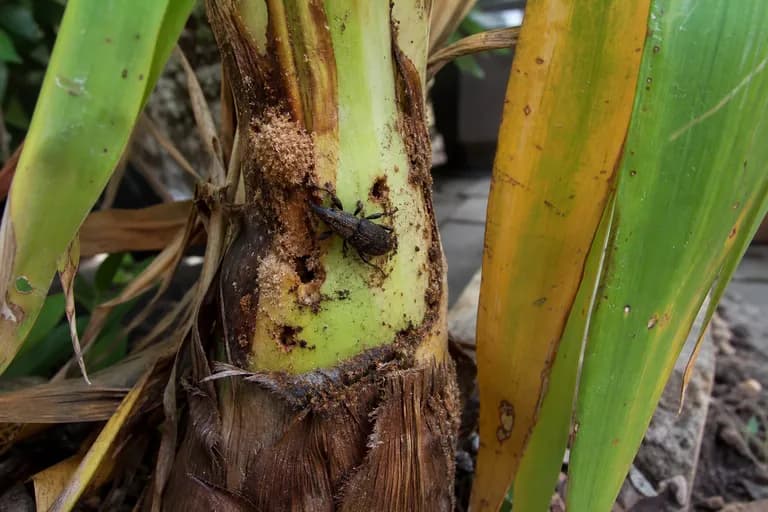
Palm Weevil
PestBoring holes in the trunk with sawdust-like frass. Wilting and yellowing of crown leaves. Larvae feed inside the trunk causing internal damage.
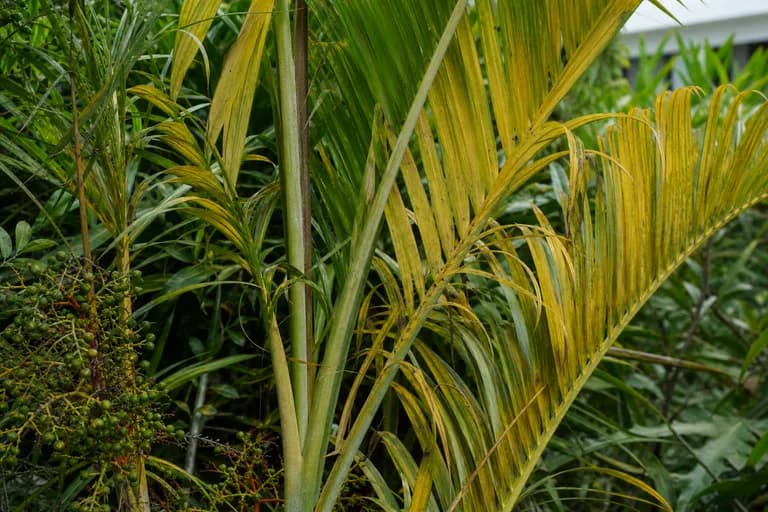
Lethal Yellowing
DiseasePremature fruit drop followed by progressive yellowing of fronds from bottom to top. Eventually the crown collapses and the palm dies.
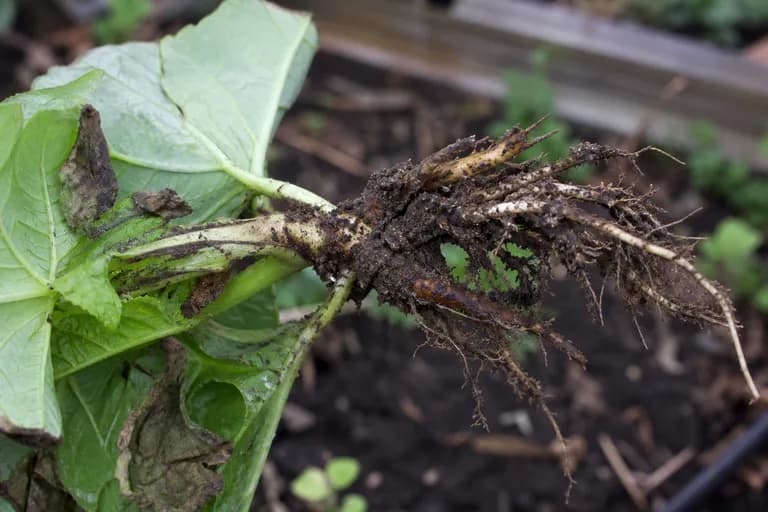
Root Rot
DiseaseYellowing fronds, stunted growth, and soft tissue at the base of the trunk. Roots appear brown and mushy when examined.
Troubleshooting Common Problems
The biggest limitation of growing heart of palm is the strict tropical climate requirement, as these palms cannot tolerate frost or prolonged cool temperatures. Single-stemmed palm species die when harvested for hearts, making species selection critical for sustainable production. Young palms are slow to establish and may take three or more years before producing harvestable secondary trunks. Nutrient deficiencies are common and manifest as yellowing, spotting, or frizzling of fronds. Wind damage can break fronds and slow growth.
Growing Tips
- Heart of palm is only viable as a garden crop in true tropical climates — USDA zones 10b through 12 with year-round warmth, high humidity, and no frost. If you experience any frost at all, this is not a crop for your garden.
- Choose the peach palm (Bactris gasipaes) for home growing whenever possible. Its multi-stemmed clumping habit allows sustainable harvesting without killing the plant, unlike single-stemmed species that die when the heart is removed.
- Plant in rich, well-draining soil with heavy organic matter content. Peach palms are native to tropical rainforest margins and prefer deep, fertile soils with a pH of 5.5-6.5. Work in generous amounts of compost before planting.
- Provide consistent moisture year-round — peach palms need 2,000-3,000 mm of water annually and do not tolerate drought. If rainfall is seasonal, install drip irrigation to carry plants through dry periods.
- Be aware that many peach palm varieties have extremely sharp spines covering the trunk, leaf stalks, and even fruit clusters. Spineless cultivars have been developed for commercial production and are strongly recommended for home gardens to make harvesting safer.
- Fertilize regularly with a palm-specific fertilizer high in potassium and with micronutrients including magnesium and manganese. Palms are heavy feeders and nutrient deficiencies show up quickly as yellowing or browning of fronds.
- Allow clumps to develop 4-6 stems before taking your first harvest. Never cut all stems at once — always leave at least 2-3 growing stems to sustain the plant and produce new offsets for future harvests.
- Process harvested hearts immediately after cutting. Strip away the tough outer leaf sheaths to reveal the creamy white inner cylinder. Fresh heart of palm oxidizes rapidly and should be used within hours, or submerged in acidulated water (water with lemon juice) to prevent browning.
Grow your best Heart of Palm yet — and everything around it.
Start a free plan today. Lay out your beds, drop in your Heart of Palm, and let PlotMyGarden handle the timing, spacing, companions and reminders from seed to harvest basket.
Pick your Heart of Palm
Peach Palm
The preferred species for heart of palm production due to its multi-stemmed growth habit, allowing sustainable harvest without killing the plant.
Acai Palm
Grown primarily for its berries but also produces edible hearts of palm. Multi-stemmed habit allows sustainable harvest in tropical regions.
Coconut Palm
Produces excellent hearts of palm but harvesting kills the single-stemmed tree, making it an unsustainable source for this purpose.
Palmetto
A cold-hardy palm native to the southeastern United States that produces edible hearts, though harvesting is destructive to the plant.
Growing your own heart of palm is a long-term investment suited only to tropical climates (USDA zones 10b-12). A peach palm seedling costs $5-15 and takes 3-4 years to produce its first harvestable heart, but once established, it yields hearts for 15-20 years with minimal input. Fresh heart of palm sells for $8-15 per pound at specialty markets and $4-8 for a single 400g can at grocery stores. A mature clump producing 2 hearts per year provides roughly $15-30 worth of fresh product annually — modest per plant, but a small grove of 10-20 palms can provide a steady supply worth $150-600 per year while also serving as attractive tropical landscaping.
Quick recipes
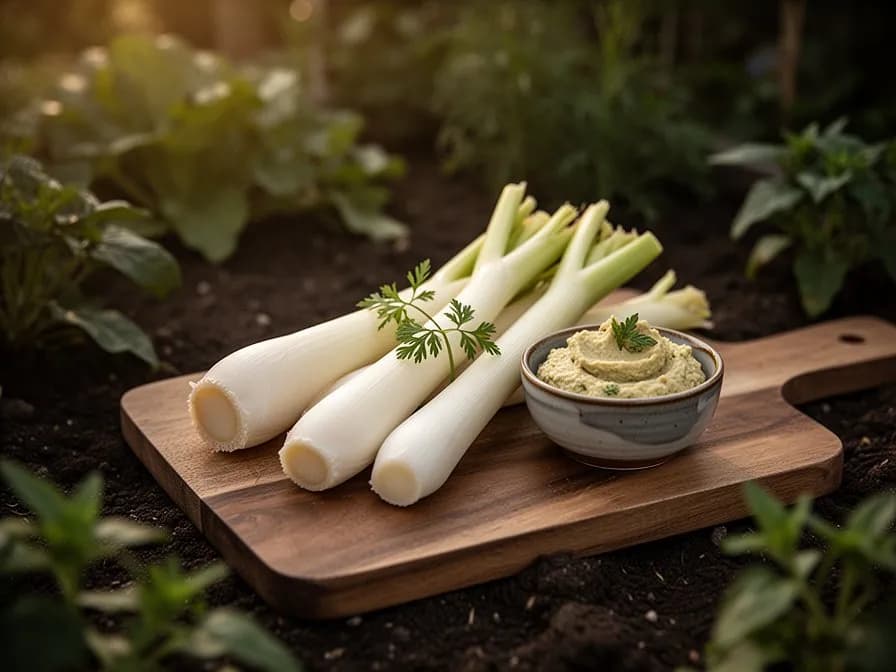
Brazilian Heart of Palm Salad (Salada de Palmito)
15 minA refreshing and elegant Brazilian classic that showcases the delicate, slightly sweet flavor of heart of palm. Sliced hearts are paired with ripe tomatoes, peppery arugula, and a bright lemon vinaigrette for a dish that is equally at home at a weeknight dinner or a formal table.
7 ingredientsHeart of Palm Ceviche
20 min + 30 min marinatingA stunning plant-based ceviche where sliced heart of palm mimics the tender bite of seafood. Marinated in fresh citrus juice with red onion, cilantro, and a hint of chili, this makes a vibrant appetizer or light meal that will impress even dedicated seafood lovers.
9 ingredientsPan-Seared Heart of Palm Steaks
25 minThick rounds of heart of palm are seared in a hot pan until golden and caramelized, then finished with a savory garlic-butter glaze. The result is a satisfying plant-based steak with a crisp exterior and tender, flaky interior that works beautifully as a main course.
8 ingredientsCulinary Uses
Fresh hearts of palm have a delicate, slightly sweet flavor with notes of artichoke and mild nuttiness. They are sliced into rounds or strips and used raw in salads, where their crisp texture is most appreciated. Hearts of palm can be grilled, roasted, or sauteed with butter and herbs. In Brazilian cuisine, they are a key ingredient in salads and empanadas. They pair well with citrus vinaigrettes, avocado, shrimp, and fresh herbs. Hearts of palm are also used as a plant-based substitute for seafood in vegan dishes.
What's inside
Health Benefits
- Extremely low in calories (36 per 100g) and virtually fat-free, making heart of palm an excellent choice for weight management and calorie-controlled diets without sacrificing volume or satiety.
- Contains notable amounts of zinc (10% DV per 100g) which supports immune cell development, wound healing, and protein synthesis — an important mineral that is often deficient in plant-based diets.
- Provides iron (9% DV per 100g) in a plant-based form, contributing to healthy red blood cell production and oxygen transport — pair with vitamin C-rich foods to enhance absorption.
- Good source of potassium (177mg per 100g) which helps regulate blood pressure, counteract the effects of excess sodium, and support proper muscle and nerve function.
- Rich in dietary fiber (2.4g per 100g) that supports digestive health, promotes beneficial gut bacteria, and helps maintain steady blood sugar levels after meals.
- Contains phosphorus and manganese, minerals essential for bone health, energy metabolism, and antioxidant enzyme function in the body.
Where Heart of Palm comes from
Heart of palm is the tender, edible inner core harvested from the growing tip (apical meristem) of certain palm trees, most notably the peach palm (Bactris gasipaes), açaí palm (Euterpe oleracea), coconut palm (Cocos nucifera), and various species of the genus Euterpe. Indigenous peoples of Central and South America have consumed heart of palm for thousands of years — the peach palm in particular has been cultivated in the Amazon basin for at least 9,000 years, making it one of the oldest domesticated plants in the Americas. For these ancient cultures, palms were multipurpose trees providing food, fiber, building materials, and medicine, and the heart was considered a prized delicacy reserved for celebrations and honored guests.
For most of history, heart of palm was harvested from wild single-stemmed palm species, which meant killing the entire tree to extract the edible core. This destructive harvesting method earned heart of palm the name 'millionaire's salad' and led to serious ecological concerns as wild palm populations declined in Brazil, Ecuador, and other tropical regions during the 20th century. The açaí palm, now famous for its berries, was once heavily harvested for its heart, threatening wild populations. Conservation efforts and changing agricultural practices began to shift the industry in the 1970s.
The modern heart of palm industry was transformed by the widespread adoption of the peach palm (palmito pupunha in Portuguese) for commercial cultivation. Because peach palms naturally grow in multi-stemmed clumps, individual stems can be harvested on a rotating basis without destroying the plant — a single clump can produce harvestable hearts every 12-18 months for 15-20 years. Costa Rica and Ecuador led this agricultural revolution, developing intensive plantation systems that now supply much of the global market. Brazil remains the largest consumer, where palmito is a cultural staple appearing in salads, empanadas, soups, and on pizza. Today, heart of palm is experiencing a global renaissance as a plant-based protein alternative, with its naturally flaky, layered texture making it a convincing substitute for crab, lobster, and other seafood in vegan cuisine.
Heart of Palm: did you know?
Fascinating facts about Heart of Palm
Heart of palm has been called 'millionaire's salad' because harvesting the heart from single-stemmed palm species like the açaí palm kills the entire tree — a luxury that once required destroying a palm that may have taken 7-10 years to grow for just a single serving of the delicacy.
Heart of Palm questions, answered
When should I plant Heart of Palm?
What hardiness zones can Heart of Palm grow in?
How much sun does Heart of Palm need?
How far apart should I space Heart of Palm?
What pests and diseases affect Heart of Palm?
How do I store Heart of Palm after harvest?
What are the best Heart of Palm varieties to grow?
What soil does Heart of Palm need?
Can I grow heart of palm outside of the tropics?
Does harvesting heart of palm kill the tree?
How long does it take to get a harvest of heart of palm?
What does fresh heart of palm taste like compared to canned?
Is heart of palm environmentally sustainable?
How should I store fresh and canned heart of palm?
You just read the theory. Now grow it on autopilot.
Everything that makes Heart of Palm fiddly — the timing, the spacing, the companions, the harvest window — is exactly what PlotMyGarden handles for you, for every plant in your garden.
A plan that knows your weather
Set your location once. Get sow, feed and harvest dates built around your real last-frost date and live forecast — no more guessing from a generic seed packet.
From the “When to plant” sectionDrag-and-drop bed planner
Design beds on a grid. Every plant snaps to its proper spacing, and you can see your whole season laid out before you spend a cent on seed.
From the “Growing guide” sectionCompanion conflicts, caught early
200+ good-and-bad pairings checked live as you plant — so a season-wrecking mistake never makes it into the ground.
From the “Companions” sectionReminders you'll actually act on
“Water the beans.” “Pick today before it turns.” Timely, specific, and tied to the plants you're really growing.
From the “Harvest” sectionSuccession, scheduled
Want a harvest for six weeks, not six days? It spaces your sowings automatically and reminds you when each new block is due.
From the “When to plant” sectionA record that gets smarter
Every harvest you log teaches it your garden. Next year's plan starts from what actually worked in your soil, not a textbook's.
From the “Overview” sectionMore Stalks & Stems
Grow your best Heart of Palm yet — and everything around it.
Start a free plan today. Lay out your beds, drop in your Heart of Palm, and let PlotMyGarden handle the timing, spacing, companions and reminders from seed to harvest basket.