Nerine
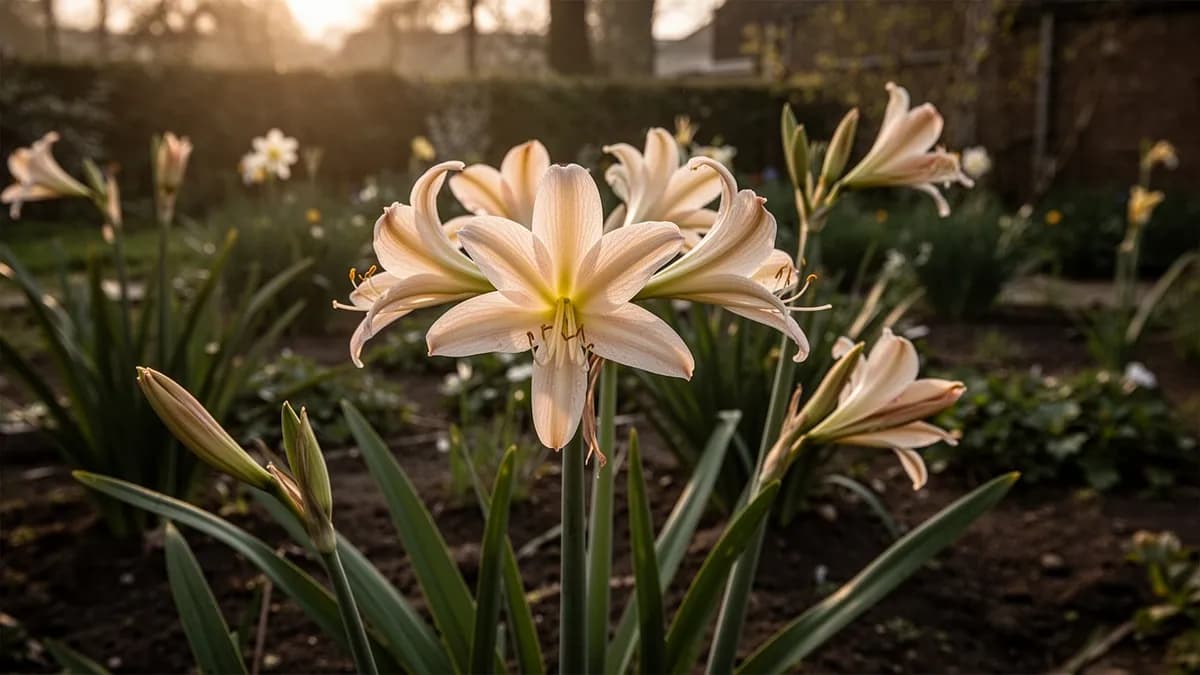
A South African bulb producing elegant umbels of glistening pink flowers with curled, spider-like petals that sparkle in autumn sunshine.





On this pageOverview
Meet Nerine
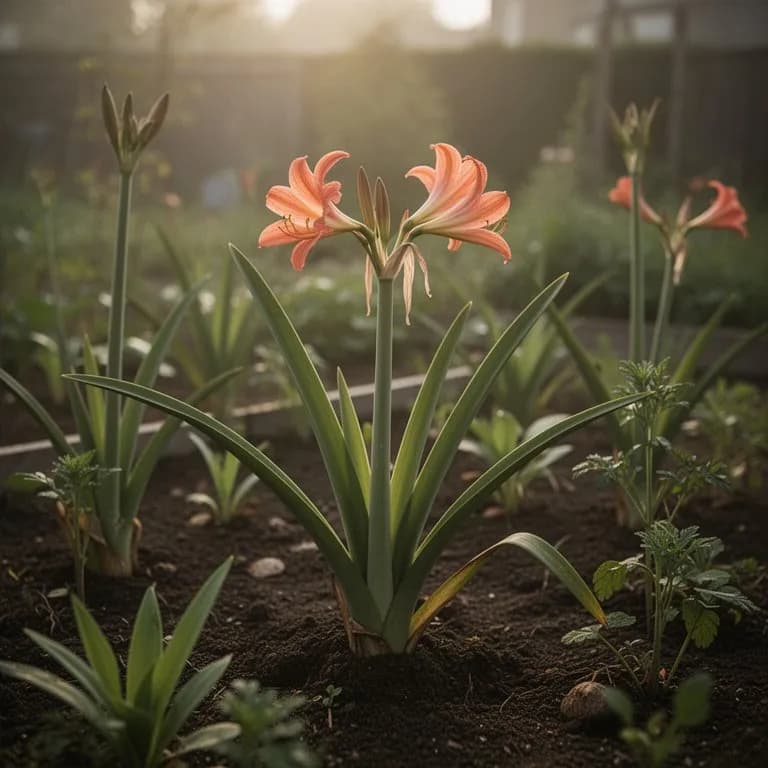
A South African bulb producing elegant umbels of glistening pink flowers with curled, spider-like petals that sparkle in autumn sunshine. Nerine blooms best when crowded and baked against a sunny wall, and resents being disturbed once established. The flowers appear on bare stems before the leaves and are outstanding for cutting.
When to plant Nerine
Nerine can be grown from seed, which is best sown fresh as soon as it ripens, typically in early winter. The fleshy seeds should be pressed into moist, gritty compost but not covered. Keep at cool room temperatures and maintain even moisture. Seeds germinate within four to eight weeks. Grow seedlings on without a dormant period for their first two years, feeding regularly. Plants from seed typically take four to six years to reach flowering size and may show variation in flower color.
Your Nerine Year
Composed for Zone 7 · typical seasons · frost passes Apr 2, returns Nov 1
Plant Nerine Mar – Apr, pick Sep – Nov. Check the planting methods below and set your climate to personalize these windows.
How to grow Nerine
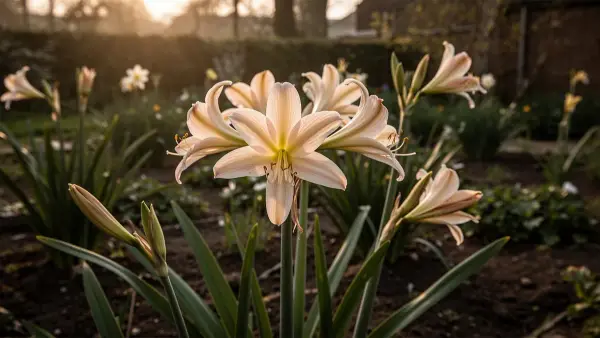
Plant nerine bulbs in spring, with the neck of the bulb just above soil level, spacing them six inches apart. Choose a hot, sunny position at the base of a south or west-facing wall where the bulbs will receive maximum summer warmth, which is essential for initiating flower buds. Nerine bowdenii is the hardiest species and can be grown outdoors in zones 7 to 10 with good drainage and winter protection.
During spring and summer, nerine foliage is actively growing and the bulbs need regular moisture. Feed every two weeks with a high-potassium liquid fertilizer from when the leaves are fully developed until they begin to yellow. As foliage dies back in late summer, stop watering and feeding. The dramatic pink flower stems emerge from bare ground in autumn, followed by fresh leaves after flowering.
Nerine blooms best when congested and undisturbed, so resist the urge to divide clumps too frequently. Allow bulbs to become crowded in their planting position, only dividing when flowering noticeably declines after five to seven years. In marginal areas, apply a dry mulch of straw or bark chips in late autumn after flowering to protect the bulbs through winter. Remove the mulch in spring as new foliage emerges.
128 plants fit a 4 × 8 ft bed
Each Nerine wants 15 cm of elbow room. The planner keeps that spacing for you — every plant, every bed.
Nerine's best neighbours
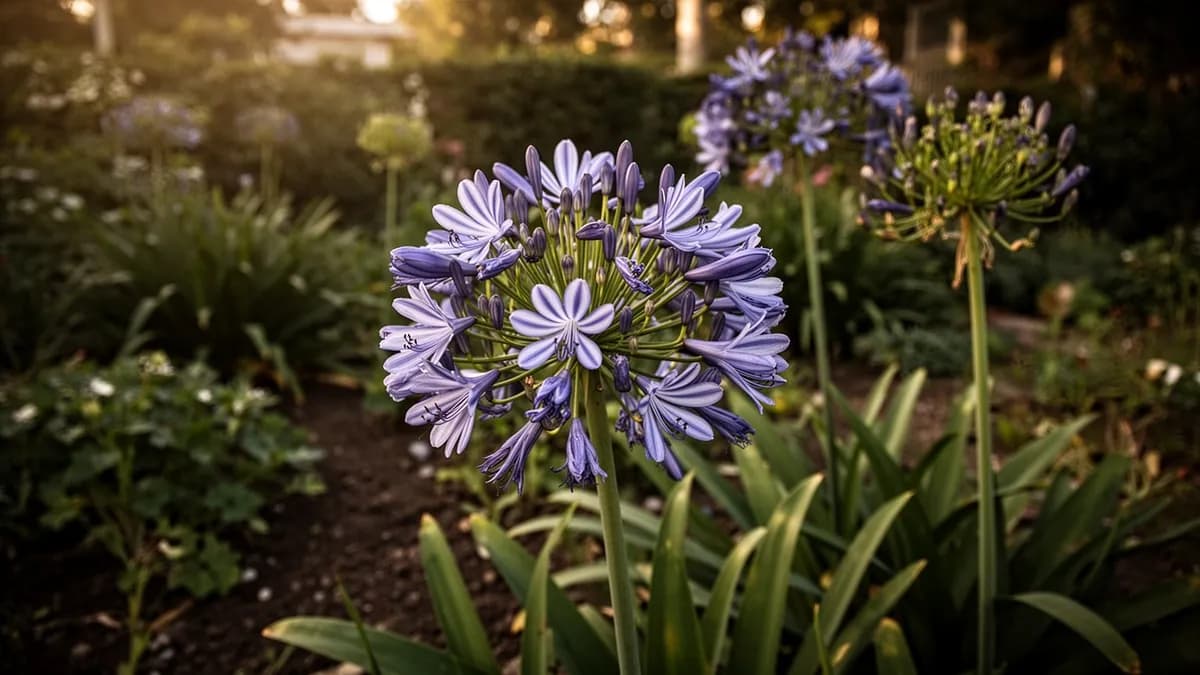
Nerine's late autumn flowering makes it a perfect partner for other fall-blooming plants such as colchicum, cyclamen hederifolium, and autumn crocuses. The hot-wall position it requires can be shared with other sun-loving bulbs like agapanthus and amaryllis belladonna. Low-growing silver-foliaged plants like artemisia and santolina provide attractive groundcover around the bulbs during their dormant and growing periods.
Agapanthus belongs beside it.
Old growers' knowledge, checked against Nerine's real companion table below — test any plant you're growing.
Try Nerine in a bed — right here
A real planner bed with Nerine already in it. Tap a companion to place it and watch the pairing checks answer — green for good neighbours, red for a clash.


Related growing guides
Feed it well
Nerine requires well-drained soil in a hot, sunny position with a pH of 6.0 to 7.5. Sandy or gravelly soil at the base of a warm wall is ideal. Amend heavy clay with generous quantities of grit and sand. Apply bone meal at planting time and feed with high-potassium liquid fertilizer fortnightly during the growing season. The summer baking period is critical for flower bud formation, so avoid irrigating the planting area during this dormant phase.
Ideal Temperature
Hardiness Zone Compatibility
From seed to harvest, stage by stage
Bulb Planting
Plant bulbs in late spring or early summer with the neck protruding slightly above the soil surface. Choose a sheltered, sunny position with sharply drained soil. Space bulbs approximately 10-15 cm apart.
Root Establishment
Roots develop below the bulb and anchor the plant into the surrounding soil. Minimal top growth is visible during this phase as the bulb channels energy into root formation.
Foliage Growth
Strap-shaped, glossy green leaves emerge and grow to about 30 cm in length. The foliage photosynthesizes actively through spring and into summer, building energy reserves within the bulb for autumn flowering.
Summer Dormancy
Leaves yellow and die back naturally as the plant enters a summer rest period. The bulb becomes dormant and requires minimal attention. This dry rest is critical for triggering flower bud initiation inside the bulb.
Flower Spike Emergence
In early to mid-autumn, a sturdy, leafless flower stem rises rapidly from the dormant bulb, reaching 45-60 cm in height. The tightly packed flower bud at the tip begins to swell and show colour.
Full Bloom
The umbel opens to reveal six to twelve funnel-shaped flowers with elegantly recurved, sparkling pink petals. Each flower lasts approximately two weeks, and the entire umbel provides colour for three to four weeks. Blooms attract late-season pollinators.
Post-Bloom and Offset Development
After flowering, new foliage may appear and the bulb begins producing offsets (daughter bulbs) around its base. These offsets can be left to form dense clumps or separated and replanted to propagate new plants.
Do not bury the bulb too deeply; the top third of the neck should remain exposed above the soil line to encourage flowering.
Caring for Nerine month by month
What to do each month for your Nerine
October
You are hereEnjoy the main flowering display. Deadhead spent florets to prolong the display. Cut stems for indoor arrangements when the first two or three florets have opened.
Know exactly what to do in your garden — every month
One email at the start of each month: what to sow, plant, and tackle right now — for your Nerine and everything growing around it. Plus a short starter course that helps you dodge the classic mistakes.
- What to do, right now
- Matched to your season
- Starter course included
Harvesting Nerine
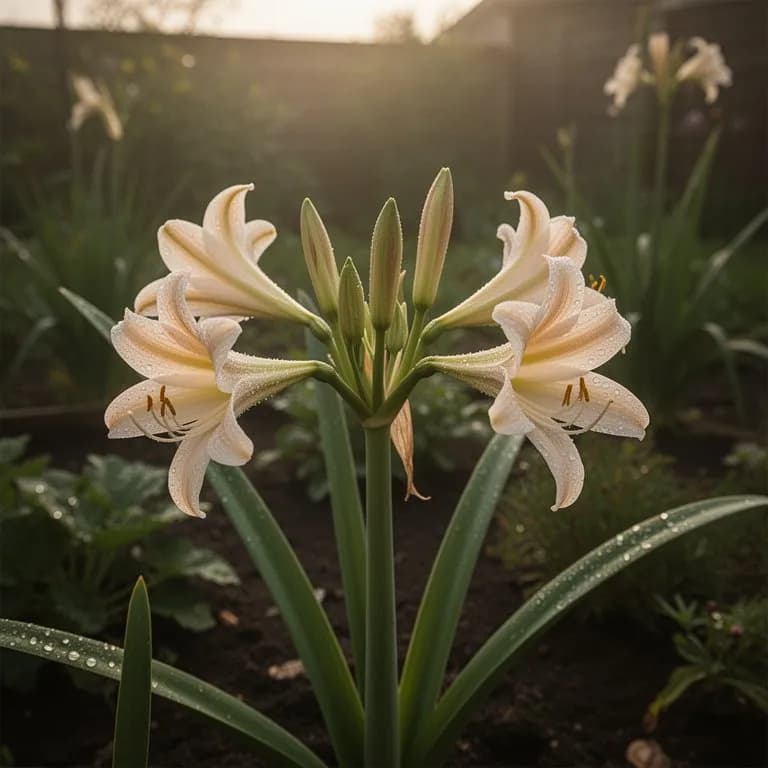
Cut nerine stems for spectacular autumn arrangements when two or three florets in the umbel have opened. The glittering, spider-like pink flowers last ten to fourteen days in a vase, making them exceptional cut flowers. Cut stems at the base and place in clean water. The flowers have a crystalline, sparkling quality in sunlight that is unique among autumn-blooming bulbs. A single stem in a bud vase makes a striking display.
assuming you plant when the window opens — set your real date
From bulbs, tubers or cloves
Pick Nerine promptly and the plant keeps producing.
Storage & Preservation
Nerine bulbs are best left undisturbed in the ground where they naturalize and flower best when crowded. In zones colder than 7, lift bulbs after foliage dies back and store in barely damp peat in a cool, frost-free location. Alternatively, grow in deep containers that can be moved to a frost-free greenhouse for winter. Cut flowers can be dried by hanging upside down, retaining some of their form though losing the characteristic sparkle.
What goes wrong — and the fix
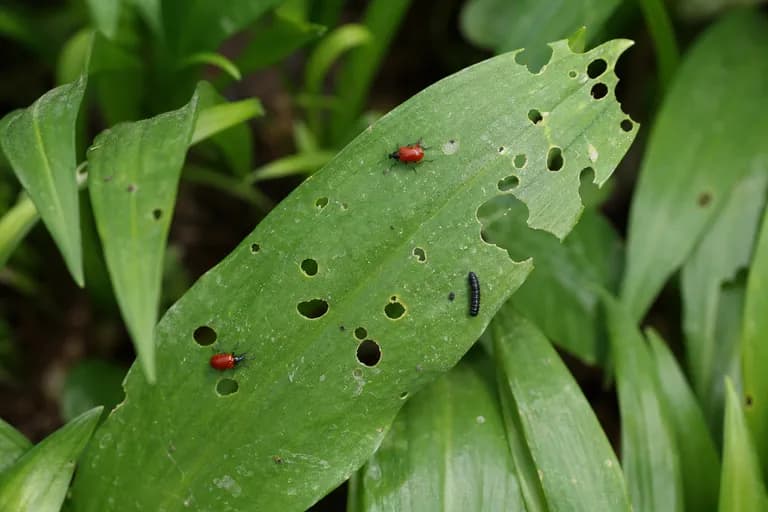
Lily Beetle
PestBright red beetles and their dark, slimy larvae feeding on leaves and flowers. Foliage can be stripped to skeletons in severe attacks.
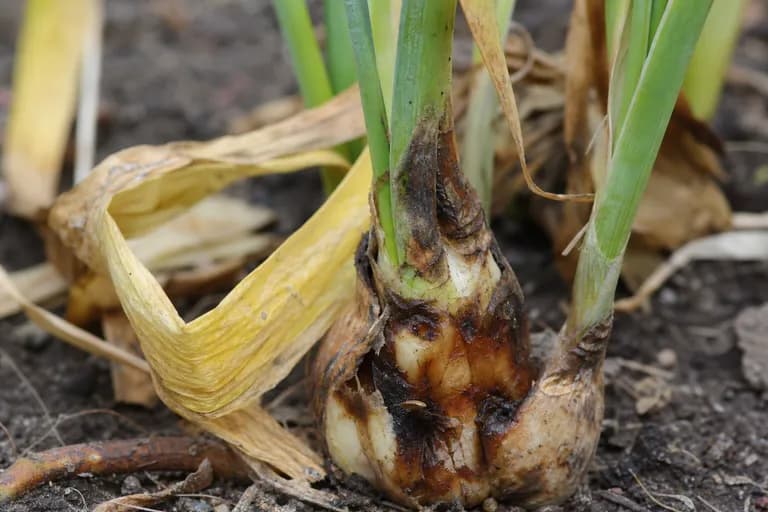
Basal Rot (Fusarium)
DiseaseBrown, sunken rot spreading upward from the base plate of the bulb. Foliage yellows and wilts prematurely. A sour smell when the bulb is lifted.
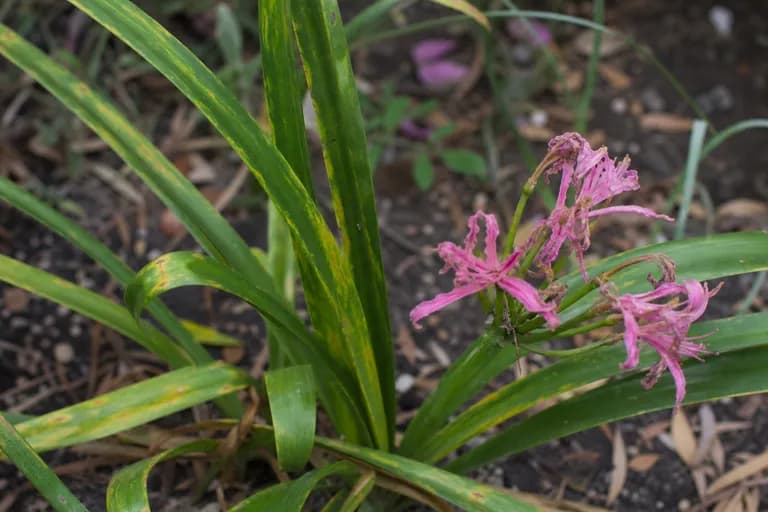
Virus
DiseaseYellow streaking and mottling on leaves, stunted growth, distorted or sparse flowers. Symptoms worsen over successive years.
Troubleshooting Common Problems
The most common cause of non-flowering is insufficient summer heat reaching the bulbs. Plant as close to a warm wall as possible with the bulb necks exposed above the soil surface. Planting too deeply also inhibits flowering. Dividing too frequently disrupts the congested conditions nerines need to bloom well. In wet winter climates, crown rot is a risk and excellent drainage is essential.
Growing Tips
- Plant bulbs against a south-facing wall or fence to maximise sun exposure and radiated warmth, which is critical for reliable flowering in cooler climates.
- Ensure exceptionally sharp drainage by adding generous amounts of horticultural grit or coarse sand to the planting hole, particularly in clay soils where waterlogging causes bulb rot.
- Resist the temptation to divide clumps too frequently; nerines flower most prolifically when slightly congested, and disturbed bulbs may sulk for one to two years before flowering again.
- Water actively during the spring foliage growth period and again when flower spikes emerge in autumn, but keep bulbs completely dry during their summer dormancy rest phase.
- Apply a high-potash liquid feed such as tomato fertiliser every two to three weeks during foliage growth to promote strong flower bud formation within the bulb.
- Mulch over the planting area with dry straw, bark chips, or horticultural fleece in regions where winter temperatures regularly drop below minus five degrees Celsius.
- When growing nerines in containers, use a free-draining mix of two parts loam-based compost to one part grit, and avoid repotting until bulbs are visibly pushing against the pot walls.
- Cut flower stems for indoor arrangements when the first two or three florets on the umbel have opened; the remaining buds will continue to open in the vase over the following week.
- Remove spent flower stems after blooming but never cut back green foliage, as the leaves are essential for photosynthesis and replenishing the bulb's energy reserves for next year's flowers.
- In very cold regions where ground planting is not feasible, grow nerines successfully in terracotta pots that can be moved to a frost-free greenhouse or garage over winter.
Grow your best Nerine yet — and everything around it.
Start a free plan today. Lay out your beds, drop in your Nerine, and let PlotMyGarden handle the timing, spacing, companions and reminders from seed to harvest basket.
Pick your Nerine
Bowdenii
The hardiest species with soft pink flowers on eighteen-inch stems, the standard garden nerine and most reliable for outdoor cultivation.
Alba
A pure white form of N. bowdenii that glows in the autumn garden, slightly less vigorous but exceptionally elegant.
Isabel
Deep rose-pink flowers that are richer in color than the species, strong-growing and floriferous once established.
Stephanie
Pale, almost blush-pink flowers with a silvery sheen, a refined and delicate selection for sheltered borders.
Nerine bulbs are a cost-effective long-term garden investment. A single bulb purchased for three to five dollars will multiply into a dense flowering clump of ten to fifteen bulbs within five to seven years without any additional expenditure. These offsets can be divided and replanted elsewhere or shared with other gardeners, effectively providing free plants. Because nerines thrive on neglect and require minimal watering, feeding, or pest control, ongoing maintenance costs are negligible compared to most garden perennials.
Quick recipes
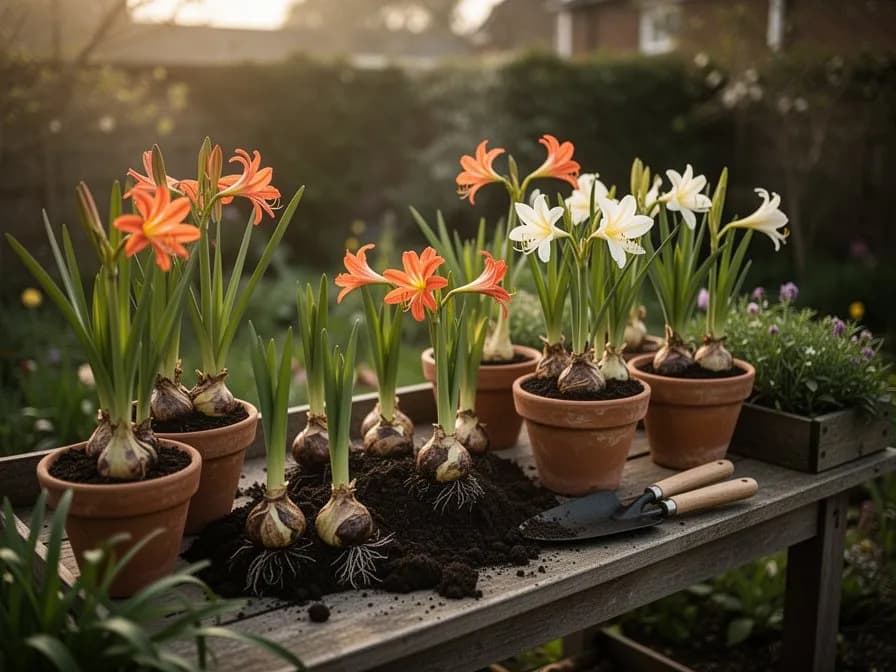
Autumn Jewel Nerine Bouquet
15 minutesCreate a stunning long-lasting floral arrangement showcasing nerine's sparkling pink blooms. Cut stems when the first two or three florets have opened and the remaining buds are showing colour for the longest possible vase life.
5 ingredients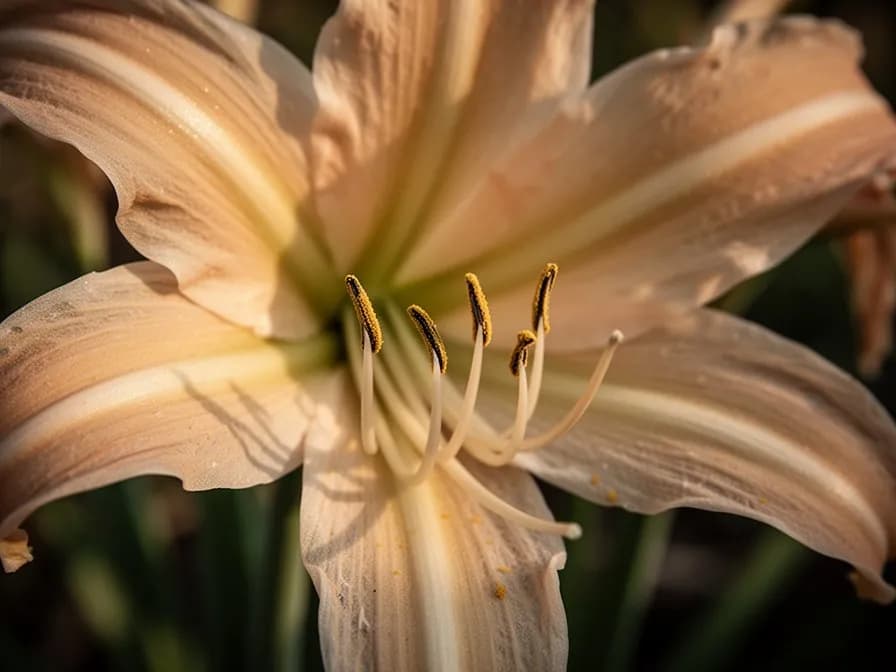
Nerine Pressed Flower Art Card
20 minutes active, 2-3 weeks pressing timePreserve the delicate beauty of individual nerine florets by pressing them to create elegant greeting cards or framed botanical art. The crystalline petal texture retains a subtle shimmer even when dried.
5 ingredientsNerine Potpourri and Display Bowl
10 minutes assembly, 1-2 weeks dryingDry nerine petals alongside complementary autumn materials to create a fragrant and visually appealing potpourri display. While nerine petals themselves have little scent, their colour and sparkle add a unique visual element to potpourri blends.
5 ingredientsWhat's inside
Health Benefits
- Nerine bowdenii is not edible and provides no direct dietary health benefits; it is grown exclusively as an ornamental plant.
- Growing nerines and tending to their seasonal care cycle provides gentle physical activity and contributes to the well-documented mental health benefits of regular gardening.
- The vibrant pink and magenta autumn blooms can help counteract seasonal affective tendencies by providing uplifting colour in the garden during the shorter days of October and November.
- Nerines attract late-season pollinators including butterflies and hoverflies, supporting local biodiversity and contributing to a healthier garden ecosystem.
- Alkaloid compounds found in nerine bulbs, particularly lycorine, are the subject of ongoing pharmaceutical research into potential anti-cancer and antiviral properties.
- The long vase life of cut nerine flowers allows their mood-boosting visual presence to be enjoyed indoors for up to two weeks, bringing nature's beauty into the home during autumn.
Where Nerine comes from
Nerine bowdenii is native to the rocky grasslands and mountain slopes of the Eastern Cape and KwaZulu-Natal provinces of South Africa, where it grows at elevations between 600 and 2,300 metres above sea level. The species was first formally described by the English botanist William Watson in 1904, based on specimens collected by Athelstan Cornish-Bowden near the town of Estcourt in Natal, and the species name 'bowdenii' honours this collector. The genus itself was established much earlier, in 1820, by the Reverend William Herbert, who named it after the Nereids of Greek mythology, the fifty sea-nymph daughters of the ancient sea god Nereus. The common name 'Guernsey lily' actually belongs to the related species Nerine sarniensis, though it is frequently applied loosely to all garden nerines. Legend holds that bulbs of Nerine sarniensis were washed ashore on the island of Guernsey in the seventeenth century from a shipwrecked vessel travelling from South Africa, and the bulbs naturalised along the coast, giving rise to the association with the Channel Islands. Nerine bowdenii was introduced to European horticulture in the early twentieth century and quickly gained popularity for its tolerance of cooler climates compared to other species in the genus. By the mid-twentieth century, breeders in the Netherlands and the United Kingdom had developed numerous cultivars in shades of white, pale pink, deep rose, and magenta. Today, Nerine bowdenii and its hybrids are widely grown across temperate gardens in Europe, North America, and Australasia, prized for their late-season colour and suitability for borders, containers, and cut-flower production.
Nerine: did you know?
Fascinating facts about Nerine
Nerine petals contain crystalline cells that refract light, creating an unmistakable diamond-like sparkle that has earned them the nickname 'diamond lily' among flower enthusiasts.
Nerine questions, answered
When should I plant Nerine?
What are good companion plants for Nerine?
What hardiness zones can Nerine grow in?
How much sun does Nerine need?
How far apart should I space Nerine?
What pests and diseases affect Nerine?
How do I store Nerine after harvest?
What are the best Nerine varieties to grow?
What soil does Nerine need?
Why is my nerine not flowering even though it produces healthy foliage every year?
When is the best time to plant nerine bulbs?
Are nerine plants toxic to pets and children?
How do I overwinter nerine bulbs in very cold climates?
How often should I divide nerine clumps?
Can nerine flowers be used as cut flowers and how long do they last?
You just read the theory. Now grow it on autopilot.
Everything that makes Nerine fiddly — the timing, the spacing, the companions, the harvest window — is exactly what PlotMyGarden handles for you, for every plant in your garden.
A plan that knows your weather
Set your location once. Get sow, feed and harvest dates built around your real last-frost date and live forecast — no more guessing from a generic seed packet.
From the “When to plant” sectionDrag-and-drop bed planner
Design beds on a grid. Every plant snaps to its proper spacing, and you can see your whole season laid out before you spend a cent on seed.
From the “Growing guide” sectionCompanion conflicts, caught early
200+ good-and-bad pairings checked live as you plant — so a season-wrecking mistake never makes it into the ground.
From the “Companions” sectionReminders you'll actually act on
“Water the beans.” “Pick today before it turns.” Timely, specific, and tied to the plants you're really growing.
From the “Harvest” sectionSuccession, scheduled
Want a harvest for six weeks, not six days? It spaces your sowings automatically and reminds you when each new block is due.
From the “When to plant” sectionA record that gets smarter
Every harvest you log teaches it your garden. Next year's plan starts from what actually worked in your soil, not a textbook's.
From the “Overview” sectionPlant these alongside Nerine
More Bulbs
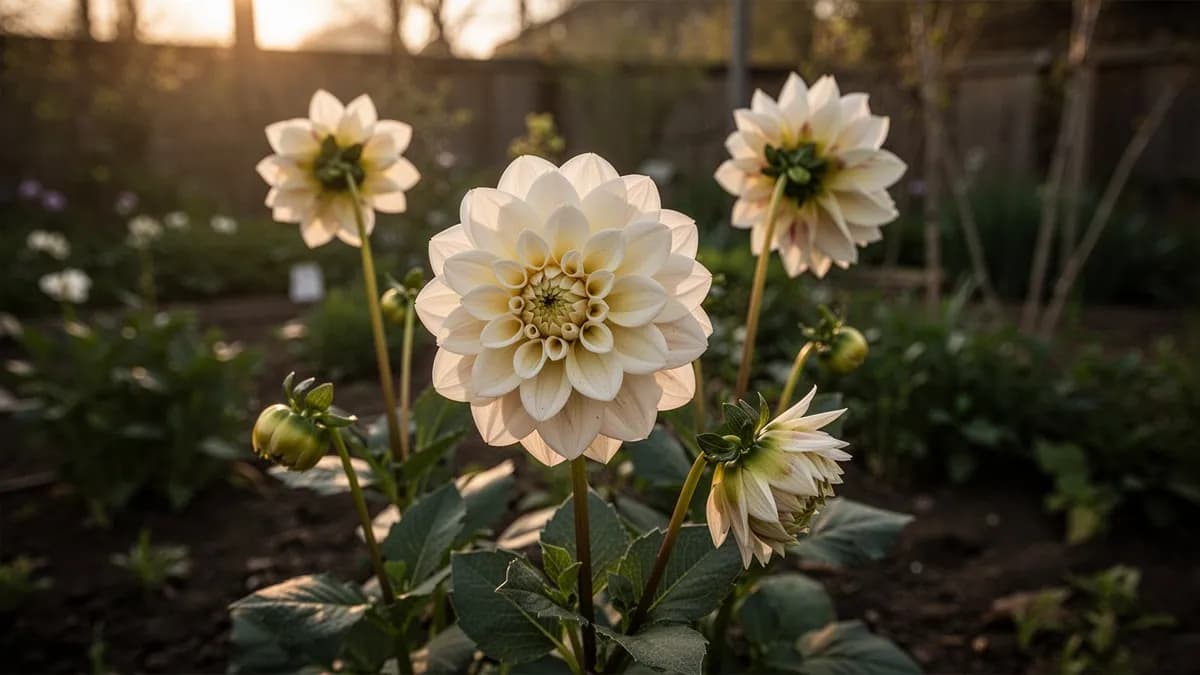
Grow your best Nerine yet — and everything around it.
Start a free plan today. Lay out your beds, drop in your Nerine, and let PlotMyGarden handle the timing, spacing, companions and reminders from seed to harvest basket.