Moschusmelone
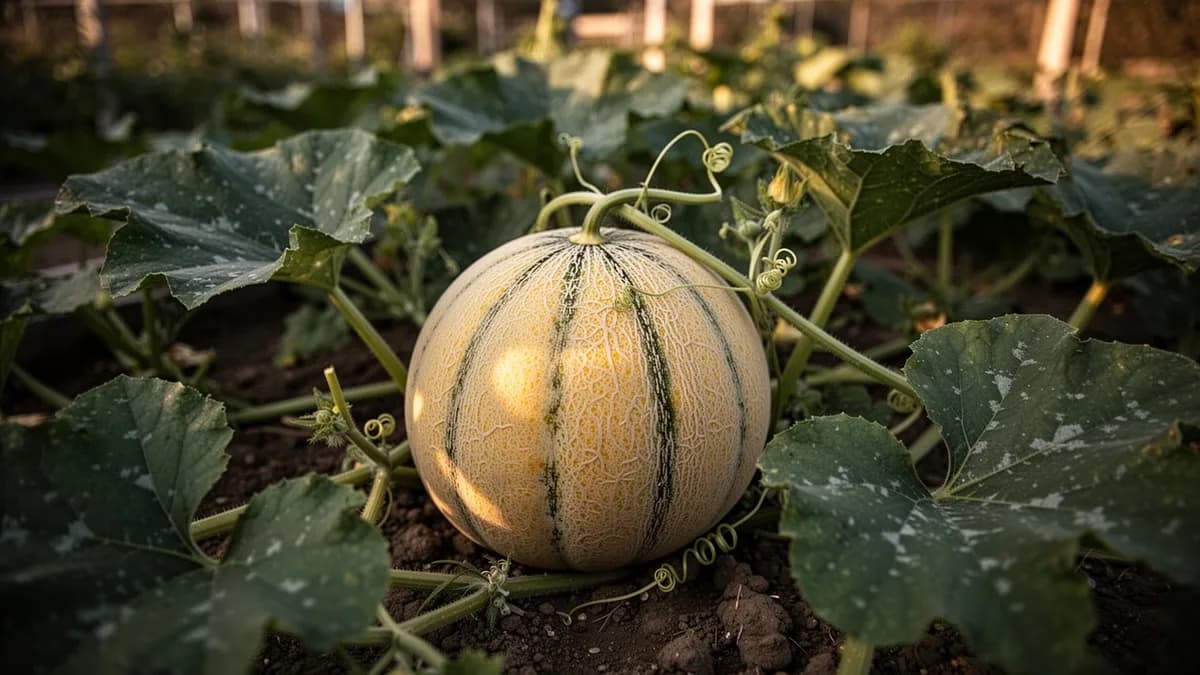
Eine stark genetzt Cantaloupe-artige Melone mit intensiv duftendem, orangefarbenem Fruchtfleisch und reichem, süßem Geschmack.





Auf dieser SeiteÜberblick
Moschusmelone im Überblick
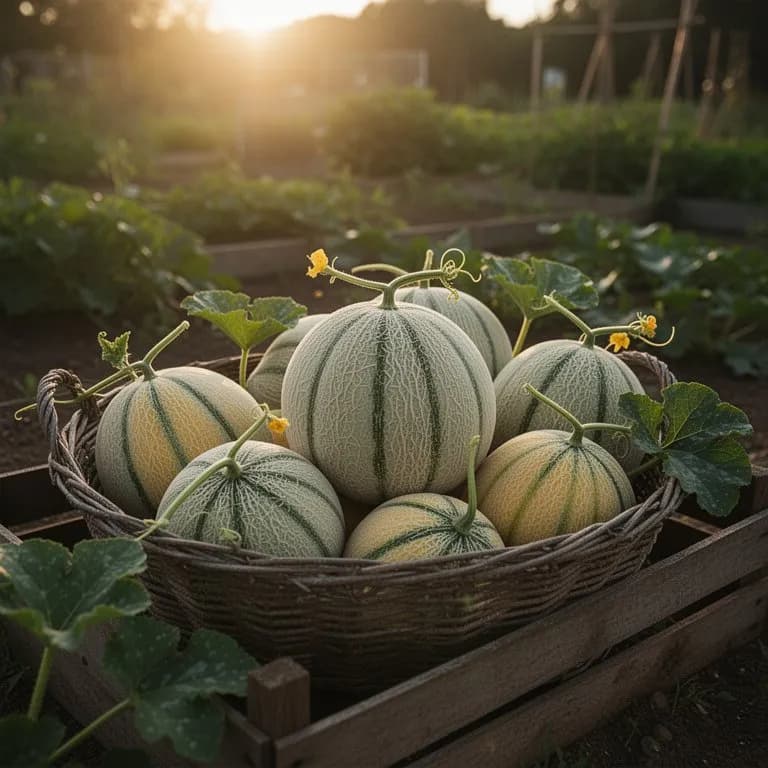
Eine stark genetzt Cantaloupe-artige Melone mit intensiv duftendem, orangefarbenem Fruchtfleisch und reichem, süßem Geschmack. Der Name stammt vom starken moschusartigen Aroma, das bei perfekter Reife freigesetzt wird und Spitzensüße sowie Erntebereitschaft signalisiert. Die Pflanzen benötigen warmen Boden, volle Sonne und reduzierte Bewässerung, wenn die Früchte sich der Reife nähern, um die Zucker zu konzentrieren. Die Früchte lösen sich bei Reife natürlich von der Rebe – ein zuverlässiger Indikator, der als Vollablöse-Erntebereitschaft bezeichnet wird.
Wann Moschusmelone pflanzen
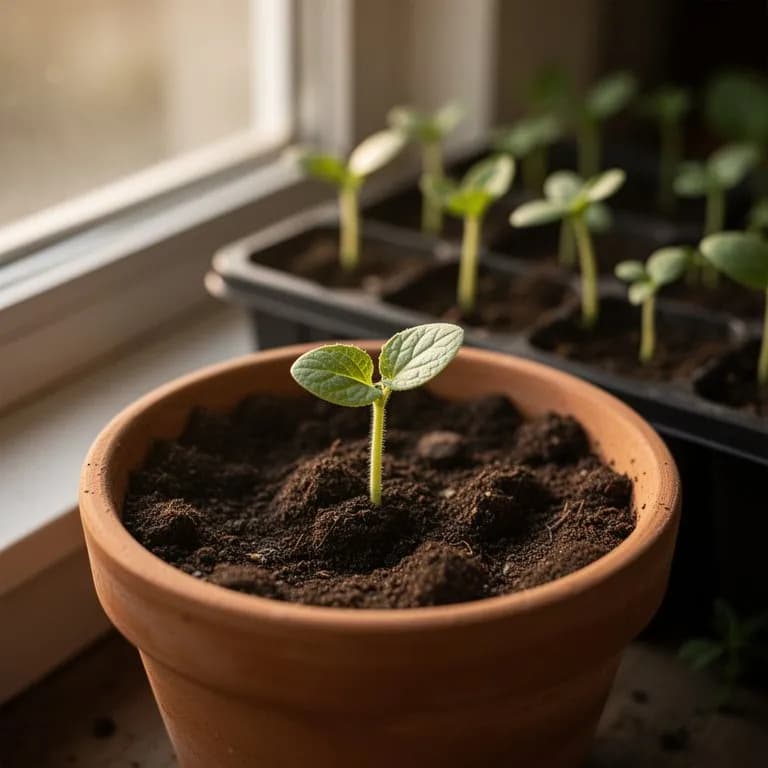
Säen Sie die Samen drei bis vier Wochen vor dem letzten Frosttermin in Innenräumen aus. Pflanzen Sie zwei Samen pro Drei-Zoll-Torftopf, einen halben Zentimeter tief, in feuchte Anzuchterde. Halten Sie eine Bodentemperatur von 85 Grad Fahrenheit mit einer Heizmatte aufrecht, damit die Keimung in vier bis sechs Tagen erfolgt. Bieten Sie nach dem Auflaufen 14 bis 16 Stunden starkes Licht täglich. Vereinzeln Sie auf einen Sämling pro Topf, indem Sie den schwächeren auf Bodenhöhe abschneiden. Beginnen Sie eine Woche vor dem Umpflanzen mit dem Abhärten, indem Sie die Sämlinge schrittweise an Freilandbedingungen gewöhnen. Direktsaat ist in warmen Klimazonen ebenfalls möglich, wenn der Boden 70 Grad Fahrenheit erreicht hat.
Dein Moschusmelone-Jahr
Abgestimmt auf Zone 7 · typische Saison · Frost geht um den 2. Apr. und kehrt um den 1. Nov. zurück
Moschusmelone Mai – Jun pflanzen, Aug – Sep ernten. Beachte die Pflanzmethoden unten und wähle dein Klima für passende Zeiträume.
So baust du Moschusmelone an
Beginnen Sie drei bis vier Wochen vor dem letzten Frost mit der Anzucht von Moschusmelonensamen in Innenräumen. Pflanzen Sie die Samen einen halben Zentimeter tief in Torftöpfe mit warmer Anzuchterde. Die Samen benötigen eine konstante Bodentemperatur von 85 Grad Fahrenheit für eine zuverlässige Keimung innerhalb von vier bis sechs Tagen. Die Sämlinge sind sehr empfindlich gegenüber Umpflanzschock, verwenden Sie daher biologisch abbaubare Töpfe, die direkt in den Garten gepflanzt werden können, ohne die Wurzeln zu stören.
Bereiten Sie Pflanzhügel vor, indem Sie Erde 20 bis 30 Zentimeter hoch und etwa einen Meter breit aufschütten und zwei bis drei Schaufeln gut verrotteten Kompost pro Hügel einarbeiten. Lassen Sie zwischen den Hügeln 1,2 bis 1,8 Meter Abstand, um ausreichend Platz für die Rankenausbreitung zu gewährleisten. Pflanzen Sie zwei bis drei Setzlinge pro Hügel, nachdem alle Frostgefahr vorüber ist und der Boden konstant über 65 Grad Fahrenheit misst. Legen Sie schwarze Plastikfolie um die Pflanzen, um die Bodenwärme zu erhöhen und Unkraut zu unterdrücken.
Geben Sie während des aktiven Rankenwachstums ein bis zwei Zoll Wasser pro Woche über Tröpfchenbewässerung. Wenn die Früchte ihre volle Größe erreichen und die Netzbildung beginnt, reduzieren Sie die Bewässerung auf einen Zoll pro Woche, um die Zucker zu konzentrieren und ein Aufplatzen zu verhindern. Stützen Sie sich entwickelnde Früchte auf Stroh oder Melonenschalen, um Bodenkontakt und Fäulnis zu vermeiden. Entfernen Sie frühzeitig missgebildete Früchte, damit die Pflanze ihre Energie auf drei oder vier erstklassige Melonen konzentriert.
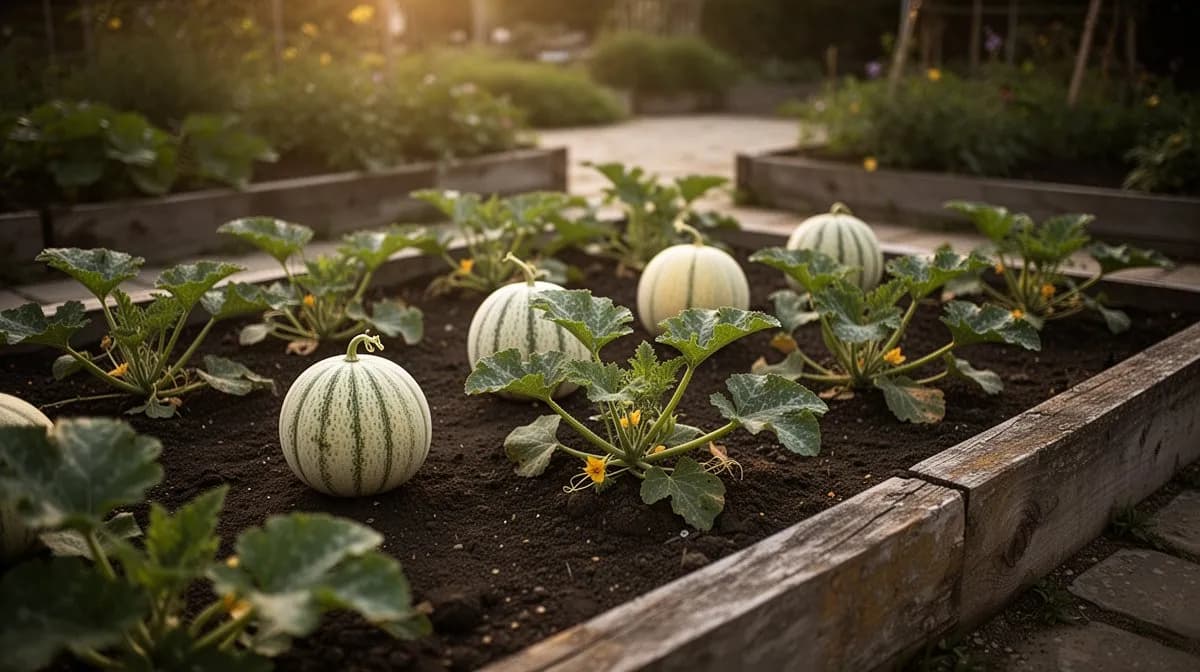
2 Pflanzen passen in ein Beet von 120 × 240 cm
Moschusmelone braucht 90 cm Platz pro Pflanze. Der Planer hält diesen Abstand für dich ein — jede Pflanze, jedes Beet.
Die besten Nachbarn für Moschusmelone
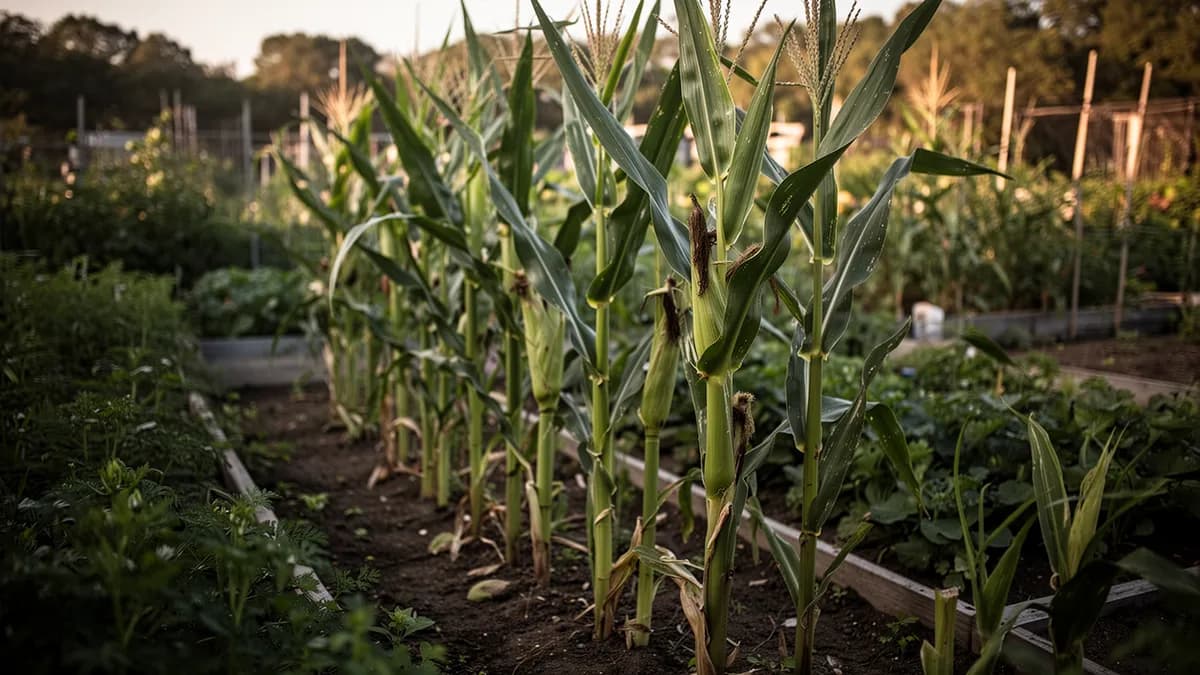
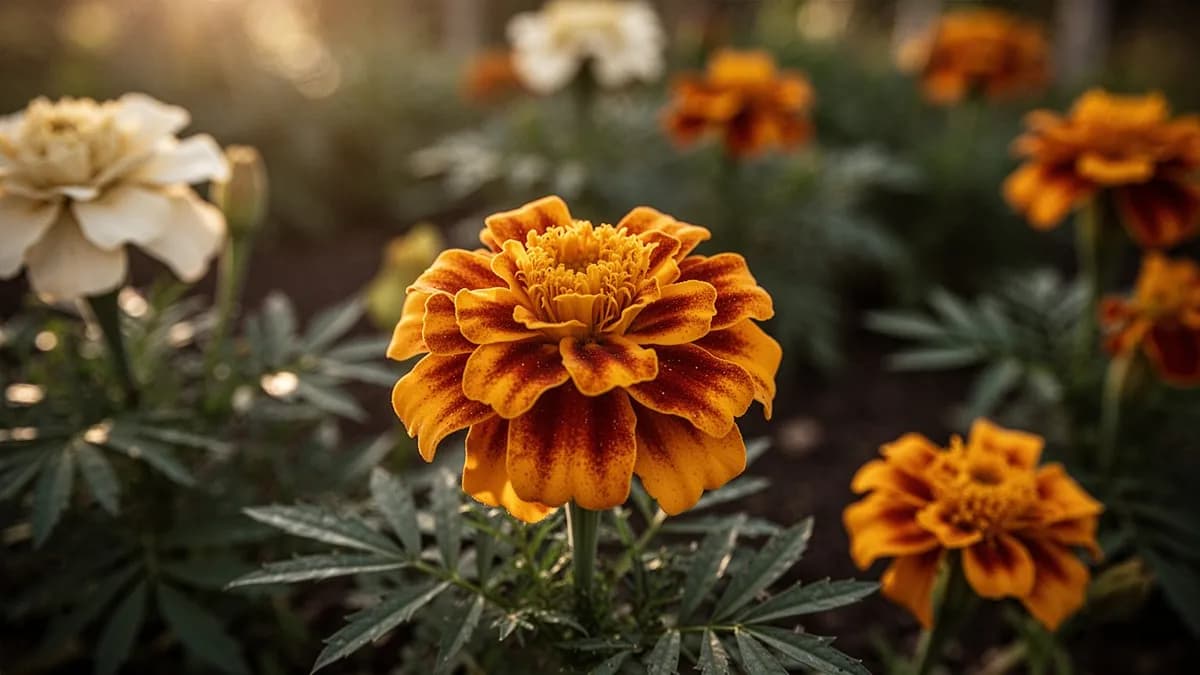
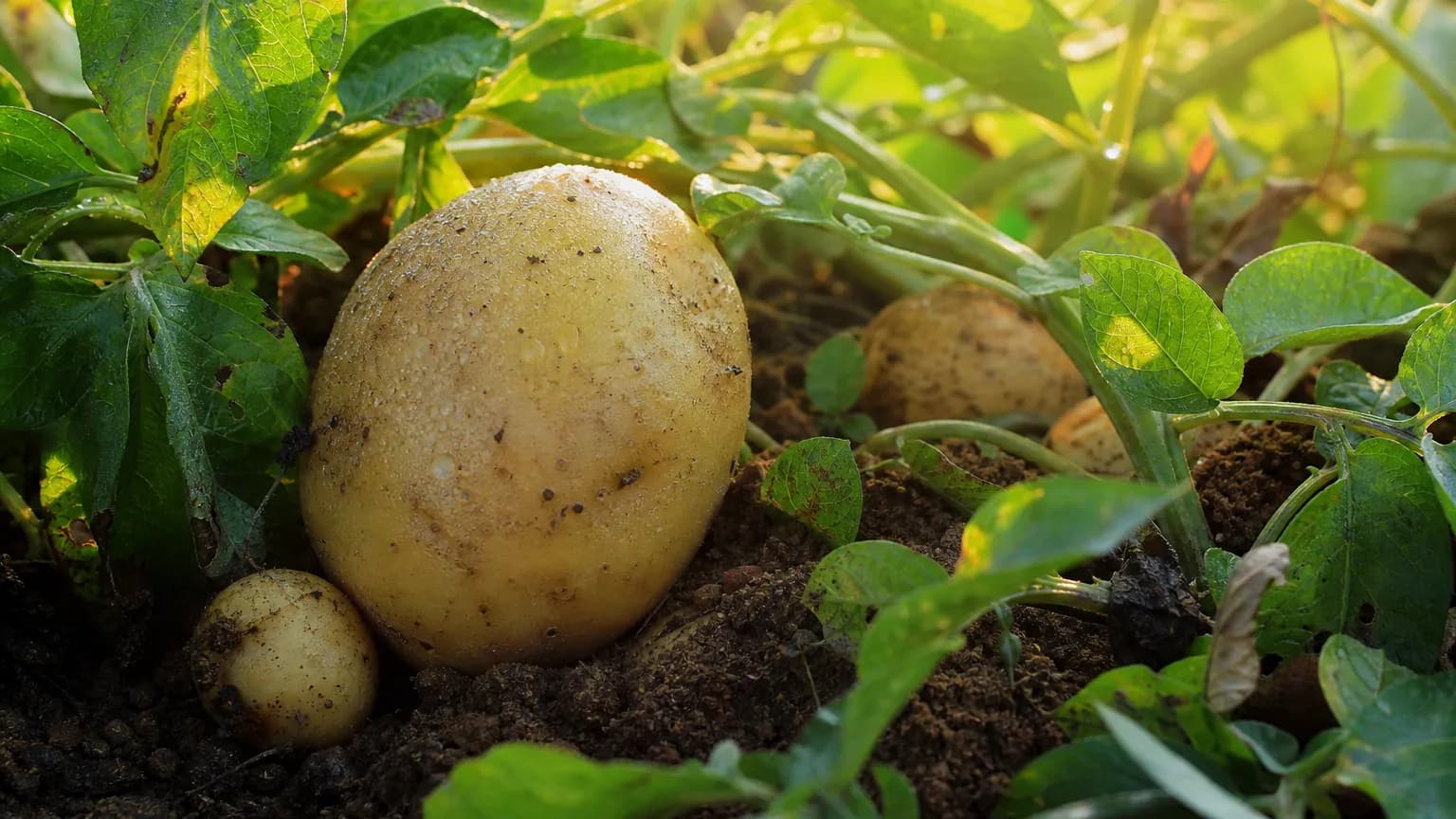
Moschusmelonen profitieren von Mischkultur mit Mais, der leichten Windschutz und teilweisen Nachmittagsschatten bietet. Tagetes und Kapuzinerkresse schrecken Gurkenkäfer und Blattläuse ab und locken gleichzeitig Bestäuber an, die für den Fruchtansatz unerlässlich sind. Radieschen dienen als schnell reifende Reihenmarkierungen und helfen, den Boden zu lockern. Salat und Spinat können zwischen junge Hügel gepflanzt werden, bevor sich die Ranken ausbreiten. Vermeiden Sie die Pflanzung in der Nähe von Kartoffeln, die stark um Wasser und Nährstoffe konkurrieren, und anderen Kürbisgewächsen, um gemeinsamen Schädlings- und Krankheitsdruck zu minimieren.
Mais gehört daneben. Kartoffel nicht.
Altes Gärtnerwissen, geprüft an der echten Nachbartabelle von Moschusmelone — teste jede Pflanze, die du anbaust.
Probiere Moschusmelone direkt hier im Beet
Ein echtes Planer-Beet, Moschusmelone steht schon drin. Tippe einen Begleiter an, platziere ihn und sieh, wie die Nachbarschaftsprüfung antwortet — grün für gute Nachbarn, rot bei Streit.


Passende Anbau-Ratgeber
Richtig düngen
Moschusmelonen bevorzugen gut durchlässigen sandigen Lehm mit einem pH-Wert von 6,0 bis 6,8, angereichert mit reichlich organischer Substanz. Arbeiten Sie vor dem Umpflanzen 10 bis 15 Zentimeter gut verrotteten Kompost in den Pflanzbereich ein. Geben Sie beim Pflanzen einen ausgewogenen Dünger und wechseln Sie dann zu einer phosphor- und kaliumreichen Formel, sobald die Blüte beginnt, um die Fruchtentwicklung zu unterstützen. Düngen Sie alle zwei bis drei Wochen mit Komposttee oder Fischemulsion nach. Vermeiden Sie übermäßigen Stickstoff, der üppige Ranken hervorbringt, aber die Fruchtbildung verzögert und die Süße verringert. Kalziumzusätze helfen, Blütenendfäule zu verhindern.
Ideale Temperatur
Winterhärtezone-Kompatibilität
Von der Saat zur Ernte, Schritt für Schritt
Aussaat
Moschusmelonensamen keimen in warmem Boden schnell, wobei die Keimwurzel bei optimalen Temperaturen in 3-7 Tagen austritt. Dicke, ovale Keimblätter schieben sich durch die Oberfläche und entfalten sich, um mit der Photosynthese zu beginnen. Die Samen benötigen Bodentemperaturen von mindestens 21°C (70°F) für eine zuverlässige Keimung, und das Auflaufen ist am schnellsten bei 27-32°C (80-90°F). Kalter oder nasser Boden führt zu Samenfäule und schlechtem Aufgang.
Sämlingsentwicklung
Echte Blätter erscheinen mit rauer, leicht behaarter Textur und rundlicher Form mit flachen Lappen. Das Wurzelsystem entwickelt sich schnell und bildet eine tiefe Pfahlwurzel und ausbreitende Seitenwurzeln. Sämlinge sind in dieser Phase empfindlich gegenüber Kälte, Umpflanzschock und Überwässerung. Das Wachstum ist langsam, bis die Tagestemperaturen konstant über 24°C (75°F) liegen.
Rankenausbreitung
Die Ranken beginnen aggressiv zu wachsen und bilden große gelappte Blätter und greifende Ranken. Jede Pflanze kann sich in alle Richtungen 1-2 Meter ausbreiten. Das ausgedehnte Wurzelsystem dehnt sich unterirdisch aus und zieht Feuchtigkeit aus einem weiten Bereich. Das schnelle Laubwachstum in dieser Phase baut die Energiereserven auf, die für die Fruchtproduktion benötigt werden.
Blüte und Bestäubung
Kleine gelbe Blüten erscheinen in den Blattachseln. Männliche Blüten an dünnen Stielen öffnen sich zuerst in Büscheln, gefolgt ein bis zwei Wochen später von weiblichen Blüten, die eine charakteristische runde Schwellung an ihrer Basis haben. Jede Blüte ist nur einen Tag geöffnet. Die Bestäubung durch Bienen ist unerlässlich – jede weibliche Blüte benötigt mehrere Bienenbesuche, um einen vollständigen Samenansatz und eine gut geformte Frucht zu gewährleisten.
Fruchtentwicklung
Bestäubte weibliche Blüten schwellen schnell zu sich entwickelnden Melonen an. Die Schale ist zunächst glatt und grün, dann entwickelt sich allmählich das charakteristische erhabene korkige Netzmuster, das Moschusmelonen von anderen Melonentypen unterscheidet. Das innere Fruchtfleisch wechselt von blassgrün zu tiefem Orange, während sich Zucker anreichern. Das Fruchtwachstum erfordert während dieser kritischen dreiwöchigen Periode enorme Mengen an Wasser und Nährstoffen.
Reifung und Ernte
Die Melonen erreichen ihre volle Größe und beginnen den Reifeprozess. Die Hintergrundfarbe der Schale wechselt von Grün zu Goldbraun oder Cremeweiß unter der Netzstruktur. Am Stielende entwickelt sich ein Riss, wo er auf die Frucht trifft, und eine reife Melone löst sich mit sanftem Druck sauber von der Rebe. Das Blütenende wird leicht weicher und es entwickelt sich ein starker, süßer moschusartiger Duft. Der Zuckergehalt erreicht in den letzten Tagen an der Rebe seinen Höhepunkt.
Beginnen Sie mit der Aussaat 3-4 Wochen vor dem letzten Frost in biologisch abbaubaren Töpfen, um die empfindliche Pfahlwurzel beim Umpflanzen nicht zu stören. Verwenden Sie eine Heizmatte bei 27°C (80°F). Säen Sie 2 Samen pro Topf und vereinzeln Sie auf den kräftigsten Sämling, nachdem die echten Blätter erscheinen.
Moschusmelone Monat für Monat pflegen
Was du jeden Monat für deine Moschusmelone tun solltest
Oktober
Aktueller MonatLetzte Ernten in kühleren Zonen. Melonen, die noch nicht zu reifen begonnen haben, entwickeln keine Süße mehr, auch wenn sie ins Haus gebracht werden. Entfernen Sie abgetragene Ranken und kompostieren Sie gesundes Material. Notieren Sie, welche Sorten am besten abgeschnitten haben, für die Planung im nächsten Jahr.
Immer wissen, was jetzt im Garten zu tun ist
Eine E-Mail zum Monatsanfang: was du jetzt säen, pflanzen und anpacken solltest — für deine Moschusmelone und alles, was drumherum wächst. Dazu ein kurzer Startkurs, der dich vor den klassischen Fehlern bewahrt.
- Was jetzt zu tun ist
- Passend zu deiner Saison
- Startkurs inklusive
Moschusmelone ernten
Moschusmelonen sind erntereif, wenn sie das Vollablösestadium erreichen – das bedeutet, dass sich die Frucht mit sanftem Daumendruck an der Stielverbindung sauber von der Rebe löst. Die Netzstruktur auf der Schale wird erhaben und ausgeprägt, die Hintergrundfarbe wechselt von Grün zu Goldbraun, und am Blütenende entwickelt sich ein starkes süßes Aroma. Ernten Sie am Morgen, wenn die Temperaturen kühl sind. Behandeln Sie die Früchte vorsichtig, um Druckstellen im weichen Fruchtfleisch zu vermeiden. Eine reife Moschusmelone fühlt sich schwer für ihre Größe an und gibt am Blütenende bei sanftem Druck leicht nach.
angenommen, du pflanzt zu Beginn des Zeitraums — trage dein tatsächliches Datum ein
Ernte Moschusmelone zügig, dann trägt die Pflanze weiter.
Lagerung & Konservierung
Lagern Sie ganze reife Moschusmelonen bis zu fünf Tage im Kühlschrank. Unreife Melonen können zwei bis drei Tage bei Raumtemperatur liegen gelassen werden, um etwas weicher zu werden, obwohl der Zuckergehalt nach der Ernte nicht mehr zunimmt. Geschnittene Melone sollte fest eingewickelt oder in verschlossenen Behältern gelagert und innerhalb von drei Tagen verzehrt werden. Zum Einfrieren löffeln Sie das Fruchtfleisch zu Kugeln oder Würfeln, frieren Sie es auf einem mit Backpapier ausgelegten Tablett vor und füllen Sie es dann in Gefrierbeutel für bis zu sechs Monate um. Gefrorene Melone eignet sich am besten für Smoothies und gefrorene Desserts statt zum frischen Verzehr.
Was schiefgeht — und die Lösung
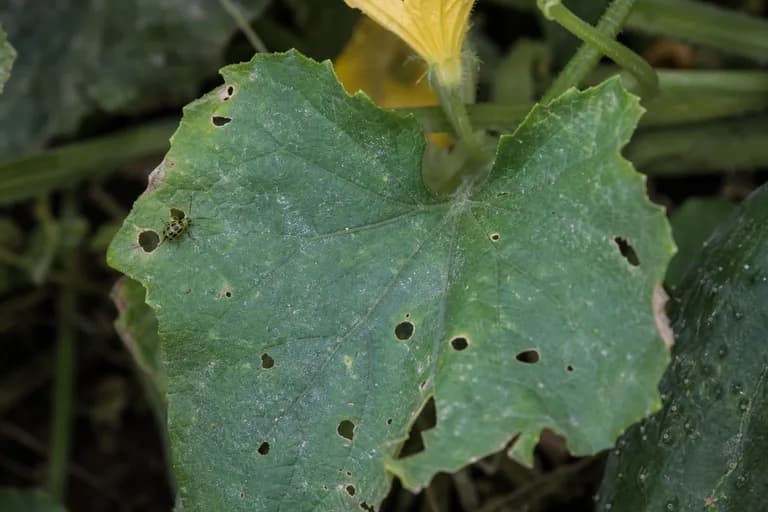
Gurkenkäfer
SchädlingFraßschäden an Blättern und Blüten, vernarbte Schalenoberflächen und Übertragung der bakteriellen Welke, die ein plötzliches Zusammenbrechen der Ranken verursacht.
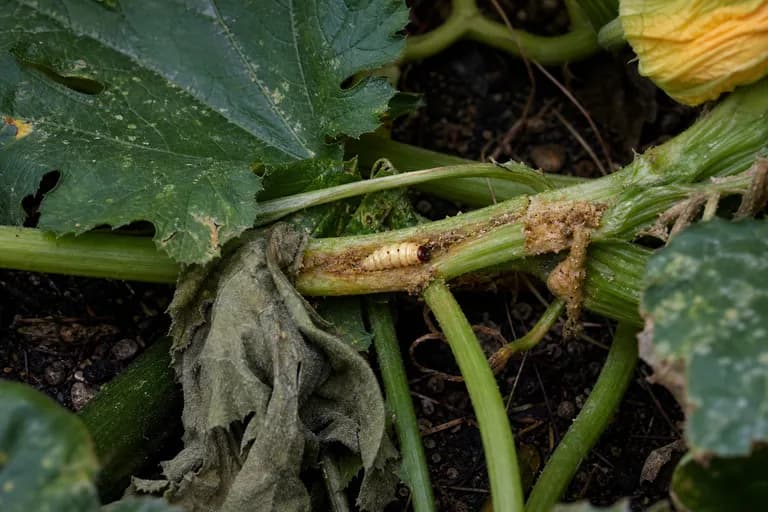
Kürbis-Rankbohrer
SchädlingPlötzliches Welken einzelner Ranken, sägemehlartiger Fraß an der Stängelbasis und hohle Stängel beim Aufschneiden.
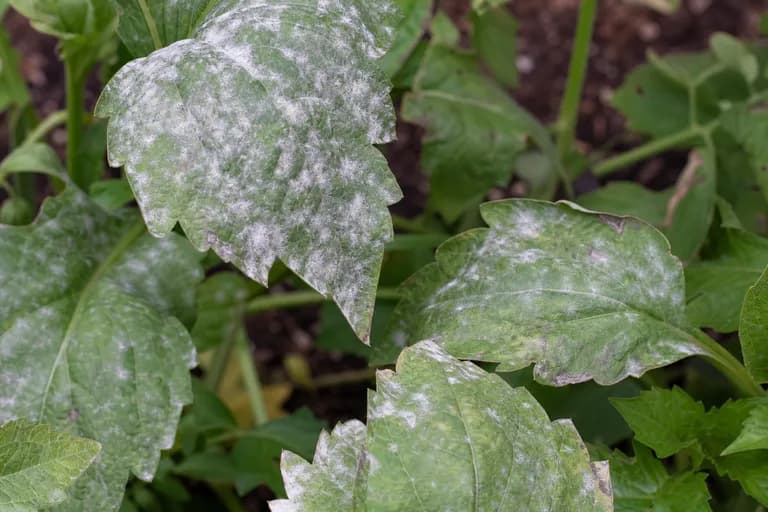
Echter Mehltau
KrankheitWeiße, mehlige Flecken auf den oberen Blattoberflächen, Vergilbung und Einrollen der Blätter sowie verminderte Photosynthese, die zu schlechter Fruchtqualität führt.
Bakterielle Welke
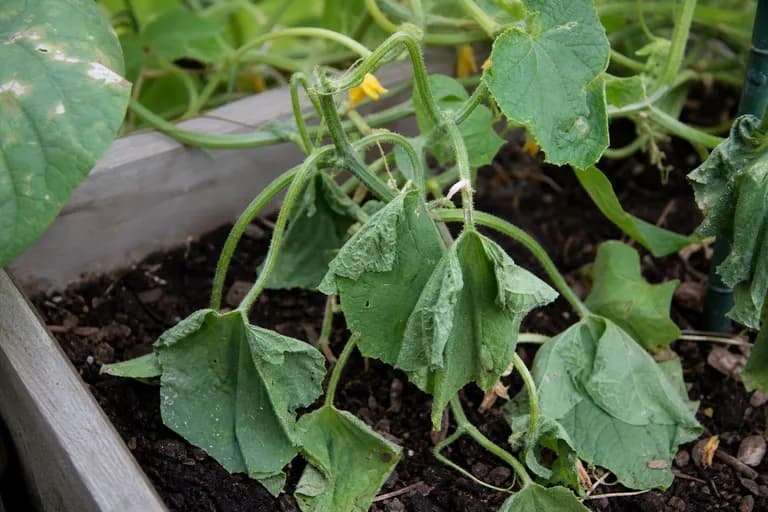
KrankheitPlötzliches Welken ganzer Ranken, das sich über Nacht nicht erholt, klebriger Saft, der beim Zusammendrücken aus geschnittenen Stängeln austritt.
Fehlerbehebung bei häufigen Problemen
Schlechter Fruchtansatz resultiert oft aus unzureichender Bestäubung bei kühlem oder regnerischem Wetter, wenn die Bienenaktivität nachlässt. Bestäuben Sie von Hand, indem Sie am frühen Morgen mit einem kleinen Pinsel Pollen von männlichen auf weibliche Blüten übertragen. Risse und Aufplatzen entstehen durch plötzliches starkes Gießen nach Trockenperioden – halten Sie daher eine gleichmäßige Feuchtigkeit ein. Bitter schmeckende Früchte können durch Pflanzenstress, ungleichmäßige Bewässerung oder extreme Hitze während der Fruchtentwicklung verursacht werden. Sonnenbrand zeigt sich als ausgebleichte, weiche Stellen auf freiliegenden Fruchtoberflächen; erhalten Sie ein ausreichendes Blätterdach, um sich entwickelnde Melonen zu beschatten.
Anbautipps
- Bodenwärme ist der wichtigste Faktor für den Erfolg mit Moschusmelonen. Pflanzen Sie nicht, bis der Boden wirklich warm ist – mindestens 21°C (70°F), gemessen in 10 cm Tiefe. Verwenden Sie schwarze Plastikfolie, die 2-3 Wochen vor der Pflanzung ausgelegt wird, um die Beete vorzuwärmen. Vliesabdeckungen nach dem Umpflanzen bringen zusätzlich 3-5 Grad Wärme.
- Bauen Sie Melonen auf erhöhten Hügeln an, die sich schneller erwärmen, besser entwässern und die Pflanzenkrone über stehendem Wasser halten. Formen Sie Hügel etwa 30 cm hoch und 60 cm breit mit einem Abstand von 1-1,5 Metern.
- Wassermanagement ist entscheidend für den Melonengeschmack. Gießen Sie während des Rankenwachstums und der Fruchtentwicklung tief und gleichmäßig, reduzieren Sie dann die Bewässerung in den letzten 7-10 Tagen vor der Ernte deutlich. Dieser kontrollierte Stress konzentriert die Zucker in der Frucht und verhindert den wässrigen, faden Geschmack überwässerter Melonen.
- Begrenzen Sie jede Ranke auf 3-4 sich entwickelnde Früchte für die beste Größe und Süße. Sobald Sie die gewünschte Anzahl Melonen angesetzt haben, knipsen Sie zusätzliche weibliche Blüten ab und entfernen Sie winzige sich entwickelnde Früchte. Die Pflanze wird ihre gesamte Energie in weniger, überlegene Melonen lenken.
- Legen Sie eine Barriere zwischen reifende Melonen und den Boden, um Bodenfäule und Schneckenschäden zu verhindern. Stroh, eine flache Fliese, eine Holzschindel oder sogar ein umgedrehter Topfuntersetzer funktioniert gut. Dies hilft auch, die Unterseite der Melone gleichmäßig reifen zu lassen.
- Lernen Sie die Zeichen perfekter Reife: Die Hintergrundfarbe der Schale wechselt von Grün zu Goldbraun, ein Riss erscheint am Stielansatz, das Blütenende gibt bei sanftem Druck leicht nach, und es entwickelt sich ein starker süßer Duft. Das Vollablösestadium – wenn sich die Melone mit leichtem Daumendruck von der Rebe löst – ist der Höhepunkt der Reife.
- Schützen Sie junge Pflanzen vor Gurkenkäfern, die die bakterielle Welke übertragen – eine tödliche Krankheit ohne Heilmittel. Verwenden Sie Vliesabdeckungen vom Umpflanzen bis zum Beginn der Blüte und entfernen Sie sie dann, um Bestäubern Zugang zu ermöglichen. Kontrollieren Sie die Pflanzen täglich und sammeln Sie Käfer von Hand ab.
- In Klimazonen mit kurzer Saison (Zonen 4-6) wählen Sie frühreifende Sorten, die in 70-80 Tagen reifen, statt Vollsaisonsorten, die 90+ Tage benötigen. Ziehen Sie alle Pflanzen im Haus vor, verwenden Sie schwarze Plastikfolie und erwägen Sie den Anbau an einem Südhang oder an einer wärmereflektierenden Wand für zusätzliche Wärme.
Bau deine beste Moschusmelone an — und alles drumherum.
Starte heute kostenlos. Lege deine Beete an, setze deine Moschusmelone ein und lass PlotMyGarden Timing, Abstände, Begleiter und Erinnerungen von der Saat bis zum Erntekorb übernehmen.
Finde deine Moschusmelone
Hales Best Jumbo
Klassische Erbsorte mit dickem orangefarbenem Fruchtfleisch, starker Netzung und herausragender Süße, die in 80 bis 85 Tagen reift.
Ambrosia
Preisgekrönte Hybride, bekannt für außergewöhnlich süßes, saftiges Fruchtfleisch und kleine Samenhöhle mit hervorragender Krankheitsresistenz.
Hearts of Gold
Erbsorte, die mittelgroße Früchte mit tiefem orangefarbenem, aromatischem Fruchtfleisch und zuverlässiger Produktion hervorbringt.
Sugar Cube
Kompakte Melone in persönlicher Größe mit hohem Zuckergehalt und starker Krankheitsresistenz, ideal für kleine Gärten.
Athena
Hybride in kommerzieller Qualität mit festem Fruchtfleisch, ausgezeichneter Transportfähigkeit und gleichmäßiger Süße unter verschiedenen Anbaubedingungen.
Der Anbau von Moschusmelonen aus einem 2-4 € teuren Samenpaket kann 8-20 am Rebstock gereifte Melonen von 2-4 Pflanzen ergeben, verglichen mit Supermarktpreisen von 3-6 € pro Melone. Eine kleine Pflanzung kann 30-100 € pro Sommer allein an Melonen einsparen. Noch wichtiger ist der Geschmacksunterschied zwischen einer am Rebstock gereiften, selbst angebauten Moschusmelone und einer kommerziell angebauten, grün geernteten Melone für den Versand – das intensive Aroma, die triefende Süße und der komplexe moschusartige Geschmack einer Gartenmelone ist ein völlig anderes Erlebnis, das zu keinem Preis zu kaufen ist.
Schnelle Rezepte
Prosciutto e Melone
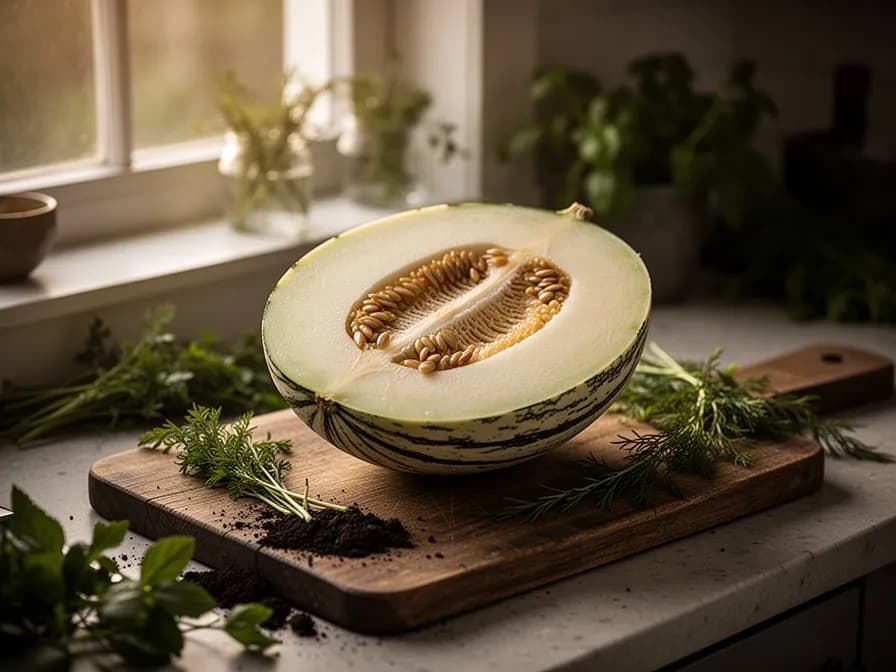
10 Min.Die ikonische italienische Vorspeise, die seit Jahrhunderten serviert wird – hauchdünne Scheiben von salzigem, luftgetrocknetem Parmaschinken über kühle, süße Melonenspalten drapiert. Der Kontrast von herzhaft und süß, seidig und saftig, macht dies zu einem der elegantesten und mühelosesten Sommervorspeisen.
6 ZutatenGekühlte Moschusmelonen-Suppe
15 Min.Eine seidige, erfrischende kalte Suppe, perfekt für glühend heiße Sommertage. Reife Moschusmelone wird mit Joghurt, einem Hauch Ingwer und frischer Minze zu einem samtigen Püree verarbeitet, das als eleganter erster Gang oder leichtes Mittagessen serviert werden kann.
7 ZutatenMoschusmelonen-Agua-Fresca
10 Min.Ein traditionelles mexikanisches Erfrischungsgetränk aus reifer Melone, die mit Wasser, Limette und einem Hauch Süße gemixt wird. Leicht, duftend und zutiefst durstlöschend – weitaus befriedigender und geschmackvoller als einfaches Wasser an einem heißen Sommernachmittag.
6 ZutatenKulinarische Verwendung
Moschusmelonen genießt man am besten frisch bei Raumtemperatur oder leicht gekühlt, um ihr volles Aroma zu entfalten. Klassische Zubereitungen umfassen das Umwickeln von Scheiben mit Parmaschinken, das Hinzufügen von Würfeln zu Obstsalaten oder das Pürieren zu kalten Suppen. Das Fruchtfleisch eignet sich hervorragend für Sorbet, Smoothies und Agua Fresca. Kombinieren Sie es mit Limettensaft, frischer Minze oder einer Prise Salz, um die Süße zu verstärken. Moschusmelone ergänzt auch Weichkäse wie Burrata und Ricotta in eleganten Vorspeisen.
Was drinsteckt
Gesundheitsvorteile
- Außergewöhnlich reich an Beta-Carotin, das der Körper in Vitamin A umwandelt – unverzichtbar für die Erhaltung einer gesunden Sehkraft, die Unterstützung der Immunzellproduktion und den Schutz der Haut vor UV-Schäden. Das tiefe orangefarbene Fruchtfleisch weist auf einen sehr hohen Carotinoidgehalt hin.
- Reich an Vitamin C, einem starken Antioxidans, das die Immunabwehr unterstützt, die Wundheilung fördert, die Eisenaufnahme aus pflanzlichen Lebensmitteln verbessert und für die Kollagensynthese in Haut, Knorpel und Blutgefäßen erforderlich ist.
- Hoher Wassergehalt von etwa 90% in Kombination mit Kalium und natürlichem Zucker macht die Moschusmelone zu einem ausgezeichneten rehydrierenden Lebensmittel nach dem Sport oder bei heißem Wetter, das sowohl Flüssigkeit als auch Elektrolyte liefert.
- Enthält Folsäure (Vitamin B9), die für die DNA-Synthese und Zellteilung entscheidend ist, was die Moschusmelone zu einem vorteilhaften Lebensmittel während der Schwangerschaft macht, um die fetale Entwicklung zu unterstützen und das Risiko von Neuralrohrdefekten zu verringern.
- Die Kombination der Vitamine A und C bietet einen synergistischen antioxidativen Schutz, der hilft, freie Radikale zu neutralisieren und oxidativen Stress zu reduzieren, der zur Alterung und chronischen Krankheiten beiträgt.
- Niedrige Kaloriendichte von 34 Kalorien pro 100g gepaart mit natürlicher Süße und befriedigender Saftigkeit macht die Moschusmelone zu einer ausgezeichneten Vollwert-Dessertoption, die ein gesundes Gewichtsmanagement ohne zugesetzten Zucker unterstützt.
Woher Moschusmelone stammt
Die Moschusmelone (Cucumis melo var. reticulatus) stammt aus den heißen, trockenen Regionen von Ostafrika über Persien (das heutige Iran) bis nach Nordwestindien. Wilde Vorfahren der Moschusmelone wachsen noch immer in Teilen Ostafrikas, und die frühesten archäologischen Belege für den Melonenanbau stammen aus dem alten Ägypten um 2000 v. Chr. Die Ägypter, Griechen und Römer kultivierten alle Melonen, obwohl die großen, süßfleischigen Sorten, die wir heute kennen, über Jahrhunderte der selektiven Züchtung in Persien und Zentralasien entwickelt wurden.
Persische und arabische Händler verbreiteten Moschusmelonen während des Mittelalters in der gesamten islamischen Welt, und die Frucht wurde zu einem Symbol für Gastfreundschaft und Luxus in den Gärten von Sultanen und Kalifen. Die Mauren führten Melonen während des 8. bis 10. Jahrhunderts in Spanien und Südeuropa ein. Italienische Gärtner verfeinerten den Melonenanbau während der Renaissance, und das päpstliche Gut in Cantalupo bei Rom wurde für seine Melonen berühmt – was dem Namen 'Cantaloupe' für genetzt Melonen in Europa und später in Amerika den Ursprung gab.
Spanische und portugiesische Entdecker brachten Moschusmelonensamen im späten 15. und 16. Jahrhundert nach Amerika. Die Frucht passte sich gut an die warmen Klimazonen der Neuen Welt an und wurde schnell von indigenen Völkern übernommen. Heute ist China der weltweit größte Melonenproduzent, gefolgt von der Türkei, dem Iran, Indien und den Vereinigten Staaten. In den USA sind das Imperial Valley in Kalifornien, Arizona und das Rio Grande Valley in Texas die wichtigsten kommerziellen Anbaugebiete. Hobbygärtner schätzen Moschusmelonen weiterhin für die unvergleichliche Süße und den Duft einer am Rebstock gereiften Frucht, die einfach nicht durch Supermarktmelonen ersetzt werden kann, die unreif für die Transportfähigkeit geerntet werden.
Moschusmelone: Schon gewusst?
Faszinierende Fakten über Moschusmelone
Der Name 'Moschusmelone' stammt vom persischen Wort 'mushk', das ein starkes, süßes Parfum bedeutet – bezogen auf das intensiv duftende Aroma, das reife Melonen am Stielende verströmen und das einen ganzen Raum mit seinem charakteristischen Duft erfüllen kann.
Moschusmelone: Fragen & Antworten
Wann sollte ich Moschusmelone pflanzen?
Was sind gute Begleitpflanzen für Moschusmelone?
In welchen Winterhärtezonen kann Moschusmelone wachsen?
Wie viel Sonne braucht Moschusmelone?
Welchen Abstand sollte ich zwischen Moschusmelone lassen?
Welche Schädlinge und Krankheiten befallen Moschusmelone?
Wie lagere ich Moschusmelone nach der Ernte?
Was sind die besten Moschusmelone-Sorten zum Anbauen?
Welchen Boden braucht Moschusmelone?
Woran erkenne ich, wann eine Moschusmelone perfekt reif ist?
Warum sind meine Moschusmelonen fade und nicht süß?
Kann ich Moschusmelonen vertikal an einem Spalier anbauen?
Warum welken meine Moschusmelonenpflanzen plötzlich, obwohl der Boden feucht ist?
Was ist der Unterschied zwischen Moschusmelone und Cantaloupe?
Wie viele Moschusmelonen kann ich von einer Pflanze erwarten?
Du hast die Theorie gelesen. Jetzt baue sie auf Autopilot an.
Alles, was Moschusmelone knifflig macht — das Timing, die Abstände, die Begleiter, das Erntefenster — genau das übernimmt PlotMyGarden für dich, für jede Pflanze im Garten.
Ein Plan, der dein Wetter kennt
Standort einmal festlegen. Aussaat-, Dünge- und Erntedaten rund um deinen echten letzten Frosttermin und die Live-Vorhersage — kein Raten mehr nach Saattüte.
Aus dem Abschnitt „Pflanzzeit“Beetplaner per Drag & Drop
Beete auf einem Raster gestalten. Jede Pflanze rastet im richtigen Abstand ein, und du siehst die ganze Saison, bevor du einen Cent für Saatgut ausgibst.
Aus dem Abschnitt „Anbau“Begleiter-Konflikte früh erkannt
Über 200 gute und schlechte Kombinationen werden beim Pflanzen live geprüft — so landet ein saisonruinierender Fehler nie in der Erde.
Aus dem Abschnitt „Begleiter“Erinnerungen, nach denen du wirklich handelst
„Gieß die Bohnen.“ „Heute ernten, bevor's umschlägt.“ Pünktlich, konkret und auf deine echten Pflanzen bezogen.
Aus dem Abschnitt „Ernte“Staffel-Aussaat, geplant
Sechs Wochen ernten statt sechs Tage? Die App verteilt deine Aussaaten automatisch und erinnert dich, wenn der nächste Satz fällig ist.
Aus dem Abschnitt „Pflanzzeit“Ein Verlauf, der schlauer wird
Jede protokollierte Ernte bringt der App deinen Garten bei. Der Plan fürs nächste Jahr startet bei dem, was in deinem Boden wirklich funktioniert hat.
Aus dem Abschnitt „Überblick“Pflanze diese neben Moschusmelone
Weitere Kürbisgewächse
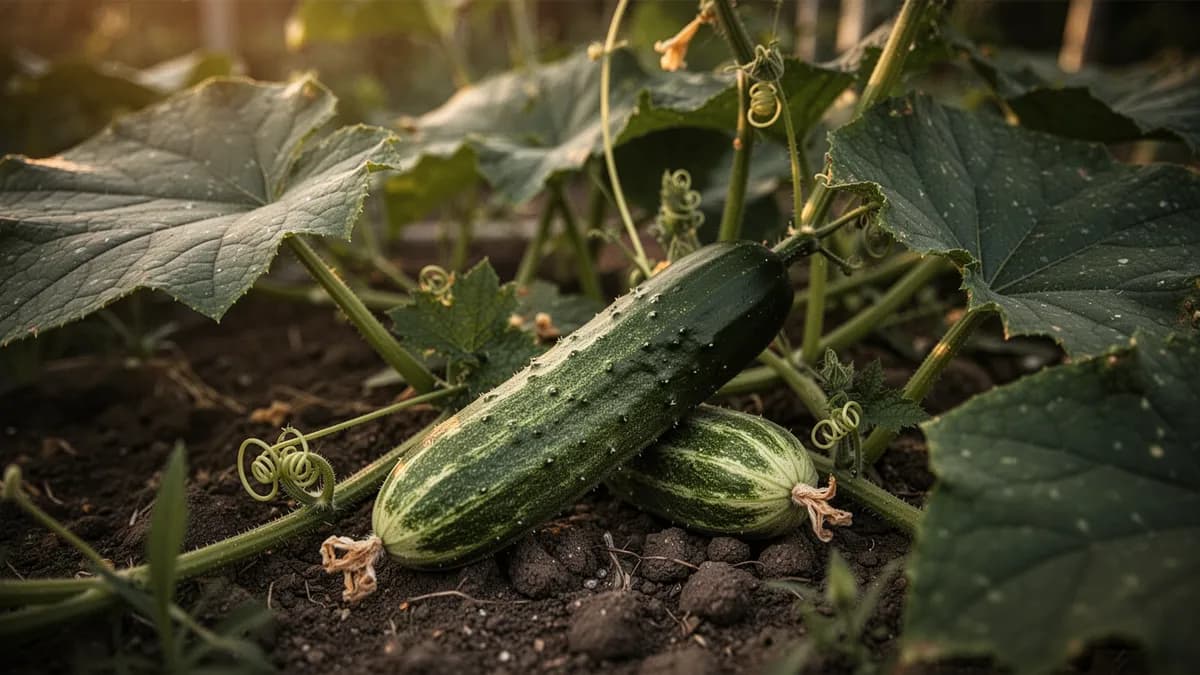
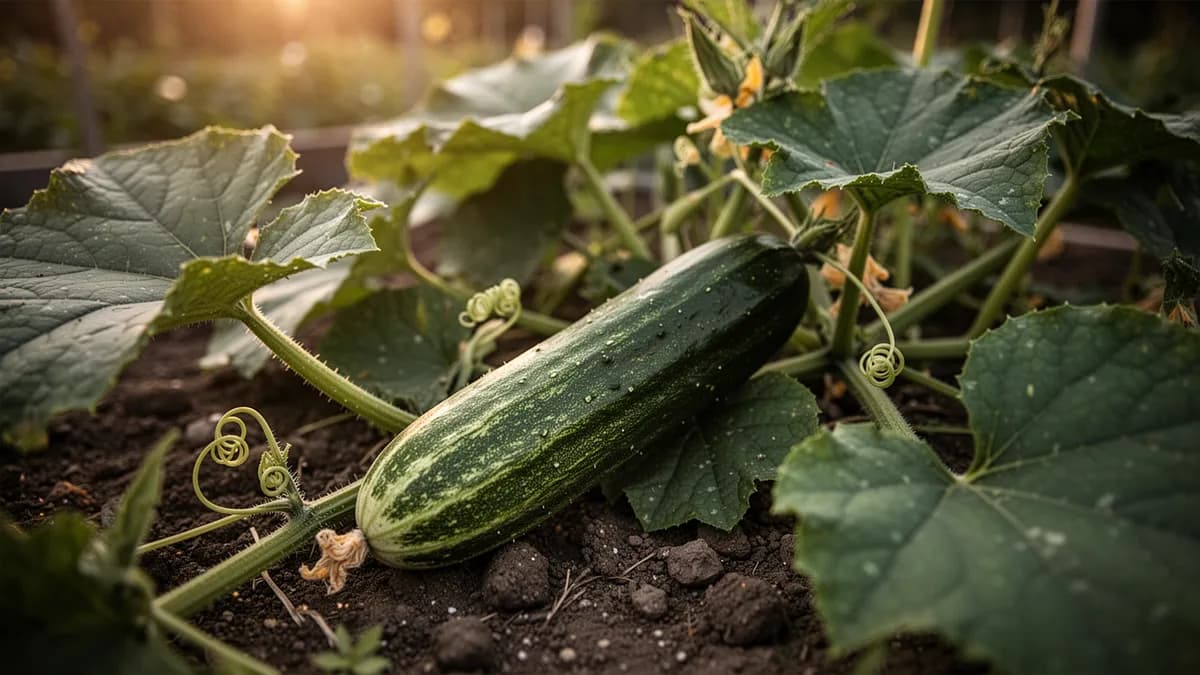
Halte Moschusmelone von diesen fern
Gartenpläne mit Moschusmelone
Bau deine beste Moschusmelone an — und alles drumherum.
Starte heute kostenlos. Lege deine Beete an, setze deine Moschusmelone ein und lass PlotMyGarden Timing, Abstände, Begleiter und Erinnerungen von der Saat bis zum Erntekorb übernehmen.