Morning Glory (Annual)
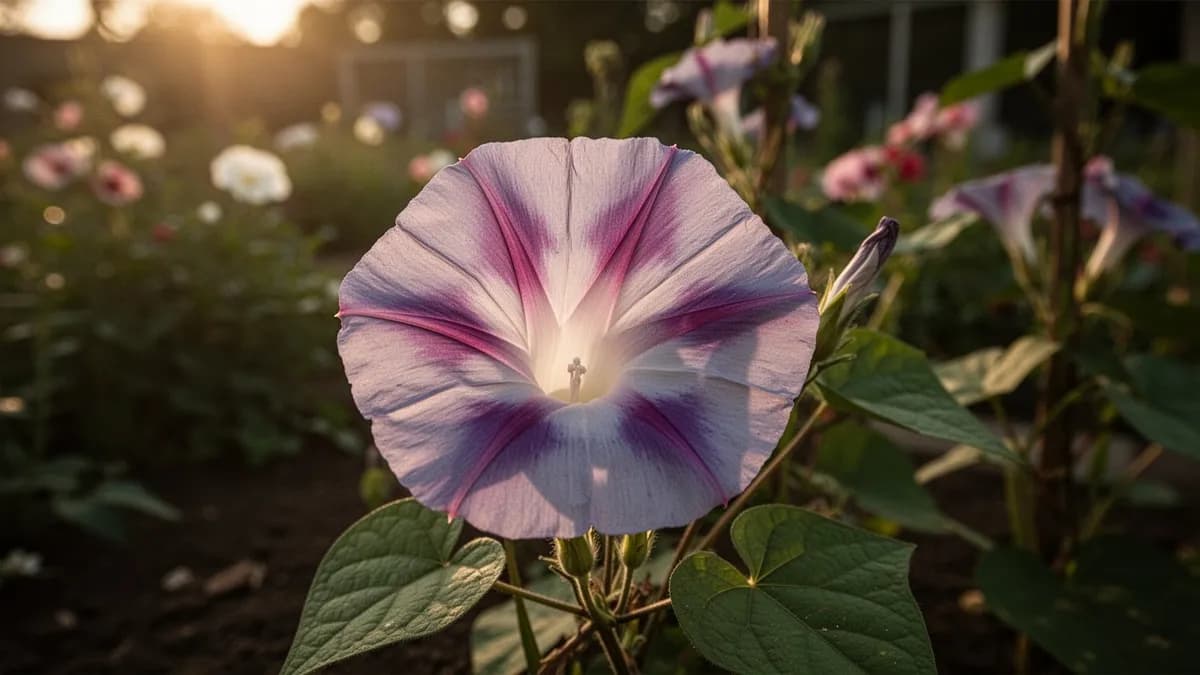
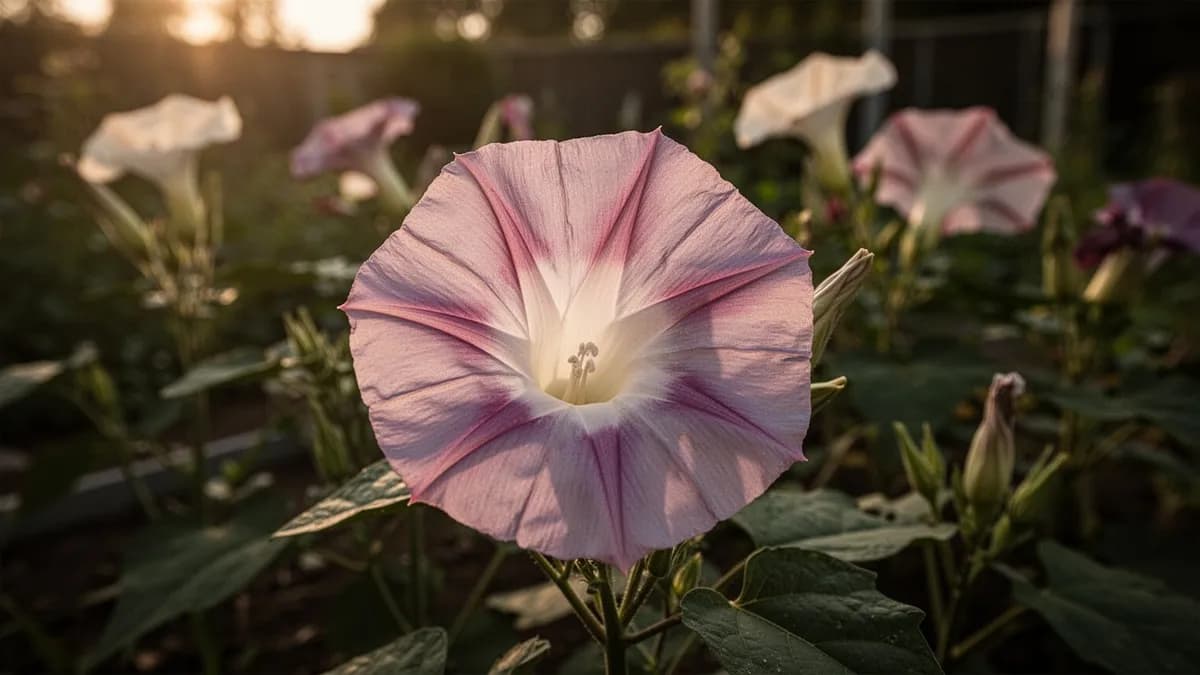
A fast-growing annual vine with trumpet-shaped flowers in blue, purple, pink, and white that open each morning.





On this pageOverview
Meet Morning Glory (Annual)
A fast-growing annual vine with trumpet-shaped flowers in blue, purple, pink, and white that open each morning. Morning glories can cover a fence or trellis in a single season and self-sow enthusiastically. Nick or soak the hard seeds before planting and provide support for the twining vines.
When to plant Morning Glory (Annual)
Nick the hard seed coat with a file or nail clippers, or soak seeds in warm water for twenty-four hours before planting to break dormancy. Direct sow outdoors one-half inch deep after the last frost when soil is warm. Seeds germinate in five to ten days at 65 to 85 degrees Fahrenheit. For earlier blooms, start indoors in individual peat pots two to three weeks before the last frost. Do not start too early, as vines become tangled and difficult to transplant. Transplant carefully without disturbing the taproot.
Your Morning Glory (Annual) Year
Composed for Zone 7 · typical seasons · frost passes Apr 2, returns Nov 1
Plant Morning Glory (Annual) May – Jun, pick Jul – Oct. Check the planting methods below and set your climate to personalize these windows.
How to grow Morning Glory (Annual)
Morning glories are best direct-sown outdoors after the last frost when soil temperatures have warmed to at least 65 degrees Fahrenheit. Nick the hard seed coat with a file or soak seeds overnight in warm water to speed germination. Plant seeds one-half inch deep and six inches apart at the base of a trellis, fence, or other support structure. Seeds germinate in five to ten days in warm conditions.
Provide a sturdy support immediately, as vines grow rapidly and can reach ten to fifteen feet in a single season. Morning glories climb by twining counterclockwise, so vertical strings, wires, or lattice work best. Full sun is essential for abundant blooming, and lean soil is actually preferable, as fertile soil promotes excessive foliage with fewer flowers.
Water moderately during establishment, then reduce to minimal irrigation. Morning glories are drought-tolerant once established and bloom most heavily under slight stress. Avoid fertilizing, especially with nitrogen, as this produces vigorous leafy growth but delays and reduces flowering. Remove seed pods to control self-sowing, which can be aggressive in warm climates. The seeds are toxic if ingested.
32 plants fit a 4 × 8 ft bed
Each Morning Glory (Annual) wants 30 cm of elbow room. The planner keeps that spacing for you — every plant, every bed.
Morning Glory (Annual)'s best neighbours
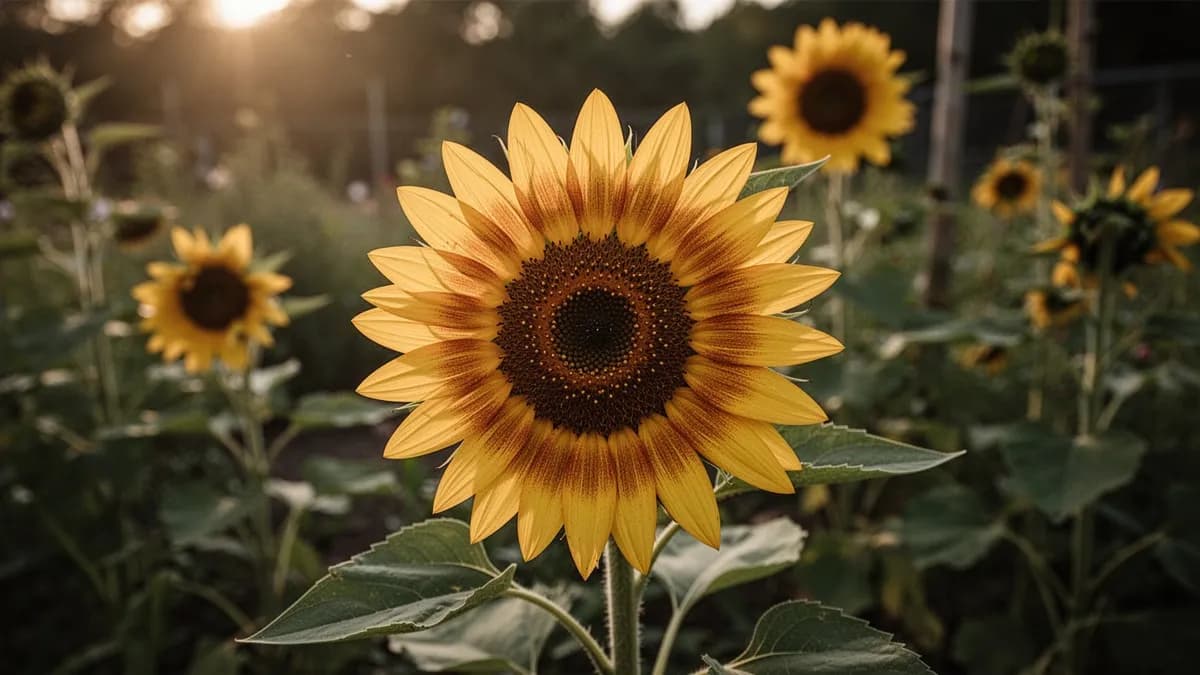
Morning glories create a living privacy screen on fences and trellises, providing shade for heat-sensitive plants below. They pair beautifully with moonflowers for round-the-clock blooms on the same support structure. Plant with sunflowers, which can serve as natural supports for the vines. Avoid planting near food crops, as the seeds are toxic. Morning glories attract hummingbirds and bumblebees, making them valuable in pollinator-friendly gardens.
Sunflower belongs beside it.
Old growers' knowledge, checked against Morning Glory (Annual)'s real companion table below — test any plant you're growing.
Try Morning Glory (Annual) in a bed — right here
A real planner bed with Morning Glory (Annual) already in it. Tap a companion to place it and watch the pairing checks answer — green for good neighbours, red for a clash.


Related growing guides
Feed it well
Morning glories actually prefer poor to average, well-drained soil with a pH of 6.0 to 6.8. Rich, fertile soil produces vigorous leafy vines with few flowers. Do not amend the soil with compost or fertilizer before planting. Only feed if plants appear stunted or yellowed, using a low-nitrogen phosphorus-rich fertilizer to promote blooms. Container-grown morning glories may need occasional light feeding. Sandy or gravelly soil is ideal for maximum flower production.
Ideal Temperature
Hardiness Zone Compatibility
From seed to harvest, stage by stage
Seed Germination
Morning glory seeds have a hard outer coat. After scarification or overnight soaking, seeds swell and germinate within five to ten days when soil temperatures reach at least 18°C (65°F). The radicle emerges first, anchoring into the soil before the cotyledons push upward.
Seedling Establishment
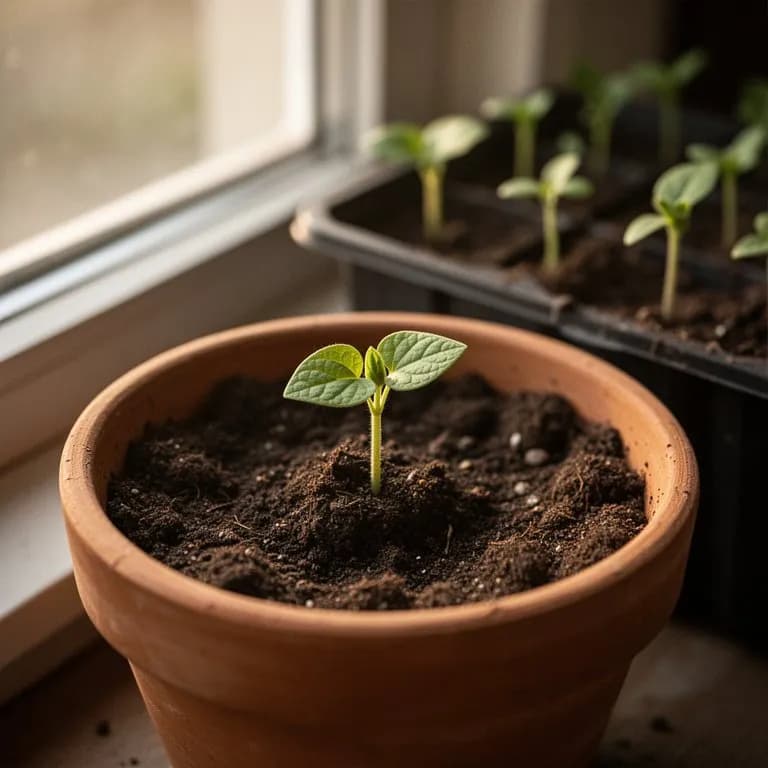
Cotyledons unfold and the first pair of true heart-shaped leaves appear. The stem begins to elongate and the plant starts seeking vertical support. Root systems develop rapidly during this stage, establishing the foundation for vigorous vine growth.
Vegetative Vine Growth
The vine enters a rapid growth phase, producing abundant heart-shaped foliage and extending up to 15 centimeters per day under ideal conditions. Tendrils twine counterclockwise around any vertical support. Lateral branches form, increasing the plant's coverage area substantially.
Bud Formation and Early Bloom
Flower buds form in leaf axils along the vine. The tightly spiraled buds swell over several days before unfurling into trumpet-shaped blooms at dawn. Early flowers appear sporadically at first, then increase in number as the plant matures. Each individual flower lasts only one day.
Peak Flowering
The plant reaches its most prolific blooming period, producing dozens of new flowers each morning. Blooms open at sunrise and typically close by early afternoon. Pollinators visit frequently and seed pods begin forming behind spent flowers. The vine may reach three to five meters in length.
Seed Set and Maturation
Flowering gradually slows as the plant directs energy toward seed production. Round green seed capsules develop where flowers were pollinated, each containing four to six dark seeds. Capsules dry and turn papery brown as seeds mature inside. The vine foliage may begin to yellow.
Senescence and Frost Kill
As temperatures drop below 5°C (41°F), the annual vine declines rapidly. Leaves wilt and blacken after the first hard frost. The dried vine structure can remain on the trellis through early winter, providing some visual interest and habitat for overwintering insects.
Nick the seed coat with a file or soak seeds in warm water for 24 hours before planting to speed germination by several days.
Caring for Morning Glory (Annual) month by month
What to do each month for your Morning Glory (Annual)
October
You are hereHarvest dried seed pods before the first hard frost. Label and store seeds in paper envelopes in a cool, dry location. Note any self-sown seedlings for potential spring removal.
Know exactly what to do in your garden — every month
One email at the start of each month: what to sow, plant, and tackle right now — for your Morning Glory (Annual) and everything growing around it. Plus a short starter course that helps you dodge the classic mistakes.
- What to do, right now
- Matched to your season
- Starter course included
Harvesting Morning Glory (Annual)
Morning glory flowers are short-lived, each bloom lasting only one day, so they are not ideal for cutting. Enjoy them on the vine instead. For seed saving, allow seed pods to dry completely on the vine until they turn brown and papery, then crack open and collect the triangular black seeds. Seeds are easy to save and store. Morning glory vines can be cut and woven into decorative wreaths in autumn after frost kills the foliage. Handle seeds with care, as they are toxic if ingested.
assuming you plant when the window opens — set your real date
Pick Morning Glory (Annual) promptly and the plant keeps producing.
Storage & Preservation
Morning glory flowers cannot be preserved as cut flowers due to their one-day bloom cycle. Individual blooms can be pressed between heavy books for crafting. Seeds are the primary thing to save, and they store excellently for three to five years in paper envelopes in a cool, dry location. Label saved seeds with variety name and harvest date. Dried vines can be fashioned into rustic wreaths. Do not eat or allow children to handle the seeds, as they contain toxic compounds.
What goes wrong — and the fix
Japanese Beetles
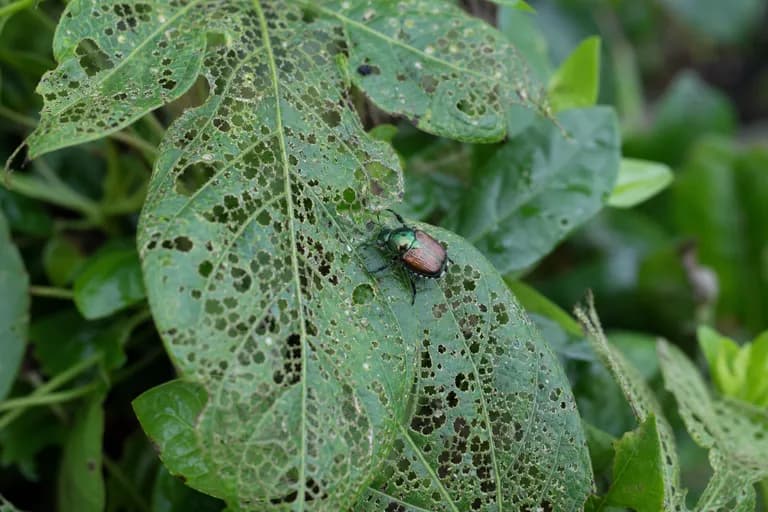
PestSkeletonized leaves with lacy holes between veins, metallic green and copper beetles visible on foliage.
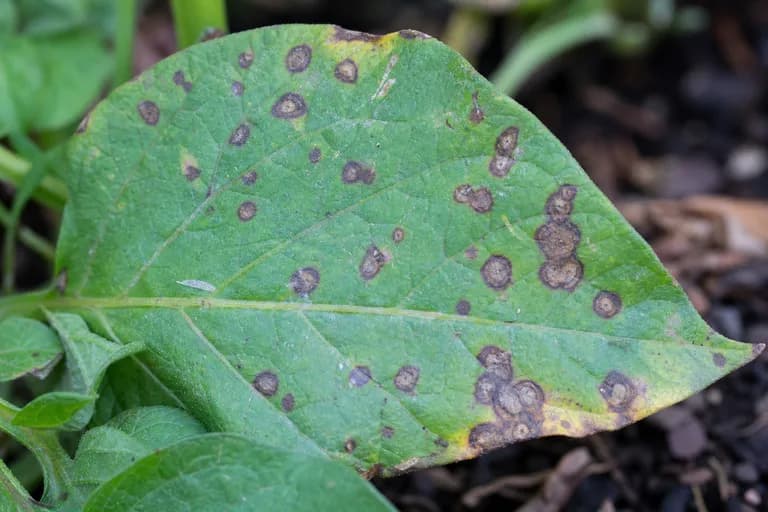
Leaf Spot
DiseaseDark brown or black spots on leaves that may enlarge and merge, causing leaf yellowing and drop.
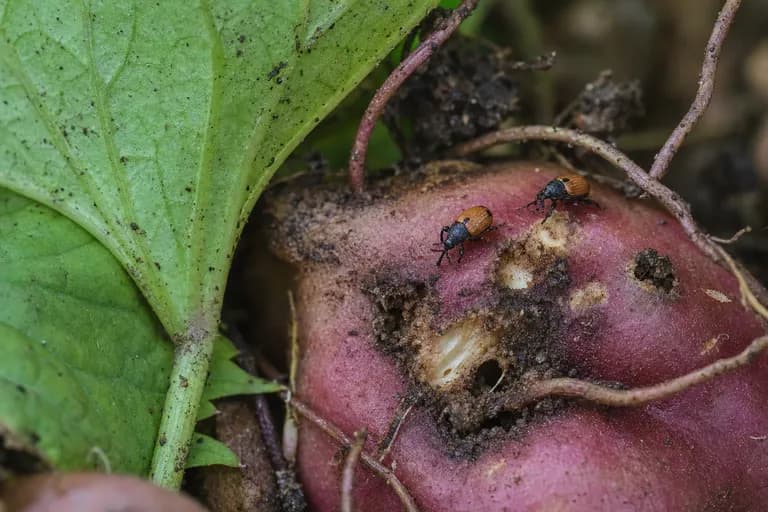
Sweet Potato Weevil
PestSmall snout beetles feeding on leaves and stems, larvae boring into the stem base causing wilting and plant collapse.
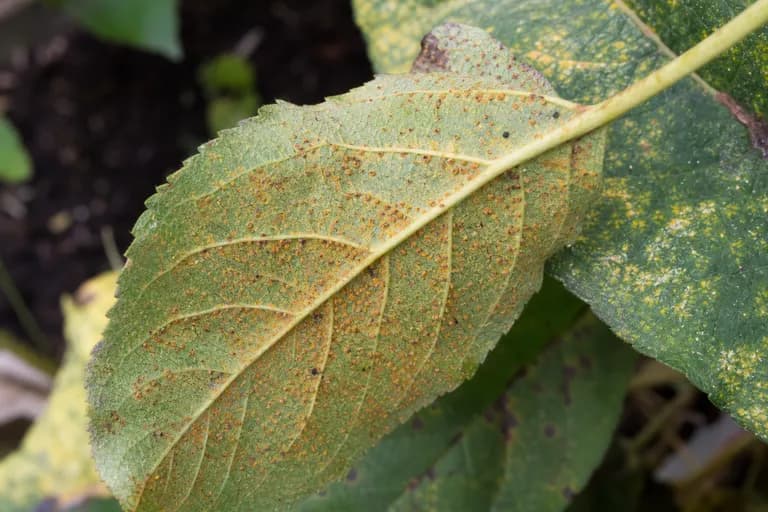
Rust
DiseaseOrange-brown pustules on leaf undersides with corresponding yellow spots on top. Leaves may curl and drop prematurely.
Troubleshooting Common Problems
The most common complaint is all leaves and no flowers, which results from overly rich soil, excessive nitrogen fertilizer, or insufficient sunlight. Plant in lean soil in the sunniest spot available. Aggressive self-sowing makes morning glories potentially invasive in some regions, so check local regulations before planting. Seeds are toxic and should be kept away from children. In short-season climates, late sowing may result in plants that do not bloom before frost arrives.
Growing Tips
- Scarify seeds by nicking the hard outer coat with a nail file or soak them in warm water for 24 hours before planting to improve germination rates from around 50 percent to over 90 percent.
- Direct sow seeds outdoors only after the soil has warmed to at least 18°C (65°F), as cold soil causes seeds to rot before germinating.
- Plant morning glories in full sun with at least six to eight hours of direct sunlight daily for the best flower production. Partial shade results in lush foliage but significantly fewer blooms.
- Provide sturdy vertical support such as a trellis, fence, arbor, or string netting before the vines begin their rapid growth phase, as established vines are difficult to redirect without damage.
- Water deeply once per week rather than shallow daily watering to encourage deep root development. Morning glories are moderately drought-tolerant once established.
- Avoid over-fertilizing, especially with nitrogen-rich products. Lean to moderately fertile soil produces the best balance of foliage and flowers. Excess nitrogen creates abundant leaves but delays blooming.
- Deadhead spent flowers regularly during the blooming season to redirect the plant's energy from seed production into generating new buds and extending the flowering period.
- If self-seeding is a concern, remove seed pods before they mature and split open. Morning glories can become weedy in mild climates where seeds overwinter successfully in the soil.
- Space plants 15 to 30 centimeters (6 to 12 inches) apart along the base of a support structure. Closer spacing creates a denser screen but may increase competition for water and nutrients.
- In short-season climates, start seeds indoors in biodegradable peat pots four to six weeks before the last frost date. Transplant the entire pot to avoid disturbing the sensitive taproot.
Grow your best Morning Glory (Annual) yet — and everything around it.
Start a free plan today. Lay out your beds, drop in your Morning Glory (Annual), and let PlotMyGarden handle the timing, spacing, companions and reminders from seed to harvest basket.
Pick your Morning Glory (Annual)
Heavenly Blue
The most iconic morning glory with large, sky-blue flowers and white throats on vigorous ten to twelve foot vines.
Grandpa Ott
An heirloom variety with deep purple flowers and a vibrant magenta star pattern in the center, vigorous and free-flowering.
Scarlett O'Hara
Rich crimson-red flowers with white throats on fast-growing vines, an award-winning classic since 1939.
Milky Way
White flowers with dramatic purple-blue streaks and speckles, each bloom uniquely patterned.
Star of Yelta
Deep plum-purple flowers that appear nearly black with a luminous magenta star, a dramatic heirloom selection.
A single packet of morning glory seeds (approximately 50 seeds) costs between $2 and $4 and can cover 10 to 15 meters of fence or trellis with lush foliage and flowers. A mature vine produces hundreds of seeds that can be saved for the following year, making morning glories essentially a one-time purchase. Compared to purchasing potted ornamental climbers or annual bedding plants for equivalent garden coverage, morning glories provide dramatic vertical interest at a fraction of the cost. Additionally, their dense growth serves as a natural privacy screen and shade provider, potentially reducing the need for manufactured garden structures or awnings.
Quick recipes
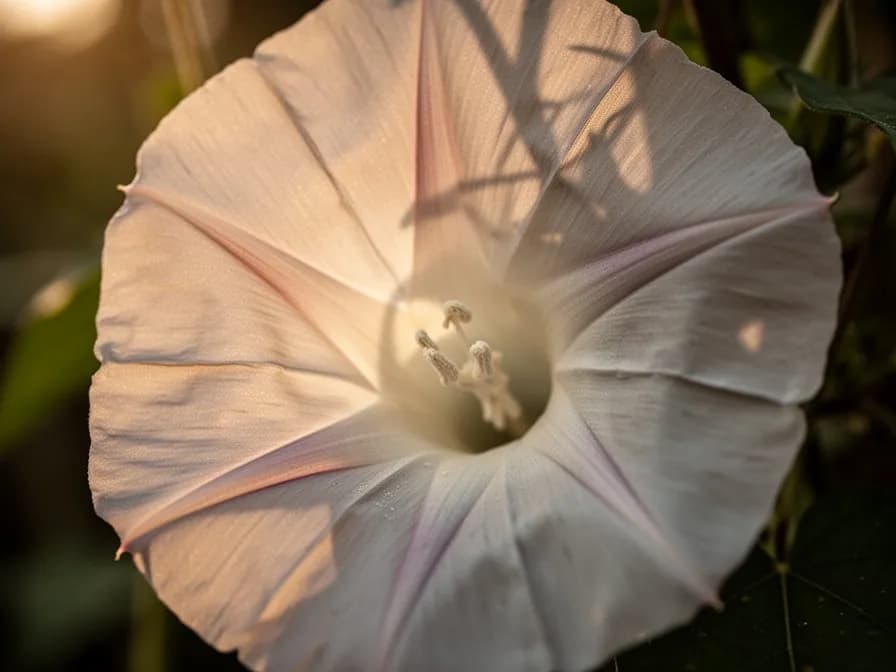
Morning Glory Flower Petal Ice Cubes
10 minutes plus freezing timeCreate beautiful decorative ice cubes by freezing freshly picked morning glory petals in water. These edible-flower-style ice cubes add a stunning visual element to summer beverages and party drinks. Note: use only organically grown flowers free of pesticides, and use sparingly for decoration rather than consumption.
4 ingredients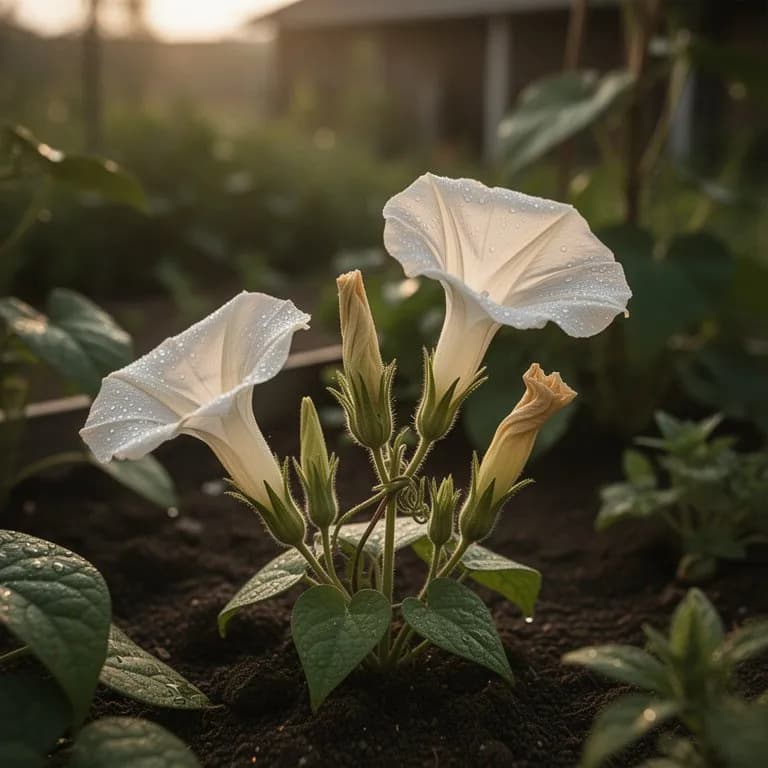
Pressed Morning Glory Botanical Art
15 minutes active, 2-3 weeks dryingPress freshly picked morning glory flowers and leaves to create beautiful botanical art pieces, greeting cards, or framed displays. Because morning glory blooms are ephemeral and last only one day, pressing them preserves their beauty permanently.
5 ingredients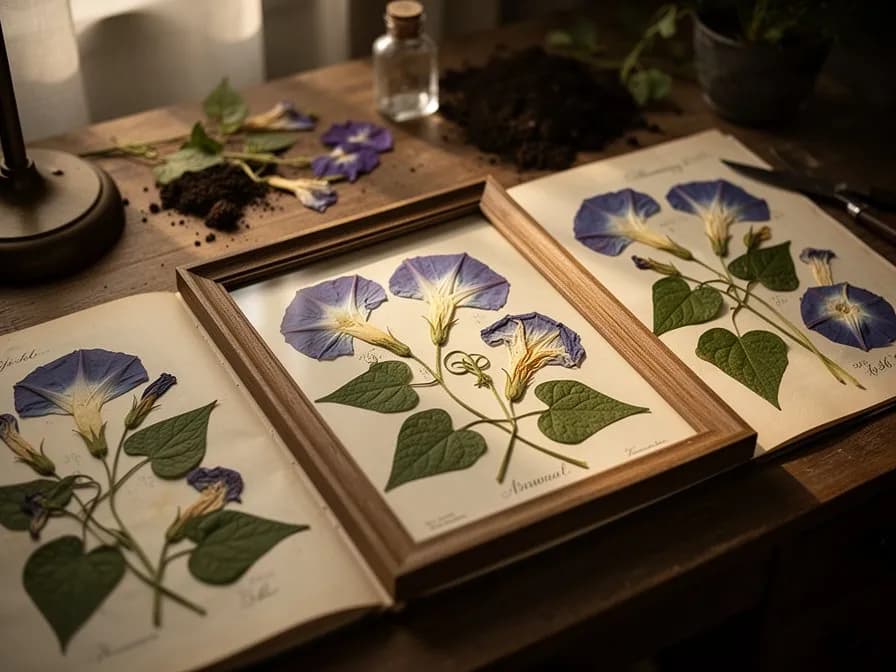
Morning Glory Natural Dye Bath
45 minutesUse morning glory petals to create a soft blue-violet natural dye for fabric or paper crafts. The anthocyanin pigments in the petals produce gentle pastel tones on natural fibers like cotton, linen, and silk. Results vary based on the mordant used and the flower color.
5 ingredientsWhat's inside
Health Benefits
- Morning glory vines create natural shade screens that can reduce indoor temperatures by several degrees when grown on south- or west-facing trellises, lowering air conditioning costs during summer months.
- Gardening activities associated with growing morning glories — including planting, watering, training vines, and deadheading — provide moderate physical exercise and fine motor skill engagement.
- The daily ritual of observing morning glory blooms at dawn encourages an early rising routine and mindful outdoor time, which research links to improved circadian rhythm regulation and mood.
- Dense morning glory plantings attract pollinators and beneficial insects, improving the biodiversity and ecological health of home gardens and contributing to local food webs.
- Growing ornamental vines like morning glories has been shown in horticultural therapy studies to reduce cortisol levels and perceived stress in participants who tend them regularly.
- The rapid visible growth of morning glory vines provides a tangible sense of accomplishment and progress, which can boost motivation and mental well-being throughout the growing season.
Where Morning Glory (Annual) comes from
Ipomoea purpurea, the common annual morning glory, is native to tropical and subtropical regions of Central America and Mexico, where it has been cultivated for thousands of years. Archaeological evidence suggests that indigenous peoples of Mesoamerica used morning glory species both as ornamental plants and for ceremonial purposes. The Aztecs referred to certain morning glory species as 'tlitlitzin' and valued them within their cultural and medicinal traditions. Spanish explorers encountered the plant during the sixteenth century and brought seeds back to Europe, where morning glories quickly gained popularity as ornamental garden climbers. By the early seventeenth century, the plant had spread across European gardens and eventually reached Asia through maritime trade routes. In Japan, morning glories arrived around the ninth century and became the subject of intense horticultural selection during the Edo period, when Japanese growers developed extraordinary mutant forms with frilled, starred, and multi-colored petals. Annual morning glory exhibitions became popular social events in Tokyo, a tradition that continues to this day at temples and botanical gardens. The plant naturalized readily in warm climates worldwide and is now found on every inhabited continent. In the United States, morning glories became a staple of cottage gardens and rural fencerows by the nineteenth century. Thomas Jefferson grew morning glories at Monticello and noted their rapid growth in his garden journals. Today, Ipomoea purpurea is appreciated globally as an easy-to-grow, vigorous annual vine that provides quick vertical coverage, abundant colorful blooms, and reliable self-seeding behavior in temperate and tropical gardens alike.
Morning Glory (Annual): did you know?
Fascinating facts about Morning Glory (Annual)
Morning glory flowers open at dawn and typically close by early afternoon, a behavior called nyctinasty that is controlled by the plant's internal circadian clock rather than direct light exposure.
Morning Glory (Annual) questions, answered
When should I plant Morning Glory (Annual)?
What are good companion plants for Morning Glory (Annual)?
What hardiness zones can Morning Glory (Annual) grow in?
How much sun does Morning Glory (Annual) need?
How far apart should I space Morning Glory (Annual)?
What pests and diseases affect Morning Glory (Annual)?
How do I store Morning Glory (Annual) after harvest?
What are the best Morning Glory (Annual) varieties to grow?
What soil does Morning Glory (Annual) need?
Are morning glory seeds or plants toxic to pets and children?
Why are my morning glory vines producing lots of leaves but very few flowers?
How do I prevent morning glories from self-seeding and spreading aggressively?
Can I grow morning glories in containers on a balcony or patio?
Why do morning glory flowers close in the afternoon?
What are the best companion plants to grow alongside morning glories?
You just read the theory. Now grow it on autopilot.
Everything that makes Morning Glory (Annual) fiddly — the timing, the spacing, the companions, the harvest window — is exactly what PlotMyGarden handles for you, for every plant in your garden.
A plan that knows your weather
Set your location once. Get sow, feed and harvest dates built around your real last-frost date and live forecast — no more guessing from a generic seed packet.
From the “When to plant” sectionDrag-and-drop bed planner
Design beds on a grid. Every plant snaps to its proper spacing, and you can see your whole season laid out before you spend a cent on seed.
From the “Growing guide” sectionCompanion conflicts, caught early
200+ good-and-bad pairings checked live as you plant — so a season-wrecking mistake never makes it into the ground.
From the “Companions” sectionReminders you'll actually act on
“Water the beans.” “Pick today before it turns.” Timely, specific, and tied to the plants you're really growing.
From the “Harvest” sectionSuccession, scheduled
Want a harvest for six weeks, not six days? It spaces your sowings automatically and reminds you when each new block is due.
From the “When to plant” sectionA record that gets smarter
Every harvest you log teaches it your garden. Next year's plan starts from what actually worked in your soil, not a textbook's.
From the “Overview” sectionPlant these alongside Morning Glory (Annual)
More Annuals
Grow your best Morning Glory (Annual) yet — and everything around it.
Start a free plan today. Lay out your beds, drop in your Morning Glory (Annual), and let PlotMyGarden handle the timing, spacing, companions and reminders from seed to harvest basket.