Mangostán
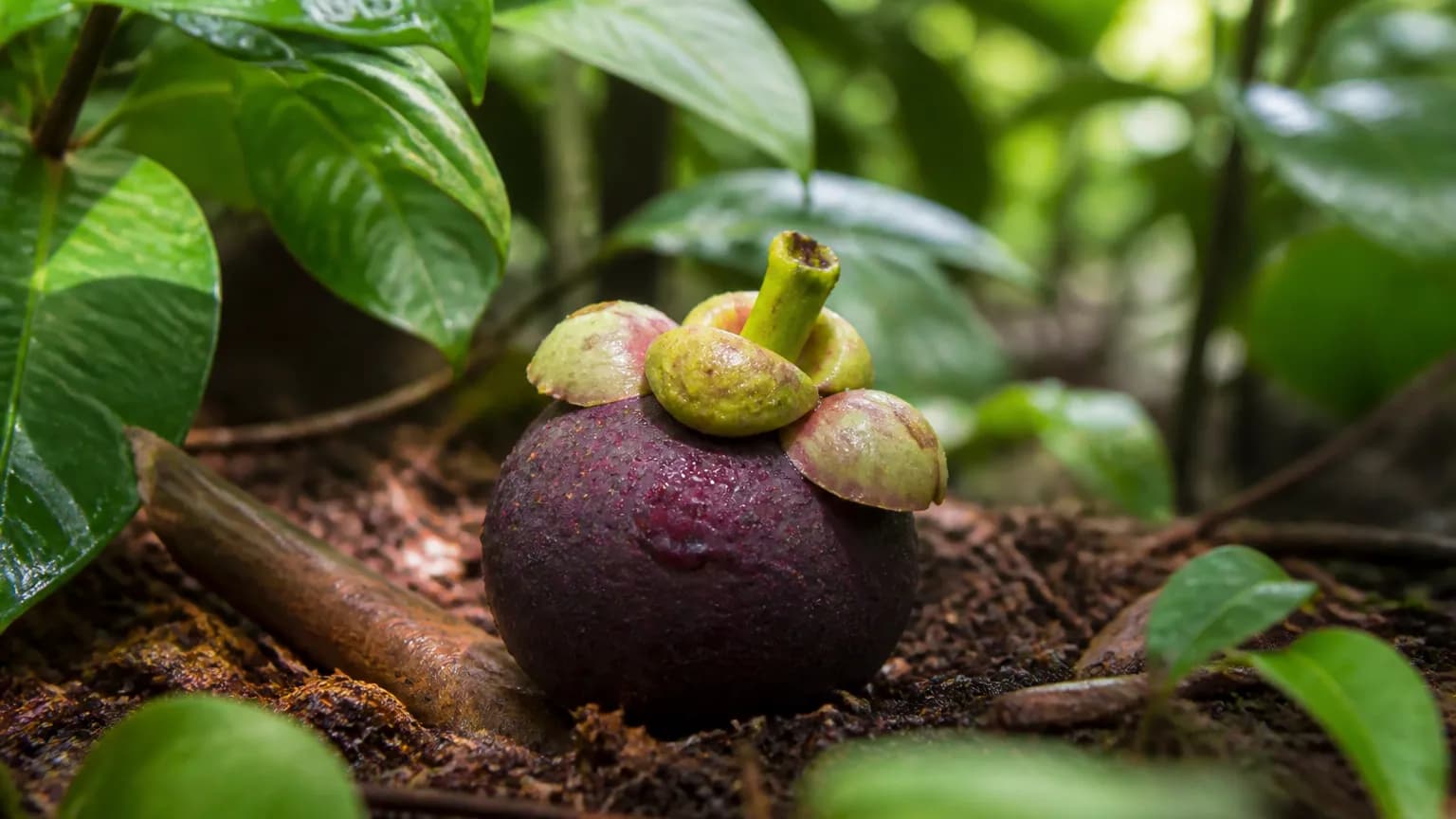
A menudo llamada la reina de las frutas, el mangostán produce frutos de piel gruesa y púrpura, con pulpa blanca como la nieve, segmentada, de dulzura sublime y delicado sabor floral.





En esta páginaResumen
Conoce Mangostán
A menudo llamada la reina de las frutas, el mangostán produce frutos de piel gruesa y púrpura, con pulpa blanca como la nieve, segmentada, de dulzura sublime y delicado sabor floral. Es una de las frutas tropicales más exigentes de cultivar, ya que necesita temperaturas constantemente cálidas, alta humedad y un suelo profundo y rico. Los árboles son notoriamente lentos para fructificar y a menudo tardan entre 8 y 10 años desde semilla.
Cuándo plantar Mangostán
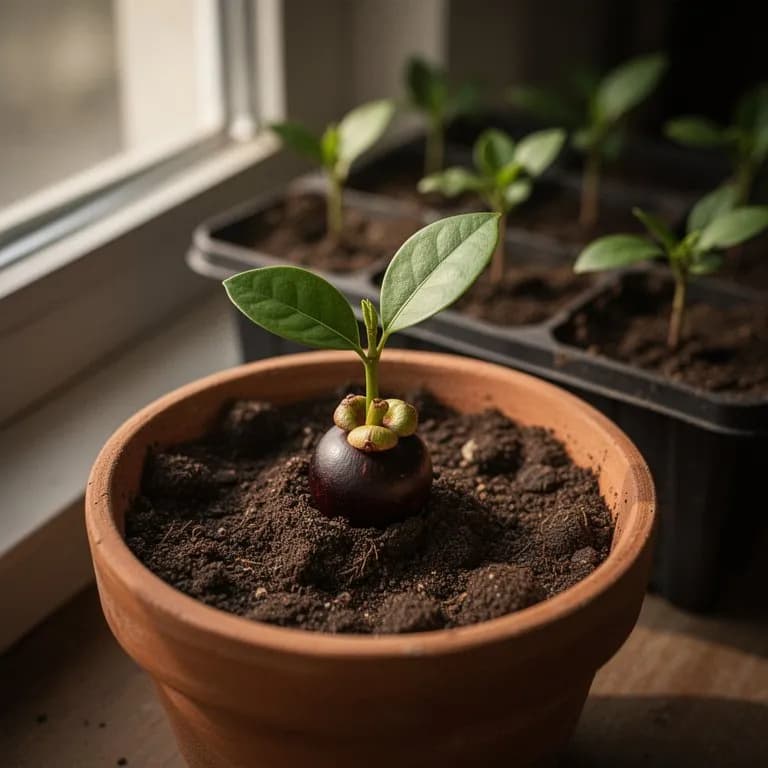
Las semillas de mangostán son recalcitrantes y deben plantarse inmediatamente después de extraerlas del fruto maduro, ya que pierden viabilidad en pocos días. Plántelas a 2.5 cm de profundidad en un recipiente profundo con sustrato rico y húmedo. Mantenga temperaturas de 25 a 30 grados Celsius con alta humedad. La germinación tarda dos o tres semanas. Las plántulas crecen extremadamente despacio y requieren sombra y humedad constante durante los dos o tres primeros años. La mayoría de los mangostanes se propagan por semilla, ya que el injerto es difícil, aunque los árboles injertados fructifican mucho antes.
Tu año de Mangostán
Ajustado a Zona 7 · temporada típica · la helada se va hacia el 2 abr y vuelve hacia el 1 nov
Planta Mangostán May – Jul y cosecha Jun – Ago. Consulta los métodos de plantación y elige tu clima para adaptar los periodos.
Cómo cultivar Mangostán
El mangostán es una de las frutas tropicales más difíciles de cultivar y requiere temperaturas constantemente cálidas por encima de 4 grados Celsius, humedad superior al 80 por ciento y un suelo profundo, rico y bien drenado. Plántelo en un lugar resguardado con semisombra cuando sea joven y vaya trasladándolo a pleno sol a medida que el árbol madura. Separe los árboles entre 7.5 y 10.5 metros y cave un gran hoyo de plantación enmendado con compost y estiércol bien descompuesto.
Riegue en profundidad y con frecuencia para mantener el suelo uniformemente húmedo, pero no encharcado. El mangostán tiene un sistema de raíz pivotante profundo y necesita riego regular, especialmente durante los periodos secos. Pulverice el follaje con regularidad para mantener una humedad alta en climas secos. Acolche generosamente con materia orgánica para mantener frescas las raíces y conservar la humedad del suelo.
Abone cada dos o tres meses con un fertilizante orgánico equilibrado, suplementado con potasio durante el desarrollo del fruto. El mangostán crece extremadamente despacio y puede tardar entre ocho y quince años en dar fruto desde semilla. Los árboles injertados pueden fructificar en cinco a siete años. Pode muy poco, ya que el árbol desarrolla de forma natural una hermosa forma piramidal. Protéjalo de cualquier exposición al frío, porque incluso descensos breves por debajo de 4 grados Celsius pueden causar daños graves o la muerte.
Para Mangostán un bancal de 120 × 240 cm se queda corto
Cada Mangostán pide 600 cm de margen. El planificador guarda ese marco por ti — cada planta, cada bancal.
Guías de cultivo relacionadas
Abónalo bien
El mangostán necesita un suelo profundo, rico y bien drenado, con abundante materia orgánica y un pH de 5.5 a 6.5. El árbol no tolera la arcilla, el suelo compactado ni el encharcamiento. Enmiende generosamente las zonas de plantación con compost, estiércol bien descompuesto y fibra de coco. Aplique un fertilizante orgánico equilibrado cada dos o tres meses, con potasio adicional durante la fructificación. El mangostán es sensible a la sal, así que evite el exceso de fertilizantes sintéticos. Mantenga siempre una capa gruesa de mantillo orgánico.
Temperatura ideal
Compatibilidad de zonas de rusticidad
De la semilla a la cosecha, etapa por etapa
Germinación de la semilla
Las semillas de mangostán son recalcitrantes y deben plantarse frescas, en los pocos días posteriores a su extracción, ya que pierden viabilidad rápidamente al secarse. En realidad, las semillas son embriones adventicios (plántulas nucelares) y no verdaderas semillas sexuales, lo que significa que producen clones del árbol madre. La germinación es lenta y suele tardar entre 20 y 30 días en condiciones cálidas y húmedas de 25 a 30 °C.
Establecimiento de la plántula
Las plántulas de mangostán crecen con extrema lentitud durante los dos primeros años y a menudo solo alcanzan 20 a 30 cm de altura. La planta joven desarrolla una raíz pivotante larga y delicada, y forma pares de hojas brillantes, verde oscuro y coriáceas. El crecimiento es desesperadamente lento en comparación con la mayoría de los frutales, y las plántulas son muy sensibles al sol directo, la sequía y las alteraciones de la raíz.
Crecimiento vegetativo juvenil
Entre el segundo y el séptimo año, el árbol crece con más vigor y desarrolla su característica forma piramidal, con una copa densa de hojas opuestas y elípticas que pueden alcanzar 20 a 25 cm de largo. El tronco se engrosa y las ramas laterales se extienden de forma simétrica. En esta fase el árbol puede alcanzar entre 3 y 5 metros de altura, pero aún le faltan años para florecer.
Maduración previa a la fructificación
Aproximadamente del séptimo al décimo año, el árbol se prepara para su primera fructificación. La tasa de crecimiento aumenta y la copa se vuelve más densa. La corteza se oscurece y el árbol desarrolla la madurez estructural necesaria para sostener la producción de frutos. Algunos árboles de maduración temprana pueden producir algunas flores ya en los años 7 u 8, pero la fructificación constante suele comenzar alrededor de los años 8 a 10.
Primera floración y cuajado
Las primeras flores aparecen en las puntas de las ramas como flores solitarias o en pares, con pétalos gruesos y carnosos de color amarillo verdoso con borde rojo. El mangostán es funcionalmente femenino: los estambres son rudimentarios y el fruto se desarrolla por apomixis sin polinización. Desde la floración hasta la madurez, los frutos necesitan entre 100 y 150 días, permaneciendo primero verdes y adquiriendo gradualmente un tono púrpura rojizo oscuro.
Maduración del fruto y cosecha
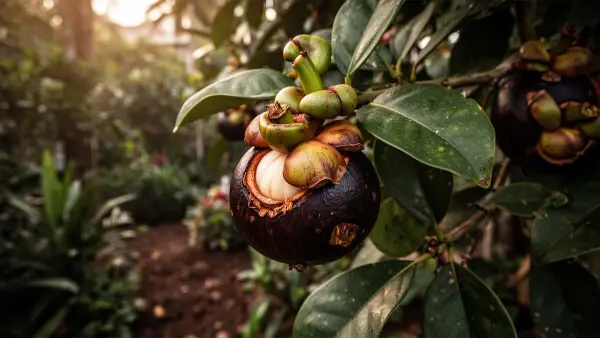
Los frutos maduran durante varias semanas y pasan de verde a rojo rosado y luego a un púrpura oscuro intenso. Un mangostán maduro tiene una cáscara firme pero algo cede bajo la presión del pulgar. El interior contiene de 4 a 8 segmentos de arilo blanco como la nieve, con un sabor dulce-ácido complejo que a menudo se describe como una mezcla de fresa, melocotón y lichi. Los árboles adultos en plena producción pueden dar entre 200 y 500 frutos por temporada.
Producción madura
Una vez establecido como árbol productivo, el mangostán puede seguir dando frutos durante más de 100 años. Los rendimientos aumentan de forma constante, con la producción máxima entre los 20 y 45 años. Un árbol adulto y bien cuidado suele producir entre 500 y 1500 frutos al año, aunque algunos ejemplares excepcionales superan los 3000 frutos anuales. Los árboles tienden a la vecería, con cosechas más abundantes seguidas de años más ligeros.
Plante las semillas inmediatamente después de sacarlas del fruto. Use un recipiente profundo con sustrato de semillero bien drenado y ligeramente ácido (pH 5.5 a 6.5). Mantenga el medio uniformemente húmedo y cálido. No deje que las semillas se sequen en ningún momento, ya que incluso una desecación breve es mortal.
Cuidar Mangostán mes a mes
Qué hacer cada mes para tu Mangostán
Octubre
Mes actualEl crecimiento vegetativo continúa en climas húmedos. Vigile la podredumbre de raíz si ha habido lluvias intensas. Asegure que el drenaje siga siendo excelente tras tormentas prolongadas.
Ten claro qué hacer en tu huerto, cada mes
Un correo al empezar cada mes: qué sembrar, plantar y hacer ahora mismo — para tu Mangostán y todo lo que crece alrededor. Más un breve curso inicial para esquivar los errores clásicos.
- Qué hacer ahora mismo
- Ajustado a tu temporada
- Curso inicial incluido
Cosechar Mangostán
Los frutos de mangostán están listos para cosechar cuando la cáscara gruesa pasa de verde a un púrpura rojizo oscuro. El fruto debe ceder ligeramente a una presión suave, pero no sentirse blando o pastoso. Corte el fruto de la rama con tijeras de podar, dejando un pequeño pedúnculo y la tapa del cáliz adheridos. Manipúlelo con cuidado para no dañar la cáscara, que mancha de forma permanente. El número de segmentos blancos de pulpa en el interior corresponde al número de lóbulos de la parte inferior del fruto. Recoja cada dos o tres días durante la temporada de fructificación.
se supone que plantas al comenzar el periodo — indica tu fecha real
Cosecha Mangostán a tiempo y la planta sigue produciendo.
Almacenamiento y conservación
El mangostán fresco puede conservarse a temperatura ambiente durante dos o tres días o refrigerarse hasta dos semanas a 10 a 13 grados Celsius. No congele el fruto entero, ya que la pulpa delicada se vuelve acuosa al descongelarse. La pulpa puede congelarse por separado en recipientes herméticos hasta tres meses para usarla en batidos y postres. Ocasionalmente se envasa en almíbar para exportación. La cáscara gruesa a veces se seca y se utiliza en la medicina tradicional.
Qué falla — y cómo solucionarlo
Trastorno gamboge
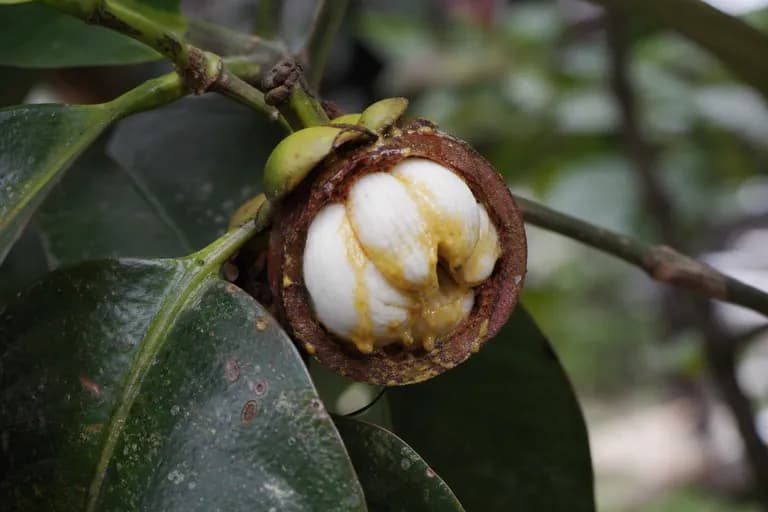
EnfermedadExudación de látex amarillo desde la cáscara del fruto, que mancha la pulpa blanca y la vuelve amarga e invendible. Causado por riegos irregulares.
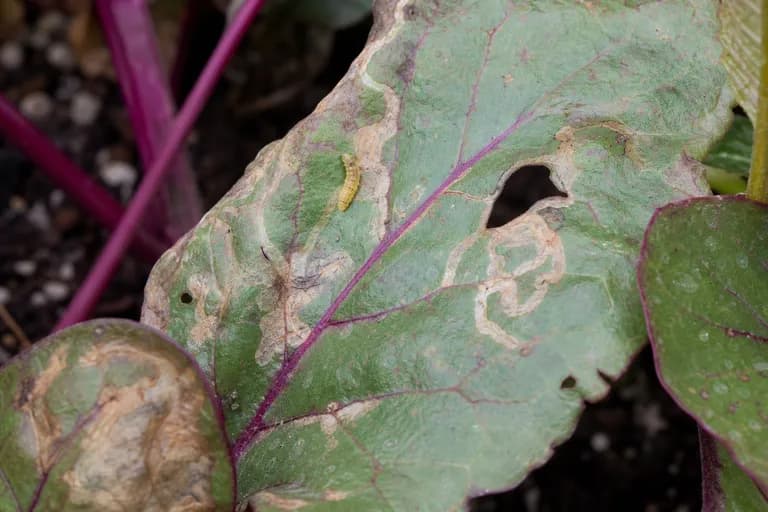
Minador de hojas
PlagaSenderos serpenteantes y plateados en la superficie de las hojas donde las larvas perforan entre las capas; una infestación intensa reduce la fotosíntesis.
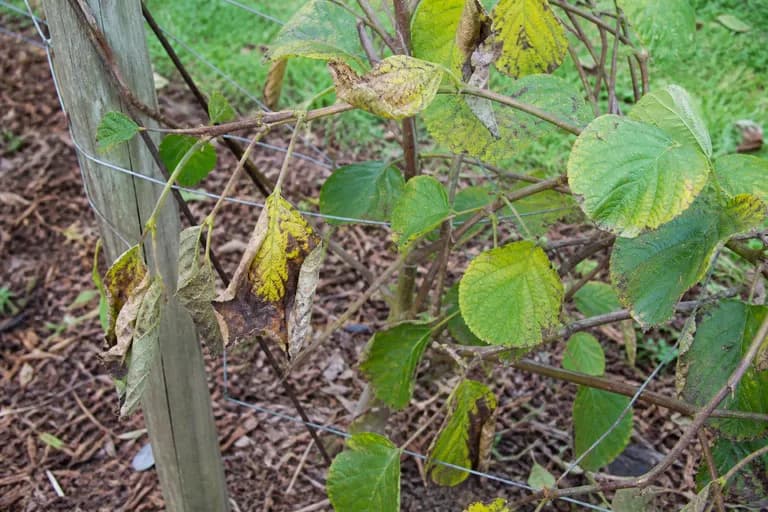
Podredumbre de raíz (Phytophthora)
EnfermedadAmarilleamiento y marchitez de las hojas pese a haber humedad suficiente; raíces marrones y blandas; declive del árbol y muerte eventual.
Solución de problemas comunes
El periodo juvenil extremadamente largo es el mayor reto, ya que los árboles pueden tardar más de una década en fructificar. El trastorno gamboge causa manchas de látex amarillo en la pulpa debido a riegos irregulares durante el desarrollo del fruto. La sensibilidad al frío limita el cultivo a zonas realmente tropicales. La cáscara gruesa hace difícil juzgar la calidad interna del fruto desde fuera. El exceso de riego causa podredumbre de raíz, mientras que la falta de agua provoca caída de frutos y el trastorno gamboge. El árbol no se trasplanta bien una vez establecido.
Consejos de cultivo
- Plante el mangostán en un lugar protegido del viento, ya que su copa densa puede comportarse como una vela durante las tormentas y la madera frágil tiende a romperse con vientos fuertes.
- Mantenga el pH del suelo entre 5.5 y 6.5 y, si es necesario, use enmiendas de azufre: el mangostán es sensible a las condiciones alcalinas y desarrollará clorosis férrica en suelos con pH superior a 7.0.
- Proporcione sombra intensa y constante (50 a 70 %) durante los primeros 4 o 5 años y luego transicione gradualmente a semisol. Los mangostanes jóvenes no toleran el sol tropical pleno y sufrirán quemaduras severas en las hojas.
- Use bancales elevados o plantación en montículos en zonas con arcilla pesada, ya que las raíces del mangostán son extremadamente sensibles al encharcamiento pese a las elevadas necesidades de agua del árbol: el drenaje excelente no es negociable.
- Aplique inoculante micorrízico al plantar y en cada trasplante, ya que el mangostán forma asociaciones beneficiosas con hongos micorrícicos arbusculares que mejoran de forma notable la absorción de fósforo y la salud radicular.
- No deje nunca que el suelo se seque por completo, pero evite el agua estancada alrededor de la zona radicular. Instale un sistema de riego por goteo con temporizador para mantener los niveles de humedad constantes que esta especie necesita.
- Acolche de forma abundante con material orgánico (fibra de coco, astillas de madera o hojarasca) en un anillo amplio que llegue hasta la línea de goteo de la copa, manteniendo un espacio de 15 a 20 cm alrededor del tronco para evitar la podredumbre del cuello.
- Evite la poda fuerte: el mangostán forma de manera natural una atractiva silueta piramidal y se recupera lentamente de cortes grandes. Limite la poda a eliminar ramas muertas, chupones y algún aclarado ocasional de la copa interior.
- Proteja los árboles jóvenes de temperaturas inferiores a 10 °C con manta antigel, cerramientos temporales o lámparas de calor. Incluso los cultivadores subtropicales en zonas marginales deberían planificar protección nocturna frente al frío durante el invierno.
- Tenga paciencia con su notoriamente lento crecimiento inicial. Las plántulas de mangostán pueden crecer solo 10 a 15 cm por año durante los primeros 2 o 3 años. Esto es normal y no indica mala salud: resista la tentación de abonar en exceso para intentar acelerar el crecimiento.
Cultiva tu mejor Mangostán — y todo lo que la rodea.
Empieza un plan gratis hoy. Diseña tus bancales, coloca tu Mangostán y deja que PlotMyGarden gestione el momento, el espaciado, las asociaciones y los recordatorios de la semilla a la cesta.
Elige tu Mangostán
Mangostán común
La variedad estándar cultivada en todo el sudeste asiático, que produce los clásicos frutos púrpura oscuro con segmentos de pulpa blanca y dulce.
Mesta
Una selección conocida por frutos algo más grandes, de calidad más uniforme y con menos semillas, muy apreciada en plantaciones comerciales.
GA-1
Una selección mejorada desarrollada para fructificar antes y con algo mejor tolerancia al frío que la variedad estándar.
Los mangostanes frescos se venden en mercados occidentales a entre 18 y 33 € por kilogramo debido a los costes de importación, a los requisitos de irradiación y a su vida útil limitada. Un solo árbol maduro cultivado en casa, en un clima tropical adecuado, puede producir entre 500 y 1500 frutos al año (unos 70 a 200 kilogramos), lo que potencialmente aportaría entre 1.100 y 6.100 € en fruta al año tras la larga espera de 8 a 15 años hasta la primera cosecha. Aunque la inversión inicial de tiempo es considerable, los mangostanes permanecen productivos durante más de 100 años, lo que los convierte en una inversión excepcional a largo plazo para cultivadores en zonas USDA 11 a 12 o climas tropicales equivalentes.
Recetas rápidas
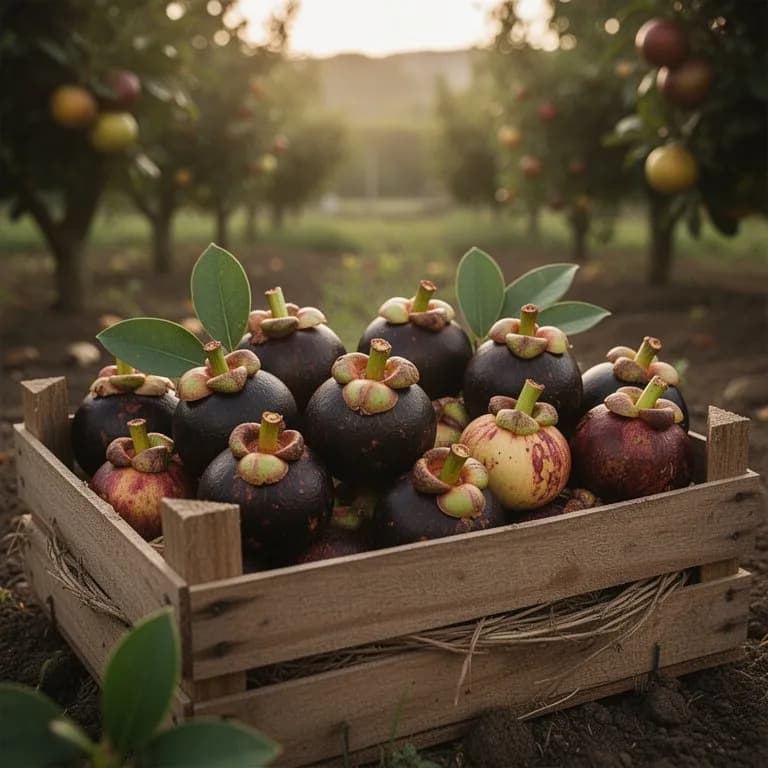
Sorbete de mangostán y coco
15 minutos más tiempo de congelaciónUn sorbete tropical refrescante que pone en primer plano el delicado sabor dulce-ácido del mangostán fresco combinado con cremoso coco. Este postre helado sin lácteos resalta la complejidad natural de la fruta sin opacarla con sabores competidores. Perfecto como limpiador de paladar o como postre ligero en días calurosos.
6 ingredientesEnsalada de mangostán y gambas
20 minutosUna vibrante ensalada inspirada en el sudeste asiático que combina la pulpa dulce y fragante del mangostán con gambas jugosas, verduras crujientes y un aderezo picante de lima y chile. Este plato equilibra los elementos dulce, ácido, salado y picante del perfil tradicional tailandés. Ideal como almuerzo ligero o entrante elegante.
9 ingredientesBol de batido de mangostán
10 minutosUn bol de desayuno rico en nutrientes con mangostán congelado batido hasta obtener una base espesa y cremosa, coronada con frutas tropicales, granola y semillas. Esta comida matinal cargada de antioxidantes proporciona energía sostenida y entrega todo el espectro de beneficios nutricionales del mangostán en una presentación atractiva y fotogénica.
5 ingredientesUsos culinarios
El mangostán está considerado una de las mejores frutas tropicales y casi siempre se come fresco. Corte alrededor del ecuador de la cáscara gruesa y gírela para revelar los segmentos blancos del interior. La pulpa dulce y floral se come tal cual o se añade a ensaladas de frutas tropicales. Da lugar a un sorbete excelente, así como a zumos e ingredientes para cócteles. El sabor combina de maravilla con coco y lima.
Qué contiene
Beneficios para la salud
- Rico en antioxidantes xantónicos, especialmente alfa-mangostina, que en estudios de laboratorio ha mostrado una fuerte actividad antiinflamatoria al inhibir las enzimas COX-2 e iNOS implicadas en las vías de inflamación crónica.
- Aporta una cantidad importante de vitamina C que favorece la síntesis de colágeno, la cicatrización y la función del sistema inmunitario, al tiempo que mejora la absorción de hierro no hemo de alimentos vegetales.
- Contiene fibra dietética que promueve una digestión sana, apoya la microbiota intestinal beneficiosa y contribuye al tránsito intestinal regular, ayudando a prevenir el estreñimiento y a mantener la salud gastrointestinal.
- Aporta folato y vitaminas del grupo B esenciales para la formación de glóbulos rojos, la síntesis de ADN y la función correcta del sistema nervioso, lo que lo hace especialmente valioso para embarazadas y personas con mayor necesidad de folato.
- Los compuestos polifenólicos del mangostán, incluidas proantocianidinas y catequinas, se han estudiado por su posible papel en la salud cardiovascular al favorecer una buena función vascular y perfiles lipídicos saludables.
- Proporciona una combinación de potasio, magnesio y cobre que apoya el equilibrio electrolítico adecuado, la regulación del ritmo cardíaco, la señalización nerviosa y la actividad de las enzimas antioxidantes en todo el cuerpo.
De dónde viene Mangostán
El mangostán (Garcinia mangostana) se cree originario de las islas de la Sonda de Indonesia y de la península malaya, aunque su origen silvestre exacto sigue siendo incierto porque no se han identificado de forma definitiva poblaciones realmente silvestres. La fruta se ha cultivado en el sudeste asiático durante cientos de años, y los primeros testimonios escritos occidentales datan del siglo XVII, cuando el explorador francés Jacques-Henri Bernardin de Saint-Pierre y, más tarde, el botánico Laurentius Garcin la describieron. El género Garcinia recibió su nombre en honor a Garcin por sus aportaciones a la botánica tropical. El cultivo del mangostán se extendió gradualmente desde su hogar en el archipiélago malayo hacia Tailandia, Myanmar, Vietnam, Filipinas y Sri Lanka, siguiendo en gran medida las antiguas rutas comerciales y los intercambios agrícolas de la época colonial. Tailandia terminó convirtiéndose en el mayor productor del mundo, posición que mantiene hoy, con las provincias de Chanthaburi y Rayong como corazón de la producción comercial. En el siglo XIX, los botánicos coloniales europeos intentaron repetidamente cultivar mangostán en invernaderos y jardines botánicos tropicales de Inglaterra, los Países Bajos y el Caribe. La mayoría de los intentos tuvieron éxito limitado porque el árbol es extremadamente sensible a temperaturas inferiores a 4 °C y requiere humedad y lluvia constantes. La legendaria oferta de la reina Victoria de recompensar a quien pudiera llevar un mangostán fresco a la corte inglesa, fuera cierta o no, consolidó el aura mítica de la fruta en la imaginación occidental. En el siglo XX, las plantaciones de mangostán se extendieron a regiones tropicales de Centroamérica, el norte de Australia, Hawái y partes de África occidental, aunque la producción fuera del sudeste asiático sigue siendo relativamente modesta. La retirada de la prohibición de importación en Estados Unidos en 2007 marcó un punto de inflexión en el acceso al mercado mundial y aumentó de forma significativa la demanda occidental.
Mangostán: ¿sabías que?
Datos fascinantes sobre Mangostán
El mangostán es conocido en el sudeste asiático como la reina de las frutas, mientras que el durián ostenta el título de rey de las frutas. La leyenda cuenta que la reina Victoria ofreció una recompensa de 100 libras esterlinas a quien le llevara un mangostán fresco, pero nadie lo consiguió por la larga travesía marítima desde Asia.
Mangostán: preguntas frecuentes
¿Cuándo debo plantar Mangostán?
¿En qué zonas de rusticidad puede crecer Mangostán?
¿Cuánto sol necesita Mangostán?
¿A qué distancia debo espaciar Mangostán?
¿Qué plagas y enfermedades afectan a Mangostán?
¿Cómo almaceno Mangostán después de la cosecha?
¿Cuáles son las mejores variedades de Mangostán para cultivar?
¿Qué suelo necesita Mangostán?
¿Por qué mi mangostán crece tan despacio?
¿Cuánto tarda un mangostán en dar fruto?
¿Puedo cultivar mangostán en una maceta o invernadero fuera de los trópicos?
¿Qué provoca la sustancia amarilla y gomosa en mi fruta de mangostán?
¿Por qué los arilos de mi mangostán son translúcidos o acuosos en vez de blancos?
¿El mangostán necesita un árbol polinizador o puede fructificar un solo árbol?
Acabas de leer la teoría. Ahora cultívala en piloto automático.
Todo lo que hace que Mangostán sea delicado — el momento, el espaciado, las asociaciones, la ventana de cosecha — es justo lo que PlotMyGarden resuelve por ti, para cada planta de tu huerto.
Un plan que conoce tu clima
Indica tu ubicación una vez. Recibe fechas de siembra, abonado y cosecha basadas en tu última helada real y el pronóstico en vivo — sin adivinar con un sobre genérico.
De la sección “Cuándo plantar”Planificador de bancales de arrastrar y soltar
Diseña bancales sobre una cuadrícula. Cada planta encaja con su espaciado correcto y ves toda la temporada antes de gastar un céntimo en semillas.
De la sección “Cultivo”Conflictos de asociación, detectados a tiempo
Más de 200 buenas y malas combinaciones comprobadas en vivo mientras plantas — para que un error que arruine la temporada nunca llegue a la tierra.
De la sección “Asociaciones”Recordatorios que sí vas a seguir
“Riega las judías.” “Recoge hoy antes de que se pase.” Oportunos, concretos y ligados a las plantas que de verdad cultivas.
De la sección “Cosecha”Escalonado, programado
¿Quieres cosechar seis semanas en vez de seis días? Reparte tus siembras automáticamente y te avisa cuando toca el siguiente lote.
De la sección “Cuándo plantar”Un registro que se vuelve más listo
Cada cosecha que registras le enseña tu huerto. El plan del año que viene parte de lo que de verdad funcionó en tu suelo, no en un manual.
De la sección “Resumen”Más Frutas tropicales
Cultiva tu mejor Mangostán — y todo lo que la rodea.
Empieza un plan gratis hoy. Diseña tus bancales, coloca tu Mangostán y deja que PlotMyGarden gestione el momento, el espaciado, las asociaciones y los recordatorios de la semilla a la cesta.