Puerro Bebé
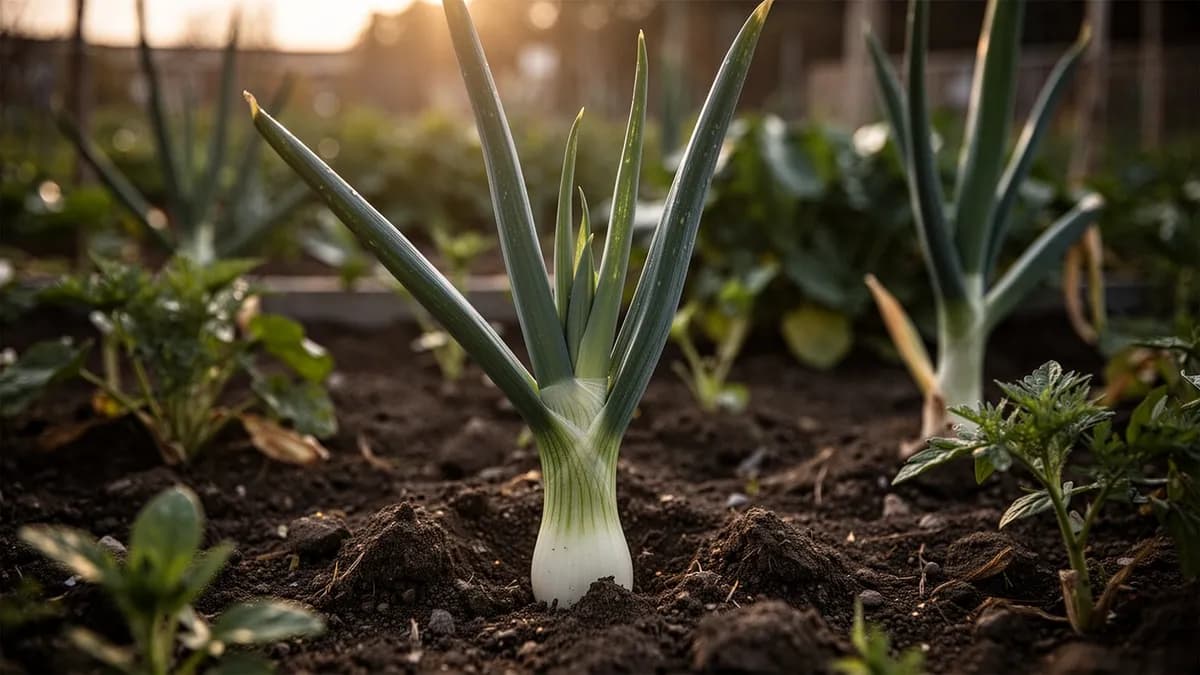
El puerro bebé (Allium porrum) es una versión juvenil del puerro tradicional, cosechado tempranamente cuando el tallo tiene apenas 1-2 cm de diámetro.





En esta páginaResumen
Conoce Puerro Bebé
El puerro bebé (Allium porrum) es una versión juvenil del puerro tradicional, cosechado tempranamente cuando el tallo tiene apenas 1-2 cm de diámetro. Su textura es más tierna y su sabor más delicado y dulce que el del puerro maduro, lo que lo convierte en un ingrediente gourmet muy apreciado en la alta cocina por su elegancia y versatilidad.
Cuándo plantar Puerro Bebé
Siembra en interior 8-10 semanas antes de la última helada en bandejas multicelda con sustrato fino. Coloca 2-3 semillas por celda a 1 cm de profundidad y aclara a la más fuerte. Mantén a 15-20°C para germinación en 10-14 días. Trasplanta al exterior cuando las plántulas tengan el grosor de un lápiz, endureciéndolas durante una semana.
Tu año de Puerro Bebé
Ajustado a Zona 7 · temporada típica · la helada se va hacia el 2 abr y vuelve hacia el 1 nov
Planta Puerro Bebé Mar – May y cosecha Jun – Ago. Consulta los métodos de plantación y elige tu clima para adaptar los periodos.
Cómo cultivar Puerro Bebé
Los puerros bebé se cultivan como los puerros convencionales pero con siembra más densa y cosecha más temprana. Inicia las semillas en interior 8-10 semanas antes de la última helada, sembrando en bandejas con sustrato fino a 1 cm de profundidad. Las semillas germinan en 10-14 días a 15-20°C.
Trasplanta al exterior cuando las plántulas tengan el grosor de un lápiz, espaciándolas solo 5-8 cm entre sí (más juntas que los puerros normales) en hileras separadas 20-25 cm. Para blanquear los tallos, planta en zanjas de 10-15 cm de profundidad o aporca tierra gradualmente alrededor de la base a medida que crecen. Riega regularmente para mantener el suelo uniformemente húmedo.
Los puerros bebé maduran más rápido que los convencionales, estando listos en 70-90 días desde el trasplante. Para una cosecha continua, realiza siembras escalonadas cada 3-4 semanas desde principios de primavera hasta mediados de verano. Un acolchado orgánico ayuda a mantener la humedad y reduce la necesidad de escarda.
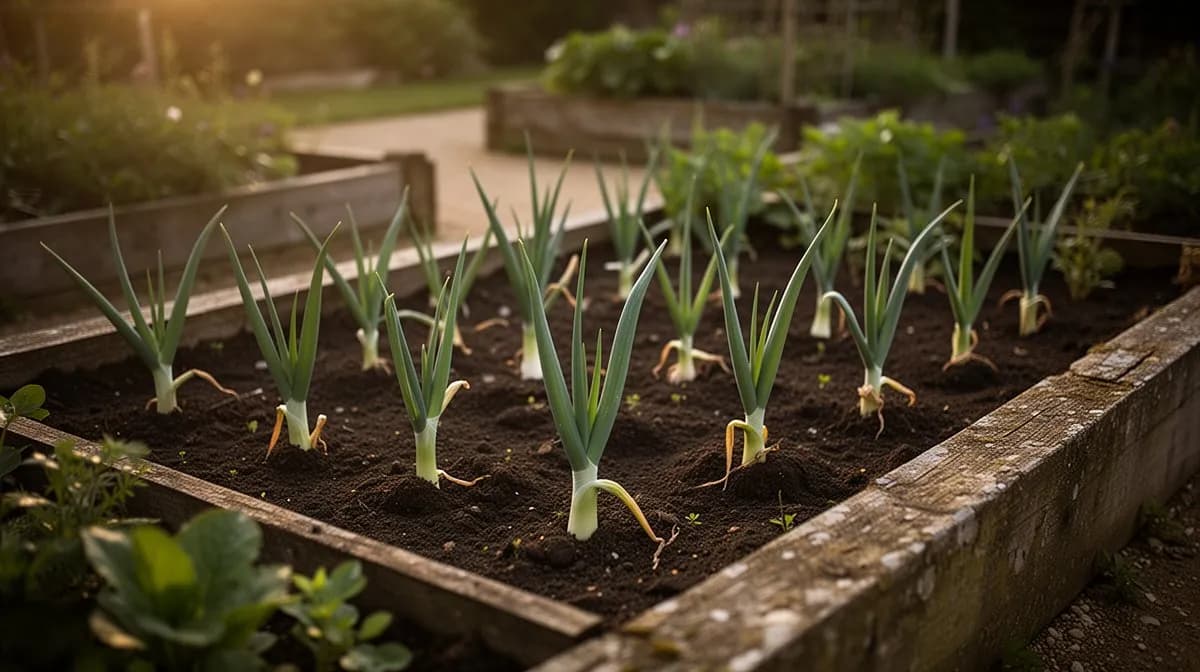
450 plantas caben en un bancal de 120 × 240 cm
Cada Puerro Bebé pide 8 cm de margen. El planificador guarda ese marco por ti — cada planta, cada bancal.
Los mejores vecinos de Puerro Bebé
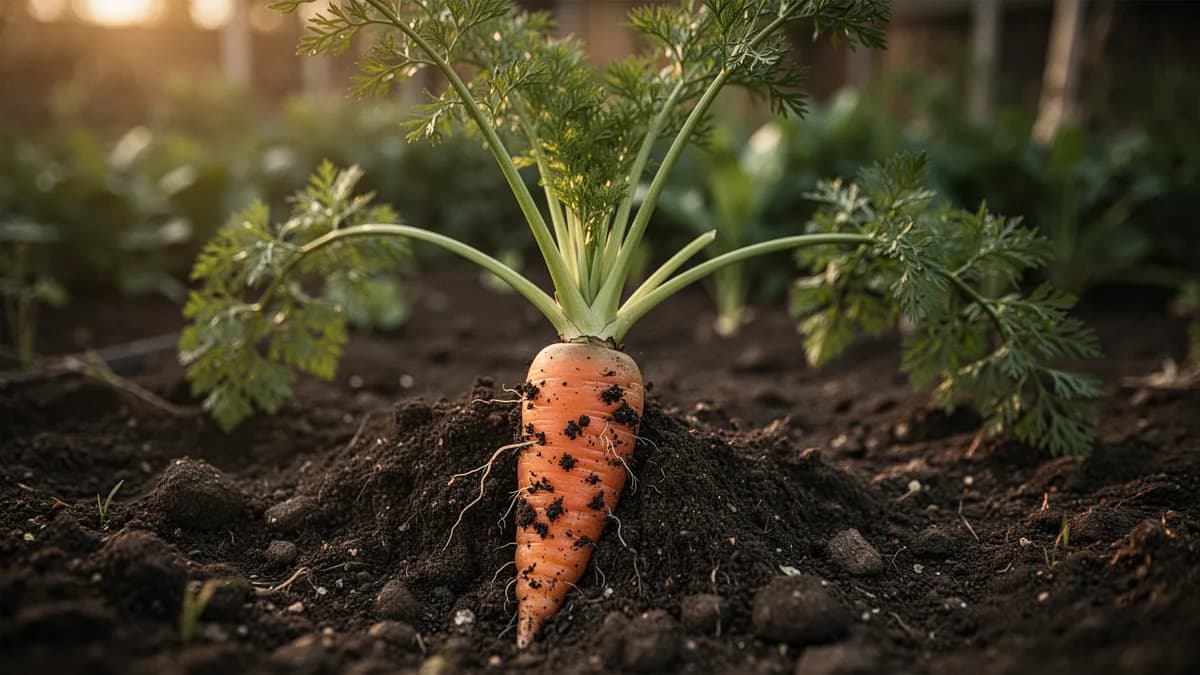
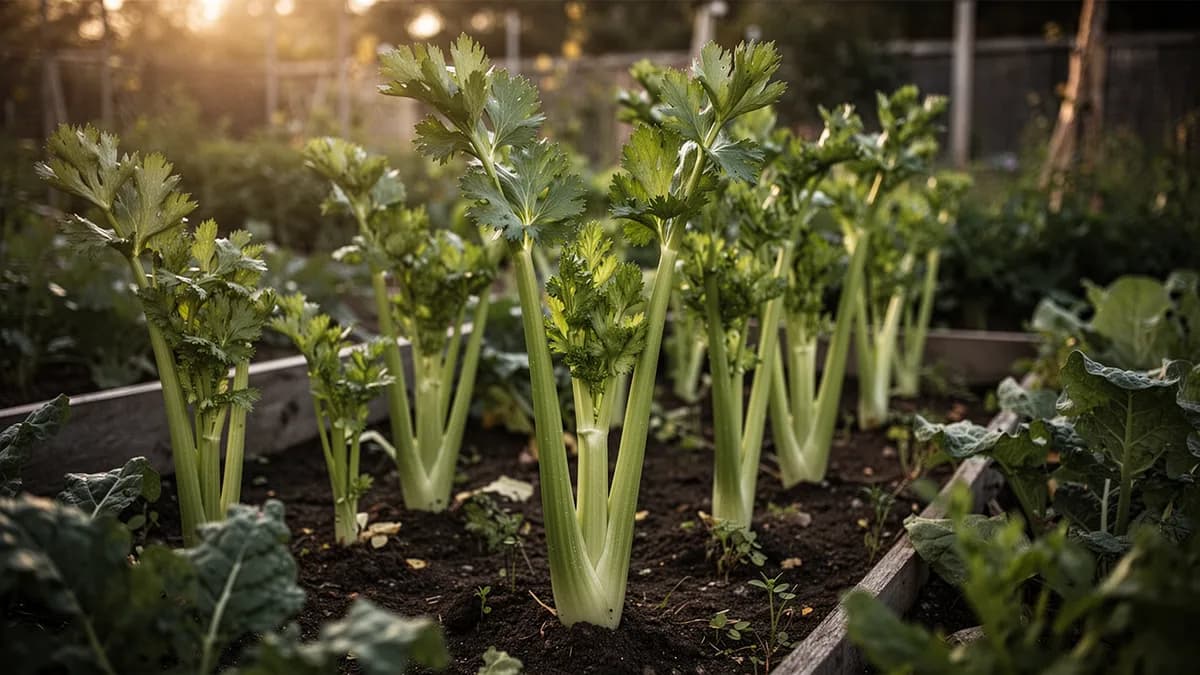
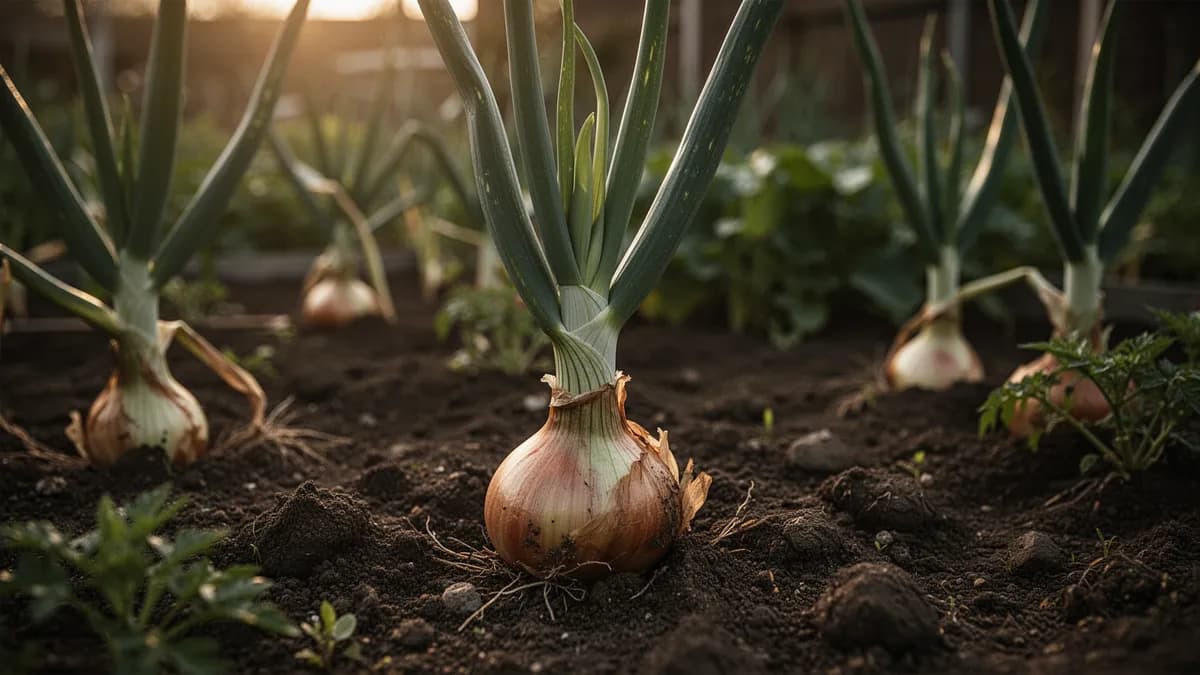
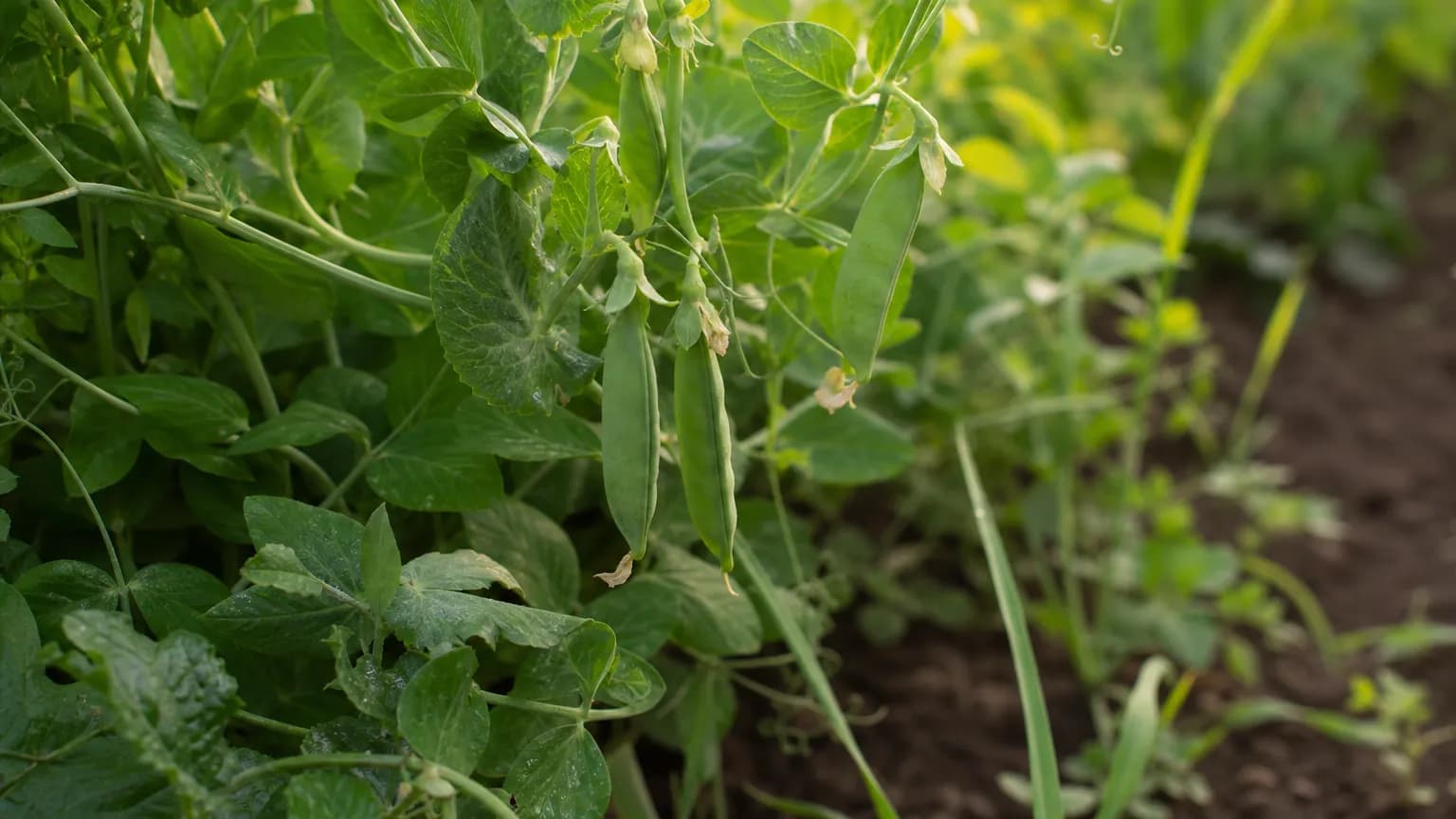
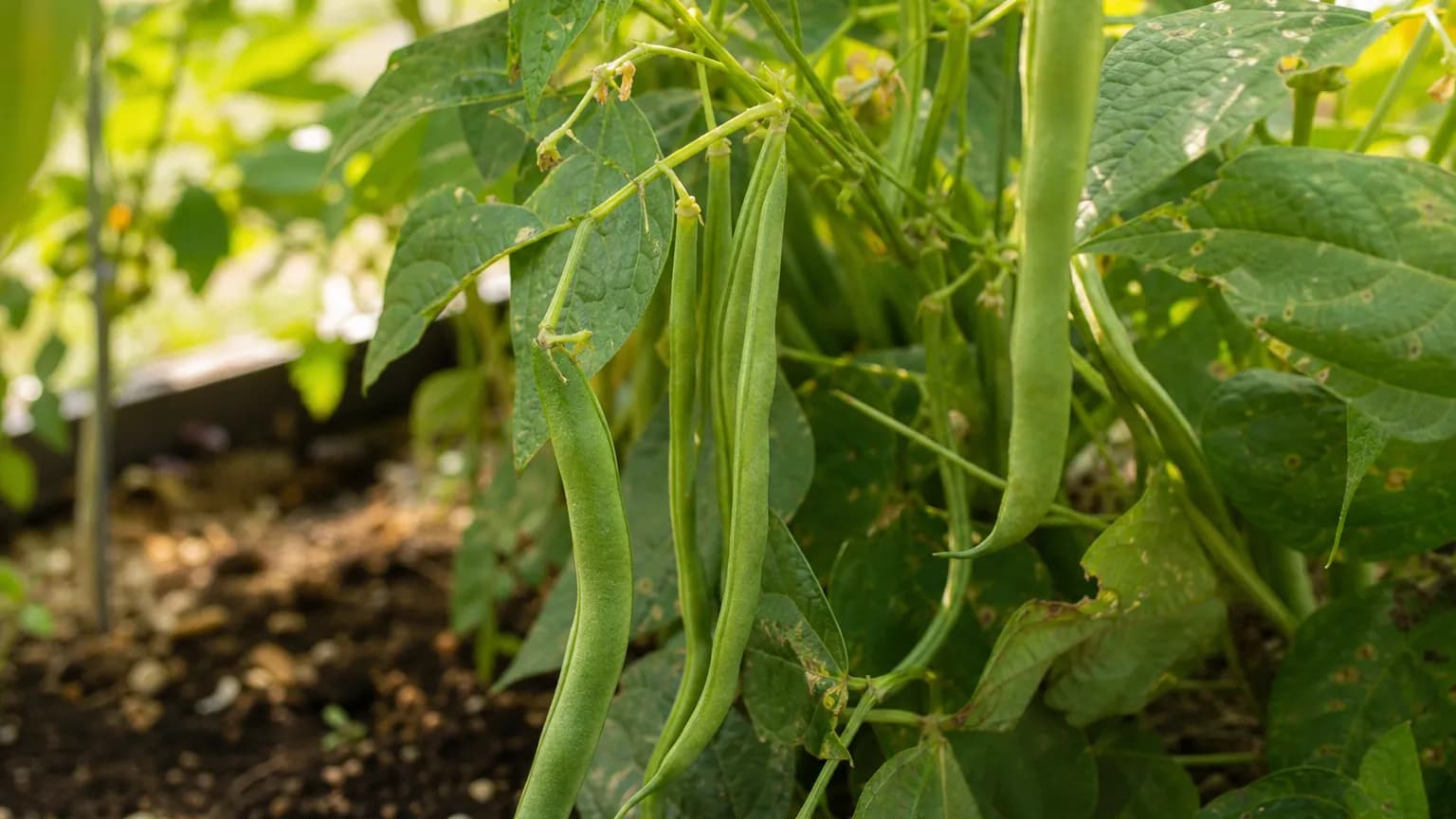
Los puerros bebé se benefician de la compañía de zanahorias, ya que su aroma mutuo repele las plagas respectivas (la mosca de la zanahoria y la mosca del puerro). También crecen bien junto a apio, fresas y lechugas. Evita plantarlos cerca de leguminosas como guisantes y habas.
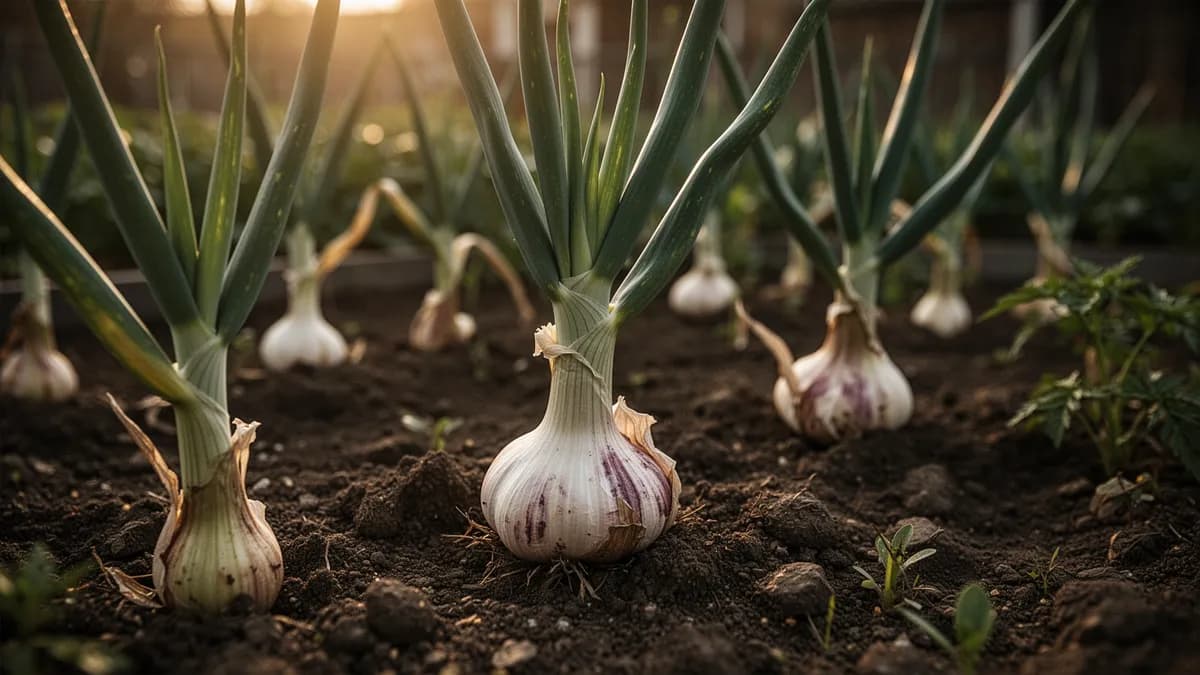
Zanahoria va a su lado. Guisantes no.
Saber de huerto de siempre, cotejado con la tabla real de Puerro Bebé — prueba cualquier planta que cultives.
Prueba Puerro Bebé en un bancal, aquí mismo
Un bancal real del planificador con Puerro Bebé ya plantado. Toca una planta compañera para colocarla y mira cómo responde la comprobación de vecinos: verde para buenos vecinos, rojo si hay conflicto.


Guías de cultivo relacionadas
Abónalo bien
Los puerros bebé prefieren suelos profundos, fértiles y bien drenados con alto contenido de materia orgánica y pH entre 6,0 y 7,0. Incorpora compost maduro antes de la plantación. Aplica fertilizante equilibrado rico en nitrógeno cada 3-4 semanas para estimular el crecimiento rápido del follaje y tallo.
Temperatura ideal
Compatibilidad de zonas de rusticidad
De la semilla a la cosecha, etapa por etapa
Siembra
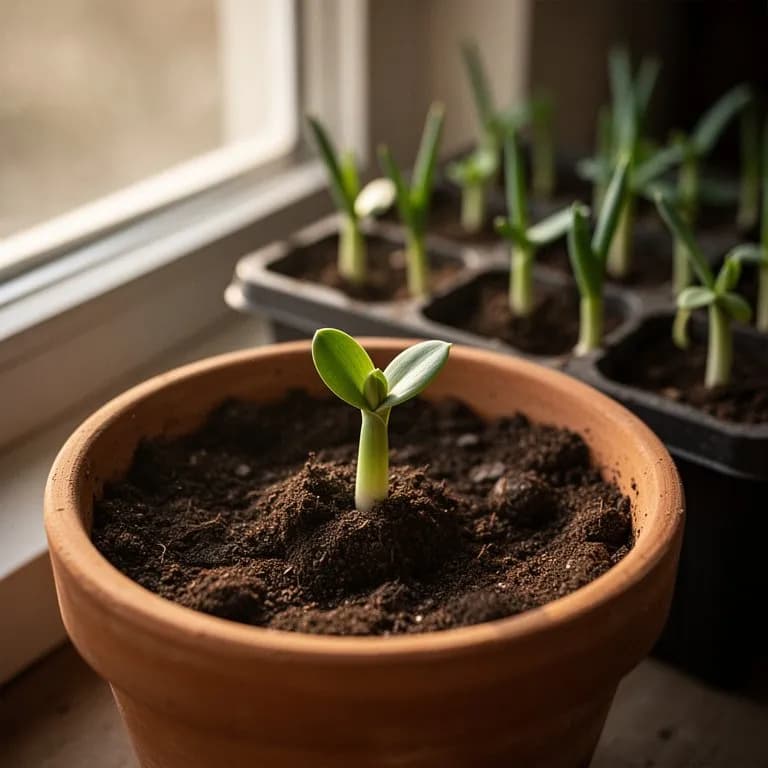
Las semillas de puerro bebé son diminutas y germinan lentamente, produciendo brotes finos, parecidos a la hierba, que aparecen en grupos. Necesitan humedad constante y temperaturas frescas de 10-20 °C para una buena germinación. Los primeros brotes son muy finos y delicados, apenas distinguibles de la hierba.
Desarrollo de plántulas
Las plántulas pasan de brotes finos y filiformes a pequeños grupos de hojas planas y acintadas. La base empieza a engrosarse ligeramente, lo que se convertirá en el característico tallo blanco. El crecimiento es constante pero lento: el puerro no es un cultivo rápido en ninguna etapa.
Trasplante
Las plántulas se trasplantan cuando tienen grosor de lápiz, en agujeros individuales hechos con una plantadora. La técnica de plantación profunda es propia del puerro: colocar las plántulas en agujeros de 10-15 cm de profundidad, llenos de agua en lugar de tierra, permite que el tallo se blanquee de forma natural al crecer.
Desarrollo del tallo
El tallo blanco se engrosa de forma constante mientras las hojas verdes planas se abren en abanico. El puerro bebé desarrolla su perfil característico, esbelto y elegante, con un tallo de aproximadamente 1-2 cm de diámetro. Las capas interiores permanecen excepcionalmente tiernas en comparación con los puerros de tamaño normal.
Ventana de cosecha
El puerro bebé alcanza su tamaño ideal de cosecha con 1-2 cm de diámetro del tallo y 20-30 cm de longitud total. A diferencia de los puerros de tamaño normal, que pueden permanecer meses en la tierra, los puerros bebé deben cosecharse pronto para conservar su textura delicada y su sabor suave y dulce antes de que se vuelvan bastos.
Siembra las semillas en capas finas en bandejas o alvéolos con sustrato fino para semilleros. Cúbrelas con solo 1 cm de sustrato y mantén una humedad uniforme. Un propagador a 15 °C da los resultados más fiables. No dejes que la superficie se seque.
Cuidar Puerro Bebé mes a mes
Qué hacer cada mes para tu Puerro Bebé
Octubre
Mes actualHarvest remaining baby leeks before hard frosts in colder zones. Baby leeks tolerate light frost but lack the cold hardiness of full-size varieties. In mild zones 8-10, baby leeks sown in summer will continue growing through autumn.
Ten claro qué hacer en tu huerto, cada mes
Un correo al empezar cada mes: qué sembrar, plantar y hacer ahora mismo — para tu Puerro Bebé y todo lo que crece alrededor. Más un breve curso inicial para esquivar los errores clásicos.
- Qué hacer ahora mismo
- Ajustado a tu temporada
- Curso inicial incluido
Cosechar Puerro Bebé
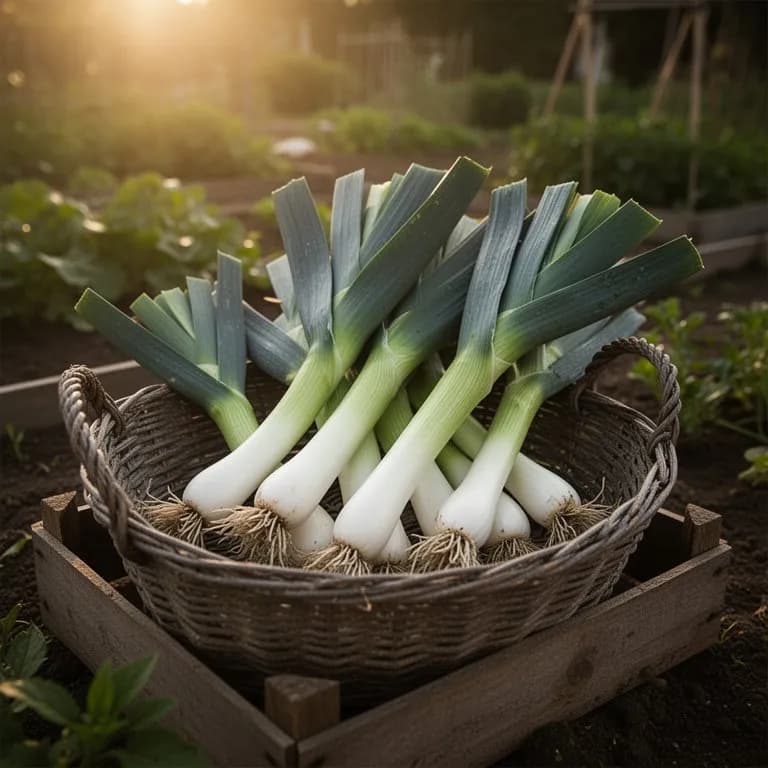
Cosecha los puerros bebé cuando los tallos alcanzan 1-2 cm de diámetro, generalmente entre 70 y 90 días después del trasplante. Afloja la tierra alrededor con una horquilla antes de tirar suavemente para extraer la planta completa sin romper las raíces. Cosecha preferiblemente por la mañana para máxima frescura.
se supone que plantas al comenzar el periodo — indica tu fecha real
Cuando los tallos midan entre 1 y 2 cm de diámetro y 20 a 30 cm de altura, normalmente entre 50 y 60 días después del trasplante.
Almacenamiento y conservación
Conserva los puerros bebé frescos en el refrigerador envueltos en papel de cocina húmedo dentro de una bolsa perforada durante 1-2 semanas. También puedes mantenerlos en posición vertical en un vaso con un poco de agua, como flores. Para conservación prolongada, blanquéalos 2 minutos y congélalos en porciones por hasta 6 meses.
Qué falla — y cómo solucionarlo
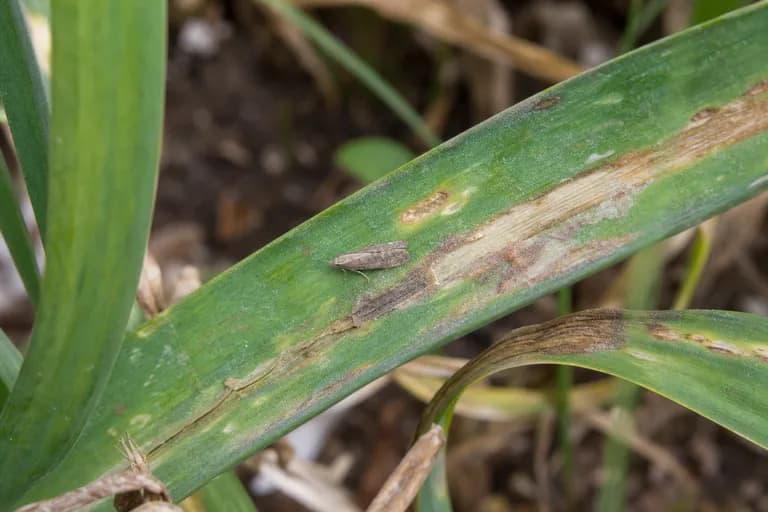
Mosca del puerro (Acrolepiopsis assectella)
PlagaLarvas de color crema que minan el interior de las hojas y tallos, creando galerías visibles como líneas claras. Las hojas afectadas se decoloran y marchitan, pudiendo causar la muerte de plantas jóvenes.

Roya del puerro (Puccinia porri)
EnfermedadPústulas anaranjadas brillantes en las hojas que se tornan marrones oscuras a medida que maduran. Las hojas severamente afectadas se secan desde las puntas hacia la base.
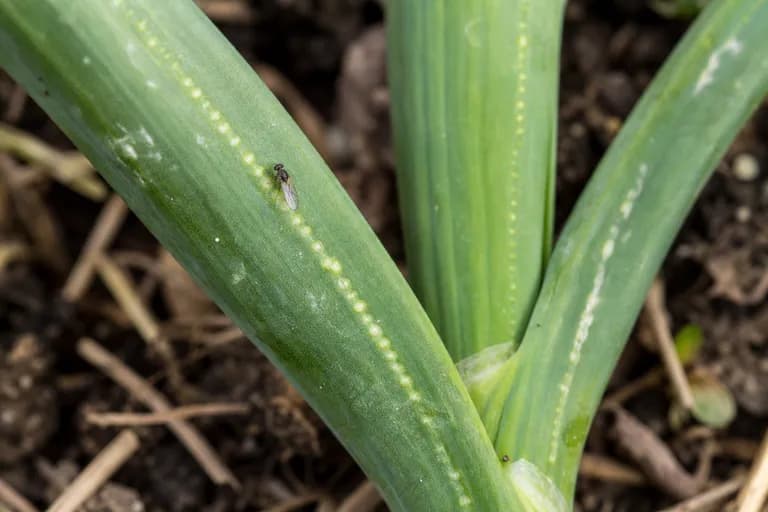
Trips del puerro
PlagaPequeños insectos alargados de color amarillento que rascan la superficie de las hojas, dejando manchas plateadas y decoloración generalizada. En ataques severos, las hojas se retuercen.
Solución de problemas comunes
El principal desafío es conseguir un blanqueo adecuado del tallo, que requiere aporcado progresivo o el uso de tubos de cartón. Sin blanqueo, la parte verde del tallo puede resultar fibrosa. El crecimiento lento en suelos fríos y compactados es otro problema frecuente; asegura buena preparación del suelo antes de plantar.
Consejos de cultivo
- Choose fast-maturing varieties for baby leek production. King Richard, Lancelot, and Jolant are specifically bred for early harvest and develop slender, tender shafts at 90-100 days rather than the 150+ days needed for full-size winter leeks.
- Plant much closer together than full-size leeks. Space baby leeks 10 cm apart in rows 20-25 cm apart — roughly half the distance used for mature leeks. This tighter spacing naturally constrains shaft diameter and produces the slender profile that defines baby leeks.
- Use the dibber method for transplanting. Make holes 10-15 cm deep with a stick, drop one seedling in, and water — never backfill with soil. This technique naturally blanches the shaft as soil gradually fills in, producing a long white portion without the labor of repeated hilling.
- Succession sow every 3-4 weeks from February through July for a continuous harvest from early summer through late autumn. Baby leeks do not hold in the ground as long as mature leeks, so staggered plantings are essential for a steady supply.
- Trim seedling tops to 10-12 cm before transplanting. This sounds counterintuitive but reduces transplant stress, limits water loss through the leaves, and encourages the plant to invest in root development rather than top growth — resulting in sturdier, faster-establishing plants.
- Water consistently and never let the soil dry out. Leeks have surprisingly shallow root systems and are among the first crops to suffer in dry conditions. Drought stress causes tough, fibrous shafts with poor flavor — exactly the opposite of what you want from baby leeks.
- Harvest promptly when shafts reach 1-2 cm diameter. Unlike full-size leeks that improve with age, baby leeks become less tender and more pungent as they grow larger. The window between perfect and past-prime is about 2 weeks, so check regularly.
- Cover with fine mesh netting in areas where leek moth is present. The larvae tunnel into the shaft and cause devastating damage. Allium leaf miner is an increasing problem in many regions — prevention with physical barriers is far more effective than any treatment after infestation.
Cultiva tu mejor Puerro Bebé — y todo lo que la rodea.
Empieza un plan gratis hoy. Diseña tus bancales, coloca tu Puerro Bebé y deja que PlotMyGarden gestione el momento, el espaciado, las asociaciones y los recordatorios de la semilla a la cesta.
Elige tu Puerro Bebé
King Richard
La variedad preferida para puerros bebé por su tallo largo, delgado y de crecimiento rápido. Sabor suave y dulce con poca necesidad de blanqueo. 75-80 días.
Lancelot
Variedad precoz que produce tallos uniformes y elegantes ideales para cosecha temprana. Excelente para siembras densas como puerro bebé. 70-75 días.
Lincoln
Variedad de tallo largo y fino con buena resistencia a la roya. Sabor delicado y textura sedosa perfecta para platos gourmet. 75-85 días.
Jolant
Variedad semiprecoz con excelente uniformidad y color verde azulado atractivo. Tolerante al frío para cosechas de otoño tardío. 80-90 días.
Baby leeks sell for $4-8 per bunch (typically 6-8 leeks) at grocery stores and farmers markets, making them one of the most expensive everyday vegetables per kilogram. A single $3 packet of seeds produces 200-400 baby leeks — enough for an entire season of harvests. Growing your own baby leeks can save $50-120 per season compared to store prices, and home-grown leeks harvested minutes before cooking have a sweetness and tenderness that commercial baby leeks, often days old, cannot match.
Recetas rápidas
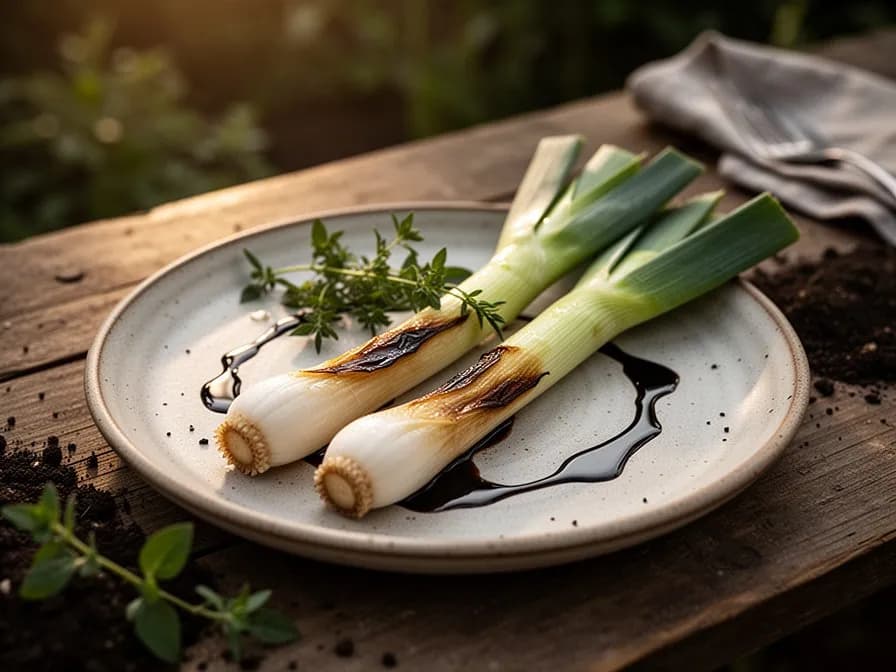
Grilled Baby Leeks with Romesco
25 minInspired by the Catalan calcotada tradition — baby leeks are charred whole on a hot grill until the outer layer blackens and the interior turns silky sweet. Served with smoky romesco sauce for dipping, this is one of the most celebrated spring dishes in Mediterranean cuisine.
9 ingredientes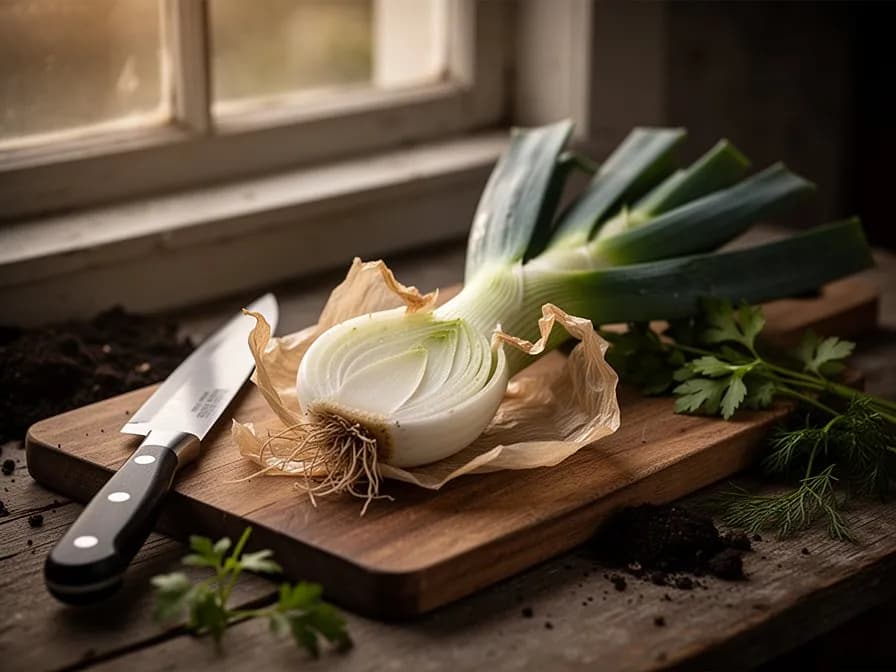
Baby Leeks Vinaigrette
20 minA timeless French bistro dish — baby leeks are gently poached until just tender, then dressed while still warm in a sharp Dijon mustard vinaigrette. Simple, elegant, and a perfect way to showcase the delicate sweetness of freshly harvested baby leeks.
8 ingredientesSilky Vichyssoise
40 minThe classic chilled French potato and leek soup — baby leeks produce an exceptionally refined, silky version with a sweeter, more delicate flavor than mature leeks. Served cold with a swirl of cream and snipped chives, this is summer elegance in a bowl.
7 ingredientesUsos culinarios
Los puerros bebé se utilizan enteros o cortados por la mitad longitudinalmente como guarnición elegante, asados al horno con aceite de oliva o a la parrilla hasta caramelizar. Son ingredientes estrella en sopas cremosas como la vichyssoise, risottos y quiches. Su sabor delicado combina perfectamente con mantequilla, nata, queso de cabra y hierbas como tomillo y estragón.
Qué contiene
Beneficios para la salud
- Rich in prebiotic inulin fiber that selectively feeds beneficial Bifidobacteria and Lactobacillus in the gut, supporting digestive health and nutrient absorption more effectively than many other vegetables.
- Contains organosulfur compounds (including allicin precursors) shared with garlic and onions, which research links to reduced blood pressure, improved cholesterol profiles, and cardiovascular protection.
- Excellent source of vitamin K, providing about 50% of the daily value per 100g — essential for proper blood clotting, bone mineralization, and calcium metabolism.
- Provides significant vitamin A as beta-carotene (33% DV per 100g), supporting healthy vision, immune response, and skin cell turnover.
- Contains folate (vitamin B9), critical for DNA synthesis and red blood cell formation, making leeks particularly important during pregnancy and for cardiovascular health.
- Rich in kaempferol and other polyphenol antioxidants that studies associate with reduced chronic inflammation and lower risk of heart disease and certain cancers.
De dónde viene Puerro Bebé
The leek (Allium ampeloprasum var. porrum) descends from the wild leek native to the Mediterranean basin and western Asia, where it has been cultivated for over 4,000 years. Ancient Egyptians grew leeks as a staple crop — leek images appear in tomb paintings, and the Pharaoh's workers building the pyramids were reportedly fed leeks, onions, and garlic as part of their daily rations. The Romans spread leek cultivation throughout their empire, and Emperor Nero was famously devoted to them.
Baby leeks as a distinct culinary category gained prominence through two traditions. In France, young tender leeks have been a foundation of bistro cooking for centuries — the classic poireaux vinaigrette (leeks in vinaigrette) specifically calls for slender young leeks rather than thick mature ones. In Catalonia, the calcot (a type of young leek or green onion) became the centerpiece of an entire festival culture, with calcotada feasts held across the region every spring since at least the late 19th century.
Modern commercial baby leek production expanded significantly in the 1980s and 1990s as chefs and consumers increasingly sought miniature vegetables for their visual appeal and superior tenderness. Today, baby leeks are grown commercially in France, the Netherlands, Belgium, the UK, and parts of California. They remain one of the most prized crops among restaurant chefs and home gardeners alike, valued for their versatility, elegance, and a delicate sweetness that full-size leeks cannot match.
Puerro Bebé: ¿sabías que?
Datos fascinantes sobre Puerro Bebé
Baby leeks are simply regular leek varieties harvested young, typically at 60-90 days rather than the 120-150 days needed for full-size leeks. This early harvest yields a shaft that is sweeter, more tender, and entirely edible from root to tip — including the green tops that would be tough on a mature leek.
Puerro Bebé: preguntas frecuentes
¿Cuándo debo plantar Puerro Bebé?
¿Cuáles son buenas plantas acompañantes para Puerro Bebé?
¿En qué zonas de rusticidad puede crecer Puerro Bebé?
¿Cuánto sol necesita Puerro Bebé?
¿A qué distancia debo espaciar Puerro Bebé?
¿Qué plagas y enfermedades afectan a Puerro Bebé?
¿Cómo almaceno Puerro Bebé después de la cosecha?
¿Cuáles son las mejores variedades de Puerro Bebé para cultivar?
¿Qué suelo necesita Puerro Bebé?
What is the difference between baby leeks and spring onions?
Can I grow baby leeks in containers?
Why are my baby leeks bolting (flowering)?
How do I clean baby leeks — is dirt trapped inside?
Can I eat the green tops of baby leeks?
How long do harvested baby leeks keep?
Acabas de leer la teoría. Ahora cultívala en piloto automático.
Todo lo que hace que Puerro Bebé sea delicado — el momento, el espaciado, las asociaciones, la ventana de cosecha — es justo lo que PlotMyGarden resuelve por ti, para cada planta de tu huerto.
Un plan que conoce tu clima
Indica tu ubicación una vez. Recibe fechas de siembra, abonado y cosecha basadas en tu última helada real y el pronóstico en vivo — sin adivinar con un sobre genérico.
De la sección “Cuándo plantar”Planificador de bancales de arrastrar y soltar
Diseña bancales sobre una cuadrícula. Cada planta encaja con su espaciado correcto y ves toda la temporada antes de gastar un céntimo en semillas.
De la sección “Cultivo”Conflictos de asociación, detectados a tiempo
Más de 200 buenas y malas combinaciones comprobadas en vivo mientras plantas — para que un error que arruine la temporada nunca llegue a la tierra.
De la sección “Asociaciones”Recordatorios que sí vas a seguir
“Riega las judías.” “Recoge hoy antes de que se pase.” Oportunos, concretos y ligados a las plantas que de verdad cultivas.
De la sección “Cosecha”Escalonado, programado
¿Quieres cosechar seis semanas en vez de seis días? Reparte tus siembras automáticamente y te avisa cuando toca el siguiente lote.
De la sección “Cuándo plantar”Un registro que se vuelve más listo
Cada cosecha que registras le enseña tu huerto. El plan del año que viene parte de lo que de verdad funcionó en tu suelo, no en un manual.
De la sección “Resumen”Planta estos junto a Puerro Bebé
Más Aliáceas
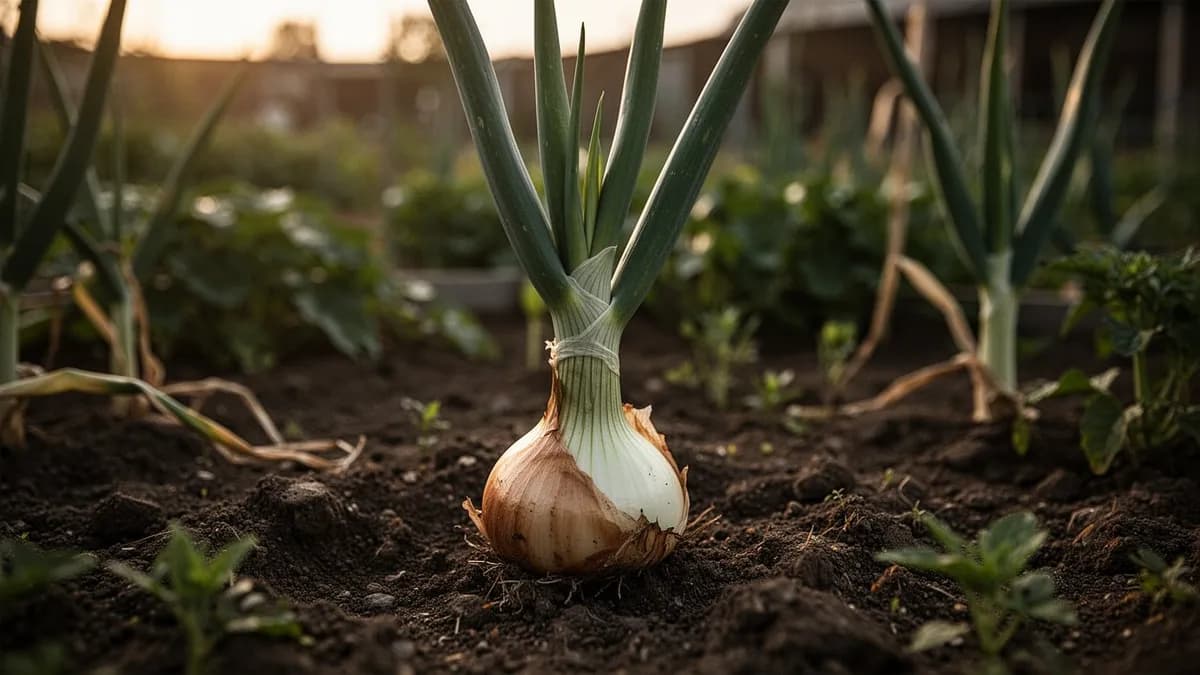
Mantén Puerro Bebé lejos de estos
Cultiva tu mejor Puerro Bebé — y todo lo que la rodea.
Empieza un plan gratis hoy. Diseña tus bancales, coloca tu Puerro Bebé y deja que PlotMyGarden gestione el momento, el espaciado, las asociaciones y los recordatorios de la semilla a la cesta.