Planta de Hielo
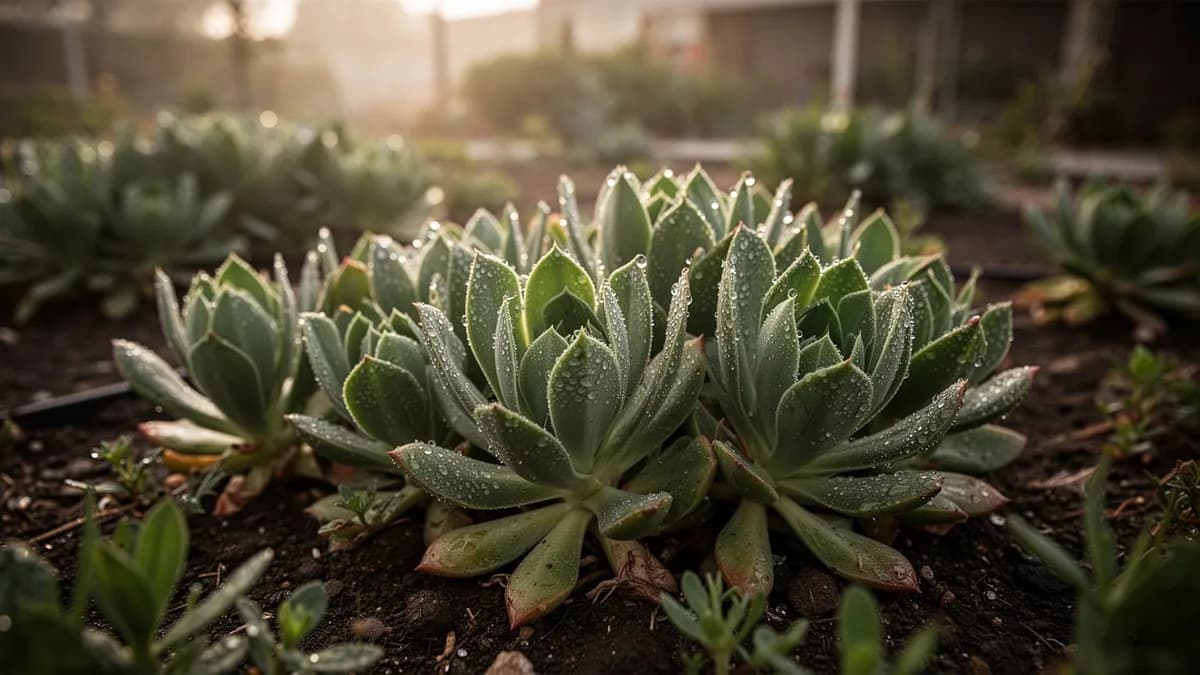
Planta suculenta (Mesembryanthemum crystallinum) con hojas carnosas cubiertas de vesículas cristalinas que brillan como gotas de hielo al sol.





En esta páginaResumen
Conoce Planta de Hielo
Planta suculenta (Mesembryanthemum crystallinum) con hojas carnosas cubiertas de vesículas cristalinas que brillan como gotas de hielo al sol. Su sabor ligeramente salado y refrescante la convierte en un ingrediente gourmet muy apreciado en la alta cocina, aportando una textura crujiente única a ensaladas y platos creativos.
Cuándo plantar Planta de Hielo
Las semillas son muy pequeñas y se siembran en superficie sin cubrir, presionándolas ligeramente sobre el sustrato húmedo. Se pueden iniciar en interior 6-8 semanas antes de la última helada en bandejas con sustrato arenoso y bien drenado. La germinación tarda entre 15 y 30 días a temperaturas de 18-22°C, y las plántulas se trasplantan al exterior cuando las temperaturas nocturnas superen los 10°C de forma estable.
Tu año de Planta de Hielo
Ajustado a Zona 7 · temporada típica · la helada se va hacia el 2 abr y vuelve hacia el 1 nov
Planta Planta de Hielo Abr – Jun y cosecha Jun – Sep. Consulta los métodos de plantación y elige tu clima para adaptar los periodos.
Cómo cultivar Planta de Hielo
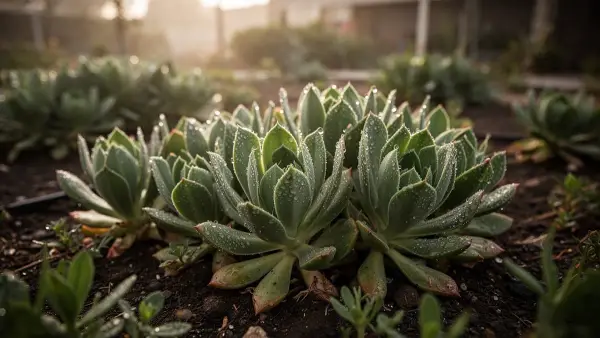
La planta de hielo es originaria de Sudáfrica y prospera en climas cálidos y secos. Se cultiva mejor en macetas o bancales elevados con excelente drenaje, ya que no tolera el encharcamiento bajo ninguna circunstancia. La siembra se realiza en primavera cuando las temperaturas nocturnas superan los 10°C, espaciando las plantas entre 25 y 30 cm.
Requiere exposición a pleno sol durante al menos 6 horas diarias para desarrollar sus características vesículas cristalinas. El riego debe ser muy moderado, dejando que el sustrato se seque completamente entre riegos, ya que el exceso de humedad es la principal causa de muerte de esta planta. Tolera suelos pobres e incluso ligeramente salinos, lo que la hace ideal para jardines costeros.
Durante el crecimiento activo, se puede aplicar un fertilizante líquido diluido a la mitad cada 3-4 semanas. Las hojas se cosechan continuamente cortando los brotes tiernos, lo que estimula la ramificación y produce una planta más densa y productiva. En climas con heladas, se cultiva como anual, aunque en zonas libres de heladas puede comportarse como perenne.
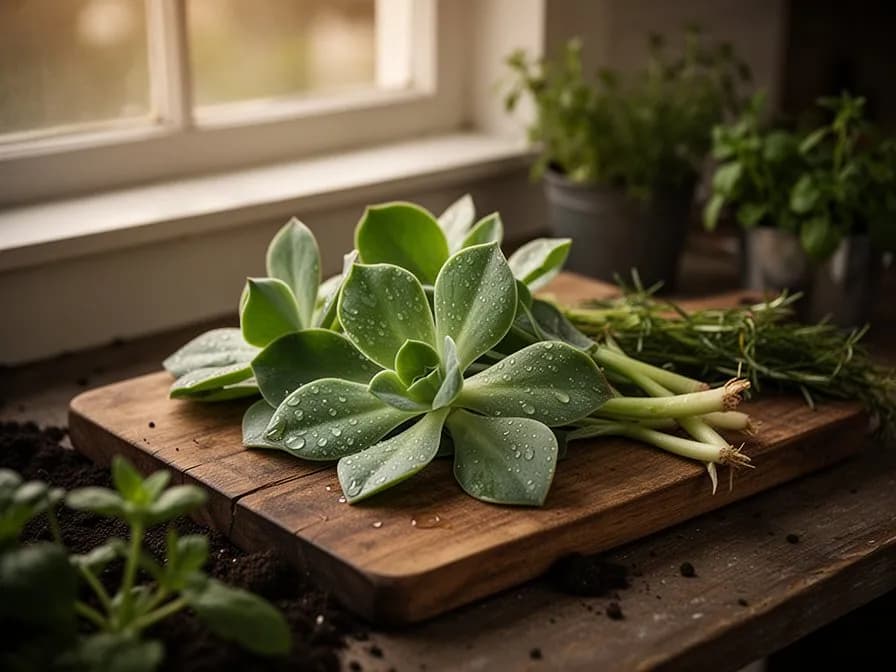
32 plantas caben en un bancal de 120 × 240 cm
Cada Planta de Hielo pide 30 cm de margen. El planificador guarda ese marco por ti — cada planta, cada bancal.
Los mejores vecinos de Planta de Hielo
Se asocia bien con otras plantas mediterráneas y tolerantes a la sequía como el romero, la lavanda y el tomillo. Evitar plantar junto a especies que requieran riego frecuente, ya que las condiciones de cultivo son incompatibles y podrían provocar encharcamiento.
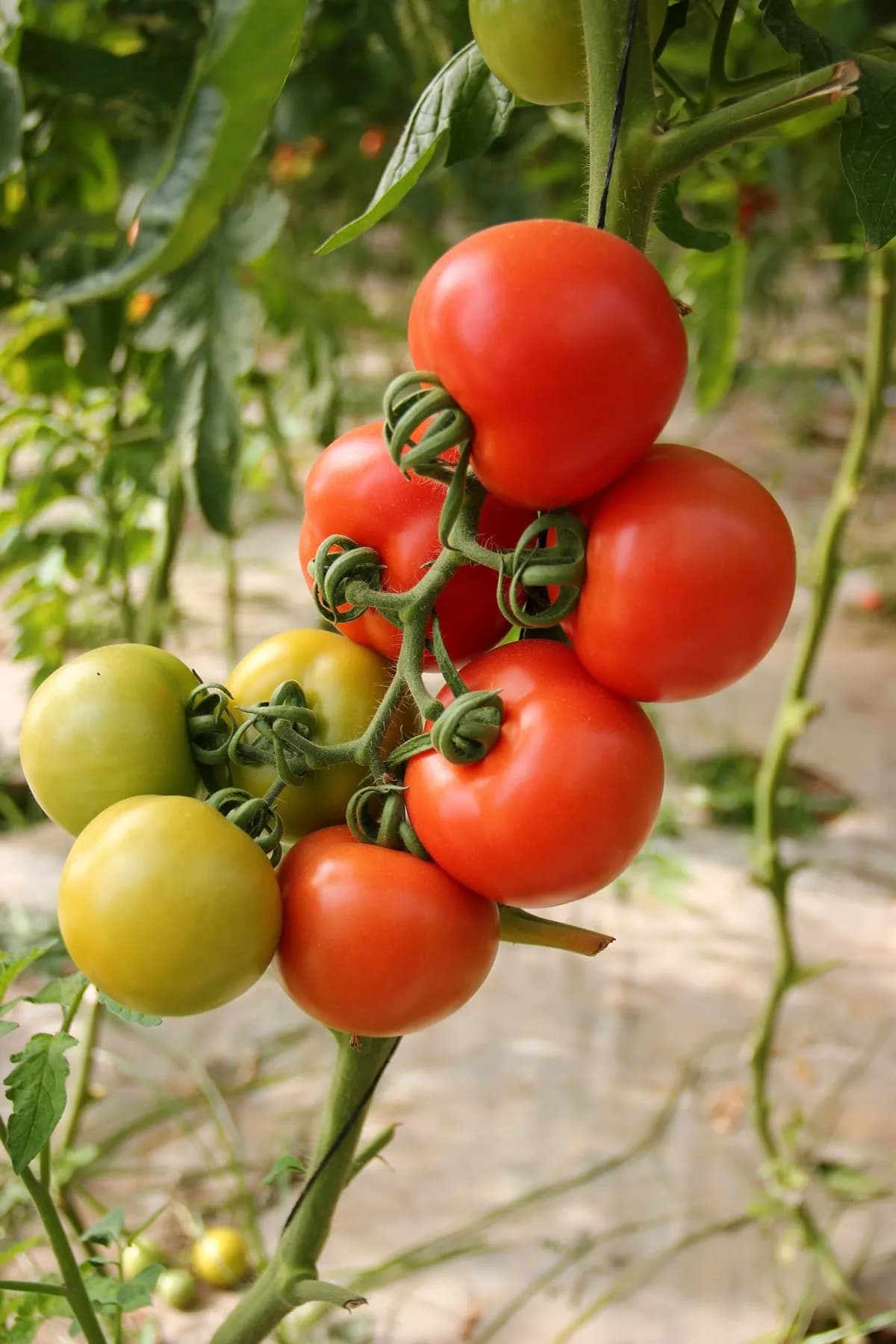
Tomate va a su lado.
Saber de huerto de siempre, cotejado con la tabla real de Planta de Hielo — prueba cualquier planta que cultives.
Prueba Planta de Hielo en un bancal, aquí mismo
Un bancal real del planificador con Planta de Hielo ya plantado. Toca una planta compañera para colocarla y mira cómo responde la comprobación de vecinos: verde para buenos vecinos, rojo si hay conflicto.


Guías de cultivo relacionadas
Abónalo bien
Prefiere suelos pobres, arenosos y extremadamente bien drenados con pH entre 6,0 y 7,5. Una mezcla ideal consiste en partes iguales de tierra de jardín, arena gruesa y perlita. No requiere fertilización abundante; un abono líquido equilibrado diluido a la mitad aplicado mensualmente es suficiente durante la temporada de crecimiento.
Temperatura ideal
Compatibilidad de zonas de rusticidad
De la semilla a la cosecha, etapa por etapa
Germinación de semillas
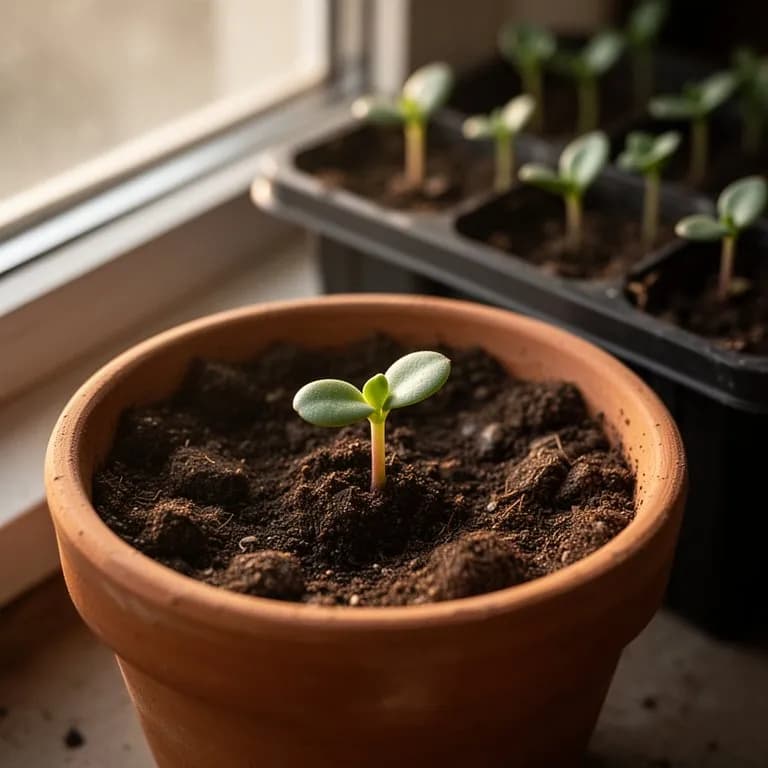
Las semillas de ice plant son extremadamente pequeñas y requieren luz para germinar; deben sembrarse en la superficie y presionarse apenas sobre un sustrato húmedo y arenoso. La germinación es lenta e irregular y tarda 15–21 días a temperaturas del suelo de 18–24 °C. Las plántulas diminutas aparecen primero como pares minúsculos de cotiledones suculentos.
Desarrollo de plántulas
Aparecen las primeras hojas verdaderas con la textura carnosa y suculenta característica. Las diminutas células vesiculares que dan al ice plant su aspecto cristalino comienzan a desarrollarse en hojas y tallos. El crecimiento es lento al principio mientras la planta establece su sistema radicular en un suelo bien drenado.
Expansión vegetativa
Las plantas comienzan su hábito característico de extenderse y colgar, alargando los tallos hacia fuera para formar una alfombra densa. Las hojas suculentas quedan completamente cubiertas por células vesiculares brillantes llenas de agua y sal. Durante esta fase, las plantas pueden extenderse 30–60 cm en todas direcciones.
Floración
Aparecen en abundancia flores vistosas tipo margarita, que se abren en tonos brillantes de magenta, rosa, púrpura y blanco. Cada flor tiene numerosos pétalos estrechos que irradian desde un disco central y se abre por completo con luz solar directa, cerrándose por la noche y en días nublados. Las flores atraen a las abejas y a otros insectos beneficiosos.
Ventana de cosecha
Las hojas comestibles y las puntas tiernas de los tallos pueden cosecharse de forma continua una vez que las plantas están bien establecidas. La ventana de cosecha se superpone con las etapas de crecimiento vegetativo y floración. Las hojas jóvenes cosechadas por la mañana tienen la textura más crujiente y el aspecto cristalino más marcado.
Madurez e invernada
En climas sin heladas, el ice plant es una cobertura vegetal perenne que sigue creciendo todo el año y se ralentiza en invierno. En zonas más frías, se comporta como una anual y muere con la primera helada fuerte. Las plantas establecidas se vuelven cada vez más tolerantes a la sequía y pueden naturalizarse en climas mediterráneos y costeros.
No cubras las semillas con tierra; necesitan luz para germinar. Pulveriza suavemente para mantener la superficie húmeda sin arrastrar las semillas. Usa una bandeja de siembra con cúpula de humedad para conservar la humedad y el calor constantes.
Cuidar Planta de Hielo mes a mes
Qué hacer cada mes para tu Planta de Hielo
Octubre
Mes actualIn zones 8 and below, harvest remaining leaves before frost kills the plants. Bring potted plants or rooted cuttings indoors to a bright, cool location for winter. In mild zones, ice plant persists as a perennial and needs only light cleanup of dead growth.
Ten claro qué hacer en tu huerto, cada mes
Un correo al empezar cada mes: qué sembrar, plantar y hacer ahora mismo — para tu Planta de Hielo y todo lo que crece alrededor. Más un breve curso inicial para esquivar los errores clásicos.
- Qué hacer ahora mismo
- Ajustado a tu temporada
- Curso inicial incluido
Cosechar Planta de Hielo
La cosecha comienza entre 60 y 80 días después de la siembra, cuando los tallos y hojas han alcanzado un tamaño adecuado. Se cortan los brotes tiernos y las hojas jóvenes con tijeras limpias, dejando siempre al menos un tercio de la planta para que se regenere. La cosecha regular estimula el crecimiento de nuevos brotes laterales y prolonga la temporada productiva durante todo el verano.
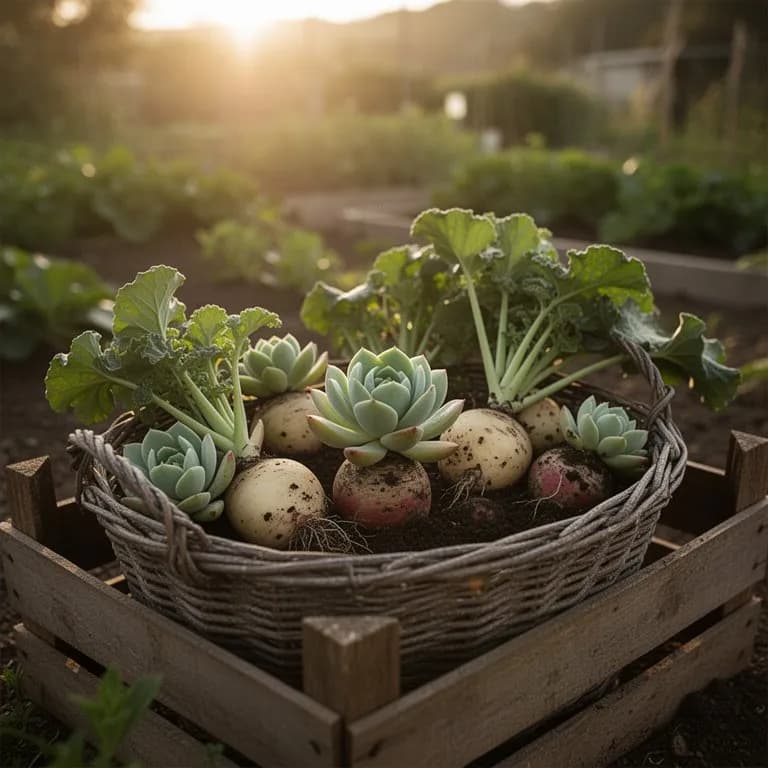
se supone que plantas al comenzar el periodo — indica tu fecha real
Empieza a cosechar cuando las plantas estén bien establecidas y crezcan con vigor, unos 60 a 75 días después de la siembra.
Almacenamiento y conservación
Las hojas frescas se conservan en el refrigerador envueltas en papel húmedo dentro de una bolsa perforada durante 3-5 días. No se recomienda congelar ni secar, ya que pierde sus características vesículas cristalinas y su textura crujiente que son su principal atractivo culinario.
Qué falla — y cómo solucionarlo
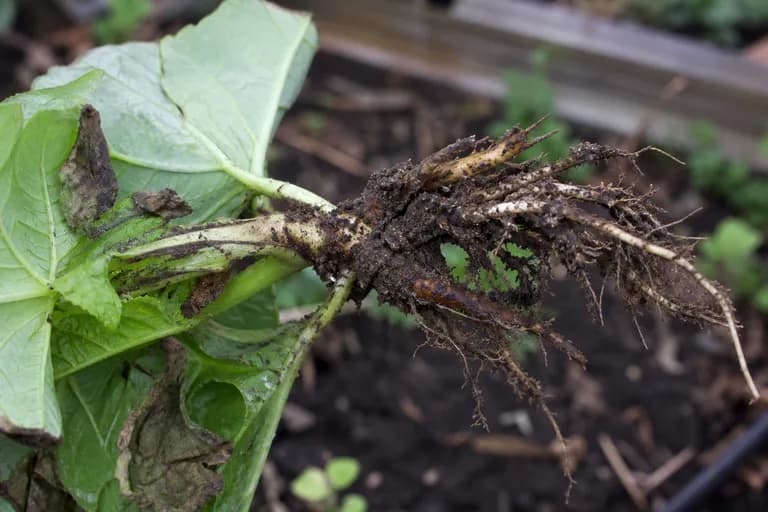
Pudrición de raíz por Pythium
EnfermedadLas raíces se vuelven marrones y blandas, la planta se marchita progresivamente a pesar de tener humedad en el sustrato. Las hojas pierden turgencia y pueden desprenderse fácilmente.
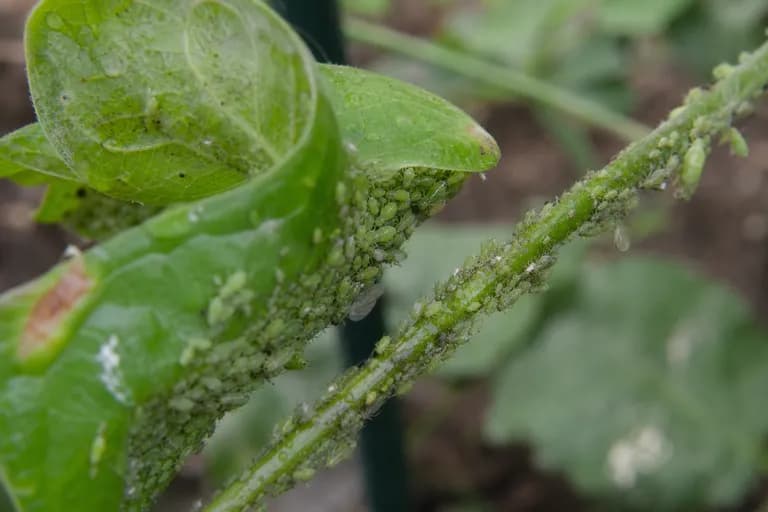
Cochinillas algodonosas
PlagaMasas blancas y cerosas en las axilas de las hojas y tallos. La planta muestra crecimiento debilitado y las hojas pueden volverse amarillentas y pegajosas por la melaza excretada.
Solución de problemas comunes
El problema más frecuente es el exceso de riego, que provoca rápidamente la pudrición de las raíces y la muerte de la planta. También puede sufrir estrés por temperaturas inferiores a 5°C, ya que es muy sensible al frío. En zonas muy húmedas conviene cultivarla bajo cubierta o en invernadero para controlar la humedad ambiental.
Consejos de cultivo
- Drainage is everything. Ice plant absolutely will not tolerate wet feet. Grow in sandy, gritty soil amended with coarse sand or perlite — a mix of 50% potting soil and 50% coarse sand or perlite is ideal. Raised beds and containers with drainage holes are much safer than heavy garden clay.
- Do not fertilize heavily. Ice plant produces its best flavor, crunchiest texture, and most prominent crystalline bladder cells when grown in lean, nutrient-poor soil. Rich soil and heavy feeding produce soft, bland growth with reduced crystal formation — the opposite of what makes this plant special.
- Water sparingly once established. Ice plant is a succulent adapted to drought. Overwatering causes root rot, the number one killer of ice plant in home gardens. Let soil dry completely between waterings and never leave pots sitting in saucers of water.
- Full sun is essential for compact, flavorful growth and prolific flowering. A minimum of 6-8 hours of direct sunlight daily produces the best plants. In shade, ice plant becomes leggy, floppy, and loses its characteristic crystalline sparkle.
- Propagation from stem cuttings is the fastest and most reliable method. Snip 8-10 cm stem sections, let the cut end callus for 24-48 hours, then insert into barely moist sand or perlite. Roots form in 2-3 weeks without any rooting hormone needed.
- Harvest in the morning for the plumpest, crunchiest leaves. The bladder cells are fully hydrated after cool overnight temperatures, giving leaves their maximum crystalline appearance and crispest texture. By afternoon on hot days, leaves may appear slightly deflated.
- In cooler climates (zones 7-8), grow ice plant as a warm-season annual or in containers that can be moved indoors before frost. A single pot on a sunny patio produces enough leaves for regular salad garnishes all summer long.
- Watch for mealybugs hiding in leaf axils and stem joints — they are the most common pest on ice plant. A cotton swab dipped in rubbing alcohol applied directly to mealybugs is the most effective organic treatment for small infestations.
Cultiva tu mejor Planta de Hielo — y todo lo que la rodea.
Empieza un plan gratis hoy. Diseña tus bancales, coloca tu Planta de Hielo y deja que PlotMyGarden gestione el momento, el espaciado, las asociaciones y los recordatorios de la semilla a la cesta.
Elige tu Planta de Hielo
Mesembryanthemum crystallinum
La especie tipo, con hojas ovaladas cubiertas de abundantes vesículas cristalinas. Alcanza 15-20 cm de altura y se extiende hasta 60 cm. Madura en 60-70 días.
Livingstone Daisy Mix
Variedad ornamental y comestible con flores en tonos brillantes de rosa, naranja y amarillo. Sus hojas son igualmente comestibles y decorativas para ensaladas. Madura en 70-80 días.
New Zealand Spinach (Tetragonia)
Especie emparentada (Tetragonia tetragonioides) con hojas triangulares suculentas y sabor similar a la espinaca. Muy tolerante al calor y excelente como sustituto veraniego de la espinaca. Madura en 55-70 días.
Ice plant is a premium specialty green that sells for $15-30 per pound at farmers markets and specialty grocers when available at all, and it is often impossible to find in regular supermarkets. A single packet of seeds ($3-5) can produce dozens of plants, each yielding harvests for months. Growing 4-6 plants provides a steady supply of this luxury ingredient worth $50-100+ in retail value per season. Stem cuttings root so easily that once you have one healthy plant, you can propagate unlimited new plants for free — making ice plant one of the best return-on-investment crops for home gardeners interested in gourmet greens.
Recetas rápidas
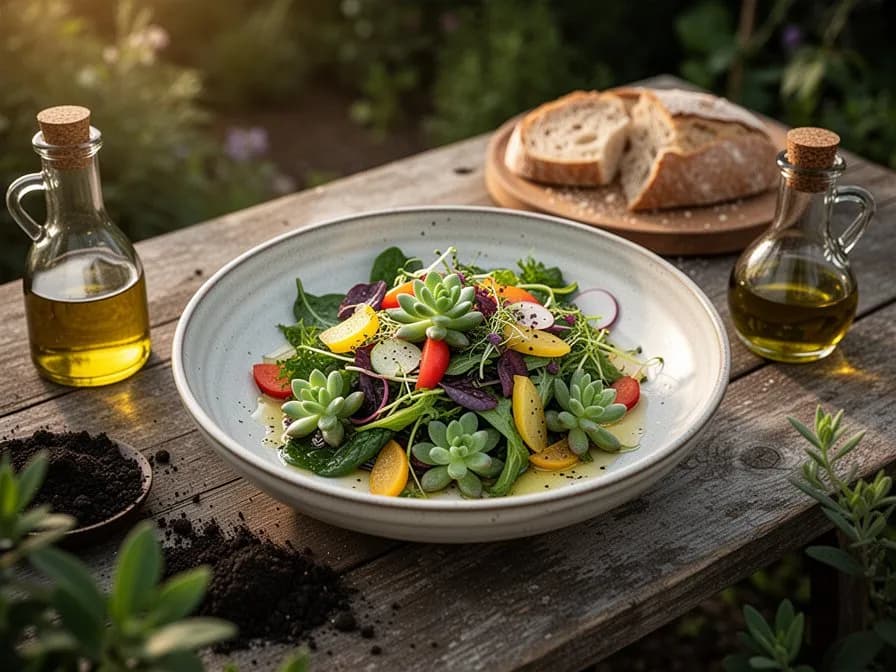
Ice Plant and Citrus Salad
10 minA refreshing raw salad that showcases ice plant's crunchy, naturally briny leaves paired with bright citrus segments. The salt crystals on the leaves eliminate the need for added salt, and the textural contrast between juicy citrus and crisp succulent leaves is remarkable.
7 ingredientesSauteed Ice Plant with Garlic and Sesame
10 minA quick Asian-inspired side dish where ice plant is flash-sauteed to retain its crunch while softening just enough to release its briny juice. The sesame oil and soy sauce complement the plant's natural saltiness beautifully.
7 ingredientesIce Plant Tempura
20 minLightly battered and flash-fried ice plant creates an unexpectedly delicious tempura — the bladder cells burst with a salty pop inside the crispy coating. This is a show-stopping appetizer that introduces ice plant to anyone unfamiliar with this unusual edible succulent.
7 ingredientesUsos culinarios
Las hojas y tallos tiernos se consumen frescos en ensaladas gourmet, aportando una textura crujiente y un sabor ligeramente salado muy singular. También se utilizan como guarnición decorativa en platos de restaurante de alta cocina, y pueden saltearse brevemente con aceite de oliva y ajo para acompañar pescados y mariscos.
Qué contiene
Beneficios para la salud
- Contains pinitol (D-pinitol), a naturally occurring cyclitol compound that has demonstrated anti-diabetic properties in research studies, potentially helping to improve insulin sensitivity and regulate blood sugar levels.
- Naturally rich in electrolytes — the salt-storing bladder cells provide bioavailable sodium, potassium, and magnesium, making ice plant a unique natural food for replenishing minerals lost through exercise and perspiration.
- Provides antioxidant carotenoids including beta-carotene and lutein that support eye health, protect against UV damage, and may reduce the risk of age-related macular degeneration.
- The mucilaginous compounds in ice plant leaves may soothe the digestive tract lining, similar to aloe vera, supporting gut health and easing symptoms of mild gastric irritation.
- Low in calories and high in water content (over 90%), making ice plant an excellent food for hydration and weight management that provides bulk and satiation with minimal caloric impact.
- Traditional medicinal use as a topical skin treatment is supported by the plant's anti-inflammatory and moisturizing properties — the leaf gel has been shown to calm minor burns, insect bites, and skin irritation.
De dónde viene Planta de Hielo
Ice plant (Mesembryanthemum crystallinum) is native to Southern Africa, specifically the coastal regions of South Africa, Namibia, and the western Cape where it grows naturally on sandy flats, rocky outcrops, and disturbed ground near the sea. The plant evolved remarkable adaptations to survive in the harsh, saline, drought-prone coastal environments of the Namibian and South African coastline, including the ability to store water and salt in specialized epidermal bladder cells and to switch its photosynthetic pathway under stress.
The plant spread naturally across the Mediterranean basin, Canary Islands, and parts of the Middle East, likely carried by ocean currents and early maritime traders. By the 18th century, ice plant had become widely naturalized along Mediterranean coastlines and was cultivated on the Canary Islands specifically for industrial use — the salt-rich plant was harvested, dried, and burned to produce soda ash (sodium carbonate), an essential ingredient for soap and glass manufacturing. This industry employed thousands of workers and represented a significant economic activity before synthetic alternatives became available in the 19th century.
In the culinary world, ice plant has experienced a remarkable renaissance since the late 20th century. Japanese chefs were among the first to recognize its potential as a gourmet ingredient in the 1990s, prizing its sparkling appearance, crunchy texture, and naturally salty-mineral flavor as a unique salad green and sashimi garnish. European fine dining followed, with German, French, and Scandinavian restaurants featuring 'Eispflanze' as a specialty ingredient. Today, ice plant is commercially cultivated in controlled environments in Japan, the Netherlands, and parts of the United States for the specialty produce market. It has also gained attention in agricultural research as a model halophyte for studying salt tolerance mechanisms that might be transferred to food crops threatened by soil salinization worldwide.
Planta de Hielo: ¿sabías que?
Datos fascinantes sobre Planta de Hielo
The glistening 'ice crystals' on ice plant leaves are actually epidermal bladder cells — specialized structures that sequester salt and water. Each cell functions as a microscopic water balloon, allowing the plant to survive in extremely salty, arid environments where virtually nothing else can grow.
Planta de Hielo: preguntas frecuentes
¿Cuándo debo plantar Planta de Hielo?
¿Cuáles son buenas plantas acompañantes para Planta de Hielo?
¿En qué zonas de rusticidad puede crecer Planta de Hielo?
¿Cuánto sol necesita Planta de Hielo?
¿A qué distancia debo espaciar Planta de Hielo?
¿Qué plagas y enfermedades afectan a Planta de Hielo?
¿Cómo almaceno Planta de Hielo después de la cosecha?
¿Cuáles son las mejores variedades de Planta de Hielo para cultivar?
¿Qué suelo necesita Planta de Hielo?
Is ice plant actually edible — is it safe to eat?
Why does my ice plant look limp and mushy instead of crisp and sparkly?
Can I grow ice plant indoors as a houseplant or windowsill herb?
Is ice plant invasive — will it take over my garden?
What does ice plant taste like?
How is ice plant different from the ornamental ice plant ground cover sold at nurseries?
Acabas de leer la teoría. Ahora cultívala en piloto automático.
Todo lo que hace que Planta de Hielo sea delicado — el momento, el espaciado, las asociaciones, la ventana de cosecha — es justo lo que PlotMyGarden resuelve por ti, para cada planta de tu huerto.
Un plan que conoce tu clima
Indica tu ubicación una vez. Recibe fechas de siembra, abonado y cosecha basadas en tu última helada real y el pronóstico en vivo — sin adivinar con un sobre genérico.
De la sección “Cuándo plantar”Planificador de bancales de arrastrar y soltar
Diseña bancales sobre una cuadrícula. Cada planta encaja con su espaciado correcto y ves toda la temporada antes de gastar un céntimo en semillas.
De la sección “Cultivo”Conflictos de asociación, detectados a tiempo
Más de 200 buenas y malas combinaciones comprobadas en vivo mientras plantas — para que un error que arruine la temporada nunca llegue a la tierra.
De la sección “Asociaciones”Recordatorios que sí vas a seguir
“Riega las judías.” “Recoge hoy antes de que se pase.” Oportunos, concretos y ligados a las plantas que de verdad cultivas.
De la sección “Cosecha”Escalonado, programado
¿Quieres cosechar seis semanas en vez de seis días? Reparte tus siembras automáticamente y te avisa cuando toca el siguiente lote.
De la sección “Cuándo plantar”Un registro que se vuelve más listo
Cada cosecha que registras le enseña tu huerto. El plan del año que viene parte de lo que de verdad funcionó en tu suelo, no en un manual.
De la sección “Resumen”Planta estos junto a Planta de Hielo
Más Hortalizas de hoja
Cultiva tu mejor Planta de Hielo — y todo lo que la rodea.
Empieza un plan gratis hoy. Diseña tus bancales, coloca tu Planta de Hielo y deja que PlotMyGarden gestione el momento, el espaciado, las asociaciones y los recordatorios de la semilla a la cesta.