Perejil de Hamburgo
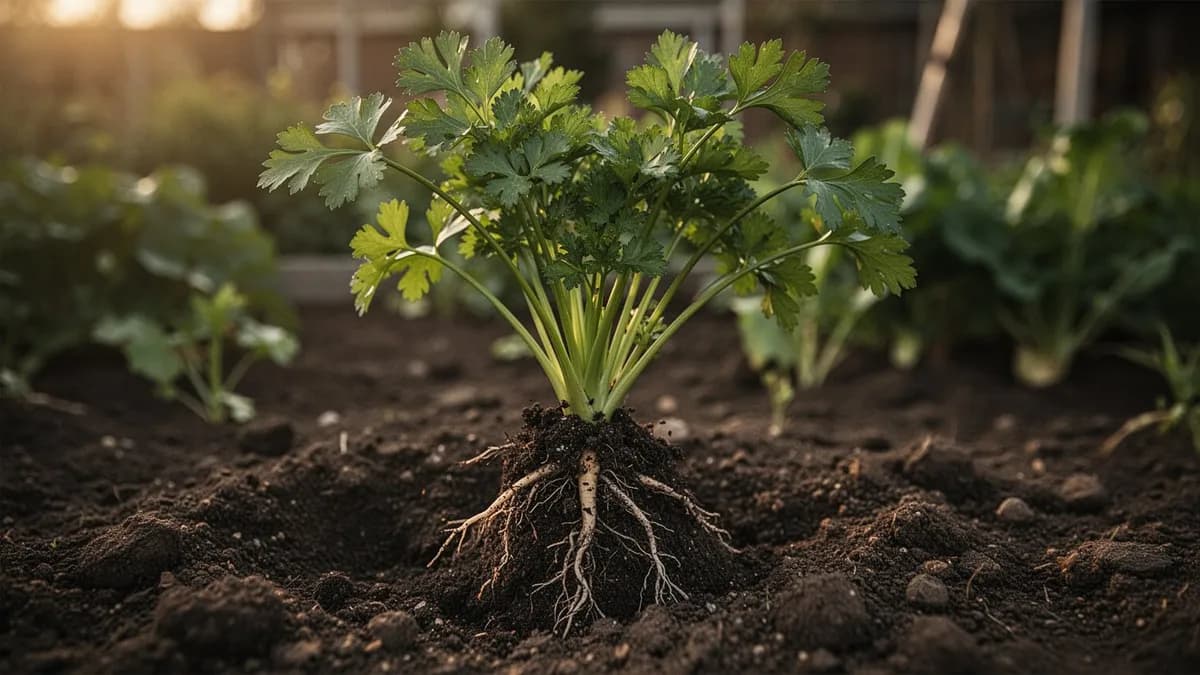
El perejil de Hamburgo (Petroselinum crispum var. tuberosum) es una variedad de perejil cultivada principalmente por su gruesa raíz pivotante blanca con sabor entre apio y perejil.





En esta páginaResumen
Conoce Perejil de Hamburgo
El perejil de Hamburgo (Petroselinum crispum var. tuberosum) es una variedad de perejil cultivada principalmente por su gruesa raíz pivotante blanca con sabor entre apio y perejil. A diferencia del perejil común, ofrece un doble aprovechamiento: raíces carnosas para sopas y guisos, y hojas aromáticas para uso como hierba fresca.
Cuándo plantar Perejil de Hamburgo
Siembra directamente en el exterior en primavera temprana (marzo-abril), ya que la raíz pivotante no tolera bien el trasplante. Remoja las semillas 24 horas en agua tibia para romper la dormancia y acelerar la germinación. Siembra a 1 cm de profundidad en surcos humedecidos y cubre ligeramente con vermiculita fina. Mantén el sustrato uniformemente húmedo durante las 2-4 semanas que tarda la germinación.
Tu año de Perejil de Hamburgo
Ajustado a Zona 7 · temporada típica · la helada se va hacia el 2 abr y vuelve hacia el 1 nov
Planta Perejil de Hamburgo Mar – May y cosecha Sep – Nov. Consulta los métodos de plantación y elige tu clima para adaptar los periodos.
Cómo cultivar Perejil de Hamburgo
El perejil de Hamburgo se siembra directamente en el huerto en primavera temprana, 4-6 semanas antes de la última helada, ya que tolera el frío ligero y necesita una temporada larga para desarrollar raíces de buen tamaño. Siembra las semillas a 1 cm de profundidad en hileras espaciadas 25-30 cm, aclarando las plántulas a 10-15 cm entre sí.
La germinación es notoriamente lenta, tardando 14-28 días. Para acelerarla, remoja las semillas en agua tibia durante 24 horas antes de sembrar, o siembra en surcos previamente regados con agua caliente. Mantén el suelo constantemente húmedo durante la germinación, cubriéndolo con un paño húmedo si es necesario.
Riega regularmente con 2,5 cm de agua semanal para promover raíces rectas y sin ramificaciones. Aplica un acolchado ligero para mantener la humedad. Fertiliza con un abono equilibrado cada 4-6 semanas, evitando el exceso de nitrógeno que favorece el follaje sobre el desarrollo de la raíz.
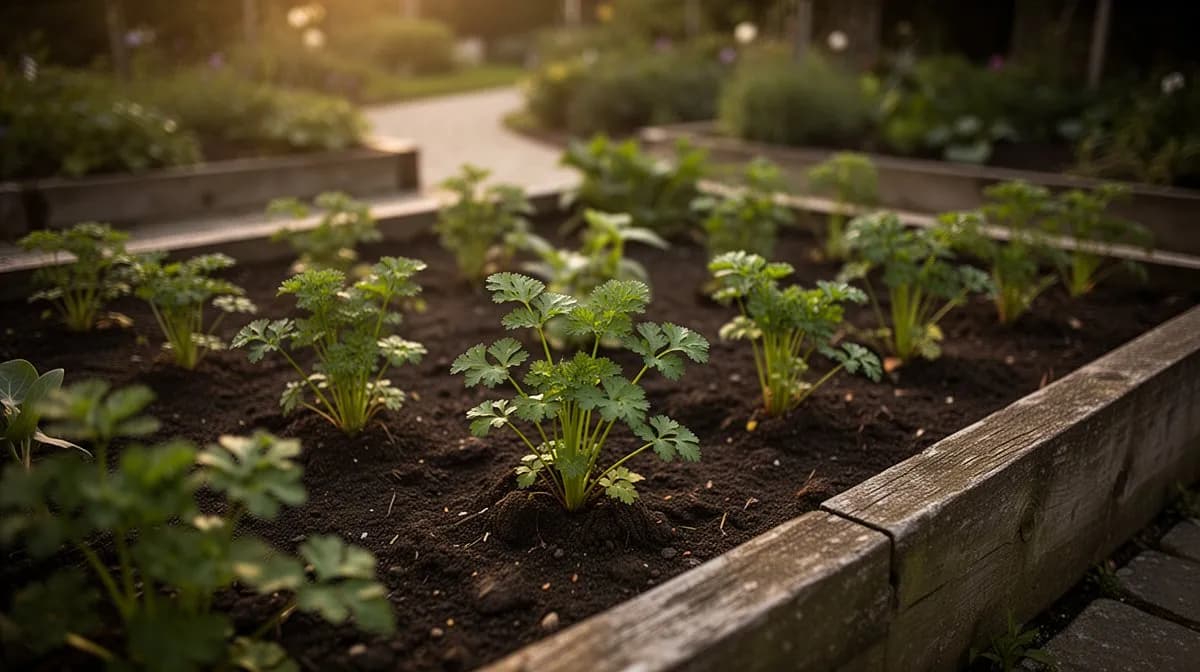
128 plantas caben en un bancal de 120 × 240 cm
Cada Perejil de Hamburgo pide 15 cm de margen. El planificador guarda ese marco por ti — cada planta, cada bancal.
Los mejores vecinos de Perejil de Hamburgo
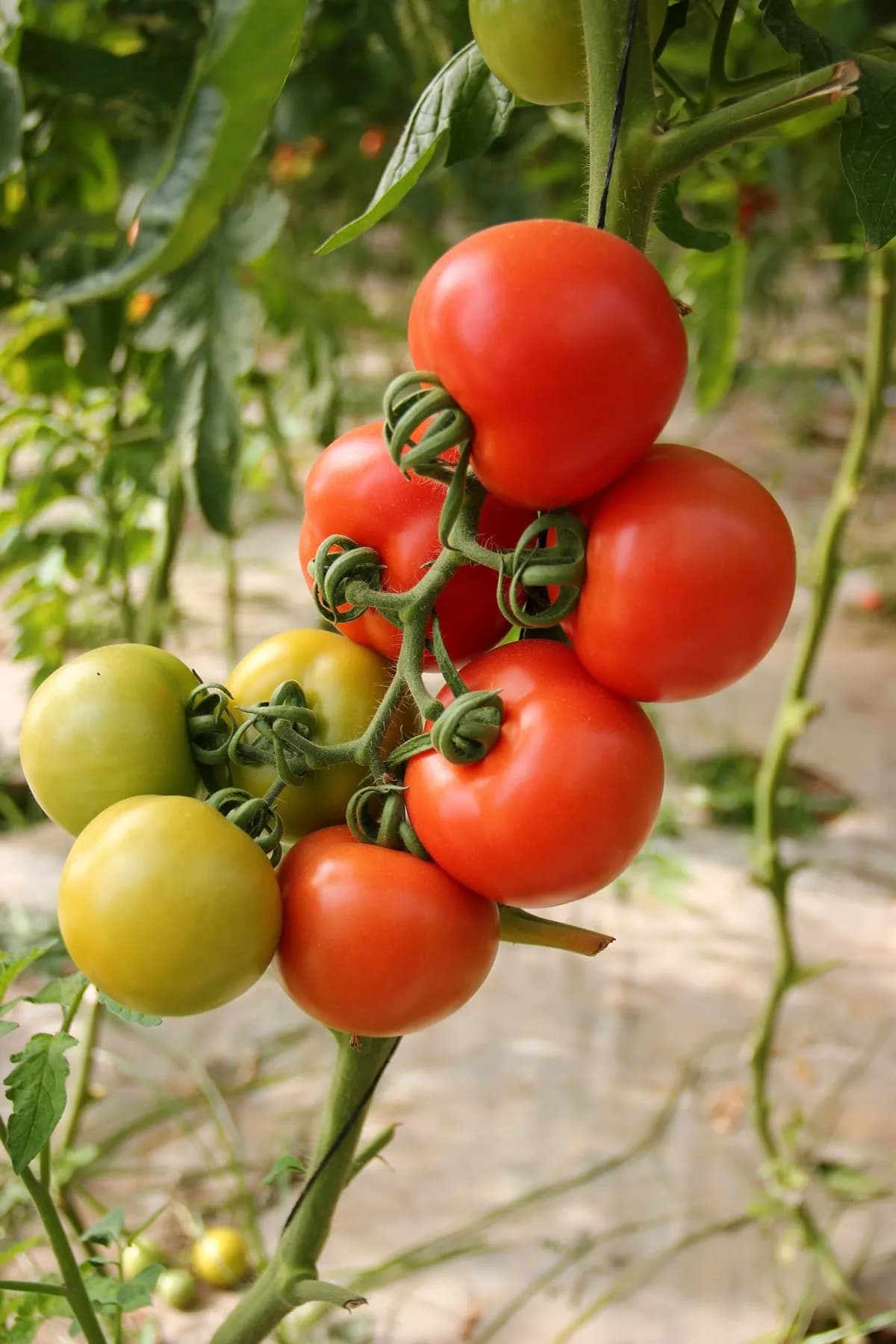
El perejil de Hamburgo es un excelente compañero de tomates, ya que atrae sírfidos y avispas parasíticas que controlan pulgones. También beneficia a espárragos, rosas y frutales. Evita plantarlo cerca de lechugas u otras umbelíferas como zanahoria y apio, que comparten plagas y enfermedades.
Tomate va a su lado.
Saber de huerto de siempre, cotejado con la tabla real de Perejil de Hamburgo — prueba cualquier planta que cultives.
Prueba Perejil de Hamburgo en un bancal, aquí mismo
Un bancal real del planificador con Perejil de Hamburgo ya plantado. Toca una planta compañera para colocarla y mira cómo responde la comprobación de vecinos: verde para buenos vecinos, rojo si hay conflicto.


Guías de cultivo relacionadas
Abónalo bien
El perejil de Hamburgo necesita suelo profundo (mínimo 30 cm sin piedras), suelto y bien drenado con pH entre 6,0 y 7,0 para producir raíces rectas y bien formadas. Incorpora compost maduro en otoño previo a la siembra. Evita el estiércol fresco que causa raíces bifurcadas. Fertiliza con un abono bajo en nitrógeno y rico en fósforo y potasio.
Temperatura ideal
Compatibilidad de zonas de rusticidad
De la semilla a la cosecha, etapa por etapa
Inicio de siembra
El perejil de Hamburgo germina muy lentamente y puede tardar entre 14 y 28 días incluso en condiciones ideales. Las semillas contienen compuestos que inhiben la germinación en su cubierta, que deben descomponerse antes de que el embrión pueda emerger. Primero aparece una fina radícula blanca y luego cotiledones filiformes, de aspecto frágil.
Crecimiento de plántula
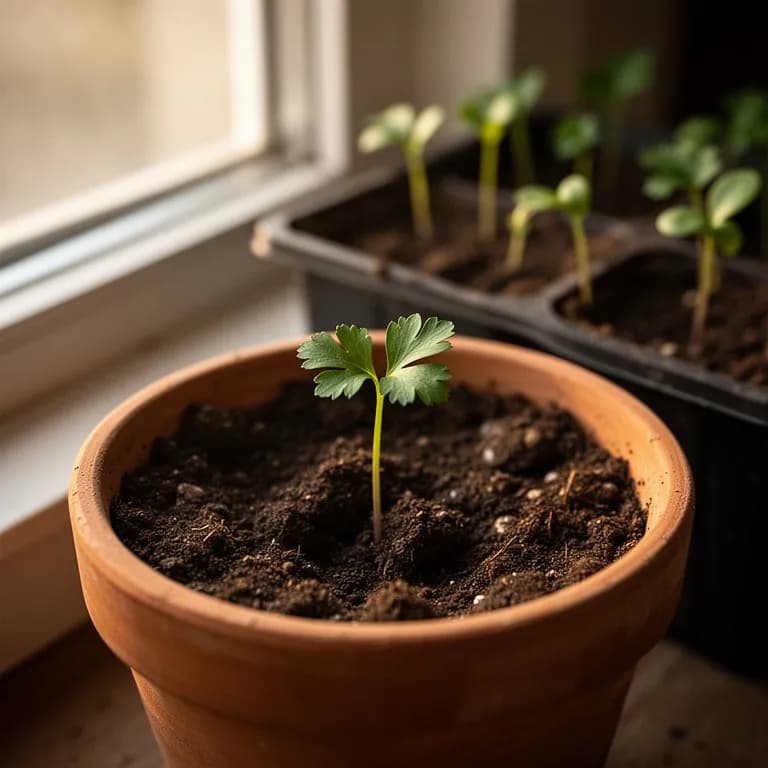
Aparecen las primeras hojas verdaderas con la forma típica de perejil, plana y serrada. El crecimiento es lento en esta fase porque la planta se centra en establecer su sistema de raíz pivotante. Las plántulas se parecen mucho al perejil de hoja lisa y pueden confundirse fácilmente en un huerto mixto.
Crecimiento vegetativo
La planta desarrolla una roseta frondosa de hojas planas, de color verde oscuro, mientras la raíz pivotante empieza a engrosarse bajo tierra. Durante este periodo se pueden cosechar hojas de forma selectiva para usar como hierba, aunque una eliminación excesiva de hojas ralentiza el desarrollo de la raíz. La raíz crece de forma constante hacia abajo y alcanza 15-20 cm de longitud.
Desarrollo de la raíz
La raíz entra en su fase principal de engrosamiento, alcanzando 3-5 cm de diámetro y manteniendo su color blanco cremoso. El cuello de la raíz puede sobresalir ligeramente por encima del nivel del suelo. El follaje sigue frondoso y continúa creciendo, pero la energía principal de la planta se desplaza bajo tierra.
Madurez
Las raíces alcanzan su tamaño completo de 15-25 cm de largo y 4-6 cm de diámetro, parecidas a chirivías delgadas. El sabor se intensifica y se vuelve más dulce, especialmente tras temperaturas frescas de otoño o una ligera helada, que desencadenan la conversión del almidón en azúcar. Las hojas pueden empezar a amarillear ligeramente mientras la planta canaliza su energía restante hacia el almacenamiento en la raíz.
Ventana de cosecha
La ventana de cosecha prolongada es una de las grandes ventajas del perejil de Hamburgo. Las raíces se conservan muy bien en suelo frío hasta finales de otoño y durante el invierno. En climas suaves, pueden extraerse frescas según se necesiten durante todo el invierno. La planta es bianual y espigará para dar semilla en su segunda primavera si se deja en el suelo.
Remoja las semillas en agua tibia durante 24 horas antes de sembrarlas para acelerar la germinación. Siembra directamente al aire libre de 3 a 4 semanas antes de la fecha de la última helada. Mantén el semillero siempre húmedo; si la superficie se seca una sola vez durante la germinación, el proceso se detiene.
Cuidar Perejil de Hamburgo mes a mes
Qué hacer cada mes para tu Perejil de Hamburgo
Octubre
Mes actualPrime harvest month. Dig roots carefully with a garden fork after loosening soil alongside the row. Roots bruise easily, so handle gently. Harvest what you need and leave the rest in the ground — they store better in cold soil than in the refrigerator.
Ten claro qué hacer en tu huerto, cada mes
Un correo al empezar cada mes: qué sembrar, plantar y hacer ahora mismo — para tu Perejil de Hamburgo y todo lo que crece alrededor. Más un breve curso inicial para esquivar los errores clásicos.
- Qué hacer ahora mismo
- Ajustado a tu temporada
- Curso inicial incluido
Cosechar Perejil de Hamburgo
Cosecha las raíces de perejil de Hamburgo cuando alcanzan 15-20 cm de longitud y 3-5 cm de diámetro, generalmente entre 90 y 120 días después de la siembra. Excava con una horquilla para no romperlas. Las raíces mejoran su sabor después de las primeras heladas ligeras. Las hojas pueden cosecharse continuamente durante la temporada de crecimiento.
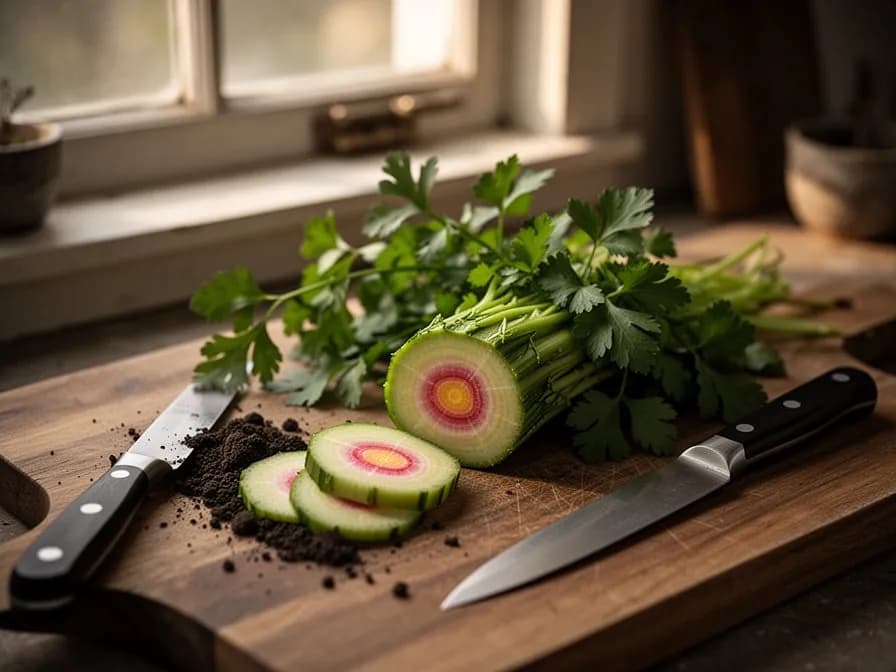
se supone que plantas al comenzar el periodo — indica tu fecha real
Desde principios de otoño, unos 90 días después de la siembra, y las raíces pueden dejarse en el suelo hasta bien entrado el invierno.
Almacenamiento y conservación
Las raíces se conservan como zanahorias: en el refrigerador envueltas en papel húmedo durante 2-3 semanas, o en arena húmeda en un sótano fresco (0-4°C) durante 3-4 meses. También se congelan bien cortadas en cubos después de blanquear 3 minutos. Las hojas se secan o congelan picadas en cubitos de aceite de oliva.
Qué falla — y cómo solucionarlo
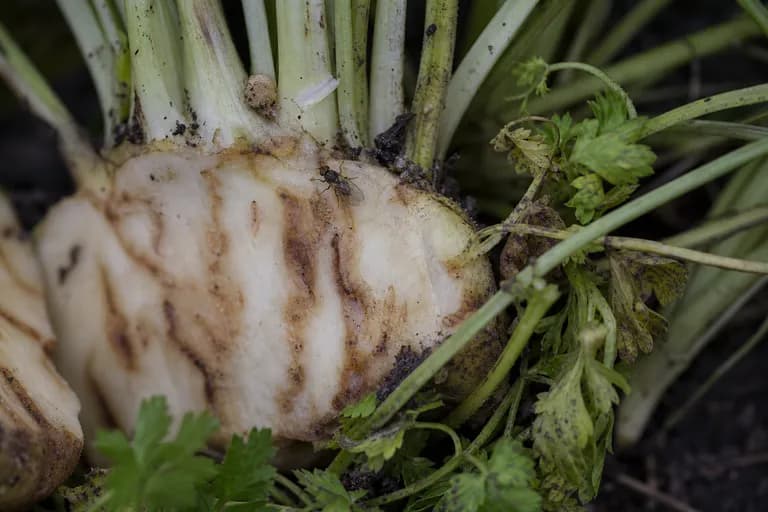
Gusano del perejil (Papilio polyxenes)
PlagaOrugas grandes con rayas verdes, negras y amarillas que devoran rápidamente el follaje. Aunque son larvas de la mariposa cola de golondrina negra, pueden defoliar plantas pequeñas completamente.
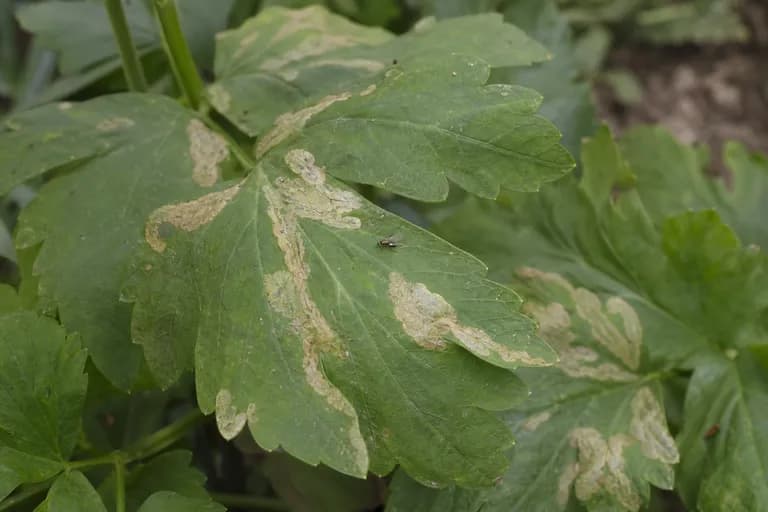
Mosca de la zanahoria
PlagaLarvas pequeñas que perforan las raíces creando galerías marrones, dejando el tejido blando y susceptible a pudriciones secundarias. Las hojas se tornan rojizas o amarillentas.
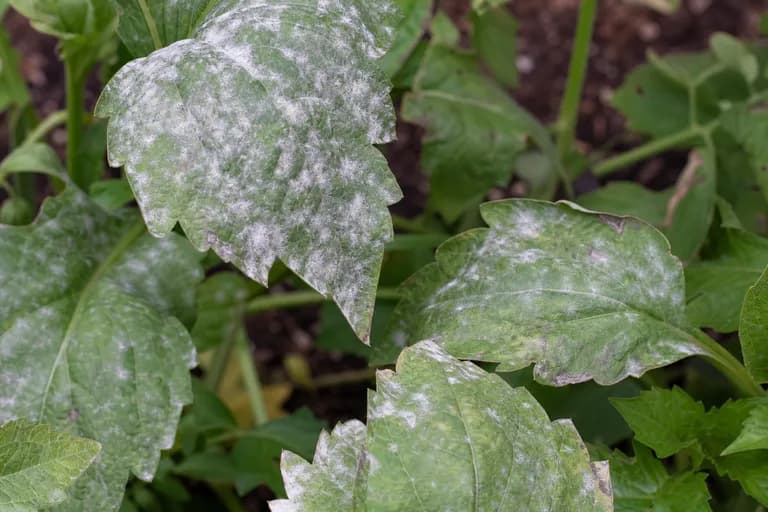
Septoriosis del perejil
EnfermedadPequeñas manchas marrones con centro gris claro y puntos negros (picnidios) en las hojas, que se expanden y causan amarillamiento y caída prematura del follaje.
Solución de problemas comunes
La germinación extremadamente lenta (14-28 días) es el principal desafío, durante la cual las malezas pueden superar a las plántulas. Marca las hileras con rábanos de crecimiento rápido para no perder la ubicación. Las raíces se bifurcan en suelos pedregosos, compactados o con exceso de nitrógeno. El espigado prematuro puede ocurrir por estrés hídrico o trasplante.
Consejos de cultivo
- Be prepared to wait. Hamburg parsley has the slowest germination of any common garden vegetable — 21-35 days is normal. Mark your rows clearly and do not replant in a panic. Sowing radish seeds alongside as row markers helps track where the parsley was planted.
- Soil preparation is critical. Dig beds to a depth of at least 30 cm and remove every stone, root fragment, and clump. Any obstruction causes the taproot to fork, producing misshapen roots that are difficult to peel and cook evenly.
- Always direct-sow rather than transplanting. Hamburg parsley develops a deep, sensitive taproot that does not tolerate disturbance. Transplanted seedlings almost always produce stunted, forked, or deformed roots.
- Keep the seedbed surface moist at all times during the long germination period. A single day of surface drying can kill emerging radicles. Cover the row with damp burlap, row cover, or a thin layer of vermiculite to maintain surface moisture.
- Thin ruthlessly to 10-15 cm spacing. Crowded plants produce pencil-thin roots that are not worth harvesting. The thinnings can be used as a herb — the leaves are excellent in salads, soups, and sauces.
- Practice crop rotation and never plant Hamburg parsley where carrots, celery, parsnips, or other umbellifers grew in the previous two years. Carrot fly and root diseases persist in the soil and will devastate the crop.
- Harvest after the first light frosts for the best flavor. Cold exposure triggers starch-to-sugar conversion in the root, noticeably sweetening the taste. Roots dug before any frost tend to be starchier and less complex in flavor.
- Store roots in the ground as long as possible rather than in the refrigerator. Cover the bed with 15-20 cm of straw mulch and dig roots fresh through autumn and winter as needed — the garden is the best root cellar.
Cultiva tu mejor Perejil de Hamburgo — y todo lo que la rodea.
Empieza un plan gratis hoy. Diseña tus bancales, coloca tu Perejil de Hamburgo y deja que PlotMyGarden gestione el momento, el espaciado, las asociaciones y los recordatorios de la semilla a la cesta.
Elige tu Perejil de Hamburgo
Hamburg Half Long
La variedad estándar con raíces cónicas de 15-20 cm, piel blanca cremosa y sabor intenso entre apio nabo y perejil. Follaje abundante y aromático también aprovechable. 85-95 días.
Berliner
Selección alemana con raíces más largas y finas, de sabor delicado y textura suave. Muy apreciada en la cocina centroeuropea para el clásico mirepoix de raíces. 90-100 días.
Fakir
Variedad moderna mejorada con raíces uniformes, lisas y de buen calibre. Resistencia mejorada a la septoriosis y excelente rendimiento. Ideal para cultivo comercial y doméstico. 100-110 días.
Arat
Cultivar de raíces largas y cónicas con excelente sabor dulce y aromático. Buena tolerancia al espigado tardío y adaptación a diferentes tipos de suelo. 95-105 días.
Hamburg parsley root is a specialty item that commands premium prices of $8-15 per pound at farmers markets and specialty grocers, when it can be found at all — most mainstream supermarkets do not carry it. A single packet of seeds ($3-5) can produce 3-5 kg of roots plus abundant leaf parsley, representing savings of $50-100 or more per season. The dual-purpose nature of the plant (roots plus herb leaves) doubles the value, as fresh flat-leaf parsley bunches sell for $2-4 each at market.
Recetas rápidas
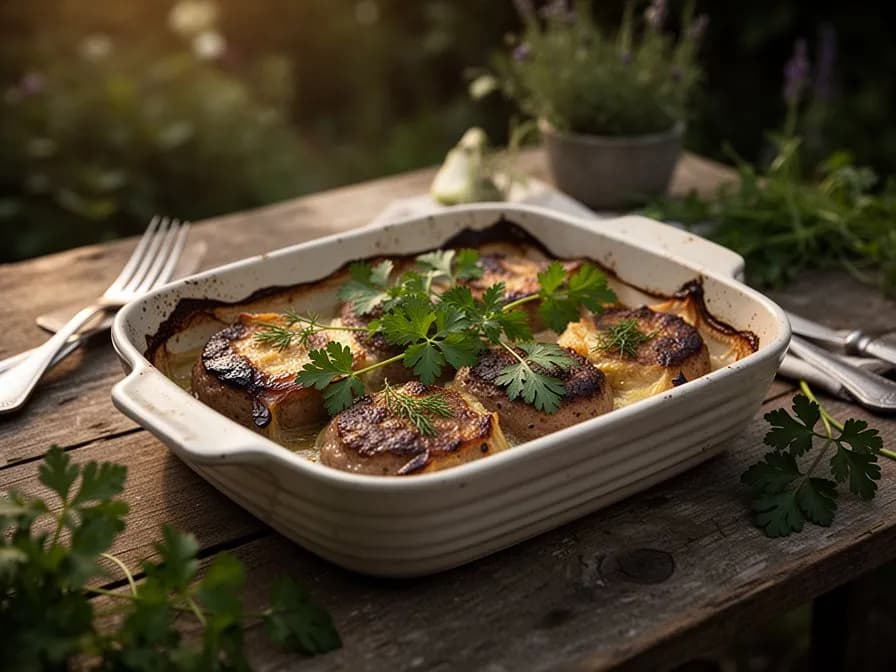
Roasted Hamburg Parsley Root with Herbs
35 minSimple roasting transforms Hamburg parsley root into a caramelized, nutty-sweet side dish that rivals roasted parsnips. The edges crisp beautifully while the interior turns silky and tender, concentrating the unique parsley-celery flavor.
7 ingredientesTraditional Polish Root Vegetable Soup (Wloszczyzna)
45 minHamburg parsley root is the essential and irreplaceable ingredient in this classic Polish soup base. Combined with carrots, celery root, and leeks, it forms the aromatic foundation of countless Central European soups and broths.
9 ingredientesHamburg Parsley and Potato Mash
30 minA silky, aromatic mash that elevates humble mashed potatoes into something extraordinary. The Hamburg parsley adds a subtle celery-parsley warmth that pairs beautifully with roasted meats, sausages, and winter stews.
7 ingredientesUsos culinarios
La raíz del perejil de Hamburgo es un ingrediente clásico de la cocina centroeuropea, esencial en el mirepoix de raíces junto con zanahoria, apio nabo y puerro para caldos y sopas. Asada al horno con aceite de oliva desarrolla un sabor dulce y caramelizado delicioso. Las hojas se usan exactamente como el perejil de hoja plana en ensaladas, salsas verdes y como guarnición aromática.
Qué contiene
Beneficios para la salud
- Rich in vitamin C at 46% of the daily value per 100g, supporting immune function, collagen production, and acting as a powerful antioxidant that helps protect cells from free radical damage.
- High potassium content (562mg per 100g) supports cardiovascular health by helping regulate blood pressure and counterbalancing the effects of excess dietary sodium.
- Excellent dietary fiber source at 4.3g per 100g, promoting healthy digestion, supporting beneficial gut microbiota, and helping maintain steady blood sugar levels after meals.
- Contains essential oils including myristicin and apiole that have been shown in studies to possess anti-inflammatory and mild antimicrobial properties.
- Good source of folate, supporting healthy cell division and DNA synthesis — particularly important during pregnancy and for cardiovascular health through homocysteine regulation.
- Provides iron and manganese, supporting oxygen transport in the blood and the function of antioxidant enzymes that protect against cellular damage.
De dónde viene Perejil de Hamburgo
Hamburg parsley (Petroselinum crispum var. tuberosum) is a cultivated variety of common parsley selectively bred over centuries for its thick, edible taproot. While ordinary parsley has been cultivated since ancient times in the Mediterranean basin — the ancient Greeks used it ceremonially and the Romans ate it as a herb — the root form was developed much later in Northern and Central Europe, likely during the 16th or 17th century. The earliest clear horticultural references to parsley grown specifically for its root appear in German and Dutch gardening texts from the 1600s, suggesting that it was Northern European gardeners who recognized and selected for the root-forming trait.
The vegetable became deeply embedded in the culinary traditions of Germany, Austria, Poland, the Czech lands, and the Netherlands during the 18th and 19th centuries. In these regions, it was not a curiosity but a kitchen staple — as fundamental to soup-making as the onion. The traditional Central European Suppengruen (soup greens) bundle always included parsley root alongside carrots, celery root, and leeks, and this combination formed the flavor base for broths, stews, and sauces across the region. In Poland, where it is called pietruszka, it remains a cornerstone ingredient in classic dishes like rosol (chicken broth), zurek (sour rye soup), and barszcz (beet soup).
During the 20th century, Hamburg parsley fell out of favor in many Western European and American markets, overshadowed by the more familiar carrot and parsnip. However, it never disappeared from Central and Eastern European kitchens, where it remained an everyday ingredient. In recent decades, the root has experienced a significant revival driven by the farm-to-table movement, interest in heritage vegetables, and chefs rediscovering its unique parsley-celery-nutty flavor profile. Today it appears on fine dining menus across Europe and North America, often roasted, pureed, or featured in modern interpretations of traditional root vegetable dishes.
Perejil de Hamburgo: ¿sabías que?
Datos fascinantes sobre Perejil de Hamburgo
Hamburg parsley is a dual-purpose vegetable — both the parsnip-like root and the flat-leaf tops are fully edible, giving gardeners two crops from a single plant. The leaves taste like a more intense version of Italian flat-leaf parsley.
Perejil de Hamburgo: preguntas frecuentes
¿Cuándo debo plantar Perejil de Hamburgo?
¿Cuáles son buenas plantas acompañantes para Perejil de Hamburgo?
¿En qué zonas de rusticidad puede crecer Perejil de Hamburgo?
¿Cuánto sol necesita Perejil de Hamburgo?
¿A qué distancia debo espaciar Perejil de Hamburgo?
¿Qué plagas y enfermedades afectan a Perejil de Hamburgo?
¿Cómo almaceno Perejil de Hamburgo después de la cosecha?
¿Cuáles son las mejores variedades de Perejil de Hamburgo para cultivar?
¿Qué suelo necesita Perejil de Hamburgo?
Why is my Hamburg parsley taking so long to germinate?
What is the difference between Hamburg parsley and regular parsley?
Can I use the leaves of Hamburg parsley the same way as regular parsley?
Why are my Hamburg parsley roots forked or deformed?
How does Hamburg parsley root taste and how should I cook it?
Can I grow Hamburg parsley in containers?
Acabas de leer la teoría. Ahora cultívala en piloto automático.
Todo lo que hace que Perejil de Hamburgo sea delicado — el momento, el espaciado, las asociaciones, la ventana de cosecha — es justo lo que PlotMyGarden resuelve por ti, para cada planta de tu huerto.
Un plan que conoce tu clima
Indica tu ubicación una vez. Recibe fechas de siembra, abonado y cosecha basadas en tu última helada real y el pronóstico en vivo — sin adivinar con un sobre genérico.
De la sección “Cuándo plantar”Planificador de bancales de arrastrar y soltar
Diseña bancales sobre una cuadrícula. Cada planta encaja con su espaciado correcto y ves toda la temporada antes de gastar un céntimo en semillas.
De la sección “Cultivo”Conflictos de asociación, detectados a tiempo
Más de 200 buenas y malas combinaciones comprobadas en vivo mientras plantas — para que un error que arruine la temporada nunca llegue a la tierra.
De la sección “Asociaciones”Recordatorios que sí vas a seguir
“Riega las judías.” “Recoge hoy antes de que se pase.” Oportunos, concretos y ligados a las plantas que de verdad cultivas.
De la sección “Cosecha”Escalonado, programado
¿Quieres cosechar seis semanas en vez de seis días? Reparte tus siembras automáticamente y te avisa cuando toca el siguiente lote.
De la sección “Cuándo plantar”Un registro que se vuelve más listo
Cada cosecha que registras le enseña tu huerto. El plan del año que viene parte de lo que de verdad funcionó en tu suelo, no en un manual.
De la sección “Resumen”Planta estos junto a Perejil de Hamburgo
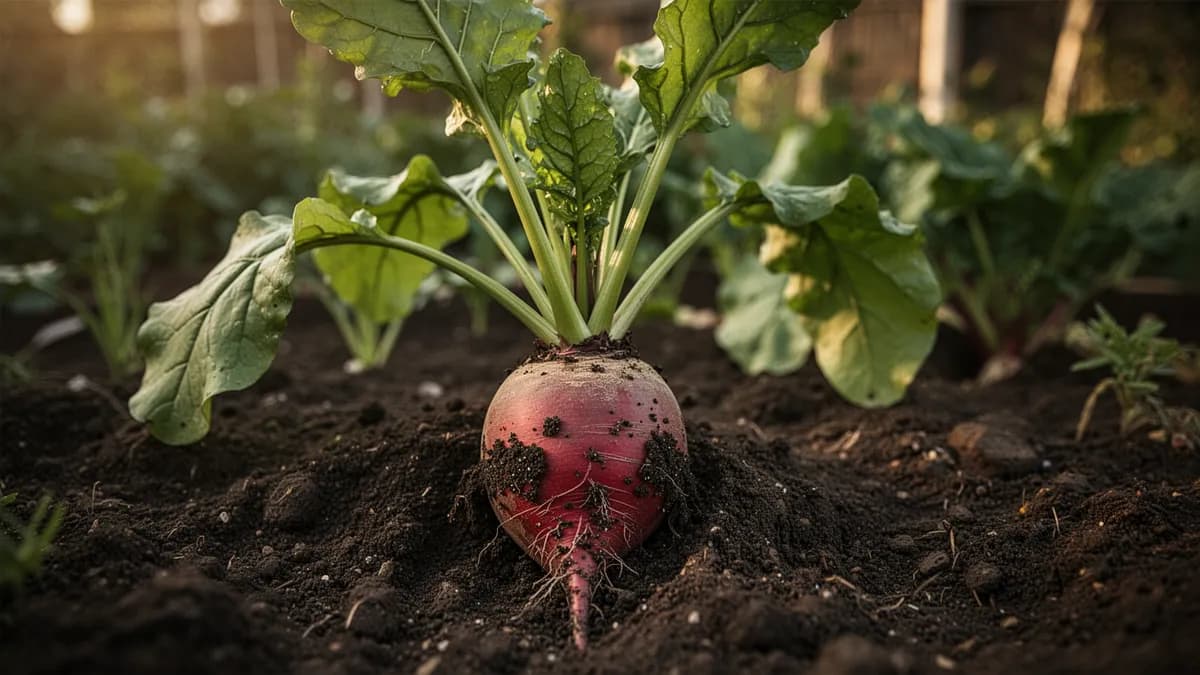
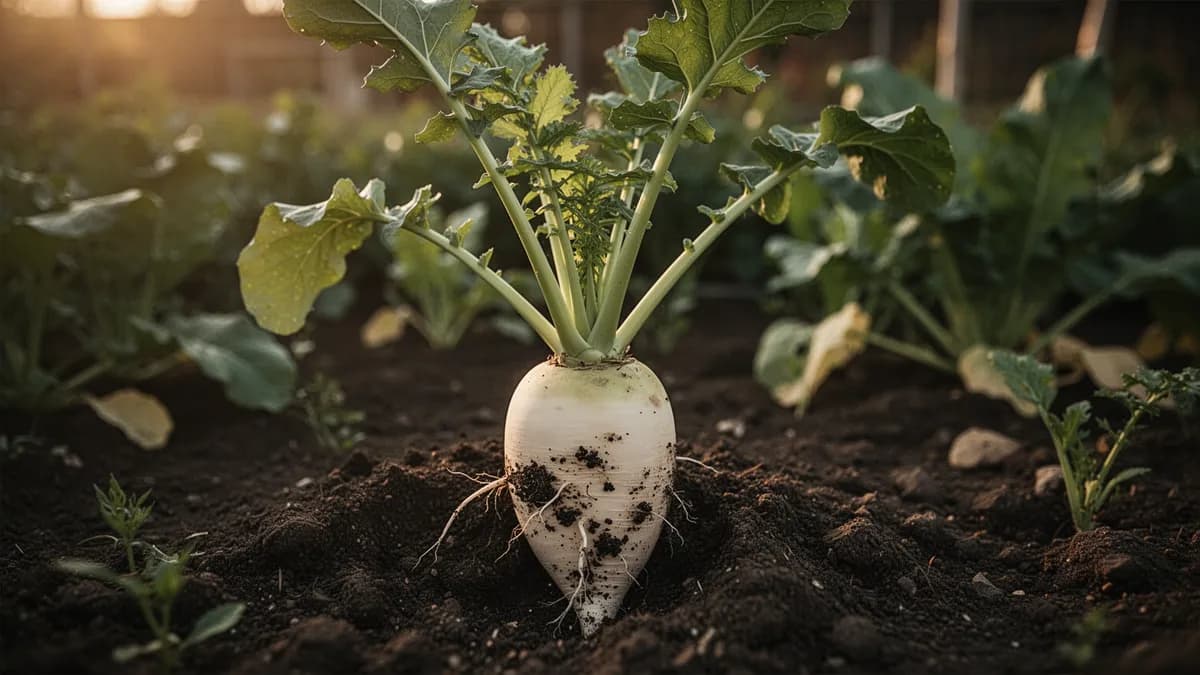
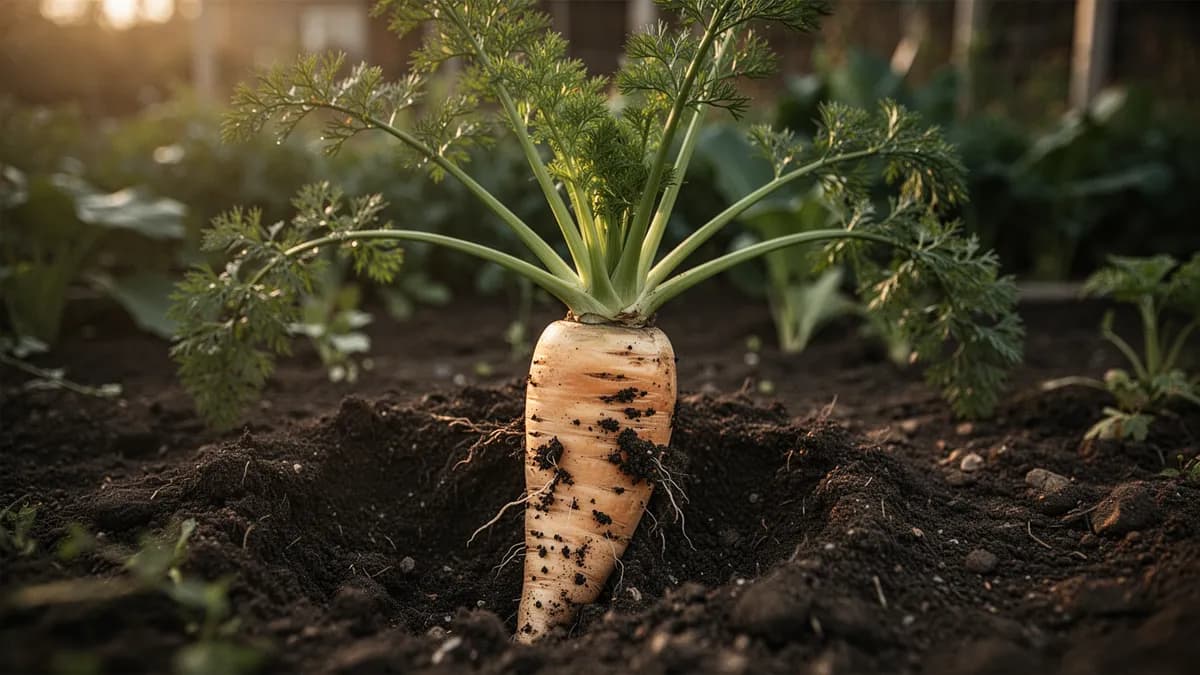
Más Hortalizas de raíz
Cultiva tu mejor Perejil de Hamburgo — y todo lo que la rodea.
Empieza un plan gratis hoy. Diseña tus bancales, coloca tu Perejil de Hamburgo y deja que PlotMyGarden gestione el momento, el espaciado, las asociaciones y los recordatorios de la semilla a la cesta.