Solo-Knoblauch
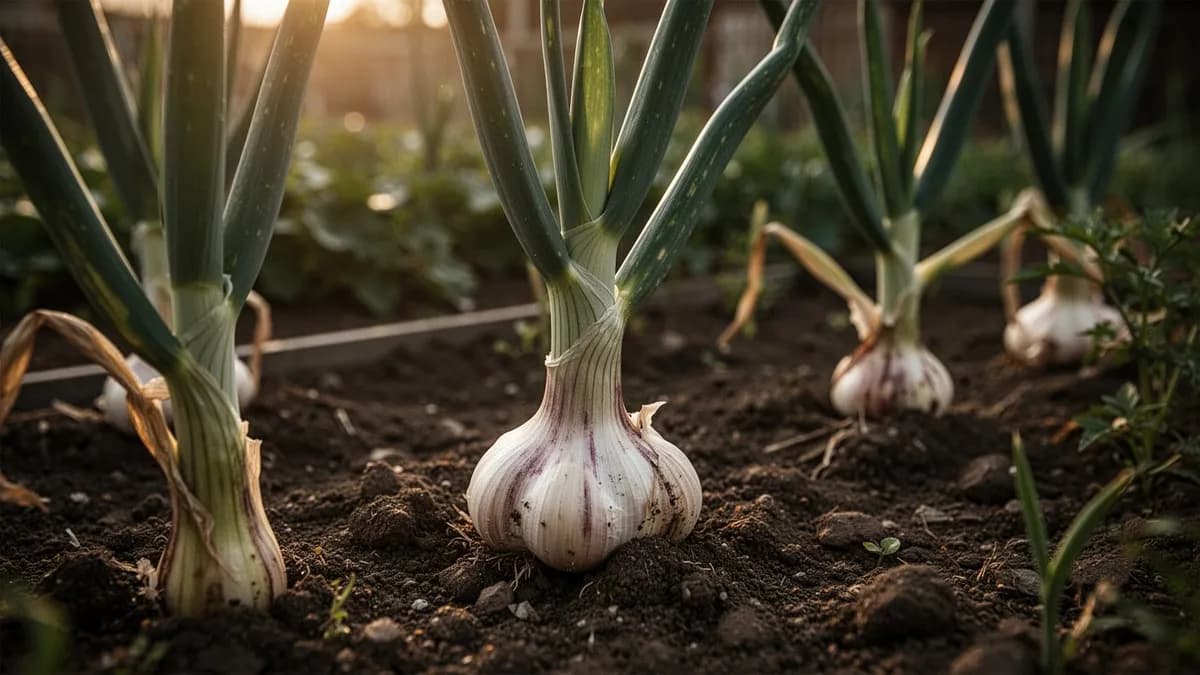
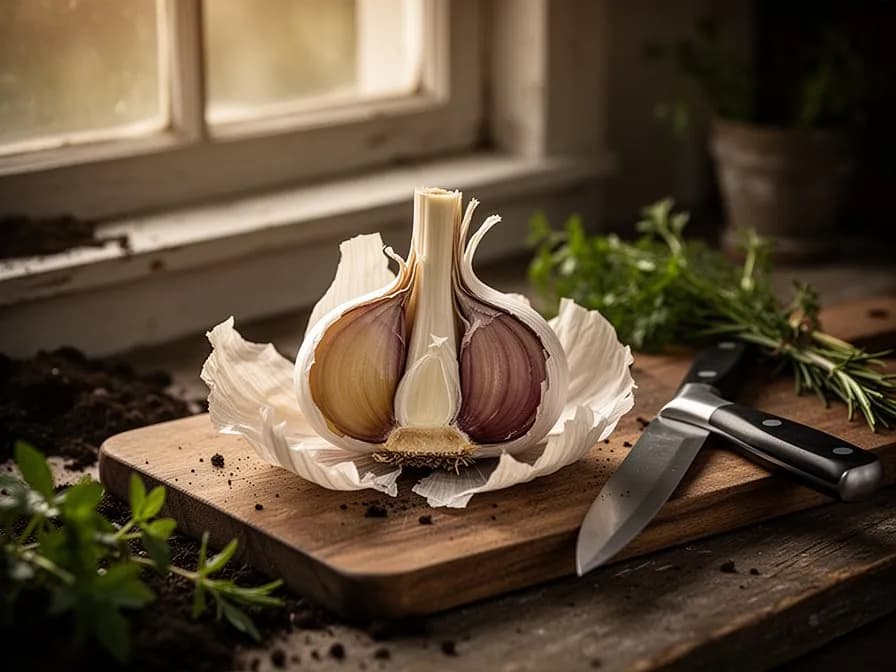
Eine einzehige Knoblauchsorte, die anstelle mehrerer Zehen eine einzige große, runde Knolle bildet.





Auf dieser SeiteÜberblick
Solo-Knoblauch im Überblick
Eine einzehige Knoblauchsorte, die anstelle mehrerer Zehen eine einzige große, runde Knolle bildet. Das Fehlen einzelner Zehen macht das Schälen mühelos – ein enormer Vorteil in Großküchen und für bequeme Köche. Der Geschmack ist milder und etwas süßer als bei mehrzehigem Knoblauch, mit den gleichen aromatischen Eigenschaften beim Kochen. Im Herbst wie normalen Knoblauch pflanzen und ernten, wenn die unteren Blätter im Frühsommer braun werden.
Wann Solo-Knoblauch pflanzen
Solo-Knoblauch wird aus Zehen vermehrt, nicht aus echten Samen. Um Solo-Knollen zu erzeugen, wählen Sie die kleinsten Zehen aus Ihrer Knoblauchernte, idealerweise unter 1 cm Durchmesser, oder verwenden Sie Brutzwiebeln aus dem ersten Jahr von Hardneck-Knoblauchstängeln. Im Herbst pflanzen, vier bis sechs Wochen bevor der Boden gefriert, und die Zehen 5 cm tief mit der Spitze nach oben in die Erde drücken. Die Zehen 10–15 cm auseinander in Reihen mit 25 cm Abstand setzen. In Regionen mit milden Wintern funktioniert eine Pflanzung von Oktober bis Dezember gut. Brutzwiebeln können auch im Frühjahr für eine Ernte im folgenden Sommer gepflanzt werden und bilden in ihrer ersten Saison zuverlässig runde Einzelzehen-Knollen.
Dein Solo-Knoblauch-Jahr
Abgestimmt auf Zone 7 · typische Saison · Frost geht um den 2. Apr. und kehrt um den 1. Nov. zurück
Solo-Knoblauch Sep – Nov pflanzen, Jun – Jul ernten. Beachte die Pflanzmethoden unten und wähle dein Klima für passende Zeiträume.
So baust du Solo-Knoblauch an
Solo-Knoblauch, auch als einzehiger oder Mono-Knoblauch bekannt, entsteht durch das Pflanzen kleiner einzelner Zehen, die nicht genügend Energiereserven haben, um sich in mehrere Segmente zu teilen. Wählen Sie die kleinsten Zehen aus einer regulären Knoblauchernte und pflanzen Sie diese im Herbst, etwa 5 cm tief und 10–15 cm auseinander. Der Schlüssel zur Erzeugung von Solo-Knollen liegt in der Verwendung von unterdimensioniertem Pflanzgut, typischerweise Zehen unter 1 cm Durchmesser.
Sorgen Sie während der gesamten Wachstumsperiode für gleichmäßige Feuchtigkeit, vermeiden Sie jedoch Staunässe, die Fäulnis begünstigt. Mulchen Sie nach dem Pflanzen großzügig mit Stroh, um die Bodentemperatur zu regulieren und Unkraut zu unterdrücken. Entfernen Sie im Frühjahr alle Blütenstängel, die sich entwickeln, um die gesamte Energie in die Knollenbildung zu lenken. Eine Nachdüngung mit ausgewogenem organischem Dünger bei Wachstumsbeginn im Frühjahr unterstützt eine gesunde Entwicklung.
Ernten Sie, wenn die unteren drei bis vier Blätter gebräunt sind, aber die oberen Blätter noch grün sind, typischerweise Ende Juni oder Anfang Juli. Trocknen Sie die Knollen zwei bis drei Wochen lang an einem warmen, gut belüfteten Ort ohne direkte Sonneneinstrahlung. Solo-Knoblauch kann auch aus Brutzwiebeln von Hardneck-Knoblauchstängeln erzeugt werden, die in ihrem ersten Wachstumsjahr natürlicherweise einzelne runde Knollen bilden.
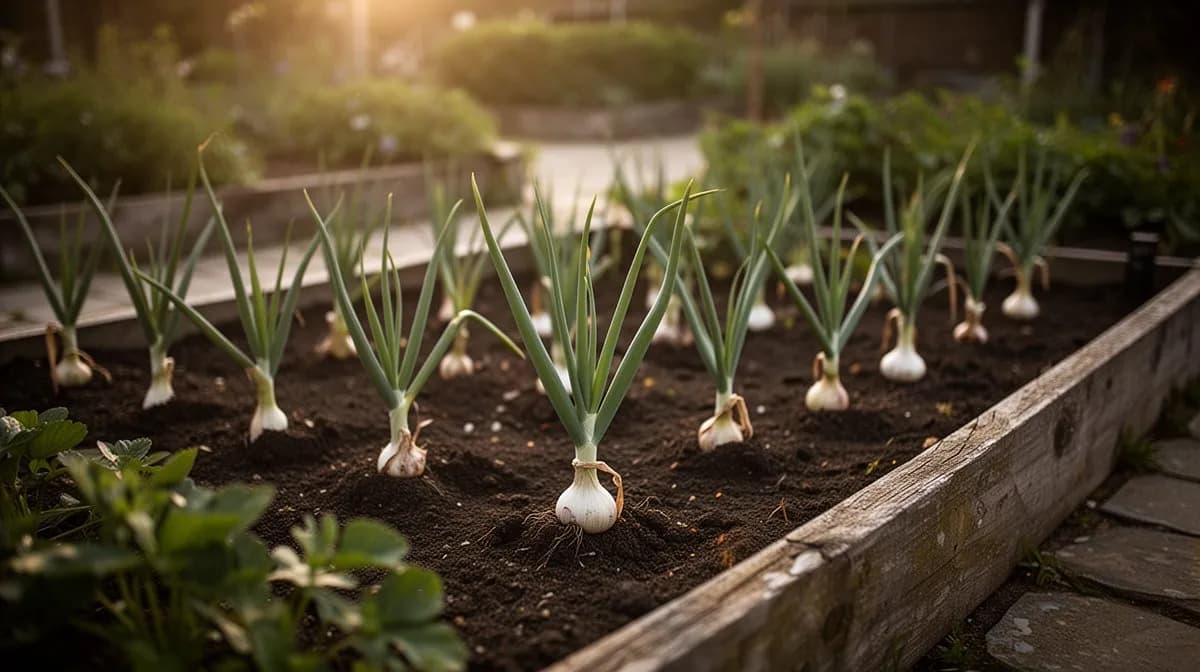
128 Pflanzen passen in ein Beet von 120 × 240 cm
Solo-Knoblauch braucht 15 cm Platz pro Pflanze. Der Planer hält diesen Abstand für dich ein — jede Pflanze, jedes Beet.
Die besten Nachbarn für Solo-Knoblauch
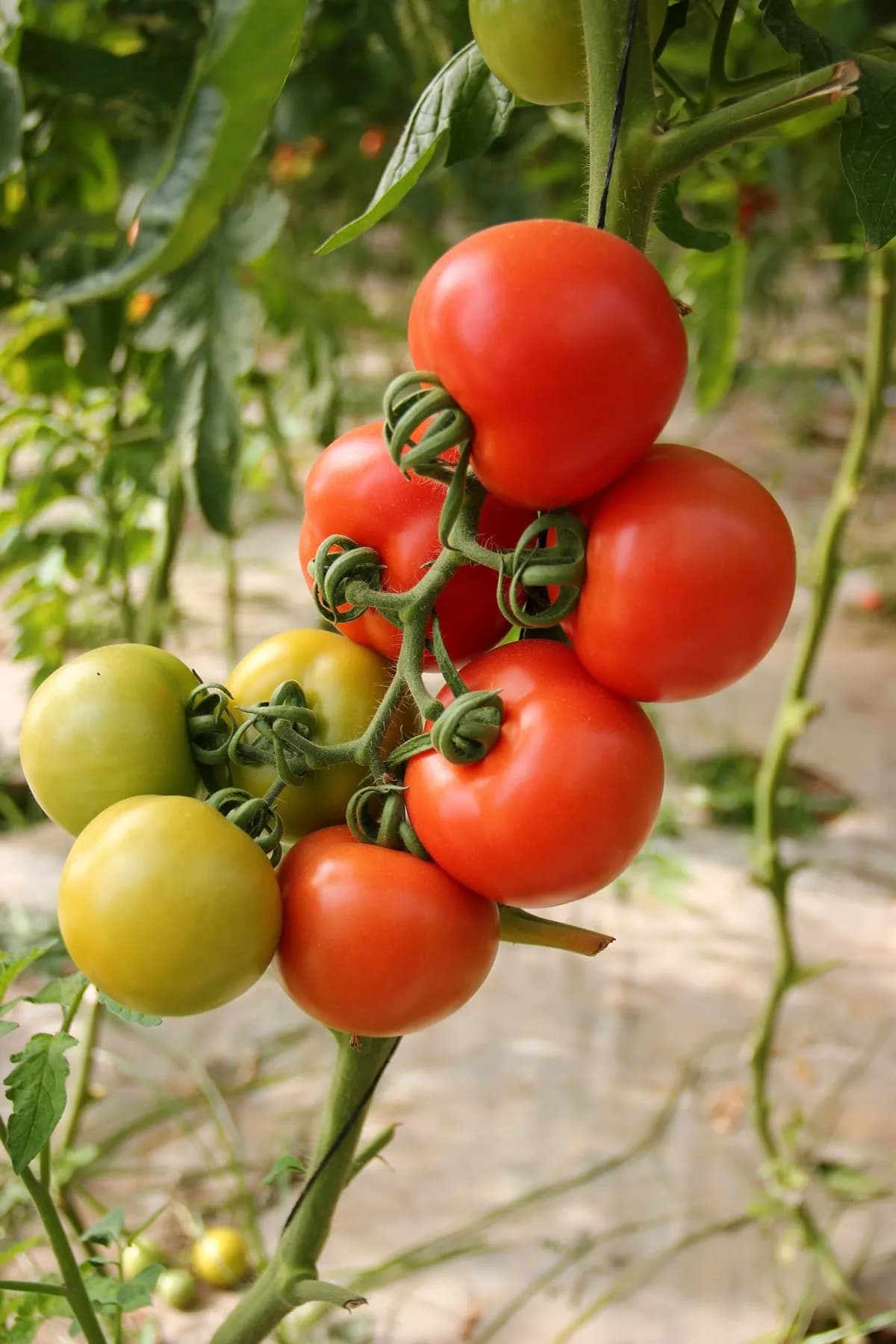
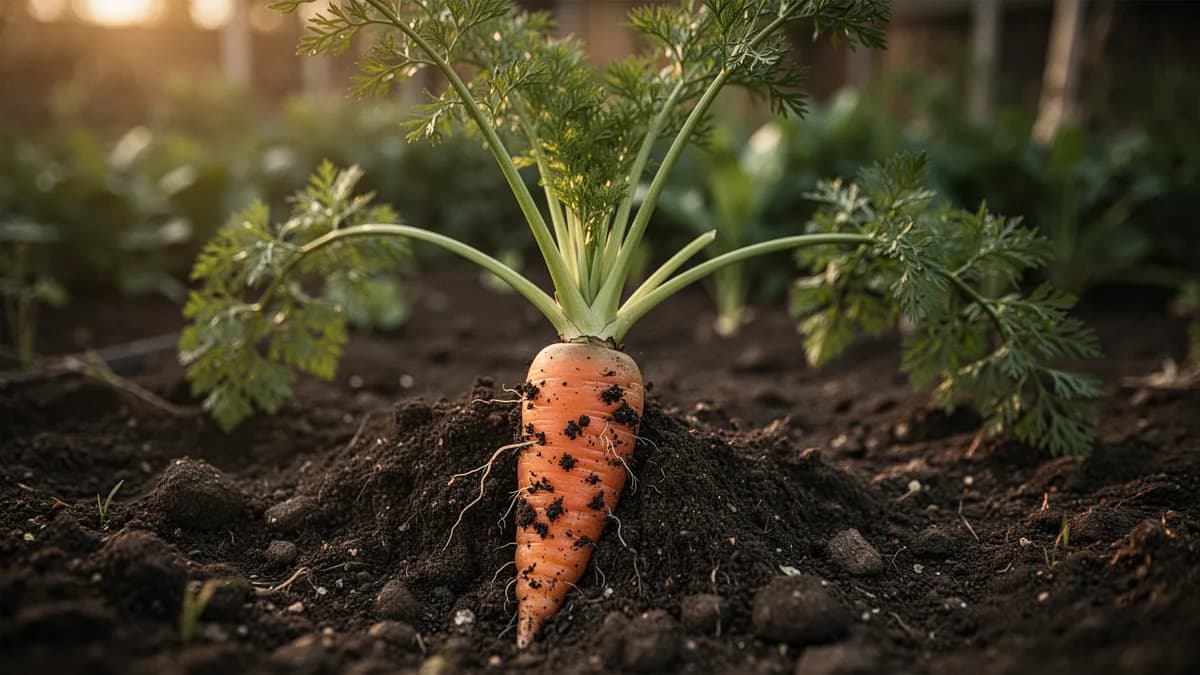
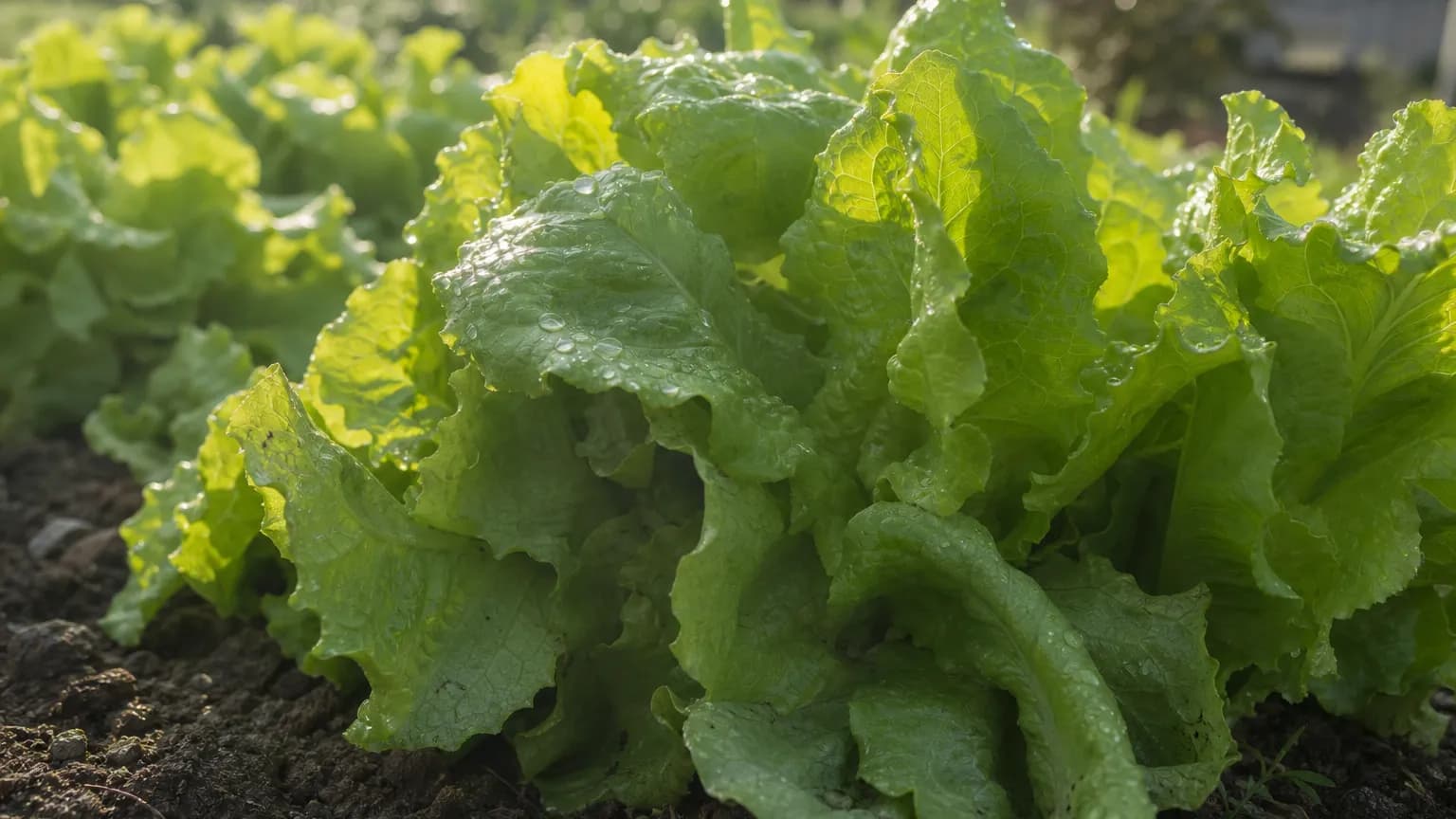
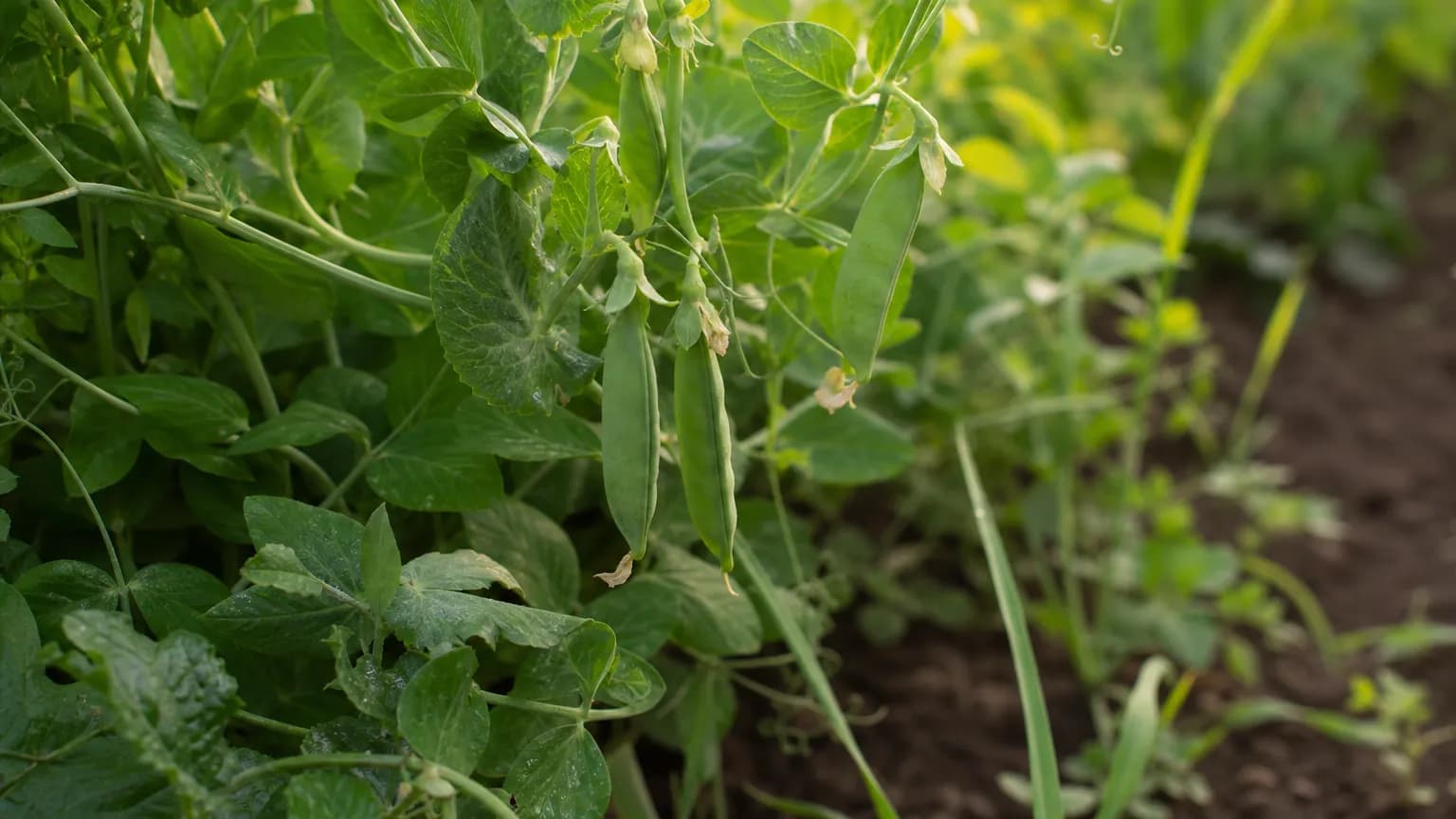
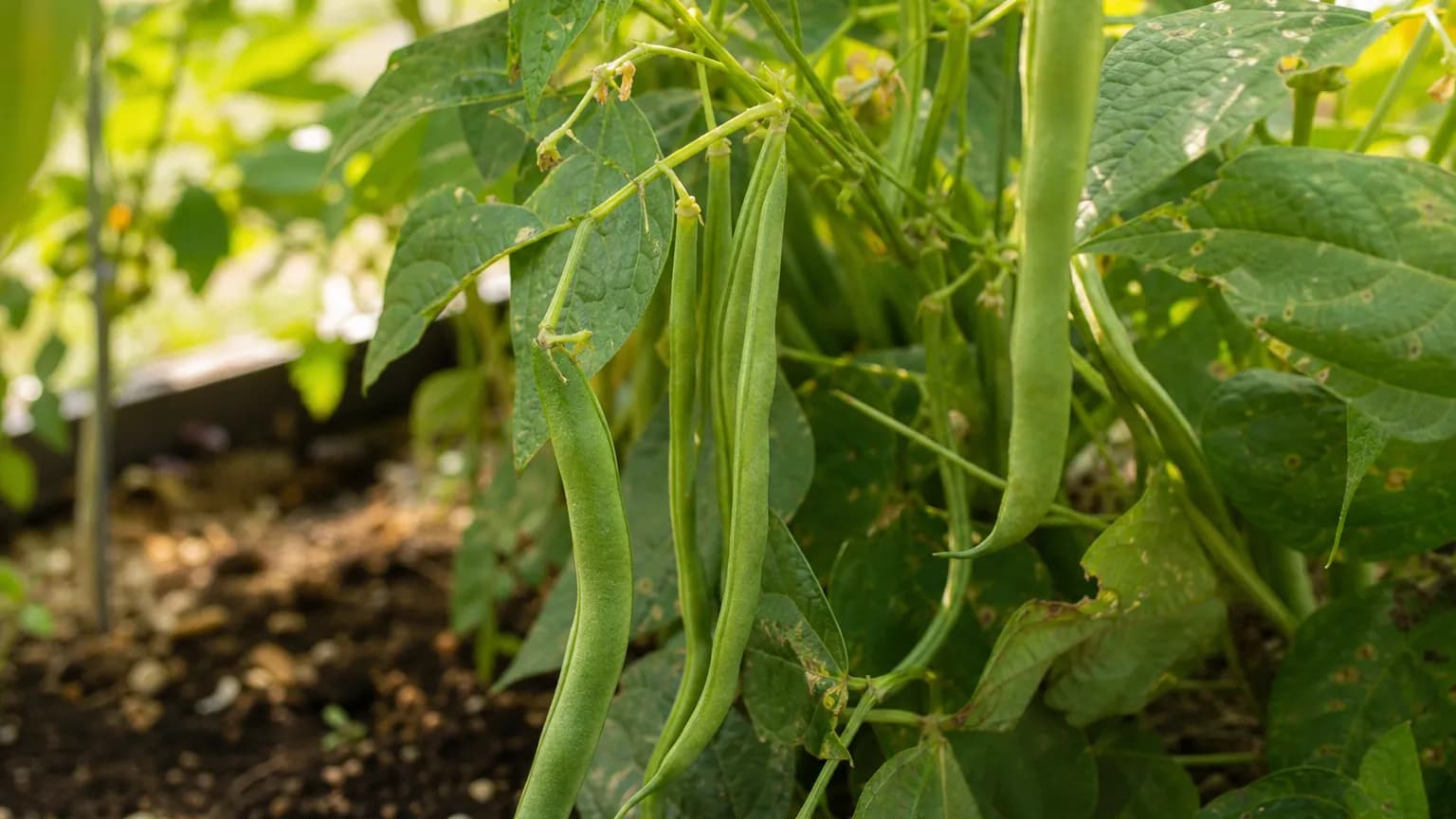
Solo-Knoblauch folgt den gleichen Mischkulturprinzipien wie regulärer Knoblauch. In der Nähe von Tomaten pflanzen, um Rote Spinne abzuwehren, und neben Rosen, um Blattläuse fernzuhalten. Die von den Knoblauchwurzeln abgegebenen Schwefelverbindungen können Pilzkrankheiten bei Nachbarpflanzen unterdrücken. Zwischen Karotten pflanzen, deren Duft knoblauchspezifische Schädlinge verwirren kann. Von Erbsen, Bohnen und anderen Hülsenfrüchten fernhalten, da Alliumgewächse die stickstofffixierenden Bakterien in deren Wurzelknöllchen hemmen können. Rote Bete und Salat sind gute Reihennachbarn, die den Platz effizient nutzen.
Tomate gehört daneben. Erbsen nicht.
Altes Gärtnerwissen, geprüft an der echten Nachbartabelle von Solo-Knoblauch — teste jede Pflanze, die du anbaust.
Probiere Solo-Knoblauch direkt hier im Beet
Ein echtes Planer-Beet, Solo-Knoblauch steht schon drin. Tippe einen Begleiter an, platziere ihn und sieh, wie die Nachbarschaftsprüfung antwortet — grün für gute Nachbarn, rot bei Streit.


Passende Anbau-Ratgeber
Richtig düngen
Solo-Knoblauch gedeiht am besten in lockerem, fruchtbarem, gut durchlässigem Boden mit einem pH-Wert zwischen 6,0 und 7,0. Arbeiten Sie vor dem Pflanzen großzügig gut verrotteten Kompost oder abgelagerten Mist ein, um ausreichende Nährstoffreserven für die lange Wachstumsperiode zu gewährleisten. Phosphor ist besonders wichtig für die Knollenentwicklung, daher Knochenmehl mit einer Menge von einer Tasse pro drei Meter Reihe einarbeiten. Im zeitigen Frühjahr eine stickstoffreiche Nachdüngung wie Blutmehl ausbringen, wenn das Wachstum wieder einsetzt. Übermäßigen Stickstoff nach Mitte Frühling vermeiden, da er das Blattwachstum auf Kosten der Knollenbildung fördert.
Ideale Temperatur
Winterhärtezone-Kompatibilität
Von der Saat zur Ernte, Schritt für Schritt
Pflanzung
Ganze Solo-Knoblauchknollen oder kleine einzelne Zehen von Standardknoblauch werden im Herbst 5–8 cm tief gepflanzt. Anders als bei regulärem Knoblauch, der aus getrennten Zehen gepflanzt wird, wird Solo-Knoblauch oft durch gezieltes Pflanzen unterdimensionierter Zehen erzeugt, die nicht genügend Energie haben, sich zu unterteilen. Wurzeln beginnen sich innerhalb von 1–2 Wochen zu bilden, wenn die Bodentemperaturen zwischen 10–15 °C liegen.
Wurzelbildung & Winterruhe
Die Wurzeln entwickeln sich während des Spätherbstes, während das oberirdische Wachstum minimal oder gar nicht vorhanden sein kann. Die Knolle tritt in die Winterruhe ein und benötigt eine Vernalisationsperiode von 6–10 Wochen bei Temperaturen unter 10 °C, um ein ordnungsgemäßes Frühjahrswachstum auszulösen. Eine dicke Mulchschicht isoliert die Knollen gegen extreme Frost-Tau-Zyklen.
Frühjahrswachstum
Grüne Triebe erscheinen im zeitigen Frühjahr und durchstoßen die Mulchschicht, wenn die Bodentemperaturen über 5 °C steigen. Solo-Knoblauch bildet schmaleres, kompakteres Laub als Standardknoblauch, typischerweise 4–6 Blätter mit 30–40 cm Höhe. Die einzelne Knolle beginnt unterirdisch zu schwellen, wenn die Tage länger werden.
Knollenentwicklung
Die kritische Phase, in der die einzelne Knolle auf ihre endgültige Größe anschwillt, angetrieben durch die in den grünen Blättern gespeicherte Energie. Anders als bei Standardknoblauch, wo jedes Blatt einer Zehenhülle entspricht, lenkt Solo-Knoblauch die gesamte Blattenergie in eine einzelne runde Knolle. Die Knolle entwickelt in dieser Phase ihre papierartigen äußeren Hautschichten.
Reifung & Ernte
Die unteren Blätter beginnen zu vergilben und abzusterben, was signalisiert, dass die Knolle ihre volle Größe erreicht hat. Wenn 3–4 untere Blätter gebräunt sind, die oberen Blätter aber noch grün sind, ist die Knolle erntereif. Solo-Knoblauchknollen haben typischerweise 2,5–4 cm Durchmesser – kleiner als Standardknoblauch, aber perfekt rund und fest.
Im Herbst pflanzen, 4–6 Wochen bevor der Boden gefriert, damit sich die Wurzeln vor der Winterruhe etablieren. Wählen Sie die kleinsten Zehen aus Ihrer Knoblauchernte oder besorgen Sie spezielles Solo-Knoblauch-Pflanzgut für die zuverlässigste Einzelknollenbildung.
Solo-Knoblauch Monat für Monat pflegen
Was du jeden Monat für deine Solo-Knoblauch tun solltest
Oktober
Aktueller MonatHauptpflanzmonat für die meisten Zonen. Knollen 5–8 cm tief, 10–15 cm auseinander in gut durchlässigen, mit Kompost angereicherten Boden pflanzen. Nach dem Pflanzen gut angießen. Erste Mulchschicht nach dem Pflanzen auftragen.
Immer wissen, was jetzt im Garten zu tun ist
Eine E-Mail zum Monatsanfang: was du jetzt säen, pflanzen und anpacken solltest — für deine Solo-Knoblauch und alles, was drumherum wächst. Dazu ein kurzer Startkurs, der dich vor den klassischen Fehlern bewahrt.
- Was jetzt zu tun ist
- Passend zu deiner Saison
- Startkurs inklusive
Solo-Knoblauch ernten
Solo-Knoblauch ernten, wenn die unteren drei oder vier Blätter eingetrocknet und braun geworden sind, die oberen Blätter aber noch grün sind. Den Boden vorsichtig mit einer Grabgabel lockern und die Knollen behutsam herausheben, um Druckstellen zu vermeiden. Jede Knolle sollte eine glatte, runde einzelne Zehe von etwa 3–5 cm Durchmesser sein. Die Knollen zwei bis drei Wochen an einem warmen, trockenen, gut belüfteten Ort ohne direkte Sonneneinstrahlung trocknen lassen, bis die äußere Haut papierartig ist. Wurzeln abschneiden und Stängel etwa 2 cm über der Knolle kürzen zur Lagerung.
angenommen, du pflanzt zu Beginn des Zeitraums — trage dein tatsächliches Datum ein
Aus Zwiebeln, Knollen oder Zehen
Ernte Solo-Knoblauch zügig, dann trägt die Pflanze weiter.
Lagerung & Konservierung
Getrockneter Solo-Knoblauch hält sich drei bis fünf Monate an einem kühlen, trockenen Ort mit guter Luftzirkulation bei Temperaturen zwischen 10 und 15 Grad Celsius. Die Einzelzehen-Struktur bedeutet weniger Oberfläche, die der Luft ausgesetzt ist, was die Lagerung im Vergleich zu normalem Knoblauch leicht verlängern kann. Für längere Haltbarkeit die Zehen schälen und ganz in luftdichten Behältern einfrieren oder in Scheiben schneiden und für Knoblauch-Chips trocknen. Solo-Knoblauch eignet sich hervorragend zum Ganz-Rösten und Einlegen in Olivenöl, wobei in Öl eingelegter Knoblauch gekühlt und innerhalb einer Woche verbraucht werden muss, um Botulismusrisiken zu vermeiden.
Was schiefgeht — und die Lösung
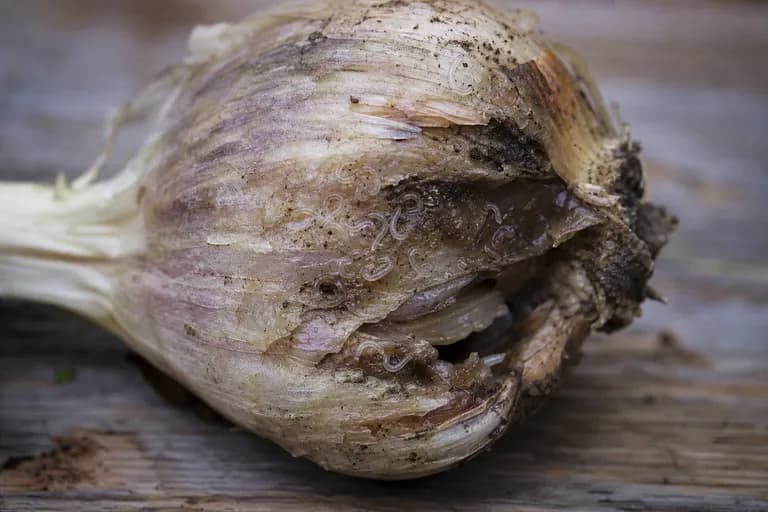
Knoblauch-Stängelälchen
SchädlingGeschwollene, verformte Stängel und Blätter, verkümmertes Wachstum sowie weiche, schwammige Knollen, die sich im Lager schnell zersetzen.
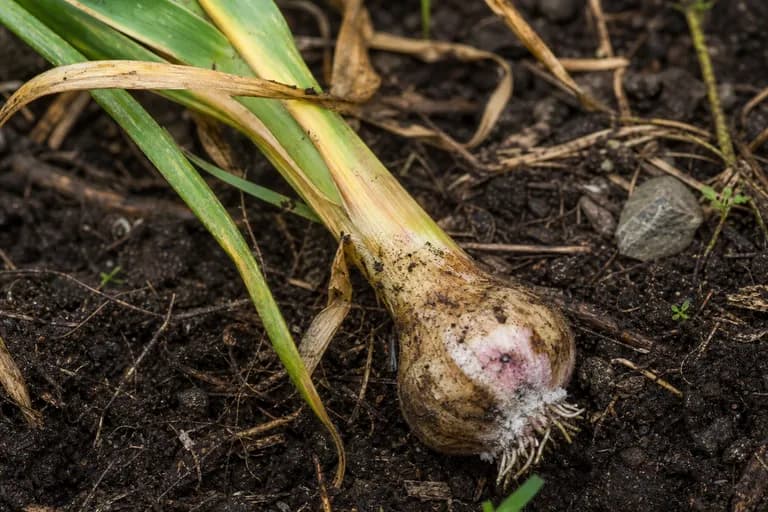
Fusarium-Basalfäule
KrankheitVorzeitiges Vergilben der Blätter, beginnend an den Spitzen, wässrige Läsionen an der Basalplatte und weißer oder rosa Pilzbefall an der Knollenbasis.
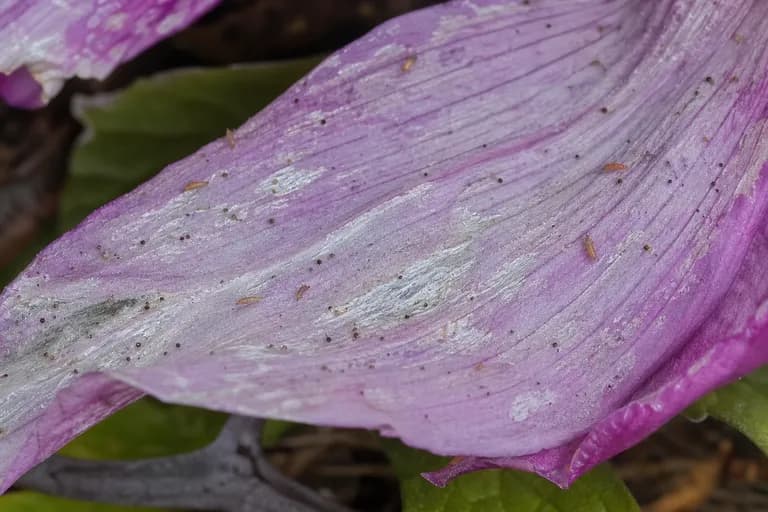
Thripse
SchädlingSilbrige Streifen und Sprenkelung auf den Blättern, verformtes Wachstum und verminderte Vitalität. Starker Befall lässt die Blätter braun werden und verwelken.
Fehlerbehebung bei häufigen Problemen
Die größte Herausforderung bei Solo-Knoblauch ist die konsequente Erzeugung einzehiger Knollen. Wenn das Pflanzgut zu groß ist, teilen sich die Knollen in mehrere Zehen. Wählen Sie nur die kleinsten Zehen oder verwenden Sie Brutzwiebeln aus dem ersten Jahr für eine zuverlässige Solo-Knollenproduktion. Vorzeitiges Austreiben während der Lagerung deutet auf zu warme Temperaturen oder zu hohe Luftfeuchtigkeit hin. Rostpilz kann bei nassem Frühlingswetter als orangefarbene Pusteln auf den Blättern erscheinen; die Schwere lässt sich durch bessere Luftzirkulation und Vermeidung von Überkopfbewässerung reduzieren. Kleine Knollen können das Ergebnis unzureichender Wachstumszeit, schlechter Bodenfruchtbarkeit oder Unkrautkonkurrenz sein.
Anbautipps
- Um gezielt Solo-Knoblauch zu erzeugen, pflanzen Sie die kleinsten Zehen aus Ihrer Knoblauchernte – Zehen unter 1,5 g haben typischerweise nicht genug gespeicherte Energie, um sich in mehrere Zehen zu unterteilen, und bilden zuverlässig einzelne runde Knollen.
- Das Pflanzen von Standard-Knoblauchzehen im Frühjahr (ohne Herbst-Vernalisation) ist eine weitere zuverlässige Methode zur Erzeugung von Solo-Knollen, da unzureichende Kälteeinwirkung die Zehenteilung verhindert. Der Kompromiss sind kleinere Knollen als bei im Herbst gepflanztem Material.
- Hervorragende Drainage ist absolut entscheidend. Solo-Knoblauchknollen sind anfälliger für Fäulnis als mehrzehige Köpfe, da ihre kompakte Form Feuchtigkeit zurückhält. Hochbeete oder sandig-lehmige Böden bringen die gesündesten Knollen hervor.
- In engerem Abstand als bei Standardknoblauch pflanzen – 10–15 cm zwischen den Knollen gegenüber 15–20 cm bei mehrzehigem Knoblauch. Die kleinere endgültige Knollengröße ermöglicht engere Pflanzung und maximiert den Ertrag pro Fläche.
- Blütenstängel sofort entfernen, sobald sie erscheinen. Solo-Knoblauchpflanzen haben begrenzte Energiereserven, und die Entwicklung von Blütenstängeln lenkt Ressourcen vom Knollenwachstum ab, was zu untergroßen Knollen führt.
- Starke Stickstoffdüngung vermeiden, nachdem die Knollenschwellung im Spätfrühling begonnen hat. Überschüssiger Stickstoff fördert Blattwachstum auf Kosten der Knollenentwicklung und kann die Reifung verzögern, was die Lagerfähigkeit verringert.
- Der Erntezeitpunkt ist bei Solo-Knoblauch kritischer als bei Standardsorten. Die dünne einlagige Hülle reißt leicht, wenn die Knollen zu lange im Boden bleiben. Umgehend ernten, wenn die unteren Blätter bräunen, und sorgfältig trocknen.
- Die besten Solo-Knollen für die Wiederaussaat aufbewahren. Über aufeinanderfolgende Jahreszeiten können Sie einen Stamm entwickeln, der zuverlässig gut geformte, große Einzelzehen-Knollen hervorbringt, die an Ihre spezifischen Anbaubedingungen angepasst sind.
Bau deine beste Solo-Knoblauch an — und alles drumherum.
Starte heute kostenlos. Lege deine Beete an, setze deine Solo-Knoblauch ein und lass PlotMyGarden Timing, Abstände, Begleiter und Erinnerungen von der Saat bis zum Erntekorb übernehmen.
Finde deine Solo-Knoblauch
Asiatischer Solo
Der häufigste Solo-Knoblauch-Typ, der glatte, runde Einzelzehen mit mildem, süßem Geschmack produziert, beliebt in der südostasiatischen Küche.
Yunnan Solo
Ursprünglich aus der chinesischen Provinz Yunnan stammend, liefert diese Sorte gleichmäßig runde Knollen mit einem vollen, kräftigen Knoblauchgeschmack.
Perlen-Knoblauch
Eine kommerziell beliebte Solo-Sorte mit strahlend weißer Haut und mildem Geschmack, häufig in Feinkostläden zu finden.
Schwarzer Solo
Solo-Knoblauch, der zu schwarzem Knoblauch fermentiert wurde, mit süßem, balsamico-ähnlichem Geschmack und weicher, streichfähiger Textur.
Solo-Knoblauch kostet in Feinkostläden und auf asiatischen Märkten 18–33 € pro Kilogramm – etwa das 2- bis 3-Fache des Preises von Standardknoblauch. Der Eigenanbau aus kleinen Zehen, die sonst weggeworfen würden, verwandelt Abfall in ein Premiumprodukt. Eine Pflanzung von 50 Knollen (die im Grunde nichts kostet, wenn man aussortierte Zehen aus der regulären Knoblauchernte verwendet) kann 1–2 kg Solo-Knoblauch im Wert von 18–65 € zu Einzelhandelspreisen ergeben. Die eigentliche Ersparnis liegt darin, den Spezialitäten-Aufschlag zu vermeiden und einen ständigen Vorrat dieser praktischen Gourmet-Zutat zu haben.
Schnelle Rezepte
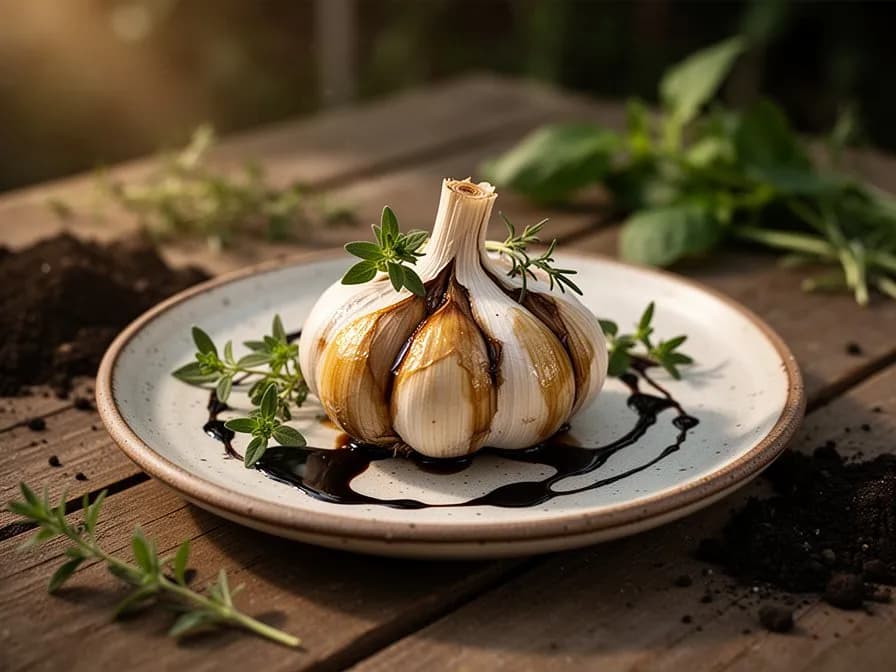
Im Ganzen gerösteter Solo-Knoblauch
35 Min.Solo-Knoblauchknollen im Ganzen geröstet, bis das Fleisch goldbraun, cremig und süß wird – ohne mühsames Zehentrennen. Die karamellisierte Paste lässt sich wie Butter auf knuspriges Brot streichen und verwandelt jedes Gericht.
5 ZutatenSolo-Knoblauch-Ingwer-Pfanne
15 Min.Dünn geschnittener Solo-Knoblauch und frischer Ingwer bilden die aromatische Basis für ein blitzschnelles Gemüse-Pfannengericht. Die gleichmäßige Knollengröße von Solo-Knoblauch macht die Vorbereitung mühelos – einfach schälen und schneiden.
7 ZutatenSolo-Knoblauch-Confit
50 Min.Geschälte Solo-Knoblauchknollen langsam in Olivenöl gegart, bis sie schmelzend zart und goldbraun sind – ein vielseitiges Würzmittel, das sich wochenlang im Kühlschrank hält. Den Knoblauch in Saucen verwenden und das aromatisierte Öl für alles von Salatdressings bis Pasta.
6 ZutatenKulinarische Verwendung
Solo-Knoblauch wird wegen seiner Bequemlichkeit geschätzt, da es nichts auseinanderzunehmen gibt. Der milde, leicht süße Geschmack macht ihn ideal zum Ganz-Rösten, bis er goldbraun und cremig wird. In dünne Scheiben schneiden für elegante Garnierungen auf Bruschetta und Fladenbrot. Zerdrücken für schnelle Pfannengerichte unter der Woche, bei denen das Trennen einzelner Zehen die Zubereitung verlangsamen würde. Die runde Form eignet sich perfekt zum Einlegen in Essig oder zum Fermentieren zu schwarzem Knoblauch mit seiner charakteristischen Umami-Süße.
Was drinsteckt
Gesundheitsvorteile
- Solo-Knoblauch enthält konzentriertes Allicin, die Schwefelverbindung, die für die gut dokumentierten kardiovaskulären Vorteile von Knoblauch verantwortlich ist, darunter Blutdrucksenkung, LDL-Cholesterin-Reduktion und Verbesserung der arteriellen Flexibilität.
- Reich an Organoschwefelverbindungen (Diallyldisulfid, S-Allylcystein), die in zahlreichen klinischen Studien entzündungshemmende und antioxidative Eigenschaften gezeigt haben.
- Enthält präbiotische Ballaststoffe (Inulin und Fructooligosaccharide), die gezielt nützliche Lactobacillus- und Bifidobacterium-Darmbakterien ernähren und die Verdauungsgesundheit und Immunfunktion unterstützen.
- Liefert Mangan (23 % TW pro 100 g), Vitamin B6 (62 % TW pro 100 g) und Selen (14 % TW pro 100 g) – ein Trio von Nährstoffen, die für die antioxidative Abwehr, Nervenfunktion und Schilddrüsengesundheit essentiell sind.
- Traditionelle und moderne Forschung bestätigt die antimikrobiellen Eigenschaften von Knoblauch – Allicin ist wirksam gegen ein breites Spektrum von Bakterien, Pilzen und Viren und macht Knoblauch zu einem natürlichen Unterstützer des Immunsystems.
- Studien deuten darauf hin, dass regelmäßiger Knoblauchkonsum die Blutzuckerregulierung durch Verbesserung der Insulinsensitivität verbessern kann, wobei die höhere Allicin-Konzentration von Solo-Knoblauch möglicherweise verstärkte Vorteile bietet.
Woher Solo-Knoblauch stammt
Solo-Knoblauch (auch als einzehiger Knoblauch, Mono-Knoblauch oder Perlen-Knoblauch bekannt) ist keine eigene botanische Art, sondern eine Wuchsform von Allium sativum, die entsteht, wenn einzelne Knoblauchzehen sich zu runden, ungeteilten Knollen entwickeln, anstatt sich in die bekannte Zehenanordnung aufzuspalten. Dieses Phänomen tritt natürlich auf, wenn kleine Zehen gepflanzt werden, wenn die Vernalisation (Kälteeinwirkung) unzureichend ist oder wenn Pflanzen in großen Höhen mit kurzen Vegetationsperioden angebaut werden. Das Ergebnis ist eine glatte, runde Knolle etwa in der Größe einer großen Murmel oder kleinen Walnuss, mit einer einzelnen festen Masse Knoblauchfleisch unter ihrer papierartigen Hülle.
Solo-Knoblauch wird seit Jahrhunderten in China und Südostasien anerkannt und gezielt kultiviert, wo er einen besonderen Platz in kulinarischen und medizinischen Traditionen einnimmt. Die Provinz Yunnan im Südwesten Chinas ist die wichtigste kommerzielle Anbauregion der Welt, wo Felder in 1.800–2.500 Metern Höhe auf natürliche Weise hohe Anteile an Einzelzehen-Knollen hervorbringen. Die Kombination aus Höhenlage, intensiver Sonneneinstrahlung, kühlen Temperaturen und gut durchlässigen Gebirgsböden schafft ideale Bedingungen für die Solo-Knollenbildung. Auch die vietnamesische, thailändische und koreanische Küche schätzt Solo-Knoblauch für seine Bequemlichkeit und sein Geschmacksprofil, das allgemein milder und etwas süßer ist als bei Standard-Knoblauchzehen.
Auf dem Weltmarkt hat Solo-Knoblauch seit den frühen 2000er Jahren sowohl als Gourmet-Zutat als auch als Gesundheitsprodukt erheblich an Beliebtheit gewonnen. Er wird in Feinkostläden in Europa, Nordamerika und Australien als Premiumprodukt vermarktet. Hobbygärtner haben zunehmend die Technik übernommen, gezielt kleine Zehen zu pflanzen oder Knoblauch ohne ausreichende Kälteeinwirkung anzubauen, um eigene Solo-Knollen zu erzeugen. Obwohl der Gesamtertrag pro Pflanze geringer ist als bei konventionellem Knoblauch, haben die einfache Schälbarkeit, die einheitliche Portionsgröße und der einzigartige kulinarische Reiz Solo-Knoblauch zu einer geschätzten Nischenkultur für Kleingärtner gemacht und zu einem faszinierenden Beispiel dafür, wie Anbaubedingungen die endgültige Form einer Pflanze grundlegend verändern können.
Solo-Knoblauch: Schon gewusst?
Faszinierende Fakten über Solo-Knoblauch
Solo-Knoblauch ist keine eigene Art – er entsteht, wenn eine einzelne Knoblauchzehe nicht genügend Energie oder Vernalisation hat, um sich in mehrere Zehen zu teilen, und stattdessen eine feste runde Knolle bildet. Jede Knoblauchsorte kann unter den richtigen Bedingungen Solo-Knollen hervorbringen.
Solo-Knoblauch: Fragen & Antworten
Wann sollte ich Solo-Knoblauch pflanzen?
Was sind gute Begleitpflanzen für Solo-Knoblauch?
In welchen Winterhärtezonen kann Solo-Knoblauch wachsen?
Wie viel Sonne braucht Solo-Knoblauch?
Welchen Abstand sollte ich zwischen Solo-Knoblauch lassen?
Welche Schädlinge und Krankheiten befallen Solo-Knoblauch?
Wie lagere ich Solo-Knoblauch nach der Ernte?
Was sind die besten Solo-Knoblauch-Sorten zum Anbauen?
Welchen Boden braucht Solo-Knoblauch?
Ist Solo-Knoblauch eine andere Sorte als normaler Knoblauch?
Schmeckt Solo-Knoblauch anders als normaler Knoblauch?
Wie bringe ich meinen normalen Knoblauch dazu, als Solo-Knollen zu wachsen?
Wie lange hält sich Solo-Knoblauch im Vergleich zu normalem Knoblauch?
Kann ich eine Solo-Knoblauchknolle pflanzen und wieder Solo-Knoblauch ernten?
Ist Solo-Knoblauch gesünder als normaler Knoblauch?
Du hast die Theorie gelesen. Jetzt baue sie auf Autopilot an.
Alles, was Solo-Knoblauch knifflig macht — das Timing, die Abstände, die Begleiter, das Erntefenster — genau das übernimmt PlotMyGarden für dich, für jede Pflanze im Garten.
Ein Plan, der dein Wetter kennt
Standort einmal festlegen. Aussaat-, Dünge- und Erntedaten rund um deinen echten letzten Frosttermin und die Live-Vorhersage — kein Raten mehr nach Saattüte.
Aus dem Abschnitt „Pflanzzeit“Beetplaner per Drag & Drop
Beete auf einem Raster gestalten. Jede Pflanze rastet im richtigen Abstand ein, und du siehst die ganze Saison, bevor du einen Cent für Saatgut ausgibst.
Aus dem Abschnitt „Anbau“Begleiter-Konflikte früh erkannt
Über 200 gute und schlechte Kombinationen werden beim Pflanzen live geprüft — so landet ein saisonruinierender Fehler nie in der Erde.
Aus dem Abschnitt „Begleiter“Erinnerungen, nach denen du wirklich handelst
„Gieß die Bohnen.“ „Heute ernten, bevor's umschlägt.“ Pünktlich, konkret und auf deine echten Pflanzen bezogen.
Aus dem Abschnitt „Ernte“Staffel-Aussaat, geplant
Sechs Wochen ernten statt sechs Tage? Die App verteilt deine Aussaaten automatisch und erinnert dich, wenn der nächste Satz fällig ist.
Aus dem Abschnitt „Pflanzzeit“Ein Verlauf, der schlauer wird
Jede protokollierte Ernte bringt der App deinen Garten bei. Der Plan fürs nächste Jahr startet bei dem, was in deinem Boden wirklich funktioniert hat.
Aus dem Abschnitt „Überblick“Pflanze diese neben Solo-Knoblauch
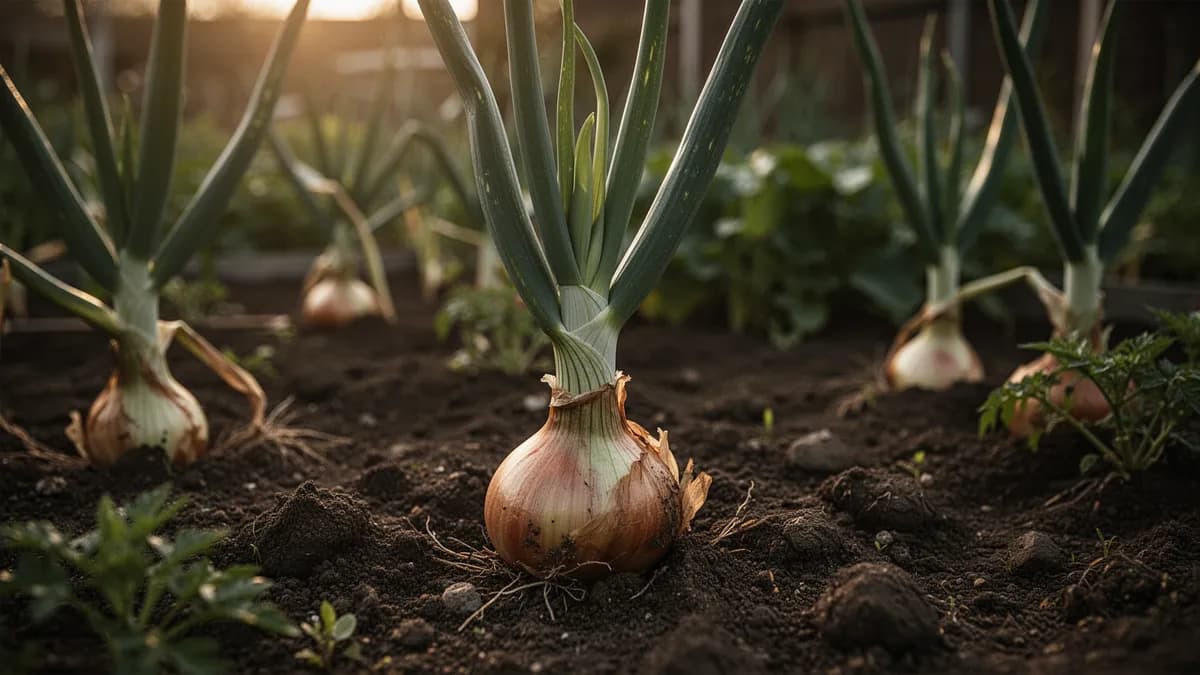
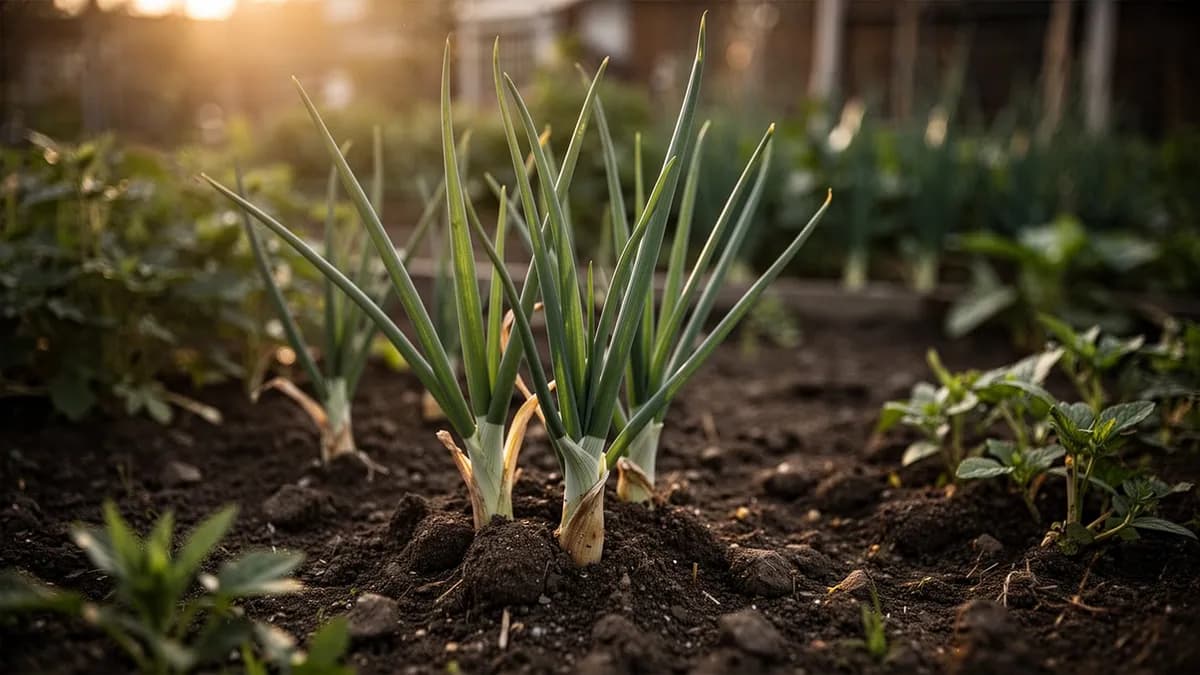
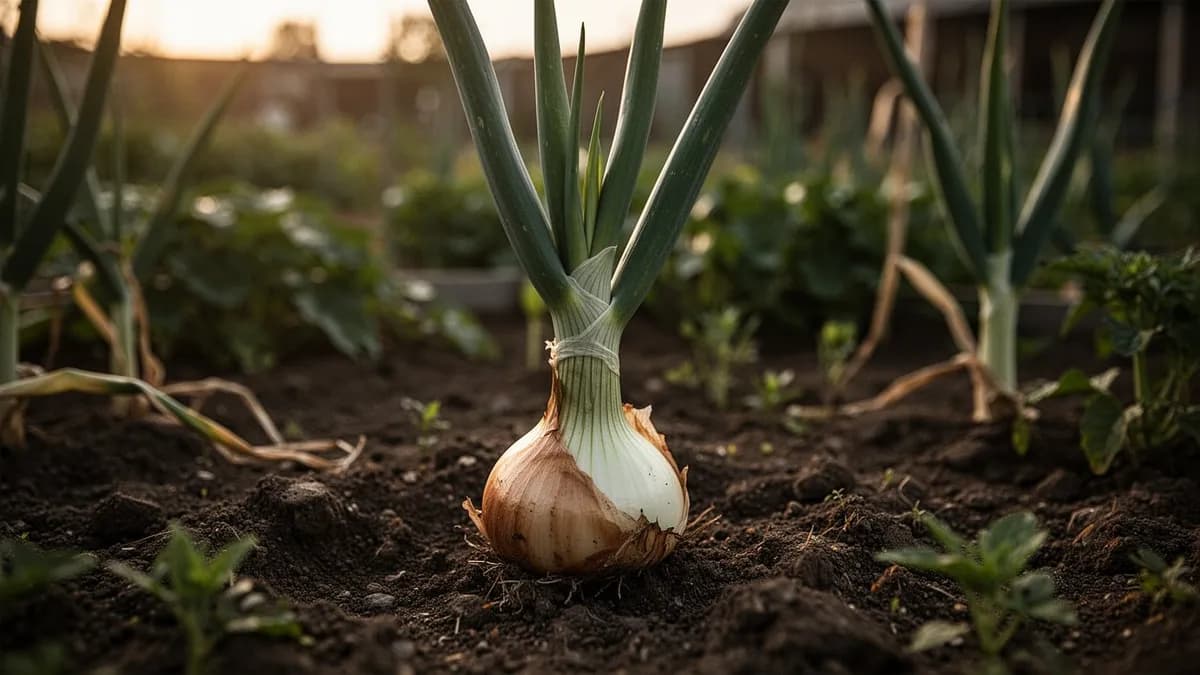
Weitere Lauchgewächse
Halte Solo-Knoblauch von diesen fern
Bau deine beste Solo-Knoblauch an — und alles drumherum.
Starte heute kostenlos. Lege deine Beete an, setze deine Solo-Knoblauch ein und lass PlotMyGarden Timing, Abstände, Begleiter und Erinnerungen von der Saat bis zum Erntekorb übernehmen.