Narciso doble
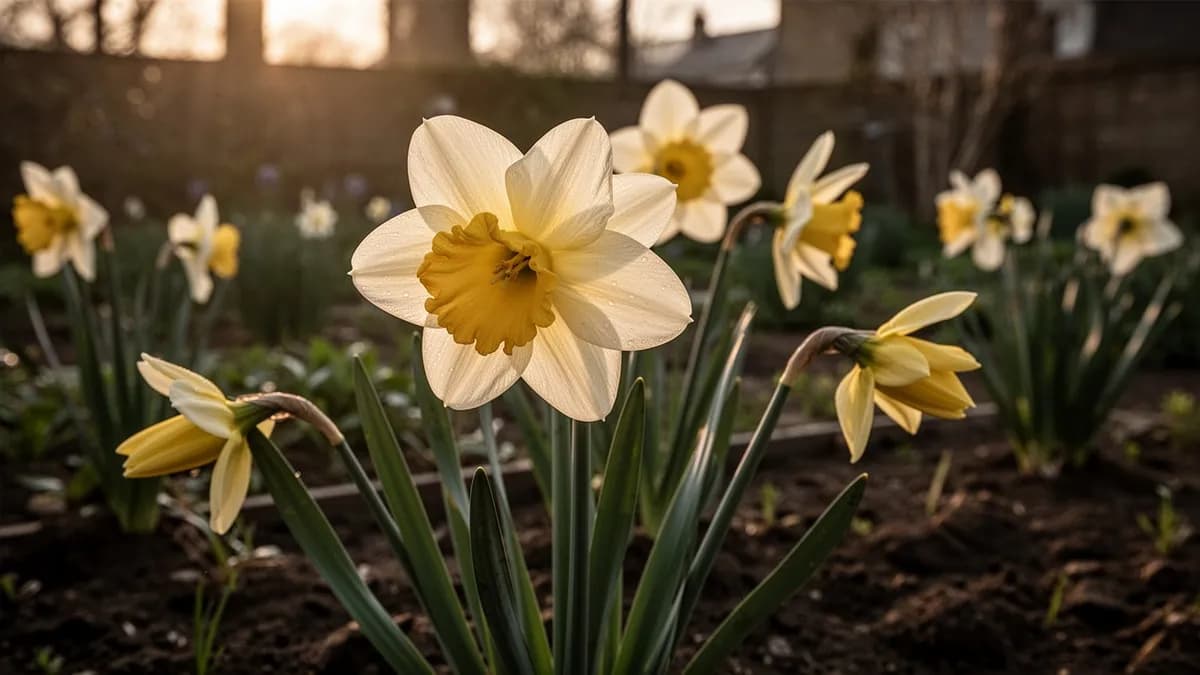
Una variedad fragante de narciso con flores rizadas y totalmente dobles que se parecen a pequeñas rosas y florecen a mediados o finales de la primavera.





En esta páginaResumen
Conoce Narciso doble
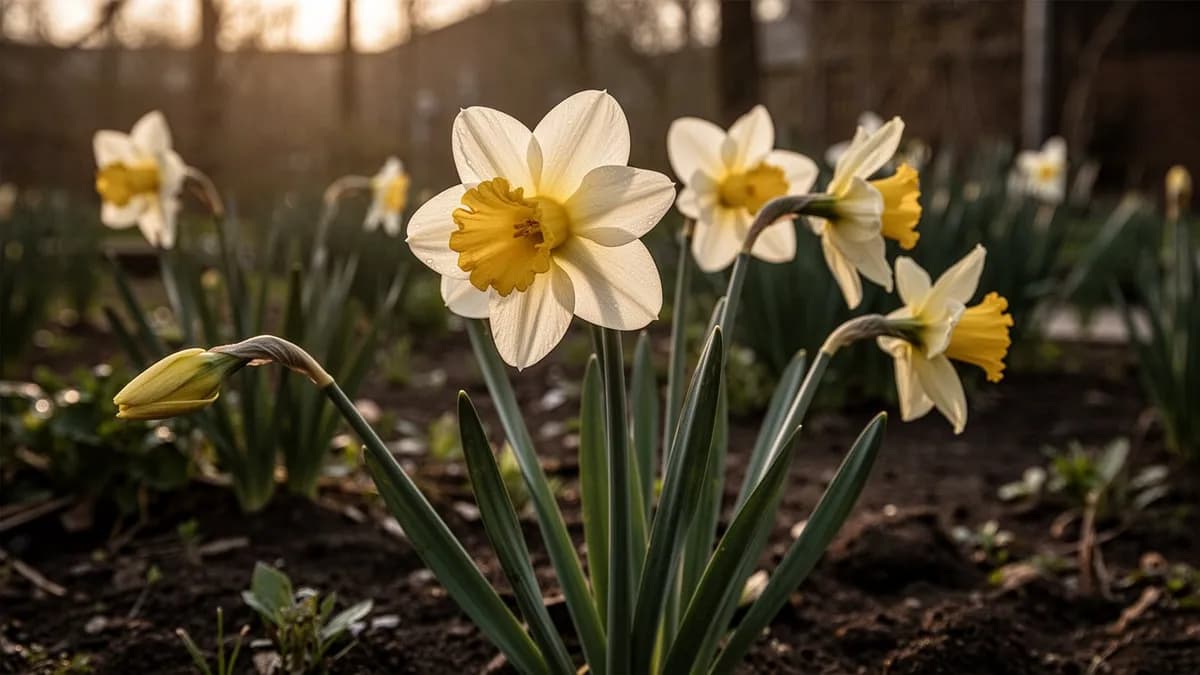
Una variedad fragante de narciso con flores rizadas y totalmente dobles que se parecen a pequeñas rosas y florecen a mediados o finales de la primavera. Los narcisos dobles producen varias flores por tallo y son excelentes como flor cortada gracias a su perfume dulce. Se naturalizan bien y las flores pesadas pueden necesitar resguardo frente a los vientos fuertes de primavera.
Cuándo plantar Narciso doble
Los narcisos dobles se multiplican mediante bulbos hijos. Levante las matas demasiado apretadas después de que el follaje se marchite, separe los bulbos y replántelos de inmediato a la profundidad correcta. Incluso los pequeños bulbos hijos florecerán en 1-2 años. La propagación por semilla produce resultados variables y tarda 4-5 años en florecer; la división de bulbos es siempre la opción preferida.
Tu año de Narciso doble
Ajustado a Zona 7 · temporada típica · la helada se va hacia el 2 abr y vuelve hacia el 1 nov
Planta Narciso doble Sep – Nov y cosecha Mar – May. Consulta los métodos de plantación y elige tu clima para adaptar los periodos.
Cómo cultivar Narciso doble
Los narcisos dobles producen flores lujosamente rizadas y con muchos pétalos que recuerdan a pequeñas rosas o peonías más que a los narcisos trompeta tradicionales. Muchas variedades son deliciosamente fragantes y producen varias flores por tallo. Con una altura de 30-45 cm, florecen a mediados o finales de la primavera, prolongando la temporada de narcisos más allá de las variedades trompeta tempranas.
Plante los bulbos en otoño a 15 cm de profundidad en un suelo bien drenado y moderadamente fértil. Los narcisos dobles son perennes fiables que se naturalizan bien y aumentan con el tiempo. Sepárelos 15 cm entre sí en grupos para lograr la exhibición más atractiva. La ubicación resguardada es especialmente importante para las variedades dobles, ya que las flores pesadas y completamente llenas son más vulnerables al daño por viento y lluvia que las simples.
Deje que el follaje se marchite de forma natural durante al menos 6 semanas después de la floración. Aplique fertilizante rico en potasio cuando las flores se marchiten para fortalecer los bulbos. Divida las matas demasiado apretadas cuando la floración disminuya, normalmente cada 4-5 años.
128 plantas caben en un bancal de 120 × 240 cm
Cada Narciso doble pide 15 cm de margen. El planificador guarda ese marco por ti — cada planta, cada bancal.
Los mejores vecinos de Narciso doble
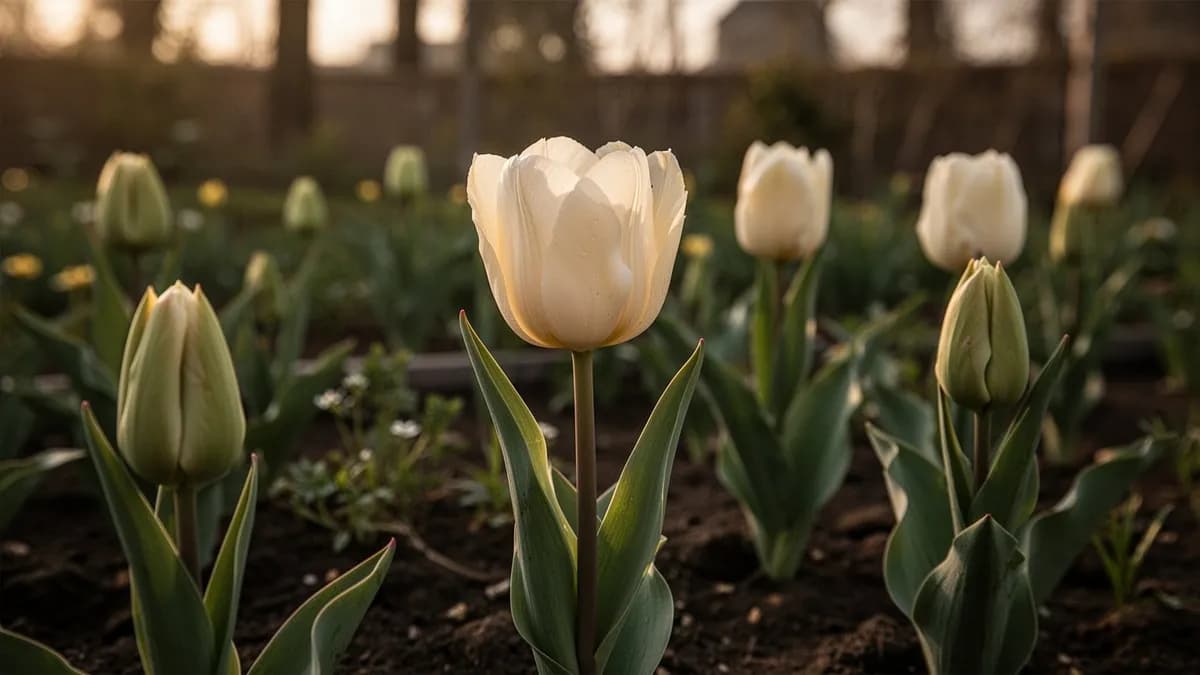
Los narcisos dobles combinan de maravilla con tulipanes, jacintos y jacintos de uva para una opulenta exhibición primaveral. Las variedades fragantes quedan estupendas plantadas cerca de senderos y entradas. Plántelos con violas, prímulas o nomeolvides como cobertura baja. Los tallos con varias flores aportan un aire generoso y de jardín campestre en borduras y contenedores.
Narciso va a su lado.
Saber de huerto de siempre, cotejado con la tabla real de Narciso doble — prueba cualquier planta que cultives.
Prueba Narciso doble en un bancal, aquí mismo
Un bancal real del planificador con Narciso doble ya plantado. Toca una planta compañera para colocarla y mira cómo responde la comprobación de vecinos: verde para buenos vecinos, rojo si hay conflicto.


Guías de cultivo relacionadas
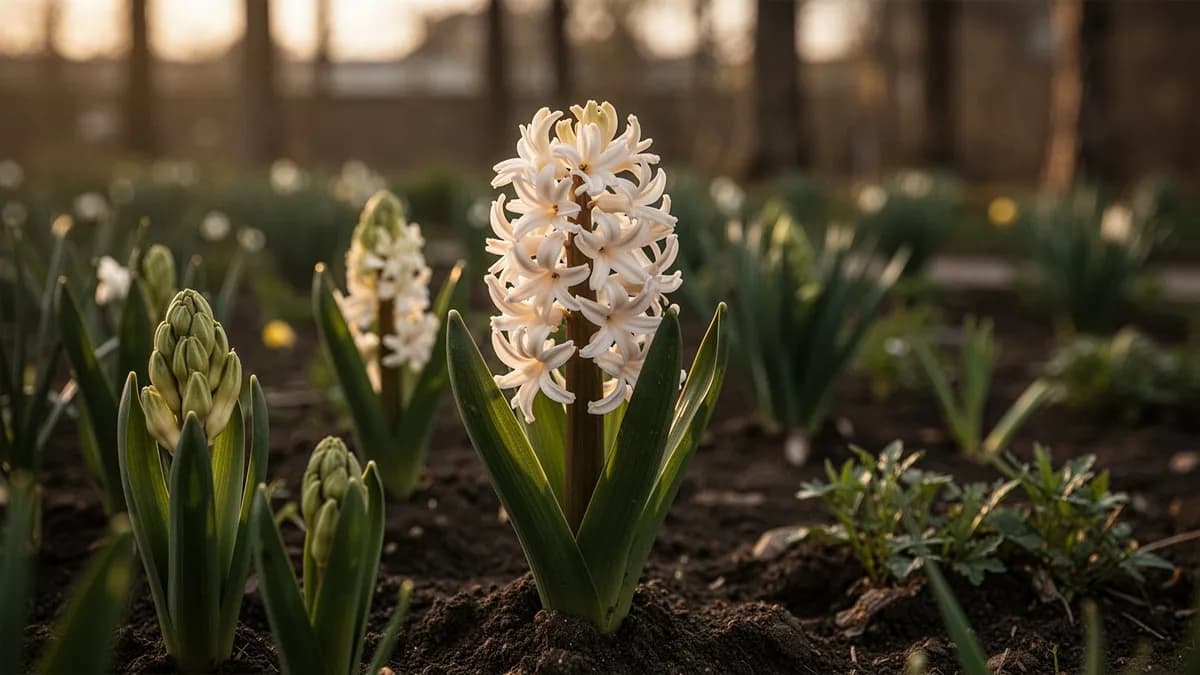
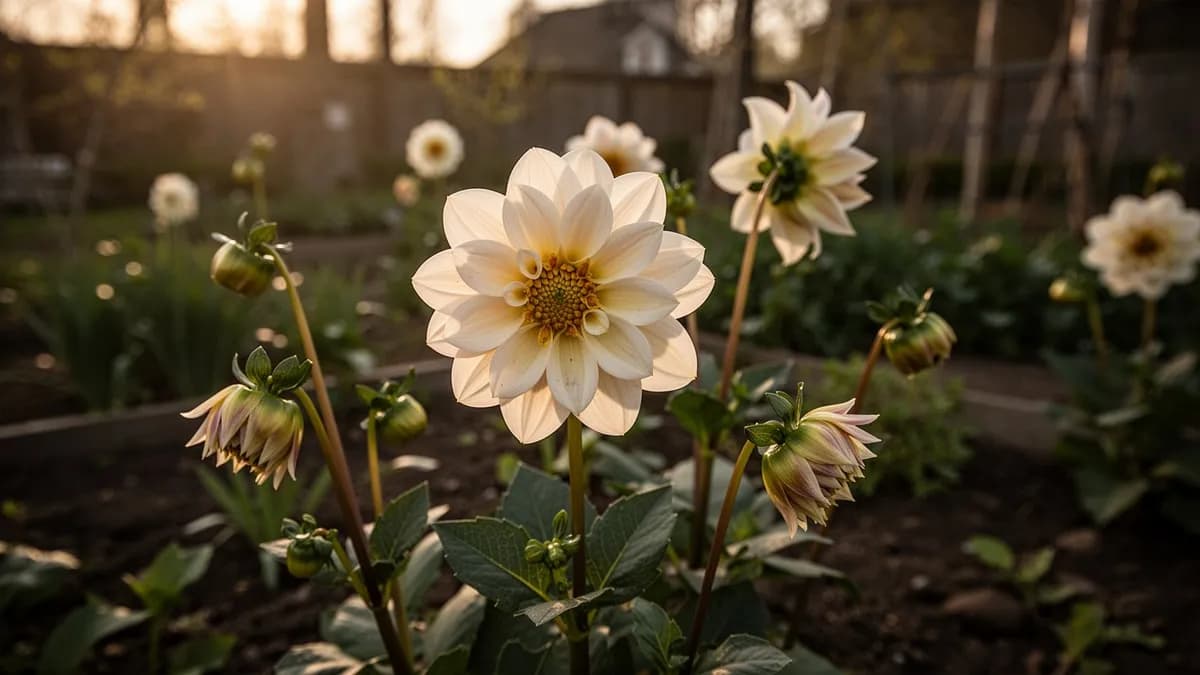
Abónalo bien
Los narcisos dobles crecen en cualquier suelo de jardín bien drenado con un pH de 6.0-7.5. Incorpore harina de hueso en el momento de plantar. Aporte fertilizante para bulbos en primavera cuando emerjan los brotes y de nuevo después de la floración con un abono rico en potasio. Acolche ligeramente para conservar la humedad durante la temporada de crecimiento.
Temperatura ideal
Compatibilidad de zonas de rusticidad
De la semilla a la cosecha, etapa por etapa
Plantación del bulbo y establecimiento de raíces
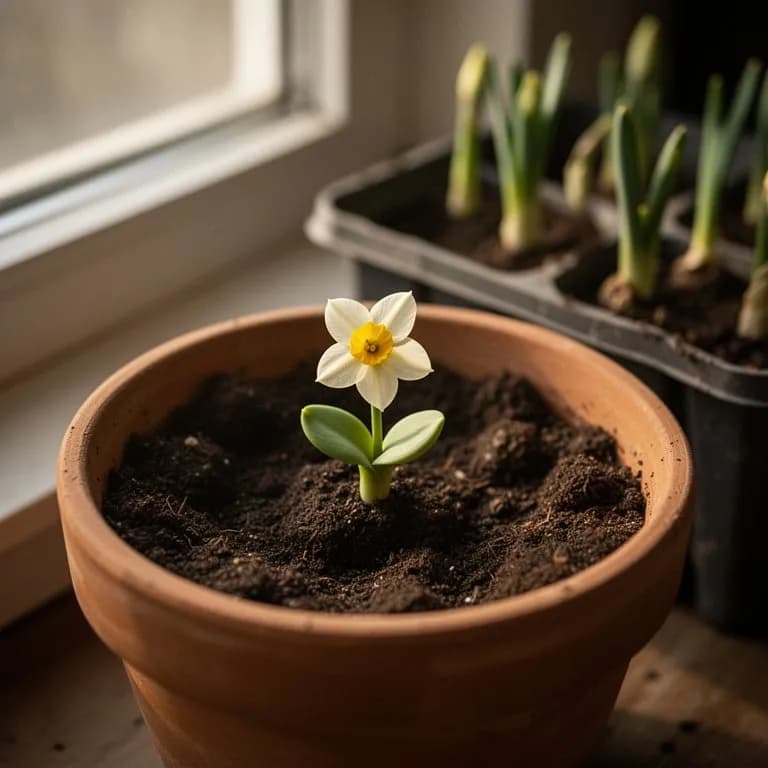
Los bulbos de narciso doble se plantan en otoño, idealmente de seis a ocho semanas antes de la primera helada fuerte. Una vez colocados en el suelo a una profundidad de 15 a 20 centímetros, los bulbos empiezan de inmediato a desarrollar un sistema radicular extenso. Las raíces anclan el bulbo y comienzan a absorber humedad y nutrientes del suelo circundante. Las temperaturas frescas del suelo, entre 4 y 10 grados Celsius, son esenciales para desencadenar el inicio de las raíces. El bulbo contiene toda la energía almacenada y el botón floral embrionario necesarios para la siguiente primavera.
Reposo invernal y vernalización
Durante los meses fríos del invierno, el bulbo entra en reposo mientras continúa con lentos procesos bioquímicos bajo tierra. Este periodo de frío prolongado, conocido como vernalización, es crucial para el desarrollo floral. El bulbo necesita al menos doce a dieciséis semanas con temperaturas por debajo de 10 grados Celsius para formar correctamente los botones florales. Sin el enfriamiento adecuado, los narcisos dobles pueden producir follaje pero no florecer. El sistema radicular sigue desarrollándose lentamente incluso cuando no hay crecimiento visible sobre el suelo.
Aparición de brotes primaverales
Cuando las temperaturas del suelo empiezan a subir a finales del invierno o comienzos de la primavera, los brotes verdes rompen la superficie. Las hojas emergentes son gruesas, en forma de cinta y de color verde azulado. El crecimiento puede ser sorprendentemente rápido durante los periodos suaves, con brotes que ganan varios centímetros por semana. El capullo floral queda anidado en el centro del grupo de hojas, protegido mientras se desarrolla. Los narcisos dobles suelen emerger un poco más tarde que las variedades simples debido a la estructura floral más compleja que se forma en el interior del capullo.
Desarrollo del capullo y floración
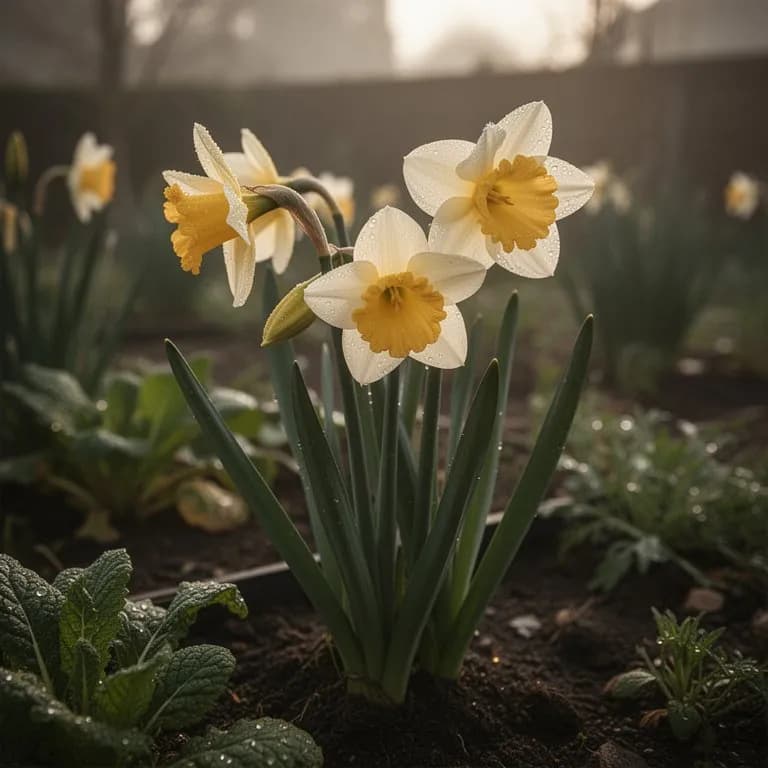
El tallo floral se alarga y el capullo se hace visible dentro de su espata papirácea. A medida que la espata se abre, la flor de múltiples capas comienza a desplegarse. Las flores de narciso doble son notablemente más pesadas que las simples debido a sus pétalos extra, que pueden ir desde doce hasta más de cuarenta según el cultivar. El periodo de floración varía según la variedad, pero por lo general dura de dos a cuatro semanas. Las flores aparecen en tonos amarillos, blancos, naranjas y rosados, con muchas combinaciones bicolores disponibles. El pico de floración suele producirse de mediados de marzo a abril en la mayoría de climas templados.
Maduración del follaje tras la floración
Después de terminar la floración, el follaje permanece verde y fotosintéticamente activo durante seis a ocho semanas. Este periodo es fundamental porque las hojas están fabricando y almacenando carbohidratos en el bulbo para la floración del año siguiente. El follaje amarillea y se marchita gradualmente a medida que el bulbo entra en su fase de dormancia estival. Dar prisa en retirar el follaje verde debilita mucho el bulbo y reduce la floración futura. Durante esta fase, el bulbo también empieza a producir bulbitos hijos alrededor de su base, que es el principal medio de propagación natural.
Reposo estival y división de bulbos
Una vez que el follaje se ha marchitado por completo, el bulbo entra en dormancia estival. Dentro del bulbo, el capullo floral del año siguiente ya empieza a formarse mediante un proceso llamado iniciación floral. Este es el momento ideal para levantar y dividir las matas abarrotadas si la floración ha disminuido. Los bulbos sanos habrán producido uno o más bulbitos hijos que pueden separarse y replantarse para ampliar la colección. Los bulbos dejados en tierra permanecerán en reposo hasta que las temperaturas del suelo en otoño desciendan lo suficiente para desencadenar un nuevo ciclo de crecimiento de raíces.
Riegue bien los bulbos después de plantarlos para asentar la tierra y favorecer el crecimiento de raíces. Añada una capa de mantillo para aislar contra las fluctuaciones de temperatura.
Cuidar Narciso doble mes a mes
Qué hacer cada mes para tu Narciso doble
Octubre
Mes actualMes de plantación principal para los bulbos de narciso doble en la mayoría de las regiones templadas. Plante a una profundidad de 15 a 20 centímetros y separe los bulbos de 10 a 15 centímetros. Riegue bien después de plantar para iniciar el crecimiento de las raíces.
Ten claro qué hacer en tu huerto, cada mes
Un correo al empezar cada mes: qué sembrar, plantar y hacer ahora mismo — para tu Narciso doble y todo lo que crece alrededor. Más un breve curso inicial para esquivar los errores clásicos.
- Qué hacer ahora mismo
- Ajustado a tu temporada
- Curso inicial incluido
Cosechar Narciso doble
Los narcisos dobles son flores cortadas excepcionales, apreciadas por su fragancia y por sus lujosas flores de muchos pétalos. Córtelos cuando el capullo muestre color y apenas empiece a abrirse: seguirá desplegándose en el jarrón. Colóquelos en un jarrón solo durante las primeras 12 horas, ya que la savia del narciso puede acortar la vida de otras flores cortadas. Tras el acondicionamiento, combinan maravillosamente con tulipanes y otras flores de primavera.
se supone que plantas al comenzar el periodo — indica tu fecha real
A partir de bulbos, tubérculos o dientes
Cosecha Narciso doble a tiempo y la planta sigue produciendo.
Almacenamiento y conservación
Las flores de narciso doble se prensan bien para manualidades, aunque las flores gruesas tardan más en secarse que las simples. Para almacenar los bulbos, levante las matas demasiado apretadas después de que el follaje se marchite, sepárelos, déjelos secar a la sombra y guárdelos en bolsas de malla en un lugar fresco y seco hasta el trasplante otoñal. Lo mejor es dejar la mayoría de los narcisos dobles en la tierra sin perturbarlos.
Qué falla — y cómo solucionarlo
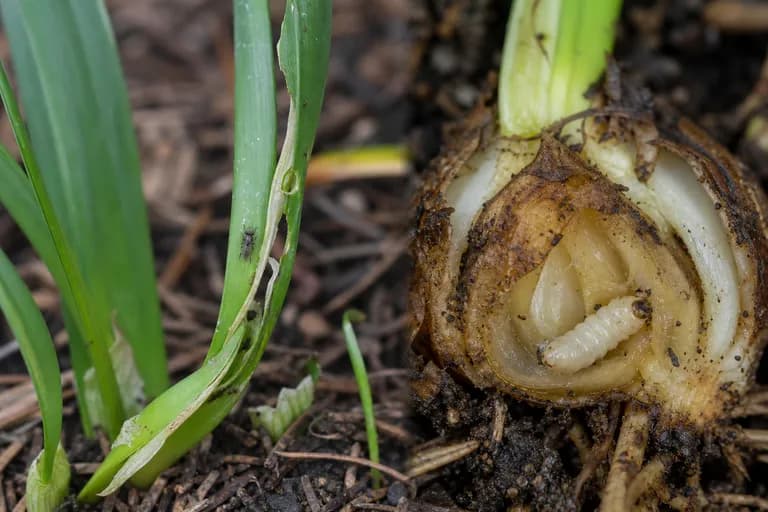
Mosca del narciso
PlagaLos bulbos producen follaje débil y no dan flores. Se encuentra una larva gorda vaciando el interior del bulbo.
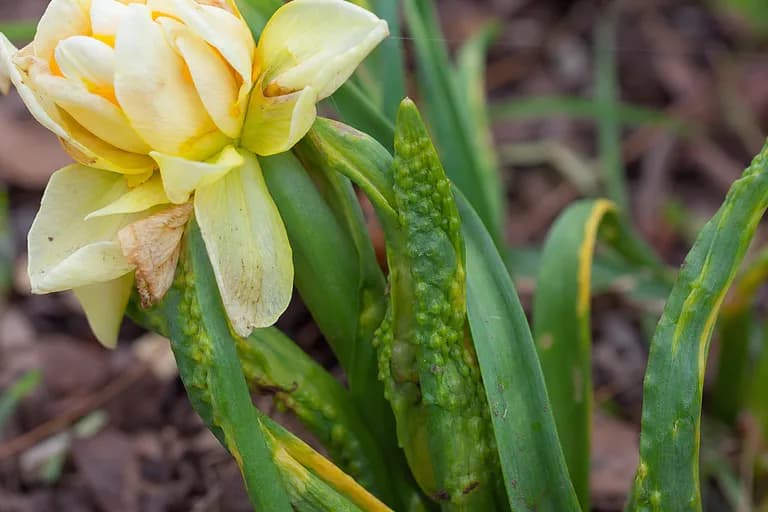
Nematodo del tallo
PlagaFollaje deformado y abultado con franjas amarillas. Las plantas quedan raquíticas y las flores deformadas. Se transmite por el suelo y por bulbos infectados.
Solución de problemas comunes
Las flores dobles pesadas son el tipo de narciso más vulnerable al daño por viento y lluvia: plántelas en lugares resguardados. Los bulbos 'ciegos' (solo hoja, sin flor) indican hacinamiento, plantación demasiado superficial o alimentación insuficiente. Divida las matas apretadas y abone con regularidad. Algunas variedades dobles son propensas al 'cuello de toro', es decir, producen mucho follaje pero no flores, lo que se soluciona dividiendo y replantando.
Consejos de cultivo
- Plante los bulbos de narciso doble en otoño a una profundidad equivalente a tres veces la altura del bulbo, aproximadamente de 15 a 20 centímetros, para protegerlos de las fluctuaciones de temperatura y dar suficiente anclaje a las flores pesadas.
- Elija un lugar con pleno sol o semisombra y suelo bien drenado. Los narcisos dobles se pudrirán en condiciones encharcadas, así que enmiende los suelos arcillosos pesados con arena gruesa, perlita o corteza compostada antes de plantar.
- Separe los bulbos entre 10 y 15 centímetros y plántelos en derivas irregulares de quince a veinticinco bulbos en lugar de en filas rectas para conseguir un aspecto natural, como de pradera.
- Aplique un fertilizante de liberación lenta para bulbos, rico en potasio y fósforo, en el momento de plantar y de nuevo cuando los brotes aparezcan en primavera. Evite los fertilizantes ricos en nitrógeno, que favorecen un follaje flácido a expensas de las flores.
- Sujete las variedades altas como 'Cheerfulness' y 'Bridal Crown' antes de que abran las flores, ya que las pesadas flores de muchos pétalos pueden hacer que los tallos se doblen o se partan con la lluvia y el viento.
- Nunca retire ni recorte el follaje hasta que se haya amarilleado y marchitado por completo, normalmente de seis a ocho semanas después de la floración. Las hojas están realizando la fotosíntesis y almacenando energía en el bulbo para la floración del año siguiente.
- Quite las flores marchitas quebrando el tallo por debajo de la cabeza floral pero por encima del follaje. Esto evita que la planta gaste energía en la producción de semillas y redirige los recursos al bulbo.
- Si planta en contenedores, use una maceta de al menos 20 centímetros de profundidad con un drenaje excelente. Coloque los bulbos a distintas profundidades para alargar el periodo de exhibición, una técnica conocida como plantación en lasaña de bulbos.
- Los narcisos dobles son excelentes plantas compañeras para hostas, hemerocallis y helechos, que emergen justo cuando el follaje del narciso se está desvaneciendo y ocultan eficazmente las hojas en decadencia.
- Use guantes cuando manipule bulbos y tallos cortados, ya que la savia contiene cristales de oxalato cálcico y alcaloides que pueden causar irritación cutánea y dermatitis de contacto conocida como picor del narciso.
Cultiva tu mejor Narciso doble — y todo lo que la rodea.
Empieza un plan gratis hoy. Diseña tus bancales, coloca tu Narciso doble y deja que PlotMyGarden gestione el momento, el espaciado, las asociaciones y los recordatorios de la semilla a la cesta.
Elige tu Narciso doble
Narcissus 'Cheerfulness'
Ramilletes de pequeñas flores dobles de color blanco crema, dulcemente fragantes, sobre tallos con varias cabezas. Un clásico del jardín campestre.
Narcissus 'Bridal Crown'
Ramilletes fragantes de flores dobles blanco crema con centros anaranjados. Excelente para forzar y como flor cortada.
Narcissus 'Tahiti'
Grandes dobles amarillo dorado con segmentos rojo anaranjado entre los pétalos. Audaz y llamativo.
Los bulbos de narciso doble son una inversión única que rinde beneficios durante décadas. Un solo bulbo que cueste entre uno y tres dólares se naturalizará hasta formar una mata de quince a veinte o más flores en un periodo de cinco a ocho años. A diferencia de las anuales, que requieren compra cada año, las plantaciones establecidas de narcisos se expanden por sí solas y pueden incluso dividirse para llenar nuevas zonas del jardín sin coste adicional. Su toxicidad significa que los ciervos, conejos y topillos las ignoran por completo, eliminando la necesidad de vallas costosas, repelentes o replantaciones que otros bulbos primaverales suelen requerir. Una plantación de cincuenta bulbos por unos setenta y cinco dólares puede producir más de quinientas flores al año en una década, generando flores cortadas hermosas que costarían varios cientos de dólares anuales en una floristería.
Recetas rápidas
Centro de mesa primaveral inspirado en el narciso
15 minutosCree una impresionante composición de mesa primaveral con narcisos dobles recién cortados. Esto es una manualidad decorativa y no una receta culinaria, ya que todas las partes del narciso son tóxicas y nunca deben ingerirse. Acondicione los tallos cortados colocándolos en agua fresca solos durante al menos seis horas para que drene la savia mucilaginosa antes de combinarlos con otras flores.
5 ingredientesArte botánico con narcisos prensados
10 minutos activos más 3 semanas de prensadoConserve las intrincadas capas de pétalos de los narcisos dobles prensándolos para usarlos en arte botánico enmarcado, tarjetas o marcapáginas. Tenga en cuenta que las flores prensadas conservan toxinas residuales, así que manipúlelas siempre con las manos limpias y manténgalas alejadas de superficies de preparación de alimentos. Esta técnica funciona mejor con flores recién abiertas que aún no han empezado a marchitarse.
5 ingredientes
Exhibición interior de narcisos dobles forzados
20 minutos activos más 14 a 16 semanas de forzadoFuerce bulbos de narciso doble en interiores para obtener flores invernales simulando el periodo de frío que necesitan. Plante bulbos preenfriados en un recipiente poco profundo con drenaje y colóquelos en un lugar oscuro a 4 a 7 grados Celsius durante doce a dieciséis semanas. Una vez que aparezcan los brotes y alcancen unos 5 centímetros, trasládelos a una habitación fresca y luminosa y disfrute de las flores en tres o cuatro semanas. Todas las partes siguen siendo tóxicas, así que manténgalas alejadas de mascotas y niños curiosos.
5 ingredientesQué contiene
Beneficios para la salud
- ADVERTENCIA: Los narcisos dobles son plantas tóxicas y nunca deben comerse ni usarse en remedios herbales: todos los beneficios para la salud descritos aquí son de naturaleza ecológica o farmacéutica
- La galantamina extraída de bulbos de Narcissus es un medicamento aprobado por la FDA para tratar la enfermedad de Alzheimer leve a moderada mediante la inhibición de la acetilcolinesterasa
- Plantar narcisos dobles alrededor de huertos crea un repelente natural para roedores y ciervos, ya que los animales evitan instintivamente los alcaloides tóxicos presentes en los bulbos y el follaje
- La presencia de narcisos en los jardines de primavera apoya a los polinizadores de inicio de temporada, incluidas abejas y sírfidos, que emergen antes de que haya disponibles muchas otras fuentes de néctar
- Las actividades de jardinería asociadas con plantar y cuidar bancales de narcisos proporcionan ejercicio físico moderado y se ha demostrado que reducen el estrés y mejoran el bienestar mental
- Las flores de narciso se utilizan ampliamente en programas de terapia hortícola para apoyar la recuperación emocional y la participación cognitiva en entornos clínicos y comunitarios
De dónde viene Narciso doble
El narciso doble pertenece al género Narcissus, originario de la península ibérica y de la cuenca occidental del Mediterráneo. Las especies silvestres de Narcissus han crecido durante millones de años en el sur de Europa y el norte de África, prosperando en praderas, laderas rocosas y bosques abiertos desde Portugal y España hasta Grecia y Turquía. Las civilizaciones antiguas reconocieron pronto estos bulbos de floración primaveral. Griegos y romanos cultivaron especies de Narcissus con fines ornamentales y documentaron sus propiedades tóxicas. Teofrasto describió la planta en sus escritos botánicos hacia el 300 a. C., y Plinio el Viejo anotó sus cualidades medicinales y venenosas en su Historia natural.
Las formas de flor doble de los narcisos se documentaron por primera vez en jardines europeos a finales del siglo XVI y comienzos del XVII. El famoso botánico neerlandés Carolus Clusius describió varias variedades dobles en su obra Rariorum Plantarum Historia de 1601. A medida que la Edad de Oro neerlandesa impulsó la demanda de bulbos ornamentales, los narcisos dobles se convirtieron en piezas de coleccionista junto a los tulipanes. La variedad 'Telamonius Plenus', también conocida como 'Van Sion', se introdujo hacia 1620 y sigue siendo uno de los narcisos dobles más antiguos que todavía se comercializan hoy.
Los esfuerzos de mejora se intensificaron durante los siglos XIX y XX, especialmente en los Países Bajos, Inglaterra e Irlanda. Los obtentores cruzaron distintas especies y formas cultivadas de Narcissus para producir dobles con tallos más fuertes, mayor duración como flor cortada y una gama cromática más amplia, incluyendo blanco, amarillo, naranja, rosa y combinaciones bicolores. La Royal Horticultural Society estableció un sistema de clasificación formal que sitúa a los narcisos dobles en la División 4, definida por tener más de una capa de segmentos del perianto. Los cultivares modernos de narciso doble suman cientos y siguen siendo uno de los bulbos de floración primaveral más populares plantados en todo el mundo.
Narciso doble: ¿sabías que?
Datos fascinantes sobre Narciso doble
Todas las partes de la planta de narciso son tóxicas para humanos y animales, y contienen licorina y otros alcaloides que causan náuseas, vómitos y, en casos graves, arritmia cardíaca, por lo que los ciervos y los roedores las evitan por completo.
Narciso doble: preguntas frecuentes
¿Cuándo debo plantar Narciso doble?
¿Cuáles son buenas plantas acompañantes para Narciso doble?
¿En qué zonas de rusticidad puede crecer Narciso doble?
¿Cuánto sol necesita Narciso doble?
¿A qué distancia debo espaciar Narciso doble?
¿Qué plagas y enfermedades afectan a Narciso doble?
¿Cómo almaceno Narciso doble después de la cosecha?
¿Cuáles son las mejores variedades de Narciso doble para cultivar?
¿Qué suelo necesita Narciso doble?
¿Son seguros los narcisos dobles para un jardín con mascotas y niños?
¿Por qué mis narcisos dobles florecieron el primer año pero no el segundo?
¿Puedo mezclar narcisos dobles con otras flores cortadas en un jarrón?
¿Cómo divido las matas demasiado apretadas de narciso doble?
¿Hay que desenterrar los narcisos dobles y guardarlos durante el invierno?
¿Qué hace que las flores de narciso doble salgan verdes o deformadas?
Acabas de leer la teoría. Ahora cultívala en piloto automático.
Todo lo que hace que Narciso doble sea delicado — el momento, el espaciado, las asociaciones, la ventana de cosecha — es justo lo que PlotMyGarden resuelve por ti, para cada planta de tu huerto.
Un plan que conoce tu clima
Indica tu ubicación una vez. Recibe fechas de siembra, abonado y cosecha basadas en tu última helada real y el pronóstico en vivo — sin adivinar con un sobre genérico.
De la sección “Cuándo plantar”Planificador de bancales de arrastrar y soltar
Diseña bancales sobre una cuadrícula. Cada planta encaja con su espaciado correcto y ves toda la temporada antes de gastar un céntimo en semillas.
De la sección “Cultivo”Conflictos de asociación, detectados a tiempo
Más de 200 buenas y malas combinaciones comprobadas en vivo mientras plantas — para que un error que arruine la temporada nunca llegue a la tierra.
De la sección “Asociaciones”Recordatorios que sí vas a seguir
“Riega las judías.” “Recoge hoy antes de que se pase.” Oportunos, concretos y ligados a las plantas que de verdad cultivas.
De la sección “Cosecha”Escalonado, programado
¿Quieres cosechar seis semanas en vez de seis días? Reparte tus siembras automáticamente y te avisa cuando toca el siguiente lote.
De la sección “Cuándo plantar”Un registro que se vuelve más listo
Cada cosecha que registras le enseña tu huerto. El plan del año que viene parte de lo que de verdad funcionó en tu suelo, no en un manual.
De la sección “Resumen”Planta estos junto a Narciso doble
Más Bulbosas
Cultiva tu mejor Narciso doble — y todo lo que la rodea.
Empieza un plan gratis hoy. Diseña tus bancales, coloca tu Narciso doble y deja que PlotMyGarden gestione el momento, el espaciado, las asociaciones y los recordatorios de la semilla a la cesta.