Chrysanthemum-Blattgemüse
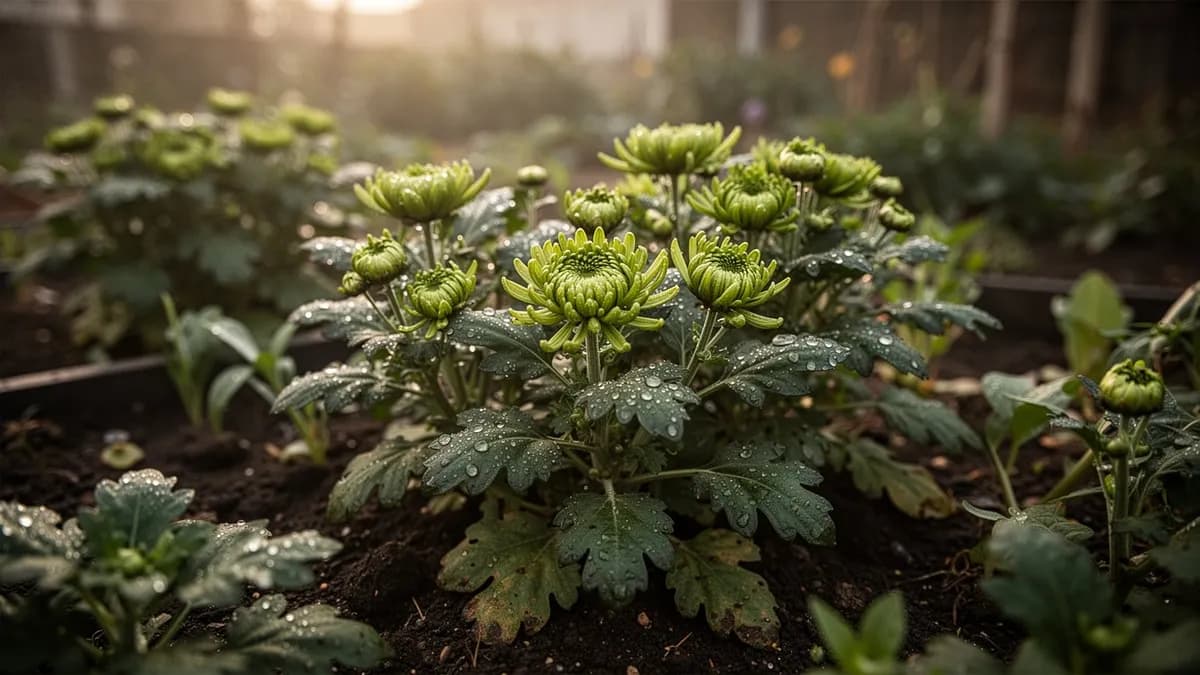
Ein aromatisches asiatisches Blattgemüse, auch bekannt als Shungiku oder Kranz-Chrysantheme, mit markant duftenden, gezahnten Blättern.





Auf dieser SeiteÜberblick
Chrysanthemum-Blattgemüse im Überblick
Ein aromatisches asiatisches Blattgemüse, auch bekannt als Shungiku oder Kranz-Chrysantheme, mit markant duftenden, gezahnten Blättern. Junge Blätter haben einen milden, kräuterigen Geschmack, während reife Blätter kräftiger und leicht bitter werden. Unverzichtbar im japanischen Sukiyaki-Feuertopf und in koreanischen Namul-Beilagen. Ernten Sie regelmäßig, indem Sie die Stängel über den untersten Blättern abschneiden, um den Neuaustrieb zu fördern und die Blüte hinauszuzögern.
Wann Chrysanthemum-Blattgemüse pflanzen
Säen Sie die Samen direkt etwa 0,5 cm tief vom Frühling bis zum Herbst aus. Die Keimung dauert 7 bis 14 Tage bei 13 bis 21 Grad Celsius. Halten Sie den Boden während der Keimung gleichmäßig feucht. Vereinzeln Sie die Sämlinge auf 10 bis 15 cm Abstand. Für einen frühen Frühlingsstart säen Sie drinnen in Multitopfplatten 4 Wochen vor dem letzten Frost bei 15 bis 18 Grad. Aufeinanderfolgende Aussaaten alle 3 Wochen sichern eine kontinuierliche Versorgung.
Dein Chrysanthemum-Blattgemüse-Jahr
Abgestimmt auf Zone 7 · typische Saison · Frost geht um den 2. Apr. und kehrt um den 1. Nov. zurück
Chrysanthemum-Blattgemüse Mär – Apr, Sep – Okt pflanzen, Mai – Jun, Okt – Nov ernten. Beachte die Pflanzmethoden unten und wähle dein Klima für passende Zeiträume.
So baust du Chrysanthemum-Blattgemüse an
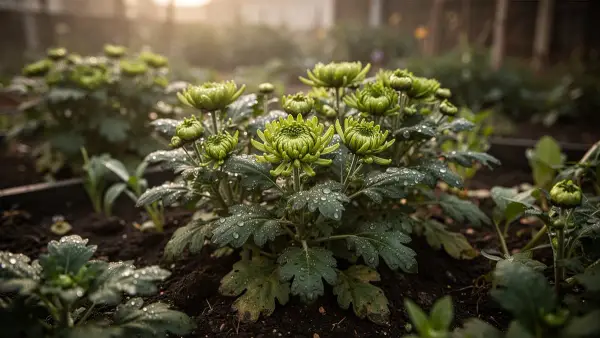
Chrysanthemum-Blattgemüse, bekannt als Shungiku oder Tong Ho, sind essbare Chrysanthemenblätter mit einem charakteristisch aromatischen Geschmack, der in der ostasiatischen Küche hochgeschätzt wird. Säen Sie die Samen direkt etwa 0,5 cm tief vom Frühling bis zum Herbst aus, im Abstand von 10 bis 15 cm in Reihen mit 30 cm Abstand. Die Keimung erfolgt in 7 bis 14 Tagen bei 13 bis 21 Grad Celsius.
Dieses Blattgemüse bevorzugt kühles Wetter und gedeiht am besten im Frühling und Herbst. Bei heißem Wetter schießt es schnell in die Blüte und entwickelt einen stärkeren, manchmal bitteren Geschmack. Bieten Sie in wärmeren Monaten Halbschatten und gleichmäßige Feuchtigkeit, um die Erntesaison zu verlängern.
Ernten Sie junge Blätter und Triebspitzen ab einer Höhe von 10 bis 15 cm für den mildesten Geschmack. Regelmäßiges Schneiden fördert buschigen Neuaustrieb und verzögert die Blüte. Pflanzen, die blühen dürfen, bilden attraktive gelbe oder weiße gänseblümchenartige Blüten, die ebenfalls essbar sind. Düngen Sie alle 2 Wochen leicht mit stickstoffreichem Dünger für üppiges, zartes Wachstum.
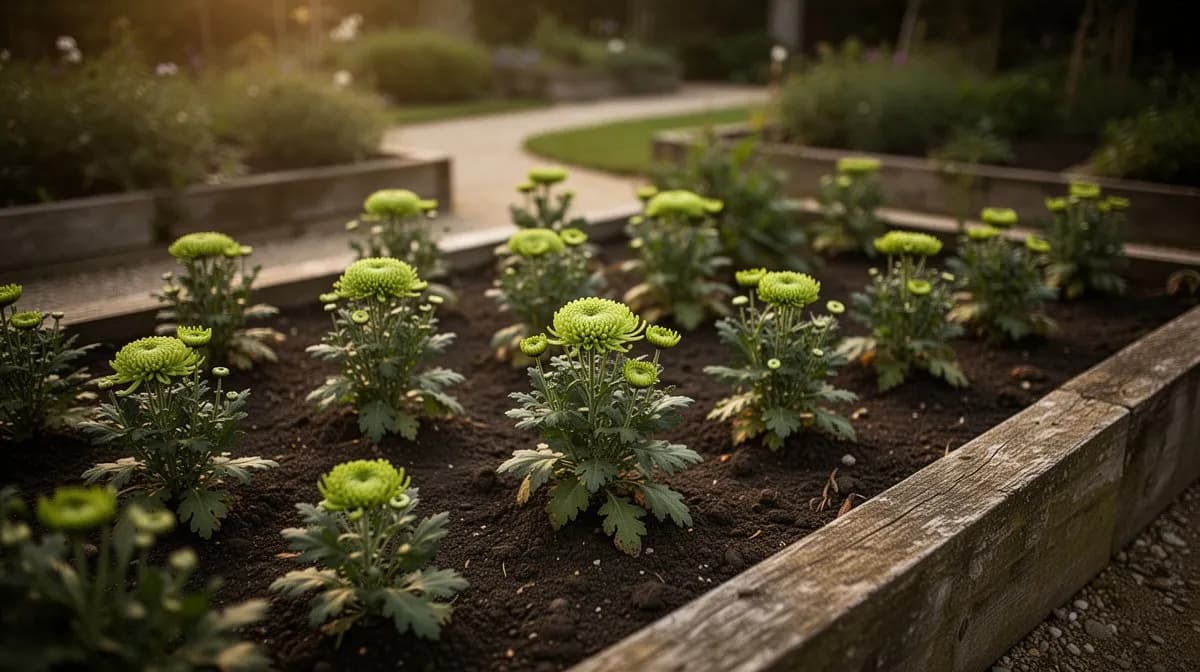
72 Pflanzen passen in ein Beet von 120 × 240 cm
Chrysanthemum-Blattgemüse braucht 20 cm Platz pro Pflanze. Der Planer hält diesen Abstand für dich ein — jede Pflanze, jedes Beet.
Die besten Nachbarn für Chrysanthemum-Blattgemüse
Chrysanthemum-Blattgemüse gedeiht gut neben anderen asiatischen Gemüsesorten wie Pak Choi, Mizuna und Rettich. Das aromatische Laub kann helfen, einige Schadinsekten abzuwehren. Pflanzen Sie es im Sommer im Halbschatten höherer Kulturen. Vermeiden Sie die Pflanzung neben anderen stark aromatischen Kräutern, die im Begleitpflanzungsschema um den aromatischen Raum konkurrieren könnten.
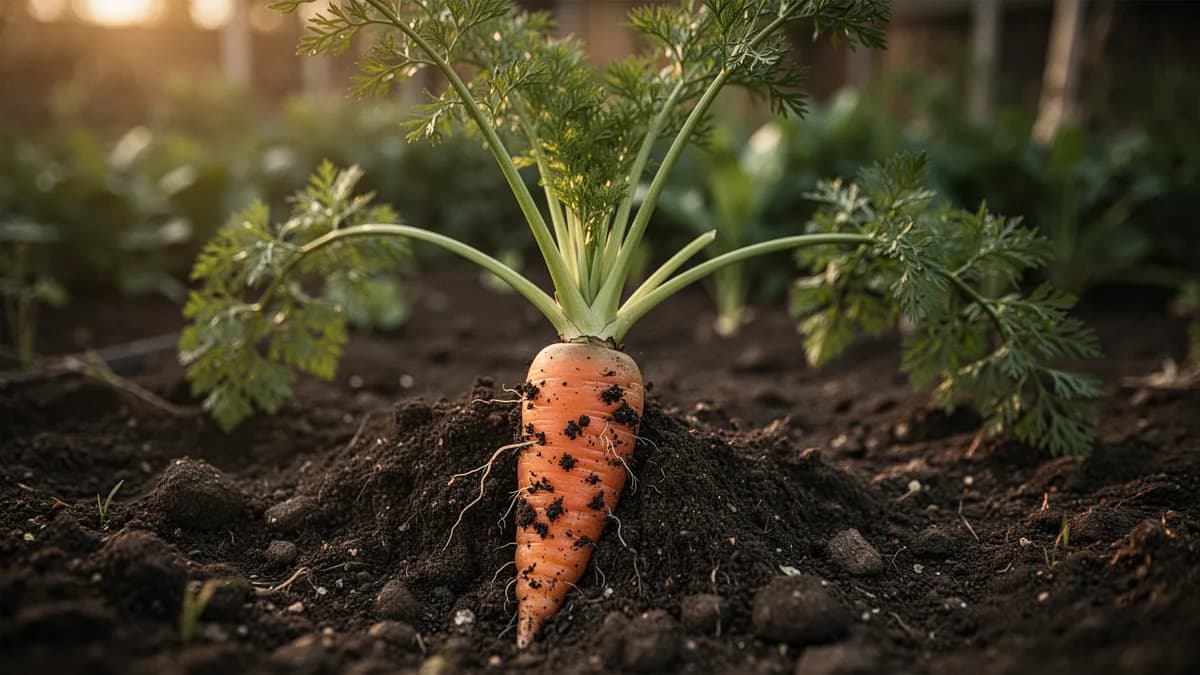
Karotte gehört daneben.
Altes Gärtnerwissen, geprüft an der echten Nachbartabelle von Chrysanthemum-Blattgemüse — teste jede Pflanze, die du anbaust.
Probiere Chrysanthemum-Blattgemüse direkt hier im Beet
Ein echtes Planer-Beet, Chrysanthemum-Blattgemüse steht schon drin. Tippe einen Begleiter an, platziere ihn und sieh, wie die Nachbarschaftsprüfung antwortet — grün für gute Nachbarn, rot bei Streit.


Passende Anbau-Ratgeber
Richtig düngen
Chrysanthemum-Blattgemüse gedeiht gut in durchschnittlich bis nährstoffreichem, gut durchlässigem Boden mit einem pH-Wert zwischen 6,0 und 7,0. Arbeiten Sie vor der Aussaat 3 bis 5 cm Kompost ein. Düngen Sie alle 2 Wochen leicht mit stickstoffreichem Dünger für üppiges Wachstum. Vermeiden Sie starke Düngung, die zu übermäßig weichem, vergeilttem Wachstum führen kann. Der Anbau im Kübel ist mit regelmäßiger Flüssigdüngung sehr erfolgreich.
Ideale Temperatur
Winterhärtezone-Kompatibilität
Von der Saat zur Ernte, Schritt für Schritt
Samenkeimung
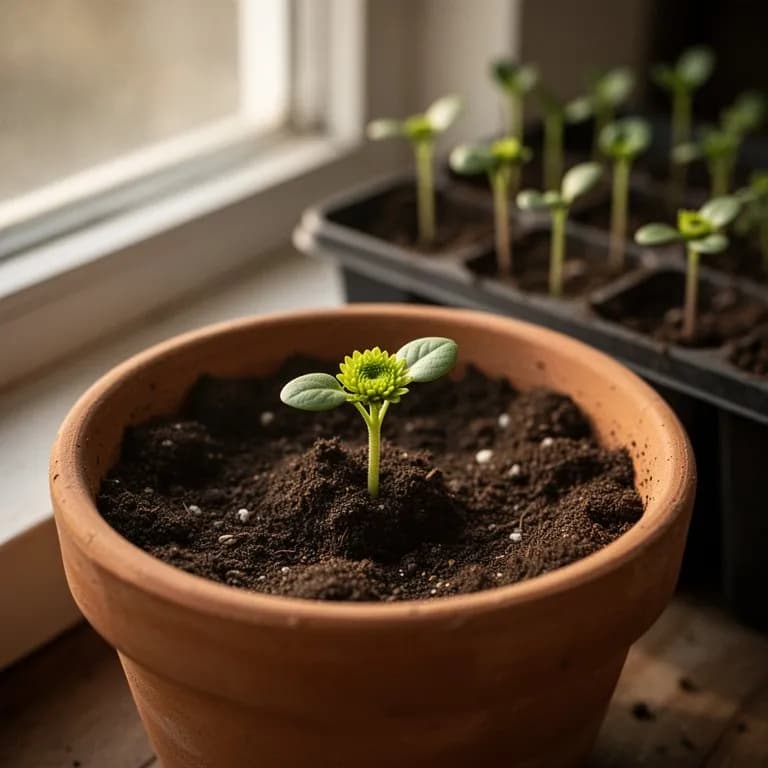
Winzige Samen werden oberflächlich ausgesät oder nur mit einer dünnen Schicht feiner Erde bedeckt. Die Keimung erfolgt in 5-10 Tagen bei Bodentemperaturen zwischen 15-20°C. Die Samen benötigen gleichmäßige Feuchtigkeit und Licht zum Keimen — vergraben Sie sie nicht zu tief. Kleine, abgerundete Keimblätter erscheinen zuerst, blass-grün und zart.
Sämlingsentwicklung
Echte Blätter entwickeln sich mit ihrem charakteristisch tief gezahnten, fast federartigen Erscheinungsbild. Der aromatische Duft wird beim Berühren der Blätter wahrnehmbar. Sämlinge wachsen in einer kompakten Rosette und entwickeln ein flaches, aber faseriges Wurzelsystem. Das Wachstum ist bei kühlen Bedingungen stetig, verlangsamt sich aber bei Hitze.
Blattwachstum
Die Pflanzen bilden reichlich tief gelapptes, aromatisches Laub in einer buschigen Rosette. Die Blätter sind hell- bis mittelgrün mit einem charakteristischen Chrysanthemenduft. Dies ist das ideale Erntestadium — die Blätter sind am zartesten und geschmackvollsten, bevor Blütenstängel erscheinen. Die Pflanzen erreichen 20-30 cm Höhe.
Vor dem Schossen
Der Hauptstängel beginnt sich zu strecken, da sich die Pflanze auf die Blüte vorbereitet. Die Blätter werden etwas kräftiger im Geschmack und die Stängel werden an der Basis holziger. Die oberen Blätter und Triebspitzen bleiben zart und essbar. Dieses Stadium tritt bei warmen Temperaturen und langen Tagen schneller ein.
Blüte
Die Pflanze treibt kräftige Blütenstängel mit fröhlichen gelben oder gelb-weißen gänseblümchenartigen Blüten von 3-5 cm Durchmesser. Die Blüten sind essbar mit einem milden, leicht süßen Chrysanthemengeschmack. Die Blattqualität nimmt ab, da die Pflanze Energie in die Fortpflanzung lenkt, obwohl junge Seitentriebe noch verwendbar sind.
Samenbildung
Die Blüten verblühen und bilden Samenstände mit zahlreichen kleinen, länglichen Samen. Die Pflanze trocknet auf natürliche Weise ab, während die Samen reifen. Jeder Blütenstand produziert Dutzende lebensfähiger Samen. Pflanzen, die sich selbst aussäen dürfen, können in der folgenden kühlen Jahreszeit freiwillige Sämlinge hervorbringen.
Drücken Sie die Samen sanft auf feuchte Erde und bedecken Sie sie mit höchstens 3 mm feinem Vermiculit. Halten Sie die Oberfläche mit einem Sprühgerät gleichmäßig feucht — die winzigen Samen trocknen schnell aus. Ein Schattiergewebe kann bei warmem Wetter helfen, die Feuchtigkeit zu bewahren.
Chrysanthemum-Blattgemüse Monat für Monat pflegen
Was du jeden Monat für deine Chrysanthemum-Blattgemüse tun solltest
Oktober
Aktueller MonatSpitzenernte im Herbst — kühles Wetter erzeugt die süßesten, zartesten Blätter mit der mildesten Bitterkeit. Ernten Sie weiterhin die äußeren Blätter für eine verlängerte Produktion. In Zone 7 und darunter schützen Sie späte Pflanzungen mit Vlies, wenn Frost naht.
Immer wissen, was jetzt im Garten zu tun ist
Eine E-Mail zum Monatsanfang: was du jetzt säen, pflanzen und anpacken solltest — für deine Chrysanthemum-Blattgemüse und alles, was drumherum wächst. Dazu ein kurzer Startkurs, der dich vor den klassischen Fehlern bewahrt.
- Was jetzt zu tun ist
- Passend zu deiner Saison
- Startkurs inklusive
Chrysanthemum-Blattgemüse ernten
Beginnen Sie mit der Ernte des Chrysanthemum-Blattgemüses, wenn die Pflanzen 10 bis 15 cm hoch sind, etwa 30 bis 45 Tage nach der Aussaat. Schneiden Sie die oberen 8 bis 10 cm des wachsenden Triebs ab, um die Verzweigung zu fördern. Junge Blätter haben den mildesten, angenehmsten Geschmack. Für Babyleaf-Salat ernten Sie ganze Pflanzen bei 8 cm Höhe. Die Blüten sind ebenfalls essbar und eignen sich als attraktive Garnitur. Ernten Sie vor der vollen Blüte für die beste Blattqualität.
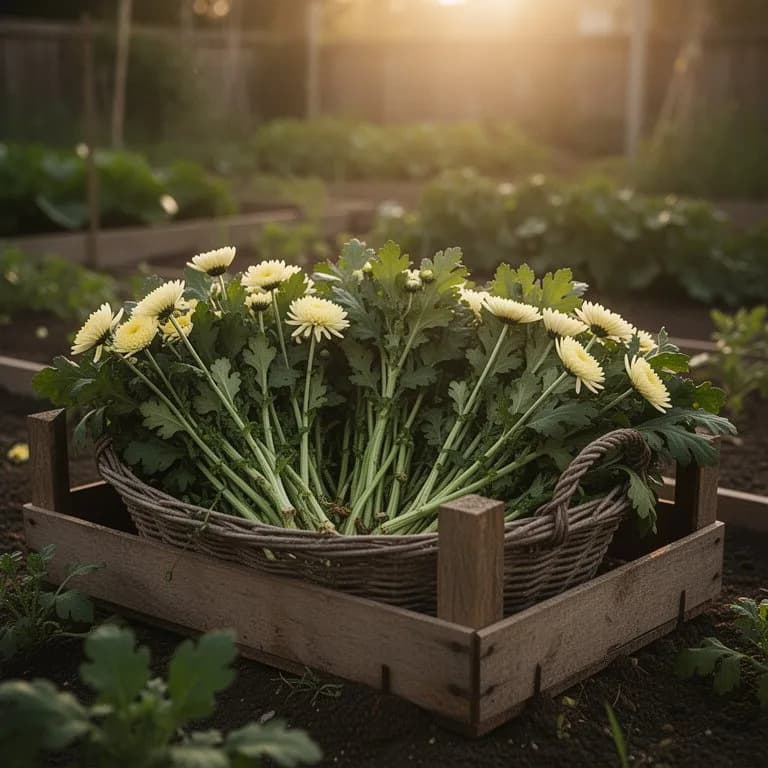
angenommen, du pflanzt zu Beginn des Zeitraums — trage dein tatsächliches Datum ein
Ernte Chrysanthemum-Blattgemüse zügig, dann trägt die Pflanze weiter.
Lagerung & Konservierung
Frisches Chrysanthemum-Blattgemüse ist sehr empfindlich und sollte innerhalb von 2 bis 3 Tagen verwendet werden. Lagern Sie es im Kühlschrank in einem feuchten Papiertuch in einem verschlossenen Beutel. Das Blattgemüse eignet sich nicht zum Einfrieren, da es seine charakteristische aromatische Qualität verliert. Verwenden Sie es frisch für das beste kulinarische Erlebnis. Trocknen Sie die Blüten für die Verwendung als Kräutertee.
Was schiefgeht — und die Lösung
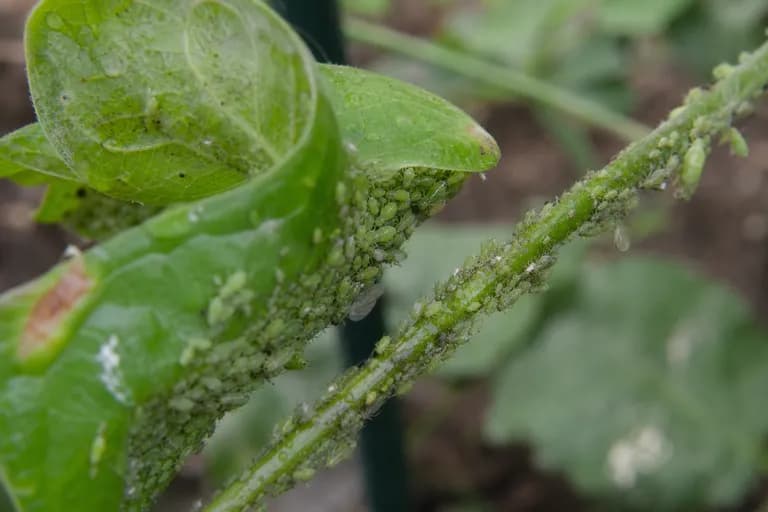
Blattläuse
SchädlingKleine Insekten, die sich an jungen Triebspitzen und Blütenknospen ansammeln und verkrümmtes, deformiertes Wachstum verursachen.
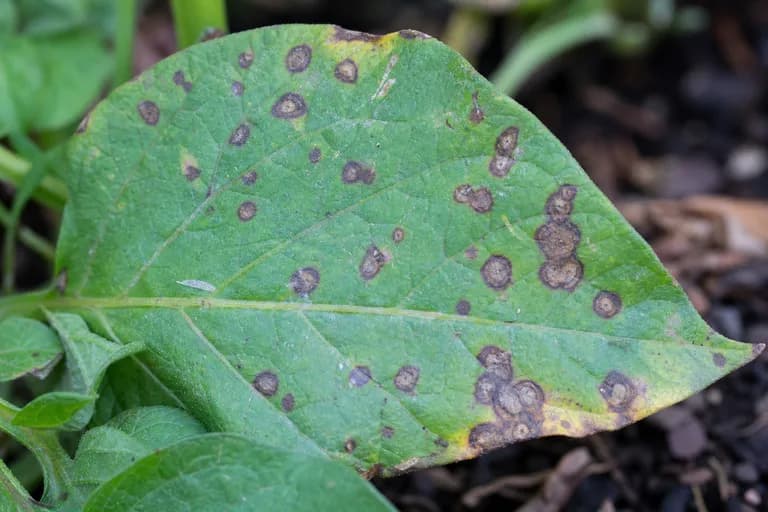
Blattfleckenkrankheit
KrankheitBraune oder schwarze kreisförmige Flecken auf den Blättern, die sich vergrößern und zum Blattfall führen können.
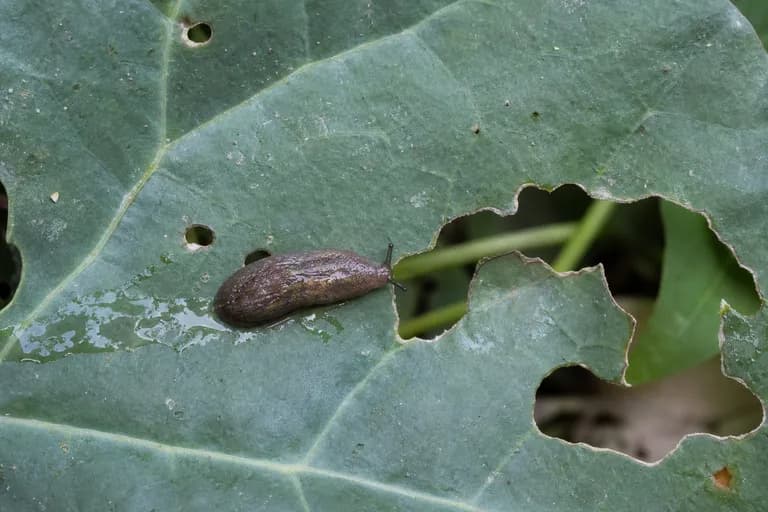
Nacktschnecken
SchädlingUnregelmäßige Löcher in Blättern und Schleimspuren, Schäden sind bei kühlen, feuchten Bedingungen am schlimmsten.
Fehlerbehebung bei häufigen Problemen
Schnelles Schossen bei heißem Wetter ist die größte Herausforderung und führt dazu, dass die Blätter intensiv schmecken und bitter werden. Der kräftige aromatische Geschmack ist gewöhnungsbedürftig und gefällt nicht allen Gärtnern sofort. Samen können langsam keimen und benötigen gleichmäßige Feuchtigkeit. Zu dichter Stand erzeugt spindeldürre Pflanzen mit schlechter Blattqualität. Selbstaussaat kann zum Problem werden, wenn man die Blüten Samen bilden lässt.
Anbautipps
- Säen Sie die Samen flach aus — Chrysanthemum-Blattgemüse-Samen benötigen Licht für eine zuverlässige Keimung. Drücken Sie sie sanft auf feuchte Erde und bedecken Sie sie mit höchstens 3 mm feinem Vermiculit oder gesiebtem Kompost. Selbst 1 cm tiefes Eingraben kann die Keimrate drastisch reduzieren.
- Setzen Sie auf Nachsaat als Ihre Hauptstrategie. Säen Sie alle 2-3 Wochen eine kurze Reihe vom frühen Frühling bis zum späten Herbst und lassen Sie die Hochsommerhitze aus. So haben Sie eine kontinuierliche Versorgung und vermeiden die Enttäuschung, dass eine ganze Ernte gleichzeitig schosst.
- Ernten Sie mit der Schnitt-und-Nachwuchs-Methode für maximalen Ertrag. Schneiden Sie äußere Blätter und zarte Triebspitzen bei 15-20 cm Höhe ab und lassen Sie das wachsende Zentrum intakt. Jede Pflanze kann 3-5 Mal geerntet werden, bevor sie zu schossen beginnt, was die Produktivität erheblich verlängert.
- Bieten Sie bei warmem Wetter Nachmittagsschatten durch Schattiergewebe, höhere Begleitpflanzen oder strategische Beetplatzierung auf der Ostseite eines Zauns oder Gebäudes. Selbst ein paar Grad Abkühlung verzögern das Schossen um Tage oder Wochen und halten die Blätter zart und mild im Geschmack.
- Bauen Sie Chrysanthemum-Blattgemüse als Zwischenfrucht zwischen langsam reifendem Gemüse wie Tomaten, Paprika oder Kohlgewächsen an. Das Blattgemüse reift schnell, nutzt den Platz effizient und kann geerntet werden, bevor die größeren Pflanzen den Raum benötigen.
- Gießen Sie gleichmäßig, aber sanft — das flache Wurzelsystem trocknet schnell aus, und Überkopfbewässerung kann zarte Sämlinge niederdrücken. Tropfbewässerung oder ein feiner Sprühnebel funktionieren am besten. Mulchen Sie leicht, um die Bodenfeuchtigkeit zu bewahren, sobald die Pflanzen etabliert sind.
- Knipsen Sie die zentrale Triebspitze aus, wenn die Pflanze 20 cm Höhe erreicht, um buschige Seitenverzweigung zu fördern und die Blüte hinauszuzögern. Diese eine Maßnahme kann das Erntefenster um 2-3 Wochen verlängern und eine gedrungene, produktivere Pflanze hervorbringen.
- Lassen Sie am Ende jeder Anbausaison einige Pflanzen blühen und Samen bilden. Chrysanthemum-Blattgemüse sät sich in vielen Klimazonen zuverlässig selbst aus, und Sie werden möglicherweise im Herbst oder frühen Frühling freiwillige Sämlinge entdecken — kostenlose Pflanzen ohne jeglichen Aufwand.
Bau deine beste Chrysanthemum-Blattgemüse an — und alles drumherum.
Starte heute kostenlos. Lege deine Beete an, setze deine Chrysanthemum-Blattgemüse ein und lass PlotMyGarden Timing, Abstände, Begleiter und Erinnerungen von der Saat bis zum Erntekorb übernehmen.
Finde deine Chrysanthemum-Blattgemüse
Small Leaf Shungiku
Fein geteilte, federartige Blätter mit mildem aromatischem Geschmack, beliebt in der japanischen Küche.
Large Leaf Tong Ho
Breitere, flachere Blätter mit kräftigerem Geschmack, bevorzugt in der chinesischen Küche.
Tiger Ear
Eine Sorte mit abgerundeten, tigerohrenförmigen Blättern und milderem Geschmack als andere Sorten.
Chrysanthemum-Blattgemüse ist ein Spezialprodukt in asiatischen Lebensmittelgeschäften, das typischerweise 3-6 € pro Bund (etwa 200 g) kostet und in normalen Supermärkten selten zu finden ist. Eine einzelne Packung Samen (2-4 €) kann über mehrere Nachsaaten Dutzende von Pflanzen hervorbringen und leicht 5-10 kg Blattgemüse pro Saison erzeugen — das entspricht einem Gegenwert von 75-300 € an gekauftem Shungiku. Da das Blattgemüse sehr empfindlich ist und im Laden oft welk ankommt, ist selbst angebautes Chrysanthemum-Blattgemüse, das Minuten vor dem Kochen geerntet wird, in Frische und Geschmack unvergleichlich überlegen.
Schnelle Rezepte
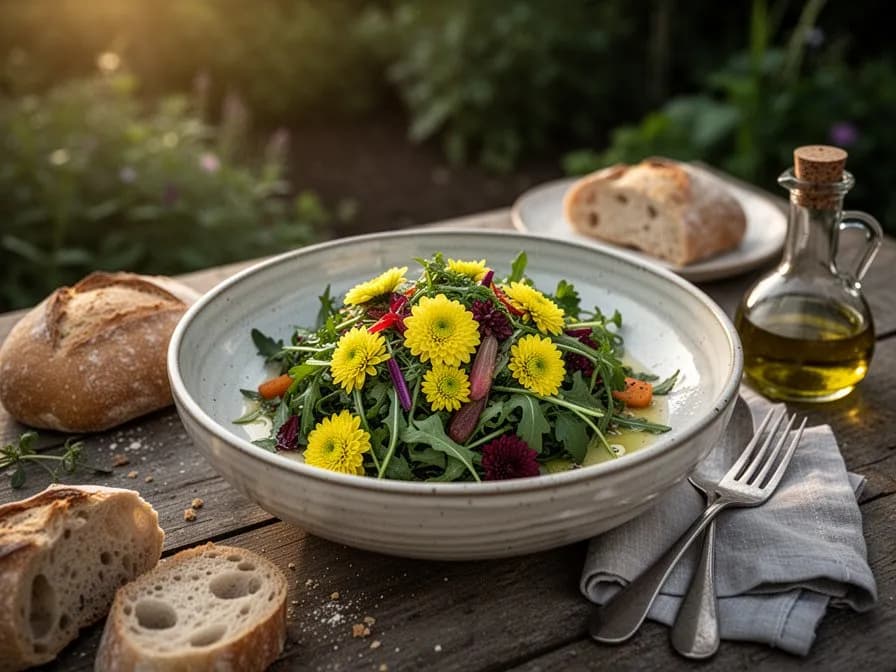
Sesam-Knoblauch-Chrysanthemum-Blattgemüse aus dem Wok
10 Min.Die klassische ostasiatische Zubereitung — Chrysanthemum-Blattgemüse blitzschnell mit Knoblauch angebraten und mit geröstetem Sesamöl vollendet. Die kurze Garzeit bewahrt das kräuterige Aroma und hält die Blätter leuchtend grün mit einer angenehmen, leicht bitteren Note.
7 Zutaten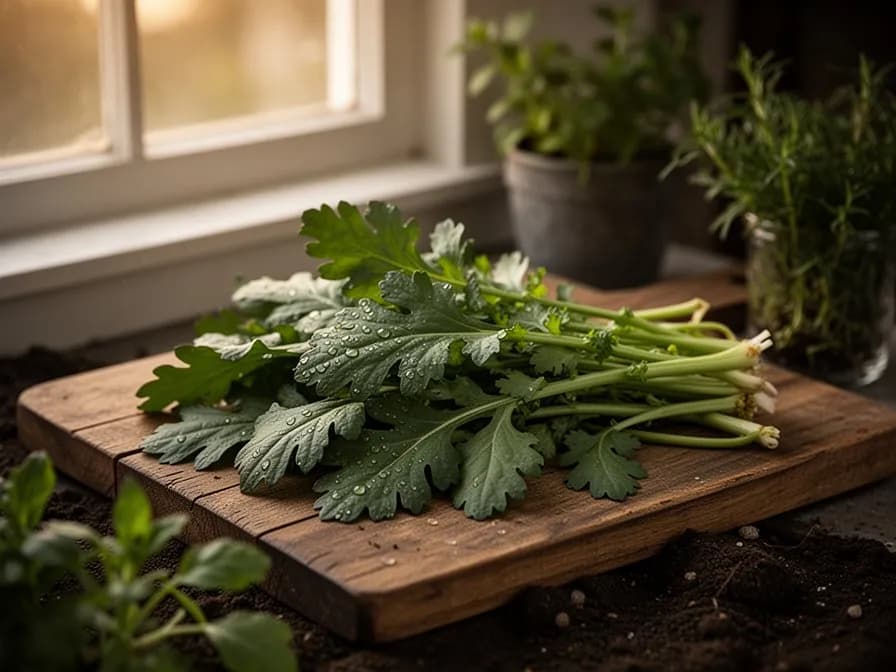
Shungiku-Feuertopf (Sukiyaki-Art)
25 Min.Chrysanthemum-Blattgemüse ist das typische Grün im japanischen Sukiyaki- und Shabu-Shabu-Feuertopf, das im letzten Moment hinzugefügt wird, um sanft in der köchelnden Brühe zusammenzufallen. Sein kräuteriges Aroma durchzieht den gesamten Topf und gleicht reichhaltige Fleischaromen aus.
10 ZutatenChrysanthemum-Blattgemüse-Namul (Koreanische Beilage)
15 Min.Ein klassisches koreanisches Banchan, bei dem Chrysanthemum-Blattgemüse kurz blanchiert und dann in einem nussigen Knoblauch-Sesam-Dressing geschwenkt wird. Gekühlt als erfrischende Beilage zu Reis und anderen Banchan serviert. Das Blanchieren mildert die Bitterkeit und bewahrt das blumige Aroma.
7 ZutatenKulinarische Verwendung
Chrysanthemum-Blattgemüse hat einen einzigartigen aromatischen, leicht bitteren Geschmack und ist unverzichtbar für japanische Sukiyaki- und Shabu-Shabu-Feuertöpfe. Geben Sie es erst im letzten Moment in Suppen, um die zarte Textur zu bewahren. Braten Sie es kurz mit Knoblauch und Sesamöl an. Verwenden Sie junge Blätter in Salaten für eine ungewöhnliche aromatische Note. Die Blütenblätter können über Salate gestreut oder als Tee aufgebrüht werden.
Was drinsteckt
Gesundheitsvorteile
- Außergewöhnlich reich an Beta-Carotin und Vitamin A (68 % TW pro 100 g), unterstützt die Augengesundheit, die Immunfunktion und eine gesunde Hauterneuerung — eine der reichhaltigsten Blattgemüsequellen dieses essentiellen Nährstoffs.
- Enthält Chlorogensäure und andere Polyphenole mit nachgewiesenen antioxidativen und entzündungshemmenden Eigenschaften, die zum Schutz vor chronischen Krankheiten wie Herz-Kreislauf-Erkrankungen und bestimmten Krebsarten beitragen können.
- Hervorragende Folsäurequelle (44 % TW pro 100 g), essentiell für die DNA-Synthese, die Bildung roter Blutkörperchen und die Neuralrohrentwicklung während der Schwangerschaft — was Chrysanthemum-Blattgemüse besonders wertvoll in der Schwangerschaftsernährung macht.
- Reich an Kalium (16 % TW pro 100 g), das eine gesunde Blutdruckregulierung, einen ordnungsgemäßen Herzrhythmus und einen ausgeglichenen Elektrolythaushalt unterstützt — besonders vorteilhaft für Menschen mit moderner, natriumreicher Ernährung.
- Liefert bioverfügbares Calcium (12 % TW) und Eisen (15 % TW) aus einer pflanzlichen Quelle, was Chrysanthemum-Blattgemüse zu einem wertvollen mineralstoffreichen Blattgemüse für Vegetarier, Veganer und alle macht, die milchfreie Calciumquellen suchen.
- Die aromatischen flüchtigen Verbindungen, darunter Alpha-Pinen und Campher, wurden auf ihre milde beruhigende und verdauungsfördernde Wirkung untersucht — die traditionelle asiatische Medizin nutzt Chrysanthemum-Blattgemüse seit langem zur Unterstützung der Verdauung und zur Reduzierung innerer Entzündungen.
Woher Chrysanthemum-Blattgemüse stammt
Chrysanthemum-Blattgemüse (Glebionis coronaria, früher Chrysanthemum coronarium) stammt aus dem Mittelmeerraum, wo es noch heute als Acker-Unkraut von Portugal bis zur Türkei und über ganz Nordafrika wild wächst. Die Art gelangte wahrscheinlich über antike Seidenstraßen-Handelsrouten nach Osten und erreichte China vor weit über tausend Jahren. In Ostasien wurde diese mediterrane Wildblume von einem gewöhnlichen Unkraut in eines der wichtigsten Blattgemüse der regionalen Kochtraditionen verwandelt.
In China wird Chrysanthemum-Blattgemüse (Tong Hao) mindestens seit der Tang-Dynastie (618-907 n. Chr.) als Gemüse kultiviert und erscheint in einigen der ältesten erhaltenen chinesischen Agrartexte. Von China aus verbreitete sich die Pflanze nach Japan, wo sie als Shungiku bekannt wurde und sich als unverzichtbare Zutat in Feuertopfgerichten wie Sukiyaki und Shabu-Shabu etablierte. Die koreanische Küche nahm das Blattgemüse als Ssukgat an und serviert es blanchiert als Banchan (Beilagen) sowie in Suppen und Eintöpfen. In ganz Südostasien fand Chrysanthemum-Blattgemüse seinen Weg in vietnamesische, thailändische und malaiische Küchen, besonders in Suppen und Pfannengerichten.
Was Chrysanthemum-Blattgemüse bemerkenswert macht, ist seine doppelte Identität über Kulturen hinweg. Im Mittelmeerraum blieb es eine Wildpflanze oder ein unbedeutendes Wildgemüse, gelegentlich gegessen, aber nie systematisch kultiviert. In Ostasien wurde es zu einer kommerziellen Kulturpflanze, die auf Tausenden von Hektaren angebaut, auf jedem Markt verkauft und in einigen der ikonischsten Gerichte der Region prominent verwendet wird. Heute gewinnt Chrysanthemum-Blattgemüse in westlichen Ländern über asiatische Lebensmittelgeschäfte und abenteuerlustige Hobbygärtner, die seinen einzigartigen Kräutergeschmack, sein schnelles Wachstum und seine Kältetoleranz schätzen, zunehmend an Beliebtheit. Es wird zunehmend als Nährstoffwunder anerkannt, außergewöhnlich reich an Beta-Carotin, Kalium und Folsäure.
Chrysanthemum-Blattgemüse: Schon gewusst?
Faszinierende Fakten über Chrysanthemum-Blattgemüse
Chrysanthemum-Blattgemüse (Glebionis coronaria) sind die essbaren Blätter einer Art, die eng mit Zier-Chrysanthemen verwandt ist — in Ostasien wird dieselbe Pflanze je nach Erntezeitpunkt im Gemüsegarten als Nahrungsmittel und im Blumenbeet als Zierpflanze angebaut.
Chrysanthemum-Blattgemüse: Fragen & Antworten
Wann sollte ich Chrysanthemum-Blattgemüse pflanzen?
Was sind gute Begleitpflanzen für Chrysanthemum-Blattgemüse?
In welchen Winterhärtezonen kann Chrysanthemum-Blattgemüse wachsen?
Wie viel Sonne braucht Chrysanthemum-Blattgemüse?
Welchen Abstand sollte ich zwischen Chrysanthemum-Blattgemüse lassen?
Welche Schädlinge und Krankheiten befallen Chrysanthemum-Blattgemüse?
Wie lagere ich Chrysanthemum-Blattgemüse nach der Ernte?
Was sind die besten Chrysanthemum-Blattgemüse-Sorten zum Anbauen?
Welchen Boden braucht Chrysanthemum-Blattgemüse?
Warum schmeckt mein Chrysanthemum-Blattgemüse sehr bitter?
Kann ich Chrysanthemum-Blattgemüse roh im Salat essen?
Ist Chrysanthemum-Blattgemüse das Gleiche wie Zier-Chrysanthemen?
Wie verhindere ich, dass Chrysanthemum-Blattgemüse zu schnell schosst?
Kann Chrysanthemum-Blattgemüse Frost überleben und im Winter wachsen?
Was ist die beste Methode, um geerntetes Chrysanthemum-Blattgemüse zu lagern?
Du hast die Theorie gelesen. Jetzt baue sie auf Autopilot an.
Alles, was Chrysanthemum-Blattgemüse knifflig macht — das Timing, die Abstände, die Begleiter, das Erntefenster — genau das übernimmt PlotMyGarden für dich, für jede Pflanze im Garten.
Ein Plan, der dein Wetter kennt
Standort einmal festlegen. Aussaat-, Dünge- und Erntedaten rund um deinen echten letzten Frosttermin und die Live-Vorhersage — kein Raten mehr nach Saattüte.
Aus dem Abschnitt „Pflanzzeit“Beetplaner per Drag & Drop
Beete auf einem Raster gestalten. Jede Pflanze rastet im richtigen Abstand ein, und du siehst die ganze Saison, bevor du einen Cent für Saatgut ausgibst.
Aus dem Abschnitt „Anbau“Begleiter-Konflikte früh erkannt
Über 200 gute und schlechte Kombinationen werden beim Pflanzen live geprüft — so landet ein saisonruinierender Fehler nie in der Erde.
Aus dem Abschnitt „Begleiter“Erinnerungen, nach denen du wirklich handelst
„Gieß die Bohnen.“ „Heute ernten, bevor's umschlägt.“ Pünktlich, konkret und auf deine echten Pflanzen bezogen.
Aus dem Abschnitt „Ernte“Staffel-Aussaat, geplant
Sechs Wochen ernten statt sechs Tage? Die App verteilt deine Aussaaten automatisch und erinnert dich, wenn der nächste Satz fällig ist.
Aus dem Abschnitt „Pflanzzeit“Ein Verlauf, der schlauer wird
Jede protokollierte Ernte bringt der App deinen Garten bei. Der Plan fürs nächste Jahr startet bei dem, was in deinem Boden wirklich funktioniert hat.
Aus dem Abschnitt „Überblick“Pflanze diese neben Chrysanthemum-Blattgemüse
Weitere Blattgemüse
Bau deine beste Chrysanthemum-Blattgemüse an — und alles drumherum.
Starte heute kostenlos. Lege deine Beete an, setze deine Chrysanthemum-Blattgemüse ein und lass PlotMyGarden Timing, Abstände, Begleiter und Erinnerungen von der Saat bis zum Erntekorb übernehmen.