Camassia
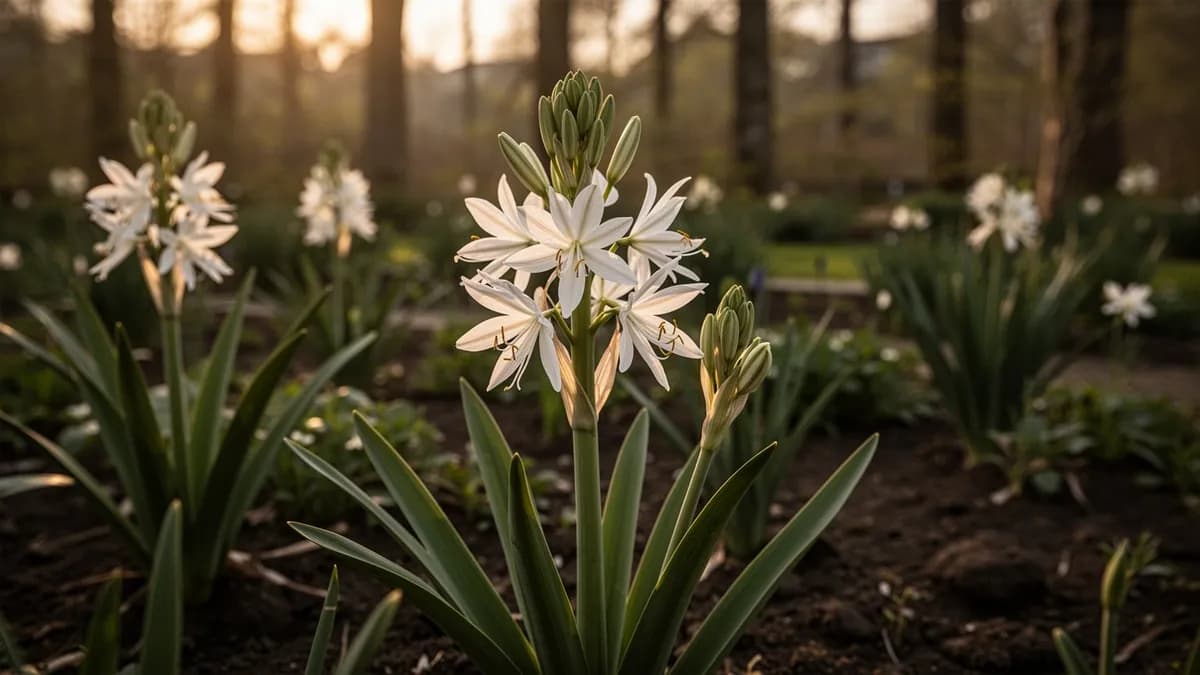
Eine stattliche nordamerikanische Zwiebelpflanze mit hohen Ähren aus sternförmigen blauen, violetten oder weißen Blüten, die in feuchten Wiesen und Lehmböden gedeiht, wo andere Zwiebeln versagen.





Auf dieser SeiteÜberblick
Camassia im Überblick
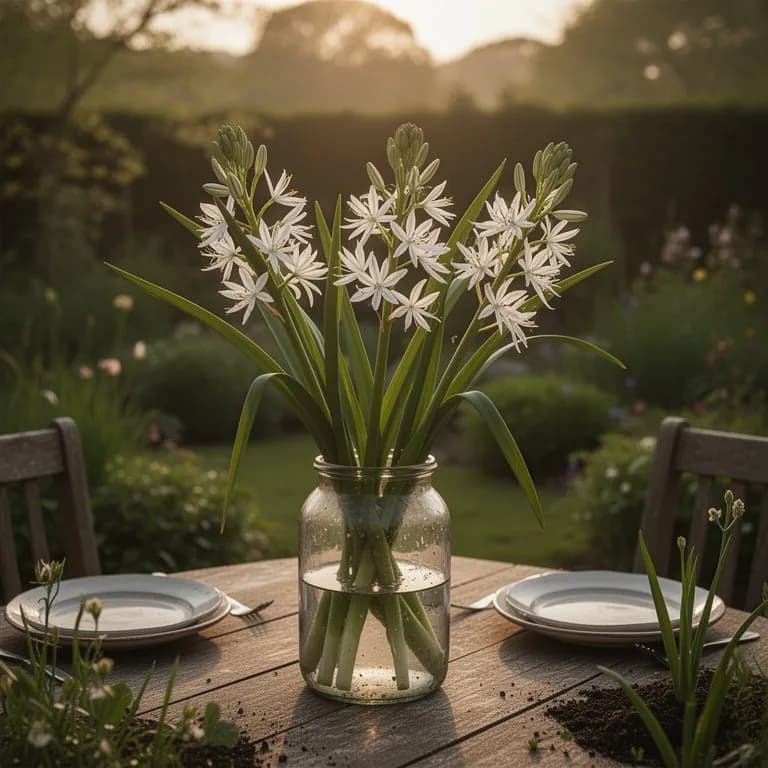
Eine stattliche nordamerikanische Zwiebelpflanze mit hohen Ähren aus sternförmigen blauen, violetten oder weißen Blüten, die in feuchten Wiesen und Lehmböden gedeiht, wo andere Zwiebeln versagen. Camassia gehört zu den besten Zwiebeln für die Naturalisierung in feuchten Graslandschaften und Regengärten. In großzügigen Gruppen gepflanzt entfaltet sie ein atemberaubendes Blütenschauspiel im Spätfrühling.
Wann Camassia pflanzen
Camassia lässt sich gut aus Samen aussäen, die im Herbst in feuchten, humusreichen Boden oder Töpfe mit lehmbasiertem Substrat gesät werden. Samen einen halben Zentimeter tief einsetzen und durch Winter und Frühling gleichmäßig feucht halten. Die Samen benötigen eine Kältestratifizierungsperiode zum Keimen und keimen typischerweise im ersten Frühling. Sämlinge zwei Jahre lang in Töpfen weiterkultivieren, bevor sie an dauerhafte Standorte umgepflanzt werden. Aus Samen gezogene Pflanzen erreichen die Blühgröße in drei bis vier Jahren.
Dein Camassia-Jahr
Abgestimmt auf Zone 7 · typische Saison · Frost geht um den 2. Apr. und kehrt um den 1. Nov. zurück
Camassia Sep – Okt pflanzen, Apr – Jun ernten. Beachte die Pflanzmethoden unten und wähle dein Klima für passende Zeiträume.
So baust du Camassia an
Camassia-Zwiebeln werden im Herbst gepflanzt, zehn bis fünfzehn Zentimeter tief und fünfzehn Zentimeter voneinander entfernt, in feuchtigkeitsspeicherndem Boden, der im Frühling feucht bleibt. Im Gegensatz zu den meisten Zwiebeln gedeiht Camassia in schwerem Lehm und schlecht drainierten Bereichen, wo andere Zwiebeln faulen würden – sie ist daher unverzichtbar für Regengärten, Bachufer und tiefliegende Wiesen. Wählen Sie einen Standort in voller Sonne bis leichtem Halbschatten mit zuverlässiger Frühlingsfeuchtigkeit.
Regelmäßig bewässern während der gesamten Wachstumsperiode, besonders in trockenen Frühjahren, wenn die Zwiebeln aktiv wachsen und blühen. Camassia verträgt saisonale Überschwemmungen und ist eine der wenigen Zierblumenzwiebeln, die moorige Bedingungen tatsächlich bevorzugt. Im Herbst mit Kompost mulchen, um die Bodenfeuchtigkeit zu erhalten und Nährstoffe zuzuführen.
Das Laub nach der Blüte auf natürliche Weise einziehen lassen, was etwa sechs Wochen dauert. Die reifenden Blätter leiten Energie zurück in die Zwiebel für das nächste Blütenjahr. In der Ruhezeit verträgt Camassia sommerliche Trockenheit ohne Probleme. Überfüllte Horste alle vier bis fünf Jahre im Herbst teilen, um die Vitalität zu erhalten und größere Blütenähren zu fördern.
128 Pflanzen passen in ein Beet von 120 × 240 cm
Camassia braucht 15 cm Platz pro Pflanze. Der Planer hält diesen Abstand für dich ein — jede Pflanze, jedes Beet.
Die besten Nachbarn für Camassia
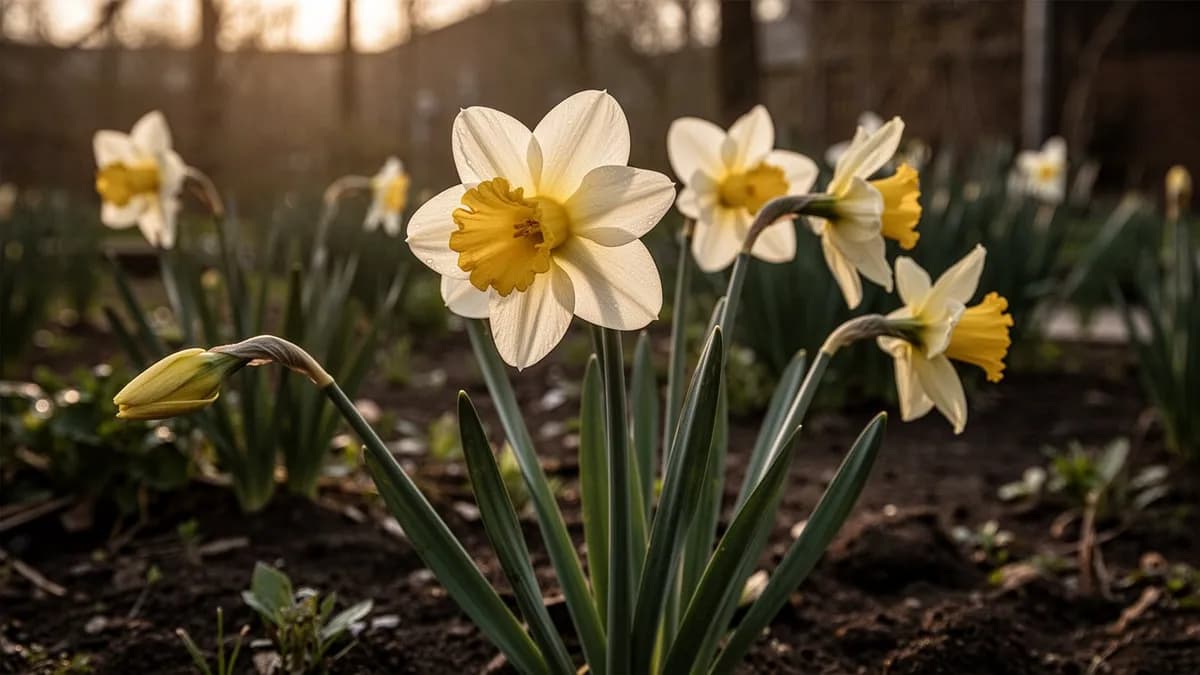
Camassia ist in feuchten Wiesen wunderschön naturalisiert neben Narzissen, Schachbrettblumen und feuchtigkeitsliebenden Gräsern. In Rabatten mit Iris, Funkie und Farnen kombinieren, die das Bild füllen, wenn das Camassia-Laub verblasst. Die hohen Blütenähren bieten vertikalen Kontrast zu niedrig wachsenden Sumpfdotterblumen und Primeln. Das Pflanzen in der Nähe aggressiver Bodendecker vermeiden, die die Zwiebeln überwuchern könnten.
Narzisse gehört daneben.
Altes Gärtnerwissen, geprüft an der echten Nachbartabelle von Camassia — teste jede Pflanze, die du anbaust.
Probiere Camassia direkt hier im Beet
Ein echtes Planer-Beet, Camassia steht schon drin. Tippe einen Begleiter an, platziere ihn und sieh, wie die Nachbarschaftsprüfung antwortet — grün für gute Nachbarn, rot bei Streit.


Passende Anbau-Ratgeber
Richtig düngen
Camassia gehört zu den wenigen Zwiebeln, die in schwerem, feuchtigkeitsspeicherndem Lehmboden mit einem pH-Wert von 5,5 bis 7,0 hervorragend gedeihen. Sie verträgt schlecht drainierte Standorte und saisonale Überschwemmungen, die die meisten Zwiebeln abtöten würden. Jährlich im Herbst mit einer dicken Schicht Kompost oder gut verrottetem Laubkompost abdecken, um Fruchtbarkeit und Bodenstruktur zu erhalten. Eine Frühjahrsanwendung von ausgewogenem Granulat-Dünger, der rund um aufgehendes Laub verteilt wird, fördert kräftiges Wachstum und reichliche Blüte.
Ideale Temperatur
Winterhärtezone-Kompatibilität
Von der Saat zur Ernte, Schritt für Schritt
Winterruhe und Wurzelaktivierung
Camassia-Zwiebeln liegen den Winter über ruhend unter der Bodenoberfläche, geschützt durch eine dunkle, papierartige Hülle. In dieser Zeit beginnt das Wurzelsystem leise, feine Feinwurzeln in den umgebenden Boden auszustrecken, wenn die Feuchtigkeitswerte steigen. Die Zwiebel enthält gespeicherte Energiereserven aus der vorherigen Wachstumsperiode, hauptsächlich in Form von Inulin – einem komplexen Fructan-Kohlenhydrat, das den Zwiebeln auch ihren Nahrungswert verleiht. Unter der Erde sind der embryonale Trieb und die Blütenknospe der nächsten Saison bereits in der Zwiebel ausgebildet.
Frühjahrsblattaustrieb
Wenn die Bodentemperaturen auf über 7–10 °C steigen, schieben sich schlanke, grasartige Blätter in einer engen bodenseitigen Rosette durch die Bodenoberfläche. Das Laub ist glatt, leicht gekielt und je nach Art und Wachstumsbedingungen zwischen 30 und 60 cm lang. Die Blätter sind frischgrün und können anfänglich mit Ziergräsern oder sogar dem Laub von Bärlauch verwechselt werden. Die Blattwachstumsphase ist entscheidend für die Photosynthese, die die Zwiebel mit Energie für die Blüte und die anschließende Ruhezeit auflädt.
Entwicklung der Blütenähre
Ein einzelner kräftiger Blütenstiel erhebt sich aus der Mitte der Blattrosette und wächst je nach Art rasch auf 40–100 cm Höhe. Der Stiel ist robust und aufrecht, an der Spitze von einer sich allmählich verlängernden Traube eng gepackter grüner Blütenknospen abgeschlossen. Wenn sich die Traube ausdehnt, werden einzelne Knospen sichtbar und beginnen an der Basis der Ähre Farbe zu zeigen. Die unteren Knospen entwickeln sich zuerst, während sich die oberen Knospen weiterhin bilden, was eine verlängerte Blütezeit gewährleistet.
Hauptblüte
Das spektakuläre Blütenschauspiel beginnt, wenn sich die untersten Knospen der Traube als erste öffnen und je nach Art und Sorte sechsblättrige sternförmige Blüten in Blau-, Violett-, Lila- oder Weißtönen enthüllen. Die Blüten öffnen sich über einen Zeitraum von zwei bis drei Wochen nacheinander die Ähre hinauf und erzeugen einen wunderschönen abgestuften Effekt mit offenen Blüten unten und Knospen oben. Jede einzelne Blüte hält mehrere Tage. Die Blüten produzieren Nektar und werden von einer Vielzahl von Bestäubern besucht, darunter Bienen, Schmetterlinge und Schwebfliegen.
Samenansatz und Reifung
Nach der Bestäubung entwickeln sich kleine dreigeteilte Samenkapseln entlang der verblühten Blütenähre. Jede Kapsel enthält zahlreiche kleine, runde, glänzend schwarze Samen. Die Kapseln beginnen grün und trocknen beim Reifen allmählich zu einem papierartigen Braun. Unterdessen photosynthetisiert das Laub weiterhin aktiv und leitet Energie zurück in die Zwiebel, um ihre Stärke- und Inulinreserven für die nächste Wachstumsperiode aufzufüllen. Diese Blatt-Persistenz nach der Blüte ist für die langfristige Zwiebelgesundheit unerlässlich.
Laubseneszenz und Sommerruhe
Im Hochsommer beginnt das grasartige Laub zu vergilben und zu welken, wenn die Zwiebel in die Sommerruhe eintritt. Der Übergang von Grün zu Gelb zu Braun vollzieht sich über drei bis vier Wochen allmählich. Sobald das Laub vollständig eingezogen ist, ruht die Zwiebel den trockenen Sommer über unterirdisch. Die Zwiebel hat nun genug Energie gespeichert – hauptsächlich als Inulin –, um den nächsten Wachstumszyklus zu unterstützen. Tochterzwiebelchen können sich während der Saison neben der Mutterzwiebel gebildet haben.
Herbst-Zwiebelplanzung und Etablierung
Der Herbst ist die traditionelle und optimale Zeit für das Pflanzen neuer Camassia-Zwiebeln. Wenn die Temperaturen sinken und der Herbstregen beginnt, treiben neu gepflanzte Zwiebeln ihr erstes Wurzelwachstum in den umgebenden Boden aus. Bereits etablierte Zwiebeln beginnen ebenfalls, zur Vorbereitung auf den Winter neue Wurzeln auszustrecken. Die Zwiebeln benötigen eine Periode mit kalten Wintertemperaturen, um sich ordentlich zu vernalisieren und im Frühling zuverlässig zu blühen. Zwiebeln, die im frühen bis mittleren Herbst gepflanzt werden, haben das längste Etablierungsfenster vor Beginn des Frühlingswachstums.
Den Pflanzbereich den Winter über ungestört lassen. Wenn Zwiebeln im Herbst gepflanzt wurden, sicherstellen, dass der Bereich auf natürliche Weise feucht, aber nicht wassergesättigt bleibt. Begehung der Pflanzflächen bei gesättigtem Boden vermeiden, da Verdichtung den Frühlingsaustrieb behindern kann. Pflanzstandorte mit kleinen Stäben markieren, damit ruhende Zwiebeln nicht versehentlich ausgegraben werden.
Camassia Monat für Monat pflegen
Was du jeden Monat für deine Camassia tun solltest
Oktober
Aktueller MonatZwiebeln weiterhin durch den Oktober pflanzen – dies ist das optimale Pflanzfenster in den meisten Klimazonen. Neu gepflanzte Zwiebeln bauen unterirdisch ihr Wurzelsystem auf. Sicherstellen, dass der Pflanzstandort feucht, aber nicht wassergesättigt bleibt. Eine leichte Mulchschicht aus kompostierter Rinde oder Laubkompost über neue und bestehende Pflanzungen auftragen, um die Bodentemperatur über den Winter zu regulieren.
Immer wissen, was jetzt im Garten zu tun ist
Eine E-Mail zum Monatsanfang: was du jetzt säen, pflanzen und anpacken solltest — für deine Camassia und alles, was drumherum wächst. Dazu ein kurzer Startkurs, der dich vor den klassischen Fehlern bewahrt.
- Was jetzt zu tun ist
- Passend zu deiner Saison
- Startkurs inklusive
Camassia ernten
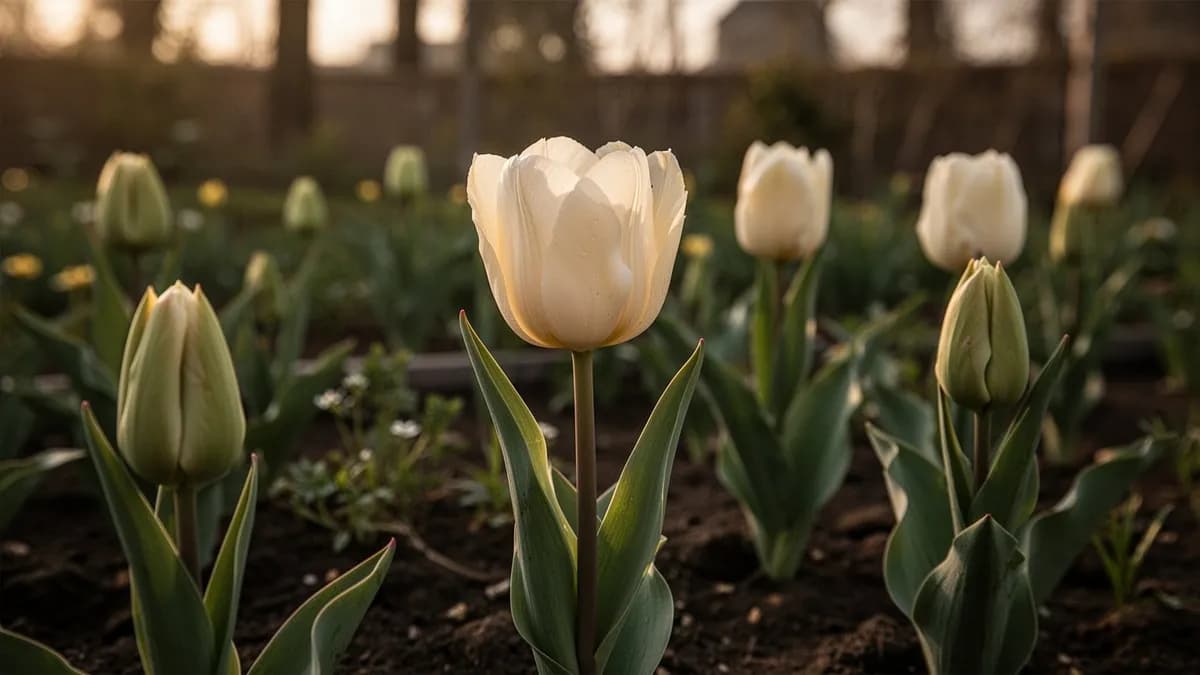
Camassia-Ähren für Arrangements schneiden, wenn sich die untersten Blüten der Ähre gerade öffnen und die oberen Knospen noch fest geschlossen sind. Die Ähren öffnen sich in einer Vase über sieben bis zehn Tage von unten nach oben weiter. Am frühen Morgen mit einer scharfen, sauberen Schere schneiden und die Stiele sofort in tiefes, kühles Wasser stellen. Die eleganten blauen Blütenähren kombinieren sich wunderschön mit Tulpen, Allien und frischem Frühlingslaub in gemischten Sträußen.
angenommen, du pflanzt zu Beginn des Zeitraums — trage dein tatsächliches Datum ein
Aus Zwiebeln, Knollen oder Zehen
Ernte Camassia zügig, dann trägt die Pflanze weiter.
Lagerung & Konservierung
Camassia-Zwiebeln verbleiben am besten ungestört im Boden, wo sie sich über Jahre naturalisieren und vermehren. Beim Teilen die Horste im Herbst ausheben und sofort wieder einpflanzen, da die Zwiebeln schnell austrocknen und längere Lagerung schlecht vertragen. In leicht feuchtem Torfmoos eingewickelt können ausgehobene Zwiebeln höchstens einige Wochen an einem kühlen Ort gelagert werden. Samenkapseln können geerntet werden, wenn sie braun und trocken sind, und Samen in Papiertüten für die Herbstaussaat aufbewahrt werden.
Was schiefgeht — und die Lösung
Schnecken
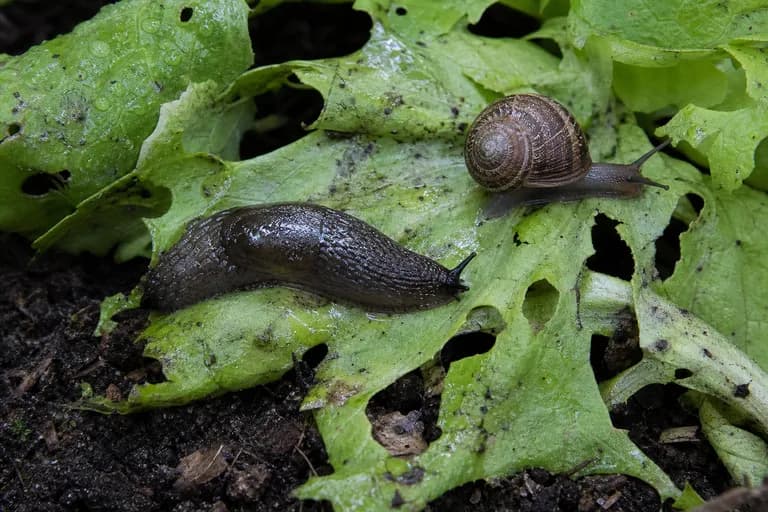
SchädlingUnregelmäßige Löcher in aufgehenden Blättern und Blütenknospen, Schleimspuren auf dem Laub, junge Triebe bis auf Bodenniveau abgefressen.
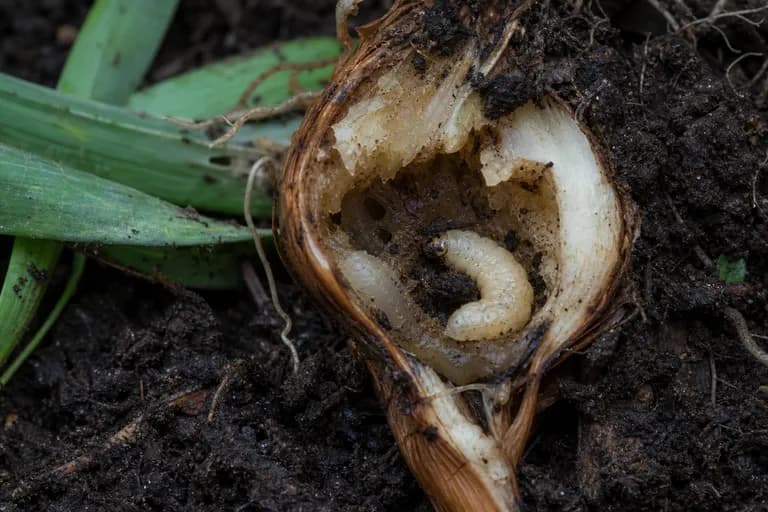
Narzissenfliege
SchädlingZwiebeln treiben schwaches, verkümmertes Laub aus oder erscheinen gar nicht. Beim Ausgraben werden Larven im Inneren der Zwiebeln gefunden, die ausgehöhlte Hohlräume hinterlassen.
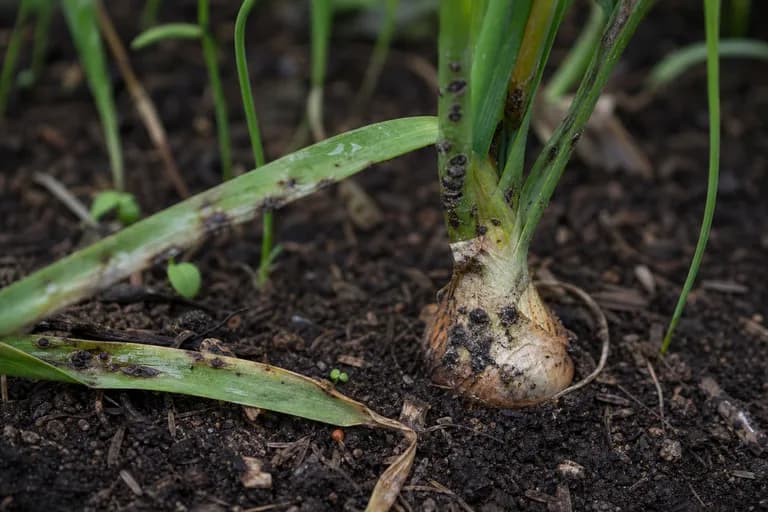
Brandpilz
KrankheitDunkle, rußig-schwarze Sporenmassen ersetzen die Samenkapseln und erscheinen gelegentlich auf den Blättern. Betroffene Blüten sind entstellt.
Fehlerbehebung bei häufigen Problemen
Das häufigste Problem ist das Pflanzen in zu trockenem Boden, da Camassia in ihrer Frühlings-Wachstumsperiode wirklich feuchte bis nasse Bedingungen benötigt. Im gut drainierten Sandboden gepflanzte Zwiebeln nehmen oft mit der Zeit ab. Das Laub kann unordentlich wirken, während es im Frühsommer einzieht; daher sollte man Stauden dazwischenpflanzen, die aufgehen und das vergilbende Laub kaschieren. Schnecken können in den feuchten Bedingungen, die Camassia bevorzugt, problematisch sein.
Anbautipps
- Camassia-Zwiebeln im Herbst pflanzen, idealerweise von September bis November, 10–15 cm tief und 15–20 cm voneinander entfernt. In lockeren Gruppen von mindestens 10–15 Zwiebeln statt in starren Reihen pflanzen für das natürlichste und visuell wirkungsvollste Erscheinungsbild. Wie die meisten Frühlingsblumenzwiebeln wirkt Camassia am eindrucksvollsten, wenn sie in großzügigen Mengen gepflanzt wird.
- Einen Pflanzstandort mit feuchtigkeitsspeicherndem Boden wählen, der im Frühling zuverlässig feucht bleibt, aber nicht dauerhaft wassergesättigt ist. Camassia ist eine der sehr wenigen Zierpflanzenzwiebeln, die in schwerem Lehmboden gedeiht – eine Eigenschaft, die sie von den meisten anderen Frühlingsblumenzwiebeln unterscheidet und sie für Gärtner auf Lehmboden unverzichtbar macht.
- Volle Sonne erzeugt die stärksten Blütenähren und reichlichste Blüte, aber Camassia gedeiht auch gut in leichtem oder geflecktem Halbschatten, besonders an den Rändern von Laubwäldern, wo sie gutes Frühjahrslicht erhält, bevor sich das Blätterdach schließt. Tiefen Schatten vermeiden, der zu schwachen Stielen und spärlicher Blüte führt.
- Das gesamte Laub nach der Blüte vollständig unberührt lassen, bis es auf natürliche Weise vergilbt und eingezogen ist – dies dauert typischerweise vier bis sechs Wochen nach dem Verblühen der letzten Blüten. Das einziehende Laub wirkt unordentlich, ist aber für das Wiederaufladen der Zwiebel unerlässlich. Mit später aufgehenden Stauden wie Storchschnabel, Gräsern oder Farnen dazwischenpflanzen, die heranwachsen und das vergilbende Camassia-Laub kaschieren.
- Camassia benötigt bei ausreichend fruchtbarem Gartenboden praktisch keine Düngung. Eine jährliche Abdeckschicht aus Laubkompost oder Gartenkompost, die im späten Winter vor dem Austrieb aufgetragen wird, liefert alle benötigten Nährstoffe. Stickstoffreiche Dünger vermeiden, die das Blattwachstum auf Kosten der Blüten fördern und Zwiebeln anfälliger für Fäulnis machen können.
- Überfüllte Horste alle vier bis fünf Jahre im Spätsommer ausheben und teilen, wenn die Zwiebeln ruhen. Den Horst vorsichtig ausgraben, die Tochterzwiebelchen von den Mutterzwiebeln trennen und sofort in ursprünglicher Tiefe wieder einpflanzen. Das Teilen belebt die Blüteleistung neu und ist der schnellste Weg, den Bestand zu vergrößern.
- Camassia ist weitgehend schädlings- und krankheitsfrei, was einer ihrer großen Vorteile als Gartenpflanze ist. Schnecken können gelegentlich aufgehendes Laub in sehr nassen Frühjahren beschädigen, und Zwiebeln können in wassergesättigtem Winterboden faulen, wenn die Drainage außergewöhnlich schlecht ist. Ansonsten ist keine regelmäßige Schädlings- oder Krankheitsbekämpfung erforderlich.
- Zur Naturalisierung in Rasen – eine der schönsten Wachstumsarten für Camassia – Zwiebeln zufällig über den gewünschten Bereich streuen und dort einpflanzen, wo sie fallen. Das Mähregime so einstellen, dass der Rasen im Camassia-Bereich nicht geschnitten wird, bis mindestens sechs Wochen nach der Blüte vergangen sind, damit das Laub auf natürliche Weise einziehen und die Zwiebeln sich vollständig aufladen können.
- Camassia kann auch erfolgreich aus Samen gezogen werden, erfordert aber Geduld. Frische Samen im Herbst in Töpfen mit feuchtem, grobkörnigem Substrat aussäen und im Freien durch den Winter für natürliche Kältestratifizierung lassen. Die Keimung erfolgt im Frühling. Aus Samen gezogene Sämlinge benötigen drei bis fünf Jahre, um Blühgröße zu erreichen, aber samengezogene Pflanzen sind genetisch vielfältig und bilden oft kräftige, gut angepasste Kolonien.
- Essbare Camassia-Arten vom giftigen Weißen Germer (Anticlea elegans, ehemals Zigadenus) an der Blütenfarbe unterscheiden – echte Camassia hat blaue, violette oder lila Blüten, während der Weiße Germer weiße, cremefarbene oder grünlich-gelbe Blüten produziert. Zwiebeln zum Essen niemals ernten, wenn die Art nicht während der Blüte sicher identifiziert werden kann.
Bau deine beste Camassia an — und alles drumherum.
Starte heute kostenlos. Lege deine Beete an, setze deine Camassia ein und lass PlotMyGarden Timing, Abstände, Begleiter und Erinnerungen von der Saat bis zum Erntekorb übernehmen.
Finde deine Camassia
Caerulea
Die klassische Sorte mit hohen Ähren aus sternförmigen blauen Blüten, die knapp einen Meter Höhe erreichen – hervorragend zur Naturalisierung in feuchten Wiesen und Regengärten.
Alba
Eine reinweiße Form, die schattige, feuchte Gartenecken erhellt und atemberaubend aussieht, wenn sie neben blühenden Arten mit blauen Blüten gepflanzt wird.
Semiplena
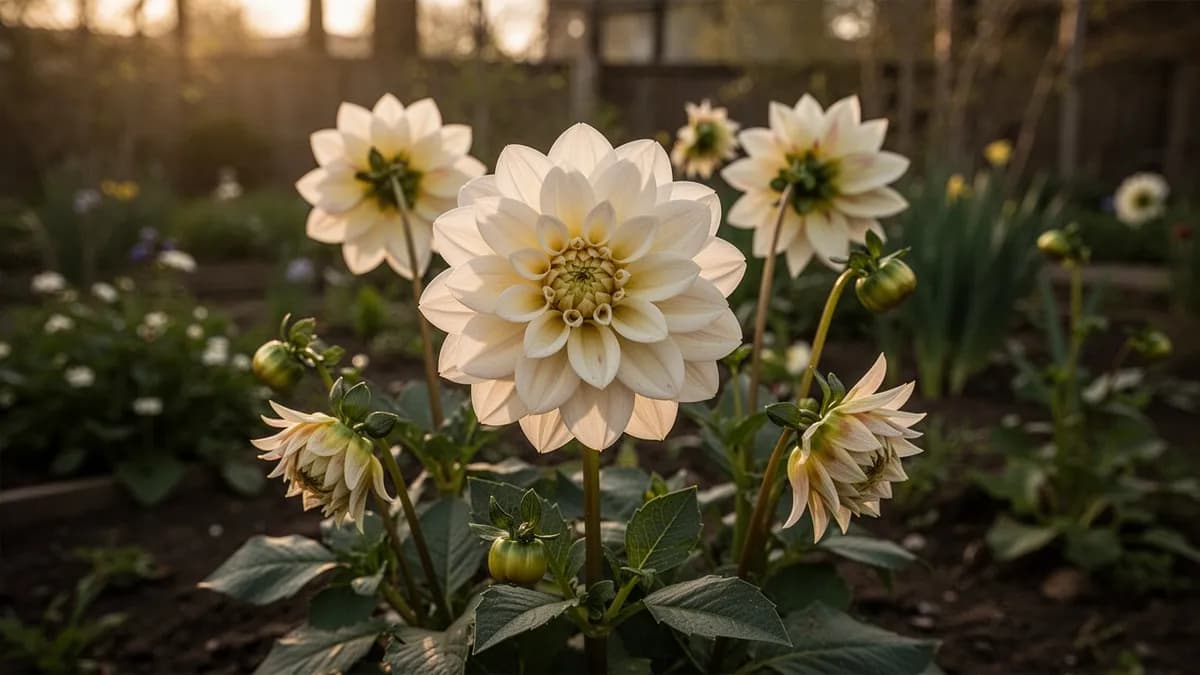
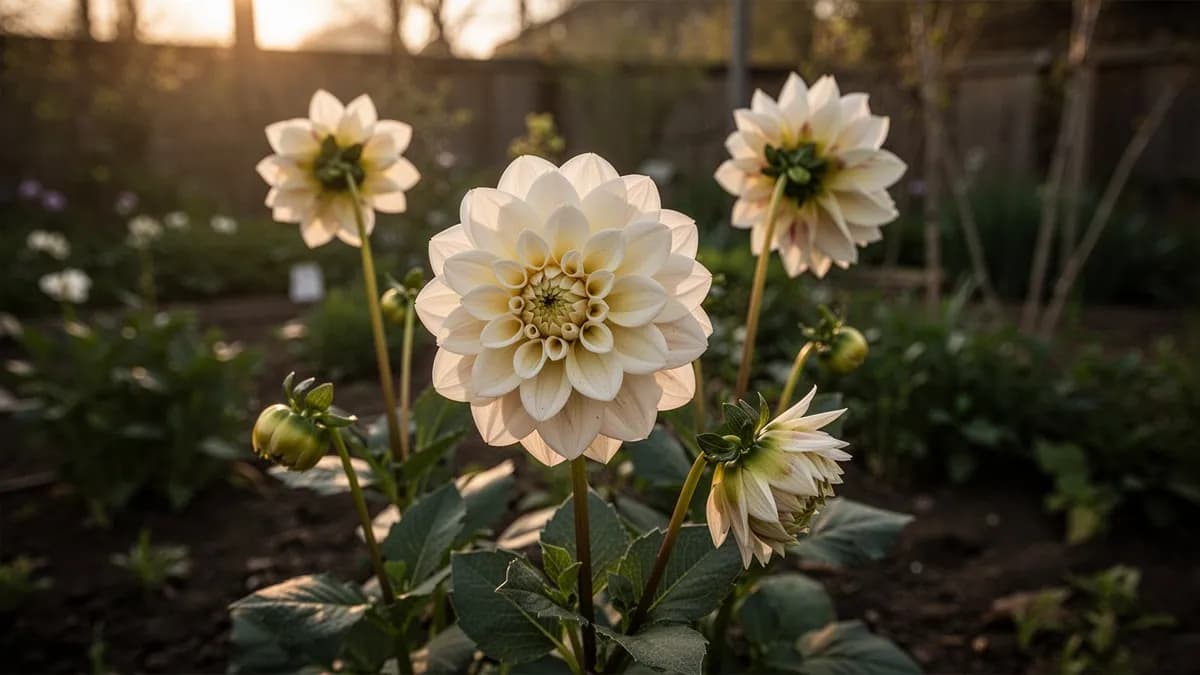
Eine seltene halbgefüllte Form mit zusätzlichen Blütenblättern, die vollere, substanziellere Blütenähren in sanftem Cremeweiß erzeugen.
Camassia-Zwiebeln werden von Spezialzwiebel-Anbietern zu 0,80–2,50 $ pro Zwiebel verkauft, je nach Art und Sorte, wobei Premium-Sorten wie C. leichtlinii 'Caerulea' höhere Preise erzielen. Ein einzelner etablierter Horst vermehrt sich durch Tochterzwiebelchen stetig und verdoppelt die Zwiebelanzahl typischerweise alle drei bis vier Jahre ohne jeglichen Eingriff. Eine bescheidene Anfangsinvestition von 25–50 Zwiebeln (20–125 $) kann sich innerhalb eines Jahrzehnts zu einer beträchtlichen naturalisierten Kolonie von mehreren Hundert Zwiebeln ausweiten und sowohl ein zunehmend beeindruckendes Zierschauspiel im Wert von Hunderten von Dollar an äquivalentem Gartencenter-Pflanzgut als auch – für Interessierte an traditioneller Nahrungsnutzung – eine erneuerbare Versorgung mit essbaren Zwiebeln bieten. Als Schnittblume werden Camassia-Stiele für 3–6 $ pro Stiel auf Bauernmärkten und bei Floristen verkauft, und ein gut etablierter Horst kann pro Saison 20–40 erntbare Stiele liefern.
Schnelle Rezepte
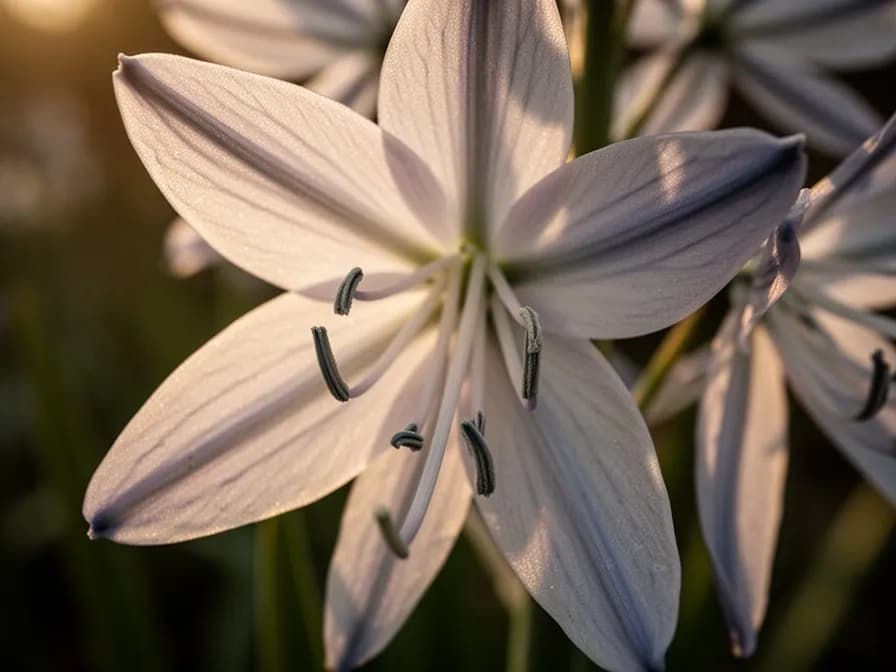
Traditionell in der Erdgrube geröstete Camas-Zwiebeln
2 Stunden aktiv, 24–48 Stunden GarzeitDie authentische indigene Methode zur Zubereitung von Camas-Zwiebeln verwandelt sie von stärkehaltig und unverdaulich in tiefgründig süß und karamellisiert. Eine Grube wird mit feuererhitzten Steinen ausgelegt, mit feuchter Vegetation abgedeckt, mit Camas-Zwiebeln gefüllt und mit Erde versiegelt, um ein bis zwei Tage lang langsam zu rösten. Die verlängerte niedrige Hitze wandelt das Inulin in den Zwiebeln in Fruchtzucker um und erzeugt ein dunkles, süßes, fast melasseartiges Ergebnis. Diese Methode erfordert Platz im Freien und Geduld, erzeugt aber das authentischste Aroma.
5 ZutatenIm Ofen geröstete Camas-Zwiebeln mit Kräutern
15 Min. aktiv, 8–12 Stunden langsames RöstenEine moderne Küchenadaption des traditionellen Camas-Garens, die einen niedrigen Ofen verwendet, um dieselbe Inulin-zu-Fruchtzucker-Umwandlung zu erreichen. Die Zwiebeln werden in Folie mit Kräutern und einem Spritzer Wasser eingewickelt und dann bei sehr niedriger Temperatur über Nacht langsam gegart. Das Ergebnis sind zarte, süße Zwiebeln mit einem Geschmack, der an geröstete Kastanien gekreuzt mit Süßkartoffel erinnert. Dies ist die praktischste Methode für Hobbygärtner, die dieses historische Lebensmittel kennenlernen möchten.
6 ZutatenCamas- und Wurzelgemüse-Püree
30 Min. aktiv, 9 Stunden gesamt einschließlich langsamem RöstenVorgeröstete Camas-Zwiebeln werden mit gerösteten Pastinaken und Knoblauch kombiniert und dann zu einer seidigen, natürlich süßen Beilage zusammengepüriert. Die Süße der langsam gegarten Camas harmoniert wunderschön mit dem erdigen Pastinakgeschmack. Dieses Rezept verbindet traditionelle indigene Ernährungsweisen mit vertrauten modernen Kochtechniken und schafft eine einzigartige und gesprächsauslösende Beilage zu geröstetem Fleisch oder gegrilltem Gemüse.
6 ZutatenKulinarische Verwendung
Camassia-Zwiebeln waren eine äußerst wichtige Nahrungsquelle für die indigenen Völker des pazifischen Nordwestens, die sie in Erdöfen bis zu zwei Tage lang langsam rösteten, um das Inulin in eine süße, verdauliche Stärke umzuwandeln. Die gerösteten Zwiebeln haben einen Geschmack ähnlich wie Süßkartoffel oder Kastanie. Wichtig: Eine sichere Identifizierung ist unerlässlich, da der ähnlich aussehende Weiße Germer äußerst giftig ist.
Was drinsteckt
Gesundheitsvorteile
- Gegarte Camas-Zwiebeln sind außergewöhnlich reich an Inulin-abgeleiteten Fructooligosacchariden, die als potente prebiotische Verbindungen dienen, die selektiv nützliche Bifidobacterium- und Lactobacillus-Arten im Darm ernähren und ein gesundes und vielfältiges Darmmikrobiom fördern
- Der hohe Inulingehalt von Camas-Zwiebeln – auch nach teilweiser Umwandlung durch das Garen – unterstützt eine verbesserte Kalzium- und Magnesiumaufnahme im Dickdarm, ein Mechanismus, der in klinischen Studien zu inulinreichen Lebensmitteln bestätigt und mit einer verbesserten Knochenmineraldichte in Verbindung gebracht wurde
- Camas-Zwiebeln liefern eine langsam freisetzende Kohlenhydratquelle mit einem relativ niedrigen glykämischen Einfluss im Vergleich zu raffinierten Stärken, da die Fruchtzucker und das restliche Inulin langsamer absorbiert werden als auf Glukose basierende Stärken, was stabile Blutzuckerwerte unterstützt
- Der bedeutende Kaliumgehalt gegarter Camas-Zwiebeln trägt zur gesunden Blutdruckregulierung bei, indem er Nahrungsnatrium ausgleicht, wobei eine ausreichende Kaliumaufnahme in großen Bevölkerungsstudien konsistent mit einem reduzierten Herz-Kreislauf-Erkrankungsrisiko assoziiert wird
- Als natürlich fett- und natriumarme Vollwertkohlenhydratquelle unterstützen gegarte Camas-Zwiebeln herzgesunde Ernährungsweisen und liefern anhaltende Energie ohne die entzündlichen Wirkungen, die mit stark verarbeiteten Kohlenhydraten in Verbindung gebracht werden
- Traditionelle indigene Ernährungsweisen, bei denen Camas als Hauptkohlenhydratquelle diente, wurden mit niedrigeren Raten an Stoffwechselerkrankungen assoziiert, und der hohe Ballaststoff- und Prebiotikgehalt von Camas stimmt mit der modernen Ernährungswissenschaft überein, die Ballaststoffe mit einem reduzierten Risiko für Darmkrebs und Typ-2-Diabetes in Verbindung bringt
Woher Camassia stammt
Camassia ist eine Gattung von Zwiebelpflanzen in der Familie der Spargelgewächse (Asparagaceae), ausschließlich in Nordamerika heimisch. Die Gattung umfasst fünf bis sechs Arten, die von Süd-British Columbia und Alberta südwärts durch den pazifischen Nordwesten, die Rocky-Mountain-Staaten und in die Prärien des zentralen Nordamerika verbreitet sind. Der Trivialname 'Camas' leitet sich vom Nez-Perce-Wort (Nimiipu) 'qem'es' ab und spiegelt die tiefen Wurzeln der Pflanze in der indigenen Kultur wider. Archäologische Funde aus Oregon, Washington, Idaho und British Columbia belegen, dass Camas-Zwiebeln seit mindestens 8.000 Jahren als Nahrungsquelle geerntet und verarbeitet werden, möglicherweise sogar länger. Für Dutzende indigener Nationen – darunter die Nez Perce, Salish, Klamath, Chinook, Yakama und viele andere – war Camas eine der wichtigsten pflanzlichen Nahrungsquellen mit einer Bedeutung, die mit Lachs und Bison vergleichbar war. Gemeinschaften unterhielten ausgedehnte Camas-Prärien durch gezieltes kontrolliertes Abbrennen, eine Praxis, die konkurrierende Vegetation unterdrückte und die Zwiebelausbeute drastisch erhöhte. Die Ernte erfolgte typischerweise im Spätfrühling und Frühsommer nach der Blüte der Pflanzen mit zugespitzten Grabstöcken. Die Zwiebeln wurden dann in großen gemeinschaftlichen Erdöfen verarbeitet – flachen Gruben, die mit heißen Steinen ausgekleidet und mit Vegetationsschichten und Erde bedeckt waren –, wo sie ein bis drei Tage lang langsam gegart wurden. Diese verlängerte Erhitzung zerlegte das Inulin der Zwiebeln in süße Fruchtzuckermoleküle und verwandelte sie von einer unverdaulichen stärkehaltigen Masse in ein süßes, nahrhaftes, kalorienreiches Lebensmittel, das getrocknet und für den Winter gelagert werden konnte. Die Ankunft europäischer Siedler im neunzehnten Jahrhundert verwüstete die Camas-Prärien im gesamten pazifischen Nordwesten. Landwirtschaftliche Umnutzung, Viehweide, städtische Entwicklung und die Unterdrückung indigener Feuernutzungspraktiken eliminierten den größten Teil des produktiven Camas-Lebensraums. Heute arbeiten Renaturierungsökologen und indigene Gemeinschaften daran, Camas-Prärien als Teil breiterer Bemühungen zur Wiederherstellung einheimischer Ökosysteme und zur Wiederverbindung mit traditionellen Ernährungsweisen zu revitalisieren. Im Zierpflanzenbau wurde Camassia im frühen neunzehnten Jahrhundert in europäische Gärten eingeführt und hat sich zu einer wertvollen Spätfrühlings-Zwiebelpflanze entwickelt, die besonders für die Naturalisierung in feuchten Wiesen und Waldrändern geschätzt wird, wo nur wenige andere Zwiebeln gedeihen.
Camassia: Schon gewusst?
Faszinierende Fakten über Camassia
Camas-Zwiebeln waren eines der wichtigsten Pflanzennährmittel für indigene Völker im gesamten pazifischen Nordwesten, von Süd-British Columbia bis Nordkalifornien. Ganze Gemeinschaften zogen während der Frühlingserntesaison zu Camas-Wiesen, und die Zwiebeln waren so überlebenswichtig, dass um den Zugang zu produktiven Camas-Prärien Kriege geführt wurden.
Camassia: Fragen & Antworten
Wann sollte ich Camassia pflanzen?
Was sind gute Begleitpflanzen für Camassia?
In welchen Winterhärtezonen kann Camassia wachsen?
Wie viel Sonne braucht Camassia?
Welchen Abstand sollte ich zwischen Camassia lassen?
Welche Schädlinge und Krankheiten befallen Camassia?
Wie lagere ich Camassia nach der Ernte?
Was sind die besten Camassia-Sorten zum Anbauen?
Welchen Boden braucht Camassia?
Kann ich Camassia-Zwiebeln aus meinem Garten essen, und wie bereite ich sie sicher zu?
Was ist der Unterschied zwischen Camassia quamash und Camassia leichtlinii?
Warum blüht meine Camassia nicht, obwohl das Laub jedes Jahr austreibt?
Ist Camassia für schweren Lehmboden geeignet?
Wie naturalisiere ich Camassia in einem Rasen oder auf einer Wiese?
Was ist der Weiße Germer und wie unterscheide ich ihn von der essbaren Camassia?
Du hast die Theorie gelesen. Jetzt baue sie auf Autopilot an.
Alles, was Camassia knifflig macht — das Timing, die Abstände, die Begleiter, das Erntefenster — genau das übernimmt PlotMyGarden für dich, für jede Pflanze im Garten.
Ein Plan, der dein Wetter kennt
Standort einmal festlegen. Aussaat-, Dünge- und Erntedaten rund um deinen echten letzten Frosttermin und die Live-Vorhersage — kein Raten mehr nach Saattüte.
Aus dem Abschnitt „Pflanzzeit“Beetplaner per Drag & Drop
Beete auf einem Raster gestalten. Jede Pflanze rastet im richtigen Abstand ein, und du siehst die ganze Saison, bevor du einen Cent für Saatgut ausgibst.
Aus dem Abschnitt „Anbau“Begleiter-Konflikte früh erkannt
Über 200 gute und schlechte Kombinationen werden beim Pflanzen live geprüft — so landet ein saisonruinierender Fehler nie in der Erde.
Aus dem Abschnitt „Begleiter“Erinnerungen, nach denen du wirklich handelst
„Gieß die Bohnen.“ „Heute ernten, bevor's umschlägt.“ Pünktlich, konkret und auf deine echten Pflanzen bezogen.
Aus dem Abschnitt „Ernte“Staffel-Aussaat, geplant
Sechs Wochen ernten statt sechs Tage? Die App verteilt deine Aussaaten automatisch und erinnert dich, wenn der nächste Satz fällig ist.
Aus dem Abschnitt „Pflanzzeit“Ein Verlauf, der schlauer wird
Jede protokollierte Ernte bringt der App deinen Garten bei. Der Plan fürs nächste Jahr startet bei dem, was in deinem Boden wirklich funktioniert hat.
Aus dem Abschnitt „Überblick“Pflanze diese neben Camassia
Weitere Zwiebelpflanzen
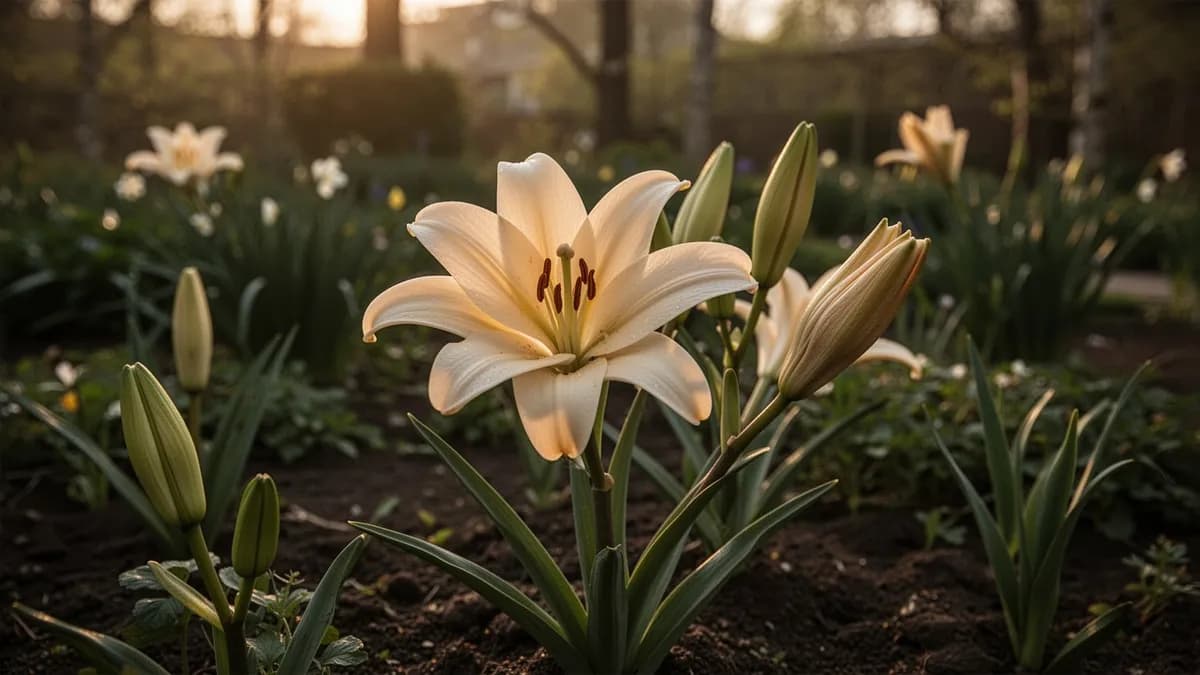
Bau deine beste Camassia an — und alles drumherum.
Starte heute kostenlos. Lege deine Beete an, setze deine Camassia ein und lass PlotMyGarden Timing, Abstände, Begleiter und Erinnerungen von der Saat bis zum Erntekorb übernehmen.