Cacao
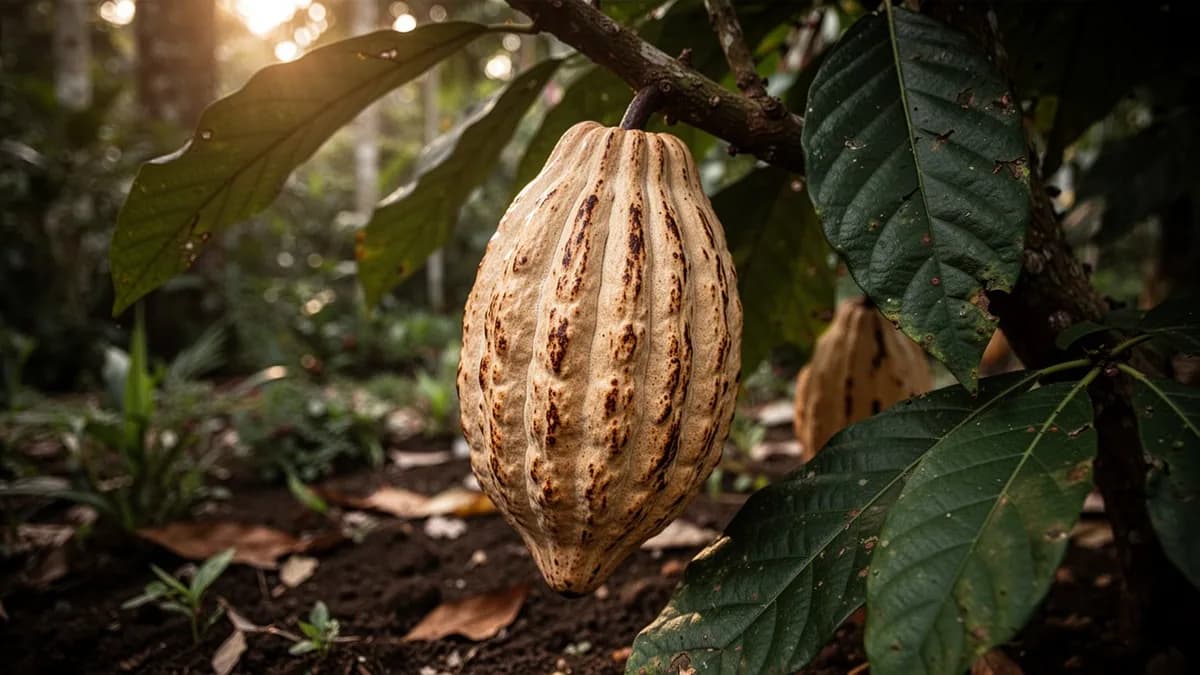
The source of chocolate, producing large colorful pods directly on the trunk containing sweet pulp and bitter seeds that become cocoa beans.





On this pageOverview
Meet Cacao
The source of chocolate, producing large colorful pods directly on the trunk containing sweet pulp and bitter seeds that become cocoa beans. Cacao requires constant warmth, humidity, and shade from taller canopy trees to thrive. Each tree produces 20 to 30 pods per year, and it takes about 400 beans to make one pound of chocolate.
When to plant Cacao
Cacao seeds lose viability very quickly and must be planted within 1 to 2 weeks of extraction from the pod. Remove the pulp by washing or brief fermentation of 1 to 2 days, then plant seeds immediately in deep pots filled with a rich, well-draining tropical potting mix. Sow seeds 1 inch deep with the pointed end facing down. Keep at 80 to 90 degrees Fahrenheit with high humidity; a covered propagation tray or plastic bag over the pot helps maintain moisture. Germination takes 7 to 14 days. Seedlings grow rapidly and should be transplanted to larger pots when 6 to 8 inches tall. Provide 70 percent shade and high humidity at all times. Seedling trees take 3 to 5 years to begin fruiting. For faster production and guaranteed variety traits, obtain grafted trees from a tropical nursery.
Your Cacao Year
Composed for Zone 7 · typical seasons · frost passes Apr 2, returns Nov 1
Plant Cacao Mar – May, pick Jan – Dec. Check the planting methods below and set your climate to personalize these windows.
How to grow Cacao
Cacao is a tropical evergreen tree that grows 15 to 25 feet tall in cultivation, though it can reach 40 feet in the wild. It is strictly a warm-climate plant, requiring constant temperatures between 65 and 90 degrees Fahrenheit year-round with no frost tolerance whatsoever. In temperate regions, cacao can only be grown in heated greenhouses or large indoor spaces with supplemental lighting and humidity control.
Cacao is a cauliflorous species, meaning its flowers and fruit pods grow directly from the trunk and major branches rather than from new growth. The tiny pink flowers are pollinated by midges, and only about 1 to 5 percent of flowers develop into pods. Each mature tree produces 20 to 30 pods per year under good conditions. Plant cacao beneath taller canopy trees like banana, coconut palm, or rubber trees that provide 50 to 70 percent shade.
Maintain consistently high humidity of 70 to 100 percent and provide 60 to 80 inches of rainfall or equivalent irrigation annually, distributed evenly throughout the year. Cacao is very sensitive to wind, so plant windbreaks or use sheltered locations. The trees begin bearing fruit 3 to 5 years after planting from seed, or 2 to 3 years from grafted stock. Prune to maintain a manageable height and remove dead or crossing branches to improve air circulation.
Cacao needs more room than a 4 × 8 ft bed gives
Each Cacao wants 300 cm of elbow room. The planner keeps that spacing for you — every plant, every bed.
Cacao's best neighbours
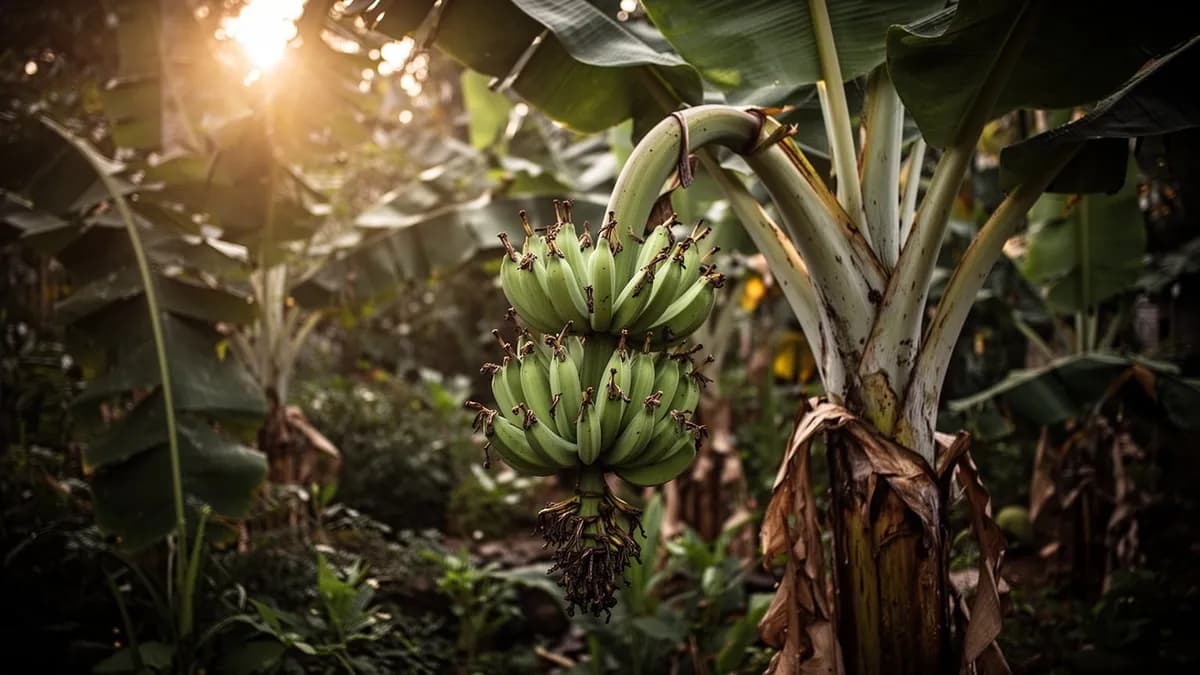
Cacao grows best in agroforestry systems with multiple canopy layers. Banana and plantain are the classic shade companions, providing quick-growing overhead cover while producing their own harvestable crop. Coconut palms and breadfruit trees create taller upper canopy shade. Vanilla orchids can be trained up the trunks of shade trees in cacao plantations. Nitrogen-fixing trees like Gliricidia and Inga are commonly interplanted to provide both shade and soil fertility. At ground level, cover crops of tropical legumes such as Mucuna and Calopogonium suppress weeds and fix nitrogen. Avoid planting near eucalyptus, which competes aggressively for water.
Banana belongs beside it.
Old growers' knowledge, checked against Cacao's real companion table below — test any plant you're growing.
Try Cacao in a bed — right here
A real planner bed with Cacao already in it. Tap a companion to place it and watch the pairing checks answer — green for good neighbours, red for a clash.


Related growing guides
Feed it well
Cacao requires deep, well-drained, fertile soil rich in organic matter, with an ideal pH of 6.0 to 7.0. Heavy clay soils must be amended with generous quantities of compost and organic matter to improve drainage, as cacao roots are highly sensitive to waterlogging. Apply a balanced fertilizer such as 14-14-14 three times per year, increasing potassium during the fruiting period. Supplement with magnesium and calcium if deficiencies appear as interveinal leaf yellowing. Maintain a thick 4 to 6 inch layer of organic mulch around the root zone to conserve moisture, moderate soil temperature, and feed soil microorganisms. Cacao benefits greatly from regular applications of well-composted animal manure.
Ideal Temperature
Hardiness Zone Compatibility
From seed to harvest, stage by stage
Seed Germination and Seedling Emergence
Cacao seeds germinate rapidly when fresh, typically sprouting within 7-14 days of planting. The seed coat splits and a robust taproot descends quickly into the growing medium while a reddish or bronze shoot pushes upward. Cacao seeds lose viability very quickly once removed from the pod and should be planted within a week of harvest for best germination rates. The seedling is fragile at this stage and requires consistent moisture and warmth above 20°C.
Juvenile Vegetative Growth
The young cacao plant enters a period of rapid leaf and stem development. Growth occurs in characteristic flushes called jorquettes, where several leaves emerge simultaneously in a whorl before the plant pauses and repeats the cycle. Leaves at this stage often display striking reddish or bronze pigmentation that gradually turns deep green as they mature and begin photosynthesizing. The root system is expanding rapidly below the surface during this phase.
Canopy Establishment and Branching
As the young tree matures through its first two years, it develops its characteristic jorquette branching structure at a height of roughly 1-1.5 meters, where the main stem fans out into a canopy of horizontal branches. This branching architecture is genetically determined and is one of the most distinctive features of the cacao tree. The tree continues building root mass and canopy biomass throughout this phase in preparation for eventual flowering.
First Flowering
Cacao trees typically begin flowering in their second to third year from seed, though grafted trees may flower earlier. The tiny, intricate flowers emerge in clusters called cushions directly from the trunk and older woody branches, a botanical adaptation known as cauliflory. Each flower is only about 1-2 cm across and is pollinated almost exclusively by tiny midges of the genus Forcipomyia. Only about 1-5% of flowers are successfully pollinated under natural conditions.
Pod Development
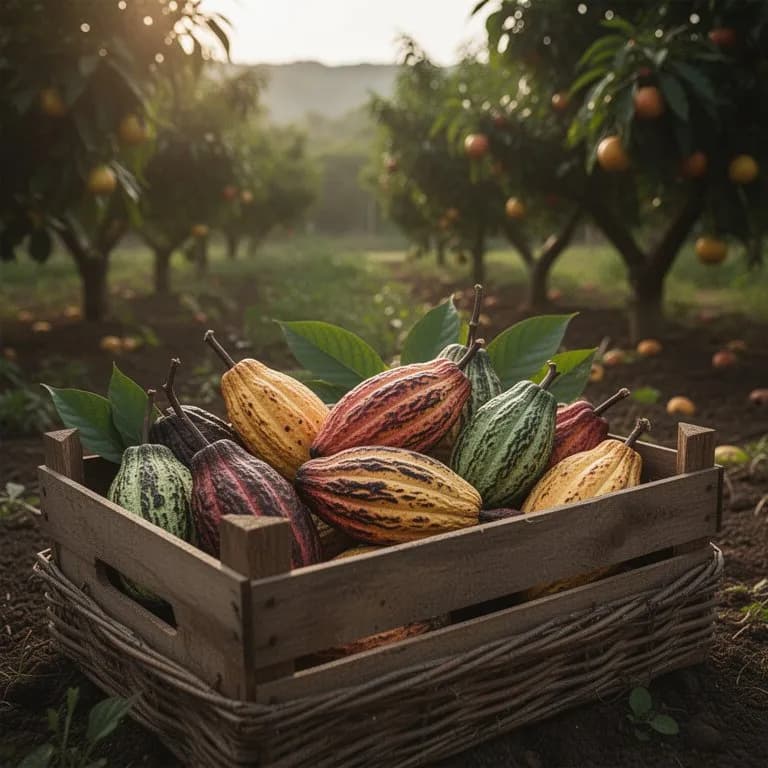
Successfully pollinated flowers develop into large, ridged pods that take approximately 5-6 months to reach full maturity. Pods grow directly from the trunk and main branches, starting as tiny green swellings before expanding into impressive fruits up to 30 cm long. The color of developing pods varies by variety from green to red to purple, all maturing to yellow, orange, or red tones. Inside the pod, up to 50 beans develop embedded in a sweet white mucilaginous pulp.
Harvest and Post-Harvest Processing
Cacao is harvested year-round in tropical climates, with peak harvests typically occurring twice a year. Ripe pods are cut from the tree with a sharp blade or machete, taking care not to damage the flower cushions from which future pods will grow. The pods are split open and the beans and pulp are scooped out and heaped into fermentation boxes. Fermentation for 5-8 days followed by 5-10 days of sun drying transforms the raw beans into the aromatic dried cacao that is the starting point of all chocolate.
Sow fresh seeds 2-3 cm deep in a rich, well-draining mix of loam, compost, and perlite. Maintain soil temperature between 24-28°C using a heat mat if necessary. Keep in bright indirect light and mist the surface daily to maintain humidity above 75%. Avoid direct sun, which will scorch tender seedlings.
Caring for Cacao month by month
What to do each month for your Cacao
October
You are hereContinue the main harvest, fermenting, and drying cycle throughout the month. Check dried beans for adequate moisture content of around 6-7% by biting a bean which should snap cleanly rather than bend. Sort dried beans and store in clean hessian sacks in a dry, well-ventilated space away from strong odours. Apply a post-harvest balanced fertilizer to recovering trees.
Know exactly what to do in your garden — every month
One email at the start of each month: what to sow, plant, and tackle right now — for your Cacao and everything growing around it. Plus a short starter course that helps you dodge the classic mistakes.
- What to do, right now
- Matched to your season
- Starter course included
Harvesting Cacao
Cacao pods ripen year-round in tropical climates, with peak harvests typically occurring twice per year. Ripe pods change color depending on variety: green pods turn yellow, red pods turn orange, and purple pods turn brownish-orange. Ripe pods sound hollow when tapped and the stem connecting the pod to the trunk begins to dry. Harvest by cutting the pod stem with a sharp, clean machete or pruning shears; never pull or twist pods off, as this damages the flower cushion and reduces future yields. After harvest, split pods within a week and scoop out the beans and surrounding white pulp for fermentation, which is essential for developing chocolate flavor.
assuming you plant when the window opens — set your real date
Pick Cacao promptly and the plant keeps producing.
Storage & Preservation
Fresh cacao beans must be fermented for 5 to 7 days in wooden boxes or banana leaf-covered heaps, turning every 2 days to ensure even fermentation. This step is critical for developing the precursor flavors that become chocolate during roasting. After fermentation, dry the beans in the sun for 5 to 14 days until moisture content drops below 7 percent. Properly dried beans can be stored in burlap or mesh bags in a cool, dry location for up to a year. The fresh pulp surrounding the beans is delicious eaten straight from the pod or blended into juices and smoothies. Unfermented beans can be frozen for later processing.
What goes wrong — and the fix
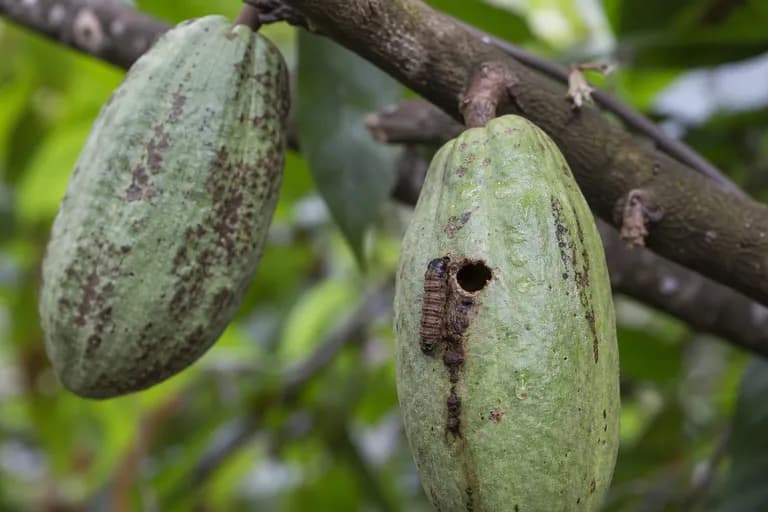
Cacao Pod Borer
PestMoth larvae bore into developing pods, feeding on the beans and pulp inside. Infested pods show small entry holes and internal damage, with larvae leaving frass trails. Severely affected pods produce no usable beans.
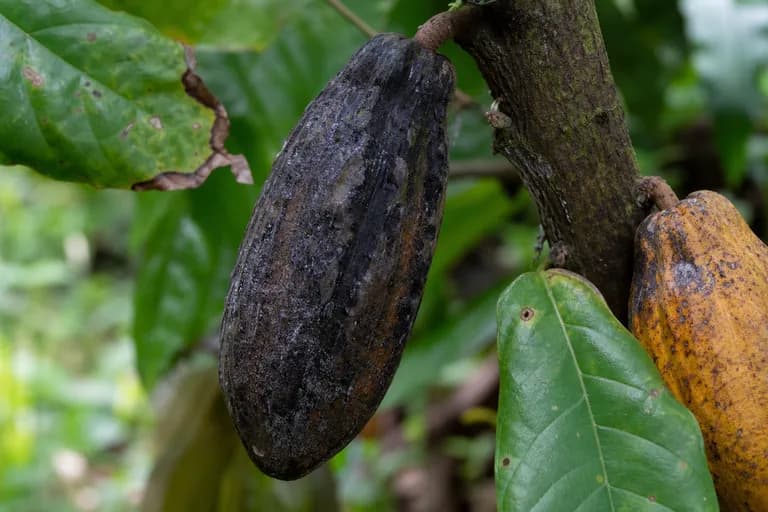
Black Pod Rot
DiseaseDark brown to black lesions spread rapidly across the pod surface, eventually consuming the entire pod. White fungal mycelium may be visible on the surface in humid conditions. Internal beans become blackened and unusable. The disease spreads fastest during wet weather.
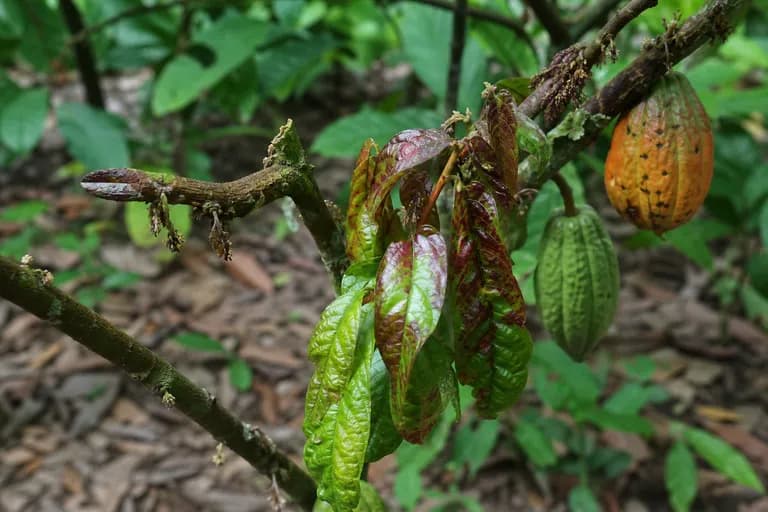
Cacao Swollen Shoot Virus
DiseaseSwelling of young shoots and roots, followed by red vein banding on leaves. Infected trees show progressive decline with reduced pod production, dieback of branches, and eventual death within 2 to 3 years. The virus is transmitted by mealybugs.
Troubleshooting Common Problems
Insufficient shade is one of the most common mistakes, leading to leaf scorch, reduced flowering, and poor pod development. Ensure 50 to 70 percent shade at all times. Low pod set despite abundant flowering is normal for cacao, as only 1 to 5 percent of flowers develop into pods; however, poor midge populations can further reduce set. Avoid using broad-spectrum insecticides that kill the tiny pollinating midges. Nutrient deficiency symptoms including yellowing leaves and poor growth are common in depleted soils; maintain regular fertilization and organic matter additions. Wind damage can be severe; always provide windbreaks in exposed locations.
Growing Tips
- Cacao absolutely requires consistent temperatures above 18°C year-round and is not suitable for outdoor cultivation in any region that experiences frost; in temperate climates, grow in a large heated greenhouse or as a conservatory specimen that can be maintained above 15°C even on cold winter nights
- Shade management is one of the most critical factors in successful cacao cultivation — young trees need 50-70% shade and even mature trees produce best with 30-50% dappled shade mimicking the tropical forest understory where the species evolved
- To improve the naturally low natural pollination rate of around 1-5%, hand-pollinate cacao flowers using a fine brush or by transferring pollen between flowers with your fingertip on sunny mornings between 6 and 10 AM when flowers are fully open
- Never allow the root zone of a cacao tree to dry out completely; the tree is sensitive to water stress and even brief periods of drought can cause pod abortion, flower drop, and dieback of young shoots, so consistent moisture is non-negotiable
- Fermentation is the single most important step in developing chocolate flavor from your home-grown beans — skip it or shorten it and the resulting product will taste flat and astringent rather than complex and chocolatey; aim for 5-7 days in an insulated wooden box
- Cacao pod husks are a valuable garden resource; they decompose into a rich organic mulch with a slightly acidic pH that is ideal for cacao itself as well as other tropical acid-loving plants, so compost husks in place around tree bases rather than discarding them
- Roasting your own dried cacao beans at home in a cast-iron pan or low oven at 120-130°C for 20-30 minutes allows you to tailor the flavor profile from light and fruity to deep and bitter, an experience entirely unavailable to those who buy commercial chocolate
- Grafted trees from nurseries that propagate from high-yielding, disease-resistant mother plants will always outperform seedling-grown trees in terms of productivity, disease resistance, and flavor quality; seek out grafted Trinitario or fine-flavor Criollo varieties from reputable tropical nurseries
- Mealybugs and cocoa pod borers are the two most damaging pests in home cacao cultivation; check under leaves and along stems weekly and treat early infestations with neem oil spray or insecticidal soap before populations become established
- The sweet white pulp surrounding raw cacao beans is a delicious tropical fruit in its own right, tasting of lychee, mango, and citrus — enjoy it fresh immediately after opening pods, or freeze it for use in smoothies and desserts throughout the year
Grow your best Cacao yet — and everything around it.
Start a free plan today. Lay out your beds, drop in your Cacao, and let PlotMyGarden handle the timing, spacing, companions and reminders from seed to harvest basket.
Pick your Cacao
Criollo
The finest and rarest cacao variety, producing beans with complex, nuanced flavor and minimal bitterness. Makes up less than 5 percent of world production. Trees are less vigorous and more disease-susceptible than other types.
Forastero
The workhorse of the cacao world, accounting for about 80 percent of global production. Hardy, disease-resistant trees with strong, straightforward chocolate flavor. The Amelonado subtype is the most widely planted.
Trinitario
A hybrid between Criollo and Forastero that combines the fine flavor of Criollo with the vigor and disease resistance of Forastero. Produces 10 to 15 percent of world cacao and is favored by craft chocolate makers.
Nacional
An ancient Ecuadorian variety known for its floral, aromatic flavor profile called Arriba. Considered a fine-flavor cacao alongside Criollo. Trees are moderately vigorous with good productivity in suitable climates.
Fine-flavor cacao beans suitable for artisan chocolate making sell for $10-25 USD per kilogram at specialty retailers, and high-quality single-origin dark chocolate can cost $20-50 USD per 100g bar. A single mature cacao tree producing 1-2 kg of dried beans annually can supply enough raw material for several kilograms of homemade chocolate products worth hundreds of dollars at retail prices. Growing your own cacao also gives access to the fresh sweet pulp of the pods, a delicious tropical fruit rarely available for purchase outside cacao-growing regions, representing an additional culinary benefit unavailable to consumers who buy only processed chocolate products.
Quick recipes
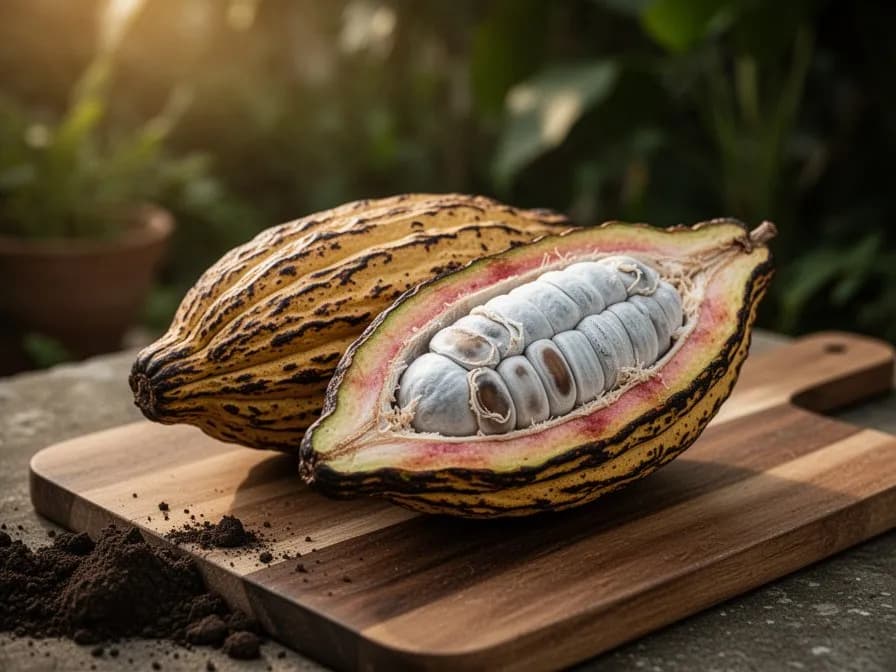
Traditional Spiced Cacao Drink
20 minutesA rich, warming beverage made from home-roasted and ground cacao beans blended with warm water or milk and a touch of cinnamon and chili, closely modeled on the ancient Mesoamerican preparation that predates modern hot chocolate by over two thousand years.
6 ingredientsRaw Cacao and Date Energy Truffles
30 minutes plus 1 hour chillingNo-cook chocolate truffles made from freshly prepared cacao paste blended with soft Medjool dates and coconut oil, rolled in cacao powder and toasted sesame seeds for a satisfying, nutrient-dense treat that showcases the full complex flavor of home-grown cacao beans.
6 ingredientsCacao Nib and Banana Smoothie Bowl
10 minutesA thick, creamy smoothie bowl topped with home-produced cacao nibs that are cracked from dried beans using a hammer and winnowed free of shells. The nibs add an intensely bitter, complex chocolate flavor and satisfying crunch that transforms a simple banana base into something genuinely special.
7 ingredientsCulinary Uses
Cacao beans are the foundation of all chocolate products, from dark chocolate to milk chocolate and cocoa powder. The fresh pulp surrounding the beans has a sweet, tropical flavor and is eaten fresh or made into juice in cacao-growing regions. Cacao nibs, made from roasted and crushed beans, are used as a crunchy, bittersweet topping for desserts, smoothie bowls, and trail mix. The nibs can be ground into a paste to make homemade chocolate or used in mole sauces. Cacao butter extracted from the beans is used in confections and skin care products. Cacao tea brewed from the shells is a mild, chocolatey beverage.
What's inside
Health Benefits
- Regular consumption of high-cacao-content chocolate and raw cacao products is associated with reduced blood pressure and improved arterial flexibility, largely due to the flavonoid epicatechin stimulating nitric oxide production in blood vessel walls
- Cacao flavonoids have demonstrated the ability to cross the blood-brain barrier and are linked in multiple studies to improved memory, attention, and processing speed, as well as a reduced risk of cognitive decline in older adults
- The theobromine and magnesium content of raw cacao work synergistically to relax smooth muscle tissue, which may help relieve bronchospasm in asthma and reduce the severity of menstrual cramps
- Cacao polyphenols act as prebiotics, selectively feeding beneficial Bifidobacterium and Lactobacillus species in the gut microbiome while inhibiting the growth of less favorable bacteria, with measurable positive changes visible within weeks of regular consumption
- The combination of iron, copper, and folate in raw cacao supports healthy red blood cell formation and may help address iron-deficiency anaemia, particularly when consumed with vitamin C sources to enhance iron absorption
- Phenylethylamine and anandamide present in cacao interact with dopamine and serotonin pathways in the brain, producing genuine mood-elevating effects that support emotional wellbeing and may reduce symptoms of mild depression and anxiety
Where Cacao comes from
The story of cacao (Theobroma cacao) begins in the tropical rainforests of the upper Amazon basin in South America, where the tree grew wild and was first gathered by indigenous peoples many thousands of years ago. Genetic evidence points to the upper Amazon region encompassing modern Peru, Ecuador, and Colombia as the center of origin and greatest genetic diversity for wild cacao populations. The earliest confirmed use of cacao in a processed form dates to around 1500 BCE among the Olmec civilization on the Gulf Coast of Mexico, who are believed to have fermented the sweet pulp of cacao pods into alcoholic beverages before discovering the culinary potential of the roasted seeds within. The Maya civilization elevated cacao to a position of profound cultural, spiritual, and economic importance. Maya texts and artifacts from as early as 600 CE document detailed chocolate preparation practices, with cacao beverages consumed by elites, used in religious ceremonies, and offered to the gods. The Aztecs inherited this reverence for cacao and extended it further, using dried beans as a widely accepted currency throughout their empire and restricting the consumption of chocolate beverages largely to warriors, priests, and nobility. When Spanish conquistadors arrived in Mesoamerica in the early 16th century, they encountered cacao in the court of the Aztec emperor Montezuma and brought samples back to Europe, where the drink was initially met with skepticism due to its bitter, unfamiliar taste. European tastes were eventually won over when sugar and milk were added to the preparation, and by the 17th century chocolate houses had become fashionable social institutions across Spain, France, and England. The industrial revolution transformed chocolate from a luxury drink into an affordable solid food, with the invention of the cocoa press in 1828 by Coenraad van Houten enabling the separation of cocoa butter from cacao mass and the eventual development of eating chocolate. Colonial-era plantations spread cacao cultivation throughout West Africa, Southeast Asia, and the Pacific, with the Forastero variety rapidly displacing the finer but more disease-prone Criollo in most commercial production. Today, Ivory Coast and Ghana together produce more than half the world's cacao supply, supporting a global chocolate industry valued at over 130 billion dollars annually, while artisan producers and researchers work to preserve heirloom Criollo and Trinitario varieties and the extraordinary flavor complexity they offer.
Cacao: did you know?
Fascinating facts about Cacao
A single cacao tree produces between 20 and 30 pods per year on average, and each pod contains 20-50 beans. It takes approximately 400 dried beans to make just 450 grams of chocolate, meaning one tree produces enough beans for only about 1-2 kg of finished chocolate annually.
Cacao questions, answered
When should I plant Cacao?
What are good companion plants for Cacao?
What hardiness zones can Cacao grow in?
How much sun does Cacao need?
How far apart should I space Cacao?
What pests and diseases affect Cacao?
How do I store Cacao after harvest?
What are the best Cacao varieties to grow?
What soil does Cacao need?
Can I grow a cacao tree from a chocolate bar or store-bought cacao powder?
How long does it take a cacao tree to produce chocolate?
Why is my cacao tree flowering but not producing any pods?
What is the difference between Criollo, Forastero, and Trinitario cacao?
Can cacao be grown in a pot indoors in a non-tropical climate?
Is the cacao pod pulp edible and what does it taste like?
You just read the theory. Now grow it on autopilot.
Everything that makes Cacao fiddly — the timing, the spacing, the companions, the harvest window — is exactly what PlotMyGarden handles for you, for every plant in your garden.
A plan that knows your weather
Set your location once. Get sow, feed and harvest dates built around your real last-frost date and live forecast — no more guessing from a generic seed packet.
From the “When to plant” sectionDrag-and-drop bed planner
Design beds on a grid. Every plant snaps to its proper spacing, and you can see your whole season laid out before you spend a cent on seed.
From the “Growing guide” sectionCompanion conflicts, caught early
200+ good-and-bad pairings checked live as you plant — so a season-wrecking mistake never makes it into the ground.
From the “Companions” sectionReminders you'll actually act on
“Water the beans.” “Pick today before it turns.” Timely, specific, and tied to the plants you're really growing.
From the “Harvest” sectionSuccession, scheduled
Want a harvest for six weeks, not six days? It spaces your sowings automatically and reminds you when each new block is due.
From the “When to plant” sectionA record that gets smarter
Every harvest you log teaches it your garden. Next year's plan starts from what actually worked in your soil, not a textbook's.
From the “Overview” sectionPlant these alongside Cacao
More Tropical Fruits
Grow your best Cacao yet — and everything around it.
Start a free plan today. Lay out your beds, drop in your Cacao, and let PlotMyGarden handle the timing, spacing, companions and reminders from seed to harvest basket.