Kulturheidelbeere
Der am häufigsten kultivierte Heidelbeertyp, der eine Höhe von 1,2 bis 1,8 Metern erreicht und im Hochsommer große, süße Beeren trägt.





Auf dieser SeiteÜberblick
Kulturheidelbeere im Überblick
Der am häufigsten kultivierte Heidelbeertyp, der eine Höhe von 1,2 bis 1,8 Metern erreicht und im Hochsommer große, süße Beeren trägt. Benötigt stark sauren Boden mit einem pH-Wert von 4,5 bis 5,5 und profitiert von Kiefernrindenmulch zur Erhaltung der Bodenazidität. Pflanzen Sie mindestens zwei Sorten zur Fremdbestäubung, um Fruchtgröße und Ertrag deutlich zu steigern.
Wann Kulturheidelbeere pflanzen
Kulturheidelbeeren werden kommerziell durch Weichholzstecklinge, die im Spätsommer genommen werden, oder durch Hartholzstecklinge, die im Spätwinter genommen werden, vermehrt. Nehmen Sie 10 bis 15 cm lange Stecklinge von gesunden, kräftigen Trieben, entfernen Sie die unteren Blätter, tauchen Sie sie in Bewurzelungshormon und stecken Sie sie in eine Torf-Perlit-Mischung unter Nebel oder einer Feuchtigkeitsglocke. Halten Sie eine Bodenheizung von 18 bis 21 °C aufrecht und rechnen Sie mit einer Bewurzelung in sechs bis zwölf Wochen. Gewebekultur ist der kommerzielle Standard für die Großvermehrung. Saatgutvermehrung ist unzuverlässig und wird für benannte Sorten nicht empfohlen.
Dein Kulturheidelbeere-Jahr
Abgestimmt auf Zone 7 · typische Saison · Frost geht um den 2. Apr. und kehrt um den 1. Nov. zurück
Kulturheidelbeere Mär – Apr pflanzen, Jun – Aug ernten. Beachte die Pflanzmethoden unten und wähle dein Klima für passende Zeiträume.
So baust du Kulturheidelbeere an
Kulturheidelbeeren sind der beliebteste Typ für Hausgärten und den kommerziellen Anbau. Sie wachsen als aufrechte Sträucher von 1,2 bis 1,8 Metern Höhe und liefern reiche Ernten großer, süßer Beeren. Die entscheidende Voraussetzung für den Erfolg ist stark saurer Boden mit einem pH-Wert zwischen 4,5 und 5,5. Testen Sie Ihren Boden vor dem Pflanzen und ändern Sie ihn mit elementarem Schwefel ab, falls der pH-Wert über 5,5 liegt. Arbeiten Sie den Schwefel mehrere Monate vor dem Pflanzen ein, damit die Bodenchemie Zeit zur Anpassung hat.
Pflanzen Sie zwei oder mehr verschiedene Kulturheidelbeersorten zur Fremdbestäubung; dies verbessert sowohl die Fruchtgröße als auch den Gesamtertrag erheblich. Halten Sie einen Abstand von 1,2 bis 1,8 Metern zwischen den Sträuchern in einer Reihe und 1,8 bis 2,4 Metern zwischen den Reihen ein. Graben Sie Pflanzlöcher doppelt so breit wie der Wurzelballen und mischen Sie die Auffüllerde mit reichlich Torfmoos und gelägerter Kiefernrinde, um eine saure, gut durchlässige Wurzelzone zu schaffen. Setzen Sie die Pflanzen auf die gleiche Tiefe, in der sie in ihren Baumschulcontainern gewachsen sind.
Mulchen Sie Heidelbeeren stark mit 10 bis 15 cm saurem organischem Material wie Kiefernrinde, Kiefernnadeln oder Holzhackschnitzeln. Dieser Mulch erhält die Bodenazidität, speichert Feuchtigkeit und unterdrückt Unkraut. Bewässern Sie mit 2,5 bis 5 cm pro Woche mittels Tropfbewässerung und vermeiden Sie Leitungswasser in Gebieten mit alkalischem Stadttrinkwasser, das den Boden-pH-Wert allmählich anhebt. Schneiden Sie ausgewachsene Sträucher jährlich im Spätwinter, indem Sie die ältesten Triebe bodennah entfernen und schwache oder kreuzende Äste auslichten, um ein offenes, produktives Gerüst zu erhalten.
Für Kulturheidelbeere ist ein Beet von 120 × 240 cm zu klein
Kulturheidelbeere braucht 150 cm Platz pro Pflanze. Der Planer hält diesen Abstand für dich ein — jede Pflanze, jedes Beet.
Die besten Nachbarn für Kulturheidelbeere
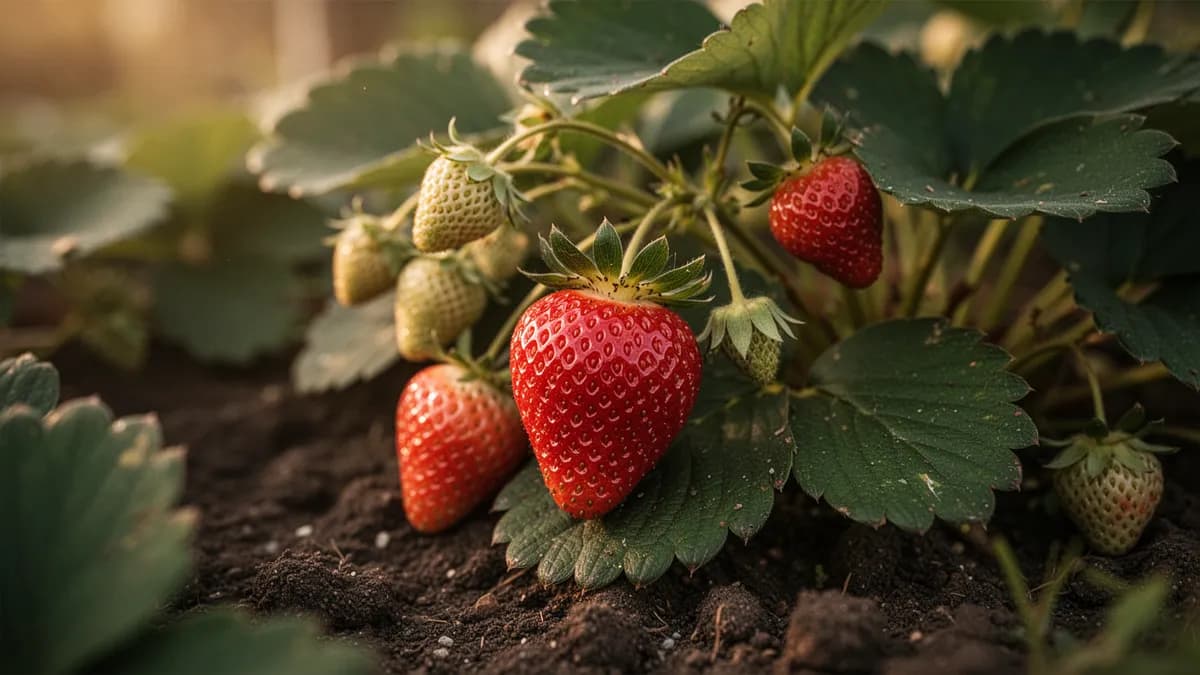
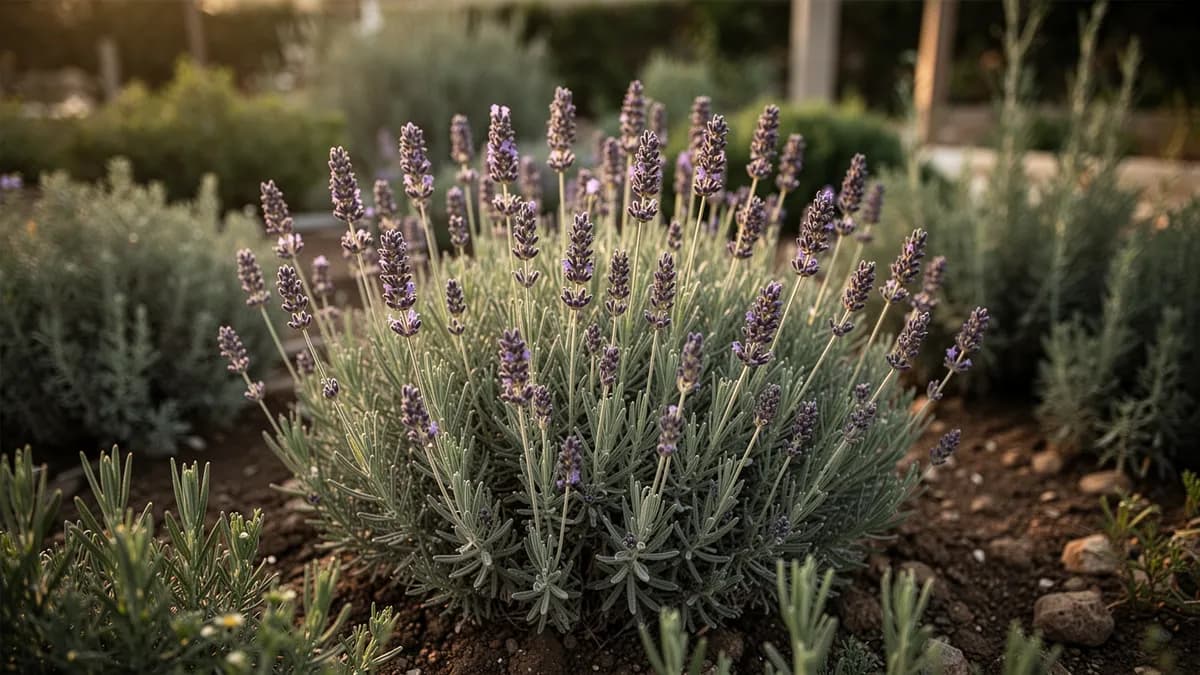
Pflanzen Sie Heidelbeeren neben anderen säureliebenden Pflanzen wie Azaleen, Rhododendren und Lorbeerrosen für ein optisch ansprechendes und kulturell verträgliches Beet. Erdbeeren und Preiselbeeren haben ähnliche Boden-pH-Vorlieben und eignen sich als effektive Bodendecker unter Heidelbeersträuchern. In der Nähe gepflanzter Lavendel zieht Bestäuber an. Kiefern und immergrüne Hecken bieten Windschutz und tragen säuernden Nadelmulch bei. Vermeiden Sie das Pflanzen in der Nähe von Pflanzen, die neutral bis alkalischen Boden bevorzugen.
Erdbeere gehört daneben. Walnussbaum nicht.
Altes Gärtnerwissen, geprüft an der echten Nachbartabelle von Kulturheidelbeere — teste jede Pflanze, die du anbaust.
Probiere Kulturheidelbeere direkt hier im Beet
Ein echtes Planer-Beet, Kulturheidelbeere steht schon drin. Tippe einen Begleiter an, platziere ihn und sieh, wie die Nachbarschaftsprüfung antwortet — grün für gute Nachbarn, rot bei Streit.


Passende Anbau-Ratgeber
Richtig düngen
Kulturheidelbeeren benötigen zwingend sauren Boden mit einem pH-Wert von 4,5 bis 5,5. Ändern Sie den Boden vor dem Pflanzen mit elementarem Schwefel, Torfmoos und kompostierter Kiefernrinde ab. Verwenden Sie einen säurebildenden Dünger wie Ammoniumsulfat oder eine Formulierung für säureliebende Pflanzen; tragen Sie diesen im frühen Frühjahr beim Anschwellen der Knospen und erneut nach der Ernte auf. Vermeiden Sie Dünger mit Nitratstickstoff, der die Heidelbeerwurzeln schädigen kann. In Regionen mit natürlich alkalischem Boden oder hartem Wasser sind möglicherweise jährliche Schwefelgaben erforderlich, um den pH-Wert zu erhalten.
Ideale Temperatur
Winterhärtezone-Kompatibilität
Von der Saat zur Ernte, Schritt für Schritt
Ruhezeit & Wurzelentwicklung
Nach dem Pflanzen einer Wurzelnackten- oder Containerpflanze im frühen Frühjahr konzentriert der Strauch seine Energie auf die Verankerung seines flachen, faserigen Wurzelsystems. Das Wachstum über der Erde ist minimal. Die Pflanze kann für 4–8 Wochen täuschend inaktiv wirken.
Vegetativer Knospenaustrieb & Blattentfaltung
Blattknospen schwellen an und öffnen sich und enthüllen hellgrünes Laub. Das neue Triebwachstum beschleunigt sich, wenn die Temperaturen steigen. Im ersten Jahr entfernen Sie alle Blütenknospen, sobald sie erscheinen, um die Energie in die Wurzel- und Kronenentwicklung umzuleiten.
Blüte
Trauben kleiner, weiß bis blasspink gefärbter, urnenförmiger Blüten hängen ab Mitte Frühjahr von den Zweigspitzen (ab Jahr 2+). Jede Blüte muss bestäubt werden, um Früchte anzusetzen. Die Fremdbestäubung mit einer zweiten Sorte verbessert Beerengröße und Ertrag erheblich.
Fruchtentwicklung & Reifung
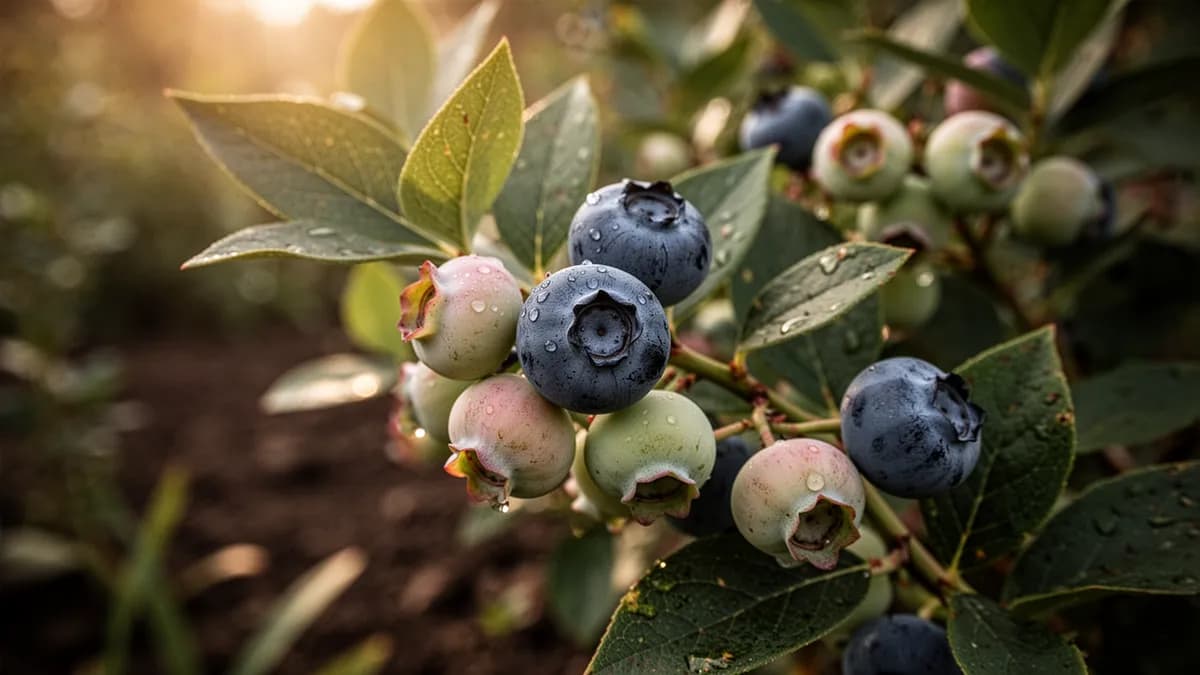
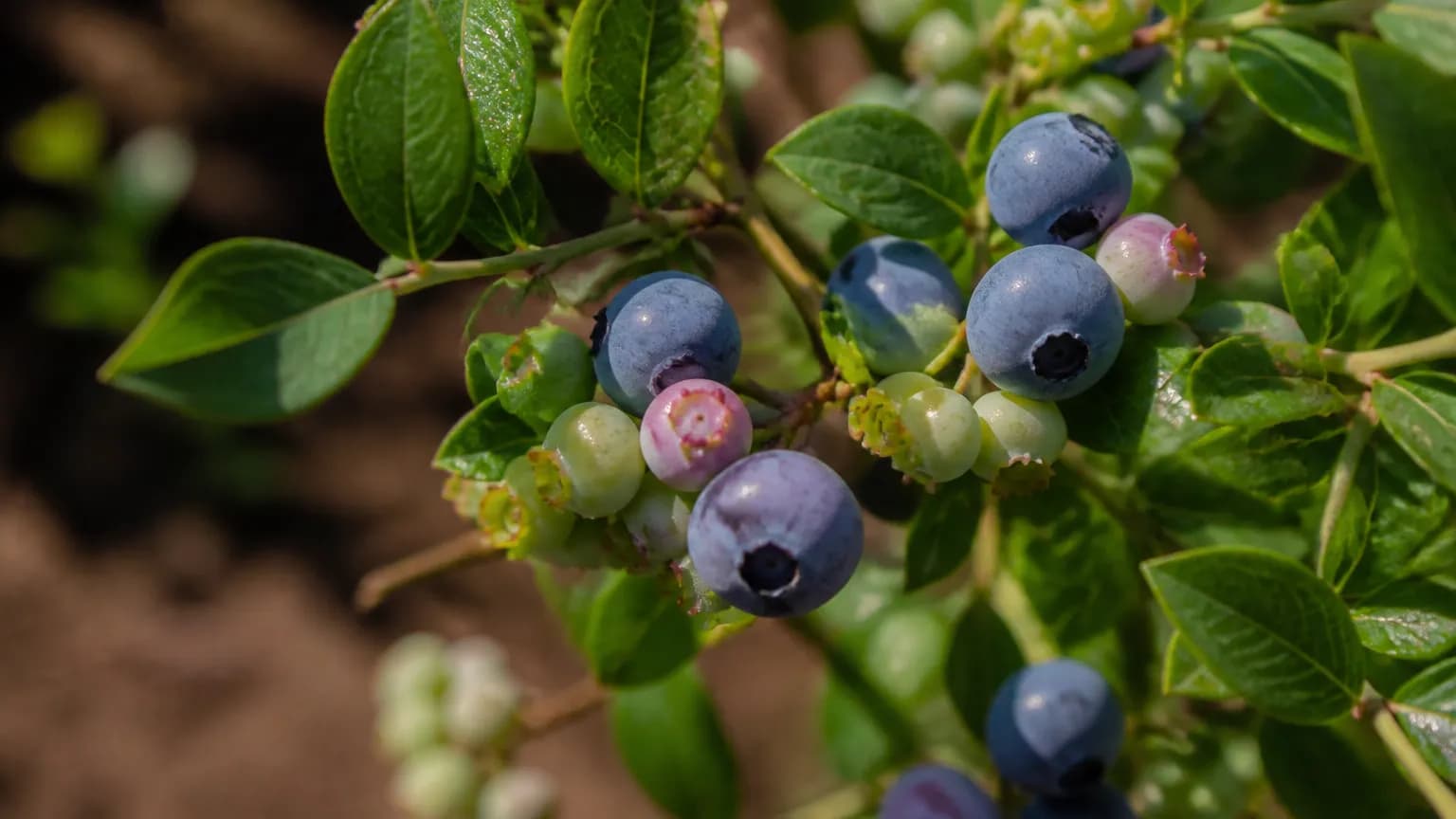
Bestäubte Blüten verlieren ihre Blütenblätter und winzige grüne Beeren beginnen über 6–8 Wochen anzuschwellen. Die Beeren wechseln von Grün über Rosa zu Puderblau, während sich Zucker ansammelt. Das volle Aroma entwickelt sich 3–5 Tage nach dem Blauwerden der Beeren — widerstehen Sie daher dem zu frühen Pflücken.
Abhärtung nach der Ernte & Ruhezeit
Nach der Ernte entwickelt die Pflanze die Fruchtknospen des nächsten Jahres an neuem Wuchs. Das Laub färbt sich leuchtend rot und orange, bevor es abfällt. Der Strauch tritt in vollständige Ruhe, sobald die Temperaturen dauerhaft unter den Gefrierpunkt fallen, und härtet das Holz für den Winter ab.
Halten Sie den Boden gleichmäßig feucht, aber niemals staunass. Mulchen Sie 7–10 cm tief mit Kiefernrinde oder Holzhackschnitzeln, um Feuchtigkeit zu speichern und den Boden anzusäuern.
Kulturheidelbeere Monat für Monat pflegen
Was du jeden Monat für deine Kulturheidelbeere tun solltest
Oktober
Aktueller MonatGenießen Sie das Herbstlaub-Schauspiel. In kälteren Klimazonen (Zonen 4–5) schützen Sie junge Pflanzen mit Jute-Windschutz, wenn sie starkem Wind ausgesetzt sind. Halten Sie die Wurzelzone weiter gemulcht für den Winter.
Immer wissen, was jetzt im Garten zu tun ist
Eine E-Mail zum Monatsanfang: was du jetzt säen, pflanzen und anpacken solltest — für deine Kulturheidelbeere und alles, was drumherum wächst. Dazu ein kurzer Startkurs, der dich vor den klassischen Fehlern bewahrt.
- Was jetzt zu tun ist
- Passend zu deiner Saison
- Startkurs inklusive
Kulturheidelbeere ernten
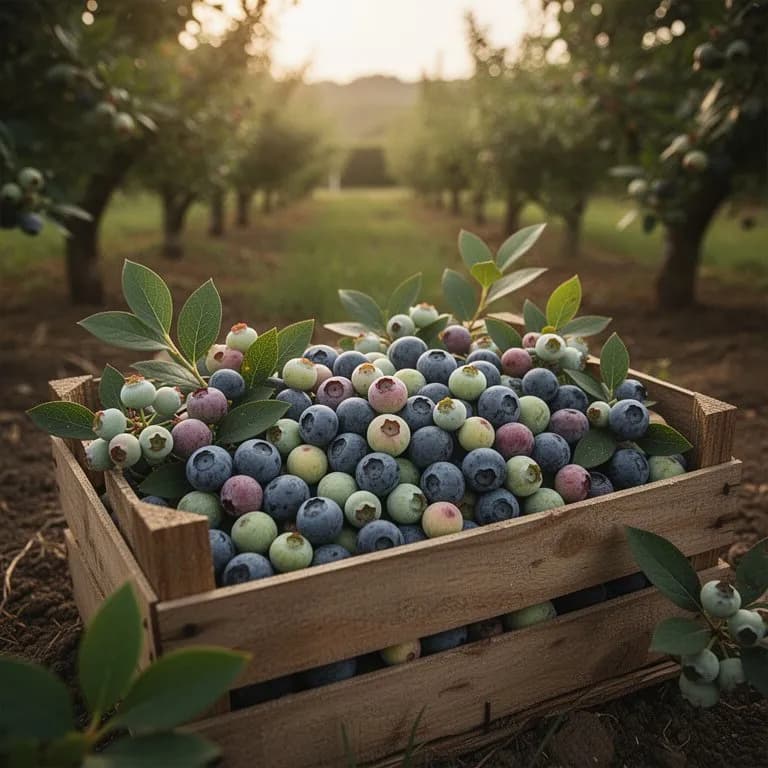
Ernten Sie Kulturheidelbeeren, wenn sie vollständig blau gefärbt sind und sich mit einem leichten Drehen der Finger leicht ablösen. Beeren mit noch rötlichem Schimmer sind noch nicht reif und schmecken säuerlich. Lassen Sie die Beeren nach dem Blauwerden noch drei bis fünf weitere Tage am Strauch, damit sie ihre maximale Süße und volle Zuckerentwicklung erreichen. Ernten Sie alle fünf bis sieben Tage, da die Beeren über einen Zeitraum von zwei bis drei Wochen reifen. Pflücken Sie in flache Behälter, um ein Zerdrücken der Beeren am Boden durch das Gewicht der darüberliegenden zu vermeiden.
angenommen, du pflanzt zu Beginn des Zeitraums — trage dein tatsächliches Datum ein
Ernte Kulturheidelbeere zügig, dann trägt die Pflanze weiter.
Lagerung & Konservierung
Frische Heidelbeeren halten sich im Kühlschrank ein bis zwei Wochen, wenn sie ungewaschen in einem belüfteten Behälter gelagert werden. Zum Einfrieren verteilen Sie trockene, ungewaschene Beeren in einer einzigen Lage auf einem Backblech und füllen sie nach dem Gefrieren in Gefrierbeutel um; sie sind bis zu zwölf Monate haltbar. Gefrorene Heidelbeeren eignen sich perfekt für Muffins, Pfannkuchen und Smoothies ohne vorheriges Auftauen. Heidelbeeren ergeben auch ausgezeichnete Marmelade, Kuchenfüllung und getrocknete Früchte. Dehydrierte Heidelbeeren sind ein nahrhafter Snack und Müslibelag.
Was schiefgeht — und die Lösung
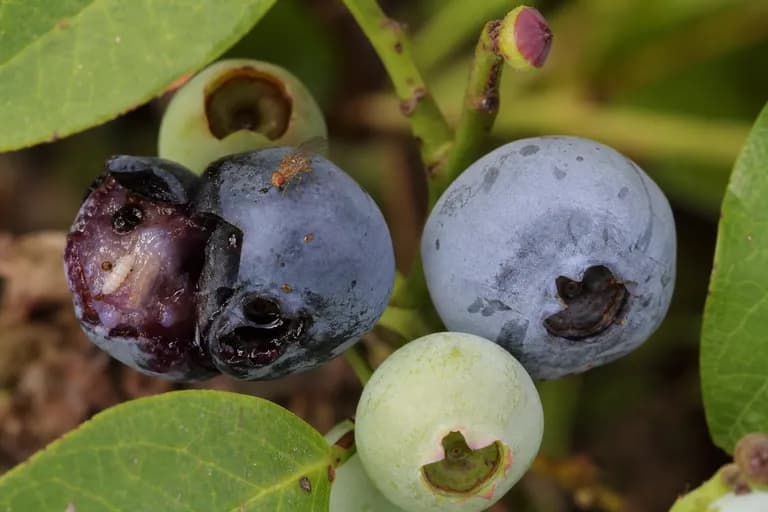
Kirschessigfliege
SchädlingKleine Einstichstellen an reifenden Beeren; Larven im Inneren der Frucht verursachen weiche, zusammenfallende Beeren; essigartiger Geruch durch fermentierende Früchte.
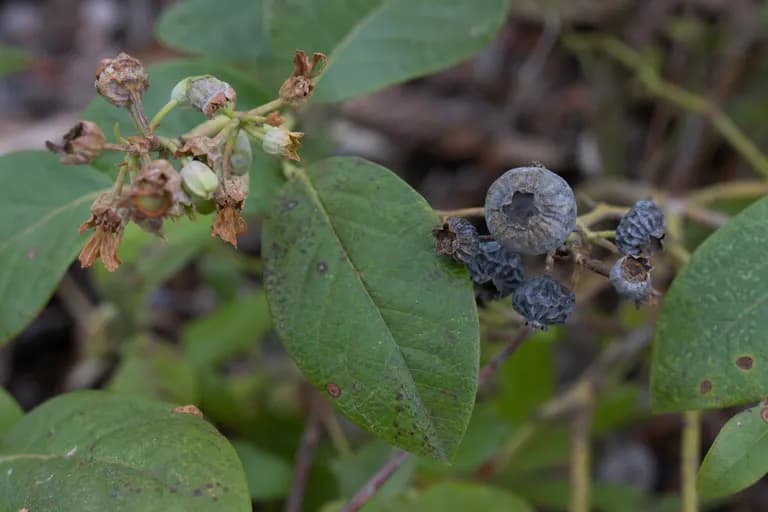
Mumienbeerkrankheit
KrankheitBeeren schrumpfen und verhärten sich zu grauen, mumifizierten Früchten, die zu Boden fallen; infizierte Blüten welken und werden im Frühjahr braun.
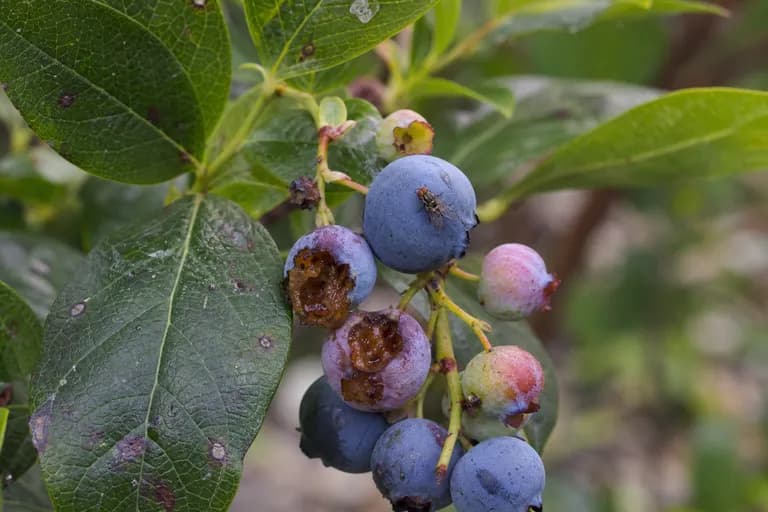
Heidelbeermade
SchädlingKleine Maden im Inneren der Beeren, die weiche, unverkäufliche Früchte verursachen; erwachsene Fliegen ähneln kleinen Stubenfliegen mit gebänderten Flügeln.
Fehlerbehebung bei häufigen Problemen
Chlorotisch gelbe Blätter mit grünen Blattadern weisen fast immer auf einen zu hohen Boden-pH-Wert hin, der Eisen und andere Mikronährstoffe blockiert. Testen Sie den Boden-pH-Wert jährlich und korrigieren Sie ihn bei Bedarf mit Schwefel. Vogelschäden sind die häufigste Ursache von Ernteverlusten bei Hobbygärtnern, und Netze sind unerlässlich, sobald die Beeren anfangen, sich zu färben. Unzureichende Fremdbestäubung führt zu kleinen, spät reifenden Beeren. Winterzurücksterben der Triebspitzen ist in kalten Klimazonen normal und sollte im Frühjahr zurückgeschnitten werden.
Anbautipps
- Der Boden-pH-Wert ist nicht verhandelbar: Testen Sie Ihren Boden vor dem Pflanzen und passen Sie ihn mit elementarem Schwefel oder saurem organischem Material wie Torfmoos und Kiefernrinde auf pH 4,5–5,5 an. Im neutralen oder alkalischen Boden gepflanzte Heidelbeeren werden langsam chlorotisch, verfallen und tragen keine Früchte — keine Düngermenge kann einen falschen pH-Wert ausgleichen.
- Pflanzen Sie immer mindestens zwei verschiedene Kulturheidelbeersorten zur Fremdbestäubung. Selbst selbstfruchtbare Sorten produzieren deutlich größere Beeren und höhere Erträge, wenn sie fremdbestäubt werden. Wählen Sie Sorten mit überlappenden Blütezeiten und unterschiedlichen Reifefenstern, um Ihre Erntesaison von Anfang Juli bis Ende August zu verlängern.
- Heidelbeeren haben sehr flache, faserige Wurzeln, die sich in den oberen 30 cm des Bodens konzentrieren. Kultivieren oder hacken Sie niemals rund um die Pflanzen. Unterdrücken Sie Unkraut stattdessen ausschließlich mit einer 7–10 cm tiefen Mulchschicht aus Kiefernrinde, Holzhackschnitzeln oder Kiefernnadeln, die beim Verrotten auch den Boden ansäuert.
- Entfernen Sie im ersten Jahr jeden einzelnen Blütenstand, sobald er erscheint. Das fühlt sich kontraintuitiv an, zwingt die Pflanze aber dazu, all ihre Energie in die Wurzel- und Kronenentwicklung statt in die Fruchtproduktion zu investieren. Pflanzen, denen im ersten Jahr Früchte zu tragen erlaubt wird, schneiden im Vergleich zu Pflanzen, die früh diszipliniert wurden, über Jahre hinweg konsistent schlechter ab.
- Bewässern Sie tief und regelmäßig während der Fruchtfüllphase (die 6–8 Wochen zwischen Blüte und Ernte). Heidelbeeren benötigen in diesem Zeitraum die entsprechende Menge von 2–4 cm Wasser pro Woche. Unregelmäßige Bewässerung verursacht kleine, kernreiche Beeren und Rissbildung. Tropfbewässerung oder Sickerschläuche sind ideal, da sie das Laub trocken halten und Pilzkrankheiten reduzieren.
- Pflücken Sie Heidelbeeren nicht, sobald sie blau werden. Die vollständige Aroma- und Zuckerentwicklung dauert weitere 3–5 Tage, nachdem die Beere ihre blaue Farbe erreicht hat. Eine wirklich reife Beere fällt bei der leichtesten Berührung in Ihre Hand. Kosten Sie vor einer vollständigen Ernte einige Beeren.
- Schneiden Sie jedes Jahr während der späten Winterruhe — das ist keine Option, wenn Sie dauerhaft hohe Erträge wünschen. Das Ziel ist es, 6–8 kräftige, aufrechte Triebe pro Pflanze zu erhalten und alle Triebe zu entfernen, die älter als 6 Jahre sind. Alte Holztriebe produzieren zunehmend kleinere Beeren. Jährlicher Schnitt hält die Pflanze dauerhaft jung und produktiv.
- Bringen Sie Vogelschutznetze an, bevor die Beeren anfangen, Farbe zu zeigen, nicht danach. Vögel können einen ausgewachsenen Strauch an einem einzigen Morgen kahl fressen, sobald die Früchte sichtbar werden. Verwenden Sie Netze mit einer Maschenweite von nicht mehr als 1,5 cm und befestigen Sie sie am Boden, um zu verhindern, dass Vögel von unten eindringen.
- Vermeiden Sie das Düngen nach Mitte August in kalten Klimazonen (Zonen 4–6). Späte Stickstoffgaben fördern üppiges Neuwachstum, das keine Zeit hat, vor dem Frost abzuhärten, was zu Winterrücksterben führt. Timen Sie Ihre letzte Düngergabe auf mindestens 6 Wochen vor Ihrem durchschnittlichen ersten Frostdatum.
- In Klimazonen mit alkalischem Leitungswasser (pH 7+) sollten Sie in Betracht ziehen, Ihr Bewässerungswasser mit einer kleinen Menge Zitronensäure anzusäuern oder gesammeltes Regenwasser zu verwenden. Im Laufe der Jahre kann regelmäßige Bewässerung mit hochbasischem Wasser den Boden-pH-Wert selbst in gut kompostierten Beeten allmählich anheben und die Wachstumsbedingungen langsam verschlechtern.
Bau deine beste Kulturheidelbeere an — und alles drumherum.
Starte heute kostenlos. Lege deine Beete an, setze deine Kulturheidelbeere ein und lass PlotMyGarden Timing, Abstände, Begleiter und Erinnerungen von der Saat bis zum Erntekorb übernehmen.
Finde deine Kulturheidelbeere
Bluecrop
Die Standardsorte der Industrie für die Mitte der Saison mit konstant hohen Erträgen, gutem Geschmack und breiter Klimaanpassung von Zone 4 bis 7.
Duke
Eine früh reifende Sorte mit festen, mild schmeckenden Beeren und ausgezeichneter Winterhärte für nördliche Anbaugebiete.
Elliott
Eine Spätsorte, die die Ernte bis in den August verlängert und feste, herbe Beeren liefert, die sich außerordentlich gut lagern lassen.
Jersey
Eine kräftige, zuverlässige Spätsorte, die süße, mittelgroße Beeren mit ausgezeichneter Krankheitsresistenz produziert.
Biologische frische Kulturheidelbeeren kosten im Lebensmittelhandel und auf Wochenmärkten 4–8 € pro Schale (ca. 340 g). Ein einzelner gut etablierter ausgewachsener Kulturheidelbeerstrauch liefert 3–5 kg Früchte pro Saison — entsprechend etwa 35–130 € an frischen biologischen Heidelbeeren jährlich. Eine Pflanzung von vier bis sechs Sträuchern (das empfohlene Minimum für gute Fremdbestäubung und sinnvollen Ertrag) kann realistischerweise 15–30 kg pro Saison produzieren und einem Haushalt 150–400 € pro Jahr an Obstkosten sparen. Die Pflanzen beginnen im zweiten Jahr erntbare Früchte zu tragen und erreichen die Höchstproduktion bis zu den Jahren 4–6, halten diese Produktivität dann mit ordnungsgemäßem Schnitt jahrzehntelang aufrecht — und liefern damit eine hervorragende langfristige Rendite auf die bescheidene anfängliche Investition.
Schnelle Rezepte
Klassische Heidelbeer-Overnight-Oats
5 Min. (plus Übernacht)Ein kochfreies, ballaststoffreiches Frühstück, bei dem frische oder gefrorene Heidelbeeren über Nacht in Haferflocken mazerieren und so eine natürlich süße, cremige und antioxidantienreiche Mahlzeit für den Morgen entstehen lassen.
7 ZutatenFrisches Heidelbeer-Kompott
15 Min.Ein schnelles Herdkompott, das einen Überfluss an frischen Heidelbeeren in eine vielseitige Sauce verwandelt, die perfekt zu Joghurt, Pfannkuchen, Eis oder Käsekuchen passt. Hält sich im Kühlschrank bis zu zwei Wochen.
6 ZutatenHeidelbeer-Zitronen-Ricotta-Pfannkuchen
25 Min.Fluffige, proteinreiche Pfannkuchen, gespickt mit ganzen Heidelbeeren und verfeinert mit Zitronenabrieb. Der Ricotta hält sie feucht und zart, ohne sie schwer zu machen — ein Wochenendfrühstück, das die Beeren der Hauptsaison optimal nutzt.
9 ZutatenKulinarische Verwendung
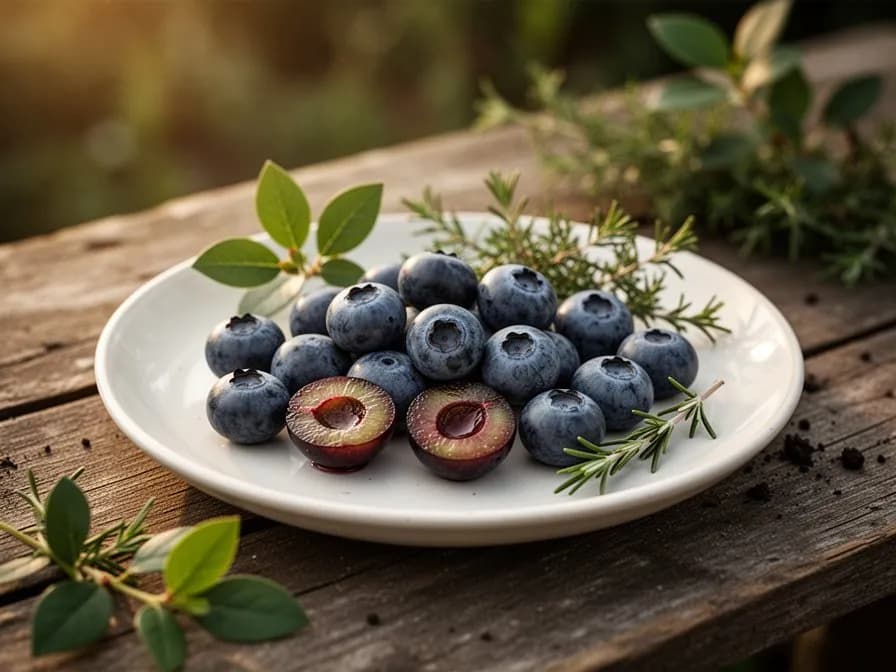
Kulturheidelbeeren sind hervorragend frisch, in Backwaren und als Konserven. Sie sind die klassische Wahl für Muffins, Pfannkuchen, Kuchen und Cobblers. Kombinieren Sie sie mit Zitrone, Vanille, Pfirsich und Ahornsirup für harmonische Geschmacksprofile. Heidelbeersauce verfeinert Käsekuchen, Joghurt und Eis. Die Beeren sind wahre Nährstoffbomben, reich an Antioxidantien, Vitamin C und Vitamin K. Fügen Sie sie für eine herzhafte Variante zu Salaten mit Ziegenkäse und Nüssen hinzu.
Was drinsteckt
Gesundheitsvorteile
- Der extrem hohe Anthocyangehalt — die Verbindungen, die für die blaue Farbe verantwortlich sind — wurde in mehreren klinischen Studien mit reduziertem Blutdruck, verbesserter arterieller Flexibilität und geringerer LDL-Cholesterin-Oxidation in Verbindung gebracht.
- Regelmäßiger Heidelbeerkonsum ist mit verbesserter Gedächtnisleistung, Verarbeitungsgeschwindigkeit und Exekutivfunktion sowohl bei älteren Erwachsenen als auch bei Kindern verbunden, wahrscheinlich aufgrund von Anthocyanen, die die Blut-Hirn-Schranke überwinden und Neuroinflammation reduzieren.
- Die Kombination aus Ballaststoffen (2,4 g pro 100 g), niedrigem Zuckergehalt und Polyphenolen, die die Glukoseaufnahme verlangsamen, verleiht Heidelbeeren einen niedrigen glykämischen Index und macht sie zu einer der diabetikerfreundlichsten verfügbaren Früchte.
- Heidelbeeren liefern bedeutende Mengen an Vitamin K1, Mangan und Kupfer — drei Nährstoffe, die für die Knochenmatrixbildung, Mineralisierung und die Vorbeugung altersbedingten Knochensubstanzverlusts entscheidend sind.
- Harnwegsgesundheit: Bestimmte Proanthocyanidine in Heidelbeeren (ähnlich wie in Preiselbeeren) können die Anheftung von E.-coli-Bakterien an die Harnwegsschleimhaut verhindern und so möglicherweise die Häufigkeit von Harnwegsinfektionen reduzieren.
- Studien zur Muskelregeneration nach dem Training haben ergeben, dass Sportler, die vor und nach intensivem Training Heidelbeer-Smoothies zu sich nahmen, deutlich weniger Muskelkater und eine schnellere Kraftregeneration erlebten als Placebogruppen — zugeschrieben dem entzündungshemmenden Polyphenolprofil der Frucht.
Woher Kulturheidelbeere stammt
Die Kulturheidelbeere (Vaccinium corymbosum) ist eine der bedeutendsten einheimischen Früchte Nordamerikas mit einer Geschichte, die Tausende von Jahren vor der europäischen Kolonisierung zurückreicht. Indigene Völker im Nordosten der Vereinigten Staaten und im Südosten Kanadas — darunter die Ojibwe, Algonquin und Irokesen — ernteten, trockneten und handelten mit wilden Heidelbeeren als Grundnahrungsmittel. Heidelbeeren wurden mit getrocknetem Fleisch und Fett zu Pemmikan verarbeitet, einem dichten, haltbaren Reiseproviant, und wurden medizinisch zur Behandlung von Husten, Geburtsschmerzen und Verdauungsbeschwerden verwendet.
Europäische Siedler übernahmen Heidelbeeren schnell in ihre Ernährung, aber die Idee, die wild wachsenden, niedrig wachsenden Pflanzen tatsächlich zu kultivieren, setzte sich erst im frühen 20. Jahrhundert durch. Die moderne Kulturheidelbeerindustrie geht direkt auf die Arbeit des Botanikers Frederick Coville und der Farmerin Elizabeth White aus New Jersey zurück, die um 1911 begannen, wilde Kulturheidelbeerpflanzen zu domestizieren. White bot lokalen Pflückern Preise an, wenn sie wilde Pflanzen mit ungewöhnlich großen Beeren finden konnten, und Coville betrieb systematische Kreuzungszucht, um günstige Eigenschaften zu stabilisieren. Bis 1916 hatten sie die ersten benannten Kulturheidelbeerkultivare produziert, und kommerzieller Anbau begann in den 1920er und 1930er Jahren in New Jersey und Michigan.
Die Pflanze gehört zur Familie der Ericaceae, zu der auch Rhododendren, Azaleen und Heidekraut gehören — was ihre gemeinsame Anforderung an stark sauren, gut durchlässigen, humusreichen Boden erklärt. Der Artname corymbosum bezieht sich auf die traubigen Blütentrauben, die sich im Frühjahr entlang der Äste entfalten.
Heute werden Kulturheidelbeeren kommerziell in den Vereinigten Staaten, Kanada, Chile, Neuseeland und Teilen Europas angebaut. Jahrzehnte der Züchtung haben Hunderte benannte Kultivare hervorgebracht, die für Klimaanpassungsfähigkeit, Beerengröße, Haltbarkeit, Geschmack und Erntezeitpunkt optimiert sind. Für Hobbygärtner machen moderne Sorten wie Bluecrop, Duke, Patriot und Chandler es einfacher als je zuvor, diesen nahrhaften, langlebigen und auffällig dekorativen Strauch im Hausgarten anzubauen.
Kulturheidelbeere: Schon gewusst?
Faszinierende Fakten über Kulturheidelbeere
Die Kulturheidelbeere (Vaccinium corymbosum) ist eine von nur wenigen bedeutenden Früchten, die ursprünglich aus Nordamerika stammen — Indigene Völker ernteten und kultivierten wilde Verwandte dieser Pflanze Tausende von Jahren vor dem europäischen Kontakt.
Kulturheidelbeere: Fragen & Antworten
Wann sollte ich Kulturheidelbeere pflanzen?
Was sind gute Begleitpflanzen für Kulturheidelbeere?
In welchen Winterhärtezonen kann Kulturheidelbeere wachsen?
Wie viel Sonne braucht Kulturheidelbeere?
Welchen Abstand sollte ich zwischen Kulturheidelbeere lassen?
Welche Schädlinge und Krankheiten befallen Kulturheidelbeere?
Wie lagere ich Kulturheidelbeere nach der Ernte?
Was sind die besten Kulturheidelbeere-Sorten zum Anbauen?
Welchen Boden braucht Kulturheidelbeere?
Warum werden die Blätter meiner Heidelbeere zwischen den Blattadern gelb (intervenöse Chlorose)?
Brauche ich wirklich zwei Heidelbeerpflanzen, oder trägt eine allein Früchte?
Wann kann ich meine erste richtige Ernte erwarten?
Was ist der weiße pudrige Belag auf meinen reifen Heidelbeeren, und ist er sicher zu essen?
Meine Heidelbeerpflanze sieht gesund aus und blüht jeden Frühling, aber die Beeren sind winzig und es gibt sehr wenige davon. Was stimmt nicht?
Kann ich Kulturheidelbeeren in Containern anbauen?
Du hast die Theorie gelesen. Jetzt baue sie auf Autopilot an.
Alles, was Kulturheidelbeere knifflig macht — das Timing, die Abstände, die Begleiter, das Erntefenster — genau das übernimmt PlotMyGarden für dich, für jede Pflanze im Garten.
Ein Plan, der dein Wetter kennt
Standort einmal festlegen. Aussaat-, Dünge- und Erntedaten rund um deinen echten letzten Frosttermin und die Live-Vorhersage — kein Raten mehr nach Saattüte.
Aus dem Abschnitt „Pflanzzeit“Beetplaner per Drag & Drop
Beete auf einem Raster gestalten. Jede Pflanze rastet im richtigen Abstand ein, und du siehst die ganze Saison, bevor du einen Cent für Saatgut ausgibst.
Aus dem Abschnitt „Anbau“Begleiter-Konflikte früh erkannt
Über 200 gute und schlechte Kombinationen werden beim Pflanzen live geprüft — so landet ein saisonruinierender Fehler nie in der Erde.
Aus dem Abschnitt „Begleiter“Erinnerungen, nach denen du wirklich handelst
„Gieß die Bohnen.“ „Heute ernten, bevor's umschlägt.“ Pünktlich, konkret und auf deine echten Pflanzen bezogen.
Aus dem Abschnitt „Ernte“Staffel-Aussaat, geplant
Sechs Wochen ernten statt sechs Tage? Die App verteilt deine Aussaaten automatisch und erinnert dich, wenn der nächste Satz fällig ist.
Aus dem Abschnitt „Pflanzzeit“Ein Verlauf, der schlauer wird
Jede protokollierte Ernte bringt der App deinen Garten bei. Der Plan fürs nächste Jahr startet bei dem, was in deinem Boden wirklich funktioniert hat.
Aus dem Abschnitt „Überblick“Pflanze diese neben Kulturheidelbeere
Weitere Beeren
Halte Kulturheidelbeere von diesen fern
Bau deine beste Kulturheidelbeere an — und alles drumherum.
Starte heute kostenlos. Lege deine Beete an, setze deine Kulturheidelbeere ein und lass PlotMyGarden Timing, Abstände, Begleiter und Erinnerungen von der Saat bis zum Erntekorb übernehmen.