Bananenbaum
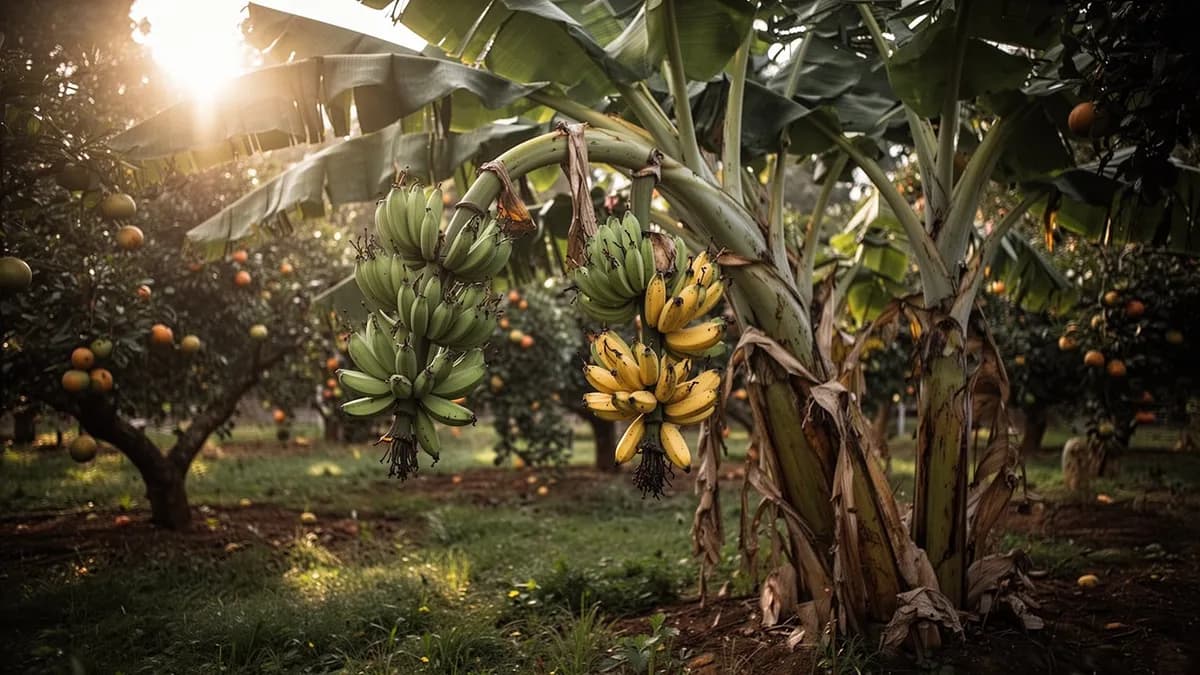
Eine große tropische krautige Pflanze, die Früchte an einem Pseudostamm aus eng gewickelten Blattbasen anstelle von echtem Holzgewebe produziert.





Auf dieser SeiteÜberblick
Bananenbaum im Überblick
Eine große tropische krautige Pflanze, die Früchte an einem Pseudostamm aus eng gewickelten Blattbasen anstelle von echtem Holzgewebe produziert. Bananen benötigen nährstoffreichen Boden, reichlich Wasser und gleichmäßige Wärme, um innerhalb von neun bis fünfzehn Monaten Früchte zu tragen. Nach der Ernte den verbrauchten Pseudostamm bis zum Boden zurückschneiden und einen Ausläufer als Ersatz für den nächsten Erntezyklus stehen lassen. In subtropischen Gebieten können kältetolerante Sorten wie Ice Cream und Goldfinger milde Winter mit starker Mulchschicht über der Wurzelzone überstehen.
Wann Bananenbaum pflanzen
Handelsübliche Bananensorten sind kernlos und müssen vegetativ vermehrt werden. Die Teilung von Ausläufern einer etablierten Matte ist die traditionelle Methode. Wählen Sie Schwertsauger mit schmalen Blättern anstelle von breitblättrigen Wasserausläufern für beste Ergebnisse. Gewebezuchtpflanzen aus kommerziellen Labors liefern sauberes, krankheitsfreies Ausgangsmaterial und sind die bevorzugte Option, wo verfügbar. Ausläufer oder Gewebezuchtpflanzen im Frühjahr nach dem letzten Frost pflanzen und dabei die Knolle 15 bis 20 cm tief in aufbereitete Erde setzen.
Dein Bananenbaum-Jahr
Abgestimmt auf Zone 7 · typische Saison · Frost geht um den 2. Apr. und kehrt um den 1. Nov. zurück
Bananenbaum Apr – Jun pflanzen, Jan – Dez ernten. Beachte die Pflanzmethoden unten und wähle dein Klima für passende Zeiträume.
So baust du Bananenbaum an
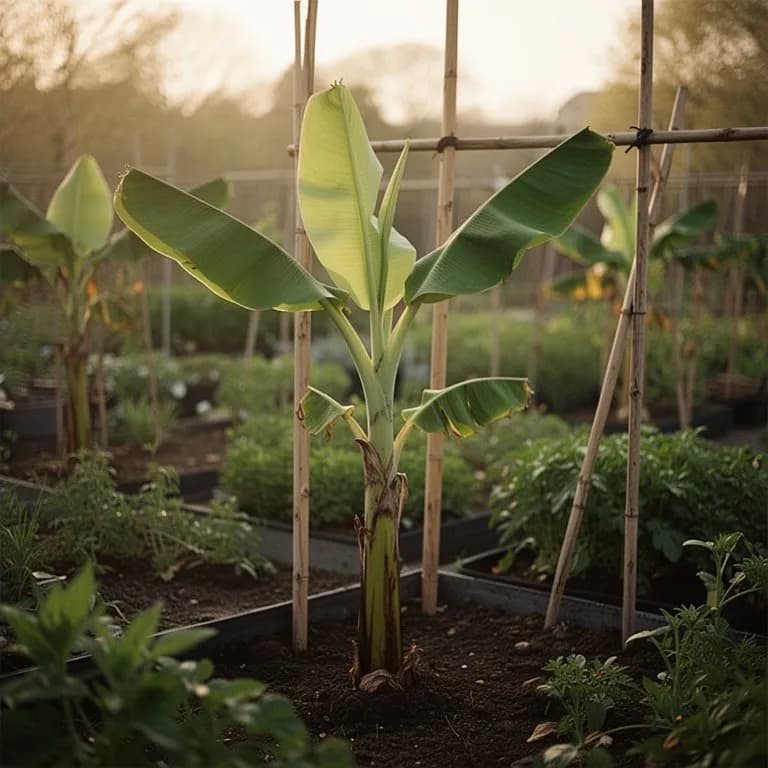
Bananenpflanzen sind keine echten Bäume, sondern riesige krautige Stauden, die einen Pseudostamm aus eng gewickelten Blattbasen bilden. Sie gedeihen an vollsonnigen Standorten mit reichem, feuchtem Boden und gleichmäßigen Temperaturen zwischen 24 und 35 Grad Celsius. Pflanzen Sie sie an einem windgeschützten Standort, da Wind die großen Blätter zerfetzt und den kopflastigen Pseudostamm umwerfen kann. Pflanzen Sie mit 2,5 bis 3,5 Metern Abstand und graben Sie ein großzügiges Pflanzloch, das mit Kompost und gereiftem Mist angereichert ist.
Bananen sind Starkzehrer und Starkdrinker. Gießen Sie in heißem Wetter 2- bis 3-mal pro Woche tief durch und stellen Sie mindestens 5 cm Wasser pro Woche sicher. Tragen Sie monatlich während der Wachstumssaison einen kaliumreichen Dünger auf, da Kalium für die Fruchtentwicklung entscheidend ist. Mulchen Sie großzügig mit 10 bis 15 cm organischem Material, um Feuchtigkeit zu speichern, die Bodentemperatur zu regulieren und Unkraut um das flache Wurzelsystem zu unterdrücken.
Jeder Pseudostamm produziert eine einzige Fruchttraube und stirbt dann ab. Schneiden Sie nach der Ernte den verbrauchten Stamm bis zum Boden zurück und wählen Sie einen gesunden Ausläufer als Ersatz für den nächsten Erntezyklus aus, wobei alle anderen Ausläufer entfernt werden, um die Energie der Pflanze zu konzentrieren. In subtropischen Zonen 8b bis 9 können kältetolerante Sorten den Winter überstehen, wenn der Pseudostamm nach dem Frost zurückgeschnitten und die Wurzelzone unter 30 cm Mulch begraben wird. Neues Wachstum entsteht im Frühjahr und kann bis zum folgenden Herbst Früchte tragen, wenn die Wachstumssaison lang genug ist.
Für Bananenbaum ist ein Beet von 120 × 240 cm zu klein
Bananenbaum braucht 400 cm Platz pro Pflanze. Der Planer hält diesen Abstand für dich ein — jede Pflanze, jedes Beet.
Die besten Nachbarn für Bananenbaum
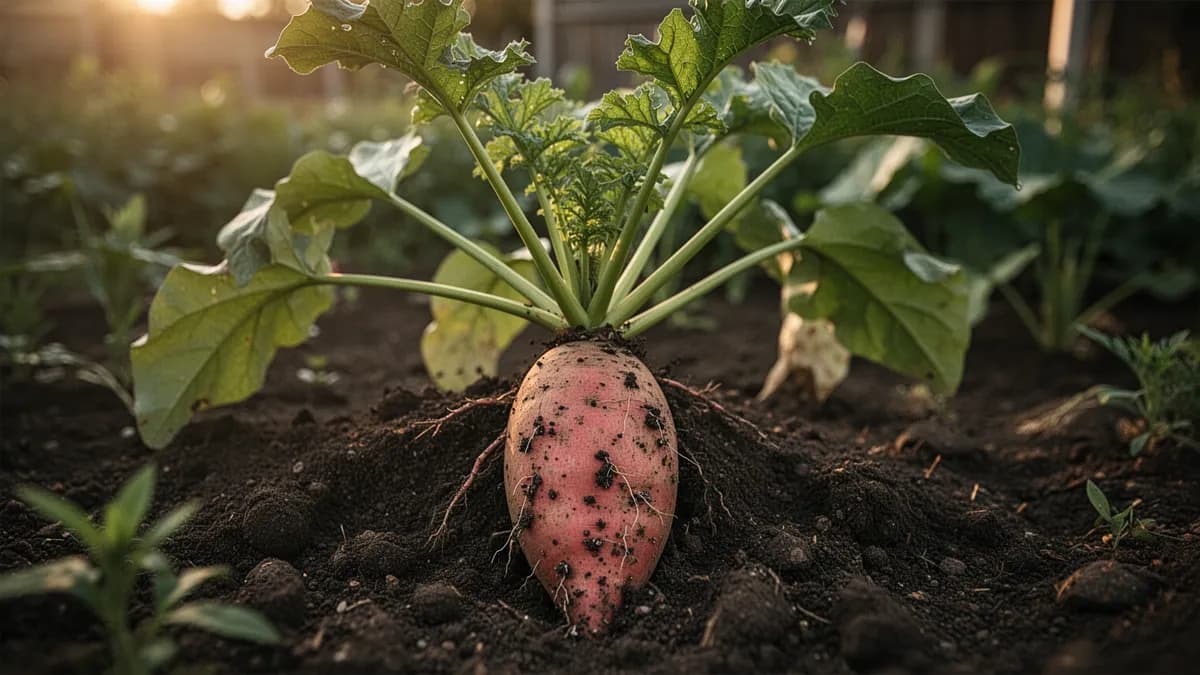
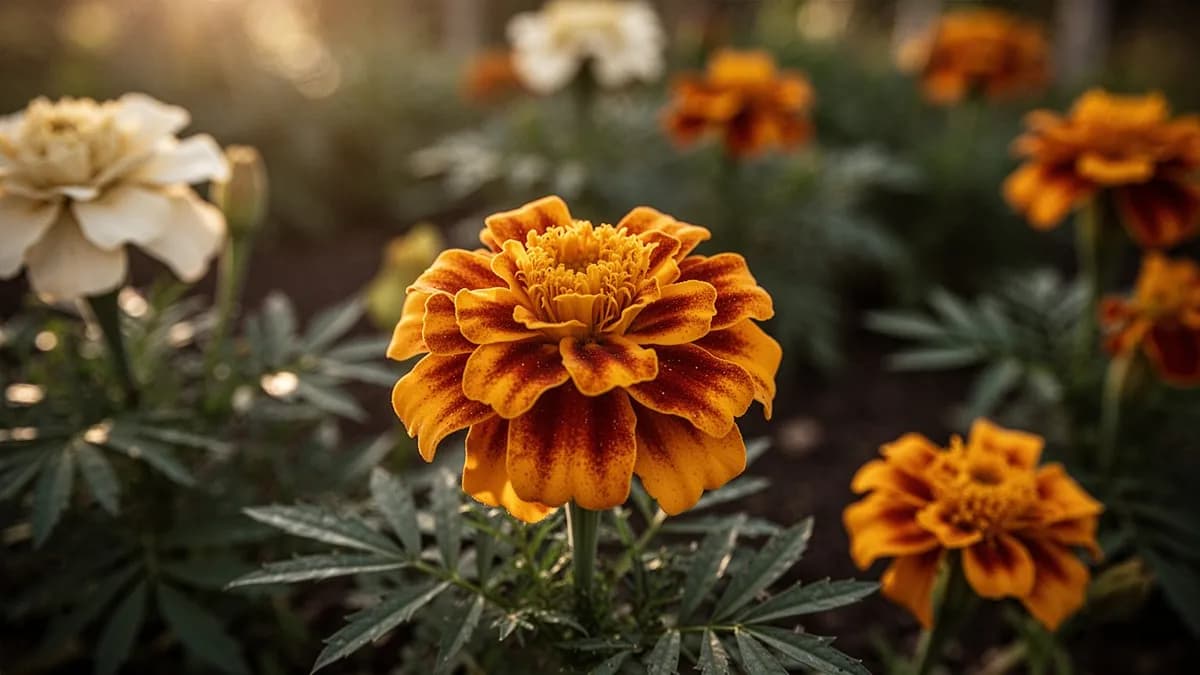
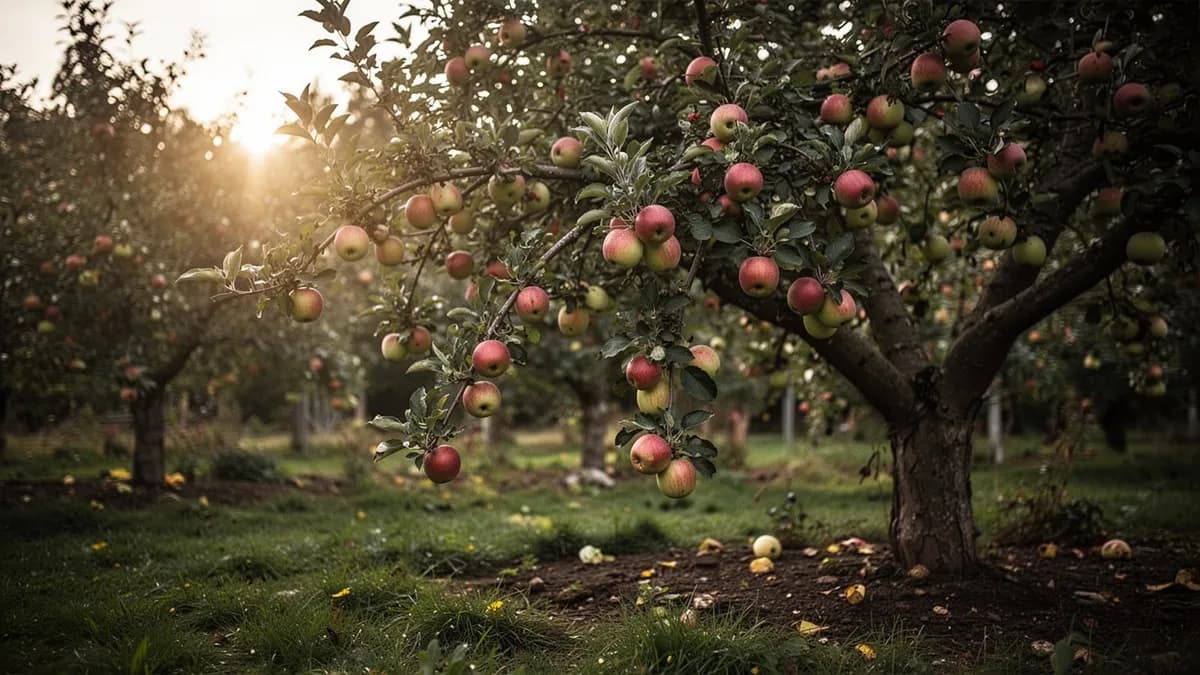
Bananen passen natürlich zu anderen tropischen Pflanzen wie Papaya, Taro und Süßkartoffel als Teil traditioneller tropischer Mischkultursysteme. Süßkartoffeln bilden lebenden Mulch unter Bananenbüschen, während sie eine zusätzliche Ernte produzieren. In der Nähe gepflanzte stickstoffbindende Pflanzen wie Taubenerbse und Moringa verbessern die Bodenfruchtbarkeit. Zitronengras, das um Bananenbüsche gepflanzt wird, kann helfen, Bohrkäfer abzuschrecken. Vermeiden Sie das Pflanzen von Bananen in dichten Gruppen ohne ausreichenden Abstand, da Überfüllung die Luftzirkulation reduziert und Krankheiten fördert.
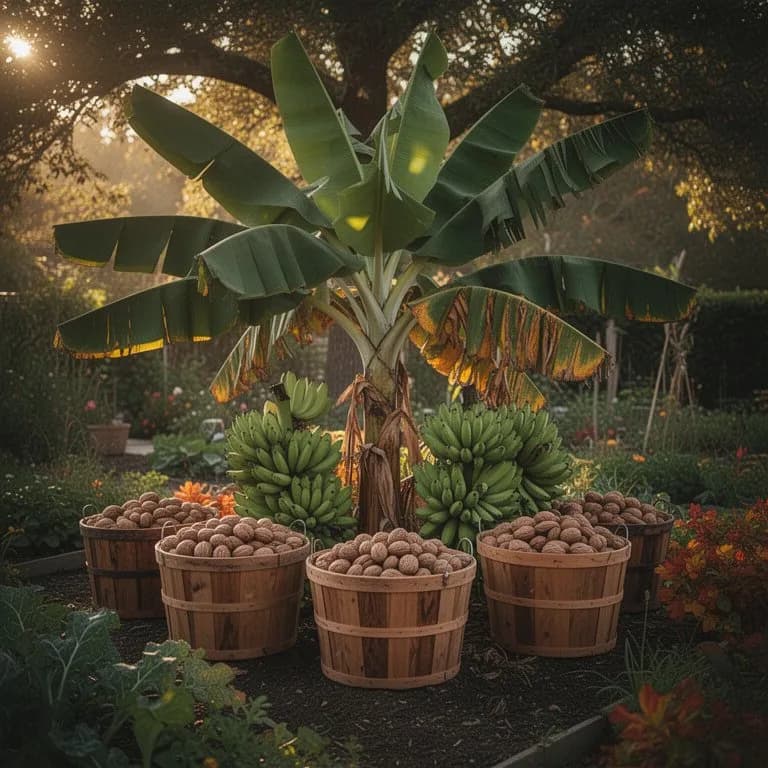
Süßkartoffel gehört daneben. Walnussbaum nicht.
Altes Gärtnerwissen, geprüft an der echten Nachbartabelle von Bananenbaum — teste jede Pflanze, die du anbaust.
Probiere Bananenbaum direkt hier im Beet
Ein echtes Planer-Beet, Bananenbaum steht schon drin. Tippe einen Begleiter an, platziere ihn und sieh, wie die Nachbarschaftsprüfung antwortet — grün für gute Nachbarn, rot bei Streit.


Passende Anbau-Ratgeber
Richtig düngen
Bananen benötigen reichen, gut drainierten Boden mit einem pH-Wert von 5,5 bis 7,0 und hohem organischen Anteil. Pflanzlöcher großzügig mit Kompost und gereiftem Mist anreichern. Monatlich während der Wachstumssaison einen ausgewogenen Dünger mit hohem Kaliumgehalt, wie 8-10-8 oder ähnlich, auftragen. Bananenpflanzen benötigen während der Hauptwachstumsphase etwa 200 bis 450 g reinen Stickstoff pro Monat. Mit Magnesiumsulfat ergänzen, wenn sich zwischen den Blattadern Vergilbungen entwickeln. Tiefen Mulch aufrechterhalten, um die Bodenbiologie zu nähren und Feuchtigkeit zu erhalten.
Ideale Temperatur
Winterhärtezone-Kompatibilität
Von der Saat zur Ernte, Schritt für Schritt
Knollenansatz
Die gepflanzte Knolle oder der Ausläufer treibt erste Adventivwurzeln aus und verankert sich im Boden. Das oberirdische Wachstum ist in dieser kritischen Bewurzelungsphase minimal. Die Knolle greift auf gespeicherte Kohlenhydratreserven zurück, um die frühe Wurzelentwicklung zu fördern, bevor die Photosynthese die Pflanze versorgen kann.
Frühe Blattproduktion
Die ersten echten Blätter entstehen aus der Mitte des sich entwickelnden Pseudostamms, jedes aufeinanderfolgend größer als das vorherige. Das Wurzelsystem dehnt sich in dieser Zeit rasch aus und legt das Fundament für späteres kräftiges Wachstum. Der Pseudostamm beginnt sich zu formen, wenn sich Blattbasen überlappen und verdichten.
Rasantes Vegetationswachstum
Die Pflanze tritt in ihre kräftigste Wachstumsphase ein und produziert bei optimalen Bedingungen alle 7–10 Tage ein neues Blatt. Der Pseudostamm verdickt sich erheblich und die Höhe nimmt rasch zu. Ausläufer beginnen aus der unterirdischen Knolle zu erscheinen. Die innere Differenzierung des Blühmeristems beginnt gegen Ende dieser Phase.
Vorblüte und Trieb
Der echte Stamm (der durch die Mitte des Pseudostamms wächst) streckt sich und die Blütenknospe wandert durch das Innere des Pseudostamms nach oben. Die Blattproduktion verlangsamt sich und das letzte Blatt (Fahnenblatt) ist typischerweise kürzer als die vorherigen Blätter. Der Blütenstand tritt an der Spitze des Pseudostamms aus und biegt sich durch die Schwerkraft nach unten.
Blüte und Fruchtansatz
Die weiblichen Blüten öffnen sich in aufeinanderfolgenden Reihen (Händen) entlang des Blütenstandes, wobei jede bei Kultursorten ohne Bestäubung eine Fruchttraube entwickelt. Die schützenden wachsartigen Hochblätter heben sich, um jede neue Hand der sich entwickelnden Finger zu enthüllen. Die männliche Knospe an der Spitze des Blütenstandes streckt sich weiter, produziert aber keine essbaren Früchte.
Fruchtfüllung und Reifung
Einzelne Bananenfinger schwellen an und wechseln von eckigen zu runden Querschnitten. Im Fruchtfleisch sammelt sich Stärke an und die Schale beginnt sich leicht zu verdünnen. Die Traube gewinnt in dieser Phase erheblich an Gewicht und benötigt oft physische Stütze. Die Früchte bleiben grün, entwickeln aber einen wachsartigen Glanz, wenn sie sich der Erntereife nähern.
Ernte und Ratoon-Nachfolge
Die Früchte werden geerntet, wenn die Finger vollständig gerundet sind, die Blütenreste an der Spitze leicht abreiben und die Schale von dunkelgrün zu hellgrün-gelb aufhellt. Die gesamte Traube wird abgeschnitten und zum Reifen innen aufgehängt. Nach der Ernte wird der Mutterpseudostamm entfernt und der ausgewählte Ratoon-Ausläufer übernimmt den Wachstumszyklus, wobei er typischerweise seine eigene Traube 30–40 % schneller als die ursprüngliche Pflanze produziert.
Boden gleichmäßig feucht, aber niemals durchnässt halten. 10–15 cm organischen Mulch rund um die Basis auftragen, um die Bodenfeuchtigkeit zu speichern und die Temperatur zu regulieren. In den ersten zwei Wochen bei Sommerpflanzung vor direkter Nachmittagssonne schützen.
Bananenbaum Monat für Monat pflegen
Was du jeden Monat für deine Bananenbaum tun solltest
Oktober
Aktueller MonatIn gemäßigten Zonen Pseudostämme mit Isoliermaterial einwickeln, bevor der erste Frost eintritt. Im Container gewachsene Bananenbäume an einen hellen, frostfreien Ort im Inneren bringen. Eine dicke Schicht Stroh- oder Blattmulch über die Wurzelzone auftragen. In tropischen Gebieten die Routinepflege und Düngung fortsetzen.
Immer wissen, was jetzt im Garten zu tun ist
Eine E-Mail zum Monatsanfang: was du jetzt säen, pflanzen und anpacken solltest — für deine Bananenbaum und alles, was drumherum wächst. Dazu ein kurzer Startkurs, der dich vor den klassischen Fehlern bewahrt.
- Was jetzt zu tun ist
- Passend zu deiner Saison
- Startkurs inklusive
Bananenbaum ernten
Bananenbüschel ernten, wenn die einzelnen Finger prall und rund sind und ihre eckige Querschnittsform verloren haben. Die gesamte Traube mit einer scharfen Machete vom Pseudostamm schneiden, wenn die ersten Finger oben beginnen, sich gelb zu färben. Die Traube an einem schattigen, warmen Ort aufhängen, um über 5 bis 10 Tage nachzureifen. Einzelne Hände können getrennt und in Papiertüten mit einem Apfel gereift werden, um den Prozess durch Ethylengaseinwirkung zu beschleunigen.
angenommen, du pflanzt zu Beginn des Zeitraums — trage dein tatsächliches Datum ein
Ernte Bananenbaum zügig, dann trägt die Pflanze weiter.
Lagerung & Konservierung
Reife Bananen halten sich bei Raumtemperatur 3 bis 5 Tage. Kühlung macht die Schale braun, verlangsamt aber die innere Reifung. Reife Bananen schälen und für Smoothies, Bananenbrot und Eis bis zu 6 Monate einfrieren. Getrocknete Bananenchips sind eine beliebte konservierte Form, die monatelang haltbar ist. Grüne Bananen können in Scheiben geschnitten und als Platanenchips frittiert werden. Bananenpüree lässt sich gut einfrieren und dient als natürliches Süßungsmittel beim Backen. Getrocknetes Bananamehl ist in tropischen Regionen ein traditionelles Grundnahrungsmittel.
Was schiefgeht — und die Lösung
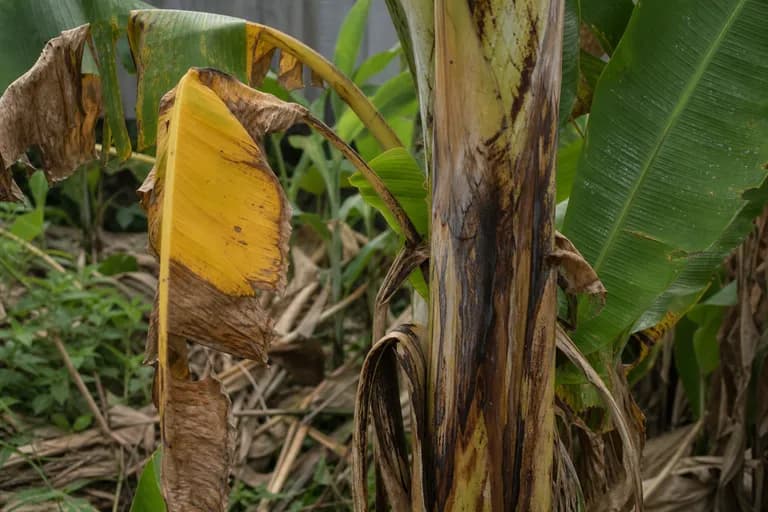
Panama-Krankheit (Fusarium-Welke)
KrankheitVergilbung und Welke älterer Blätter, beginnend an den Rändern. Das innere Pseudostammgewebe zeigt rötlich-braune Verfärbungen beim Aufschneiden. Die Pflanze kollabiert schließlich.
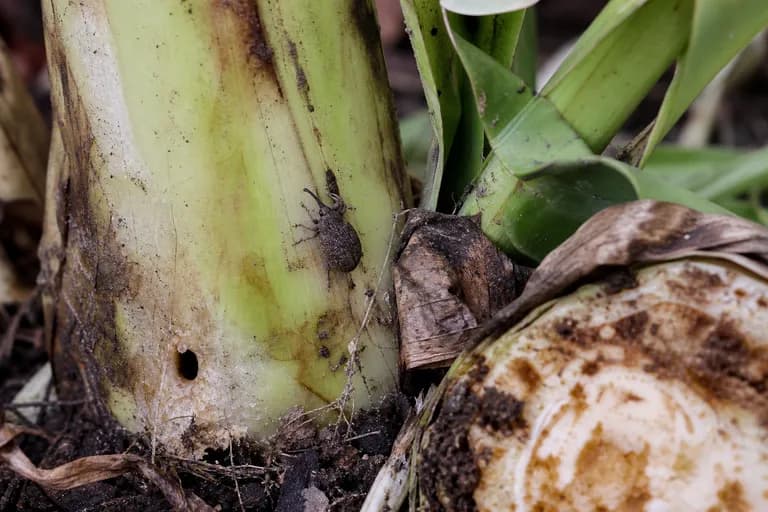
Bananenkäfer
SchädlingLarven bohren sich durch die Knolle und die Basis des Pseudostamms und erzeugen Tunnel, die die Pflanze schwächen. Beschädigte Pflanzen kippen leicht um und produzieren schlechte Fruchttrauben.
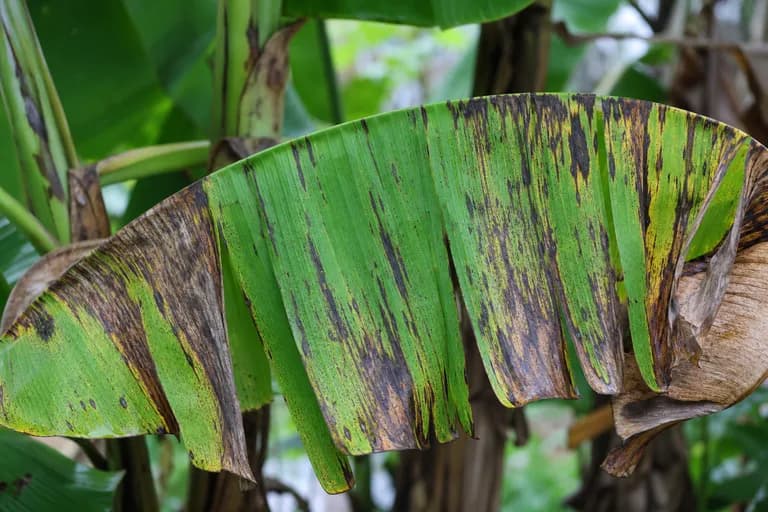
Schwarze Sigatoka
KrankheitDunkelbraune Streifen auf Blättern, die sich zu großen nekrotischen Bereichen ausdehnen. Schwere Infektionen zerstören die Blattfläche, reduzieren die Photosynthese und verzögern die Fruchtreife.
Fehlerbehebung bei häufigen Problemen
Windschäden sind das häufigste physische Problem, das Blätter zerfetzt und Pseudostämme umwirft. An geschützten Standorten pflanzen oder Windschutz installieren. Kälteschäden töten das oberirdische Wachstum unter -2 Grad und töten die gesamte Pflanze unter -6 Grad bei den meisten Sorten. Ausbleibende Fruchtbildung in subtropischen Gebieten ist meist auf eine zu kurze Wachstumssaison zurückzuführen. Nematodenschäden an Wurzeln verursachen Kümmerwuchs und verminderte Erträge. Das Entfernen zu vieler Ausläufer schwächt die Knolle und verringert die zukünftige Produktivität.
Anbautipps
- Einen Pflanzstandort wählen, der täglich mindestens 8 Stunden volle Sonne erhält und vor vorherrschenden Winden geschützt ist. Bananenblätter sind groß und werden von starken Böen leicht zerfetzt, was die Photosyntheseeffizienz reduziert und das Wachstum erheblich verlangsamt.
- Das Pflanzloch mindestens 60 cm breit und 40 cm tief vorbereiten und mehrere Eimer gereiften Komposts sowie eine Handvoll Langzeitdünger einarbeiten. Bananenbäume sind von dem Moment an, an dem sie aktiv wachsen, Starkzehrer und profitieren enorm von einer reichen Bodenvorbereitung.
- Während der aktiven Wachstumssaison tief und häufig gießen – Bananenbäume benötigen je nach Temperatur und Luftfeuchtigkeit 25 bis 50 mm Wasser pro Woche. Der Pseudostamm besteht zu etwa 93 % aus Wasser, was gleichmäßige Feuchtigkeit zum wichtigsten Einzelfaktor für gesundes Wachstum macht.
- Um die Basis jeder Pflanze eine dicke Schicht organischen Mulch (15–20 cm) auftragen und bis zur Traufzone nach außen ausdehnen. Mulch speichert Feuchtigkeit, unterdrückt Unkraut, moderiert die Bodentemperatur und zersetzt sich allmählich, um das flache Wurzelsystem zu ernähren.
- Bananenbäume alle 2–3 Wochen während der Wachstumssaison mit einem kaliumreichen (K) Dünger düngen, der für Fruchtentwicklung und Krankheitsresistenz unerlässlich ist. Ein Verhältnis von etwa 3:1:6 (N:P:K) oder eine ähnlich kaliumschwere Formulierung ist ideal für Pflanzen im Erntealter.
- Pro Pflanze jede Saison alle bis auf einen oder zwei starke Schwertsauger entfernen. Das Zulassen übermäßiger Ausläuferentwicklung lenkt Energie von der Mutterpflanze ab und führt zu kleineren, minderwertigeren Trauben. Der stärkste Ausläufer sollte sich auf der gegenüberliegenden Seite der Mutterpflanze von der fruchtenden Traube befinden.
- Sobald die Traube vollständig ausgetreten ist und alle weiblichen Hände sich geöffnet haben, die männliche Knospe (Glocke) an der Spitze des Blütenstandes entfernen. Dies lenkt die Energie der Pflanze in die Vergrößerung der vorhandenen Früchte, anstatt weitere nicht fruchtende Blüten zu produzieren.
- In Klimazonen, in denen die Wintertemperaturen unter 10 °C fallen, Bananenbäume in großen Behältern (mindestens 50–75 Liter) anbauen, damit sie vor dem Frost nach innen gebracht werden können. Eine gut drainierende Pflanzerde aus Kompost, Perlit und Kiefernrinde in etwa gleichen Teilen verwenden.
- Trauben ernten, wenn die Finger prall und rund, aber noch vollständig grün sind. Die abgeschnittene Traube an einem warmen Innenbreich (20–25 °C) aufhängen, um über 5–10 Tage natürlich zu reifen. Ein in der Nähe platzierter reifer Apfel setzt Ethylengas frei, das die Reifung beschleunigt und gleichmäßiger macht.
- Nach der Ernte den verbrauchten Pseudostamm in zwei Etappen schneiden – zuerst auf 1 Meter, dann eine Woche später bis zum Bodenniveau. Diese schrittweise Entfernung ermöglicht es, im Pseudostamm gespeicherte Nährstoffe in die Knolle zurückfließen zu lassen, was dem Ratoon-Ausläufer zugute kommt, der zur nächsten fruchtenden Pflanze wird.
Bau deine beste Bananenbaum an — und alles drumherum.
Starte heute kostenlos. Lege deine Beete an, setze deine Bananenbaum ein und lass PlotMyGarden Timing, Abstände, Begleiter und Erinnerungen von der Saat bis zum Erntekorb übernehmen.
Finde deine Bananenbaum
Cavendish (Grand Nain)
Die handelsübliche Banane, die weltweit in Lebensmittelgeschäften zu finden ist. Zuverlässige Erntemengen mit süßem, mildem Geschmack. Resistent gegen Panama-Krankheit Rasse 1, aber anfällig für Tropische Rasse 4.
Ice Cream (Blue Java)
Kältetolerante Sorte, die bis etwa -7 Grad Celsius überlebt. Produziert cremige, nach Vanille schmeckende Früchte mit bläulicher unreifer Schale. Hervorragend für subtropische Gärten.
Lady Finger
Kleine, süße Bananen mit dünner Schale und honigartigem Geschmack. Kompakte Pflanze, geeignet für kleinere Gärten und den Anbau in Behältern in warmen Klimazonen.
Goldfinger (FHIA-01)
Krankheitsresistenter Hybride mit Apfel-Bananen-Geschmack bei voller Reife. Verträgt kühlere Bedingungen und Wind besser als die meisten Sorten.
Ein einziger Bananenbaum produziert je Erntezyklus eine große Traube, die typischerweise 100 bis 200 einzelne Bananen im Wert von 20 bis 100 Euro zu Einzelhandelspreisen ergibt. Da jede Pflanze 5 bis 10 Ausläufer pro Jahr produziert – von denen jeder ohne Kosten zu einer neuen fruchtenden Pflanze wird –, kann sich eine Anfangsinvestition von einem oder zwei Knollen innerhalb von 2–3 Jahren zu einem produktiven Hain entwickeln. In tropischen und subtropischen Klimazonen produziert ein gut gepflegter Hain aus 4–6 Pflanzen in versetzten Wachstumsstadien das ganze Jahr über Früchte und beseitigt praktisch alle Bananenkäufe für einen Haushalt. Überschussfrüchte können zu Bananenchips getrocknet, für Smoothies eingefroren oder zu Bananamehl verarbeitet werden – alles hochwertige Produkte. Die großen Blätter dienen auch als biologisch abbaubare Lebensmittelfolien und Kompostmaterial und bieten weiteren praktischen Mehrwert über die Früchte hinaus.
Schnelle Rezepte
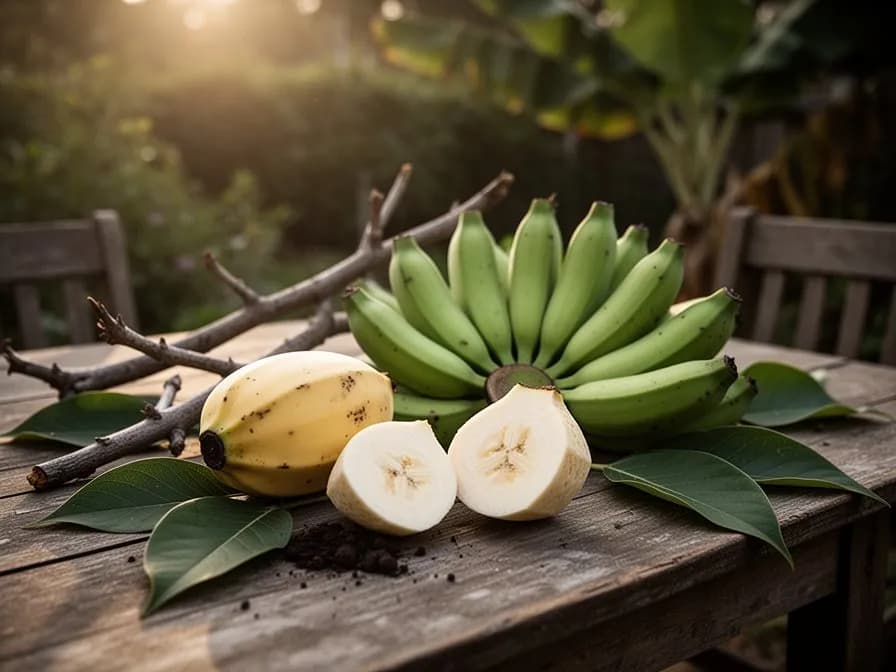
Bananen-Hafer-Frühstückssmoothie
5 Min.Ein dicker, cremiger Frühstückssmoothie, der reife selbst angebaute Bananen als Basis verwendet. Die natürliche Süße der am Baum gereiften Bananen macht zugesetzten Zucker überflüssig, und die Haferflocken liefern den ganzen Morgen über langsam freisetzende Energie.
7 Zutaten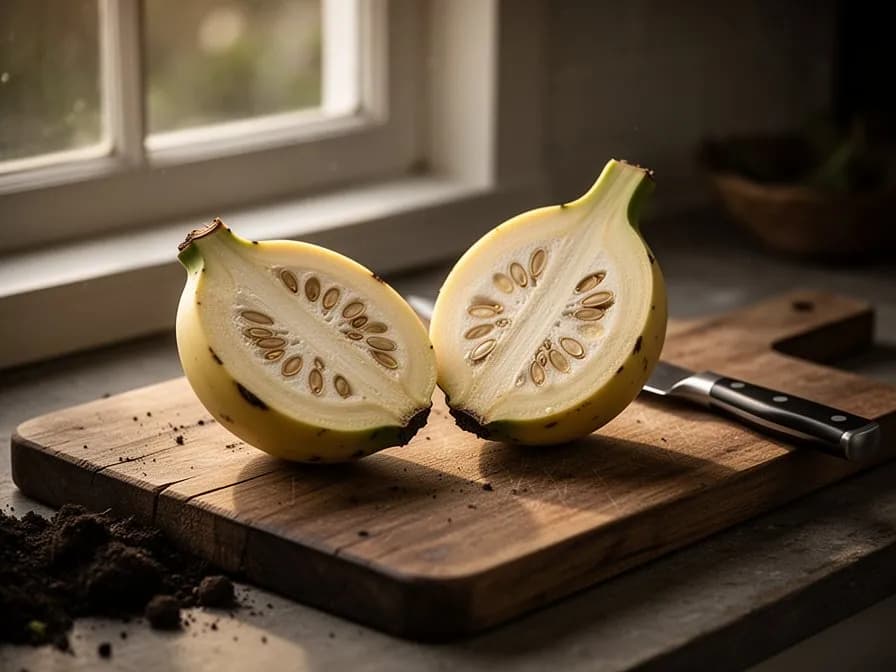
Bananenkrapfen mit Zimtzucker
15 Min.Goldgelb, außen knusprig und innen weich – diese Bananenkrapfen verwerten leicht überreife Früchte. Die karamellisierten Ränder und der warme Zimtzucker ergeben eine einfache, aber befriedigende Leckerei, die die konzentrierte Süße selbst angebauter Bananen in den Vordergrund stellt.
8 ZutatenGegrillte Banane mit dunkler Schokolade
10 Min.Ein schnelles und beeindruckendes Dessert, das auf jedem Grill oder unter einem Backofengrill funktioniert. Die Hitze intensiviert den natürlichen Zucker der Banane, während die Schokolade in jeden Spalt schmilzt und mit minimalem Aufwand und nur wenigen Zutaten ein reichhaltiges, klebriges Ergebnis erzeugt.
6 ZutatenKulinarische Verwendung
Reife Bananen werden weltweit frisch genossen und gehören zu den beliebtesten Früchten der Welt. Sie sind unverzichtbar in Smoothies, Bananenbrot, Pfannkuchen und Desserts. Grüne Kochbananen und Platanen sind Grundnahrungsmittel in der karibischen, afrikanischen und lateinamerikanischen Küche – gebraten, gekocht oder püriert. Die Bananenblüte ist eine Delikatesse in der süd- und südostasiatischen Küche. Getrocknete Bananenchips sind weltweit ein beliebter Snack.
Was drinsteckt
Gesundheitsvorteile
- Der hohe Kaliumgehalt in Bananen (358 mg je mittlerer Frucht) unterstützt die gesunde Blutdruckregulierung, indem er den Wirkungen von Nahrungsnatrium entgegenwirkt und die Blutgefäßwände entspannt, wodurch das Schlaganfall- und Herz-Kreislauf-Erkrankungsrisiko gesenkt wird.
- Bananen enthalten Tryptophan, eine Aminosäure, die der Körper zu Serotonin umwandelt – einem Neurotransmitter, der Wohlbefinden fördert, Schlafzyklen reguliert und Symptome leichter Angst und saisonaler Stimmungsveränderungen lindern kann.
- Das Pektin und die resistente Stärke in Bananen verlangsamen die Magenentleerung und moderieren postprandiale Blutzuckerspitzen, was sie zu einer geeigneten Frucht für Menschen macht, die Typ-2-Diabetes bewältigen, wenn sie als Teil einer ausgewogenen Mahlzeit verzehrt werden.
- Bananen bieten eine schnell aufgenommene Kohlenhydratquelle neben Elektrolyten (Kalium, Magnesium), was sie wirksam zur Vorbeugung belastungsinduzierter Muskelkrämpfe und zur Unterstützung der Erholung nach körperlicher Aktivität macht.
- Der lösliche Fasergehalt in reifen Bananen unterstützt die Verdauungsregelmäßigkeit, indem er dem Stuhl Volumen hinzufügt und gesunde Darmtransitzeiten fördert, während die resistente Stärke in unreifen Bananen nützliche Bifidobacterium- und Lactobacillus-Arten im Dickdarm ernährt.
- Bananen enthalten mehrere antioxidative Verbindungen, darunter Dopamin und Catechine, von denen in Laborstudien gezeigt wurde, dass sie oxidative Stressmarker reduzieren und möglicherweise zu einem geringeren Risiko chronisch entzündlicher Erkrankungen und altersbedingter degenerativer Krankheiten beitragen.
Woher Bananenbaum stammt
Der Bananenbaum (Musa-Arten) gehört zu den ersten vom Menschen domestizierten Pflanzen, und sein Anbau geht etwa 10.000 Jahre zurück in die tropischen Tieflagen von Papua-Neuguinea und der weiteren malesischen Region Südostasiens. Wilde Bananensorten, Musa acuminata und Musa balbisiana, lieferten die genetische Grundlage für alle modernen essbaren Kultursorten. Archäologische und Phytolith-Belege der Kuk-Swamp-Ausgrabungsstätte im Hochland von Papua-Neuguinea belegen den gezielten Bananenanbau bereits um 8000 v. Chr. und ordnen die Banane damit den ältesten Kulturpflanzen der Menschheit zu.
Von ihrem Herkunftszentrum aus verbreitete sich die Banane entlang alter Handels- und Migrationsrouten. Um etwa 5000 v. Chr. hatte der Bananenanbau die Philippinen, Indonesien und das Festland Südostasiens erreicht. Indische Händler trugen die Pflanze westwärts, und um 3000 v. Chr. war sie im gesamten indischen Subkontinent verbreitet. Arabische Händler führten dann Bananen in den Nahen Osten und Ostafrika ein, wo die Pflanze tief in die lokale Landwirtschaft und Küche integriert wurde. Die austronesische Besiedlung Madagaskars um 500–650 n. Chr. brachte Bananensorten auf die Insel, von der sich der Anbau über Subsahara-Afrika ausbreitete.
Die europäische Begegnung mit der Banane erfolgte durch die portugiesische Erkundung Westafrikas im 15. Jahrhundert. Spanische und portugiesische Kolonisten führten die Pflanze auf den Kanarischen Inseln und anschließend in der Karibik und Amerika in den frühen 1500er Jahren ein. Das tropische Klima Mittelamerikas erwies sich als ideal, und bald entstanden riesige Plantagen. Das späte 19. und frühe 20. Jahrhundert erlebte den Aufstieg enormer Bananenkonzerne – United Fruit Company, Standard Fruit – deren Aktivitäten in Mittelamerika unverhältnismäßig große wirtschaftliche und politische Macht ausübten.
Der weltweite Bananenhandel basierte auf der Sorte Gros Michel, bis in den 1950er Jahren die Panama-Krankheit (Fusarium oxysporum f. sp. cubense Rasse 1) Plantagen weltweit verwüstete und einen branchenweiten Übergang zur Cavendish-Gruppe erzwang. Heute bedroht ein neuer Stamm desselben Pilzes – Tropische Rasse 4 (TR4) – die Cavendish-Produktion und treibt intensive Forschungen zu resistenten Sorten und nachhaltigen Anbaumethoden voran, um diese lebenswichtige globale Nahrungspflanze zu schützen.
Bananenbaum: Schon gewusst?
Faszinierende Fakten über Bananenbaum
Ein Bananenpseudostamm kann unter optimalen Wachstumsbedingungen in tropischen Klimazonen bis zu 30 cm pro Woche wachsen, was ihn zu einer der am schnellsten wachsenden Pflanzen der Erde macht.
Bananenbaum: Fragen & Antworten
Wann sollte ich Bananenbaum pflanzen?
Was sind gute Begleitpflanzen für Bananenbaum?
In welchen Winterhärtezonen kann Bananenbaum wachsen?
Wie viel Sonne braucht Bananenbaum?
Welchen Abstand sollte ich zwischen Bananenbaum lassen?
Welche Schädlinge und Krankheiten befallen Bananenbaum?
Wie lagere ich Bananenbaum nach der Ernte?
Was sind die besten Bananenbaum-Sorten zum Anbauen?
Welchen Boden braucht Bananenbaum?
Ist ein Bananenbaum wirklich ein Baum?
Wie oft wird ein Bananenbaum Früchte tragen?
Was ist die beste Bananensorte für den Hausanbau?
Warum blüht mein Bananenbaum nach über einem Jahr Wachstum nicht?
Kann ich einen Bananenbaum aus einer im Laden gekauften Banane züchten?
Wie schütze ich meinen Bananenbaum vor Krankheiten wie der Panama-Krankheit?
Du hast die Theorie gelesen. Jetzt baue sie auf Autopilot an.
Alles, was Bananenbaum knifflig macht — das Timing, die Abstände, die Begleiter, das Erntefenster — genau das übernimmt PlotMyGarden für dich, für jede Pflanze im Garten.
Ein Plan, der dein Wetter kennt
Standort einmal festlegen. Aussaat-, Dünge- und Erntedaten rund um deinen echten letzten Frosttermin und die Live-Vorhersage — kein Raten mehr nach Saattüte.
Aus dem Abschnitt „Pflanzzeit“Beetplaner per Drag & Drop
Beete auf einem Raster gestalten. Jede Pflanze rastet im richtigen Abstand ein, und du siehst die ganze Saison, bevor du einen Cent für Saatgut ausgibst.
Aus dem Abschnitt „Anbau“Begleiter-Konflikte früh erkannt
Über 200 gute und schlechte Kombinationen werden beim Pflanzen live geprüft — so landet ein saisonruinierender Fehler nie in der Erde.
Aus dem Abschnitt „Begleiter“Erinnerungen, nach denen du wirklich handelst
„Gieß die Bohnen.“ „Heute ernten, bevor's umschlägt.“ Pünktlich, konkret und auf deine echten Pflanzen bezogen.
Aus dem Abschnitt „Ernte“Staffel-Aussaat, geplant
Sechs Wochen ernten statt sechs Tage? Die App verteilt deine Aussaaten automatisch und erinnert dich, wenn der nächste Satz fällig ist.
Aus dem Abschnitt „Pflanzzeit“Ein Verlauf, der schlauer wird
Jede protokollierte Ernte bringt der App deinen Garten bei. Der Plan fürs nächste Jahr startet bei dem, was in deinem Boden wirklich funktioniert hat.
Aus dem Abschnitt „Überblick“Pflanze diese neben Bananenbaum
Weitere Obstbäume
Halte Bananenbaum von diesen fern
Bau deine beste Bananenbaum an — und alles drumherum.
Starte heute kostenlos. Lege deine Beete an, setze deine Bananenbaum ein und lass PlotMyGarden Timing, Abstände, Begleiter und Erinnerungen von der Saat bis zum Erntekorb übernehmen.