Wachskürbis
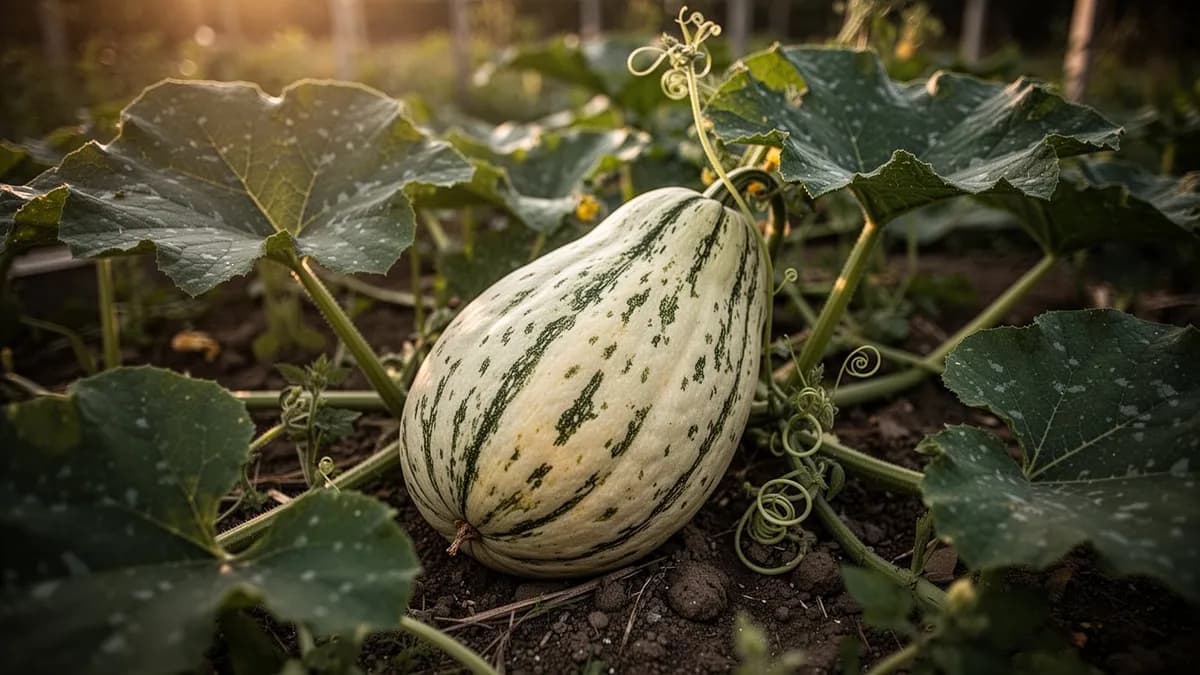
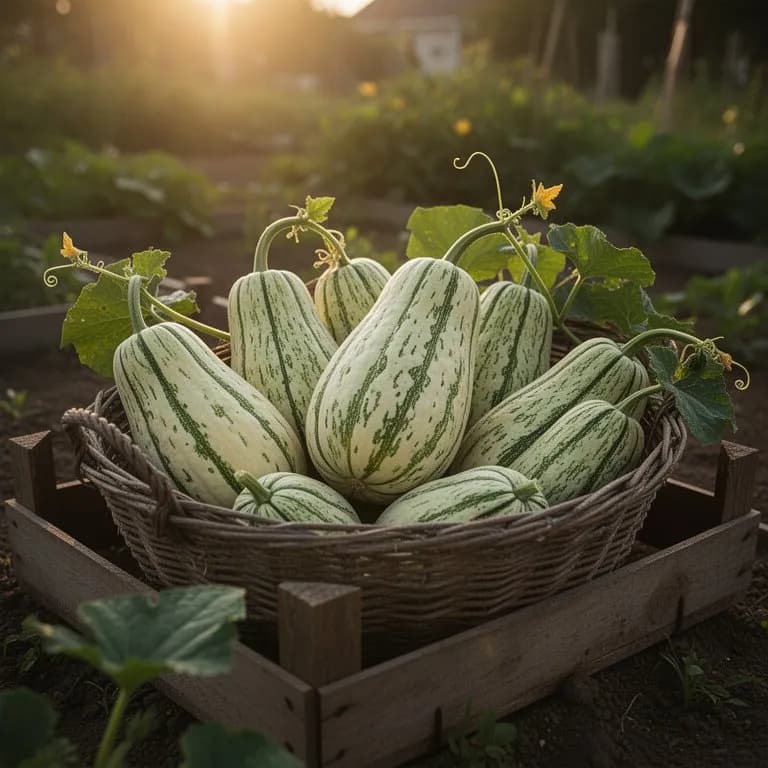
Ein großer asiatischer Kürbis, der beim Reifen eine charakteristische weiße, wachsartige Beschichtung auf seiner grünen Schale entwickelt, auch als Wachskürbis bekannt.





Auf dieser SeiteÜberblick
Wachskürbis im Überblick
Ein großer asiatischer Kürbis, der beim Reifen eine charakteristische weiße, wachsartige Beschichtung auf seiner grünen Schale entwickelt, auch als Wachskürbis bekannt. Früchte können bis zu 13 kg schwer werden und in kühlen Bedingungen dank des schützenden Wachsüberzugs monatelang gelagert werden. Das milde, weiße Fruchtfleisch wird in indischen, chinesischen und südostasiatischen Suppen, Currys und Süßspeisen verwendet. Die kräftigen Ranken benötigen viel Platz und ein stabiles Rankgerüst oder können entlang des Bodens angebaut werden.
Wann Wachskürbis pflanzen
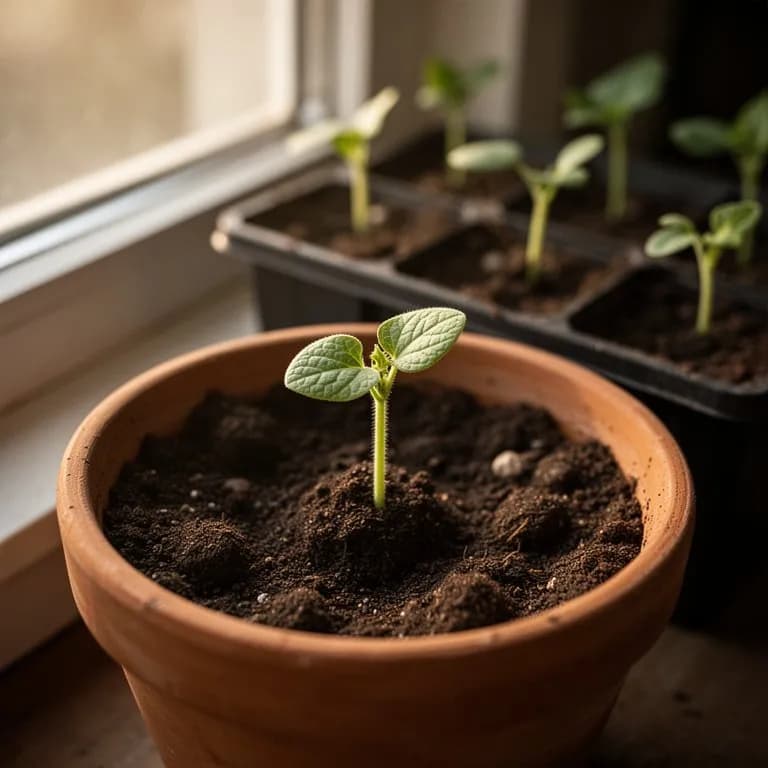
Säen Sie Wachskürbissamen 3–4 Wochen vor dem letzten Frost drinnen in biologisch abbaubare Töpfe vor, um Wurzelstörungen beim Umtopfen zu minimieren. Samen über Nacht in warmem Wasser einweichen, um die Keimung zu beschleunigen. Samen 2–3 cm tief, mit der Spitze nach unten, an einem warmen Ort bei 24–30 °C (75–85 °F) einpflanzen. Samen keimen in 7–14 Tagen. Sämlinge vor dem Verpflanzen 7–10 Tage lang schrittweise abhärten. Beim direkten Aussäen warten, bis die Bodentemperaturen dauerhaft über 21 °C (70 °F) liegen. 3–4 Samen pro Hügel pflanzen und nach dem Erscheinen der ersten echten Blätter auf die 2 kräftigsten Sämlinge ausdünnen.
Dein Wachskürbis-Jahr
Abgestimmt auf Zone 7 · typische Saison · Frost geht um den 2. Apr. und kehrt um den 1. Nov. zurück
Wachskürbis Apr – Jun pflanzen, Aug – Okt ernten. Beachte die Pflanzmethoden unten und wähle dein Klima für passende Zeiträume.
So baust du Wachskürbis an
Der Wachskürbis benötigt eine lange, warme Wachstumsperiode von 90–120 Tagen und gedeiht am besten in tropischen bis subtropischen Klimazonen. Säen Sie die Samen 3–4 Wochen vor dem letzten Frosttermin drinnen vor, oder säen Sie direkt aus, sobald die Bodentemperaturen 21 °C (70 °F) erreichen. Pflanzen Sie die Samen 2–3 cm tief in Hügeln mit einem Abstand von 180–240 cm, legen Sie dabei 3–4 Samen pro Hügel und dünnen Sie auf die 2 kräftigsten Sämlinge aus. Die kräftigen Ranken breiten sich 4–6 Meter aus und benötigen ausreichend Platz.
Sorgen Sie während der gesamten Wachstumsperiode für gleichmäßige Feuchtigkeit, insbesondere während der Fruchtentwicklung. Tropfbewässerung ist ideal, um das Laub trocken zu halten und Pilzkrankheiten zu verhindern. Tragen Sie beim Pflanzen einen ausgewogenen Dünger auf und düngen Sie nach, wenn die Ranken zu wachsen beginnen, mit Kompost oder Fischdünger. Beim Anbau am Rankgerüst verwenden Sie äußerst stabile Stützen, die Früchte mit einem Gewicht von 4–13 kg tragen können, und sorgen Sie für Schlingen für sich entwickelnde Früchte.
Handbestäubung kann erforderlich sein, wenn die Bienenaktivität gering ist, da der Wachskürbis getrennte männliche und weibliche Blüten an derselben Ranke produziert. Männliche Blüten erscheinen zuerst, gefolgt von weiblichen Blüten mit einer kleinen Schwellung an der Basis. Übertragen Sie früh am Morgen Pollen von männlichen auf weibliche Blüten für den besten Fruchtansatz. Entfernen Sie alle bis auf 2–3 Früchte pro Ranke für größere, qualitativ hochwertigere Kürbisse.
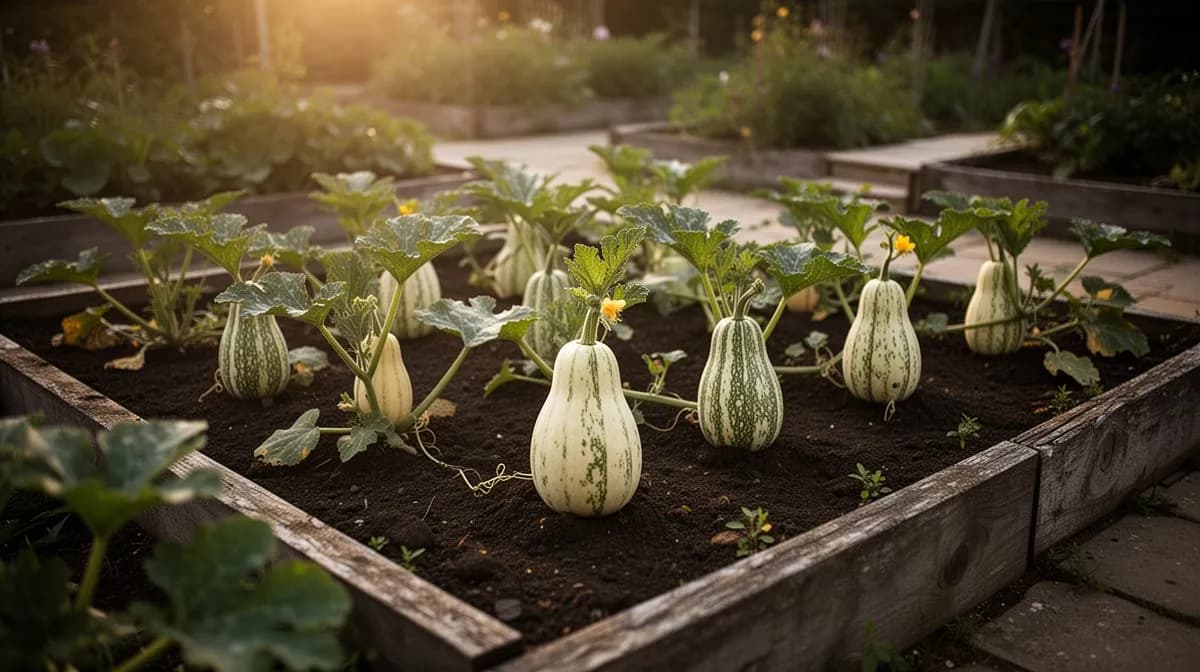
2 Pflanzen passen in ein Beet von 120 × 240 cm
Wachskürbis braucht 120 cm Platz pro Pflanze. Der Planer hält diesen Abstand für dich ein — jede Pflanze, jedes Beet.
Die besten Nachbarn für Wachskürbis
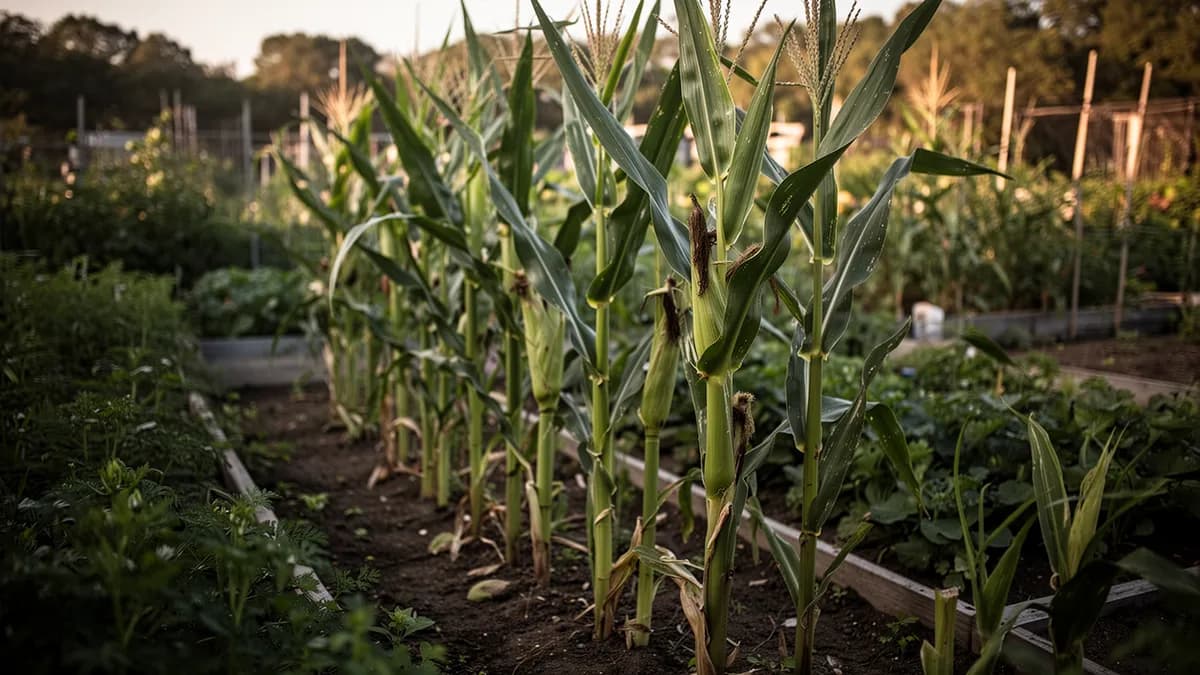
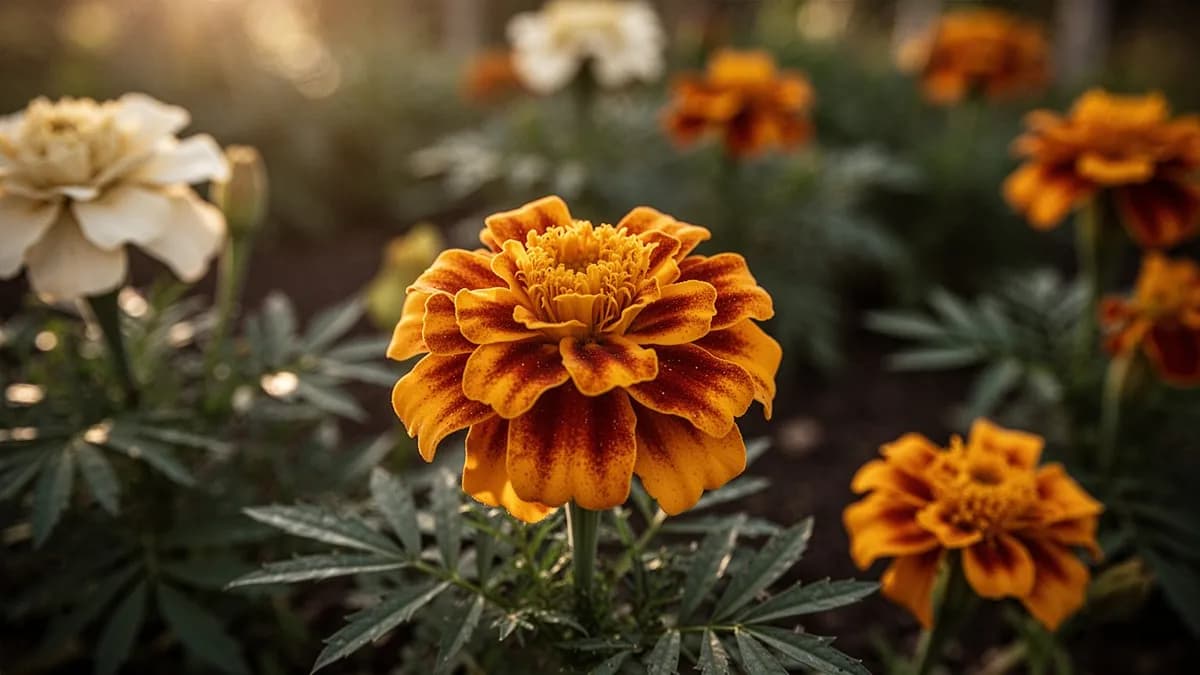
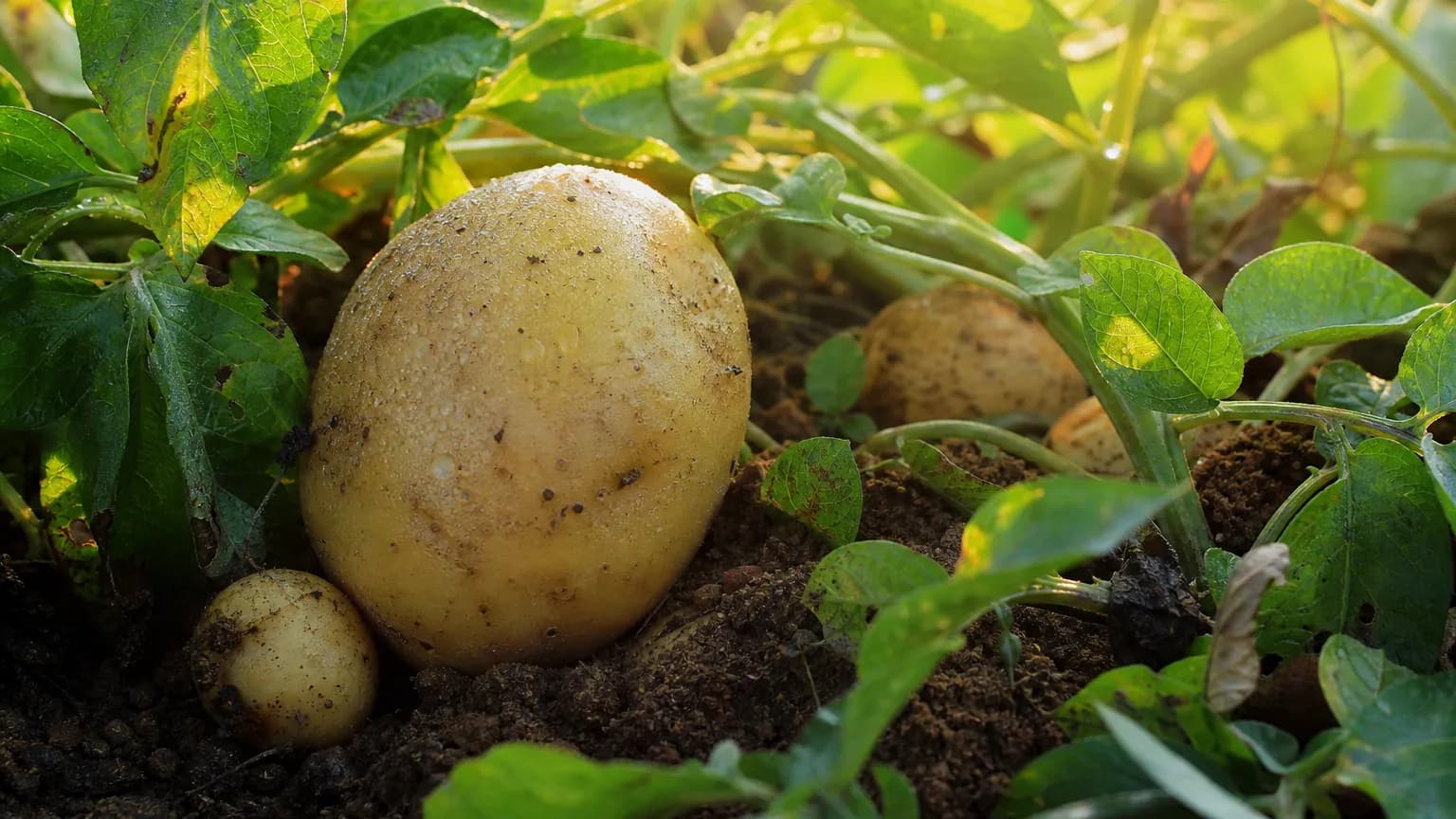
Der Wachskürbis profitiert von in der Nähe gepflanztem Mais als Windschutz und Teilschattenspender bei extremer Hitze. Rund um den Bereich gepflanzte Tagetes schrecken Gurkenkäfer und andere Schädlinge ab. Vermeiden Sie die Bepflanzung in der Nähe von Kartoffeln, die um Nährstoffe konkurrieren und gemeinsame bodenbürtige Krankheiten beherbergen können. Kapuzinerkresse dient als Lockpflanze für Blattläuse und lockt diese von den Kürbisranken weg. In der Nähe der Hügel gepflanzte Radieschen können helfen, den Boden aufzulockern und Kürbisrankenbohrer abzuschrecken. Lassen Sie zwischen Wachskürbis und anderen Kürbisgewächsen ausreichend Abstand, um Kreuzbestäubung zu reduzieren, wenn Sie Samen gewinnen möchten.
Mais gehört daneben. Kartoffel nicht.
Altes Gärtnerwissen, geprüft an der echten Nachbartabelle von Wachskürbis — teste jede Pflanze, die du anbaust.
Probiere Wachskürbis direkt hier im Beet
Ein echtes Planer-Beet, Wachskürbis steht schon drin. Tippe einen Begleiter an, platziere ihn und sieh, wie die Nachbarschaftsprüfung antwortet — grün für gute Nachbarn, rot bei Streit.


Passende Anbau-Ratgeber
Richtig düngen
Der Wachskürbis gedeiht in reichem, gut drainierendem Boden mit hohem organischen Anteil und einem pH-Wert von 6,0–7,0. Bereiten Sie die Pflanzenhügel mit großzügigen Mengen Kompost oder gut verrottetem Mist vor, der in den Boden eingearbeitet wird. Tragen Sie beim Pflanzen einen ausgewogenen 10-10-10-Dünger auf, wechseln Sie dann zu einer Formel mit höherem Phosphor- und Kaliumgehalt, wenn die Blüte beginnt, um die Fruchtentwicklung zu unterstützen. Mulchen Sie alle 3–4 Wochen während der Wachstumsperiode mit Kompost nach. Übermäßigen Stickstoff vermeiden, da dieser das Rankenwachstum auf Kosten der Fruchtproduktion fördert.
Ideale Temperatur
Winterhärtezone-Kompatibilität
Von der Saat zur Ernte, Schritt für Schritt
Samenanzucht
Wachskürbissamen sind groß, flach und cremefarbig und keimen schnell in warmem Boden. Die dicke Samenschale weicht schnell auf, wenn die Bodenfeuchte ausreichend ist, und die robuste Keimwurzel bricht innerhalb von 4–7 Tagen durch. Große, runde Keimblätter erscheinen und entfalten sich, um sofort mit der Fotosynthese zu beginnen.
Sämlingsentwicklung
Echte Blätter entwickeln sich schnell mit einer tief gelappten, rauen Textur, die typisch für die Kürbisgewächse ist. Der Stiel verdickt sich und die ersten Ranken erscheinen, was auf den rankenden Charakter der Pflanze hinweist. Die Wurzelentwicklung ist kräftig und legt das Fundament für das enorme Rankenwachstum, das noch kommen wird.
Rankenwachstum
Die Ranke tritt in explosives Wachstum ein und verlängert sich bei heißem Wetter um 15–30 cm pro Tag. Große, behaarte, gelappte Blätter entwickeln sich an jedem Knoten zusammen mit starken Ranken, die jede Stützkonstruktion greifen. Die Hauptranke produziert seitliche Äste, die die Ausbreitung der Pflanze auf 4–6 Meter oder mehr weiter vergrößern.
Blüte
Große, leuchtend gelbe Blüten erscheinen — männliche Blüten erscheinen zuerst in Trauben, gefolgt von weiblichen Blüten, die an ihrer Basis durch den kleinen geschwollenen Fruchtknoten erkennbar sind. Blüten öffnen sich bei Tagesanbruch und schließen sich bis zum Mittag, was ein enges Bestäubungsfenster schafft. Bienen sind die primären Bestäuber und für den Fruchtansatz unerlässlich.
Fruchtentwicklung
Bestäubte weibliche Blüten entwickeln sich zu schnell anschwellenden Früchten, die mit feinen, weichen Haaren bedeckt sind. Junge Früchte sind grün und flaumig und nehmen im Laufe von 5–8 Wochen allmählich an Größe zu. Während die Frucht reift, weichen die Haare zurück und eine charakteristische kreidige weiße Wachsbeschichtung (Reif) beginnt sich auf der Schale zu entwickeln, was dem Kürbis sein aschiges Aussehen und seinen gebräuchlichen Namen verleiht.
Ernte und Lagerung
Früchte erreichen volle Reife bei 3–10 kg oder mehr, bedeckt vom charakteristischen dicken weißen Wachsüberzug. Die Schale verhärtet und der Stiel trocknet aus und wird korkig. Reife Früchte klingen hohl, wenn man darauf klopft. Die Wachsbeschichtung wirkt als natürliches Konservierungsmittel und ermöglicht eine Lagerung von 6–12 Monaten in kühlen, trockenen Bedingungen ohne Kühlung.
Samen vor der Aussaat 8–12 Stunden in warmem Wasser einweichen, um die Keimung zu beschleunigen. 2–3 cm tief in warmem Boden mit mindestens 21 °C (70 °F) einpflanzen. In kühleren Klimazonen drinnen in biologisch abbaubaren Töpfen 3–4 Wochen vor dem letzten Frost anziehen, um Wurzelstörungen beim Umpflanzen zu vermeiden.
Wachskürbis Monat für Monat pflegen
Was du jeden Monat für deine Wachskürbis tun solltest
Oktober
Aktueller MonatReife Früchte mit vollständig entwickeltem Wachsüberzug und trockenen, korkigen Stielen ernten. Mit 5–8 cm Stiel abschneiden. Geerntete Früchte 7–10 Tage an einem warmen, trockenen Ort nachreifen lassen. Mit der Verarbeitung unreifer Früchte beginnen, die vor dem Frost nicht mehr reifen werden.
Immer wissen, was jetzt im Garten zu tun ist
Eine E-Mail zum Monatsanfang: was du jetzt säen, pflanzen und anpacken solltest — für deine Wachskürbis und alles, was drumherum wächst. Dazu ein kurzer Startkurs, der dich vor den klassischen Fehlern bewahrt.
- Was jetzt zu tun ist
- Passend zu deiner Saison
- Startkurs inklusive
Wachskürbis ernten
Ernten Sie den Wachskürbis für den Frischverzehr, wenn die Früchte mittelgroß und noch grün sind, typischerweise 60–70 Tage nach der Bestäubung. Für die Langzeitlagerung warten Sie, bis sich die wachsartige weiße Beschichtung vollständig auf der Schale entwickelt hat, was die volle Reife nach 90–120 Tagen anzeigt. Früchte mit einem scharfen Messer von der Ranke schneiden und dabei 5–8 cm Stiel anlassen. Trotz ihres robusten Äußeren vorsichtig handhaben, da Risse in der Wachsbeschichtung die Lagerdauer verkürzen. Reife Früchte mit intakter Wachsbeschichtung können 4–13 kg oder mehr wiegen.
angenommen, du pflanzt zu Beginn des Zeitraums — trage dein tatsächliches Datum ein
Ernte Wachskürbis zügig, dann trägt die Pflanze weiter.
Lagerung & Konservierung
Vollständig gereifter Wachskürbis mit intakter Wachsbeschichtung lagert außergewöhnlich gut für 6–12 Monate an einem kühlen, trockenen Ort bei 13–15 °C (55–60 °F). Die natürliche Wachsbeschichtung wirkt als Konservierungsmittel und macht dieses Gemüse zu einem der am längsten lagerbaren. Nach dem Aufschneiden die verbleibenden Stücke fest in Folie einwickeln und bis zu einer Woche im Kühlschrank aufbewahren. Geschnittenes Fruchtfleisch kann gewürfelt und für die Verwendung in Suppen und Currys eingefroren werden. In südostasiatischen Traditionen konserviert Petha (kandierter Wachskürbis) das Fruchtfleisch monatelang in Zuckersirup. Scheiben können auch für die Langzeitlagerung dehydriert werden.
Was schiefgeht — und die Lösung
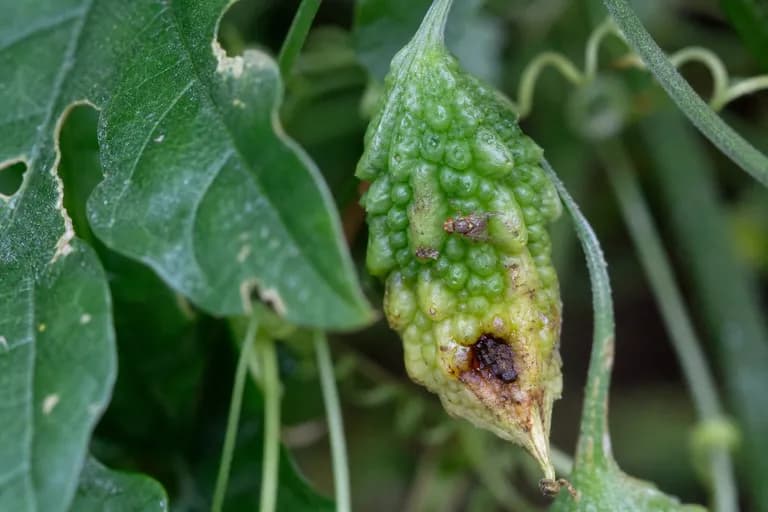
Fruchtfliege
SchädlingKleine Einstichstellen an sich entwickelnden Früchten, Larven, die sich durch das Fruchtfleisch fressen, vorzeitige Fruchtfäule und -abfall.
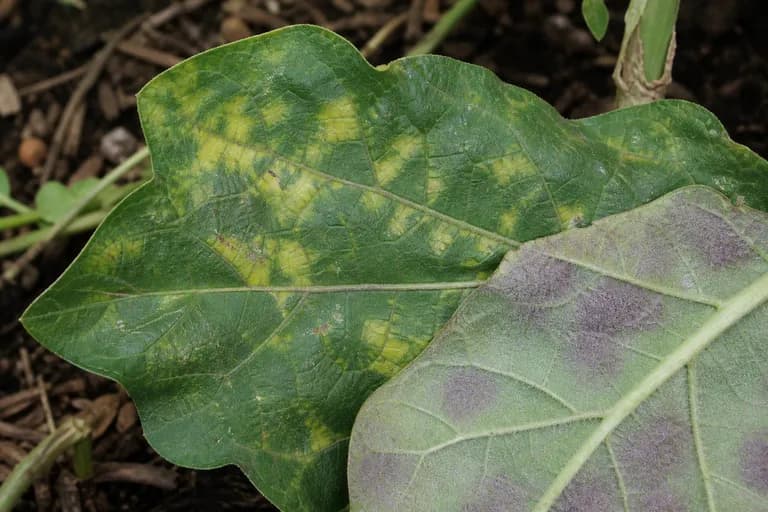
Falscher Mehltau
KrankheitGelbe eckige Flecken auf den Blattoberseiten, grauvioletter flaumiger Bewuchs auf den Blattunterseiten, rasche Entblätterung.
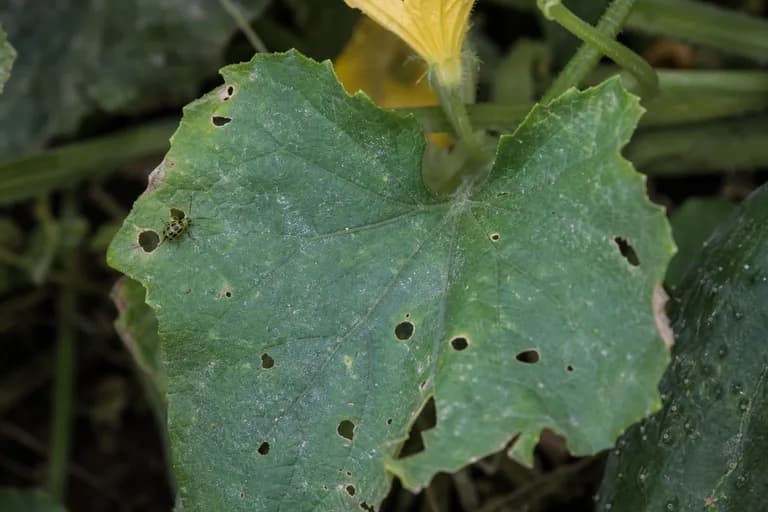
Gurkenkäfer
SchädlingGefressene Löcher in Blättern und Blüten, vernarbte Fruchtoberflächen, Welken durch Übertragung von Bakterienwelke.
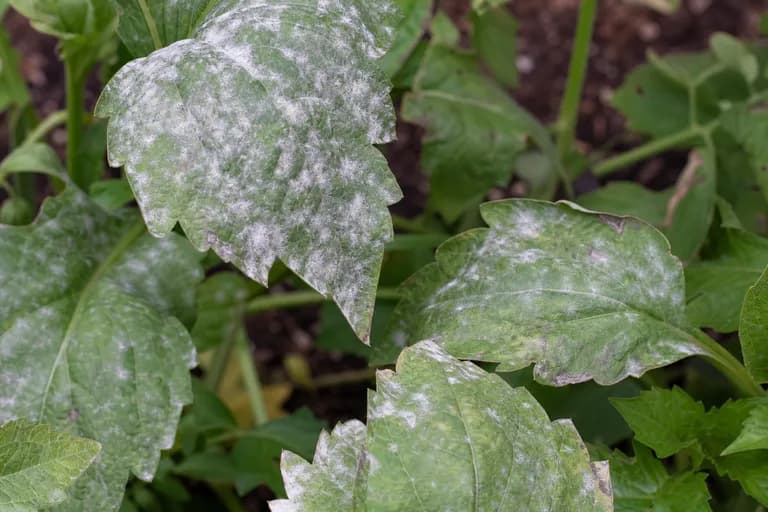
Echter Mehltau
KrankheitWeiße pudrige Flecken auf Blättern und Stielen, eingerolltes und vergilbendes Laub, verminderte Fruchtqualität.
Fehlerbehebung bei häufigen Problemen
Wachskürbisranken benötigen enorm viel Platz, der kleine Gärten überfordern kann. Unzureichende Bestäubung ist häufig aufgrund der kurzlebigen Blüten und des zeitlichen Ablaufs von männlicher und weiblicher Blütenbildung. Fruchtfliegenschäden in tropischen Regionen können Ernten ohne Schutzmaßnahmen verwüsten. Schwere Früchte an Rankgerüsten können Ranken brechen, wenn sie nicht ordnungsgemäß mit Schlingen gestützt werden. Blütenendenfäule kann durch ungleichmäßige Bewässerung oder Kalziummangel auftreten. Junge Sämlinge sind äußerst kälteempfindlich und überstehen keine Temperaturen unter 10 °C (50 °F).
Anbautipps
- Geben Sie dem Wachskürbis reichlich Platz — dies ist eine kräftige Ranke, die sich in einer einzigen Saison 4–6 Meter ausbreiten kann. Entweder ein starkes Rankgerüstsystem bereitstellen (das sauberere, gleichmäßigere Früchte produziert) oder eine große Bodenfläche für die Ranke zum Ausbreiten einplanen.
- Ein stabiles Rankgerüst bauen, wenn vertikal angebaut wird. Reife Wachskürbisse können je 3–10 kg wiegen, daher muss die Stützkonstruktion robust sein. Schwere Drahtgitter, stabile Holzrahmen oder verstärkte Rindergitter verwenden. Einzelne Früchte mit Netzschlingen oder alten Stoffhängematten abstützen, die am Rankgerüst befestigt sind.
- Samen 8–12 Stunden vor dem Pflanzen einweichen und in wirklich warmem Boden von mindestens 21 °C (70 °F) aussäen. Kalter Boden verursacht Samenfäulnis. In gemäßigten Klimazonen Samen drinnen in biologisch abbaubaren Töpfen anziehen, um 3–4 Wochen Wachstumszeit zu gewinnen, ohne die empfindliche Pfahlwurzel zu stören.
- Von Hand bestäuben für zuverlässigen Fruchtansatz, besonders in kühleren Klimazonen oder Stadtgärten mit geringer Bestäuberaktivität. Pollen von männlichen Blüten (langer dünner Stiel, keine Schwellung an der Basis) auf weibliche Blüten (kleine Schwellung an der Basis) früh morgens mit einem weichen Pinsel übertragen, bevor sich die Blüten schließen.
- Jede Ranke auf 2–3 Früchte begrenzen für die größten einzelnen Kürbisse. Zusätzliche weibliche Blüten entfernen, nachdem die Zielanzahl an Früchten angesetzt hat. Dies konzentriert die Energie der Pflanze auf weniger, größere, besser lagerfähige Früchte statt auf viele kleine.
- Während der Rankenwachstums- und Fruchtentwicklungsphasen tief und gleichmäßig gießen — mindestens 2,5 cm pro Woche. Unregelmäßige Bewässerung verursacht Fruchtrisse und schlechte Entwicklung. Bewässerung reduzieren, wenn sich die Früchte der Reife nähern, um die Wachsentwicklung und Schalenhärtung zu fördern.
- Nur ernten, wenn der wachsartige weiße Überzug vollständig entwickelt ist und der Stiel trocken und korkig geworden ist. Vorzeitige Ernte führt zu schlechter Lagerdauer. Beim Schneiden 5–8 cm Stiel anlassen und Früchte 7–10 Tage an einem warmen, trockenen Ort nachreifen lassen, bevor sie langfristig gelagert werden.
- Nachgereifte Wachskürbisse an einem kühlen, trockenen, gut belüfteten Ort bei 13–15 °C (55–60 °F) lagern. Früchte nicht stapeln — in einer einzigen Lage auf Regalen oder Gestellen mit Abstand zwischen den einzelnen Früchten anordnen. Monatlich auf weiche Stellen überprüfen. Ein richtig nachgereifter Wachskürbis mit intakter Wachsbeschichtung lagert 6–12 Monate.
Bau deine beste Wachskürbis an — und alles drumherum.
Starte heute kostenlos. Lege deine Beete an, setze deine Wachskürbis ein und lass PlotMyGarden Timing, Abstände, Begleiter und Erinnerungen von der Saat bis zum Erntekorb übernehmen.
Finde deine Wachskürbis
CO-1
Indische Handelssorte mit runden Früchten von durchschnittlich 8–10 kg, starker Wachsbeschichtung und hervorragender Lagerqualität.
Pusa Naveen
Verbesserte indische Sorte mit zylindrischen Früchten, früher Reife und guter Resistenz gegen Echten Mehltau.
Mini Wachskürbis
Kompakte Sorte, die Früchte von 1,5–2,5 kg produziert, ideal für kleine Gärten und den Bedarf einer Einzelfamilie.
Tong Qwa
Chinesische Sorte, bevorzugt für Wintermelonensuppe, produziert große längliche Früchte mit dichtem weißen Fruchtfleisch.
Der Wachskürbis ist eine außergewöhnlich wertvolle Nutzpflanze für Hobbygärtner. Eine einzelne Pflanze, die aus einem Samenpaket für unter 3 € 10–30 kg Nahrung produziert, stellt eine bemerkenswerte Produktivität pro Quadratmeter dar. In asiatischen Lebensmittelgeschäften wird Wachskürbis typischerweise für 1,50–3,00 € pro kg verkauft, was bedeutet, dass eine einzelne Pflanze Nahrung im Wert von 15–90 € produzieren kann. Die außergewöhnliche Lagerfähigkeit von 6–12 Monaten ohne Kühlung steigert den Wert weiter, indem sie während des Winters frische Produkte ohne Konservierungsgeräte bereitstellt. In süd- und südostasiatischen Gemeinschaften, wo Wachskürbis eine Grundnahrungspflanze ist, eliminiert der Eigenanbau wiederkehrende Einkäufe einer schweren, sperrigen Zutat.
Schnelle Rezepte
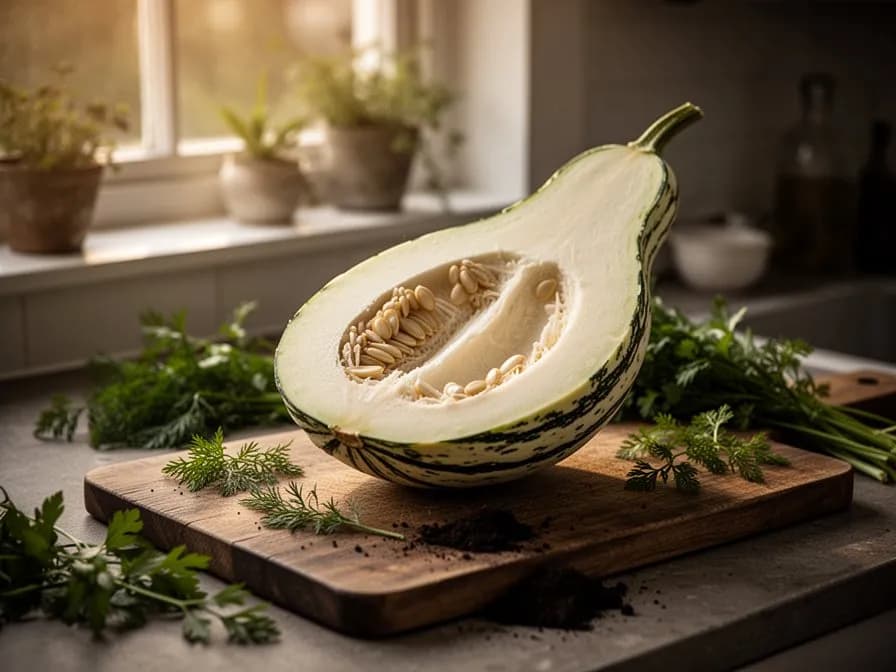
Südindisches Wachskürbiscurry (Kumbalanga Curry)
35 Min.Ein cremiges, mild gewürztes Kokosnusscurry, bei dem zarte Wachskürbiswürfel die duftende Mischung aus Curryblättern, Senfkörnern und Kurkuma aufnehmen. Dieses klassische Kerala-Gericht ist wohltuend, leicht verdaulich und passt perfekt zu gedämpftem Reis oder Chapati.
10 ZutatenWachskürbis-Linsensuppe (Dal Kootu)
40 Min.Eine nahrhafte, proteinreiche Suppe, die weichen Wachskürbis mit gelben Linsen in einer wärmenden südindischen Gewürzbasis kombiniert. Der Kürbis schmilzt in die Linsen und erzeugt eine seidige, herzhafte Textur, die sowohl sättigend als auch magenfreundlich ist.
11 ZutatenWachskürbis-Halwa (Petha)
50 Min.Eine beliebte indische Süßigkeit, bei der geriebener Wachskürbis langsam mit Zucker und Ghee eingekocht wird, bis er durchscheinend und kandierartig wird. Petha aus der Stadt Agra ist eine der berühmtesten indischen Süßwaren, und diese Heimversion erfasst dieselbe zarte, im Mund schmelzende Qualität.
7 ZutatenKulinarische Verwendung
Wachskürbis hat einen milden, nahezu neutralen Geschmack, der Gewürze wunderbar aufnimmt. In der chinesischen Küche glänzt er in Wintermelonensuppe mit Schweinebrühe und getrockneten Garnelen. Indische Zubereitungen umfassen Petha (kristallisierte Süßigkeit aus Agra), Kootu (linsenbasiertes Curry) und Raita. Südostasiatische Küchen verwenden ihn in klaren Suppen, Pfannengerichten und mit Palmzucker gesüßten Desserts. Die ayurvedische Tradition schätzt Wachskürbissaft als kühlenden Gesundheitstrunk. Das milde Fruchtfleisch eignet sich auch hervorragend für Eingelegtes und Chutneys.
Was drinsteckt
Gesundheitsvorteile
- Extrem kalorienarm (13 pro 100 g) und reich an Wassergehalt (über 96 %), was den Wachskürbis zu einem der effektivsten natürlichen Lebensmittel für Gewichtsmanagement, Flüssigkeitszufuhr und kalorientbewusste Ernährung macht.
- Reich an Ballaststoffen, die die Verdauungsregularität unterstützen, nützliche Darmbakterien ernähren und trotz der sehr geringen Kalorienzahl ein Sättigungsgefühl fördern.
- Seit Jahrtausenden in der ayurvedischen Medizin als kühlendes, entzündungshemmendes Lebensmittel verwendet, das für die Gesundheit der Harnwege, Nierenunterstützung und die Reduzierung übermäßiger Körperhitze verschrieben wird.
- Enthält Vitamin C und B-Vitamine, die Immunfunktion, Energiestoffwechsel und antioxidativen Schutz gegen Zellschäden durch freie Radikale unterstützen.
- Die traditionelle chinesische Medizin klassifiziert Wachskürbis als harntreibendes Lebensmittel, das hilft, Wassereinlagerungen und Ödeme zu reduzieren, und moderne Nährwertanalysen unterstützen sein Potenzial zur Förderung gesunder Nierenfunktion aufgrund seines hohen Wasser- und Kaliumgehalts.
- Die alkalische Natur des Wachskürbisses wird in traditionellen Medizinsystemen für ihre Fähigkeit geschätzt, den Körper-pH-Wert auszugleichen, die Säure zu reduzieren und entzündliche Erkrankungen des Verdauungstrakts einschließlich Gastritis und saurem Reflux zu lindern.
Woher Wachskürbis stammt
Der Wachskürbis (Benincasa hispida) stammt ursprünglich aus Südostasien, wobei das wahrscheinlichste Ursprungszentrum die indo-malaiische Region ist, die Teile des heutigen Indonesien, Malaysia und Südindien umfasst. Archäologische Belege und historische Texte deuten auf einen Anbau zurück, der mindestens 4.000–5.000 Jahre zurückreicht, was ihn zu einer der ältesten Kulturpflanzen im tropischen Asien macht. Alte Sanskrit-Texte, einschließlich der Charaka Samhita und Sushruta Samhita, grundlegende Werke der ayurvedischen Medizin aus etwa 600 v. Chr., beschreiben den Wachskürbis ausführlich sowohl als Nahrungs- als auch als Heilpflanze und verschreiben ihn bei Harnwegserkrankungen, geistiger Klarheit und Verdauungsgesundheit.
Von seinen südostasiatischen Ursprüngen verbreitete sich der Wachskürbis über alte Handelsrouten in der ganzen tropischen und subtropischen Welt. Er erreichte China vor über 2.000 Jahren, wo er als 'Dong Gua' (Wintermelone) bekannt wurde und in die traditionelle chinesische Medizin und Küche integriert wurde. Die außergewöhnliche Lagerfähigkeit der Frucht — 6–12 Monate ohne Kühlung dank ihrer dicken Wachsschale — machte sie in Gesellschaften vor der Erfindung des Kühlschranks unschätzbar wertvoll, wo die Konservierung von frischem Gemüse durch Trockenzeiten und Winter eine ständige Herausforderung war. In China wurde Wachskürbis zu einer Hauptzutat in Suppen, Eintöpfen und dem beliebten süßen Wintermelonentee.
Der Anbau von Wachskürbis verbreitete sich nach Japan, Korea, auf die Philippinen und in die Pazifikinseln und passte sich in jeder Region an verschiedene Klimazonen und kulinarische Traditionen an. In Indien wurde er tief in religiösen und kulturellen Praktiken verankert — die Frucht gilt in der hinduistischen Tradition als verheißungsvoll und wird für Tempelopfer und zeremonielle Küche verwendet. Die Stadt Agra entwickelte die Kunst der Herstellung von Petha, einer durchscheinenden Wachskürbisspezialität, vor über 350 Jahren und schuf damit eine der berühmtesten indischen Süßigkeiten. Heute wird Wachskürbis kommerziell in ganz Indien, China, Südostasien und Teilen Afrikas angebaut und wird zunehmend von Hobbygärtnern in gemäßigten westlichen Ländern angebaut, die diesen bemerkenswert produktiven, leicht anzubauenden und außerordentlich lange lagerbaren Kürbis entdecken.
Wachskürbis: Schon gewusst?
Faszinierende Fakten über Wachskürbis
Der Wachskürbis hat seinen Namen von der kreidigen, ascheähnlichen weißen Wachsbeschichtung (Reif), die sich auf der Schale entwickelt, wenn die Frucht reift. Diese natürliche Wachsschicht ist als Konservierungsmittel so effektiv, dass ganze Wachskürbisse 6–12 Monate bei Raumtemperatur ohne Kühlung gelagert werden können — eine bemerkenswerte Eigenschaft, die ihn jahrhundertelang zu einem wichtigen Ernährungssicherheitsgewächs in ganz Tropisch-Asien gemacht hat.
Wachskürbis: Fragen & Antworten
Wann sollte ich Wachskürbis pflanzen?
Was sind gute Begleitpflanzen für Wachskürbis?
In welchen Winterhärtezonen kann Wachskürbis wachsen?
Wie viel Sonne braucht Wachskürbis?
Welchen Abstand sollte ich zwischen Wachskürbis lassen?
Welche Schädlinge und Krankheiten befallen Wachskürbis?
Wie lagere ich Wachskürbis nach der Ernte?
Was sind die besten Wachskürbis-Sorten zum Anbauen?
Welchen Boden braucht Wachskürbis?
Wie lange kann ich einen ganzen Wachskürbis lagern?
Wie schmeckt Wachskürbis?
Kann ich Wachskürbis in einem gemäßigten Klima anbauen?
Ist Wachskürbis dasselbe wie Wintermelone?
Woran erkenne ich, dass der Wachskürbis erntereif ist?
Warum fallen meine Wachskürbisblüten ab, ohne Früchte anzusetzen?
Du hast die Theorie gelesen. Jetzt baue sie auf Autopilot an.
Alles, was Wachskürbis knifflig macht — das Timing, die Abstände, die Begleiter, das Erntefenster — genau das übernimmt PlotMyGarden für dich, für jede Pflanze im Garten.
Ein Plan, der dein Wetter kennt
Standort einmal festlegen. Aussaat-, Dünge- und Erntedaten rund um deinen echten letzten Frosttermin und die Live-Vorhersage — kein Raten mehr nach Saattüte.
Aus dem Abschnitt „Pflanzzeit“Beetplaner per Drag & Drop
Beete auf einem Raster gestalten. Jede Pflanze rastet im richtigen Abstand ein, und du siehst die ganze Saison, bevor du einen Cent für Saatgut ausgibst.
Aus dem Abschnitt „Anbau“Begleiter-Konflikte früh erkannt
Über 200 gute und schlechte Kombinationen werden beim Pflanzen live geprüft — so landet ein saisonruinierender Fehler nie in der Erde.
Aus dem Abschnitt „Begleiter“Erinnerungen, nach denen du wirklich handelst
„Gieß die Bohnen.“ „Heute ernten, bevor's umschlägt.“ Pünktlich, konkret und auf deine echten Pflanzen bezogen.
Aus dem Abschnitt „Ernte“Staffel-Aussaat, geplant
Sechs Wochen ernten statt sechs Tage? Die App verteilt deine Aussaaten automatisch und erinnert dich, wenn der nächste Satz fällig ist.
Aus dem Abschnitt „Pflanzzeit“Ein Verlauf, der schlauer wird
Jede protokollierte Ernte bringt der App deinen Garten bei. Der Plan fürs nächste Jahr startet bei dem, was in deinem Boden wirklich funktioniert hat.
Aus dem Abschnitt „Überblick“Pflanze diese neben Wachskürbis
Weitere Kürbisgewächse
Halte Wachskürbis von diesen fern
Bau deine beste Wachskürbis an — und alles drumherum.
Starte heute kostenlos. Lege deine Beete an, setze deine Wachskürbis ein und lass PlotMyGarden Timing, Abstände, Begleiter und Erinnerungen von der Saat bis zum Erntekorb übernehmen.