Golden Delicious Apfel
Eine vielseitige goldgelbe Apfelsorte, die zu den wichtigsten Handelssorten gehört und als universeller Bestäuber für andere Apfelbäume gilt.





Auf dieser SeiteÜberblick
Golden Delicious Apfel im Überblick
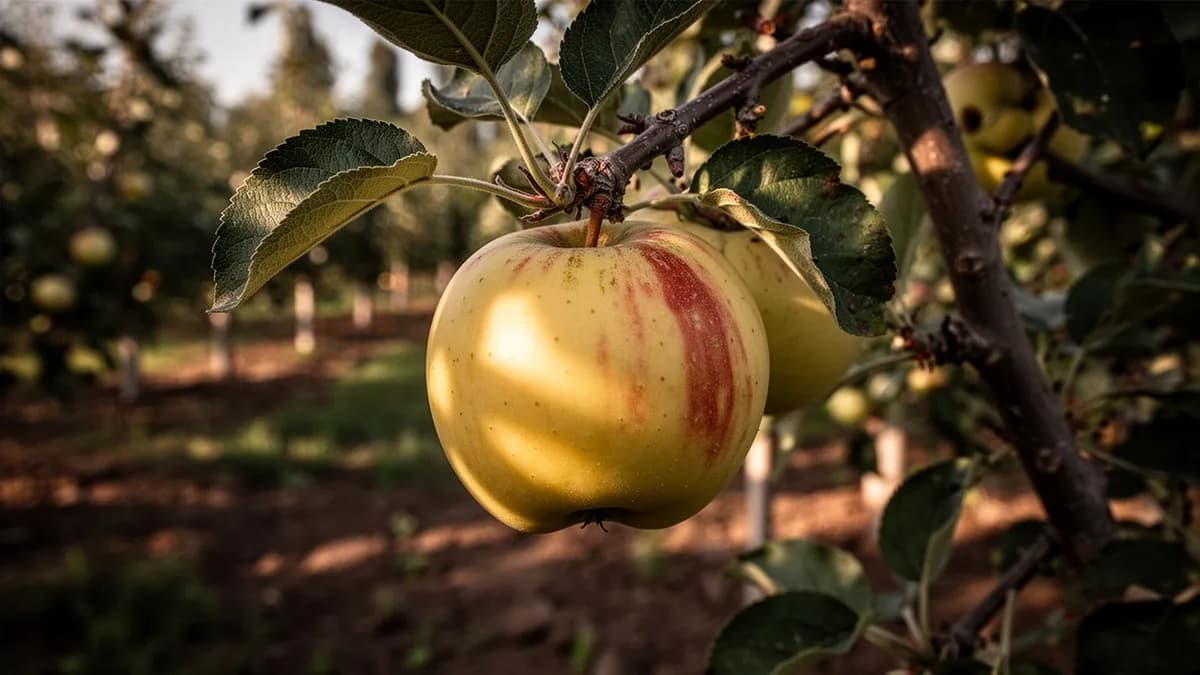
Eine vielseitige goldgelbe Apfelsorte, die zu den wichtigsten Handelssorten gehört und als universeller Bestäuber für andere Apfelbäume gilt. Golden Delicious hat süßes, mildes Fruchtfleisch, das sich sowohl für den Frischverzehr als auch zum Kochen eignet, besonders in Salaten, da es der Bräunung widersteht. Die Bäume tragen zuverlässig und sind selbstfruchtbar, obwohl die Erträge durch Fremdbestäubung verbessert werden.
Wann Golden Delicious Apfel pflanzen
Golden Delicious-Kerne werden häufig in Züchtungsprogrammen verwendet, da die Sorte viele herausragende Nachkommen hervorgebracht hat. Kerne aus reifen Früchten entnehmen, reinigen und in feuchtem Torf bei 2 bis 4 Grad Celsius 60 bis 90 Tage stratifizieren. Einen Zentimeter tief in Anzuchterde säen. Die Keimung erfolgt in zwei bis drei Wochen bei 18 bis 24 Grad Celsius. Golden Delicious-Sämlinge sind kräftige Wüchse und eignen sich gut als Unterlagekandidaten. Viele bekannte Sorten darunter Gala, Cripps Pink und Mutsu haben Golden Delicious-Abstammung.
Dein Golden Delicious Apfel-Jahr
Abgestimmt auf Zone 7 · typische Saison · Frost geht um den 2. Apr. und kehrt um den 1. Nov. zurück
Golden Delicious Apfel Mär – Apr pflanzen, Sep – Okt ernten. Beachte die Pflanzmethoden unten und wähle dein Klima für passende Zeiträume.
So baust du Golden Delicious Apfel an
Golden Delicious ist eine der am einfachsten anzubauenden Apfelsorten und daher ideal für Anfänger und Hobbyobstgärtner. Pflanzen Sie ruhende Bäume im frühen Frühling an einem vollsonnigen Standort mit gut durchlässigem Boden. Die Bäume sind mäßig wüchsig mit einer ausladenden, leicht hängenden Wuchsform, die von einer Mittelschafterziehung profitiert. Hochstämme sollten 6 m, Zwergformen 2,5 bis 3,5 m voneinander entfernt gepflanzt werden.
Einer der wichtigsten Vorteile von Golden Delicious ist seine Selbstfruchtbarkeit, d. h. er kann ohne Bestäuber eine Ernte einbringen, obwohl Ertrag und Fruchtgröße durch Fremdbestäubung deutlich verbessert werden. Er ist außerdem einer der besten Bestäuber für andere Apfelsorten, da er reichlich und langanhaltend blüht. Fruchtlinge auf einen pro Fruchtbüschel ausdünnen, um die beste Fruchtgröße und regelmäßiges Tragen zu erzielen.
Golden Delicious passt sich einem breiten Klima- und Bodenspektrum an, liefert jedoch die hochwertigsten Früchte in Regionen mit warmen Tagen und kühlen Nächten während der Reife. Während der Vegetationsperiode regelmäßig wässern und im frühen Frühling einen ausgewogenen Dünger ausbringen. Jährlich im Ruhezustand schneiden, um eine gute Lichtdurchflutung zu gewährleisten, da sich die goldene Schalenfarbe am besten bei ausreichender Sonneneinstrahlung entwickelt. In heißen Klimazonen die empfindliche Schale mit Kaolinton-Sprays vor Sonnenbrand schützen.
Für Golden Delicious Apfel ist ein Beet von 120 × 240 cm zu klein
Golden Delicious Apfel braucht 300 cm Platz pro Pflanze. Der Planer hält diesen Abstand für dich ein — jede Pflanze, jedes Beet.
Die besten Nachbarn für Golden Delicious Apfel
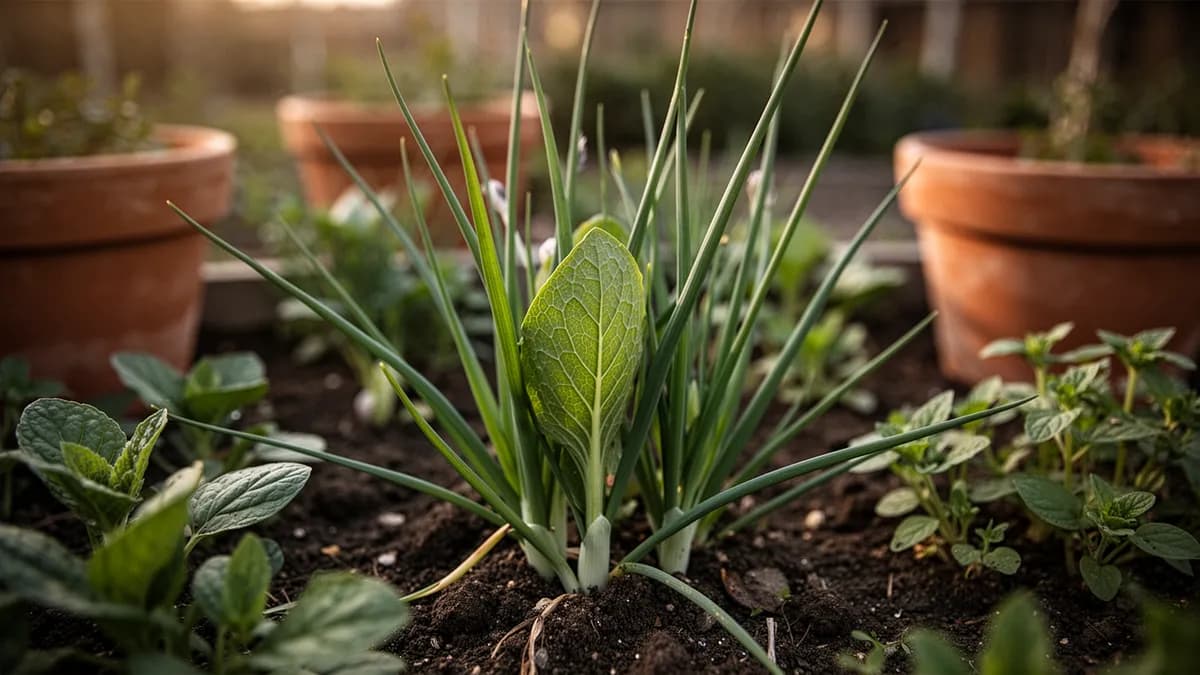
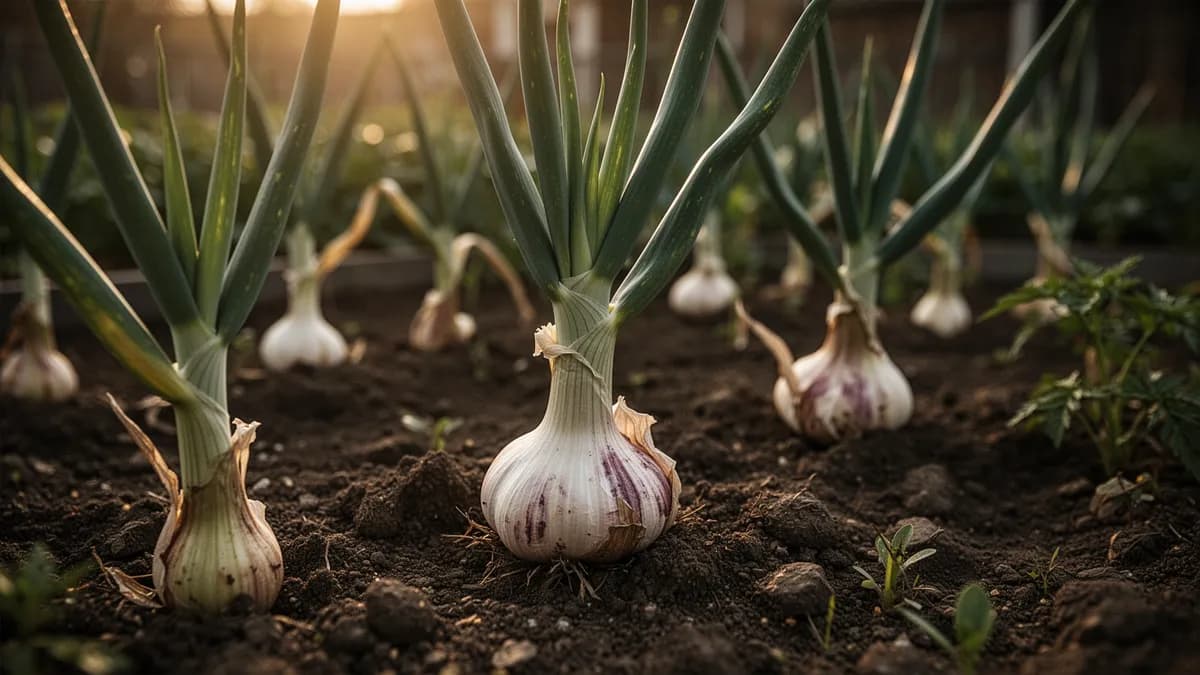
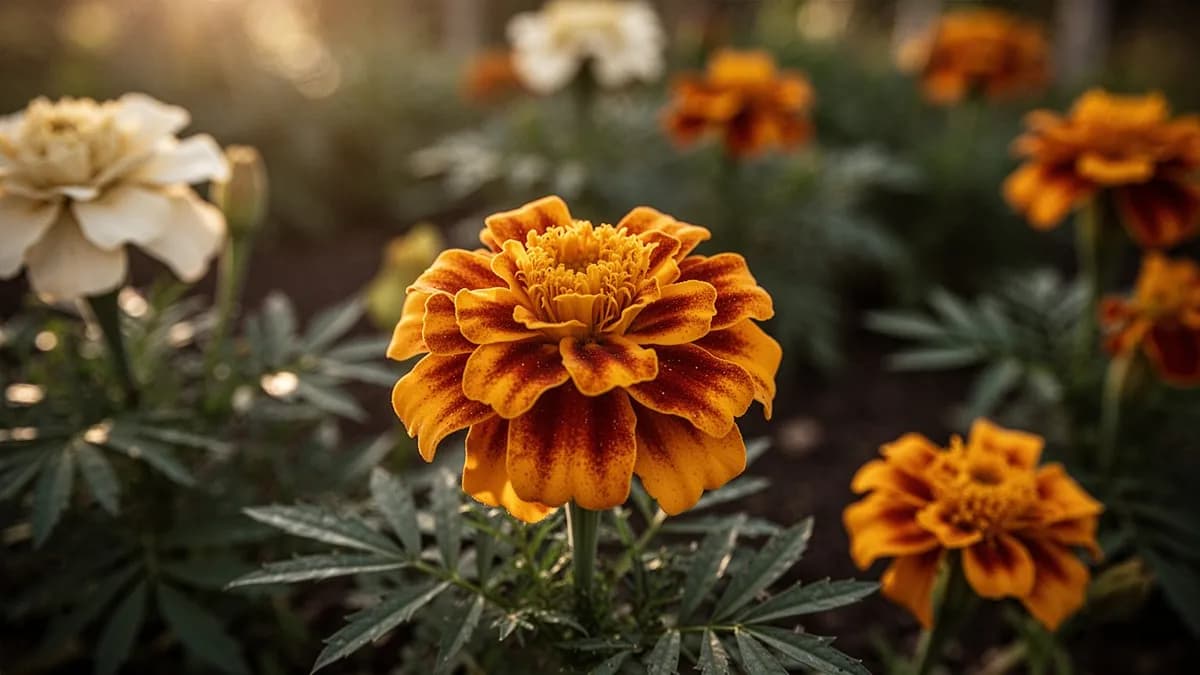
Als universeller Bestäuber profitiert Golden Delicious von jeder in der Nähe gepflanzten Apfelsorte. Mit Schnittlauch und Knoblauch umgeben, um Blattläuse und Bohrer abzuwehren. Tagetes ziehen nützliche Insekten an und vertreiben Nematoden. Lavendel oder Katzenminze pflanzen, um Bestäuber während der langen Blütezeit anzulocken. Vermeiden Sie die Pflanzung in der Nähe von östlichen Rotzedern, wenn Zedernrost ein Problem in Ihrer Region ist. Walnussbäume in sicherem Abstand halten, um Juglonschäden zu vermeiden.
Schnittlauch gehört daneben. Walnussbaum nicht.
Altes Gärtnerwissen, geprüft an der echten Nachbartabelle von Golden Delicious Apfel — teste jede Pflanze, die du anbaust.
Probiere Golden Delicious Apfel direkt hier im Beet
Ein echtes Planer-Beet, Golden Delicious Apfel steht schon drin. Tippe einen Begleiter an, platziere ihn und sieh, wie die Nachbarschaftsprüfung antwortet — grün für gute Nachbarn, rot bei Streit.


Passende Anbau-Ratgeber
Richtig düngen
Golden Delicious ist an die meisten gut durchlässigen Bodentypen mit einem pH-Wert von 6,0 bis 7,0 anpassungsfähig. Die Bäume reagieren gut auf mäßige Düngung, aber übermäßiger Stickstoff fördert weiche Früchte mit schlechter Lagerfähigkeit. Im frühen Frühling ausgewogenen 10-10-10-Dünger ausbringen. Die Neigung zur Berostung der Schale wird durch feuchte Bedingungen während der Blüte und schwere Lehmböden verstärkt. Gute Drainage sicherstellen und bei schweren Böden Hochbeete in Betracht ziehen.
Ideale Temperatur
Winterhärtezone-Kompatibilität
Von der Saat zur Ernte, Schritt für Schritt
Ruhephase und Pflanzung
Golden Delicious wird als wurzelnackter oder im Behälter gewachsener Baum während der Winterruhe gepflanzt. Diese Sorte hat einen relativ geringen Kältebedarf von ca. 600–700 Stunden unter 7 °C, was sie für etwas mildere Klimazonen geeignet macht als viele andere beliebte Apfelsorten. Der Baum speichert seine gesamte Energie in Holzgewebe und Wurzelreserven während dieser Ruhephase und bereitet sich auf kräftiges Frühjahrswachstum vor.
Knospenschwellen und Blüte
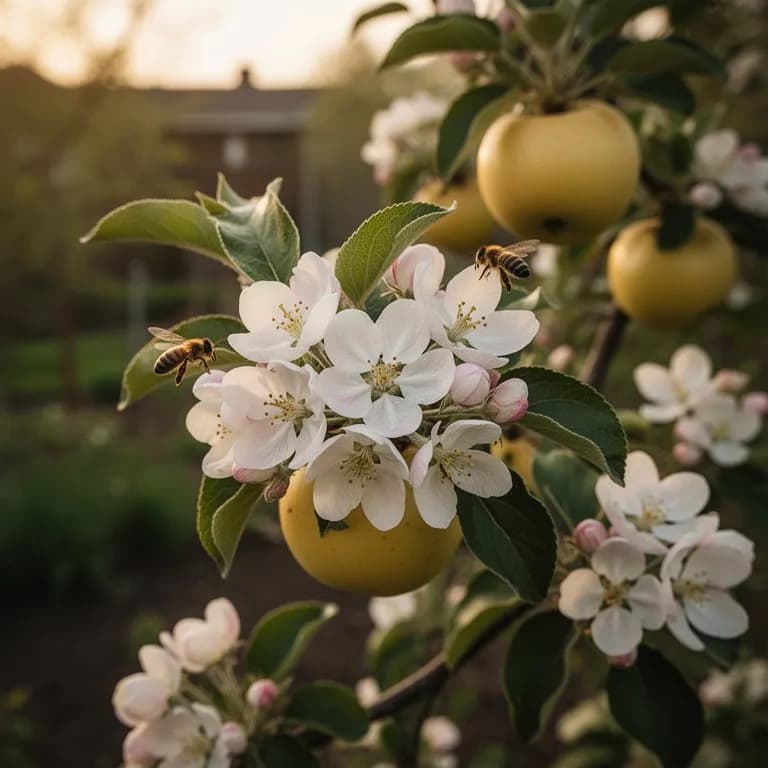
Golden Delicious tritt in mittelfrühe Blüte ein und überlappt typischerweise mit einem breiten Spektrum anderer Apfelsorten, was ihn zu einem der wertvollsten Universalbestäuber in jedem gemischten Obstgarten macht. Die Blüten öffnen sich zartrosa und verblassen zu Weiß und produzieren reichlich Pollen. Jedes Blütenbüschel enthält fünf Blüten, wobei die zentrale Königsblüte zur größten, am besten geformten Frucht heranwächst, wenn sie bestäubt wird. Bienen und andere Bestäuber werden durch den leicht süßlichen Duft der Blüten angezogen.
Fruchtansatz und Frühe Entwicklung
Nach erfolgreicher Bestäubung beginnen winzige hellgrüne Fruchtlinge an der Basis jeder befruchteten Blüte zu schwellen. Der Baum wirft durch den natürlichen Junifruchtfall einen Teil seiner sich entwickelnden Früchte ab und reguliert so seine Ernte. Golden Delicious kann unter günstigen Bedingungen sehr reichlich ansetzen und erfordert oft aggressiveres Handausdünnen als andere Sorten, um alternantisches Tragen zu vermeiden und die großen, gut gefärbten Einzelfrüchte zu erzielen, die den besten Geschmack versprechen.
Sommerwachstum und Größenwachstum
Im Laufe des Sommers wachsen Golden Delicious Äpfel stetig, wobei ihre Schale bis spät in der Saison grün bleibt. Die Früchte akkumulieren rasch Zucker und entwickeln die besonders hohen Brix-Werte (14–18°), die diese Sorte zu einer der süßesten gängigen Apfelsorten machen. Die Zellexpansion ist der dominierende Wachstumsprozess in dieser Phase, getrieben durch Wasseraufnahme und Photosyntheseimport aus der großen Blattfläche. Eine gleichmäßige Feuchtigkeitsversorgung ist jetzt besonders wichtig, da unregelmäßiges Gießen bei dieser Sorte zu Wassereinschlüssen und Rissen führt.
Farbwechsel und Reifung
Wenn die Tage im Spätsommer und Frühherbst kürzer werden, vollzieht Golden Delicious seine auffälligste Transformation, bei der die Schalenfarbe von Grün zu dem warmen Goldgelb wechselt, dem die Sorte ihren Namen verdankt. Dieser Farbwechsel wird durch den Chlorophyllabbau während der Fruchtreifung ausgelöst. Das Geschmacksprofil intensiviert sich mit zunehmender Süße und der Entwicklung charakteristischer blumiger, honigartiger Aromanoten. Hintergrundberostung der Schale, die manche Züchter als kosmetischen Makel betrachten, ist tatsächlich mit intensiverem Geschmack verbunden.
Ernte
Golden Delicious reift je nach Klima und Anbaubedingungen typischerweise von Mitte September bis Oktober. Das Erntezeitfenster dauert 2–3 Wochen, wobei Früchte auf der sonnenbeschienenen südlichen Seite des Baumes zuerst reifen. Überreife Früchte entwickeln ein weiches, mehliges Fruchtfleisch, daher ist der Zeitpunkt wichtig. Diese Sorte hat ein ausgezeichnetes Lagerungspotenzial unter den mittelfrühen Äpfeln, wenn sie sorgfältig behandelt und unter richtigen Bedingungen gelagert wird.
Nach der Ernte und Ruhephase
Nach der Ernte beginnt der Baum seinen jährlichen Übergang in die Ruhephase. Blätter vergilben und fallen ab, während Nährstoffe zur Winterlagerung in das Holzgewebe zurückgeführt werden. Das freiliegende Astgerüst gibt die Baumstruktur preis und macht dies zum idealen Zeitpunkt zur Beurteilung des Schnittbedarfs. Angesammelte Kältestunden während des Winterschlafs setzen die innere Uhr des Baumes zurück und sorgen für synchronisierten, kräftigen Knospenaustritt im folgenden Frühling.
An einem sonnigen, geschützten Standort in gut durchlässigem, fruchtbarem Boden mit einem pH-Wert von 6,0–6,5 pflanzen. Da Golden Delicious teilweise selbstfruchtbar ist, kann er ohne Partner einige Früchte tragen, aber Erntegröße und -qualität verbessern sich erheblich, wenn eine kompatible Bestäubersorte wie Fuji, Gala oder Red Delicious innerhalb von 30 Metern gepflanzt wird. Die Veredelungsstelle 5–7 cm über der Bodenoberfläche setzen und den jungen Baum sofort anbinden.
Golden Delicious Apfel Monat für Monat pflegen
Was du jeden Monat für deine Golden Delicious Apfel tun solltest
Oktober
Aktueller MonatVerbleibende Früchte vor dem ersten starken Frost ernten. Einwandfreie Äpfel sortieren und an einem kühlen, dunklen Ort bei 1–4 °C lagern. Alle gefallenen Früchte und Blätter vom Boden um den Baum aufräumen. Einen Leimring am Stamm anbringen, um Frostspanner abzufangen. Planung des Spritzprogramms und Schnittplans für die nächste Saison beginnen.
Immer wissen, was jetzt im Garten zu tun ist
Eine E-Mail zum Monatsanfang: was du jetzt säen, pflanzen und anpacken solltest — für deine Golden Delicious Apfel und alles, was drumherum wächst. Dazu ein kurzer Startkurs, der dich vor den klassischen Fehlern bewahrt.
- Was jetzt zu tun ist
- Passend zu deiner Saison
- Startkurs inklusive
Golden Delicious Apfel ernten
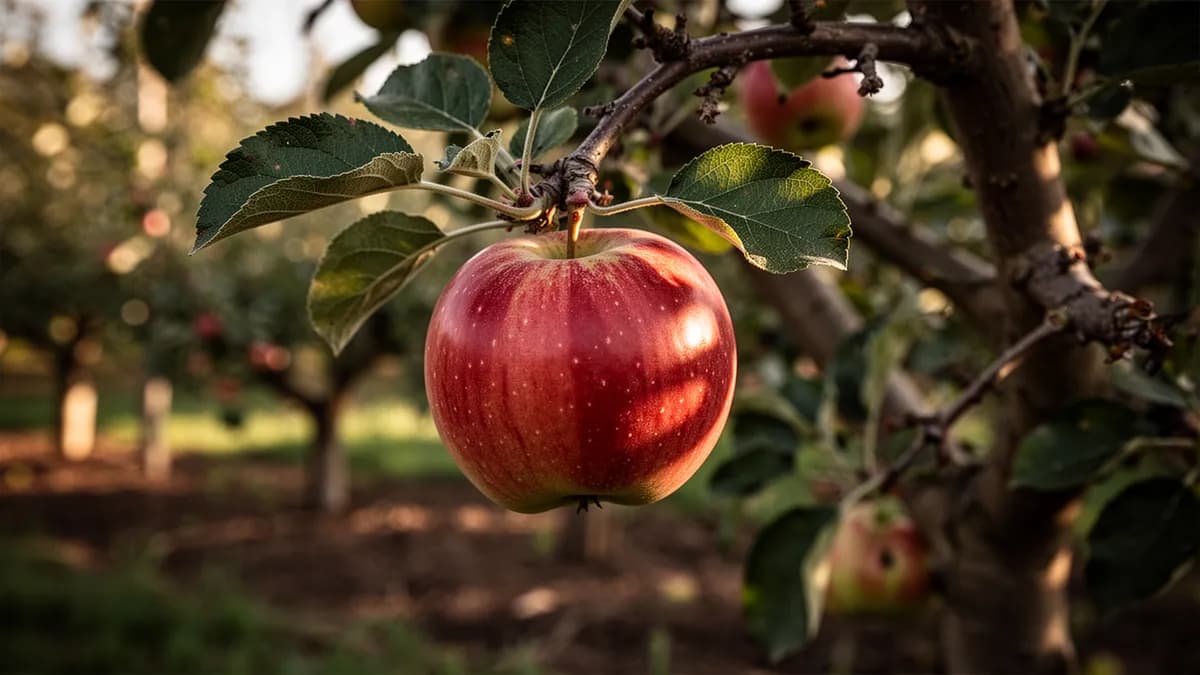
Golden Delicious Äpfel reifen von Mitte bis Ende September. Ernten, wenn sich die Schalenfarbe von Grün zu Goldgelb wandelt und die Frucht beim Drücken in der Nähe des Stiels leicht nachgibt. Die Kerne sollten dunkelbraun sein. Golden Delicious entwickelt keine rote Deckfarbe, daher ist die Farbe zusammen mit dem Geschmackstest der primäre Reifeindikator. Vorsichtig pflücken, da die dünne Schale leicht beschädigt wird und Druckstellen bekommt. Die Früchte fallen bei der Reife leicht ab, daher zügig ernten, um Verluste durch Fallobst zu vermeiden.
angenommen, du pflanzt zu Beginn des Zeitraums — trage dein tatsächliches Datum ein
Ernte Golden Delicious Apfel zügig, dann trägt die Pflanze weiter.
Lagerung & Konservierung
Golden Delicious bei 0 bis 2 Grad Celsius und hoher Luftfeuchtigkeit zwei bis drei Monate lagern. Die Schale neigt bei niedriger Luftfeuchtigkeit zum Schrumpeln, daher helfen perforierte Plastikbeutel, die Feuchtigkeit zu erhalten. Das Fruchtfleisch widersteht der Bräunung besser als die meisten Sorten und macht Golden Delicious hervorragend für Frischschnittanwendungen und Obstsalate geeignet. Er ergibt ein ausgezeichnetes Apfelmus mit einer natürlich süßen, goldenen Farbe. Scheiben mit Zitronensaft behandelt einfrieren für ganzjährige Backzwecke.
Was schiefgeht — und die Lösung
Zedernrostpilz
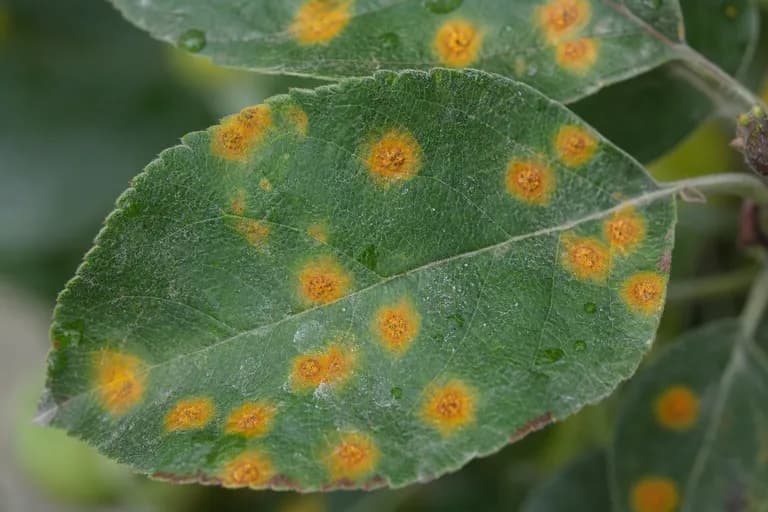
KrankheitGelb-orange Flecken auf den Blattoberseiten mit röhrenförmigen Pilzstrukturen auf den Unterseiten; an Früchten können ähnliche Läsionen auftreten.
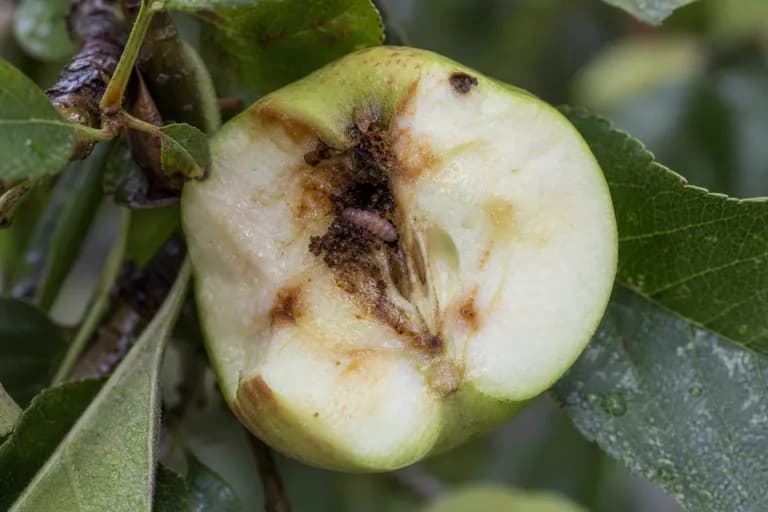
Apfelwickler
SchädlingGänge durch das Fruchtfleisch mit Fraßmehl an den Einstichpunkten; Larven fressen im Kerngehäuse und verlassen die Frucht durch die Seite.
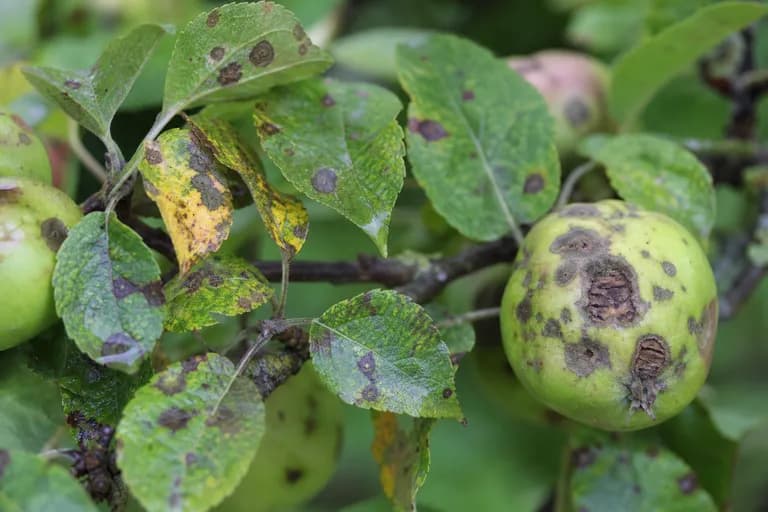
Apfelschorf
KrankheitOlivbraune, samtige Flecken auf Blättern und Früchten, die sich dunkel färben und eine korkige Textur entwickeln; bei starkem Befall entsteht Berostung auf der goldenen Schale.
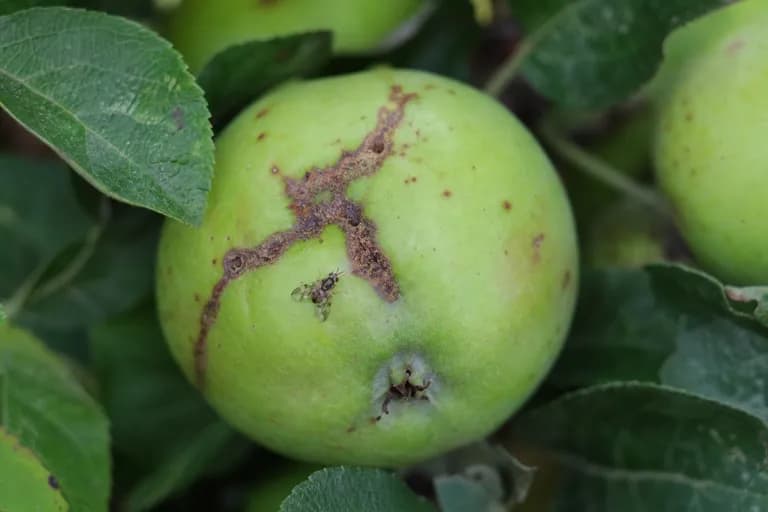
Apfelfruchtfliege
SchädlingEingedellte Vertiefungen auf der Fruchtschale mit braunen, gewundenen Gängen durch das Fruchtfleisch durch Larvenfressen.
Fehlerbehebung bei häufigen Problemen
Berostung, eine raue, braun-korkige Schalentextur, ist das häufigste kosmetische Problem bei Golden Delicious und verschlimmert sich in nassen Frühjahren und schweren Böden. Die dünne Schale bekommt sehr leicht Druckstellen und erfordert stets behutsamen Umgang. Vorerntefall ist häufig, wenn die Früchte bei der Reife nicht zeitnah gepflückt werden. Golden Delicious ist dort, wo östliche Rotzedern vorhanden sind, stark anfällig für Zedernrost. Die Bäume können übermäßig stark tragen, was bei unzureichendem Ausdünnen zu kleinen Früchten und alternantischem Tragen führt.
Anbautipps
- Golden Delicious ist teilweise selbstfruchtbar und kann ohne Bestäubungspartner eine leichte Ernte ansetzen, aber das Pflanzen einer kompatiblen mittelspäten Sorte wie Fuji, Gala, Jonagold oder Red Delicious in der Nähe wird Erntegröße und Fruchtqualität durch Kreuzbestäubung erheblich steigern.
- Diese Sorte ist besonders anfällig für Apfelschorf, die häufigste Pilzkrankheit bei Äpfeln. Ab dem Grünknospenstadium im Frühjahr ein Spritzprogramm aufbauen und bei nassem Wetter alle 7–10 Tage bis zum Blütenfall Schutzspritzungen durchführen. Ausgezeichnete Kronenbelüftung durch offenen Schnitt reduziert den Krankheitsdruck ebenfalls erheblich.
- Golden Delicious entwickelt den komplexesten, süßesten und aromatischsten Geschmack, wenn er vollständig am Baum ausreifen darf und sich vor der Ernte tief warmgelb färbt. Kommerzielle Ware wird wochenlang zu früh geerntet und kalt gelagert, weshalb selbst angebaute Golden Delicious so verblüffend anders schmecken als die aus dem Laden.
- Stippe, eine physiologische Störung, die kleine braune, bittere Flecken knapp unter der Schale verursacht, ist ein häufiges Problem für Golden Delicious-Züchter. Vorbeugung durch zweiwöchentliche Blatt-Calciumnitrat- oder Calciumchloridspritzungen vom Fruchtansatz bis vier Wochen vor der Ernte sowie durch Vermeidung von übermäßiger Stickstoffdüngung, die die Calciumaufnahme beeinträchtigt.
- Früchte nach dem natürlichen Junifruchtfall konsequent auf einen Apfel pro Büschel und mindestens 18–22 cm Abstand ausdünnen. Golden Delicious setzt reichlich an und erschöpft sich mit alternantischem Tragen bei Überfruchten, was im einen Jahr eine große Ernte und im nächsten wenig oder nichts ergibt.
- Golden Delicious zu einer offenen Kelchform mit vier bis fünf gut verteilten Leitästen schneiden. Diese Sorte entwickelt eine von Natur aus ausladende Wuchsform und kann schnell überfüllt werden. Jährlicher Winterschnitt zur Entfernung von Kreuzästen und Wassertrieben ist unerlässlich für die Aufrechterhaltung der Lichtdurchflutung und Luftzirkulation, die den Krankheitsdruck reduzieren.
- Jeden Frühling eine 10 cm dicke Schicht organischen Mulchs wie Holzhäcksel oder Stroh in einem breiten Ring um den Baum ausbringen und bis zur Trauflinie reichen. Dies konserviert Feuchtigkeit, unterdrückt Unkraut, mäßigt die Bodentemperatur und ernährt Bodenlebewesen beim Abbau, was alles zu gesünderen Bäumen und besser schmeckenden Früchten beiträgt.
- Die dünnschaligen Früchte vor physischen Schäden schützen, indem man stark beladene Äste ab Mitte des Sommers mit gepolsterten Stützen abstützt und im Spätsommer einzelne Äpfel in Sockennetze oder Fruchttüten steckt, um Wespenschäden zu verhindern und den Pestizideinsatz kurz vor der Ernte zu reduzieren.
- Golden Delicious reagiert gut auf den Sommerschnitt im Juli und August, da das Entfernen kräftiger aufrechter Wassertriebe und das Auslichten dichter Seitentriebe die Lichtexposition der reifenden Früchte verbessert und zu deutlich besserer Schalenfarbenentwicklung und höherer Zuckerakkumulation im Vergleich zu über den Sommer ungeschnittenen Bäumen führt.
- Geerntete Golden Delicious bei 1–2 °C und hoher Luftfeuchtigkeit von 90–95 % für die längste Haltbarkeit lagern. Gut angebaute, unbeschädigte Früchte können unter diesen Bedingungen 3–4 Monate gelagert werden. Ein separater Kühlschrank in der Garage auf seiner kältesten Einstellung ist eine ausgezeichnete kostengünstige Lagerumgebung für den Hobbyobstgärtner.
Bau deine beste Golden Delicious Apfel an — und alles drumherum.
Starte heute kostenlos. Lege deine Beete an, setze deine Golden Delicious Apfel ein und lass PlotMyGarden Timing, Abstände, Begleiter und Erinnerungen von der Saat bis zum Erntekorb übernehmen.
Finde deine Golden Delicious Apfel
Smoothee Golden Delicious
Eine berostungsfreie Selektion mit glatter, sauberer goldener Schale, die die beim Standard Golden Delicious übliche Berostung vermeidet.
Golden Supreme
Ein früher reifender Golden Delicious-Typ mit ähnlichem Geschmack und verbesserter Berostungsresistenz.
Goldstar
Eine krankheitsresistente Golden Delicious-Nachkommen-Sorte, die für den Bioanbau mit guter Schorf- und Mehltauresistenz gezüchtet wurde.
Mutsu (Crispin)
Eine Golden Delicious-Kreuzung mit sehr großen, grünlich-goldenen Früchten, knackiger Textur und ausgezeichneter Backqualität.
Ein ausgewachsener Golden Delicious Apfelbaum auf einer halbzwergigen Unterlage wie M26 liefert 40–70 kg Obst pro Saison, entsprechend einem Wert von 160–280 Euro an biologischen Golden Delicious Äpfeln zu typischen Wochenmarktpreisen von 4 Euro pro kg. Der Baum erreicht dieses Produktionsniveau bis zum Jahr 5–6 und wird mit jährlichem Schnitt und Grundpflege noch 30–50 Jahre weiter tragen. Die Anfangsinvestition von 25–50 Euro für einen zweijährigen Baum amortisiert sich innerhalb der ersten vollen Ernte, und am Baum vollständig ausgereifte, selbst angebaute Früchte bieten Geschmack und Nährwertqualität, die kein kommerziell geernteter Apfel, der typischerweise 4–6 Wochen vor der Reife für weite Transporte und Kühlhauslagerung gepflückt wird, erreichen kann.
Schnelle Rezepte
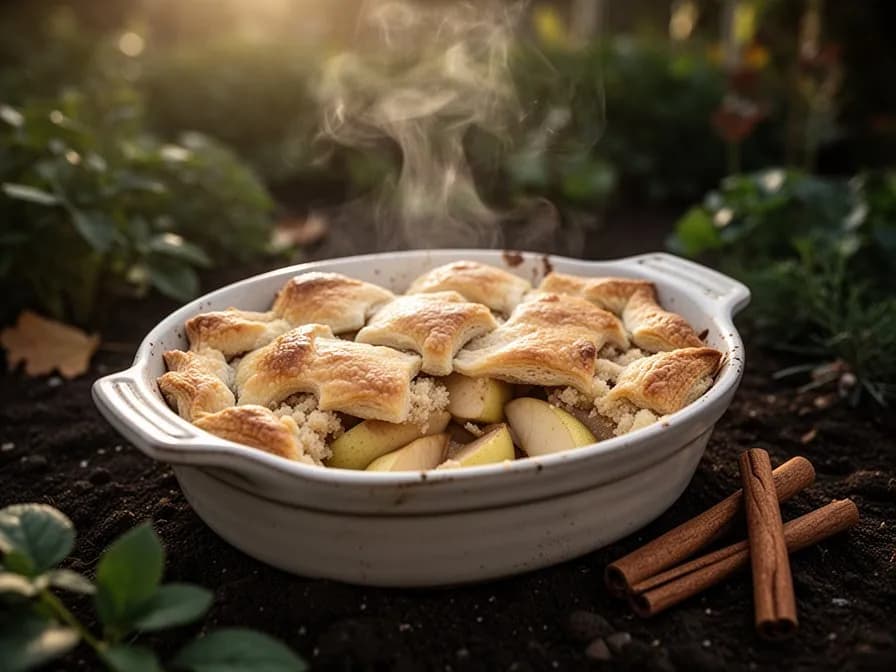
Golden Delicious Apfelmus
30 Min.Da Golden Delicious von Natur aus so süß ist, benötigt dieses Apfelmus wenig oder gar keinen Zuckerzusatz und kocht zu einer glatten, seidigen Textur mit einer schönen hellgoldenen Farbe ein. Die milde Säure dieser Sorte ergibt eine sanft aromatisierte Soße, die Erwachsene und Kinder gleichermaßen anspricht und wunderbar zu Schweinefleisch, Kartoffelpuffern oder einfach pur passt.
7 Zutaten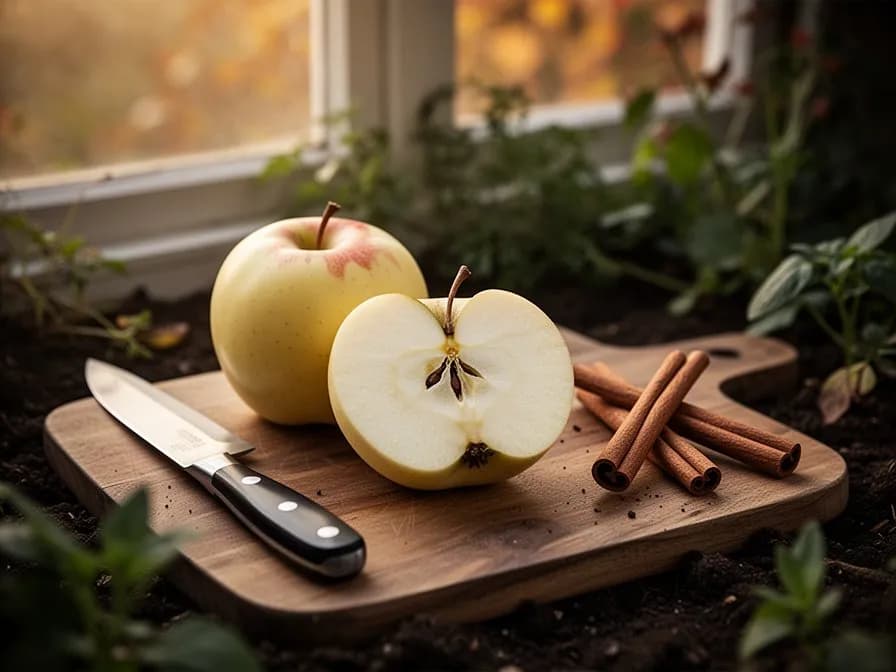
Französische Goldapfeltarte
50 Min.Golden Delicious Äpfel sind die traditionelle Wahl für die klassische französische Tarte aux pommes aus gutem Grund: Sie behalten beim Backen wunderbar ihre Form, werden im Ofen durchscheinend und golden, und ihre milde Süße gleicht den butterigen Teig perfekt aus, ohne viel Zuckerzusatz zu benötigen. Diese elegante Tarte gelingt einfach, wirkt aber beeindruckend professionell.
8 Zutaten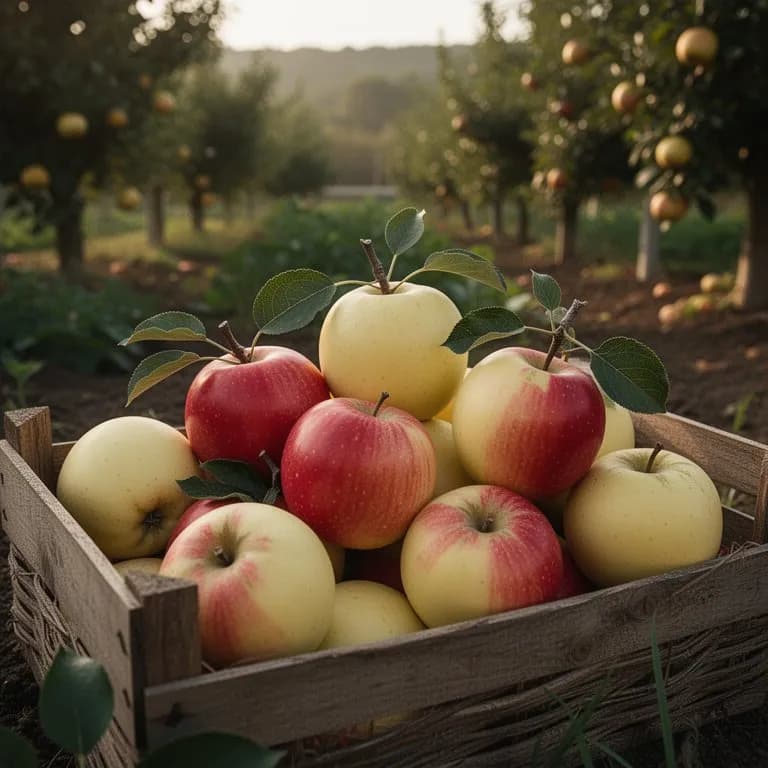
Goldapfel und Brie Crostini
15 Min.Dieses einfache Vorspeisenhäppchen ohne Kochen zeigt die süße, blumige Qualität reifer Golden Delicious Äpfel in einer eleganten herzhaften Kombination. Die natürliche Süße selbst angebauter Golden Delicious passt weit besser zu Frischkäse als Supermarktversionen, da sie die aromatische Komplexität bewahrt, die bei kommerzieller Kühlhauslagerung verloren geht. Eine ideale Verwendung für die ersten Äpfel der Ernte, wenn sie absolut frisch sind.
8 ZutatenKulinarische Verwendung
Golden Delicious ist ein echter Allzweckapfel. Das Fruchtfleisch widersteht der Bräunung und ist ideal für frische Obstsalate, Käseplatten und Snacks. Er backt gut in Kuchen und Tartes und wird zu einer süßen, mild aromatischen Füllung. Der natürlich süße Saft ergibt einen hervorragenden Frischmost. Golden Delicious ergibt ein wunderschön goldenes Apfelmus, das wenig Zuckerzusatz benötigt und gut zu Schweine- und Geflügelgerichten passt.
Was drinsteckt
Gesundheitsvorteile
- Liefert im Vergleich zu anderen Apfelsorten außergewöhnlich hohe Mengen an löslichem Pektinfaserstoff, der die Herzgesundheit unterstützt, indem er sich an Gallensäuren und Cholesterin im Darm bindet, ihre Ausscheidung fördert und bei regelmäßigem Konsum messbar niedrigere LDL-Cholesterinwerte bewirkt
- Enthält ein konzentriertes Spektrum an Polyphenol-Antioxidantien in der goldenen Schale, darunter Quercetin, Catechin und Chlorogensäure, die oxidative Schäden an Zellen und Geweben reduzieren, die mit Alterung, Herz-Kreislauf-Erkrankungen und bestimmten Krebsarten verbunden sind
- Der hohe natürliche Zuckergehalt liefert schnelle, anhaltende Energie in Form von Fruktose zusammen mit Ballaststoffen, was einen frisch geernteten Golden Delicious Apfel zu einem der ernährungsphysiologisch ausgewogensten natürlichen Snacks für aktive Menschen macht
- Reich an Äpfelsäure, der organischen Verbindung, die für das charakteristische milde Aroma von Golden Delicious verantwortlich ist und auch am Krebszyklus für die zelluläre Energiegewinnung beteiligt ist und nach regelmäßigem Konsum möglicherweise Muskelermüdung nach dem Sport reduziert
- Fördert die Darmgesundheit durch Pektin- und Polyphenolverbindungen, die als Präbiotika wirken und selektiv nützliche Bifidobacterium- und Lactobacillus-Stämme ernähren, während sie laut neuerer Mikrobiom-Forschung das Wachstum schädlicher Darmbakterien hemmen
- Regelmäßiger Apfelkonsum, einschließlich der Sorte Golden Delicious, wurde in großen epidemiologischen Studien mit einem reduzierten Risiko für Typ-2-Diabetes assoziiert, wobei die Kombination aus Ballaststoffen, Polyphenolen und niedrigem glykämischen Index dazu beiträgt, stabilen Blutzucker und Insulinspiegel nach den Mahlzeiten aufrechtzuerhalten
Woher Golden Delicious Apfel stammt
Der Golden Delicious Apfel hat eine der präzisesten dokumentierten Entdeckungsgeschichten aller bedeutenden Obstsorten. Im Jahr 1890 erschien ein Zufallssämling unbekannter Abstammung auf dem Hof von Anderson Mullins in Clay County, West Virginia, im Appalachen-Hochland der östlichen Vereinigten Staaten. Der Baum trug ungewöhnlich große, süße, goldgelbe Früchte, die lokale Aufmerksamkeit erregten, aber erst 1914 wurde die Stark Brothers Nurseries aus Louisiana, Missouri, darauf aufmerksam. Nachdem sie Veredlungsrechte am Originalbaum für die damals schwindelerregende Summe von 5.000 Dollar erworben hatten, begannen die Stark Brothers, die Sorte national zu vermehren und zu vermarkten, und umgaben den Mutterstrauch mit einem abschließbaren Drahtkäfig, um ihn vor Souvenirjägern zu schützen, die begierig auf Stecklinge waren. Die Baumschule vermarktete Golden Delicious zunächst zusammen mit ihrer bereits berühmten Sorte Red Delicious als aufeinander abgestimmtes Paar, eine Marketingstrategie, die beiden Sorten trotz fehlender botanischer Verwandtschaft ähnliche Namen gab. Golden Delicious verbreitete sich durch die 1920er und 1930er Jahre rasch in amerikanischen Obstgärten, geschätzt für seine Produktivität, milde Süße und ausgezeichnete Lagerfähigkeit im Vergleich zu anderen Sorten der damaligen Zeit. Die Sorte überquerte in den Jahrzehnten nach dem Zweiten Weltkrieg den Atlantik und fand besonders in Westeuropa, vor allem in Frankreich, Italien und Belgien, Anklang, wo sie in den 1970er und 1980er Jahren zur dominanten Handelsapfelsorte wurde. Französische Züchter nahmen sie begeistert auf wegen ihrer Anpassungsfähigkeit, gleichmäßigen Erträge und verbraucherfreundlichen Süße. Europäische Züchtungsprogramme erkannten die herausragenden Eigenschaften der Sorte als Elternsorte, und Pflanzenzüchter kreuzten sie mit anderen Sorten, um Dutzende neuer Sorten zu schaffen, die ihren süßen Geschmack, ihre teilweise Selbstfruchtbarkeit und die Gelbschaleneigenschaften in moderne Obstgärten einbringen. Heute gehört Golden Delicious noch immer zu den fünf meistangebauten Apfelsorten der Welt, obwohl er zunehmend durch aus seiner eigenen Genetik entwickelte neuere Sorten Konkurrenz bekommt. Für Hobbygärtner ist die Originalsorte in Gartenbedingungen vielen ihrer Nachkommen überlegen und bietet zuverlässige Produktion, universellen Bestäubernutzen und außergewöhnlichen Geschmack, wenn sie vollständig am Baum ausreifen darf.
Golden Delicious Apfel: Schon gewusst?
Faszinierende Fakten über Golden Delicious Apfel
Golden Delicious wurde 1890 als Zufallssämling auf dem Hof von Anderson Mullins in Clay County, West Virginia, entdeckt. Eine Baumschule kaufte den Originalbaum 1914 für 5.000 Dollar, eine außerordentliche Summe für die damalige Zeit, und käfigte den Originalbaum schließlich mit Draht ein, um ihn vor Souvenirjägern zu schützen.
Golden Delicious Apfel: Fragen & Antworten
Wann sollte ich Golden Delicious Apfel pflanzen?
Was sind gute Begleitpflanzen für Golden Delicious Apfel?
In welchen Winterhärtezonen kann Golden Delicious Apfel wachsen?
Wie viel Sonne braucht Golden Delicious Apfel?
Welchen Abstand sollte ich zwischen Golden Delicious Apfel lassen?
Welche Schädlinge und Krankheiten befallen Golden Delicious Apfel?
Wie lagere ich Golden Delicious Apfel nach der Ernte?
Was sind die besten Golden Delicious Apfel-Sorten zum Anbauen?
Welchen Boden braucht Golden Delicious Apfel?
Ist Golden Delicious selbstfruchtbar und benötige ich einen anderen Apfelbaum, damit er Früchte trägt?
Warum schmecken meine selbst angebauten Golden Delicious viel besser als die aus dem Supermarkt?
Wie verhindere ich die Stippestörung, die braune Flecken in meinen Golden Delicious Äpfeln verursacht?
Wann genau sollte ich Golden Delicious Äpfel ernten und woran erkenne ich, ob sie reif sind?
Wie gehe ich mit Apfelschorf an meinem Golden Delicious Baum um?
Kann Golden Delicious in wärmeren oder mediterranen Klimazonen angebaut werden?
Du hast die Theorie gelesen. Jetzt baue sie auf Autopilot an.
Alles, was Golden Delicious Apfel knifflig macht — das Timing, die Abstände, die Begleiter, das Erntefenster — genau das übernimmt PlotMyGarden für dich, für jede Pflanze im Garten.
Ein Plan, der dein Wetter kennt
Standort einmal festlegen. Aussaat-, Dünge- und Erntedaten rund um deinen echten letzten Frosttermin und die Live-Vorhersage — kein Raten mehr nach Saattüte.
Aus dem Abschnitt „Pflanzzeit“Beetplaner per Drag & Drop
Beete auf einem Raster gestalten. Jede Pflanze rastet im richtigen Abstand ein, und du siehst die ganze Saison, bevor du einen Cent für Saatgut ausgibst.
Aus dem Abschnitt „Anbau“Begleiter-Konflikte früh erkannt
Über 200 gute und schlechte Kombinationen werden beim Pflanzen live geprüft — so landet ein saisonruinierender Fehler nie in der Erde.
Aus dem Abschnitt „Begleiter“Erinnerungen, nach denen du wirklich handelst
„Gieß die Bohnen.“ „Heute ernten, bevor's umschlägt.“ Pünktlich, konkret und auf deine echten Pflanzen bezogen.
Aus dem Abschnitt „Ernte“Staffel-Aussaat, geplant
Sechs Wochen ernten statt sechs Tage? Die App verteilt deine Aussaaten automatisch und erinnert dich, wenn der nächste Satz fällig ist.
Aus dem Abschnitt „Pflanzzeit“Ein Verlauf, der schlauer wird
Jede protokollierte Ernte bringt der App deinen Garten bei. Der Plan fürs nächste Jahr startet bei dem, was in deinem Boden wirklich funktioniert hat.
Aus dem Abschnitt „Überblick“Pflanze diese neben Golden Delicious Apfel
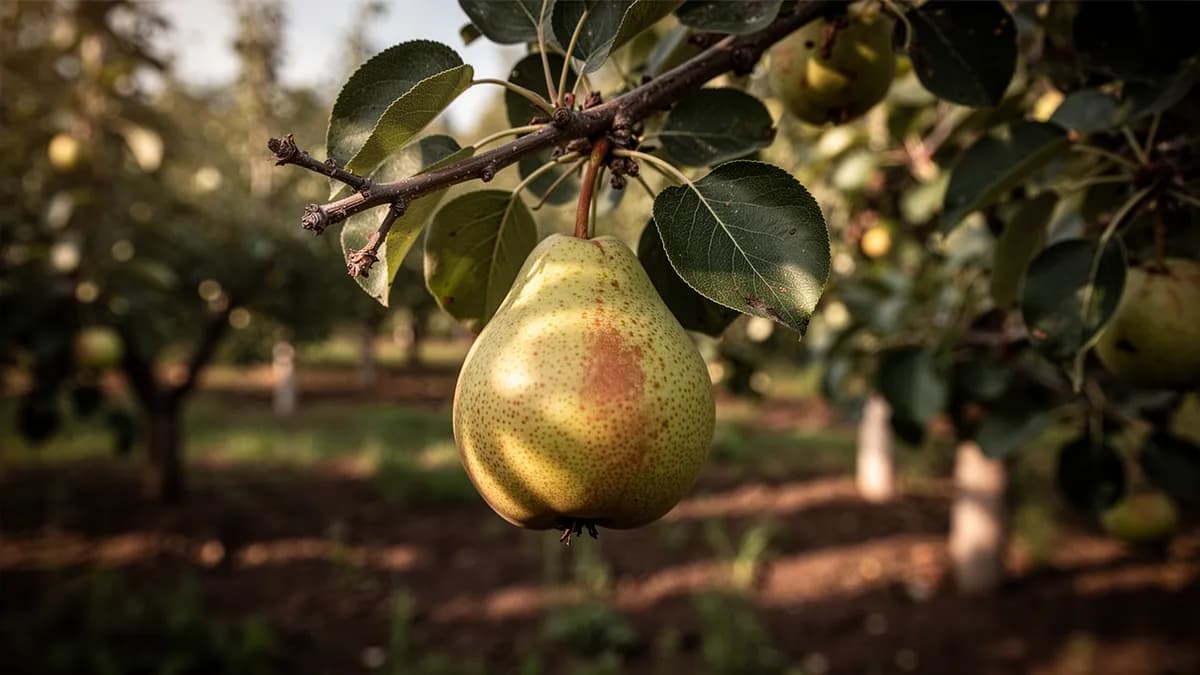
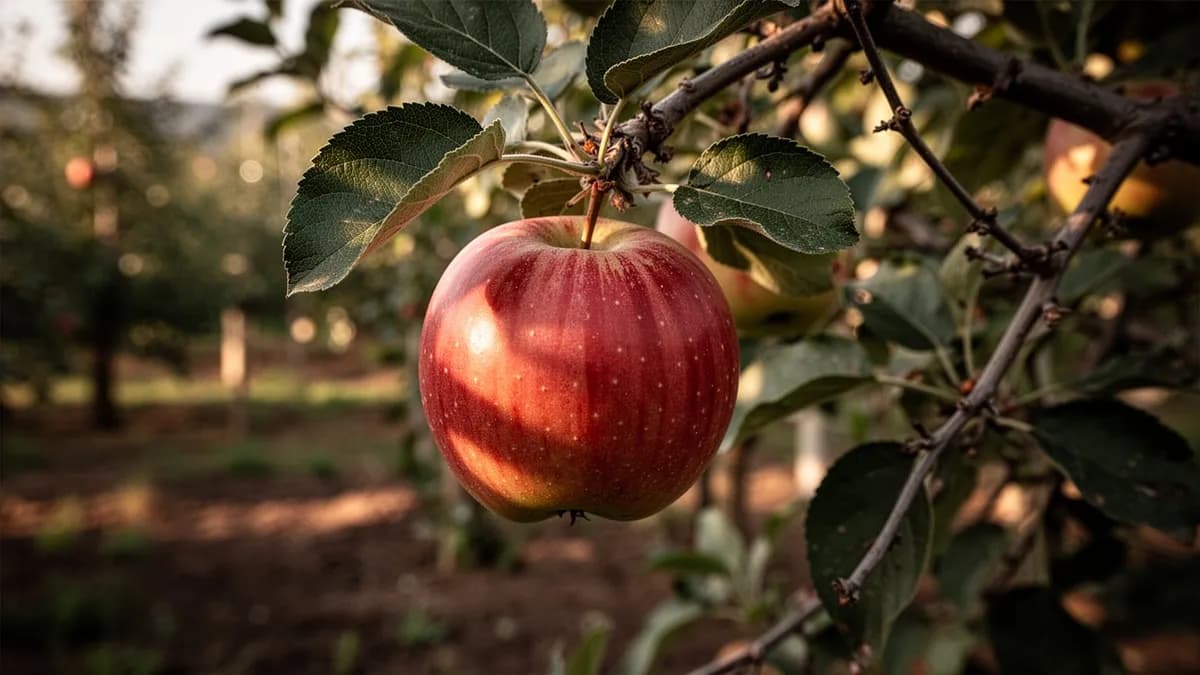
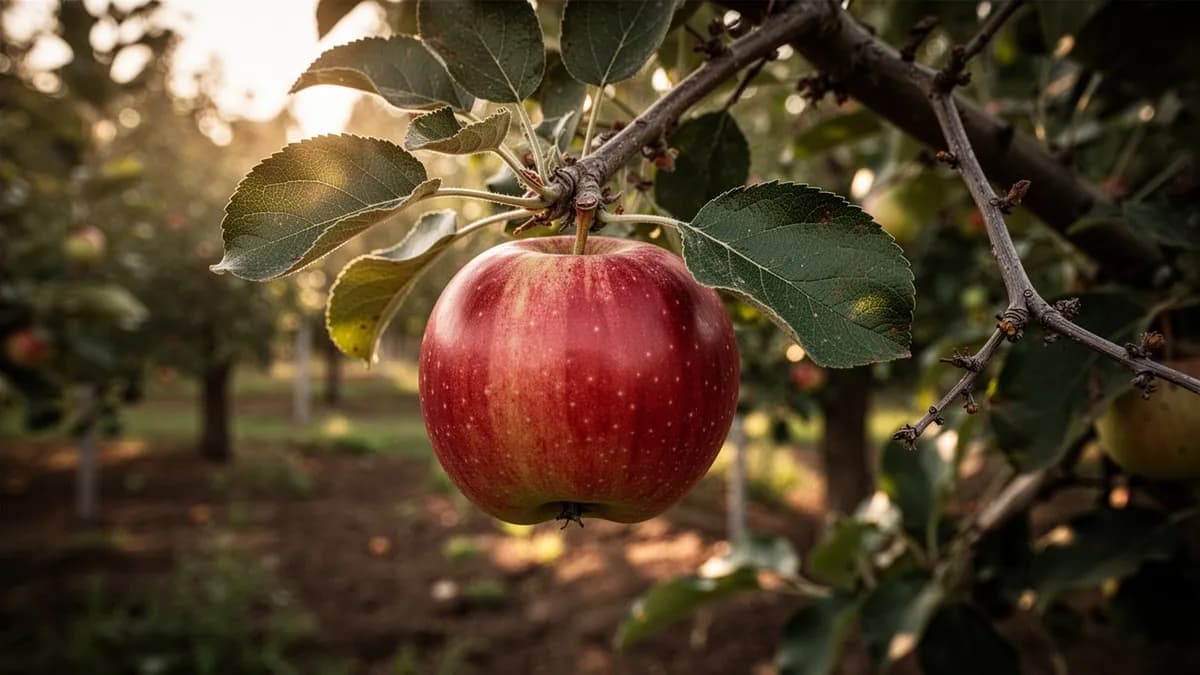
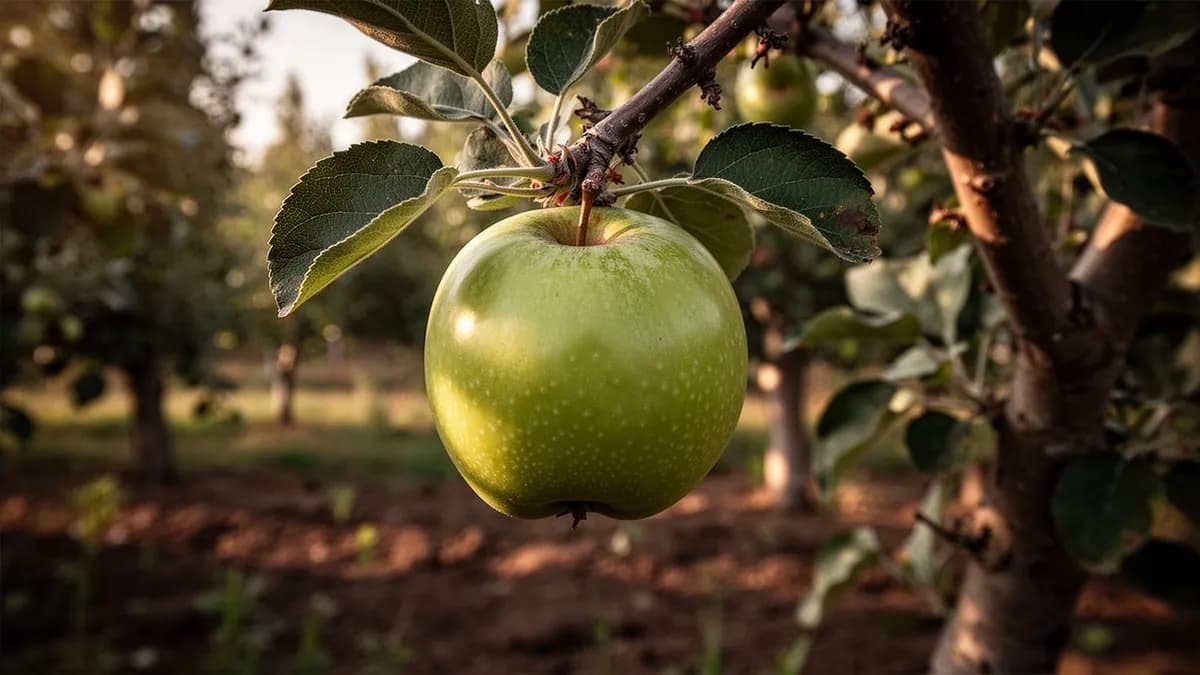
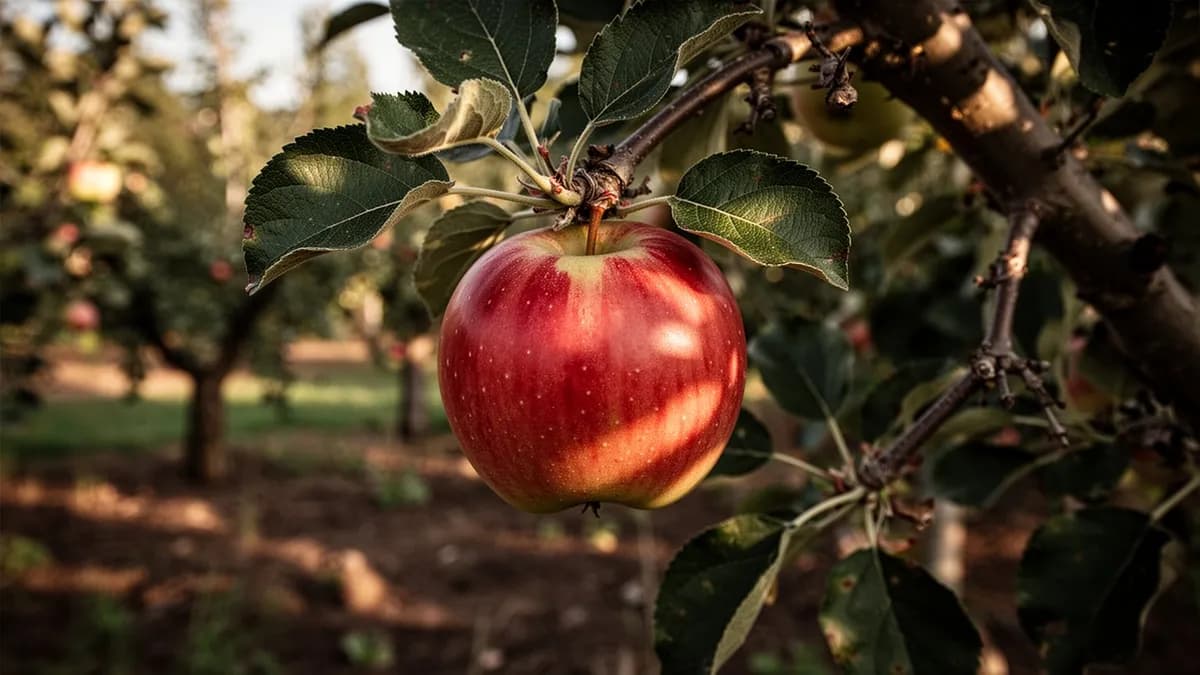
Weitere Kernobst
Halte Golden Delicious Apfel von diesen fern
Bau deine beste Golden Delicious Apfel an — und alles drumherum.
Starte heute kostenlos. Lege deine Beete an, setze deine Golden Delicious Apfel ein und lass PlotMyGarden Timing, Abstände, Begleiter und Erinnerungen von der Saat bis zum Erntekorb übernehmen.