Yuca
La yuca (Manihot esculenta), también conocida como mandioca, cassava o tapioca, es un arbusto perenne tropical originario de Sudamérica que produce raíces tuberosas ricas en almidón.





En esta páginaResumen
Conoce Yuca
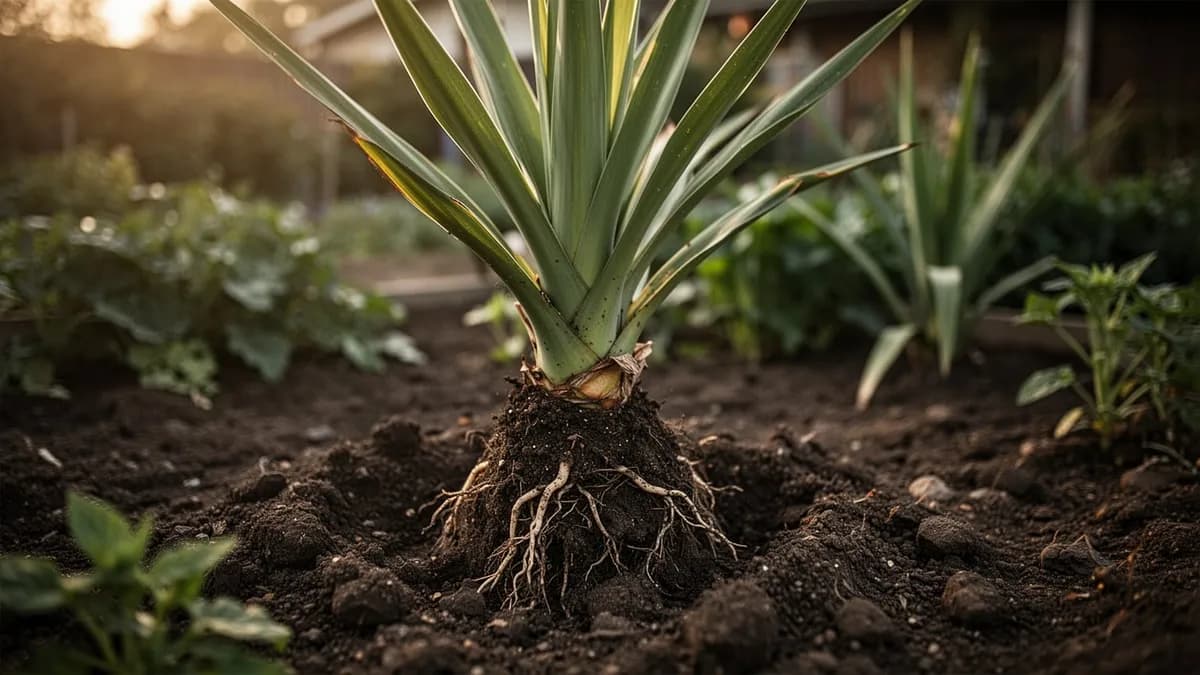
La yuca (Manihot esculenta), también conocida como mandioca, cassava o tapioca, es un arbusto perenne tropical originario de Sudamérica que produce raíces tuberosas ricas en almidón. Es la tercera fuente de carbohidratos más importante del mundo tropical, alimentando a más de 800 millones de personas. Su pulpa blanca y harinosa es extremadamente versátil en la cocina, desde frituras crujientes hasta harinas y bebidas fermentadas.
Cuándo plantar Yuca
La yuca se propaga exclusivamente por esquejes de tallo (estacas), nunca por semilla en cultivo doméstico. Corte secciones de 15-25 cm de tallos maduros y sanos. Deje secar los cortes 1-2 días antes de plantar. Plante los esquejes horizontalmente a 5-10 cm de profundidad o verticalmente con la polaridad correcta (el extremo que estaba hacia arriba debe apuntar hacia arriba). Los brotes emergen en 1-3 semanas a temperaturas superiores a 25 °C.
Tu año de Yuca
Ajustado a Zona 7 · temporada típica · la helada se va hacia el 2 abr y vuelve hacia el 1 nov
Planta Yuca Abr – Jun y cosecha Oct – Dic. Consulta los métodos de plantación y elige tu clima para adaptar los periodos.
Cómo cultivar Yuca
La yuca es una planta estrictamente tropical que necesita una temporada de crecimiento de 8-12 meses sin heladas y temperaturas constantes por encima de 20 °C. En climas templados europeos, solo puede cultivarse en macetas grandes en invernadero o como planta de interés. Necesita pleno sol y suelo arenoso, suelto y bien drenado con pH entre 5,5 y 7,0.
La propagación se realiza exclusivamente por esquejes de tallo (estacas) de 15-25 cm cortados de plantas maduras. Plante los esquejes horizontalmente a 5-10 cm de profundidad o verticalmente con dos tercios enterrados, en montículos separados 90-120 cm. Los brotes emergen en 1-3 semanas.
Riegue moderadamente; la yuca es extremadamente tolerante a la sequía una vez establecida y el exceso de agua pudre las raíces. No fertilice en exceso, ya que la yuca prospera en suelos pobres. En maceta, use un sustrato arenoso con buen drenaje y mantenga en el lugar más cálido y soleado disponible.
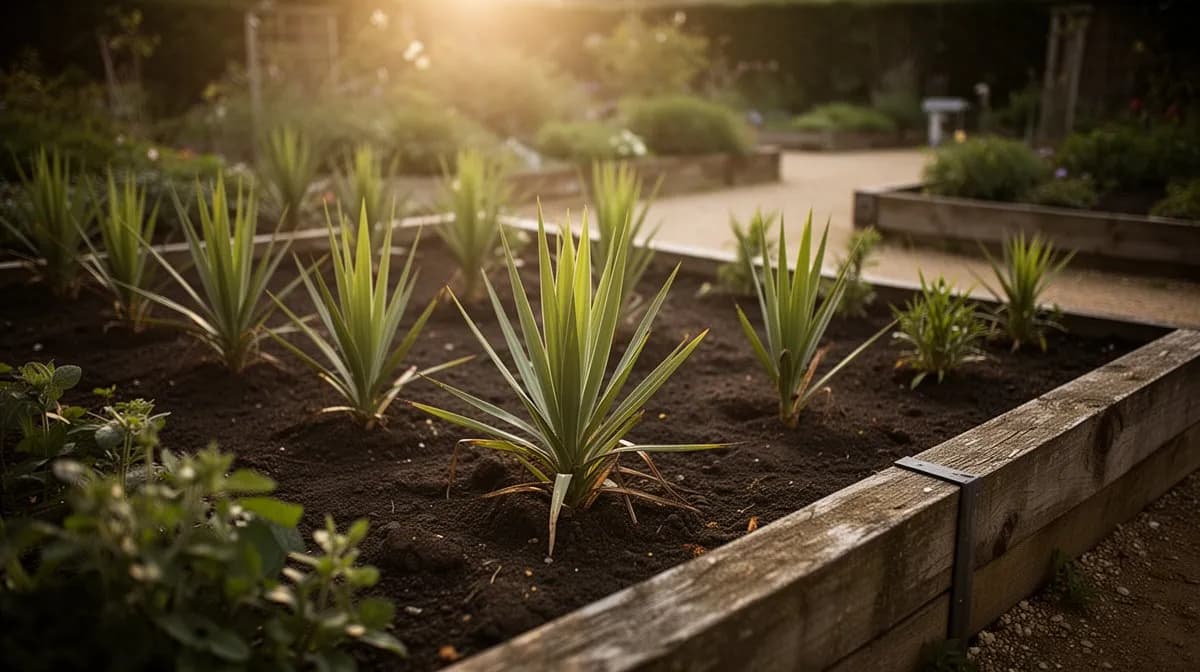
2 plantas caben en un bancal de 120 × 240 cm
Cada Yuca pide 100 cm de margen. El planificador guarda ese marco por ti — cada planta, cada bancal.
Los mejores vecinos de Yuca
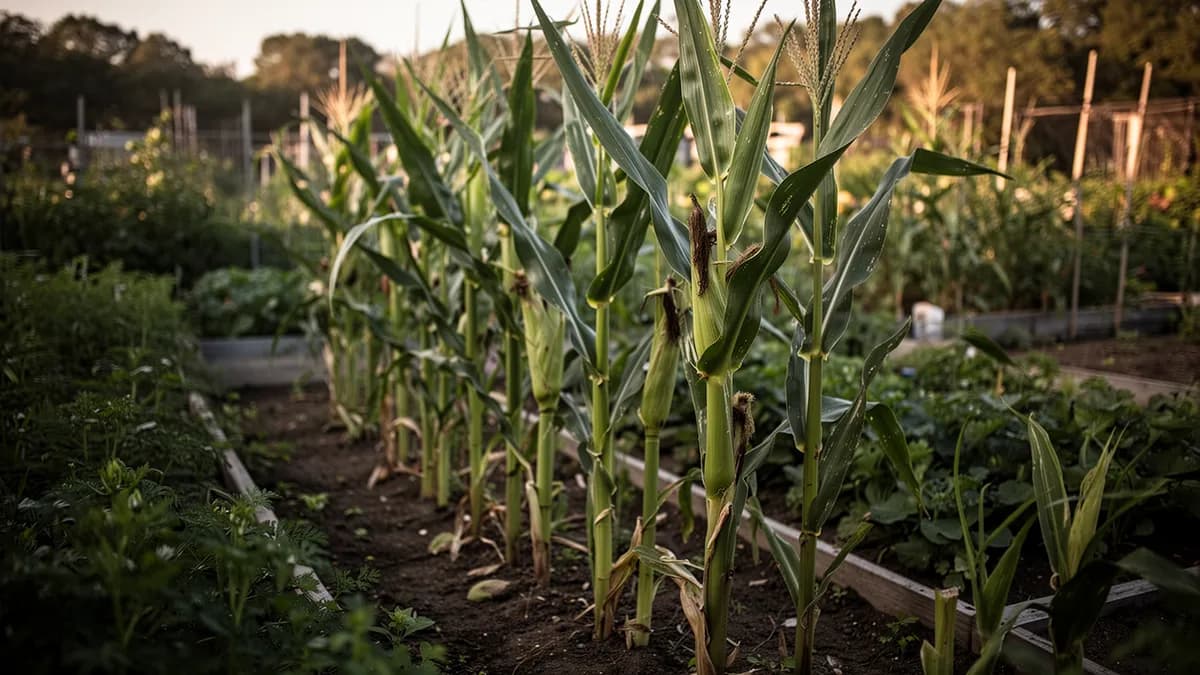
La yuca crece bien en sistemas de policultivo tropical junto a frijoles, maíz y batata. Las leguminosas intercaladas fijan nitrógeno que beneficia a la yuca. El maíz se cosecha antes y deja espacio para el crecimiento de la yuca. Evite combinarla con cultivos que necesiten mucha agua, ya que la yuca prefiere condiciones relativamente secas.
Maíz va a su lado.
Saber de huerto de siempre, cotejado con la tabla real de Yuca — prueba cualquier planta que cultives.
Prueba Yuca en un bancal, aquí mismo
Un bancal real del planificador con Yuca ya plantado. Toca una planta compañera para colocarla y mira cómo responde la comprobación de vecinos: verde para buenos vecinos, rojo si hay conflicto.


Guías de cultivo relacionadas
Abónalo bien
La yuca prospera en suelos arenosos, sueltos y bien drenados con pH entre 5,5 y 7,0. Es una planta notable por su capacidad de crecer en suelos muy pobres donde otras cosechas fracasan. No necesita fertilización abundante; un aporte ligero de potasio favorece el desarrollo de los tubérculos. Evite el exceso de nitrógeno que produce mucho follaje y raíces pequeñas.
Temperatura ideal
Compatibilidad de zonas de rusticidad
De la semilla a la cosecha, etapa por etapa
Preparación de estacas y plantación
La yuca no se propaga por semillas, sino por estacas de tallo. Planta las estacas en posición horizontal o en un ángulo de 45° en suelo bien drenado; las raíces empiezan a formarse desde los nudos enterrados en 7–14 días.
Brotación y establecimiento
Aparecen varios brotes y el sistema radicular se expande rápidamente mientras la planta establece sus raíces estructurales.
Crecimiento vegetativo
La planta crece rápidamente por encima del suelo, desarrollando un tallo leñoso y una copa de grandes hojas palmadas mientras se forman las raíces de reserva.
Engrosamiento de raíces
Las raíces de reserva se hinchan rápidamente mientras la copa sigue alimentando el crecimiento subterráneo.
Maduración
Las raíces alcanzan su tamaño completo y su máximo contenido de almidón, mientras el crecimiento de la planta se ralentiza y la piel se engrosa.
Cosecha y almacenamiento
Se extrae todo el conjunto de raíces, y estas se deterioran rápidamente si no se manipulan o procesan de inmediato.
Selecciona tallos sanos y maduros y deja secar los cortes durante 2–3 días antes de plantar. Planta solo cuando el suelo esté a al menos 20°C.
Cuidar Yuca mes a mes
Qué hacer cada mes para tu Yuca
Octubre
Mes actualIn zones 8-9, begin harvesting before first frost — yuca roots and stems are damaged by temperatures below 10°C (50°F). Harvest on a dry day, shake off excess soil, and process or store roots within 48-72 hours. Save healthy mature stems for next season's cuttings.
Ten claro qué hacer en tu huerto, cada mes
Un correo al empezar cada mes: qué sembrar, plantar y hacer ahora mismo — para tu Yuca y todo lo que crece alrededor. Más un breve curso inicial para esquivar los errores clásicos.
- Qué hacer ahora mismo
- Ajustado a tu temporada
- Curso inicial incluido
Cosechar Yuca
Coseche la yuca cuando las raíces tuberosas estén suficientemente grandes, generalmente entre 8 y 12 meses después de la plantación. La planta no tiene un punto de madurez definido; las raíces pueden dejarse en el suelo y cosecharse según se necesiten. Cave cuidadosamente alrededor de la base con una horca para extraer las raíces sin dañarlas.
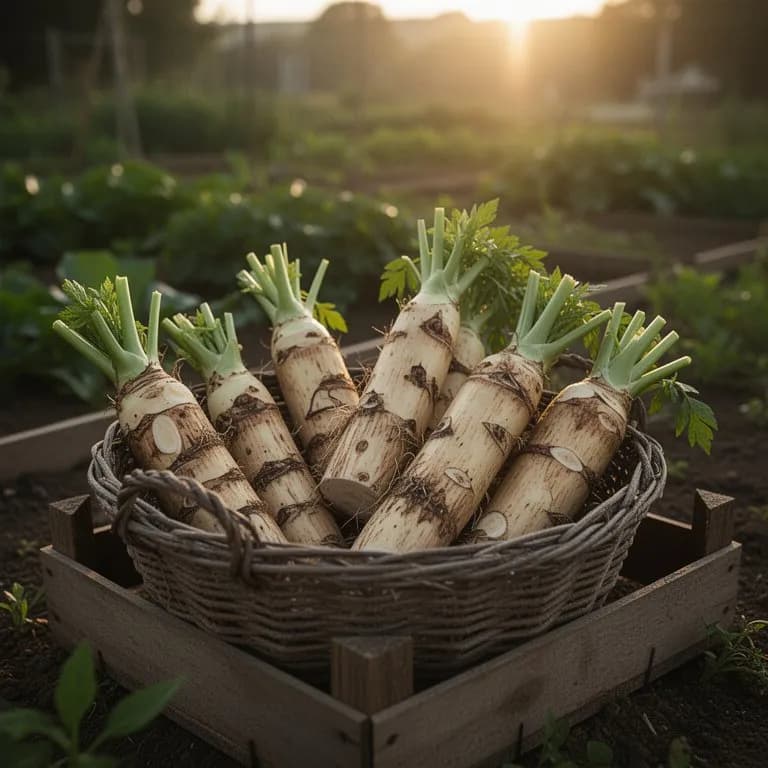
se supone que plantas al comenzar el periodo — indica tu fecha real
Las raíces están listas aproximadamente entre 8 y 12 meses después de plantar, o más tarde en climas tropicales.
Almacenamiento y conservación
Las raíces de yuca frescas son muy perecederas y deben consumirse dentro de 2-3 días tras la cosecha, o pelarse y sumergirse en agua en el refrigerador durante hasta 1 semana. Para conservación prolongada, pele, corte en trozos y congele. La yuca también se procesa en harina (fariña), tapioca y almidón, que se conservan durante meses.
Qué falla — y cómo solucionarlo
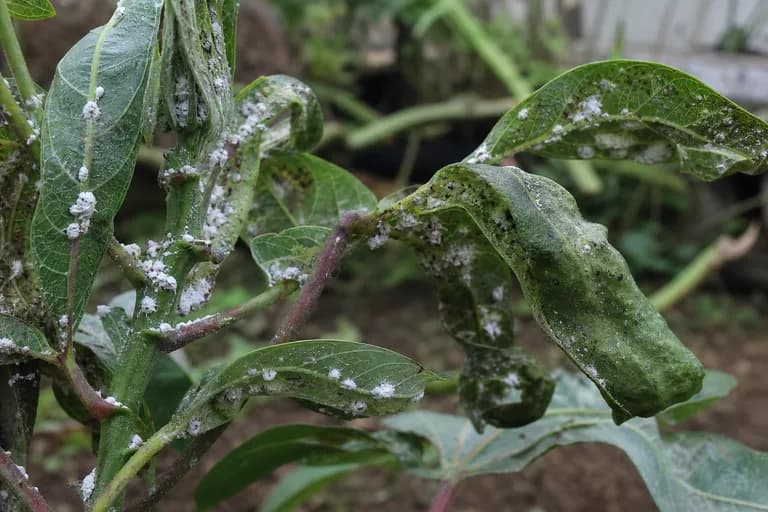
Araña roja (Tetranychus spp.)
PlagaPunteado amarillento en las hojas, decoloración generalizada y finas telarañas en el envés foliar en condiciones secas y calurosas. Las hojas se secan y caen.
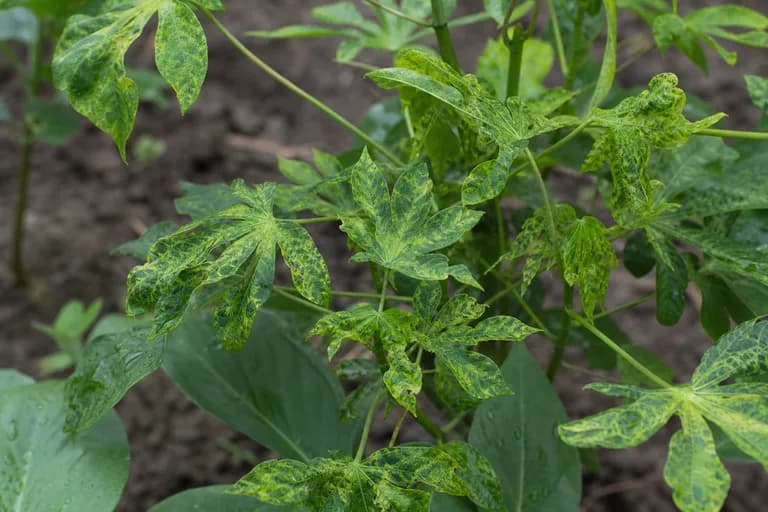
Cochinilla algodonosa (Phenacoccus manihoti)
PlagaMasas algodonosas blancas en las axilas de las hojas y los nudos del tallo. Las hojas se deforman, enrollan y caen. El crecimiento se detiene en infestaciones graves.
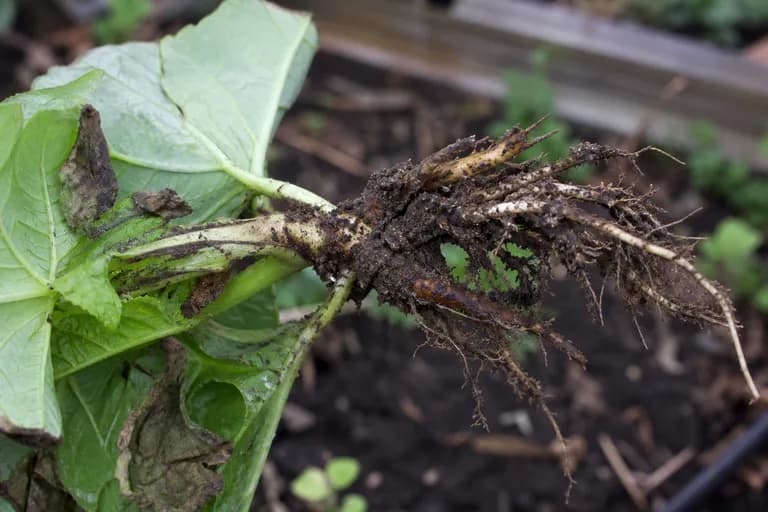
Pudrición de raíz (Phytophthora spp.)
EnfermedadLas raíces tuberosas se ablandan y desarrollan manchas acuosas marrones que se extienden hacia el interior. La planta muestra marchitez y amarillamiento foliar.
Solución de problemas comunes
El principal obstáculo en climas templados es la temporada de crecimiento larga (8-12 meses sin heladas) que la hace prácticamente imposible de cultivar al aire libre en Europa. En maceta bajo invernadero, el crecimiento es posible pero la producción de tubérculos será limitada. Las variedades amargas contienen niveles peligrosos de ácido cianhídrico; cultive solo variedades dulces en el huerto doméstico.
Consejos de cultivo
- Drainage is everything. Yuca roots will rot in waterlogged soil faster than almost any other crop. If your soil holds water, build raised beds at least 25-30 cm high with generous sand and compost mixed in. Never plant in clay or compacted ground without extensive amendment.
- Use cuttings from mature stems, not young green growth. The ideal cutting comes from the middle section of a woody stem that is 8-12 months old, is 20-30 cm long, and has at least 5-7 visible nodes. Plant horizontally for more roots or at 45 degrees for a stronger single stem.
- Let cuttings dry for 2-3 days before planting. This allows the cut ends to form a protective callus that dramatically reduces the chance of fungal infection and rot during the critical establishment period. Plant the callused cutting with nodes facing upward.
- Hill soil around the base of stems at 2-3 months after planting, just as you would with potatoes. This encourages the formation of additional storage roots closer to the soil surface, increasing your total yield and making harvest easier.
- Do not over-fertilize with nitrogen. Yuca is adapted to poor tropical soils and excessive nitrogen produces a massive, lush canopy of leaves but small, fibrous roots with low starch content. Potassium is the nutrient that matters most for root bulking — use wood ash or potassium sulfate.
- Yuca has a long growing season of 8-18 months. In temperate climates with frost, you must plant as early as safely possible after last frost and harvest before first fall frost. Growing in large 75-liter containers or grow bags lets you start early indoors and extend the season.
- Harvest timing dramatically affects both yield and quality. Roots harvested too early are watery and low in starch. Roots left too long may become woody and fibrous. Test harvest a single root at 8 months — it should snap cleanly and show dense white flesh with no woody core.
- Process or use harvested roots within 48-72 hours. Unlike potatoes, yuca roots deteriorate rapidly after harvest — the flesh develops blue-black vascular streaking and becomes bitter. Peel, cut into chunks, and freeze immediately if you cannot use them fresh.
Cultiva tu mejor Yuca — y todo lo que la rodea.
Empieza un plan gratis hoy. Diseña tus bancales, coloca tu Yuca y deja que PlotMyGarden gestione el momento, el espaciado, las asociaciones y los recordatorios de la semilla a la cesta.
Elige tu Yuca
Yuca dulce (Manihot esculenta)
Variedades con bajo contenido en ácido cianhídrico que pueden consumirse tras simple cocción. Las más seguras para cultivo doméstico. 8-12 meses.
Valencia
Variedad dulce popular en América Latina con raíces de buena calidad y pulpa blanca cremosa. Relativamente temprana para yuca. 8-10 meses.
IAC 576-70
Variedad brasileña mejorada con alto rendimiento y buena resistencia a enfermedades. Pulpa blanca de excelente calidad culinaria. 10-12 meses.
Fresh yuca roots sell for $2-5 per kg at grocery stores and Latin American markets, with frozen peeled yuca at $4-8 per kg. A single plant producing 3-8 kg of roots represents $6-40 worth of fresh yuca, and since yuca is propagated from free stem cuttings rather than purchased seeds, the input cost is essentially zero after your first season. Growing 4-6 plants can yield 15-40 kg of roots, saving $30-200 per season. The savings are even greater if you make your own tapioca starch or yuca flour, which retail for $6-12 per kg.
Recetas rápidas
Yuca Frita (Fried Yuca Sticks)
35 minCrispy on the outside, creamy and fluffy on the inside — fried yuca is the beloved Latin American alternative to French fries. The secret is boiling first until tender, then frying at high heat for a shatteringly crisp crust.
5 ingredientesSancocho (Caribbean Root Vegetable Stew)
75 minA hearty, soul-warming one-pot stew found across the Caribbean and Latin America. Yuca breaks down slightly during simmering, thickening the broth naturally while remaining in tender chunks alongside meat and other root vegetables.
11 ingredientesPan de Yuca (Yuca Cheese Bread)
30 minLight, chewy, and irresistibly cheesy — these gluten-free Brazilian-Colombian bread rolls are made with tapioca starch (yuca flour) and fresh cheese. They puff up beautifully in the oven and are best eaten warm.
7 ingredientesUsos culinarios
La yuca siempre debe cocinarse antes de consumirse, ya que contiene glucósidos cianogénicos que se eliminan con el calor. Se prepara hervida y servida con mojo de ajo en la cocina caribeña, frita en bastones crujientes como alternativa a las patatas fritas, en puré con mantequilla y leche, y como base para el pan de yuca brasileño (pão de queijo). La tapioca se obtiene del almidón y se usa en postres, perlas de boba tea y como espesante. En Sudamérica se prepara el casabe, un pan plano sin gluten.
Qué contiene
Beneficios para la salud
- Excellent source of energy-dense complex carbohydrates with a moderate glycemic index when boiled, providing sustained energy release — ideal for athletes, laborers, and anyone needing calorie-dense nutrition from a whole food source.
- Contains resistant starch when cooked and cooled, which functions as a prebiotic fiber that feeds beneficial gut bacteria, improves colon health, and may help regulate blood sugar and insulin sensitivity.
- Good source of vitamin C (23% DV per 100g), which supports immune function, collagen synthesis for healthy skin and joints, and enhances non-heme iron absorption from plant-based meals.
- Naturally gluten-free, making yuca and its derivatives (tapioca starch, cassava flour) essential alternatives for people with celiac disease, gluten sensitivity, or grain allergies.
- Provides saponins and polyphenolic antioxidants that have demonstrated anti-inflammatory properties in research, potentially helping to reduce chronic inflammation markers.
- Rich in manganese (15% DV per 100g) and copper, trace minerals critical for bone formation, wound healing, antioxidant enzyme function, and healthy connective tissue maintenance.
De dónde viene Yuca
Yuca (Manihot esculenta), also known as cassava or manioc, originated in the tropical lowlands of South America, most likely in the western Amazon basin region of what is now Brazil. Archaeological evidence from coastal Peru and the Brazilian Amazon dates yuca cultivation to at least 8,000-10,000 years ago, making it one of the earliest domesticated food crops in the Americas. Indigenous peoples developed sophisticated processing techniques to remove the naturally occurring cyanogenic compounds from bitter varieties — methods involving grating, pressing, soaking, and fermenting that are still used today across the tropics.
Portuguese traders introduced yuca to Africa in the 16th century, initially through the Congo basin and the western coast. The crop spread rapidly across the continent because of its extraordinary resilience — yuca thrives in poor soils, tolerates drought, and resists locusts. By the 18th century it had become the most important calorie source for hundreds of millions of Africans, a role it maintains to this day. Portuguese and Spanish colonial trade also carried yuca to the Philippines, Indonesia, and Southeast Asia, where it became embedded in local food cultures under names like singkong, ubi kayu, and khoai mi.
Today, yuca is cultivated in virtually every tropical and subtropical country and is the primary staple food for over 800 million people worldwide. Global annual production exceeds 300 million tonnes, with Nigeria, the Democratic Republic of Congo, Thailand, Brazil, and Indonesia as the leading producers. Beyond food, yuca starch has become a major industrial commodity used in textiles, paper, adhesives, and biofuels. The crop continues to be the focus of intensive agricultural research because of its critical role in global food security, particularly as climate change threatens other staple crops that are less tolerant of heat, drought, and poor soils.
Yuca: ¿sabías que?
Datos fascinantes sobre Yuca
Yuca (cassava) is the third-largest source of carbohydrates for human consumption in the world after rice and maize, feeding over 800 million people daily — it is the primary staple food across much of sub-Saharan Africa, Southeast Asia, and Latin America.
Yuca: preguntas frecuentes
¿Cuándo debo plantar Yuca?
¿Cuáles son buenas plantas acompañantes para Yuca?
¿En qué zonas de rusticidad puede crecer Yuca?
¿Cuánto sol necesita Yuca?
¿A qué distancia debo espaciar Yuca?
¿Qué plagas y enfermedades afectan a Yuca?
¿Cómo almaceno Yuca después de la cosecha?
¿Cuáles son las mejores variedades de Yuca para cultivar?
¿Qué suelo necesita Yuca?
Is yuca the same as yucca?
Is yuca safe to eat raw?
Can I grow yuca in a temperate climate?
Why are my yuca roots woody and fibrous instead of smooth and starchy?
How do I store yuca after harvest?
How do I get stem cuttings to start growing yuca?
Acabas de leer la teoría. Ahora cultívala en piloto automático.
Todo lo que hace que Yuca sea delicado — el momento, el espaciado, las asociaciones, la ventana de cosecha — es justo lo que PlotMyGarden resuelve por ti, para cada planta de tu huerto.
Un plan que conoce tu clima
Indica tu ubicación una vez. Recibe fechas de siembra, abonado y cosecha basadas en tu última helada real y el pronóstico en vivo — sin adivinar con un sobre genérico.
De la sección “Cuándo plantar”Planificador de bancales de arrastrar y soltar
Diseña bancales sobre una cuadrícula. Cada planta encaja con su espaciado correcto y ves toda la temporada antes de gastar un céntimo en semillas.
De la sección “Cultivo”Conflictos de asociación, detectados a tiempo
Más de 200 buenas y malas combinaciones comprobadas en vivo mientras plantas — para que un error que arruine la temporada nunca llegue a la tierra.
De la sección “Asociaciones”Recordatorios que sí vas a seguir
“Riega las judías.” “Recoge hoy antes de que se pase.” Oportunos, concretos y ligados a las plantas que de verdad cultivas.
De la sección “Cosecha”Escalonado, programado
¿Quieres cosechar seis semanas en vez de seis días? Reparte tus siembras automáticamente y te avisa cuando toca el siguiente lote.
De la sección “Cuándo plantar”Un registro que se vuelve más listo
Cada cosecha que registras le enseña tu huerto. El plan del año que viene parte de lo que de verdad funcionó en tu suelo, no en un manual.
De la sección “Resumen”Planta estos junto a Yuca
Más Hortalizas de raíz
Cultiva tu mejor Yuca — y todo lo que la rodea.
Empieza un plan gratis hoy. Diseña tus bancales, coloca tu Yuca y deja que PlotMyGarden gestione el momento, el espaciado, las asociaciones y los recordatorios de la semilla a la cesta.