Nabo Tokyo
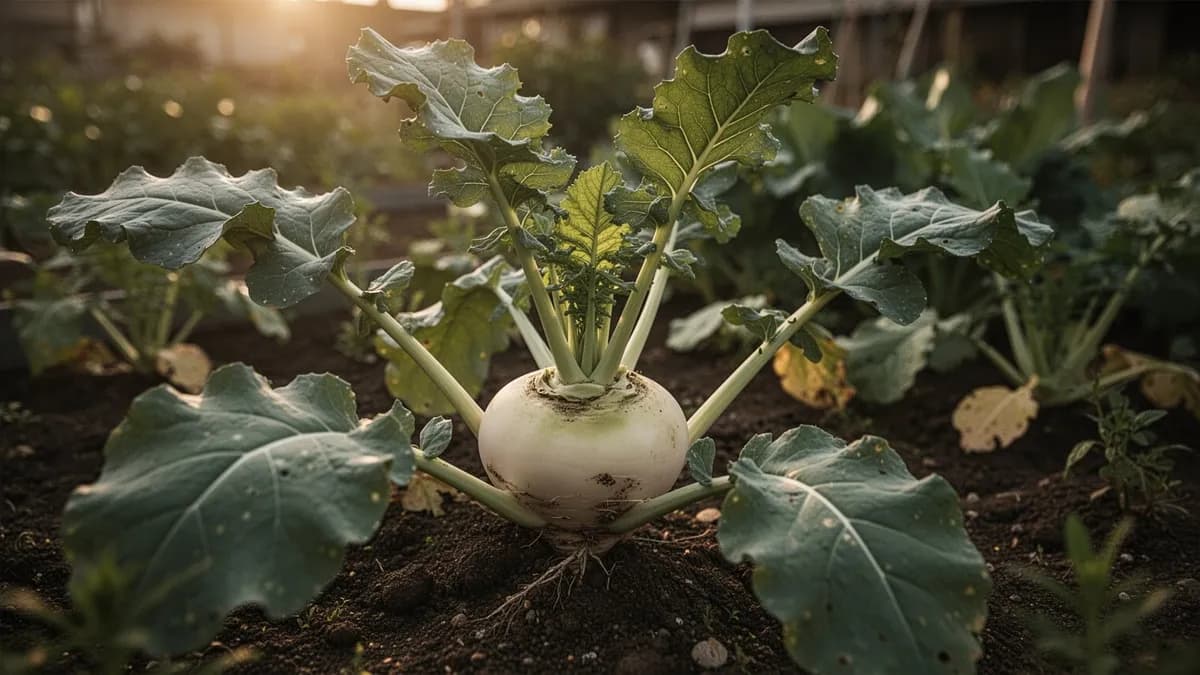
El nabo Tokyo (Brassica rapa subsp. rapa) es una variedad japonesa tipo kabu de crecimiento ultrarrápido, que produce pequeñas raíces blancas y redondeadas de textura extraordinariamente tierna y sabor suave y dulce sin el picor típico de otros nabos.





En esta páginaResumen
Conoce Nabo Tokyo
El nabo Tokyo (Brassica rapa subsp. rapa) es una variedad japonesa tipo kabu de crecimiento ultrarrápido, que produce pequeñas raíces blancas y redondeadas de textura extraordinariamente tierna y sabor suave y dulce sin el picor típico de otros nabos. En Japón se consume tradicionalmente crudo en ensaladas, ligeramente encurtido o apenas salteado para preservar su delicada textura.
Cuándo plantar Nabo Tokyo
Sembrar siempre directamente en el terreno a 1 cm de profundidad ya que no tolera el trasplante. Realizar siembras escalonadas cada 2-3 semanas desde principios de primavera hasta finales de otoño para cosecha continua. Aclarar las plántulas a 5-8 cm cuando tengan 3-4 cm de altura para permitir un desarrollo radicular uniforme.
Tu año de Nabo Tokyo
Ajustado a Zona 7 · temporada típica · la helada se va hacia el 2 abr y vuelve hacia el 1 nov
Planta Nabo Tokyo Mar – Abr, Ago – Sep y cosecha May – Jun, Oct – Nov. Consulta los métodos de plantación y elige tu clima para adaptar los periodos.
Cómo cultivar Nabo Tokyo
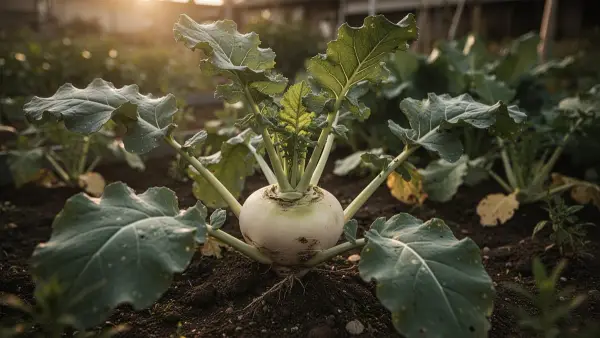
El nabo Tokyo es uno de los cultivos más rápidos del huerto, listo para cosechar en apenas 35-45 días, lo que permite realizar siembras escalonadas cada 2-3 semanas para una cosecha continua. Siembre directamente en el terreno a 1 cm de profundidad en hileras separadas 15-20 cm, aclarando las plántulas a 5-8 cm entre sí.
Prefiere temperaturas frescas entre 10 y 20 °C y un riego constante y ligero que mantenga el suelo uniformemente húmedo para lograr raíces tiernas y jugosas. Evite la sequía que provoca textura fibrosa y sabor picante, y las temperaturas altas que inducen floración prematura.
No requiere fertilización abundante; un suelo bien preparado con compost es suficiente. Aplique un acolchado ligero para mantener la humedad y frescura del suelo. Su ciclo corto permite cultivarlo como cultivo intercalado entre hortalizas de ciclo largo o como cultivo de cobertura rápido en bancales que quedan temporalmente vacíos.
128 plantas caben en un bancal de 120 × 240 cm
Cada Nabo Tokyo pide 15 cm de margen. El planificador guarda ese marco por ti — cada planta, cada bancal.
Los mejores vecinos de Nabo Tokyo
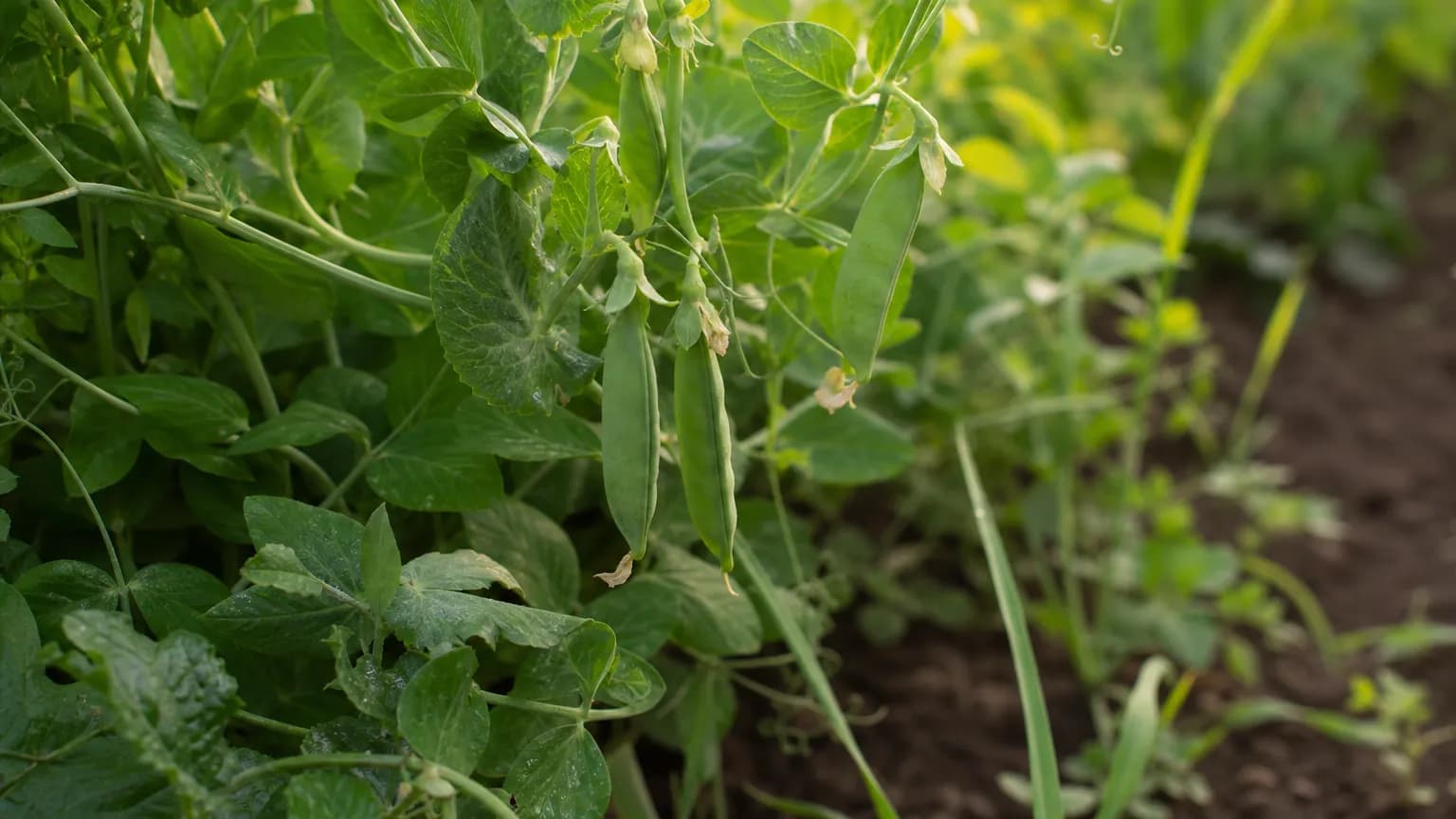
Se asocia bien con guisantes y lechugas en siembras intercaladas aprovechando su ciclo corto para maximizar el uso del espacio del bancal. Las hierbas aromáticas como la menta y el cilantro repelen plagas, mientras que debe evitarse plantar junto a otras crucíferas para no concentrar las plagas específicas de esta familia.
Guisantes va a su lado. Papa no.
Saber de huerto de siempre, cotejado con la tabla real de Nabo Tokyo — prueba cualquier planta que cultives.
Prueba Nabo Tokyo en un bancal, aquí mismo
Un bancal real del planificador con Nabo Tokyo ya plantado. Toca una planta compañera para colocarla y mira cómo responde la comprobación de vecinos: verde para buenos vecinos, rojo si hay conflicto.


Guías de cultivo relacionadas
Abónalo bien
Requiere un suelo suelto, ligero y bien drenado con pH entre 6,0 y 7,0 para permitir un crecimiento rápido y uniforme de las raíces. Un suelo bien preparado con compost es suficiente; evite el exceso de nitrógeno que favorece el follaje sobre la raíz y el estiércol fresco que causa bifurcaciones.
Temperatura ideal
Compatibilidad de zonas de rusticidad
De la semilla a la cosecha, etapa por etapa
Germinación
Las semillas de nabo Tokyo son diminutas y germinan rápidamente en suelo fresco y húmedo. Los tallos finos y erguidos de las plántulas aparecen en 3 a 5 días, lo que convierte a este en uno de los hortalizas de germinación más rápida del huerto. Las semillas pueden brotar en suelo tan frío como 4°C, aunque lo ideal es entre 10 y 18°C.
Desarrollo de plántulas
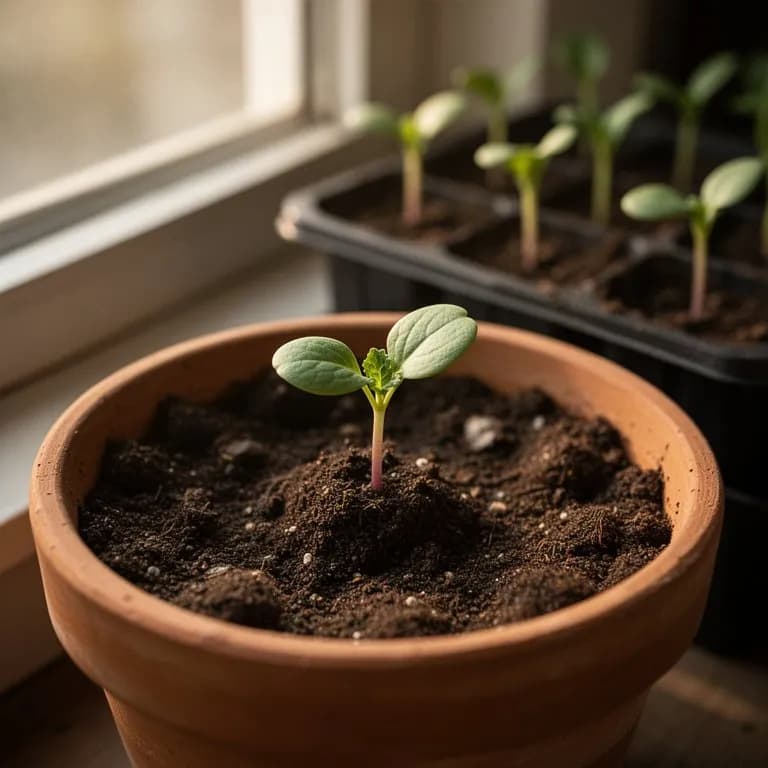
Los cotiledones en forma de corazón dan paso a las primeras hojas verdaderas, que son de color verde brillante, ligeramente vellosas y claramente lobuladas. La raíz principal delgada empieza a establecerse y las plántulas crecen rápido en clima fresco. Esta es la etapa para aclarar las plantas al espaciado correcto.
Crecimiento de hojas
Una roseta de hojas tiernas y verde brillante se expande con rapidez, alimentando el desarrollo de la raíz bajo tierra. Las hojas también son una cosecha apreciada: suaves, tiernas y nutritivas. En esta etapa la planta parece una pequeña y elegante roseta de lechuga con hojas ligeramente vellosas y lobuladas.
Engrosamiento de la raíz
La raíz blanca empieza a engrosarse visiblemente en la superficie del suelo, pasando de un grosor de lápiz a uno similar al de una canica en pocos días. La raíz es lisa, de un blanco brillante y perfectamente redonda. El crecimiento es rápido en clima fresco y la raíz se eleva ligeramente por encima del nivel del suelo al agrandarse.
Ventana de cosecha
Las raíces alcanzan su tamaño ideal de cosecha de 3 a 5 cm de diámetro, aproximadamente del tamaño de una pelota de golf. En esta etapa la pulpa es crujiente, jugosa y notablemente dulce, con casi nada de amargor. La piel es muy fina y no necesita pelarse. Tanto las raíces como las hojas están en su punto óptimo.
Sobremadurez
Si se deja demasiado tiempo en el suelo, las raíces se vuelven leñosas, huecas y cada vez más amargas, mientras la planta desvía energía hacia la floración y la producción de semillas. Empieza a emerger un tallo floral central desde la roseta. Una vez que comienza el espigado, la calidad de la raíz cae rápidamente y las hojas se endurecen.
Siembra las semillas muy superficialmente, a solo 5 a 10 mm de profundidad, y mantén la superficie constantemente húmeda. No las entierres demasiado: estas semillas pequeñas necesitan un contacto ligero con el suelo húmedo para germinar bien.
Cuidar Nabo Tokyo mes a mes
Qué hacer cada mes para tu Nabo Tokyo
Octubre
Mes actualContinue harvesting autumn-planted roots. In zones 7+, sow a final succession in early October for late autumn harvest. Protect late plantings with row cover or cold frames as nights turn cold. Roots can tolerate light frosts down to -3°C (27°F).
Ten claro qué hacer en tu huerto, cada mes
Un correo al empezar cada mes: qué sembrar, plantar y hacer ahora mismo — para tu Nabo Tokyo y todo lo que crece alrededor. Más un breve curso inicial para esquivar los errores clásicos.
- Qué hacer ahora mismo
- Ajustado a tu temporada
- Curso inicial incluido
Cosechar Nabo Tokyo
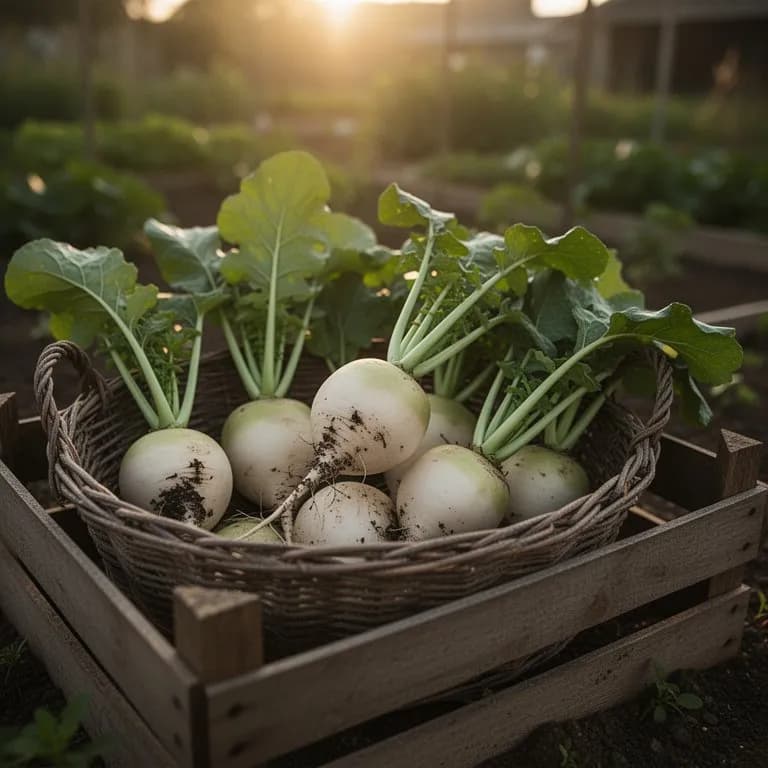
Cosechar cuando las raíces tienen 3-5 cm de diámetro, generalmente entre 35 y 45 días después de la siembra, tirando suavemente del follaje o aflojando la tierra con los dedos. Es fundamental no dejar que crezcan más ya que pierden rápidamente su textura sedosa y su sabor se vuelve picante y amargo.
se supone que plantas al comenzar el periodo — indica tu fecha real
Cuando las raíces midan 3 a 5 cm de diámetro, normalmente 30 a 45 días después de la siembra.
Almacenamiento y conservación
Conservar en el refrigerador con las hojas cortadas (que se consumen aparte como verdura) dentro de una bolsa perforada durante 1-2 semanas. Su textura delicada los hace menos aptos para conservación prolongada; lo ideal es consumirlos frescos. Se pueden encurtir ligeramente en vinagre de arroz y sal como tsukemono japonés.
Qué falla — y cómo solucionarlo
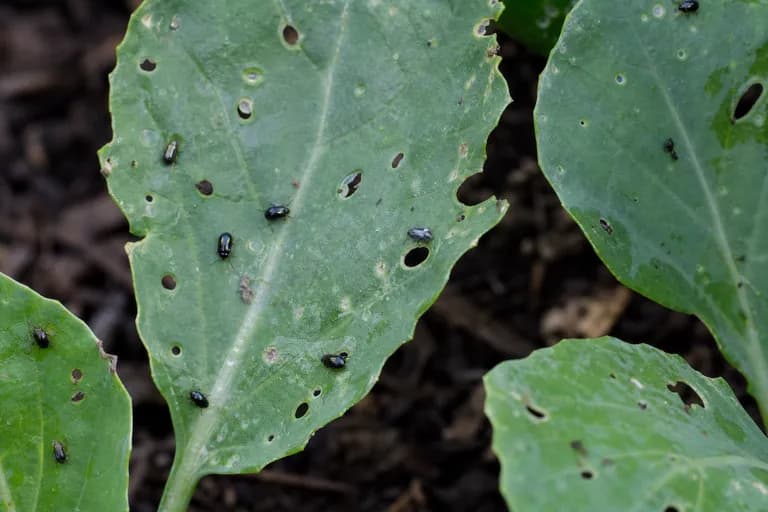
Pulguilla de las crucíferas
PlagaPequeños escarabajos negros saltadores que perforan las hojas jóvenes con multitud de agujeros diminutos, pudiendo destruir plántulas recién emergidas en pocas horas.
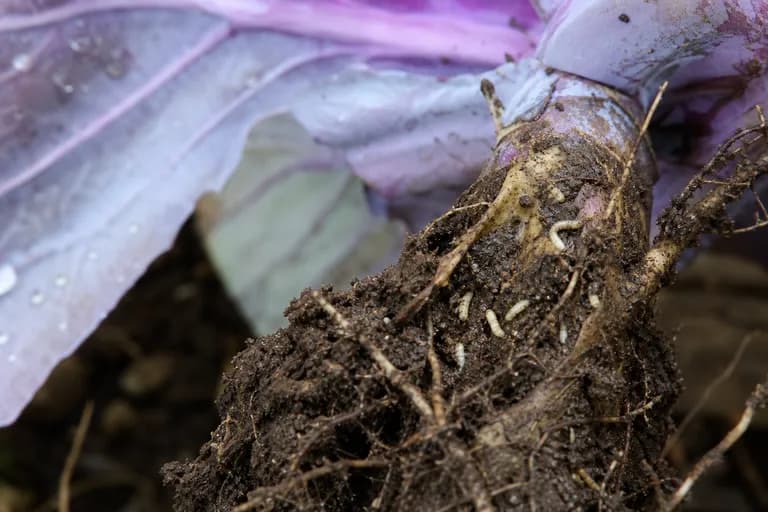
Babosas y caracoles
PlagaRastros brillantes de baba sobre el suelo y las hojas, con mordiscos irregulares en los bordes foliares y en las raíces tiernas que emergen del suelo.
Solución de problemas comunes
Su principal inconveniente es que los nabos se pasan de punto muy rápidamente, volviéndose esponjosos y huecos si no se cosechan en el momento óptimo. Las temperaturas superiores a 25 °C inducen floración prematura (espigado) y vuelven las raíces fibrosas y amargas, limitando el cultivo a las estaciones frescas.
Consejos de cultivo
- Succession plant relentlessly — this is the single most important technique for Tokyo turnips. Sow a short row every 2-3 weeks from early spring through late autumn, skipping only the hottest summer months. This ensures a constant supply of perfectly-sized, tender roots.
- Thin ruthlessly and early. Crowded Tokyo turnips produce disappointing, misshapen roots. Thin to 8-10 cm apart as soon as seedlings have 2-3 true leaves. Use scissors to snip at soil level rather than pulling, which disturbs neighboring roots.
- Protect from flea beetles from day one. These tiny jumping pests can destroy a bed of turnip seedlings overnight, peppering leaves with dozens of small holes. Cover beds with lightweight floating row cover immediately after sowing and leave it in place until harvest.
- Keep soil consistently and evenly moist. Tokyo turnips develop their signature crisp, juicy texture only with steady water. Irregular watering — especially drought followed by heavy rain — causes roots to crack, split, or develop a tough, woody core.
- Harvest on the young side rather than waiting for maximum size. A 3 cm Tokyo turnip is sweeter and more tender than a 6 cm one. Once roots start pushing above the soil surface and reach golf-ball size, pull them promptly — they go downhill quickly.
- Grow for the greens as much as the roots. Tokyo turnip greens are mild, tender, and far more nutritious than the roots. You can harvest outer leaves for salads while roots are still developing, getting two crops from one planting.
- Amend soil with fine compost rather than coarse organic matter. Rocks, sticks, or chunky compost pieces in the root zone cause turnips to grow misshapen or forked. The top 15 cm of soil should be fine, loose, and free of obstructions.
- Take advantage of autumn planting — fall-grown Tokyo turnips are consistently sweeter than spring-grown ones because cooling temperatures and light frost trigger the plant to convert starches to sugars, producing roots with a noticeably higher sugar content.
Cultiva tu mejor Nabo Tokyo — y todo lo que la rodea.
Empieza un plan gratis hoy. Diseña tus bancales, coloca tu Nabo Tokyo y deja que PlotMyGarden gestione el momento, el espaciado, las asociaciones y los recordatorios de la semilla a la cesta.
Elige tu Nabo Tokyo
Tokyo Cross F1
Híbrido galardonado con el premio All-America Selections por su uniformidad y rapidez de crecimiento. Raíces blancas esféricas de 3-5 cm extremadamente tiernas, madura en 35-40 días.
Hakurei
Variedad japonesa premium con raíces blancas brillantes de textura suave como la fruta y sabor dulce sin picor alguno. Considerada la mejor para consumo crudo, madura en 38-45 días.
Market Express
Variedad precoz y uniforme con raíces blancas redondeadas de 4-6 cm y excelente resistencia al agrietamiento. Versátil para crudo o cocinado, madura en 38-42 días.
Oasis
Híbrido con raíces blancas ligeramente aplanadas de textura cremosa y sabor excepcionalmente suave. Buena tolerancia al calor para siembras tardías de primavera, madura en 40-45 días.
A packet of Tokyo turnip seeds costs $2-4 and contains 200-500 seeds — enough for dozens of succession sowings. Bunched Tokyo turnips sell for $3-5 per bunch (typically 4-6 roots with greens) at farmers markets, and $4-6 per pound at specialty grocery stores. Growing your own through succession planting easily yields 40-60 bunches worth of turnips per season from a single seed packet, representing $120-300 in retail value. Tokyo turnips are also one of the most space-efficient crops, producing a full harvest in just 35-45 days and occupying garden space briefly before yielding to another planting.
Recetas rápidas
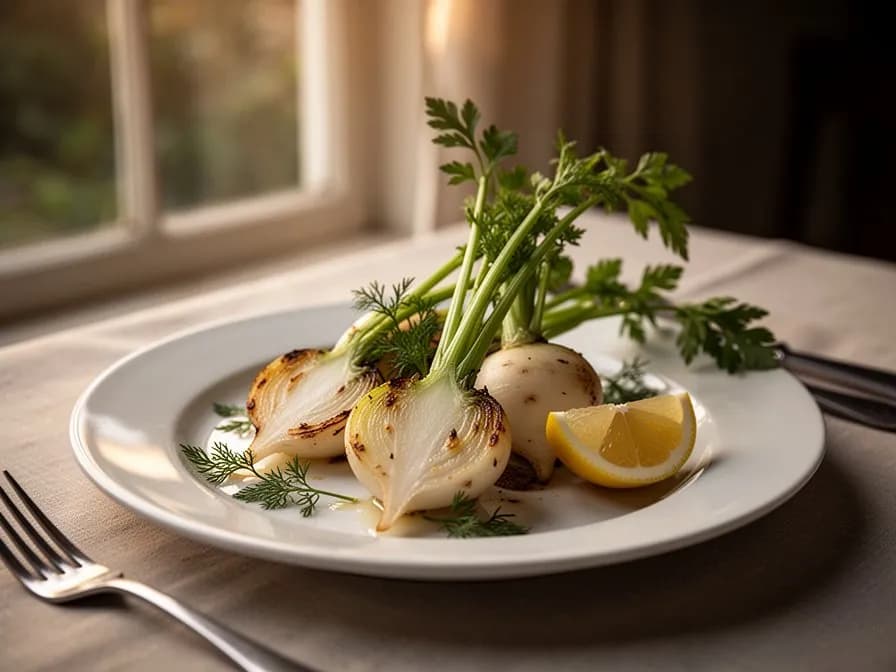
Raw Tokyo Turnip Salad with Citrus Vinaigrette
10 minPaper-thin slices of crisp, sweet Tokyo turnip tossed with peppery arugula, shaved Parmesan, and a bright citrus dressing. This salad showcases the turnip's apple-like sweetness and radish-like crunch in its purest form — no cooking required.
8 ingredientesButter-Glazed Tokyo Turnips with Greens
15 minHalved turnips seared golden in butter, then braised until tender and glazed in their own juices. The greens are wilted in at the end for a complete, zero-waste dish that is both elegant and deeply satisfying.
8 ingredientesQuick-Pickled Tokyo Turnips
15 min + 1 hour restThinly sliced turnips quick-pickled in a sweet rice vinegar brine, turning translucent and slightly pink if a slice of beet is added. These crisp, tangy pickles are a staple Japanese condiment, perfect alongside rice, grilled fish, or ramen.
7 ingredientesUsos culinarios
Es un nabo gourmet que se disfruta mejor crudo en rodajas finas en ensaladas japonesas y occidentales, revelando su textura crujiente y su dulzor natural. También es excelente ligeramente salteado en wok con salsa de soja, al vapor durante apenas 5 minutos, encurtido como tsukemono con sal y vinagre de arroz, y en sopas miso donde aporta dulzura sutil.
Qué contiene
Beneficios para la salud
- Tokyo turnip greens are an exceptional source of vitamin K, providing over 250% of the daily value per 100g — essential for blood clotting, bone metabolism, and emerging research suggests brain health.
- The roots and greens contain glucosinolates, sulfur-containing compounds that break down into isothiocyanates during digestion — these bioactive compounds are actively studied for their potential to reduce cancer risk.
- Turnip greens provide highly bioavailable calcium at 190mg per 100g, comparable to milk, making them an important non-dairy calcium source for bone health, especially for those who are lactose intolerant.
- Very low glycemic index food due to high water content and modest carbohydrate levels, making Tokyo turnips suitable for diabetic-friendly diets and weight management programs.
- Rich in vitamin C (21mg per 100g of root, even more in greens), supporting immune defense, collagen production, and enhancing iron absorption from plant-based meals.
- Contains anti-inflammatory compounds including quercetin and kaempferol, flavonoid antioxidants that may help reduce chronic inflammation linked to heart disease and metabolic disorders.
De dónde viene Nabo Tokyo
The Tokyo turnip, most commonly sold under the cultivar name Hakurei, was developed in Japan during the 1950s and 1960s by breeders at Japanese seed companies seeking to create a turnip specifically designed for fresh eating rather than long-term storage. Traditional Japanese turnips (kabu) have been cultivated in Japan for over a thousand years, with records of turnip cultivation dating to the Nara period (710-794 AD). Japanese farmers developed hundreds of regional varieties adapted to local climates and culinary preferences, ranging from massive pickling turnips to tiny salad varieties.
The Hakurei cultivar emerged from this long tradition of Japanese turnip breeding. Breeders selected for a combination of traits that would have seemed contradictory in Western turnip culture: extreme speed to maturity, snow-white skin without the purple coloring, paper-thin edible skin requiring no peeling, crisp and juicy flesh with high sugar content, and mild tender greens. The result was a turnip that behaved more like a salad vegetable than a root cellar staple — meant to be pulled young, eaten fresh, and enjoyed within days of harvest.
Hakurei turnips arrived in the United States in the 1990s, initially adopted by Asian-specialty market farmers and small-scale organic growers. Their breakthrough into mainstream American gardening and cuisine came through the farm-to-table restaurant movement of the 2000s, when chefs recognized that these sweet, crunchy roots could change perceptions about turnips entirely. Today, Tokyo turnips are among the most popular crops at farmers markets across North America and Europe, and they have become a staple of community-supported agriculture (CSA) boxes. They remain one of the best examples of how Japanese horticultural expertise can transform a humble vegetable into something genuinely refined.
Nabo Tokyo: ¿sabías que?
Datos fascinantes sobre Nabo Tokyo
Tokyo turnips (also called Hakurei turnips) were developed in Japan in the 1950s through careful selective breeding to maximize sweetness, tenderness, and speed — they mature in just 35-45 days, roughly half the time of traditional Western storage turnips.
Nabo Tokyo: preguntas frecuentes
¿Cuándo debo plantar Nabo Tokyo?
¿Cuáles son buenas plantas acompañantes para Nabo Tokyo?
¿En qué zonas de rusticidad puede crecer Nabo Tokyo?
¿Cuánto sol necesita Nabo Tokyo?
¿A qué distancia debo espaciar Nabo Tokyo?
¿Qué plagas y enfermedades afectan a Nabo Tokyo?
¿Cómo almaceno Nabo Tokyo después de la cosecha?
¿Cuáles son las mejores variedades de Nabo Tokyo para cultivar?
¿Qué suelo necesita Nabo Tokyo?
Do Tokyo turnips taste like regular turnips?
Can I eat Tokyo turnip greens, and how do I prepare them?
Why are my Tokyo turnips bitter or woody instead of sweet?
How do I store Tokyo turnips after harvest?
Can I grow Tokyo turnips in containers?
When is the best time of year to grow Tokyo turnips?
Acabas de leer la teoría. Ahora cultívala en piloto automático.
Todo lo que hace que Nabo Tokyo sea delicado — el momento, el espaciado, las asociaciones, la ventana de cosecha — es justo lo que PlotMyGarden resuelve por ti, para cada planta de tu huerto.
Un plan que conoce tu clima
Indica tu ubicación una vez. Recibe fechas de siembra, abonado y cosecha basadas en tu última helada real y el pronóstico en vivo — sin adivinar con un sobre genérico.
De la sección “Cuándo plantar”Planificador de bancales de arrastrar y soltar
Diseña bancales sobre una cuadrícula. Cada planta encaja con su espaciado correcto y ves toda la temporada antes de gastar un céntimo en semillas.
De la sección “Cultivo”Conflictos de asociación, detectados a tiempo
Más de 200 buenas y malas combinaciones comprobadas en vivo mientras plantas — para que un error que arruine la temporada nunca llegue a la tierra.
De la sección “Asociaciones”Recordatorios que sí vas a seguir
“Riega las judías.” “Recoge hoy antes de que se pase.” Oportunos, concretos y ligados a las plantas que de verdad cultivas.
De la sección “Cosecha”Escalonado, programado
¿Quieres cosechar seis semanas en vez de seis días? Reparte tus siembras automáticamente y te avisa cuando toca el siguiente lote.
De la sección “Cuándo plantar”Un registro que se vuelve más listo
Cada cosecha que registras le enseña tu huerto. El plan del año que viene parte de lo que de verdad funcionó en tu suelo, no en un manual.
De la sección “Resumen”Planta estos junto a Nabo Tokyo
Más Crucíferas
Mantén Nabo Tokyo lejos de estos
Cultiva tu mejor Nabo Tokyo — y todo lo que la rodea.
Empieza un plan gratis hoy. Diseña tus bancales, coloca tu Nabo Tokyo y deja que PlotMyGarden gestione el momento, el espaciado, las asociaciones y los recordatorios de la semilla a la cesta.