Taro
Un tubérculo tropical con pulpa morada o blanca.





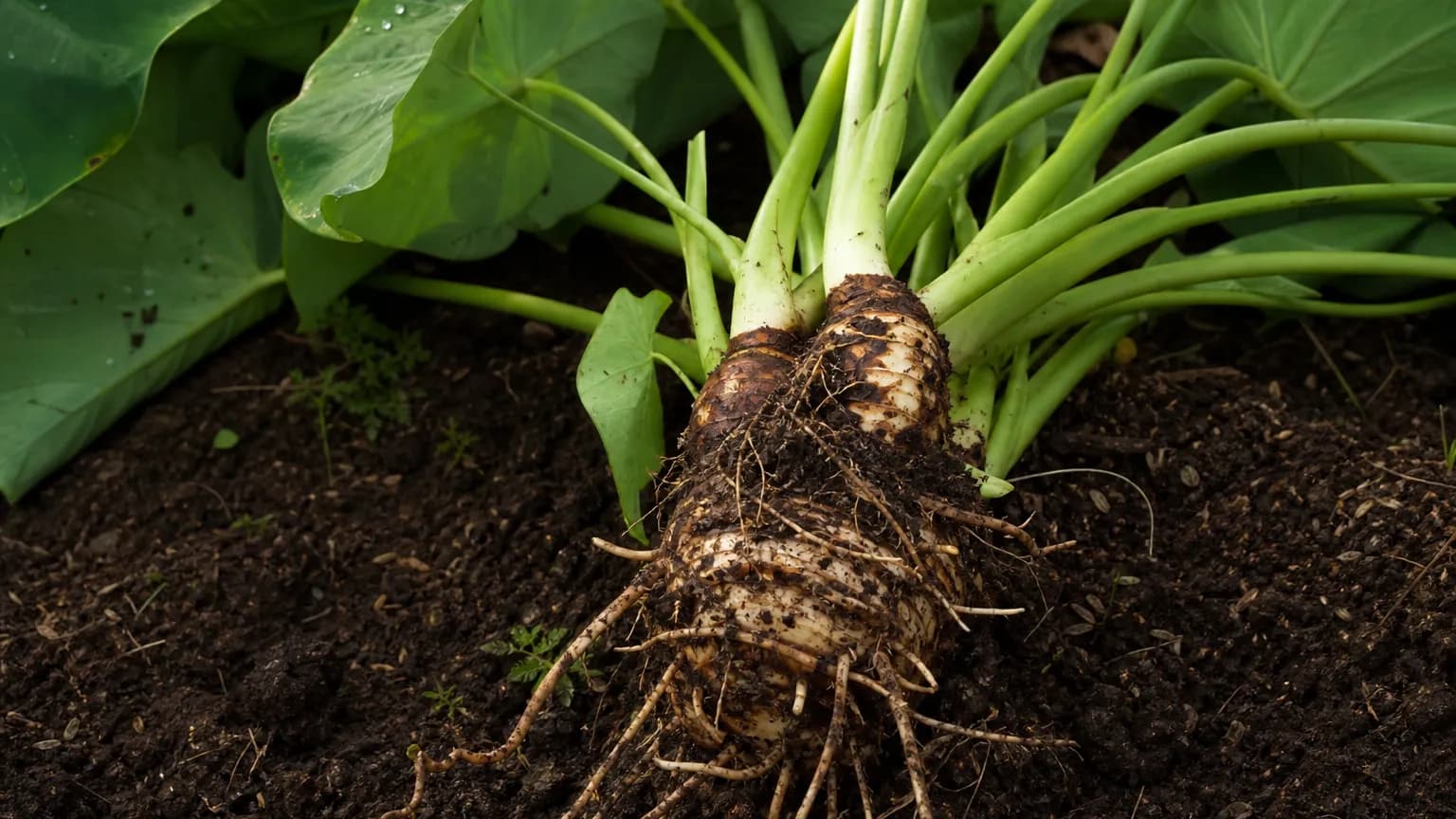
En esta páginaResumen
Conoce Taro
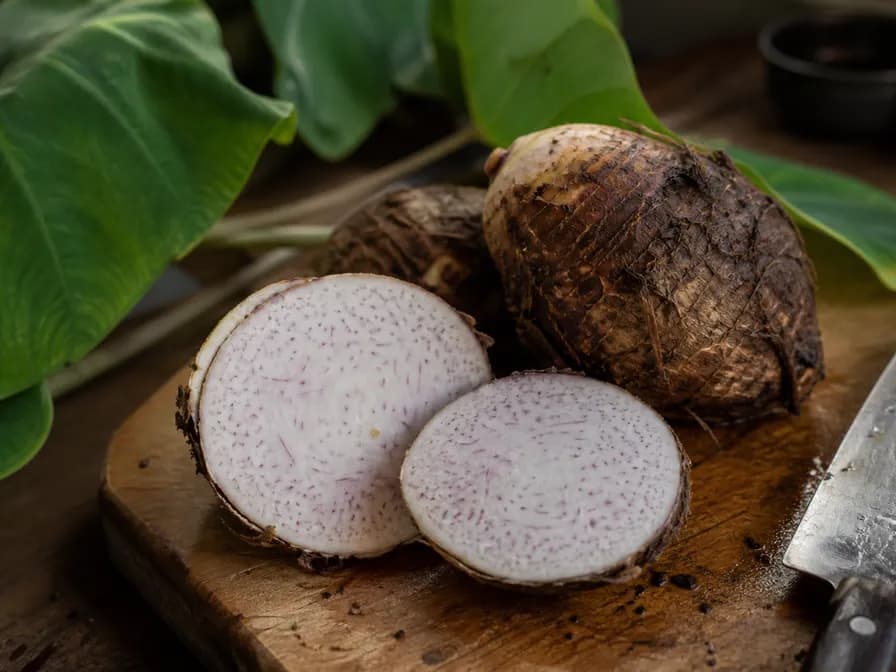
Un tubérculo tropical con pulpa morada o blanca. Importante en cocina asiática y del Pacífico.
Cuándo plantar Taro
Plante pequeños tubérculos en primavera.
Tu año de Taro
Ajustado a Zona 7 · temporada típica · la helada se va hacia el 2 abr y vuelve hacia el 1 nov
Planta Taro Abr – May y cosecha Oct – Nov. Consulta los métodos de plantación y elige tu clima para adaptar los periodos.
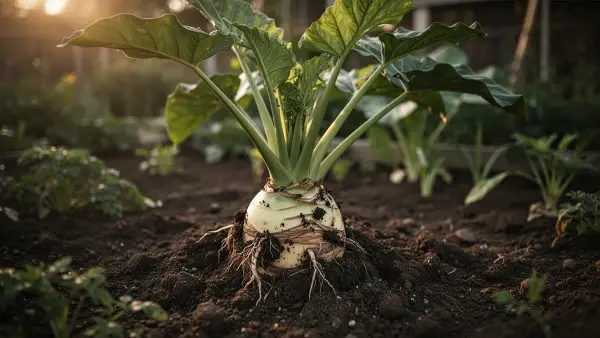
Cómo cultivar Taro
Necesita mucho calor y humedad. En agua poco profunda o suelo muy húmedo.
DEBE cocinarse - crudo es tóxico!
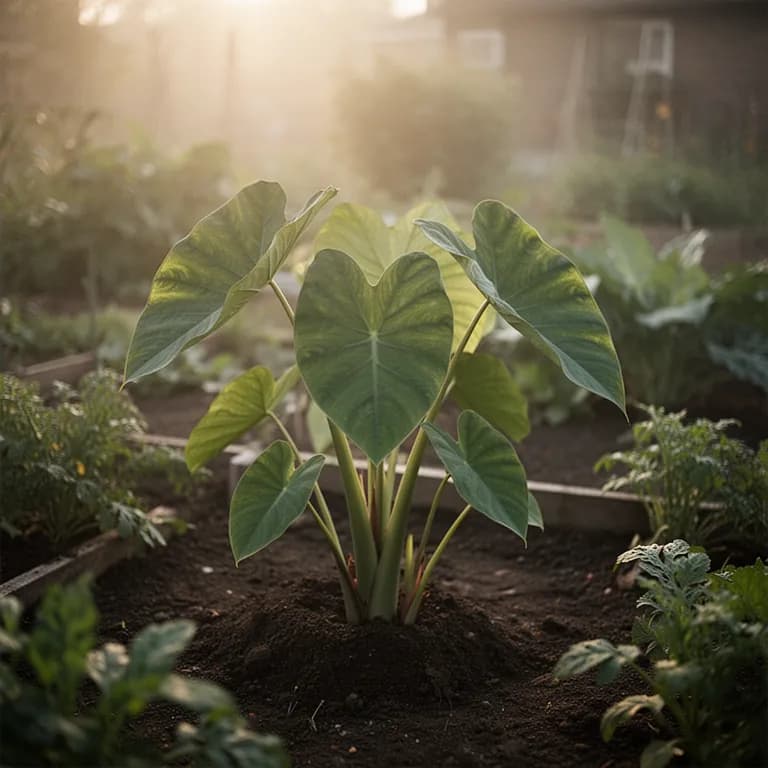
8 plantas caben en un bancal de 120 × 240 cm
Cada Taro pide 60 cm de margen. El planificador guarda ese marco por ti — cada planta, cada bancal.
Los mejores vecinos de Taro
Arroz y espinaca de agua.
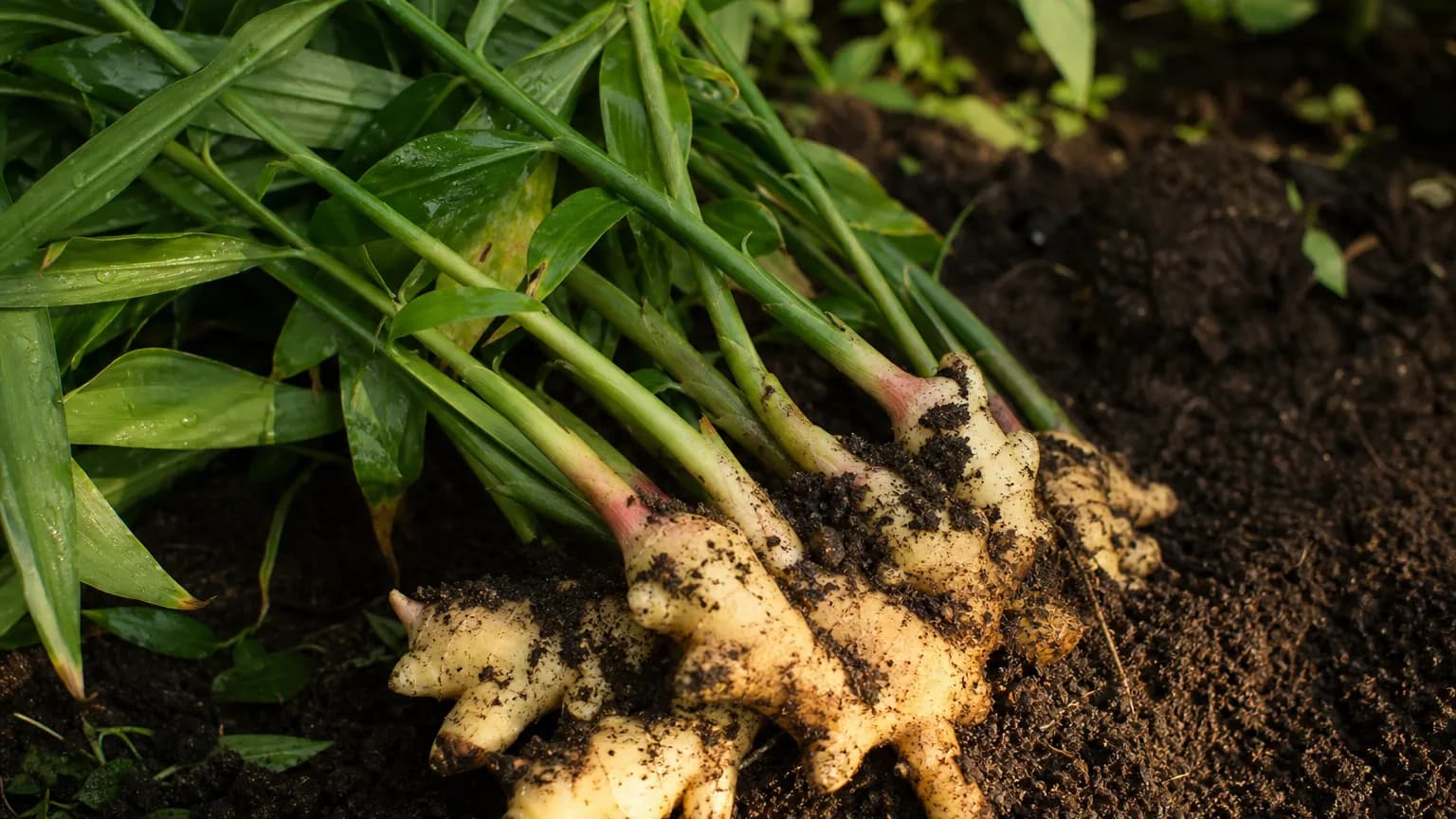
Jengibre va a su lado.
Saber de huerto de siempre, cotejado con la tabla real de Taro — prueba cualquier planta que cultives.
Prueba Taro en un bancal, aquí mismo
Un bancal real del planificador con Taro ya plantado. Toca una planta compañera para colocarla y mira cómo responde la comprobación de vecinos: verde para buenos vecinos, rojo si hay conflicto.


Guías de cultivo relacionadas
Abónalo bien
Muy húmedo, rico en materia orgánica, pH 5,5-6,5.
Temperatura ideal
Compatibilidad de zonas de rusticidad
De la semilla a la cosecha, etapa por etapa
Plantación de cormos
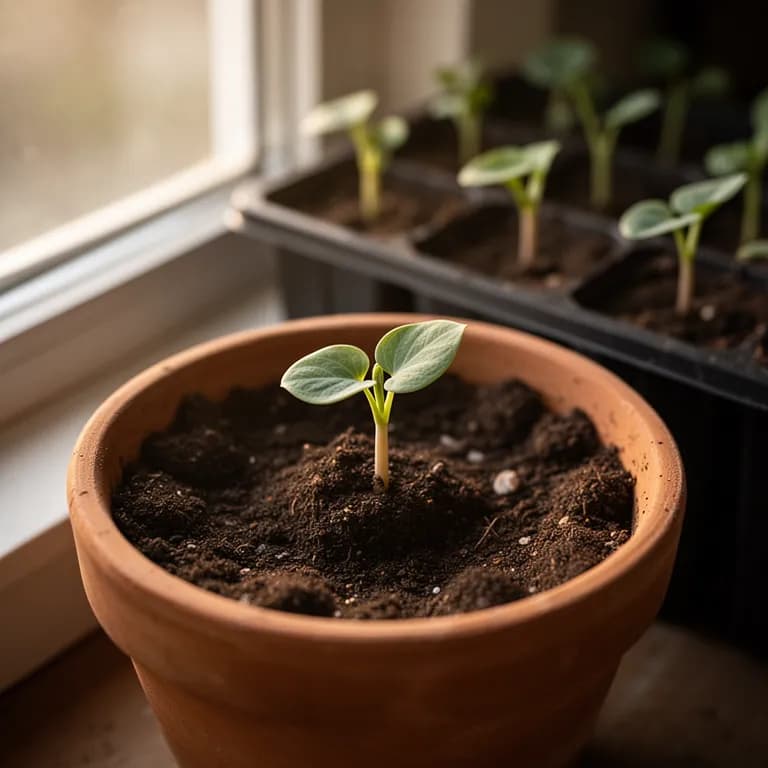
Los trozos de cormo o los cormelos pequeños se plantan a 8-10 cm de profundidad en un suelo cálido y húmedo. Las raíces emergen de la base del cormo durante la primera semana, anclando la planta y comenzando a absorber agua y nutrientes. El primer brote aparece después de 2-3 semanas como una lanza fuertemente enrollada que empuja a través de la superficie del suelo.
Desarrollo temprano de hojas
Las primeras hojas se despliegan una a una desde el punto de crecimiento central, y cada una es más grande que la anterior. Las hojas jóvenes tienen forma de flecha y son de un verde pálido, oscureciéndose y ensanchándose a medida que maduran. La planta desarrolla 4-6 hojas durante esta etapa y comienza a construir su sistema radicular con rapidez.
Crecimiento vegetativo rápido
Las plantas entran en una fase de crecimiento explosivo durante los meses más cálidos. Las hojas alcanzan su anchura total de 40-60 cm sobre pecíolos altos de 90-120 cm. El dosel se cierra, sombrea el suelo y suprime las malas hierbas. Bajo tierra, el cormo principal comienza a engordar mientras la planta almacena almidón producido por la gran superficie foliar.
Engrosamiento del cormo
El cormo subterráneo se hincha rápidamente mientras la planta redirige la energía del crecimiento de hojas al almacenamiento de almidón. Las hojas exteriores más viejas comienzan a amarillear y a secarse de forma natural, mientras que las hojas centrales permanecen verdes. Los cormelos laterales se desarrollan alrededor de la base del cormo principal. El crecimiento sobre el suelo se ralentiza notablemente.
Maduración y cosecha
La mayoría de las hojas se amarillean y colapsan cuando la planta indica madurez. El cormo ha alcanzado su tamaño máximo y su mayor contenido de almidón. En climas tropicales, el taro puede dejarse en el suelo durante varios meses más sin deteriorarse, usando prácticamente la tierra como almacenamiento. Cosecha cuando el 70-80 % de las hojas se hayan amarilleado.
Mantén el suelo constantemente saturado, pero no sumergido, durante el enraizamiento inicial. La temperatura del suelo debe ser de al menos 21 °C para una brotación fiable. Plantar en suelo frío y húmedo favorece la pudrición del cormo antes de que se establezcan las raíces.
Cuidar Taro mes a mes
Qué hacer cada mes para tu Taro
Octubre
Mes actualPrimary harvest month in zones 7-9. Harvest when 70-80% of leaves have yellowed. Use a garden fork to carefully lift corms. Cure in a warm, dry location for several days. In zones 10-12, corms can remain in the ground longer.
Ten claro qué hacer en tu huerto, cada mes
Un correo al empezar cada mes: qué sembrar, plantar y hacer ahora mismo — para tu Taro y todo lo que crece alrededor. Más un breve curso inicial para esquivar los errores clásicos.
- Qué hacer ahora mismo
- Ajustado a tu temporada
- Curso inicial incluido
Cosechar Taro
Coseche cuando las hojas amarillean.
se supone que plantas al comenzar el periodo — indica tu fecha real
Cosecha cuando el 70-80 % de las hojas se hayan amarilleado y caído de forma natural, normalmente 7-12 meses después de la siembra.
Almacenamiento y conservación
Almacene fresco y seco.
Qué falla — y cómo solucionarlo
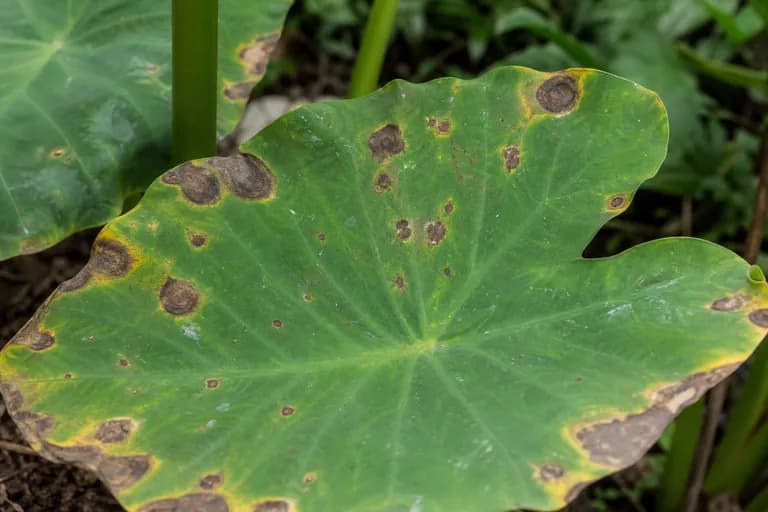
Pulgones
PlagaEn hojas.
Solución de problemas comunes
No resistente al invierno.
Consejos de cultivo
- Moisture is everything with taro. Unlike nearly every other vegetable, taro cannot be overwatered. In paddy culture, maintain 5-10 cm of standing water throughout the growing season. In dryland culture, water deeply every 2-3 days and never allow the soil to dry out — a single drought episode during corm bulking can reduce yields by 40-60%.
- Start with the best planting material you can find. The top 2-3 cm of a mature corm (called the huli) with a portion of the petiole attached produces the fastest, most vigorous growth. Small cormels also work well. Avoid planting old, shriveled, or damaged corms that are prone to rot.
- Partial shade produces the best results in most gardens. Taro evolved as an understory plant and performs optimally with 4-6 hours of direct sun plus filtered light for the remainder of the day. Full tropical sun can scorch leaves and stress plants — provide afternoon shade in hot climates.
- Feed heavily and often. Taro is one of the heaviest-feeding crops in the garden. Apply a nitrogen-rich fertilizer every 3-4 weeks during vegetative growth, then switch to potassium-rich feeds (kelp meal, wood ash) once corms begin bulking at around 4 months. Compost tea applied every 2 weeks gives excellent results.
- Hill the soil around the base of the plant as it grows, similar to potatoes. This encourages larger corm development, prevents the top of the corm from turning green (which causes bitterness), and provides support for the tall, heavy leaf canopy.
- In temperate climates (zones 7-8), use every trick available to extend the season. Start corms indoors 6-8 weeks early, use black plastic mulch to warm the soil, plant against a south-facing wall for reflected heat, and cover with row fabric on cool nights. Every extra week of warm growing conditions translates directly into larger corms.
- Grow in containers if your climate is marginal. A 60-80 liter container (15-20 gallons) placed in a shallow tray kept filled with water mimics paddy conditions beautifully. Containers can be moved indoors or to a greenhouse when temperatures threaten to drop below 15°C (60°F).
- Never eat any part of the taro plant raw. All parts contain calcium oxalate crystals (raphides) that cause intense burning and irritation of the mouth and throat. Thorough cooking — boiling for at least 30-45 minutes, steaming, or baking — completely neutralizes these crystals and makes taro perfectly safe and delicious to eat.
Cultiva tu mejor Taro — y todo lo que la rodea.
Empieza un plan gratis hoy. Diseña tus bancales, coloca tu Taro y deja que PlotMyGarden gestione el momento, el espaciado, las asociaciones y los recordatorios de la semilla a la cesta.
Elige tu Taro
Bun Long
Variedad clásica. 200+ días.
Taro corms sell for $3-6 per pound at specialty and Asian grocery stores, and $6-12 per pound at farmers markets. A single plant producing 2-4 kg of corms represents $13-50 worth of taro at retail prices. Growing 6-10 plants can save $80-300 per season. The savings are even more dramatic for processed taro products — frozen taro costs $5-8 per bag, taro chips sell for $6-10 per bag, and prepared poi runs $8-15 per pound. Growing your own taro also guarantees access to a crop that is frequently unavailable or of poor quality in mainstream grocery stores outside of Hawaii and major Asian markets.
Recetas rápidas
Traditional Hawaiian Poi
45 minThe sacred staple food of Hawaiian culture — taro corms steamed until tender, then pounded into a smooth, starchy paste and thinned with water. Fresh poi has a mild, slightly sweet flavor that develops a pleasant tanginess as it naturally ferments over 2-3 days.
4 ingredientesCrispy Taro Chips
30 minThinly sliced taro fried until golden and shatteringly crisp — a beloved snack across Southeast Asia and the Pacific Islands. The natural starch in taro creates an exceptionally crunchy chip with a subtle nutty sweetness that pairs perfectly with sea salt.
4 ingredientesCoconut Taro Soup
40 minA creamy, comforting soup where cubed taro melts into a rich coconut broth infused with ginger and lemongrass. Common throughout Southeast Asian and Pacific Island cuisines, this soup showcases taro's ability to create a velvety, naturally thickened broth.
7 ingredientesUsos culinarios
Poi, chips de taro, curris.
Qué contiene
Beneficios para la salud
- Taro's high resistant starch content acts as a prebiotic, feeding beneficial gut bacteria (particularly Bifidobacterium and Lactobacillus species) and promoting the production of short-chain fatty acids that support colon health and reduce inflammation.
- Exceptionally rich in potassium (591mg per 100g), taro helps regulate blood pressure by counteracting the effects of sodium and supporting healthy cardiovascular function — particularly important for people on typical high-sodium Western diets.
- Contains a unique protein called tarin, which has demonstrated anti-tumor and immunomodulatory properties in laboratory studies, stimulating the activity of macrophages and other immune cells.
- The high fiber content (4.1g per 100g) combined with resistant starch gives taro a relatively low glycemic index (53-58) compared to other starchy staples like white rice or potatoes, supporting more stable blood sugar levels after meals.
- Rich in vitamin B6, which plays a critical role in over 100 enzyme reactions in the body, including amino acid metabolism, neurotransmitter synthesis, and hemoglobin production for oxygen transport in the blood.
- Taro's hypoallergenic properties make it one of the safest starchy foods for people with food allergies or sensitivities — poi made from taro is medically prescribed as a first food for infants with multiple food allergies.
De dónde viene Taro
Taro (Colocasia esculenta) originated in the tropical wetlands of Southeast Asia, most likely in the region spanning modern-day Malaysia, Indonesia, and northeastern India. It is among the oldest cultivated food crops in human history, with evidence of deliberate cultivation at the Kuk Swamp archaeological site in the highlands of Papua New Guinea dating to approximately 10,000 years ago — making taro agriculture roughly contemporary with the earliest grain cultivation in the Fertile Crescent.
From its Southeast Asian homeland, taro spread in two great waves. The first carried it westward through India and into Africa, where it became a dietary staple in West Africa, Madagascar, and the Nile Delta of Egypt — the ancient Egyptians called it 'kolkas,' a name that survives in the modern Arabic word for taro. The second wave carried taro eastward into the Pacific, where it became the most important food crop of the Austronesian-speaking peoples who colonized Melanesia, Micronesia, and Polynesia over thousands of years.
In Hawaii, taro (kalo) achieved a cultural significance unmatched anywhere else in the world. It was not merely a food but a sacred ancestor — the embodiment of Haloa, the firstborn child of the gods. The sophisticated flooded taro paddy systems (lo'i kalo) developed by Native Hawaiians were engineering marvels that sustained populations of hundreds of thousands across the island chain. At the time of European contact in 1778, Hawaii had an estimated 20,000 acres of taro under cultivation. Colonial disruption, water diversion, and the introduction of foreign diseases devastated both the Hawaiian people and their taro cultivation.
Today, taro remains a staple food for hundreds of millions of people across the tropics. Nigeria is the world's largest producer, followed by China, Cameroon, and Ghana. In the Pacific Islands, taro cultivation is experiencing a cultural renaissance as indigenous communities reclaim traditional agricultural knowledge. Modern breeding programs are developing disease-resistant varieties to combat taro leaf blight, which has devastated crops in Samoa and other Pacific nations.
Taro: ¿sabías que?
Datos fascinantes sobre Taro
Taro is one of the oldest cultivated crops on Earth, with archaeological evidence of taro cultivation in the Kuk Swamp of Papua New Guinea dating back nearly 10,000 years — predating rice and wheat agriculture by thousands of years.
Taro: preguntas frecuentes
¿Cuándo debo plantar Taro?
¿Cuáles son buenas plantas acompañantes para Taro?
¿En qué zonas de rusticidad puede crecer Taro?
¿Cuánto sol necesita Taro?
¿A qué distancia debo espaciar Taro?
¿Qué plagas y enfermedades afectan a Taro?
¿Cómo almaceno Taro después de la cosecha?
¿Cuáles son las mejores variedades de Taro para cultivar?
¿Qué suelo necesita Taro?
Can I grow taro from corms bought at the grocery store?
Why are my taro leaves turning yellow before the plant is mature?
Is it safe to eat taro leaves, and how do I prepare them?
Can taro be grown in a regular garden without standing water?
How long does taro take to mature, and can I speed it up?
What is the difference between taro, eddoe, and malanga?
Acabas de leer la teoría. Ahora cultívala en piloto automático.
Todo lo que hace que Taro sea delicado — el momento, el espaciado, las asociaciones, la ventana de cosecha — es justo lo que PlotMyGarden resuelve por ti, para cada planta de tu huerto.
Un plan que conoce tu clima
Indica tu ubicación una vez. Recibe fechas de siembra, abonado y cosecha basadas en tu última helada real y el pronóstico en vivo — sin adivinar con un sobre genérico.
De la sección “Cuándo plantar”Planificador de bancales de arrastrar y soltar
Diseña bancales sobre una cuadrícula. Cada planta encaja con su espaciado correcto y ves toda la temporada antes de gastar un céntimo en semillas.
De la sección “Cultivo”Conflictos de asociación, detectados a tiempo
Más de 200 buenas y malas combinaciones comprobadas en vivo mientras plantas — para que un error que arruine la temporada nunca llegue a la tierra.
De la sección “Asociaciones”Recordatorios que sí vas a seguir
“Riega las judías.” “Recoge hoy antes de que se pase.” Oportunos, concretos y ligados a las plantas que de verdad cultivas.
De la sección “Cosecha”Escalonado, programado
¿Quieres cosechar seis semanas en vez de seis días? Reparte tus siembras automáticamente y te avisa cuando toca el siguiente lote.
De la sección “Cuándo plantar”Un registro que se vuelve más listo
Cada cosecha que registras le enseña tu huerto. El plan del año que viene parte de lo que de verdad funcionó en tu suelo, no en un manual.
De la sección “Resumen”Planta estos junto a Taro
Más Hortalizas de raíz
Cultiva tu mejor Taro — y todo lo que la rodea.
Empieza un plan gratis hoy. Diseña tus bancales, coloca tu Taro y deja que PlotMyGarden gestione el momento, el espaciado, las asociaciones y los recordatorios de la semilla a la cesta.