Batata Garnet
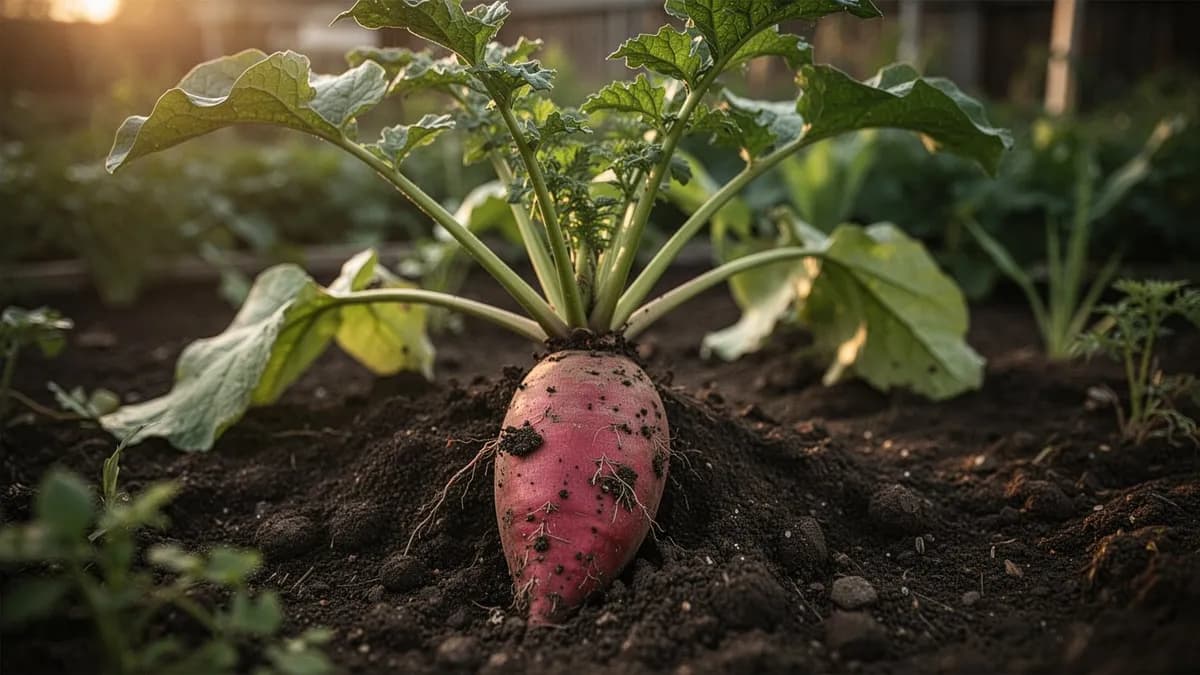
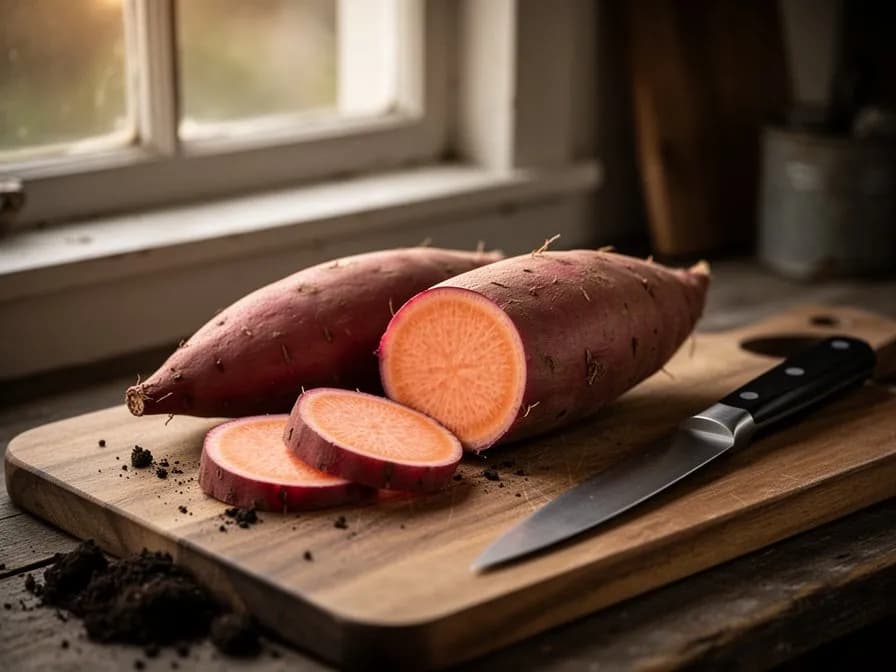
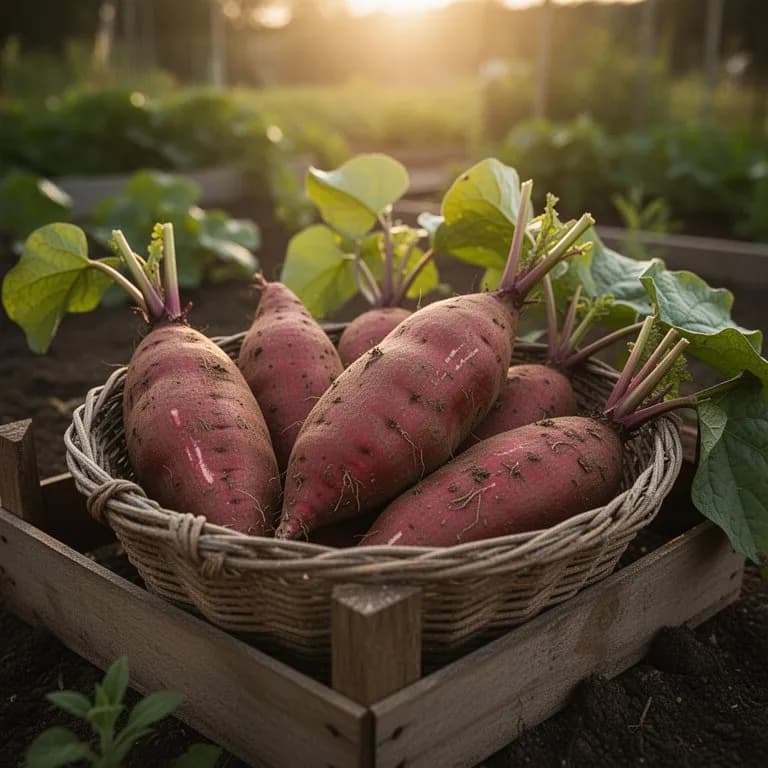
La batata Garnet (Ipomoea batatas) es una variedad de boniato distinguida por su llamativa piel rojo-granate intenso y su pulpa anaranjada húmeda y dulce.





En esta páginaResumen
Conoce Batata Garnet
La batata Garnet (Ipomoea batatas) es una variedad de boniato distinguida por su llamativa piel rojo-granate intenso y su pulpa anaranjada húmeda y dulce. Desarrollada en Estados Unidos, es una de las variedades más populares en el mercado por su textura especialmente cremosa y su alto contenido en betacaroteno. Su sabor rico y dulce la hace ideal para recetas donde la batata es protagonista.
Cuándo plantar Batata Garnet
Propague mediante esquejes (slips) separados de un boniato Garnet maduro colocado parcialmente en agua en un lugar cálido y luminoso, 6-8 semanas antes del trasplante al exterior. Separe los brotes cuando tengan 15-20 cm y enraícelos en agua. Plante los esquejes cuando la temperatura del suelo supere los 18 °C, enterrando dos tercios del tallo en los caballones preparados.
Tu año de Batata Garnet
Ajustado a Zona 7 · temporada típica · la helada se va hacia el 2 abr y vuelve hacia el 1 nov
Planta Batata Garnet May – Jun y cosecha Sep – Oct. Consulta los métodos de plantación y elige tu clima para adaptar los periodos.
Cómo cultivar Batata Garnet
La batata Garnet requiere las mismas condiciones de cultivo que la Beauregard: una temporada cálida de al menos 90-120 días, pleno sol y suelo suelto y bien drenado con pH entre 5,8 y 6,5. Forme caballones elevados de 20-30 cm para mejorar el drenaje y la temperatura del suelo.
Propague mediante esquejes (slips) obtenidos de boniatos maduros colocados en agua 6-8 semanas antes de la plantación. Cuando los brotes tengan 15-20 cm, sepárelos y enraícelos. Plante los esquejes en los caballones con 30-40 cm de separación y 90 cm entre hileras, enterrando dos tercios del tallo.
Riegue moderadamente una vez establecidas las plantas; las batatas toleran bien periodos secos. Evite el exceso de nitrógeno que estimula el crecimiento de las enredaderas a expensas de los tubérculos. Aplique un fertilizante rico en potasio a mitad de temporada para favorecer el llenado de los tubérculos.
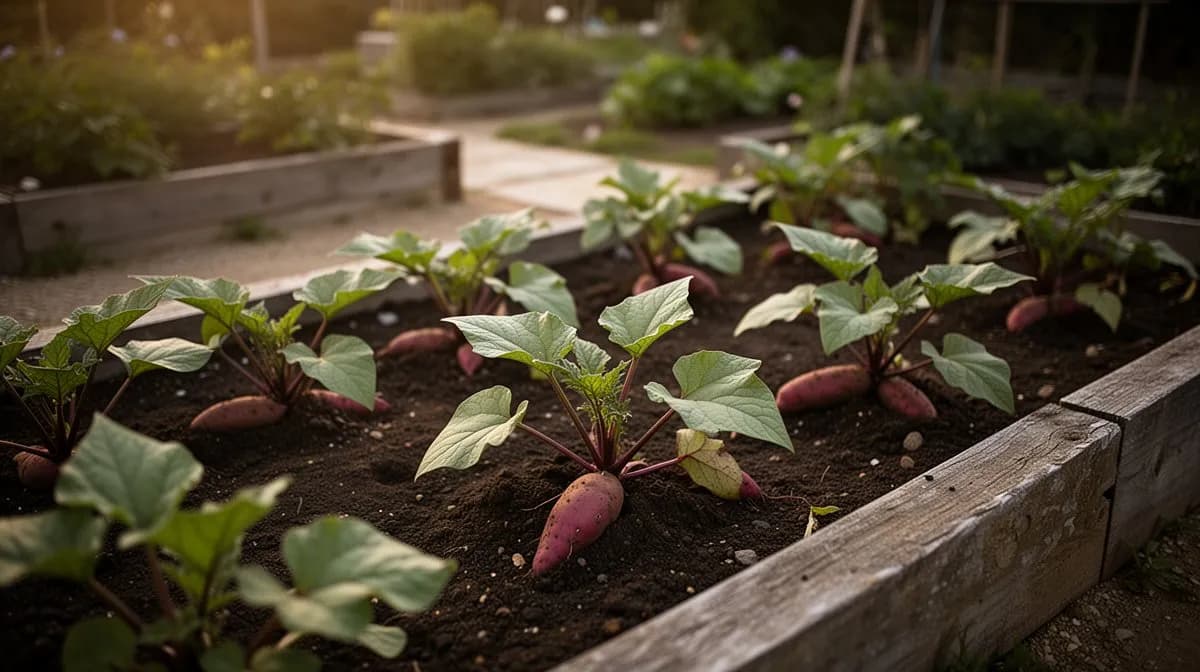
10 plantas caben en un bancal de 120 × 240 cm
Cada Batata Garnet pide 45 cm de margen. El planificador guarda ese marco por ti — cada planta, cada bancal.
Los mejores vecinos de Batata Garnet
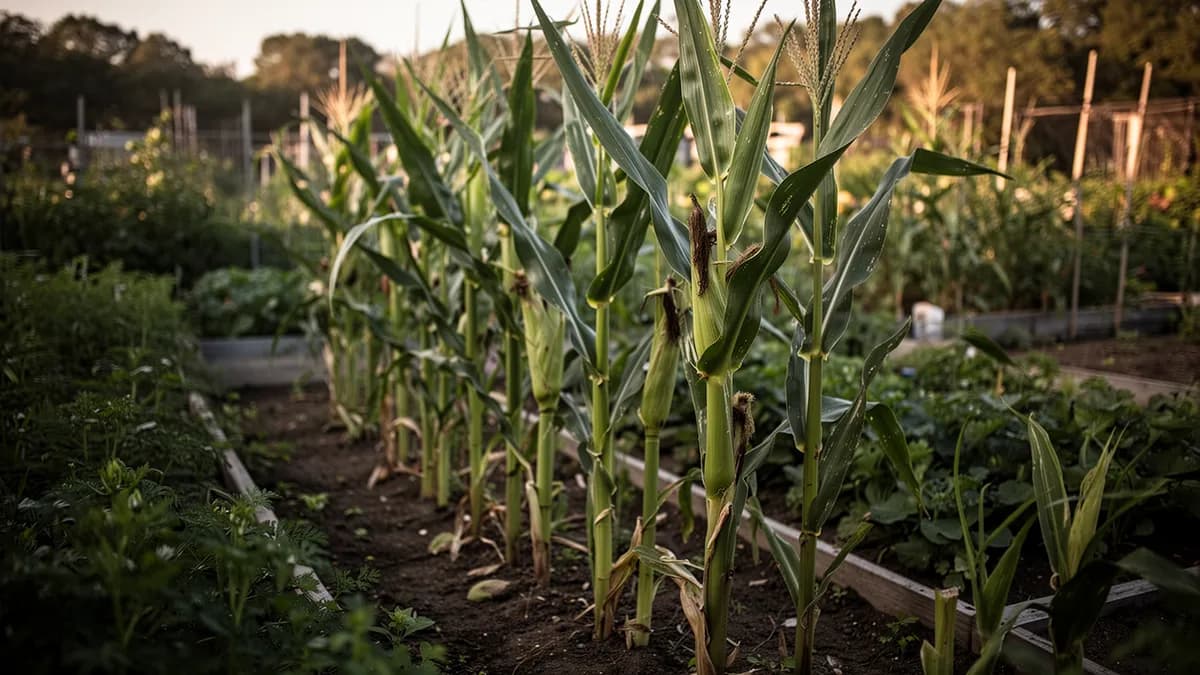
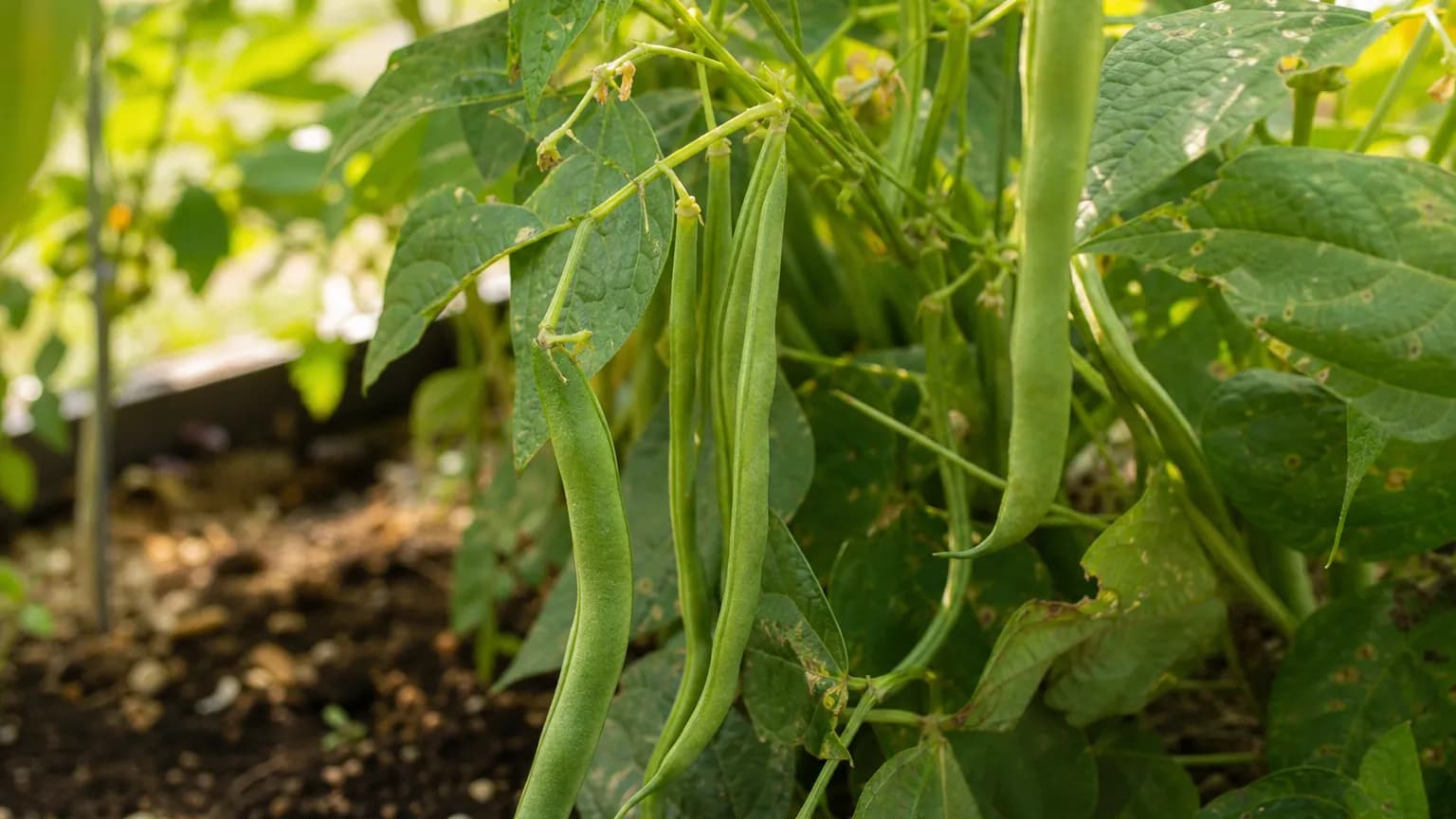
La batata Garnet crece bien junto a frijoles y otras leguminosas que fijan nitrógeno. El maíz dulce es un buen compañero que no compite directamente. Las hierbas aromáticas como tomillo, romero y salvia ayudan a disuadir ciertos insectos del suelo. Evite plantarla cerca de calabazas y melones, que pueden competir por espacio y nutrientes.
Maíz va a su lado.
Saber de huerto de siempre, cotejado con la tabla real de Batata Garnet — prueba cualquier planta que cultives.
Prueba Batata Garnet en un bancal, aquí mismo
Un bancal real del planificador con Batata Garnet ya plantado. Toca una planta compañera para colocarla y mira cómo responde la comprobación de vecinos: verde para buenos vecinos, rojo si hay conflicto.


Guías de cultivo relacionadas
Abónalo bien
La batata Garnet necesita suelo arenoso, suelto y bien drenado con pH entre 5,8 y 6,5. Los caballones elevados son esenciales para el drenaje y el calentamiento del suelo. Incorpore compost antes de la plantación pero evite el estiércol fresco. Use fertilizante bajo en nitrógeno y alto en potasio (5-10-10) para favorecer tubérculos grandes y dulces.
Temperatura ideal
Compatibilidad de zonas de rusticidad
De la semilla a la cosecha, etapa por etapa
Producción de brotes
Las batatas no se cultivan a partir de semillas, sino de brotes — pequeños tallos enraizados que nacen de un tubérculo maduro. Un tubérculo Garnet sano, suspendido en agua o enterrado hasta la mitad en sustrato húmedo, producirá de 8 a 12 brotes en 4 a 6 semanas. Cada brote desarrolla su propio sistema de raíces y de 4 a 6 hojas antes de separarlo del tubérculo madre.
Trasplante y establecimiento
Los brotes se trasplantan al jardín cuando las temperaturas nocturnas se mantienen por encima de 15 °C (60 °F). Las plantas se colocan profundamente, enterrando la mayor parte del tallo y dejando expuestas solo las 3 o 4 hojas superiores. Las raíces se desarrollan a lo largo de los nudos del tallo enterrado en 7 a 10 días, y la planta empieza a establecer su red subterránea.
Crecimiento de las guías
La planta entra en una fase vegetativa vigorosa, produciendo largas guías rastreras de hasta 3 metros que se extienden rápidamente sobre el suelo. Las hojas en forma de corazón se desarrollan en capas densas y superpuestas que sombrean las malas hierbas. Debajo de la superficie del suelo, las raíces de reserva comienzan a formarse en los nudos del tallo mientras la planta dirige la energía de la fotosíntesis al desarrollo subterráneo.
Cosecha y curado
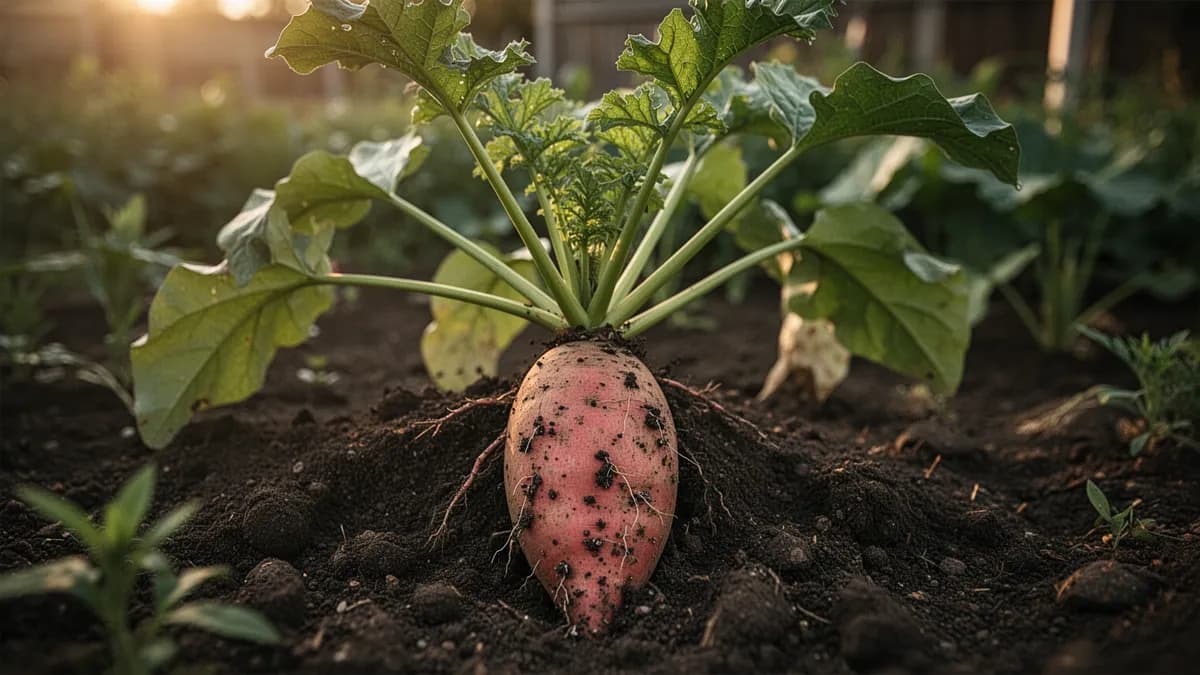
Los tubérculos están listos para cosechar cuando las guías comienzan a amarillear y a secarse de forma natural, normalmente entre 100 y 120 días después del trasplante. La piel de las batatas Garnet maduras adquiere un color rojo anaranjado intenso. Después de desenterrarlos con cuidado, los tubérculos deben curarse en un ambiente cálido y húmedo para sanar las heridas de la piel, convertir el almidón en azúcar y desarrollar todo su sabor dulce.
Después de la cosecha
Después de la cosecha y el curado, las batatas Garnet se almacenan para su uso posterior. El cultivo se maneja como una hortaliza de estación cálida y se trata como anual en el jardín.
Empieza la producción de brotes en interiores de 6 a 8 semanas antes de la última fecha de helada. Mantén el tubérculo cálido (24–27 °C) y con luz brillante indirecta. Cambia el agua cada pocos días para evitar la pudrición. Los brotes están listos para separarse cuando tienen entre 15 y 20 cm de tallo y raíces visibles.
Cuidar Batata Garnet mes a mes
Qué hacer cada mes para tu Batata Garnet
Octubre
Mes actualPrimary harvest month for most zones. Dig carefully on a dry day using a garden fork, starting 30 cm from the plant center. Handle tubers gently as they bruise easily. Begin curing immediately at 27-32°C (80-90°F) with 85-90% humidity for 10-14 days.
Ten claro qué hacer en tu huerto, cada mes
Un correo al empezar cada mes: qué sembrar, plantar y hacer ahora mismo — para tu Batata Garnet y todo lo que crece alrededor. Más un breve curso inicial para esquivar los errores clásicos.
- Qué hacer ahora mismo
- Ajustado a tu temporada
- Curso inicial incluido
Cosechar Batata Garnet
Coseche la batata Garnet antes de las primeras heladas, entre 90 y 120 días después de la plantación. Los tubérculos están listos cuando las hojas empiezan a amarillear. Cave con una horca a 30 cm de la base de la planta para evitar daños. Maneje los tubérculos con extremo cuidado, ya que la piel fresca es muy delicada.
se supone que plantas al comenzar el periodo — indica tu fecha real
Cosecha unos 110 días después de plantar, o cuando las guías empiecen a amarillear.
Almacenamiento y conservación
El curado es esencial para la Garnet: mantenga los tubérculos a 27-32 °C con alta humedad durante 7-10 días para desarrollar la dulzura y cicatrizar las heridas. Después, almacene a 13-15 °C en un lugar seco y oscuro durante 6-12 meses. Nunca refrigere por debajo de 10 °C. Las batatas curadas desarrollan más dulzor con el tiempo de almacenamiento.
Qué falla — y cómo solucionarlo
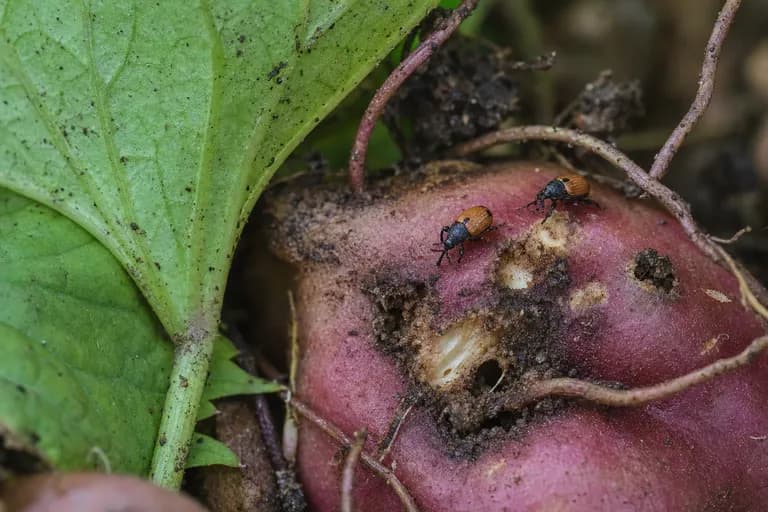
Gusano alambre (Elateridae)
PlagaTúneles y agujeros redondos en los tubérculos causados por larvas duras y amarillentas que viven en el suelo. Los daños permiten la entrada de patógenos secundarios que causan pudrición.
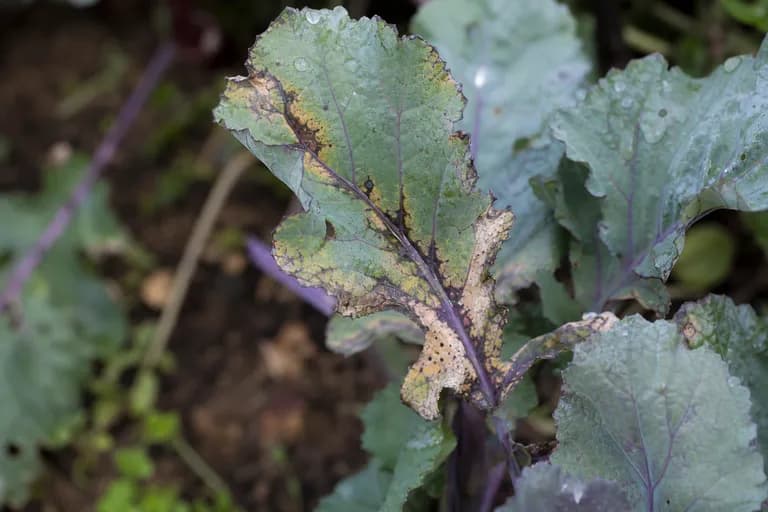
Pudrición por Rhizopus (Rhizopus stolonifer)
EnfermedadLos tubérculos cosechados desarrollan áreas blandas y acuosas cubiertas de moho negro. La pudrición se extiende rápidamente y afecta a los tubérculos vecinos en almacenamiento.
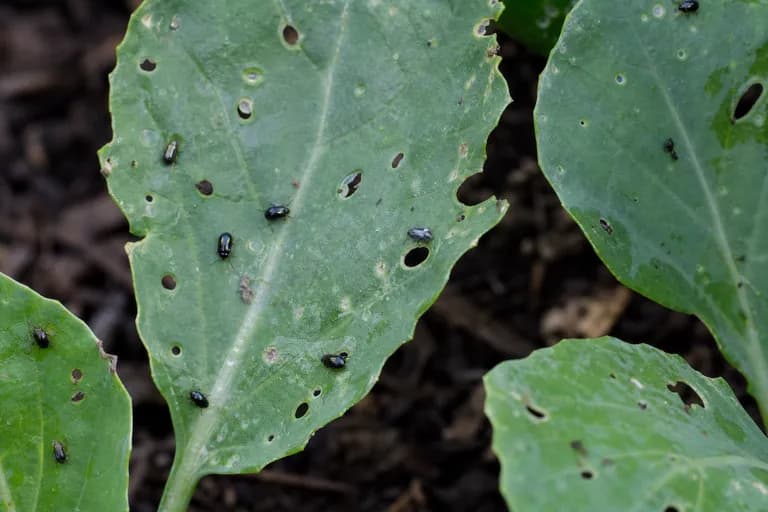
Nematodo del nudo radical (Meloidogyne spp.)
PlagaLos tubérculos desarrollan protuberancias y deformaciones (agallas) en la superficie. El crecimiento de la planta se reduce y los tubérculos son pequeños e irregulares.
Solución de problemas comunes
La piel rojo-granate de la Garnet puede mostrar más visiblemente las marcas de los gusanos alambre que las variedades de piel clara. El exceso de riego durante las últimas semanas antes de la cosecha produce tubérculos acuosos y de peor conservación. En climas frescos, el uso de acolchado plástico negro y protección contra heladas es imprescindible para lograr una cosecha exitosa.
Consejos de cultivo
- Grow your own slips to save money and ensure disease-free starts. Suspend a healthy organic Garnet sweet potato in a jar of water using toothpicks, with the bottom third submerged. Place in a warm, bright location and change water every 2-3 days. Each tuber produces 8-12 slips in 4-6 weeks.
- Build raised mounds or ridges of loose, well-drained soil at least 25 cm high for planting. Sweet potatoes develop misshapen, undersized tubers in heavy or compacted soil. Mix in coarse sand and compost to create the ideal loose, friable texture that allows tubers to expand freely.
- Use black plastic mulch to warm soil before planting and maintain heat throughout the season. In cooler zones (5-7), this technique can add the equivalent of 2-3 weeks to your growing season by raising soil temperatures 3-5°C above ambient — critical for a crop that needs 100-120 frost-free days.
- Do not over-fertilize, especially with nitrogen. Excess nitrogen produces enormous, lush vines but small, spindly tubers. Apply a single side-dressing of low-nitrogen fertilizer (5-10-10) about 4 weeks after transplanting and then stop feeding entirely.
- Lift and redirect spreading vines back toward the center of the bed every 1-2 weeks. Vines that root at nodes along the surface produce small tubers at each rooting point instead of concentrating energy into the main root cluster, significantly reducing your usable harvest.
- Harvest on a dry, sunny day after vines have begun to yellow naturally, usually 100-120 days after transplanting. Use a garden fork inserted 30 cm from the plant center and lever tubers up gently — never pull vines to extract tubers as this snaps them and causes storage rot.
- Curing is not optional — it is the single most important step for flavor and storage life. Freshly dug sweet potatoes taste starchy and bland. Curing at 27-32°C (80-90°F) with 85-90% humidity for 10-14 days converts starch to sugar, heals skin wounds, and enables storage for up to 12 months.
- Never refrigerate sweet potatoes. Cold temperatures below 10°C (50°F) cause chilling injury that converts sugars back to starch, creates an unpleasant hard core in the center, and dramatically shortens storage life. Store cured tubers at 13-15°C (55-60°F) in a dark, ventilated location.
Cultiva tu mejor Batata Garnet — y todo lo que la rodea.
Empieza un plan gratis hoy. Diseña tus bancales, coloca tu Batata Garnet y deja que PlotMyGarden gestione el momento, el espaciado, las asociaciones y los recordatorios de la semilla a la cesta.
Elige tu Batata Garnet
Garnet (Diane)
La variedad original con piel rojo-granate intenso y pulpa naranja muy húmeda y dulce. Excelente para hornear y hacer puré. 100-110 días.
Red Garnet
Selección con color de piel aún más intenso y tubérculos más uniformes. Pulpa cremosa de excelente sabor. Buena capacidad de almacenamiento. 95-105 días.
Jewel
Variedad similar a la Garnet con piel cobriza-rojiza y pulpa naranja húmeda. Muy productiva y resistente a varias enfermedades del suelo. 100-110 días.
Georgia Jet
Variedad de maduración temprana con piel rojiza y pulpa naranja. Ideal para climas con temporadas más cortas. 90-100 días.
A single Garnet sweet potato slip costing $1-3 (or free if grown from a grocery store tuber) can produce 1.5-3.5 kg of tubers per plant. With organic sweet potatoes selling for $3-5 per pound at grocery stores, just 6-8 plants can yield 10-25 kg of sweet potatoes worth $65-275 at retail prices. The savings are even more dramatic considering that properly cured sweet potatoes store for 6-12 months without refrigeration, providing homegrown produce deep into winter when fresh local vegetables are scarce and expensive.
Recetas rápidas
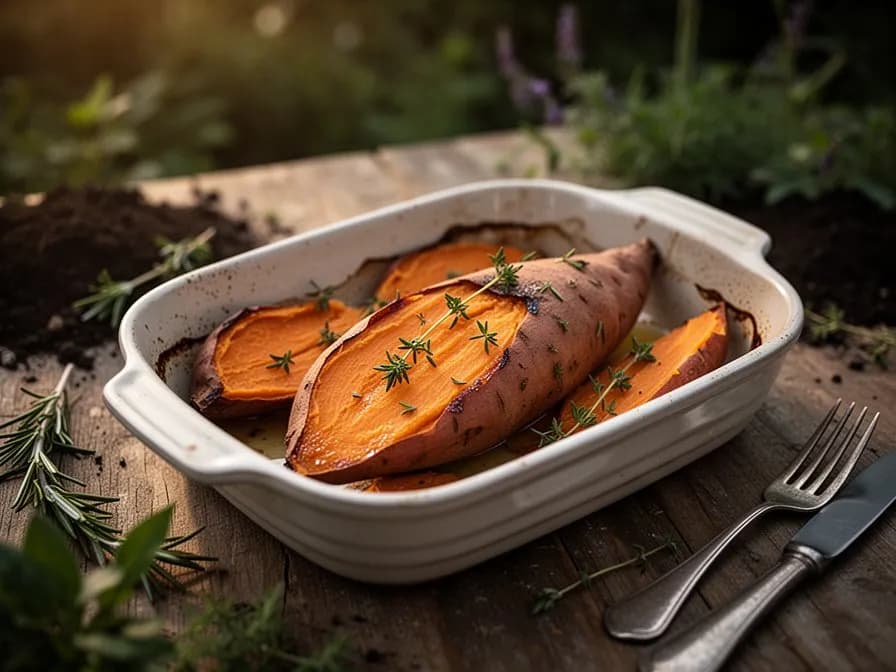
Perfect Baked Sweet Potato
55 minThe simplest and most rewarding way to enjoy homegrown Garnet sweet potatoes. Low-and-slow baking caramelizes the natural sugars and transforms the dense flesh into a silky, almost custard-like interior with deeply sweet flavor that needs no embellishment.
4 ingredientesCrispy Baked Sweet Potato Fries
35 minGolden and crispy on the outside, tender and sweet on the inside — these oven-baked fries are a healthier alternative to deep-fried versions. The key is cutting uniformly, using cornstarch for crunch, and giving each fry enough space on the pan.
7 ingredientesSweet Potato and Black Bean Chili
40 minA hearty, naturally sweet and smoky vegetarian chili where cubed Garnet sweet potatoes add body, creaminess, and vibrant color. The combination of earthy black beans, warming spices, and sweet potato creates a deeply satisfying one-pot meal.
10 ingredientesUsos culinarios
La batata Garnet es especialmente apreciada por su textura húmeda y cremosa al hornearse. Es la variedad preferida para purés suaves con mantequilla y especias cálidas como canela y nuez moscada. Se prepara gratinada con marshmallows en la tradición americana, en sopas crema aterciopeladas, y en tartas dulces. También produce excelentes papas fritas al horno, chips crujientes y gnocchi de boniato.
Qué contiene
Beneficios para la salud
- Garnet sweet potatoes are among the most concentrated food sources of beta-carotene on the planet — a single medium tuber provides nearly 400% of the daily value of vitamin A, essential for maintaining healthy vision, robust immune function, and skin cell regeneration.
- The complex carbohydrates in sweet potatoes have a moderate glycemic index that is further reduced by the high fiber content, providing sustained energy without the sharp blood sugar spikes associated with refined carbohydrates.
- Rich in potassium (475mg per serving), which helps regulate blood pressure by counteracting the effects of excess sodium, supporting healthy heart rhythm, and maintaining proper fluid balance in the body.
- Contains powerful antioxidants including beta-carotene, anthocyanins (in the skin), and sporamins (unique storage proteins) that help neutralize free radicals and reduce chronic inflammation linked to heart disease and certain cancers.
- The high fiber content (3.8g per medium tuber) supports digestive health by feeding beneficial gut bacteria, promoting regular bowel movements, and contributing to the feeling of fullness that aids weight management.
- Provides meaningful amounts of manganese, copper, and vitamins B5 and B6, which collectively support bone health, energy metabolism, red blood cell production, and neurotransmitter synthesis.
De dónde viene Batata Garnet
The sweet potato (Ipomoea batatas) originated in Central or South America, with the oldest known remains discovered in Peruvian caves dating to approximately 8000 BCE. Indigenous peoples of the tropical Americas domesticated wild Ipomoea species over thousands of years, selectively breeding for larger, sweeter storage roots. By the time European explorers arrived, sweet potatoes were cultivated throughout Central America, the Caribbean, and much of South America. Christopher Columbus brought sweet potatoes back to Spain after his first voyage in 1492, and from there they spread rapidly through Europe, Africa, and Asia via Portuguese and Spanish trade routes.
The Garnet variety (also called Garnet Yam or Red Garnet) was developed in the United States during the mid-20th century and quickly became one of the most popular home garden and commercial varieties due to its deep reddish-orange skin, intensely orange flesh, and reliably sweet, moist texture when cooked. It belongs to the 'moist-fleshed' category of American sweet potatoes that became commercially dominant after Louisiana State University's agricultural program began releasing improved orange-fleshed cultivars in the 1930s-1960s. These varieties were deliberately marketed as 'yams' to differentiate them from the older, drier, white-fleshed sweet potatoes that had been the American standard.
Today, sweet potatoes are the seventh most important food crop in the world by production volume. China produces roughly 55% of the global harvest, followed by several African nations where sweet potatoes are a critical staple food and key weapon against vitamin A deficiency, which affects millions of children. Orange-fleshed varieties like Garnet and Beauregard have been at the center of international biofortification efforts, with breeding programs in sub-Saharan Africa distributing high-beta-carotene cultivars to combat malnutrition. The 2016 World Food Prize was awarded to researchers who led this orange-fleshed sweet potato initiative, recognizing its profound impact on global nutrition.
Batata Garnet: ¿sabías que?
Datos fascinantes sobre Batata Garnet
Despite the name, sweet potatoes are not actually potatoes at all. Sweet potatoes (Ipomoea batatas) belong to the morning glory family (Convolvulaceae), while true potatoes (Solanum tuberosum) are in the nightshade family — they are not even distantly related and originated on different continents.
Batata Garnet: preguntas frecuentes
¿Cuándo debo plantar Batata Garnet?
¿Cuáles son buenas plantas acompañantes para Batata Garnet?
¿En qué zonas de rusticidad puede crecer Batata Garnet?
¿Cuánto sol necesita Batata Garnet?
¿A qué distancia debo espaciar Batata Garnet?
¿Qué plagas y enfermedades afectan a Batata Garnet?
¿Cómo almaceno Batata Garnet después de la cosecha?
¿Cuáles son las mejores variedades de Batata Garnet para cultivar?
¿Qué suelo necesita Batata Garnet?
How do I grow sweet potato slips at home?
Why are my sweet potatoes small or oddly shaped?
Do I have to cure sweet potatoes after harvest?
Can I grow sweet potatoes in containers?
What is the difference between sweet potatoes and yams?
Can I eat sweet potato leaves and vines?
Acabas de leer la teoría. Ahora cultívala en piloto automático.
Todo lo que hace que Batata Garnet sea delicado — el momento, el espaciado, las asociaciones, la ventana de cosecha — es justo lo que PlotMyGarden resuelve por ti, para cada planta de tu huerto.
Un plan que conoce tu clima
Indica tu ubicación una vez. Recibe fechas de siembra, abonado y cosecha basadas en tu última helada real y el pronóstico en vivo — sin adivinar con un sobre genérico.
De la sección “Cuándo plantar”Planificador de bancales de arrastrar y soltar
Diseña bancales sobre una cuadrícula. Cada planta encaja con su espaciado correcto y ves toda la temporada antes de gastar un céntimo en semillas.
De la sección “Cultivo”Conflictos de asociación, detectados a tiempo
Más de 200 buenas y malas combinaciones comprobadas en vivo mientras plantas — para que un error que arruine la temporada nunca llegue a la tierra.
De la sección “Asociaciones”Recordatorios que sí vas a seguir
“Riega las judías.” “Recoge hoy antes de que se pase.” Oportunos, concretos y ligados a las plantas que de verdad cultivas.
De la sección “Cosecha”Escalonado, programado
¿Quieres cosechar seis semanas en vez de seis días? Reparte tus siembras automáticamente y te avisa cuando toca el siguiente lote.
De la sección “Cuándo plantar”Un registro que se vuelve más listo
Cada cosecha que registras le enseña tu huerto. El plan del año que viene parte de lo que de verdad funcionó en tu suelo, no en un manual.
De la sección “Resumen”Planta estos junto a Batata Garnet
Más Hortalizas de raíz
Cultiva tu mejor Batata Garnet — y todo lo que la rodea.
Empieza un plan gratis hoy. Diseña tus bancales, coloca tu Batata Garnet y deja que PlotMyGarden gestione el momento, el espaciado, las asociaciones y los recordatorios de la semilla a la cesta.