Shungiku
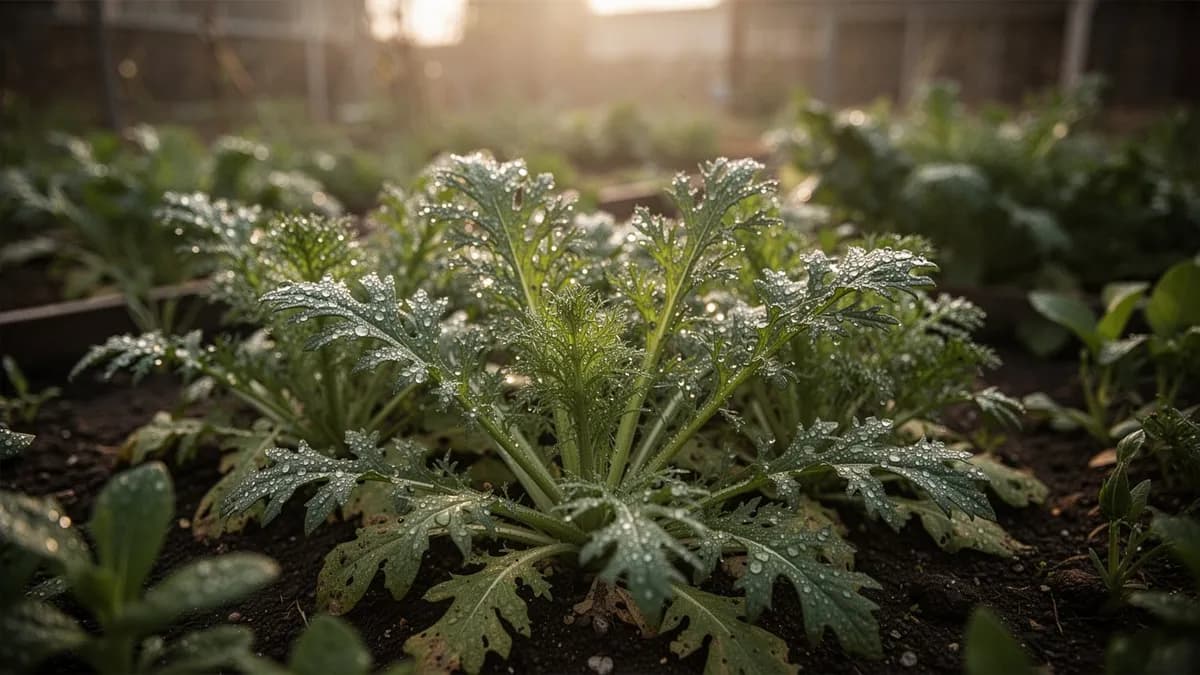
El shungiku (Glebionis coronaria), también conocido como crisantemo comestible o tong hao, es una planta anual originaria del Mediterráneo ampliamente cultivada en la cocina asiática.





En esta páginaResumen
Conoce Shungiku
El shungiku (Glebionis coronaria), también conocido como crisantemo comestible o tong hao, es una planta anual originaria del Mediterráneo ampliamente cultivada en la cocina asiática. Sus hojas aromáticas de sabor ligeramente amargo y herbáceo con notas florales son un ingrediente esencial en platos japoneses, chinos y coreanos, especialmente en sopas y guisos calientes.
Cuándo plantar Shungiku
Siembre las semillas directamente en el exterior en primavera temprana u otoño, ya que el shungiku no tolera bien el trasplante. Coloque las semillas a 0,5-1 cm de profundidad en hileras separadas 20-30 cm. La germinación ocurre en 7-14 días a temperaturas de 10-20 °C. Para una cosecha continua, realice siembras sucesivas cada 2-3 semanas. En climas cálidos, la siembra de otoño produce los mejores resultados.
Tu año de Shungiku
Ajustado a Zona 7 · temporada típica · la helada se va hacia el 2 abr y vuelve hacia el 1 nov
Planta Shungiku Mar – Abr, Sep – Oct y cosecha May – Jun, Oct – Nov. Consulta los métodos de plantación y elige tu clima para adaptar los periodos.
Cómo cultivar Shungiku
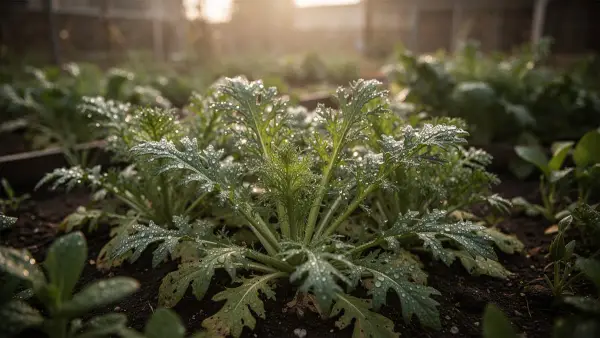
El shungiku prefiere temperaturas frescas entre 12 y 20 °C y se espiga rápidamente con calor, por lo que es ideal para cultivo en primavera temprana y otoño. Elija un lugar con sol pleno o semisombra ligera, especialmente en climas cálidos donde la sombra de la tarde retrasa el espigado. El suelo debe ser fértil, bien drenado y con pH entre 6,0 y 7,0.
Siembre las semillas directamente a una profundidad de 0,5-1 cm en hileras separadas 20-30 cm. Aclare las plántulas a 10-15 cm de separación cuando tengan 5 cm de altura; las plántulas retiradas son comestibles. Realice siembras sucesivas cada 2-3 semanas para una cosecha continua durante toda la temporada fresca.
Riegue de forma regular y uniforme para mantener el suelo húmedo pero sin encharcamientos. El estrés hídrico, junto con las temperaturas altas, acelera el espigado. Aplique un acolchado ligero para mantener el suelo fresco y húmedo. Coseche las hojas exteriores regularmente para estimular el crecimiento continuo y retrasar la floración.
72 plantas caben en un bancal de 120 × 240 cm
Cada Shungiku pide 20 cm de margen. El planificador guarda ese marco por ti — cada planta, cada bancal.
Los mejores vecinos de Shungiku
El shungiku crece bien junto a otras verduras asiáticas como el pak choi, el mizuna y la mostaza. Su aroma fuerte puede ayudar a disuadir ciertos insectos del huerto. También es buen compañero de lechugas y espinacas, que comparten preferencias de cultivo similares en clima fresco. Evite asociarlo con plantas que requieren mucho calor.
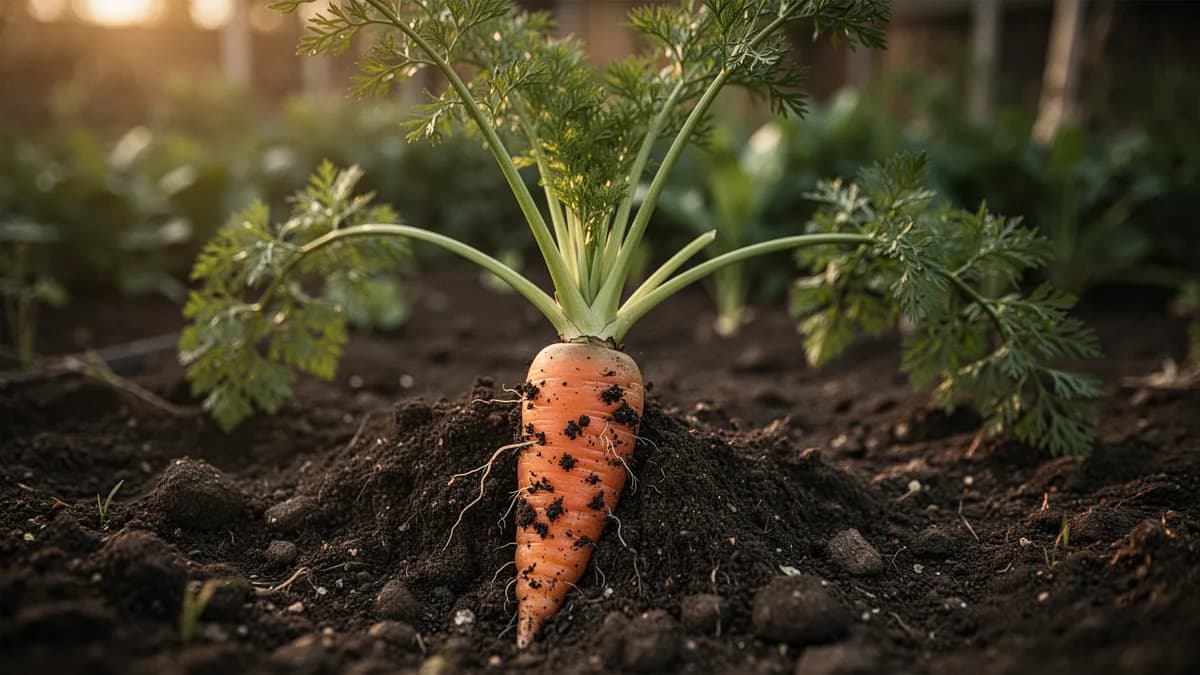
Zanahoria va a su lado.
Saber de huerto de siempre, cotejado con la tabla real de Shungiku — prueba cualquier planta que cultives.
Prueba Shungiku en un bancal, aquí mismo
Un bancal real del planificador con Shungiku ya plantado. Toca una planta compañera para colocarla y mira cómo responde la comprobación de vecinos: verde para buenos vecinos, rojo si hay conflicto.


Guías de cultivo relacionadas
Abónalo bien
El shungiku crece mejor en suelo fértil, bien drenado y rico en materia orgánica, con pH entre 6,0 y 7,0. Incorpore compost bien descompuesto antes de la siembra. Aplique un fertilizante equilibrado al momento de la siembra y una cobertura ligera de compost a mitad de temporada. Evite el exceso de nitrógeno que puede producir follaje blando y susceptible a plagas.
Temperatura ideal
Compatibilidad de zonas de rusticidad
De la semilla a la cosecha, etapa por etapa
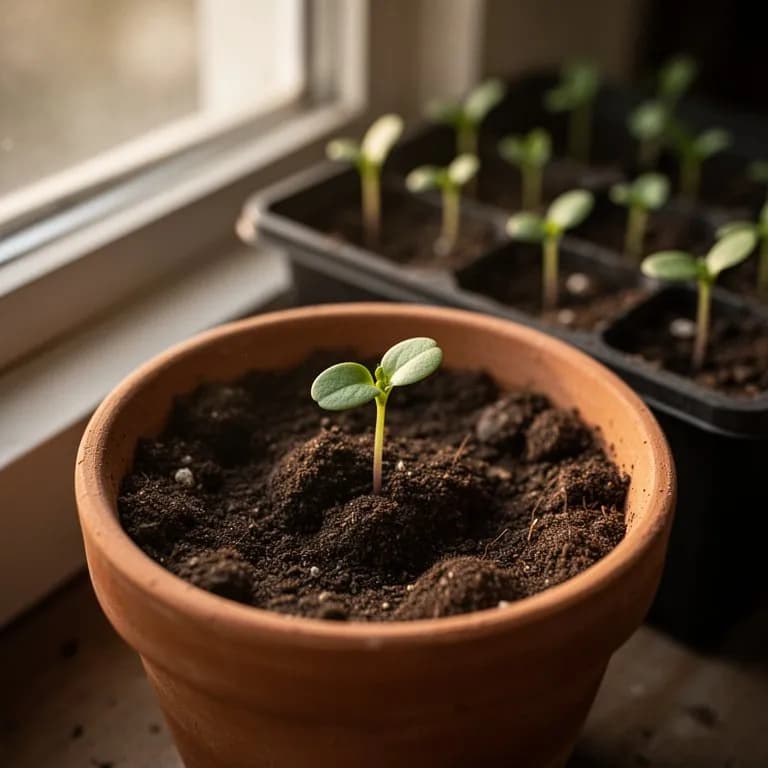
Germinación de semillas
Las semillas diminutas germinan con facilidad en suelo fresco y producen un par de cotiledones estrechos.
Desarrollo de plántulas
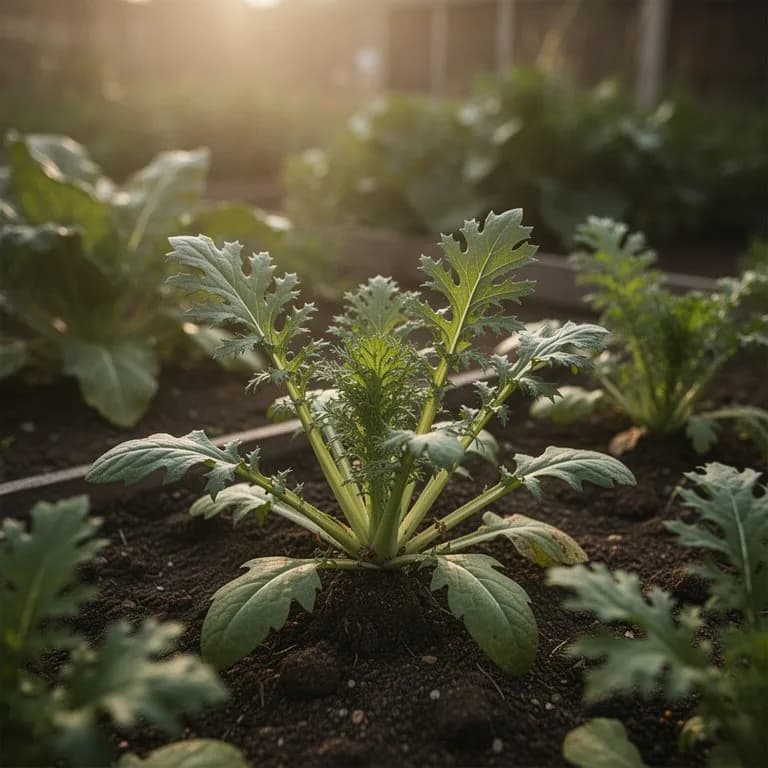
Aparecen las hojas verdaderas con la característica forma profundamente lobulada del crisantemo. Las plántulas desarrollan una roseta compacta de follaje aromático. El crecimiento es constante en condiciones frescas, pero se ralentiza con calor por encima de 25°C (77°F).
Crecimiento de roseta
Las plantas forman una roseta frondosa de hojas aromáticas y profundamente dentadas. Esta es la fase principal de cosecha para obtener las hojas más tiernas y de sabor suave. Las hojas son de un verde intenso y desprenden un fuerte aroma a crisantemo al frotarlas.
Cosecha activa
Las plantas producen varios brotes laterales después de los primeros cortes, formando un crecimiento más tupido con abundantes hojas y tallos tiernos. El sabor se intensifica ligeramente a medida que maduran, pero sigue siendo agradable cuando se cosechan con regularidad.
Espigado y floración
Cuando suben las temperaturas o aumenta la duración del día, el tallo central se alarga y produce flores tipo margarita de color amarillo brillante o amarillo y blanco. Las hojas se vuelven más amargas después de comenzar el espigado. Las flores son comestibles y atraen a los polinizadores.
Mantén el suelo constantemente húmedo pero no encharcado durante la germinación. Siembra escalonadamente cada 2-3 semanas para una cosecha continua. La luz favorece la germinación: no entierres las semillas demasiado profundo.
Cuidar Shungiku mes a mes
Qué hacer cada mes para tu Shungiku
Octubre
Mes actualPeak fall harvest begins. Cut-and-come-again harvesting works beautifully in the mild autumn weather. Apply light mulch around plants. In zones 7-8, begin protecting with row cover for extended production.
Ten claro qué hacer en tu huerto, cada mes
Un correo al empezar cada mes: qué sembrar, plantar y hacer ahora mismo — para tu Shungiku y todo lo que crece alrededor. Más un breve curso inicial para esquivar los errores clásicos.
- Qué hacer ahora mismo
- Ajustado a tu temporada
- Curso inicial incluido
Cosechar Shungiku
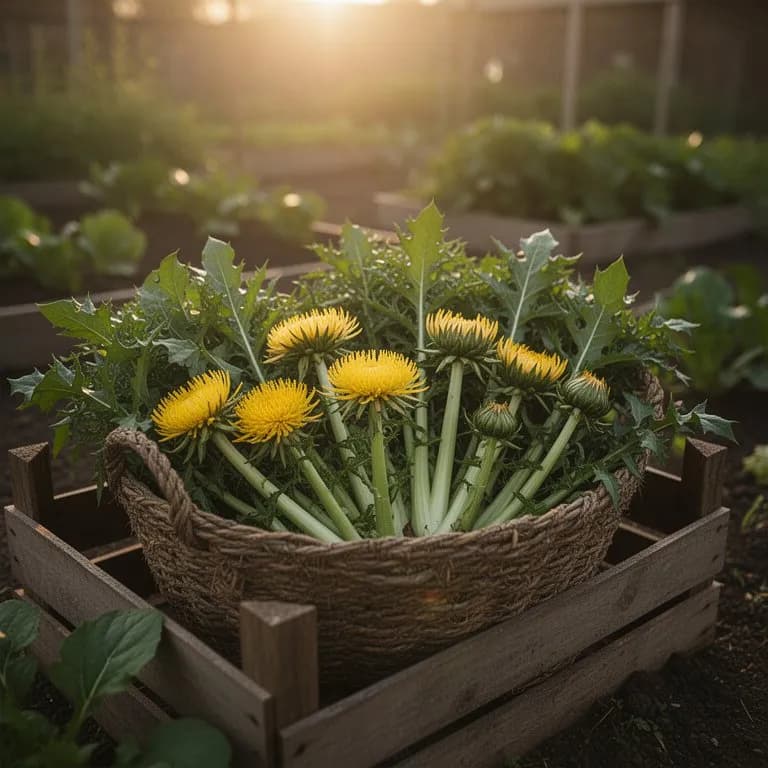
Coseche las hojas jóvenes del shungiku cuando las plantas alcancen 15-20 cm de altura, generalmente entre 40 y 50 días después de la siembra. Corte las hojas exteriores con tijeras o coseche la planta entera cortando a 5 cm del suelo para estimular el rebrote. Las hojas más jóvenes tienen el sabor más delicado; las hojas maduras y las flores son más amargas.
se supone que plantas al comenzar el periodo — indica tu fecha real
Empieza a cosechar cuando las plantas alcancen 15-20 cm de altura, normalmente 35-45 días después de la siembra. Recoge las hojas antes de que aparezcan los botones florales para obtener el sabor más suave y dulce.
Almacenamiento y conservación
Las hojas frescas de shungiku son muy perecederas y se conservan solo 3-5 días en el refrigerador envueltas en un paño húmedo dentro de una bolsa perforada. Para prolongar su disponibilidad, blanquee las hojas brevemente (30 segundos) y congélelas en porciones individuales. Las hojas secas pierden gran parte de su aroma, por lo que no es un método de conservación recomendable.
Qué falla — y cómo solucionarlo
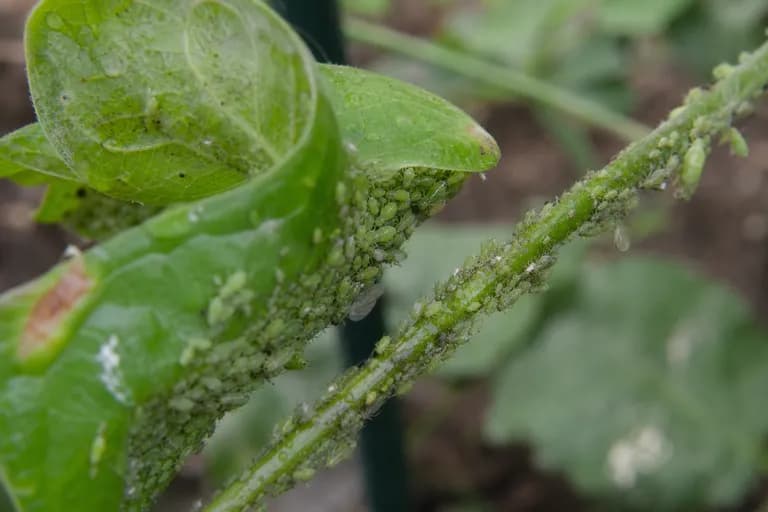
Pulgones (Aphididae)
PlagaColonias de insectos verdes o negros en los brotes tiernos y el envés de las hojas. Causan enrollamiento foliar, debilitan la planta y segregan melaza que atrae hongos.
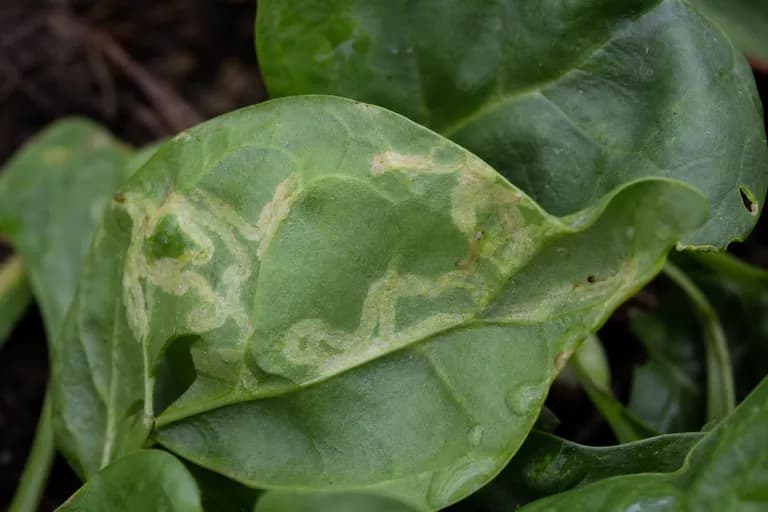
Minador de hojas (Liriomyza spp.)
PlagaGalerías serpenteantes de color blanco-plateado en las hojas, creadas por las larvas que se alimentan del tejido interno foliar. Las hojas afectadas se vuelven antiestéticas y pueden secarse.
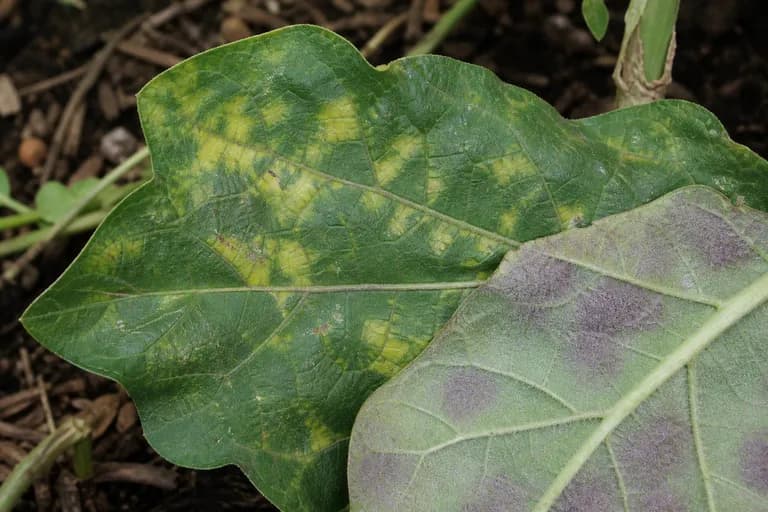
Mildiu velloso (Peronospora spp.)
EnfermedadManchas amarillentas irregulares en el haz de las hojas con un moho grisáceo-violáceo en el envés. Las hojas se necrosan y secan progresivamente.
Solución de problemas comunes
El espigado prematuro es el principal desafío, provocado por temperaturas superiores a 20 °C y días largos de verano. Para retrasar la floración, cultive en semisombra durante los meses cálidos y mantenga el suelo uniformemente húmedo. Las siembras de otoño suelen ser más exitosas que las de verano. Si las plantas florecen, las flores también son comestibles y decorativas.
Consejos de cultivo
- Sow shallowly and do not cover seeds deeply. Shungiku seeds need light to germinate effectively — press them gently into the soil surface and cover with no more than 3-5mm of fine soil or vermiculite. Deep sowing dramatically reduces germination rates.
- Succession sow every 2-3 weeks from early spring through late fall for an almost continuous supply. Because each planting has a relatively short harvest window of 4-6 weeks before bolting, successive plantings are essential for a steady supply.
- Harvest using the cut-and-come-again method for maximum yield. Cut stems 5 cm above the soil line rather than pulling whole plants — the base will regrow 2-4 times before the plant finally bolts, effectively tripling your harvest from each sowing.
- Provide afternoon shade in temperatures above 20°C (68°F) to extend the harvest window. A 30-50% shade cloth or planting on the north side of taller crops like tomatoes or trellised beans can add 1-2 weeks of productive growth before bolting.
- Water consistently and keep soil evenly moist but never soggy. Drought stress is the second-fastest trigger for bolting after heat — even a single day of wilting in warm weather can cause the plant to send up a flower stalk within 48 hours.
- Grow the broad-leaf type (ohba) for a milder flavor preferred in hot pot and raw preparations, or the small-leaf type (kobaba) for a stronger aromatic punch suited to stir-fries and soups. Both are easy to grow but the broad-leaf type is slightly more bolt-resistant.
- Shungiku makes an excellent inter-planting companion between rows of slower-growing crops like brassicas or tomatoes. It matures quickly before the main crop fills in, and its aromatic compounds may help deter certain pests from neighboring plants.
- Allow one or two plants to bolt and flower each season for effortless self-sowing. Shungiku is a prolific self-seeder — fallen seeds will germinate on their own the following spring and fall, establishing a nearly permanent patch with no effort.
Cultiva tu mejor Shungiku — y todo lo que la rodea.
Empieza un plan gratis hoy. Diseña tus bancales, coloca tu Shungiku y deja que PlotMyGarden gestione el momento, el espaciado, las asociaciones y los recordatorios de la semilla a la cesta.
Elige tu Shungiku
Shungiku (tipo japonés)
Hojas profundamente lobuladas con aroma fuerte y sabor ligeramente amargo. Es la variedad más común en la cocina japonesa para sukiyaki y shabu-shabu. 40-50 días.
Tong Hao (tipo chino)
Hojas más anchas y redondeadas con sabor algo más suave que el tipo japonés. Preferida en la cocina cantonesa para salteados. Crece vigorosamente. 35-45 días.
Ssukgat (tipo coreano)
Variedad seleccionada con hojas anchas y carnosas de sabor aromático equilibrado. Muy utilizada en la cocina coreana para jjigae (guisos). 40-50 días.
Tiger Ear
Variedad con hojas grandes, onduladas y especialmente tiernas. Sabor más suave que los tipos tradicionales, ideal para consumo en ensalada cruda. 35-40 días.
Shungiku is one of the most expensive Asian greens at specialty markets, often selling for $4-8 per small bunch (100-150g) at Asian grocery stores and $8-15 per pound at farmers markets. A single $2-3 seed packet produces hundreds of plants, and because shungiku grows so quickly from seed (harvestable in 30-40 days), even a small succession planting can save $50-100 per season. The plant self-sows readily, so after the first year you may never need to buy seeds again.
Recetas rápidas
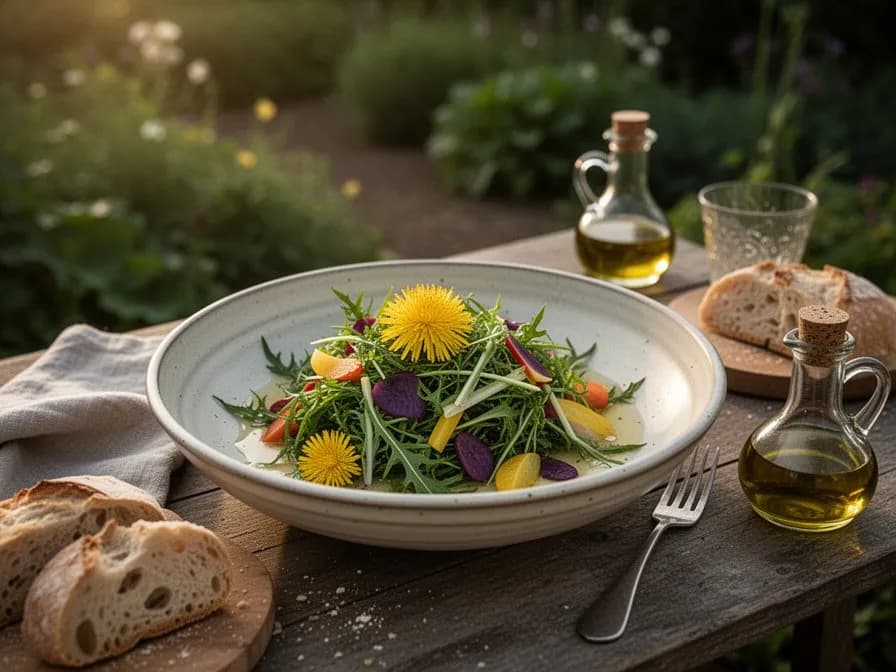
Shungiku Sesame Ohitashi
10 minA classic Japanese side dish where blanched shungiku is dressed in a savory sesame sauce. The brief blanching softens the flavor while preserving the aromatic character, creating an elegant and nutritious side dish.
7 ingredientes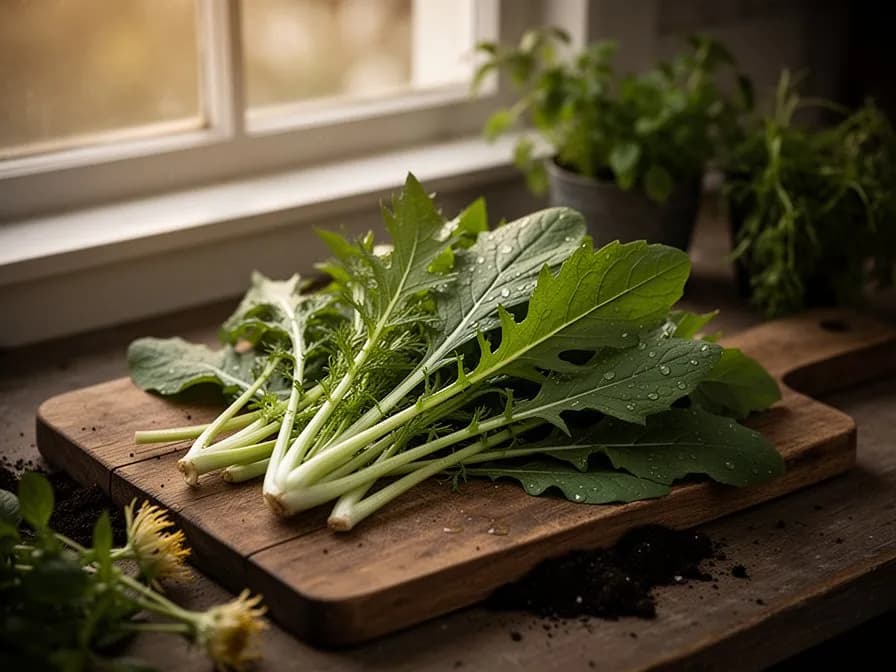
Sukiyaki Hot Pot with Shungiku
35 minA warming Japanese one-pot dish where shungiku is added at the last moment to a sweet soy broth alongside thinly sliced beef, tofu, and noodles. The greens wilt quickly and absorb the rich umami flavors of the broth.
10 ingredientesShungiku and Garlic Stir-Fry
10 minA quick Chinese-style stir-fry where shungiku is flash-cooked with garlic over high heat, preserving its bright color and aromatic bite. The simplest and fastest way to enjoy this green as a side dish with rice.
7 ingredientesUsos culinarios
El shungiku es un ingrediente indispensable en la cocina asiática. En Japón, se añade al sukiyaki y shabu-shabu justo antes de servir. En China, se saltea con ajo y aceite de sésamo o se añade a sopas de fideos. En Corea, se usa en guisos y bibimbap. Las hojas crudas aportan un toque aromático a ensaladas. Su sabor herbáceo y ligeramente amargo combina bien con soja, sésamo, jengibre y ajo.
Qué contiene
Beneficios para la salud
- Exceptionally high in beta-carotene and vitamin A, providing 78% of the daily value per 100g — these carotenoid antioxidants are critical for maintaining healthy vision, immune defense, and skin cell regeneration.
- Contains unique aromatic terpene compounds (camphor, alpha-pinene, limonene) that have demonstrated anti-inflammatory and antimicrobial properties in laboratory studies, potentially supporting respiratory and digestive health.
- Rich in potassium (567mg per 100g) which helps regulate blood pressure by counteracting the effects of sodium, supports proper muscle contraction, and maintains healthy nerve signal transmission.
- Provides notable amounts of calcium (117mg per 100g) and iron (2.3mg per 100g) — pairing shungiku with vitamin C-rich foods enhances iron absorption, making it a valuable plant-based mineral source.
- Contains chlorogenic acid and other polyphenol antioxidants that have been studied for their role in reducing oxidative stress, supporting liver health, and potentially lowering the risk of certain chronic diseases.
- Traditional East Asian medicine has used shungiku for centuries to aid digestion, reduce bloating, and calm coughs — modern research attributes these effects to its volatile oil compounds and high fiber content.
De dónde viene Shungiku
Shungiku (Glebionis coronaria, formerly Chrysanthemum coronarium) is native to the Mediterranean basin, where it grows wild across Southern Europe, North Africa, and the Middle East. Archaeological evidence suggests that crown daisy was known to the ancient Greeks and Romans, though primarily as a wildflower and medicinal herb rather than a culinary vegetable. The species thrives in the mild, wet winters of the Mediterranean climate and still grows abundantly as a common roadside weed in countries from Portugal and Spain through Italy, Greece, Turkey, and across North Africa.
The transformation of shungiku from a Mediterranean wildflower into a cultivated vegetable took place in East Asia, likely in China, where it has been grown as a food crop for at least 2,000 years. Chinese agricultural texts from the Tang Dynasty (618-907 CE) describe cultivation of the plant specifically for its edible leaves. From China, shungiku spread to Japan, Korea, and Southeast Asia, where each culture developed its own culinary traditions around the green. In Japan, shungiku became an indispensable ingredient in hot pot dishes like sukiyaki and shabu-shabu. In Korea, it is called ssukgat and is essential in stews and as a namul side dish. In Chinese cooking, it appears in stir-fries, soups, and dumplings across many regional cuisines.
Today, shungiku is commercially cultivated primarily in China, Japan, Korea, Taiwan, and parts of Southeast Asia. It has gained a growing following among Western gardeners and chefs who appreciate its unique aromatic flavor and extreme ease of cultivation. Two main leaf types are grown: the broad-leaf variety (ohba) preferred in Japan for its milder flavor and tender texture, and the small-leaf variety (kobaba) with more deeply serrated foliage and a stronger aromatic punch. The plant remains virtually unknown in mainstream Western markets despite growing as a common weed across the Mediterranean — a remarkable example of cultural differences determining whether a plant is prized or ignored.
Shungiku: ¿sabías que?
Datos fascinantes sobre Shungiku
Shungiku (Glebionis coronaria) is one of the very few chrysanthemum species grown primarily as a vegetable rather than an ornamental flower — its name literally translates to 'spring chrysanthemum' in Japanese, reflecting its cool-season preference.
Shungiku: preguntas frecuentes
¿Cuándo debo plantar Shungiku?
¿Cuáles son buenas plantas acompañantes para Shungiku?
¿En qué zonas de rusticidad puede crecer Shungiku?
¿Cuánto sol necesita Shungiku?
¿A qué distancia debo espaciar Shungiku?
¿Qué plagas y enfermedades afectan a Shungiku?
¿Cómo almaceno Shungiku después de la cosecha?
¿Cuáles son las mejores variedades de Shungiku para cultivar?
¿Qué suelo necesita Shungiku?
Why does my shungiku bolt so quickly?
Can I eat shungiku raw, or does it need to be cooked?
What does shungiku taste like?
How do I grow shungiku in hot climates?
Is shungiku the same as chrysanthemum greens or tong ho?
Can I grow shungiku in containers on a balcony?
Acabas de leer la teoría. Ahora cultívala en piloto automático.
Todo lo que hace que Shungiku sea delicado — el momento, el espaciado, las asociaciones, la ventana de cosecha — es justo lo que PlotMyGarden resuelve por ti, para cada planta de tu huerto.
Un plan que conoce tu clima
Indica tu ubicación una vez. Recibe fechas de siembra, abonado y cosecha basadas en tu última helada real y el pronóstico en vivo — sin adivinar con un sobre genérico.
De la sección “Cuándo plantar”Planificador de bancales de arrastrar y soltar
Diseña bancales sobre una cuadrícula. Cada planta encaja con su espaciado correcto y ves toda la temporada antes de gastar un céntimo en semillas.
De la sección “Cultivo”Conflictos de asociación, detectados a tiempo
Más de 200 buenas y malas combinaciones comprobadas en vivo mientras plantas — para que un error que arruine la temporada nunca llegue a la tierra.
De la sección “Asociaciones”Recordatorios que sí vas a seguir
“Riega las judías.” “Recoge hoy antes de que se pase.” Oportunos, concretos y ligados a las plantas que de verdad cultivas.
De la sección “Cosecha”Escalonado, programado
¿Quieres cosechar seis semanas en vez de seis días? Reparte tus siembras automáticamente y te avisa cuando toca el siguiente lote.
De la sección “Cuándo plantar”Un registro que se vuelve más listo
Cada cosecha que registras le enseña tu huerto. El plan del año que viene parte de lo que de verdad funcionó en tu suelo, no en un manual.
De la sección “Resumen”Planta estos junto a Shungiku
Más Hortalizas de hoja
Cultiva tu mejor Shungiku — y todo lo que la rodea.
Empieza un plan gratis hoy. Diseña tus bancales, coloca tu Shungiku y deja que PlotMyGarden gestione el momento, el espaciado, las asociaciones y los recordatorios de la semilla a la cesta.