Nopal
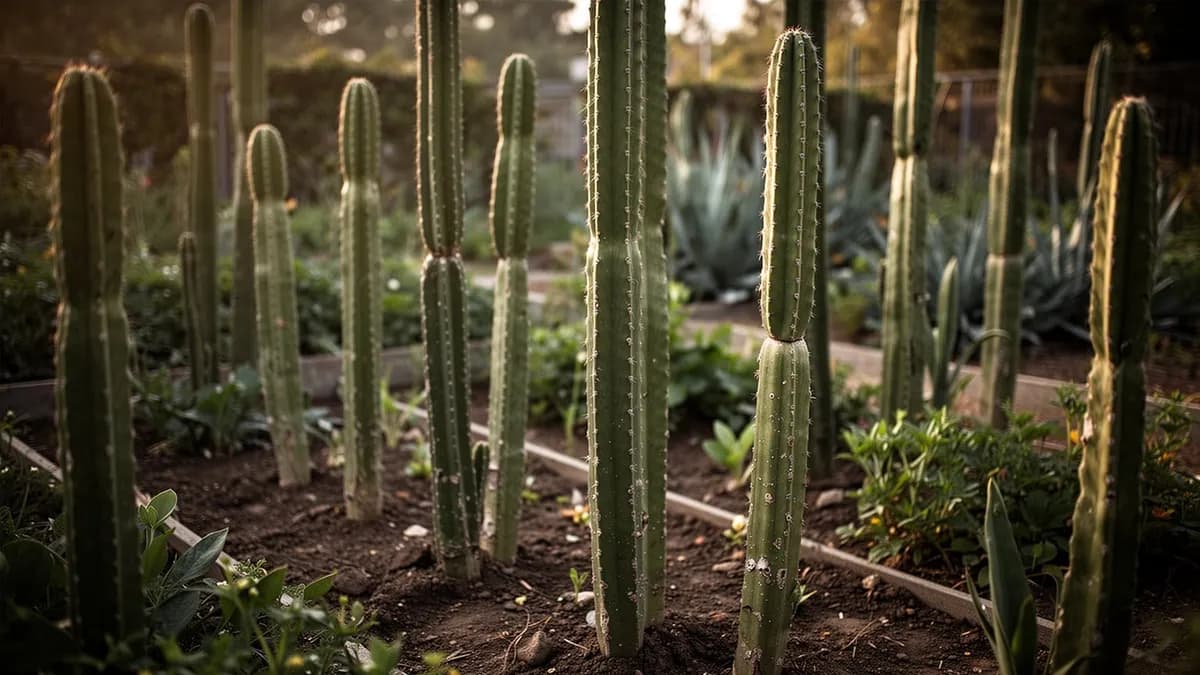
El nopal (Opuntia ficus-indica) es un cactus originario de México con pencas o cladodios aplanados y ovalados que se consumen como verdura desde tiempos prehispánicos.





En esta páginaResumen
Conoce Nopal
El nopal (Opuntia ficus-indica) es un cactus originario de México con pencas o cladodios aplanados y ovalados que se consumen como verdura desde tiempos prehispánicos. Es un símbolo cultural de México, presente en su escudo nacional, y constituye un alimento fundamental en la dieta mexicana por su alto contenido en fibra, vitaminas y minerales. Además de las pencas, produce frutos dulces conocidos como tunas que se consumen frescos o en diversas preparaciones.
Cuándo plantar Nopal
La propagación por esquejes de pencas es el método más rápido y confiable: seleccionar pencas maduras de al menos un año, cortarlas limpiamente y dejarlas cicatrizar a la sombra durante 1-2 semanas hasta que el corte forme un callo seco. Plantar enterrando un tercio de la penca en suelo arenoso seco, sin regar durante las primeras 2-3 semanas para evitar la pudrición. La propagación por semillas es posible pero muy lenta (2-3 años hasta la primera cosecha), requiriendo remojar las semillas 24 horas y sembrar en sustrato arenoso a 1 cm de profundidad con germinación en 15-30 días.
Tu año de Nopal
Ajustado a Zona 7 · temporada típica · la helada se va hacia el 2 abr y vuelve hacia el 1 nov
Planta Nopal Abr – Jun y cosecha May – Sep. Consulta los métodos de plantación y elige tu clima para adaptar los periodos.
Cómo cultivar Nopal
El nopal se propaga principalmente por esquejes de pencas maduras: cortar una penca sana de al menos un año de edad, dejarla cicatrizar a la sombra durante 7-15 días y plantarla enterrando un tercio de su longitud en suelo arenoso y bien drenado. La plantación se realiza preferiblemente al inicio de la temporada seca o en primavera, con un espaciamiento de 1-2 metros entre plantas y 2-3 metros entre hileras según el destino productivo.
El nopal es extraordinariamente resistente a la sequía gracias a su metabolismo ácido de las crasuláceas (CAM), que le permite fijar CO₂ durante la noche con mínima pérdida de agua. Sin embargo, para producción comercial de verdura, se beneficia de riegos moderados cada 2-3 semanas durante la temporada de crecimiento activo. Evitar absolutamente el encharcamiento, que provoca pudrición radicular rápida y letal.
Para la producción de nopalitos (pencas tiernas comestibles), podar regularmente las pencas jóvenes cuando tienen 15-20 cm de longitud y aún están tiernas y jugosas. Fertilizar ligeramente con compost o estiércol bien descompuesto una vez al año al inicio de la temporada de crecimiento. El nopal crece desde el nivel del mar hasta los 2800 msnm y tolera temperaturas de hasta 45 °C, aunque sufre daños con heladas prolongadas por debajo de -5 °C.
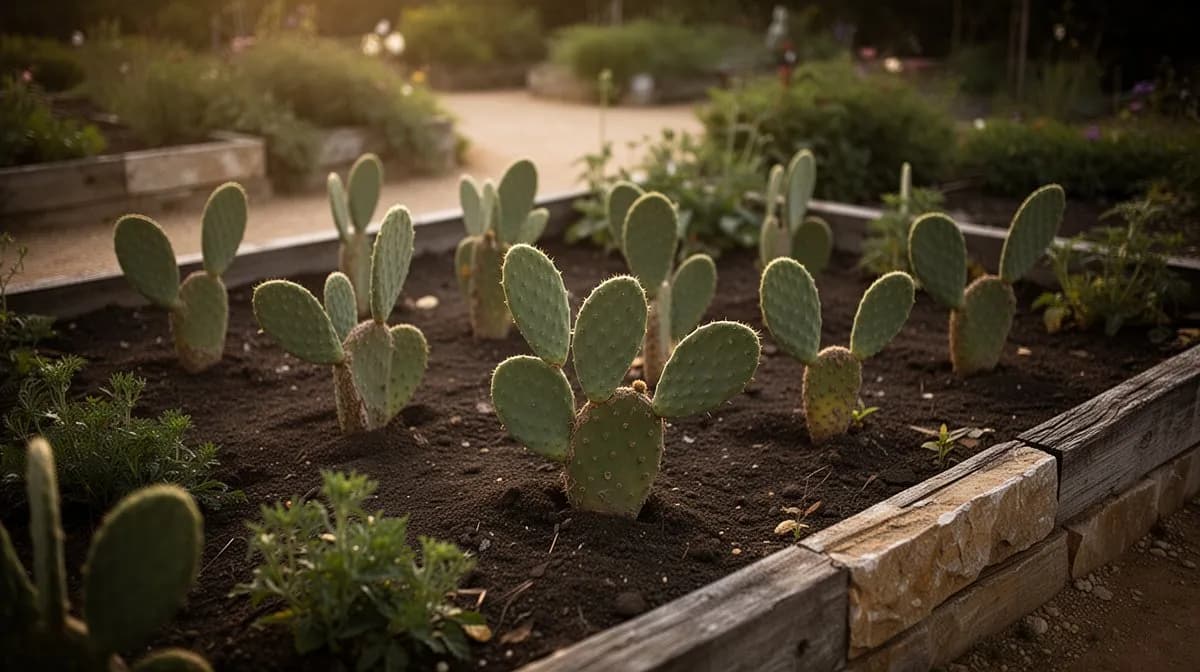
2 plantas caben en un bancal de 120 × 240 cm
Cada Nopal pide 90 cm de margen. El planificador guarda ese marco por ti — cada planta, cada bancal.
Guías de cultivo relacionadas
Abónalo bien
El nopal prospera en suelos arenosos, calcáreos y bien drenados, con un pH entre 6,0 y 8,0, y tolera suelos pobres, pedregosos e incluso ligeramente salinos donde otros cultivos no sobrevivirían. Para producción intensiva de nopalitos, incorporar compost o estiércol bien descompuesto una vez al año (2-3 kg por planta) al inicio de la temporada de lluvias. Evitar absolutamente los suelos arcillosos pesados o encharcados, que son la principal causa de mortalidad en este cultivo.
Temperatura ideal
Compatibilidad de zonas de rusticidad
De la semilla a la cosecha, etapa por etapa
Plantación de pencas
El nopal se propaga plantando una penca madura directamente en suelo arenoso y bien drenado, enterrando el tercio inferior en un ligero ángulo. El extremo cortado forma un callo en unos 5 a 7 días, y comienzan a salir raíces blancas finas de las areolas enterradas.
Establecimiento de raíces
Un sistema radicular fibroso se extiende desde la penca enterrada, anclando la planta y comenzando a absorber agua. La penca original puede arrugarse un poco mientras desvía energía hacia el crecimiento de raíces.
Expansión vegetativa
La planta desarrolla una estructura ramificada a medida que nuevas pencas crecen a partir de las existentes. Cada penca madura puede producir de 3 a 5 pencas hijas. La penca original se engrosa, se oscurece y se vuelve leñosa en la base.
Floración y fructificación
Las plantas maduras producen flores en los bordes de las pencas establecidas, seguidas de frutos comestibles de nopal llamados tunas. Los frutos maduran en 60 a 90 días y pasan de verde a rojo intenso, morado o naranja.
Producción madura
Para el tercer año, la planta está completamente establecida y entra en producción sostenida de pencas y frutos comestibles. Se vuelve muy tolerante a la sequía y puede seguir siendo productiva durante muchos años con muy poco cuidado.
Producción madura
La planta continúa la producción a largo plazo con cuidados mínimos y sigue siendo productiva durante muchos años. Es muy tolerante a la sequía y adecuada para climas cálidos y secos.
Deja secar la penca cortada a la sombra durante 3 a 5 días para formar un callo protector. Planta en suelo arenoso y bien drenado y no riegues durante los primeros 7 a 10 días. Una penca que se mueve al tocarla todavía no ha enraizado.
Cuidar Nopal mes a mes
Qué hacer cada mes para tu Nopal
Octubre
Mes actualComplete fruit harvest before frost. Take cuttings for indoor propagation or to share. In zones 7-8, begin preparing frost protection for in-ground plants. Move container plants toward sheltered locations.
Ten claro qué hacer en tu huerto, cada mes
Un correo al empezar cada mes: qué sembrar, plantar y hacer ahora mismo — para tu Nopal y todo lo que crece alrededor. Más un breve curso inicial para esquivar los errores clásicos.
- Qué hacer ahora mismo
- Ajustado a tu temporada
- Curso inicial incluido
Cosechar Nopal
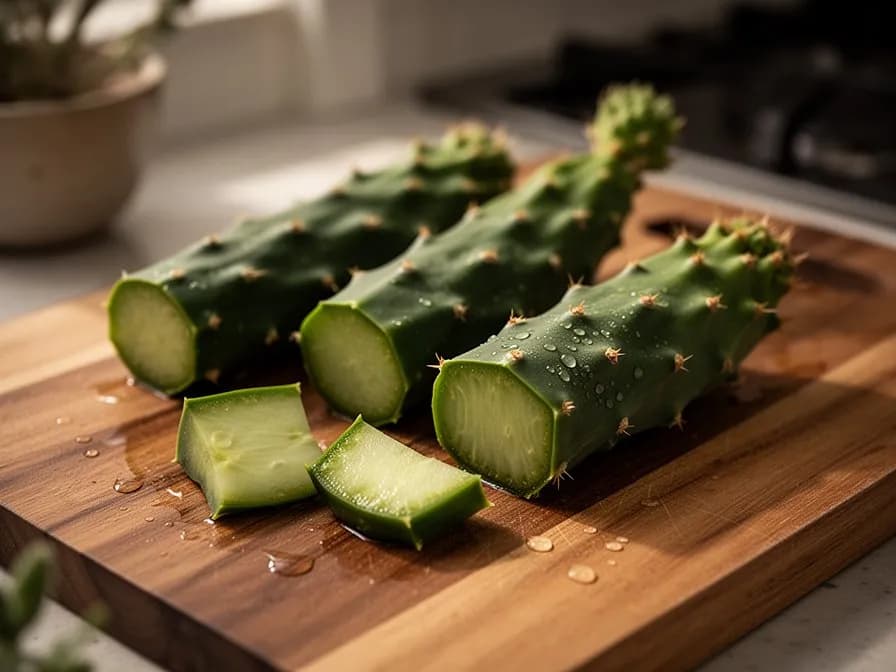
Los nopalitos (pencas tiernas) se cosechan cuando tienen 15-20 cm de longitud, entre 3 y 6 semanas después de su brotación, cortándolos en la base con un cuchillo afilado y usando guantes gruesos para protegerse de las espinas. Las tunas (frutos) se recolectan cuando cambian de verde a su color de madurez (rojo, amarillo o morado según la variedad) y ceden ligeramente a la presión. Una planta establecida puede producir cosechas continuas de nopalitos durante todo el año en climas cálidos.
se supone que plantas al comenzar el periodo — indica tu fecha real
Cosecha las pencas jóvenes y tiernas cuando midan entre 15 y 20 cm y estén de color verde brillante, idealmente por la mañana y durante la estación cálida.
Almacenamiento y conservación
Los nopalitos frescos se conservan en el refrigerador en una bolsa perforada durante 1-2 semanas. Para conservación a largo plazo, se pueden escaldar, cortar en tiras o cubos y congelar, manteniéndose hasta 12 meses. Tradicionalmente se conservan en escabeche con vinagre, cebolla, jalapeños y especias, o se deshidratan al sol para elaborar harina de nopal utilizada como suplemento alimenticio.
Qué falla — y cómo solucionarlo
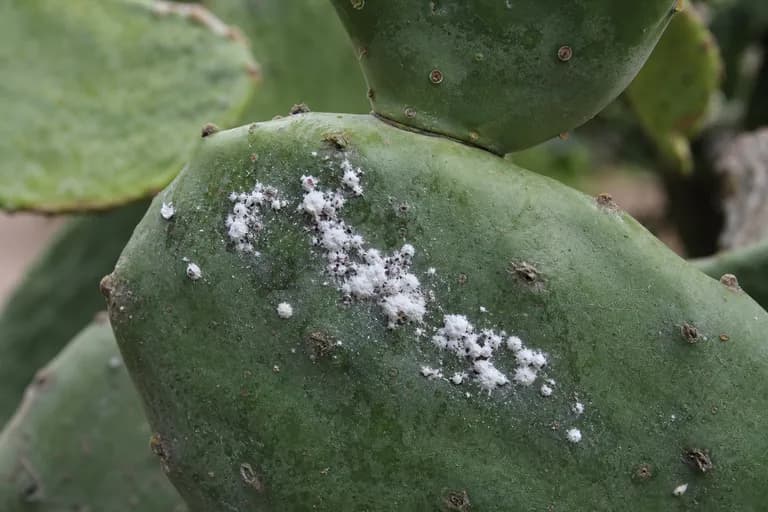
Cochinilla del carmín (Dactylopius coccus)
PlagaMasas algodonosas blancas en la superficie de las pencas que al aplastarse liberan un pigmento rojo intenso, debilitamiento progresivo de la planta, decoloración y caída de pencas en infestaciones severas.
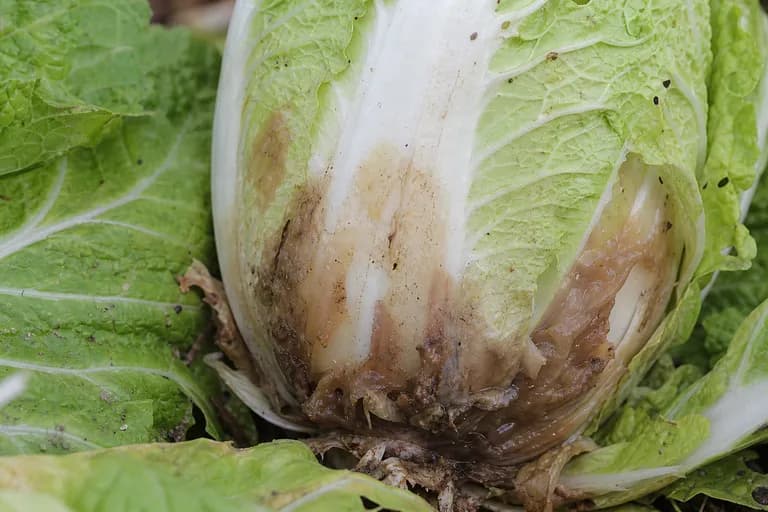
Pudrición blanda bacteriana (Erwinia carotovora)
EnfermedadManchas acuosas oscuras en las pencas que se expanden rápidamente, tejido blando y maloliente que se desintegra al tacto, y colapso total de la penca afectada en pocos días.
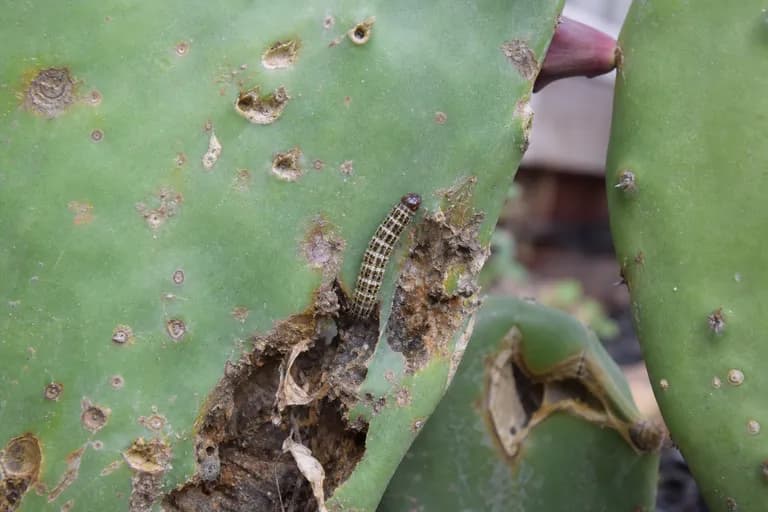
Picudo del nopal (Cactophagus spinolae)
PlagaPerforaciones en la base de las pencas por donde penetran las larvas, exudación de savia oscura, debilitamiento estructural y eventual desprendimiento de las pencas afectadas.
Solución de problemas comunes
El manejo de espinas y gloquidios (espinas microscópicas) es el principal inconveniente práctico del cultivo, requiriendo siempre guantes gruesos y herramientas de mango largo para la cosecha y poda. La pudrición por exceso de humedad es la causa más frecuente de pérdida de plantas, especialmente en suelos pesados o durante temporadas lluviosas prolongadas. Las heladas severas (por debajo de -5 °C) pueden dañar gravemente o matar las pencas, aunque las plantas establecidas frecuentemente rebrotan desde la base.
Consejos de cultivo
- Drainage is everything. Nopal will tolerate poor soil, scorching heat, and months without water, but it will die in waterlogged ground. Amend heavy clay soil with coarse sand and gravel, or plant on mounds or slopes to ensure water drains away from the roots.
- Propagation from pads is far easier and faster than growing from seed. Choose a firm, healthy pad at least 15 cm long, cut it from the parent plant, let the wound dry for 3-5 days in shade, then bury the bottom third in sandy soil at a slight angle.
- Do not water newly planted pads for at least 7-10 days. The cut end must form a dry callus before encountering moisture, or it will almost certainly rot. When you do begin watering, err on the side of too little rather than too much.
- Full sun is essential — nopal requires at least 6-8 hours of direct sunlight daily. In partial shade, pads become elongated, thin, and pale (etiolated), and the plant produces few flowers or fruit.
- Harvest young pads in the morning when their acid content is highest and mucilage is lowest. Use a sharp knife to cut pads at the joint, leaving a clean wound that heals quickly. Always wear thick gloves — even spineless varieties have tiny glochids.
- To remove glochids before cooking, scrape the pad surface with a knife or vegetable peeler, or briefly pass the pad over an open flame. Rinse thoroughly under running water. Missed glochids are nearly invisible but extremely irritating.
- In cold climates (zones 6-8), grow nopal in large containers that can be moved to shelter before the first frost. Use a gritty cactus mix and an unglazed clay pot for maximum drainage and root aeration.
- Cochineal scale is the most common pest — white cottony masses on pads that harbor tiny red insects. Remove with a strong water spray or scrub with a brush dipped in dilute isopropyl alcohol. Severe infestations may require removing affected pads entirely.
Cultiva tu mejor Nopal — y todo lo que la rodea.
Empieza un plan gratis hoy. Diseña tus bancales, coloca tu Nopal y deja que PlotMyGarden gestione el momento, el espaciado, las asociaciones y los recordatorios de la semilla a la cesta.
Elige tu Nopal
Milpa Alta
Variedad mexicana ampliamente cultivada para producción de nopalitos, con pencas grandes, gruesas y con pocas espinas, excelente sabor y textura, y alta productividad durante todo el año.
Atlixco
Cultivar de pencas medianas casi sin espinas, ideal para consumo fresco y procesamiento, con buena tolerancia al frío y producción abundante de nopalitos tiernos y jugosos.
Copena V1
Variedad forrajera y verdulera desarrollada en México con pencas grandes de hasta 40 cm, prácticamente sin espinas, de crecimiento vigoroso y adaptada a condiciones de baja precipitación.
Italiana (Opuntia ficus-indica)
Variedad mediterránea seleccionada principalmente para producción de tunas (higos chumbos) de gran tamaño y dulzura, ampliamente cultivada en Italia, España y el norte de África.
Nopal is essentially free once established — a single pad cutting costs nothing if shared by a neighbor, or $3-5 at a nursery. Fresh nopales sell for $2-4 per pound at Latin grocery stores and $5-8 per pound at specialty markets. A mature plant producing 20-40 pads per year provides $40-160 worth of fresh nopales annually. Prickly pear fruits are even more expensive, selling for $3-6 per pound, adding another $30-60 in value. The plant requires zero irrigation in most climates, no fertilizer beyond annual compost, and produces for decades with almost no ongoing cost.
Recetas rápidas
Nopales a la Mexicana
25 minThe classic Mexican preparation — diced cactus sauteed with tomato, onion, jalapeno, and cilantro. Cooking drives off the mucilaginous texture, leaving tender, slightly tangy bites that pair beautifully with warm tortillas and beans.
8 ingredientesGrilled Nopal Salad
20 minWhole nopal pads grilled until lightly charred and tender, then sliced and tossed with a bright lime dressing. Grilling caramelizes the natural sugars and eliminates any slippery texture, producing smoky, meaty strips perfect for a refreshing salad.
9 ingredientes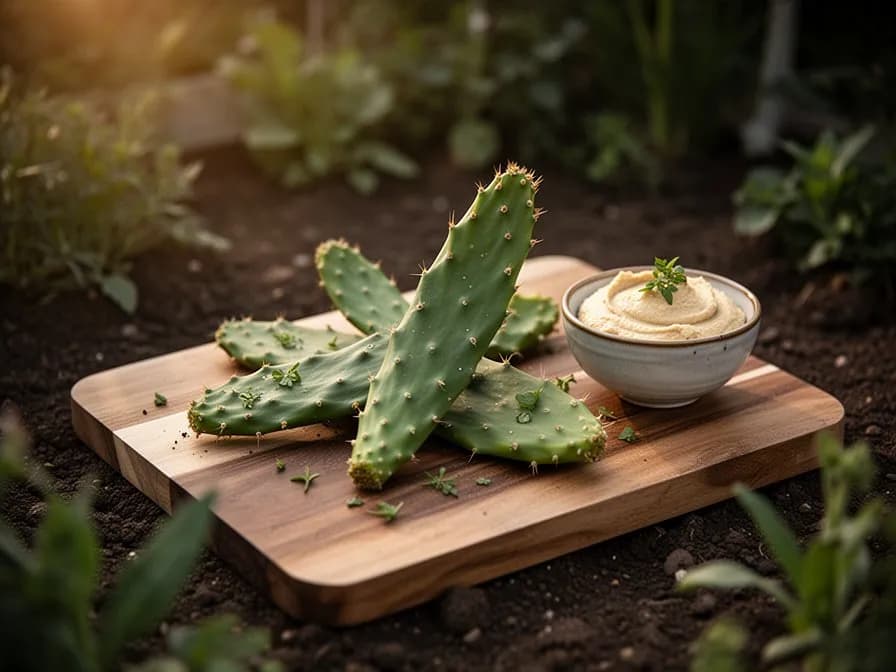
Nopal Green Smoothie
10 minA vibrant health drink popular throughout Mexico — raw nopal blended with pineapple, lime, and celery creates a refreshing, nutrient-dense smoothie. The natural mucilage gives it a smooth, thick consistency without needing any thickeners.
7 ingredientesUsos culinarios
Los nopalitos son un pilar de la gastronomía mexicana: se preparan asados a la plancha, en ensaladas con tomate, cebolla y cilantro, en tacos, quesadillas y huevos revueltos. También se cocinan en sopas, caldos, guisos con chile y mole, y se preparan en escabeche como acompañamiento. Las tunas se consumen frescas, en aguas frescas, mermeladas, queso de tuna, colonche (bebida fermentada) y como base para dulces tradicionales mexicanos.
Qué contiene
Beneficios para la salud
- Clinically studied for blood sugar regulation — nopal's soluble fiber and pectin slow glucose absorption, with multiple studies showing 10-30% reductions in post-meal blood sugar levels in people with type 2 diabetes.
- Rich in antioxidant betalains and polyphenols that reduce oxidative stress and chronic inflammation, potentially lowering the risk of heart disease, cancer, and neurodegenerative conditions.
- Exceptionally high in calcium for a vegetable (164mg per 100g), supporting bone density, dental health, and muscle contraction — particularly valuable for those who do not consume dairy.
- Contains significant pectin and mucilaginous fiber that bind to LDL cholesterol in the digestive tract, helping to reduce total cholesterol and support cardiovascular health.
- Traditional remedy for hangover symptoms, supported by research — a 2004 study found that nopal extract taken before alcohol consumption reduced hangover severity by 50% by decreasing inflammation.
- Extremely low calorie density (16 calories per 100g) combined with high fiber and water content promotes satiety and supports healthy weight management without sacrificing nutrition.
De dónde viene Nopal
Nopal cactus (Opuntia ficus-indica and related species) is native to Mexico and the arid regions of the Americas, where it has been a fundamental food source for thousands of years. Archaeological evidence from caves in the Tehuacan Valley of Puebla, Mexico dates human consumption of nopal to at least 9,000 years ago, making it one of the oldest cultivated food plants in the Western Hemisphere. For the Aztec civilization, nopal was far more than sustenance — it was sacred. According to their founding legend, the god Huitzilopochtli commanded the wandering Mexica people to build their capital where they found an eagle perched on a nopal cactus growing from a rock, devouring a serpent. That image, discovered on an island in Lake Texcoco around 1325, became the site of Tenochtitlan and remains the central emblem of the Mexican flag today.
Spanish conquistadors encountered nopal cultivation across Mesoamerica and carried the plant back to Europe in the early 1500s. From Spain, nopal spread rapidly throughout the Mediterranean basin, North Africa, and the Middle East, thriving in arid climates similar to its homeland. It became naturalized so thoroughly in parts of Sicily, North Africa, and the Middle East that many locals assumed it was a native plant. The Spanish also inadvertently spread nopal to their colonies in the Philippines and from there it reached India, Ethiopia, and southern Africa. In Australia, introduced Opuntia species became one of the most devastating invasive plants in history, covering over 25 million hectares by the 1920s before being controlled by the introduction of the Cactoblastis moth.
Today, nopal remains a cornerstone of Mexican cuisine and agriculture. Mexico is the world's largest producer, harvesting over 800,000 tonnes of nopal pads (nopales) and 350,000 tonnes of prickly pear fruits (tunas) annually. The cactus is increasingly recognized internationally as a climate-resilient superfood crop for arid regions facing water scarcity and rising temperatures. The FAO has identified nopal as a critical food security resource for the 21st century, and research into its applications in medicine, water purification, biofuel production, and biodegradable materials continues to expand.
Nopal: ¿sabías que?
Datos fascinantes sobre Nopal
The nopal cactus is so culturally important to Mexico that it appears on the Mexican national flag and coat of arms — the iconic image of an eagle perched on a nopal devouring a serpent dates back to the Aztec founding myth of Tenochtitlan in 1325.
Nopal: preguntas frecuentes
¿Cuándo debo plantar Nopal?
¿En qué zonas de rusticidad puede crecer Nopal?
¿Cuánto sol necesita Nopal?
¿A qué distancia debo espaciar Nopal?
¿Qué plagas y enfermedades afectan a Nopal?
¿Cómo almaceno Nopal después de la cosecha?
¿Cuáles son las mejores variedades de Nopal para cultivar?
¿Qué suelo necesita Nopal?
How do I remove the spines from nopal pads before cooking?
Why are my nopal pads turning soft and mushy?
Can I eat nopal raw or does it need to be cooked?
How cold-hardy is nopal cactus and can I grow it in a cold climate?
When and how do I harvest prickly pear fruit?
Is nopal cactus invasive if I plant it in my garden?
Acabas de leer la teoría. Ahora cultívala en piloto automático.
Todo lo que hace que Nopal sea delicado — el momento, el espaciado, las asociaciones, la ventana de cosecha — es justo lo que PlotMyGarden resuelve por ti, para cada planta de tu huerto.
Un plan que conoce tu clima
Indica tu ubicación una vez. Recibe fechas de siembra, abonado y cosecha basadas en tu última helada real y el pronóstico en vivo — sin adivinar con un sobre genérico.
De la sección “Cuándo plantar”Planificador de bancales de arrastrar y soltar
Diseña bancales sobre una cuadrícula. Cada planta encaja con su espaciado correcto y ves toda la temporada antes de gastar un céntimo en semillas.
De la sección “Cultivo”Conflictos de asociación, detectados a tiempo
Más de 200 buenas y malas combinaciones comprobadas en vivo mientras plantas — para que un error que arruine la temporada nunca llegue a la tierra.
De la sección “Asociaciones”Recordatorios que sí vas a seguir
“Riega las judías.” “Recoge hoy antes de que se pase.” Oportunos, concretos y ligados a las plantas que de verdad cultivas.
De la sección “Cosecha”Escalonado, programado
¿Quieres cosechar seis semanas en vez de seis días? Reparte tus siembras automáticamente y te avisa cuando toca el siguiente lote.
De la sección “Cuándo plantar”Un registro que se vuelve más listo
Cada cosecha que registras le enseña tu huerto. El plan del año que viene parte de lo que de verdad funcionó en tu suelo, no en un manual.
De la sección “Resumen”Más Tallos y brotes
Cultiva tu mejor Nopal — y todo lo que la rodea.
Empieza un plan gratis hoy. Diseña tus bancales, coloca tu Nopal y deja que PlotMyGarden gestione el momento, el espaciado, las asociaciones y los recordatorios de la semilla a la cesta.