Raíz de Loto
La raíz de loto (Nelumbo nucifera) es el rizoma comestible de la flor de loto sagrada, una planta acuática perenne originaria de Asia.





En esta páginaResumen
Conoce Raíz de Loto
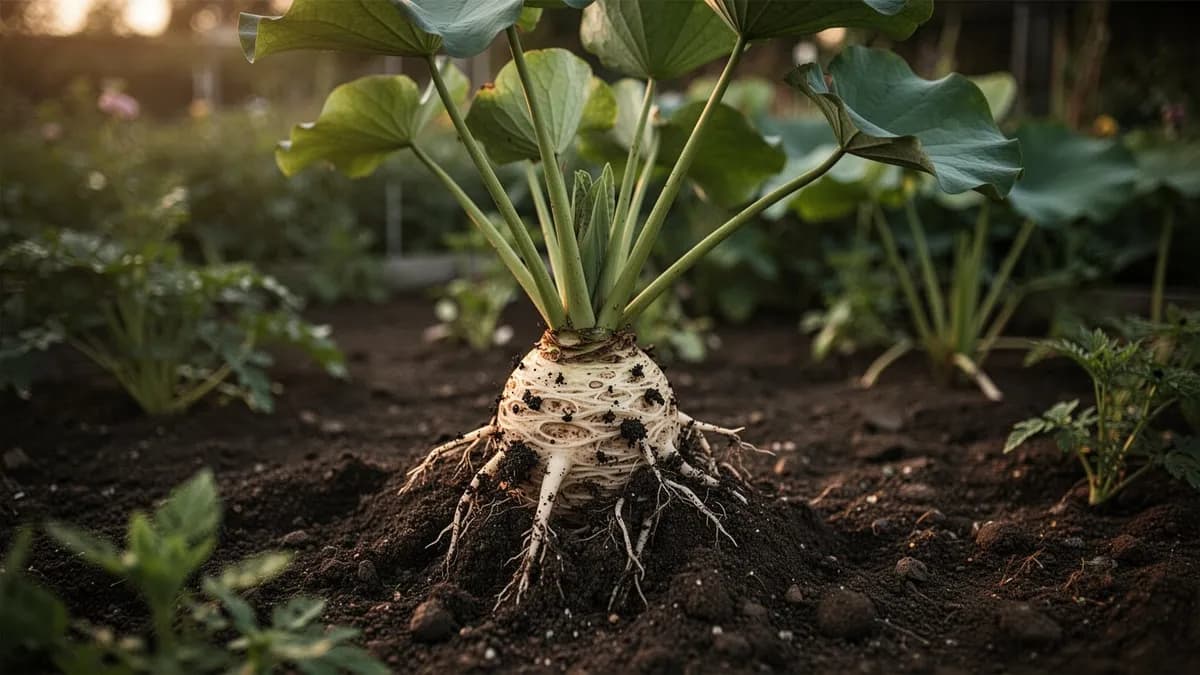
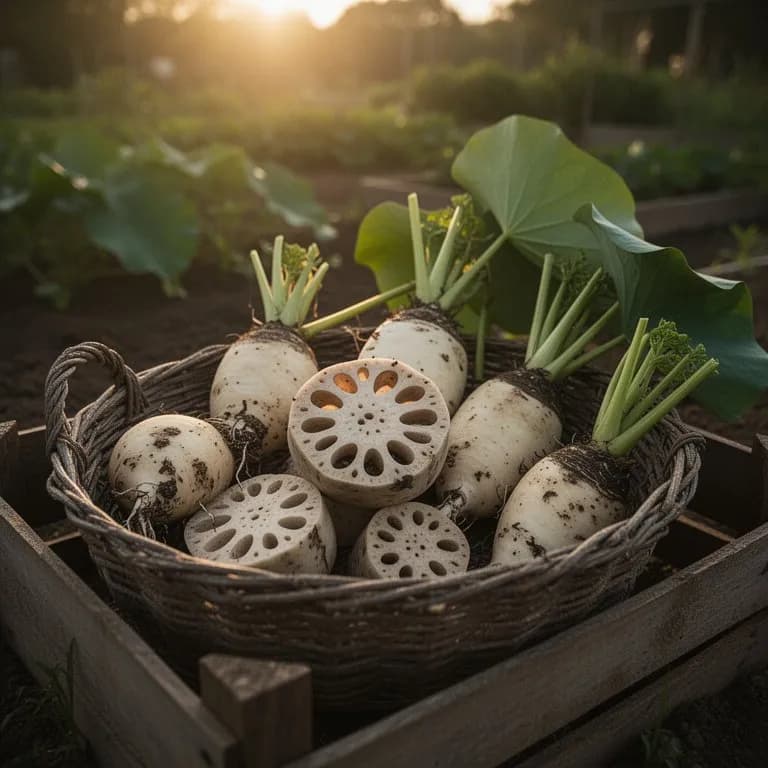
La raíz de loto (Nelumbo nucifera) es el rizoma comestible de la flor de loto sagrada, una planta acuática perenne originaria de Asia. Al cortarla transversalmente revela un patrón decorativo único de cavidades de aire que la hacen inconfundible. Su textura crujiente y sabor suave y ligeramente dulce la convierten en un ingrediente fundamental de la cocina asiática.
Cuándo plantar Raíz de Loto
El método más fiable es plantar secciones de rizoma con al menos 2-3 yemas de crecimiento en primavera. Colócalos horizontalmente en lodo pesado a 5-8 cm de profundidad con las yemas hacia arriba. Cubre con agua tibia gradualmente. También se puede propagar desde semillas, limando la cubierta dura y remojando en agua tibia hasta que germinen en 5-7 días, pero este método tarda 2-3 años en producir rizomas cosechables.
Tu año de Raíz de Loto
Ajustado a Zona 7 · temporada típica · la helada se va hacia el 2 abr y vuelve hacia el 1 nov
Planta Raíz de Loto Abr – May y cosecha Sep – Nov. Consulta los métodos de plantación y elige tu clima para adaptar los periodos.
Cómo cultivar Raíz de Loto
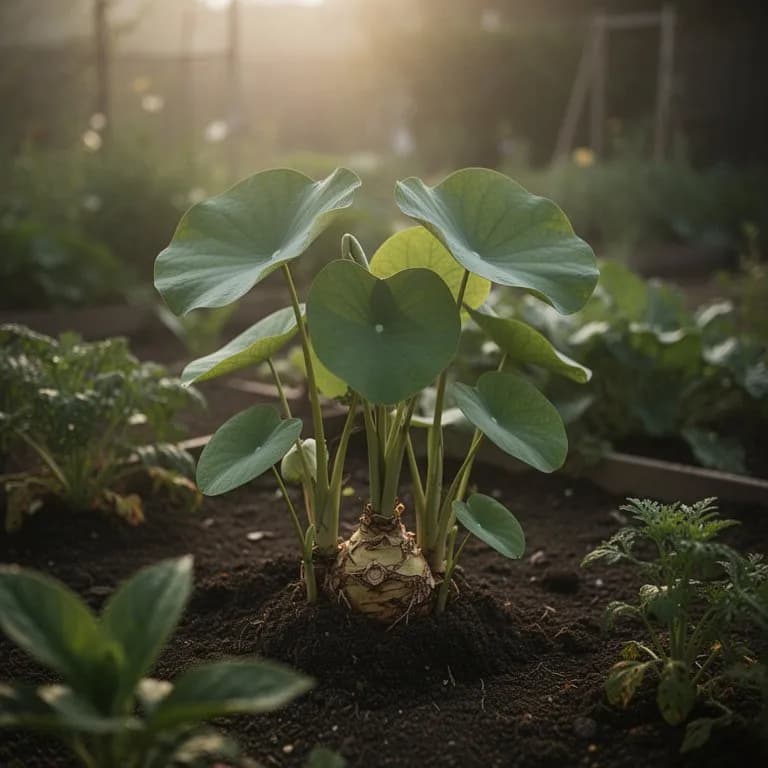
La raíz de loto requiere un entorno acuático para su cultivo exitoso. Necesita un estanque, contenedor grande o arrozal con al menos 20-30 cm de agua sobre el sustrato lodoso. Planta los rizomas en primavera cuando la temperatura del agua alcance los 15-18°C, colocándolos horizontalmente a 5-8 cm de profundidad en el lodo con las yemas de crecimiento apuntando hacia arriba.
El loto necesita pleno sol durante al menos 6-8 horas diarias y agua cálida para un desarrollo óptimo. En contenedores, usa recipientes anchos sin agujeros de drenaje de al menos 60-90 cm de diámetro y 30-40 cm de profundidad. Llena con tierra arcillosa pesada mezclada con compost y cubre con agua. Fertiliza mensualmente con pastillas de fertilizante para plantas acuáticas ricas en fósforo y potasio.
Las hojas emergen primero como hojas flotantes y luego como hojas aéreas sobre tallos largos que pueden alcanzar 1-1,5 metros sobre el agua. Las espectaculares flores aparecen en verano. Los rizomas se expanden bajo el lodo durante toda la temporada de crecimiento. En climas con heladas, asegúrate de que los rizomas estén suficientemente profundos para que el agua no se congele hasta ellos, o traslada los contenedores al interior.
2 plantas caben en un bancal de 120 × 240 cm
Cada Raíz de Loto pide 120 cm de margen. El planificador guarda ese marco por ti — cada planta, cada bancal.
Guías de cultivo relacionadas
Abónalo bien
Requiere un sustrato pesado arcilloso-lodoso como base, sumergido bajo 20-30 cm de agua. Enriquece el lodo con compost bien descompuesto antes de plantar. Fertiliza mensualmente durante el crecimiento activo con pastillas de fertilizante para plantas acuáticas, enterrándolas en el lodo cerca de los rizomas. Evita fertilizantes que enturbien el agua.
Temperatura ideal
Compatibilidad de zonas de rusticidad
De la semilla a la cosecha, etapa por etapa
Plantación del rizoma
Los trozos de rizoma en reposo o los tubérculos enteros se colocan horizontalmente en un suelo pesado de marga o arcilla bajo 10-15 cm de agua tibia y quieta. La punta de crecimiento no debe quedar enterrada ni dañada. En 1-3 semanas, un brote pálido emerge de la yema terminal y se curva hacia la superficie del agua. La temperatura del agua debe ser de al menos 15 °C para que comience la brotación.
Etapa de hojas flotantes
Las primeras hojas son pequeñas, redondeadas y flotan planas sobre la superficie del agua, como hojas de nenúfar. Estas hojas flotantes realizan la fotosíntesis y alimentan la expansión del rizoma subterráneo. Cada nueva hoja es un poco más grande que la anterior, y la planta puede producir 3-6 hojas flotantes antes de que aparezcan hojas por encima del agua.
Crecimiento de hojas aéreas
A medida que el rizoma gana energía, las hojas comienzan a emerger sobre pecíolos rígidos y espinosos que se elevan 60-150 cm por encima del agua. Estas grandes hojas circulares pueden medir 30-60 cm de ancho y tienen forma de copa, canalizando la lluvia hacia el centro. La superficie cerosa y autolimpiante (el efecto loto) mantiene las hojas libres de enfermedades.
Floración
Los botones florales emergen por encima del follaje sobre tallos fuertes y dedicados. Cada flor se abre durante tres mañanas consecutivas y se cierra cada tarde. El primer día, los pétalos son de un rosa intenso y la flor está receptiva para la polinización. Para el tercer día, los pétalos se han desvanecido a un blanco rosado y comienzan a caer, revelando la distintiva cápsula de semillas de parte superior plana.
Expansión del rizoma
Después de la floración, la planta canaliza la mayor parte de su energía hacia el subsuelo. El sistema de rizomas se expande rápidamente y produce segmentos de almacenamiento alargados y cargados de almidón; estos son los lotos comestibles. Cada segmento desarrolla los característicos canales de aire visibles en un corte transversal. En estanques abiertos, los rizomas pueden extenderse 1-2 metros en una sola temporada.
Dormancia y cosecha
A medida que las temperaturas otoñales descienden por debajo de 15 °C, las hojas aéreas amarillean, se vuelven marrones y colapsan. La planta traslada los nutrientes restantes al rizoma para almacenarlos durante el invierno. La cosecha comienza una vez que la mayoría de las hojas han muerto, normalmente 6-8 meses después de la plantación. Los rizomas se encuentran a 15-30 cm de profundidad en barro pesado y deben excavarse con cuidado para evitar que se rompan.
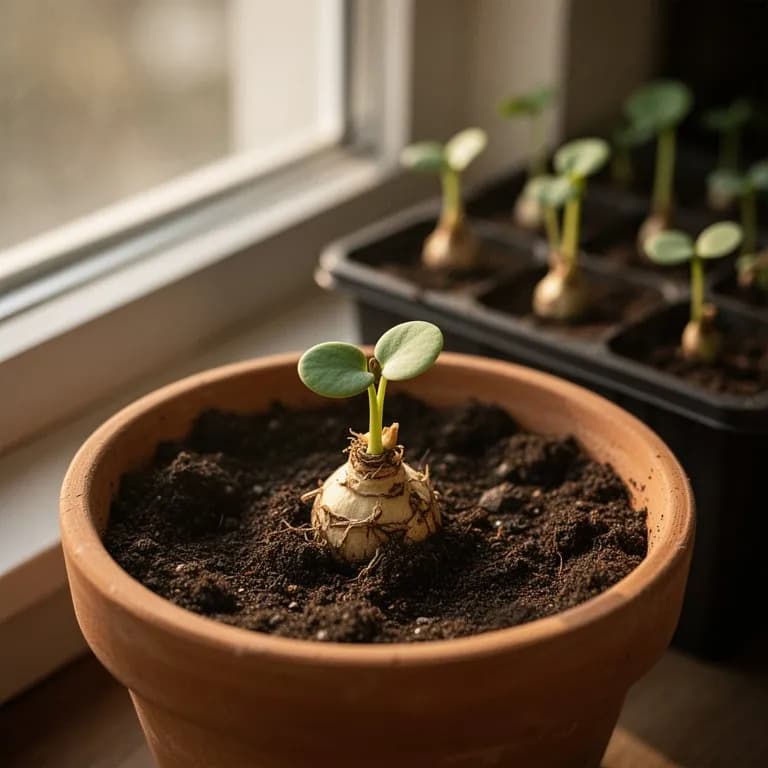
Manipula los rizomas con cuidado: una punta de crecimiento rota no volverá a brotar. Coloca el rizoma en un ángulo de 20 grados, con el extremo cortado contra la pared del recipiente y la punta de crecimiento hacia el centro. Mantén la temperatura del agua por encima de 21 °C para una emergencia más rápida.
Cuidar Raíz de Loto mes a mes
Qué hacer cada mes para tu Raíz de Loto
Octubre
Mes actualLeaves begin yellowing and collapsing — this is the signal that rhizomes are approaching harvestable maturity. In zones 8-11, you can begin harvesting by carefully tipping the container and extracting rhizomes from the mud. Leave at least one section with a growing tip for next year.
Ten claro qué hacer en tu huerto, cada mes
Un correo al empezar cada mes: qué sembrar, plantar y hacer ahora mismo — para tu Raíz de Loto y todo lo que crece alrededor. Más un breve curso inicial para esquivar los errores clásicos.
- Qué hacer ahora mismo
- Ajustado a tu temporada
- Curso inicial incluido
Cosechar Raíz de Loto
Cosecha los rizomas cuando las hojas comienzan a amarillear y marchitarse en otoño, generalmente 120-180 días después de la plantación. Drena parcialmente el agua y extrae los rizomas cuidadosamente del lodo sin romperlos, ya que las secciones dañadas se deterioran rápidamente. Deja siempre algunos rizomas con yemas para la regeneración del año siguiente.
se supone que plantas al comenzar el periodo — indica tu fecha real
Continúa con la fertilización regular para apoyar tanto la floración como el desarrollo del rizoma que ocurre simultáneamente bajo el lodo. Retira las cabezas de semillas marchitas si quieres dirigir toda la energía a la producción de raíces en lugar de a la formación de semillas.
Almacenamiento y conservación
Los rizomas frescos se conservan sumergidos en agua fría en el refrigerador, cambiando el agua cada 2-3 días, durante 2-3 semanas. También pueden pelarse, cortarse en rodajas y blanquearse para congelación por hasta 6 meses. En la cocina asiática, se conservan tradicionalmente encurtidos en vinagre de arroz con azúcar y sal.
Qué falla — y cómo solucionarlo
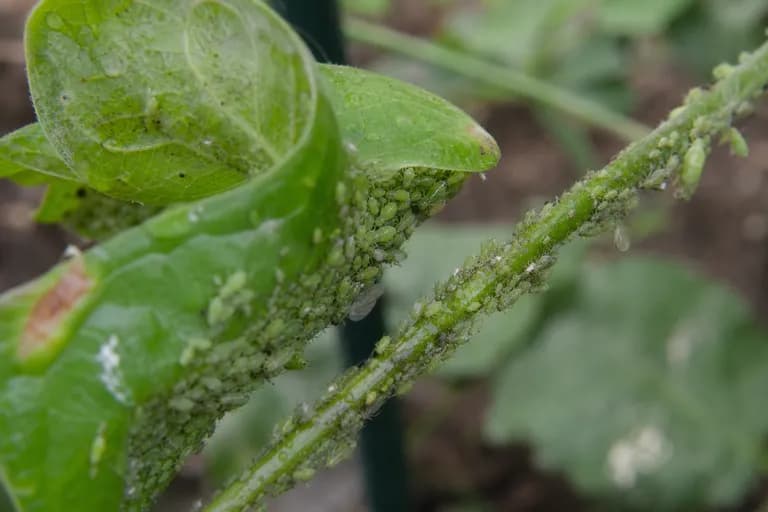
Pulgón del loto
PlagaColonias de pulgones verdes o negros en los pecíolos, yemas florales y envés de las hojas aéreas. Producen melaza que favorece el desarrollo de fumagina negra sobre las hojas.
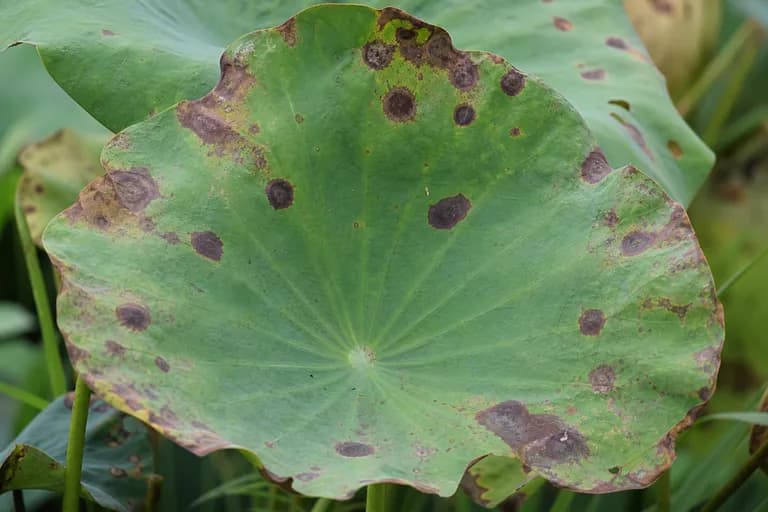
Pudrición del rizoma
EnfermedadLos rizomas se vuelven blandos, oscuros y emiten un olor desagradable. Las hojas aéreas amarillean progresivamente y colapsan. El agua puede volverse turbia y maloliente.
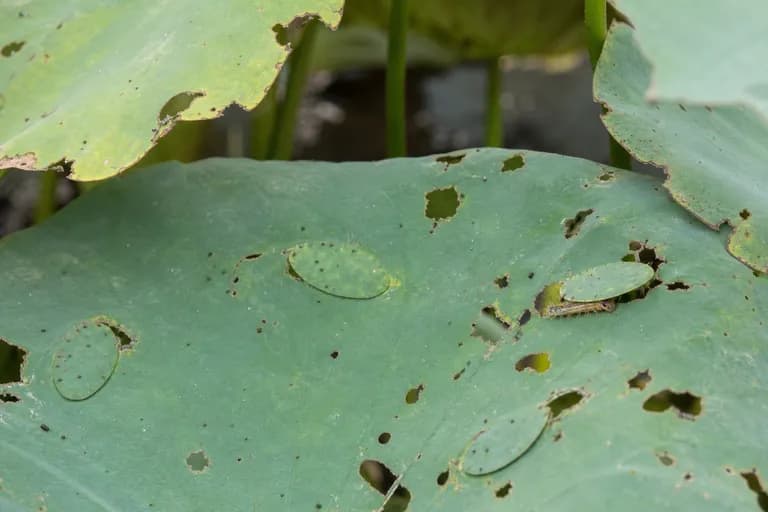
Escarabajo del loto (Galerucella nymphaeae)
PlagaAgujeros irregulares en las hojas flotantes y aéreas causados por larvas y adultos de pequeños escarabajos marrones. En infestaciones severas, las hojas quedan esqueletizadas.
Solución de problemas comunes
El principal desafío es proporcionar el entorno acuático adecuado, lo que limita el cultivo a quienes dispongan de estanque o contenedores grandes sin drenaje. En climas fríos, los rizomas pueden congelarse y morir si el agua se congela completamente hasta el fondo. La expansión incontrolada en estanques naturales puede ser problemática; usa contenedores sumergidos para limitar el crecimiento.
Consejos de cultivo
- Always grow edible lotus in a container rather than directly in a garden pond. Lotus rhizomes spread aggressively and can completely take over a small pond within two seasons, making them nearly impossible to remove once established.
- Use heavy clay or garden loam soil, never potting mix. Lightweight potting mixes containing peat, perlite, or bark will float when submerged, creating a muddy mess. Dense soil anchors the rhizome and provides the anaerobic environment lotus roots prefer.
- Full sun is non-negotiable — lotus requires a minimum of 6 hours of direct sunlight daily, and 8-10 hours is ideal. Insufficient light produces abundant leaves but no flowers and thin, starchy rhizomes not worth harvesting.
- Fertilize aggressively during the growing season. Lotus is an extremely heavy feeder and depletes soil nutrients rapidly. Push aquatic fertilizer tablets into the soil every 2-3 weeks from the appearance of aerial leaves until 6 weeks before harvest.
- Do not disturb the growing tip of the rhizome at any point — it is the sole source of new growth and cannot regenerate if broken. When planting, handling, or dividing, always protect the terminal bud above all else.
- Maintain consistent water depth. Sudden fluctuations stress the plant and can rot emerging shoots. Top off evaporated water regularly with warm water rather than a sudden cold refill, especially during the early growing stages.
- Harvest carefully by tipping the entire container onto a tarp rather than digging in the mud. Lotus roots are brittle and break easily — broken segments oxidize and spoil rapidly. A gentle approach yields intact, beautiful roots that store well.
- Overwinter successfully by ensuring the dormant rhizome never freezes solid. In cold zones (5-7), sink the container into a deeper water body, insulate it heavily with straw bales, or move it to a cool garage where temperatures stay above 0°C (32°F).
Cultiva tu mejor Raíz de Loto — y todo lo que la rodea.
Empieza un plan gratis hoy. Diseña tus bancales, coloca tu Raíz de Loto y deja que PlotMyGarden gestione el momento, el espaciado, las asociaciones y los recordatorios de la semilla a la cesta.
Elige tu Raíz de Loto
Chinese White
Variedad comestible principal con rizomas largos, rectos y de piel clara. Produce abundantes rizomas de textura crujiente y sabor dulce, ideales para cocina. 150-180 días.
Thai Lotus
Variedad tropical de crecimiento vigoroso con rizomas gruesos y carnosos. Adaptada a climas cálidos con temporadas largas de cultivo. 130-160 días.
Red Pekinensis
Variedad con rizomas de piel rosada y pulpa blanca crujiente. Produce flores decorativas de color rosa intenso además de rizomas comestibles abundantes. 140-170 días.
Green Jade
Variedad compacta ideal para cultivo en contenedores, con rizomas más cortos pero numerosos. Especialmente adecuada para jardines pequeños con espacio limitado. 120-150 días.
Fresh lotus root sells for $4-8 per pound ($9-18 per kg) at Asian grocery stores and significantly more at specialty markets. A single container-grown plant producing 2-4 kg of roots saves $18-72 per season. The savings compound in subsequent years since the plant regenerates from left-behind rhizome sections — you never need to buy another starter. Lotus root chips, a popular snack selling for $5-8 per small bag, can be made in large batches from your harvest for a fraction of the cost.
Recetas rápidas
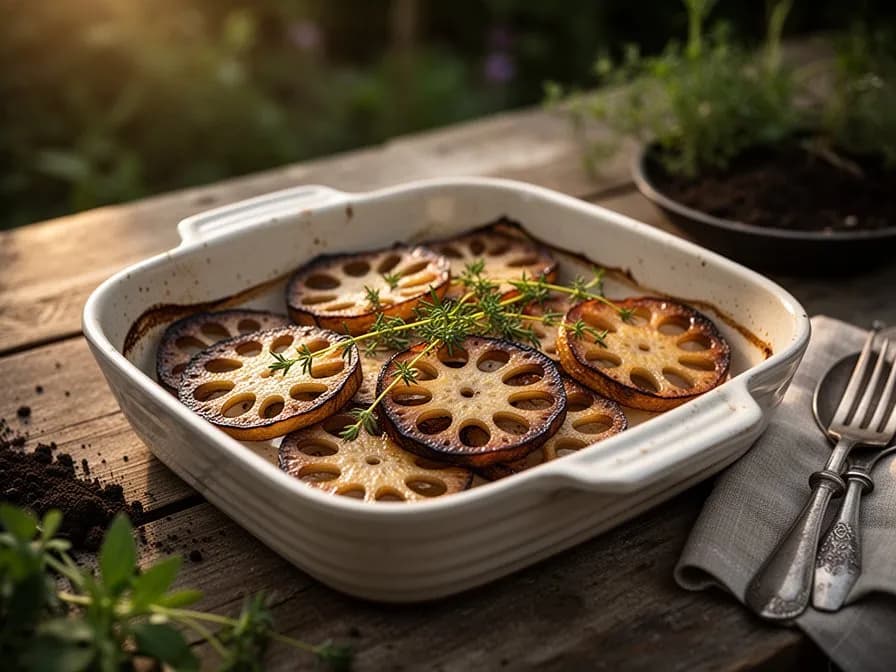
Crispy Lotus Root Chips
25 minPaper-thin lotus root slices fried or baked until golden and shatteringly crisp, revealing the beautiful lace-like hole pattern in every chip. Lightly salted and irresistible — a stunning appetizer or snack.
5 ingredientesKinpira Lotus Root (Japanese Stir-Fry)
15 minA classic Japanese side dish of lotus root and carrot slices quickly sauteed in sesame oil with soy sauce, mirin, and a touch of chili. The lotus root stays wonderfully crunchy with a savory-sweet glaze.
8 ingredientesLotus Root and Pork Rib Soup
90 minA nourishing Cantonese slow-simmered soup where lotus root softens into a meltingly tender texture while flavoring a clear, deeply savory pork broth. Traditionally served as a restorative autumn and winter dish.
7 ingredientesUsos culinarios
La raíz de loto es un ingrediente versátil que se consume cocida, frita, al vapor o encurtida en la cocina asiática. Cortada en rodajas finas revela su patrón decorativo de cavidades, ideal para tempura y chips crujientes. Se añade a sopas, salteados y guisos, aportando una textura crujiente única. En Japón se prepara como kinpira (salteado dulce-salado) y en China como relleno de dim sum.
Qué contiene
Beneficios para la salud
- Rich in vitamin C (49% DV per 100g), supporting immune defense, collagen synthesis for skin health, and enhancing iron absorption from plant-based foods — an unusually high level for a root vegetable.
- Excellent source of dietary fiber (4.9g per 100g), with a mix of soluble and insoluble types that promote healthy digestion, support blood sugar regulation, and help maintain healthy cholesterol levels.
- High potassium content (556mg per 100g) helps regulate blood pressure by counteracting the effects of sodium, supports proper muscle contraction, and maintains healthy fluid balance throughout the body.
- Contains significant amounts of copper (29% DV per 100g), essential for red blood cell production, maintaining healthy nerve cells, strengthening the immune system, and forming collagen in bones and connective tissue.
- Provides tannins and other polyphenolic compounds with antioxidant and anti-inflammatory properties — traditionally used in Chinese medicine to stop bleeding, reduce inflammation, and support respiratory health.
- Low glycemic index despite its starch content, due to the type of resistant starch present in lotus root, making it a suitable root vegetable option for people managing blood sugar levels.
De dónde viene Raíz de Loto
The edible lotus (Nelumbo nucifera) originated in tropical Asia, with wild populations still found across a vast range from Iran and the Caspian Sea region through India, Southeast Asia, and into northern Australia. Archaeological evidence shows lotus cultivation in China dating back at least 7,000 years, with lotus seeds and rhizome fragments found at Neolithic sites along the Yangtze River. The plant was independently cultivated in ancient India, where it held deep spiritual significance in Hindu and Buddhist traditions as a symbol of purity, creation, and enlightenment.
In China, lotus root (lian ou) has been a cornerstone vegetable for millennia. The Han Dynasty agricultural text 'Fan Shengzhi Shu' from the 1st century BC describes lotus pond management techniques remarkably similar to those used today. Chinese cuisine developed hundreds of lotus root preparations — stir-fried, braised, stuffed, pickled, dried, and ground into starch for desserts. The plant's cultural importance is reflected in Chinese art, poetry, and philosophy, where the lotus emerging clean from muddy water became a powerful metaphor for moral integrity.
Lotus cultivation spread throughout East and Southeast Asia along Buddhist trade and pilgrimage routes. Japan developed distinct culinary traditions around lotus root (renkon), particularly the vinegared and stir-fried preparations central to New Year celebration dishes, where the holes in the root symbolize the ability to see clearly into the future. Korea, Vietnam, and Thailand each developed their own lotus cuisines and cultivars.
Today, lotus root is commercially cultivated across China, Japan, Korea, India, and increasingly in other countries with suitable climates. Modern varieties have been bred for larger rhizomes, higher starch content, and resistance to root rot. In Western countries, lotus root has gained popularity through Asian grocery stores and restaurants, and adventurous home gardeners now grow it in container ponds and water gardens from USDA zones 5-11.
Raíz de Loto: ¿sabías que?
Datos fascinantes sobre Raíz de Loto
Lotus seeds are among the longest-lived of any plant species. In 1995, a team of botanists successfully germinated a sacred lotus seed recovered from a dry lakebed in China that was radiocarbon-dated to approximately 1,300 years old — and it grew into a healthy plant.
Raíz de Loto: preguntas frecuentes
¿Cuándo debo plantar Raíz de Loto?
¿En qué zonas de rusticidad puede crecer Raíz de Loto?
¿Cuánto sol necesita Raíz de Loto?
¿A qué distancia debo espaciar Raíz de Loto?
¿Qué plagas y enfermedades afectan a Raíz de Loto?
¿Cómo almaceno Raíz de Loto después de la cosecha?
¿Cuáles son las mejores variedades de Raíz de Loto para cultivar?
¿Qué suelo necesita Raíz de Loto?
Can I grow lotus root in a regular garden bed without standing water?
How do I know when lotus roots are ready to harvest?
Will lotus survive winter in cold climates?
Why is my lotus not flowering?
How do I prevent the cut surface of lotus root from browning?
What is the difference between edible lotus and water lily?
Acabas de leer la teoría. Ahora cultívala en piloto automático.
Todo lo que hace que Raíz de Loto sea delicado — el momento, el espaciado, las asociaciones, la ventana de cosecha — es justo lo que PlotMyGarden resuelve por ti, para cada planta de tu huerto.
Un plan que conoce tu clima
Indica tu ubicación una vez. Recibe fechas de siembra, abonado y cosecha basadas en tu última helada real y el pronóstico en vivo — sin adivinar con un sobre genérico.
De la sección “Cuándo plantar”Planificador de bancales de arrastrar y soltar
Diseña bancales sobre una cuadrícula. Cada planta encaja con su espaciado correcto y ves toda la temporada antes de gastar un céntimo en semillas.
De la sección “Cultivo”Conflictos de asociación, detectados a tiempo
Más de 200 buenas y malas combinaciones comprobadas en vivo mientras plantas — para que un error que arruine la temporada nunca llegue a la tierra.
De la sección “Asociaciones”Recordatorios que sí vas a seguir
“Riega las judías.” “Recoge hoy antes de que se pase.” Oportunos, concretos y ligados a las plantas que de verdad cultivas.
De la sección “Cosecha”Escalonado, programado
¿Quieres cosechar seis semanas en vez de seis días? Reparte tus siembras automáticamente y te avisa cuando toca el siguiente lote.
De la sección “Cuándo plantar”Un registro que se vuelve más listo
Cada cosecha que registras le enseña tu huerto. El plan del año que viene parte de lo que de verdad funcionó en tu suelo, no en un manual.
De la sección “Resumen”Más Hortalizas de raíz
Cultiva tu mejor Raíz de Loto — y todo lo que la rodea.
Empieza un plan gratis hoy. Diseña tus bancales, coloca tu Raíz de Loto y deja que PlotMyGarden gestione el momento, el espaciado, las asociaciones y los recordatorios de la semilla a la cesta.