Berro de Tierra
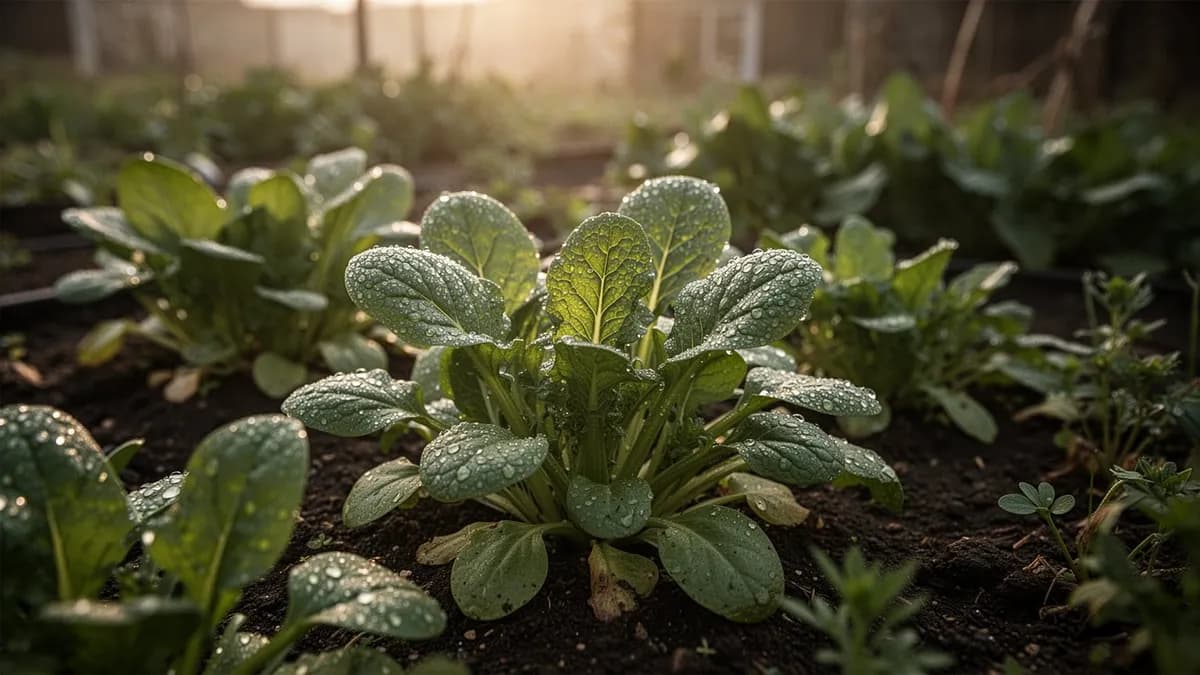
El berro de tierra (Barbarea verna), también conocido como berro americano o berro de jardín, es una crucífera bienal de sabor picante similar al berro de agua pero que no necesita cultivo acuático.





En esta páginaResumen
Conoce Berro de Tierra
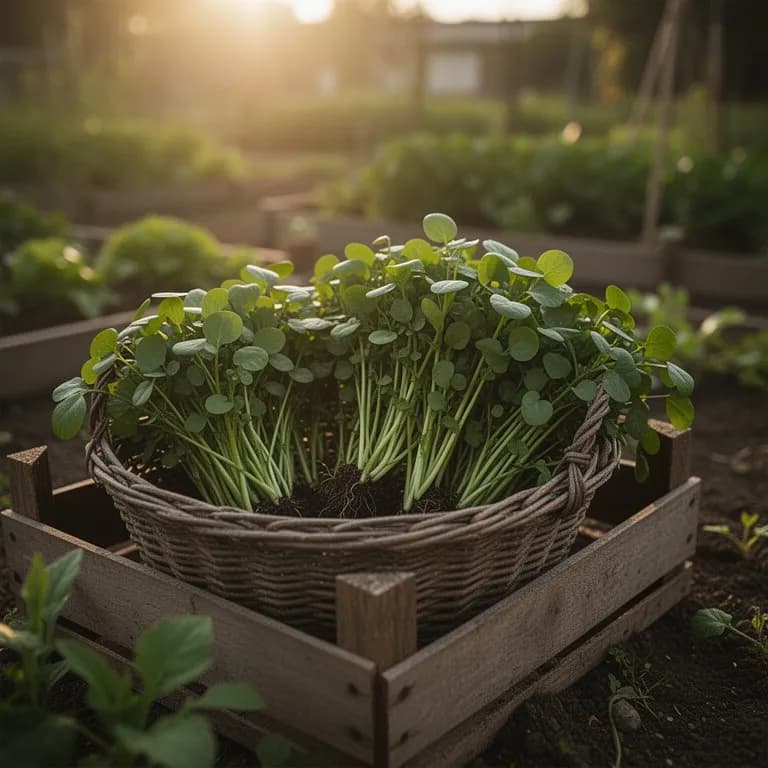
El berro de tierra (Barbarea verna), también conocido como berro americano o berro de jardín, es una crucífera bienal de sabor picante similar al berro de agua pero que no necesita cultivo acuático. Produce rosetas de hojas verde oscuro brillante, ricas en vitaminas A, C y hierro, que se cosechan durante los meses fríos cuando pocas verduras frescas están disponibles.
Cuándo plantar Berro de Tierra
Siembra directamente en el terreno entre agosto y septiembre para cosecha invernal, o en febrero-marzo para cosecha de primavera. Coloca las semillas a 1 cm de profundidad en surcos poco profundos y mantén el suelo húmedo hasta la germinación, que ocurre en 5-10 días. Las siembras escalonadas cada 3 semanas prolongan el período de cosecha.
Tu año de Berro de Tierra
Ajustado a Zona 7 · temporada típica · la helada se va hacia el 2 abr y vuelve hacia el 1 nov
Planta Berro de Tierra Ago – Oct y cosecha Ene – Abr, Oct – Dic. Consulta los métodos de plantación y elige tu clima para adaptar los periodos.
Cómo cultivar Berro de Tierra
El berro de tierra se siembra a finales de verano u otoño para obtener cosechas durante todo el invierno y primavera. Siembra las semillas a 1 cm de profundidad en hileras separadas 20-25 cm, aclarando las plántulas a 15 cm de distancia una vez establecidas. La germinación ocurre rápidamente en 5-10 días a temperaturas de 10-18°C.
Esta planta prefiere ubicaciones parcialmente sombreadas y suelos que retengan humedad, ya que el estrés hídrico intensifica el amargor de las hojas y acelera la espigadura. Riega regularmente para mantener el suelo uniformemente húmedo, especialmente durante períodos secos. Un acolchado de compost ayuda a conservar la humedad y aporta nutrientes gradualmente.
El berro de tierra es extremadamente resistente al frío, tolerando temperaturas de hasta -12°C sin protección y aún más bajo campanas o túneles. Cosecha las hojas externas continuamente para estimular nuevo crecimiento. Cuando las temperaturas primaverales superan los 18°C, las plantas comienzan a espigarse; en ese momento puedes dejar florecer algunas para recoger semillas para la siguiente temporada.
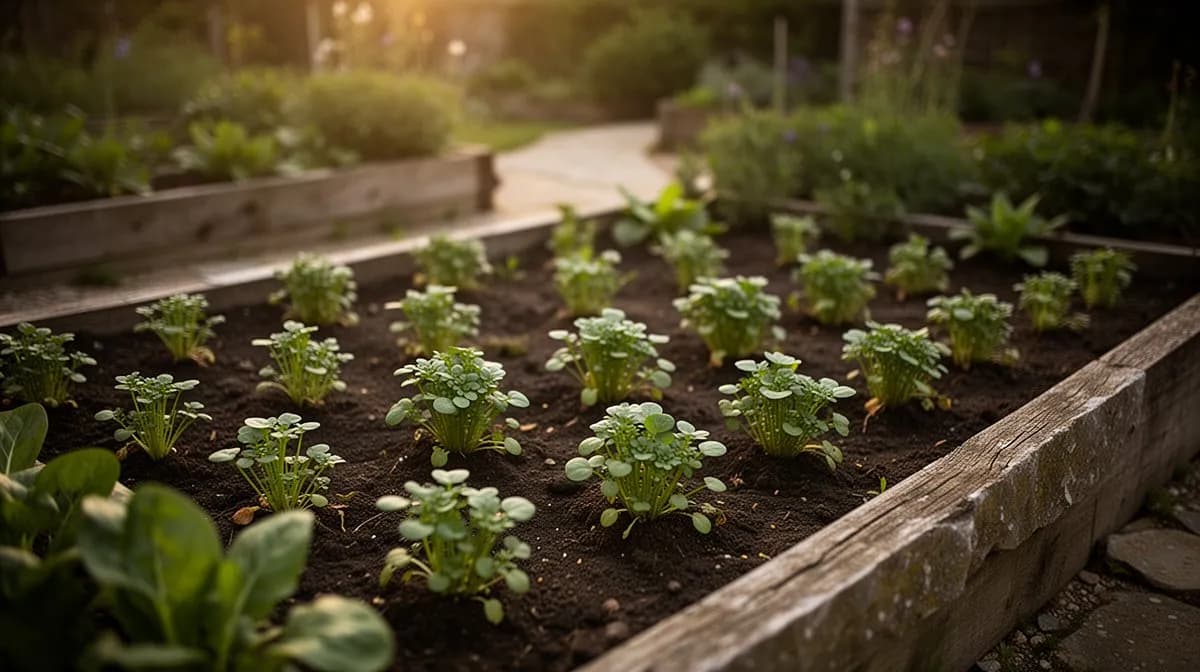
128 plantas caben en un bancal de 120 × 240 cm
Cada Berro de Tierra pide 15 cm de margen. El planificador guarda ese marco por ti — cada planta, cada bancal.
Los mejores vecinos de Berro de Tierra
Se planta bien junto a lechugas y espinacas de invierno, aprovechando las mismas condiciones de cultivo. Puede sembrarse como cultivo intercalado entre árboles frutales, aprovechando la sombra parcial que estos proporcionan. Evita plantarlo cerca de fresas, que pueden competir por la humedad del suelo.
Rábano va a su lado.
Saber de huerto de siempre, cotejado con la tabla real de Berro de Tierra — prueba cualquier planta que cultives.
Prueba Berro de Tierra en un bancal, aquí mismo
Un bancal real del planificador con Berro de Tierra ya plantado. Toca una planta compañera para colocarla y mira cómo responde la comprobación de vecinos: verde para buenos vecinos, rojo si hay conflicto.


Guías de cultivo relacionadas
Abónalo bien
Prefiere suelos húmedos, fértiles y ricos en materia orgánica con pH entre 6,0 y 7,0. Incorpora abundante compost antes de la siembra para mejorar la retención de humedad. Un aporte de fertilizante equilibrado cada 4-6 semanas mantiene la producción continua de hojas tiernas. El suelo constantemente húmedo produce hojas más suaves y menos amargas.
Temperatura ideal
Compatibilidad de zonas de rusticidad
De la semilla a la cosecha, etapa por etapa
Germinación
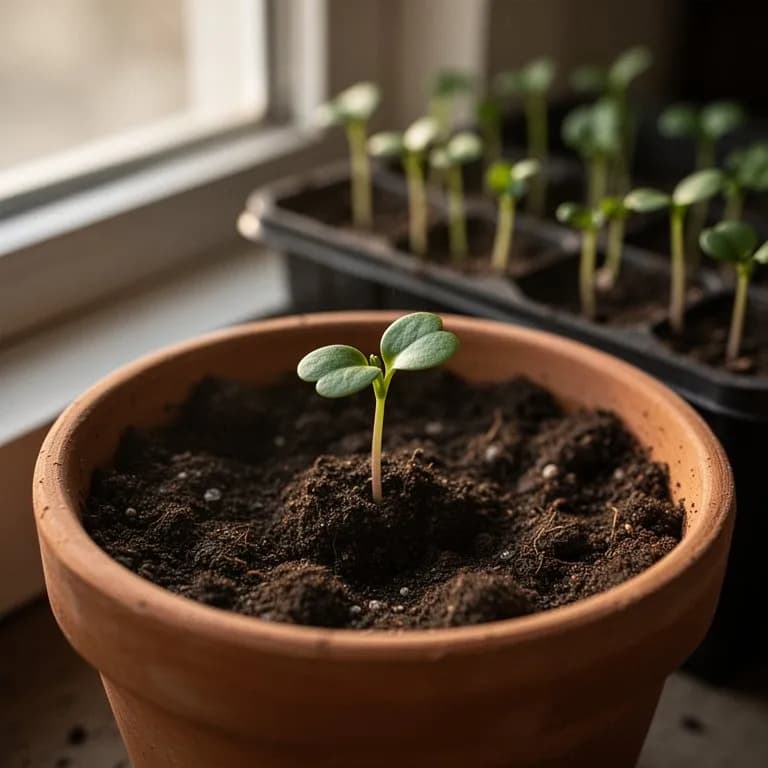
Las diminutas semillas se siembran sobre suelo húmedo y se presionan ligeramente o se cubren apenas. La mastuerza de jardín germina con fiabilidad en condiciones frescas, y las plántulas emergen en 7-10 días. Las primeras estructuras visibles son un par de cotiledones pequeños y redondeados sobre tallos delgados.
Desarrollo de plántula
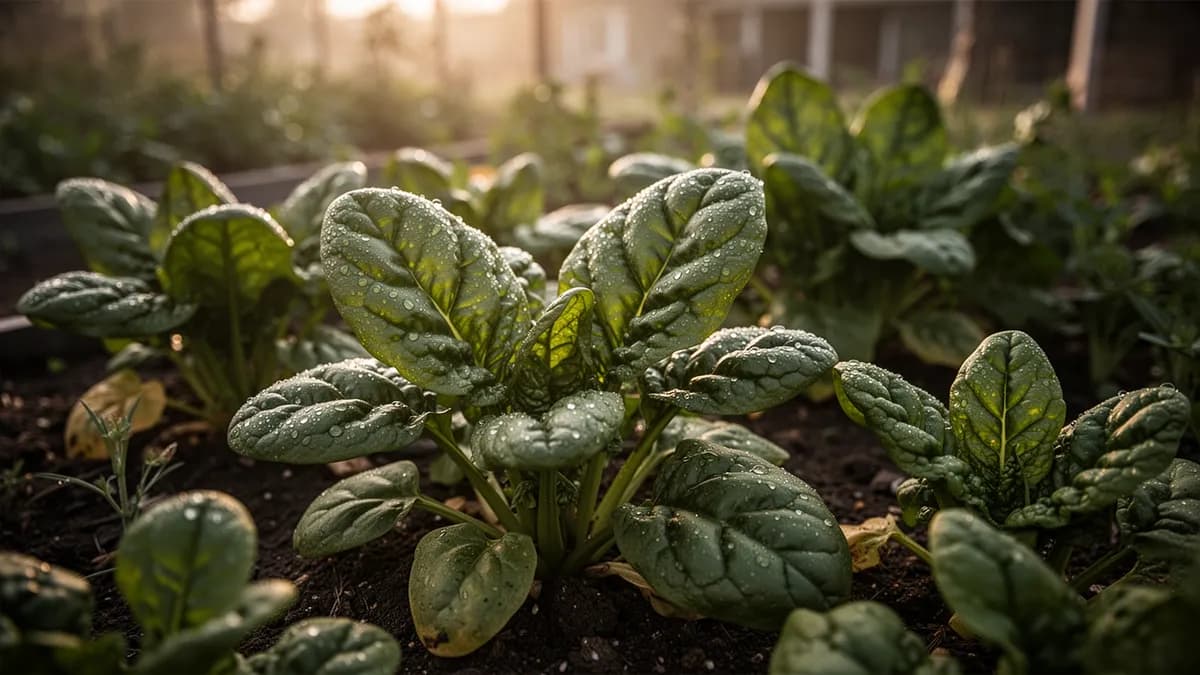
Aparecen las hojas verdaderas con su característica forma pinnada o plumosa; cada hoja está compuesta por varios pares de foliolos redondeados y un lóbulo terminal más grande. La plántula forma una roseta baja y compacta cerca de la superficie del suelo. Las hojas son de un verde oscuro brillante y empiezan a desarrollar el sabor picante y ligeramente amargo por el que se conoce la mastuerza de jardín.
Crecimiento en roseta
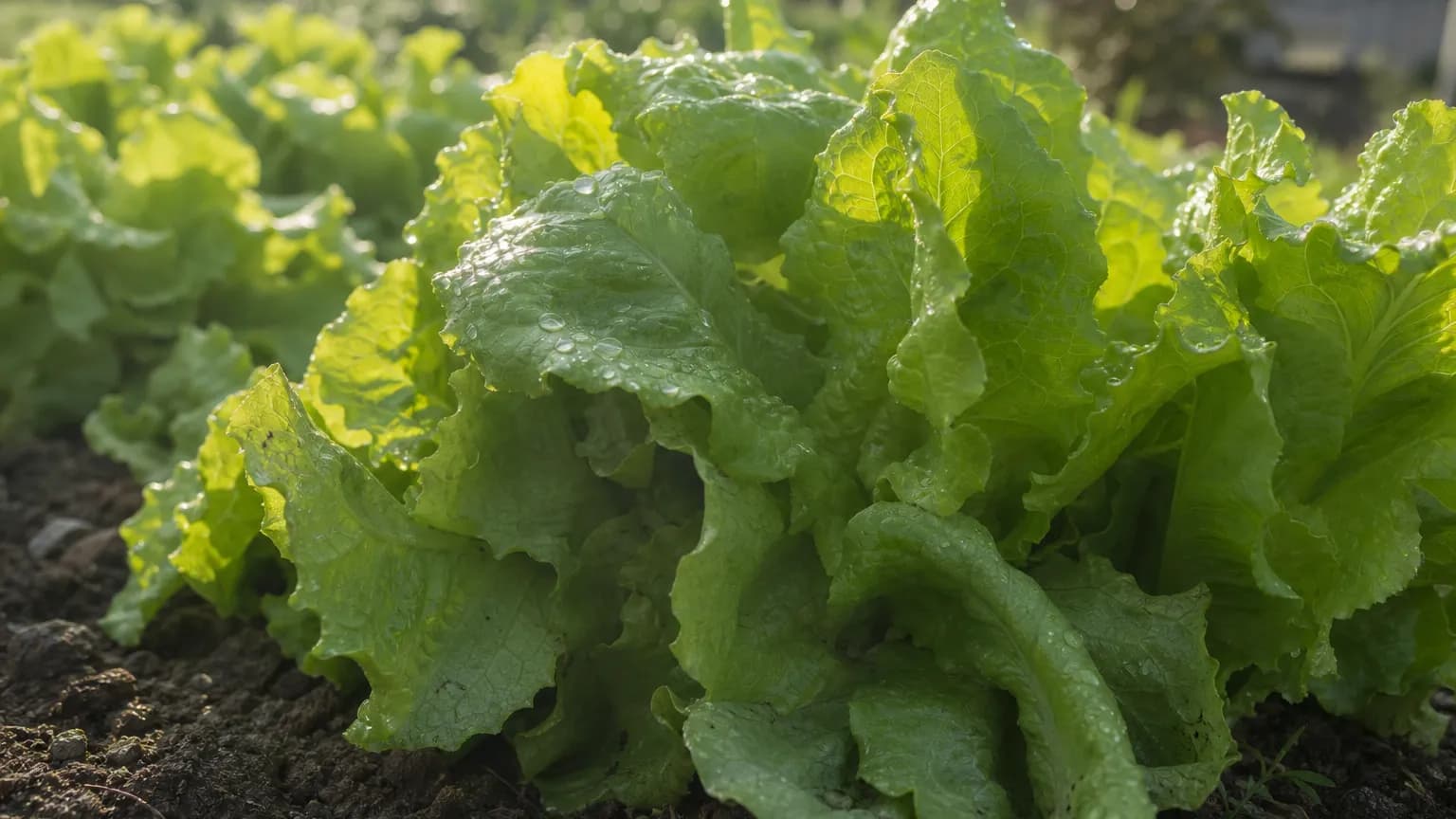
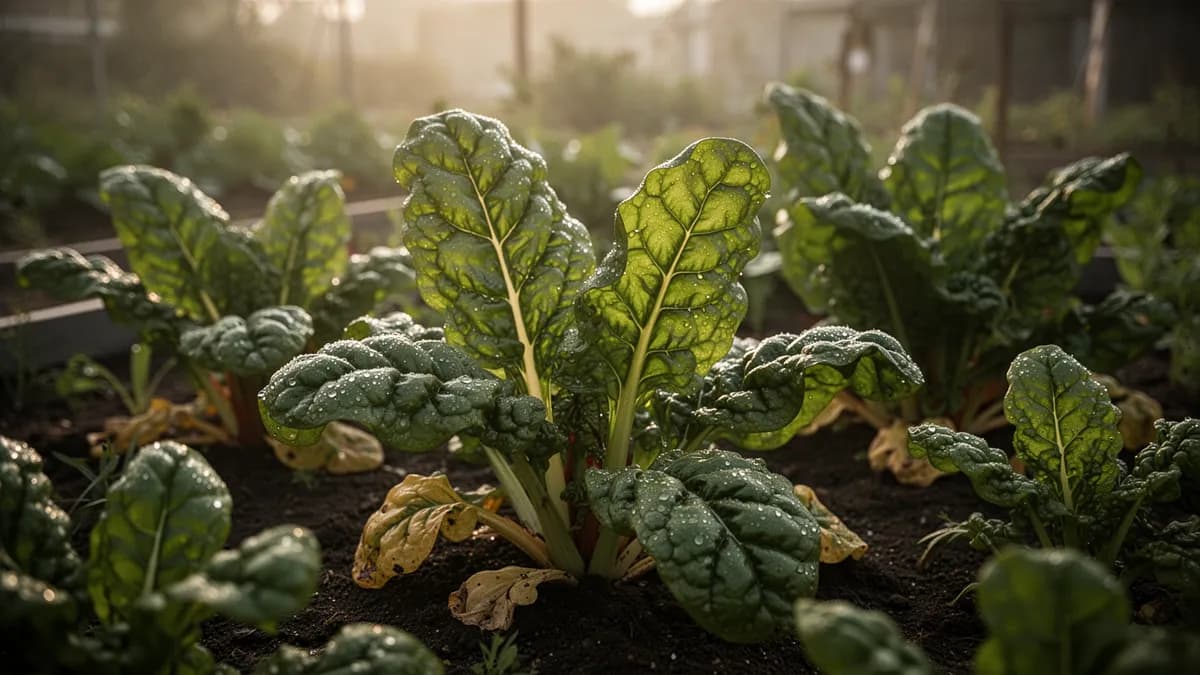
La planta forma una roseta densa y extendida de hojas pinnadas de color verde oscuro que puede alcanzar 15-20 cm de ancho. Las hojas nuevas brotan de forma continua desde la corona central. Esta es la principal etapa de cosecha: las hojas están en su mejor momento, con un sabor intenso, picante y comparable al de la berro, pero un poco más fuerte.
Cosecha madura
Las plantas alcanzan su madurez completa con rosetas exuberantes de hojas profundamente lobuladas. En clima fresco, la mastuerza de jardín se mantiene en esta fase productiva durante muchas semanas, generando un suministro constante de hojas picantes. Las hojas se vuelven algo más gruesas y el sabor se intensifica con el frío, a menudo mejorando tras una ligera helada.
Espigado y floración
A medida que aumentan las horas de luz en primavera, el tallo central se alarga rápidamente y produce racimos de flores pequeñas, amarillas y de cuatro pétalos, típicas de las Brassicaceae. Las hojas se vuelven cada vez más amargas y duras cuando aparece el tallo floral. Las alegres flores amarillas son valiosas para los polinizadores de inicio de temporada, incluidas abejas y sírfidos.
Formación de semilla
Se desarrollan vainas estrechas (siliquas) a lo largo de los tallos florales, cada una con numerosas semillas diminutas. Las vainas pasan de verde a marrón al madurar y finalmente se abren para dispersar las semillas. La mastuerza de jardín se autosiembra con facilidad en condiciones favorables, formando a menudo manchas semipermanentes en zonas húmedas y sombreadas del jardín.
Siembra las semillas a no más de 3 mm de profundidad: necesitan algo de luz para germinar bien. Mantén el suelo constantemente húmedo con riegos suaves en forma de niebla. La germinación es mejor entre 10 y 18 °C; evita sembrar con calor, porque por encima de 25 °C la germinación cae mucho.
Cuidar Berro de Tierra mes a mes
Qué hacer cada mes para tu Berro de Tierra
Octubre
Mes actualBegin harvesting outer leaves from August-sown plants once rosettes have 8-10 leaves. Growth slows as days shorten and temperatures cool, but flavour improves markedly. No pest or disease problems are typical at this time of year — cool weather keeps land cress healthy.
Ten claro qué hacer en tu huerto, cada mes
Un correo al empezar cada mes: qué sembrar, plantar y hacer ahora mismo — para tu Berro de Tierra y todo lo que crece alrededor. Más un breve curso inicial para esquivar los errores clásicos.
- Qué hacer ahora mismo
- Ajustado a tu temporada
- Curso inicial incluido
Cosechar Berro de Tierra
Cosecha las hojas externas de forma continua a partir de 40-50 días después de la siembra, cortándolas a nivel de la base de la roseta con tijeras afiladas. Las hojas jóvenes son más tiernas y menos picantes que las maduras. Cosecha regularmente para retrasar la espigadura y mantener la producción durante varios meses.
se supone que plantas al comenzar el periodo — indica tu fecha real
Cosecha antes de que aparezcan los tallos florales; las hojas están mejor con tiempo fresco.
Almacenamiento y conservación
Las hojas frescas se conservan en el refrigerador envueltas en papel húmedo dentro de una bolsa perforada durante 3-5 días. Es mejor cosechar lo justo para el consumo inmediato, ya que las hojas se marchitan rápidamente. Pueden blanquearse y congelarse para uso en sopas y guisos, aunque pierden su textura crujiente.
Qué falla — y cómo solucionarlo
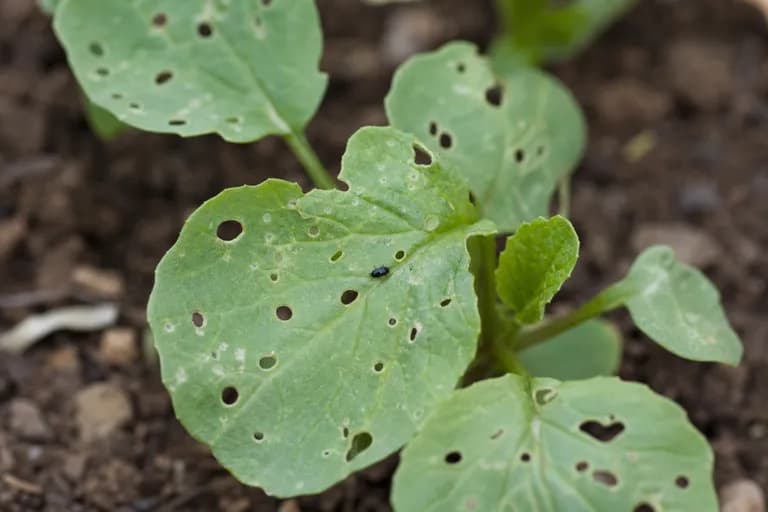
Pulguilla de las crucíferas
PlagaPequeños agujeros redondos en las hojas causados por diminutos escarabajos saltadores de color negro brillante. Las plántulas jóvenes son especialmente vulnerables y pueden quedar destruidas.
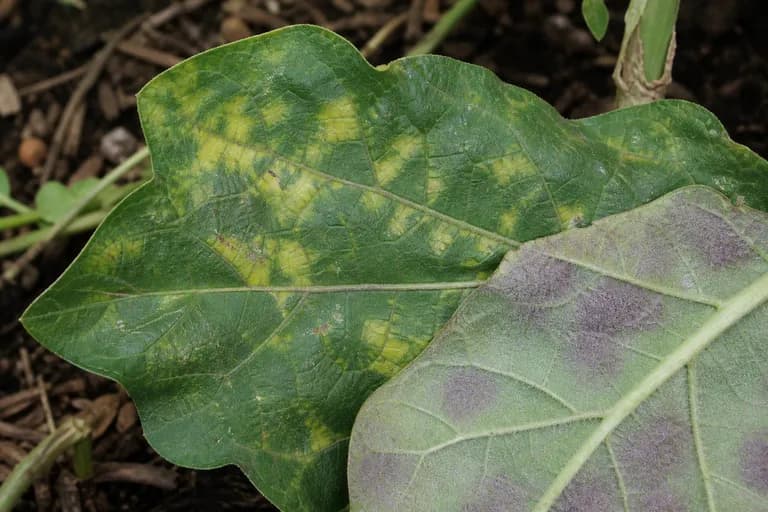
Hernia de las crucíferas (Plasmodiophora brassicae)
EnfermedadRaíces hinchadas y deformadas con agallas irregulares. Las plantas muestran marchitez en días calurosos y crecimiento atrofiado con hojas amarillentas.
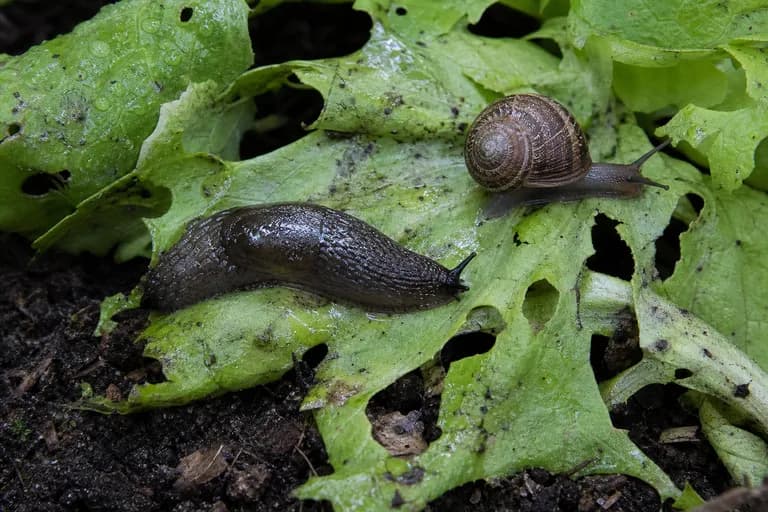
Caracoles y babosas
PlagaMordeduras irregulares en las hojas y daños severos a las plántulas jóvenes, especialmente durante noches húmedas de otoño e invierno.
Solución de problemas comunes
La espigadura prematura causada por calor y días largos es el principal problema, haciendo que las hojas se vuelvan muy amargas y fibrosas. Sembrar en el momento adecuado y mantener buena humedad es fundamental. Al ser una crucífera, comparte enfermedades del suelo con coles y rábanos, por lo que la rotación de cultivos es importante.
Consejos de cultivo
- Sow in late summer for the best results. August and September sowings produce the highest-quality land cress, giving plants time to establish strong rosettes before winter. Spring sowings bolt quickly in warming weather and rarely produce as well as autumn-sown plants.
- Choose a moist, partly shaded spot. Unlike most salad greens, land cress actually prefers partial shade and consistently damp soil — it is ideal for planting under taller crops, along north-facing walls, or in the shade of fruit trees where other vegetables might struggle.
- Keep the soil consistently moist at all times. Land cress is a moisture-loving plant that wilts and turns bitter if allowed to dry out. Mulch around plants with compost to retain moisture and water regularly during dry spells. Drip irrigation works well for larger plantings.
- Harvest outer leaves first, leaving the growing centre intact. This cut-and-come-again approach keeps the plant producing new leaves for months. Pick leaves regularly even if you have more than you need — regular harvesting delays bolting and extends the productive life of each plant.
- Grow as a watercress substitute without any water features. Land cress delivers 90% of the watercress flavour experience in ordinary garden soil with no streams, ponds, or aquatic setups required. It is the practical choice for gardeners who love watercress but lack the growing conditions for the real thing.
- Use land cress as a winter gap filler. Its extreme cold-hardiness (surviving to -10°C) means it produces fresh salad greens during the months when most other crops have long since finished. Sow in autumn to fill the otherwise empty winter salad gap between the last summer crops and the first spring harvests.
- Allow some plants to self-sow for a permanent patch. Land cress drops viable seed readily in spring and, if given a moist, shady spot, will establish a self-sustaining colony that returns year after year with no replanting effort — essentially a perennial salad green on autopilot.
- Try growing land cress in containers on a shaded balcony or patio. Use a pot at least 20 cm deep, keep it in partial shade, and water daily. Container-grown land cress produces well from autumn through spring and brings fresh peppery greens within reach of gardeners with no ground-level growing space.
Cultiva tu mejor Berro de Tierra — y todo lo que la rodea.
Empieza un plan gratis hoy. Diseña tus bancales, coloca tu Berro de Tierra y deja que PlotMyGarden gestione el momento, el espaciado, las asociaciones y los recordatorios de la semilla a la cesta.
Elige tu Berro de Tierra
Upland Cress
La variedad estándar más cultivada, con hojas verde oscuro brillante y sabor picante pronunciado. Muy resistente al frío y productiva durante todo el invierno. 40-50 días.
American Cress
Selección mejorada con hojas más grandes y ligeramente menos picantes, ideal para ensaladas mixtas. Buena tolerancia tanto al frío como al calor moderado. 45-55 días.
Early Winter Cress
Variedad precoz que produce rosetas densas rápidamente, especialmente adaptada para cosecha invernal temprana. Hojas gruesas y carnosas con sabor intenso. 35-45 días.
A packet of land cress seeds costs $2-4 and contains enough seed for several sowings. Fresh watercress (land cress's closest flavour equivalent) sells for $3-6 per small bunch at supermarkets and farmers markets. A single autumn sowing of 10-15 plants can produce the equivalent of 15-30 store-bought bunches of watercress over the winter months, representing $45-180 in savings from a single seed packet. Because land cress thrives in the cold months when most other salad greens require expensive heated greenhouses, the savings are especially significant during winter when fresh local greens are at their scarcest and most expensive.
Recetas rápidas
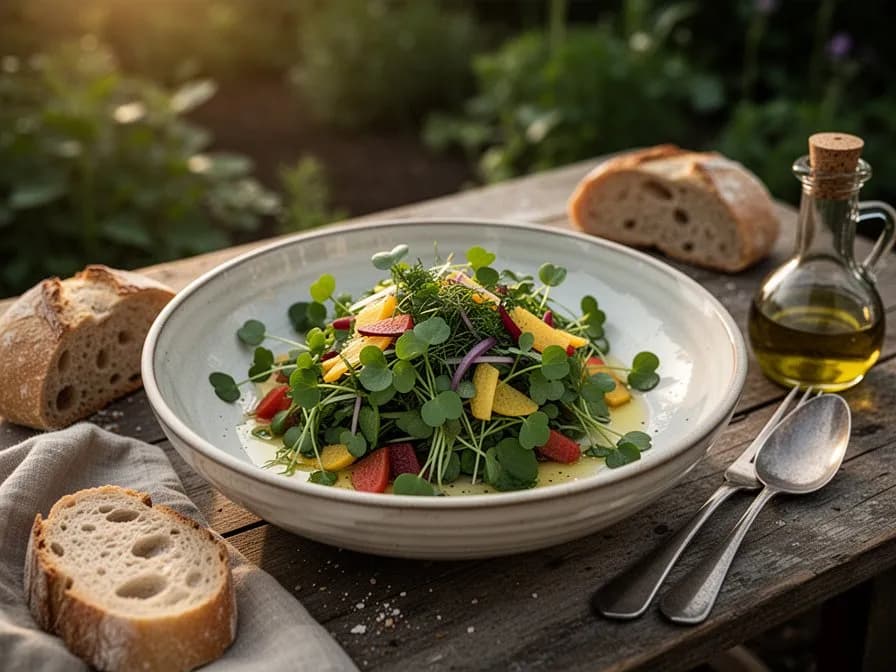
Land Cress and Blue Cheese Winter Salad
10 minA bold winter salad that pairs the peppery intensity of fresh land cress with creamy blue cheese, toasted walnuts, and sliced pears. The sharp bite of the cress cuts beautifully through the richness of the cheese for a salad that feels both hearty and refreshing.
8 ingredientesPeppery Land Cress Soup
30 minA vibrant, emerald-green soup with a warming peppery kick that showcases land cress at its best. The cress is added at the very end and barely cooked to preserve its brilliant colour and bold watercress-like flavour. Serve with crusty bread for a satisfying winter lunch.
8 ingredientesLand Cress and Smoked Salmon Tartines
15 minOpen-faced sandwiches layering peppery land cress over silky smoked salmon and tangy cream cheese on toasted sourdough. The bold mustard notes of the cress complement the richness of the salmon perfectly — an elegant starter or weekend brunch dish.
7 ingredientesUsos culinarios
El berro de tierra se utiliza fresco en ensaladas, sándwiches y como guarnición, aportando un toque picante similar al berro de agua pero más intenso. Las hojas más maduras se pueden saltear brevemente o añadir a sopas y cremas. Combina especialmente bien con quesos suaves, huevos, patatas y pescados ahumados.
Qué contiene
Beneficios para la salud
- Land cress is exceptionally rich in vitamin C, providing 76% of the daily value per 100g — roughly equivalent to oranges by weight. This supports immune function, collagen production for healthy skin and joints, and enhances absorption of iron from plant-based foods.
- Outstanding source of vitamin A as beta-carotene (129% DV per 100g), essential for maintaining healthy vision, supporting immune cell production, and promoting skin cell renewal. The dark green colour indicates high carotenoid concentration.
- Contains very high levels of vitamin K (over 400% DV per 100g), which is essential for blood clotting and plays a critical role in directing calcium into bones rather than arteries, supporting both skeletal and cardiovascular health.
- Rich in glucosinolates, the same sulphur compounds found in broccoli and other cruciferous vegetables that are extensively studied for their role in supporting the body's natural detoxification enzymes and cellular defence mechanisms.
- Provides significant calcium (120mg per 100g) with lower oxalate levels than spinach, meaning a greater proportion of the calcium is actually available for absorption — making land cress a valuable plant-based calcium source for bone health.
- The combination of high folate, iron, and vitamin C in land cress makes it particularly valuable for supporting healthy red blood cell production — the vitamin C dramatically improves absorption of the plant-based iron, an effect enhanced when the leaves are eaten raw.
De dónde viene Berro de Tierra
Land cress (Barbarea verna), also known as upland cress, American cress, or early winter cress, is native to southwestern Europe, likely originating in the Iberian Peninsula and Mediterranean France. It has been gathered from the wild and cultivated as a potherb and salad green for centuries across southern and western Europe, particularly in regions where its cousin watercress grew in streams but was not always accessible or available year-round.
The genus Barbarea takes its name from Saint Barbara, traditionally celebrated on December 4th, because the plant was one of the few leafy greens still producing fresh growth in early winter. Medieval monastery gardens across Europe cultivated land cress as a reliable source of fresh greens during the cold months when most other salad plants had long since gone dormant. Monks valued it both as a culinary green and as a medicinal herb, prescribing it for respiratory complaints and as a general vitamin-rich tonic during winter.
Land cress was brought to North America by early European colonists, who planted it alongside other familiar kitchen garden herbs and greens. It naturalised readily across the eastern United States and Canada, thriving in moist roadside ditches, stream banks, and woodland edges. In Appalachian folk tradition, wild land cress was gathered as one of the first spring greens — a welcome source of fresh nutrition after months of preserved foods. The common name 'American cress' reflects this deep naturalisation in North American landscapes.
Today, land cress is grown worldwide by gardeners who want the peppery flavour of watercress without the need for an aquatic growing environment. It is particularly popular in the United Kingdom, France, and the northeastern United States, where its extreme cold-hardiness and shade tolerance make it one of the most reliable winter salad greens available. The modern interest in season extension, winter gardening, and cold-hardy greens has brought renewed attention to this underappreciated plant, and it is increasingly found at farmers markets and in seed catalogues as gardeners rediscover its outstanding flavour and resilience.
Berro de Tierra: ¿sabías que?
Datos fascinantes sobre Berro de Tierra
Land cress (Barbarea verna) is often called 'upland cress' or 'American cress' because it delivers watercress-like flavour without any need for running water or an aquatic growing setup — it grows happily in ordinary garden soil, making it the easiest watercress substitute for home gardeners.
Berro de Tierra: preguntas frecuentes
¿Cuándo debo plantar Berro de Tierra?
¿Cuáles son buenas plantas acompañantes para Berro de Tierra?
¿En qué zonas de rusticidad puede crecer Berro de Tierra?
¿Cuánto sol necesita Berro de Tierra?
¿A qué distancia debo espaciar Berro de Tierra?
¿Qué plagas y enfermedades afectan a Berro de Tierra?
¿Cómo almaceno Berro de Tierra después de la cosecha?
¿Cuáles son las mejores variedades de Berro de Tierra para cultivar?
¿Qué suelo necesita Berro de Tierra?
Is land cress the same as watercress?
When is the best time to sow land cress?
Why does my land cress taste bitter?
Can land cress survive winter outdoors?
Does land cress grow well in shade?
Will land cress self-sow and come back every year?
Acabas de leer la teoría. Ahora cultívala en piloto automático.
Todo lo que hace que Berro de Tierra sea delicado — el momento, el espaciado, las asociaciones, la ventana de cosecha — es justo lo que PlotMyGarden resuelve por ti, para cada planta de tu huerto.
Un plan que conoce tu clima
Indica tu ubicación una vez. Recibe fechas de siembra, abonado y cosecha basadas en tu última helada real y el pronóstico en vivo — sin adivinar con un sobre genérico.
De la sección “Cuándo plantar”Planificador de bancales de arrastrar y soltar
Diseña bancales sobre una cuadrícula. Cada planta encaja con su espaciado correcto y ves toda la temporada antes de gastar un céntimo en semillas.
De la sección “Cultivo”Conflictos de asociación, detectados a tiempo
Más de 200 buenas y malas combinaciones comprobadas en vivo mientras plantas — para que un error que arruine la temporada nunca llegue a la tierra.
De la sección “Asociaciones”Recordatorios que sí vas a seguir
“Riega las judías.” “Recoge hoy antes de que se pase.” Oportunos, concretos y ligados a las plantas que de verdad cultivas.
De la sección “Cosecha”Escalonado, programado
¿Quieres cosechar seis semanas en vez de seis días? Reparte tus siembras automáticamente y te avisa cuando toca el siguiente lote.
De la sección “Cuándo plantar”Un registro que se vuelve más listo
Cada cosecha que registras le enseña tu huerto. El plan del año que viene parte de lo que de verdad funcionó en tu suelo, no en un manual.
De la sección “Resumen”Planta estos junto a Berro de Tierra
Más Hortalizas de hoja
Cultiva tu mejor Berro de Tierra — y todo lo que la rodea.
Empieza un plan gratis hoy. Diseña tus bancales, coloca tu Berro de Tierra y deja que PlotMyGarden gestione el momento, el espaciado, las asociaciones y los recordatorios de la semilla a la cesta.