Knotweed Japonés
El knotweed japonés (Reynoutria japonica, syn.





En esta páginaResumen
Conoce Knotweed Japonés
El knotweed japonés (Reynoutria japonica, syn. Fallopia japonica) es una planta perenne originaria de Asia Oriental considerada una de las especies invasoras más problemáticas del mundo. Sin embargo, sus brotes tiernos primaverales, cosechados cuando miden menos de 20 cm, tienen un sabor ácido y refrescante similar al ruibarbo y son comestibles. La recolección puede ayudar a controlar su propagación.
Cuándo plantar Knotweed Japonés
NO siembre ni plante knotweed japonés. Es una especie invasora extremadamente agresiva cuya plantación deliberada puede ser ilegal. Si desea consumir sus brotes, busque poblaciones silvestres ya establecidas en su zona y recolecte de ellas, contribuyendo así a reducir su extensión.
Tu año de Knotweed Japonés
Ajustado a Zona 7 · temporada típica · la helada se va hacia el 2 abr y vuelve hacia el 1 nov
Planta Knotweed Japonés Mar – Abr y cosecha Abr – May. Consulta los métodos de plantación y elige tu clima para adaptar los periodos.
Cómo cultivar Knotweed Japonés
ADVERTENCIA: No plante knotweed japonés intencionalmente bajo ninguna circunstancia. Es una especie extremadamente invasiva que puede destruir infraestructuras, reducir la biodiversidad y es casi imposible de erradicar una vez establecida. En muchos países su plantación deliberada es ilegal.
Si ya tiene knotweed en su propiedad, la recolección de brotes jóvenes en primavera es una forma productiva de reducir su vigor. Coseche solo brotes de menos de 20 cm de altura, cuando son tiernos y ácidos. Los brotes más grandes se vuelven fibrosos y leñosos.
Para intentar controlar una infestación existente, corte repetidamente los brotes durante toda la temporada para agotar las reservas de la raíz. Nunca composte los restos cortados ni los deposite en la naturaleza, ya que incluso pequeños fragmentos de tallo o raíz pueden generar nuevas plantas. Consulte con las autoridades locales sobre métodos de control y normativa aplicable.
8 plantas caben en un bancal de 120 × 240 cm
Cada Knotweed Japonés pide 60 cm de margen. El planificador guarda ese marco por ti — cada planta, cada bancal.
Guías de cultivo relacionadas
Abónalo bien
El knotweed crece en prácticamente cualquier suelo y no necesita fertilización. Es extremadamente adaptable, prosperando desde suelos arenosos costeros hasta arcillas pesadas, desde pH 4,5 hasta 8,5. No intente mejorar las condiciones de cultivo de esta planta invasora.
Temperatura ideal
Compatibilidad de zonas de rusticidad
De la semilla a la cosecha, etapa por etapa
Emergencia primaveral
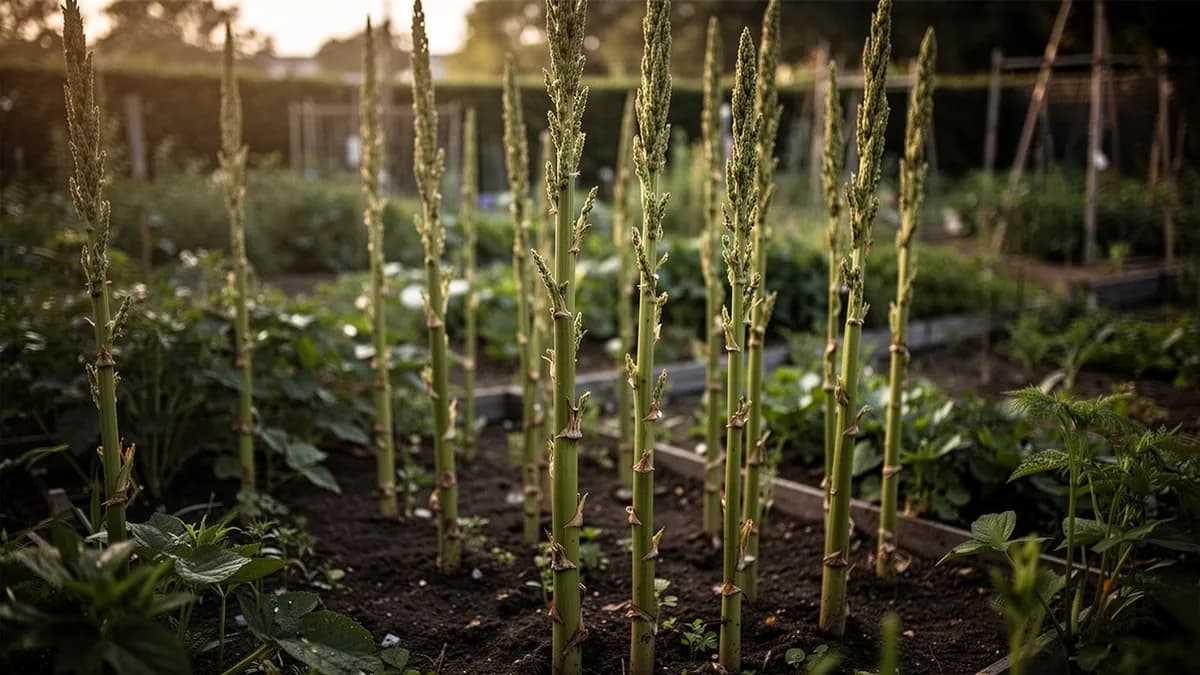
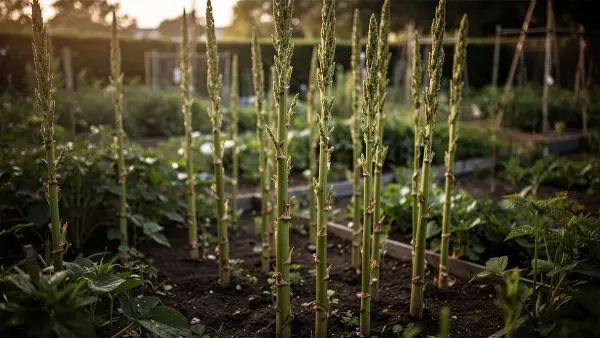
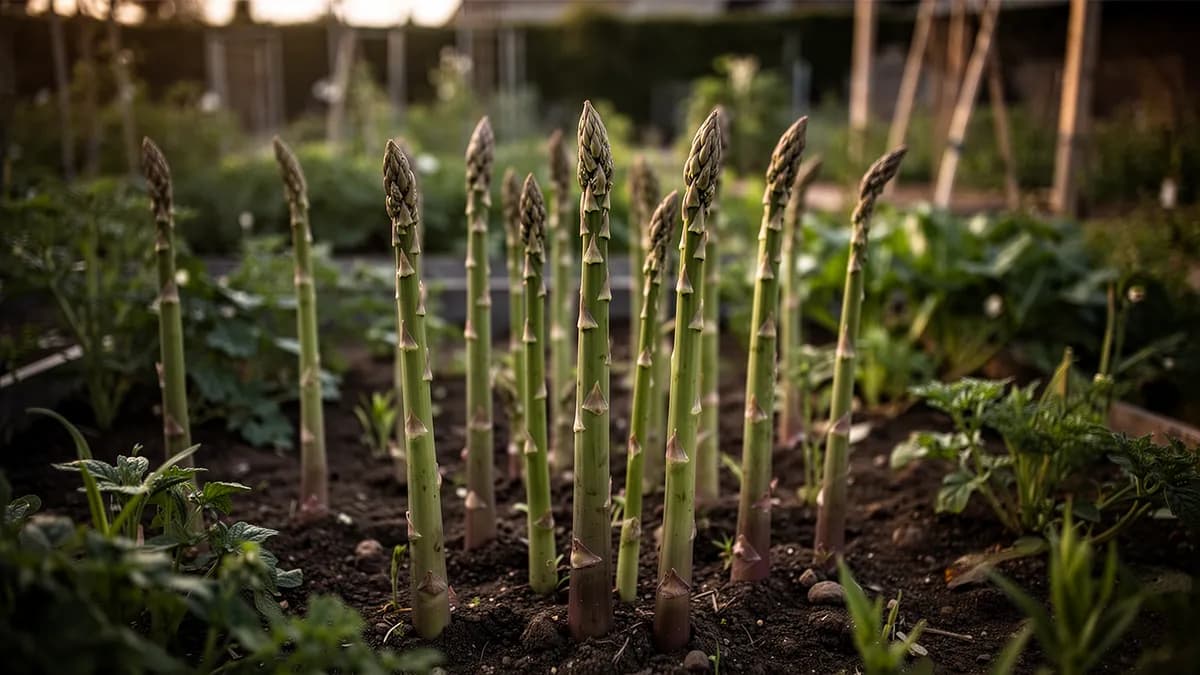
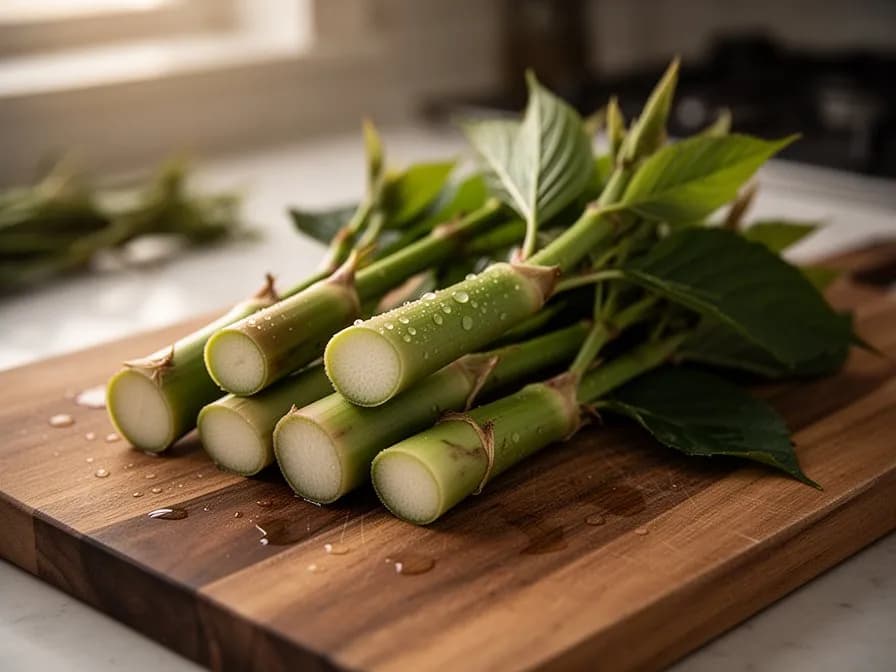
Los brotes atraviesan el suelo a principios de primavera cuando la temperatura del suelo supera los 5°C, apareciendo como lanzas gruesas, salpicadas de rojo púrpura y parecidas al espárrago.
Crecimiento vegetativo rápido
Los tallos se alargan de forma explosiva y pueden crecer hasta 10 cm por día con clima cálido. Los tallos huecos y articulados desarrollan un aspecto distintivo parecido al bambú, con nudos claramente definidos. Grandes hojas en forma de escudo se despliegan alternadamente a lo largo del tallo, cada una de 7-15 cm de largo, con base plana y punta afilada.
Dosel maduro
Las plantas alcanzan una altura total de 2-4 metros y forman matorrales densos que sombrean casi toda la vegetación competidora. Los tallos huecos son leñosos y fuertes, con un diámetro de 2-4 cm. El amplio dosel de hojas crea una sombra profunda bajo el rodal.
Floración
A finales del verano y principios del otoño aparecen cascadas de diminutas flores blancas cremosas en panículas densas desde las axilas de las hojas. Cada flor mide solo 2-3 mm, pero la cantidad total crea una exhibición llamativa. Las flores son ricas en néctar y son visitadas intensamente por abejas, sírfidos y mariposas.
Senescencia y dormancia
Las hojas amarillean y caen después de la primera helada fuerte. Los tallos leñosos mueren hasta el suelo, se vuelven marrones y permanecen como cañas huecas durante el invierno. Bajo tierra, la red de rizomas sigue completamente viva, almacenando carbohidratos y resveratrol para el crecimiento explosivo de la próxima primavera.
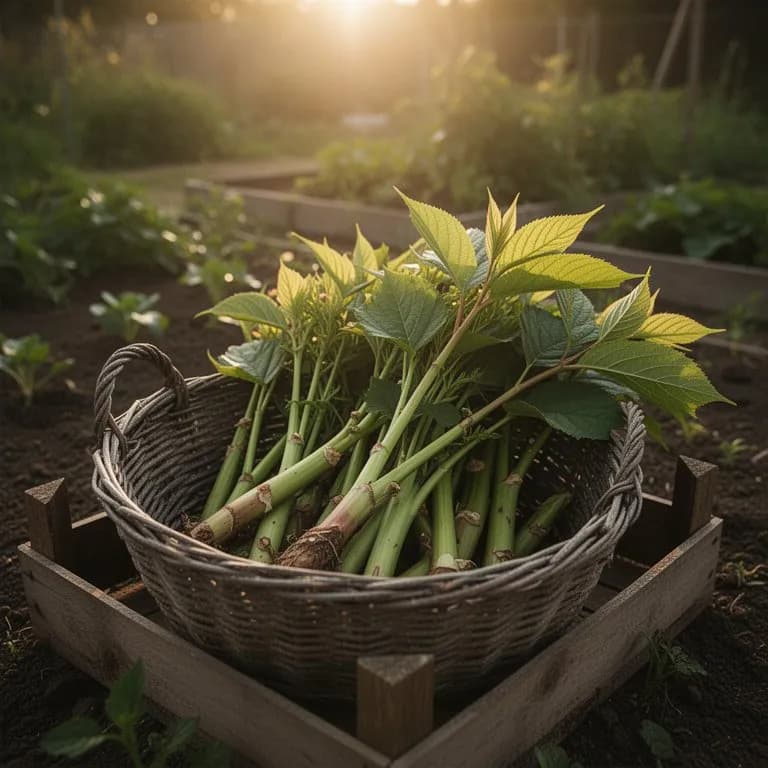
Esta es la mejor ventana de cosecha. Corta los brotes cuando midan 15-30 cm y las hojas sigan muy apretadas. Cosechar con intensidad en esta etapa también ayuda a controlar su expansión.
Cuidar Knotweed Japonés mes a mes
Qué hacer cada mes para tu Knotweed Japonés
Octubre
Mes actualLeaves begin yellowing after first frosts. This is a good time for herbicide treatment of stumps if you are pursuing eradication, as the plant is actively translocating nutrients to its rhizomes. Always follow local regulations for chemical control.
Ten claro qué hacer en tu huerto, cada mes
Un correo al empezar cada mes: qué sembrar, plantar y hacer ahora mismo — para tu Knotweed Japonés y todo lo que crece alrededor. Más un breve curso inicial para esquivar los errores clásicos.
- Qué hacer ahora mismo
- Ajustado a tu temporada
- Curso inicial incluido
Cosechar Knotweed Japonés
Coseche los brotes jóvenes cuando midan menos de 20 cm y sean tiernos, suculentos y de color rojo-verdoso, durante abril-mayo. Córtelos a nivel del suelo o arranque con un tirón firme. Los brotes deben romperse fácilmente; si resisten, ya están demasiado fibrosos. Coseche frecuentemente para debilitar la planta. Use guantes ya que la savia puede irritar la piel.
se supone que plantas al comenzar el periodo — indica tu fecha real
Cosecha a principios o mediados de primavera cuando los brotes midan 15-30 cm y aún estén tiernos.
Almacenamiento y conservación
Los brotes frescos se conservan en el refrigerador durante 3-5 días. Para conservación prolongada, cocine los brotes como compota (similar al ruibarbo) y congele en porciones. Se pueden preparar mermeladas y chutneys que se conservan meses. También pueden encurtirse en vinagre. NUNCA composte los restos no procesados.
Qué falla — y cómo solucionarlo
Pulgón del knotweed
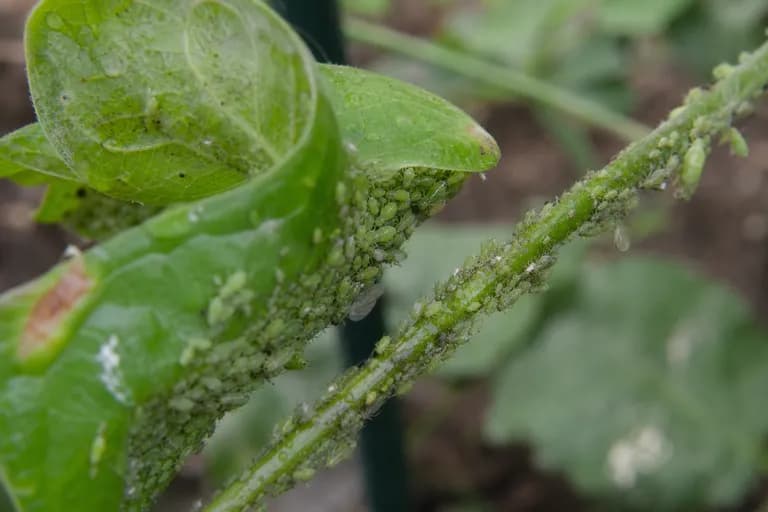
PlagaColonias de insectos en los brotes tiernos que pueden debilitar ligeramente el crecimiento nuevo. Raramente es un problema significativo dada la robustez de la planta.
Psílido del knotweed (Aphalara itadori)
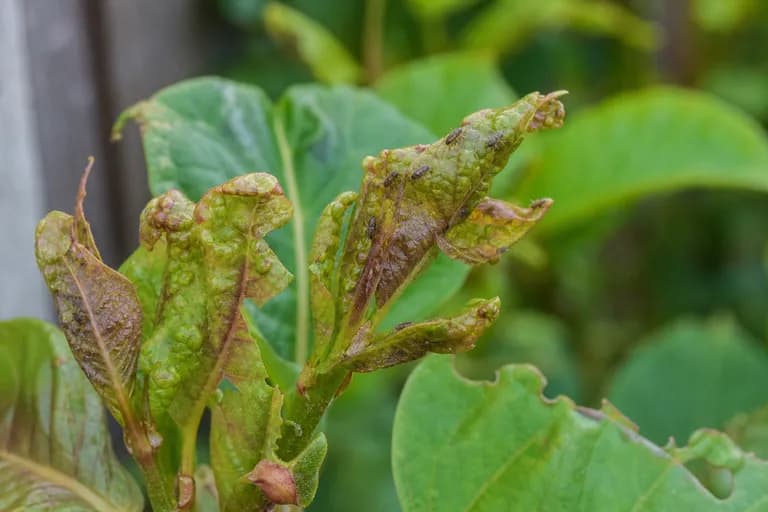
PlagaInsecto de control biológico introducido deliberadamente en algunos países para combatir el knotweed. Causa enrollamiento y amarillamiento de las hojas.
Manchas foliares (diversas)
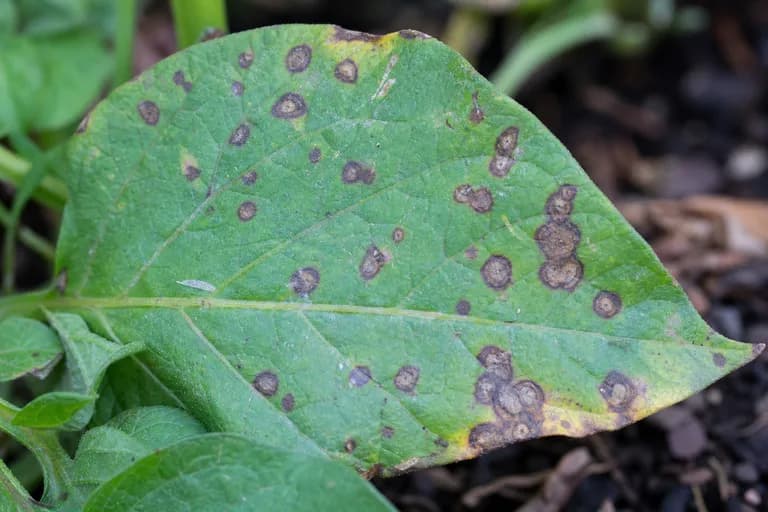
EnfermedadManchas oscuras en las hojas que pueden debilitar ligeramente la planta. No suelen ser significativas dado el vigor de la especie.
Solución de problemas comunes
La invasividad extrema es el problema fundamental. El knotweed japonés puede crecer a través de asfalto y hormigón, dañar cimientos, obstruir drenajes y desplazar toda la vegetación nativa. Sus rizomas subterráneos pueden extenderse 7 m horizontalmente y 3 m en profundidad. Fragmentos de raíz de apenas 1 cm pueden generar una nueva planta. La erradicación completa puede llevar décadas.
Consejos de cultivo
- Do NOT plant Japanese knotweed intentionally. It is classified as an invasive species in most of Europe, North America, and Australasia. In the UK, it is illegal to cause it to grow in the wild under the Wildlife and Countryside Act 1981. Forage only from existing wild or feral populations.
- Learn to identify knotweed with absolute certainty before harvesting. The key features are: hollow bamboo-like stems with distinct nodes, broad shield-shaped leaves with a flat (truncated) base, and red-purple speckled young shoots resembling asparagus. Avoid confusion with giant knotweed (larger leaves with heart-shaped bases) or bindweed.
- Harvest shoots early and often. The ideal window is just 3-4 weeks in spring when shoots are 15-30 cm tall with tightly furled leaves. Once stems become woody and hollow, the eating quality drops to zero. Check productive patches every 2-3 days during peak emergence.
- Use a sharp knife to cut shoots cleanly at soil level. Snapping or pulling can damage emerging buds and reduce subsequent flushes. Treat it like cutting asparagus — a clean, low cut encourages more shoots from the same crown.
- Process shoots within hours of harvesting. They wilt and lose their crisp texture rapidly. Peel any shoots thicker than a finger — the outer skin becomes stringy when cooked. Thinner shoots can be used whole without peeling.
- Blanch and freeze surplus shoots for year-round use. Cut into 3 cm pieces, blanch for 60 seconds, ice-bath, drain, and freeze flat on trays before bagging. Frozen knotweed works perfectly in crumbles, compotes, and sauces.
- Never compost any part of Japanese knotweed — stems, leaves, roots, or rhizome fragments. Even tiny pieces can regenerate into new plants. All plant waste must be bagged and sent to landfill or incinerated through municipal waste programs.
- If foraging near waterways, never leave cut stems on the ground near the bank. Knotweed fragments that wash into streams can root downstream and establish new colonies. Carry a bag and remove all material from the site.
Cultiva tu mejor Knotweed Japonés — y todo lo que la rodea.
Empieza un plan gratis hoy. Diseña tus bancales, coloca tu Knotweed Japonés y deja que PlotMyGarden gestione el momento, el espaciado, las asociaciones y los recordatorios de la semilla a la cesta.
Elige tu Knotweed Japonés
Reynoutria japonica (silvestre)
La especie invasora que se encuentra naturalizada en toda Europa y América del Norte. Los brotes primaverales jóvenes son la parte comestible. Recolectar, no plantar.
Reynoutria sachalinensis (knotweed gigante)
Especie emparentada aún más grande, también invasora. Brotes igualmente comestibles pero más gruesos. También se recolecta silvestre, no se planta.
Reynoutria × bohemica (híbrido)
Híbrido natural entre las dos especies anteriores, muy común. Brotes comestibles de la misma forma. Igualmente invasivo.
Japanese knotweed is an entirely free wild food — no seeds, soil amendments, or watering required. In regions where it grows invasively, it provides an abundant spring harvest that substitutes directly for rhubarb (which sells for $4-8 per pound at markets). A single productive stand can yield enough shoots for dozens of jars of pickles, compotes, and crumbles at zero cost. Foraging knotweed also contributes to invasive species management, making it one of the rare crops where harvesting is an ecological benefit rather than a cost.
Recetas rápidas
Knotweed Crumble
45 minYoung knotweed shoots baked with sugar under a buttery oat crumble topping — tastes remarkably like traditional rhubarb crumble. The natural tartness of knotweed balances perfectly with the sweet, crunchy topping.
9 ingredientes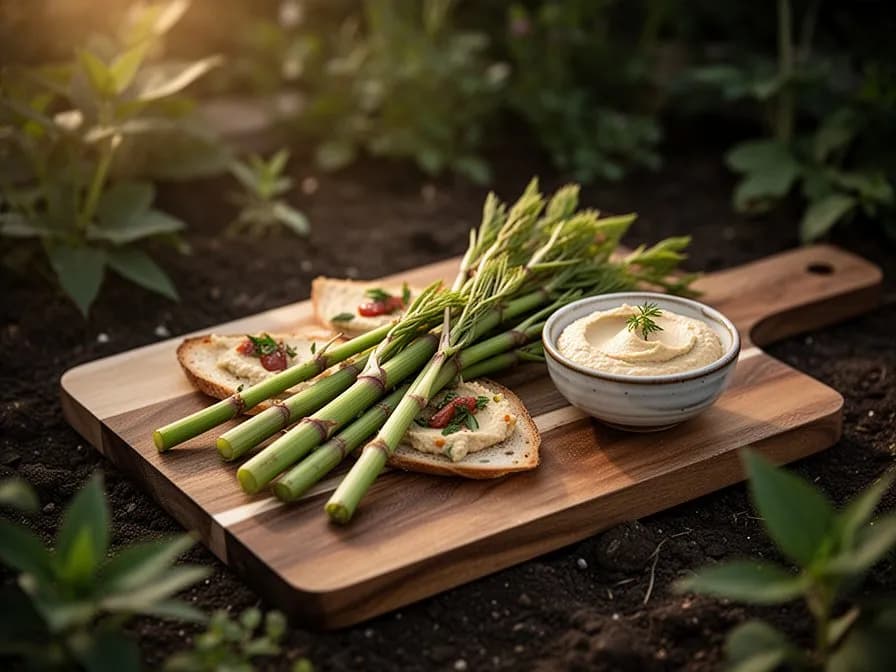
Quick-Pickled Knotweed
15 minTender young shoots pickled in a sweet-sour brine that enhances their natural tartness. Ready to eat in just a few hours, these pickles are superb on cheese boards, in salads, or alongside grilled fish.
8 ingredientesKnotweed and Ginger Compote
25 minA simple stovetop compote where knotweed shoots break down into a smooth, tart sauce similar to stewed rhubarb. Fresh ginger adds warmth and depth. Serve over yogurt, ice cream, or pancakes.
7 ingredientesUsos culinarios
Los brotes jóvenes (menos de 20 cm) tienen un sabor ácido refrescante que los hace un excelente sustituto del ruibarbo. Se preparan en compota con azúcar, tartas, crumbles, mermeladas y chutneys. También pueden saltearse como verdura o añadirse a sopas. Los brotes más gruesos se pelan y se cocinan al vapor. En Japón, los brotes se conocen como itadori y se consumen encurtidos en sal.
Qué contiene
Beneficios para la salud
- One of the richest natural dietary sources of resveratrol, a polyphenol antioxidant extensively studied for its potential anti-inflammatory, cardioprotective, and anti-aging properties.
- Contains vitamin C in young shoots at levels comparable to citrus fruits, supporting immune function and collagen synthesis during the spring season when fresh produce is scarce.
- Traditional East Asian medicine (Kampo) has used knotweed root for centuries to treat inflammatory conditions, circulatory issues, and as a gentle digestive aid.
- The anthraquinone compounds emodin and physcion found in knotweed rhizomes have demonstrated anti-inflammatory and antimicrobial activity in laboratory studies.
- Low calorie density (approximately 20 kcal per 100g) combined with good fiber content makes young knotweed shoots a nutrient-dense addition to spring diets.
- The oxalic acid content, while requiring moderation for those with kidney stone susceptibility, contributes to the plant's tart flavor and provides the same culinary benefits as rhubarb and sorrel.
De dónde viene Knotweed Japonés
Japanese knotweed (Reynoutria japonica, syn. Fallopia japonica) is native to Japan, Korea, and parts of northern China, where it naturally colonizes volcanic slopes, stream banks, and disturbed mountain terrain. In its homeland, knotweed's growth is held in check by a complex web of natural enemies including the psyllid Aphalara itadori, various fungal pathogens, and intense competition from the diverse East Asian flora. The plant thrives on volcanic soils and is among the first colonizers after eruptions, earning it a reputation as a pioneer species.
The plant was first brought to Europe in 1849 by Philipp von Siebold, a German physician and botanist who collected specimens on the volcanic slopes of Mount Unzen in Nagasaki Prefecture. He sent material to the Royal Botanic Gardens at Kew in London, and the plant was subsequently distributed to gardens across Britain and continental Europe as an ornamental curiosity and livestock fodder. The Royal Horticultural Society even awarded it a gold medal for its vigorous growth and attractive foliage. By the 1880s, escaped populations were establishing along railways, riverbanks, and roadsides throughout the British Isles.
In North America, Japanese knotweed arrived as a garden ornamental in the late 1800s and was also planted for erosion control along stream banks and highway embankments. Without its natural predators, the plant spread explosively through riparian corridors, road margins, and urban wasteland. Today it is present in at least 42 U.S. states and most Canadian provinces. The annual economic cost of knotweed damage and control in the UK alone is estimated at 166 million pounds, and the plant remains one of the most challenging invasive species to eradicate worldwide. Despite its invasive status, foraging communities have increasingly embraced knotweed as a free, abundant, and genuinely delicious wild food — turning ecological harm into culinary opportunity.
Knotweed Japonés: ¿sabías que?
Datos fascinantes sobre Knotweed Japonés
Japanese knotweed was deliberately introduced to Europe in the 1840s by the Bavarian-born botanist Philipp von Siebold, who brought it from a volcanic slope in Japan to a garden in Leiden, Netherlands. Nearly every knotweed plant in Europe and North America descends from that single female clone.
Knotweed Japonés: preguntas frecuentes
¿Cuándo debo plantar Knotweed Japonés?
¿En qué zonas de rusticidad puede crecer Knotweed Japonés?
¿Cuánto sol necesita Knotweed Japonés?
¿A qué distancia debo espaciar Knotweed Japonés?
¿Qué plagas y enfermedades afectan a Knotweed Japonés?
¿Cómo almaceno Knotweed Japonés después de la cosecha?
¿Cuáles son las mejores variedades de Knotweed Japonés para cultivar?
¿Qué suelo necesita Knotweed Japonés?
Is Japanese knotweed really edible — is it safe to eat?
When is the best time to harvest Japanese knotweed for eating?
Can I grow Japanese knotweed in my garden for food?
What does Japanese knotweed taste like?
How do I get rid of Japanese knotweed on my property?
Is Japanese knotweed the same as the source of resveratrol supplements?
Acabas de leer la teoría. Ahora cultívala en piloto automático.
Todo lo que hace que Knotweed Japonés sea delicado — el momento, el espaciado, las asociaciones, la ventana de cosecha — es justo lo que PlotMyGarden resuelve por ti, para cada planta de tu huerto.
Un plan que conoce tu clima
Indica tu ubicación una vez. Recibe fechas de siembra, abonado y cosecha basadas en tu última helada real y el pronóstico en vivo — sin adivinar con un sobre genérico.
De la sección “Cuándo plantar”Planificador de bancales de arrastrar y soltar
Diseña bancales sobre una cuadrícula. Cada planta encaja con su espaciado correcto y ves toda la temporada antes de gastar un céntimo en semillas.
De la sección “Cultivo”Conflictos de asociación, detectados a tiempo
Más de 200 buenas y malas combinaciones comprobadas en vivo mientras plantas — para que un error que arruine la temporada nunca llegue a la tierra.
De la sección “Asociaciones”Recordatorios que sí vas a seguir
“Riega las judías.” “Recoge hoy antes de que se pase.” Oportunos, concretos y ligados a las plantas que de verdad cultivas.
De la sección “Cosecha”Escalonado, programado
¿Quieres cosechar seis semanas en vez de seis días? Reparte tus siembras automáticamente y te avisa cuando toca el siguiente lote.
De la sección “Cuándo plantar”Un registro que se vuelve más listo
Cada cosecha que registras le enseña tu huerto. El plan del año que viene parte de lo que de verdad funcionó en tu suelo, no en un manual.
De la sección “Resumen”Más Tallos y brotes
Cultiva tu mejor Knotweed Japonés — y todo lo que la rodea.
Empieza un plan gratis hoy. Diseña tus bancales, coloca tu Knotweed Japonés y deja que PlotMyGarden gestione el momento, el espaciado, las asociaciones y los recordatorios de la semilla a la cesta.